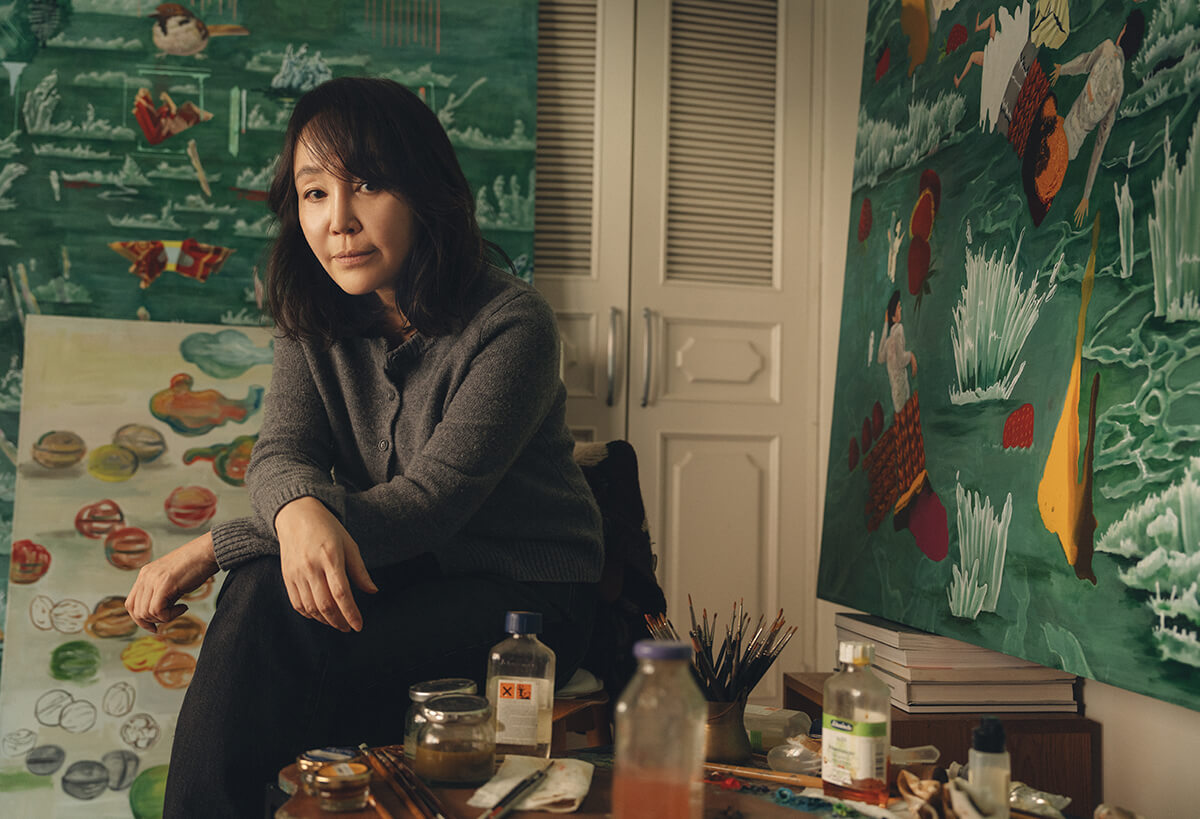
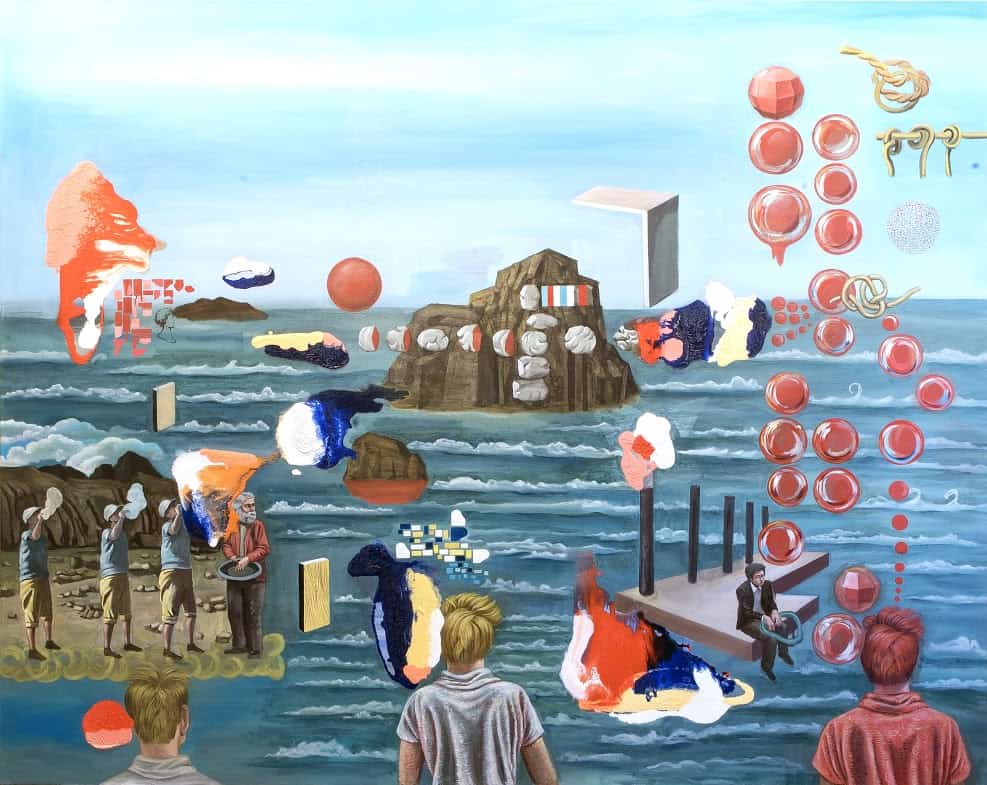
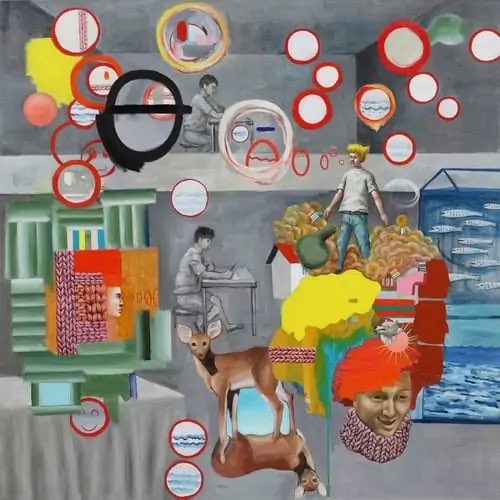
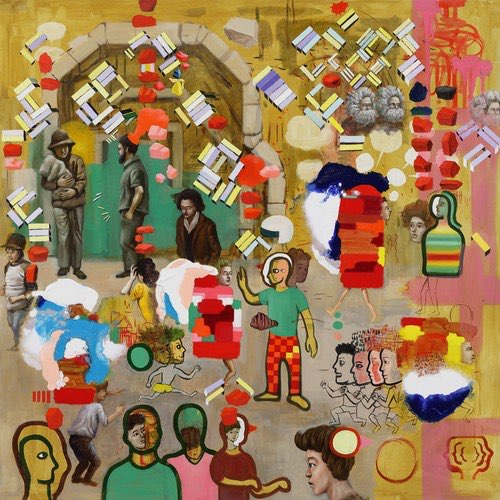
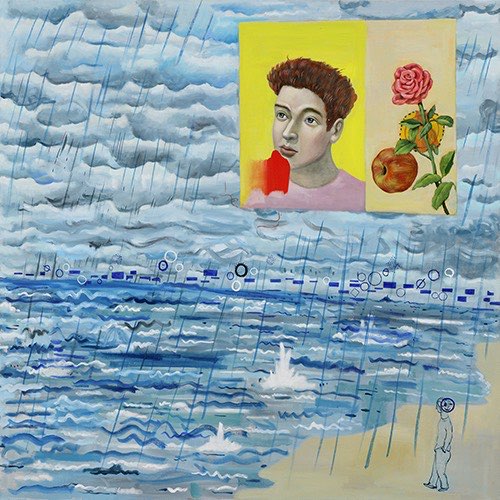
Interestingly, Chung’s paintings challenge the “single” order of
objects constructed through the collusion of Western-centrism and
ocular-centrism, and offer her canvas as a “common ground/place” where
“specific” objects and “specific” times—once disparate and even
oppositional—can coexist. This seems related to the artist’s lived experiences
and observations of globalization, the collapse of the Cold War system, and the
conflicts between Eastern and Western systems of order in places like Korea and
Chicago, as well as her dialectical pursuit of essence.
For this reason,
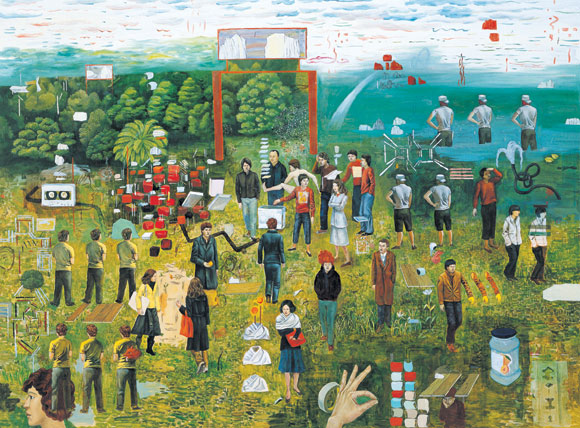
Chung’s paintings “do not present traditional compositions with hierarchical
relationships or perspectival space. Although the independent will of each
object may evoke confusion and anxiety, the artist continuously constructs her
work from the position of a mediator, envisioning a harmonious ideal where the
autonomy of each entity is guaranteed and the overall structure remains
intact.”7
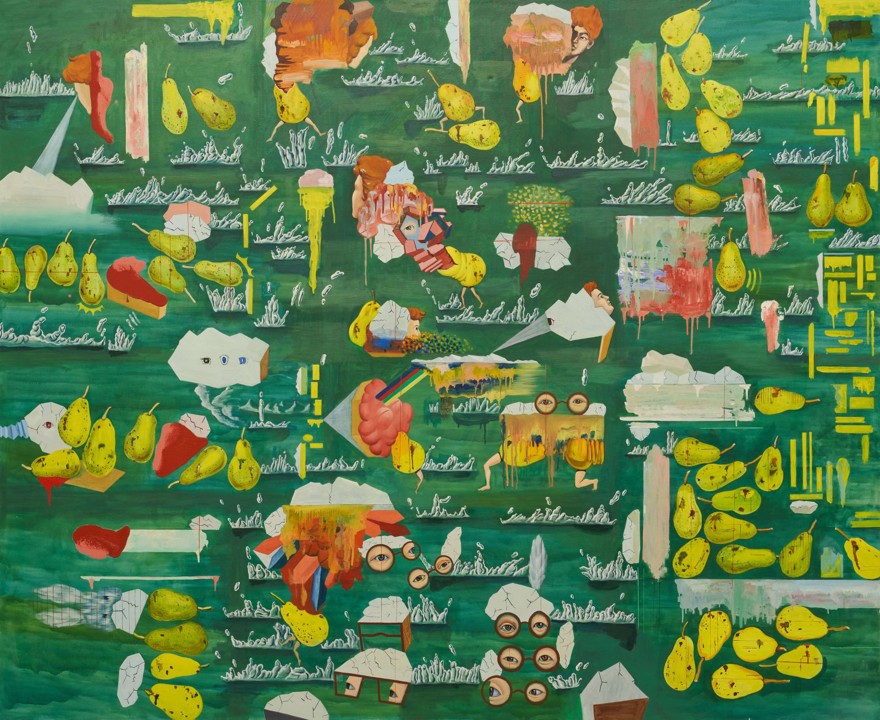
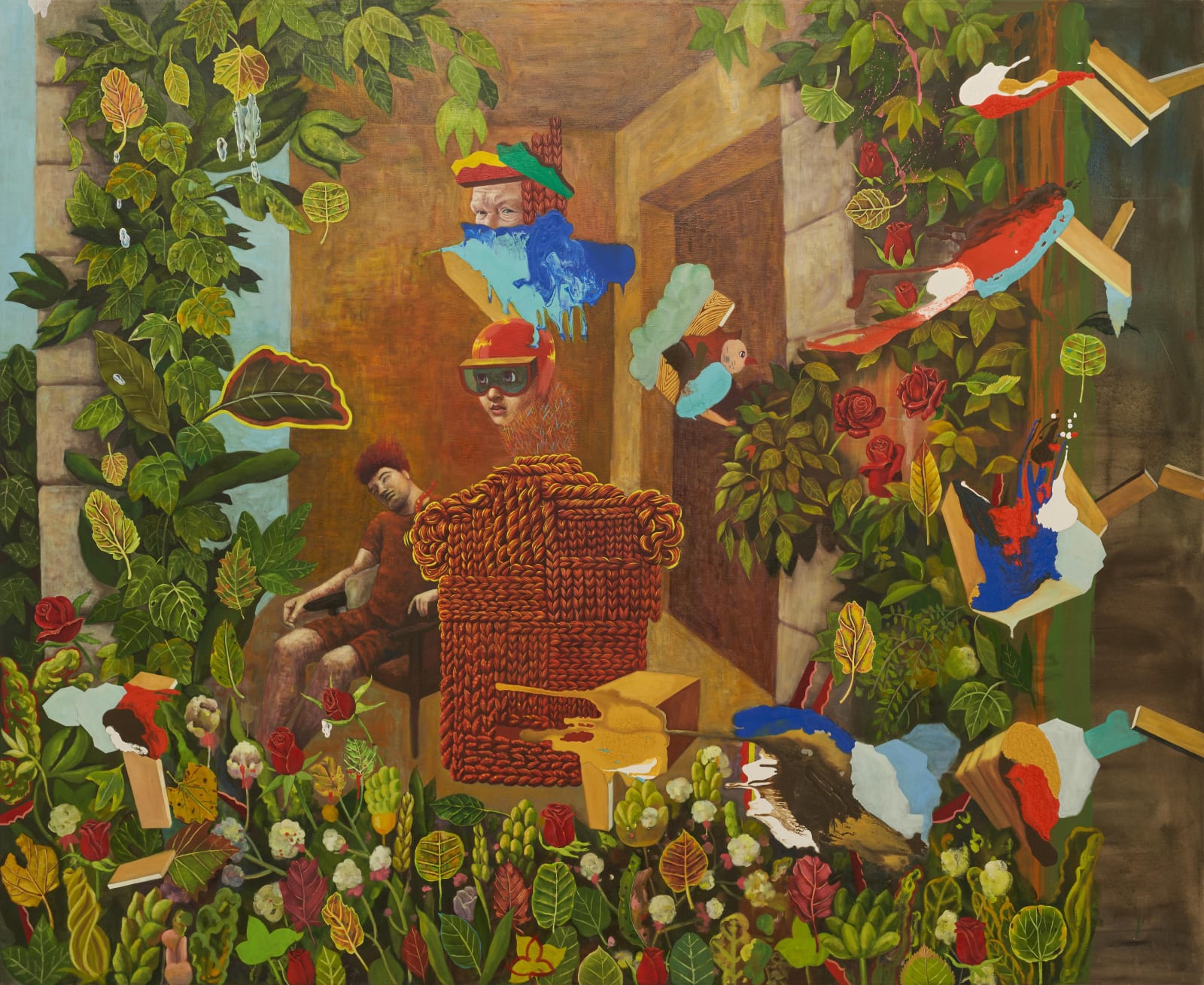
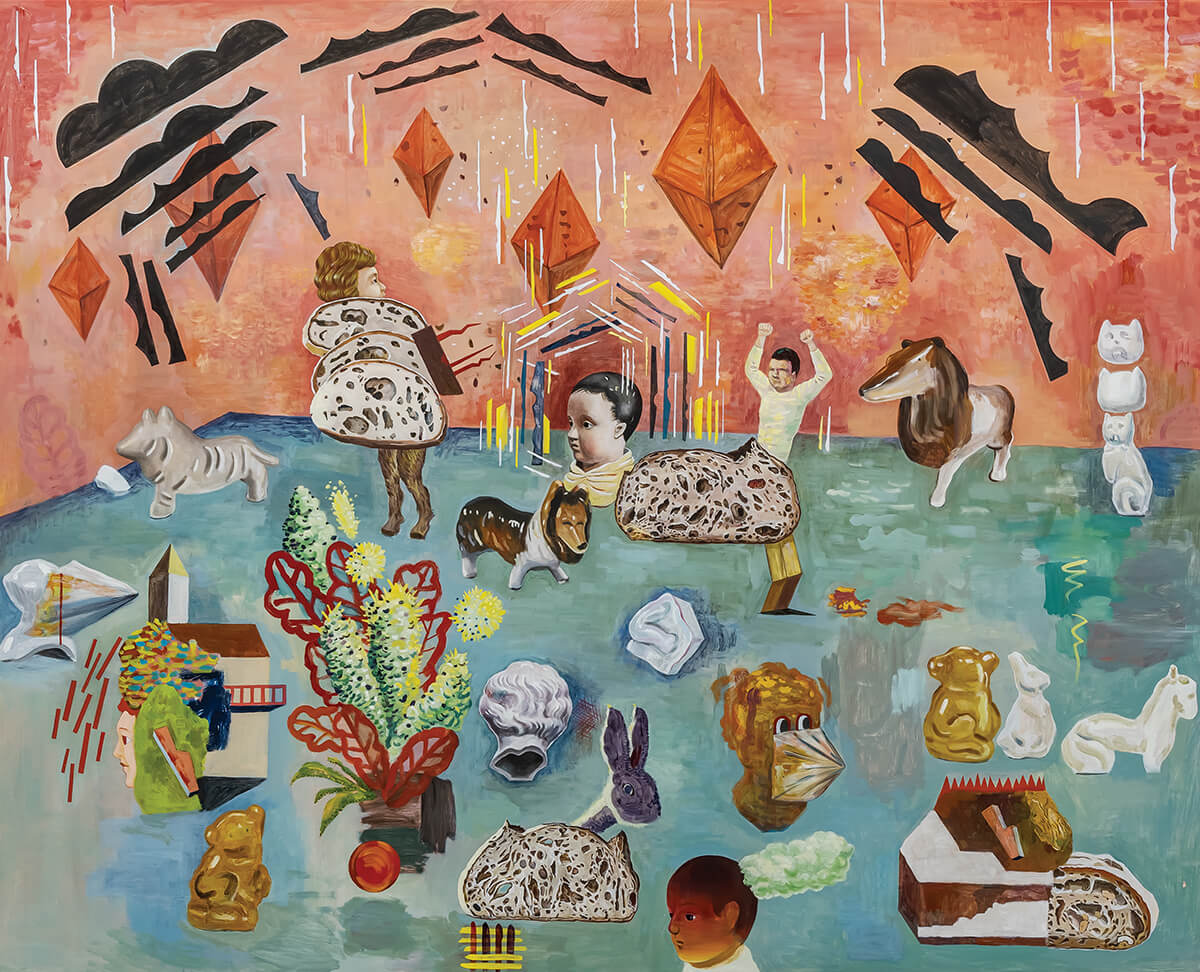
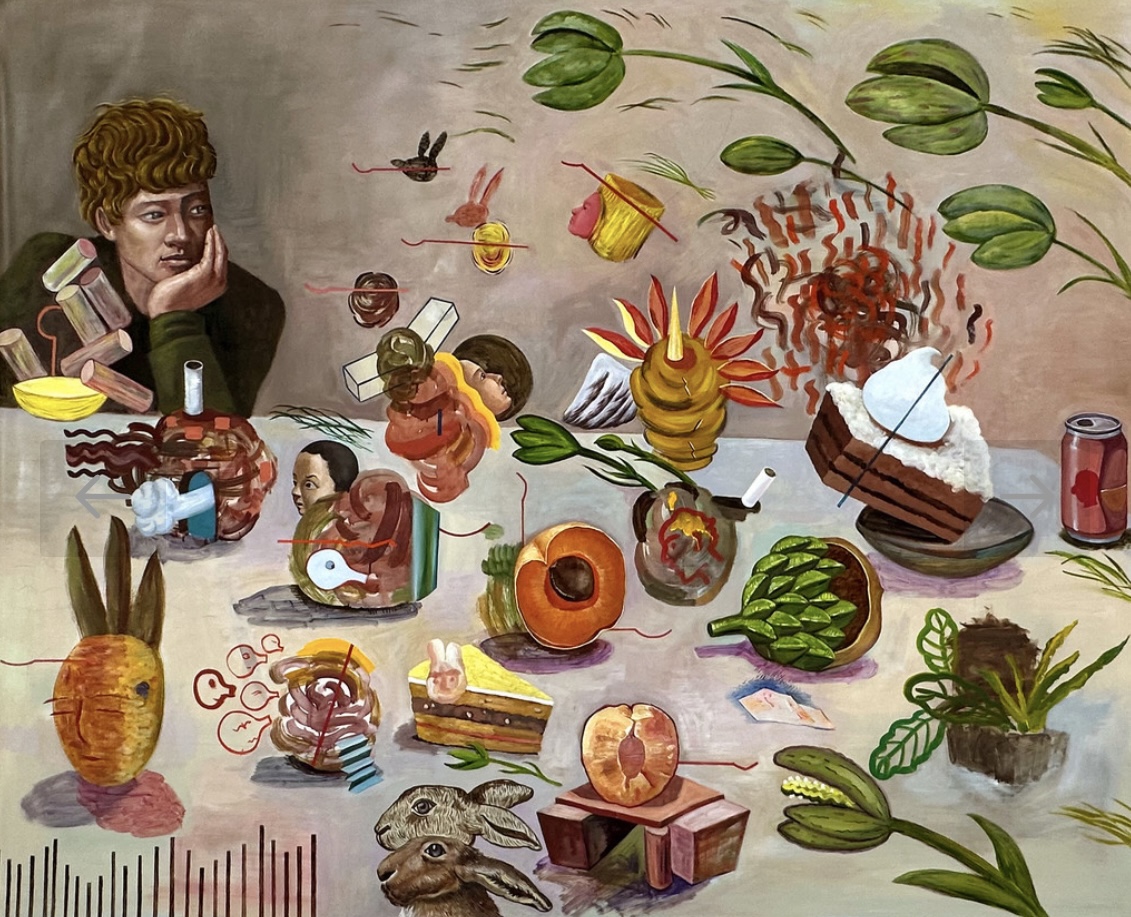
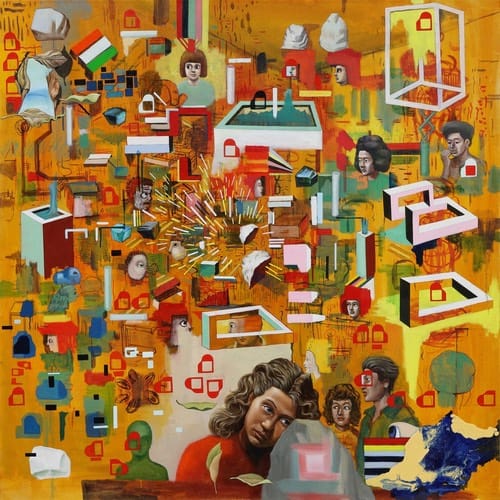
The diverse physical changes in the spatiotemporal environments
surrounding us resonate with the arrangement of “specific” objects in the
multidimensional spaces of her paintings. Like the imagined Chinese
encyclopedia of Borges, we might imagine Chung’s own encyclopedia of objects.
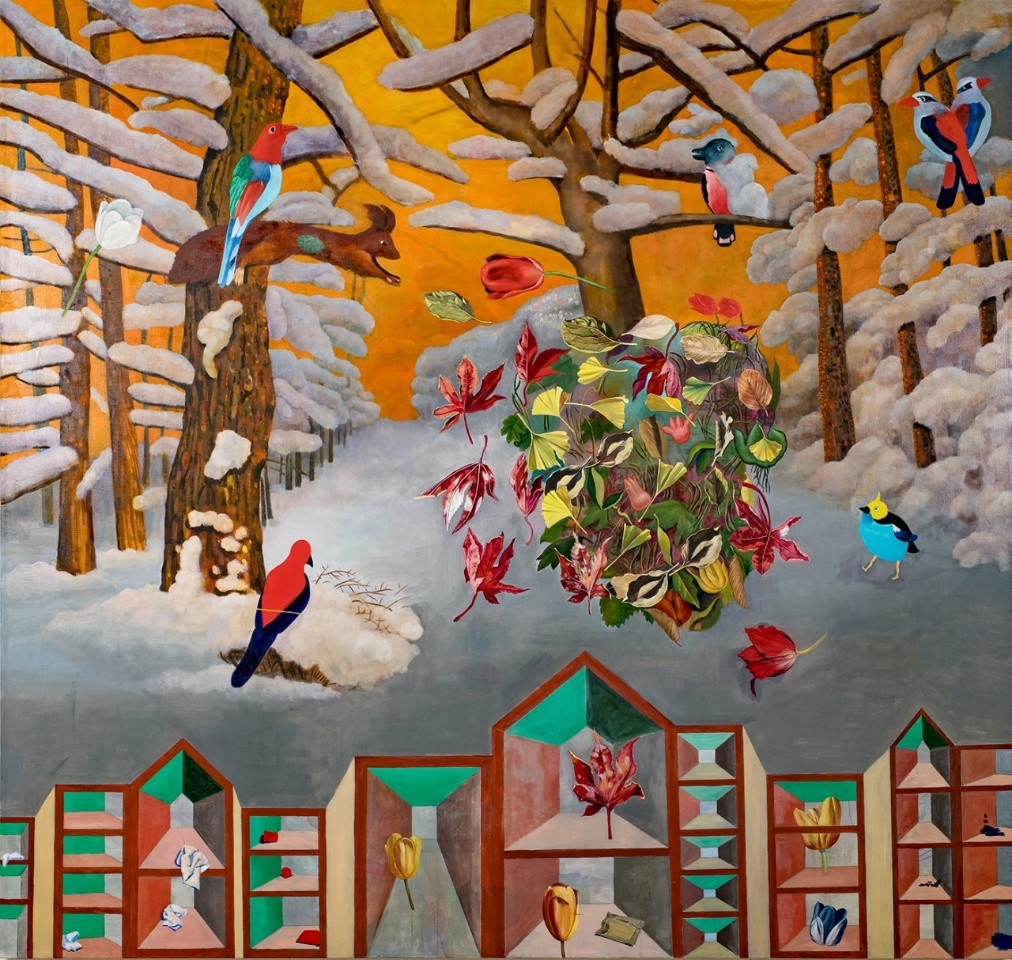
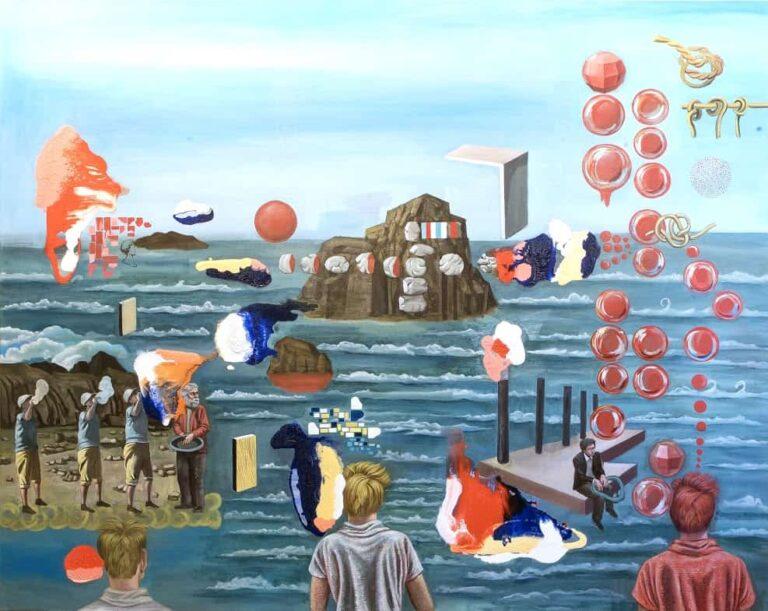
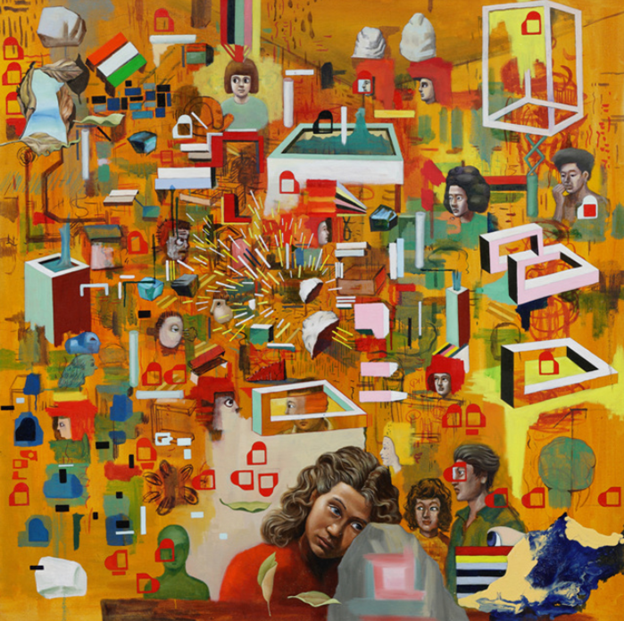
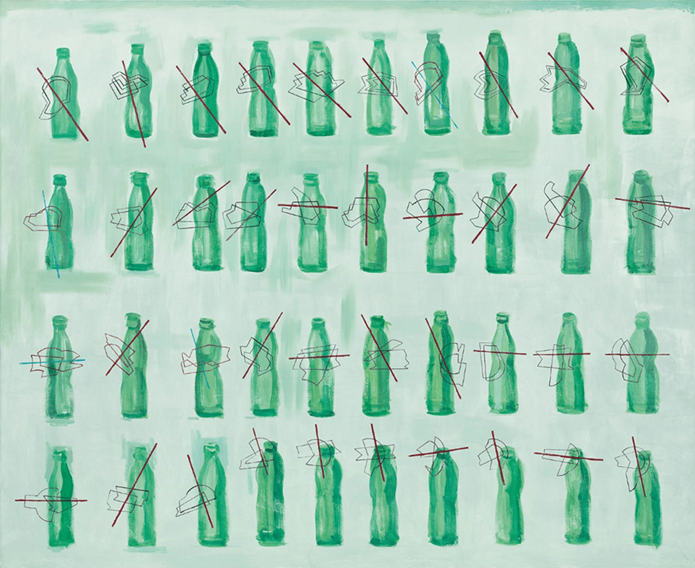
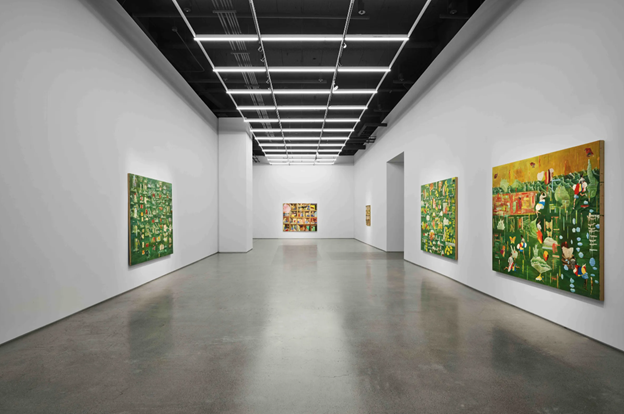
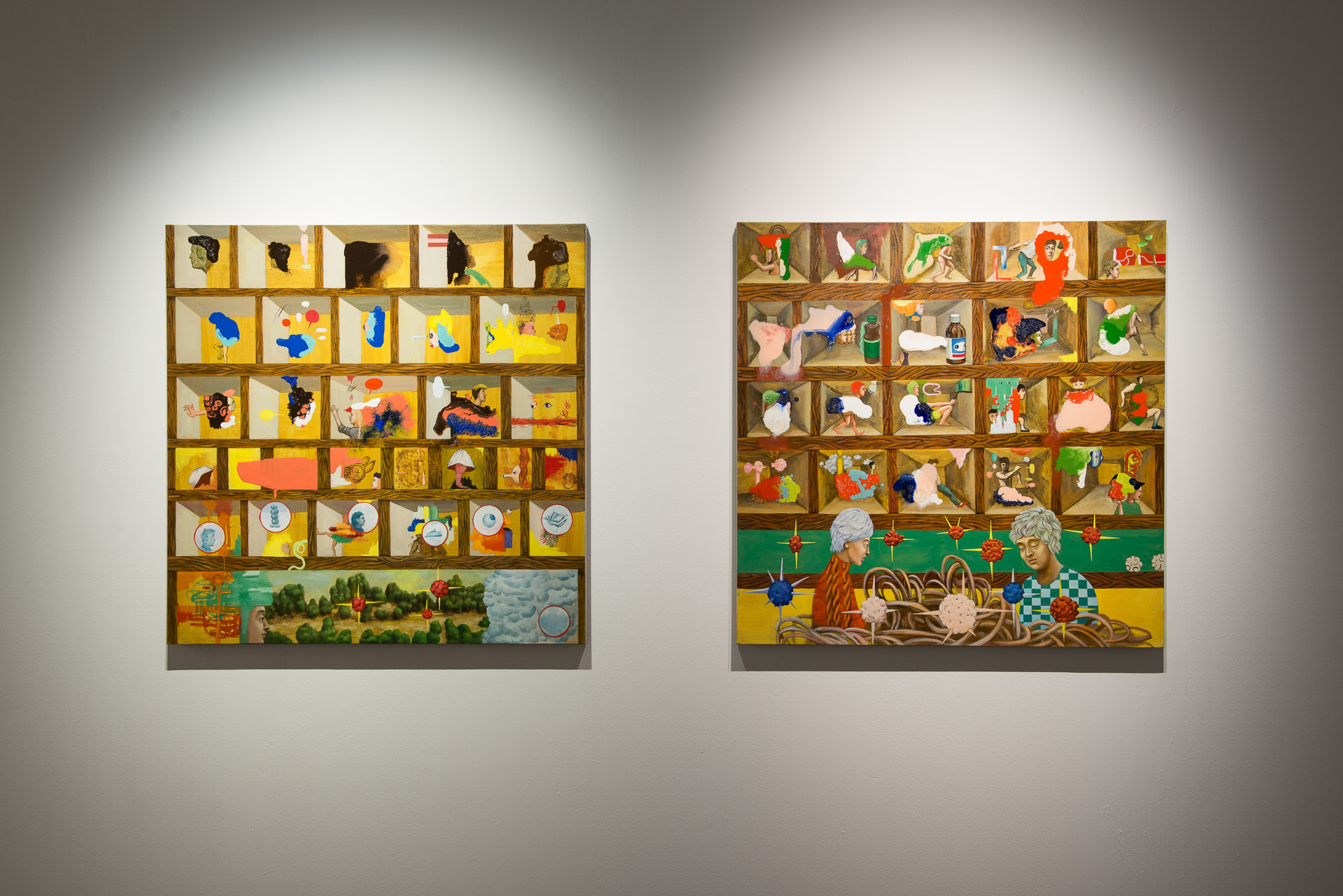
The objects in her paintings are arranged independently, without hierarchy or
sequence, sometimes on lined grids or overlapping multidimensional planes.
Medicine bottles, bread-red fragments, onions, pears—bitten pears,
heads with short hair showing the back of the neck like chestnuts,
walnuts-brains, miniature buildings and their cross-sections, ice cream cones,
snow crystals, dripping paint, holes, eyes-pupils, chocolate bars, crocheted
glass coverings, wooden sticks, squared timber, rabbits-hippos, ribbons-bow
ties, butterflies, and male faces with brown hair—these constitute the objects
in her paintings. In addition, formal signs such as spirals, thin straight
lines, circles, as well as coded cartoon-like forms such as sparkling elements,
elongated pink diamond shapes, Pac-Man-like circles, and winking cheerful boys
can be added as codes.
Between Vision and Perception: Multidimensional Flatness
In fact, these “strange” objects within a shared ground/place are
images of a world related to a theory Chung has long studied and constructed.
In 2014, she published her own theoretical framework for interpreting her
painting, Budo Theory: A New Visual Theory for Reading Multidimensional
Consciousness (Budoji, 2014). This theory is linked to the concept of “Budo
Wido (不圖為圖)”
explained in Seongmyeong Seoldo by Seong Isim. “Budo Wido” can be translated as
“making the non-image into an image” or “taking what is not a picture as a
picture.”
At first glance, it appears as an empty space where nothing is drawn,
but in fact, it is “drawing what is not drawn.”8 According to this logic, “Budo
Wido” signifies a paradoxical relationship between what is not an image and
what is an image. For Chung, this may correspond to the relationship between
“vision” (not yet an image) and “perception” (her painting), or between objects
that exist “here and now” and objects that have been transformed into another
dimension. The relationship between vision and perception unfolds into entirely
different forms and dimensions depending on time (past, present, future), space
(West, East), and language (Korean, English, French).
This interpretation is
possible because the artist distinguishes between the real world directly
perceived by the eye and the world of forms appearing within the picture plane,
explaining that “the world of forms is not a world where objects exist, but a
world where countless perspectives on objects exist.”9 She does not simply
express her emotions or feelings but focuses on the totality of these
perspectives and dimensions—the “structure”—revealing a multidimensional
structure and totality.
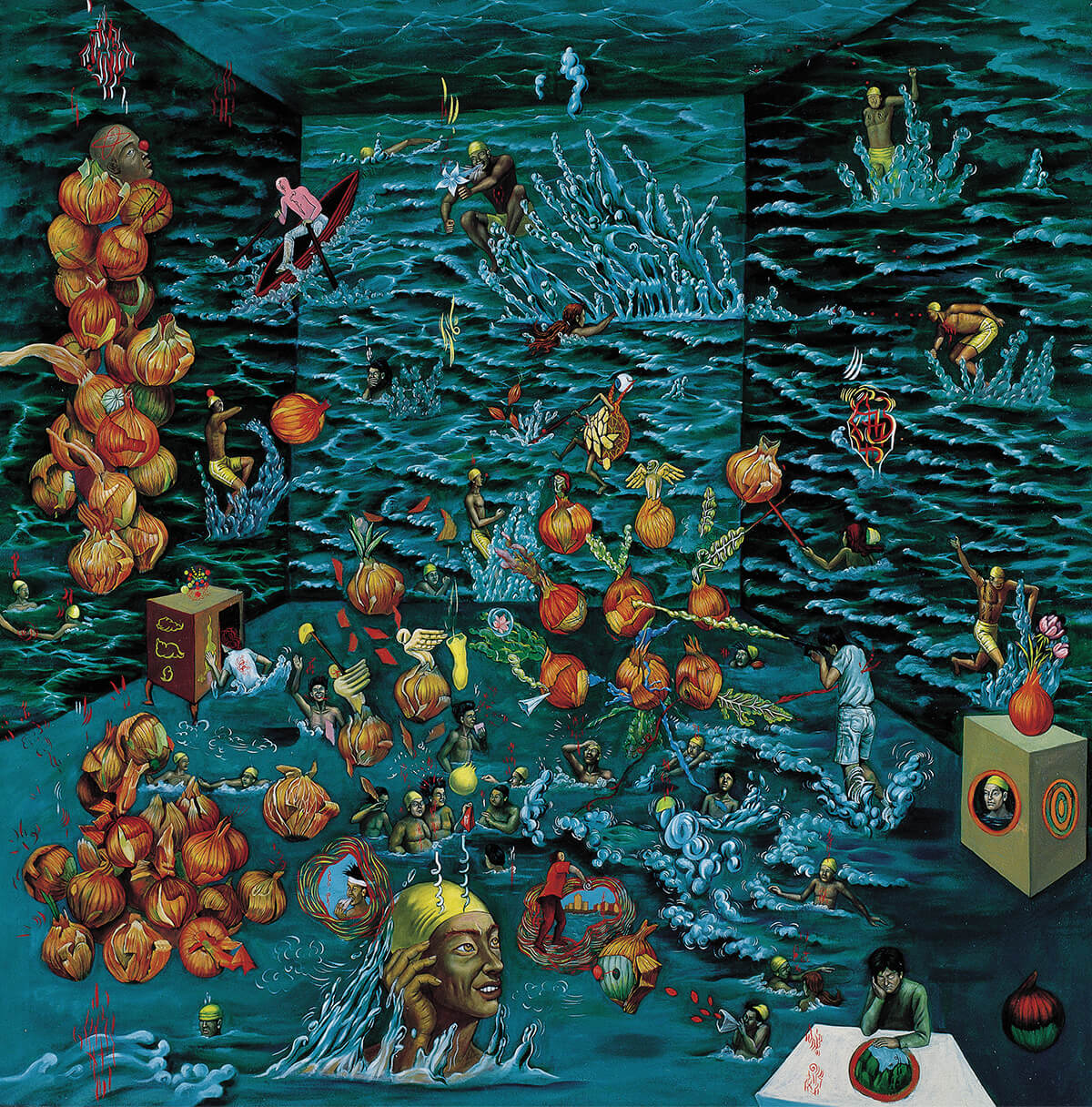
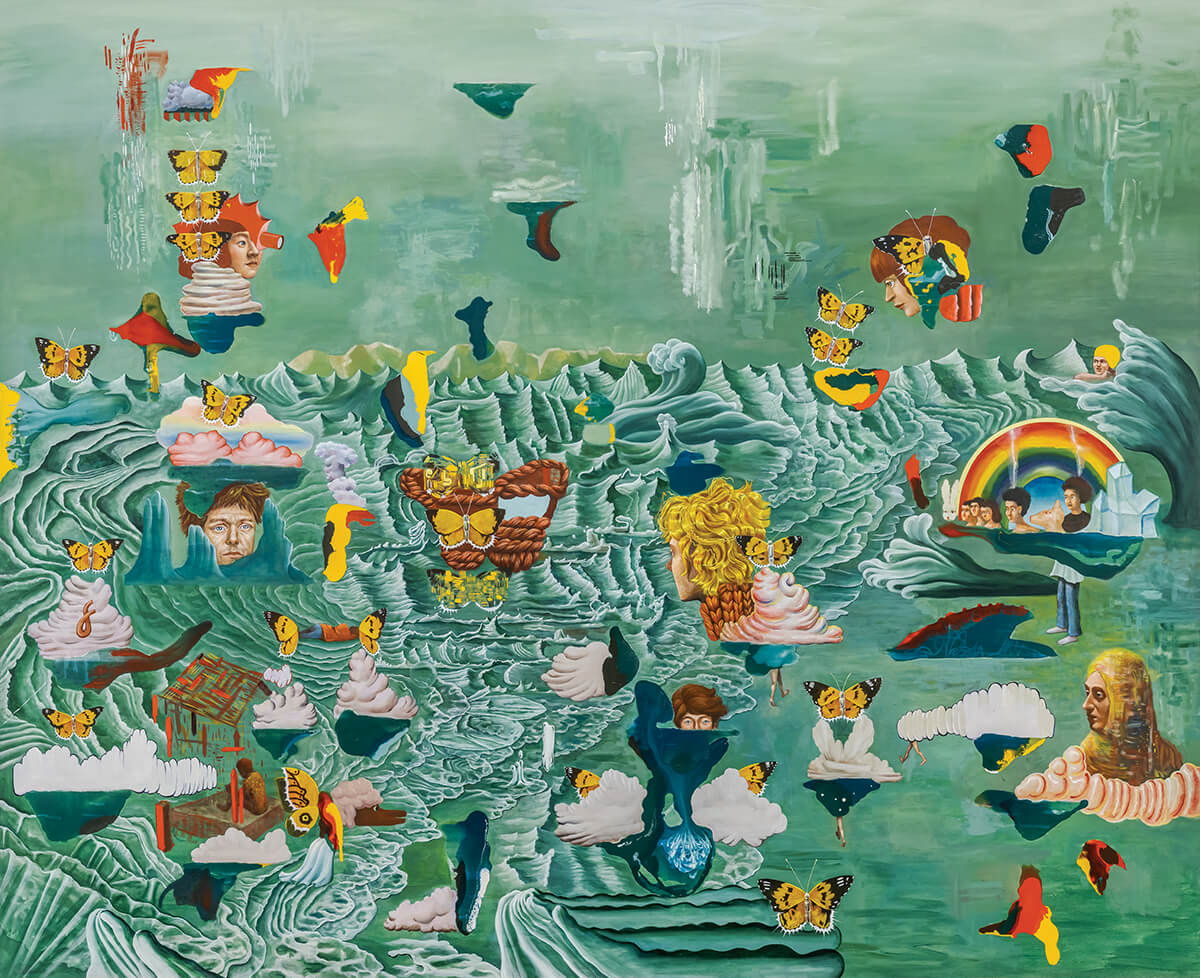
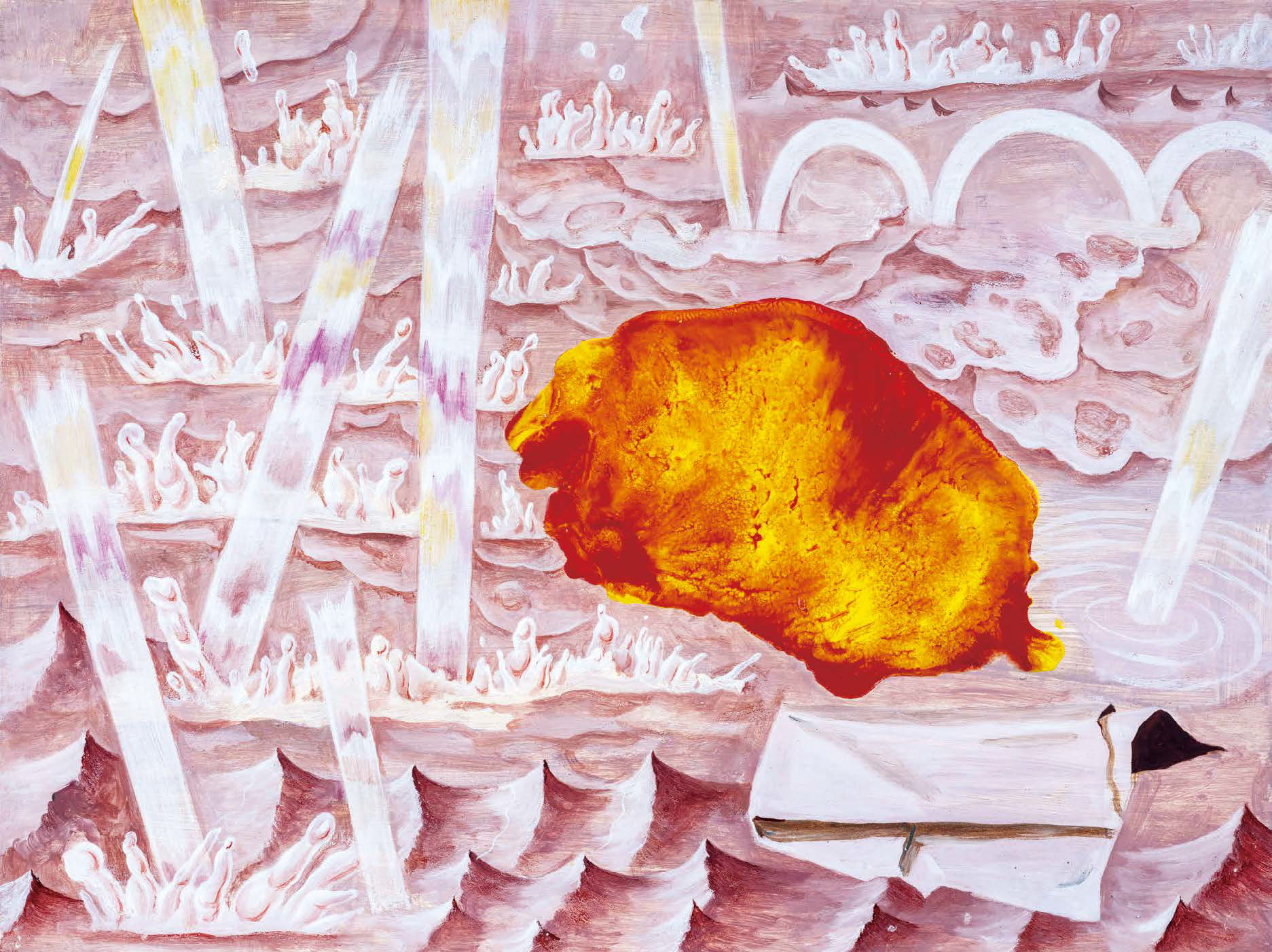
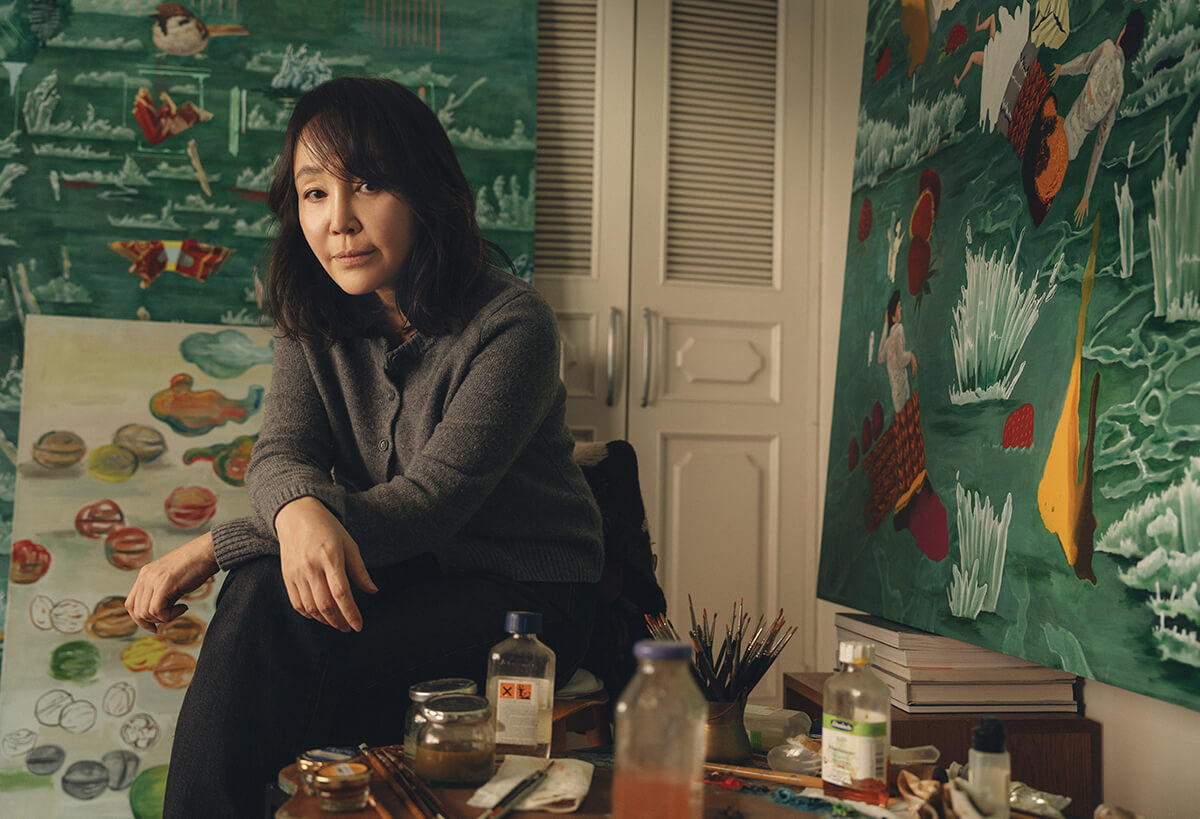
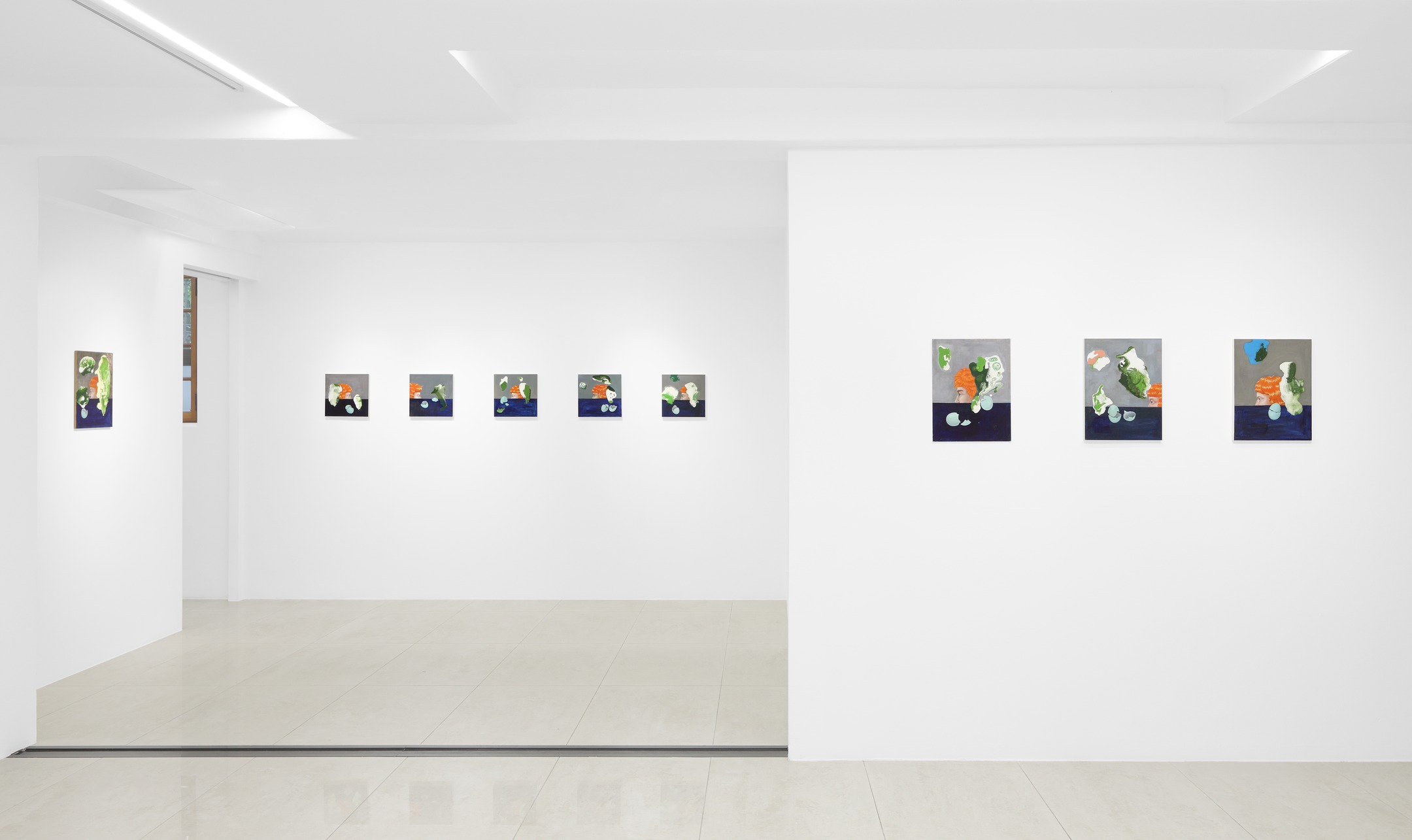
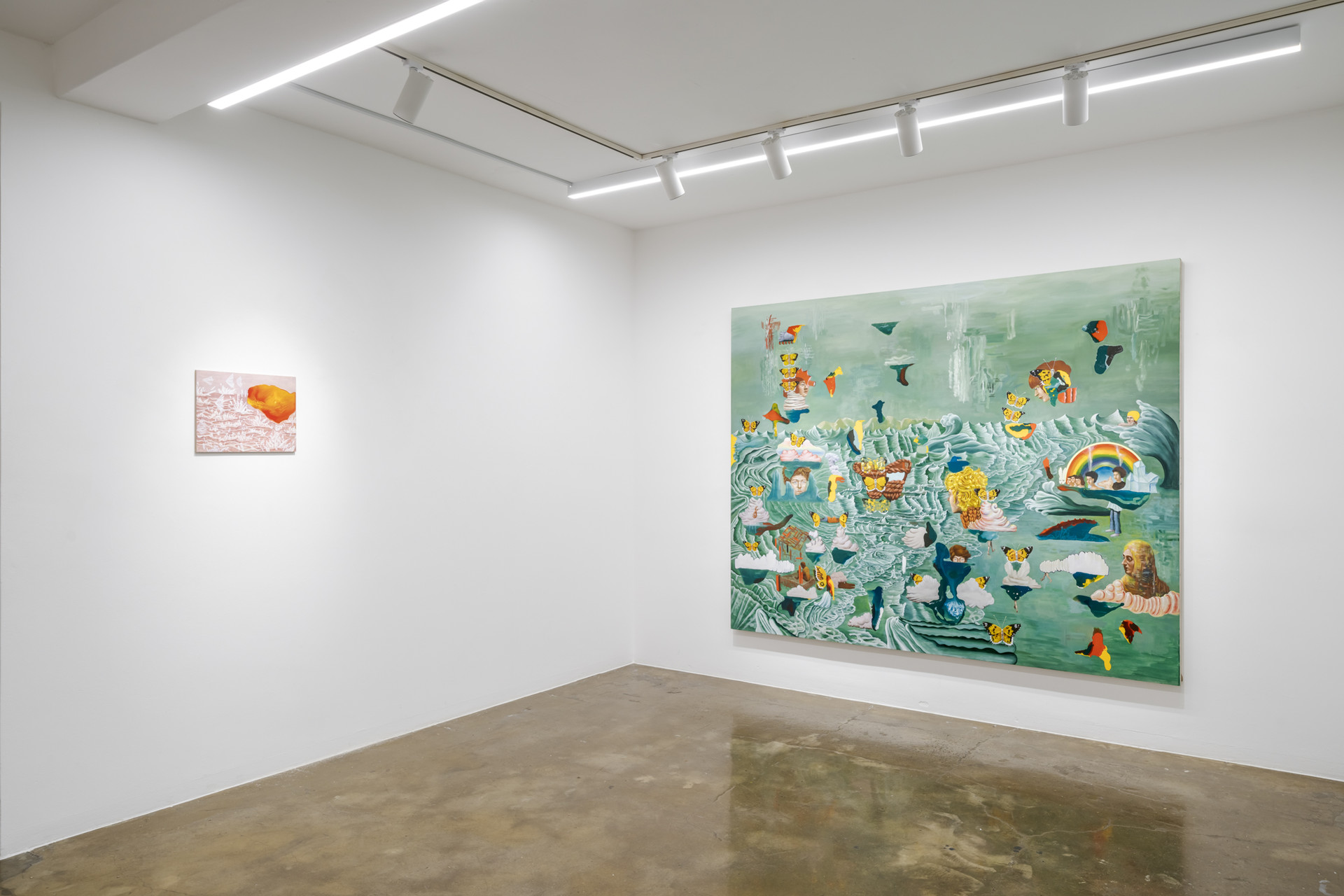
One of the works that strongly imprinted Chung’s painterly world
is the ‘Brain Ocean’ series, which draws attention with its dense visual
intensity. The works that once pressed forward with suffocating density evolve
around 2021 into series such as ‘Pink Sea’ and ‘Observer,’ where bolder
compositional divisions, repetitive patterns, symbolic eyes and pupils, and
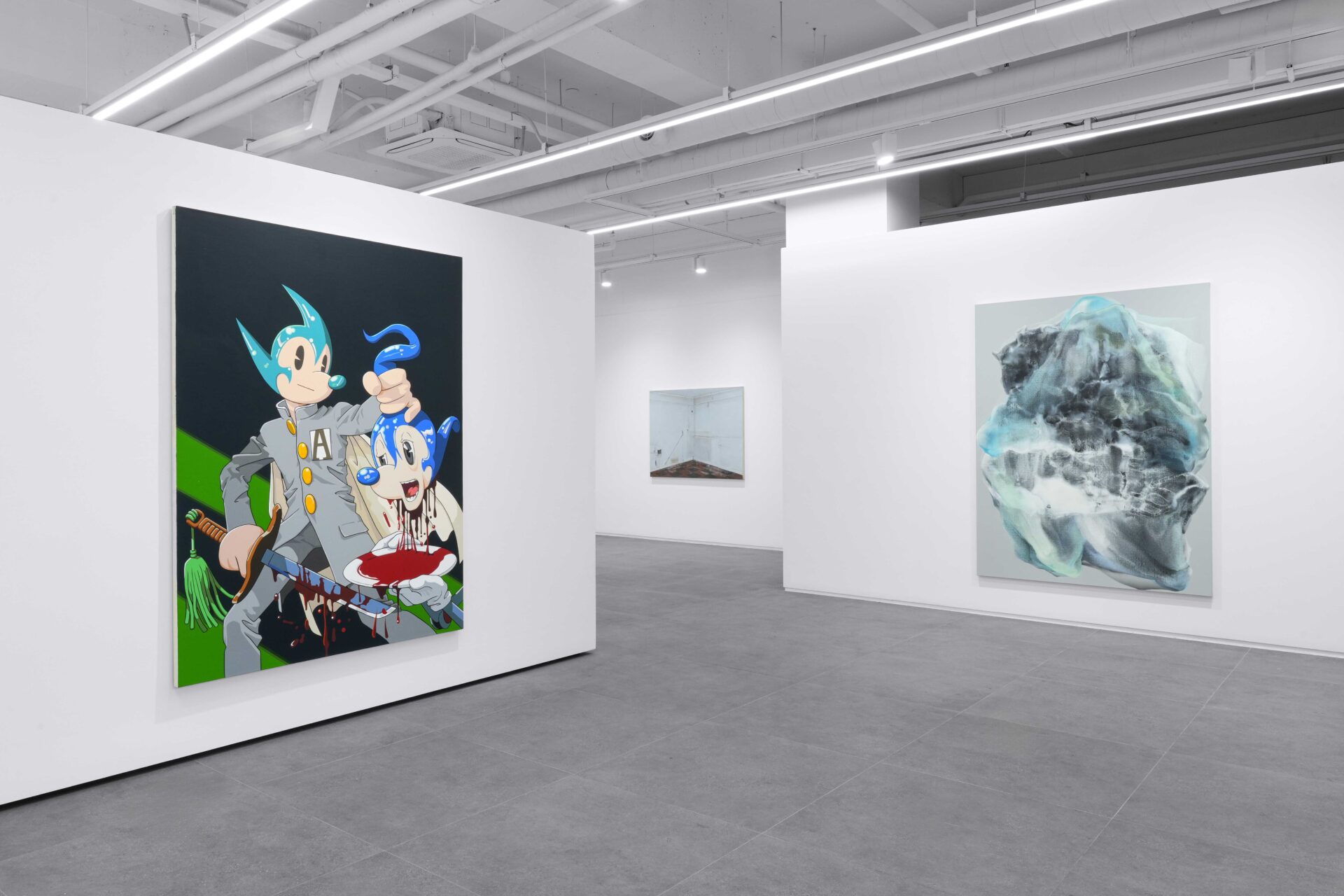
materialized paint/color masses emerge. Alongside these, the appearance of
hybrid forms—walnut-brain, rabbit resembling Pac-Man, duck with a rabbit’s face—adds further interest.
The active use of
the technique of dépaysement to connect and arrange heterogeneous objects
enhances the contemporary relevance of her painting. The fragments and
arrangements of finely rendered figurative forms, the combination of
two-dimensional volumes and flat signs, and ambiguous hybrid forms open up a
surreal visionary world. The artist’s central question—the numerous unfamiliar
dimensions between “seeing” (vision) and “perceiving”—is becoming increasingly
visible.
This is undoubtedly related to the visual theory the artist has
long explored and constructed. Even if her sincere dialectical struggle may
interfere with the overwhelming aesthetic experience of her work, her
multidimensional paintings—where multiple “specific” objects and times
overlap—secure their significance as a “common ground/place” that prompts
reflective contemplation on the relationship between vision and perception,
which can never be identical.
1 Lee Young-chul, “The Space of Complexity, the Time of
Discontinuity: On the Planning and Direction of 《’98 City and Image–Food, Clothing, Shelter》,”
exhibition catalog, You Are My Sun, Total Museum of Contemporary Art, 2005,
p.143. Bold emphasis added by the author.
2 Kang Seung-wan, 《Young Korean Artists 2000–Towards the New Millennium》 exhibition leaflet (MMCA, 2000)
3 Michel Foucault, The Order of Things, trans. Lee Gyuhyun,
Minumsa, 2012, p.7
4 Ibid., p.9
5 Classical Chinese encyclopedias such as Sancai Tuhui (1609) and
Shuofu (c.1407) each had their own systems of order
6 Foucault, op. cit., p.9
7 Cho Sang-il, Diagonal Logic and Joseon Calendar, 2013; cited in
Jung Yeon-shim, “Suejin Chung’s Painting,” S2A Gallery, 2025
8 Ibid.
9 Ibid.
*This manuscript is a special contribution supported by the Korea
Arts Management Service (2025).