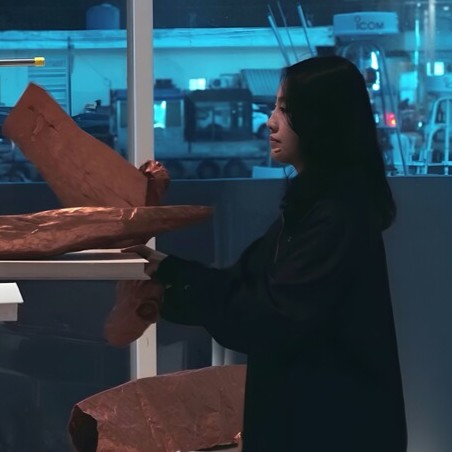


Ria Choi (b. 1988) works across sculpture, video, and installation, engaging with questions of the autonomy and presence of the sculptural object. In particular, through the repetitive act of “making”—standing and connecting paper that mimics metal—she metaphorically expresses elusive structures of force, focusing not on defining fixed objects as sculpture but on states in which relationships and forces are provisionally revealed.


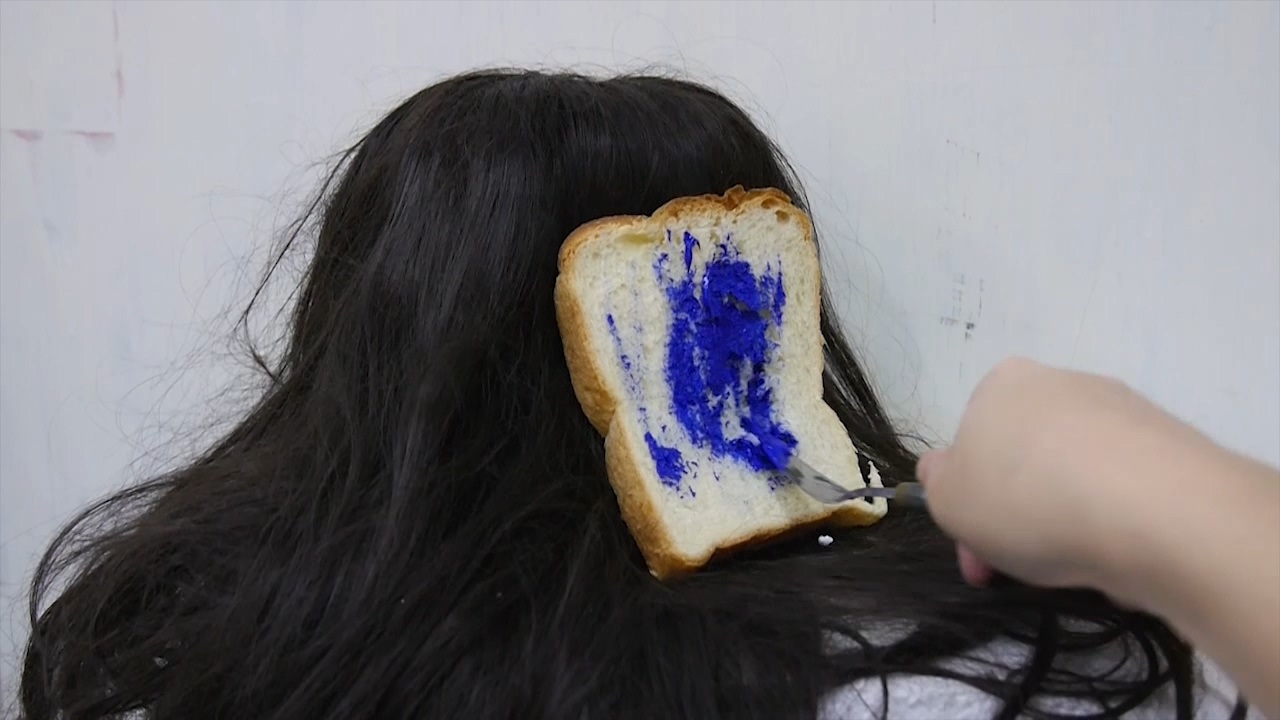
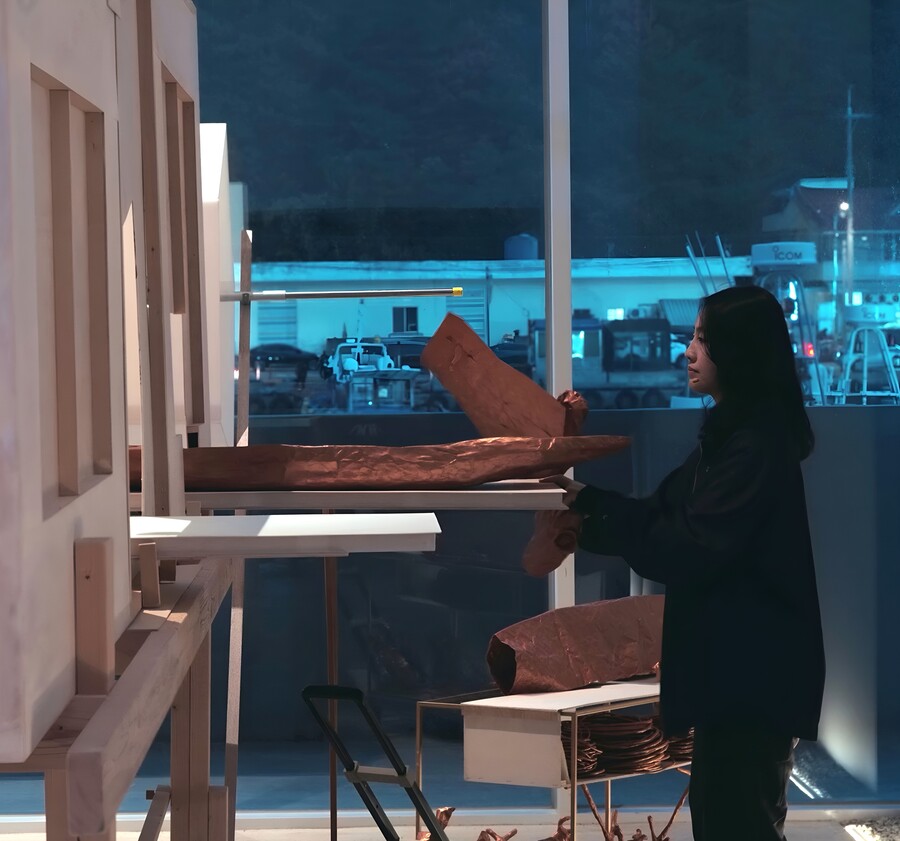
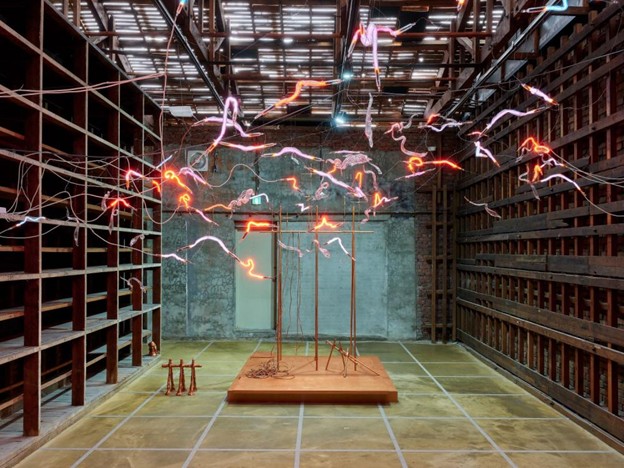
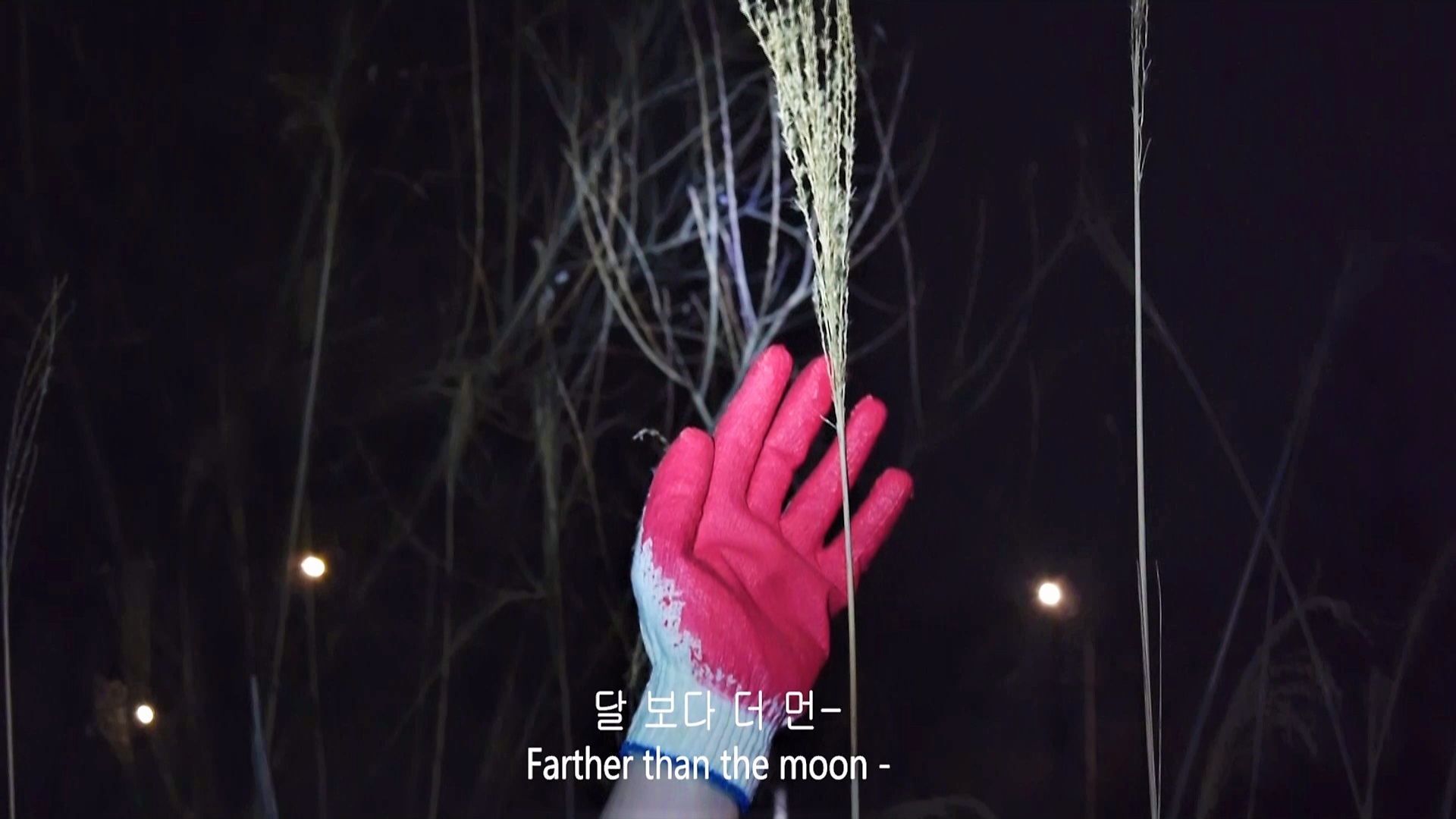
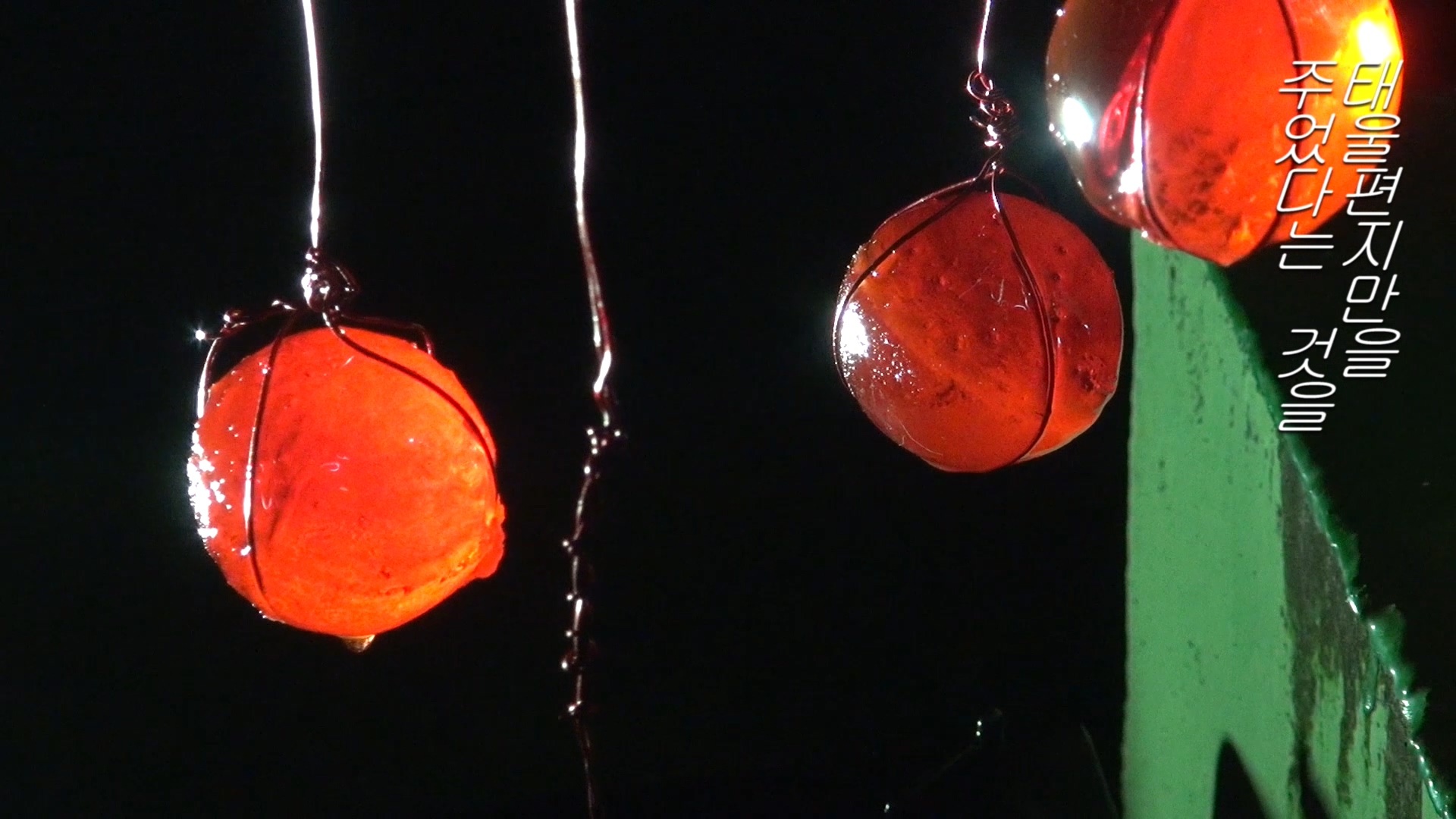
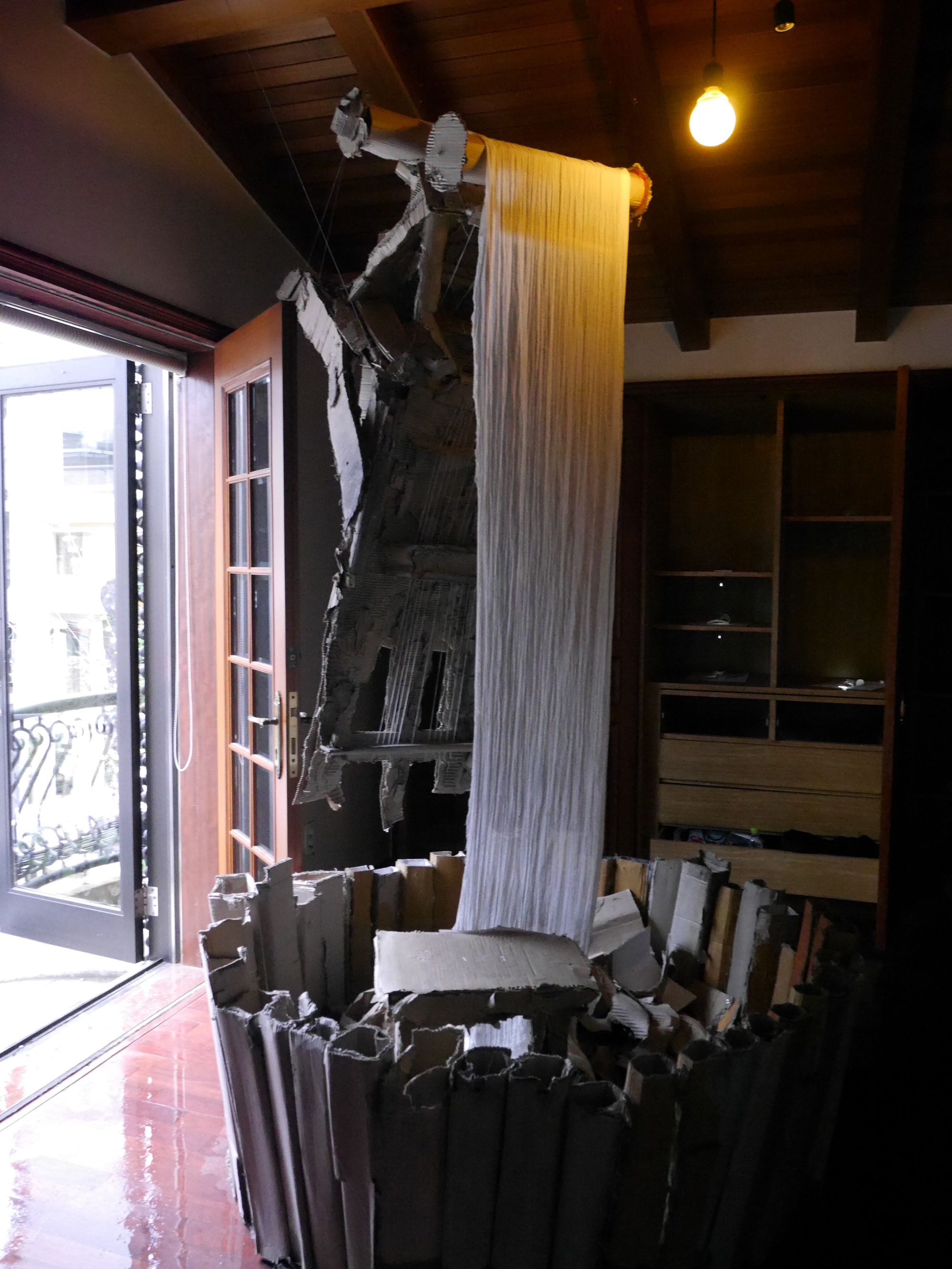
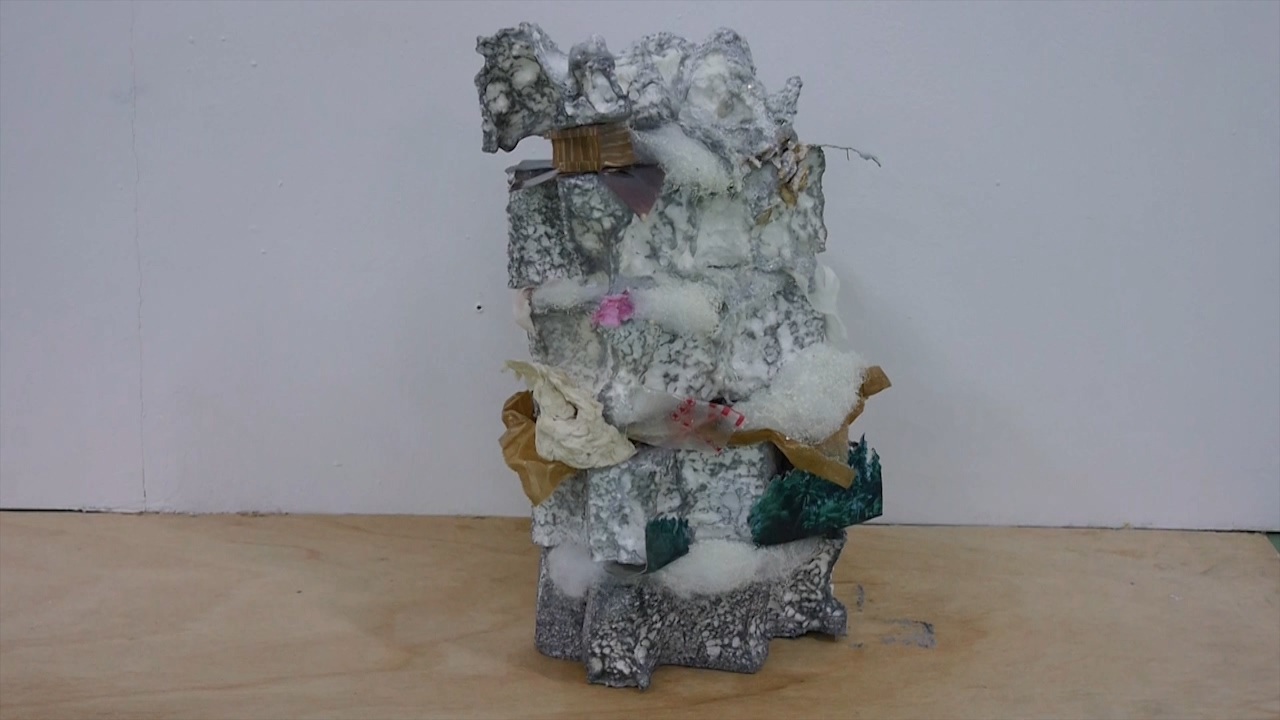
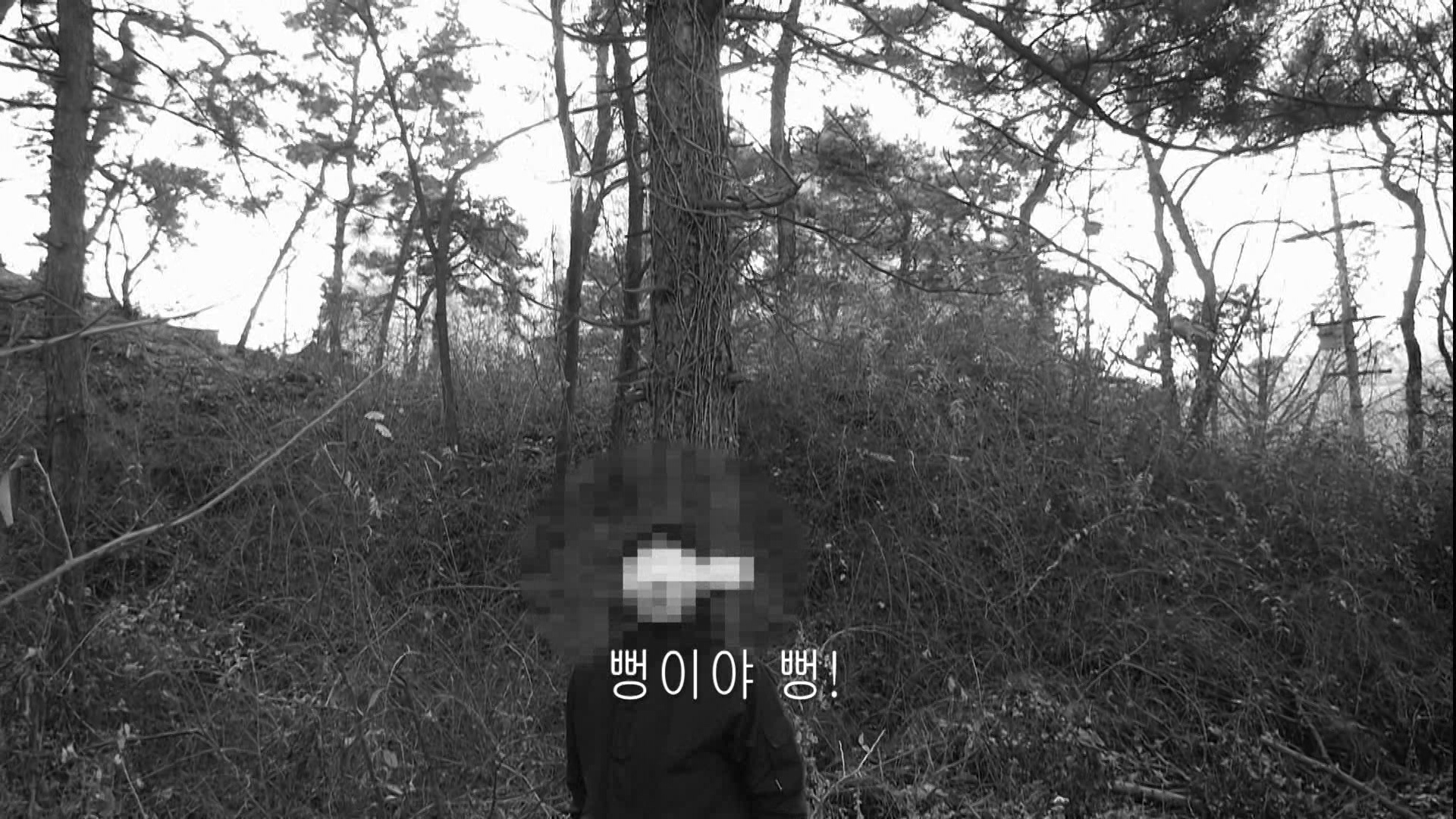
Ria Choi, Vacuum, Full, store- A Power Loom, 2014, Installation & video, 13min 9sec. © Ria Choi

In her early works, Ria Choi experimented with the presence of sculpture by reconfiguring past sculptural and performative practices through a contemporary sensibility and situating them within the “here and now.”
 
For example, her 2014 video installation Vacuum, Full, Store – A Power Loom evokes the performance and site-specific works of the 1960s and 70s. In this piece, Choi inserts the notion of “full” as a hyphenated connection between Yves Klein’s exhibition 《Le Vide》 (1958) and Claes Oldenburg’s 《The Store》 (1962), thereby exploring the possibilities of site-specific practice in the present moment.


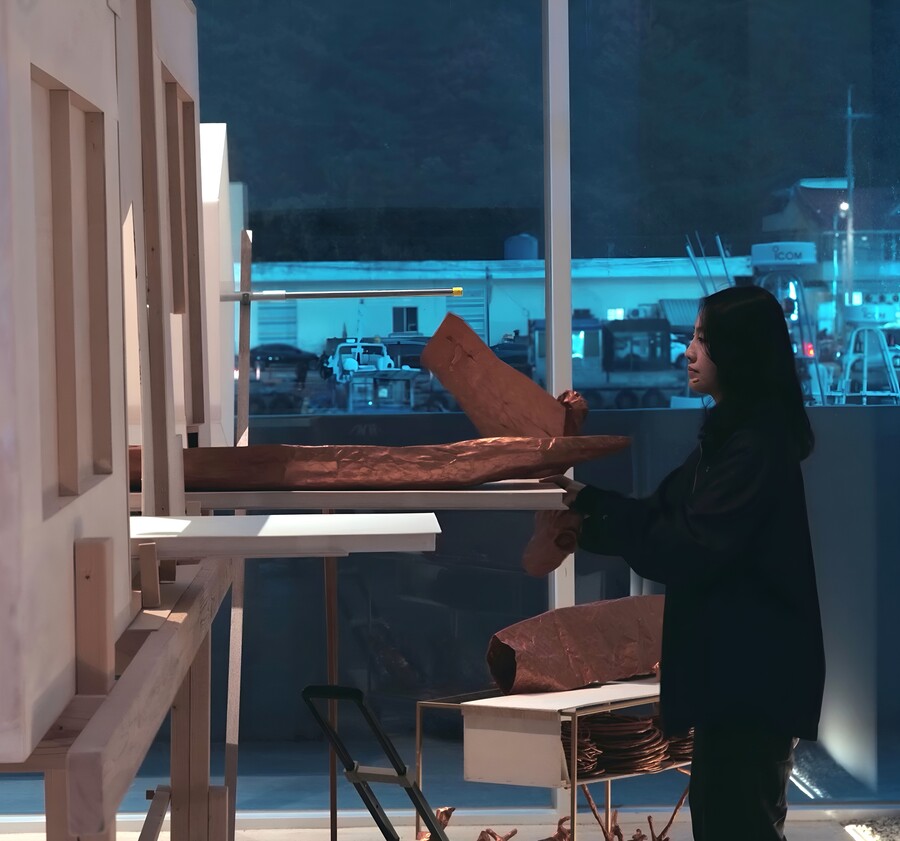
Ria Choi, Vacuum, Full, store- A Power Loom, 2014, Installation & video, 13min 9sec. © Ria Choi

The exhibition 《Vacuum, Full, Store》, in which this work was presented, took place at a location quite distant from Itaewon Station. Utilizing this spatial condition—the distance to the exhibition site—the artist orchestrated an experience in which the scenes encountered along the way would resurface as a kind of flashback once viewers arrived at their destination.
 
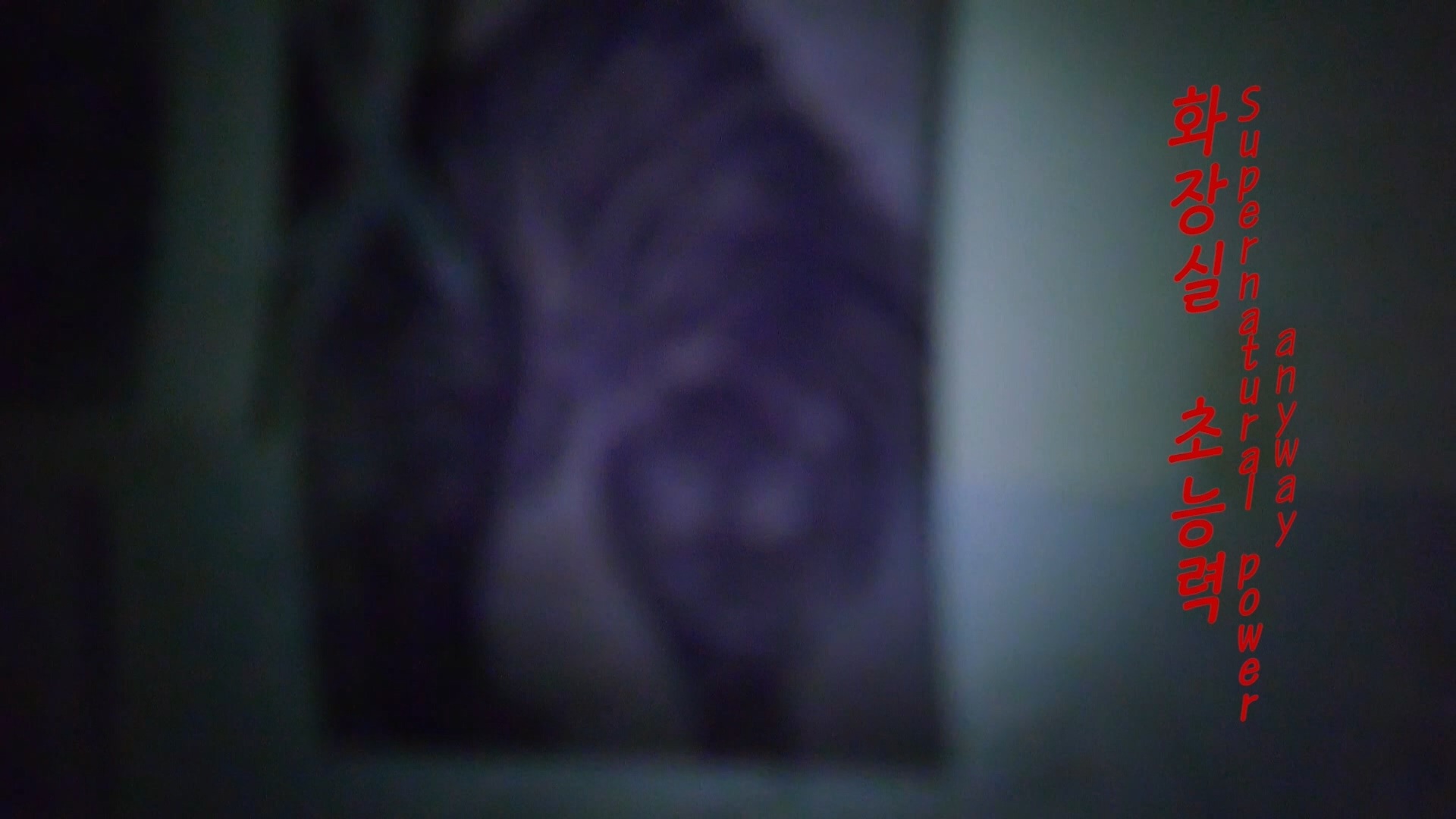
The video features elements found along that route—such as a mosque, nearby shops, discarded objects, and alleyways—assembled sequentially like fragments of a sculpture.


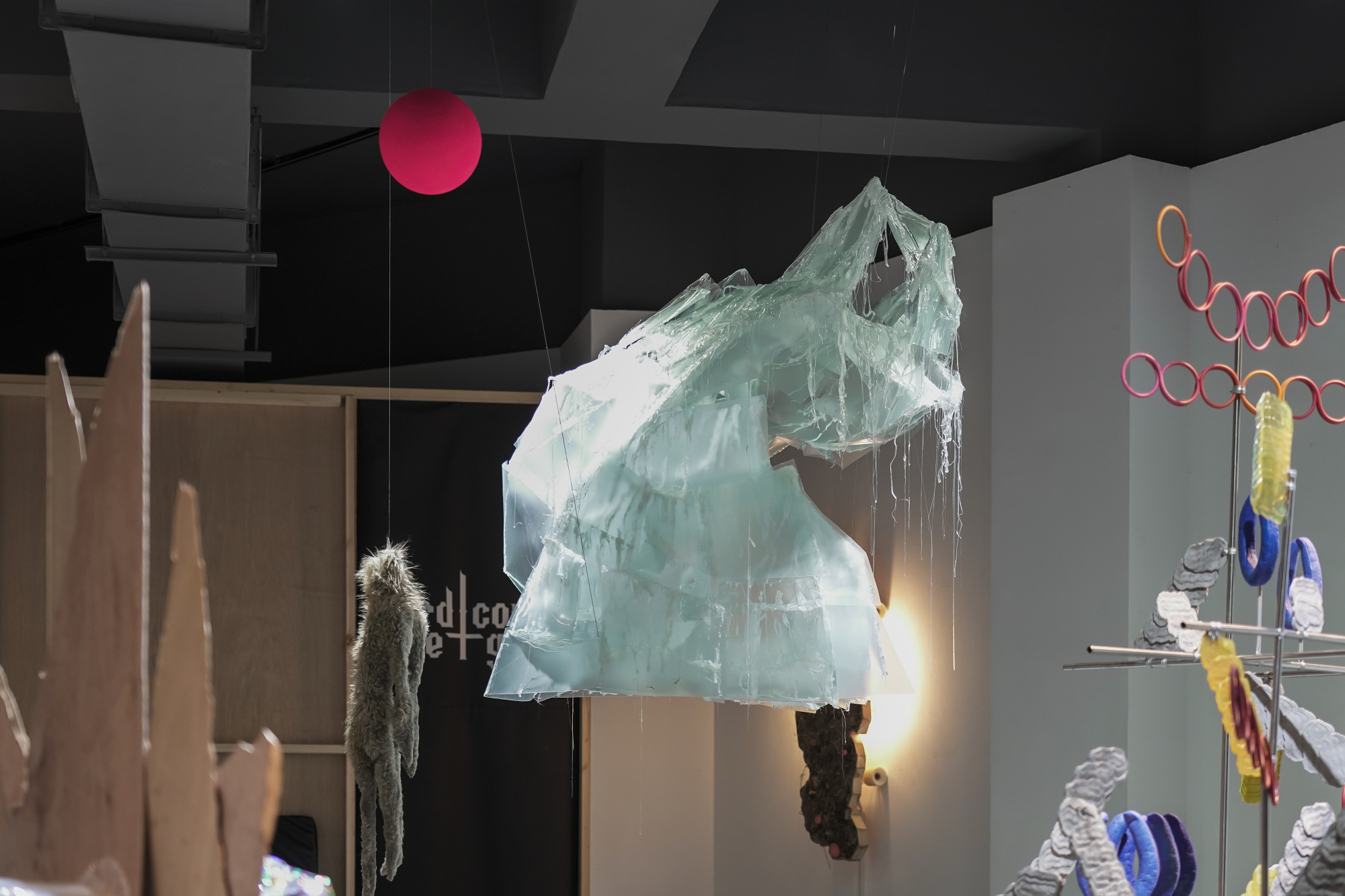
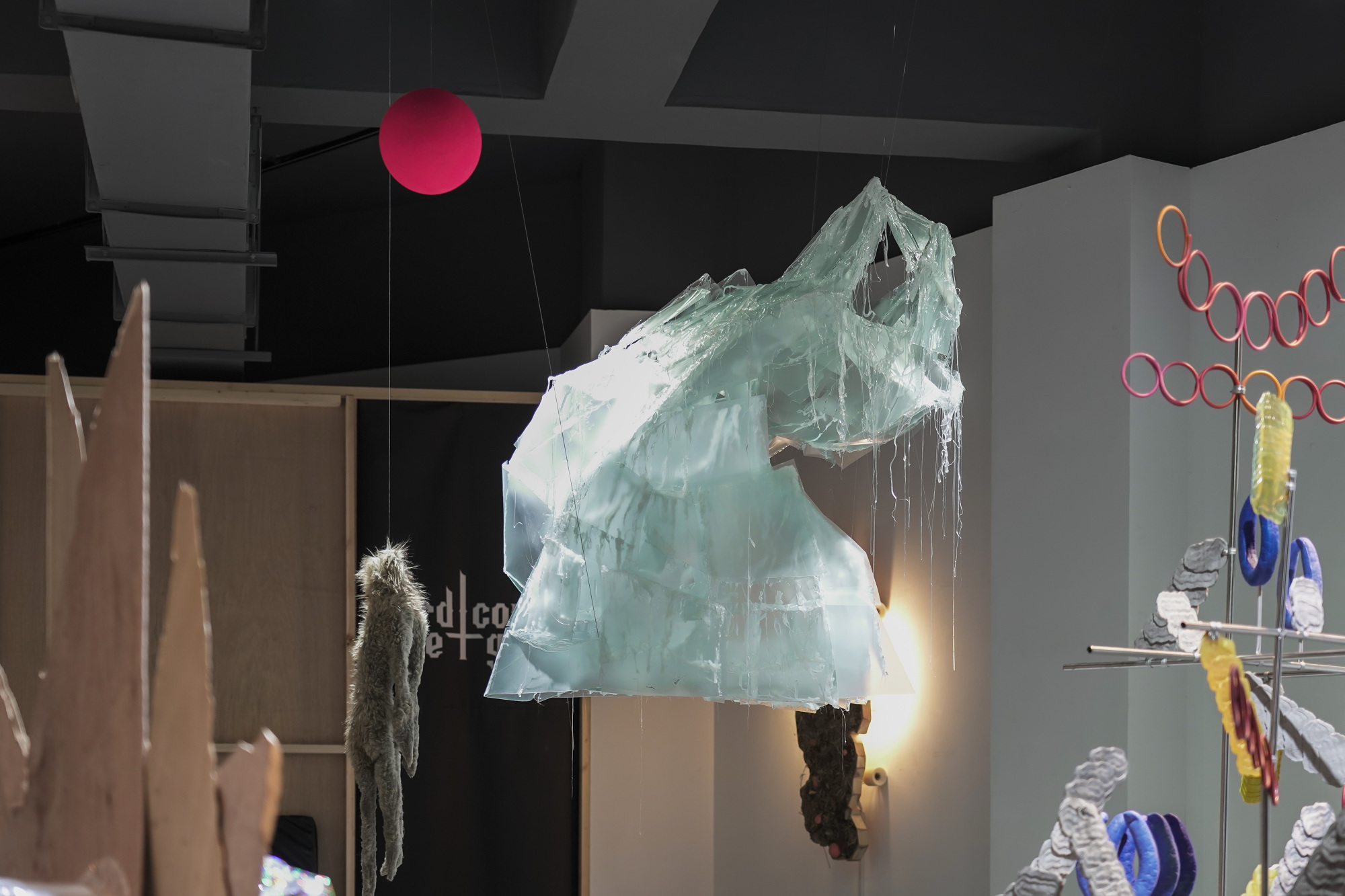
Installation view of 《Hardcore Futuregraphy》 (17717, 2020) © Ria Choi

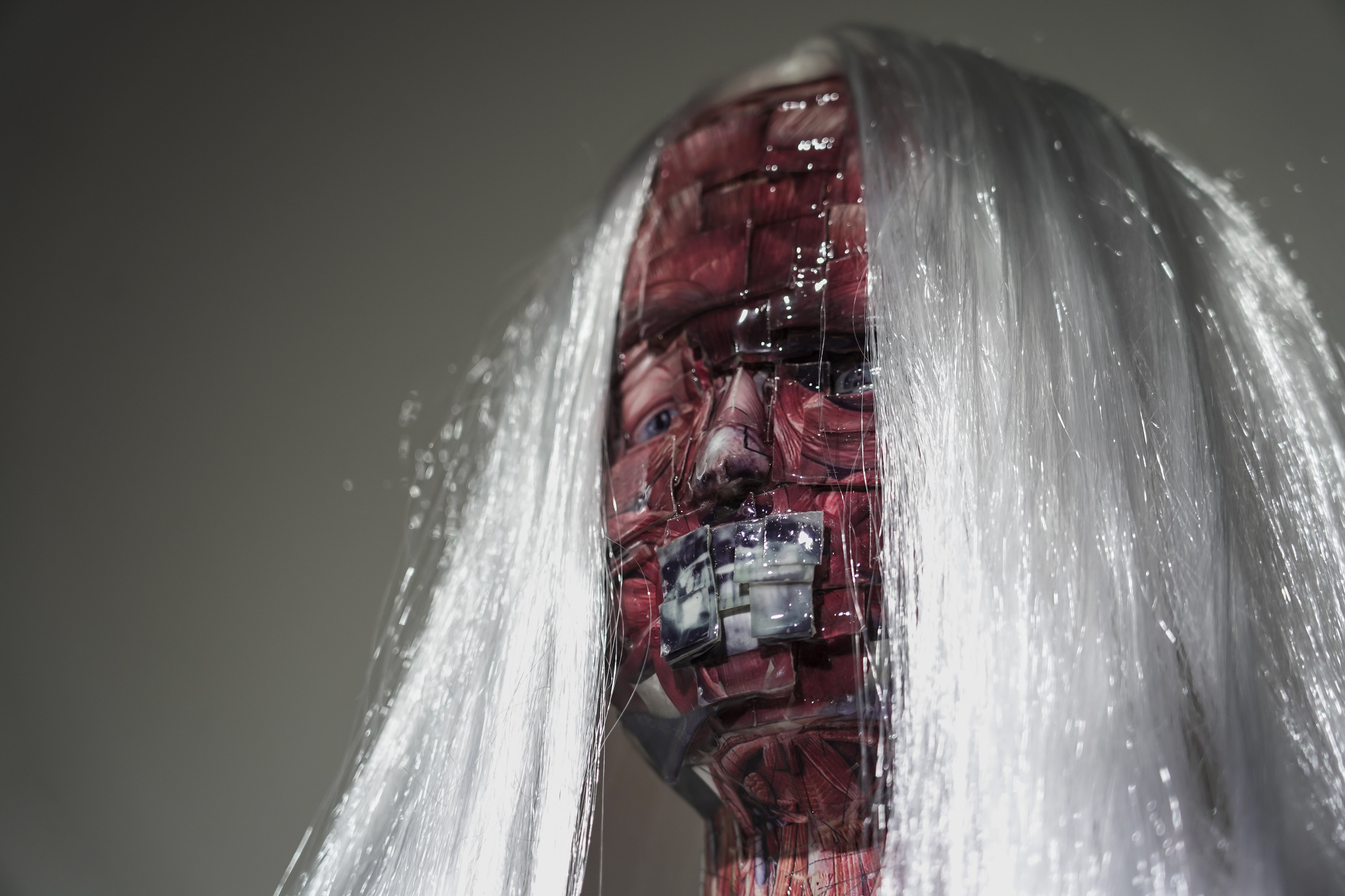
In the exhibition 《Hardcore Futuregraphy》 (2020), Ria Choi reinterpreted sculptural works produced in Korea from 1999 to the present, while also presenting works that imagine what sculpture might look like in the future of 2040.


Installation view of 《Hardcore Futuregraphy》 (17717, 2020) © Ria Choi

The references for these works were drawn from the idea of “space exploration,” which many countries have been planning through 2040. Choi conceived the project to reflect both the desire for newly discovered planets and the ambivalent sense of conquest that might accompany their exploration.
 
For instance, Blue Screen Love was created using the two colors most frequently employed in works presented in Korea in 2018, while Inside of the Outside of the Inside was produced through a reinterpretation of a work by artist Gwon Osang.


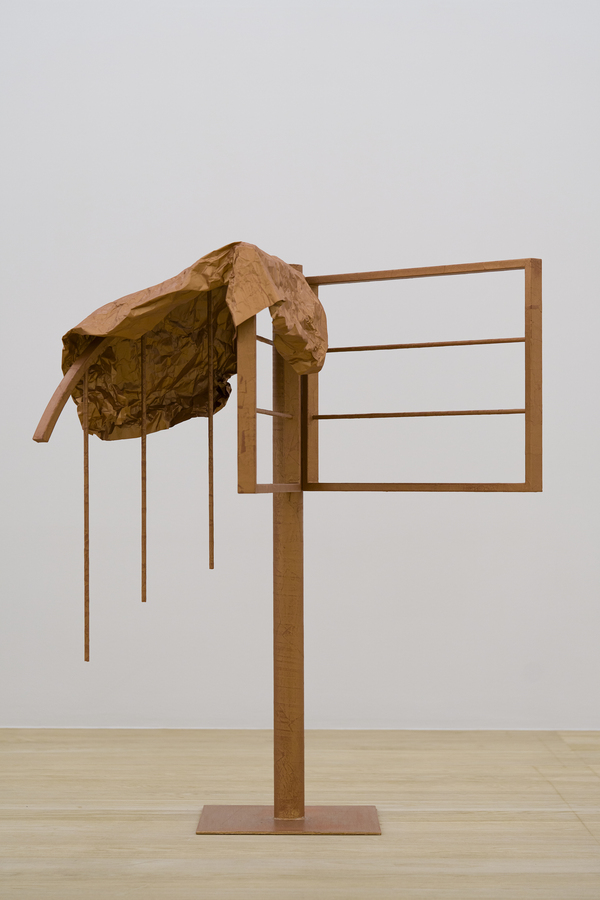
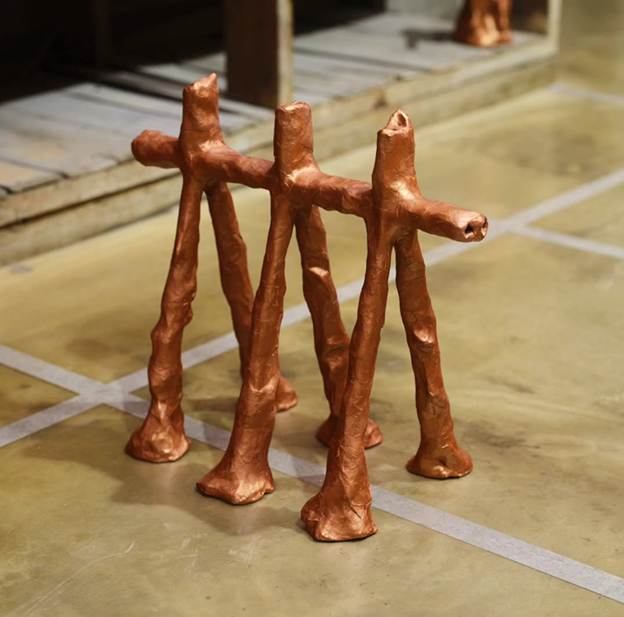
(left) Ria Choi, Fence 1, 2023, Mixed media, 50x20x45cm / (right) Ria Choi, Fence-growing, 2023, Mixed media, 205x200x300cm, Installation view of 《stocker》 (SeMA Storage, 2023) © Seoul Museum of Art

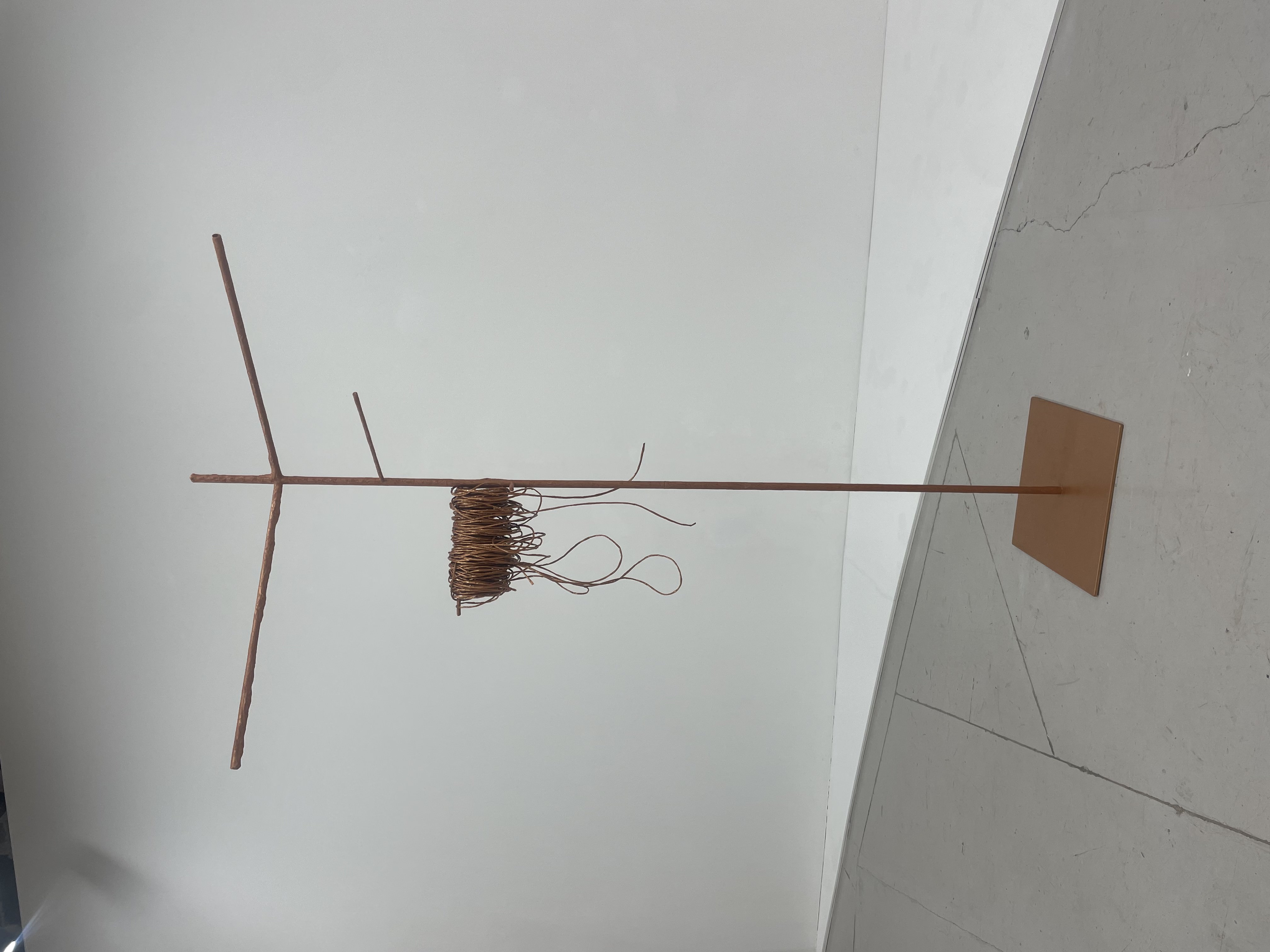
Since 2021, Ria Choi has developed the ‘Fence’ series, which originates from scenes of taming in which a horse gradually adapts within a circular enclosure. This body of work reflects on how spatial boundaries and invisible power structures regulate and organize individual movement.
 
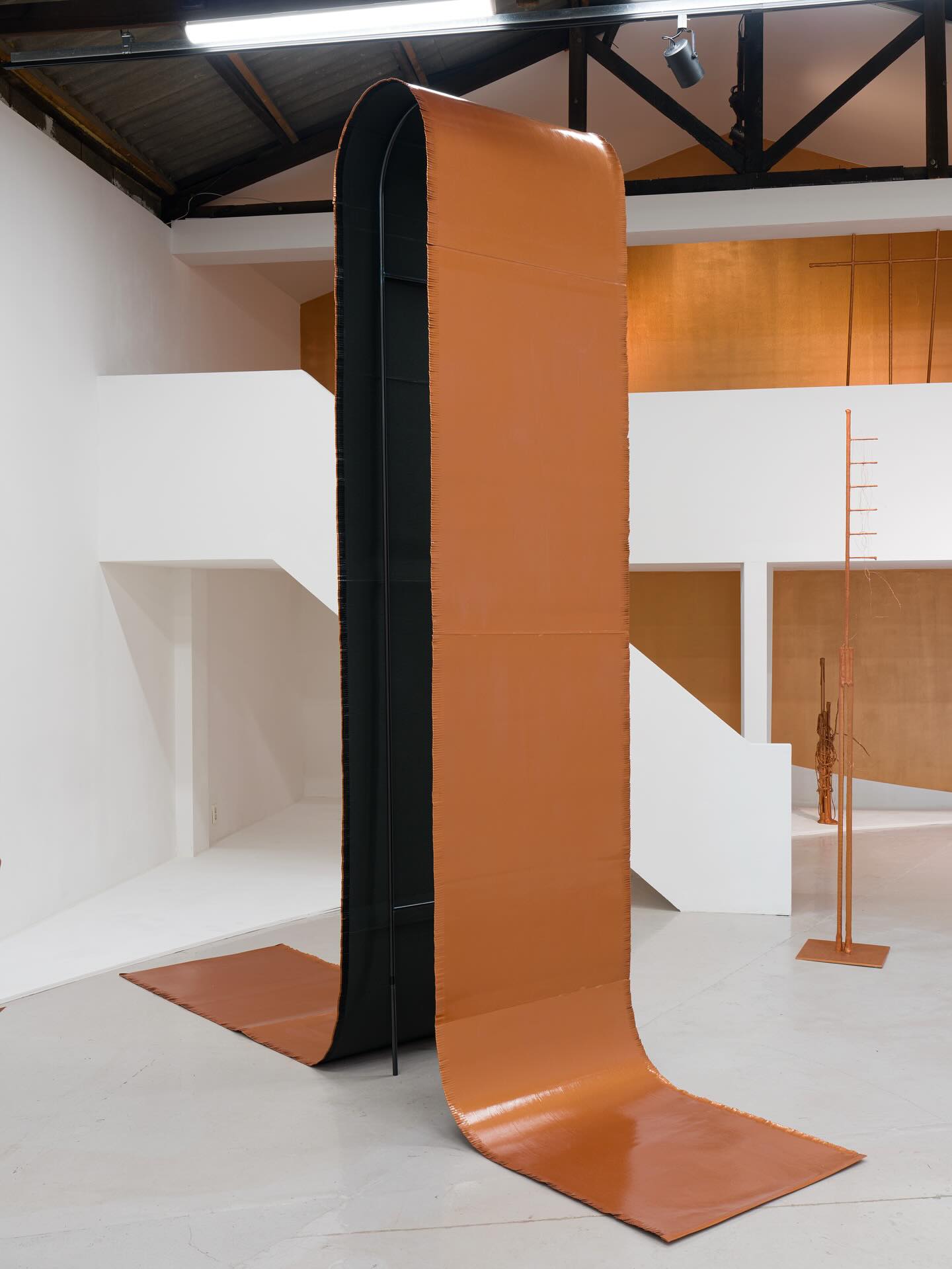
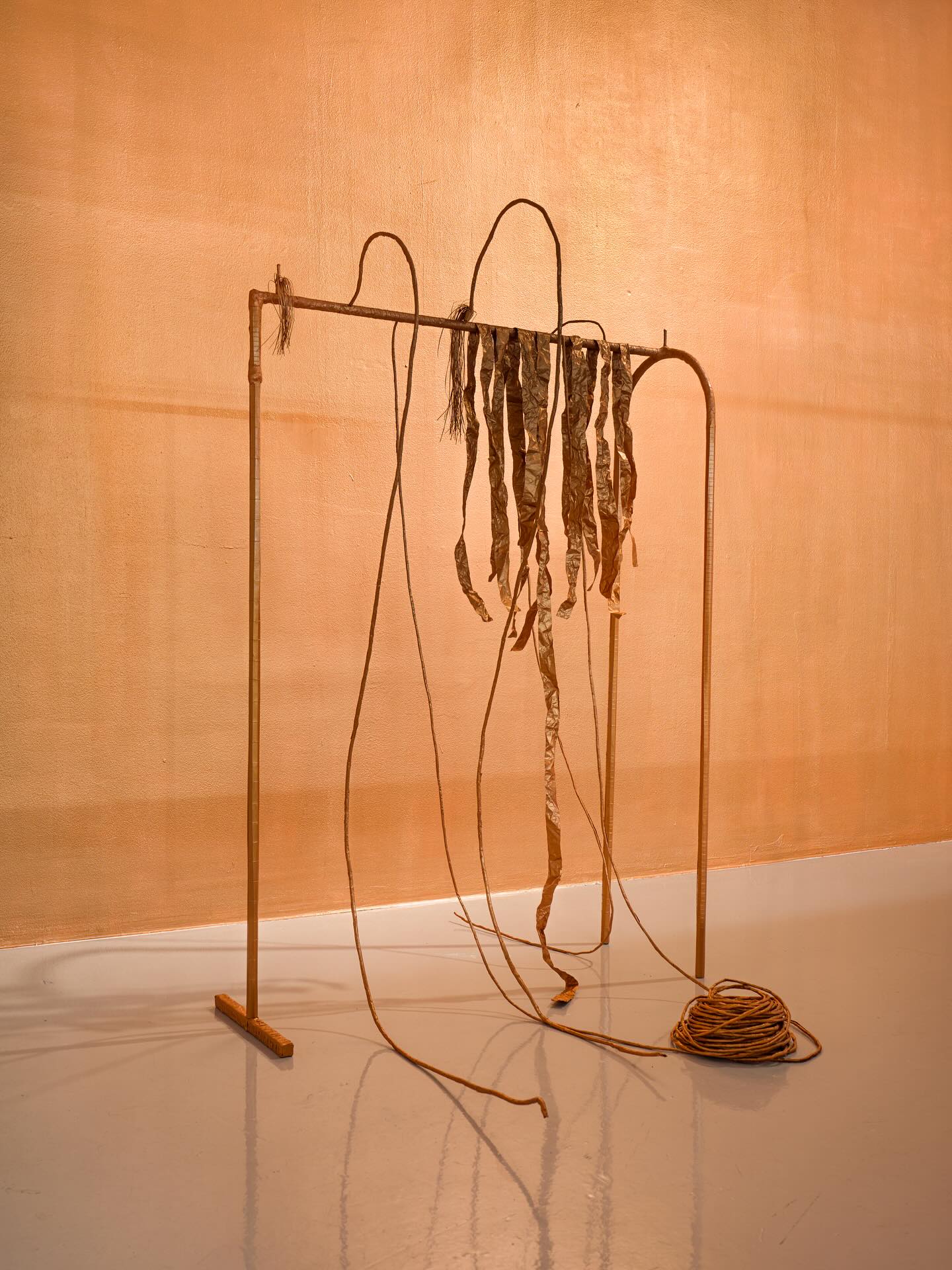
Composed of paper elements that mimic the color and texture of copper, these works imitate solidity; however, their easily swaying and bendable structures invite a reconsideration of conventional notions of sculpture from a new perspective.


Installation view of 《Fence-go-round》 (Hall 1, 2025) © Hall 1

Ria Choi’s first solo exhibition, 《Fence-go-round》, held in Hall 1 in 2025, presented the paper fence sculptures she had developed over the past four years.
 
Originating from the circular enclosure used to train horses, this body of work consists of structures that define the viewer’s position and path of movement. Enveloping the audience in a circular formation, the installation raises questions about the forces that compel repetitive movement and the boundaries within which such forces operate.


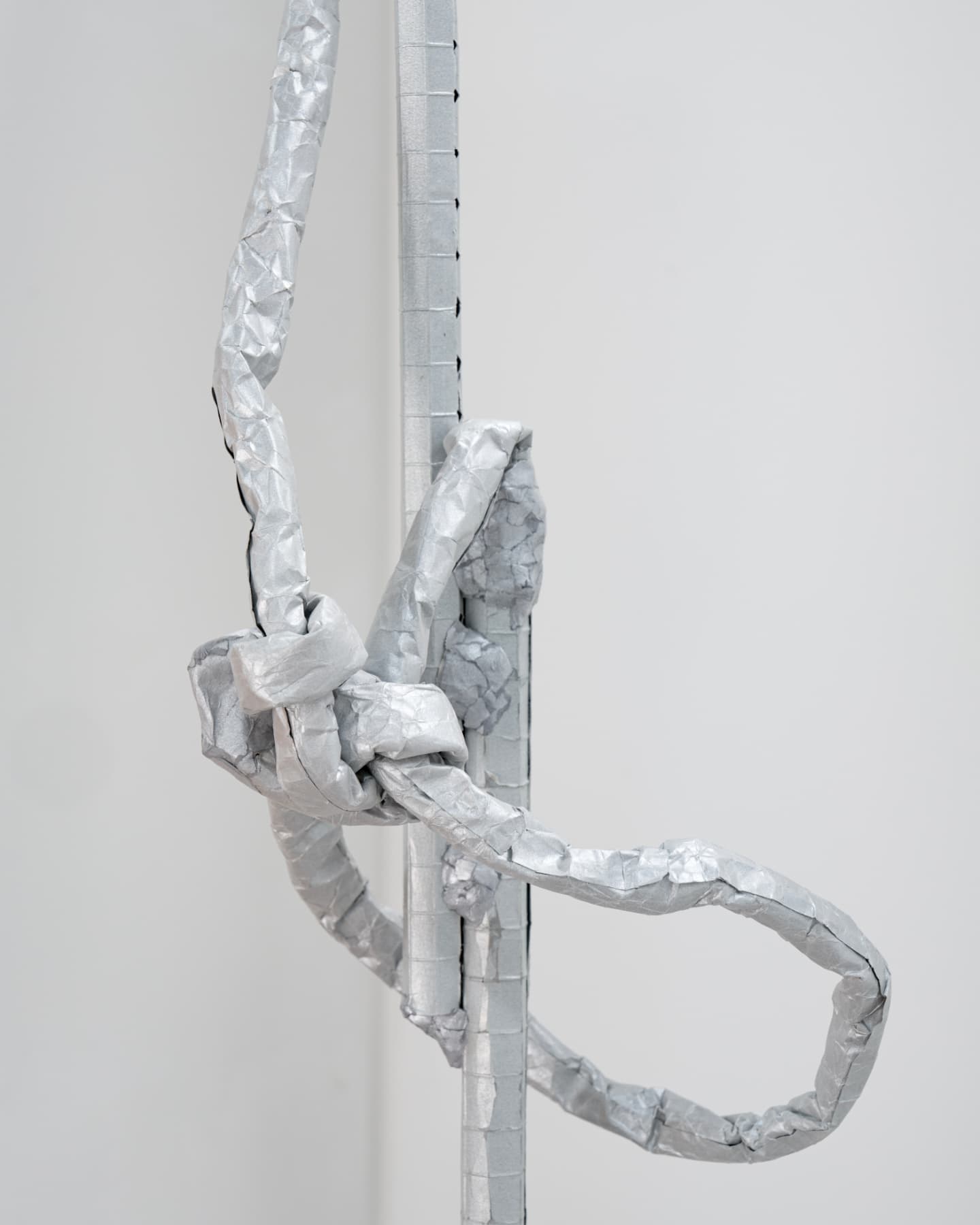
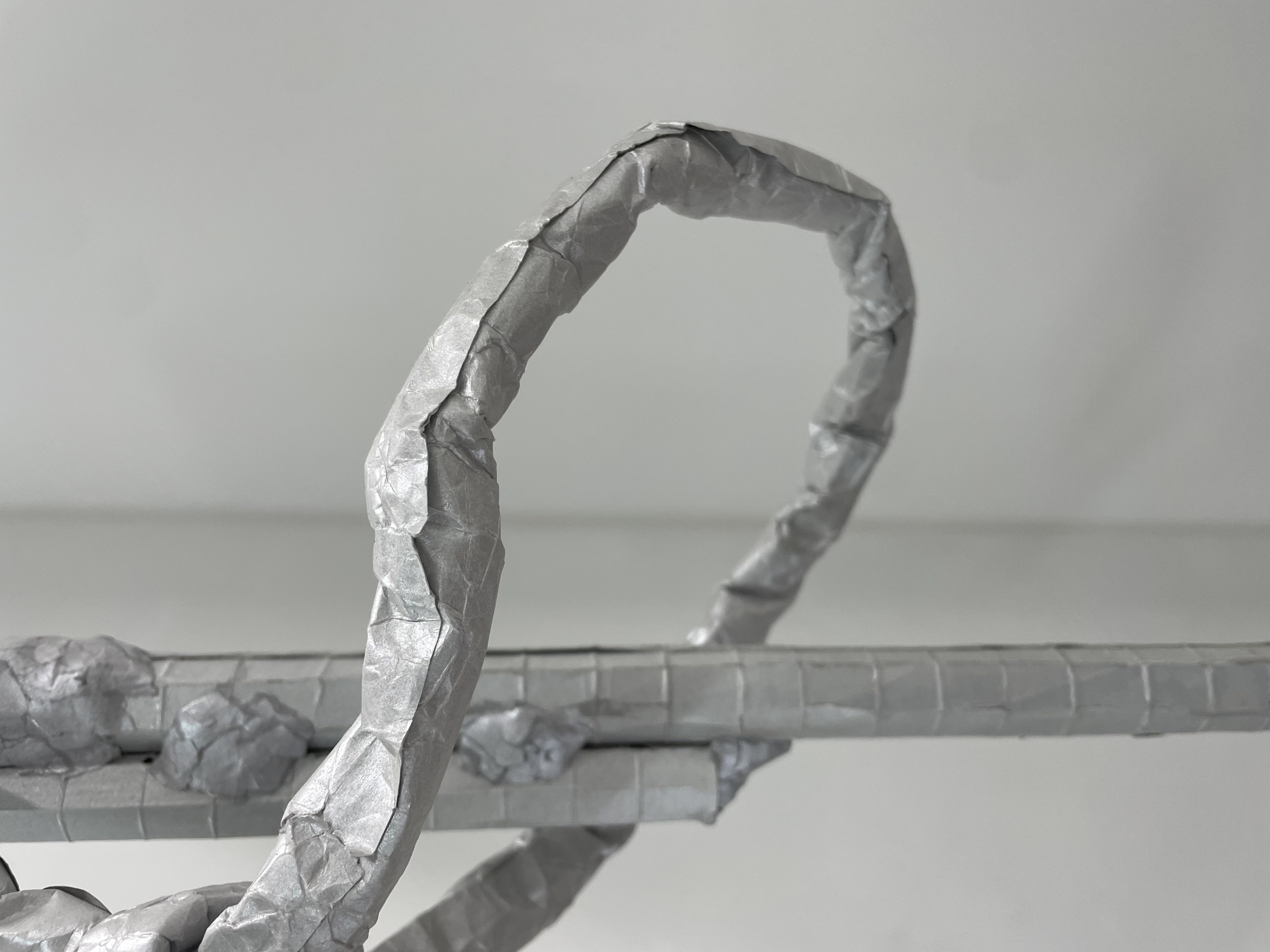
Ria Choi, Knot, 2025, Custom-made paper, paper tubes, and steel pipes. Photo: Jeongkyun Goh. © Ria Choi

The viewer’s path is constrained—like that of a racehorse endlessly circling a round pen—by a copper-colored wall at the exhibition entrance, a white partition, and a circular plinth placed on the floor.
 
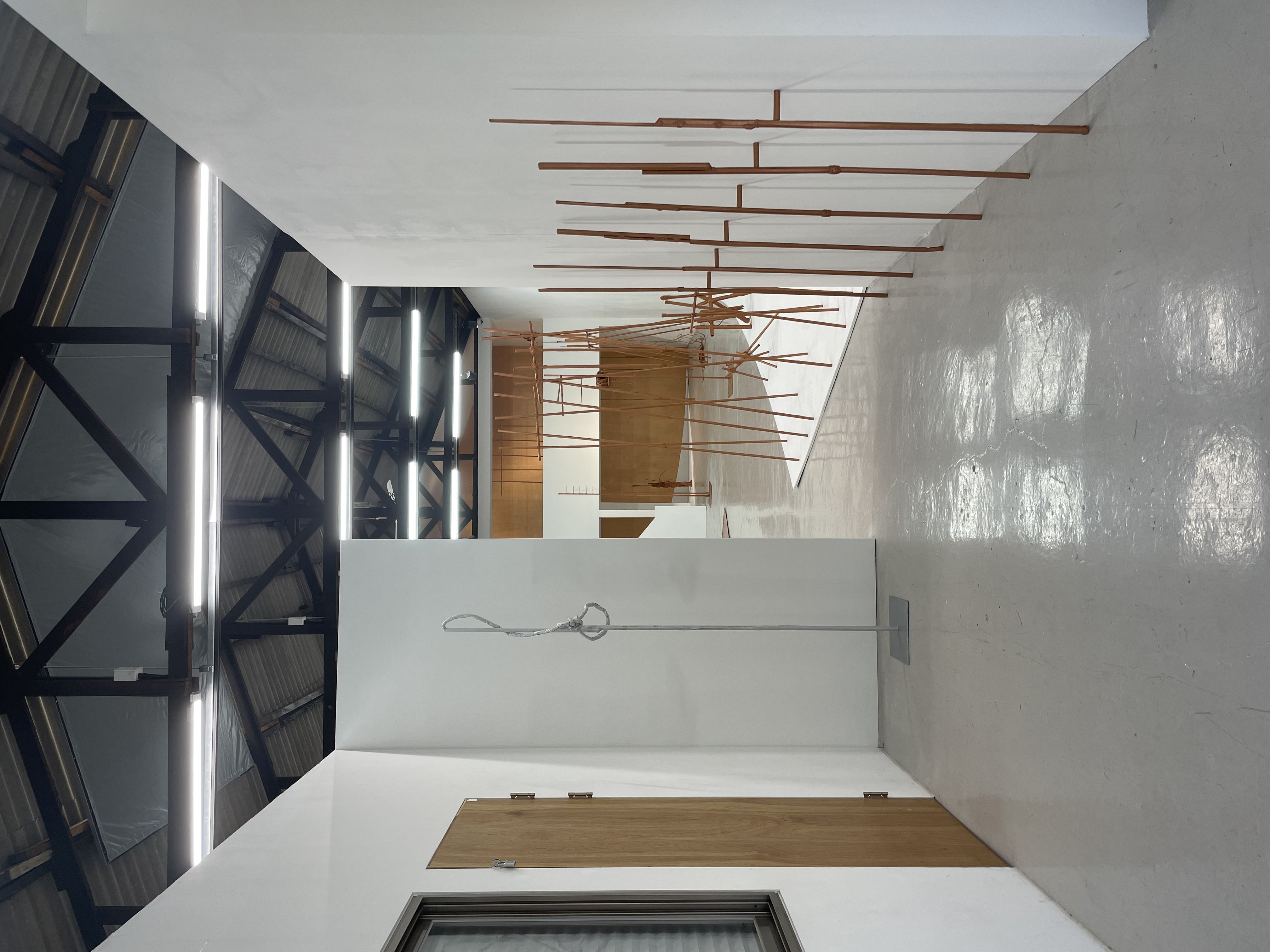
First, a white partition installed behind Knot (2025), a silver paper sculpture that mimics the color of metal, narrows the entrance into the main exhibition space.


Installation view of 《Fence-go-round》 (Hall 1, 2025) © Hall 1

Upon passing through the entrance—reduced to roughly half its original width—and entering the main exhibition space, the viewer’s path is obstructed once again by the curve of a circular plinth formed by two corners of the gallery and a single arc.
 
Unlike a conventional sculptural pedestal, this circular plinth is a low board measuring only 18 mm in height, occupying part of the gallery floor. At first glance, it appears to be a floor installation; however, it functions unmistakably as a pedestal, and viewers are not permitted to step onto it.
 
This exhibition structure—composed of various spatial devices that restrict the viewer’s movement—could be observed from the second-floor gallery space above the stairs.


Installation view of 《Fence-go-round》 (Hall 1, 2025) © Hall 1

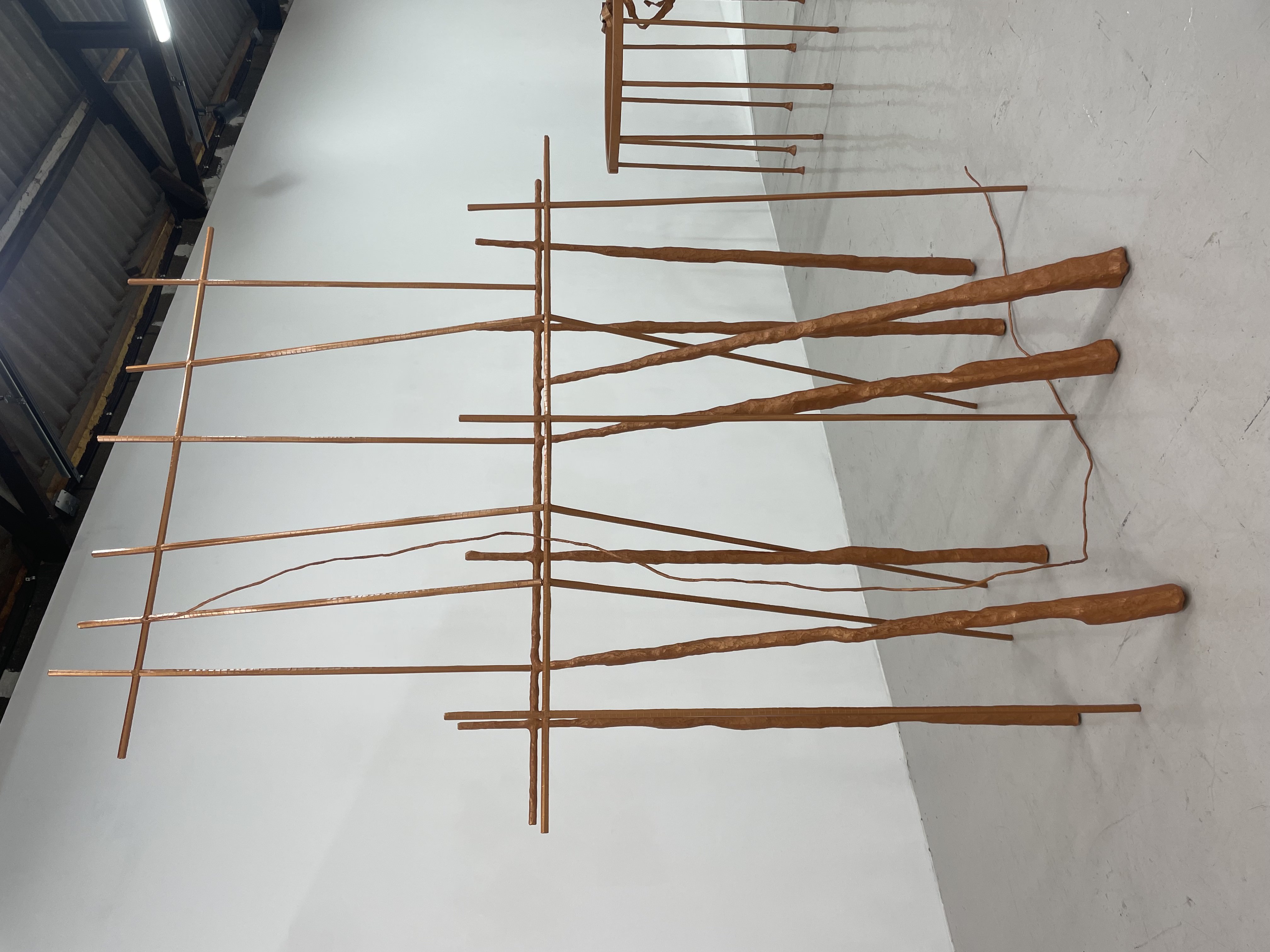
The ‘Fence’ series installed within the space adopts comical poses, mimicking rigid metal fences much like a merry-go-round in an amusement park imitates ancient military training. While each work is based on the form and structure of a fence, they reveal a wide range of shapes and textures made possible by the materiality of paper, playfully oscillating between solidity and lightness, stability and precariousness.
 
For instance, sheets of paper adhered to the floor rise precariously to become fences; they grow like living organisms, or emerge bearing traces of something dirty and unruly. At times they seem to melt and flow into the ground, while fragmented bodies reconnect and cling back together.


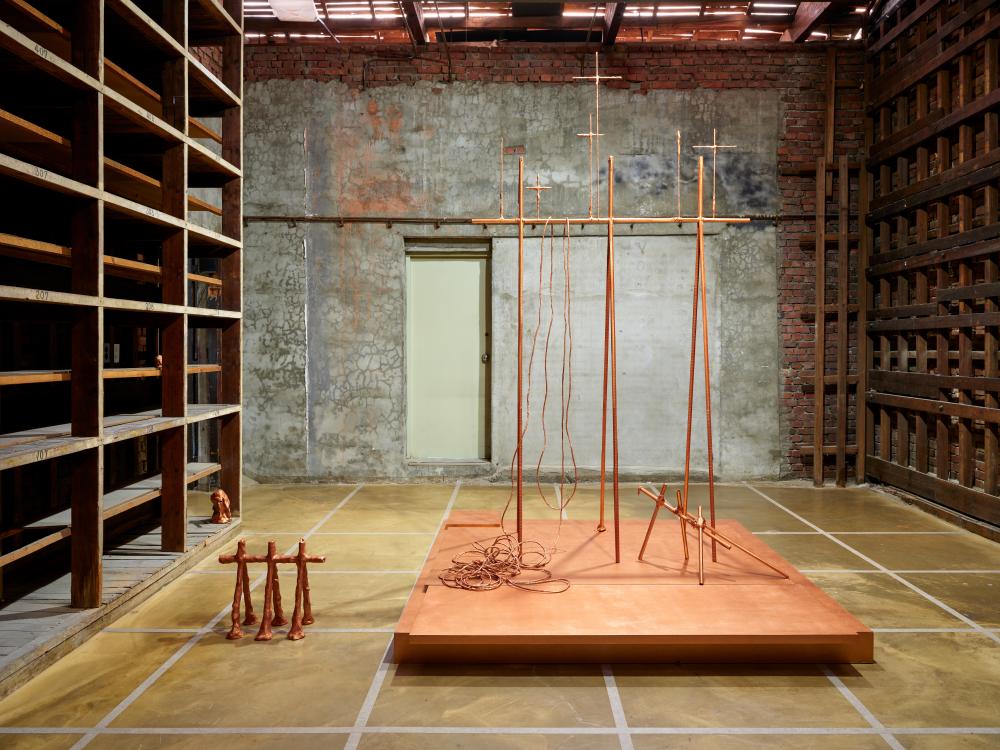
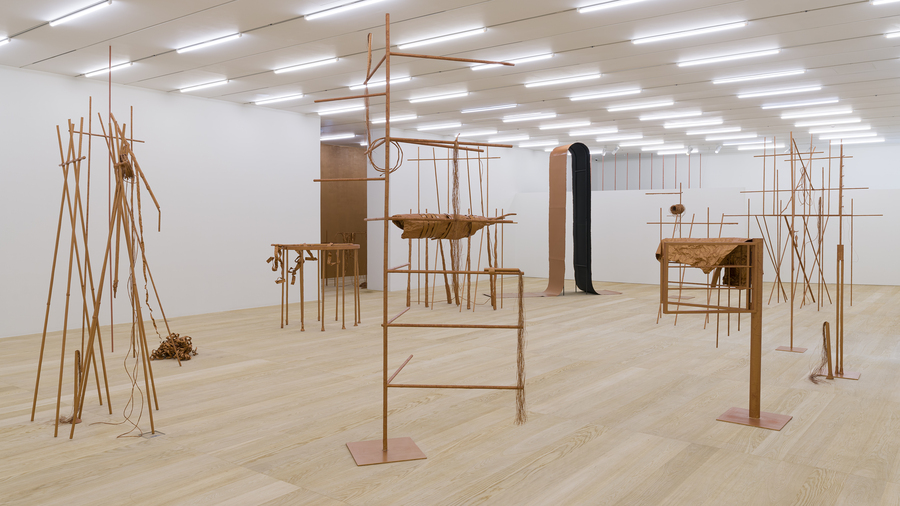
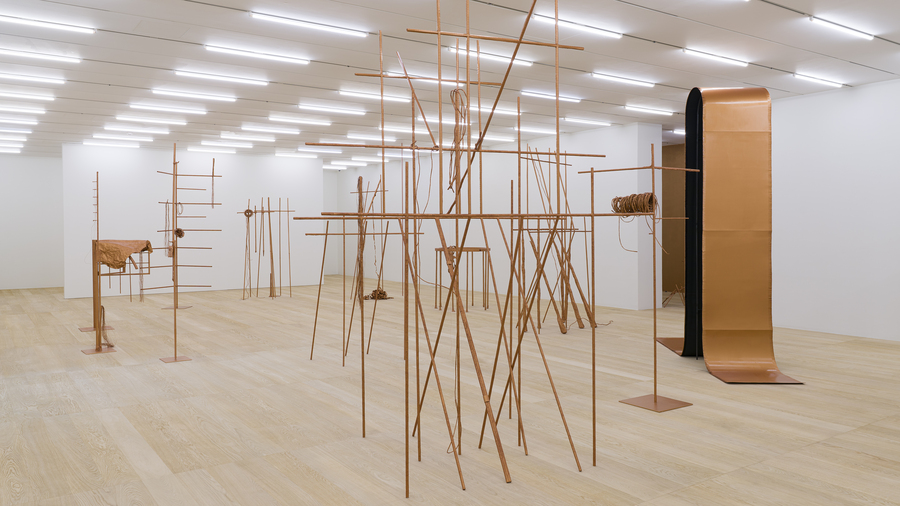
Installation view of 《Red Circuit Ready》 (SONGEUN, 2026) © SONGEUN Art and Cultural Foundation

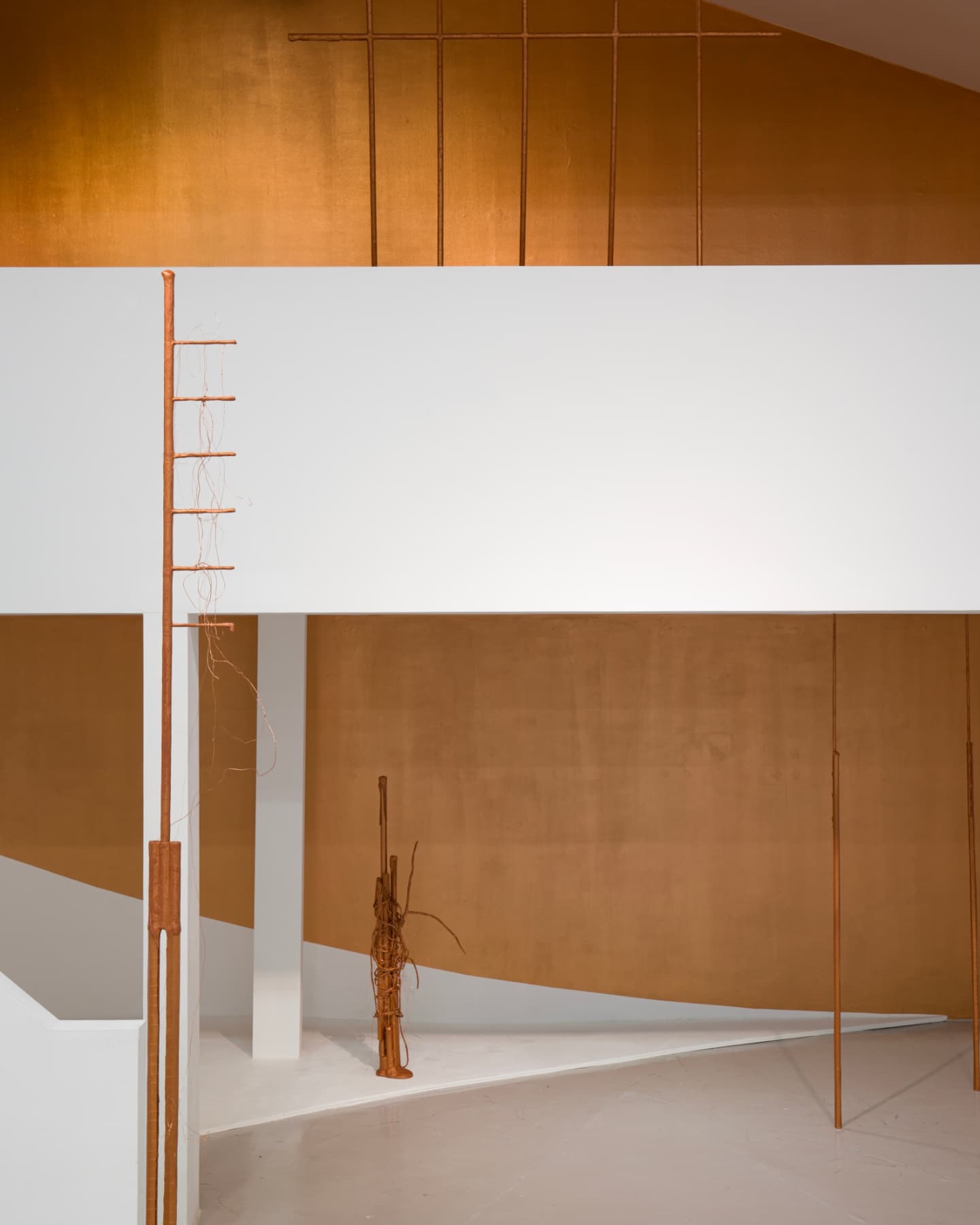
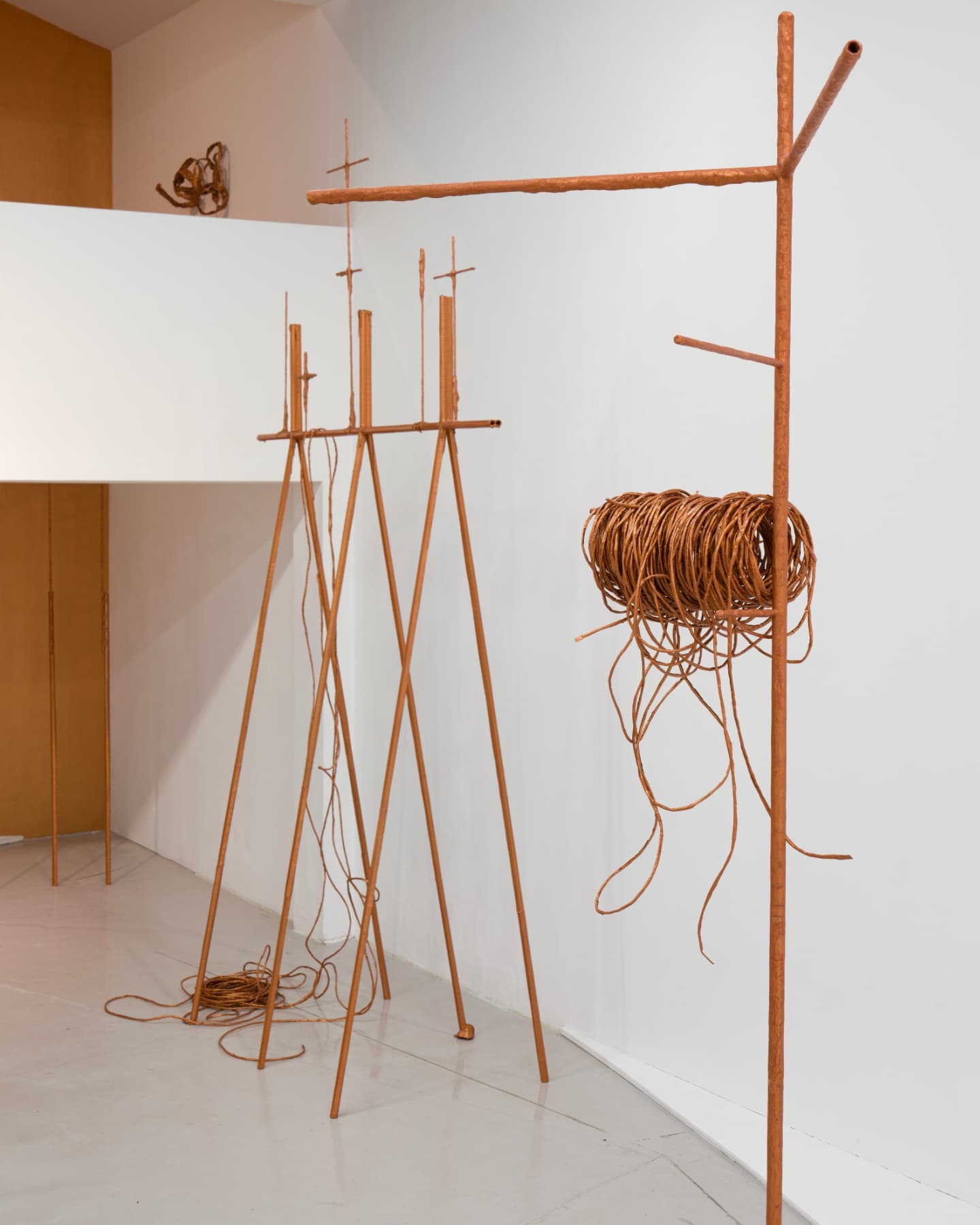
Selected for SONGEUN’s emerging artist support program “Spring Fever” in 2026, Ria Choi’s solo exhibition 《Red Circuit Ready》 further expands upon her series ‘Fence.’ In this exhibition, she explores the sense of control and discipline internalized within our bodies, centering on custom-made copper-toned paper.
 
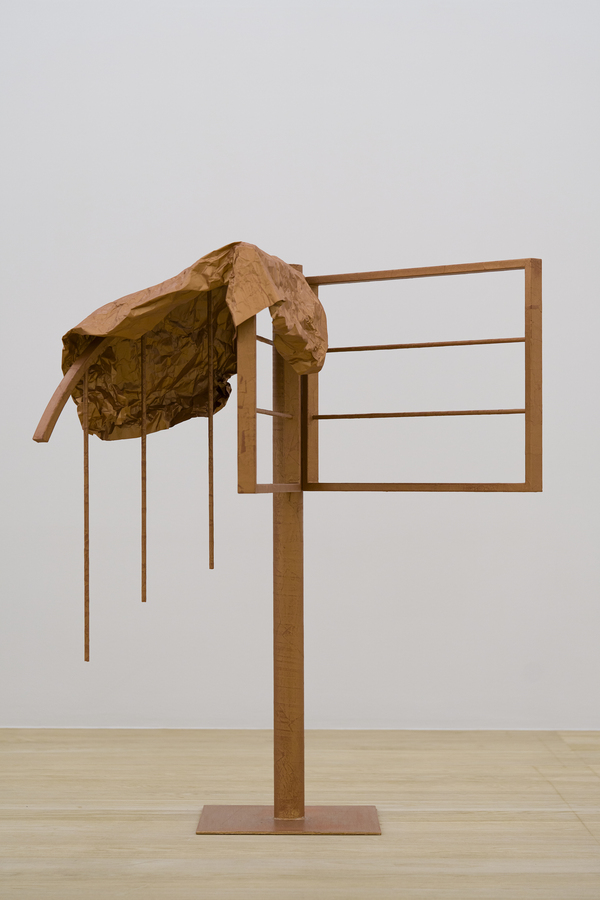
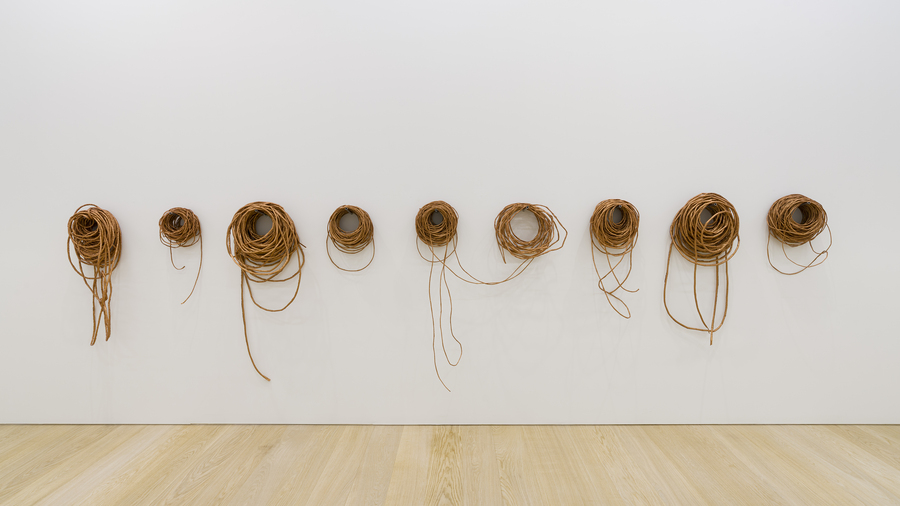
The artist focuses on the dual nature of the “fence,” which simultaneously protects against external threats while restricting internal movement. Objects placed throughout the exhibition—such as fences, columns, whips, and ropes—mimic the solidity of metal, yet at the same time reveal the light and fragile qualities of paper, unsettling the viewer’s perception.


Installation view of 《Red Circuit Ready》 (SONGEUN, 2026) © SONGEUN Art and Cultural Foundation

Passages that bend in unexpected directions and works such as Triple Fence (2026), with its height that induces a sense of pressure, physically confront viewers with how arbitrary and illusory the coercive force of power—operating in the name of protection—can be.
 
As viewers navigate the maze-like walls, they encounter condensed cycles of force embedded within the flexible material of paper, prompting a renewed awareness of the familiarized sensation of taming.


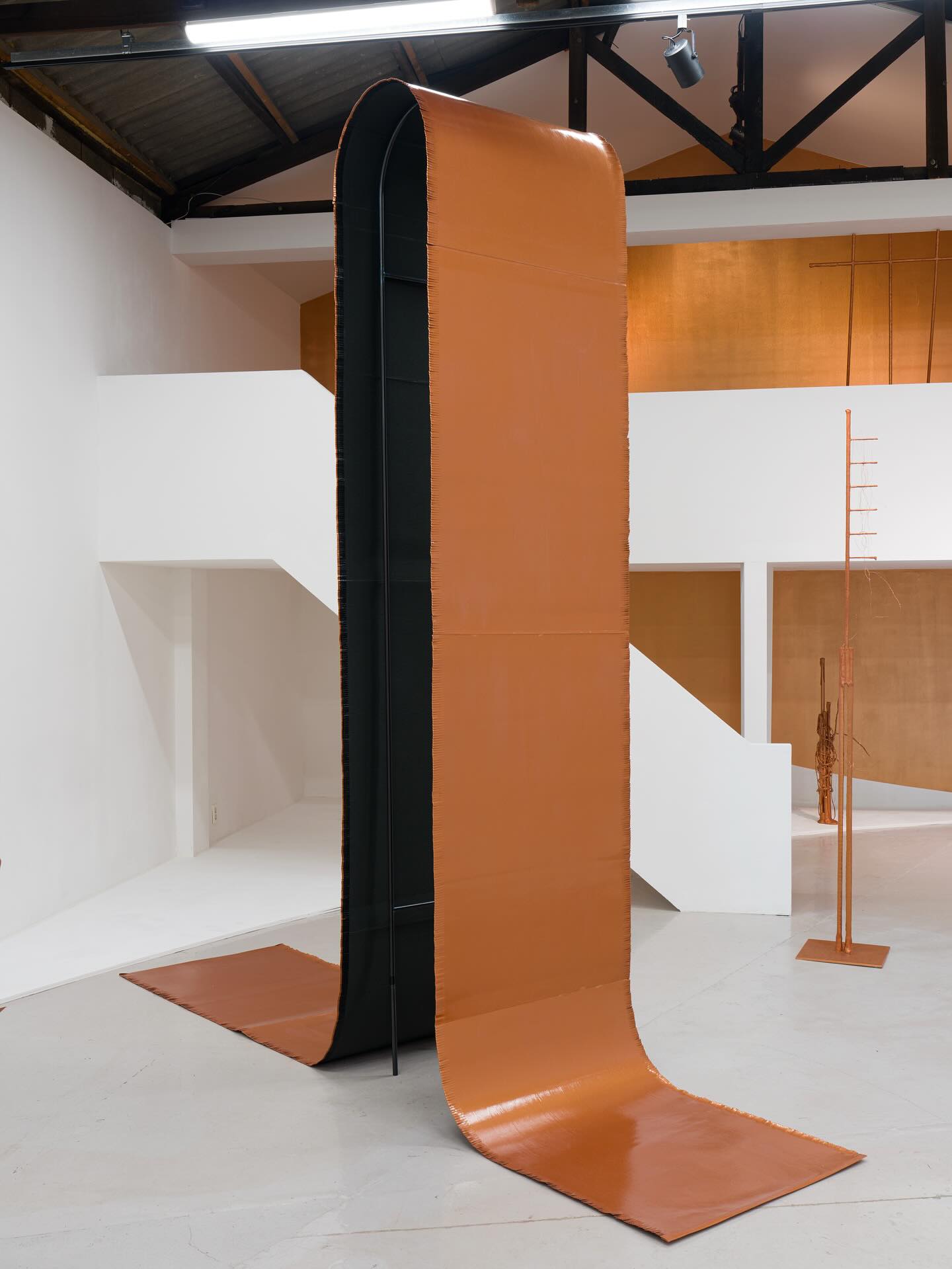
Ria Choi, Revolving Door, 2026, custom-made copper-toned paper, steel pipes, 150×143×93cm. Photo: STUDIO JAYBEE. © SONGEUN Art and Cultural Foundation

In this way, Ria Choi’s work begins from an ontological inquiry into how the entity of “sculpture” has existed and evolved across the timeline of past, present, and future, and extends to an exploration of the dynamic relationships and structures of force that operate between sculpture, space, and the viewer’s body.
 
Moreover, her experimental approach to sculpture departs from the conventional notion of sculpture as something solid and stable, instead revealing conditions that diverge from established perceptions and unfold in unexpected ways.


Installation view of 《Red Circuit Ready》 (SONGEUN, 2026) © SONGEUN Art and Cultural Foundation

In doing so, her work moves beyond dismantling the conventional perception of sculpture as a fixed object, instead enabling viewers to physically experience the dynamics of relationships and forces at play within it—ultimately expanding this inquiry into a broader reflection on the relationship between the self and the external world.

"Sculpture and scattering. Things between words. I track them for their lucidness." (Ria Choi, Artist’s Note)


Artist Ria Choi (Jewyo Rhii, Story Bus 2024, Space Mijo) © SONGEUN Art and Cultural Foundation

Ria Choi received a BFA from the Korea National University of Arts and is currently enrolled in the MFA program in Sculpture at the same institution. Her solo exhibitions include 《Red Circuit Ready》 (SONGEUN, Seoul, 2026) and 《Fence-go-round》 (Hall 1, Seoul, 2025).
 
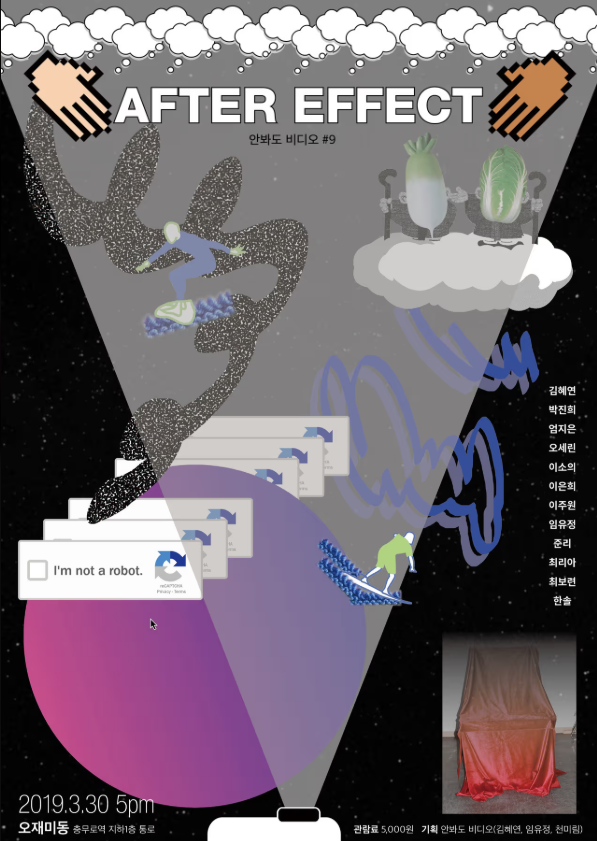
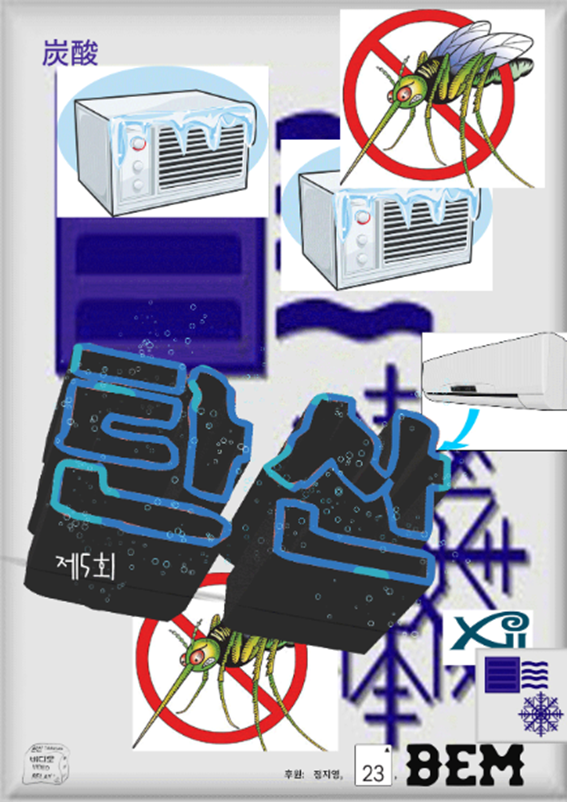
She has also participated in numerous group exhibitions, including 《PANORAMA》 (SONGEUN, Seoul, 2025), 《stocker》 (SeMA Storage, Seoul, 2023), 《Hardcore Futuregraphy》 (17717, Seoul, 2020), 《Hardcore Futuregraphy》 (Culture Station Seoul 284 RTO, Seoul, 2019), 《Obviously Video 9th: AFTER EFFECT》 (Ohzemidong, Seoul, 2019), 《The 5th VIDEO RELAY TAANSAN》 (Yeouido Xi Officetel, Seoul, 2016), and 《Matter Flow》 (Hapjeong, Seoul, 2015).
 
In 2026, Choi was selected for “Spring Fever,” the emerging artist support program organized by the SONGEUN Art and Cultural Foundation.
References