There is an adverbial phrase in French, à peine. The core of this phrase is peine (pain). Therefore, the meaning closest to its etymology is “with difficulty.” And just as in Korean, under the assumption that strenuous effort is made to reduce the distance to a goal, it comes to mean “barely.” However, when translating sentences containing this expression into Korean, one often encounters difficulty. Depending on the context, it can sometimes express relief—“barely succeeded”—but at other times it implies defeat—“at most, it amounts to only this.”
Thus, when translating this expression, one must first consider the success or failure of the action. Did the subject ultimately succeed or fail? While the literal meaning merely indicates proximity to a threshold, the implied meaning demands a division between those who reach that threshold and those who do not. This peculiar situation, where a term that begins with pain and comes to signify approaching a goal ultimately requires the distinction of success and failure, resembles the lives of young artists here. Jihye Park unravels the complex emotional state of “barely/with difficulty/at most” experienced in the process of living as an artist within physical space and economic conditions.
Constraints are my strength
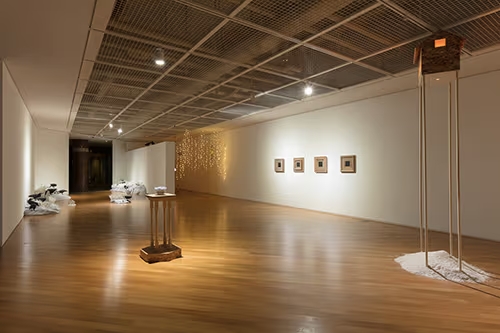
In our art environment, it is not easy for an artist who has just had one or two solo exhibitions to secure a studio where they can work continuously and stably. Even if one barely manages to obtain a workspace (most often not exclusively theirs), the concerns continue. After creating works in the studio, they must be transported to the exhibition space, and once the exhibition ends, unless they are sold or moved to a separate storage facility, they must be brought back to the studio. In other words, if the studio is not sufficiently large, convenient, or close by, enormous additional costs arise again. Therefore, Jihye Park works within these conditions through meticulous planning and calculation so as not to exceed feasible dimensions or incur additional expenses.
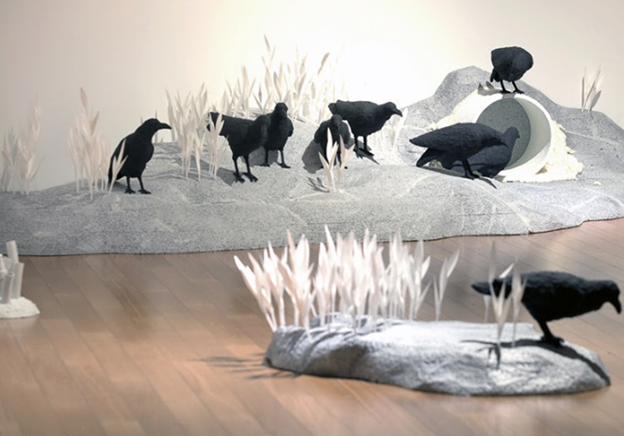
For instance, she makes works using thin and lightweight materials, forming them into structures composed of small units that can be repeatedly arranged, allowing them to be stacked so that she can transport them herself or dispose of them after the exhibition. Since around 2010, Park has frequently used materials such as corrugated cardboard or kraft paper, which are easy to shape. She cuts them according to precisely calculated blueprints, assembles them into structures, and applies epoxy or urethane to create surfaces that appear to be entirely different materials. Park often says that she creates works that are manageable on her own, even “perfect for disposal.”
While her works barely fit current economic conditions and are squeezed into the available space, the result is optimized for a reality in which they can at best return to their original place. From this perspective, Park’s work is performative in that it does not eliminate or overcome constraints but instead becomes almost obsessively subordinate to them. Measuring, calculating, cutting, and assembling each piece of paper by hand to create smooth structures is an extremely labor-intensive process, and by ensuring that such works can be produced, exhibited, stored, or discarded strictly within given spatial conditions, the constraints of artistic labor themselves are foregrounded.
However, when confronted with the works themselves, there is too much to read in front of one’s eyes to reduce them merely to this performative meaning. One’s gaze gradually shifts from the environment surrounding the artist to the works themselves.
Betrayal and limitation of the senses
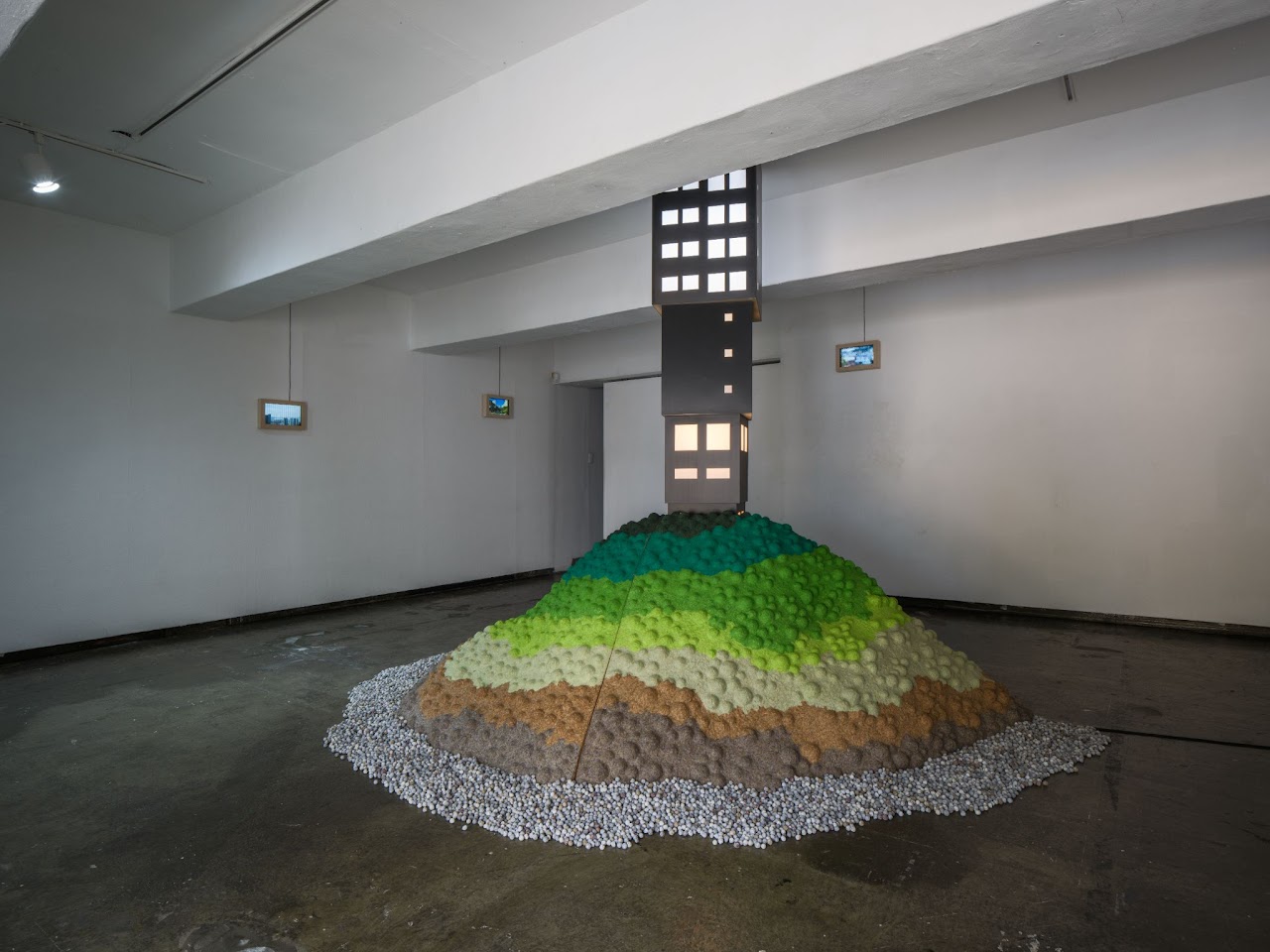
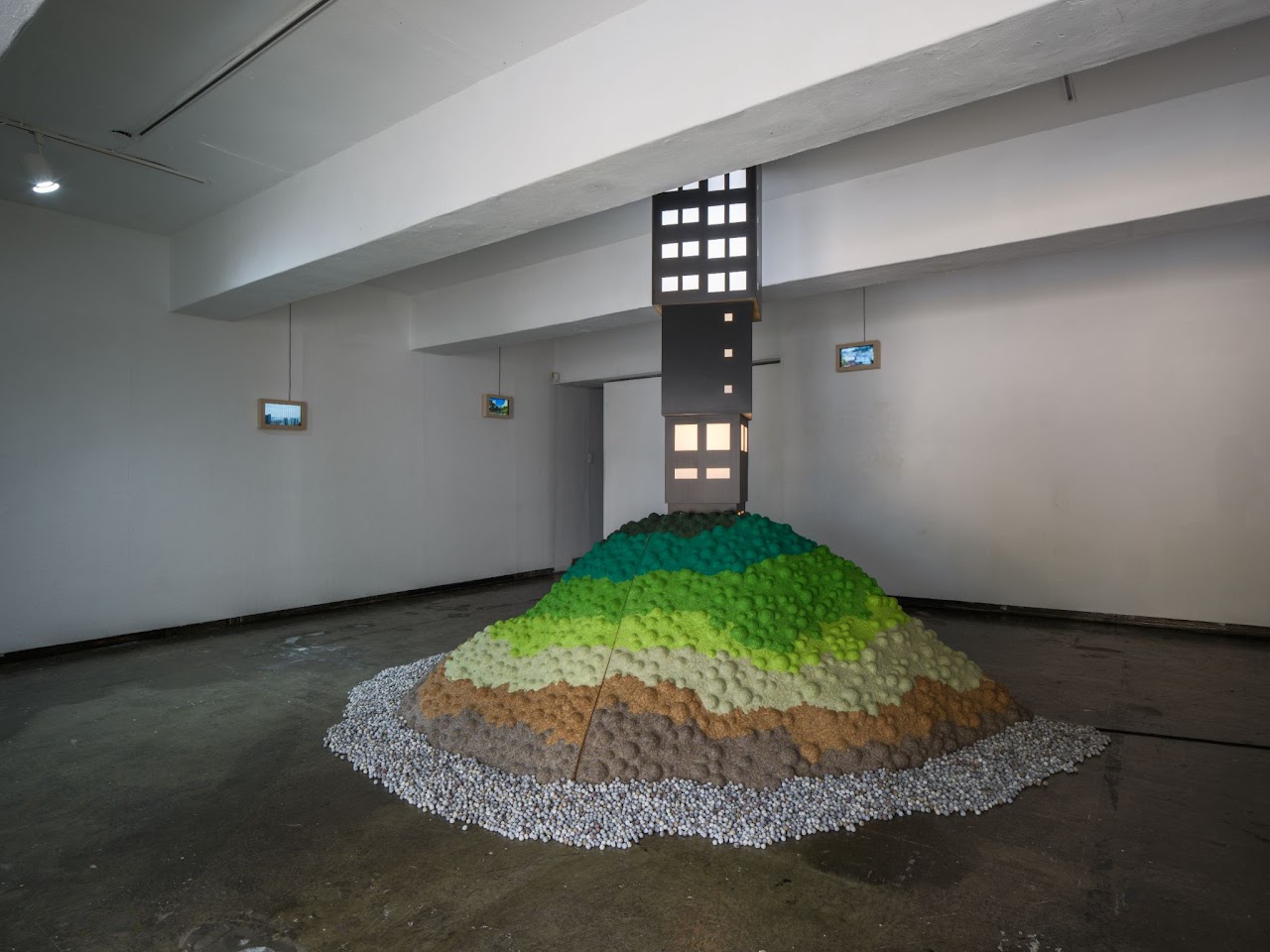
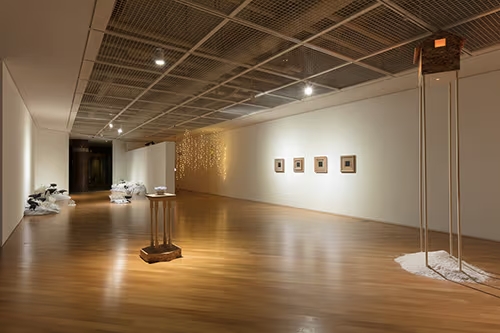
Jihye Park creates small-scale models of massive and heavy-looking industrial structures such as cranes and storage tanks—objects typically seen in factories or construction sites—using paper. Due to the carefully applied pigments, these paper structures appear quite heavy. However, the artist then installs them in ways that emphasize their lightness, suspending them lightly or placing them precariously. By first removing the overwhelming scale and weight of the original objects through reduction, then recreating the appearance of heavy raw materials through color and surface, and finally revealing their actual lightness through installation, she overturns perception.
Object, texture, scale, and weight betray expectations and overturn each other, producing layers of meaning similar to Magritte’s pipe. Representative examples include Chain(2011), which sways heavily in a building corridor, and Overflow(2012–13), where tetrapods from a breakwater are seemingly lifted into the air.
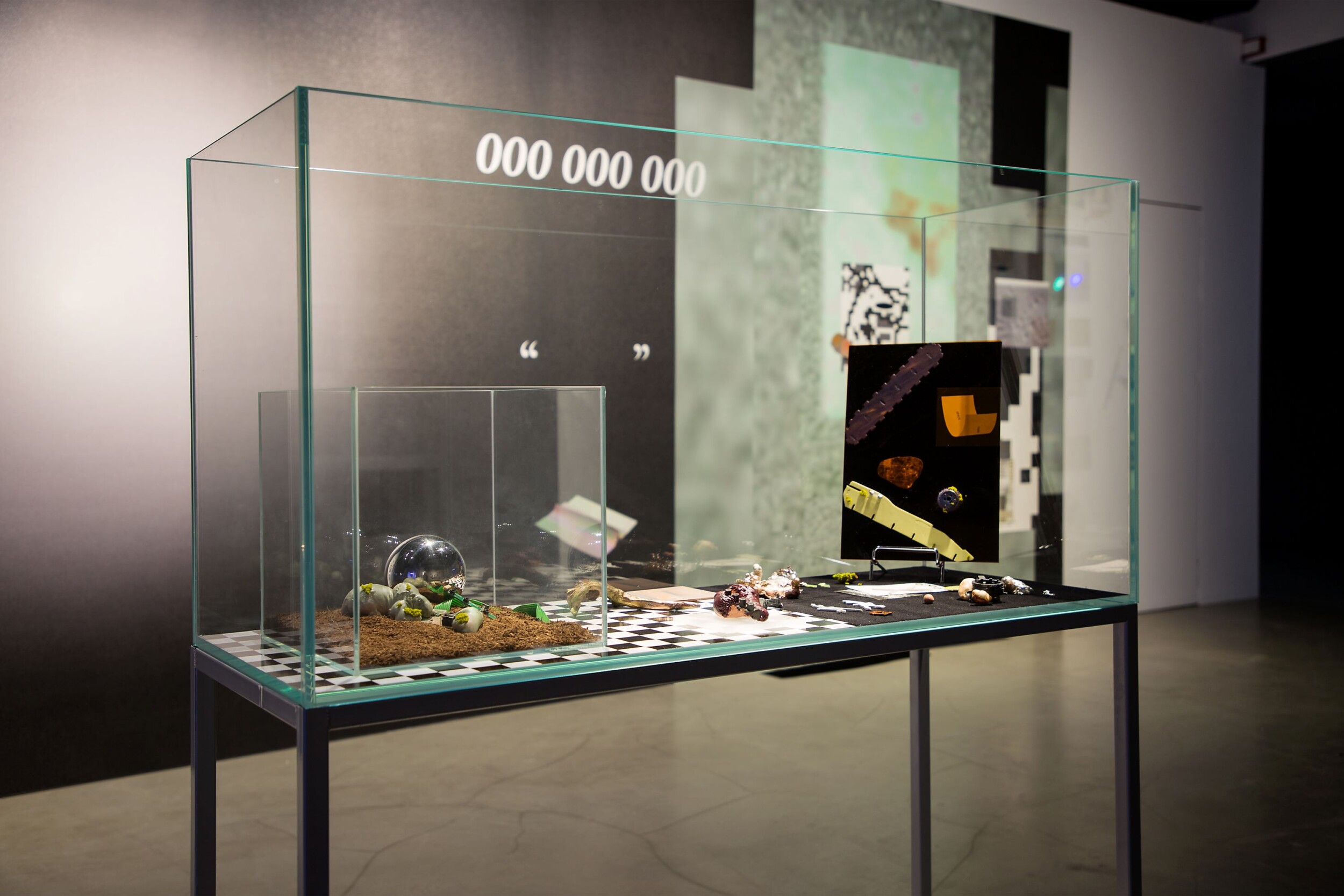
Park’s interest in perception reaches its most acute point in her first solo exhibition 《Red Room》(2013). According to the artist, the title “Red Room” was inspired by the sensation of color and space perceived when one closes one’s eyes, and indeed, in the exhibition space, lights emitting red glows lurked “like beasts” between black lines. However, the works in this exhibition appear quite different from her previous works using paper and urethane. While some pieces maintain the approach of reducing large structures into model-like forms, they stimulate sensations that are far more difficult to verbalize compared to the earlier paper-urethane works.
In the earlier works, it was relatively easy to extract words describing prominent sensations—mostly adjectives such as “big,” “small,” “heavy,” and “light,” with clear contrasts between them. In contrast, the works in this exhibition cannot be easily described with a few words. In particular, Red_faint(2013), which occupies the corner of the exhibition space as a strange, organism-like form that resists immediate description, is said to visualize the sensation the artist experienced when she reached a physical limit and lost consciousness. As such, it defies simple articulation. Whereas the sensations of the paper-urethane works condense clearly, those of the “Red Room” disperse like clouds.
Yet what binds these seemingly different works together is Park’s characteristic sense of “tightness.” The works in 《Red Room》 are equally precarious in their attempt to grasp extremely limited sensations within a state of extremity. While the motivation for the works has shifted, there remains a consistent interest in revealing constraints through the force of perception. There is even a work that directly combines “practical constraints interfering in the working process” with “limited perception,” namely Incalculable Love and Attention(2015).
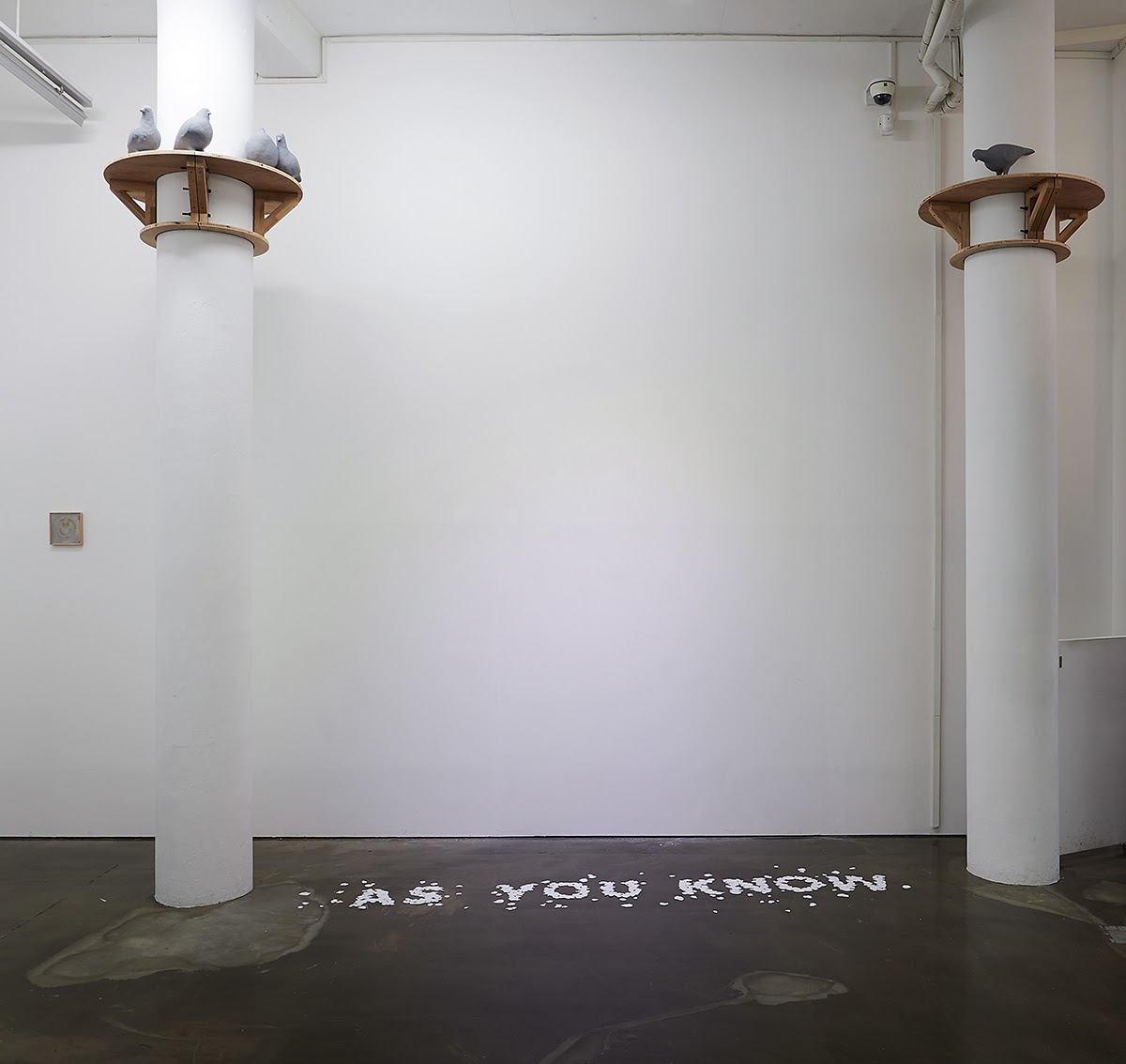
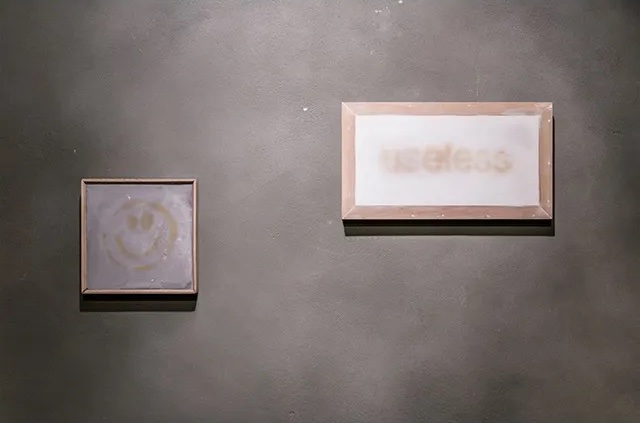
This work presents the word “unpaid” in the form of a colorful image resembling those used in color vision tests, and the artist has stated that it originated from the unjust economic constraints she experienced during the exhibition process. She attempts to convey this state of communicative failure through bodily perception. At first, the viewer focuses on reading the word, but gradually begins to notice the distorted contours of the image, the carefully chosen frame, and the seventy illegible monochrome prints contrasted with the colorful image. In doing so, one perceives the traces of the artist’s persistent effort to generate meaning at the boundary between the success and failure of sensory communication.
Work–Body–Text
Given the diversity of materials and media Park employs, it may seem natural to locate her consistency outside the works themselves, in issues related to art institutions or artistic labor. However, from another perspective, because she operates within a reality that allows no room for variables or mistakes, she possesses an internal consistency in recognizing both her body and her works as physical bodies that must occupy and endure space. For a sculptor, having limited mobility is both a metaphor and a literal spatial condition. And showing this “lack of space for one’s body” through bodily perception is both natural and efficient.
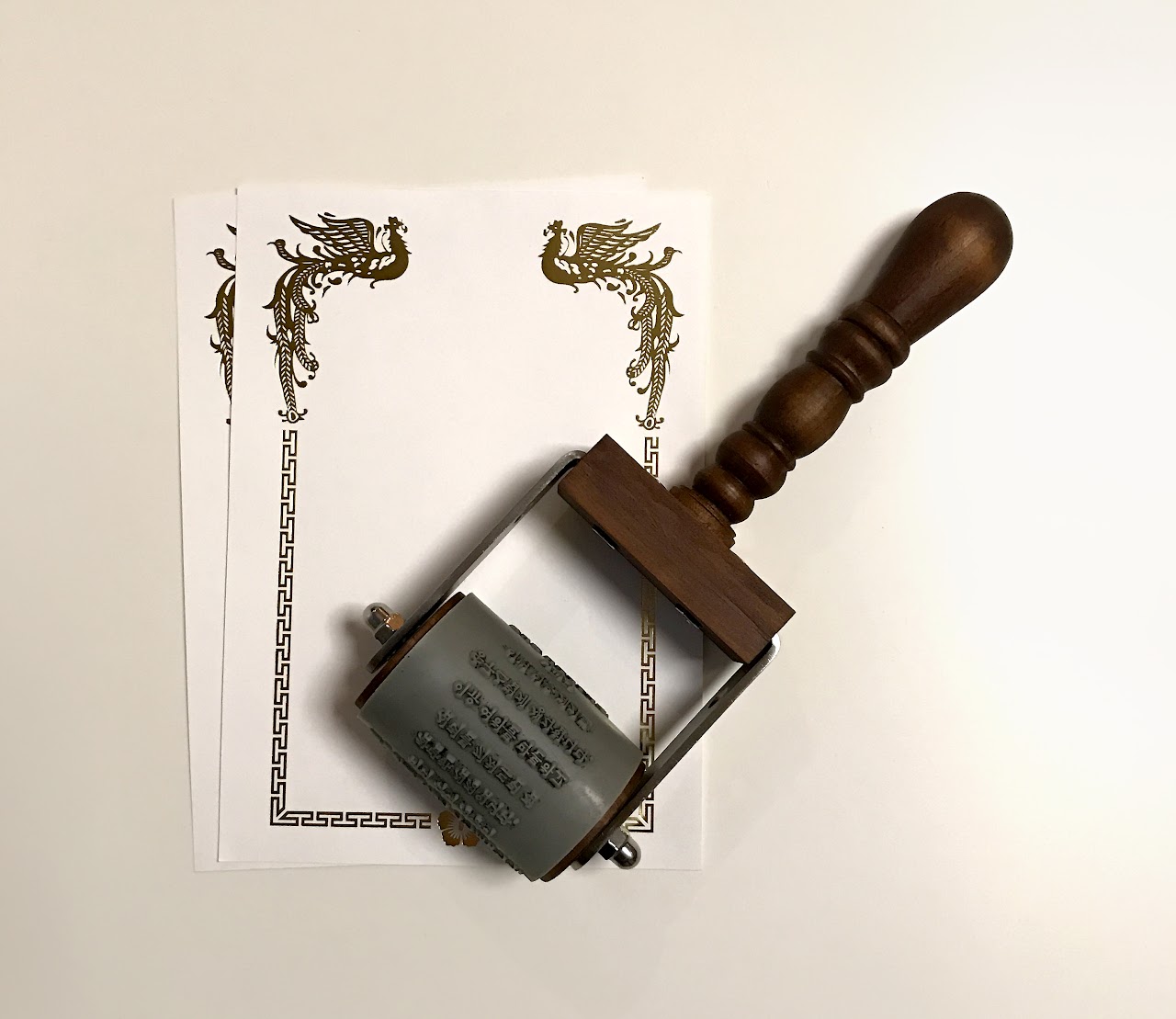
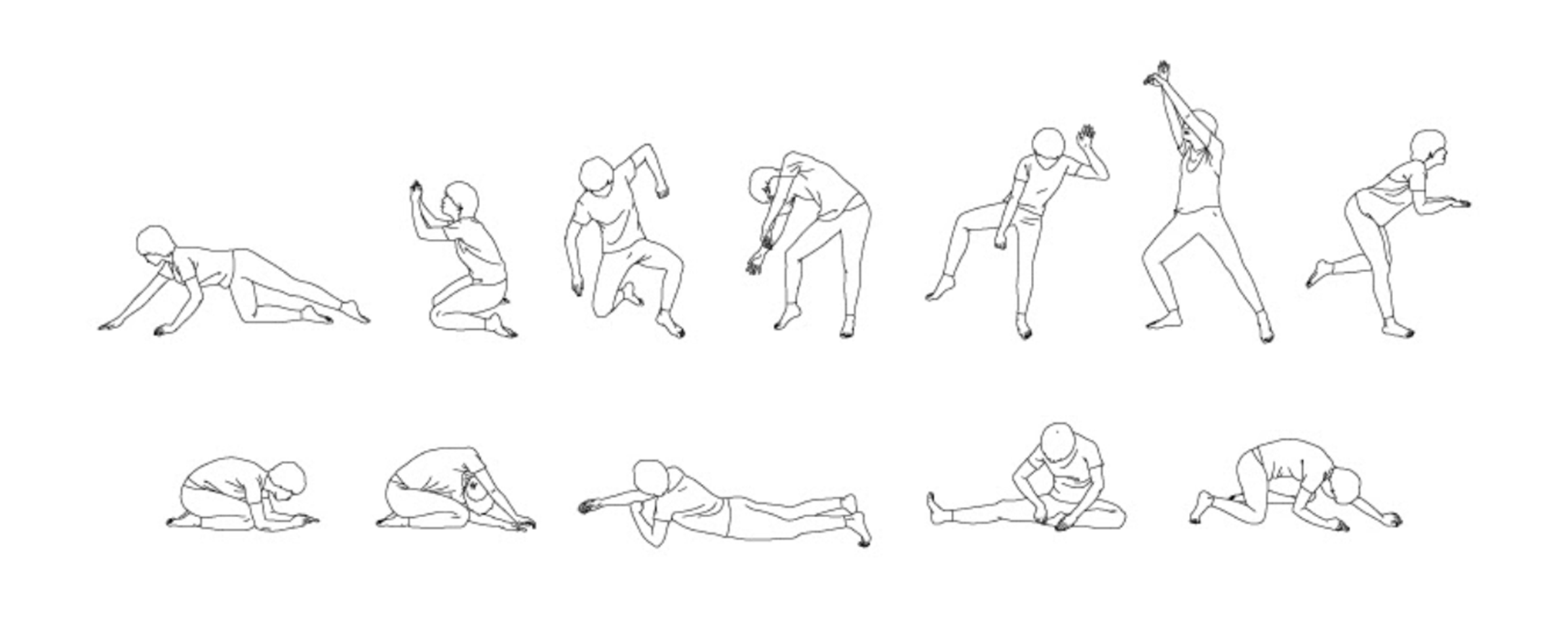
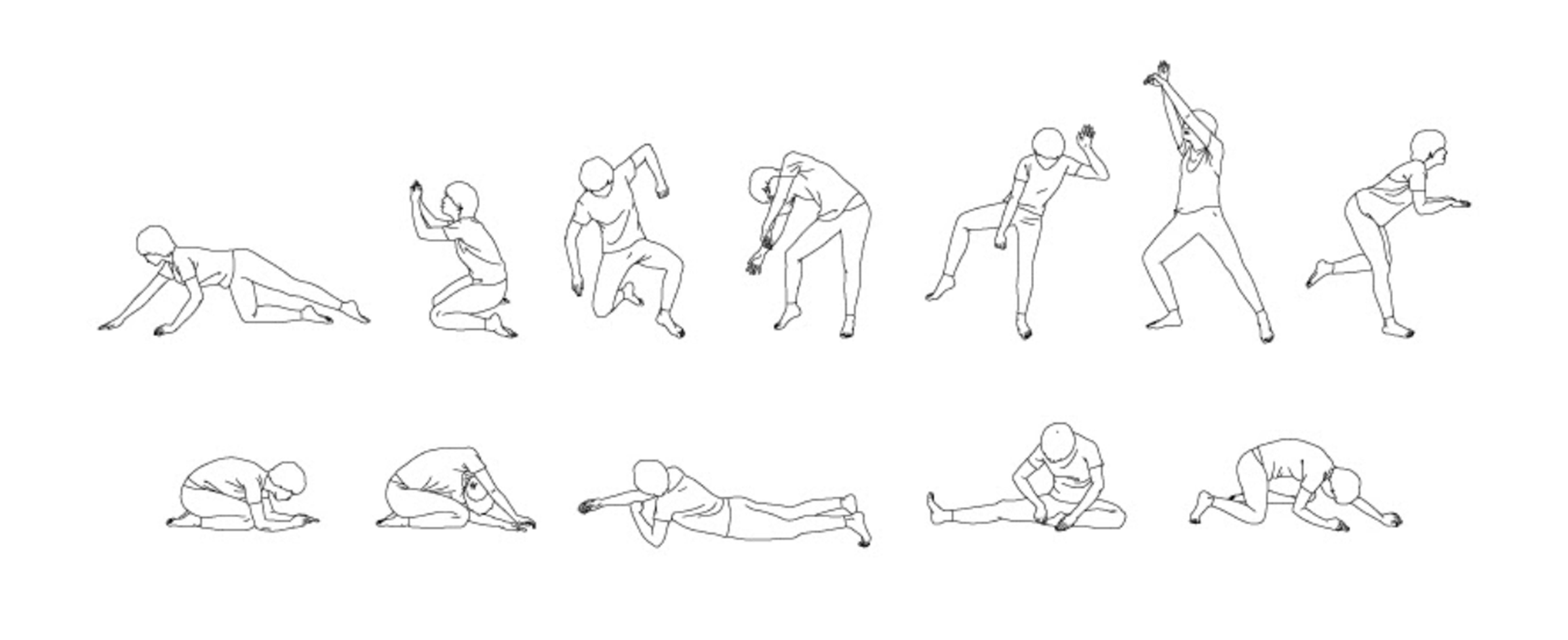
The attitude of linking the artist’s body with her work also appears in her recent focus on text-based works. The booklet Practical Work Yoga(2015), designed like a yoga manual, and the text installation Yoga of Devotion(2015) evoke the artist’s body by meticulously describing specific movements required for making work. It is hardly surprising that Park chose text or the book as a medium for these works. The body of a book is relatively free from spatial constraints, and is made of paper—a material the artist handles with great skill. After all, is editing not a sculptural act of arranging meaningful elements within space?
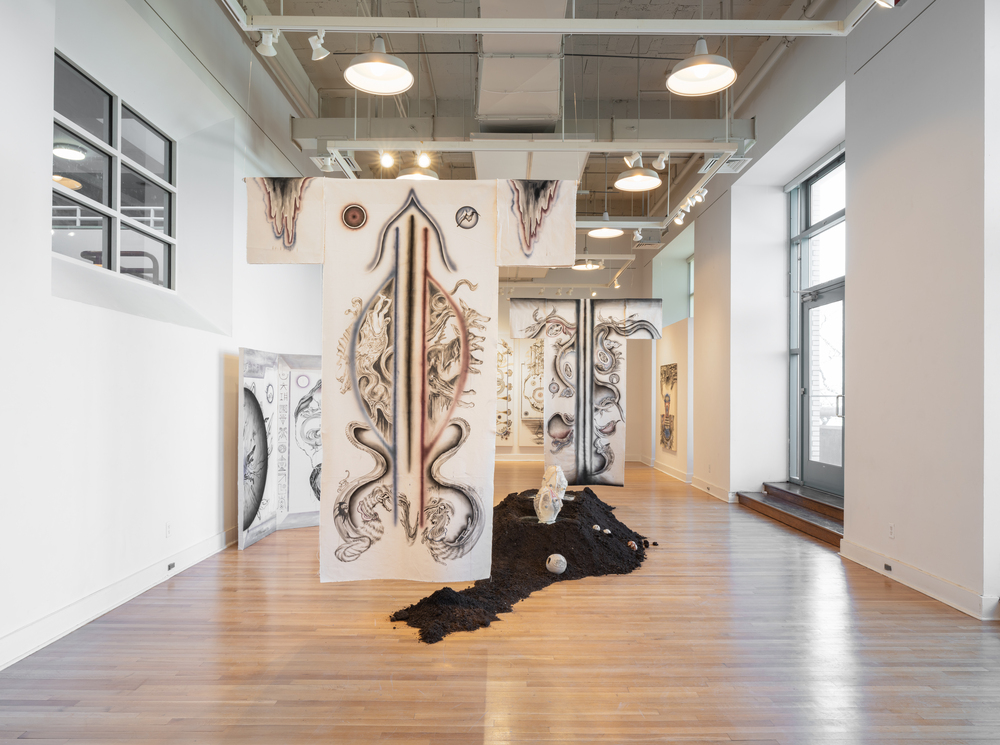
Moreover, text opens up infinite combinations of language and image, offering an efficiency unmatched by any other medium. Her second solo exhibition, also in textual form, Wholly Holy Hole(2015), demonstrates the culmination of this integrated mode of thinking about work–body–text. After constructing circular, hole-shaped structures (Nightmare_the white castle(2014–2015)) with immense labor using lightweight paper and modeling materials, the artist writes a fake documentary about “reverence and obsession with holes,” based on the dizziness and bodily sensation of being sucked into the inefficiency of that process.
From browser icons to donuts, the text’s suggestive and excessive imaginings of hole-like forms expand endlessly in absurd directions. When the cliché “imagination is free” is applied to Park, who seeks any possible space to extend her body, it produces an unexpectedly intense pleasure.
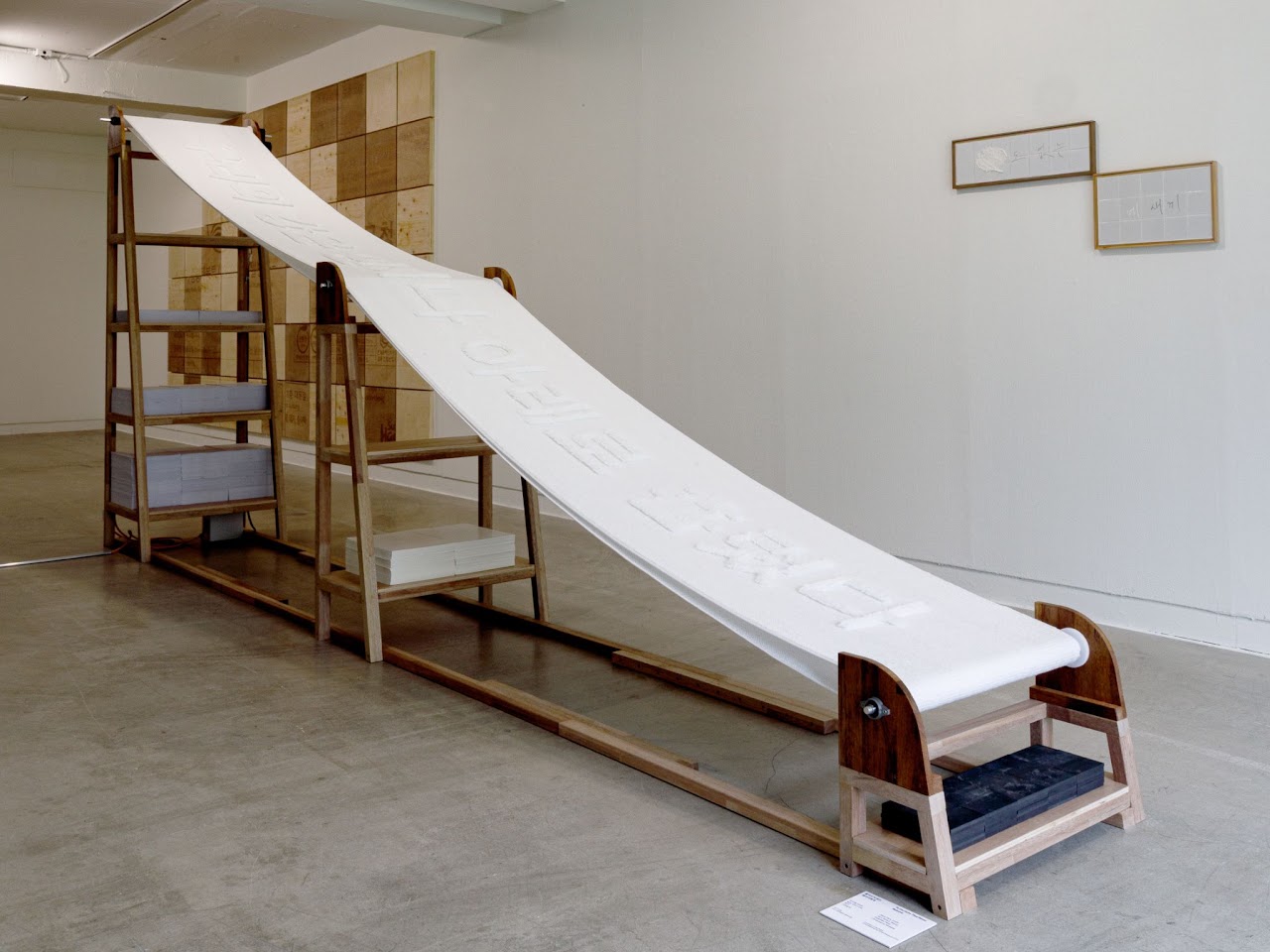
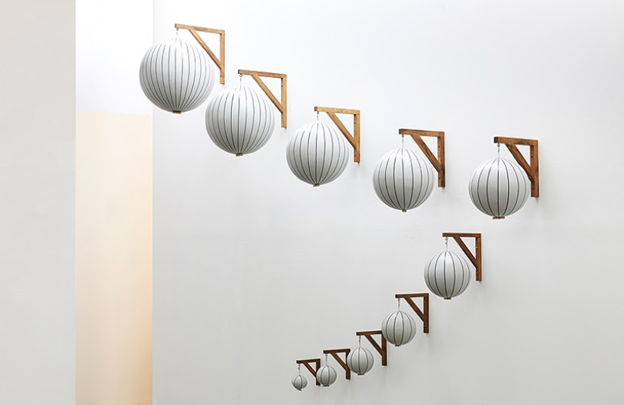
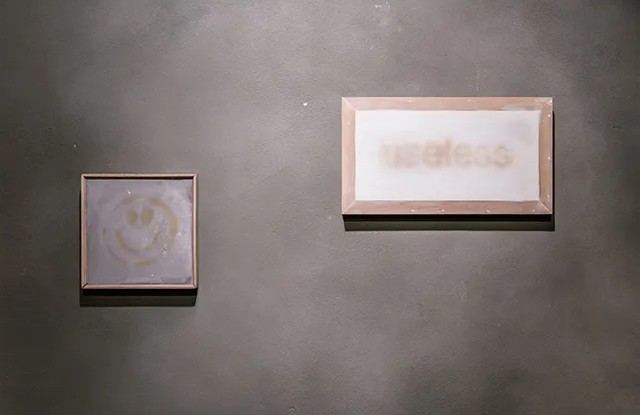
On the other hand, there are works that disrupt the compositional logic of text through perception. In Incalculable Love and Attention, the issue was the legibility of a single word, whereas in Perfectly Useless(2016), the issue lies in the pairing of word panels in the form of flip clocks. As the clock panels flip, the words form mismatched combinations, but these cannot simply be dismissed as meaningless, as they become phrases that starkly reveal the artist’s situation (for instance, “perfectly useless”). Here, the sensory effect of the flipping panels is by no means secondary.
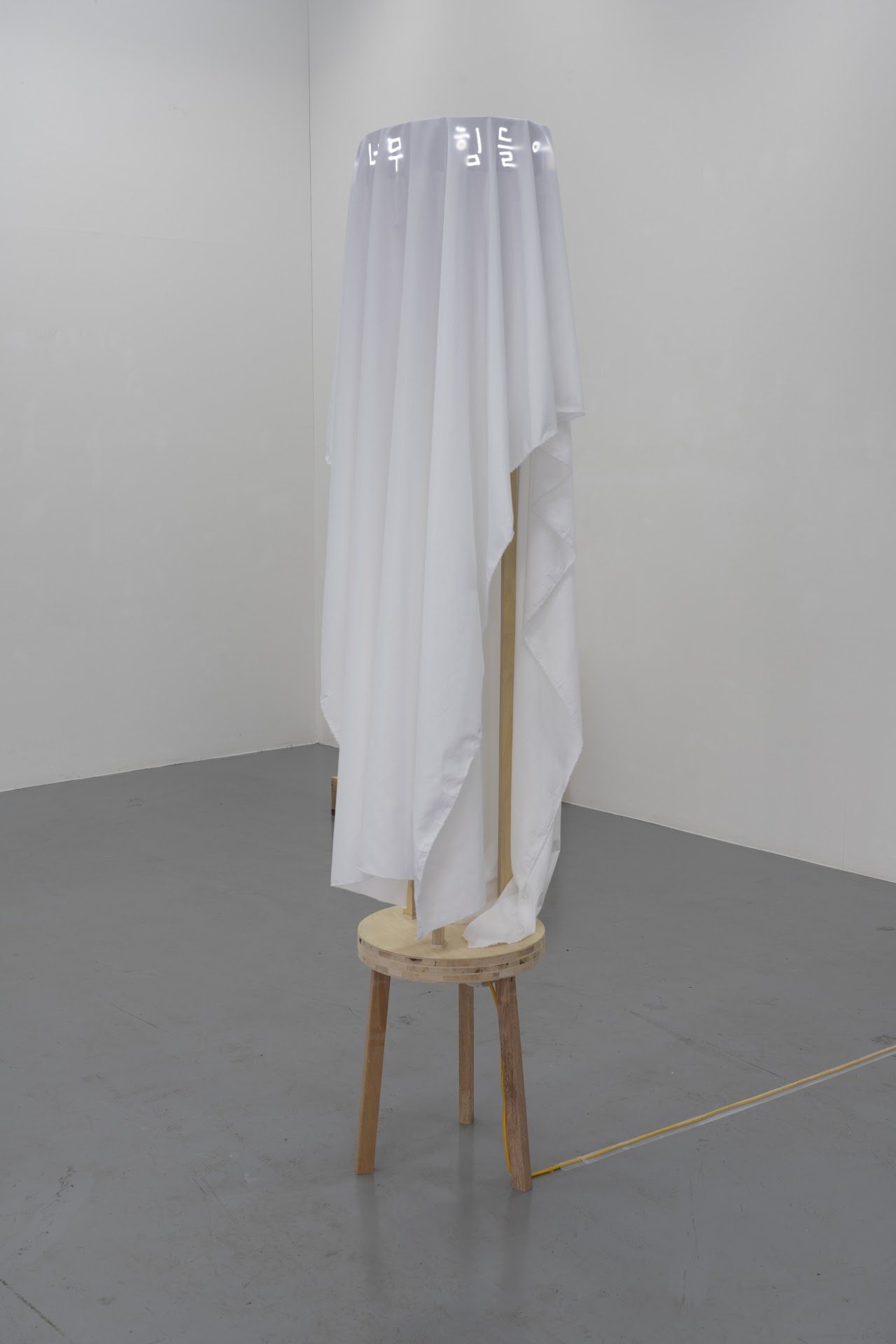
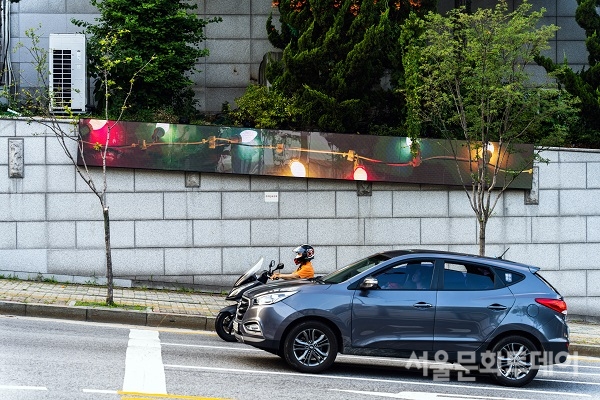
In Still Here You Again(2014), the use of light causes words to repeatedly appear and disappear, altering the combinations of phrases. As mentioned earlier, Park appears particularly sensitive to “adjectival” perception. It may be that she detects a kind of force exerted by attributes that define properties and qualities. Observing how Park handles words reveals a skepticism toward definitions, standards, rules, universals, and other absolute criteria (this is likely to become the subject of her ongoing novel The Birth of Standard_intro(2016)).
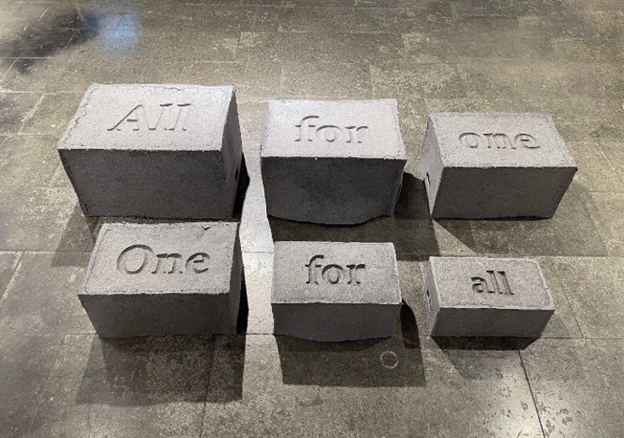
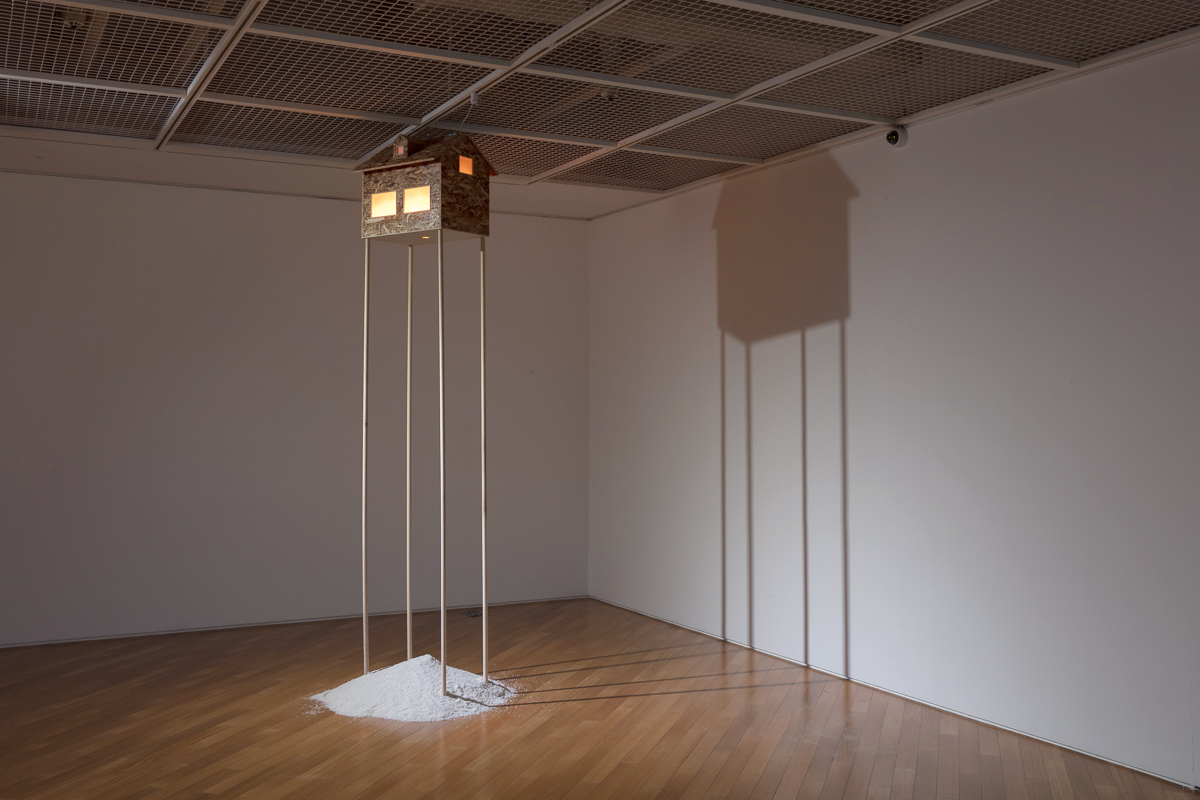
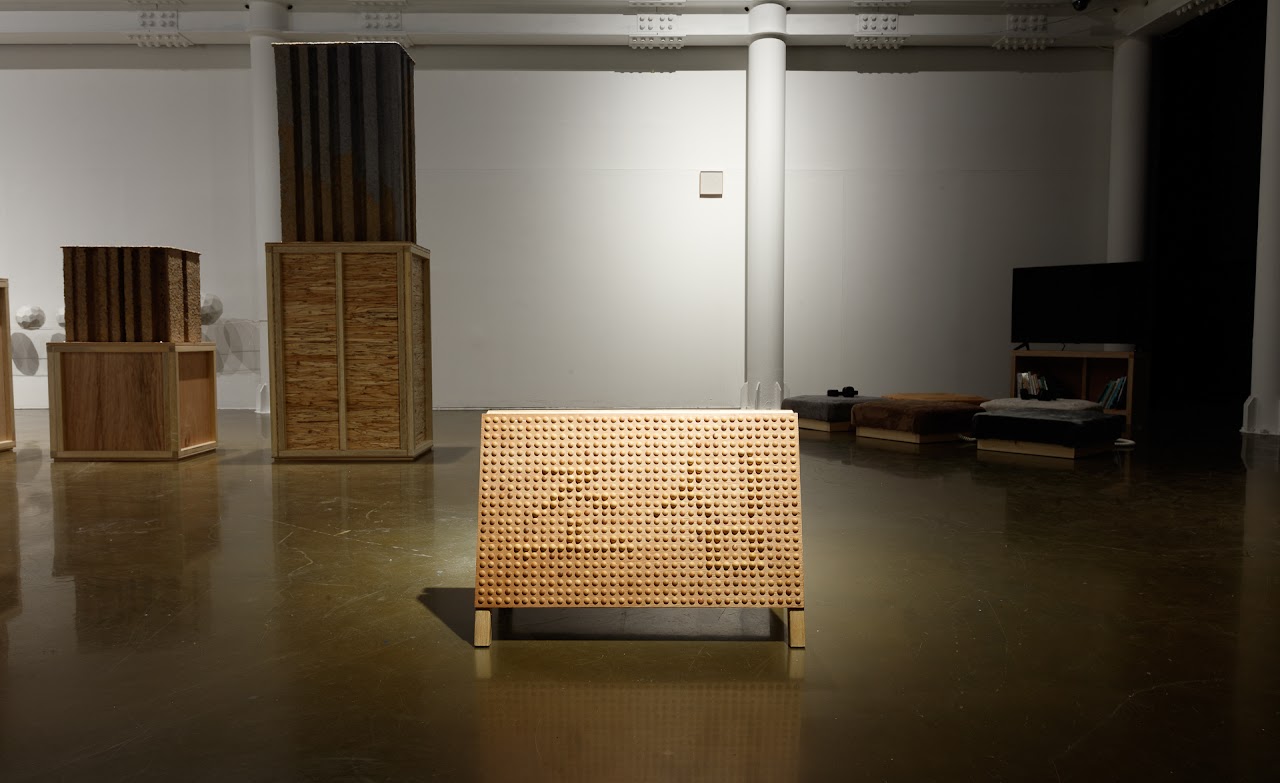
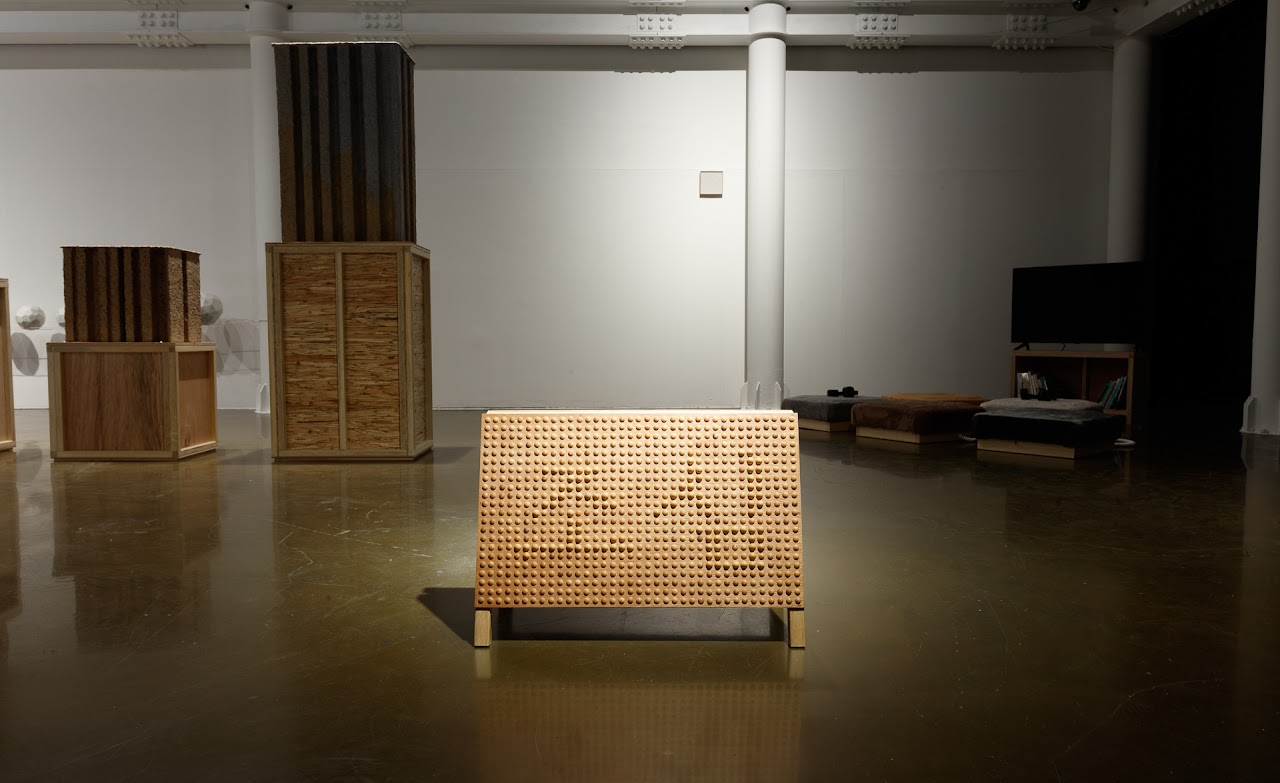
The artist strives not to deviate from these imposed standards while translating them in her own way. Pure Exhaustion_Temporary Structural Material(2016), presented in the exhibition 《Empathy Error: A Willing Encounter》(Art Space Pool, 2016), consists of cubic masses made by purchasing standardized plywood and timber, precisely calculating dimensions, and cutting and assembling them so that not a single scrap remains. Each cube is sized and weighted so that the artist can lift it with both arms.
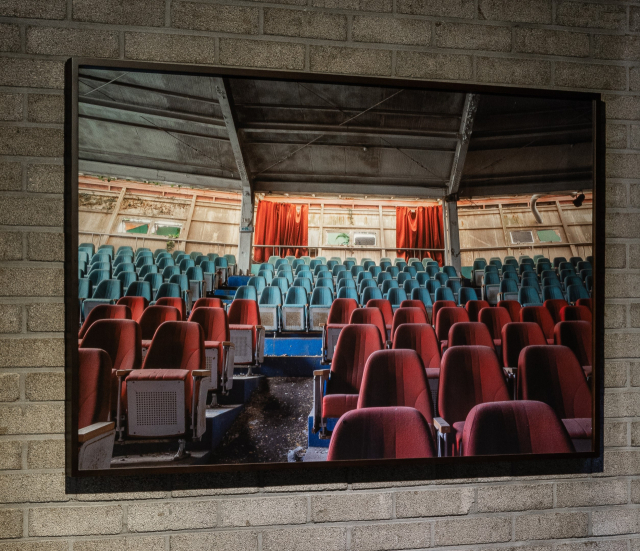
This intense yet futile act of fitting the world’s given measurements to one’s own body without leaving any residue is strangely melancholic. Yet these masses, as measures of the suffocating conditions of being an artist, also seem to challenge the world with defiance. At the same time, the cheap wood, which gradually warps or reveals knots over time, amplifies a sense of emptiness. Another work, Pure Exhaustion_Wandering Cinema(2016), is an installation that repurposes or consumes components of a previously unrealized work (miniature seating models) stored by the artist. This device, equipped with handles, wheels, and partitions like a cart, ultimately serves to screen the works of other artists.
In a group exhibition where competition for presence is inevitable, this work finds its reason for being in an unexpected way. The body of the work yields space to the artist’s body (by leaving the studio) and adapts itself to other works, thereby gaining permission to wander the exhibition space. It resembles an idler who leaves their room, having been criticized, and tries to do something outside, prompting both a sigh and a strange sense of admiration for its precise lighting and solid construction.
Seen together, there is a term that encompasses Park’s wide-ranging use of media. The Latin word “corpus” originally refers to the body, but in many Western languages today it also means a body of words, a collection of texts, or a volume. This does not mean that Park is interested in the etymology of Western languages (the origins of others’ words are always intriguing but rarely felt viscerally). Rather, in searching for ways to work within a harsh environment, Park has come to perceive her works as bodies, texts, and masses, and has discovered sensory methods for allowing them to coexist with other bodies.
She struggles to place these masses within limited space, exerting great effort to produce things that may ultimately seem futile. However, this is not merely a defiant resistance against imposed rules. Unexpectedly, this mode of survival seriously raises classical sculptural questions—of body, perception, mass, and meaning—that are not limited to the issue of artistic labor. These questions are deeply serious not because they have been historically significant in sculpture, but because they emerge directly from the conditions surrounding Park’s own body. And these serious questions grant Park permission to continue living as an artist, while simultaneously imposing new rules upon her. Barely to the point of futility!