1. Introduction
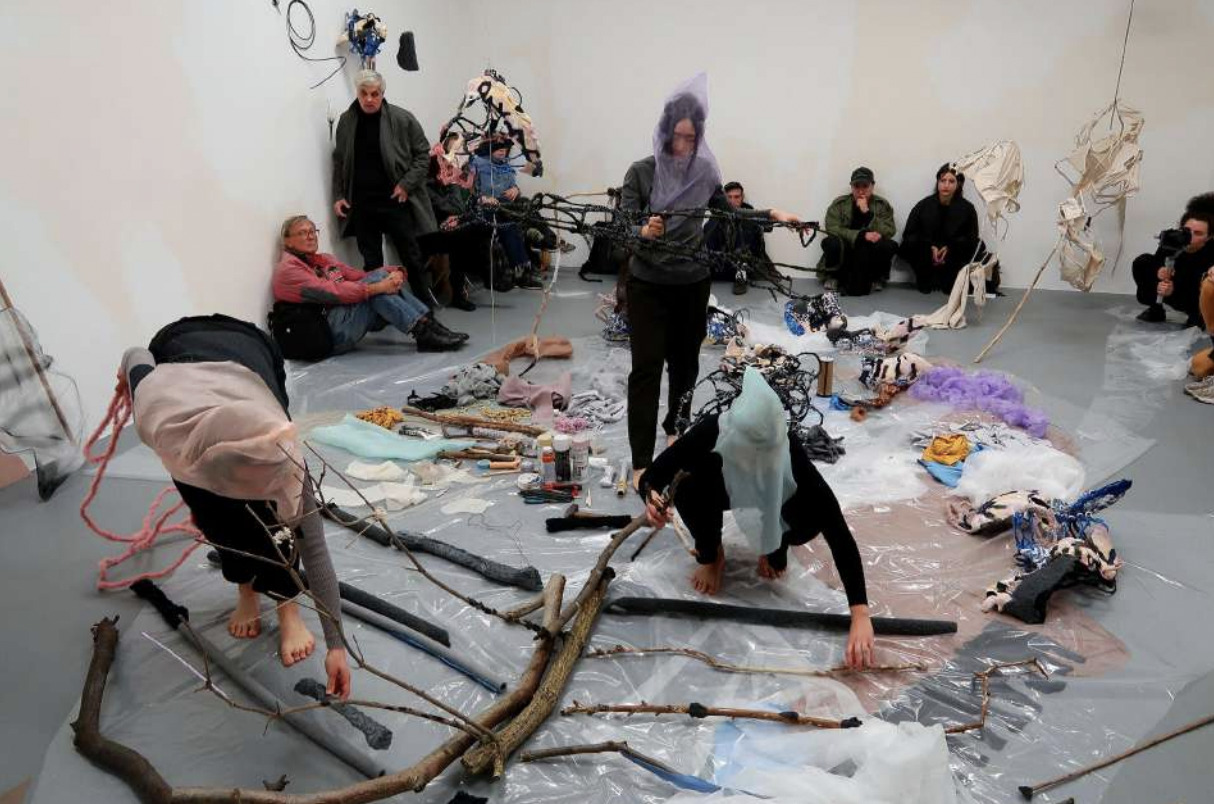
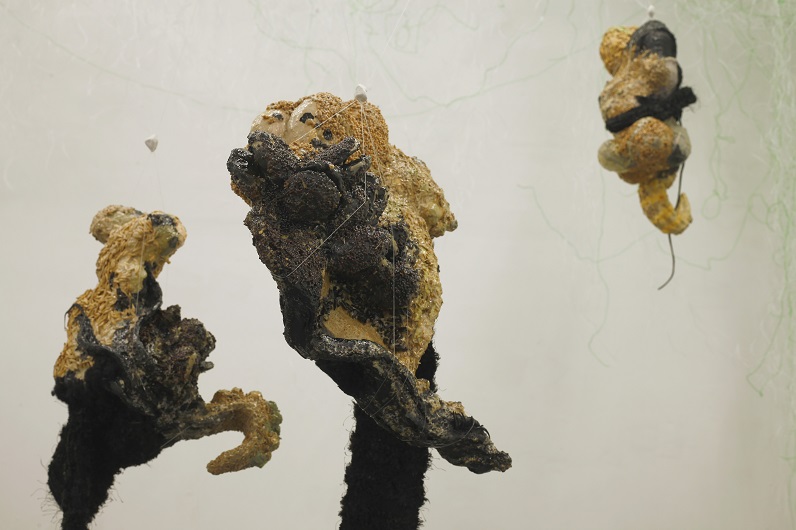
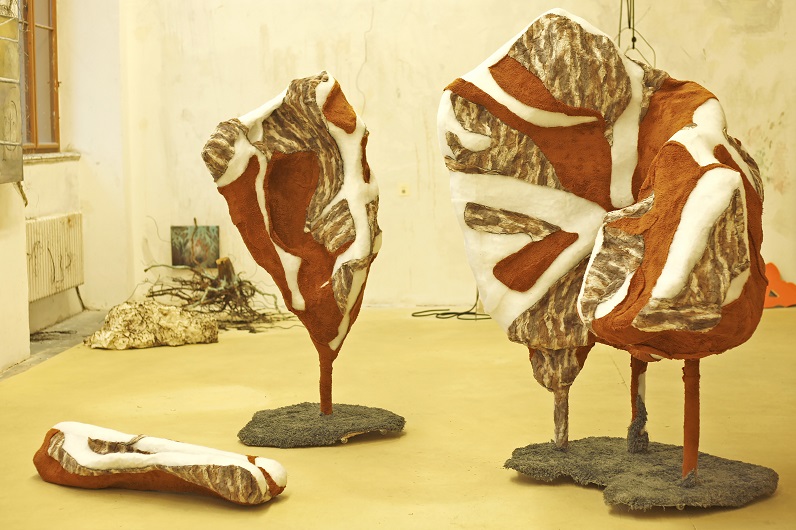
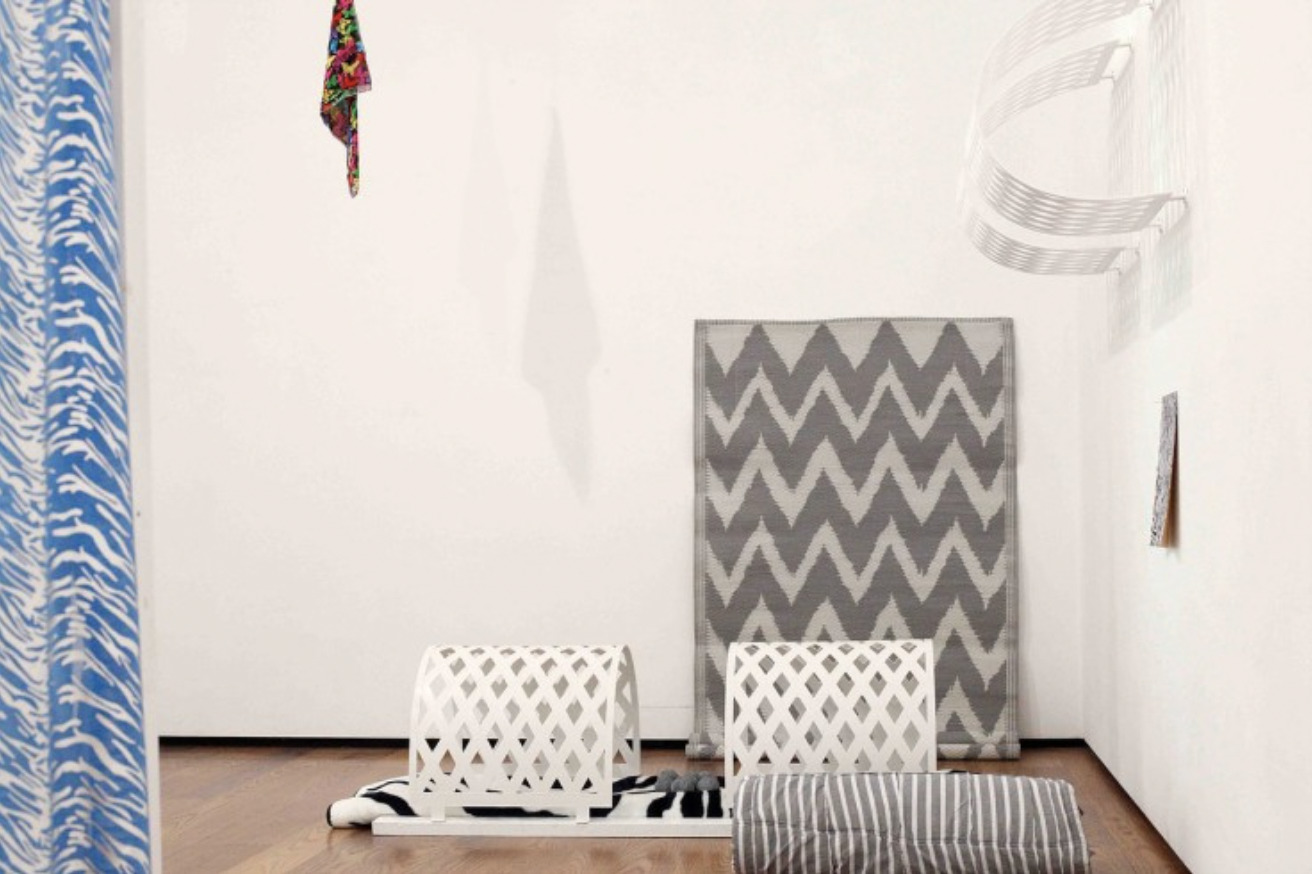
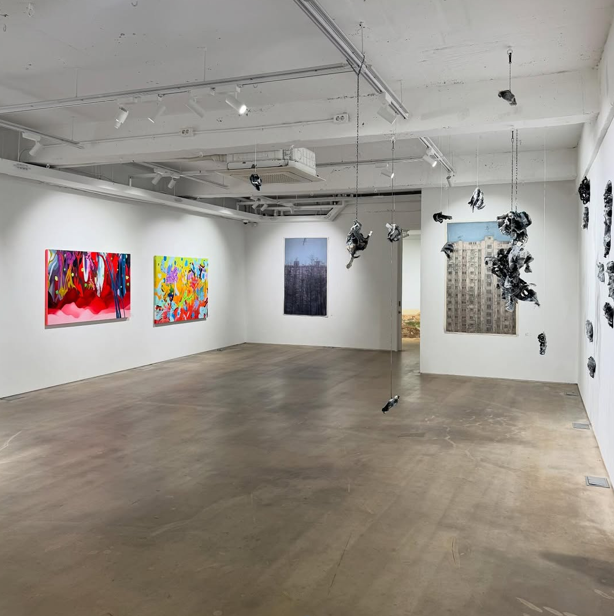
On March 30, 2025, I had the opportunity, as part of the closing of the exhibition “The Legs of a Whale,” curated by Eva Koťátková at Galerie Jeleni, to participate in the performance art piece Not Every Whale Lacks Legs by the artist Lim Jeong Soo. Not Every Whale Lacks Legs is a performance in which a transition is staged from the typical exhibition format of visual art to lively, temporary performance art. In her exhibition at Galerie Jelení, Lim Jeong Soo presents a kind of whaling workshop.
However, during her performance, she does not dissect a whale, but rather transforms it into a dynamic dialogue with the human body through continuous, physical modifications. In addition to staging the physical space, she also questions the normative frameworks of language, hierarchies, and evolutionary narratives by seeking alternative relationships between humans, animals, and nature. In doing so, she also interacts with the audience, creating a distinct level of perception that I intend to examine in this paper.
This paper shall work on the question how the performance the performance expands the exhibitions levels of perception. To properly celebrate the art of Lim Jeong Soo in this Essay, I contacted her via Instagram to give her own input on her work. Those texts will be marked as her quotes.
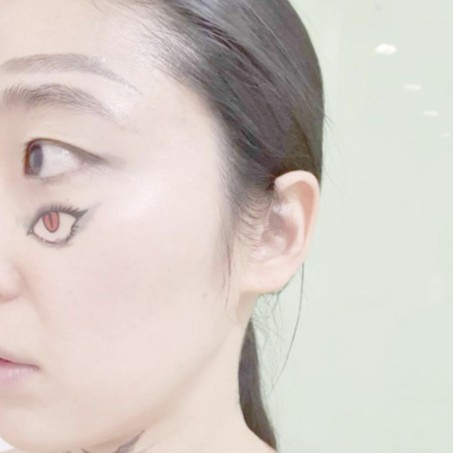
Lim Jeong Soo graduated from the Sculpture Studio in the Department of Fine Arts at the Korea National University of Arts and completed a master’s program in the Sculpture Studio at UMPRUM in Prague. She works with the artistic means of sculpture and performance art to explore topics like the subversion of subject and object, otherness and the non-human being and investigates superstitions and myth interpreted through body language. The exhibition 《The legs of a Whale》 was her first solo exhibition and was curated by Eva Koťátková, a contemporary Czech artist.1
2. Perception of a Gallery
2.1. “The Legs of a Whale”
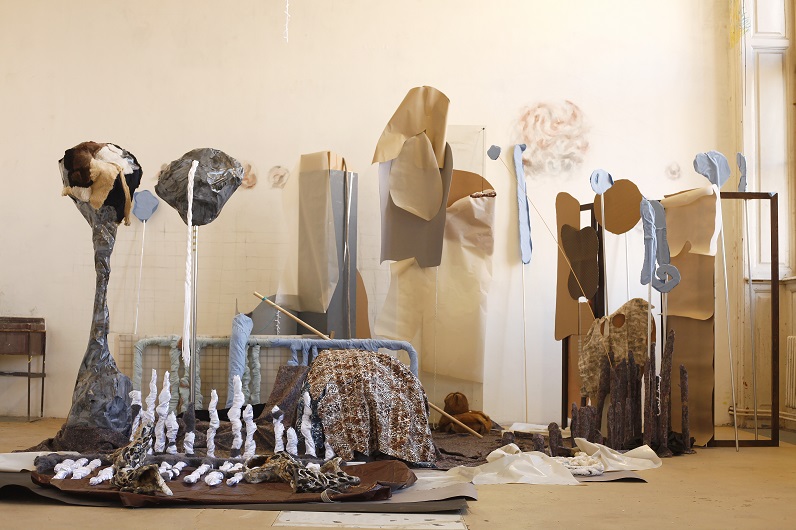
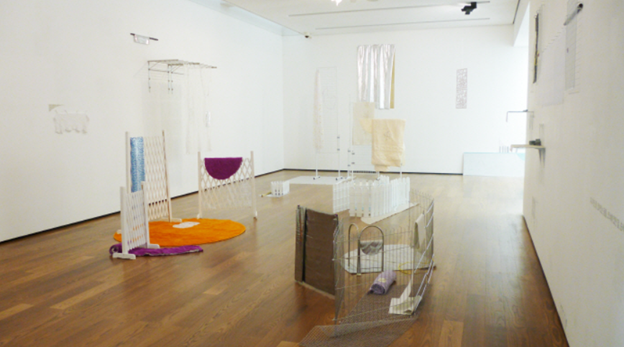
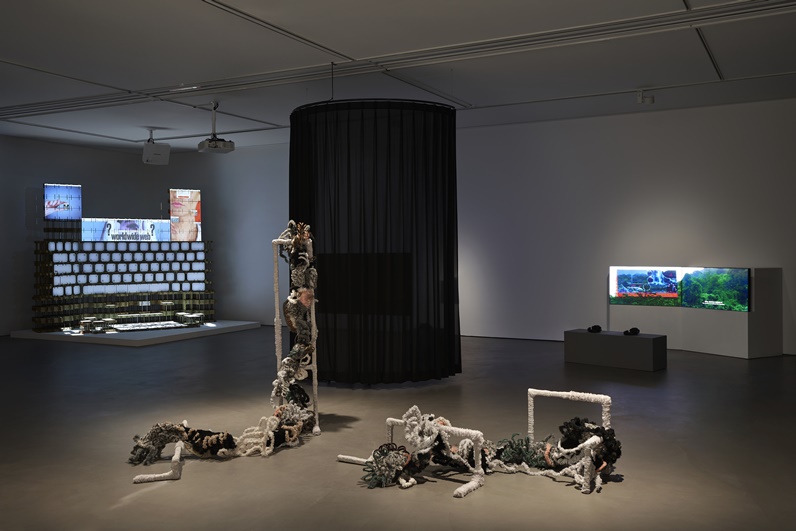
The exhibition is Lim Jeong Soo’s continuation of her diploma project "Stay a Dinosaur" from the Sculpture Studio at UMPRUM. “I explore how the body transforms, connects with otherness, and transcends the boundaries between human, object, and space.” states the artist.
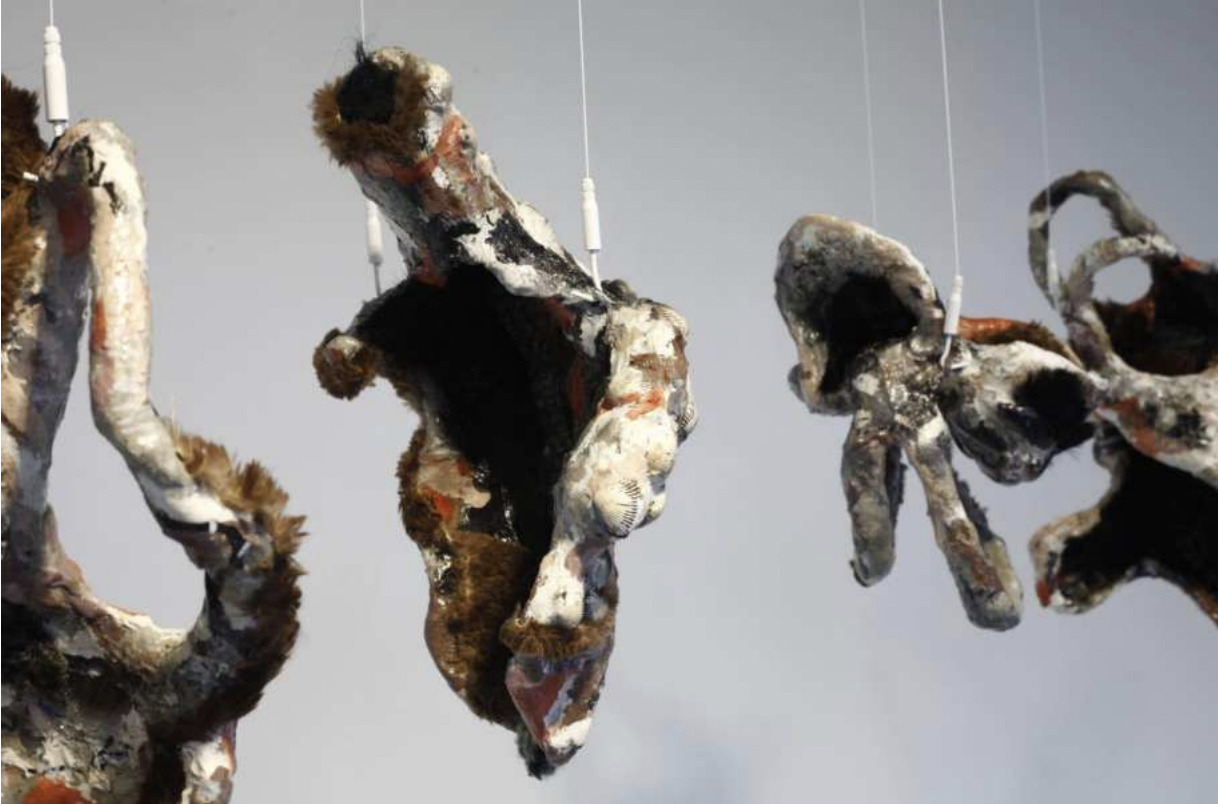
According to her, “the main motif of this exhibition is the whale – a creature that returned to the water, thus challenging the common notion that evolution has only one direction. It shows that identity is not fixed but changes according to the environment.” Her biggest interest is the question about “what animals really are and how we constantly reshape them based on our ideas of what is “normal.” Instead of understanding them as they are, we assign them roles in our stories and construct around them an image of otherness.”2
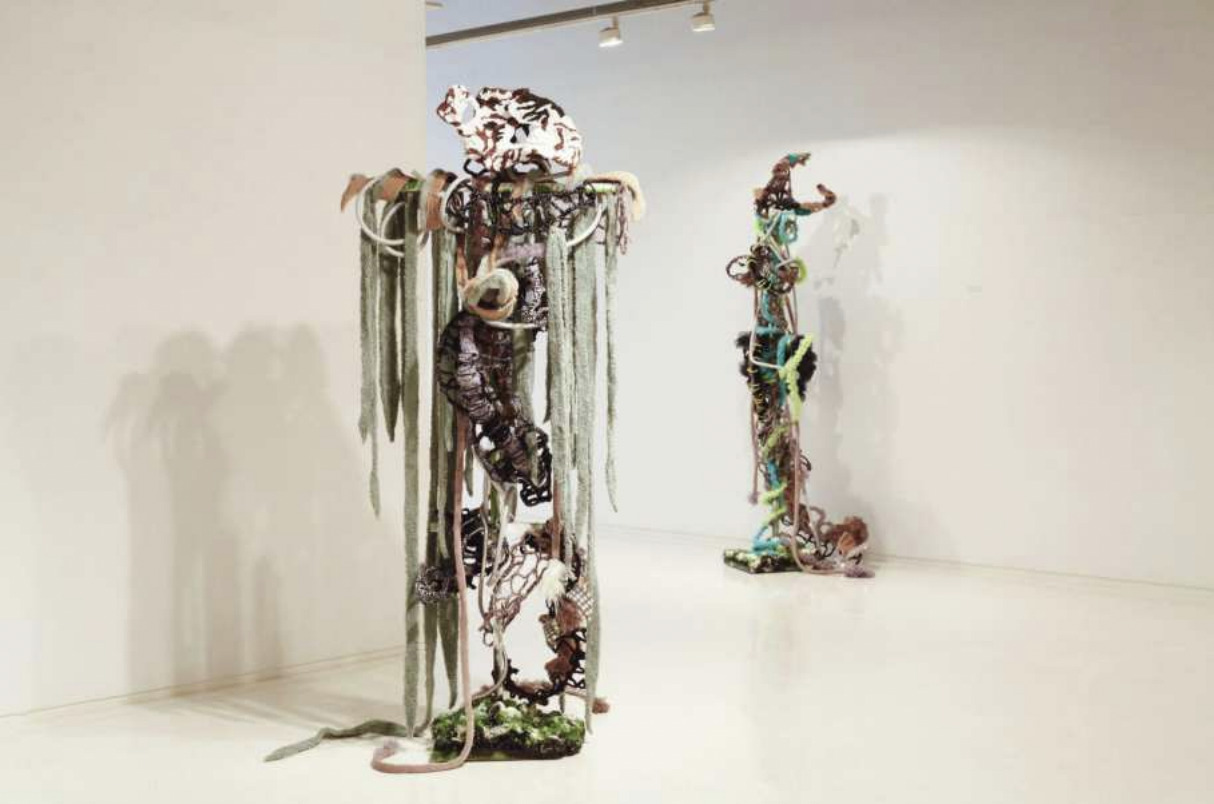
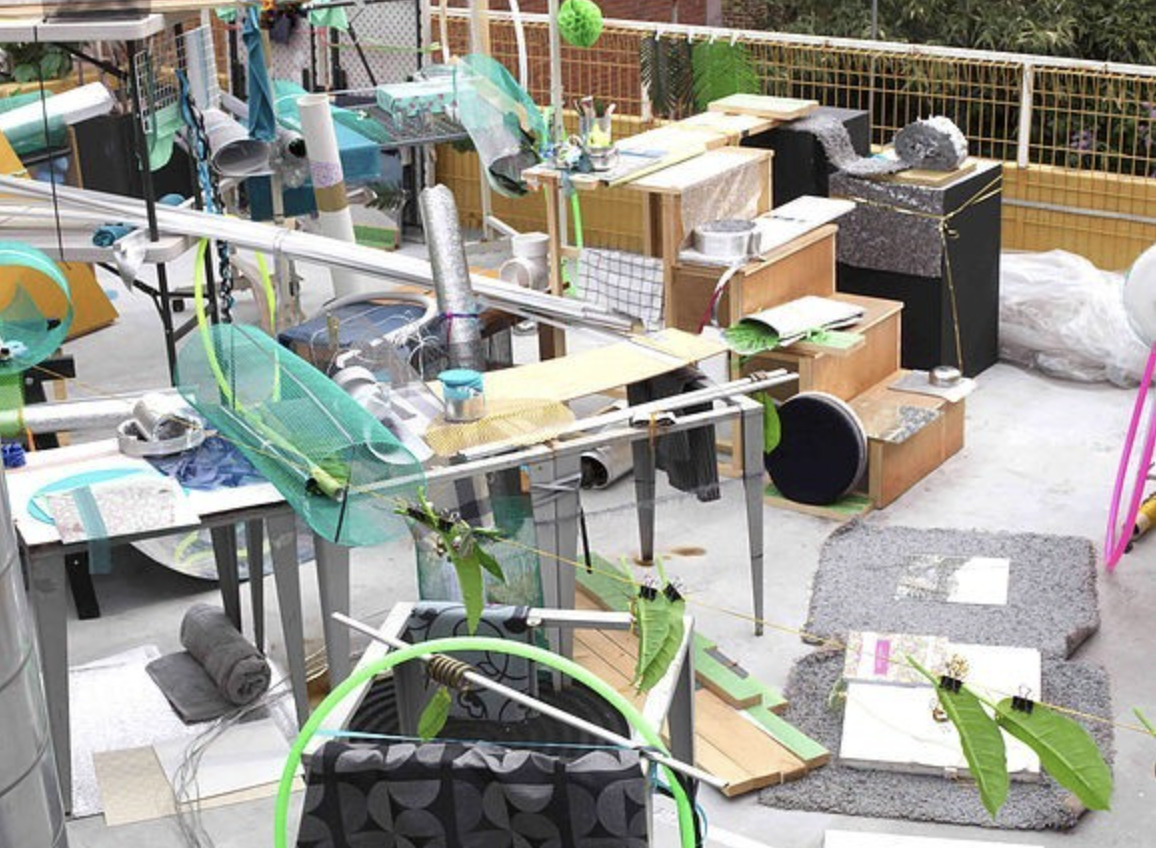
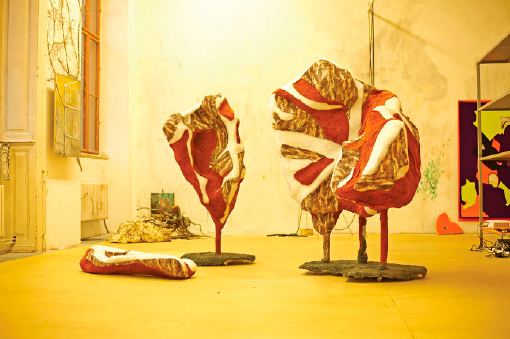
In her work she uses materials that she calls “industrial animals”, such as paper, fabric, clay and synthetic fur. “They imitate nature but are entirely artificial. […] We grow up among these materials and, through them, form our perception of what is ‘natural.’ I want to show that our perception of nature is not something obvious but is shaped by what we have learned as the “correct” form of animals, nature, and others.”
2.2. Perception in Static Art
In his text “Ambiguities and conventions in the perception of visual art” (2008), Pascal Mamassian writes about the mechanism behind the perception of visual art. Due to his text, there is a difference in mechanism between everyday perception and visual art perception, or as he exemplifies looking in one’s microwave-oven Perception, as he states, is up to the task of the observer, which in both cases is to resolve ambiguities. While the mechanism and the task are the same, there are different solution in resolving those ambiguities: In everyday perception we use our prior knowledge, whilst in visual art perception we use long established conventions.
Mamassian follows this statement by listing those conventions, namely, composition, spatial scale, illumination and colour, three-dimensional layout, shape and finally movement.3 He states that “the absence of time in a static canvas is obviously a challenge for an artist who wants to depict a dynamic scene.”4 We can therefore foresee that performance art has another layer of perception or convention because there is the factor of time.
Even if those conventions may seem as strictly given, art perception is far more than going through a list of conventions and feeling into each of those aspects. In the text “Expecting the Unexpected: How Gallery Visitors Experience Semantic Instability in Art” (2016), by Claudia Muth, Marius Hans Raab and Claus-Christian Carbon, the authors state that perception of artwork rarely leads to a clear and determinate meaning but rather a phenomenon they call ‘Semantic Instability’.
They state that, typically, we form predictions about upcoming events based on previous experiences and then “match our ‘hypotheses’ or ‘predictions’ about the world with the actual stimulation.”5 When they do not match up, we learn and recognise our mistakes in predicting and adjust accordingly. But those habits to reduce mismatches do not work in the perception of art and therefore get pointed out. The authors state, “that art enables us to ‘catch ourselves in the act of perceiving’ as ‘a mode of active engagement with the world’.”6
2.3. Personal perception of the exhibition
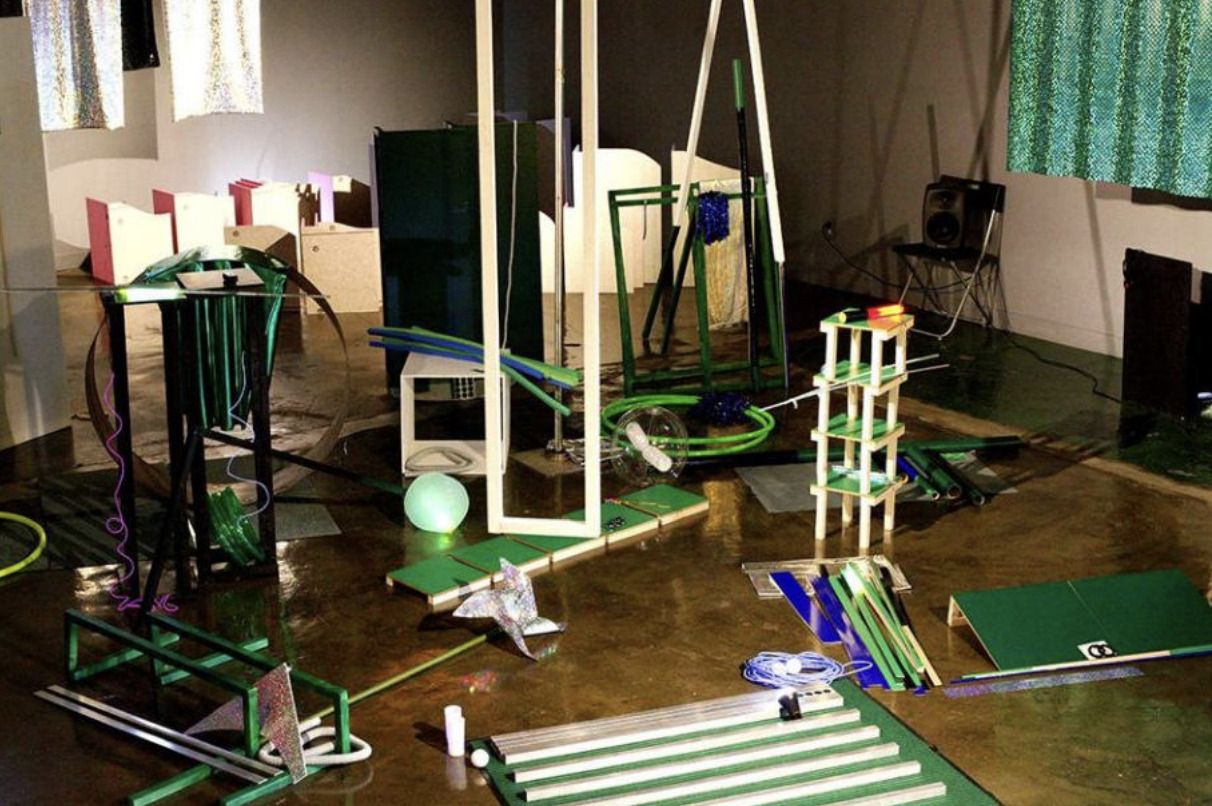
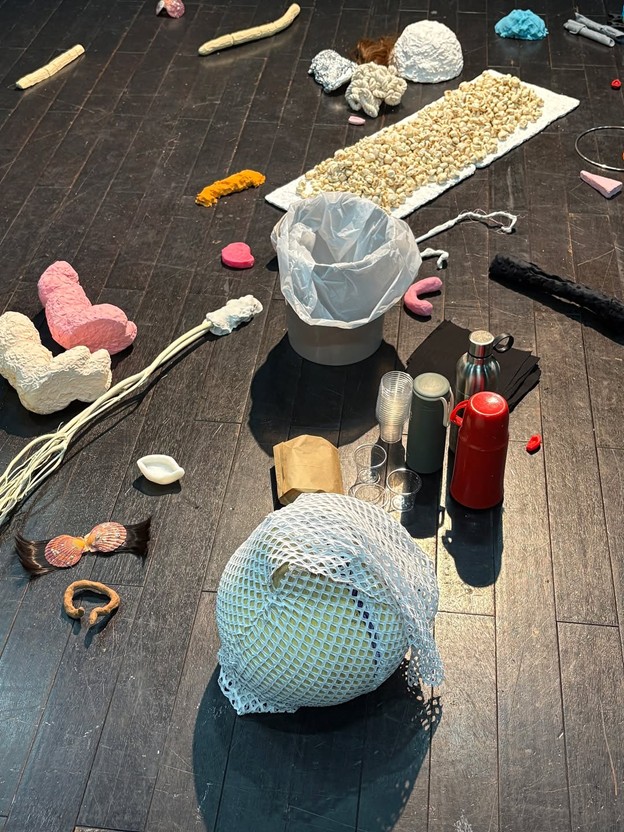
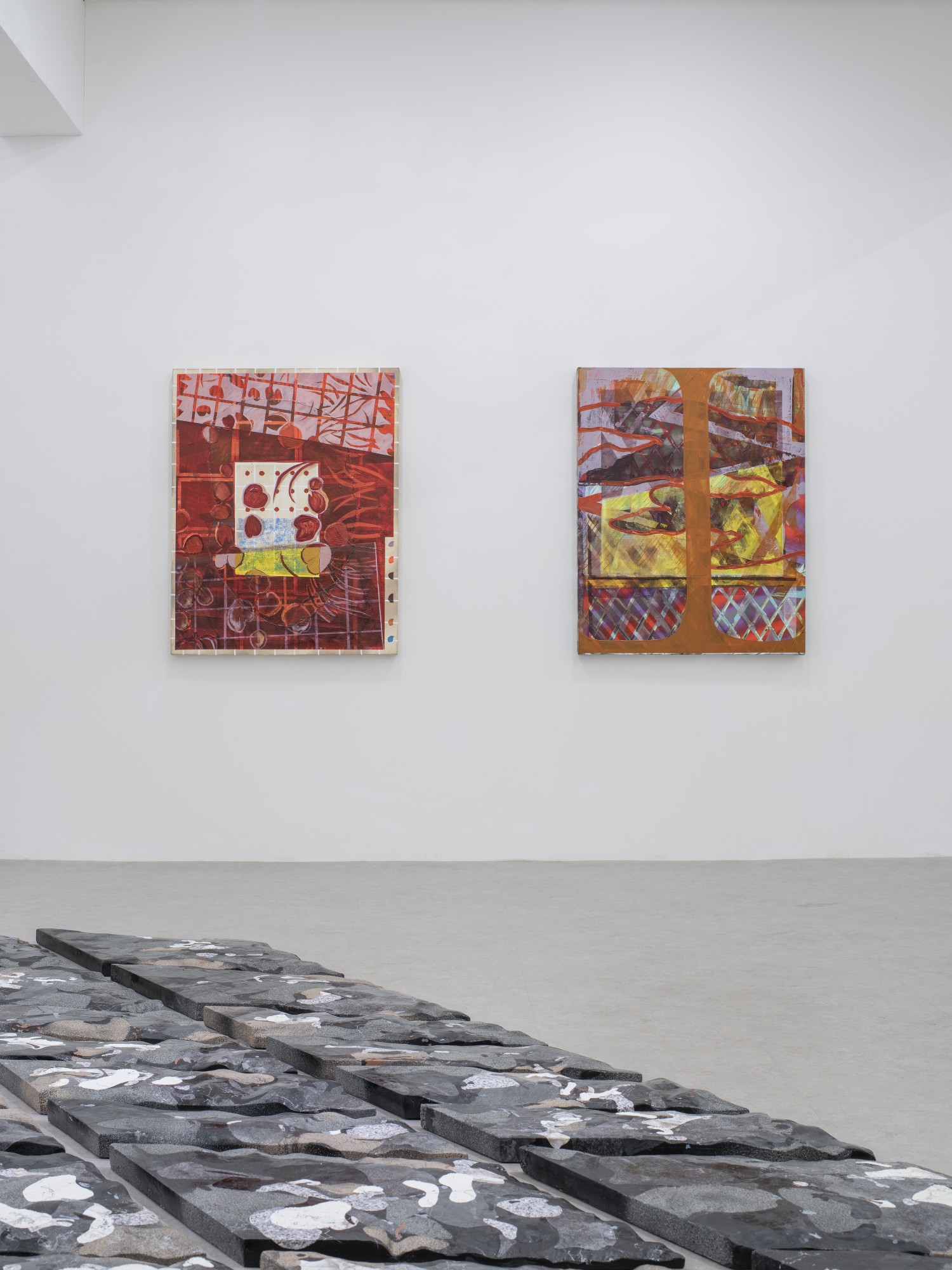
The subjective perception of the space is greatly influenced by the interplay between the physical environment and pre-existing knowledge. From the moment visitors step into the exhibition space, they are confronted with a series of spatial and material cues. The gallery serves as a “room of things,” where intriguing materials and placements set the evocative framework for the search of meaning behind it. The knowledge of the title of the exhibition raises even more questions and may lead the perception into interesting paths: What do these items symbolize, and what stories do they conceal? Where is the whale? What significance do its “legs” hold?
Furthermore, the prior knowledge that a dynamic performance is forthcoming creates an atmosphere of curiosity, anticipation, and even an underlying apprehension. The presence of elements like the scissors and Stanley knife—symbols which denote both functionality and a latent potential for violence—intensifies the expectation that the upcoming performance might entail a dramatic bodily transformation or even a graphic, bloody spectacle.
This is due to the fact that I have prior experiences with watching performances that depict self-harm. The subjective perception of the space is greatly influenced by the interplay between the physical environment and preexisting knowledge. Merely glancing at the carefully arranged artworks triggers an immediate engagement with their meaning.
3. Performance Not Every Whale Lacks Legs
3.1. Performance within Gallery Jelení
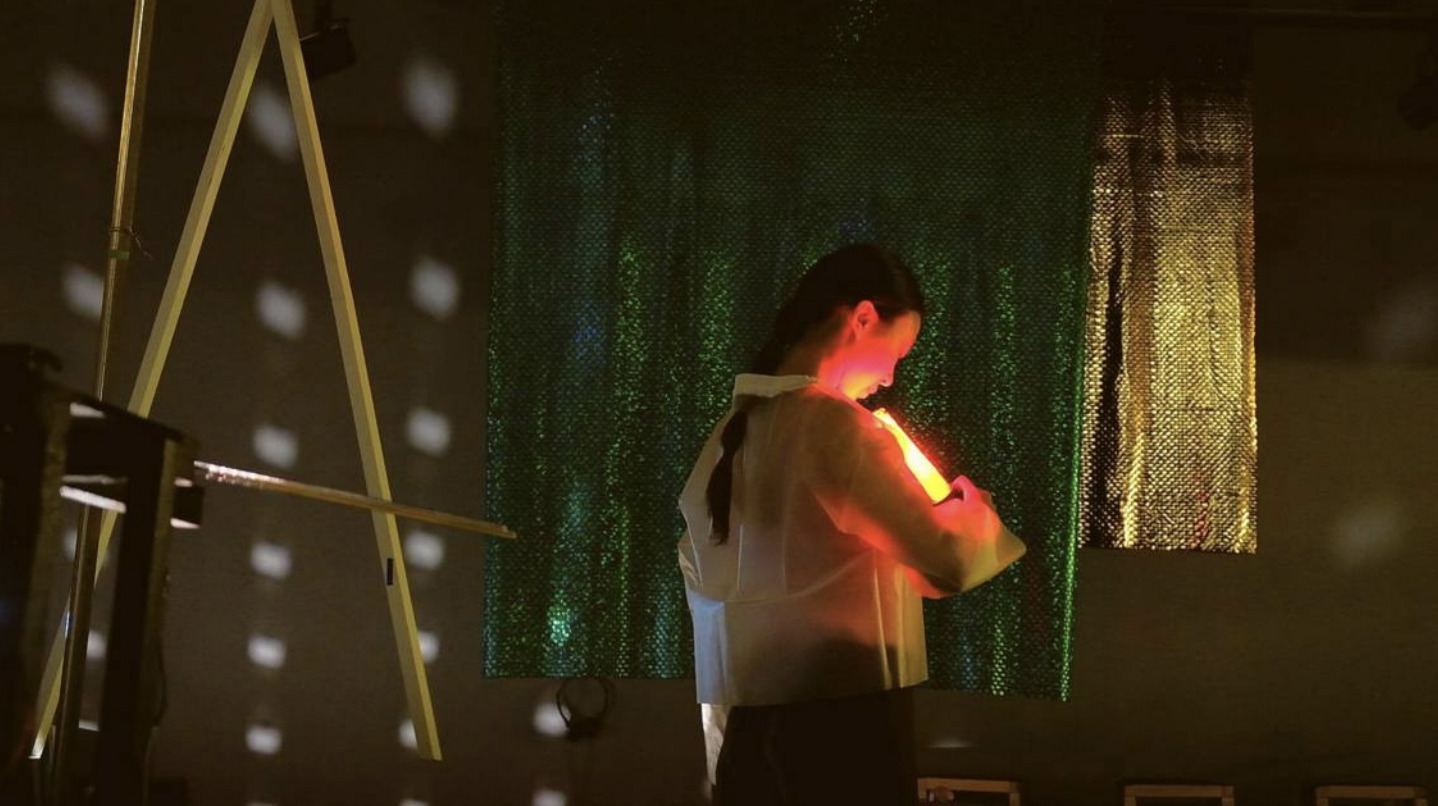
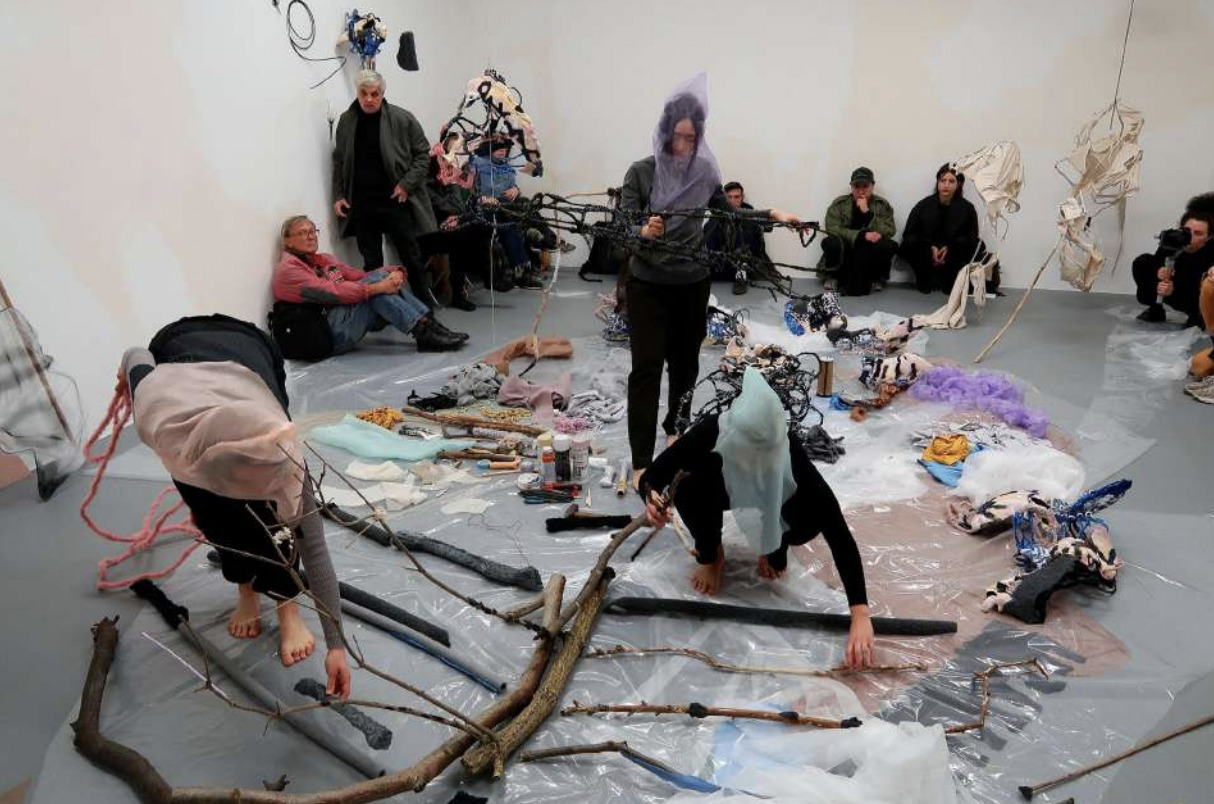
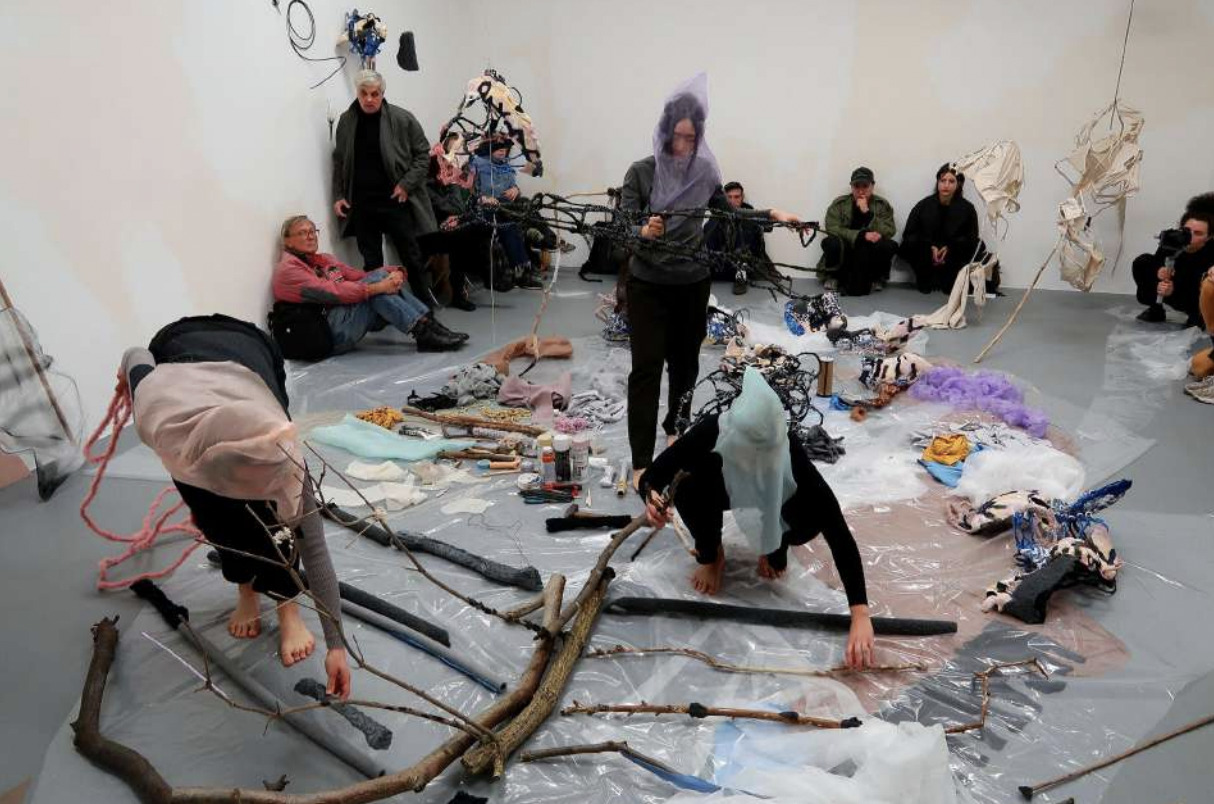
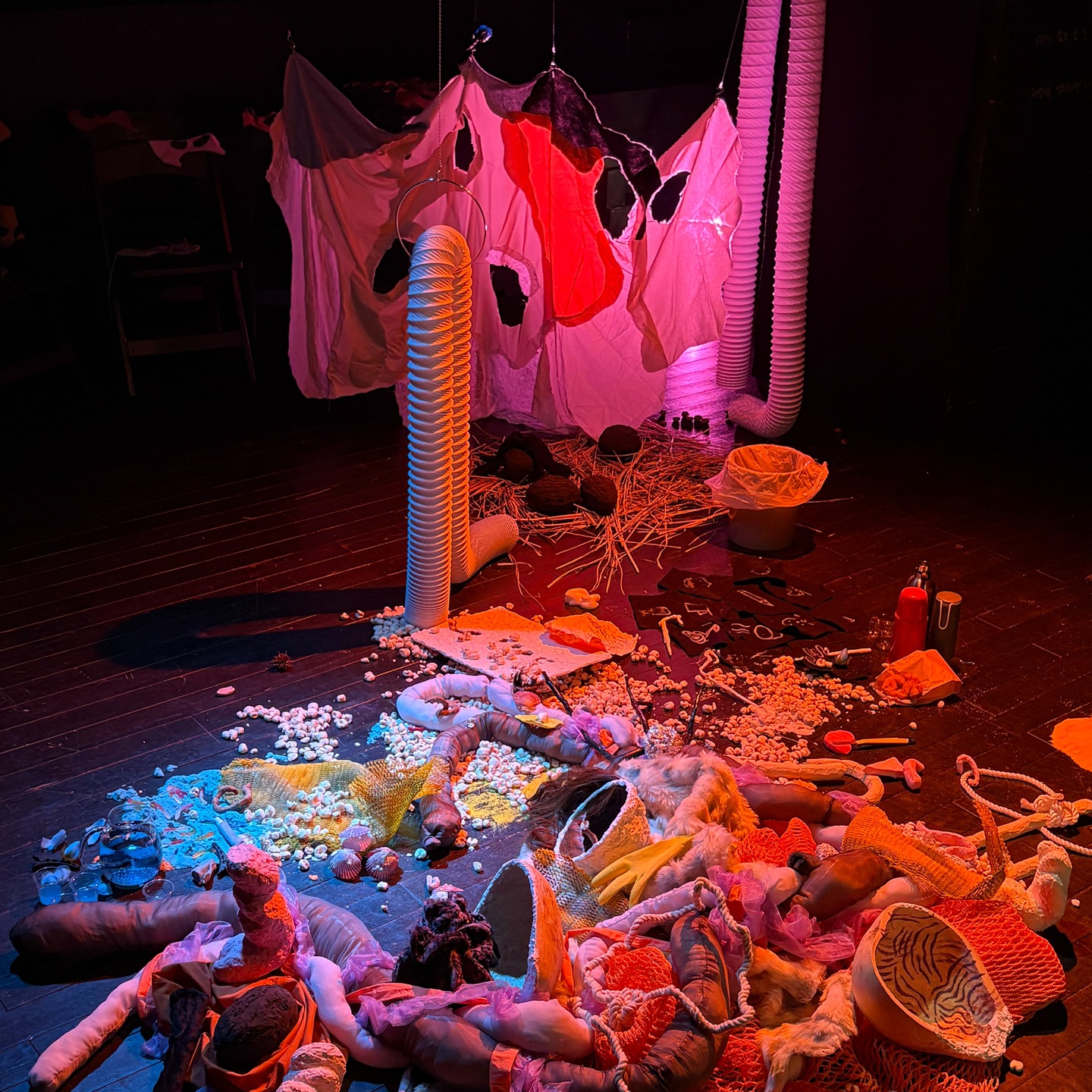
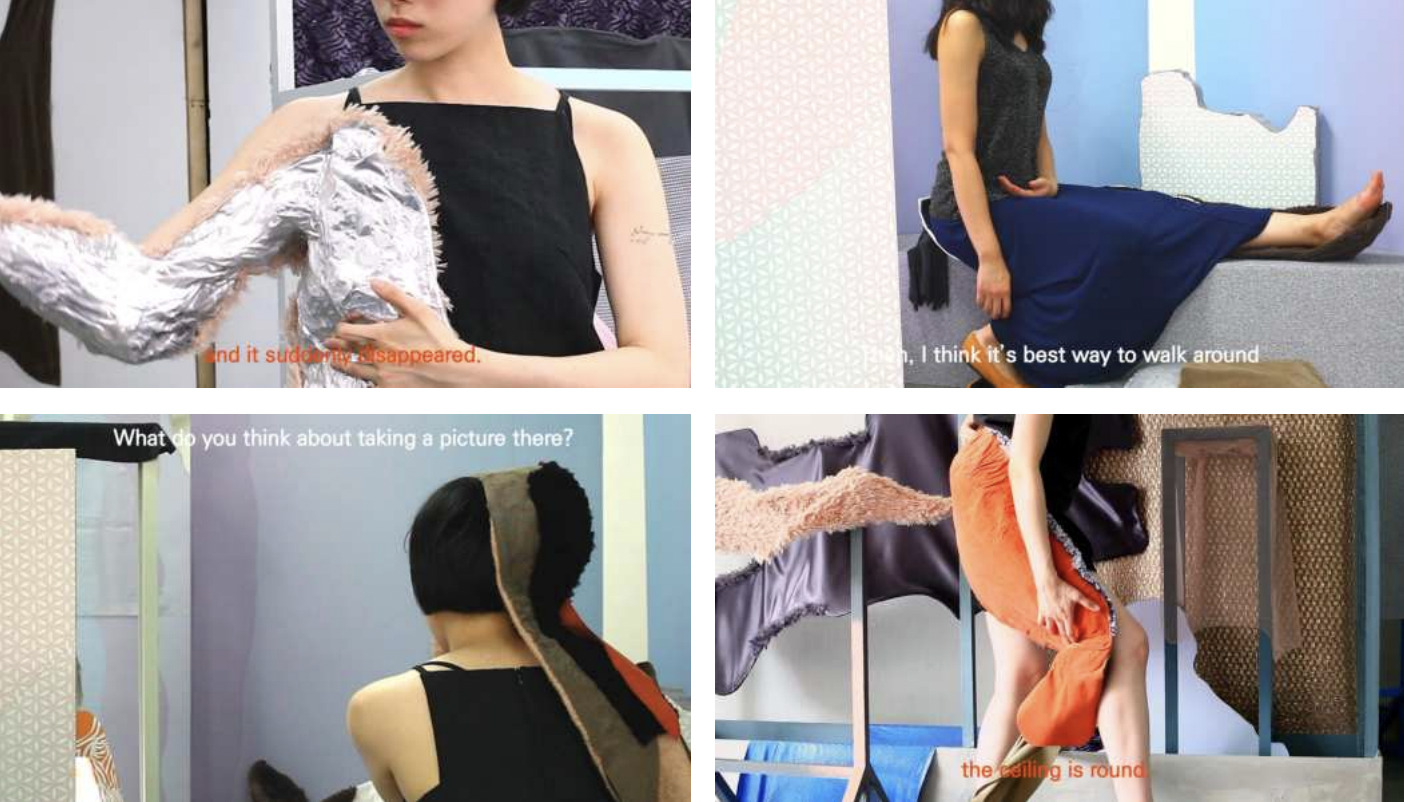
On March 30, 2025, the performance Not Every Whale Lacks Legs took place as the closing event of the exhibition “The Legs of a Whale” – marking the shift from a conventional gallery presentation to a dynamic performance art piece. Beside the artist herself, the performers Anna Solianyk and Lucie Vrbíková were also part of the piece.
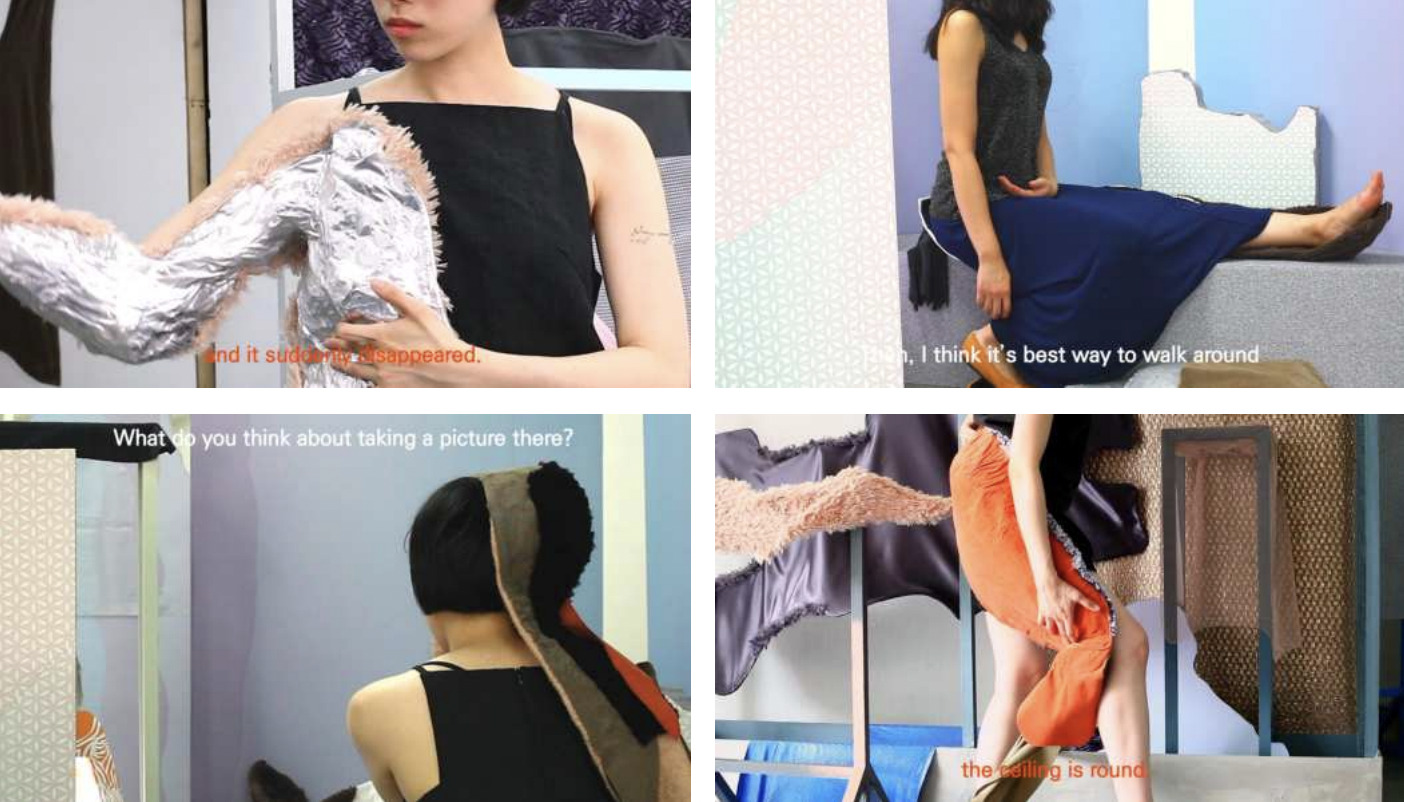
In her artist statement Lim Jeong Soo explains that “we are failing in how we perceive other beings – including animals – through language.”7 This critical reflection that we often resort to human language to define and categorize the other is embodied in the performance. According to the artist it “is based on a series of unsuccessful attempts to understand the other – in this case, the whale.”8 The performers blur the boundary between body and object by transforming their own physical forms into „things that metaphorically bear the name ‘legs of the vanished whale’”,9 thereby challenging the conventional, scientifically driven interpretation of living beings. In doing so, the exhibition space metamorphoses into a stage for an ongoing dialogue that interrogates fixed ideas of nature and corporeality.
3.2. Perception in Performance Art
When talking about perception it is important to note that perception is a very subjective matter. In theatre and performance analysis there are various kinds of approaches to this subjectivity, one of those being the “horizon of understanding”10 that can also be applied to the perception of non-performative art. This “horizon of understanding” “comprises not only ethical principles, but also his/her political, aesthetic, cultural and social background.”11 It can be translated as the personal “baggage” that each and every individual spectator brings along when watching a performance. Furthermore, watching a performance can be seen as a form of social interaction and it is therefore also important to note one’s attitude or relationship toward the rest of the audience.
3.3. Temporality and Fleetingness
A defining feature of performative art overall is its inherent temporality and fleetingness. Although audiovisual recordings, such as YouTube clips, can capture isolated moments, they can never fully convey the energy of the live event. This makes the subjective perceptions of individual viewers all the more important when trying to understand or re-imagine a piece. Every single performance is one of a kind and can never be replicated or even rewatched in the same way again. This fact alone makes the transformation from exhibition to performance art so special considering its levels of perception.
In her artist statement, Lim Jeong Soo even remarks on her use of “elements that temporarily connect and disconnect – various layers, fragments, and surfaces assemble into transitional structures,”12 a process that not only symbolizes the transient nature of the moment but also challenges the audience to embrace each experience as unique and unrepeatable.
4. From Gallery to Stage
The merging of gallery and stage unfolds on several levels that greatly expand the perception of the exhibition. The factors that I personally find most striking are the Soundscape, Interaction with and around Art, the Eye of the Camera and the Usage of Space’.
4.1. The Soundscape
The background sound in the performance includes spoken text about facts about whales and other animals, mythical beings in water, the whale as meat, and scientific research on whale hearing in Czech. While I personally could not understand the spoken text, the way it was spoken still had an influence on my perception: Beside from the calmly spoken text there was also soothing music and other sounds that put me into a meditation-like state. Therefore, the aural component constitutes a vital element of the performance even if the meaning of the text was lost due to language barriers.
4.2. Interaction with and around Art
A particularly striking aspect of the performance is the literal connection established between artwork, performers, and spectators. Through the use of strings and bands, which are put into the audience members hands to hold, the traditional distance between art and viewer is decisively dismantled. By inviting the audience to physically engage with the art, the performance breaks the long-standing injunction “Do not touch the art!” and fosters an immediate, kinetic participation. This direct interaction transforms passive observation into an immersive, collective experience.
4.3. The Eye of the Camera
Another fascinating layer of the performance is introduced by the presence of the camera, which follows the performers but also captures the audience. In line with Grotowski’s belief that “once a spectator is placed in an illuminated zone, or in other words becomes visible, he too begins to play a part in the performance”13, the interplay between being seen and observing creates a compelling paradox. Even though the exhibition room was lit from the very beginning the camera adds another layer of spectatorship and symbolically illuminates the room and the audience even more.
4.4. Usage of Space
The final transformative element is revealed in the active utilization of the exhibition space. Movement and fluid transitions dissolve the traditional boundaries and separation between performer and spectator, effectively animating the once static gallery. Also, the static art pieces themselves seem to come alive: In one scene, for example, the performers pick up a piece of string and through their movement make it appear as a fishlike creature. The space evolves into a living stage, constantly adapting to the dynamic interactions of its participants. This redefined spatial usage and supports an active and engaged mode of watching, as the viewers have to bend forward or lean to different sides to catch what the performers are doing.
5. Conclusion
Not Every Whale Lacks Legs stands as an exemplary instance of how performance art can extend and transform the conventional exhibition paradigm. By blurring the lines between static display and dynamic performance, the work enriches the viewer’s perception, inviting a multisensory engagement through audiovisual layers, performer-art-viewer interaction, and innovative use of space. Lim Jeong Soo’s work challenges established cultural narratives and urges us to reconceptualize our understanding of nature, bodily identity, and the limits of human perception. In its fleeting, unrepeatable nature, the performance not only encapsulates the essence of art itself but also elevates the moment of experience to a celebration of transformation.
1 Lim Jeong Soo, “Artist Statement“, (2025).
2 Lim Jeong Soo, “Artist Statement“, (2025).
3 Mamassian, Pascal. "Ambiguities and conventions in the perception of visual art." Vision research 48.20 (2008), p. 2143f.
4 loc. cit., p. 2151.
5 Muth, Claudia, Marius Hans Raab, and Claus-Christian Carbon. "Expecting the unexpected: How gallery visitors experience semantic instability in art." Art & Perception 5.2 (2017), p. 122.
6 ibid.
7 Lim Jeong Soo, “Artist Statement“, (2025).
8 ibid.
9 ibid.
10 Martin, Jacqueline; Sauter, Willmar (Hg.): Understanding Theatre. Performance Analysis in Theory and Practice, Stockholm 1995, p. 65f.
11 loc. cit., p. 65.
12 Lim Jeong Soo, “Artist Statement“, (2025).
13 Coppieters, Frank. “Performance and Perception.” Poetics Today, vol. 2, no. 3, 1981, pp. 35–48. JSTOR, https://doi.org/10.2307/1772463. Accessed 22 May 2025, p. 42.