2. Form
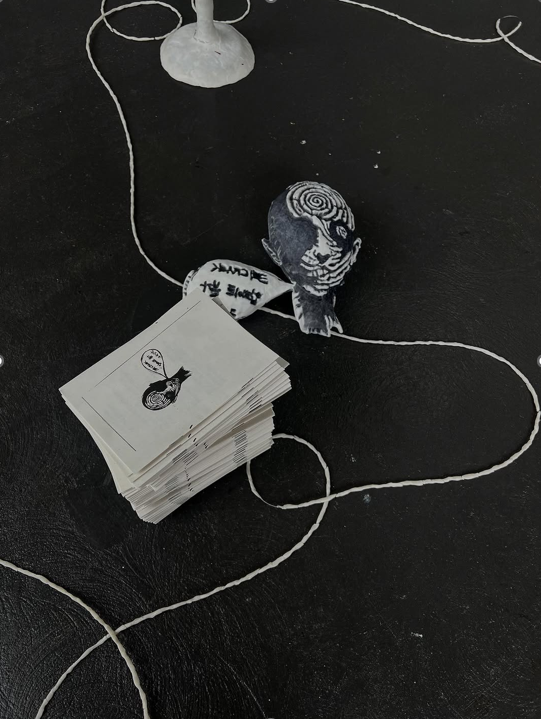
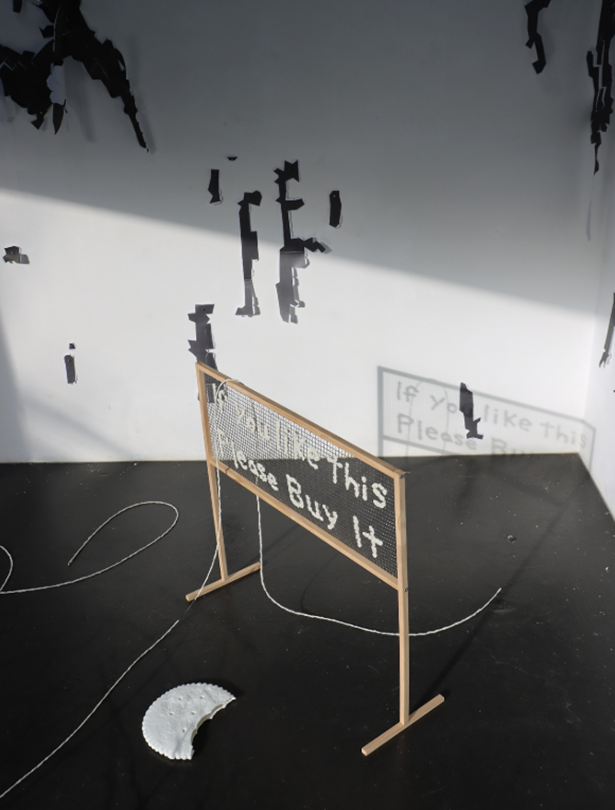
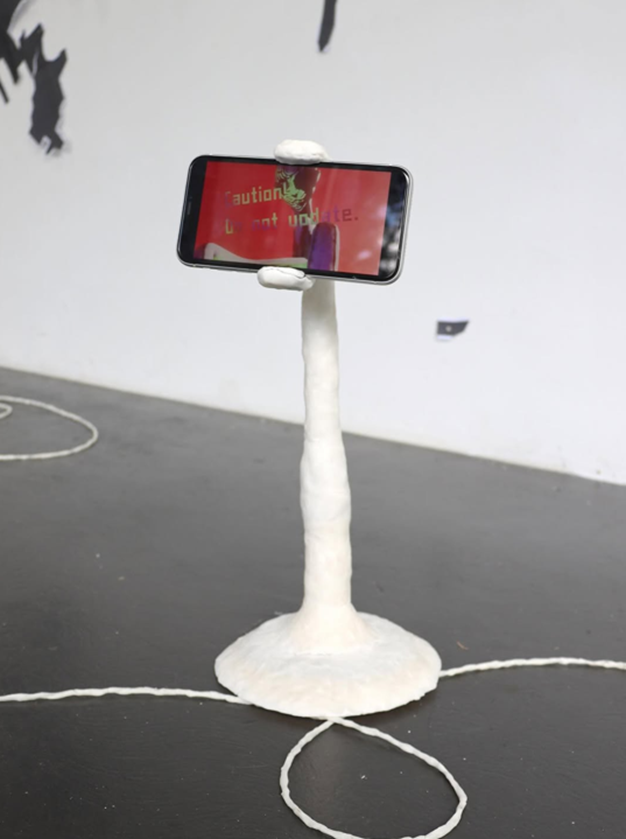
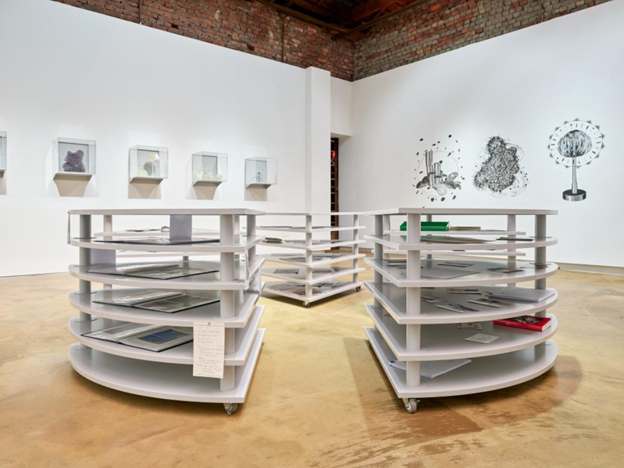
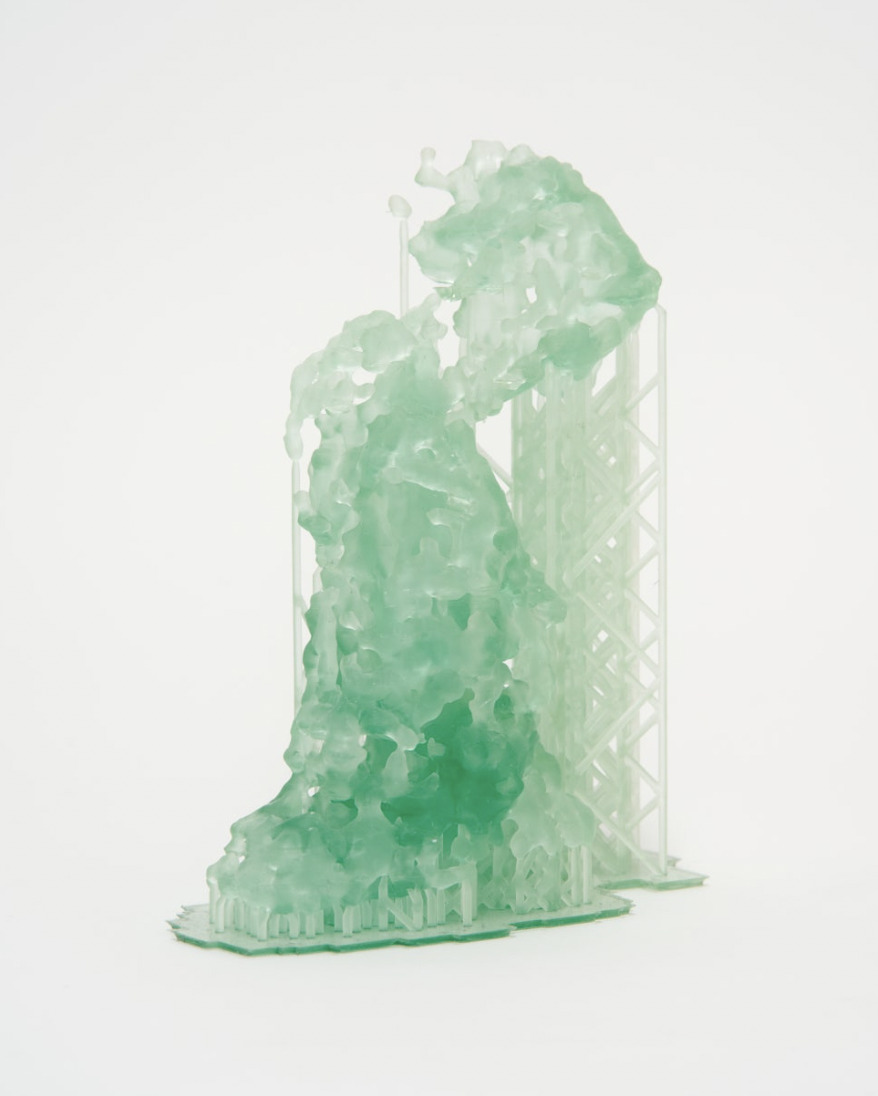
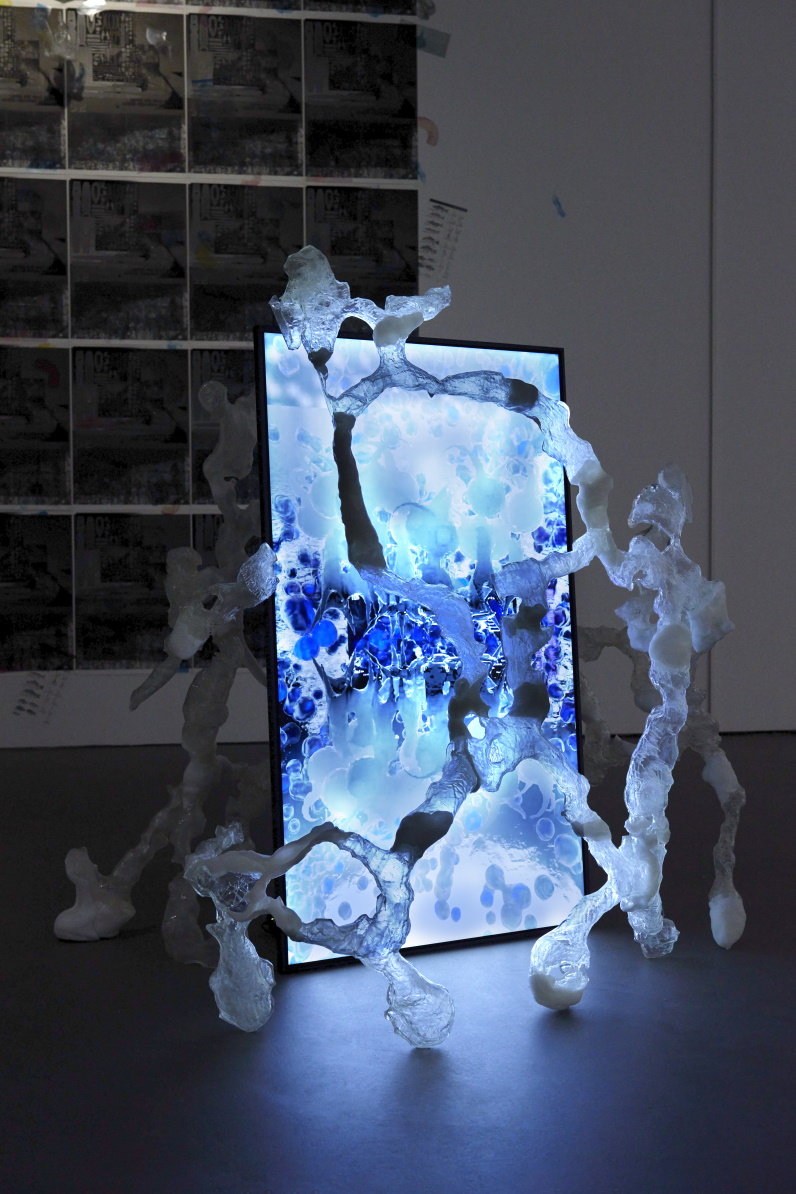
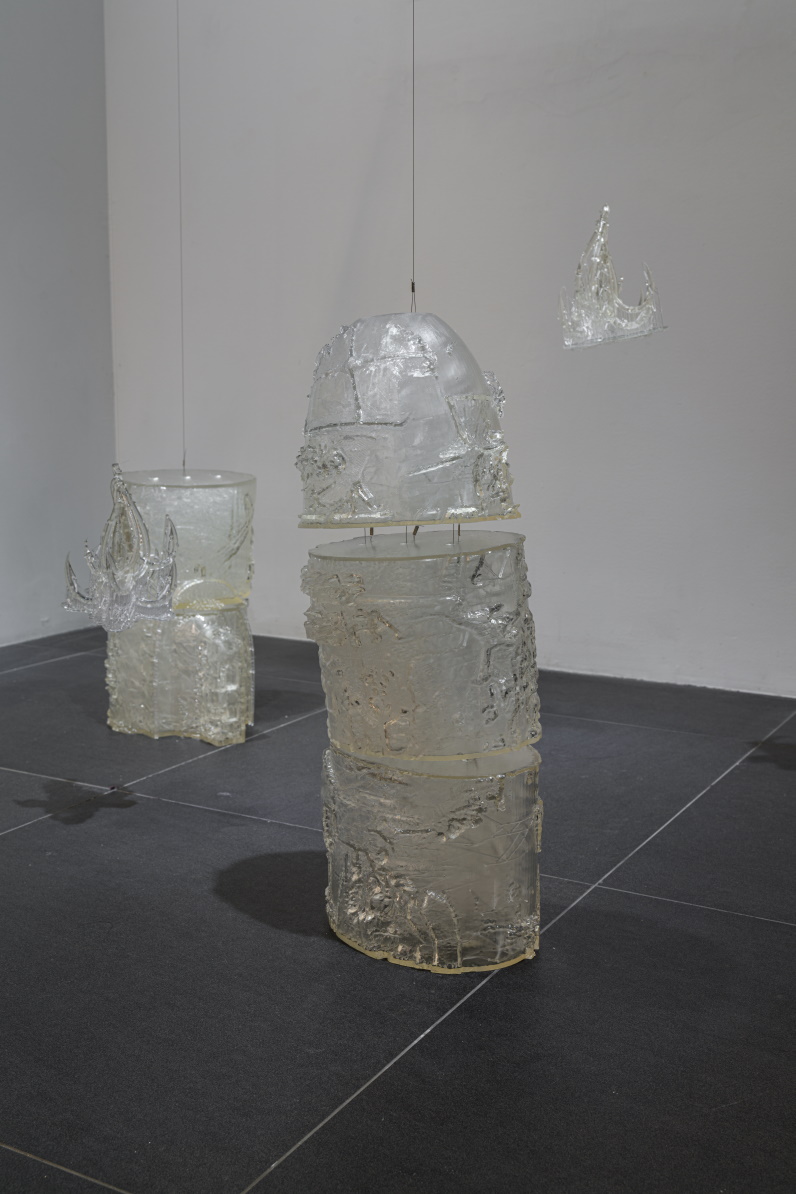
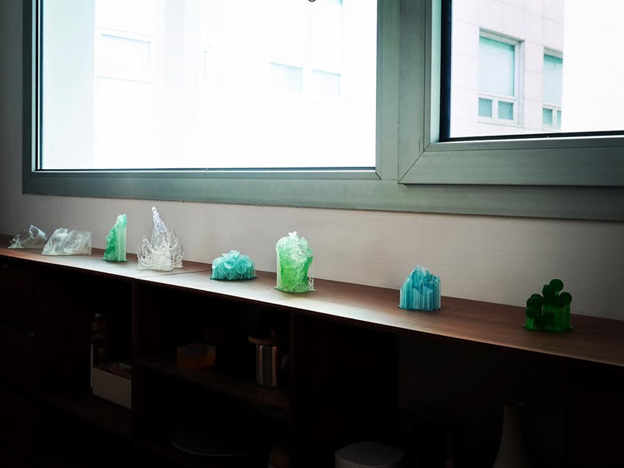
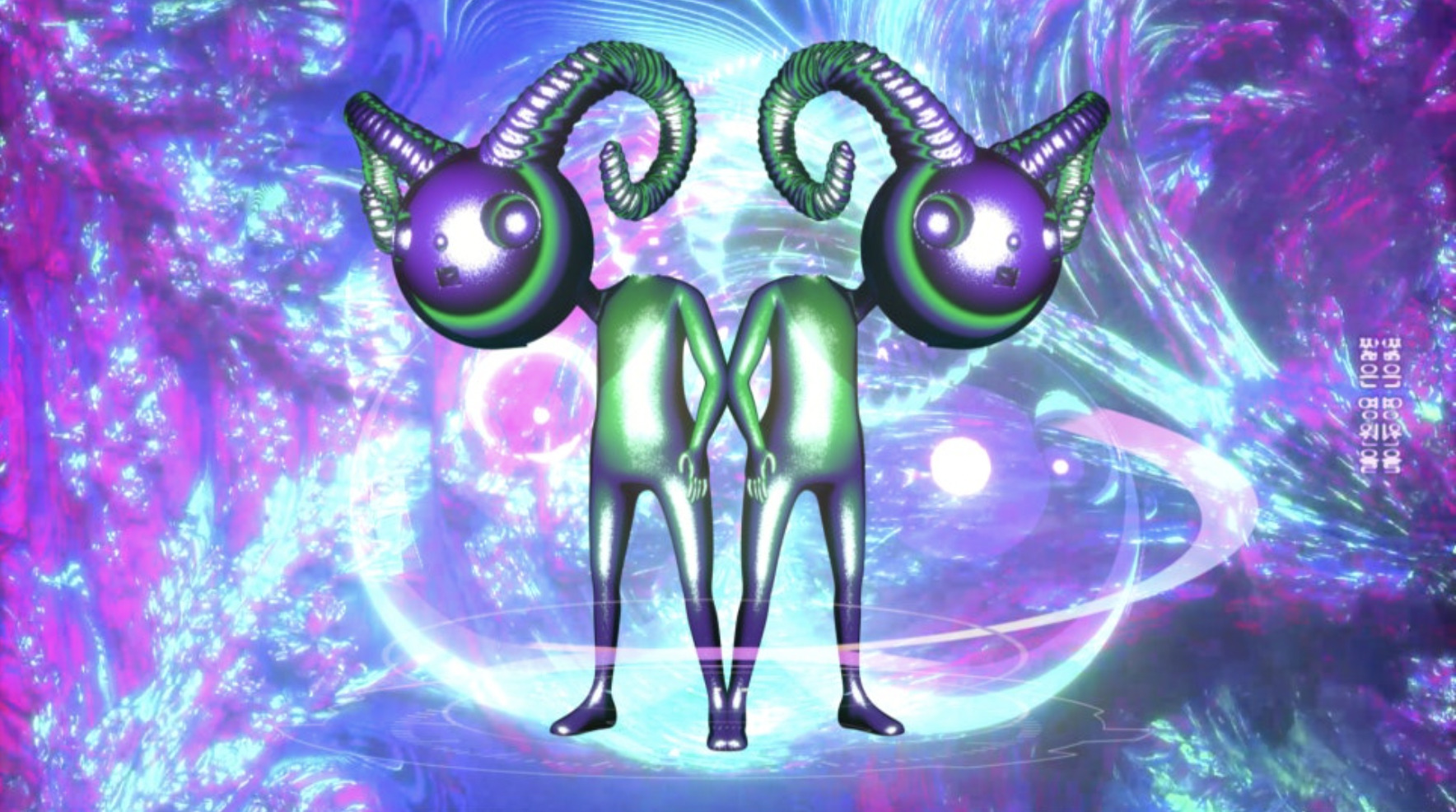
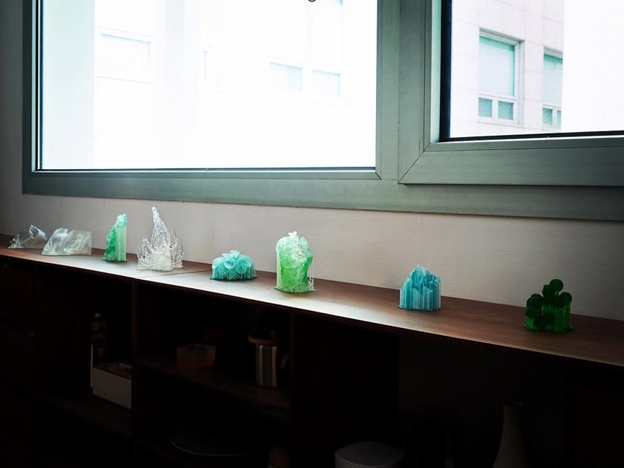
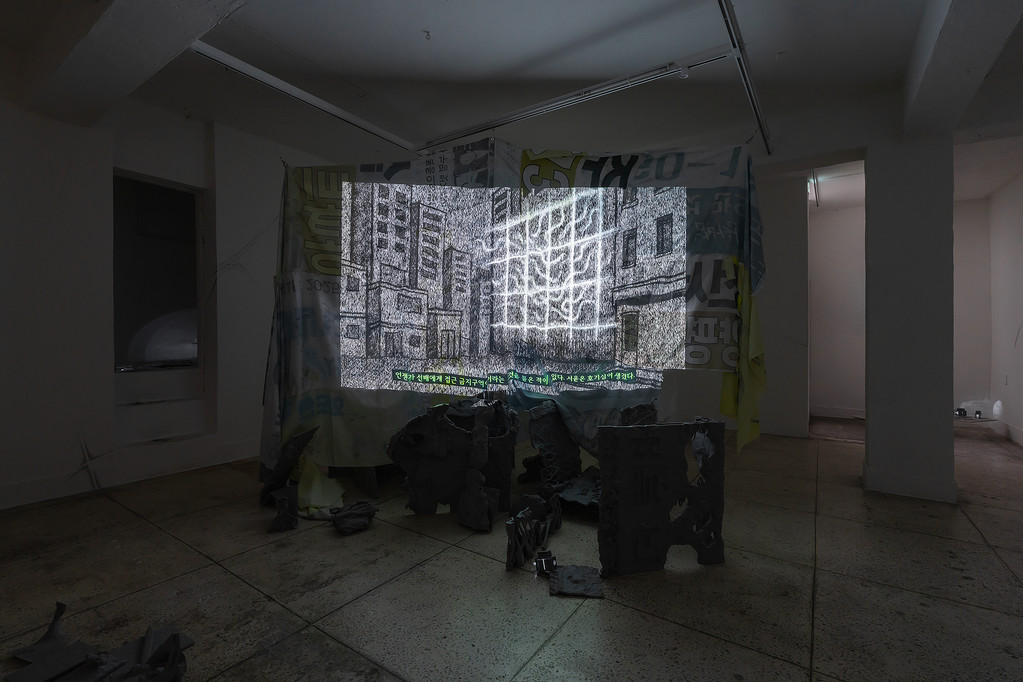
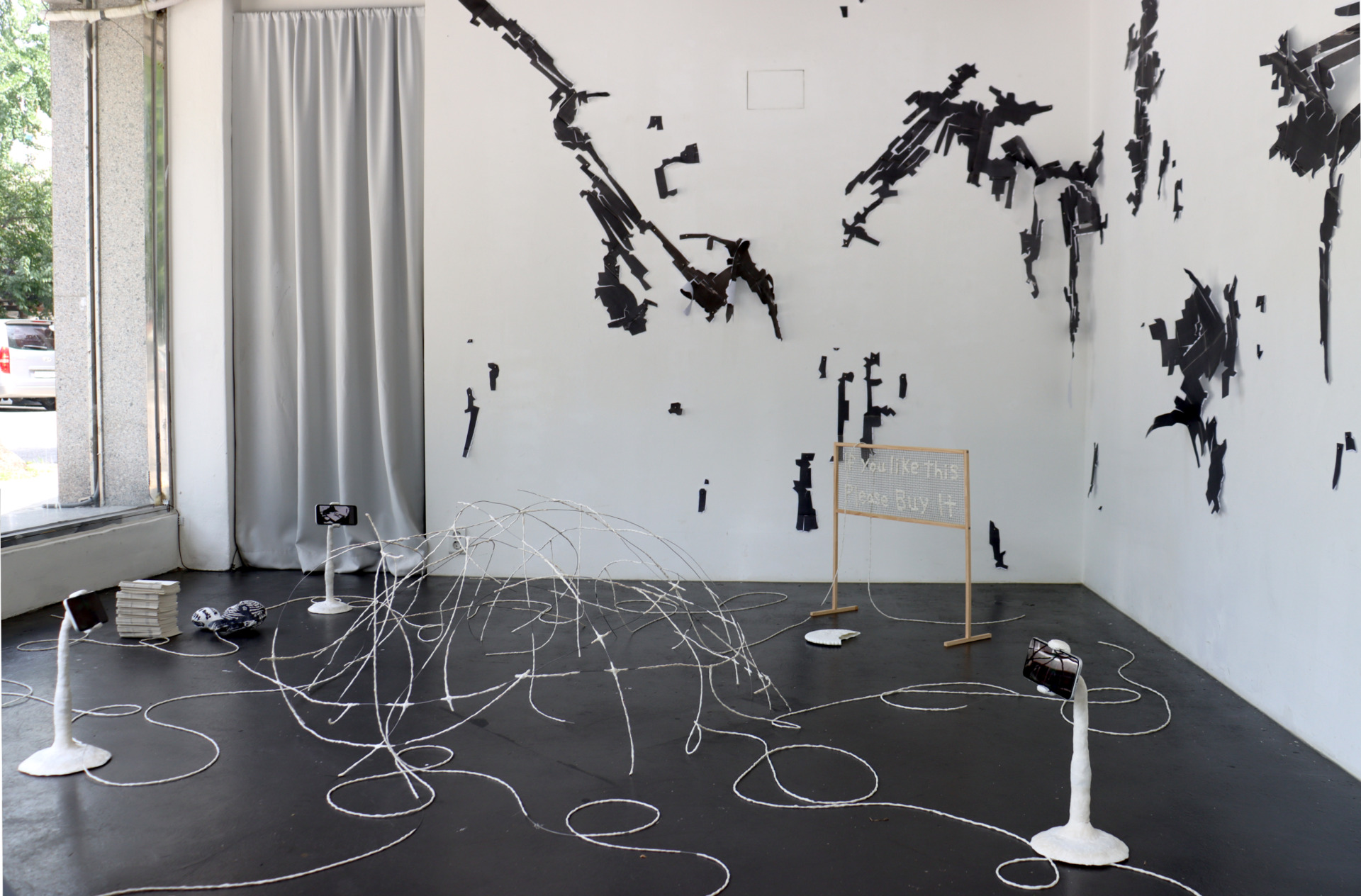
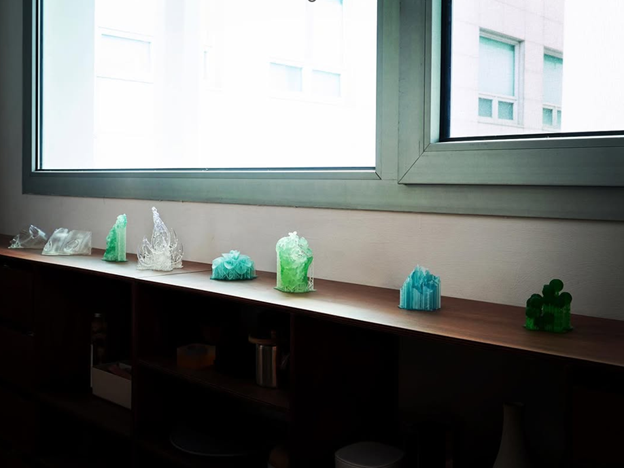
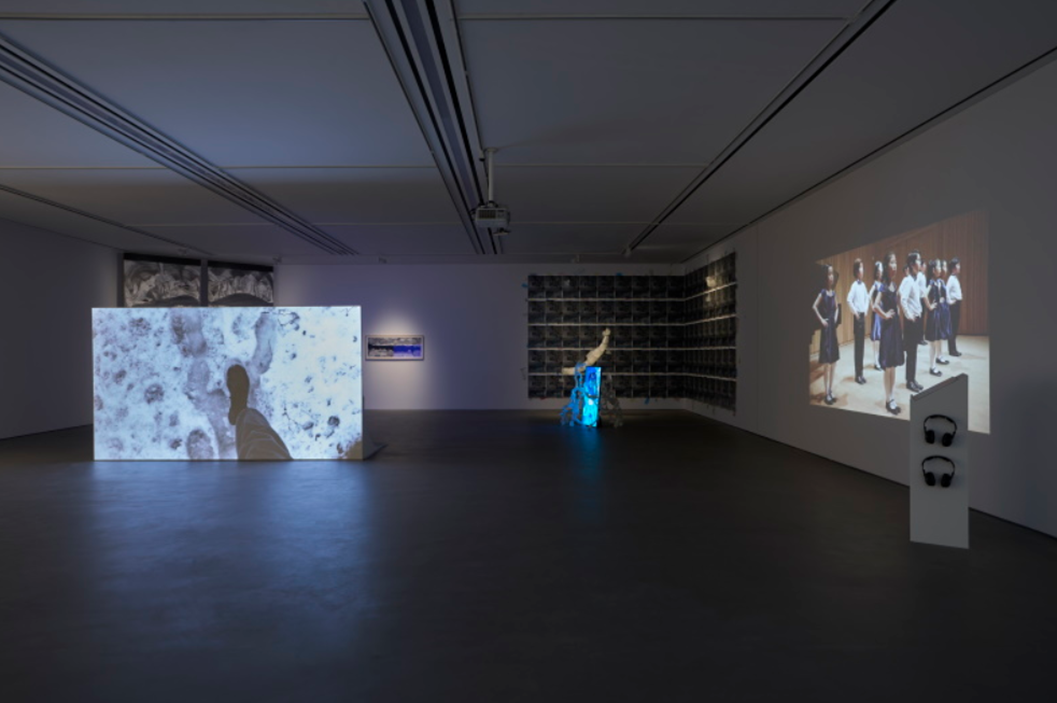
A high place. A dark attic. The space permeated by the light of the video carries an eerie atmosphere. The video is a source rich in information, the origin of the objects encountered while passing through the exhibition space. The forms that transform at every moment in the video are output through silkscreen and 3D printing. However, the objects summoned into physical space do not remain mere derivatives but become another source. The source flows across the gap between three-dimensionality and flatness, and fixed objects are arranged in discontinuous/continuous sequences, suggesting fluid forms.
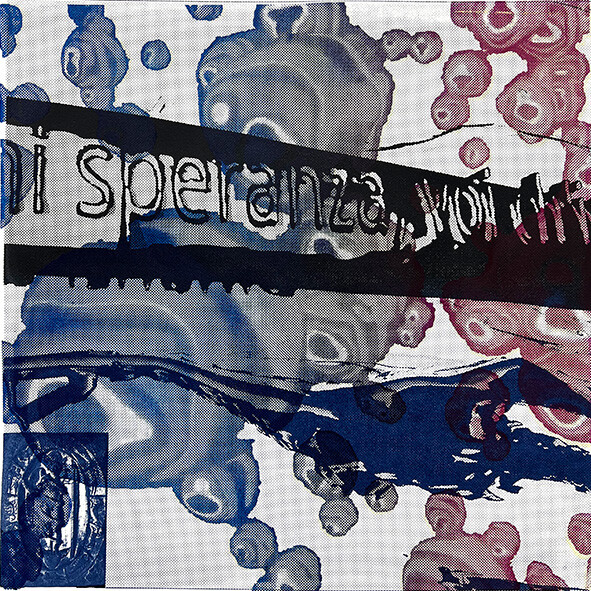
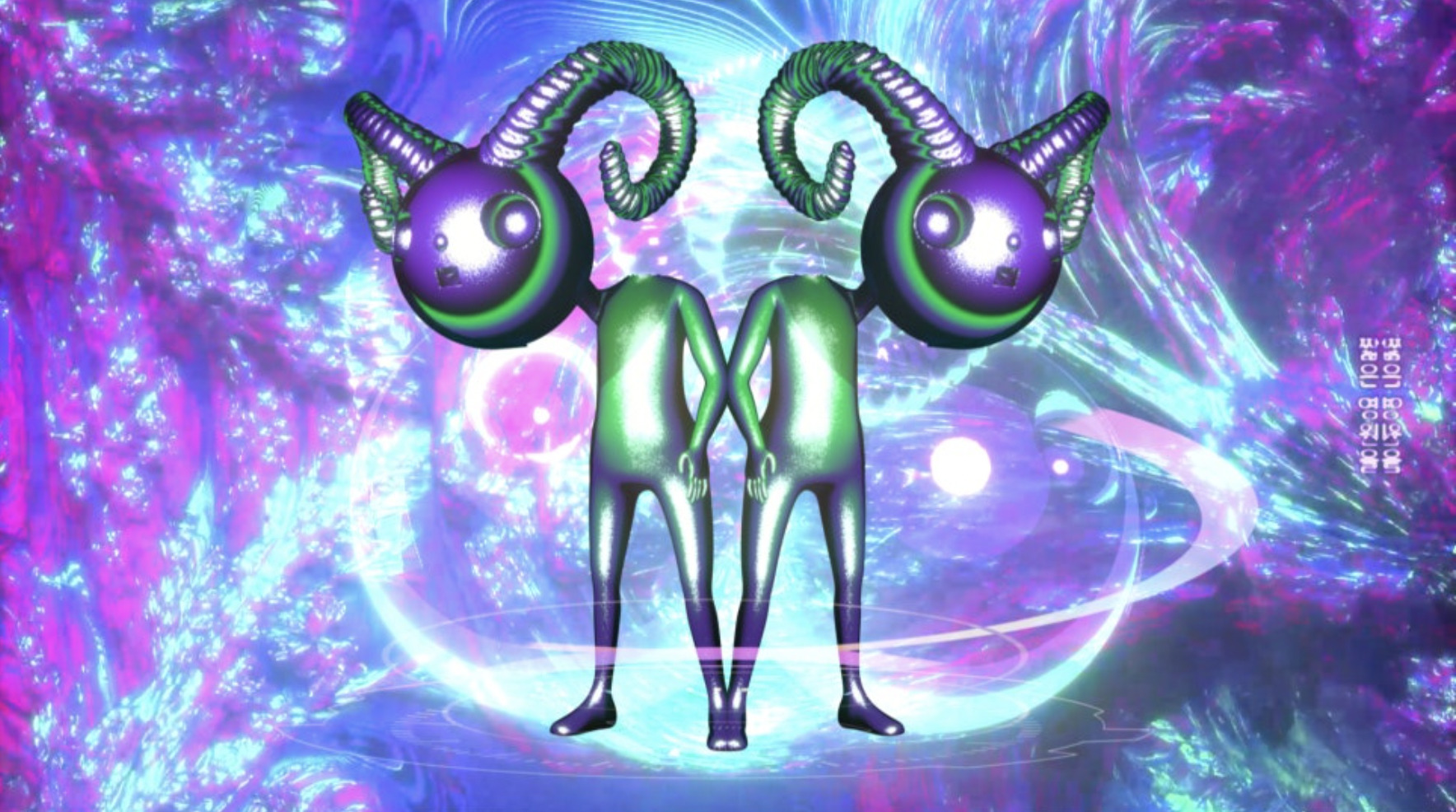
Forms not only self-proliferate but also flow in from external sources, as illustrations by Gustave Doré and William Blake, inspired by ‘The Divine Comedy’, are reproduced in silkscreen prints. Motifs derived from classical sources also appear. A three-headed being references Cerberus guarding the gates of hell and a ghost holding its severed head, suggesting the properties of digital images that fragment and proliferate. However, whereas in ‘The Divine Comedy ‘ humans advance by relying on divine truth, in this video, a horned, incomprehensible being draws in those who arrive at the door.[viii]
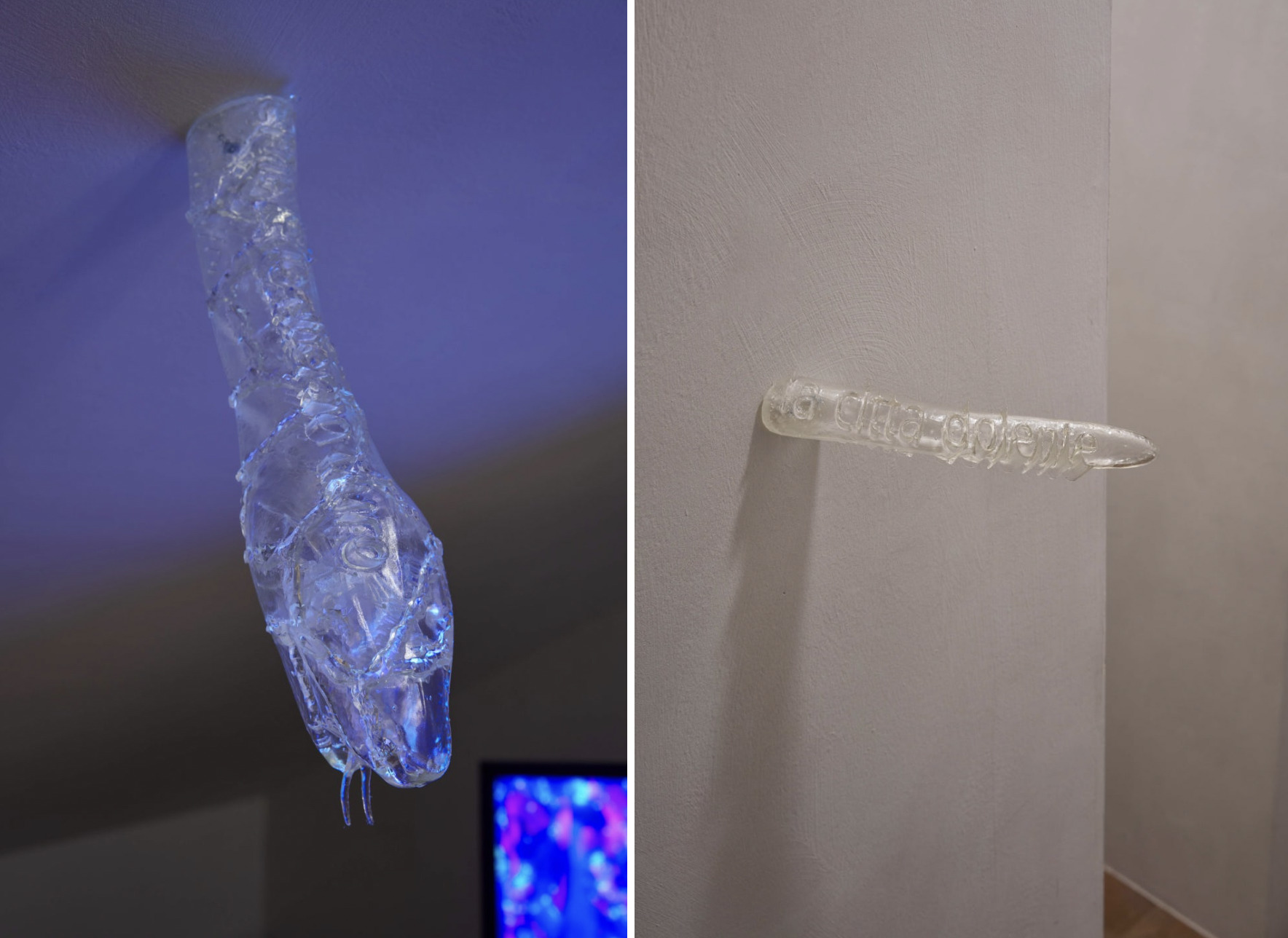
In the earlier video Soul Fishing(2021) presented at Doosan Gallery, a hesitant traveler and a seductive being appear, modeled after the guide figure in magical girl narratives that mediate between two worlds.[ix] Meanwhile, the snake from the Inferno of ‘The Divine Comedy’, which appears as divine punishment, monster, or woman, takes on the role of a messenger moving between dimensions. The snake that seems to emerge from the wall makes one aware of the exhibition wall, and its transparent body, which appears dematerialized, resembles a hollow tube through which water flows.
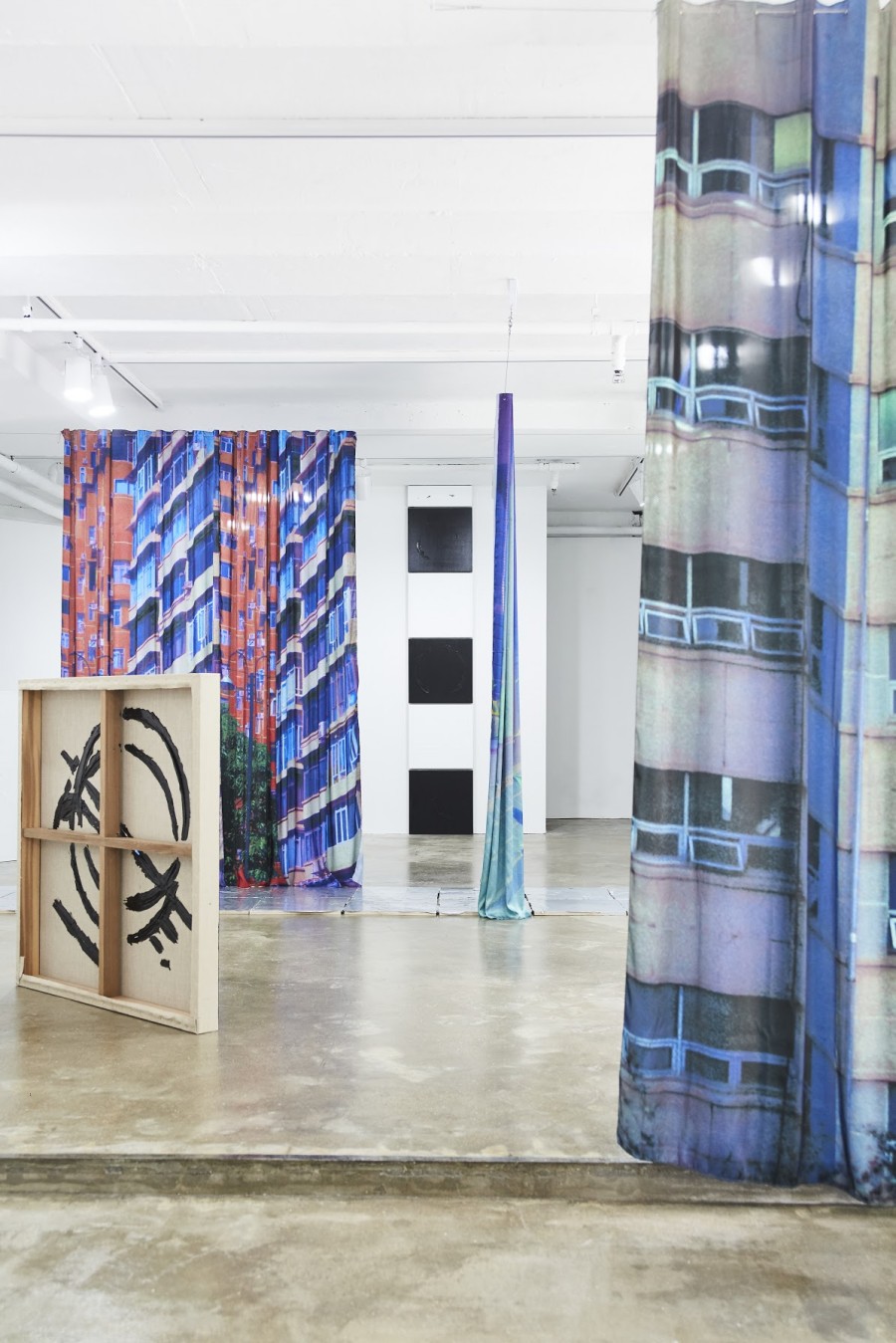
The journey to the attic involves tracing an increasingly narrow space. In Phosphophyllite “Pray!”: Pattern 01-10(2020), the artist left traces of a sphere passing through on grid-patterned paper. However, the viewer is no longer observing the work as an object from a distance, but instead moves through the space like a material passing between dimensions. Since her early works in 2017, grids have appeared as pictorial grids, 3D program grids in video, and pixels composing monitors.
In her work, the grid functions as a field where objects are placed, a coordinate system that allows positioning, and a rule that structures the world. However, because the grid is not immutable, it is occasionally distorted by unforeseen events, and those attempting to pass between dimensions create ripples that widen its openings.
What is the portal a hole of?
A place where the cracks of the world begin? A temporary spacetime of division and fusion?
What force pushes the hand into the hole? Revelation, will, magic, or fear?
Where will the hand move? Back to where it came from? By inertia?
Or straight ahead at greater speed as certainty is gained?
3. Direction
Another consistent reference point in the artist’s practice is the narrative of female protagonists. The settings of the manga ‘RIVER’S EDGE’ and the animation ‘Land of the Lustrous’ are stagnant spaces where similar events repeat. However, the characters ultimately transgress taboos and cross certain thresholds. Change is not about growth through forming personality or developing abilities, but about experiencing the pleasure that arises from doubt and violation. In ‘Land of the Lustrous’, the protagonist Phosphophyllite creates her own world, separates from the “teacher” to whom she had devoted herself, and demands that he pray for her.
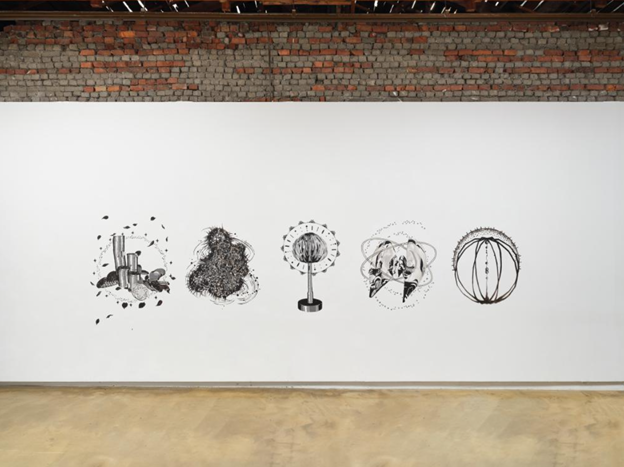
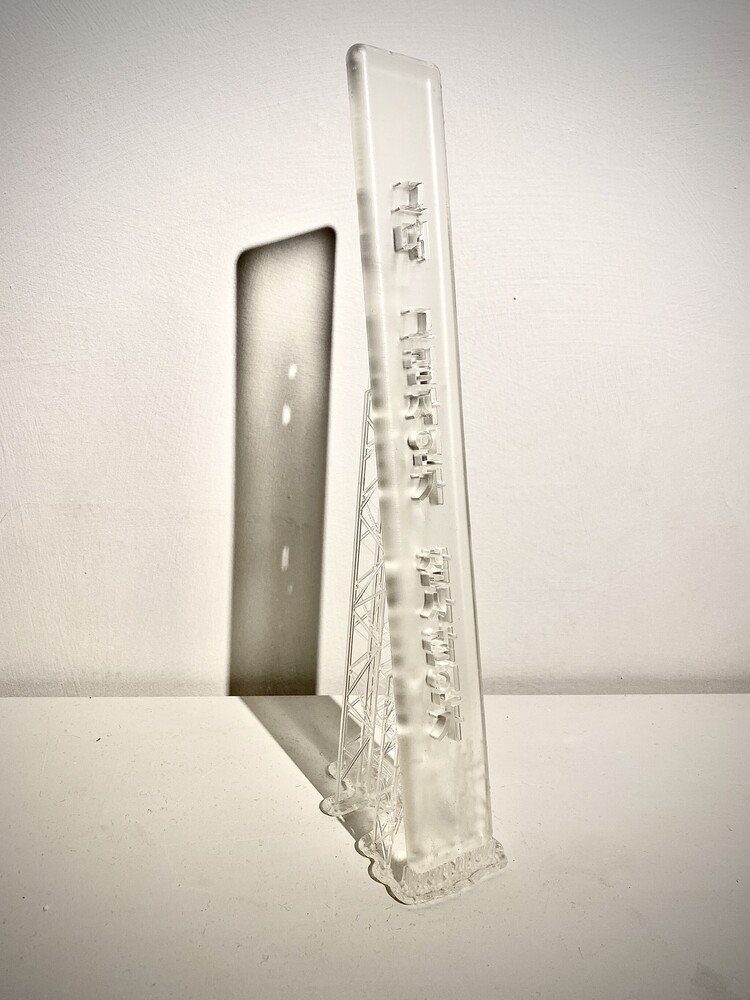
Fragmented by shock and combining with other materials, moving between disappearance and regeneration, this figure was abstracted by the artist into forms resembling memorial towers or totem poles in the ‘Phosphophyllite “Pray!”’ series. One may also detect in the forms—replicated in digital space and output into physical space—the characteristics of “contemporary digital images that are endlessly copied, proliferated, and recycled.”[x] However, underlying the act of summoning scattered elements and repeatedly discovering similarities may be a desire for an independent self. Manga and animation, once direct motifs, now remain as traces within the artist’s worldview.
The artist described PUT MY FINGER IN THE PORTAL as depicting “the moment of transition between dimensions as fear,” yet within the work there is a subtle rustling of emotions that cannot be easily reduced to “fear.”[xi] The portal is a moment of immersion where the self encounters the outside, and a point where emotions intermingle. Once one has reached beyond, there is no turning back. A path that does not seek permission from an absolute being. A hole stretched and torn, shifting dimensions. Beyond the event horizon.
[i] Summoned hand(2022), 3D Printed Resin, 25×15×23cm
[ii] Blueprint of Image Layering (1), (2)(2022), Pigment Print, 59.4×84.1cm
[iii] Messenger (Part 2), (Part 6)(2022), 3D Printed Resin, 15×10×3cm, 18×15×6cm
[iv] Image Layering (1) ~ (8)(2022), Silkscreen on Paper, 40×40cm
[v] Thermoplastic Bodies (1) ~ (5)(2021), 3D Printed Resin, 10×10×10cm
[vi] Fishing Hook(2021), 3D Printed Resin, 10×10×10cm
[vii] Messenger (Part 1)(2022), 3D Printed Resin, 18×15×6cm
[viii] PUT MY FINGER IN THE PORTAL, 2022, Single Channel Video, 3m53sc
[ix] Soul Fishing(2021), Single Channel Video, 4m5sc, 3D Printed Resin, Polycaprolactone, 130×125×133cm
[x] The discussion on the characteristics of digital images is cited from Moon Hyejin. Moon Hyejin, “From ‘Concept’ to Digital Image,” Art in Culture, May 2018, p. 75.
[xi] Lee Junghoon, Artist Interview, “The Inversion Between Dimensions: JOO SLA’s Put My Finger in the Portal,” Design Press, published April 6, 2022, https://m.blog.naver.com/designpress2016/222693139605 (accessed May 16, 2022).