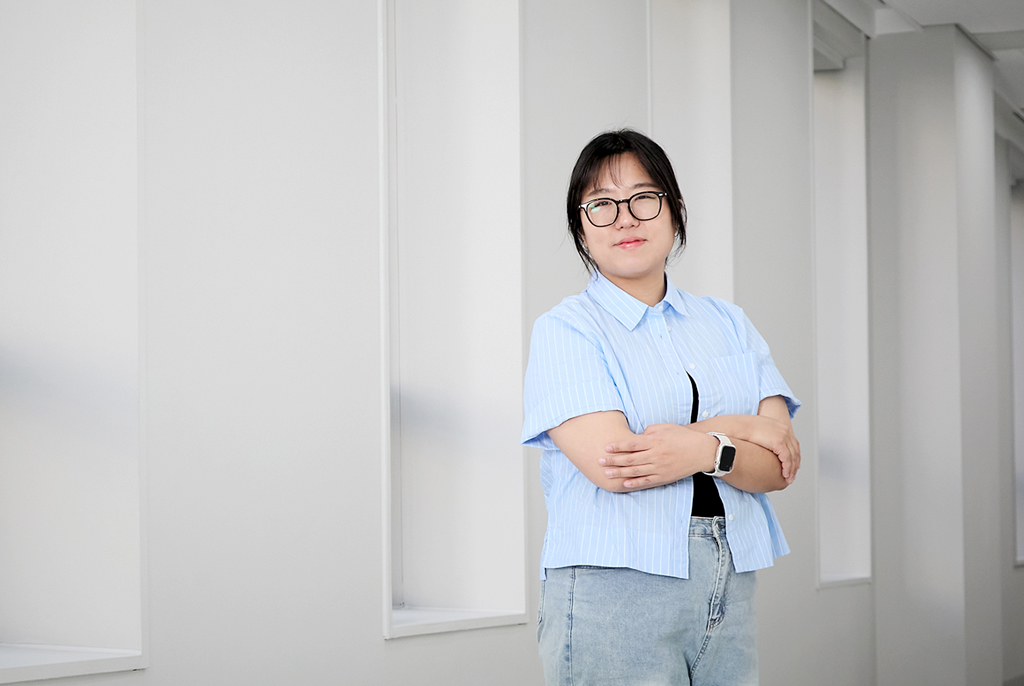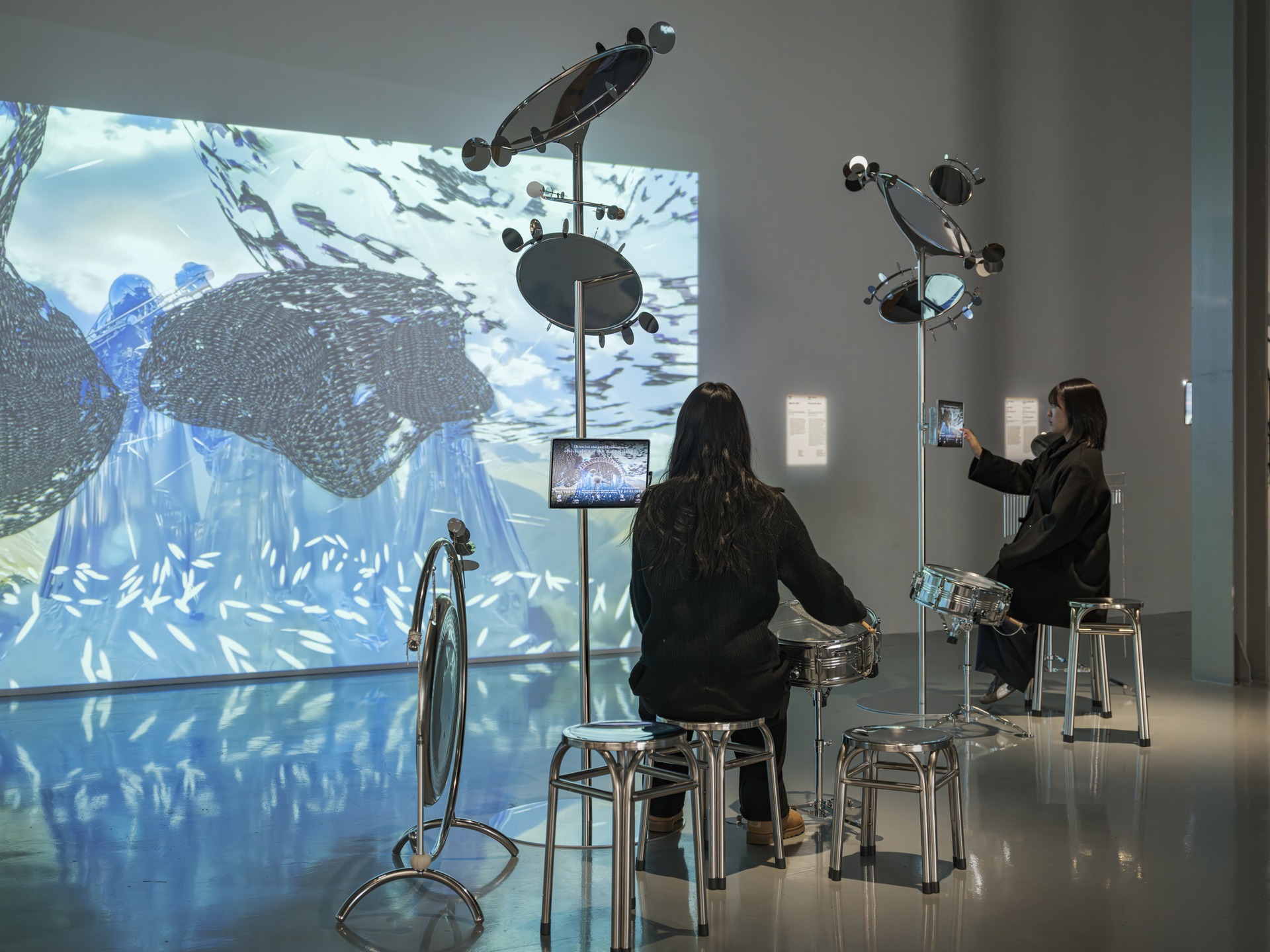


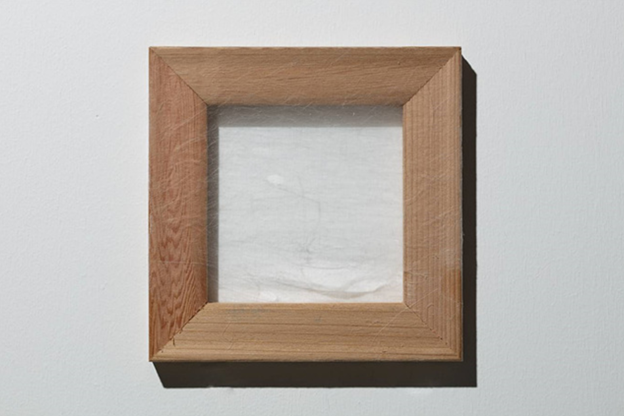
Kim Eunseol (b. 1988) explores the sense of “listening,” along with emotion and memory, through her work. Although she uses hearing aids, she communicates more through visual and other sensory perceptions than through hearing itself.
 
Working across drawing, installation, video, and performance, she raises questions about the act of listening and the nature of her own being, while investigating the boundaries between sound, language, and the senses.


Kim Eunseol, Air Becomes Ears, and Ears Become Eyes, 2020, Mixed media, Dimensions variable © MMCA

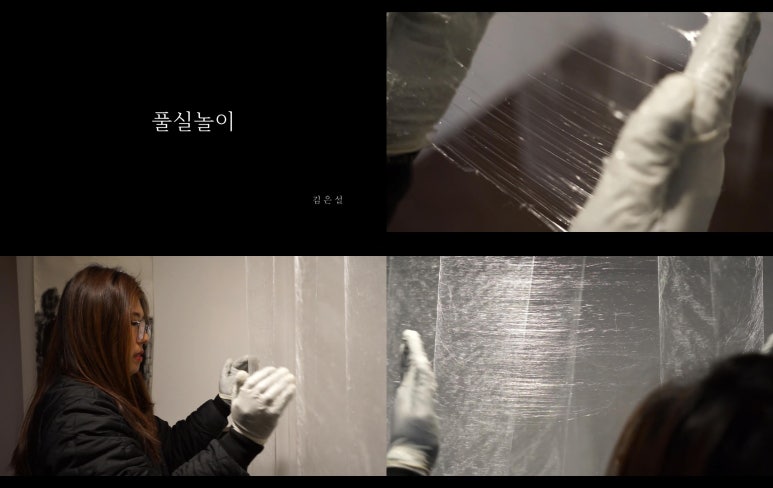
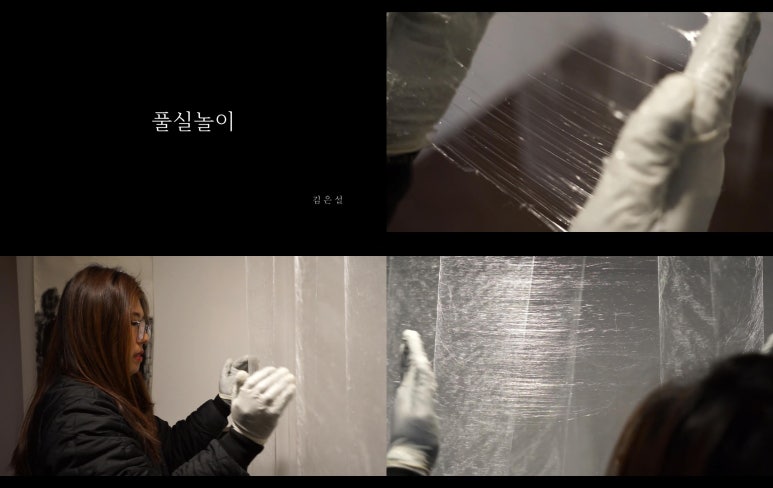
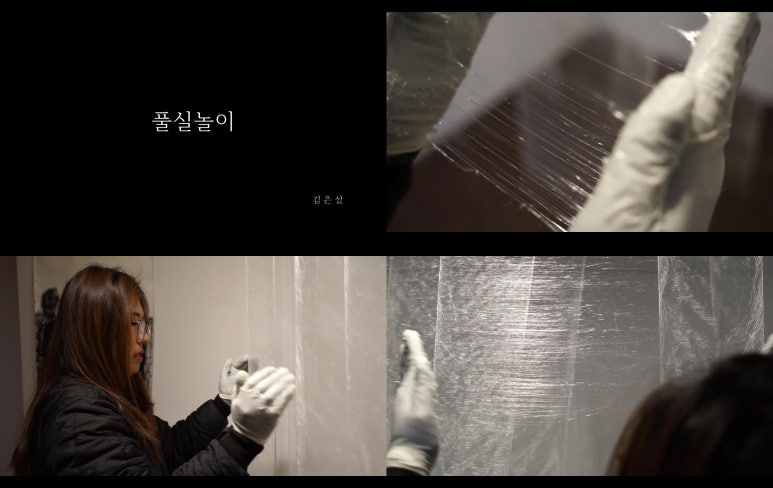
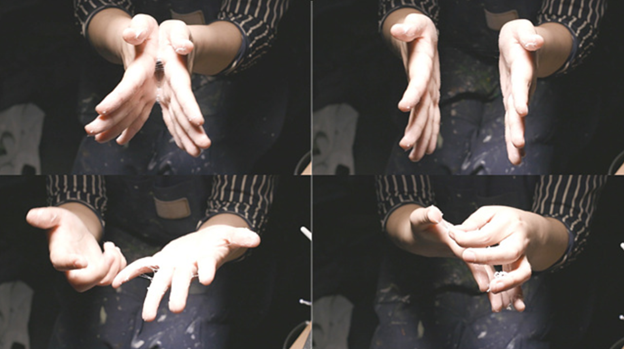
In her early works, Kim Eunseol became fascinated by the sticky, thread-like strands that form when glue—such as a glue stick or liquid glue—is applied to the fingers and slowly pulled apart. She named this “glue play” and has since developed it across installation, video, and drawing.
 
The artist likens human relationships to these fragile yet adhesive strands, suggesting that connections between people are formed and broken in a continual process of attachment and separation. Her 2019 solo exhibition 《Glue Play》 at Rund Gallery consisted of drawings, videos, and installations inspired by her observations of everyday interactions, in which people appeared to exchange these invisible threads.


Kim Eunseol, 《Glue Play》, work in progress © Rund Gallery

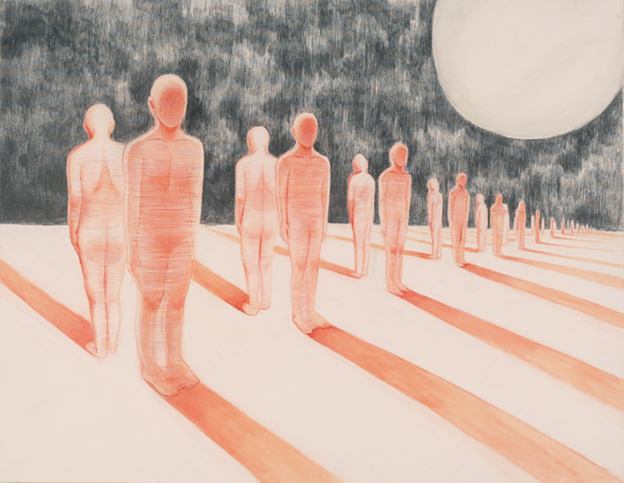
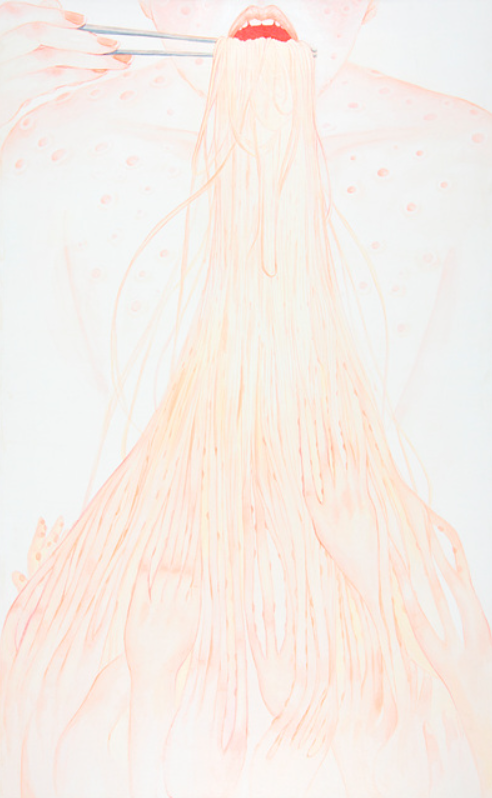
Kim Eunseol visualized the subtle expressions, gestures, and distances that people unconsciously reveal through glue play—a material that is transparent, yet not entirely so. In her black drawing works, she takes on the dual role of participant and observer, tracing the invisible exchanges of these glue-like threads between people.
 
By repeatedly filling the surface with fine pencil lines—much like the act of pulling and detaching glue—she expands this process into an obsessive, extended form of glue play.
 
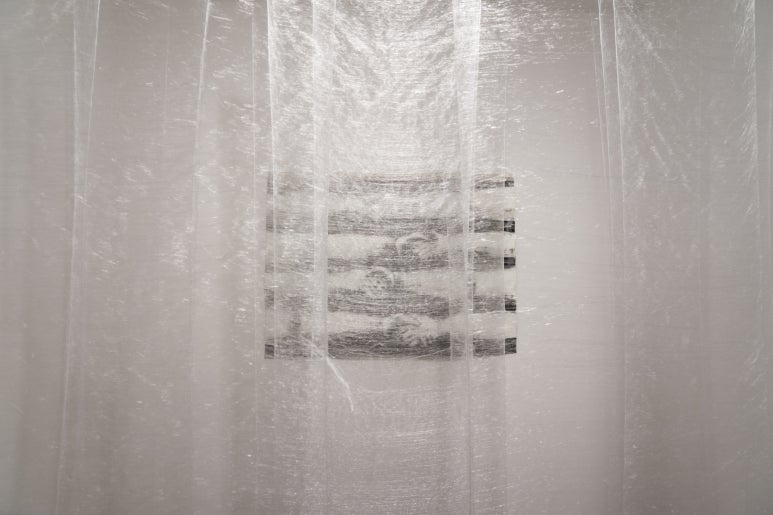
In addition, within a small gallery space, a large curtain-like installation of glue play was erected. Stretching across the space like an opaque partition and positioned between the works, this installation was meticulously handcrafted by the artist using glue.


Installation view of 《Glue Play》 (Rund Gallery, 2019) © Rund Gallery

During the process of making her work, the artist paid close attention to moments when the glue threads became increasingly sticky and difficult to pull apart, as well as the opposite instances when their adhesion weakened and they snapped easily.
 
This delicate and fragile glue play, which demands long hours and sustained effort, mirrors the invisible processes through which relationships between people are formed and negotiated.


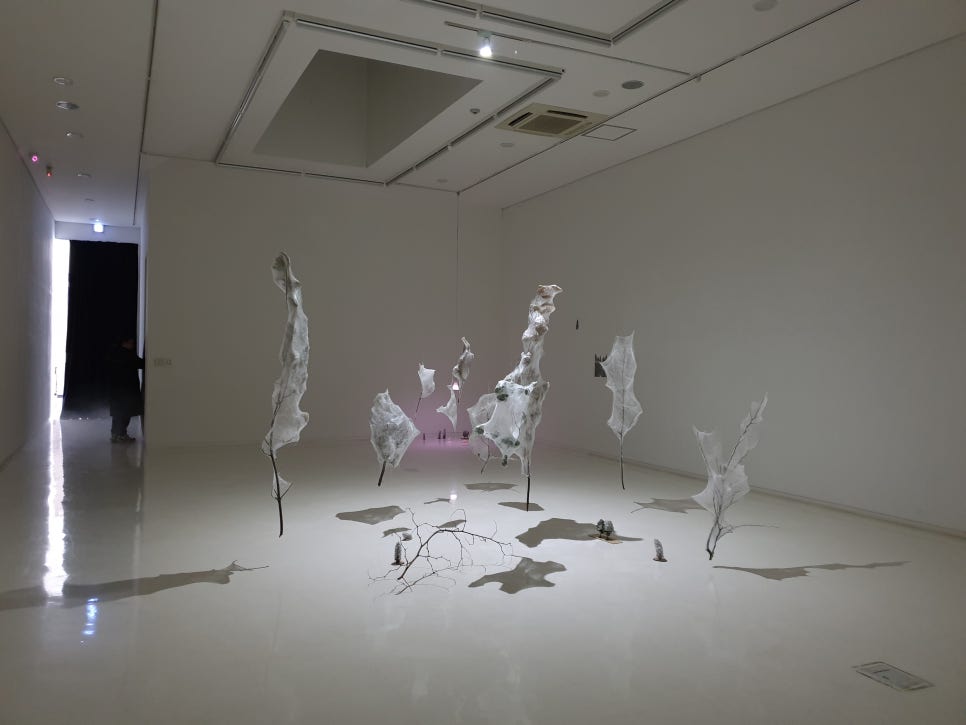
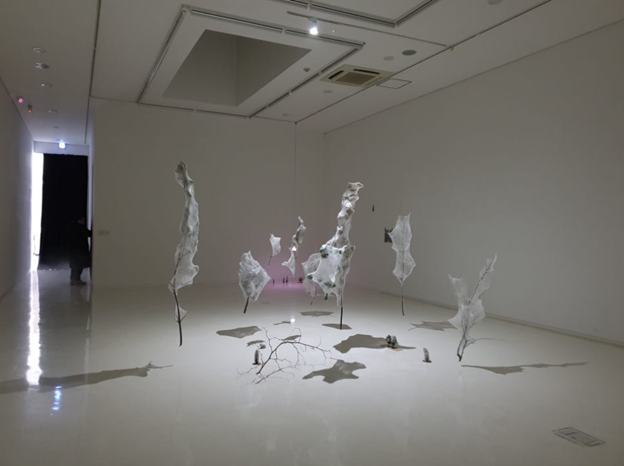
Installation view of 《Thicket》 (Cheongju Art Studio, 2020) © Cheongju Art Studio

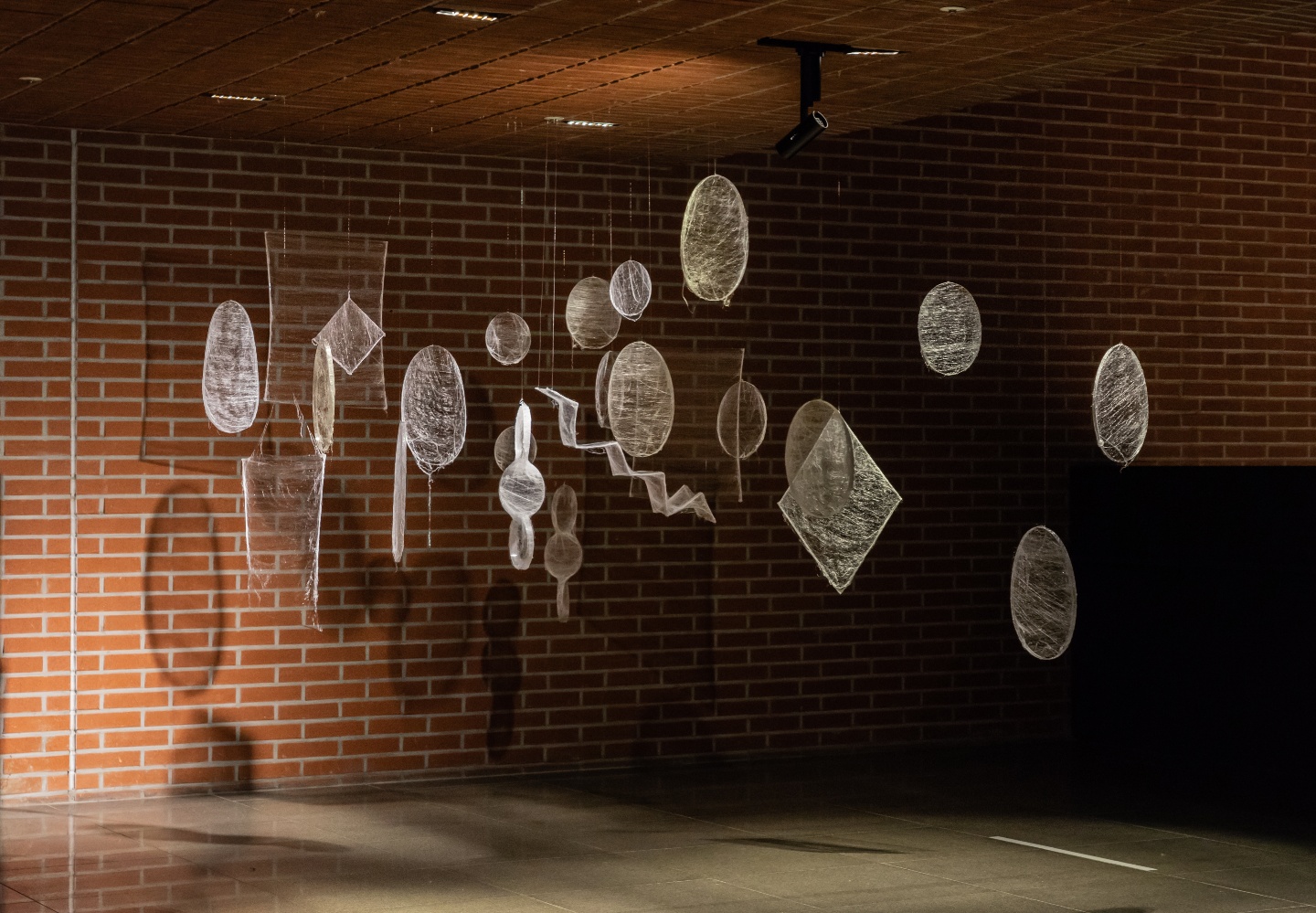
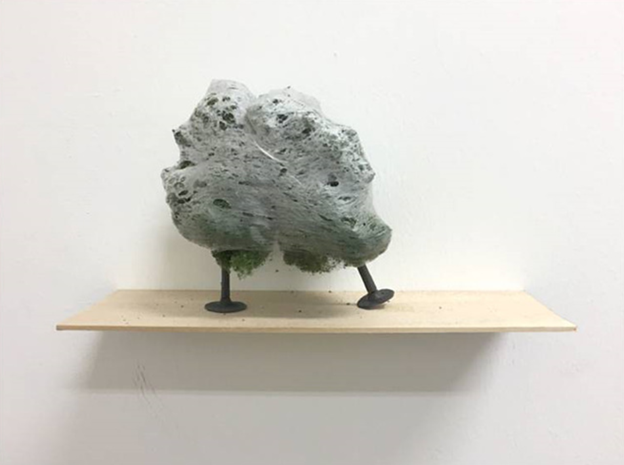
Meanwhile, in her 2020 solo exhibition 《Thicket》, Kim Eunseol drew an analogy between humans and a dense thicket—where grass, trees, and vines are entangled, concealing what lies within. She saw this dark, secretive tangle, in which it is difficult to discern what is taking place, as resembling the human mind that does not easily reveal its inner thoughts.


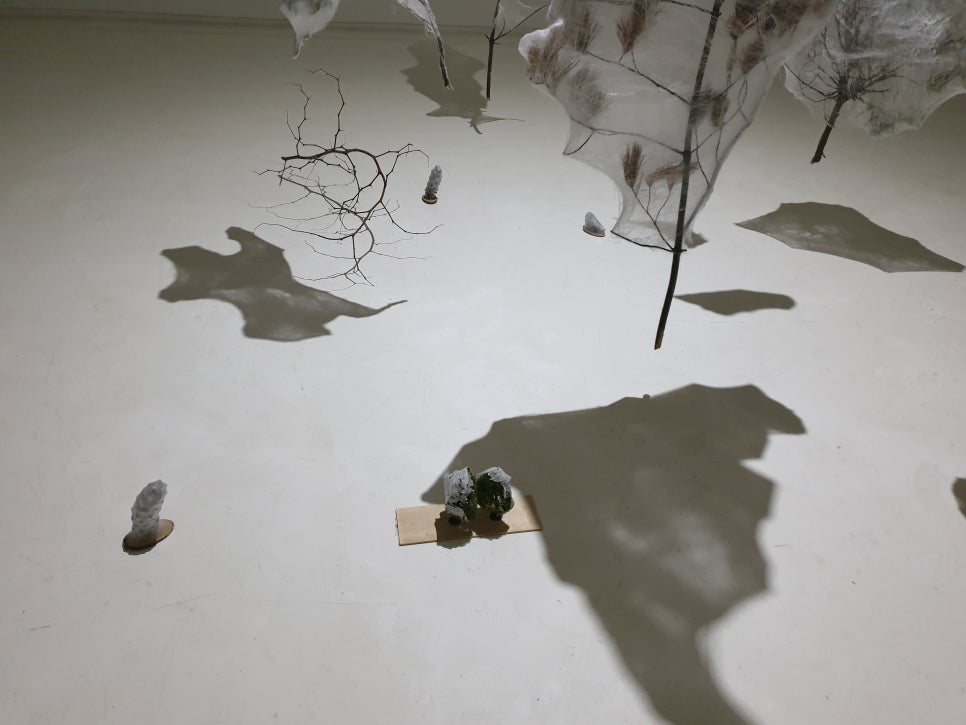
Installation view of 《Thicket》 (Cheongju Art Studio, 2020) © Cheongju Art Studio

At the same time, people seem to willingly enter their own thickets, yet resist embracing true solitude. The thicket—where individuals exist as separate entities but must ultimately become entangled into a chaotic cluster in order to exist as true subjects—resembles the condition of contemporary life.
 
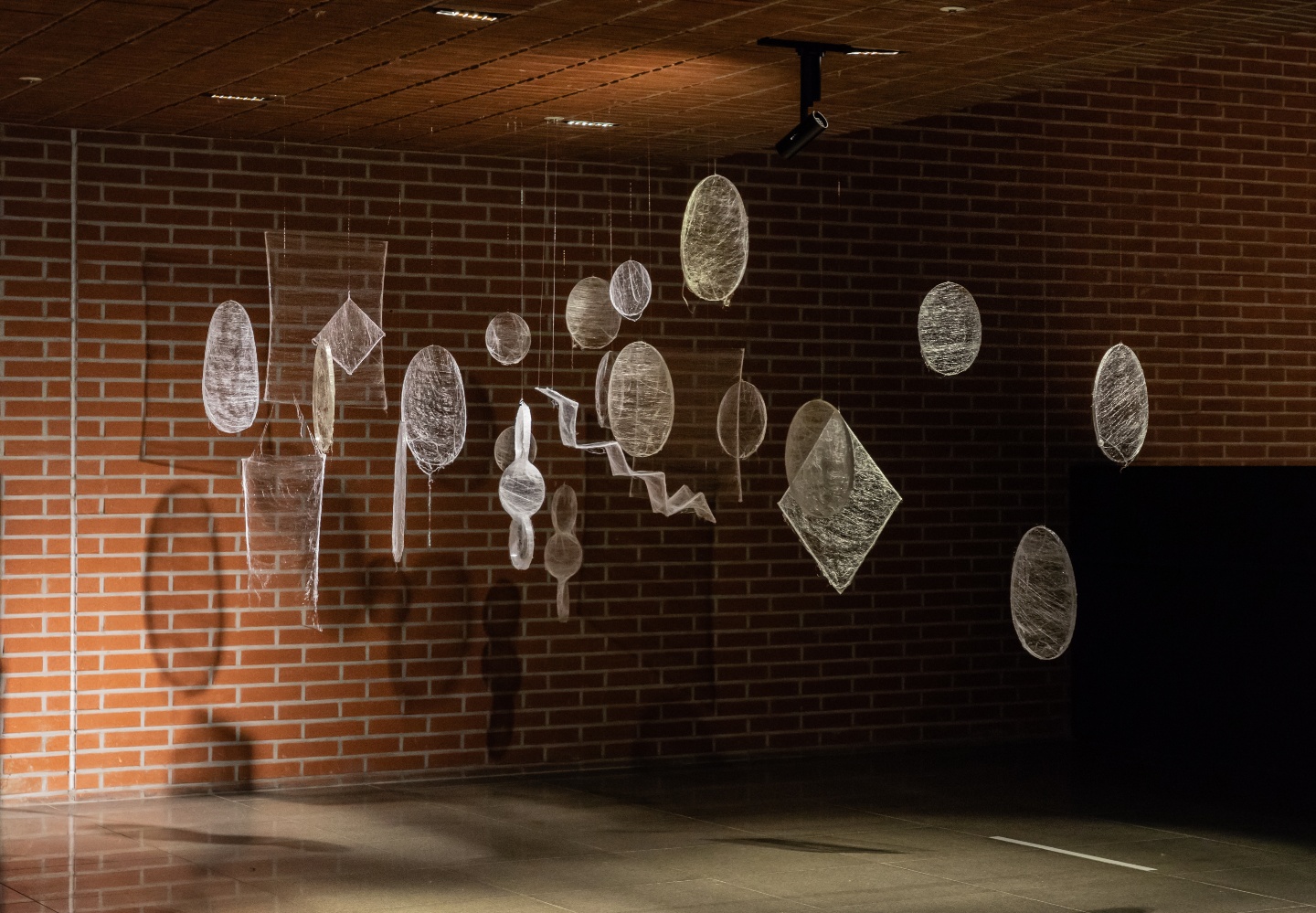
Kim Eunseol explores this state of the self—at once scattered and intertwined within the thicket—through drawing and installation. Trees covered in white threads that appear transparent yet are not simultaneously conceal their inner layers, while revealing their presence through the shadows cast by light.


Kim Eunseol, Seeing, Yet Unseen Language, 2021, 3-channel video, color, sound, 21min 15sec. © MMCA

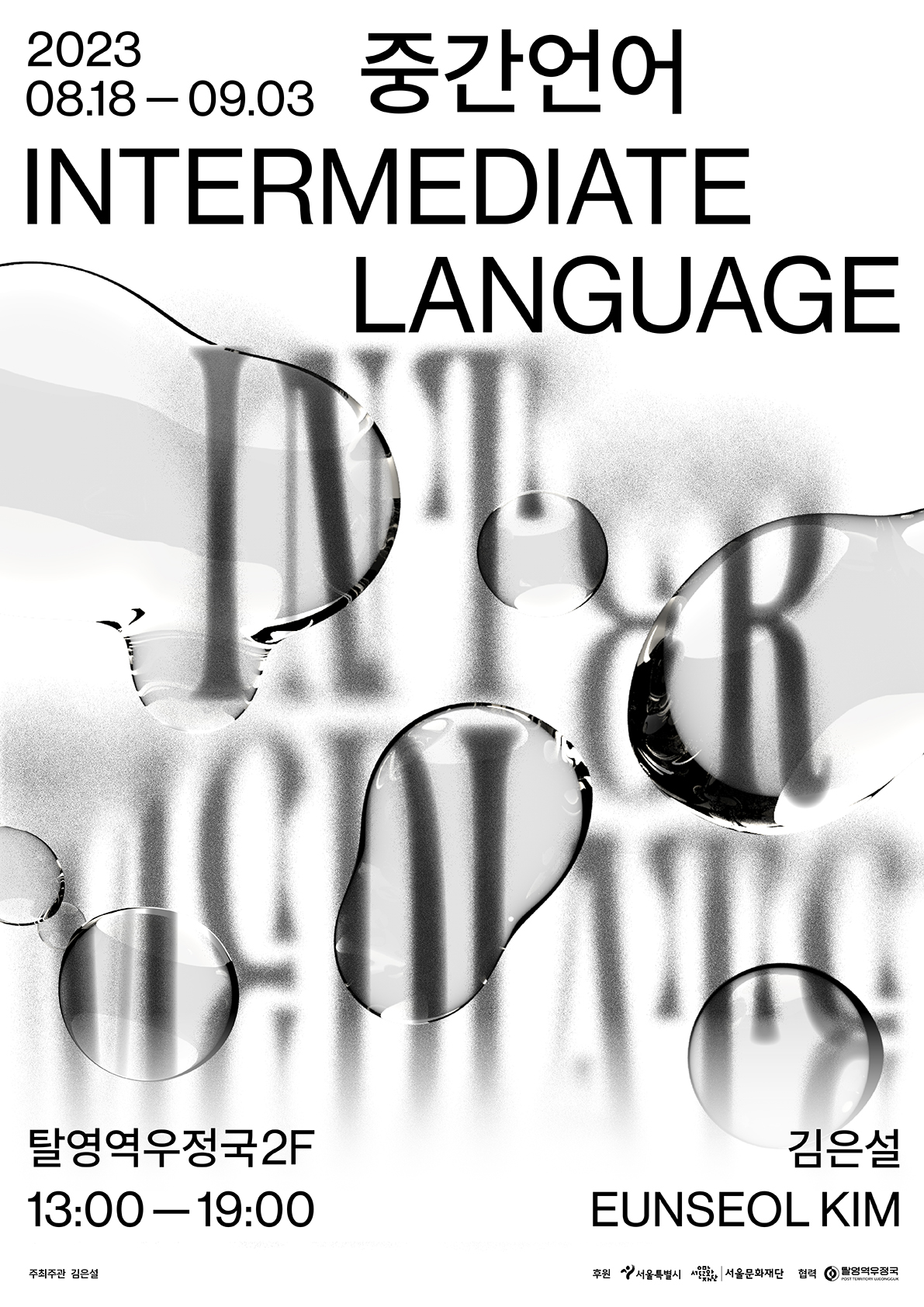
Kim Eunseol’s work thus unfolds the meaning and essence of human existence—what is not easily seen or heard—through the mediation of multiple senses. In her 2023 exhibition 《Intermediate Language》 at Post Territory Ujeongguk, she invited viewers into her own sensory journey, moving between the worlds of hearing and not hearing.
 
For Kim, who has a hearing impairment, the world without audible sound is rich with tactile and visual forms of sound. As she navigates between these two realms, she discovered that she creates and employs an “intermediate language” in order to connect them.


김은설, 〈소리 없는 소리〉, 2022, 단채널 비디오, 컬러, 사운드, 5분 © 국립현대미술관

The “intermediate language” the artist employs exists on a boundary—unstable and fractured. Through the exhibition, she sought to explore how this language is structured and whether it could function as a language shared by all.
 
Misalignments, delayed time, murmurs, afterimages, tactile masses, a language that is seen yet not visible, and flowing visual landscapes—while none of these can be fully applied to either world, the works in the exhibition present a language that has been re-sensed and reinterpreted.


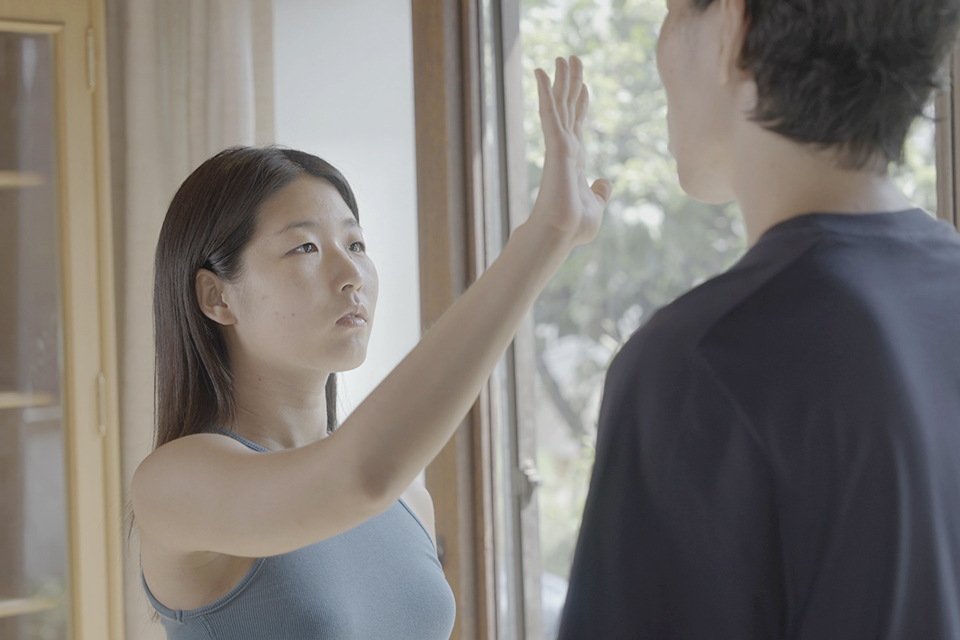
Kim Eunseol, Conversations with Vibrating Bodies, 2023, Video installation; single-channel video, color, sound; vibration speaker, amplifiers and wooden chair, 17min 10sec. © MMCA

The exhibition 《Intermediate Language》 embodied the artist’s attempt to explore the relationships between languages. Here, “language” extends beyond sound or written text to include various bodily actions such as walking, pausing, and looking.
 
The exhibition space was not structured by orderly, grammar-based language, but instead formed a world where subtle vibrations, contacts and collisions, and fleeting noises coexisted and intersected. It was also a journey that traces the artist’s sensory experience of learning sound at a time when she did not yet know what sound was.


Kim Eunseol, Conversations with Vibrating Bodies, 2023, Video installation; single-channel video, color, sound; vibration speaker, amplifiers and wooden chair, 17min 10sec. © MMCA

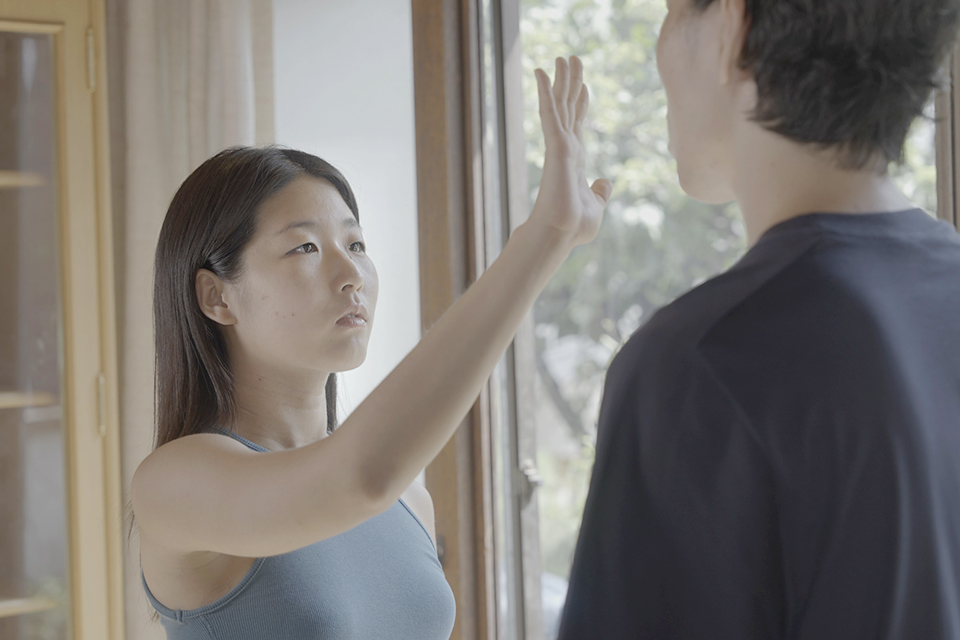
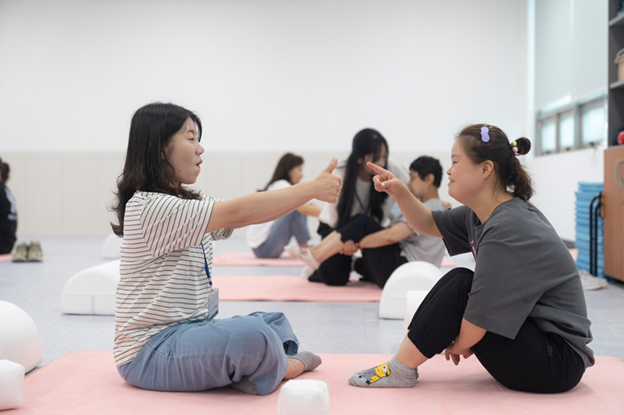
This embodied experience of learning language is evident in Kim Eunseol’s video work Conversations with Vibrating Bodies. As viewers sit down to watch the piece, their bodies begin to gently vibrate, producing an unexpected sensory resonance. On screen, rather than sound, the space is filled with visual images of bodies encountering one another.
 
In the exhibition leaflet, the artist writes, “Before I knew what sound was, I learned the language of sound tactilely—through the resonance of the neck and torso, and the breath from the mouth—by pressing my body against my parents’ bodies.” Beginning from this experience and memory, her journey of sound and language unfolds through non-linguistic sensory scenes that meet the vibrations and boundaries of surrounding sounds.
 
Regarding Kim’s notion of language, curator Seewon Hyun writes in the exhibition review that it “seems to be a kind of material that moves between two people, between two beings.” In an age where the movement and production of language are hyper-accelerated by network technologies, the artist presents “languages that arrive slightly late, as well as distances that are either too close or too far” through spatial works.


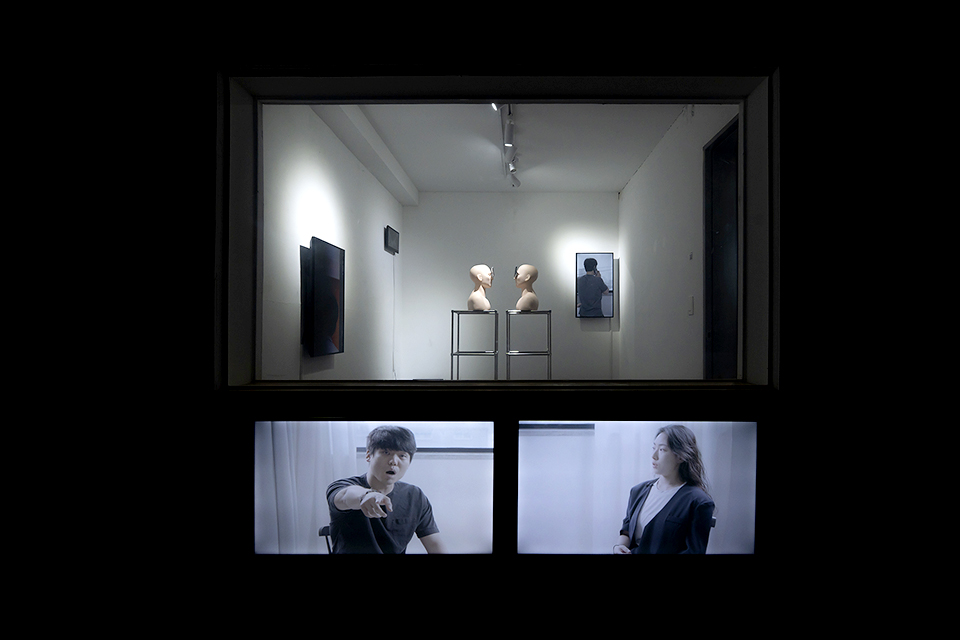
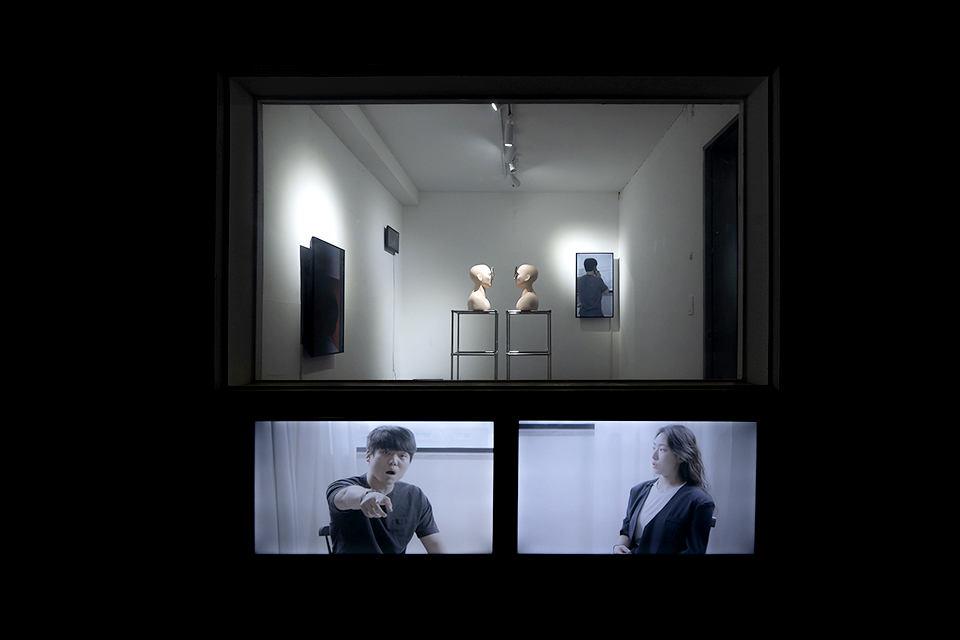
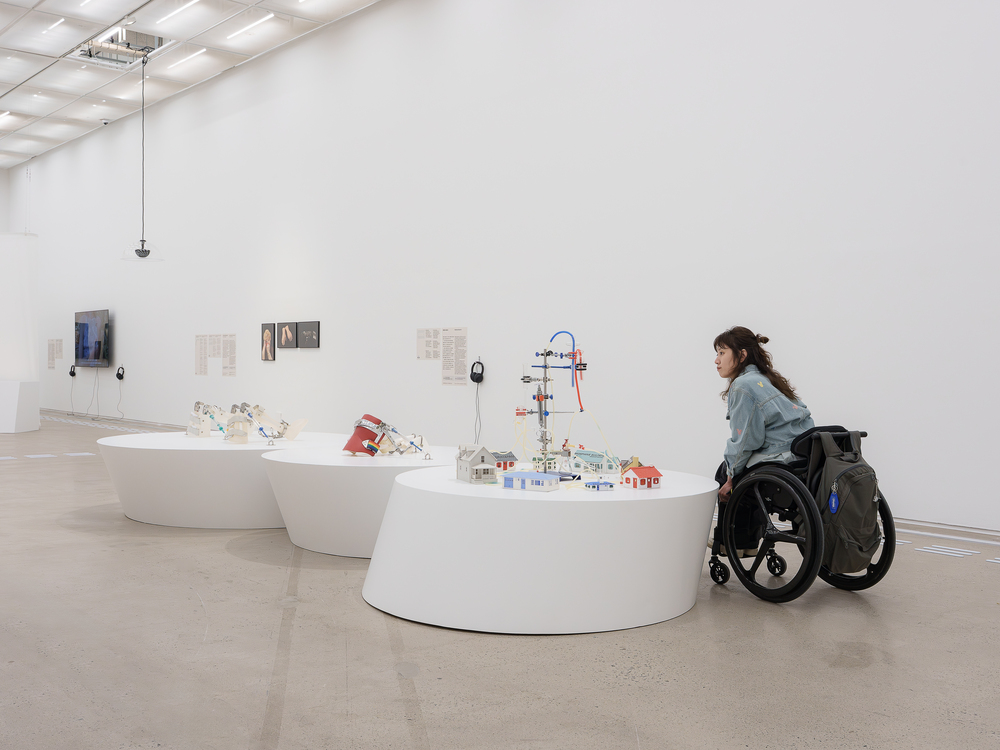
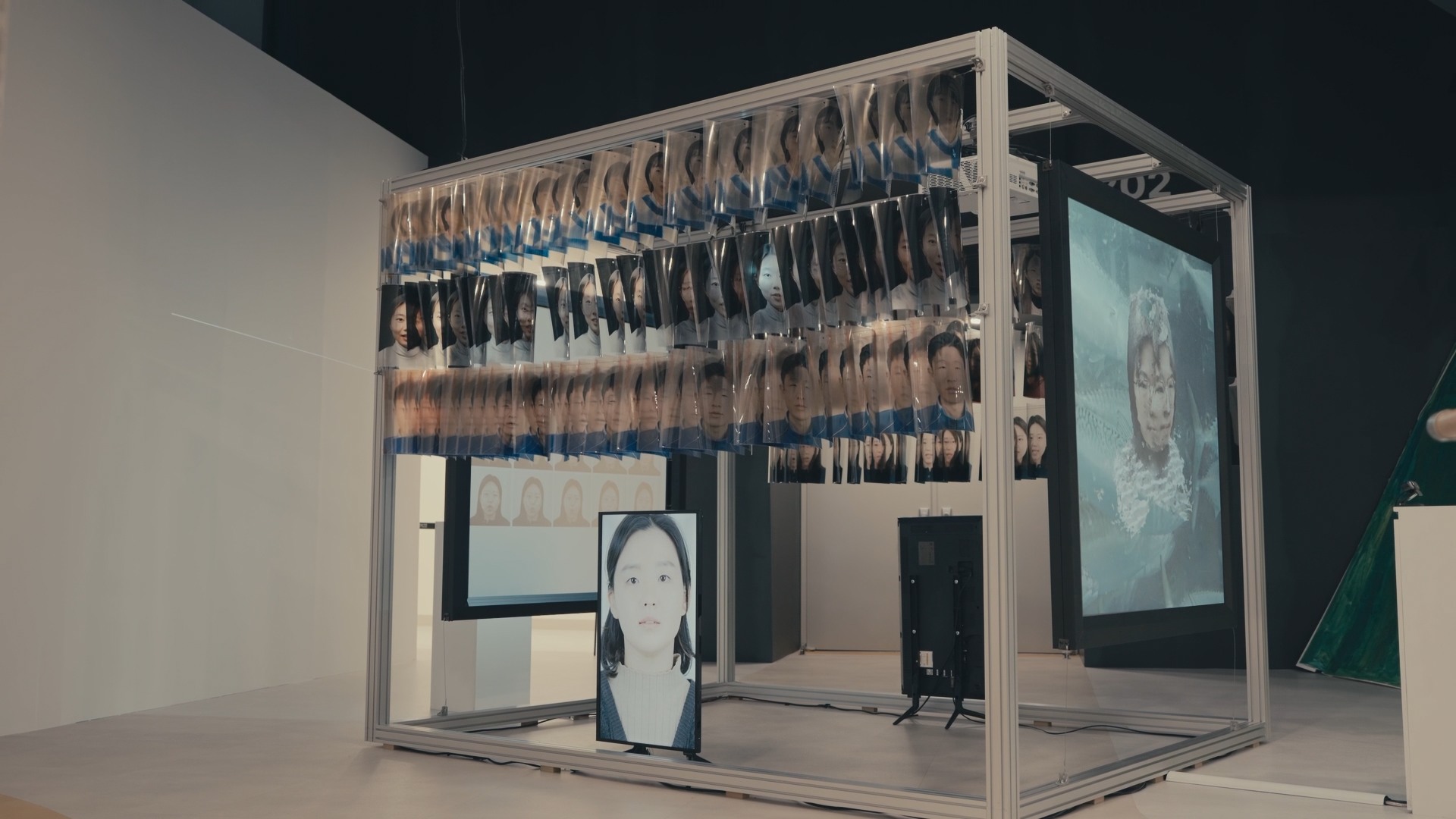
(top) Kim Eunseol, The Shape of Voice, 2023, Mixed media, Dimensions variable / (bottom) Kim Eunseol, Passive Communication, 2023, 2-channel video, 4min 55sec. © ieum

Another video work, Passive Communication, along with The Shape of Voice—composed of smartphones and ready-made face models—was installed facing each other across a glass pane.
 
In these works, the voices of text-based conversations that take place through smartphone screens, chats, and social networking services circulate in the form of Korean subtitles, ellipses, exclamation marks, question marks, and various punctuation marks.
 
Through this, viewers encounter the materiality of conversation and are prompted to reconsider what it means to participate in a dialogue, to intervene in it, and to observe it.


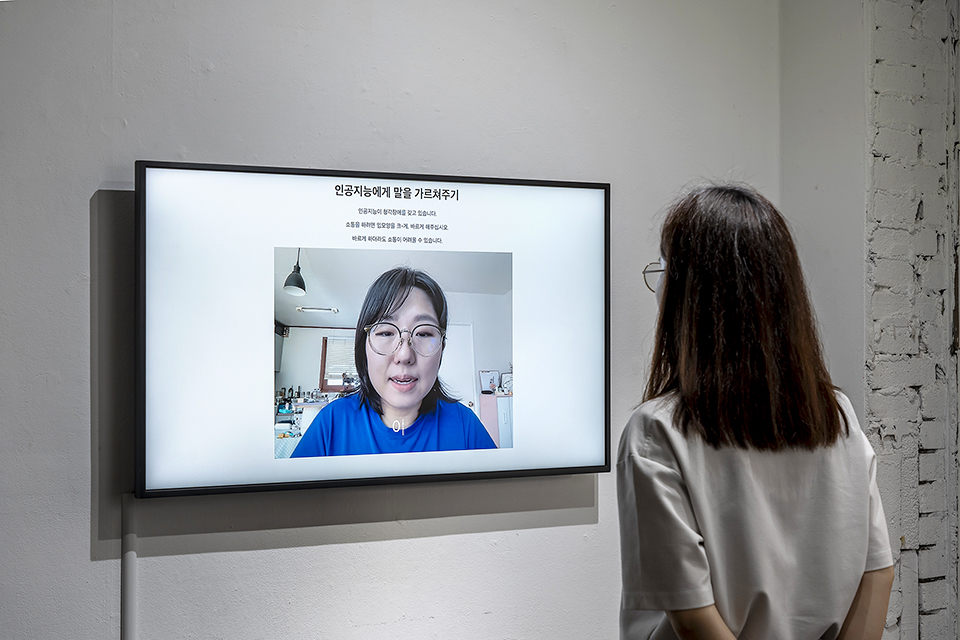
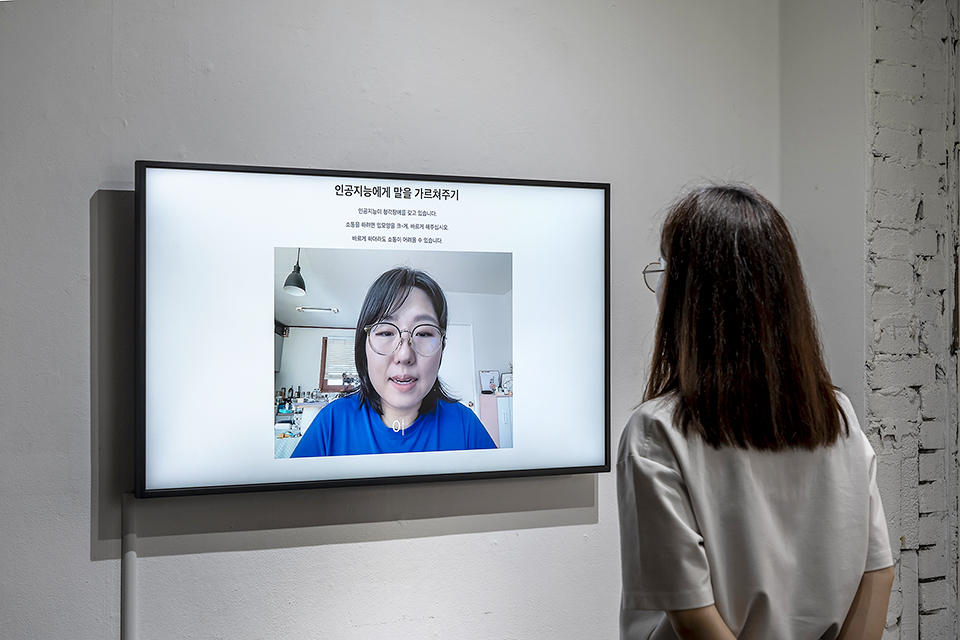
Kim Eunseol, AI Language Learning with Auditory Impairment, 2022, Single-channel video, 5min. 30sec. © ieum

Meanwhile, the video work AI Language Learning with Auditory Impairment raises questions about how artificial intelligence learns language. Kim Eunseol saw parallels between the way AI acquires language and the world through data, and her own experience as a person with a hearing impairment.
 
Even when one learns to read lip movements and linguistic habits, misalignments in communication still occur—echoing the incomplete understanding of AI, which infers language based on data.
 
By layering these two modes of learning, the artist questions how both humans and non-humans construct the world through language, as well as the very meaning of communication.


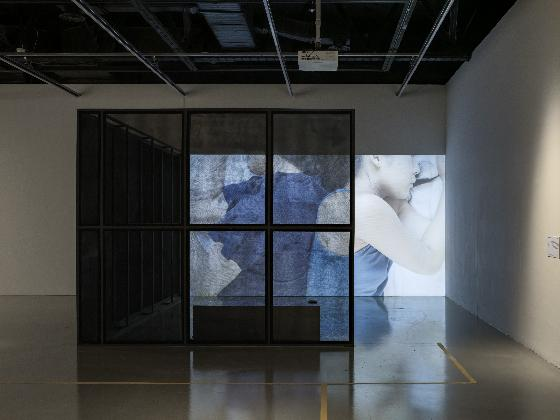
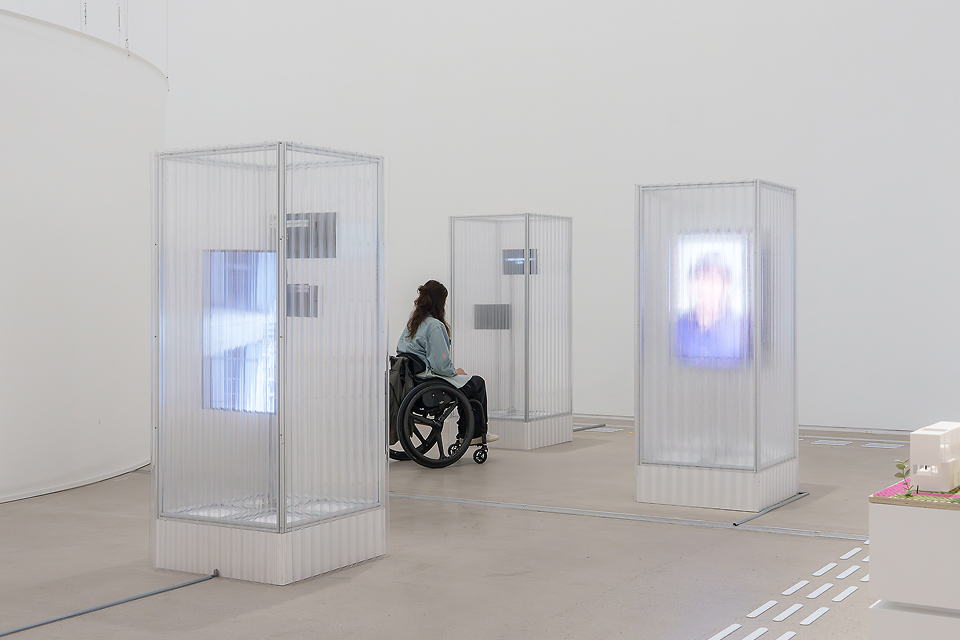
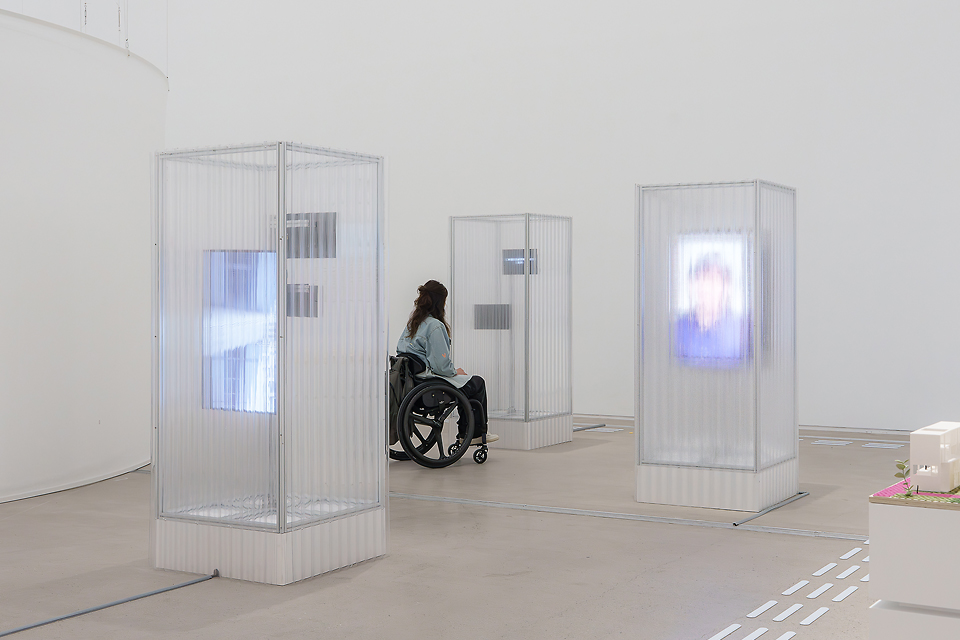
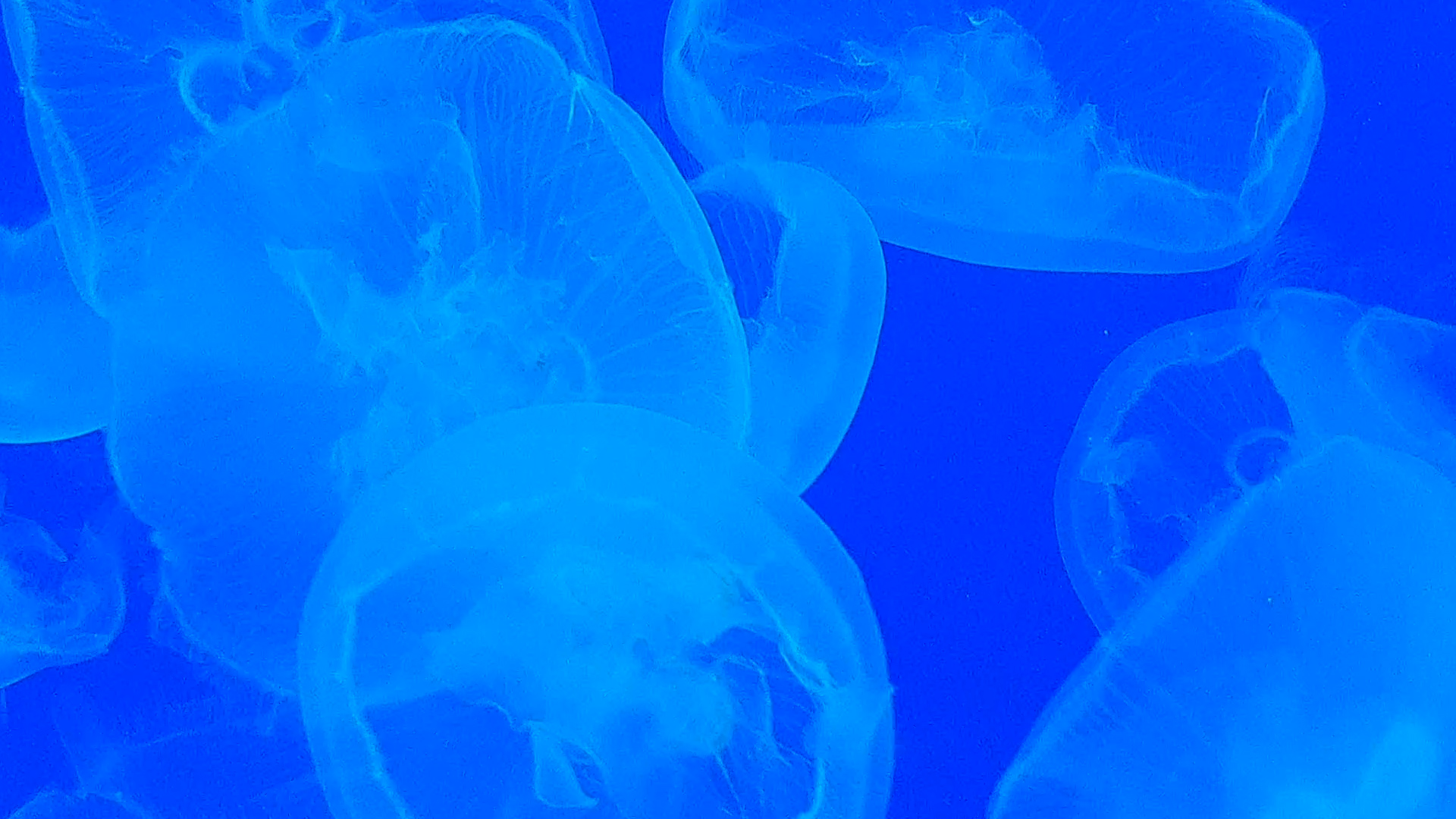
Kim Eunseol, Fading Sounds, Lingering Sounds, 2025, Monitor, media player, vibration speaker, amplifier, polycarbonate, Dimensions variable. Photo: Hong Cheolki. © Kim Eunseol

Presented in the group exhibition 《Looking After Each Other》 at MMCA Seoul in 2025, Kim Eunseol’s work Fading Sounds, Lingering Sounds explores the sensory traces that faint or barely audible sounds leave on the body.
 
The artist renders this experience through a video that is not clearly visible behind a semi-transparent wall. The voices that flow through the work are likewise indistinct, enveloping the viewer in a field of blurred perception.
 
Within this lack of clarity, audiences are led to sense the lingering sounds and their residual traces. In doing so, her work invites us to grope through an imperfect language and reflect on its meaning.


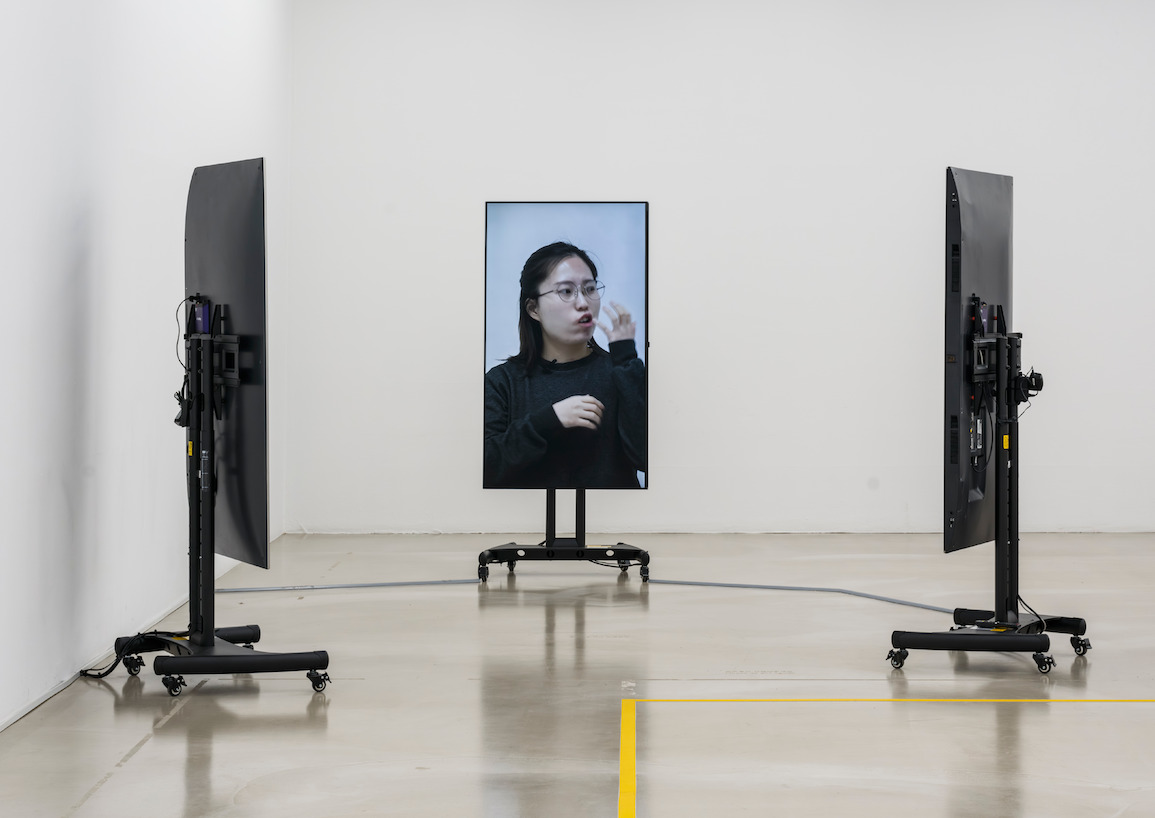
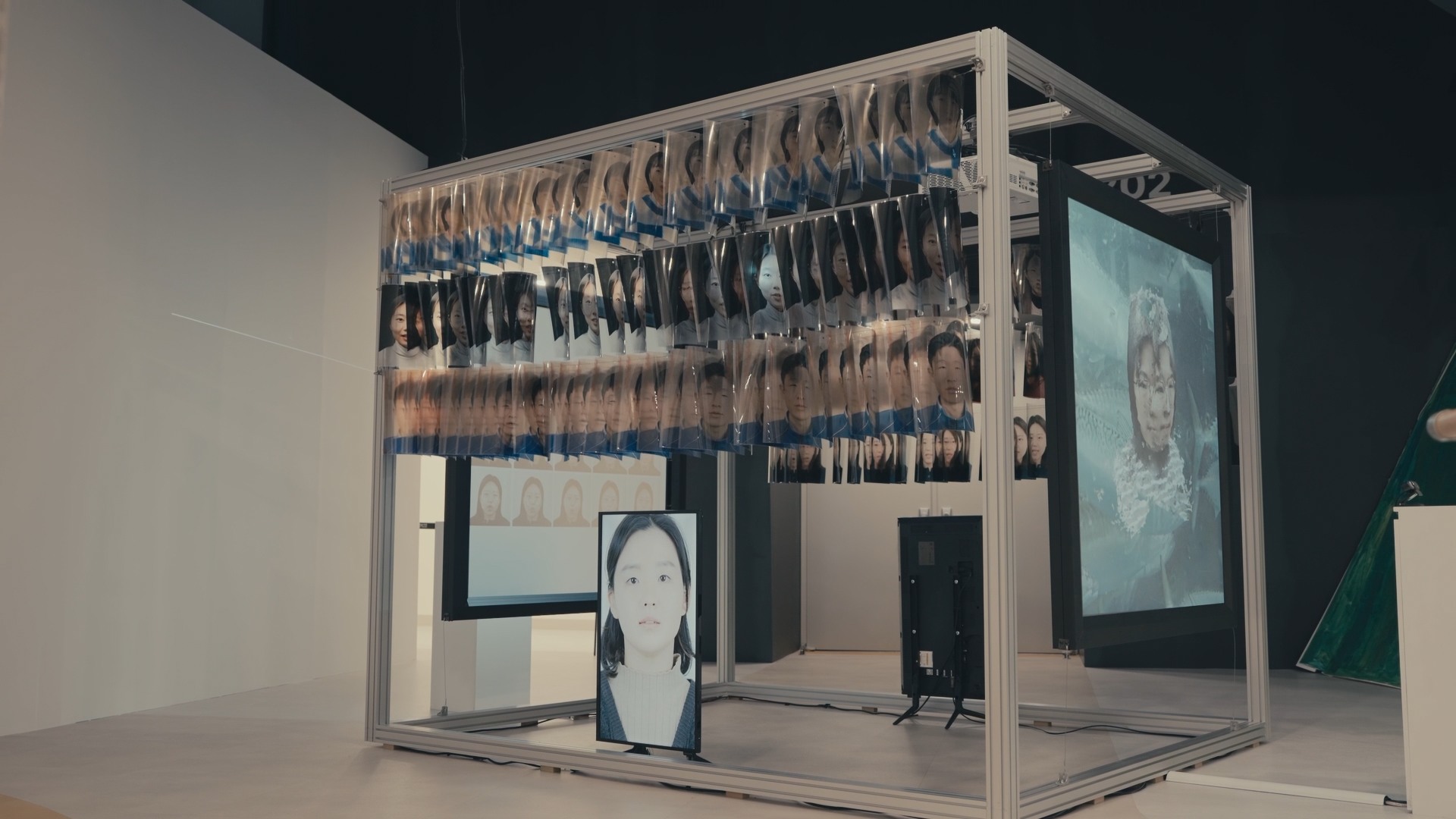
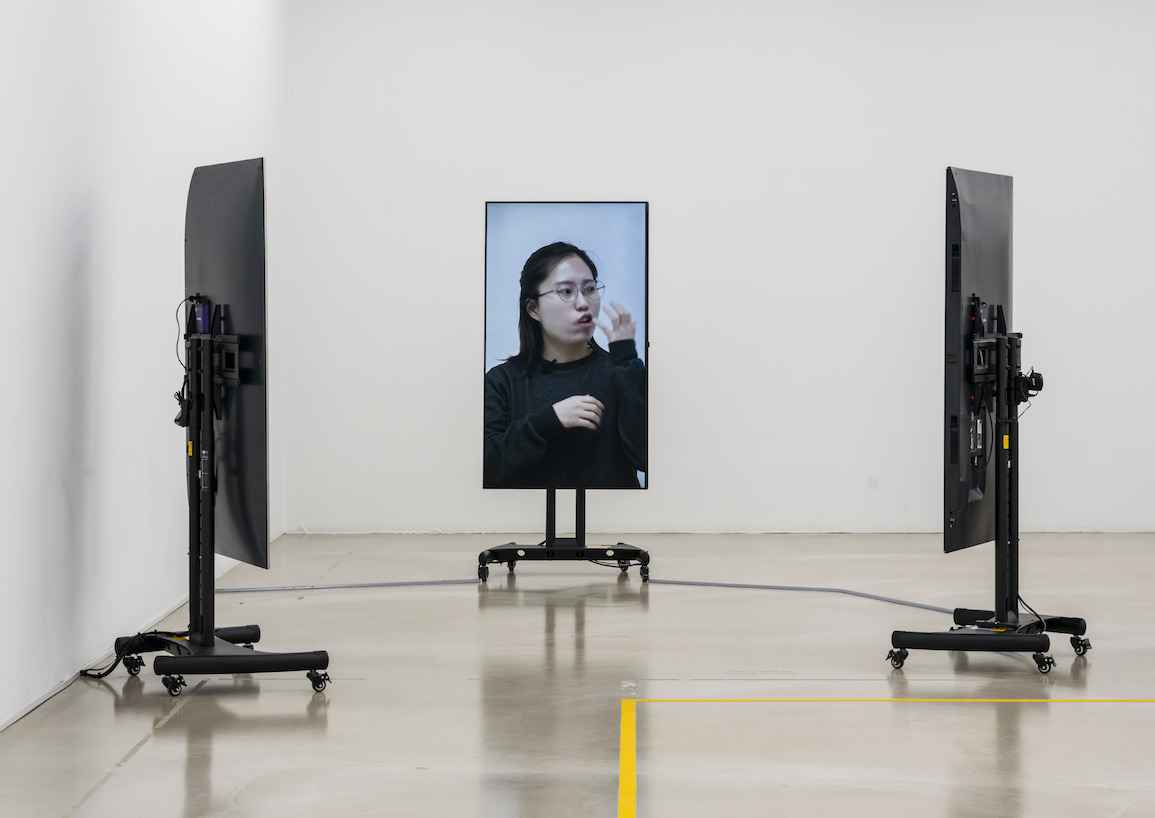
Kim Eunseol, Deaf AI, 2024, Interactive, 4-channel video, color, sound (vibration speakers, amplifier, wooden box), Dimensions variable © MMCA

Kim Eunseol’s work does not simply speak of the absence of sound; rather, it experiments with the possibility of reaching one another through signals that remain in the body—such as vibrations, facial expressions, and gestures—even within incomplete communication.
 
When sound draws near, it is felt on the skin as vibration. In this way, her work communicates through tremors that cannot be conveyed by words, addressing our bodies through senses other than hearing and allowing us to physically experience the narrative.

”Despite the energy that goes into communication and the feeling of helplessness you sometimes have when you can’t access something, there are moments when language awakens more clearly within those cracks.” (Kim Eunseol, from the interview with MMCA)


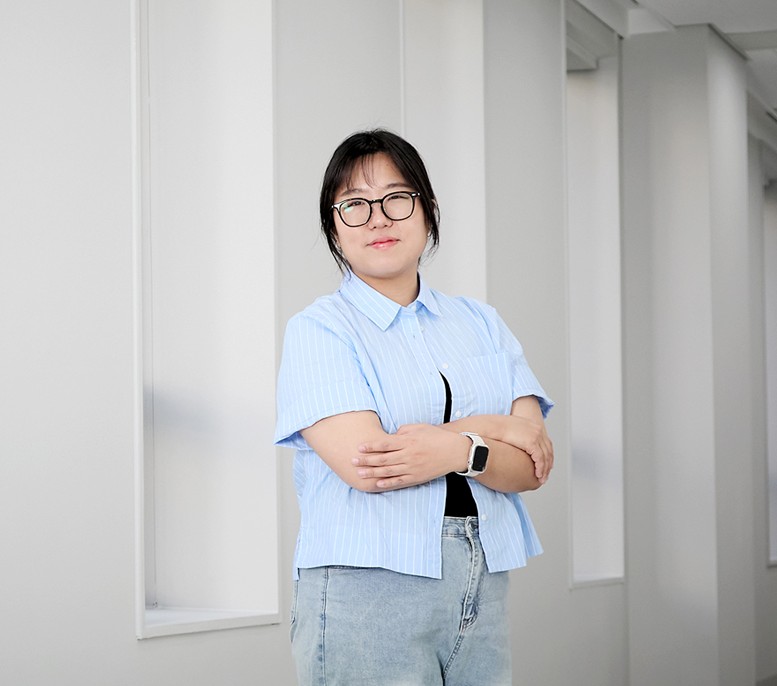
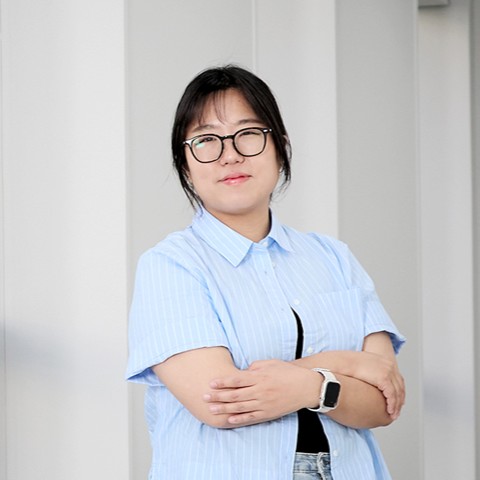
Artist Kim Eunseol © ieum

Kim Eunseol received her BFA in Painting from the Department of Fine Arts at Cheongju University. Her solo exhibitions include 《Intermediate Language》 (Post Territory Ujeongguk, Seoul, 2023), 《Thicket》 (Cheongju Art Studio, Cheongju, 2020), and 《Glue Play》 (Rund Gallery, Seoul, 2019).
 
She has also participated in numerous group exhibitions, including 《Interrogative AI》 (Incheon Art Platform, Incheon, 2025–2026), 《Looking After Each Other》 (MMCA, Seoul, 2025), 《Outreach Project #1-6_Seeing with 10 Fingers》 (Seokdang Museum of Art, Busan, 2024), 《Asynchronous Singing》 (ARKO Art Center, Seoul, 2024), 《Naran Naran: Days of Reading》 (Factory2, Seoul, 2024), and 《Someday, Everyday, Everybody》 (Nam-Seoul Museum of Art, Seoul, 2020).
 
Kim has participated in several residency programs, including the MMCA Residency Goyang (Goyang, 2025), the SeMA Nanji Residency (Seoul, 2024), and the Cheongju Art Studio (Cheongju, 2019–2020).
References