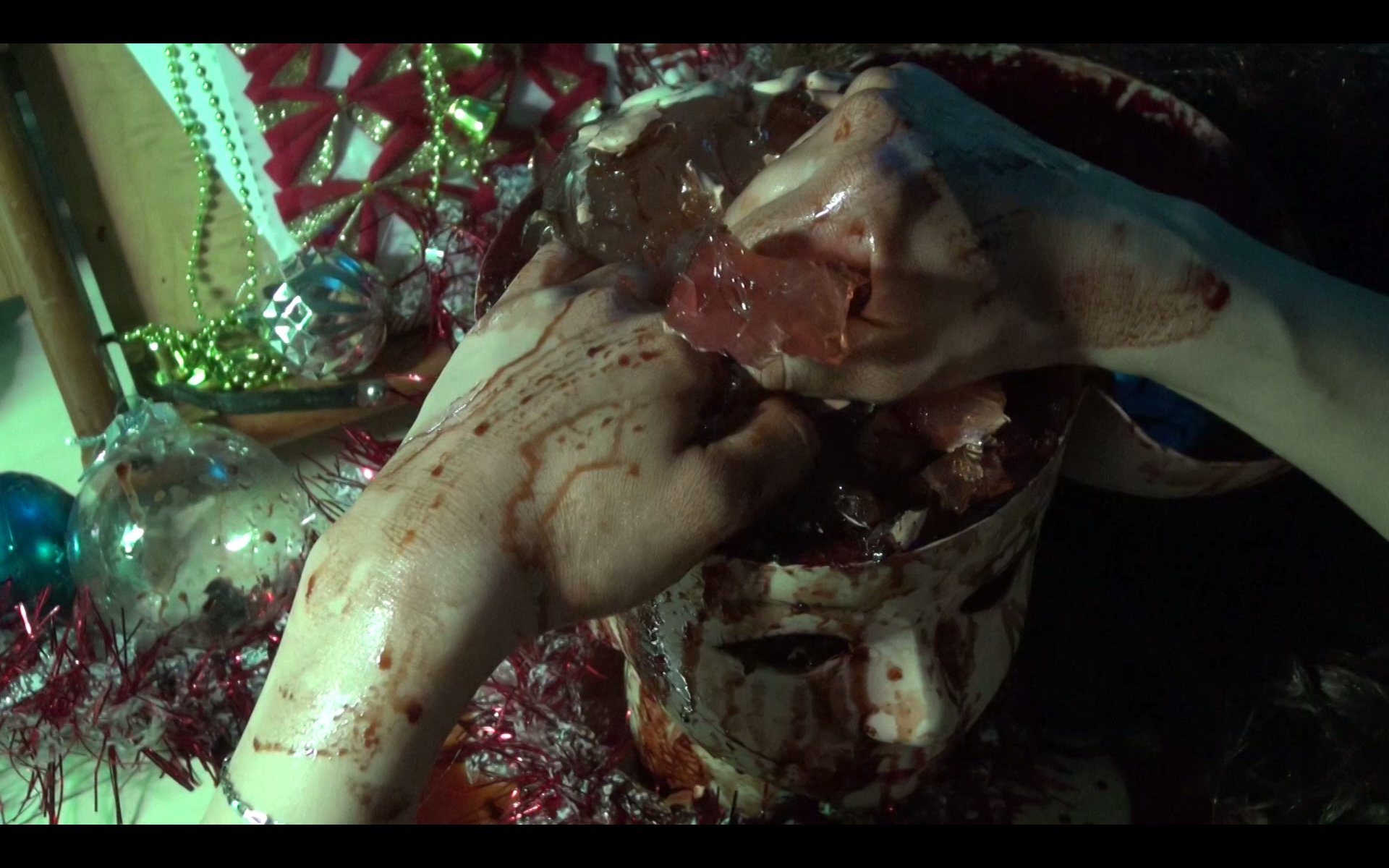
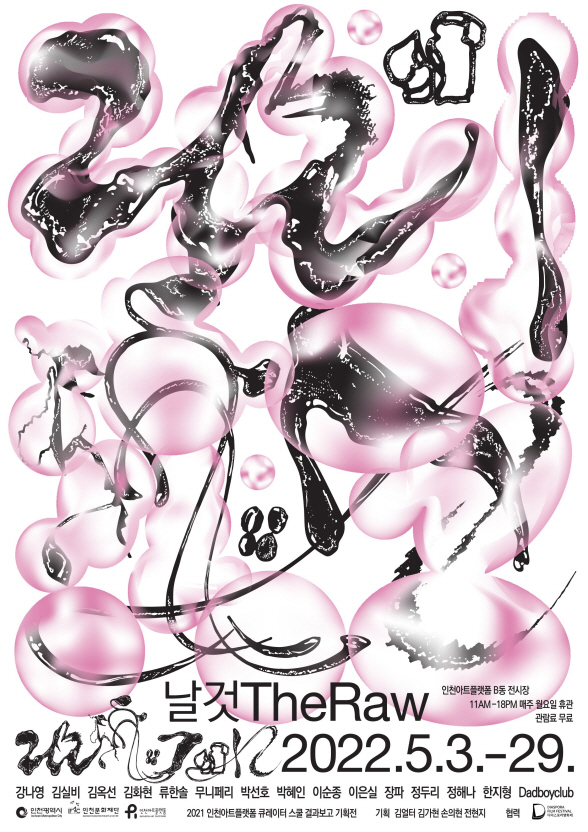
Image courtesy of the artist © Hansol Ryu

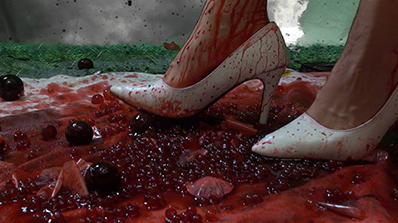
Looking at the thick, round, flattened flesh of a thigh pressed against a chair, I want to slice it up bit by bit. It looks soft and pillowy, yet I also want to stab something blunt and heavy straight into it. The sagging flesh on the upper arm, pulled downward by gravity, makes me want to pinch and tear it apart like pulling dough for sujebi between my thumb and index finger.

The five fingers—each composed of bone wrapped in thin flesh, slightly plump at the bottom and marked by wrinkles, bones, and nails at the top—I want to slice them all at once with a long, thick knife. I imagine the sounds: tok tok, ttok ttok, gurgling, dull thuds as the knife hits the hard floor, and the slippery resistance of cartilage between finger joints. A sensation that is at once rigid and slick, loose yet resistant. The oval-shaped segments are no longer fingers, no longer a hand. Just round pieces.

And

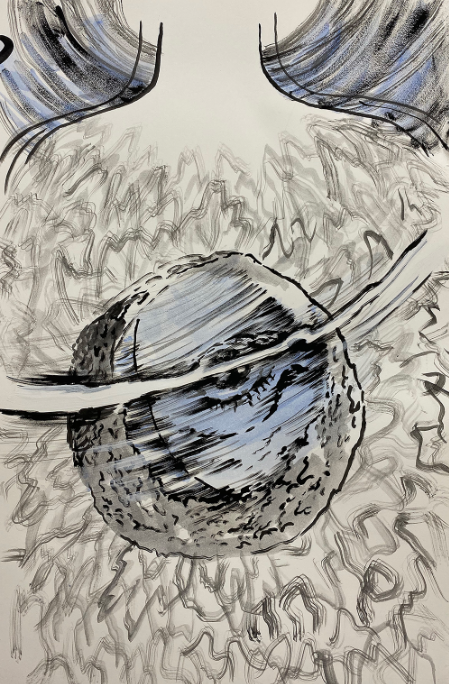
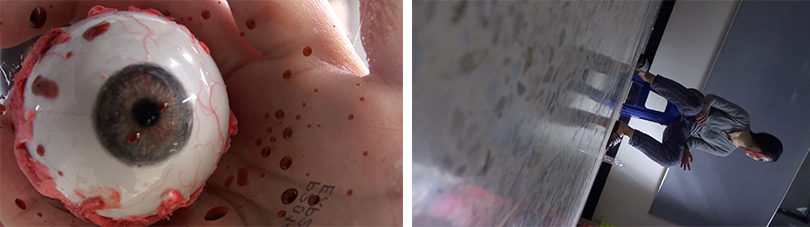
Grandmother blinks as she smiles, watching Mother chatter away in laughter. Within her wrinkled skin, her eyeballs glisten. Each time she blinks, thin ochre-colored folds with a cloudy membrane tremble and shift. Between the wrinkled eyelid and the yellowish, soft, sagging eyeball is a loose, dry emptiness. The eyelid, thin but firm, grows large enough to comfortably cover the eye. Each blink releases a hollow gust of air, drying the already moistureless eyeball even further. Then she quickly closes her eyes tightly to moisten the surface again. From the thick yellow liquid mass and the dry, slapping eyelid comes a sticky sound. Jjeok jjeok. Jjeok jjeok. At night, within the darkness of the closed eye socket, the soft eyeball begins to gently bob and move.

And

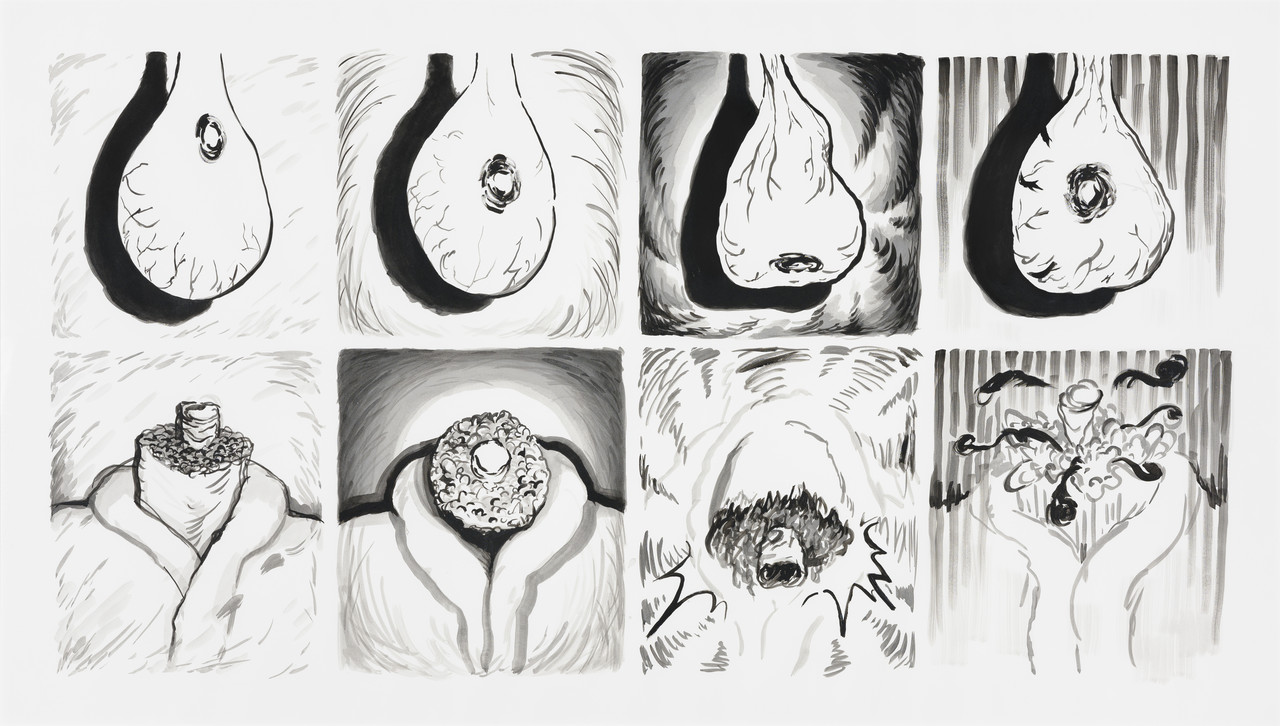
Like a sock being peeled off, the body’s outer layer slips away, and the flesh stretches long.
Flesh stuck to skin-colored stockings stretches out as the stocking is pulled off, tearing as it extends.
Like taking off socks, the flesh is peeled away.
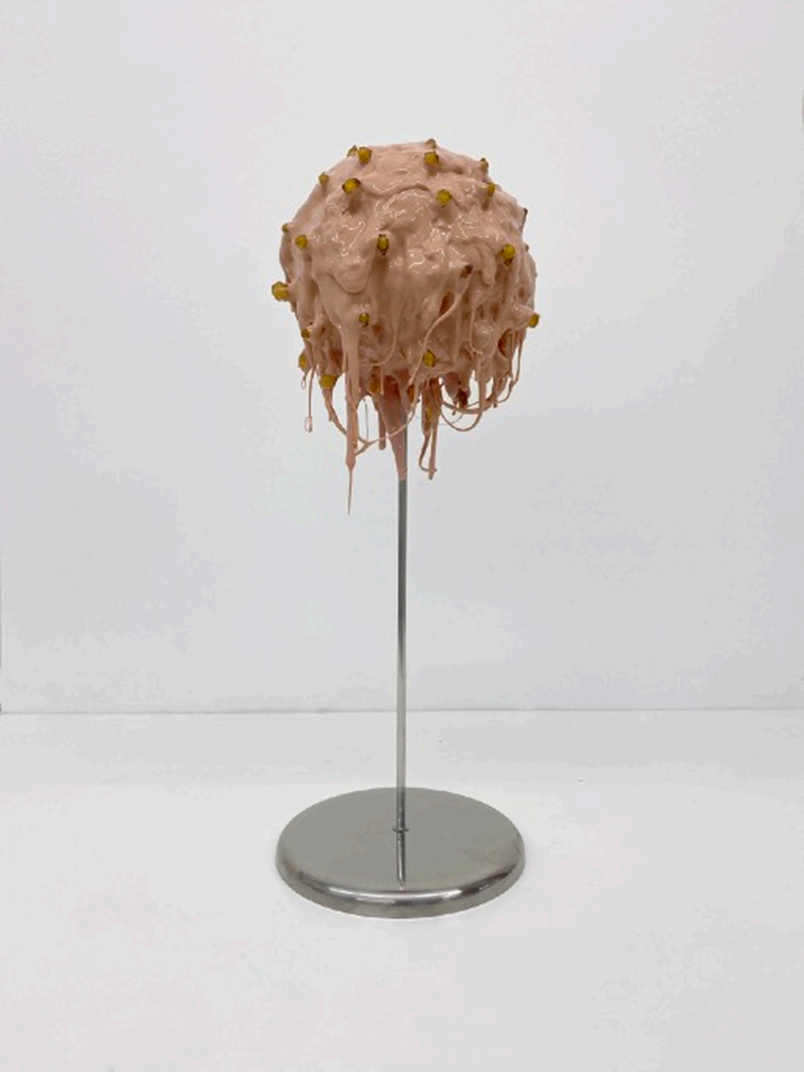
Like pulling chewed gum with a thumb,
like taffy melting and stretching out,
it elongates without any root or origin.
Jju—wak


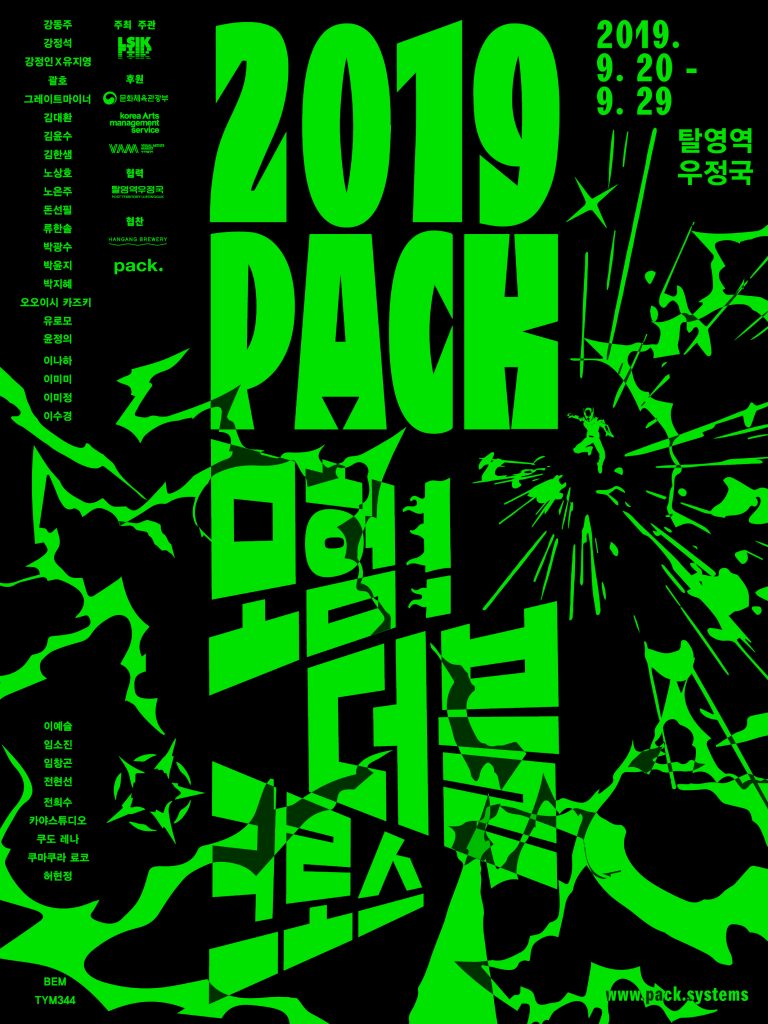
Image courtesy of the artist © Hansol Ryu

And

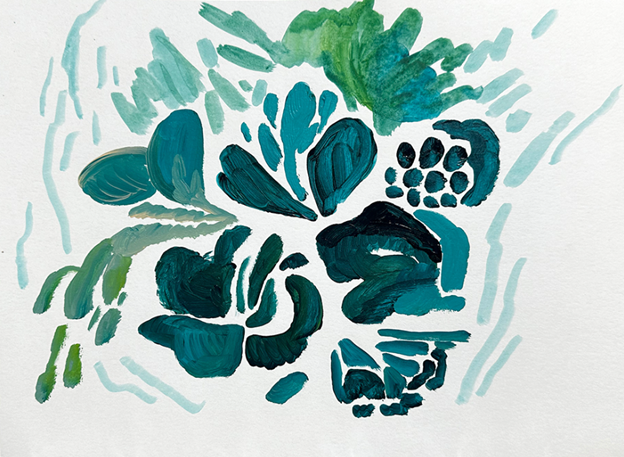
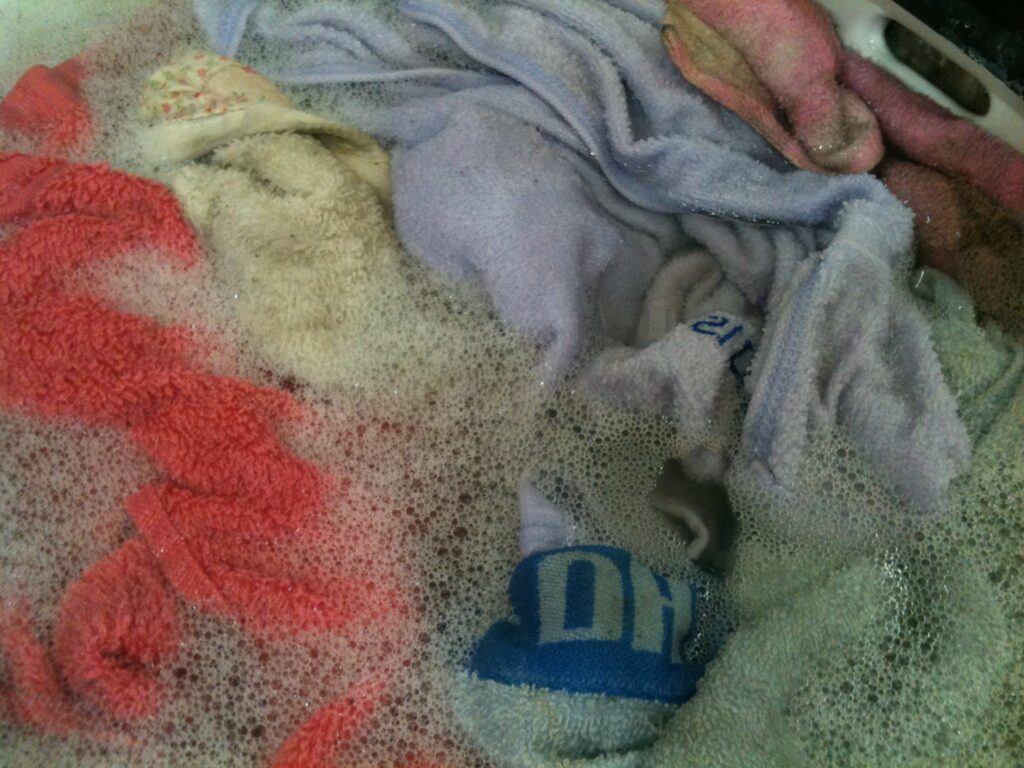
It feels like it’s been soaking for a long time, but suddenly there’s a faint rustling sound. As if it had just been submerged, there is still movement. Small bubbles burst, and the towel floats on the water, drifting and brushing against itself. The fibers, fully soaked, swell up tightly. Between the bulging protrusions of the towel, grotesque bleach bubbles churn and fizz, releasing a sharp, stinging smell. It is like tangled organs boiling together, yet also like warm steam rising softly. The bleach foam continues to swell between the bubbling towel surfaces, slowly twisting tighter, entangling further as it moves.

And

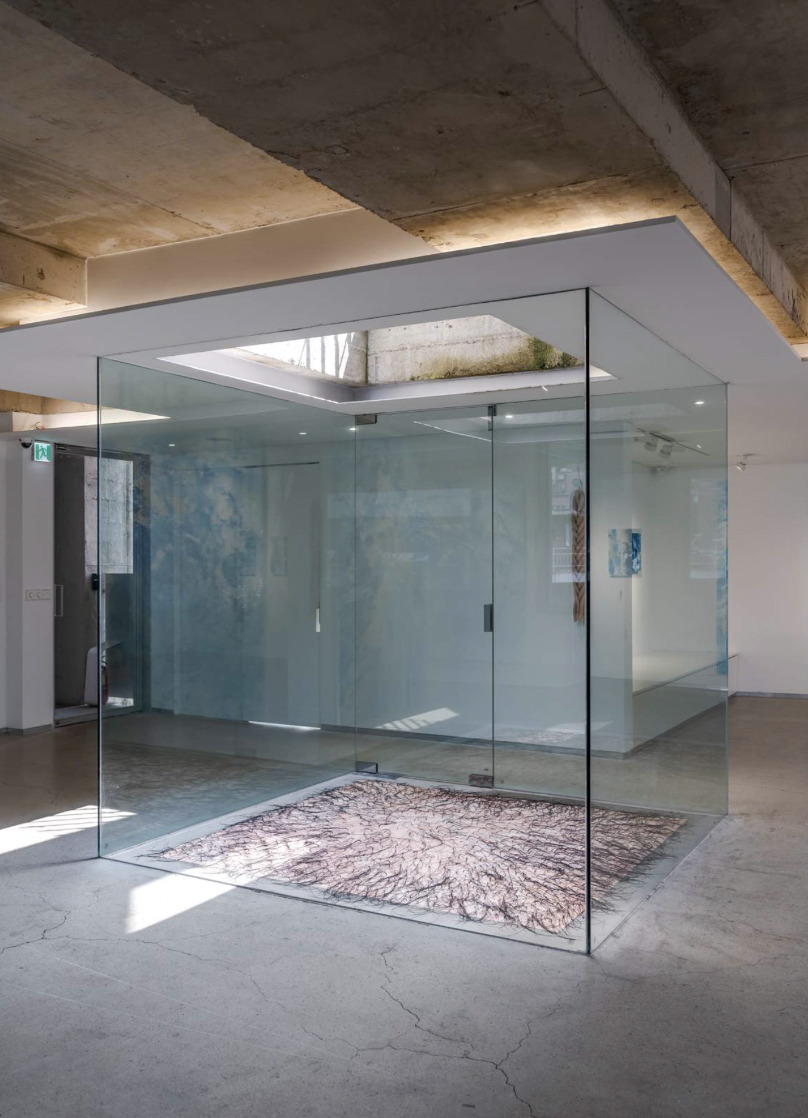
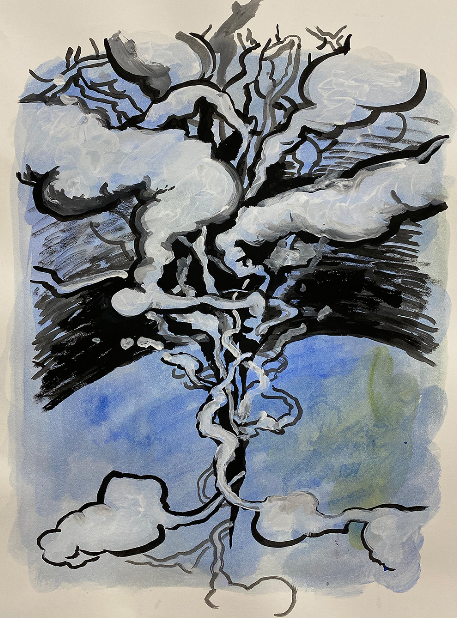
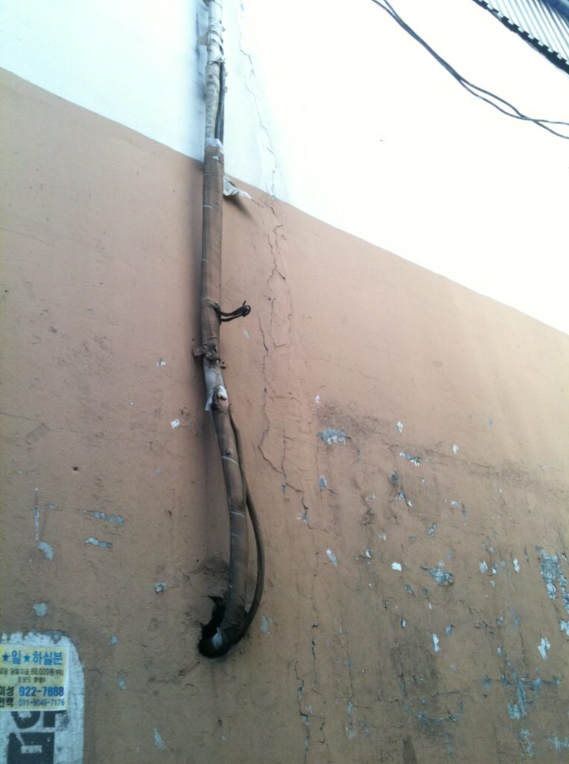
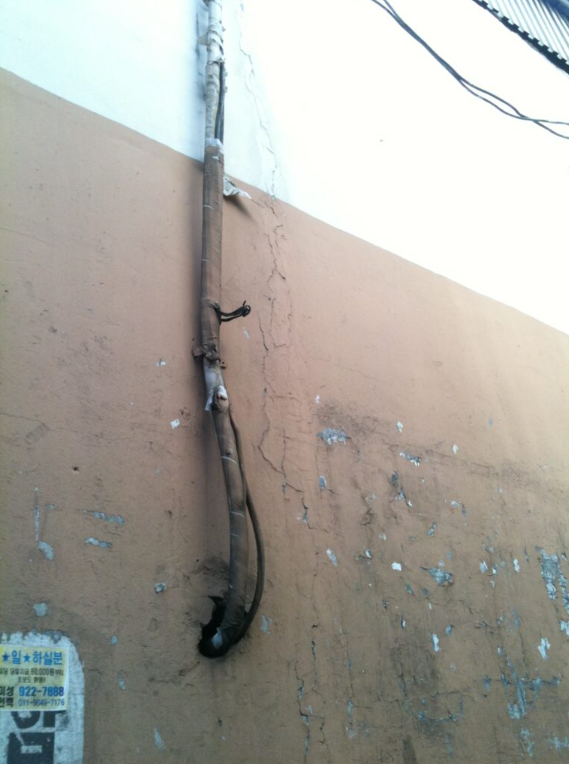
In an old building along an Euljiro alley, filled with the metallic clanging of iron dust and the smell of rust, something like a herniated organ clings to the wall like a navel turned inside out. The paint peels away in patches like cracked heels, exposing gray cement beneath. I try pushing it back into the hole—squish, push—but it won’t go in. I decide to leave it outside, tied there. The long, resilient intestine is coiled and fastened to the body. From the tautly bound surface, fragments push out freely, fluttering outward.

And

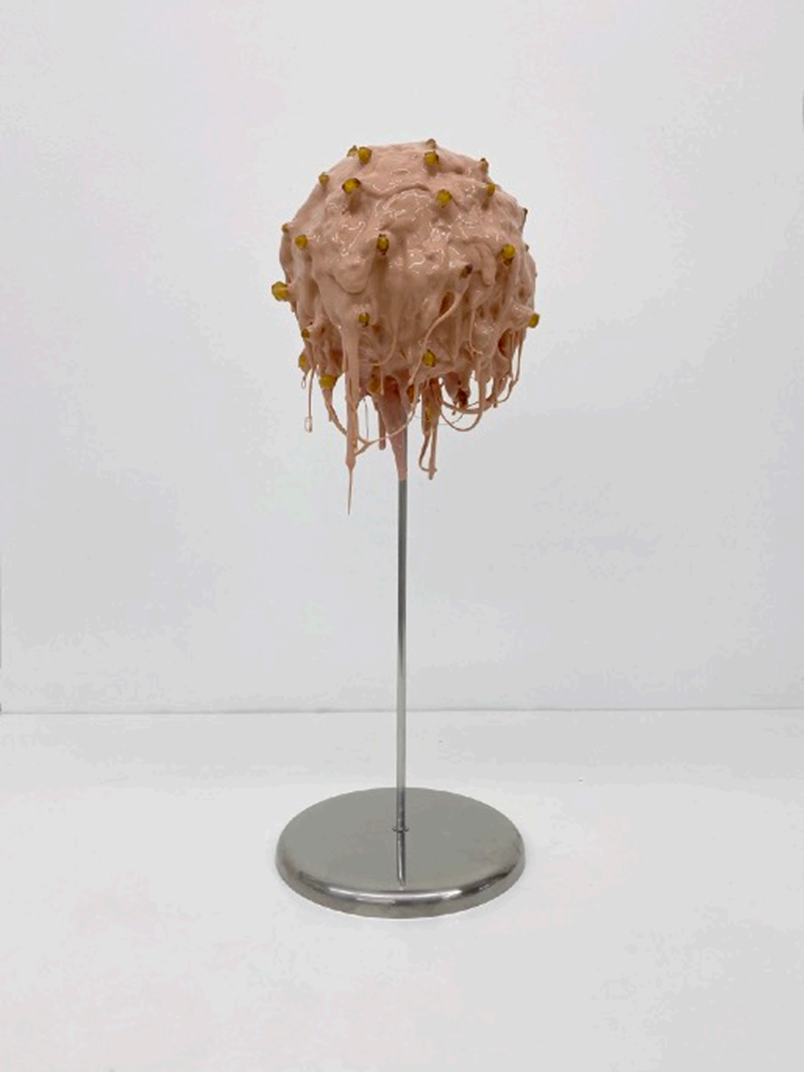
My tongue flicks against the back of my front teeth because I want to touch it. It is clearly rough, yet rounded and bulbous. The uneven surface is cracked between ridges, making it satisfying to trace with a finger. Whether it has been wounded and healed repeatedly, or healed and wounded again, I cannot tell—but this mass, no longer a perfect cylinder, looks crisp and delicious. As if it might crumble apart like a scone, revealing inside a vivid pink grain, like chicken breast, gently separating—swish, swish—as it falls away.


Image courtesy of the artist © Hansol Ryu

And

Late at night at the convenience store, the pile of 1,300-won gimbap is almost sold out, leaving only a few pieces pressed flat at the very bottom. The crumpled foil is pulled open on both sides, revealing in the center a slightly bent yet oddly appealing, elongated roll. The sliced pieces of gimbap, having sat for a long time, have sticky rice grains clinging together, refusing to separate.

Through this compressed layer of rice, a smooth, slender carrot pierces through sharply, alongside scattered burdock root, a small amount of tuna, and kimchi. At both ends, rice grains burst out messily. Over the smooth surface, a glossy layer of sesame oil spreads, releasing a rich, pungent aroma.

And

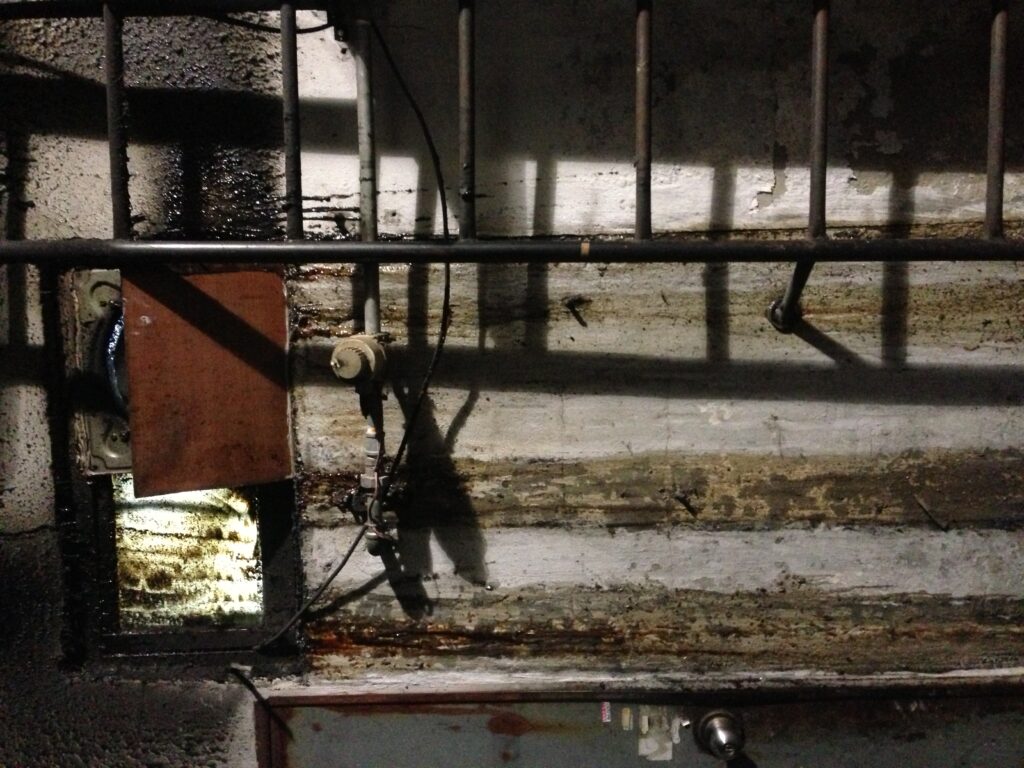
A millstone creaks with a piercing metallic grind—kiiiik, kkiiik—and a rusted screw is attached to it. I press the rust-stained screw against my swollen chest (just above the heart). With all my strength, I push it in. At the same time, I twist. The millstone is heavy, but I force it to turn. The flesh dents slightly, allowing the screw to enter. It slips into the gap between misaligned ribs. The swollen flesh twists dully, like drying wrinkled dough. Slowly, in the direction of the turning screw, the flesh coils inward.

At the end, thick, dark red blood begins to seep out and gather. It seeps between the folds of flesh and trickles downward. The dull, rusted screw pushes deeper, piercing or slipping past bone. The millstone is too heavy to move smoothly—it enters slowly, crudely, forcing its way through thick, tough skin, through hard bone, into dense clotted blood. Deep inside, there is a heart—dark red, hot, pounding like a machine, as if it might release a storm of noise. Now all flesh and bone are wound into the millstone.


References