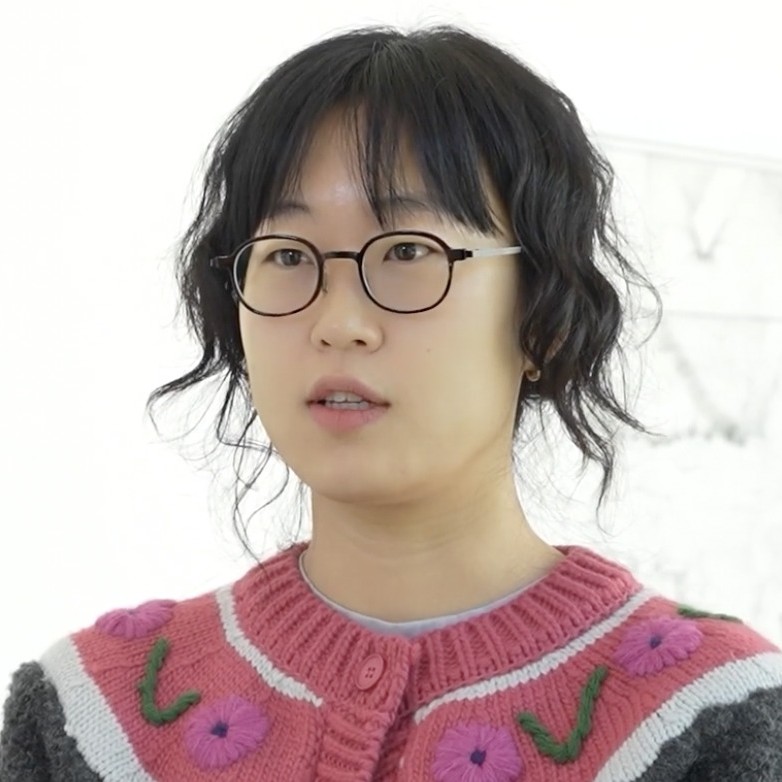
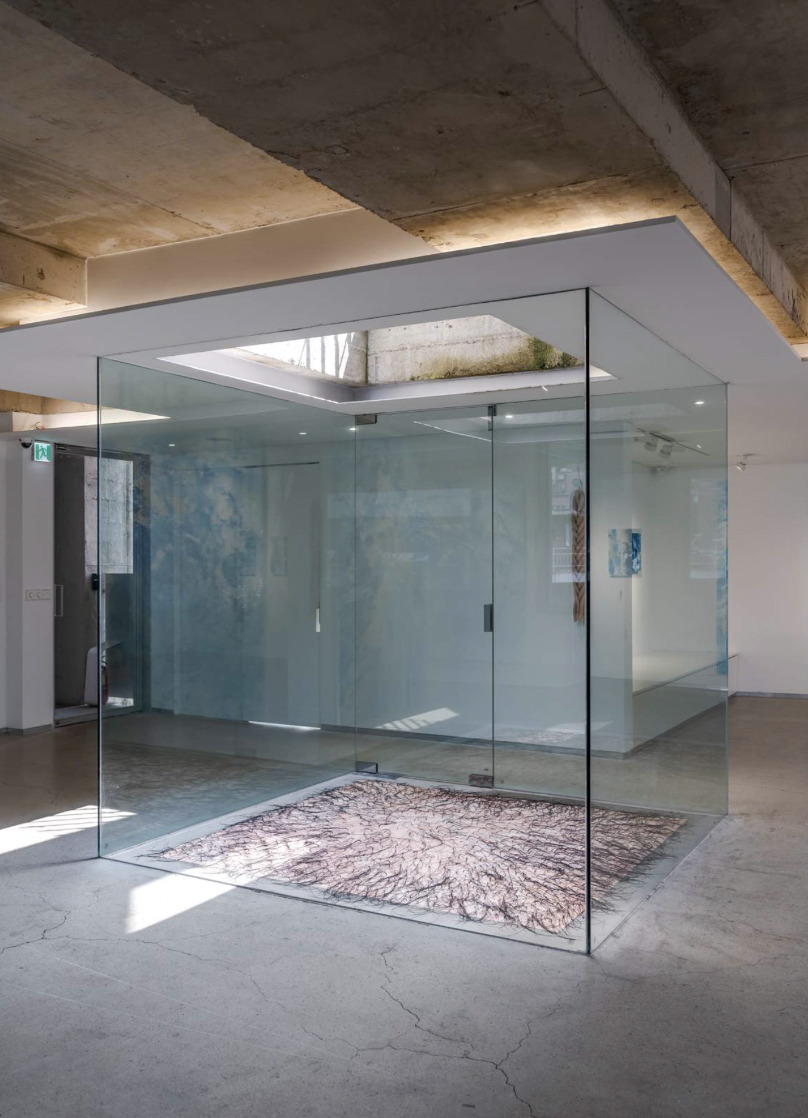
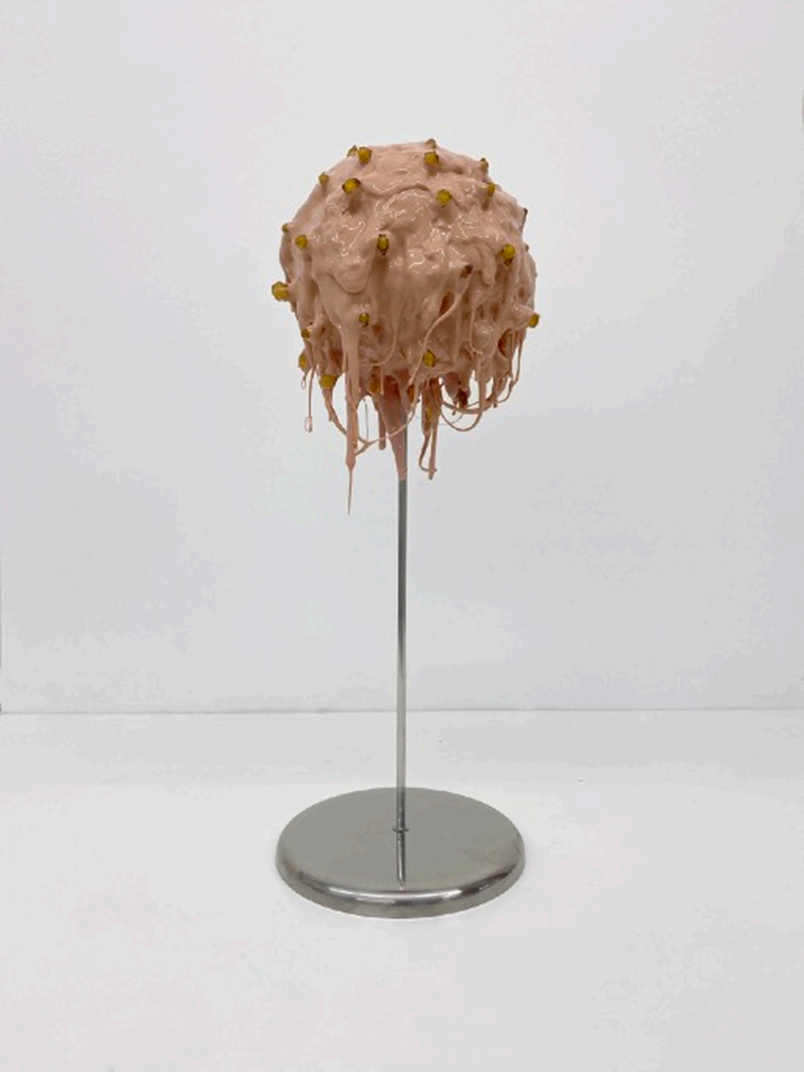
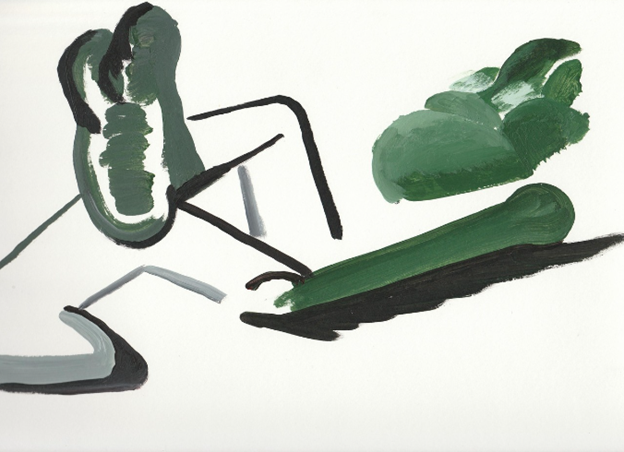
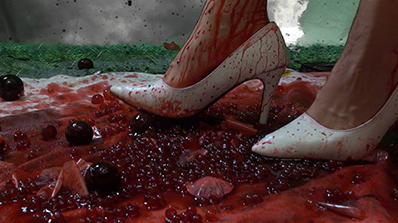
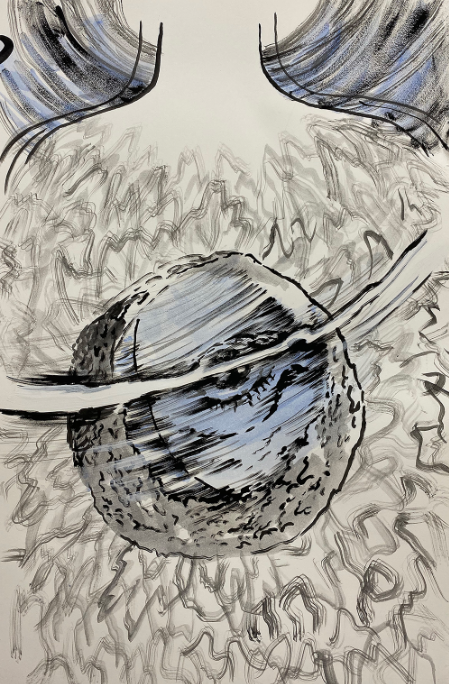
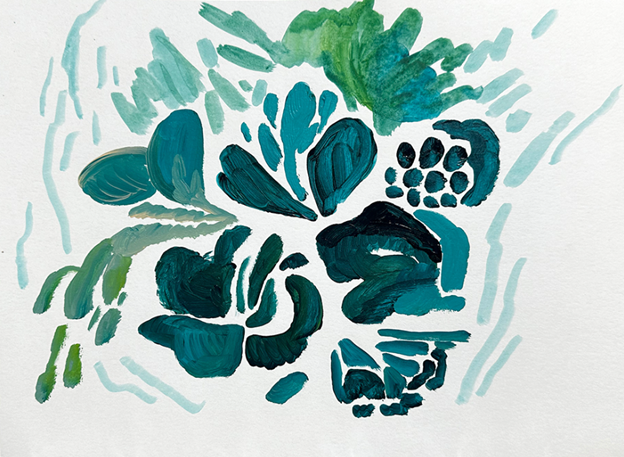
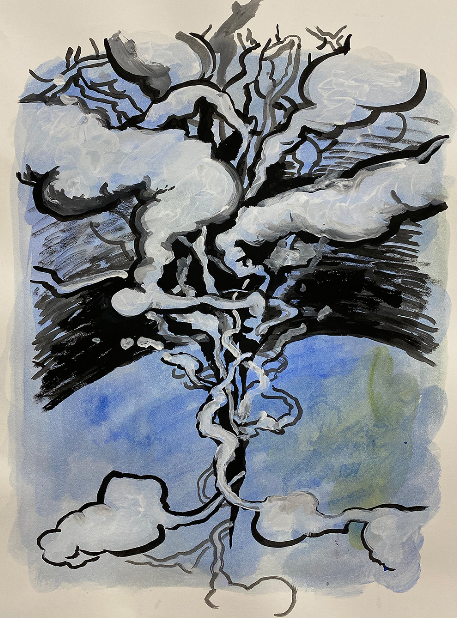
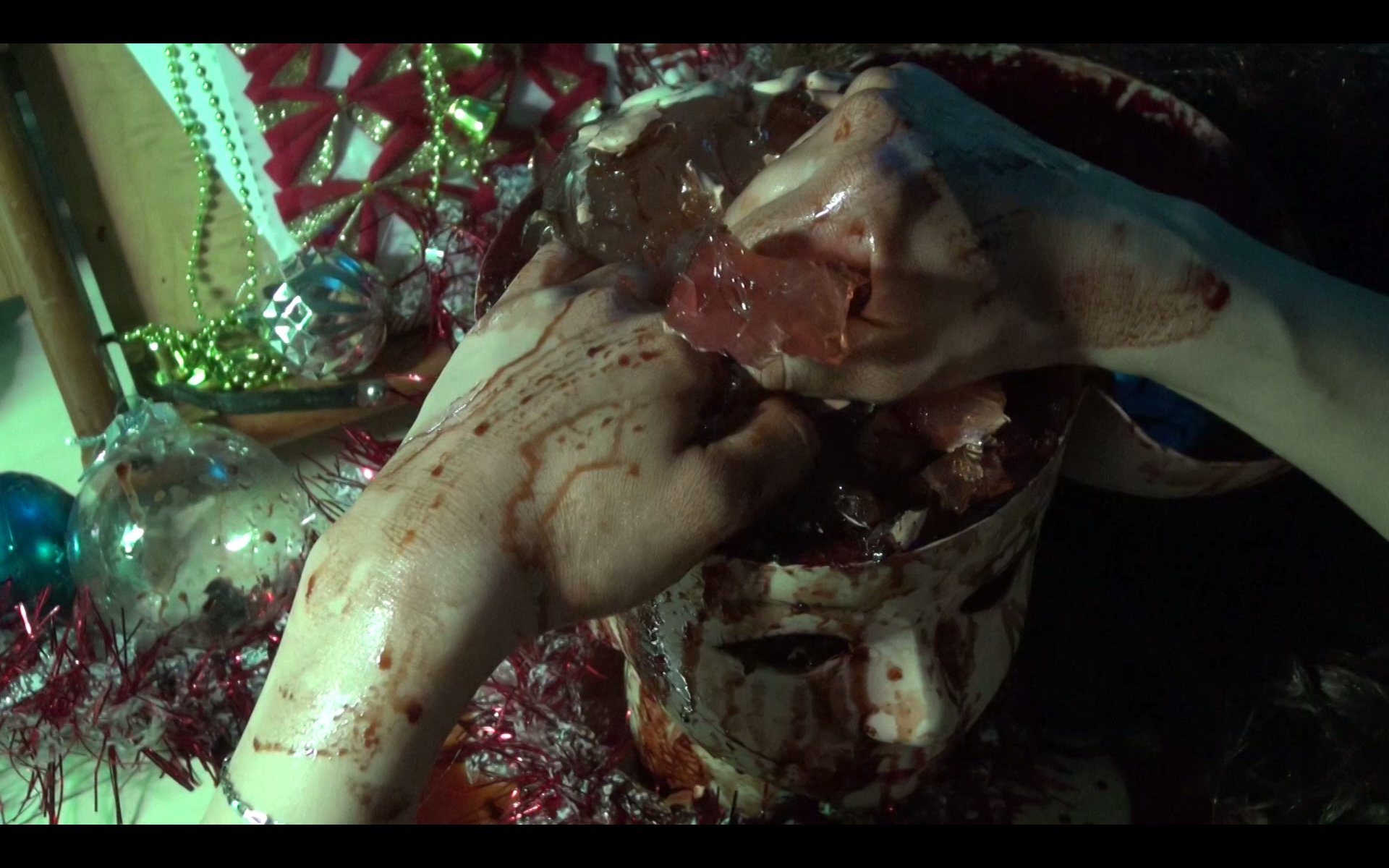
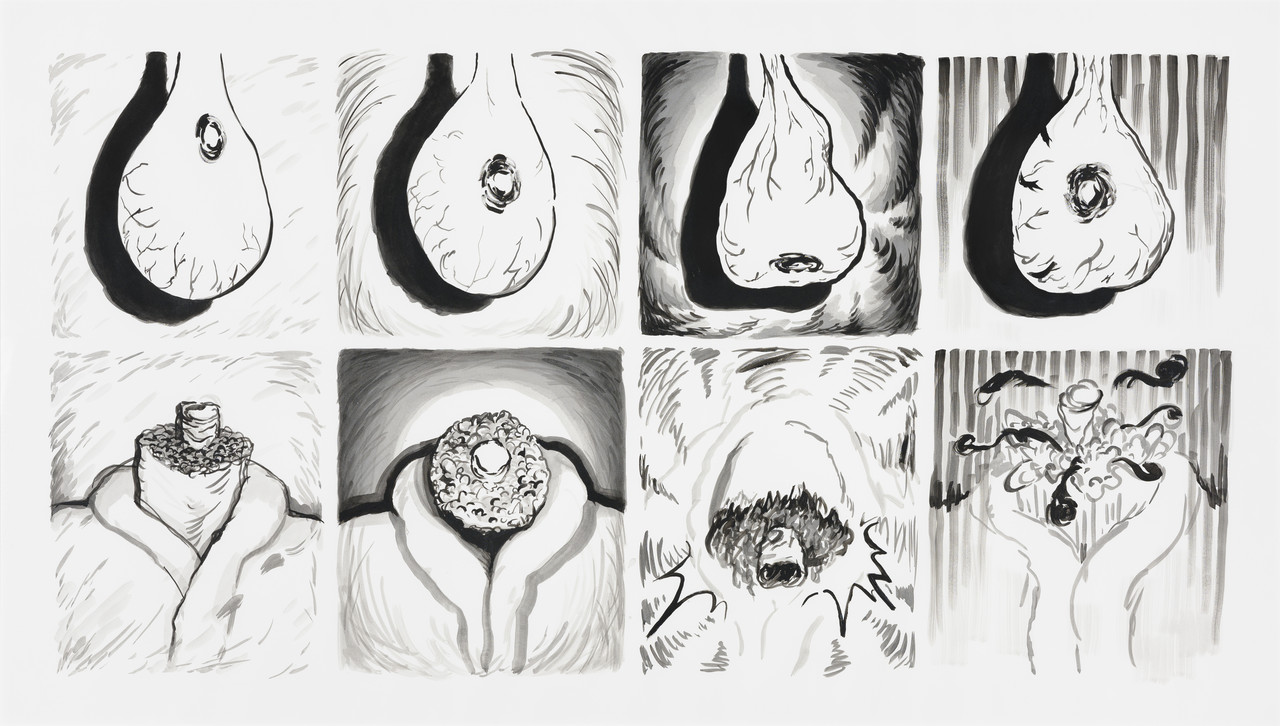
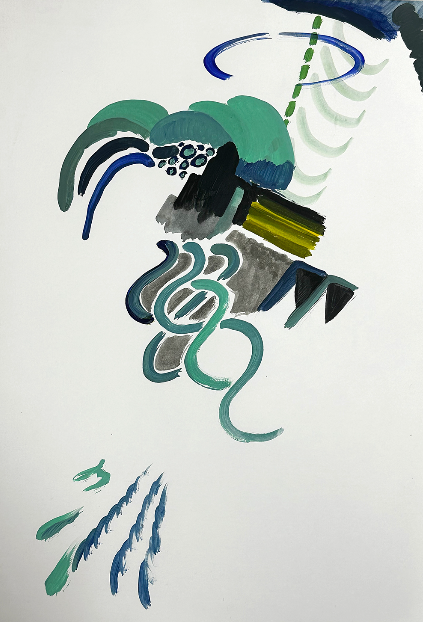
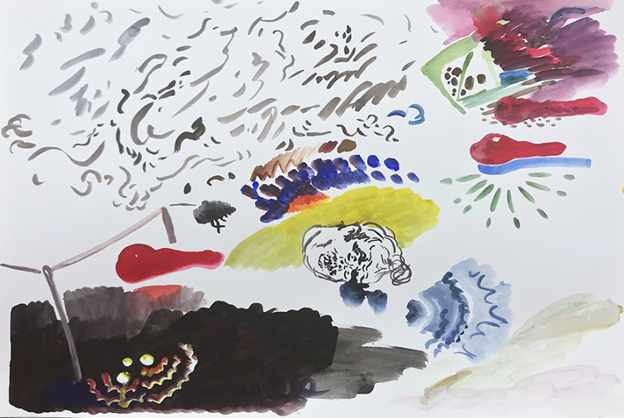
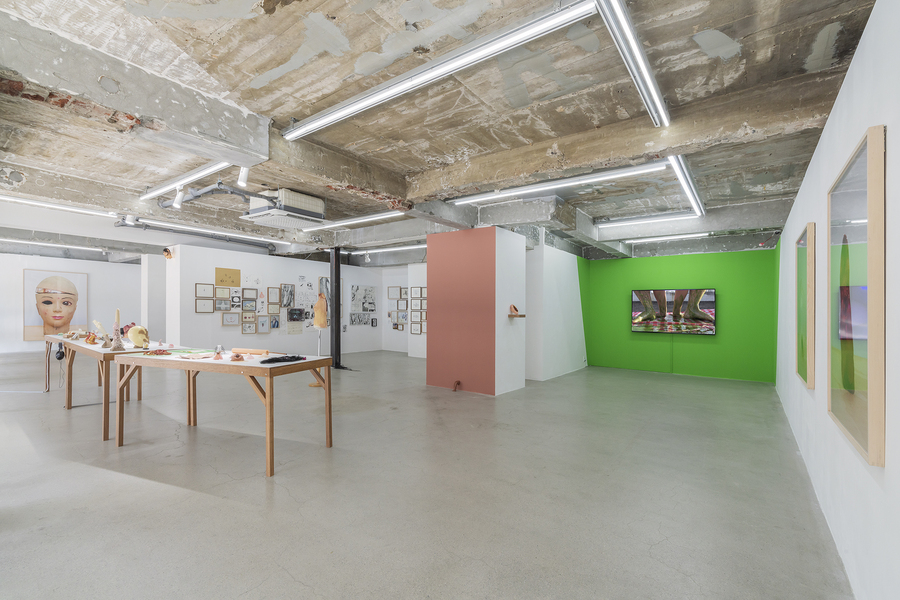
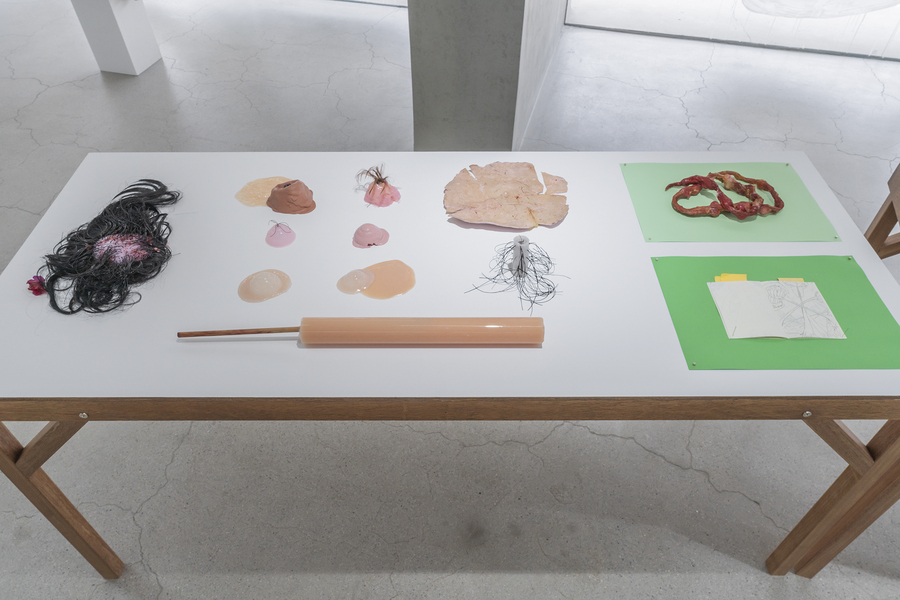
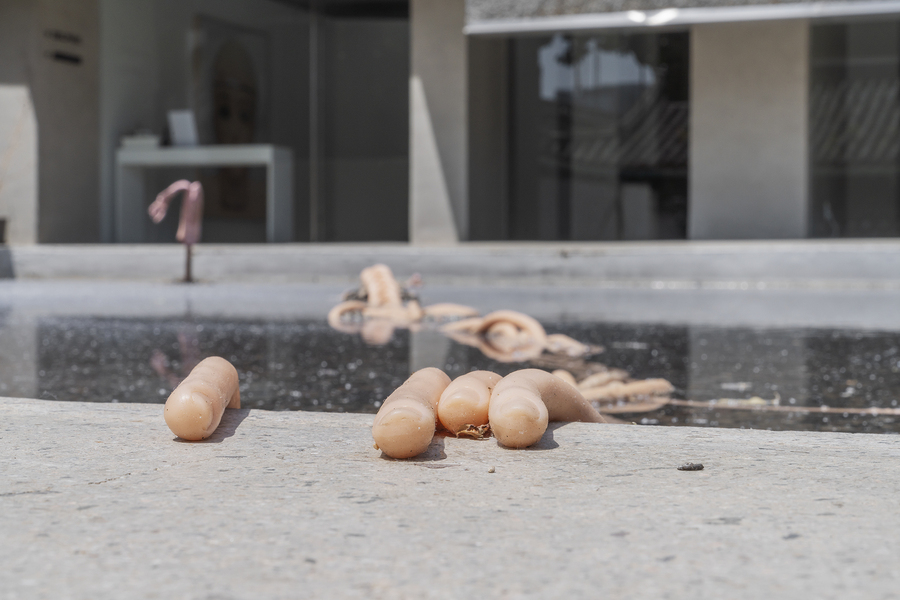
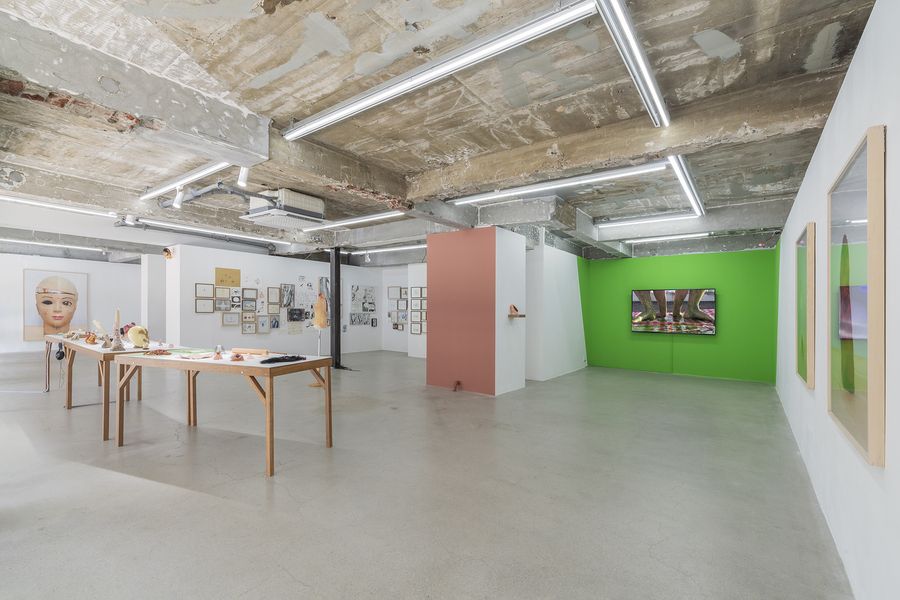
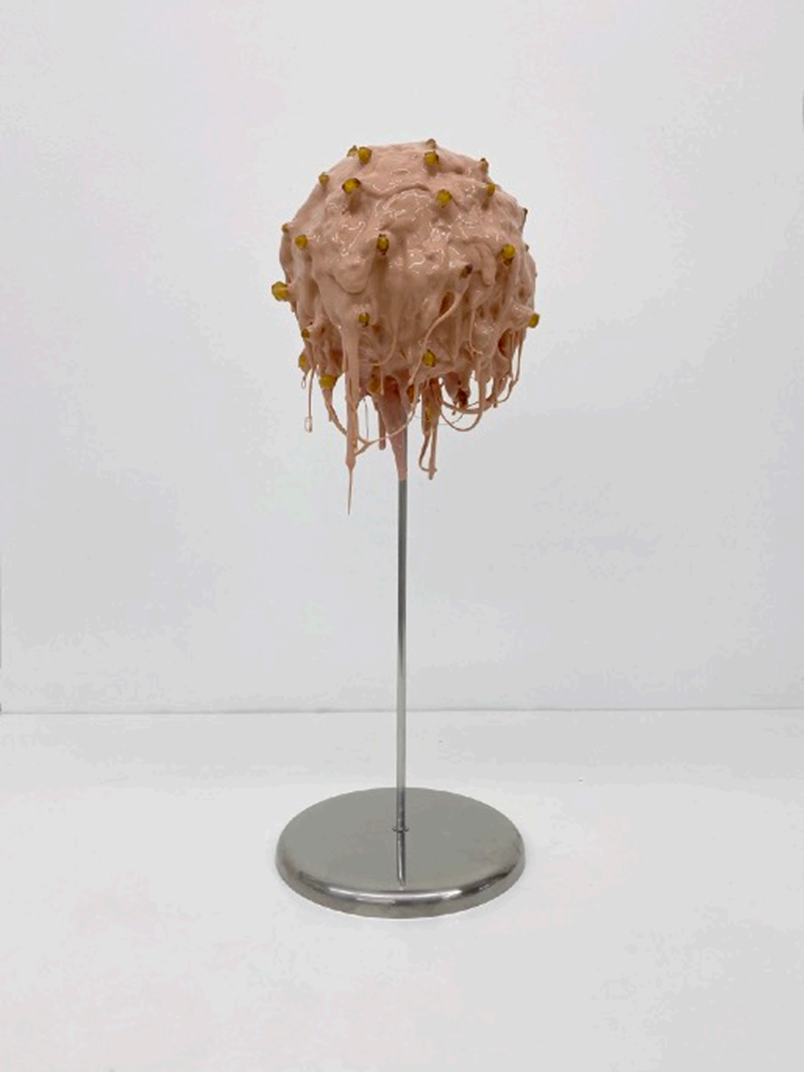
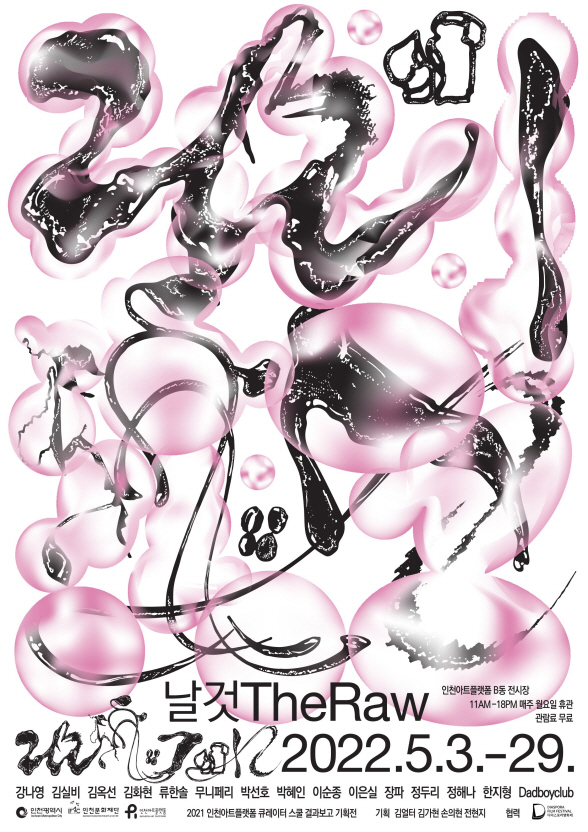
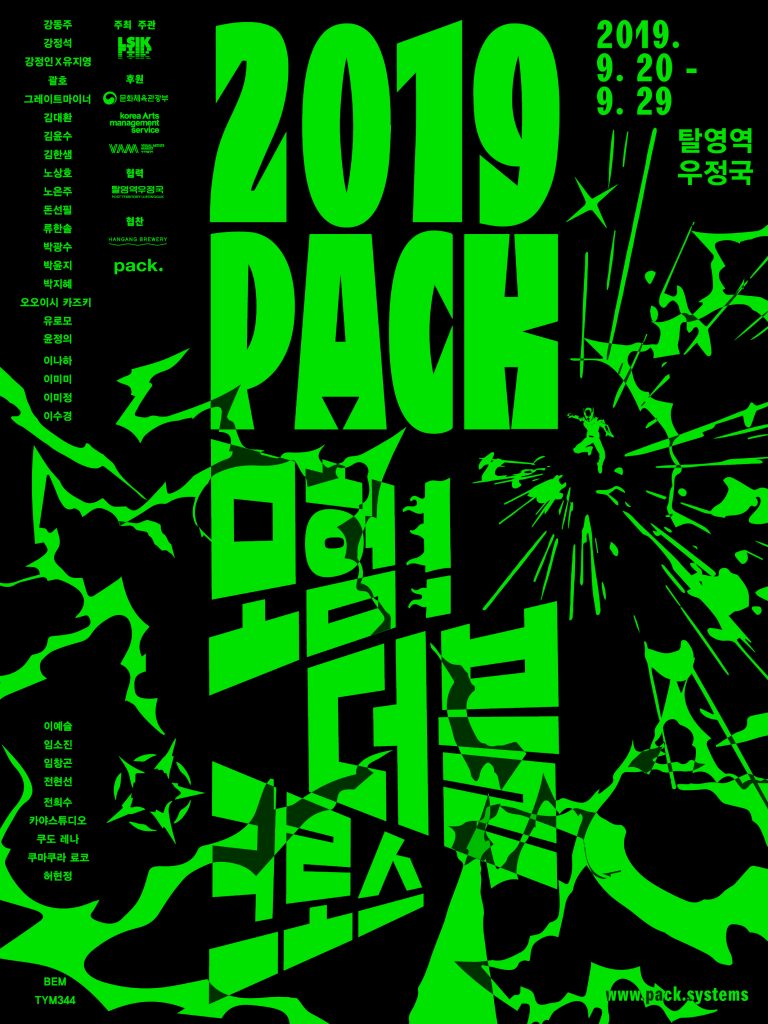
Installation view of 《Every Body, Come On! Yo!》 (Museumhead, 2023) ©Museumhead

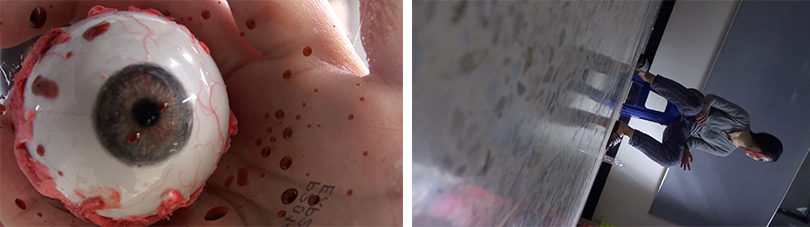
A video of a little over five minutes loops. Within an infinite loop that manifests a kind of eternity, the body is torn to pieces. A belly that is “about to burst” from having eaten too much is thrown down and finally explodes, and organs spill out. A gear that catches in the wrong direction splits a hand into two, and the split hand and arm begin to dance on their own (Crack Crack, 2011). From an eye socket pierced with the mouth of a PET bottle, an eyeball pops right out, and a bundle of nerves stretches and dangles (Pong Pong, 2014).

The figure is not merely calm while watching organs burst from her body and eyeballs bounce out and roll across the floor; she even joins in. And as though racing toward the peak of pleasure, she accelerates the dismantling of her body. All the while, she screams, or laughs so hard she screams, or screams until she laughs!

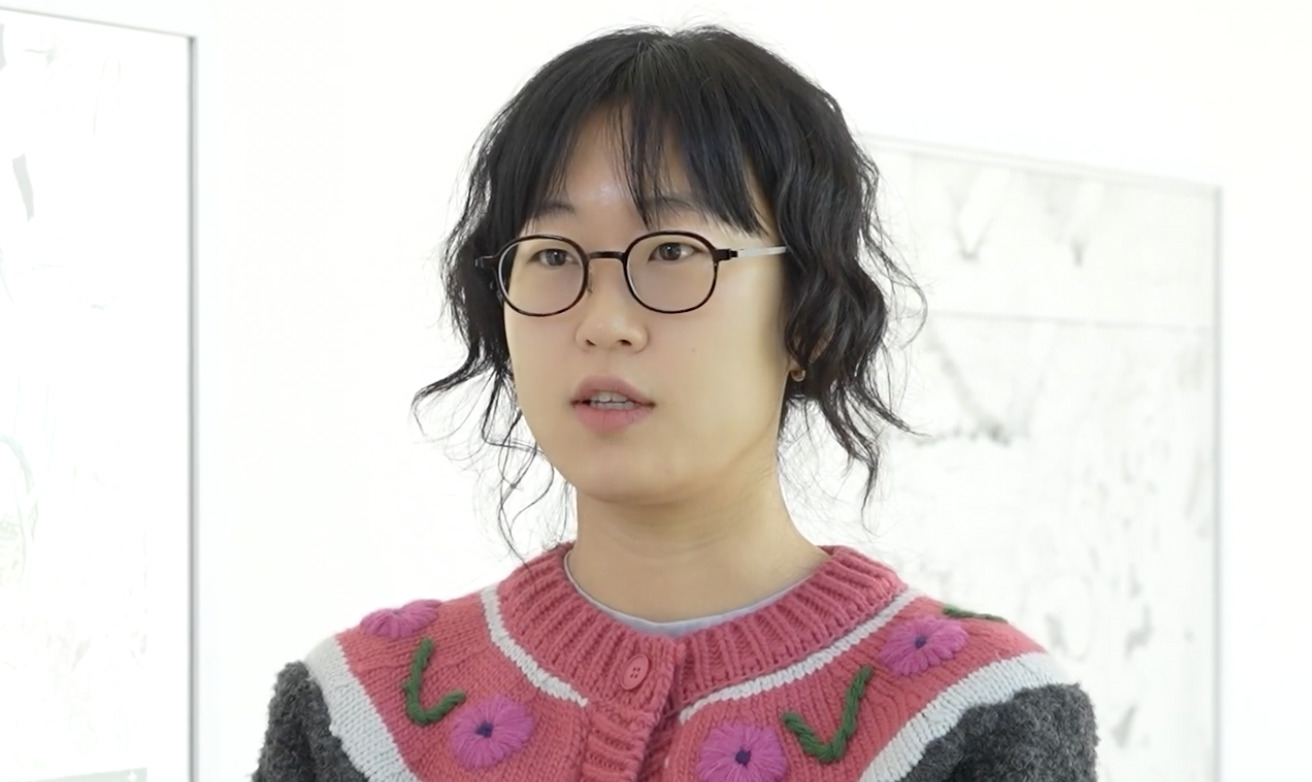
Hansol Ryu’s “human body disassembly show” began around 2011 and has unfolded across a range of media including video, performance, painting, photography, and sculpture. The artist has understood the human body as a collection of parts, each possessing its own individuality, or as the parallel movement of strange and unknowable worlds, and has given form to it as such.

《Every Body, Come On! Yo!》 brings these works together and presents them in one place. A tongue dripping with saliva, a pierced torso stained with blood, a shattered head—such things fill the exhibition space. Torn flesh is crushed and spurts liquid, while bodies stretched like strands of noodles keep extending without limit, obstructing the space. And yet, among these scattered bodies, some kind of release, pleasure, and laughter spreads. Why? What is the identity of this suspicious laughter?

When Hansol Ryu shows eyes, noses, mouths, limbs, and organs detached from where they are supposed to be and existing however they please, the strange pleasure this produces has something in common with familiar jokes. In expressions like “my neck is falling off from waiting,” “I’ll tear off this flab I’ve put on,” or even “I’ll stick it somewhere else,” the body is freely detachable. The same is true of saying you’ll “pluck out and rinse” a head that won’t turn or tired eyeballs, or that you’ll “wash your insides like laundry” to clear out a clogged stomach. But in most jokes, we do not actually imagine the blood, saliva, screams (…) that would result if such things really happened. A joke hides chilling fact within the impossibility of imagination made real.

Hansol Ryu’s work, by contrast, does not feel like a simple joke. She reveals the reality that prevents a joke from remaining just a joke, the surplus concealed within it. In these body-disassembly shows, reproduced as if they were real, the artist focuses on bodies exploding at high speed and spewing blood and saliva. The body that bursts apart (as image) is of course not a whole, unified individual, nor an upright, singular body. Instead, it is chopped into fragments that cannot be identified as belonging to anyone, nor even named as any particular body part.


Installation view of 《Every Body, Come On! Yo!》 (Museumhead, 2023) ©Museumhead

Here, the body becomes a physical lump that cannot form meaning. A body without meaning, a body that refuses meaning, is problematic. Whether as an affirmation of life or as a critique of institutions and old customs, throughout the long history of art the body has (almost) always carried “meaning.” Someone may well look at the body Hansol Ryu presents and still discover a similar genealogy of meaning, thematic consciousness, and interpretation. For example, one might annotate a plot in which a person spending Christmas alone turns herself into a Christmas tree (Cri Cri Merry Cri Smas, 2018), or a plot in which she tears her body in two in order to stage a wedding with herself (Virgin Road, 2021), as commentary on social convention and betrayal.

Yet in truth, there is only one event Hansol Ryu has filled paper, canvas, oil clay and silicone, and screens with: the human body disassembly show. Jokes like “I divide my body in half and date and marry myself alone” lose their validity through the profusion of reality, and the artist treats the joke as just one setting parameter while devoting herself elsewhere.

The same is true in Happy Birthday to Me(2023). As the title indicates, the given setting is a “birthday party.” But from beginning to end, no other story surrounding the birthday unfolds. The video begins, first, with the familiar “eating jelly” scene common to ASMR/mukbang content. As a mouth crams in and chews soft jelly in close-up, a high degree of audiovisual density is achieved.

The video mimics mukbang for a while, then switches mode as the figure urgently coughs and gags, trying to spit up jelly stuck in her throat. Frustrated, the protagonist widens an opening and widens it further, turning her own body inside out as if emptying and reversing a pocket. The situation itself swallows the camera. Caught in the motion of inversion, the swallowed camera enters the backrooms,[1] a world of infinite maze-like space. Here, the only passage out of the backrooms is the anus.

At last, bursting out with a pop from the asshole, the camera also faces the sky. What has burst out (a fart) writes words across the heavens: “HAPPY BIRTHDAY.” Who, or what, has been born? Is the camera-fart, having exited the backrooms and come to see the world again, celebrating its own return? One may try to unravel the narrative and make sense of it, but it is futile. The party merely asks us to enjoy the transition from mouth to anus, the mystery of that inverted world.

Installation view of 《Every Body, Come On! Yo!》 (Museumhead, 2023) ©Museumhead

Hansol Ryu’s “human body disassembly shows” arouse a suspicious kind of laughter for no clear reason. Mikhail Bakhtin had already recognized this kind of suspicious laughter.[2] According to Bakhtin, some laughter is double. In genres that provoke this kind of laughter, the “body” is often distorted, yet not in a way that stages deliberate slapstick; “events” occur, but no predetermined narrative endpoint blocks them. Attempts to erase meaning and attempts to create meaning proceed together; every preexisting order is disturbed, and those that stood within those orders change places.

In Hansol Ryu’s work, there is narrative and there is not; the body is destroyed, yet it does not die. The story endlessly swells through a reality that is not an empty joke, and the reality that has lost meaning overflows through audiovisual excess. Amid the taut tension of this doubleness, laughter arises instead of shuddering fear, despite the blood-red scenes of bodies being split open.

This suspicious laughter also seems connected to the “zzal(meme)” the artist mentions when describing her work, and to the principle by which such images are generated. Images that circulate across the web—indeed all contemporary images—easily fall into the fate of becoming a meme-image. A “zzal(meme),” which re-summarizes and meme-ifies content that is already short, evaporates the content, context, and all the factuality supporting a given piece of media. Contemporary images, including art today, affirm (or must affirm) their own existence as self-replicating virtual surfaces without roots—as meme-images—while placing to one side the demand for definite existence grounded in reality.

“Does a surface have a reverse side?” “What remains on the reverse side?” The act of producing a bleeding surplus, rather than a perfect shedding or a smooth separation without remainder, is accompanied by such questions. When the process through which body/meme-images are generated is made graphically concrete in her work, the ontological condition of art/image today is once again brought to mind. Hansol Ryu has been testing the condition of contemporary images, the fate of meme-images that shatter into fragments and overflow as excess. In other words, through the meme-image, Hansol Ryu searches for a body that comes alive as a meme-image, while at the same time actualizing both the past (the traces on the reverse side) and the future (endless division).

《Every Body, Come On! Yo!》 thus gathers together those scattered body-images and throws a rowdy party. In this age of hyper-connection, where the virtual slips into the real and the real overlaps with the virtual, it celebrates the lives of those bleeding bodies—those clusters of images that cannot be named, owned, or assigned to any affiliation!

Planning, text by Heo Hojeong


[1] Backrooms: The term originated on an online message board that solicited “images that make you feel uneasy,” and spread as content when a story was added to a photograph uploaded by an anonymous user. The backrooms are “described as a maze of endlessly connected, randomly generated rooms,” characterized by “the smell of wet carpet, monochrome yellow walls, and flickering fluorescent lights.” The premise that unknown spaces lie hidden behind open spaces, combined with a conspiratorial tone, has made backrooms narratives part of the landscape of urban legends. As they have been produced and consumed through video games, YouTube videos, and various kinds of fiction, they have also come to include expanded elements such as different “levels” and “entities” referring to beings that inhabit them.
[2] For Bakhtin’s concept of “laughter,” see the following: Mikhail Bakhtin, “Introduction: Statement of the Problem,” translated by Lee Deokhyeong and Choi Geonyeong, in Rabelais and His World and the Folk Culture of the Middle Ages and Renaissance (Acanet, 2001), 19–104.

References