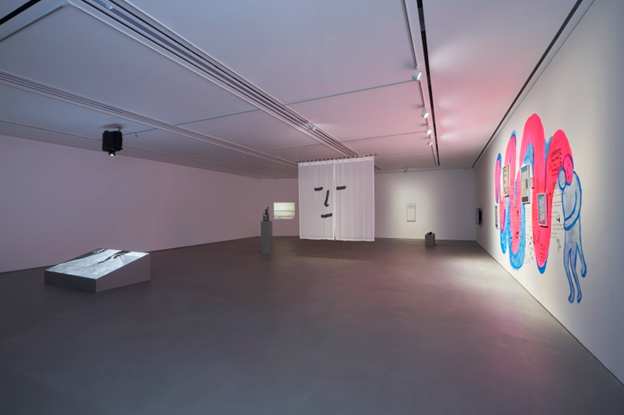
Moon Sujin tests premises or assumptions we think we already know. She does so by applying artificial force to materials such as soil or plaster, or by performing, through the body, biases or perceptions that go routinely overlooked. As materials, the artist uses either fragile and changeable materials or her own body with its limitations. Thus, her approach, though doing the best she can, is porous and frail rather than firm and grandiose.
For the artist, the framework for perceiving the world is not abstract or rational thinking but rather our bodies, as argued by Elizabeth Grosz in “Volatile Bodies: Toward a Corporeal Feminism”. On this earth, concrete individuals face the world as bodies containing their social, cultural, and sexual specificities. Moreover, the world they face is not firmly established, but an unstable and changing world.
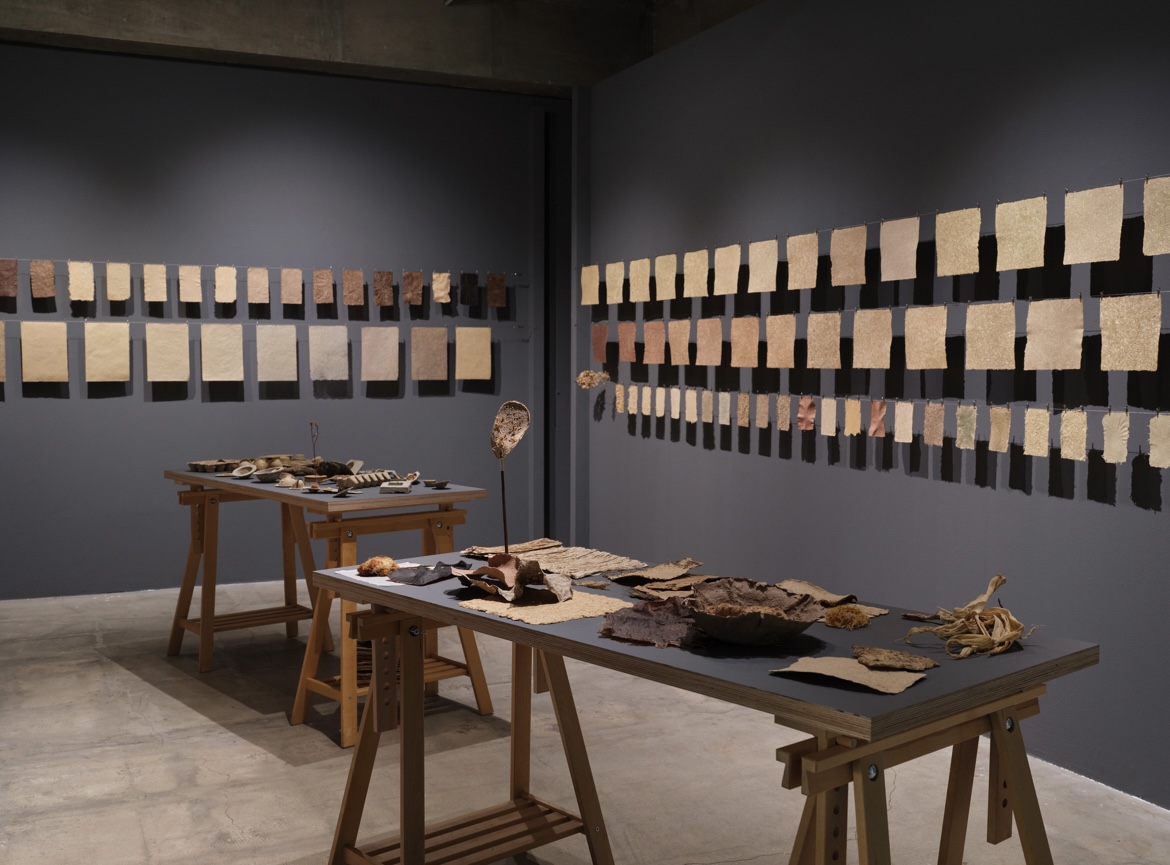
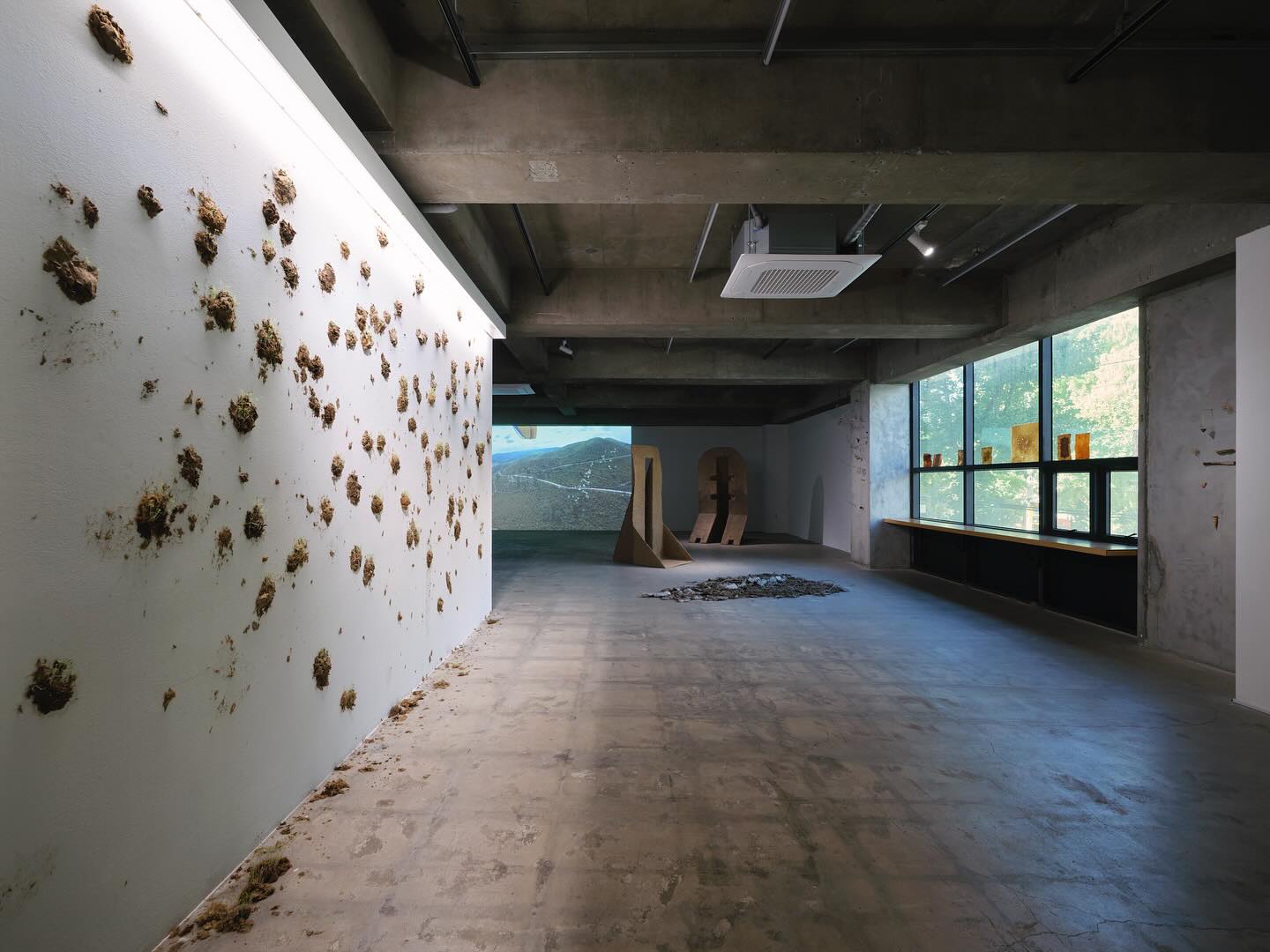
In Material Play (2013), the artist sought to capture changes in matter through an experiment series in which artificial heat was applied to soil and glass. While a scientific experiment involves testing whether a hypothesis is correct under controlled conditions and environment, the artist, instead, puts one’s assumptions aside and imagines yet another material to be created in the experiment. In the first experiment of heating glass, the material melted, became a liquid, and then hardened.
In the second experiment of heating moistened soil, the soil gradually settled down and solidified as it dried. In the third experiment, where glass and soil were heated together, the two materials did not fuse and only changed according to their boiling points. The state of the materials after the experiment is not outstanding, both figuratively and aesthetically. They look like a miniature version of a drought-stricken land, a lava-covered volcanic zone, or a damaged relic found after being long-buried in the ground.
In fact, soil and glass are the before and after each other’s “incidents.” When soil is treated at high temperatures, it becomes glass, and glass gradually wears away and returns to the soil. Although soil and glass are fundamentally the same, in the artist’s experiments they do not integrate, remaining separate. Although the result differs from the initial plan of imagining a third, different material, the artist’s approach of tracing the process of change and becoming something is confirmed.
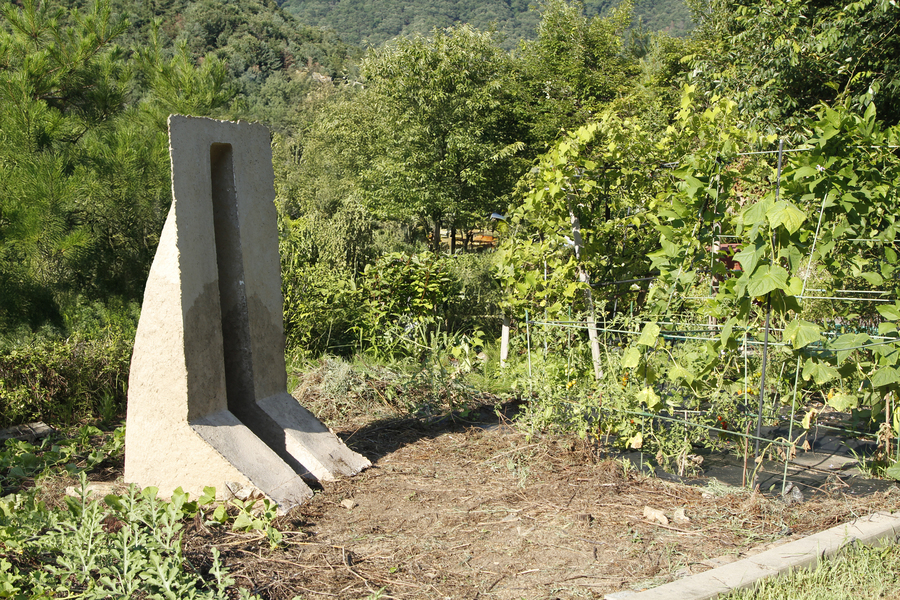
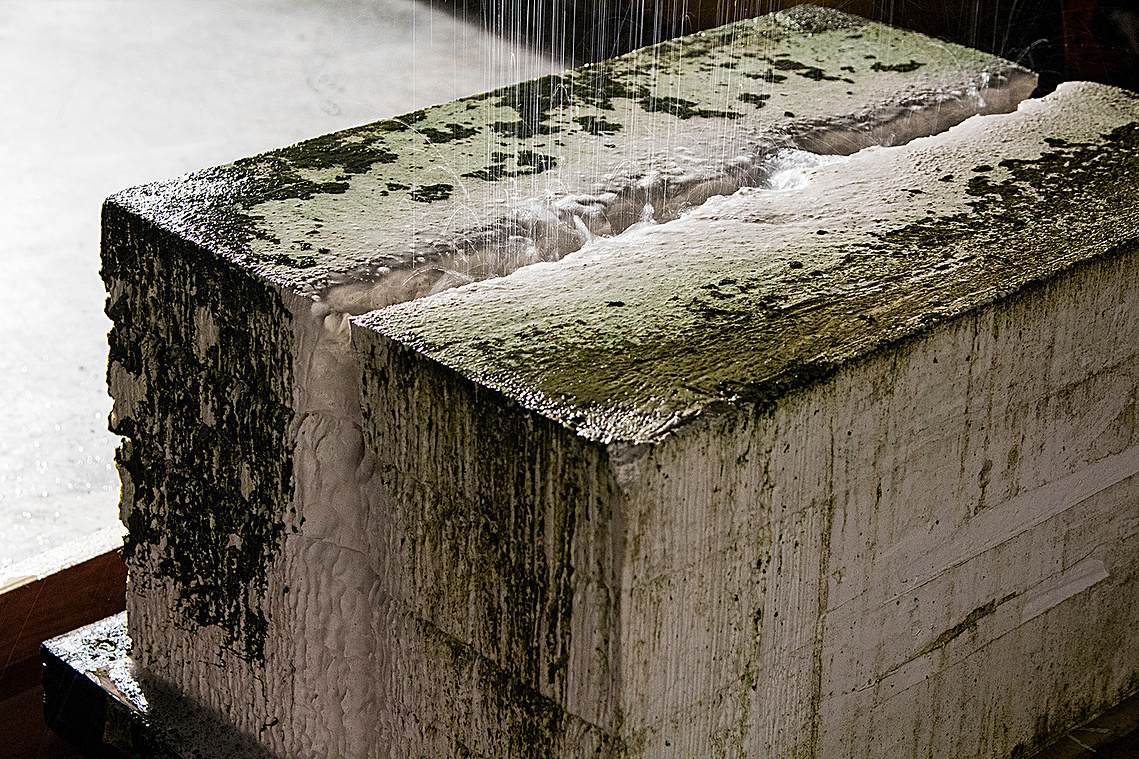
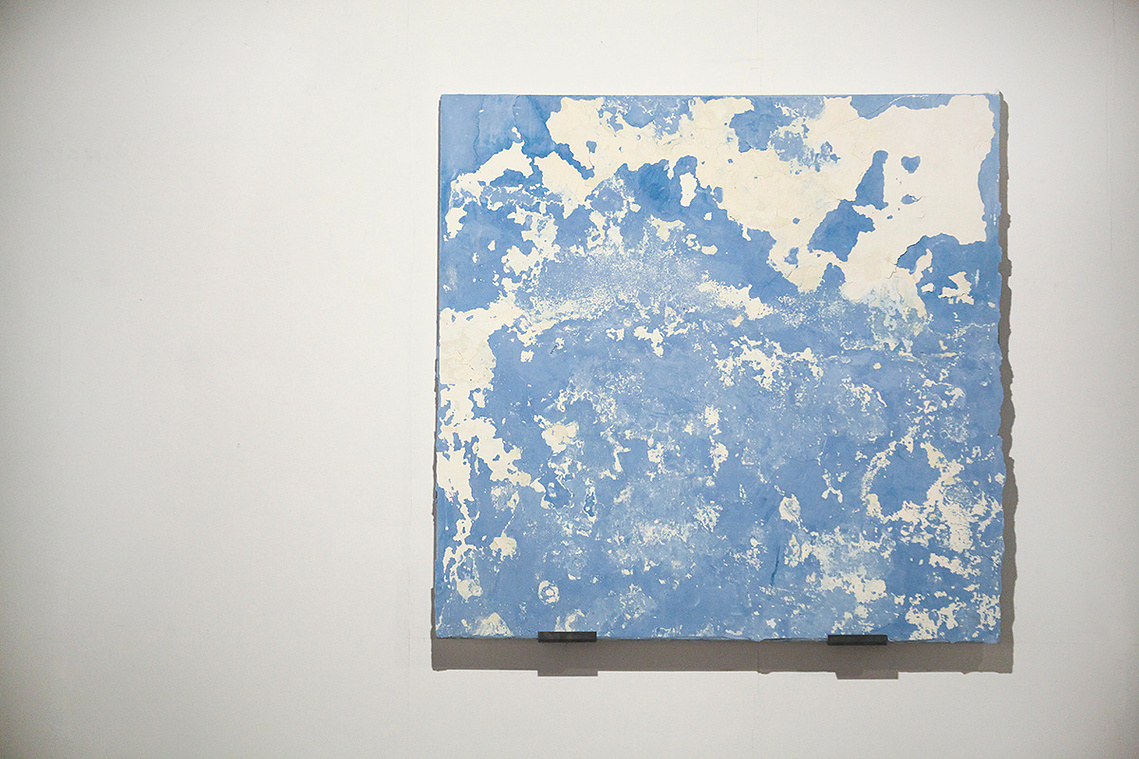
In the ‘Waterway’ series (2015–2016), the experimental attitude of Material Play is also visible. Here, using plaster’s property of dissolving when it comes in contact with water, the artist pours water on a plaster block. Through this process, the artist does not want the water flow to mold the plaster into a specific shape. All results are left to chance. While in Material Play a minimum result was expected, here the result is open-ended. Nonetheless, as with all experiments, it is humans who control the conditions.
Humans perform experiments while being aware of the properties of matter. The outcome is reached under the experimenter’s planned happenstance. Looking at work notes from this period, it seems the artist herself felt the limitations of this process. “At some point, I came to think that this way of working was only about substituting the materials. In other words, such a methodology came to feel like a sort of fixed grammar.”
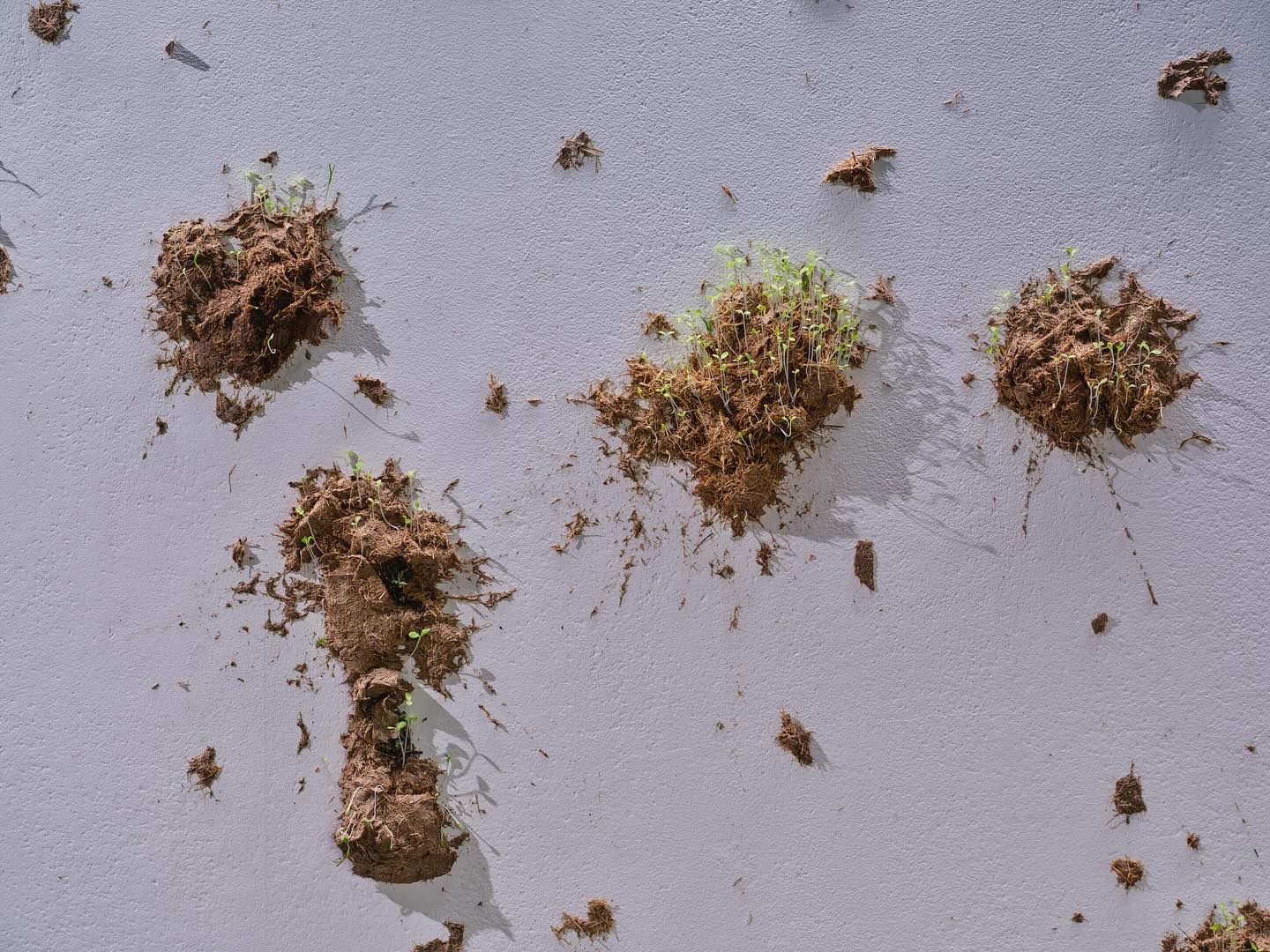
Amid these concerns, the World Maps (2019) and Into the Grid: Hiding in Public (2019) series seem to have been produced in a transition period. World Maps is a work revealing the distortions occurring when the Earth, the shape of which comes close to a sphere, is presented as a two-dimensional map. To do so, the artist added irregularities to the land areas of the globe, painted it blue, and then rolled it on the wall. Different from when a three-dimensional Earth model is spread out in two dimensions, with a specific continent or ocean at the center, in this work the Earth is repeatedly stamped on the wall. Thus, though the shape of continents is familiar, the center of the map is lost in repetition.
Meanwhile, World Maps: Orange Peel Problem (2019), produced later, is a work in which a map is drawn on an orange peel, literally applying the concept of the “orange peel problem,” which points out the limitations of a two-dimensional map. In Material Play and the ‘Waterway’ series, the artist experimented with already-established scientific facts, but in the ‘World Maps’ series, she questions our perception. Although we are vaguely aware of map distortion, without a critical view of the issue, we tend to forget about it.
In Into the Grid (2019), the artist separates from the abstracted map and introduces her own body into the physical space. As a stranger to a city in the United States, Moon Sujin displays the art of concealment by placing rectangular mirrors similar in size to her body throughout the city, causing distortion in the field, and hiding behind it. While in past works Moon experimented with the objective properties of matter and questioned human biases by expressing them visually, in this phase she begins to use her own body as a variable, seeking to go beyond the experiment’s limits.
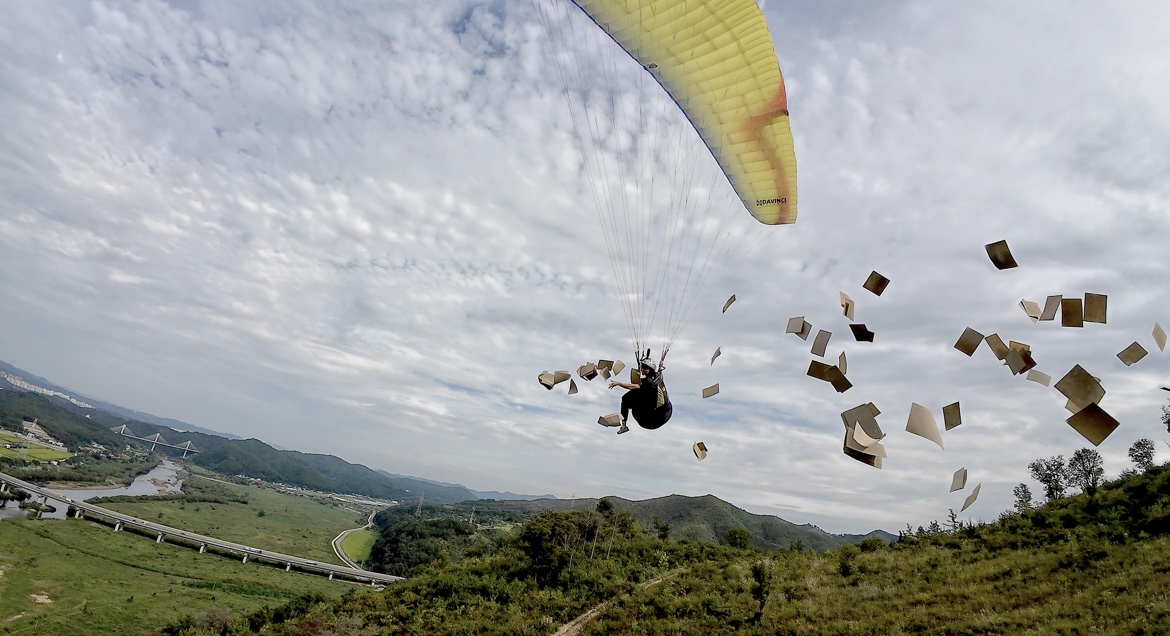
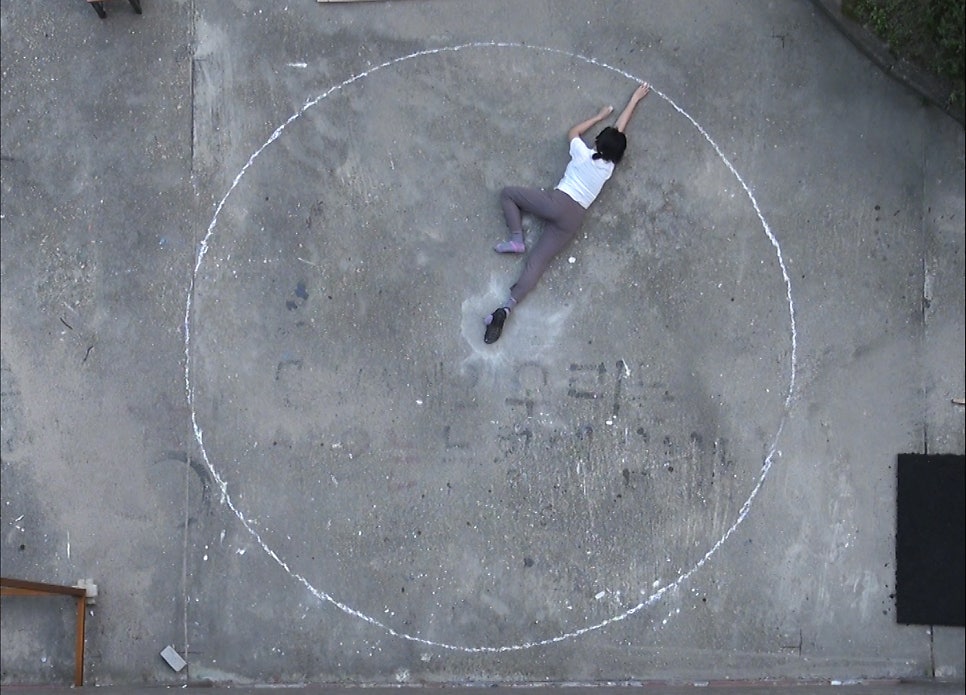
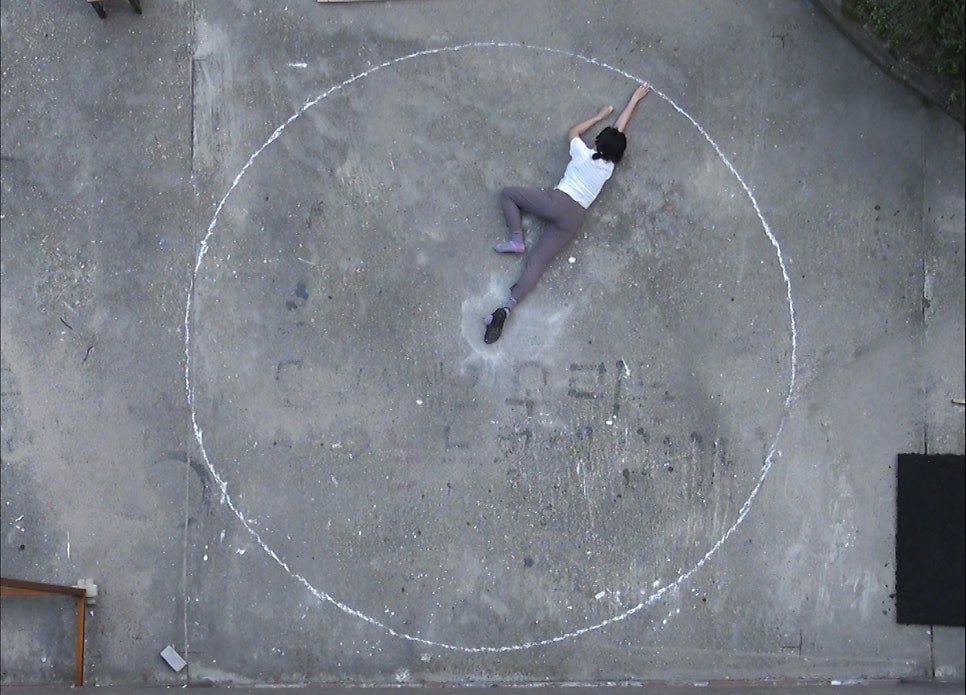
Human beings can imagine reaching infinity through intellect and reason, but the body has temporal and spatial limitations. In The Biggest Circle That I Draw (2016), the artist draws a circle as far as her body can stretch, and in Climbing Route: ‘Two Become One,’ Gwanak Mt. (2016), she places paper on the surface of a rock and inscribes a rubbing on the part accessible to her hand, leaving a record of her body and the object facing each other. Realizing her own finiteness, Moon Sujin thus pursues new experiments within her reach and vital possibilities. Here, the experiment subject is no longer matter as it exists in the world, but one as a body in the world.
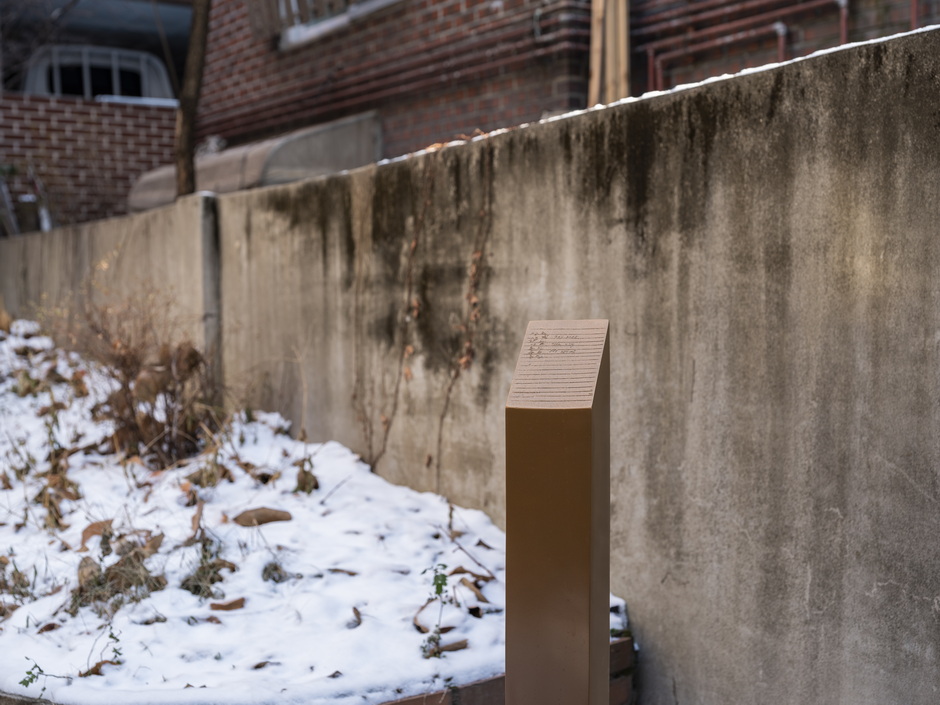
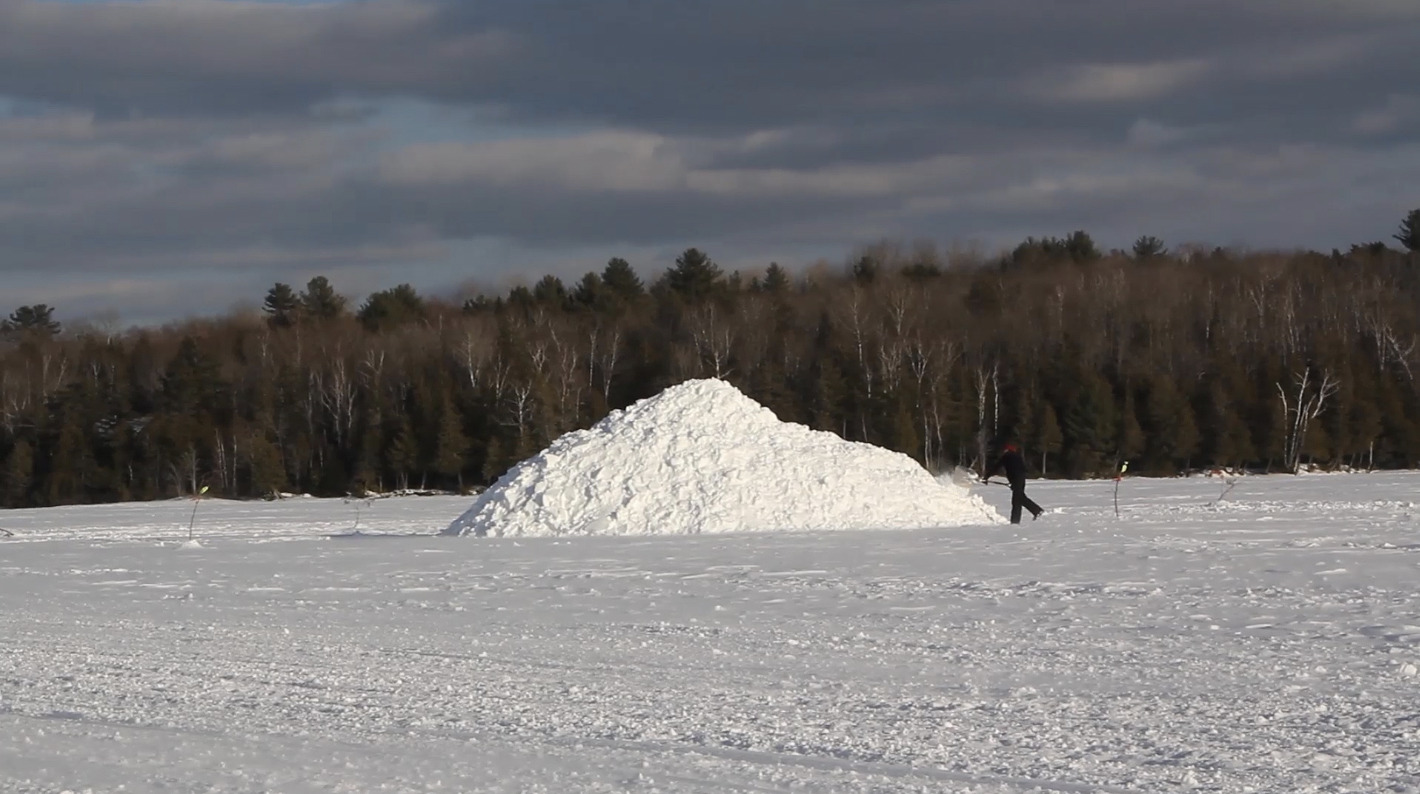
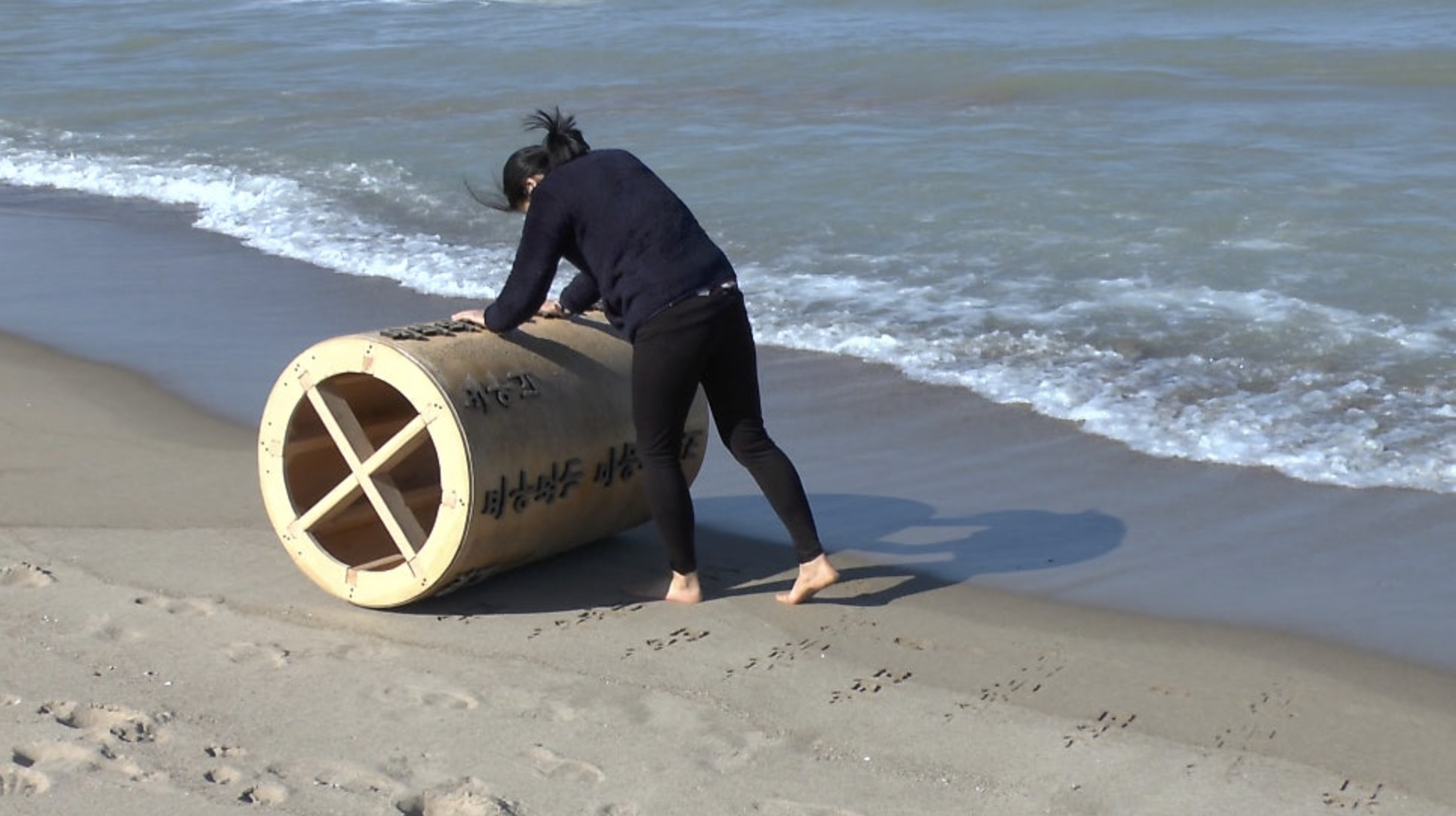
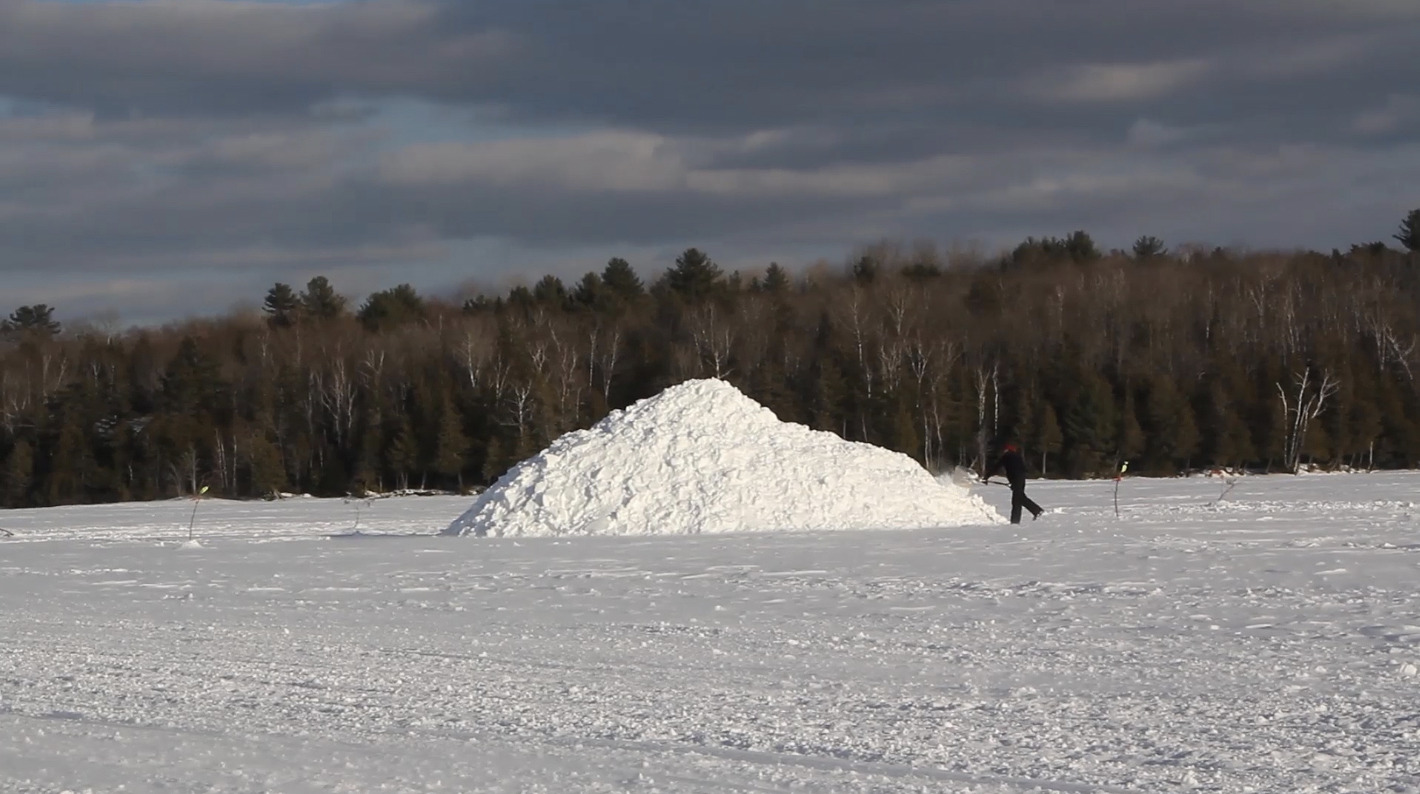
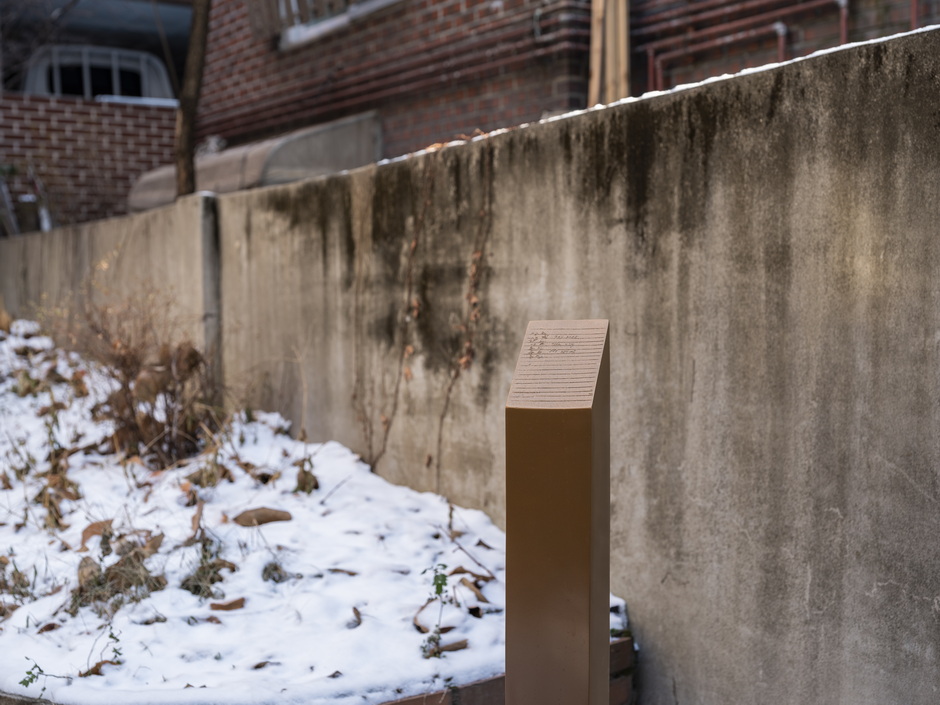
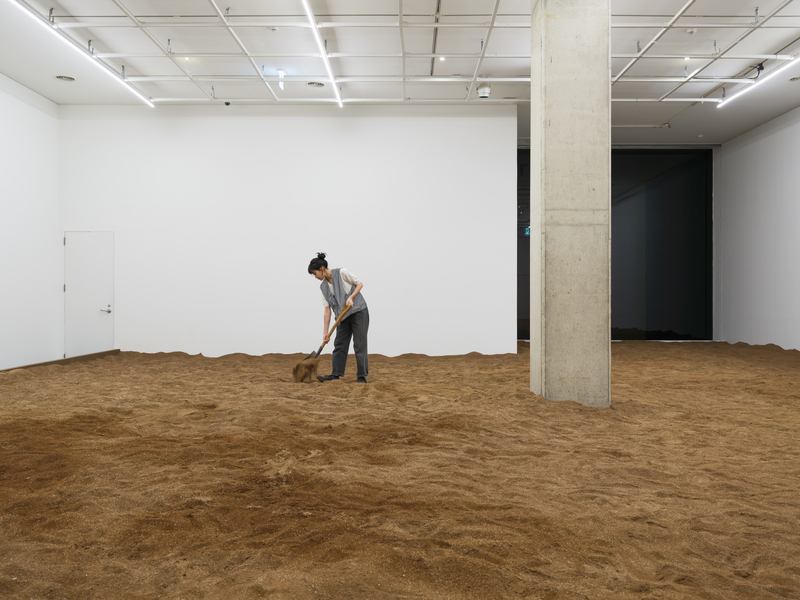
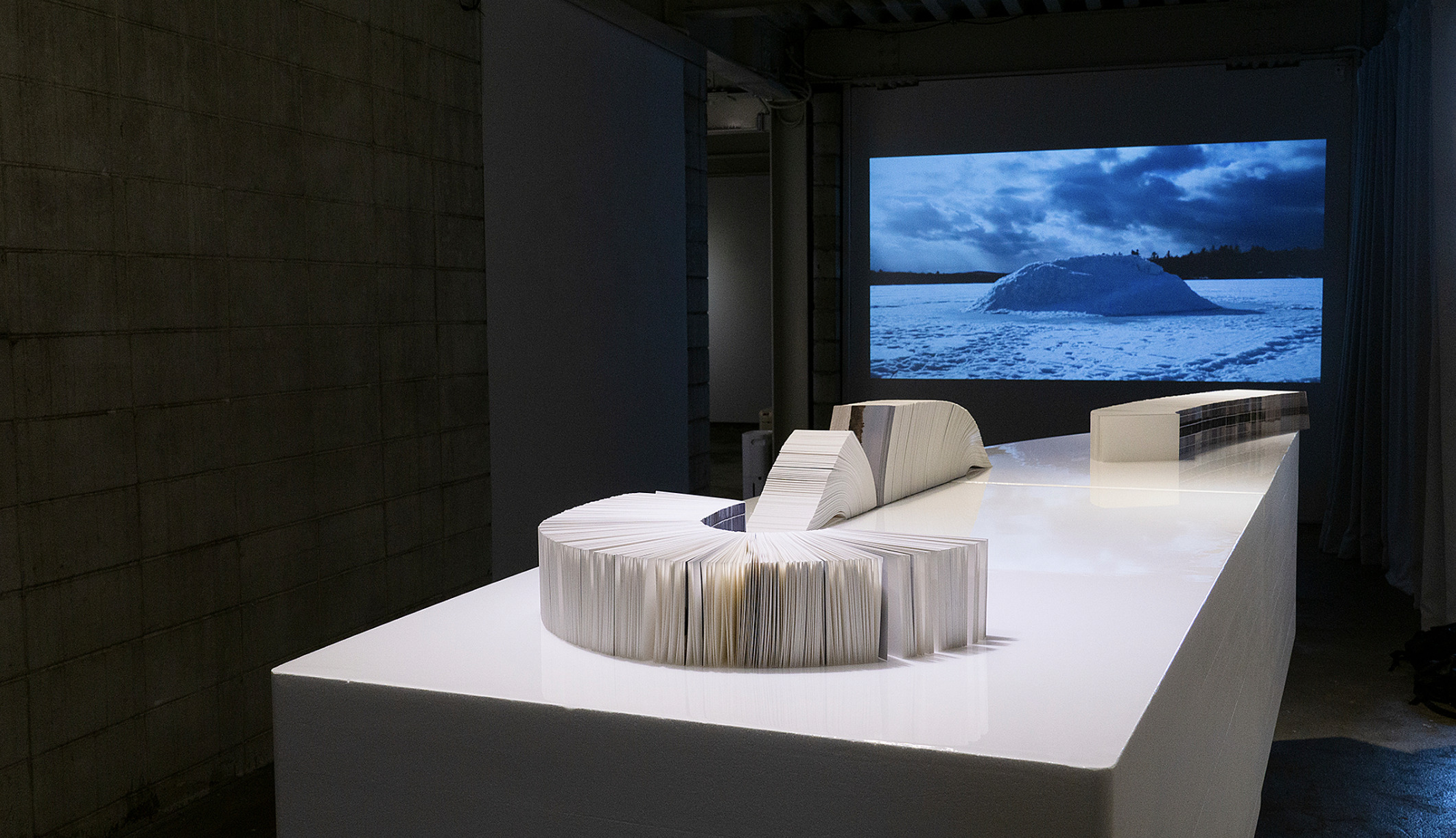
Breaking Words:Through Body (2018) and Living Island (2020) are performances combined with labor. The former is a performance work in which a round wooden barrel inscribed with the phrase “Erase / even an effort of erasing / Forget / even an idea of forgetting / Empty / even a mind of emptying/ Abandon / even a desire of abandoning” is constantly rolled on a beach where the waves break. The latter is a performance work where snow is endlessly piled up on a frozen lake for a month and a half until it melts in spring.
The letters engraved in the sand are washed away by the waves, and the accumulated snow disappears under the gradually warming sunlight and melting lake. Although both works require repeated physical labor throughout a certain period of time, they do not leave any surplus value. The only fundamental issue here is the artist’s commitment with herself.
As in the aforementioned ‘Waterway’ series, in both works, the experiments are implemented with predetermined results ahead. Therefore, here too the process gains more importance. The artist’s performance is calmly captured in the video at all times, both up close and from afar. Rather than dramatically capturing psychological anxiety or physical hardship, the camera watches the performance from a distance, projecting the view of an observer and bystander. This also appears as a somewhat dry view of the artist’s work.
Moon Sujin is already aware that her body has limitations. The round wooden barrel designed to transcribe endless poems only does so as much as the artist can roll it, and the snow on the lake melts and hardens depending on the weather, never accumulating beyond a certain height. The artist does not aim to transcend her body. Just as in the various experiments she conducted in the past, she does not dramatically attempt to go beyond the material properties of objects.
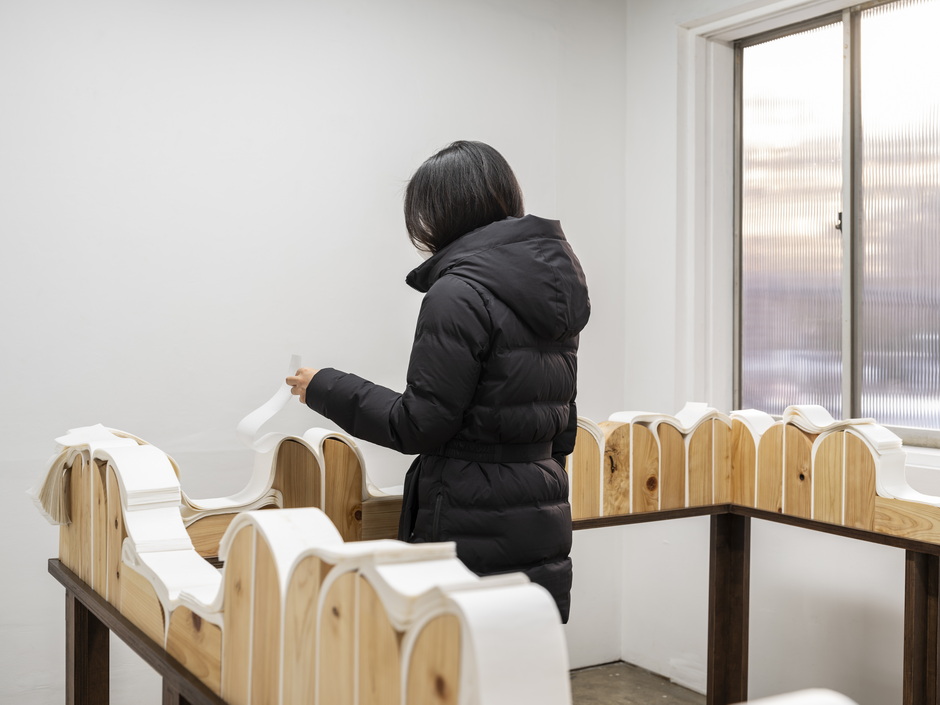
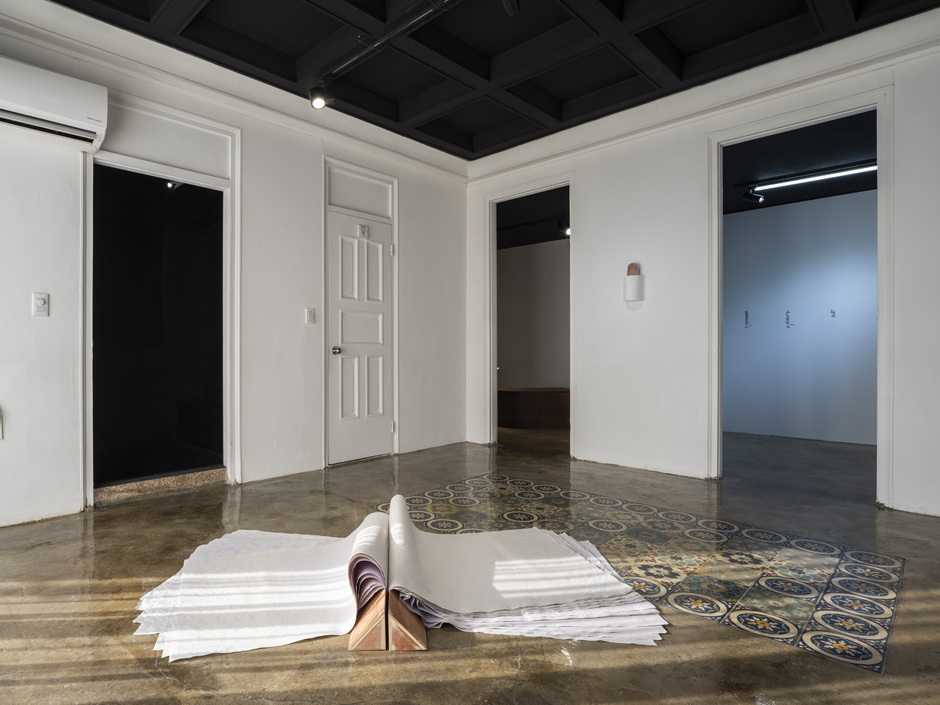
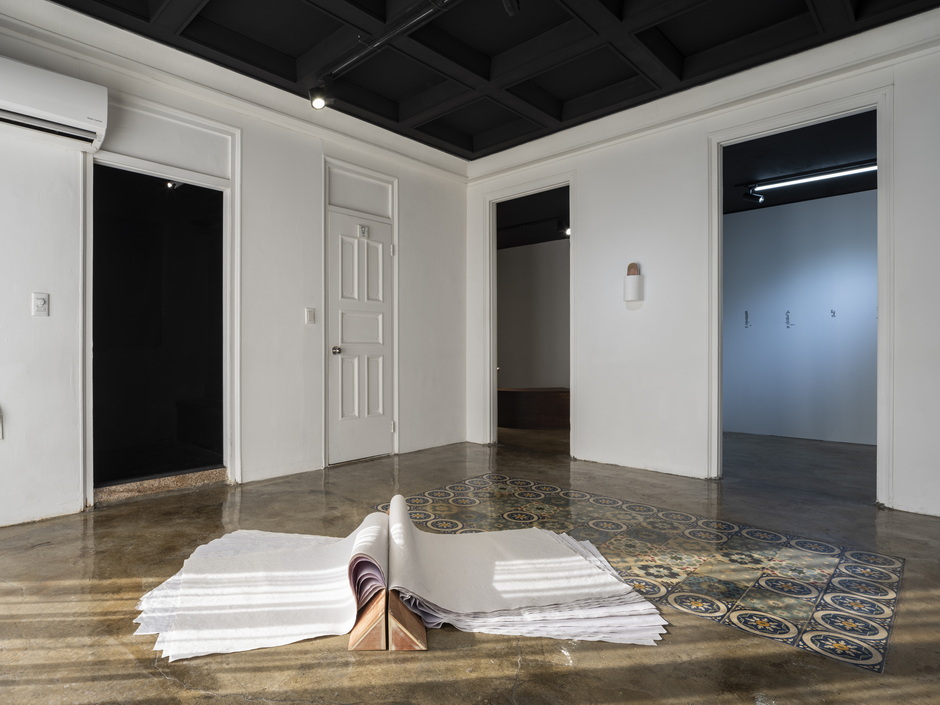
Here, paradoxically, the limits of the performance are revealed. That is, the limits of video recording. The audience does not experience the entirety of time. Records only serve as proof that the performance was there. The floating iced surface of the lake as it quietly melts away and the anxiety the artist feels inside her are buried by the wind blowing on the shore. Rather than the video, the writer’s loneliness and anxiety are contained in the thick margins of the three-meter-thick book holding the performance records.
A series of empty sheets of paper with nothing written or printed on them are set between performance photos, as if snow piled up on the lake’s shores. Rather than tediously documenting time, the artist only hints at the time she herself spent surrounded by pure white thickness. It is a unique way to share her monotonous experience with the audience.
The artist meticulously traces the processes developing from her own questions. Starting first as an observer, she gradually intervenes through her own body.The body testifies to the moment when she comes into contact with an object.Such moments pile up endlessly with the artist’s body, like the countless intersections endlessly connecting a textile’s yarn and thread. The “end” of the “process of becoming” Moon Sujin attempts in her works may in fact be more ordinary than expected. The spectacle of the result itself may not be that grand, despite what the audience might have expected. Nonetheless, Moon’s work is full of tension.
Such tension arises from simultaneous attempts to save the volatility of the performance as a sculpture and to performatively break down the permanency of the sculpture. The artist tries to record the events that took place in the process of the performance both physically and tactilely, that is, sculpturally, instead of just saving them as time. Similarly, rather than pursuing formative perfection, the artist deconstructs sculpture by focusing on the performance—that is, on the physical experience occurring in the sculpting process. What mediates these artistic attempts is, ultimately, the artist’s own “body” as it makes its way through this world.