

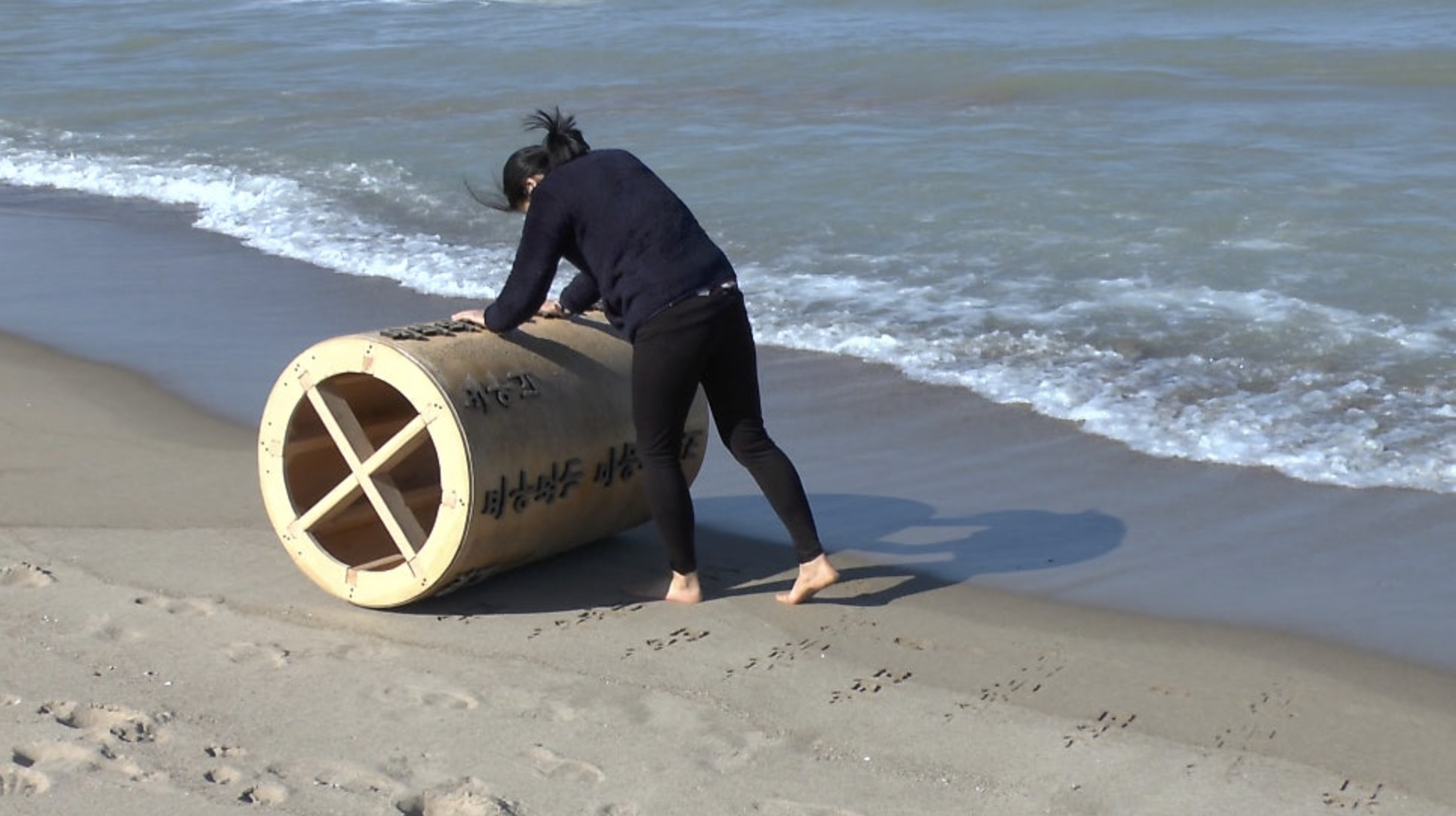
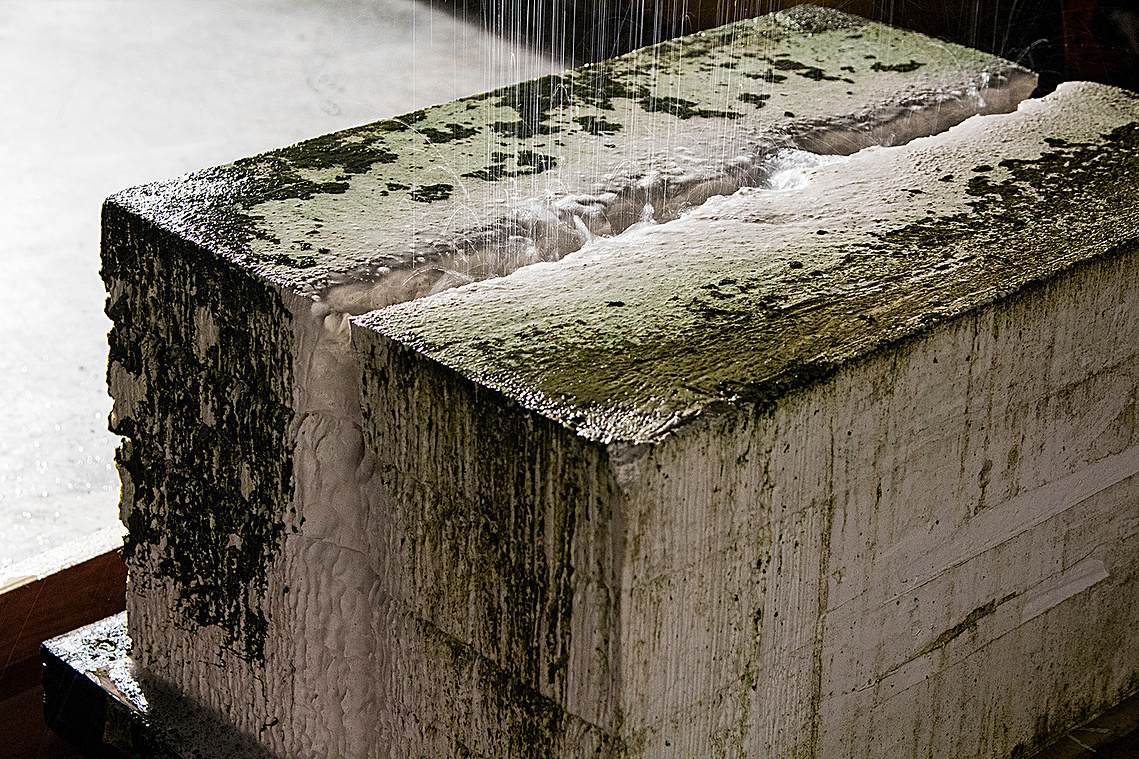
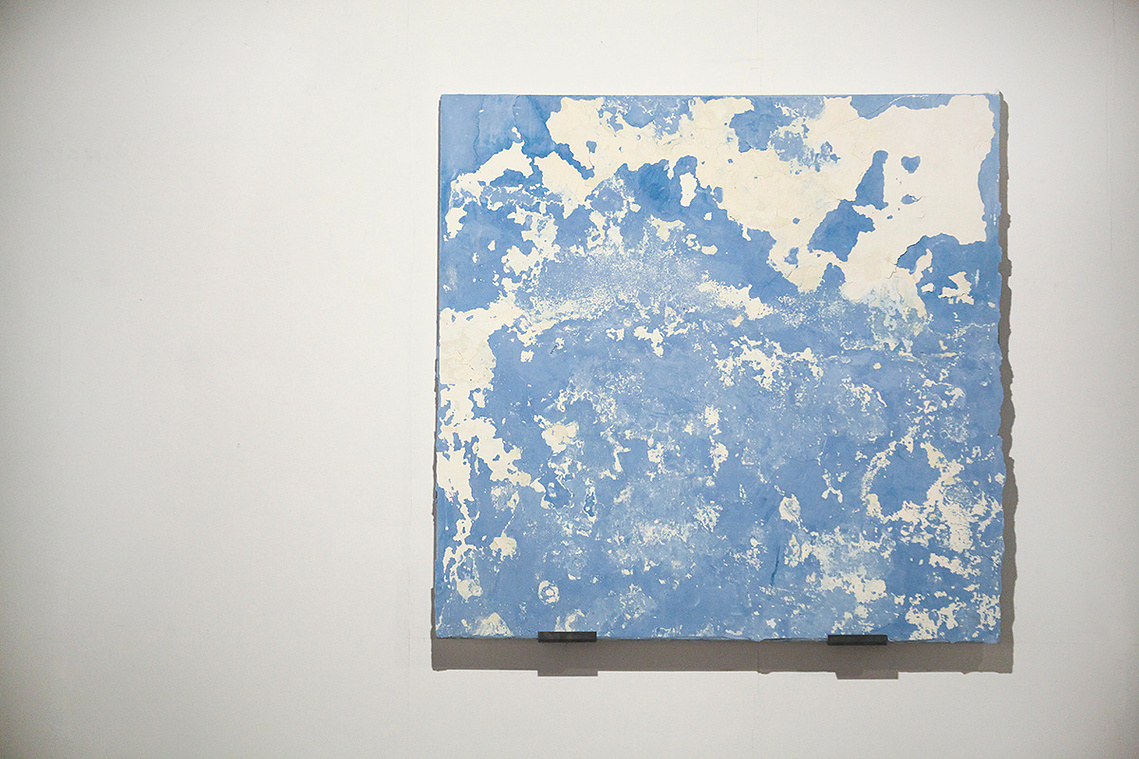
Sujin Moon (b. 1988) focuses on the sculptural process of grappling with the physical world through the body, paying particular attention to how bodily movement and the states of body and mind continuously shift. Through this inquiry, she has developed a practice that unfolds various reflections on life through sculpture, installation, and performance.


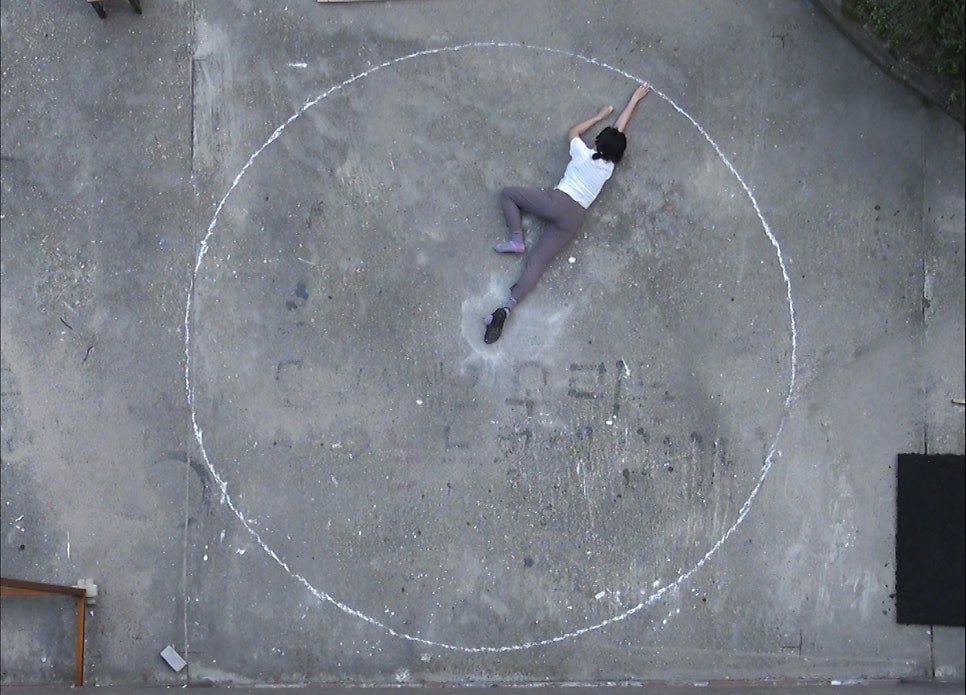
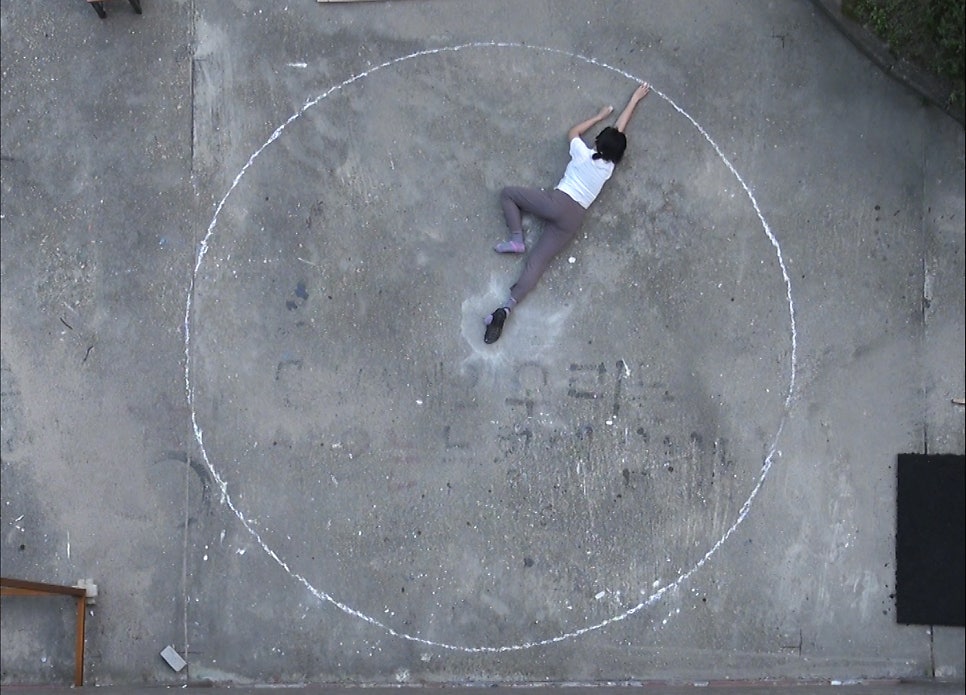
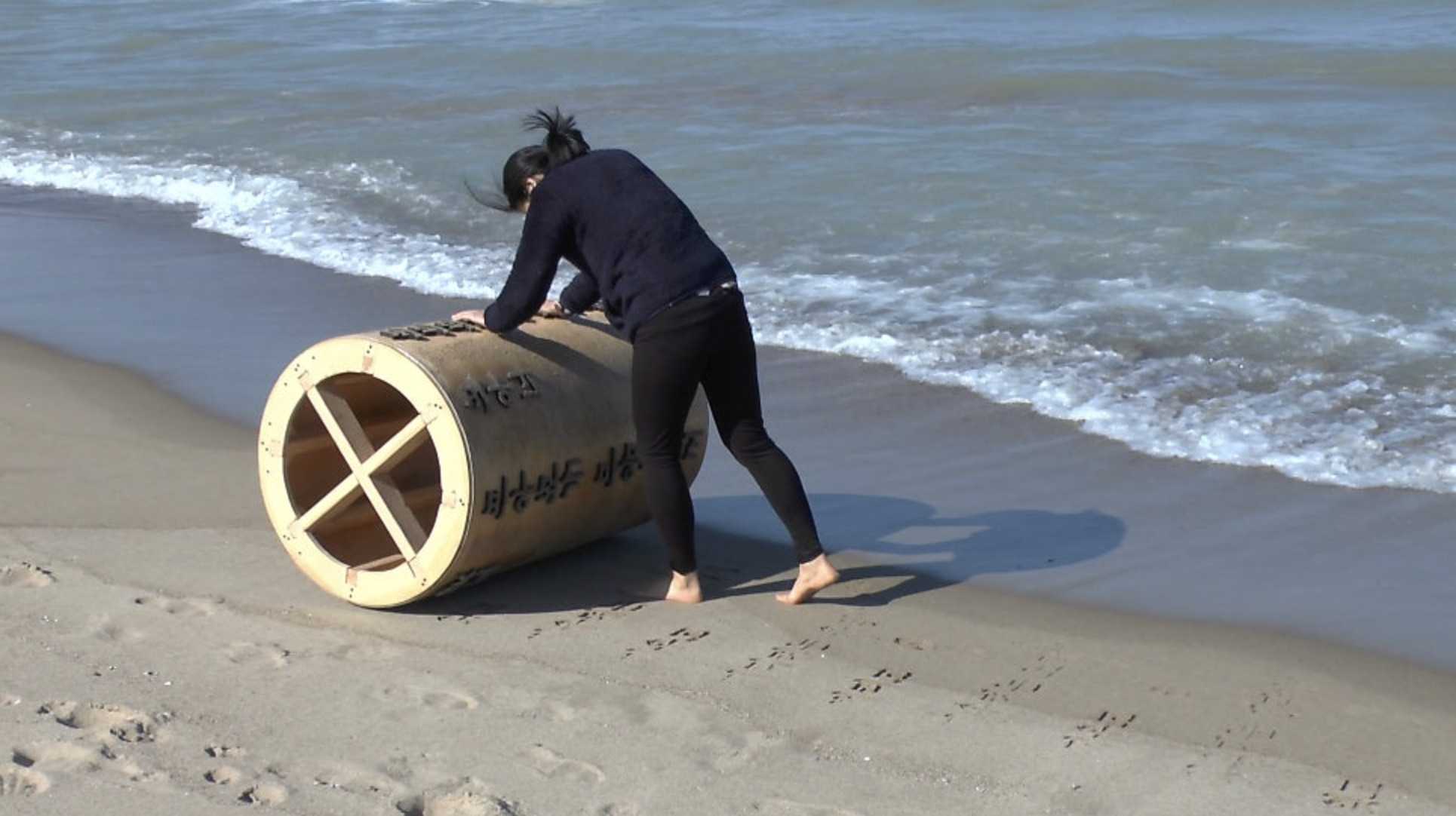
Sujin Moon, Breaking words: through body, 2018, Performance, 2 hours ©Sujin Moon

In her practice, Sujin Moon places greater importance on the experience of the process itself rather than on reaching a final result. For this reason, she regards her work as a kind of journey.
 
In her early works, Moon engaged in near-ascetic solo performances, capturing experiences derived from bodily endurance and discipline. Her practice—touching surfaces, lifting and carrying weight—has been closely tied to the sense of touch among the body’s various sensory faculties.
 
As a result, her work extends beyond mere physical labor; it reflects the shifts and emergences of sensation that occur when focusing on bodily activity, while also recording the fleeting moments of body and mind as experienced by the artist herself.


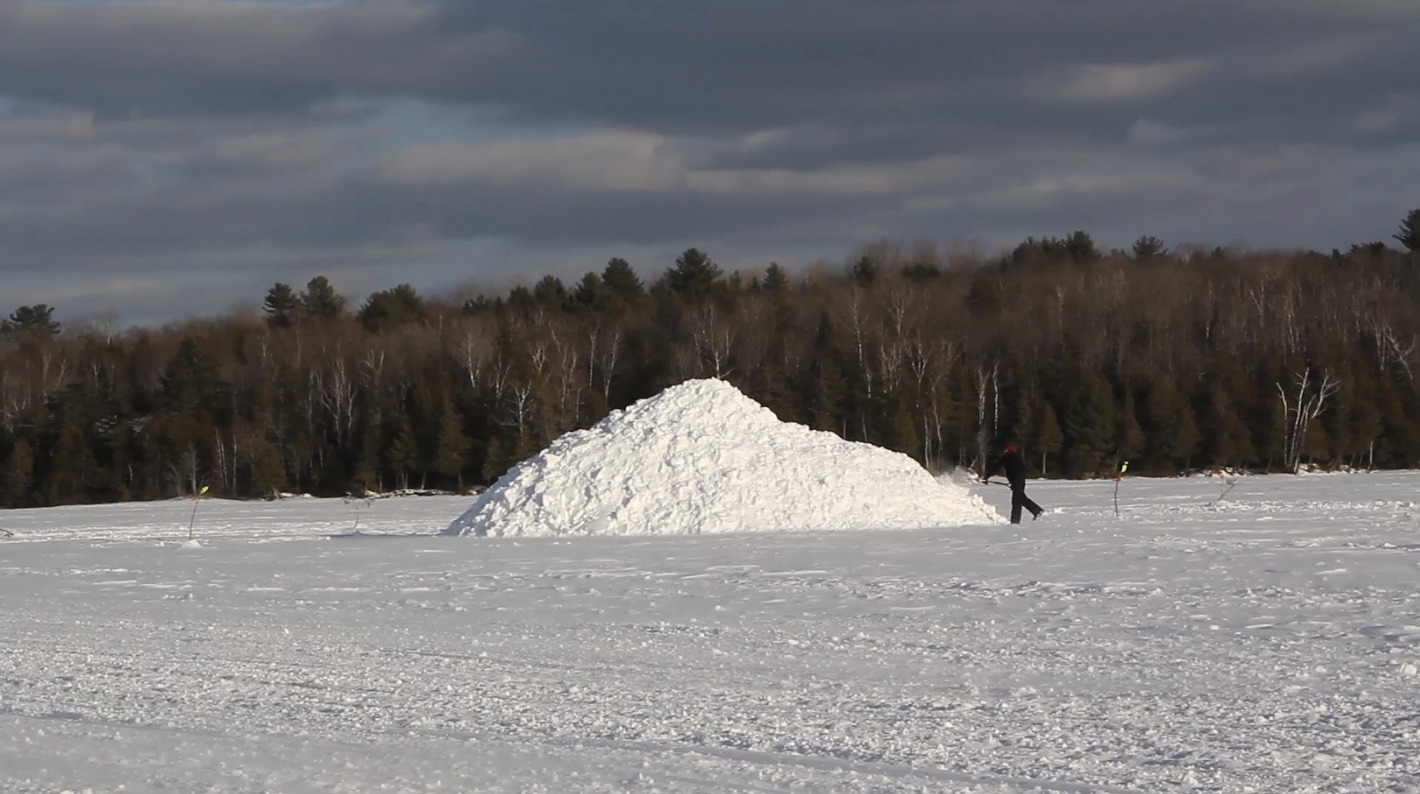
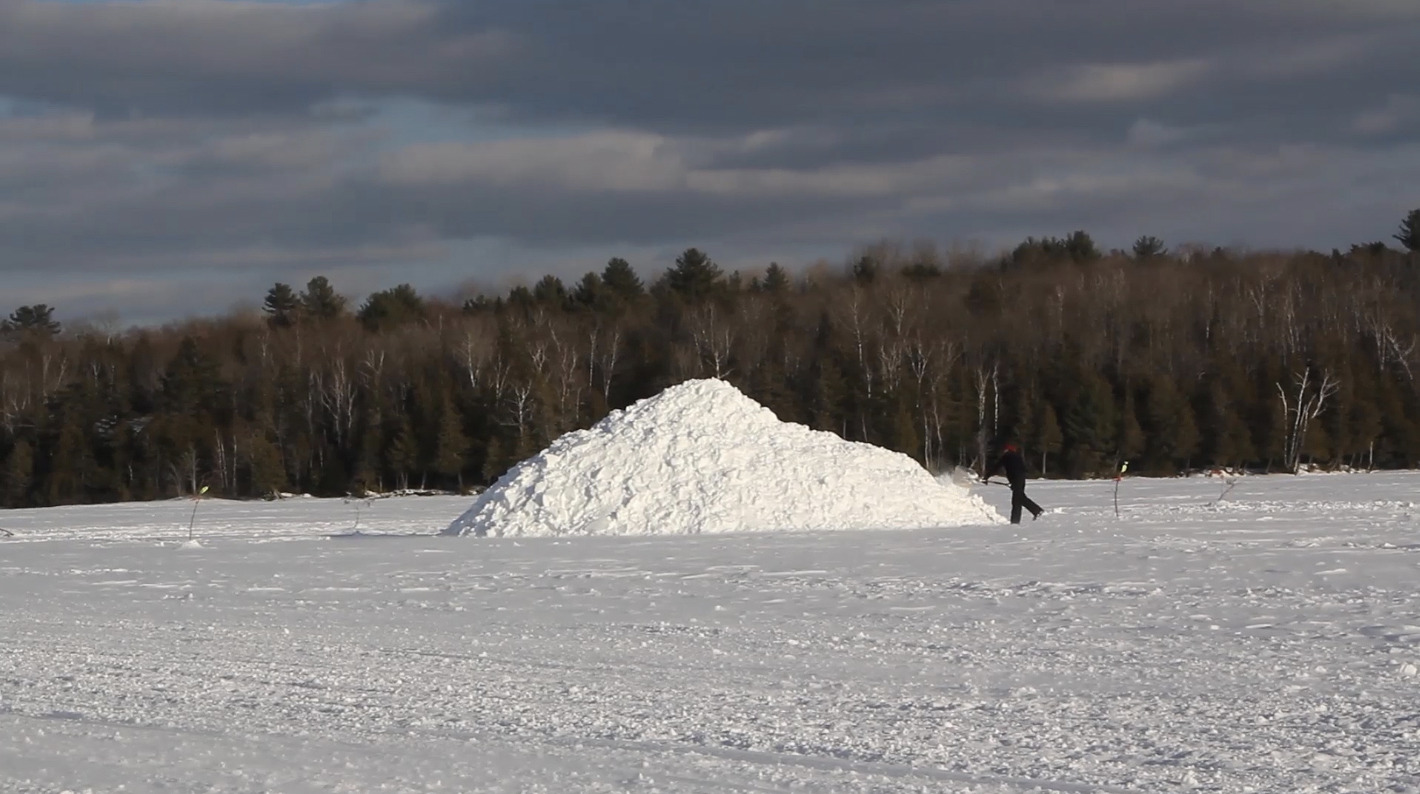
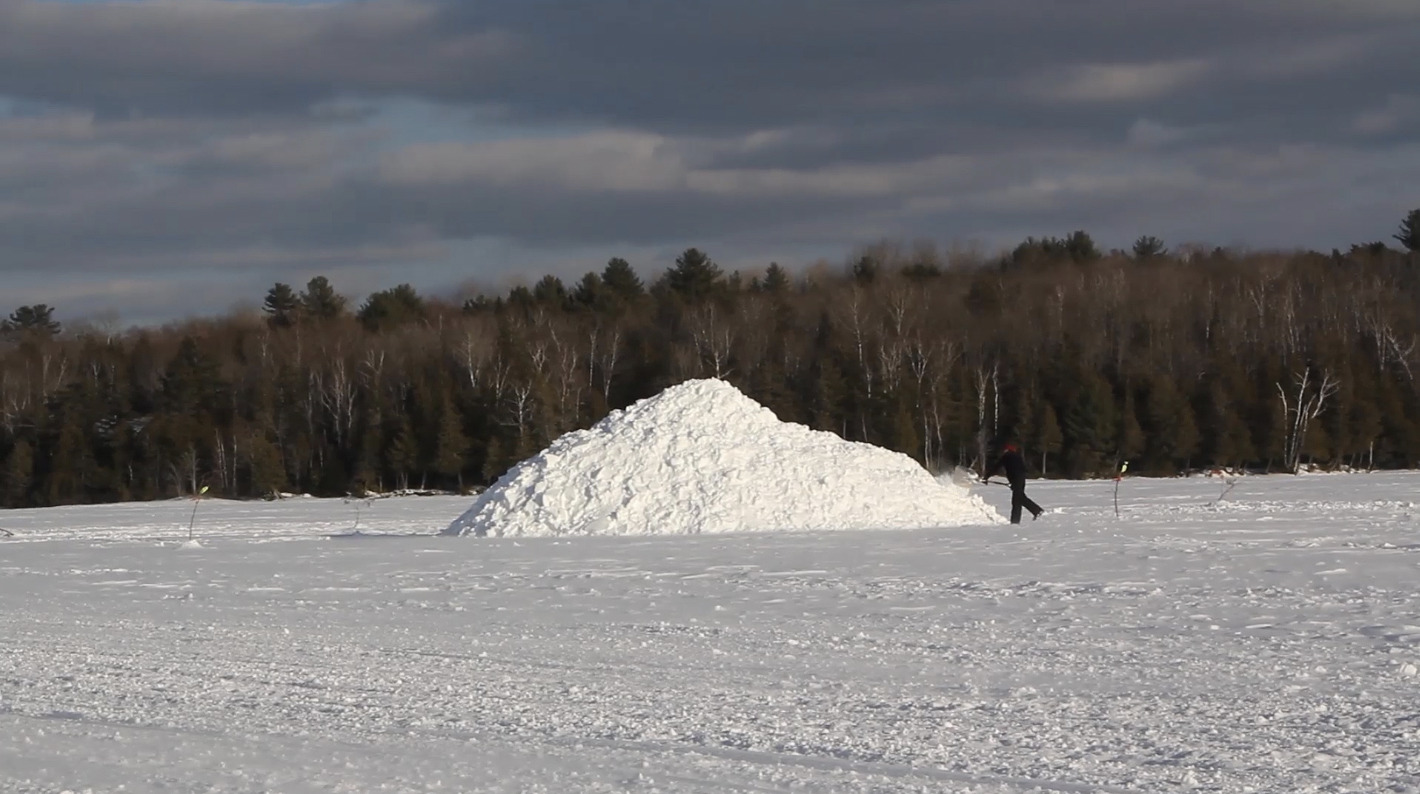
Sujin Moon, Living Island, 2020, A month-durational performance ©Sujin Moon

For example, Living Island (2020), a performance carried out over the course of about a month on Lake Hebron, involved piling snow with a shovel and sled atop the frozen lake from February to March 2020, creating an island that would inevitably disappear with the arrival of spring.
 
Such work ultimately becomes an act of immersing oneself as part of nature, devoted to something destined to vanish without a trace. Yet embedded within the process are a range of reflections: the anxiety that the ground one stands on might collapse, a latent fear of death, a sense of awe toward nature, the fragility and finitude of human existence, and the comfort received from the encouragement of others.


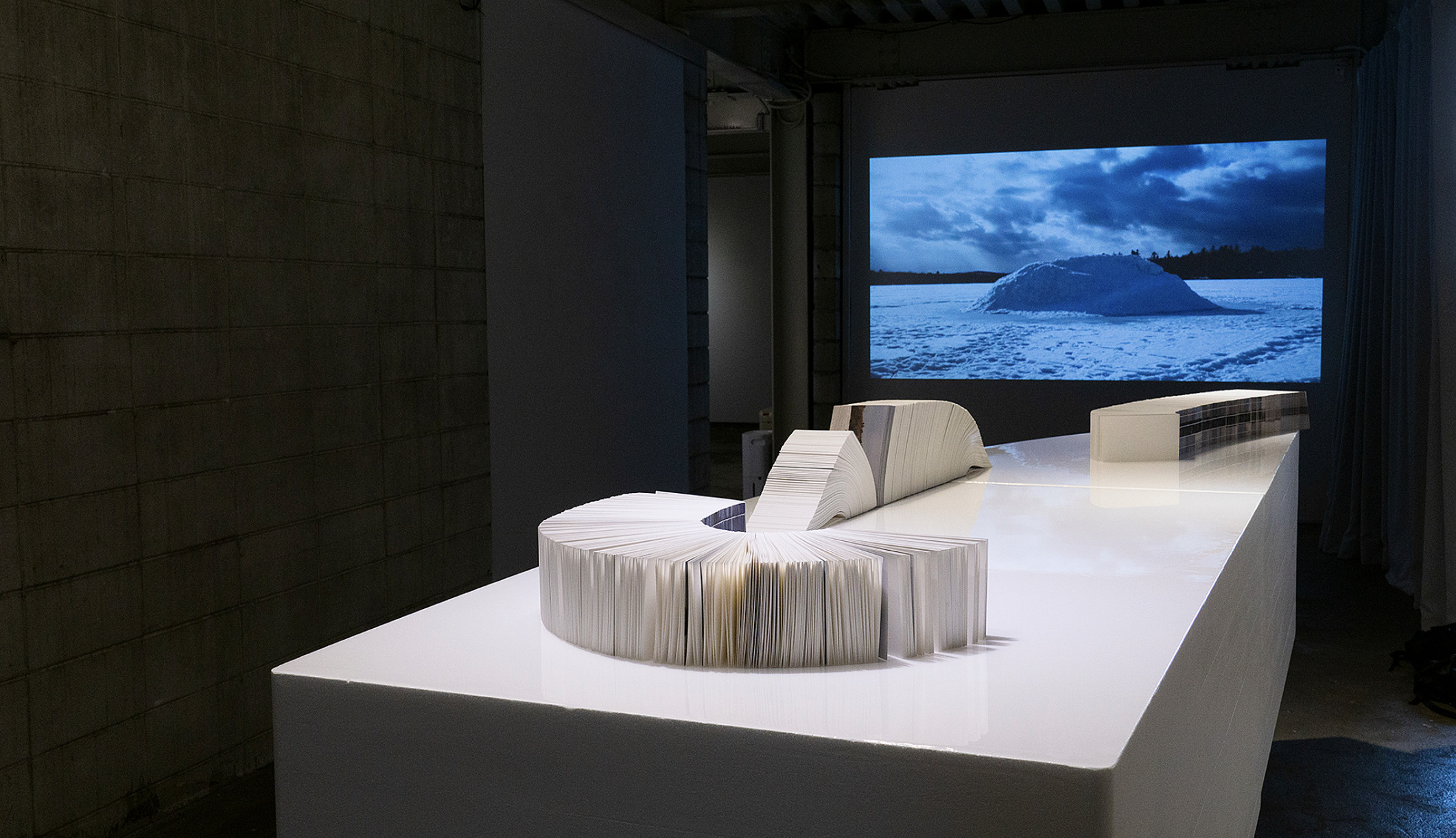
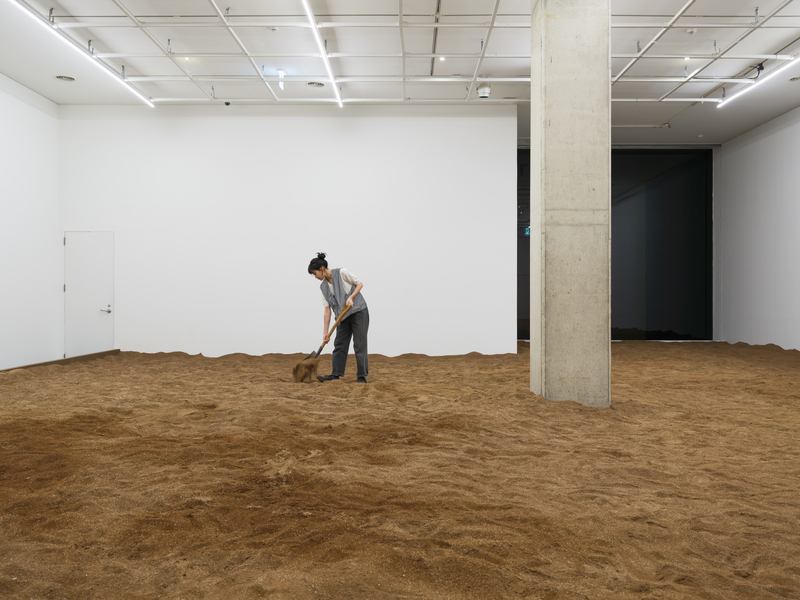
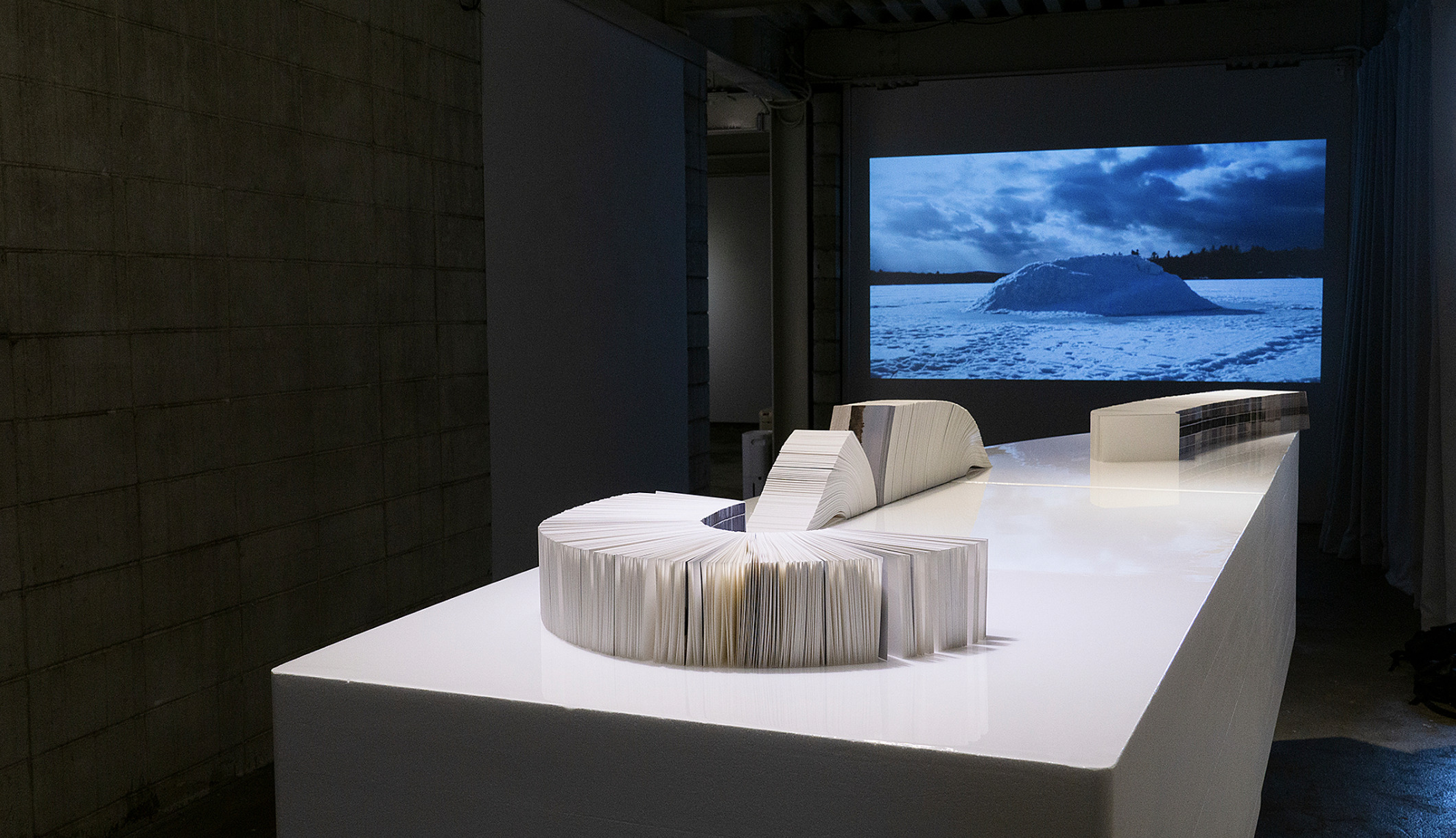
Installation view of 《Living Island》 (CICA Museum, 2020) ©Sujin Moon

Her 2020 solo exhibition 《Living Island》 at CICA Museum consisted of records that interpret the fragments and memories derived from this body of work. Moon understood that her memories from the lake would seek out forms of documentation that correspond to their own textures and grains. Accordingly, some moments were translated into dense masses with weight and thickness, others into light, and still others into movements activated by the touch of a hand.
 
These reflections from the lake, transformed into various sensory forms, became metaphors for life, conveying to viewers the fragility of human existence, as well as the profound comfort that encouragement from others can offer—just as the people of Monson did for the artist. Through this work, Moon hoped to extend a small gesture of solidarity and support.


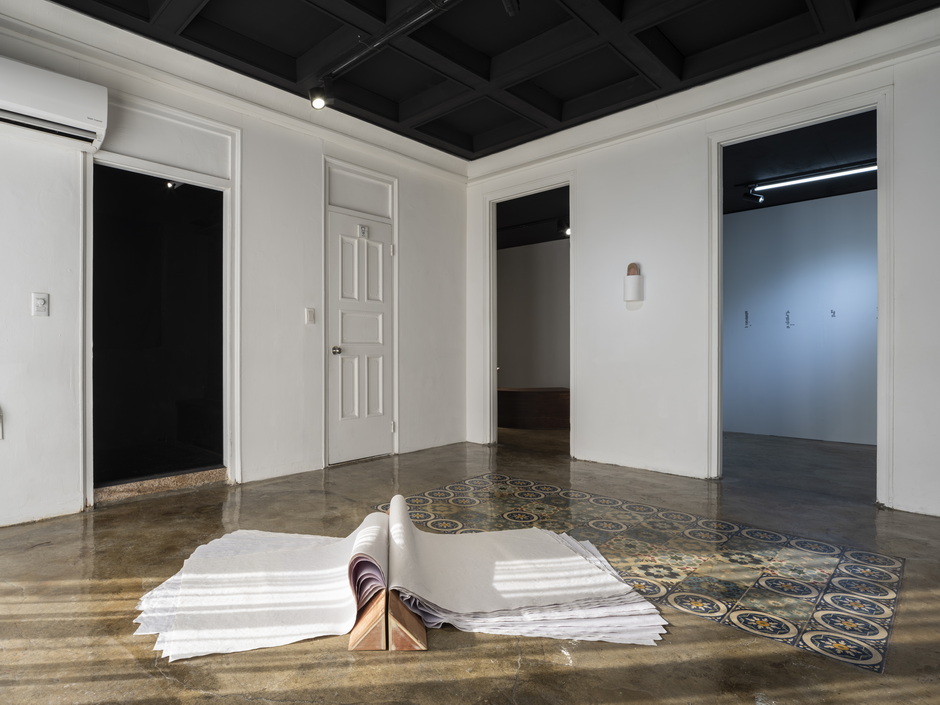
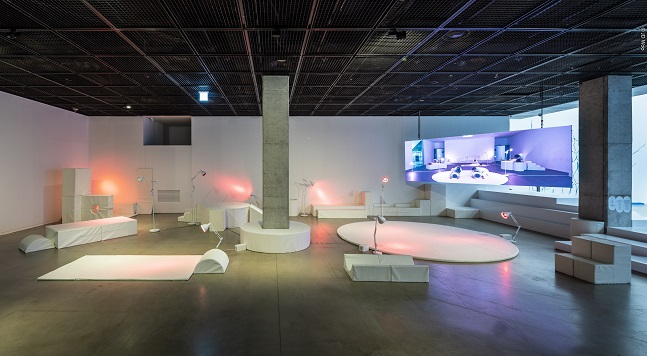
Installation view of 《Tactile Recall》 (Rainbowcube Gallery, 2022) ©Rainbowcube Gallery

Meanwhile, in her second solo exhibition 《Tactile Recall》 (2022) at Rainbowcube Gallery, Moon began with memories of her grandmother, who had passed away over twenty years earlier. Reflecting on her grandmother, who died during her adolescence, the artist came to realize how few memories remained, prompting her to gather and reconstruct them.
 
For Moon, memories formed through bodily contact were more vivid than those shaped by conversation. She therefore explored how such memories are inscribed in the body through a tactile and sculptural language. The works in the exhibition engage with themes such as memory shaped by bodily sensation, the relationship between caregiver and dependent formed through the acquisition of language, the mutability of memory, the self as constituted through memory, and the distinction between what can and cannot be touched.
 
The resulting works, developed through this process of reflection, are less contemplative than participatory. By actively encouraging the movement of viewers, they awaken a sensory awareness of surfaces meeting surfaces, and bodies coming into contact with one another.


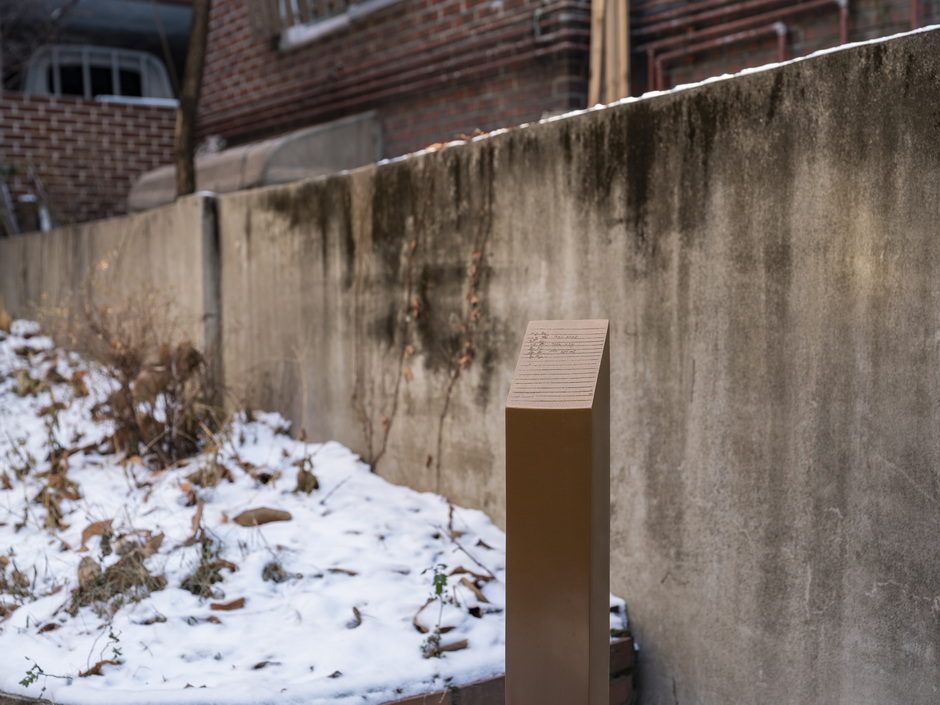
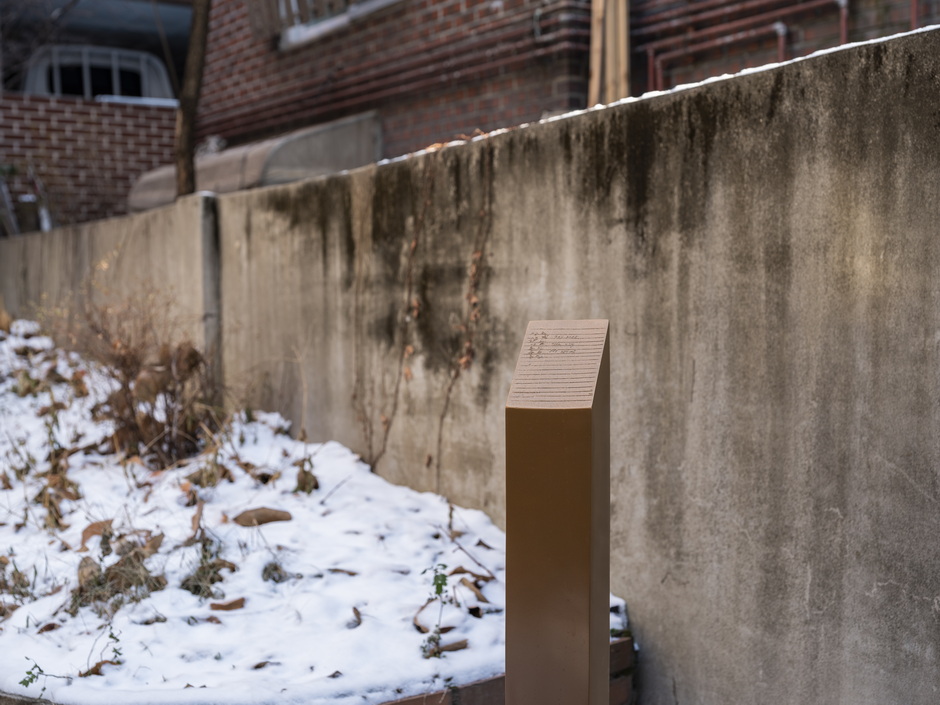
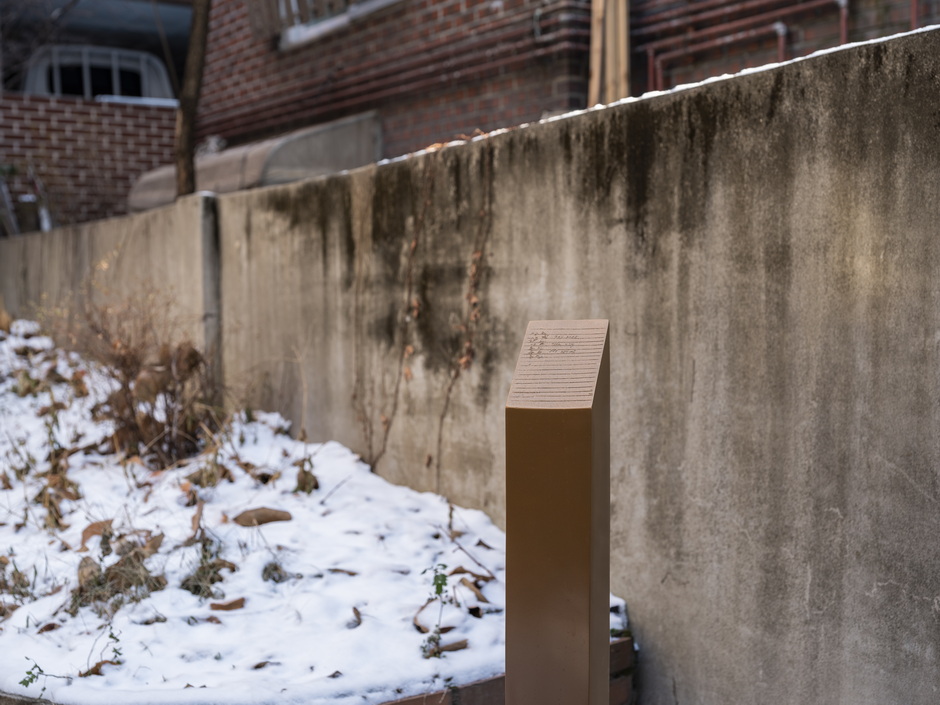
Sujin Moon, Phone Book Headstone, 2022, Bronze, 10x10x99cm, Installation view of 《Tactile Recall》 (Rainbowcube Gallery, 2022) ©Rainbowcube Gallery

First, Phone Book Headstone (2022), a work in which a page from a phone book bearing her grandmother’s traces was engraved onto copper, stood as a kind of gravestone for the grandmother who had passed away without leaving much behind. The phone book, as one of the few remaining records of her grandmother, not only conveys the breadth of people she had known, but also preserves her distinctive handwriting habits.
 
Alongside this, Phone Book, created by extracting characters from the phone book and casting them as metal type embedded into the wall, allowed viewers to trace the smooth, hardened surface of the material and the raised texture of the letters with their fingertips, encouraging them to experience the text through touch rather than reading.


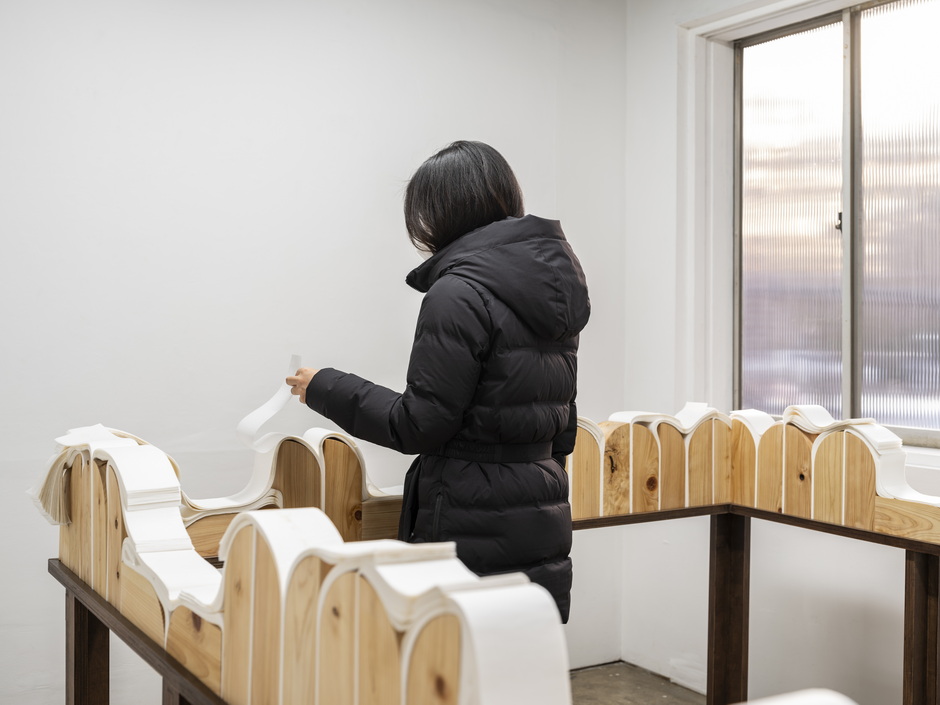
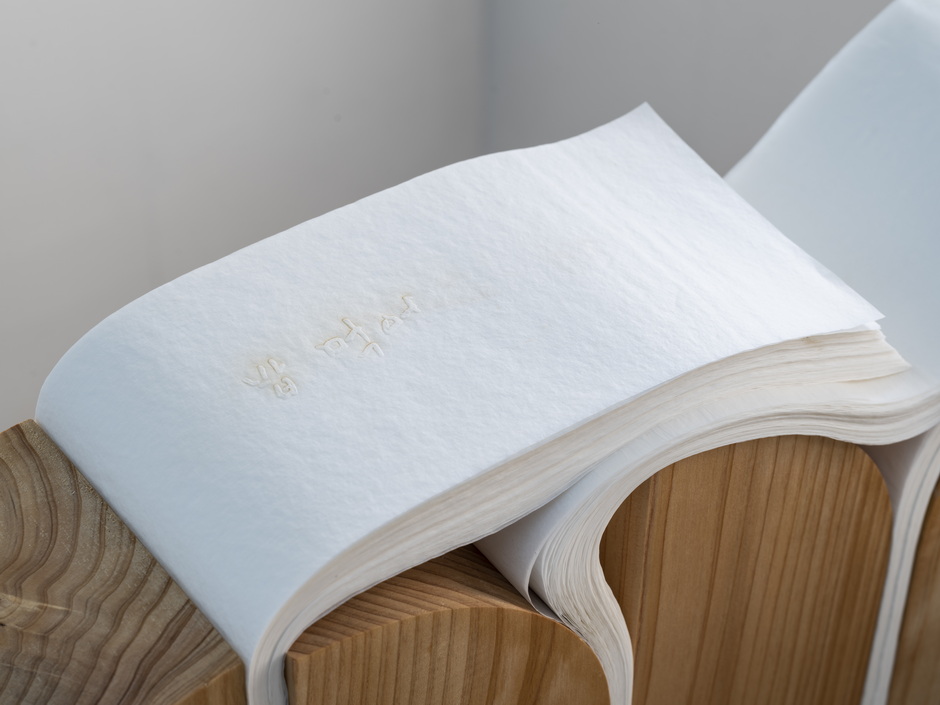
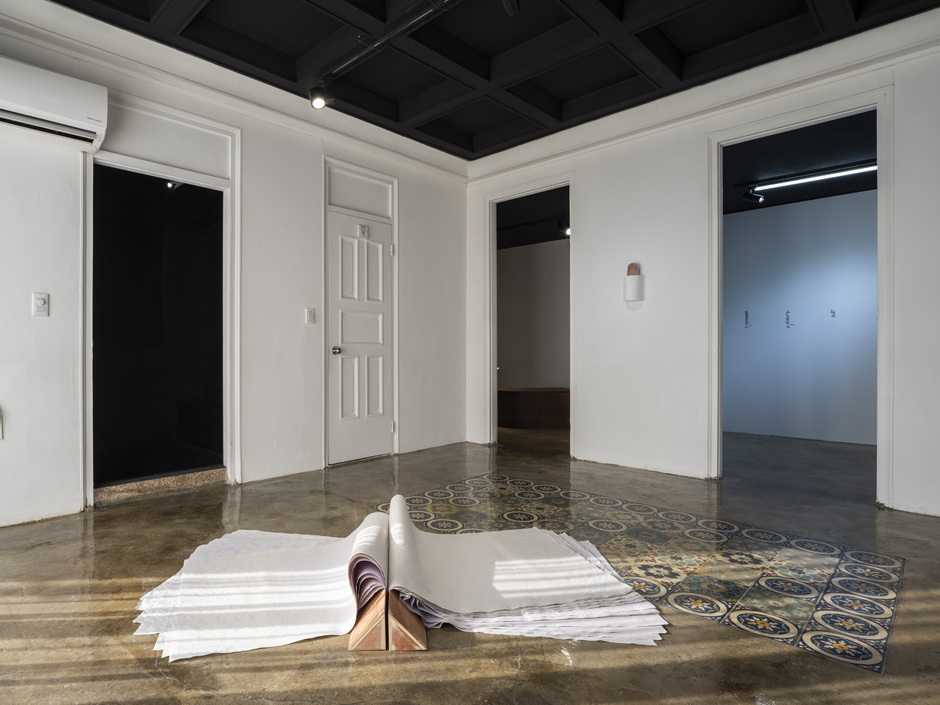
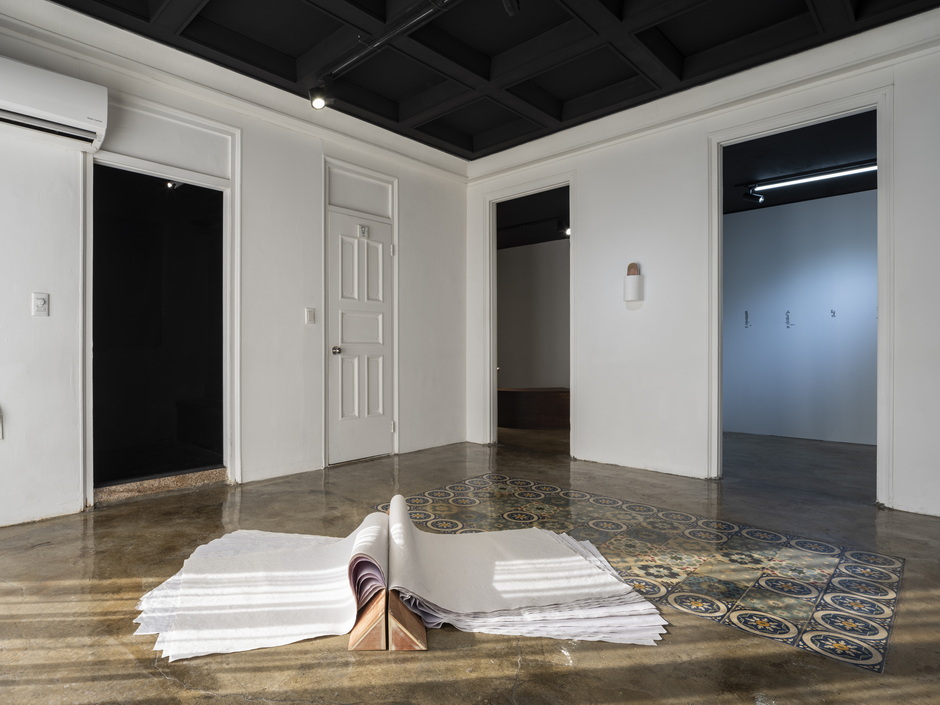
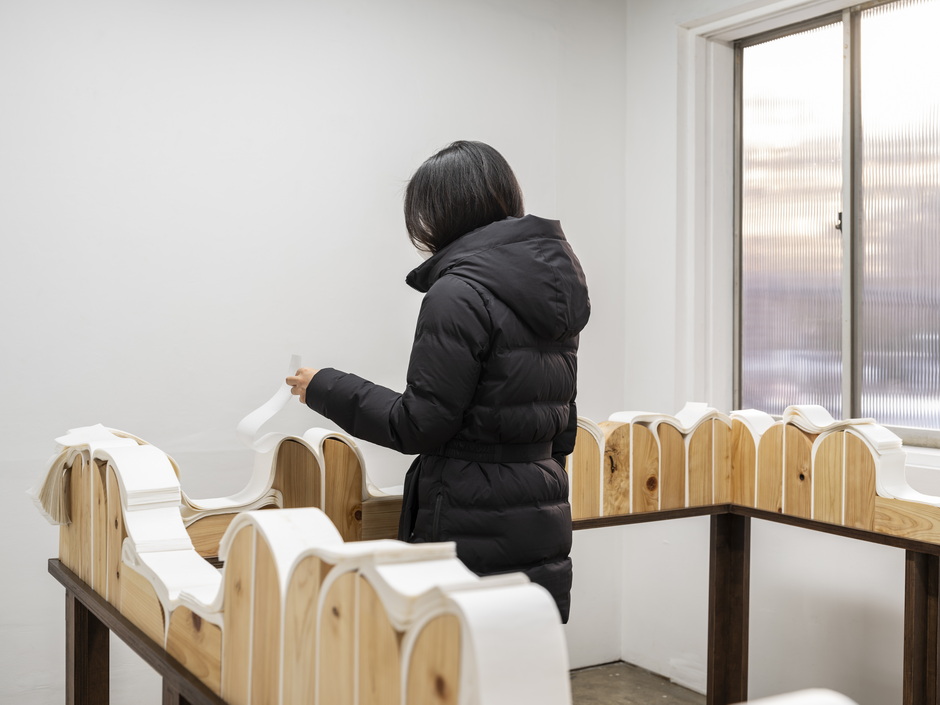
Sujin Moon, Her Silence: Spoken Words, 2022, Letter press on paper, lumbers, Dimensions variable (177x203x97cm), Installation view of 《Tactile Recall》 (Rainbowcube Gallery, 2022) ©Rainbowcube Gallery

The act of tracing her grandmother’s handwriting also appears in Her Silence: Spoken Words (2022). Moon gathered phrases that her grandmother—who rarely spoke—would repeatedly utter, edited them in her grandmother’s handwriting, and then 3D-printed the text before embossing it onto damp tracing paper.
 
Fragmentary expressions such as “밥 먹어 (Eat your meal),” “일어나라 (Get up),” “왜 그래, 응 (What’s wrong)” “제발 좀 (Please),” and “내가 죽어야지 (I should be the one to die)” carry the complex and layered emotions the artist holds toward her grandmother, deeply imprinted within her inner self.


Sujin Moon, Her Silence: Spoken Words, 2022, Letter press on paper, lumbers, Dimensions variable (177x203x97cm), Installation view of 《Tactile Recall》 (Rainbowcube Gallery, 2022) ©Rainbowcube Gallery

For the artist, the act of imprinting something is understood as an encounter between surfaces—a moment of contact. Since her earlier works, Moon has repeatedly engaged in the act of pressing or imprinting through the physical contact between bodies and materials. However, whereas she previously positioned herself as the performer, in this exhibition she takes on the role of a mediator, giving form to the object of contact and conveying it to the viewer.
 
In other words, through her exhibition 《Tactile Recall》, Sujin Moon seeks not to leave memories of her grandmother as faint, private recollections, but to transmit them from body to body through the material form of artworks.
 
As she notes in her artist’s note:
“The work addresses the question of how to compile a chronicle of a person with unwritten stories, as well as reflections on the parental relationship shaped by domestic language learning, the variability of memories, the material translation of immaterial things, and the tangibility of love.”


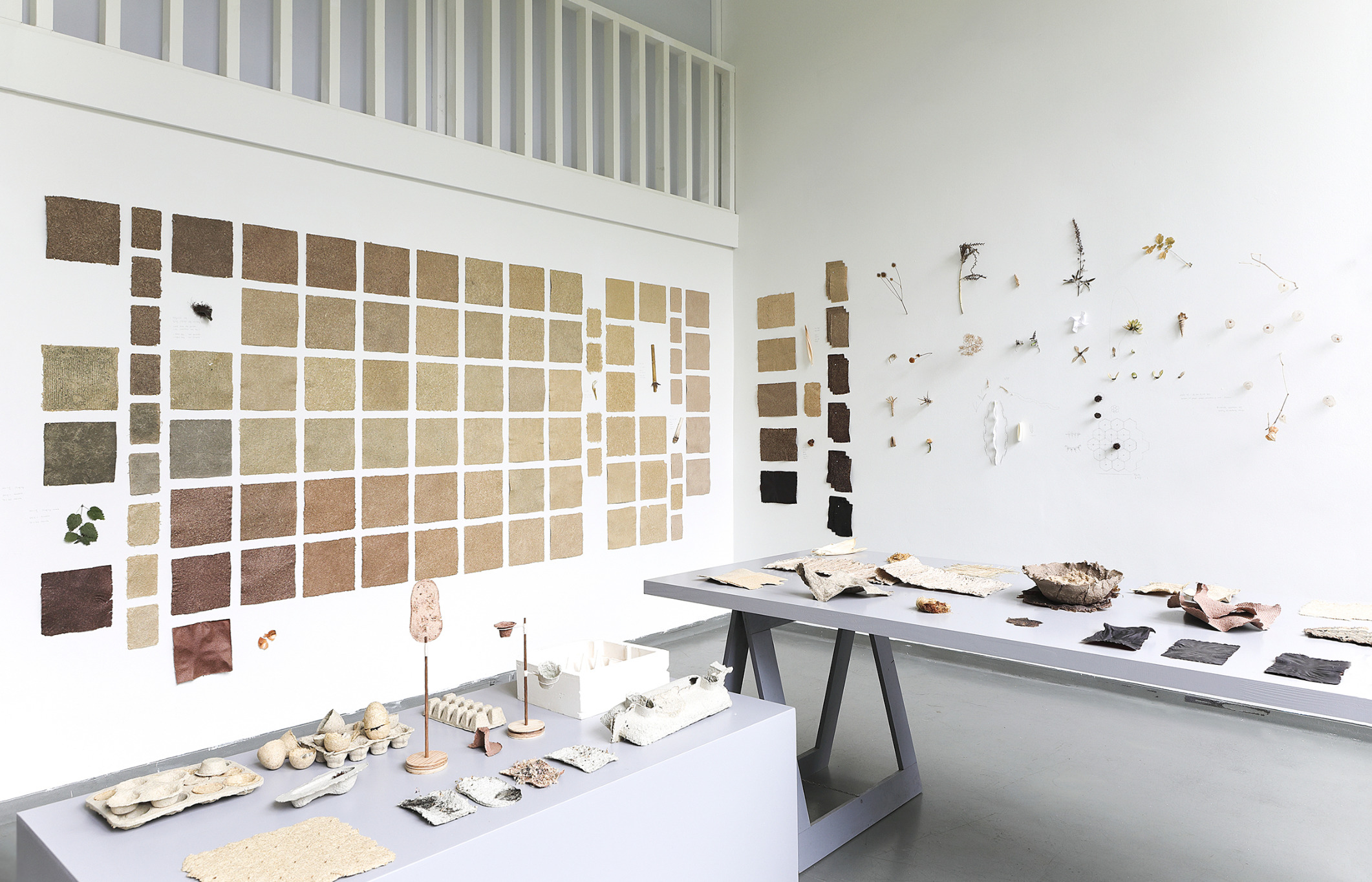
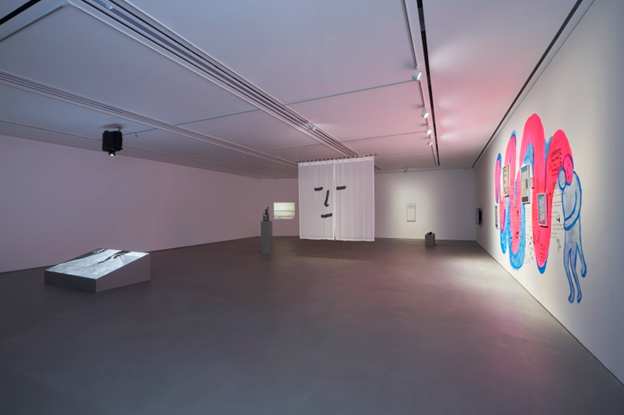
Sujin Moon, Installation view of Jan van Eyck Open Studio (2024) ©Sujin Moon

Over the past several years, Sujin Moon has led a nomadic life, relocating each year, cultivating small gardens in unfamiliar places, and making paper from the hay and weeds gathered there. When she came to realize that the paper produced in this way marked both the end of one story and the beginning of another, she described how a single sheet of paper—an otherwise ordinary object—came to appear as a temporal hinge dividing yesterday and today.
 
For this reason, in Moon’s practice, paper is not merely a medium for recording, but an ecological device that holds the dynamism of beings who live through cycles of staying and leaving, meeting and parting. Moreover, the repeated experiences of tilling the soil, sowing seeds, and harvesting crops extend beyond personal narrative, forming a foundation for exploring the cycles of ecosystems and the ways in which humans are situated within them.


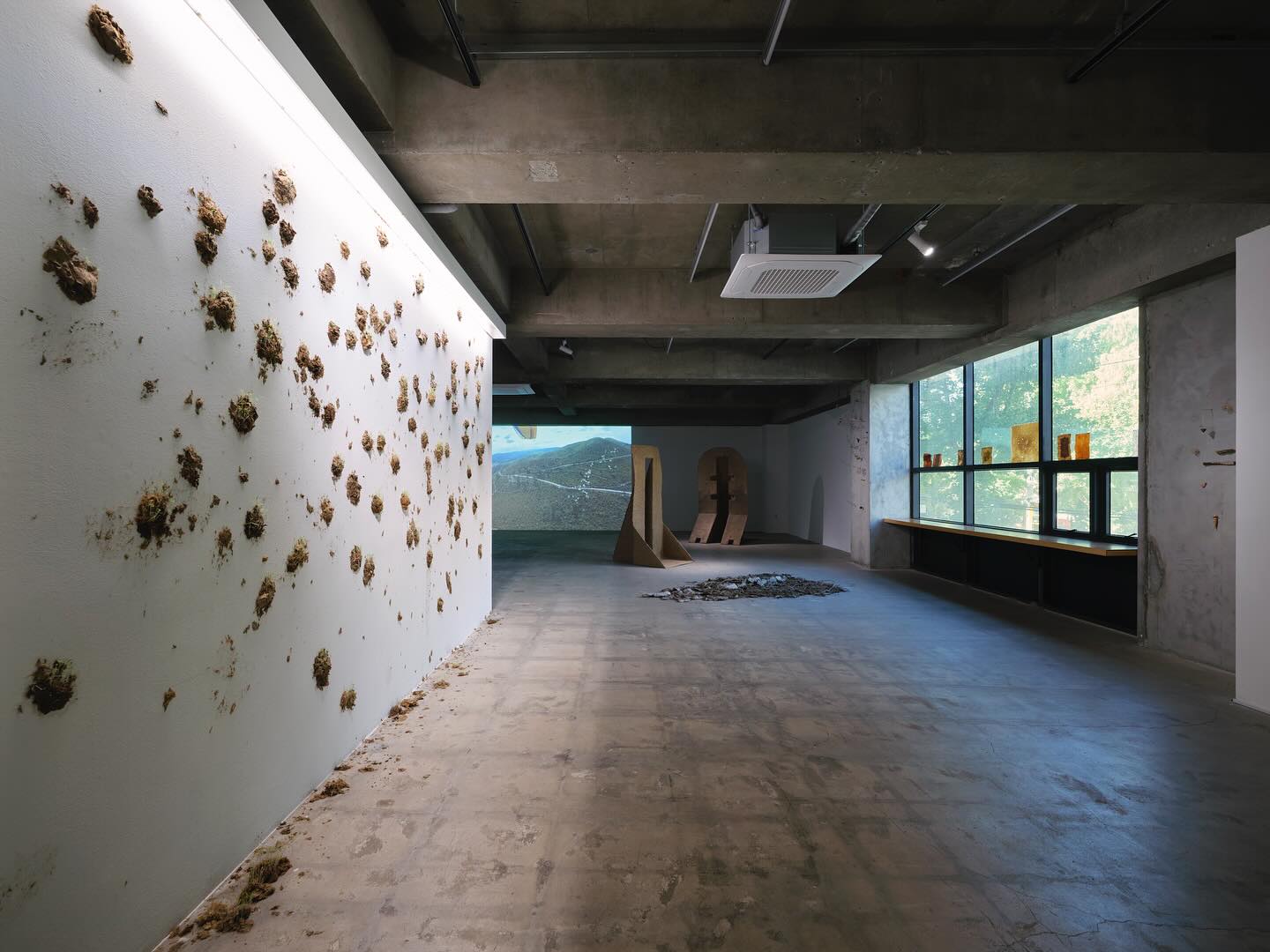
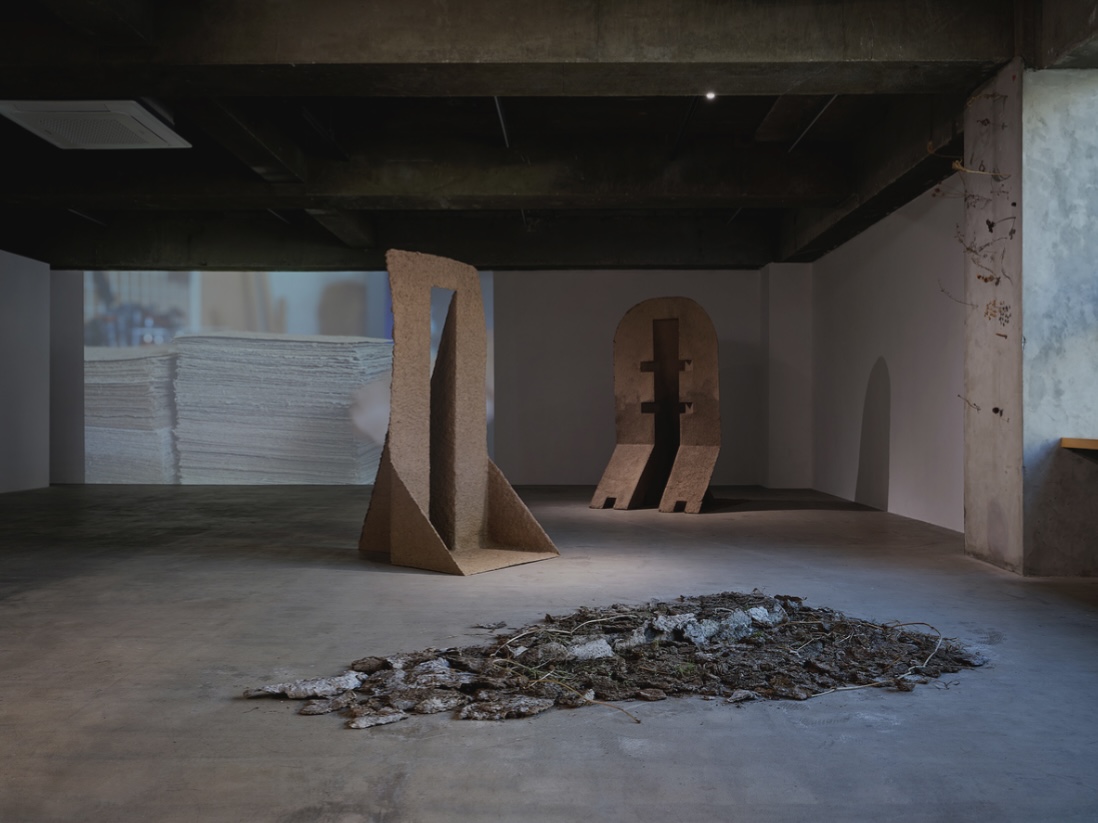
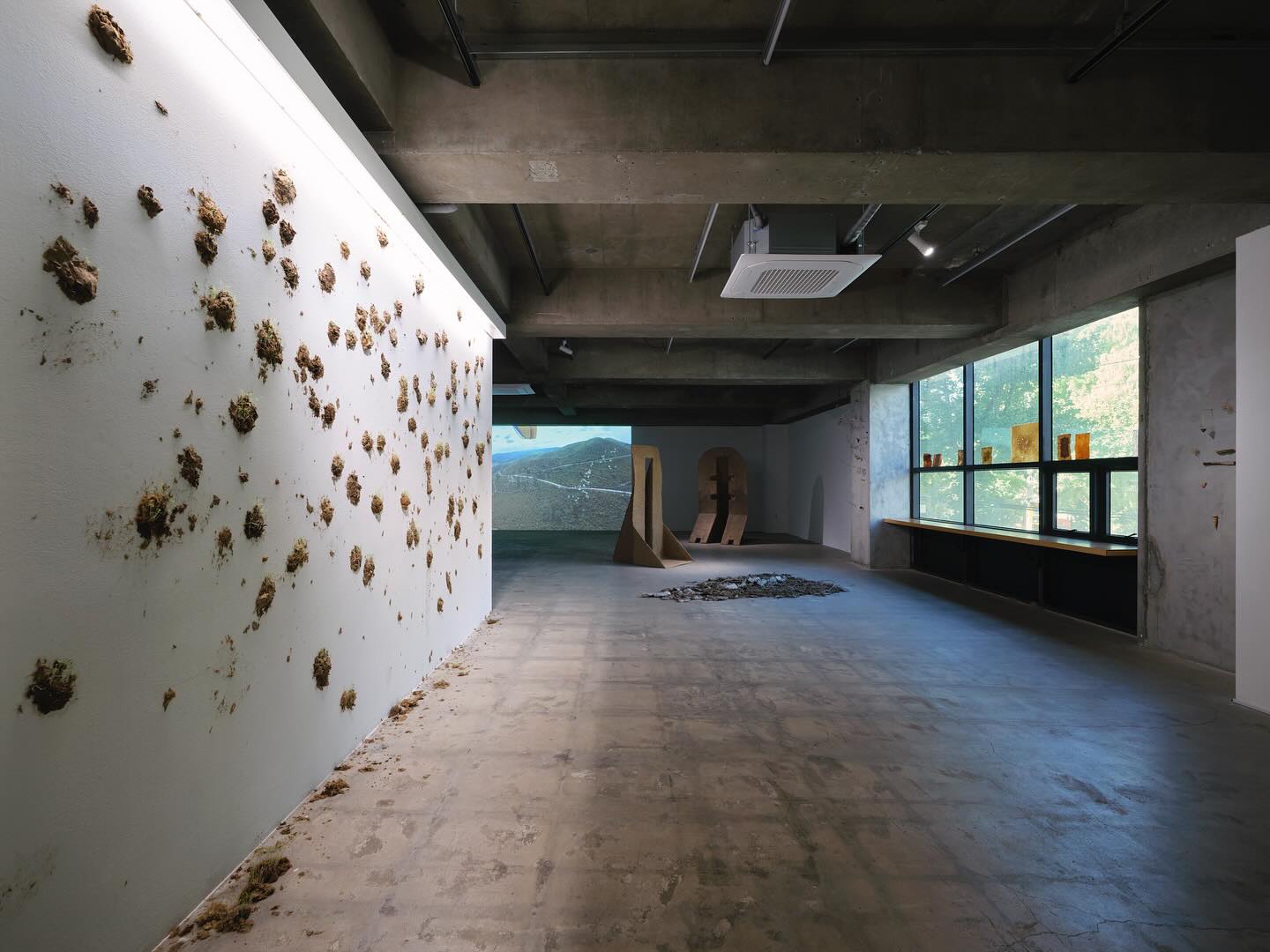
Installation view of 《Living, Leaving》 (CR Collective, 2025). Photo: Euirock Lee. ©CR Collective

Based on this ongoing journey of plant-based papermaking, Moon’s solo exhibition Living, Leaving (CR Collective, 2025) unfolds ecological scenes in which humans and nature, death and life mediate one another within the material structure where paper, seeds, and the lives of plants intertwine.
 
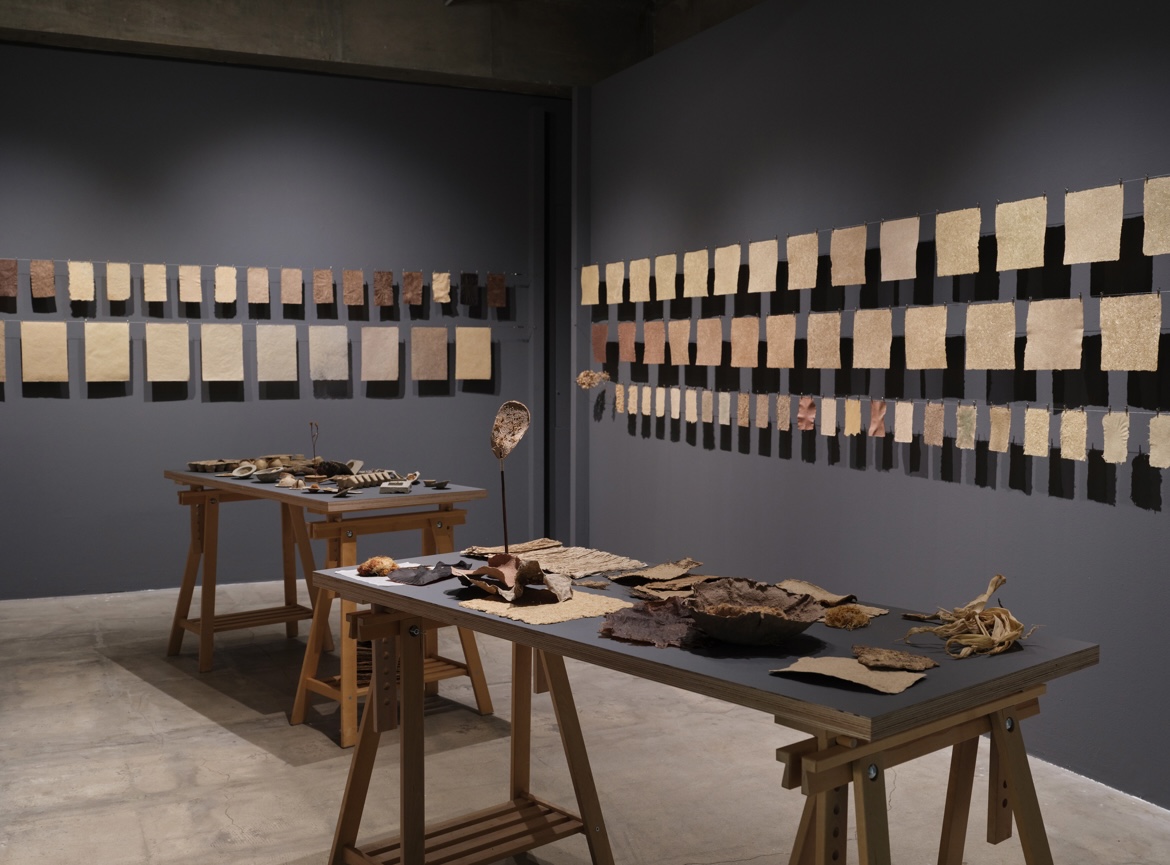
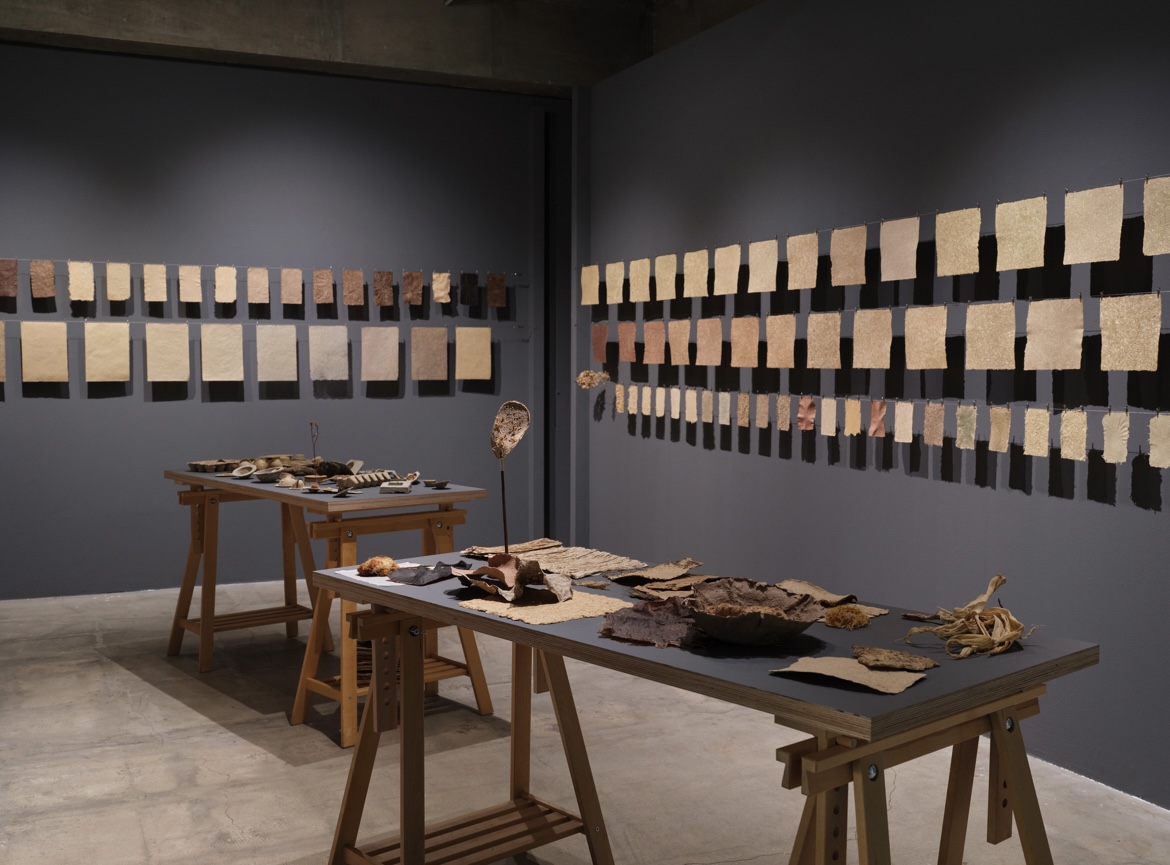
At the beginning of this journey, Single Sheets consists of paper works made from hay collected across various places where the artist lived between 2019 and 2025, including Korea, the Netherlands, the United States, and Taiwan. While cultivating small gardens, Moon primarily used hay and weeds gathered from the fields as her main materials; in locations where her stay was too brief to maintain a garden, she instead sourced dried grasses from nearby mountains, forests, or thickets.


Sujin Moon, Single Sheets, 2019-2025, Handmade paper, dried plants, Variable installation, Installation view of 《Living, Leaving》 (CR Collective, 2025) ©Sujin Moon

These sheets of paper are offered as margins that hold specific times and places while awaiting new stories. Moon reveals ecological temporality by conceiving of paper not as a mere surface but as a knot of life, a unit of moments. Ecological time is not linear progress but is composed of countless units that divide death and life, forming knots. Paper ultimately serves as an apparatus that materially visualizes these knots, prompting us to question anew how humans are positioned within them.


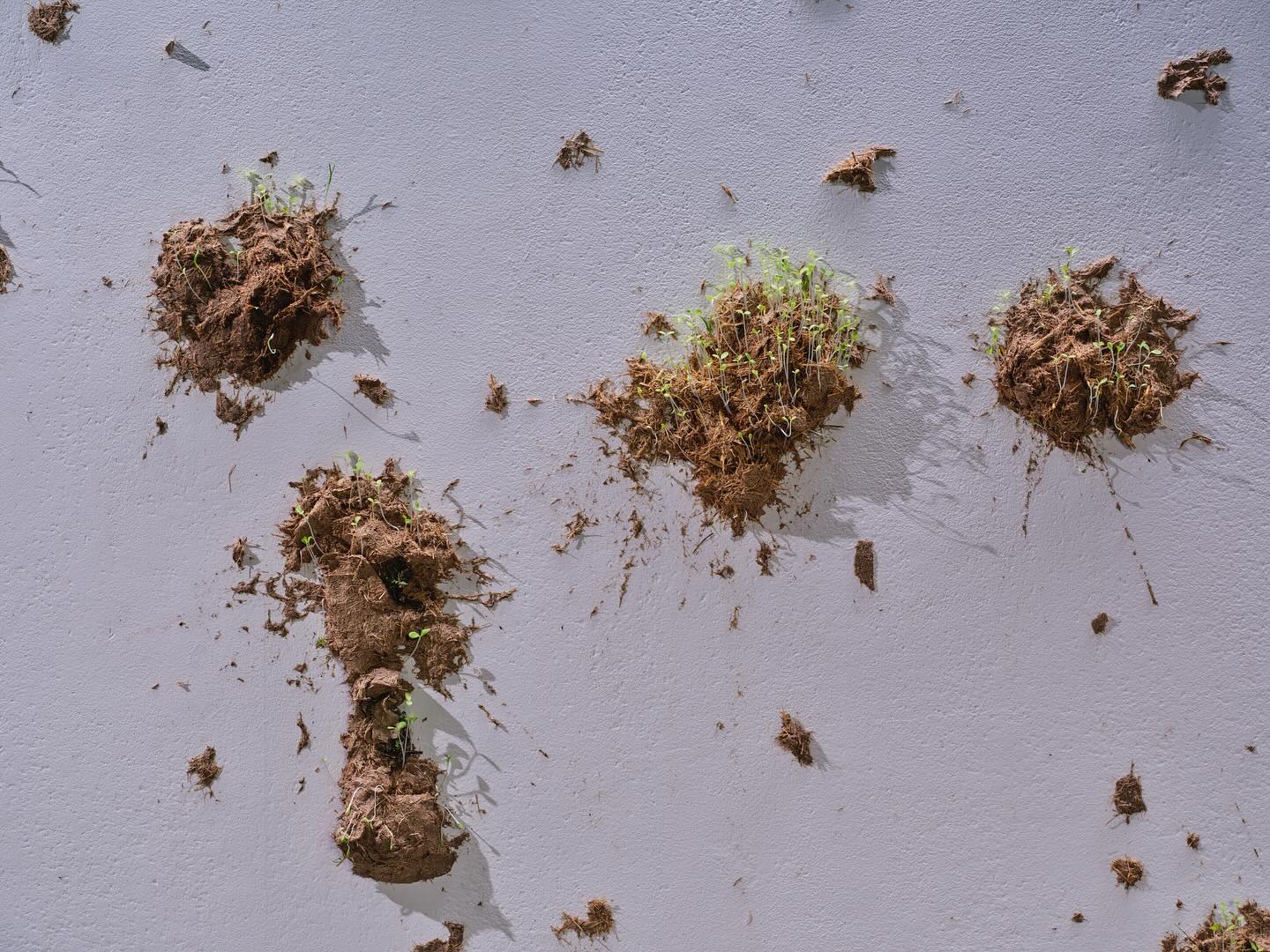
Sujin Moon, The Cast, 2025, Handmade paper embedded with seeds, Variable installation, Installation view of 《Living, Leaving》 (CR Collective, 2025). Photo: Euirock Lee. ©CR Collective

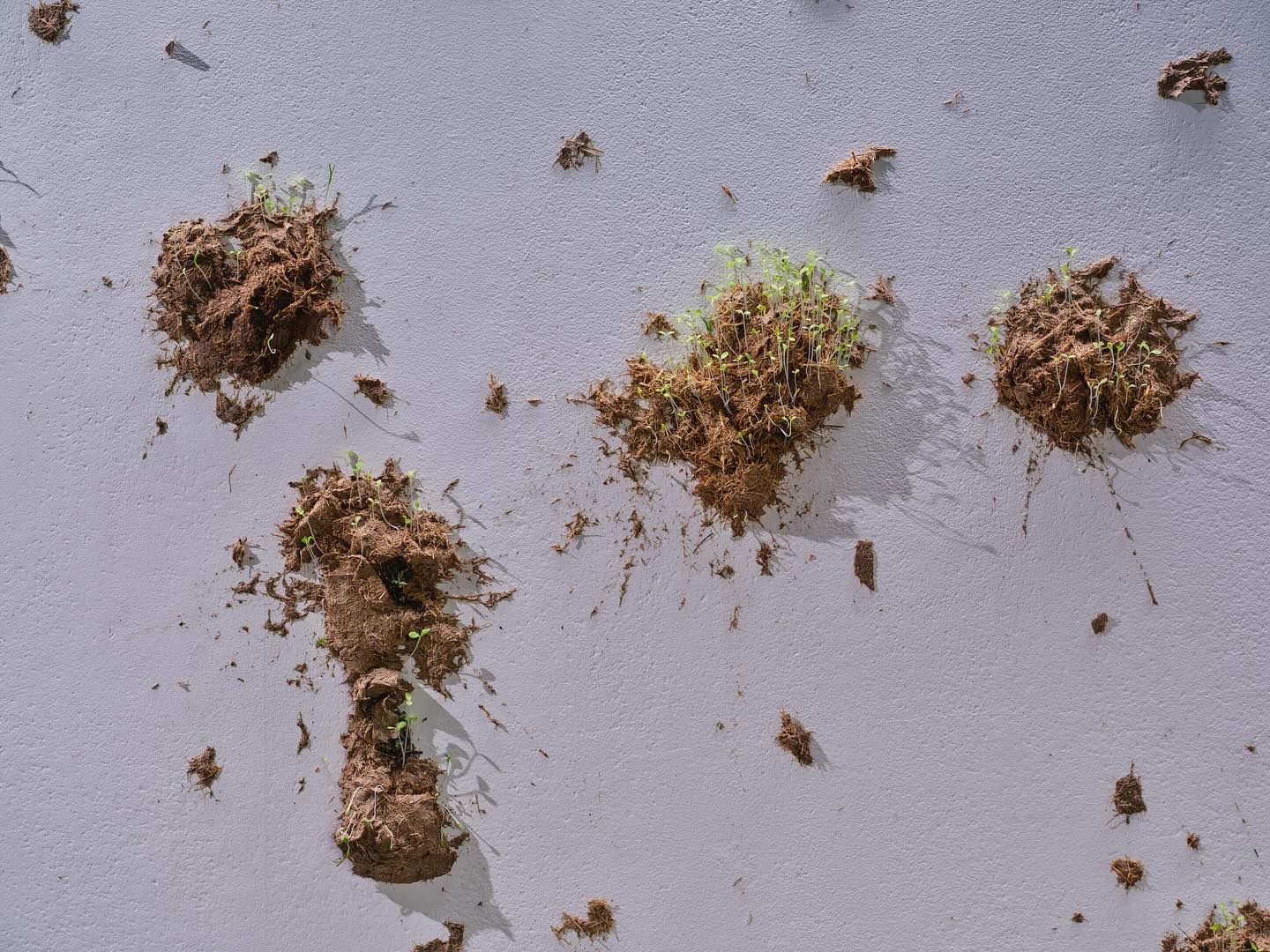
The Cast (2025) begins with the act of throwing seed-embedded paper onto the exhibition wall, where over time the seeds on the paper sprout. This work demonstrates that life does not exist as an isolated entity but is formed through entanglement with water, light, surfaces, and environment.
 
Here, paper and seeds presuppose one another, entangled with walls, water, and time to generate new life. In other words, life is not an isolated subject but exists only within making-with.


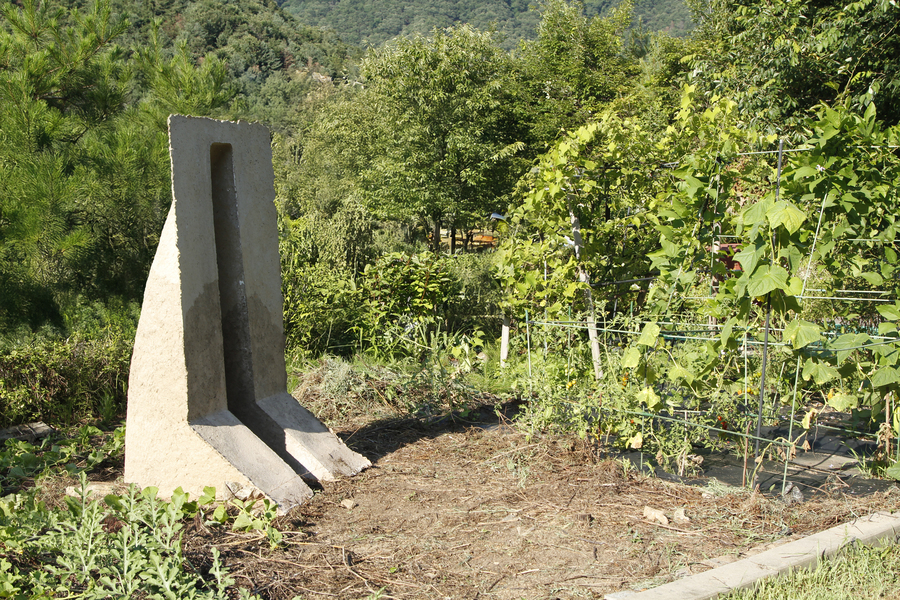
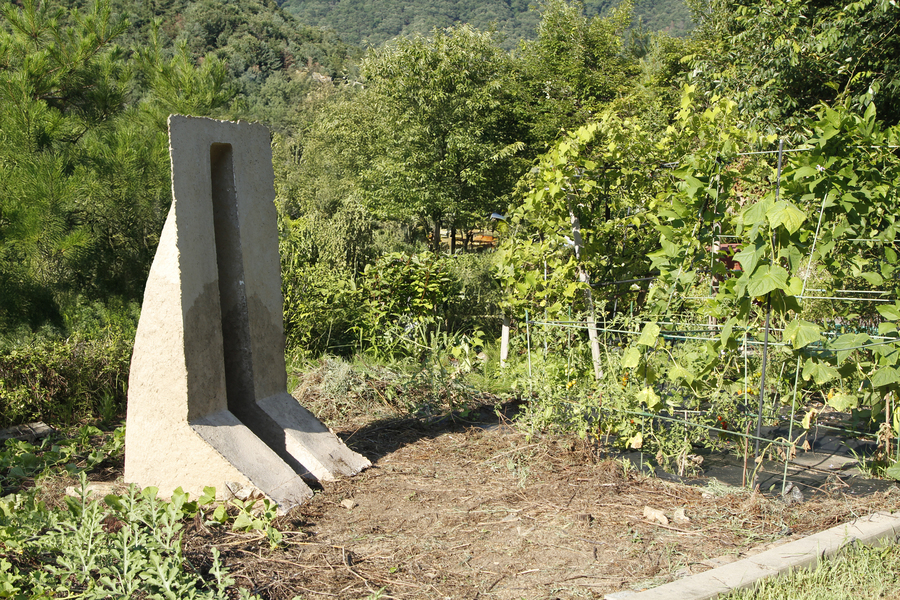
Sujin Moon, The Standing, 2025, A sheet of paper embedded with seeds (180x90x90cm), Variable installation ©Sujin Moon

The Standing (2025) captures the process in which upright paper collapses under rain and dew, and new plants emerge from that very spot. The body of dead plants stands as paper, and life springs forth from where it has fallen. Paper stands at the boundary between death and life, simultaneously revealing the tensions of vertical and horizontal, ascent and descent.
 
However, in this scene, death appears not as mere extinction but rather as a scene of alterity in which the dead sustain the living. Collapsed paper exhausts itself to raise the life of the other, and in this process, death is transformed not into an end but into a condition for the other. Moon’s work thus demonstrates that death and life do not simply oppose one another but appear as mutual transformations within a single relational field.


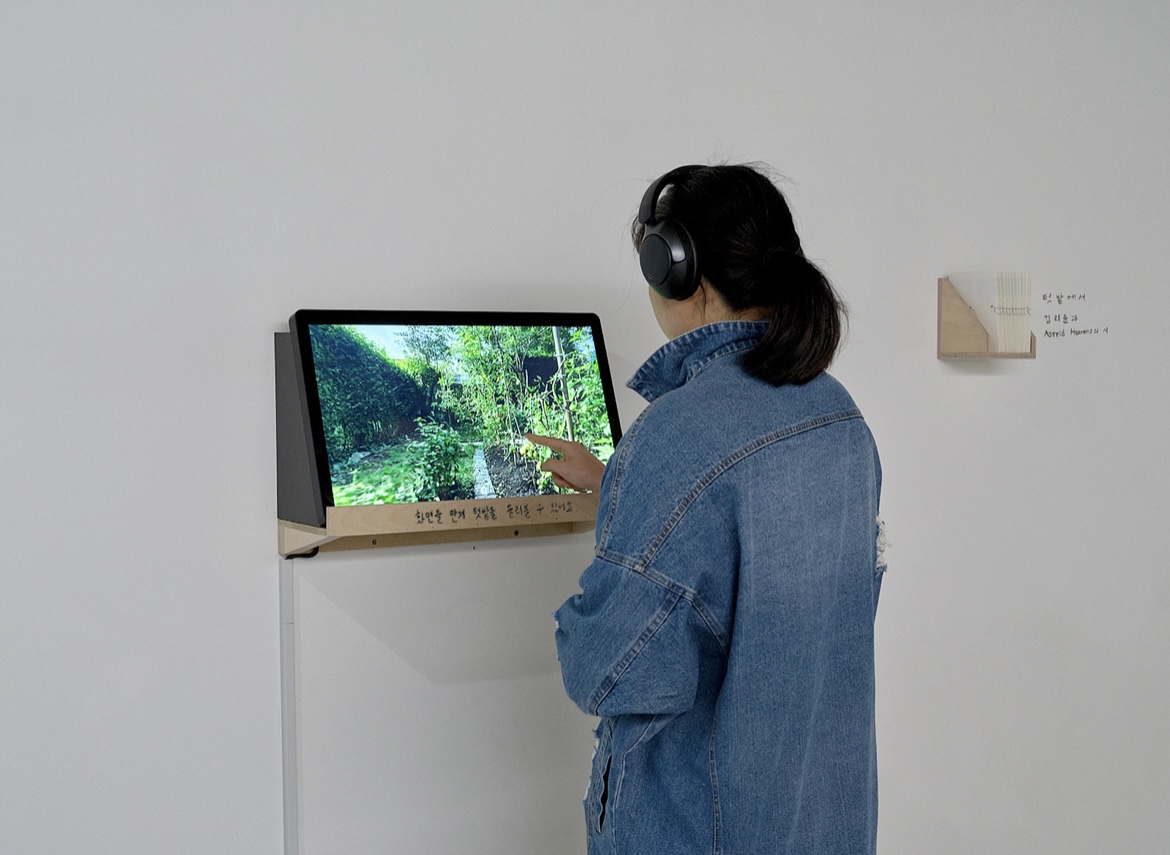
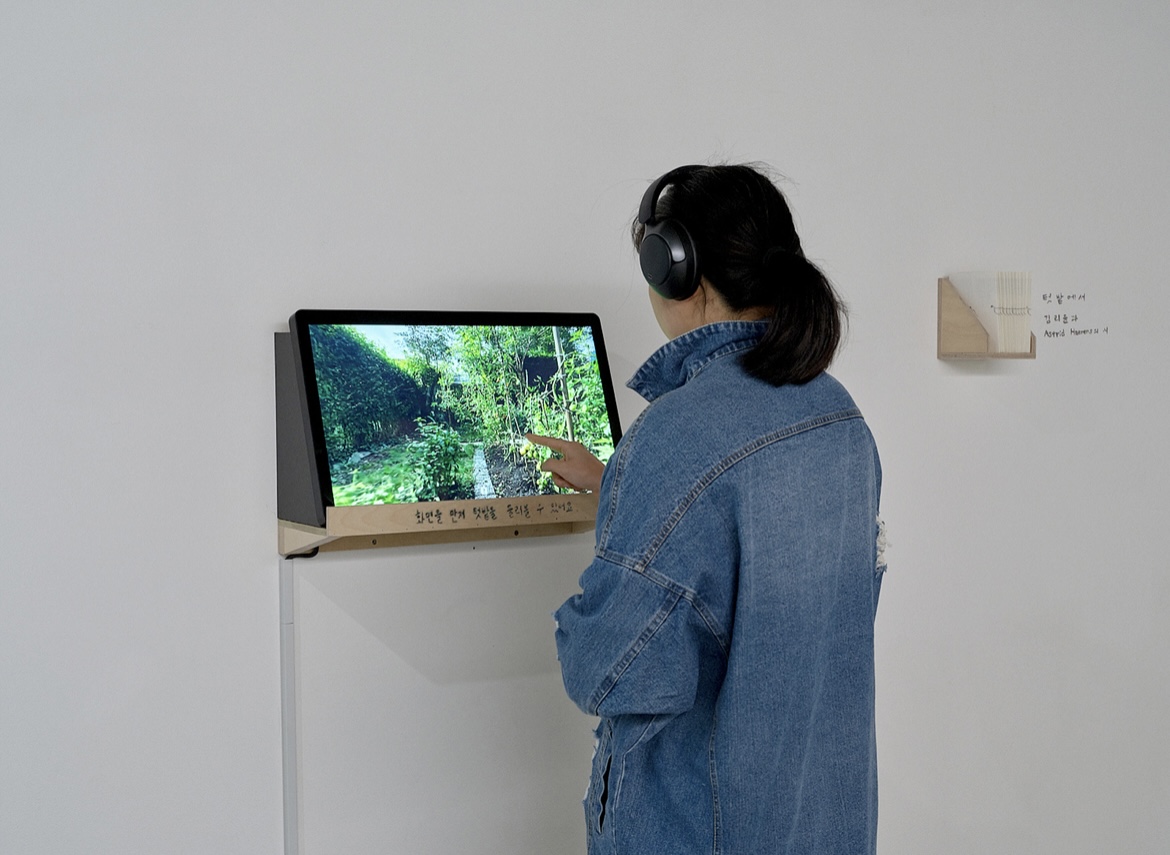
Sujin Moon, In the Garden, 2025, 3D scanned backyard garden in Maastricht, interactive touchscreen ©Sujin Moon

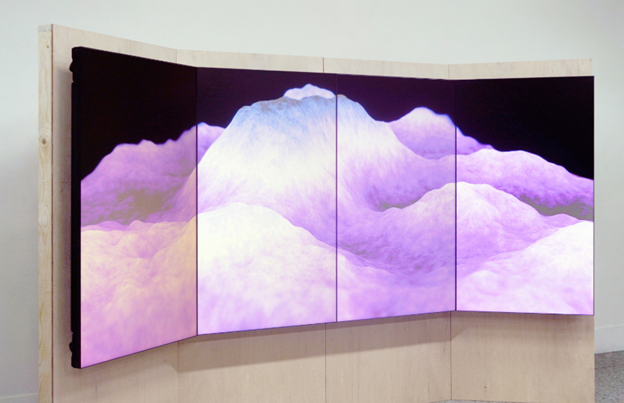
In the Garden (2025) extends this ecological thinking into digital space. This new interactive touchscreen work, created through 3D scanning of the backyard garden in Maastricht, invites viewers into a virtual garden where they grope across the screen while hearing tactile sounds and recited poetry.
 
Indistinct sounds murmur, and as one approaches certain points, voices resonate more clearly, transforming the act of tending a garden into a process of tactile understanding acquired through bodily senses.
 
This work explores tactility through the immaterial forms of 3D scanning and voice, demonstrating that ecological experience does not remain confined to analog corporeality but can be newly generated through the entanglement of relationships and senses within digital technology.


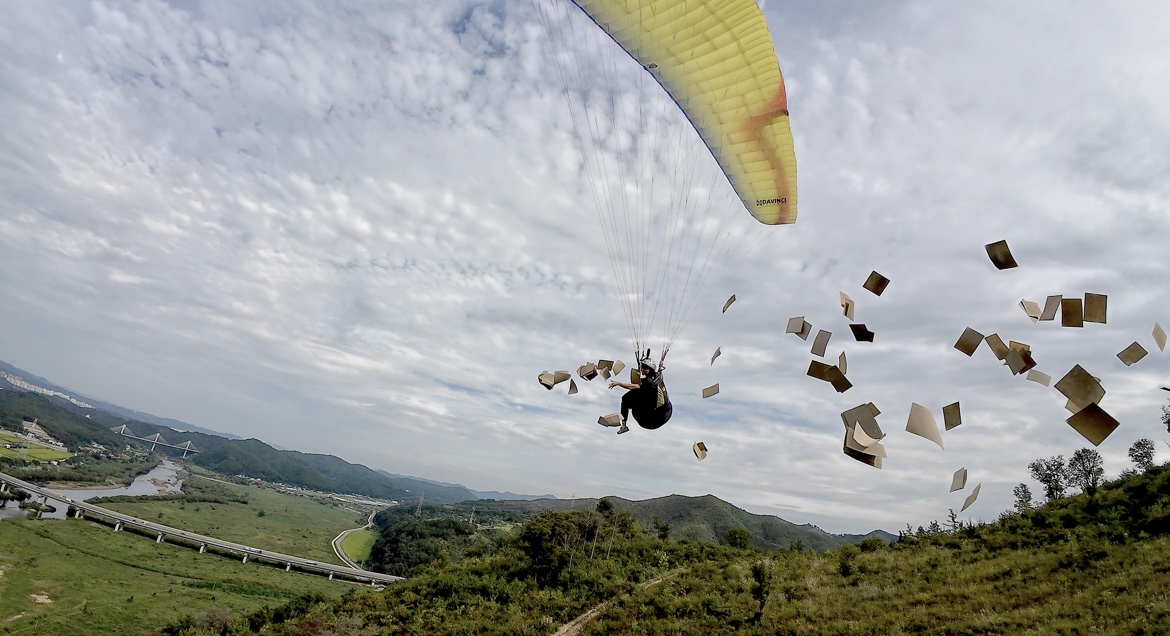
Sujin Moon, Driftroot, 2025, Performance documentation video, single channel full HD, 10min 42sec. ©Sujin Moon

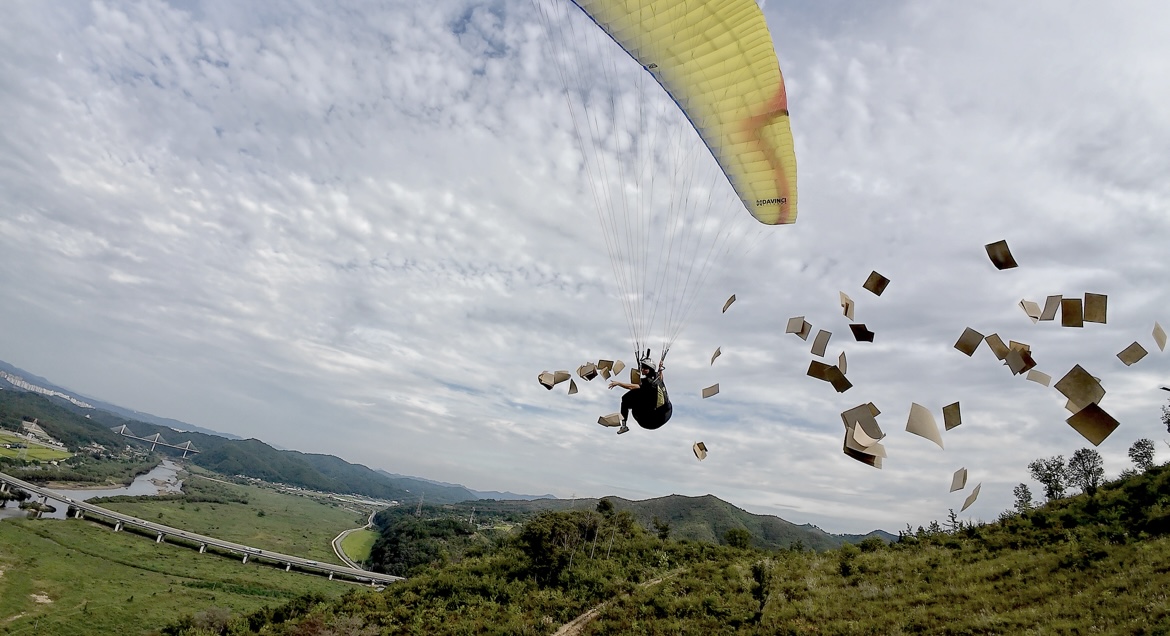
Finally, Driftroot (2025) is a performance video documenting a scene in which paragliding performers (actual twin sisters) scatter handmade paper from the sky. The paper flutters in the air, touches the ground and disappears, and days later seeds sprout from that spot.
 
Set against the backdrop of Danho Paragliding Park, where even five years after the 2020 Andong wildfires it remains difficult to find a single tree, the performance unfolds. The sheets of paper scattered by the performer bear no text or imagery; instead, they are embedded with seeds of maple, cherry, and fir trees, as well as various wild grasses.
 
The scattering of thrown paper and the sprouting of seeds is not absorption into nature but becomes the act of breathing together within the rhythm of the ecosystem. The flight of paragliding reveals this field of relational life, summoning a momentary catharsis in which humans and nature reflect one another.


Installation view of 《Living, Leaving》 (CR Collective, 2025) ©Sujin Moon

In this way, Sujin Moon has consistently focused on moments of relation generated through contact—between surfaces, and between bodies. Through sculptural processes grounded in bodily action, she explores how, within the vast cycles of life, we sense the world, form relationships, live, and ultimately fade away.
 
By unfolding these reflections into visual and tactile landscapes, she invites viewers to layer their own thoughts on life within them.

“I believe that each viewer’s unique interpretation completes the work. Interpretations I have not considered will return to me and become a new language for my practice.” (Sujin Moon, from an interview with the Seoul Foundation for Arts and Culture)


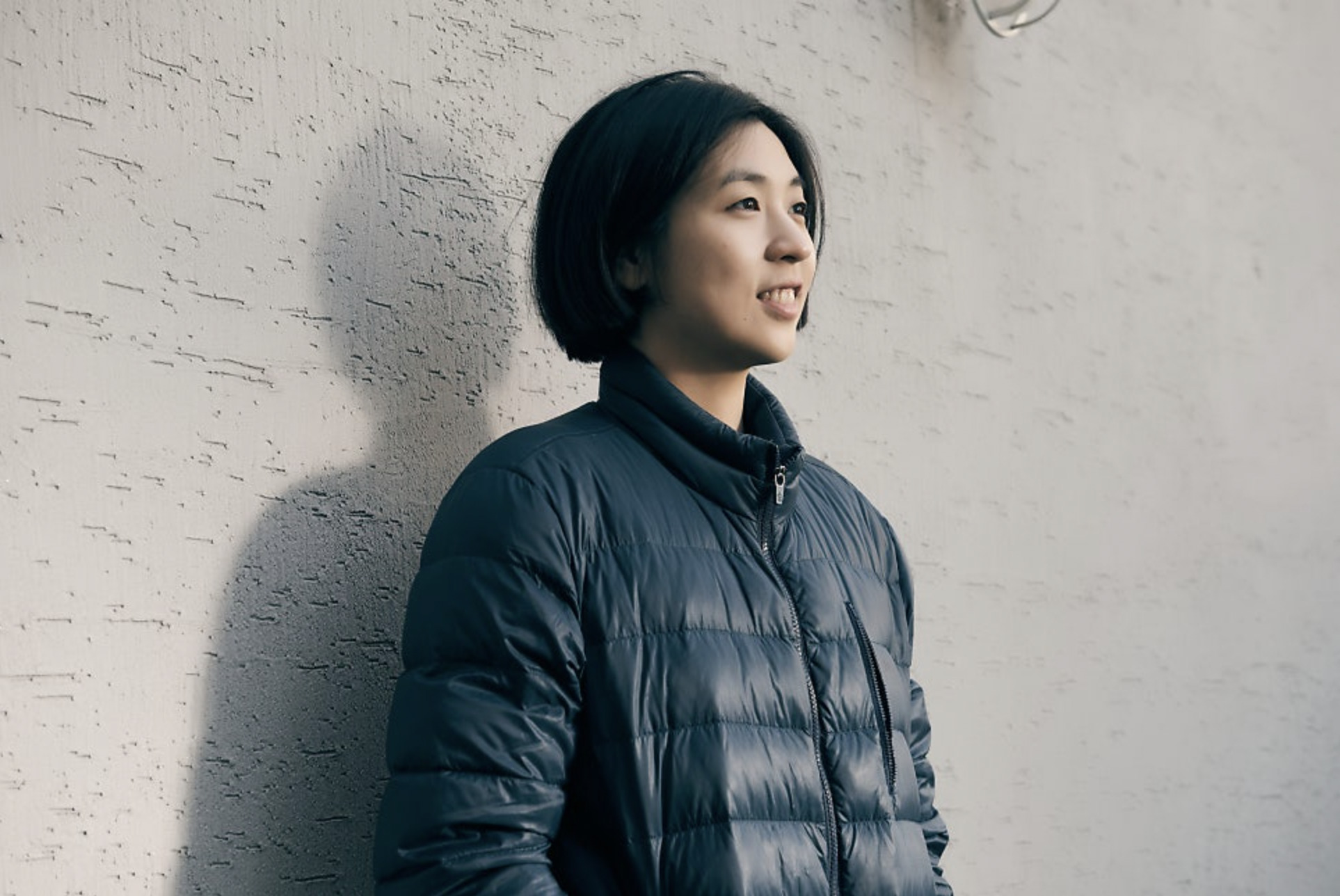
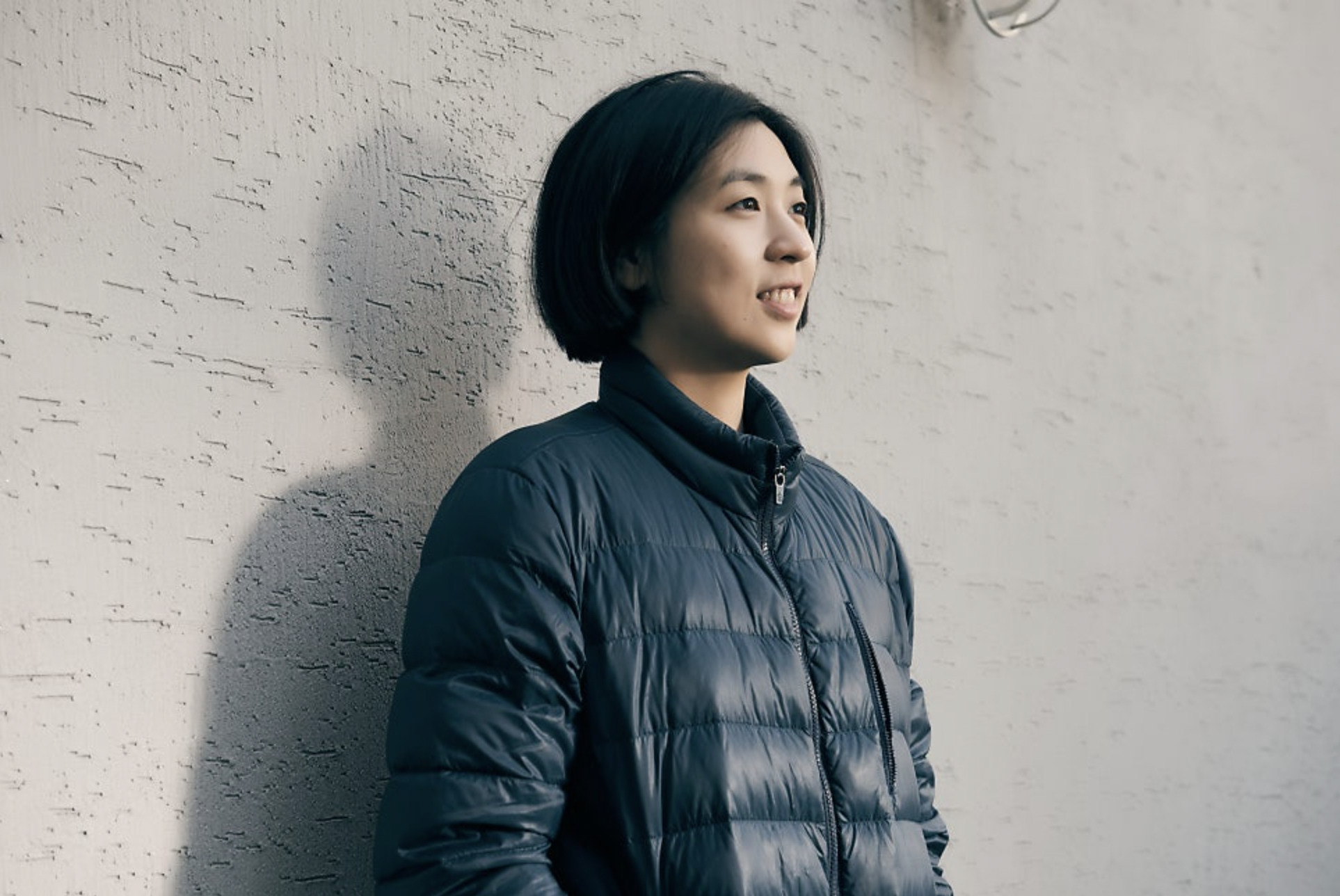
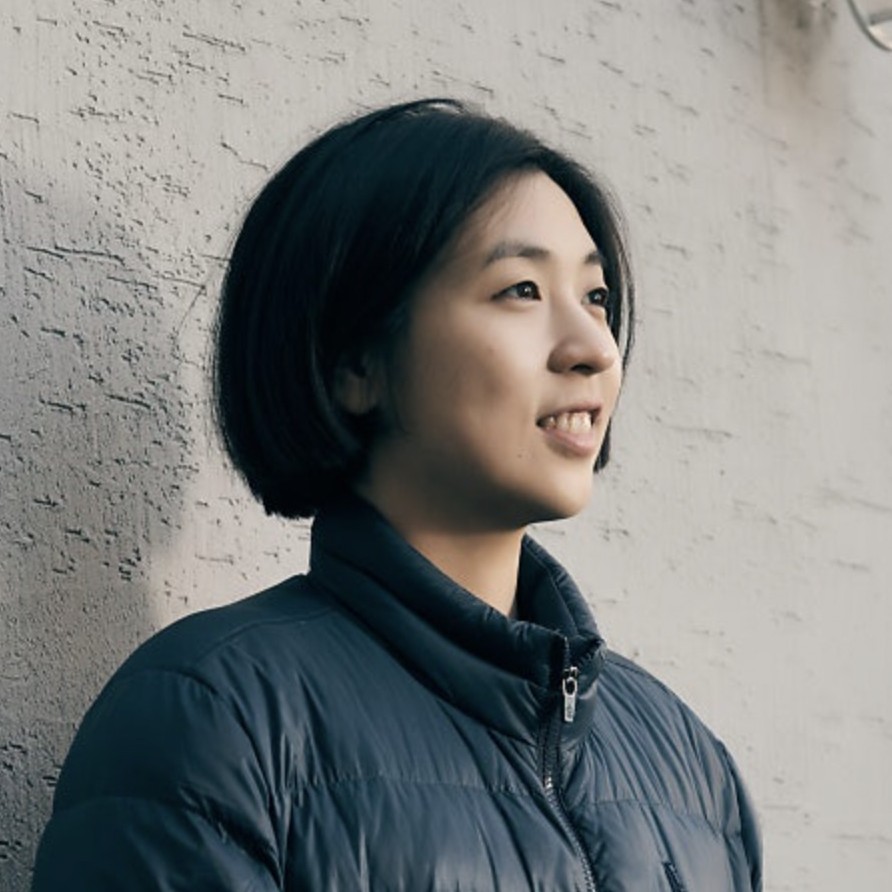
Artist Sujin Moon ©Seoul Foundation for Arts and Culture

Sujin Moon completed both her BFA and MFA from Seoul National University and MFA from The School of Art Institute of Chicago. Her solo exhibitions include 《Living, Leaving》 (CR Collective, Seoul, 2025), 《Tactile Recall》 (Rainbowcube Gallery, Seoul, 2022), and 《Living Island》 (CICA Museum, Gimpo, 2020).
 
She has also participated in numerous group exhibitions, including 《Sak-da: The Poetics of Decomposition》 (MMCA, Seoul, 2026), 《Madang: Embracing You》 (Suwon Museum of Art, Suwon, 2023), 《The 8th Summer Saeng-Saek》 (Insa Art Center, Seoul, 2023), 《Skyline Forms on Earthline》 (DOOSAN Gallery, Seoul, 2022), 《Selfish Art-Viewer》 (Seoul Art Space Geumcheon, Seoul, 2021), and 《The 21st-century optimists》 (Art Centre Art Moment, Seoul, 2021).
 
Moon has also participated in various residency programs, including Pier 2 Art Center (Kaohsiung, Taiwan, 2025), the Jan van Eyck Academy (Maastricht, Netherlands, 2023–2024), Pureunjidae Changjak Saemteo (Suwon, 2023), MMCA Residency Goyang (Goyang, 2022), and Seoul Art Space Geumcheon (Seoul, 2021).
References