Entering a “strange” land
1. Objects float in the exhibition space. Here, unstable meanings are produced, and they repeat in an unfixed state, linking one after another. In this chaotic environment created by the artist, you may feel vague anxiety or a sense of alienation. But there is no need to be afraid. Alice in Alice in Wonderland “grows and shrinks at the same time.” You, too, will experience something similarly strange in Dahwan Ghim’s work. It may sound absurd, but do not be afraid of the adventure. A philosopher once said, “Have goodwill toward the unfamiliar and kindness toward the new.”
1-1. Upon entering the courtyard of Pool, the first thing that stands out is a strange window. A large bluish image, as if composed of various objects, seems to ripple and move. (The 2D plane still functions.) What makes this scene appear “strange” is not only the low-resolution image that seems crude. The floating objects cannot be clearly identified, and the overlapping images do not point to a single subject. As you closely observe the surface, you may try to identify what these hidden objects resemble. However, “here,” that is unnecessary. This is not a trompe l’oeil or Op Art painting that produces optical illusions. A small hint: remember this image until you leave the exhibition.
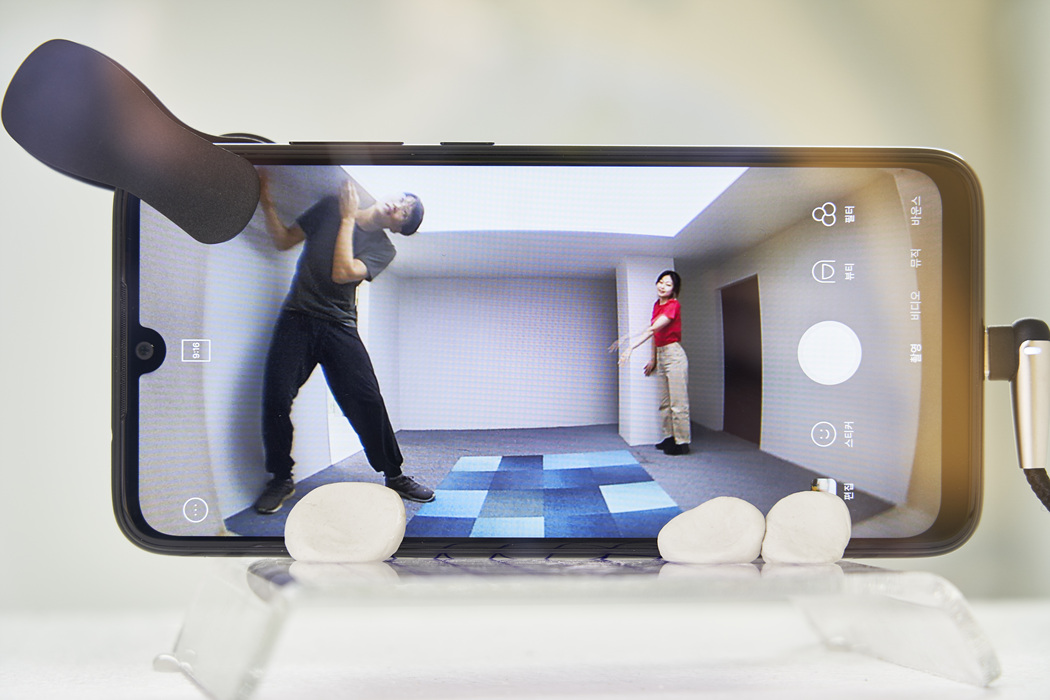
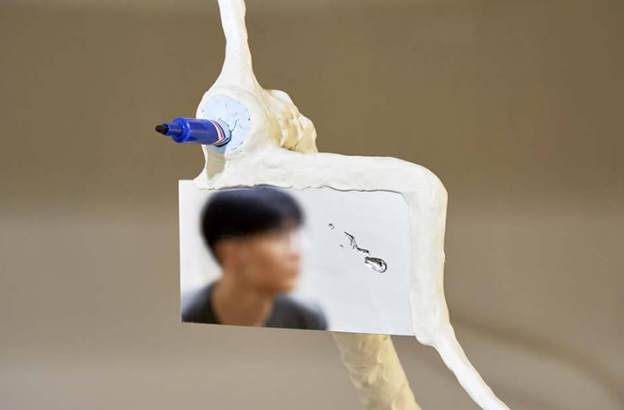
There is a small frame at the center of the window, and in it, a smartphone with its camera turned on. You will first observe what lies beyond the frame with your naked eyes, and then, with curiosity and suspicion, stare into the smartphone screen, attempting a second gaze beyond it. At the end of your gaze, there may be (if you are lucky) a human-scale subject, and although the object is the same, it will begin to appear at different scales depending on your position.
Soon, through the six-inch smartphone camera, you will experience how the position of gaze becomes a position of power. Of course, all of this may be an illusion. Confusing, isn’t it? Didn’t I tell you at the beginning? “Please doubt.”
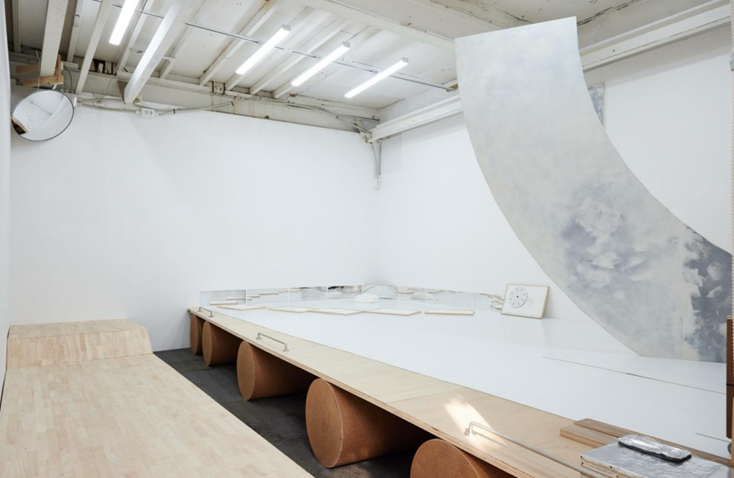
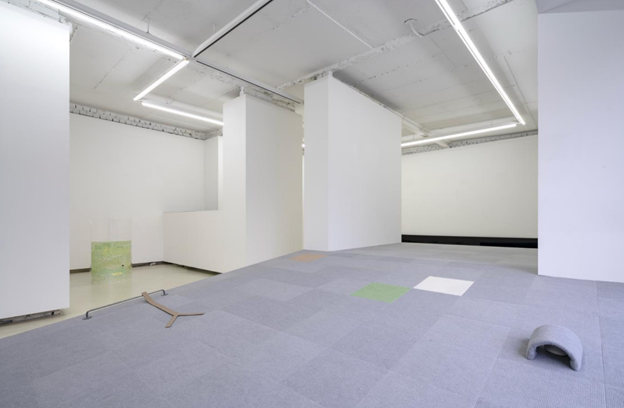
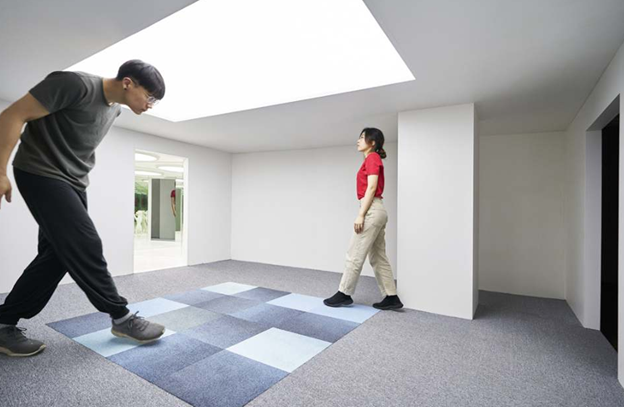
1-2. Now it is time to enter the rabbit hole like Alice. Reflecting on your experience so far in front of the exhibition titled 《Hello Human?》, you may confidently assume that this exhibition is about “artificial intelligence” or “illusion,” and step inside. The floor and walls of Pool, where horizontal and vertical axes rarely align, are dominated by “strange” rectangular structures. People move in and out of them. It is easy to “mistake” this for an interactive exhibition. Even before fully understanding what kind of exhibition it is, you feel reluctant because it seems familiar, but having come all the way to this outskirts of Gugi-dong, you enter anyway.
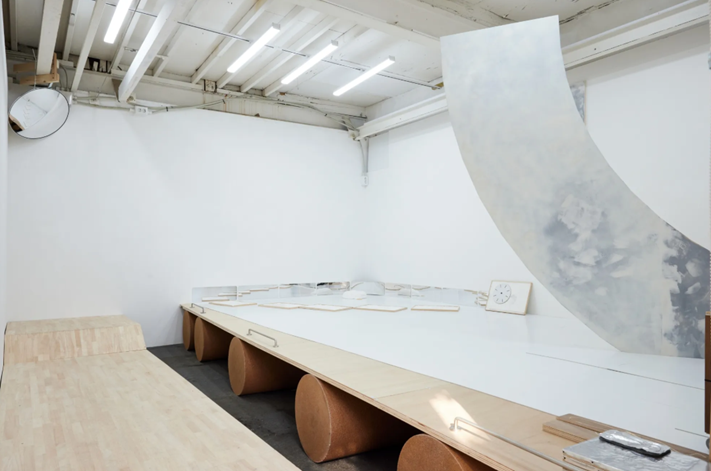
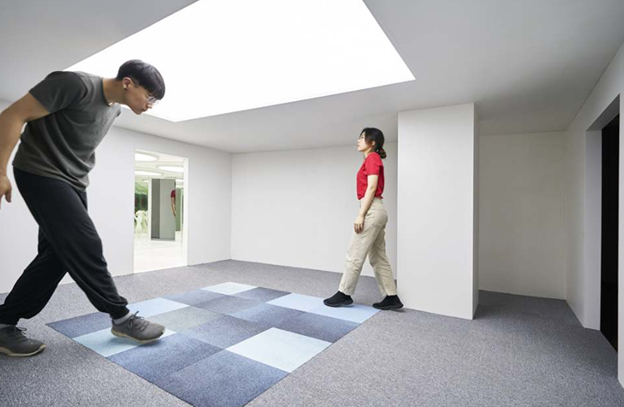
Inside, everything is white, with ceilings of varying heights and slanted floors—“strange.” You bend your body to fit the space and move inward. But don’t you feel that the floor texture is different from that of a typical exhibition space? As you keep your head lowered, your neck begins to ache, and your crouched posture feels ridiculous, making you want to escape quickly, but suddenly you recall the gaze of someone watching you from beyond the window. And then, within minutes, the object of gaze changes. Outside the exhibition, you were the subject observing the world, but upon entering, your position is reversed—you become the object seen. In this inversion, you begin to doubt the ghost-like landscape you had just witnessed. (Fortunately.)
*If you are a curious and skeptical viewer, you will circle around the outside of the structure as soon as you exit. An exhibition is something worth moving your body for.
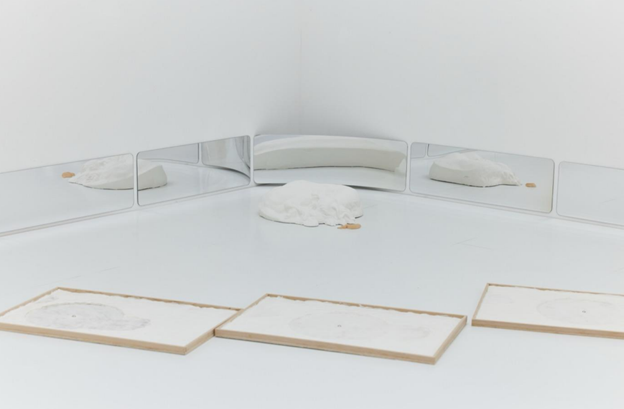
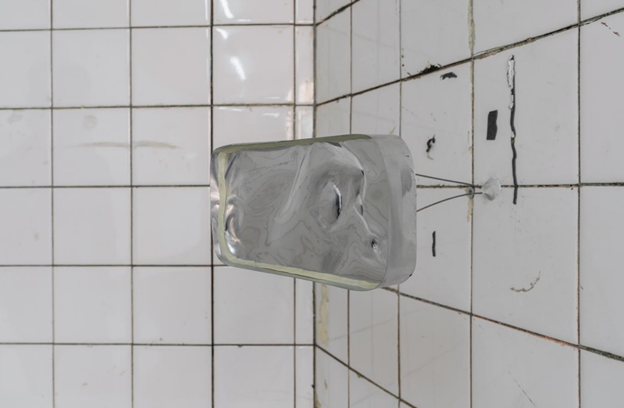
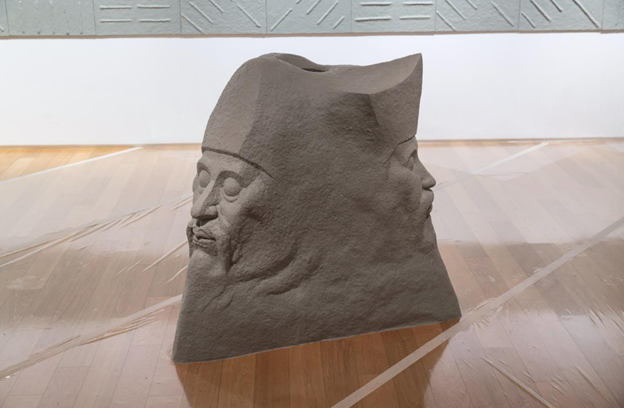
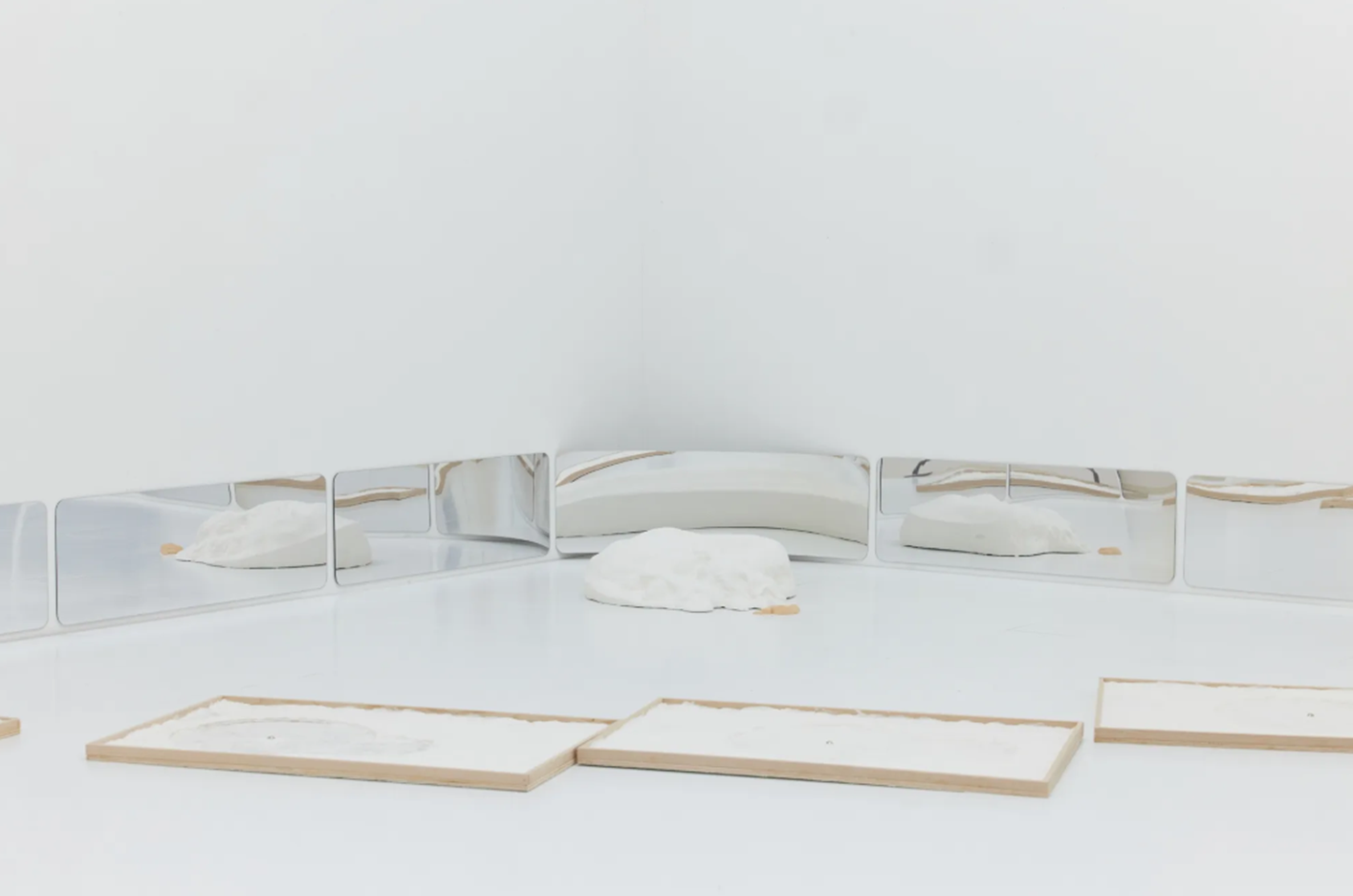
2. Alice, who visited Wonderland, travels six months later to the world behind the mirror. In Through the Looking-Glass, in order to go anywhere, she must move in the opposite direction. Before exiting the structure, you hesitate for a moment. Peeking into a small triangular room, the shiny mirror and tiled floor resemble a restroom. And there is one “strange” object in this intimate space. The sculpture, whose scale does not match the “human” scale, seems vaguely identifiable—you are right in your guess.
And then you encounter your own “strange” reflection in the mirror. Bent over to avoid hitting your head on the ceiling, your crumpled body appears differently scaled in the mirror. This process of recognition resembles Alice’s adventure of entering the mirror world and experiencing her body growing larger.[1] At the moment you see your altered reflection, you will recognize your own existence differently. The reflection is not merely a mirrored image, but something whose value cannot be altered by any absolute standard. In the world of representation, neither the you outside the mirror nor the you inside it can claim superiority.
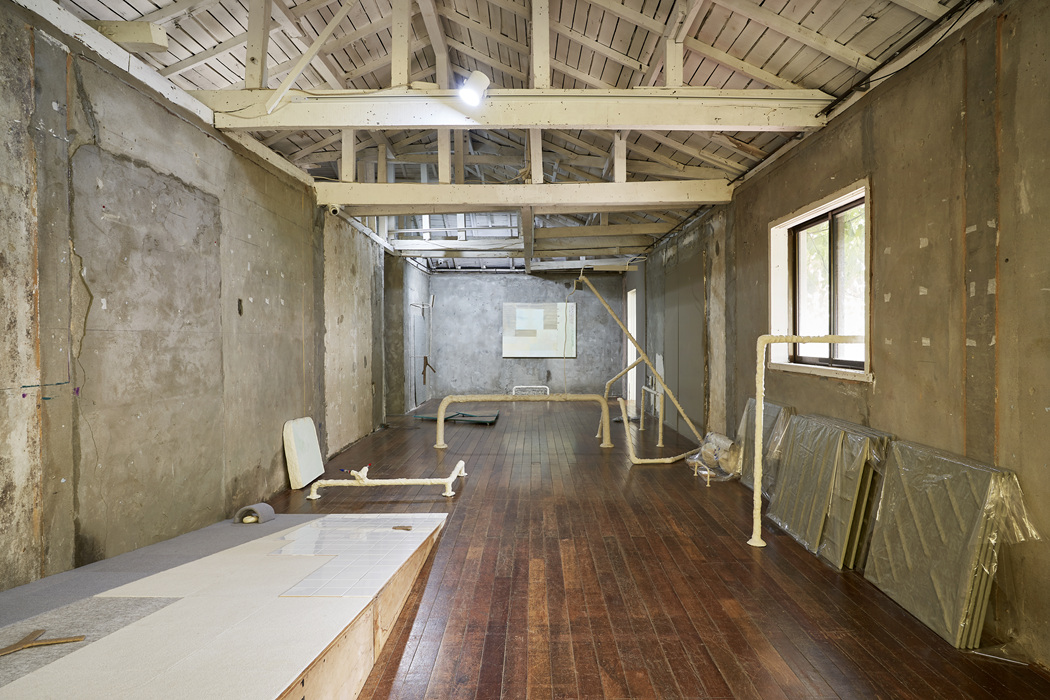
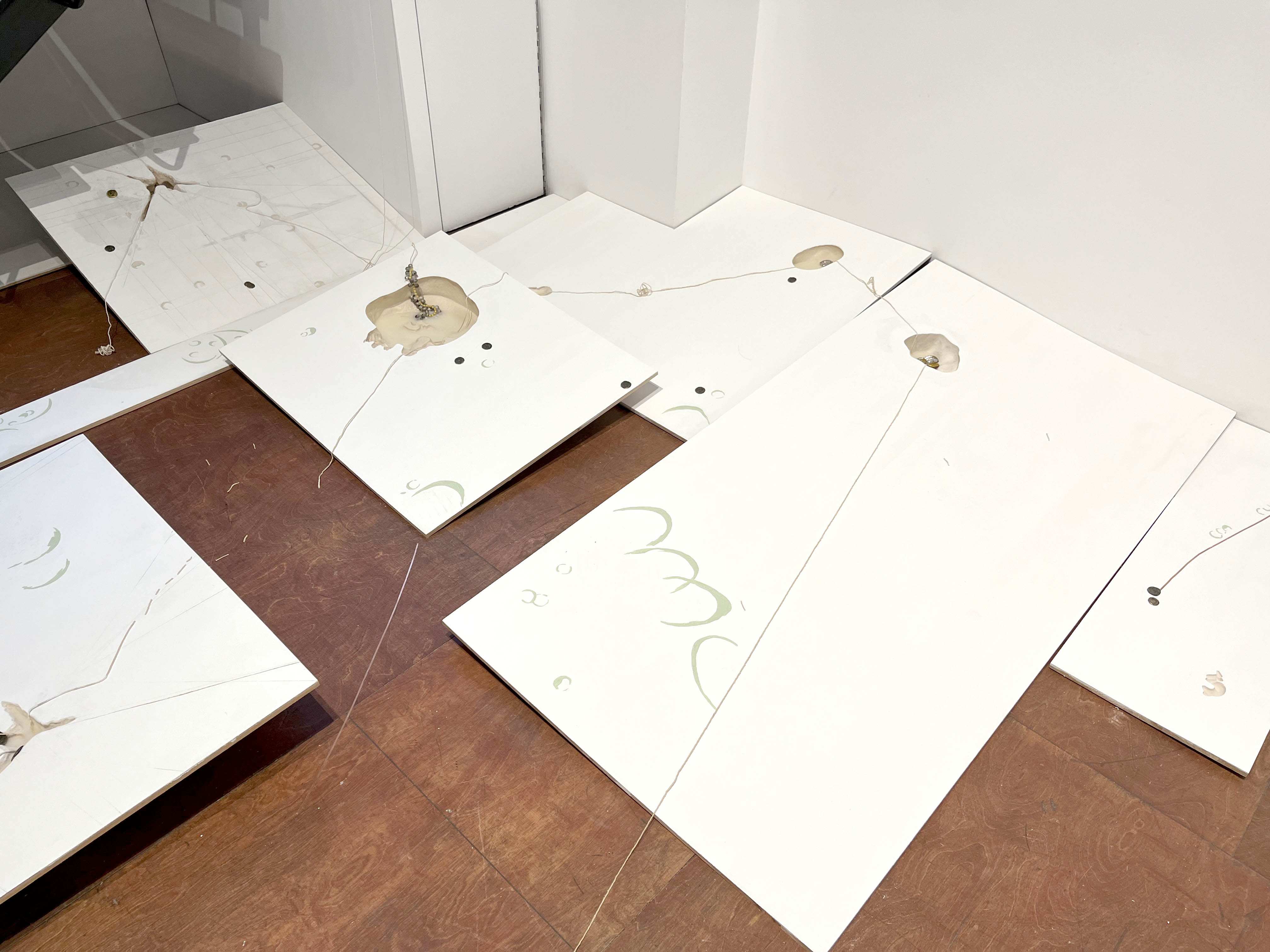
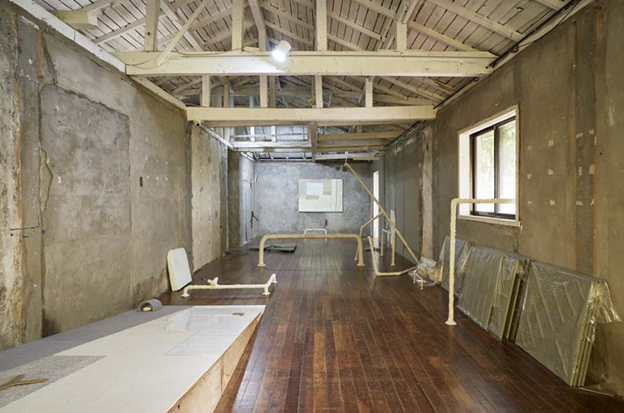
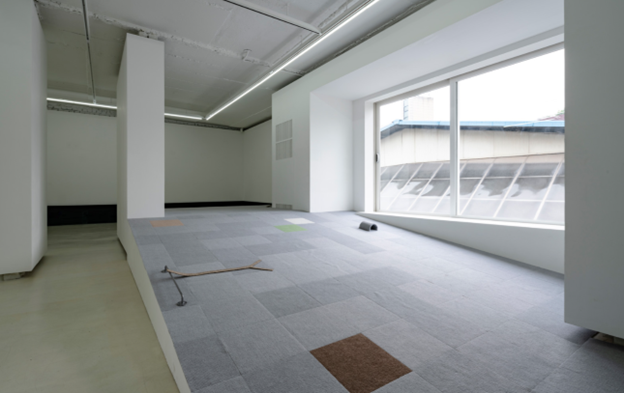
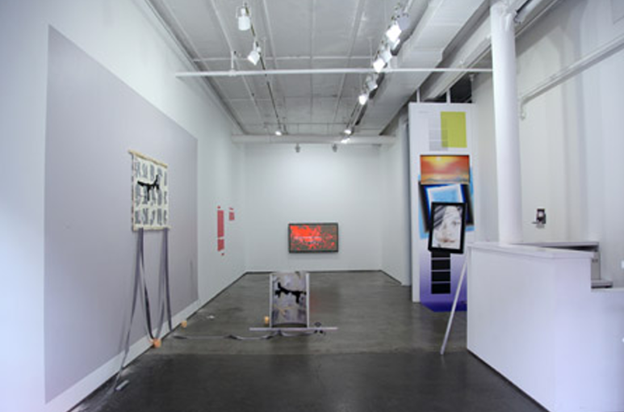
3. When Alice wakes from her dream, she realizes that everything was a dream. Now it is your turn to wake and return to reality. Alice in Wonderland makes us think about a reality that was “strangely” not strange at all at the time (the absurd British society of the 18th-century Industrial Revolution). As you leave the large “experience hall,” expecting yet another illusion, you step onto the wooden floor of the adjacent room—and are bewildered. In a space where flatness and volume are mixed, following a more traditional exhibition grammar, you may find yourself unsure of where to look or where to go.
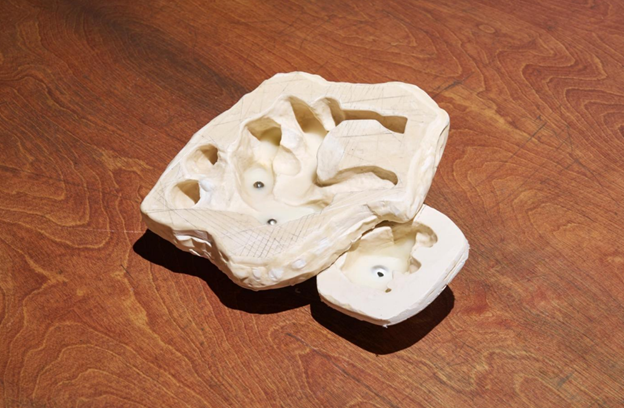
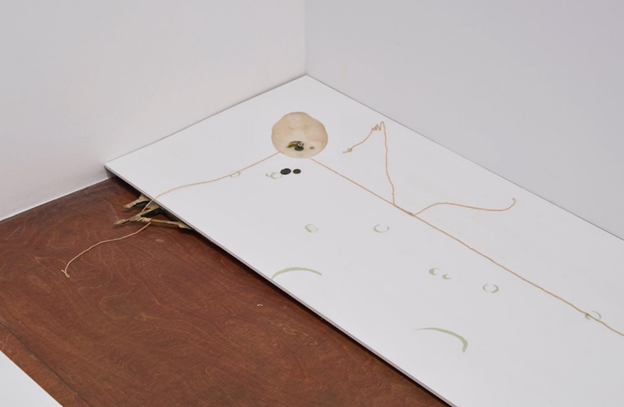
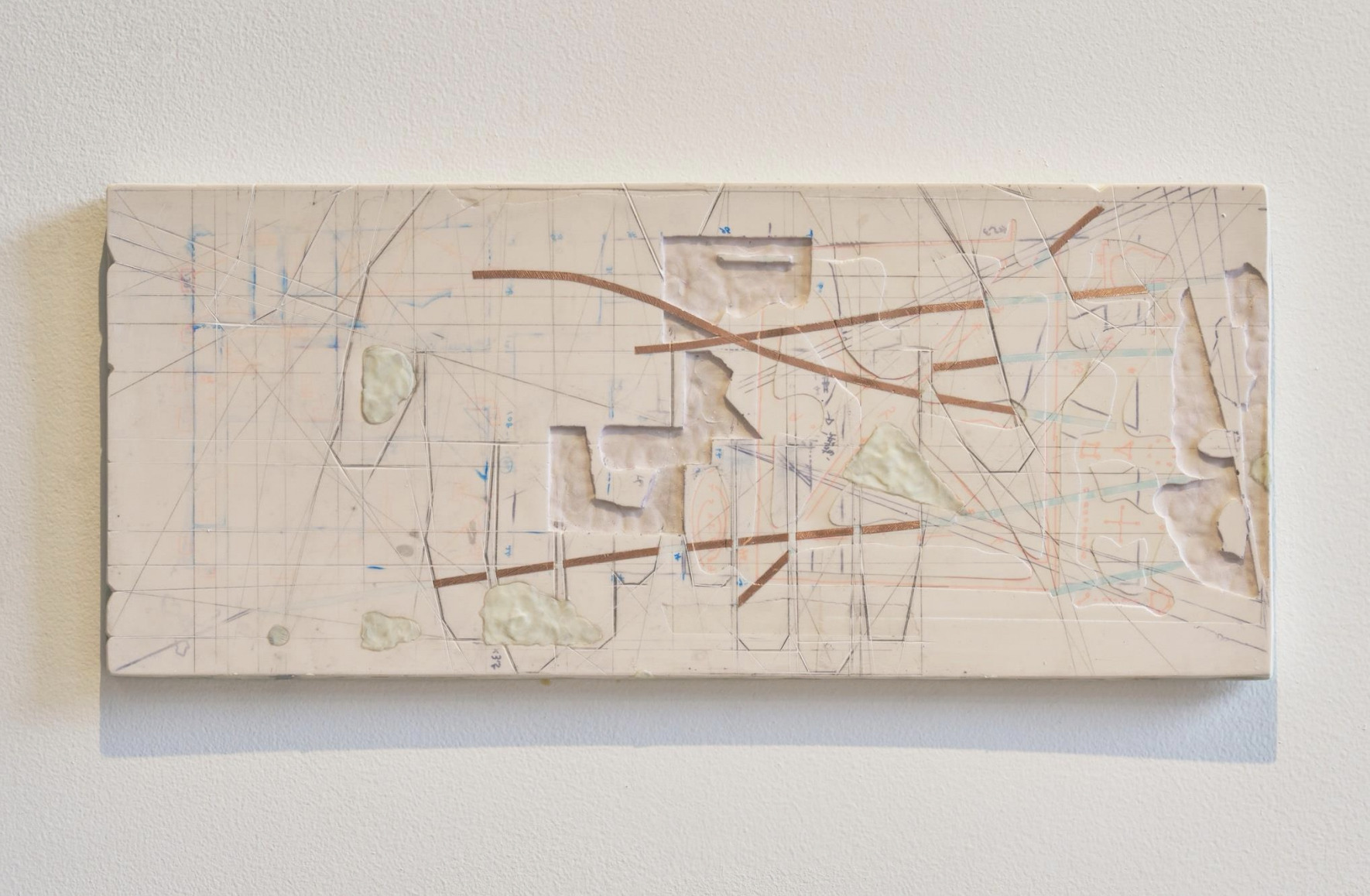
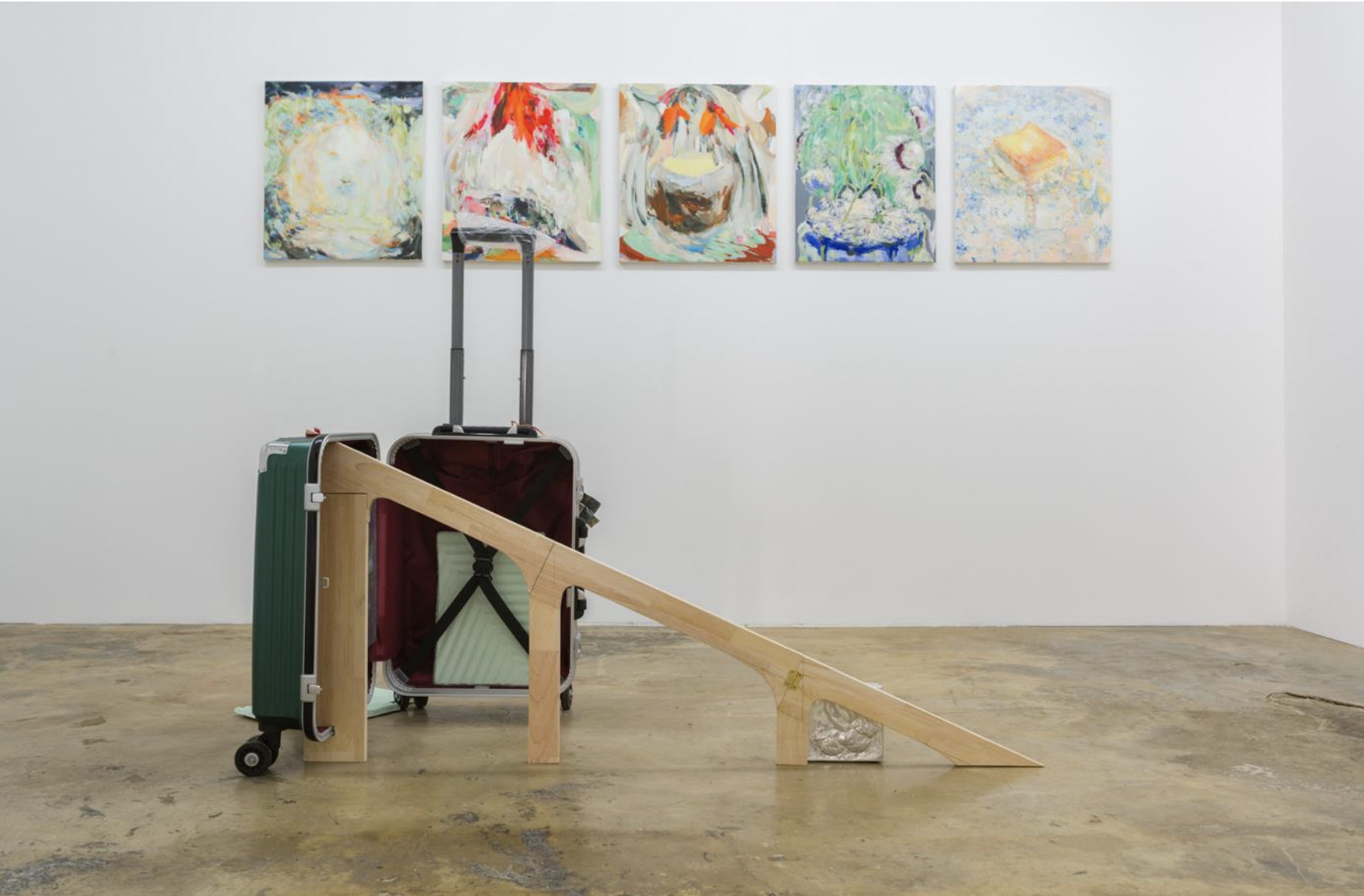
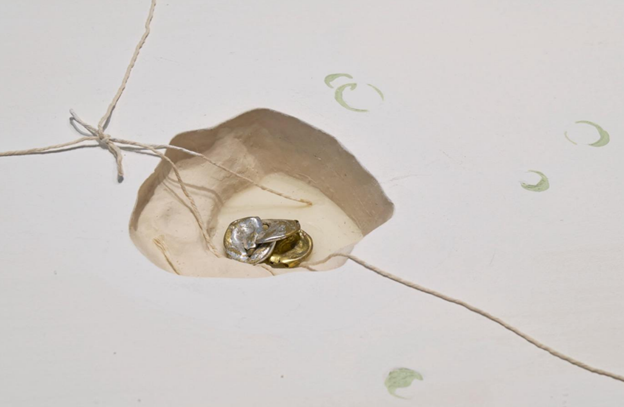
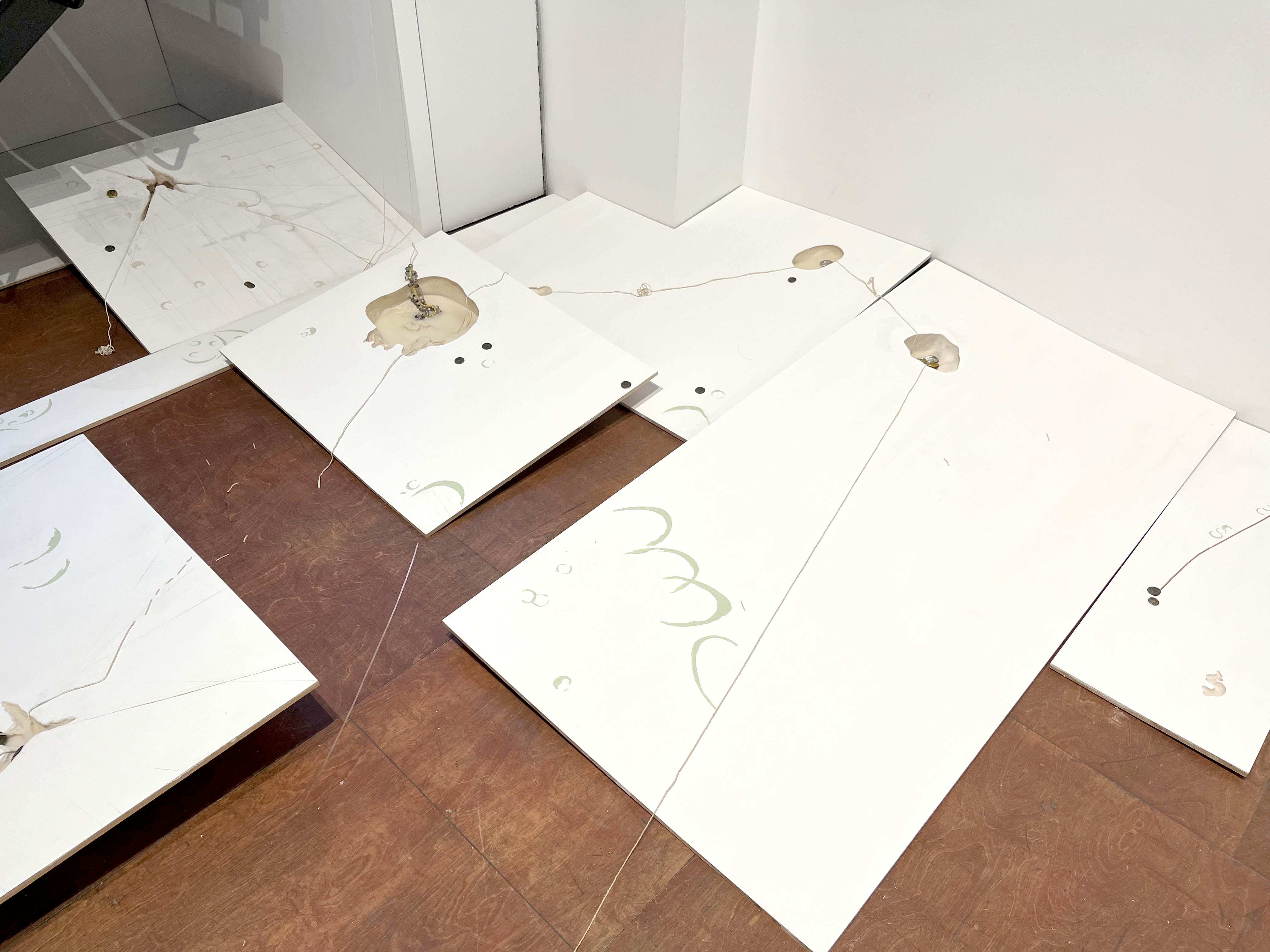
From the “strangely” arranged works at the entrance, the circulation seems misaligned, and the works appear to exist as if their functions have ceased. (This feeling will be even stronger if you have seen Dahwan Ghim’s previous works.) The mass of sculpture is dismantled, no longer functioning on pedestals, and materials exist without revealing their properties, indistinguishable from form. This space seems devoid of rules or order. Even if you maintain the posture of a diligent viewer and still hold generosity toward contemporary art, attempting to quickly grasp the characteristics of each medium by examining the surfaces will only increase “misunderstanding.”
Look carefully once again. Consider, for example, the direction of the gaze implied by the works, or how the situation has changed through their intervention in the space. The situation constructed by Dahwan Ghim, where images can only be obtained from specific positions and viewpoints, makes us question how artworks are received in exhibitions. However, if you manage to pass through the artist’s temporary “disruption strategy,” you will finally arrive at a place where, as you sit lightly, the “strange” landscape before you will appear different. June and July are seasons of good sunlight.
1-1-1. You peer into a slightly lowered space through an open door. You assume there will be works inside, but since you have almost finished the exhibition, you intend to glance and leave. Hesitating to descend, you only peek in, but something in the right corner can only be properly seen if you enter. Reluctantly, you move and descend the creaking stairs.
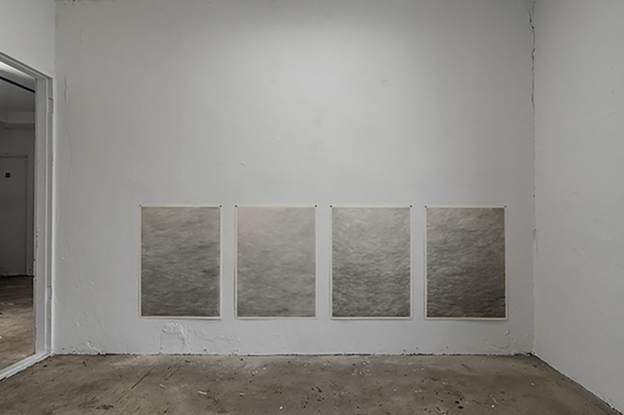
On what may or may not be a trunk, hangs a “strange” drawing. It looks like a portrait, perhaps of a family, but the background is the sky. Have you ever imagined shapes from clouds of various forms floating in the sky? Remember the “strange” image you saw at the window before entering. The process of image production is completed through the act of perception.