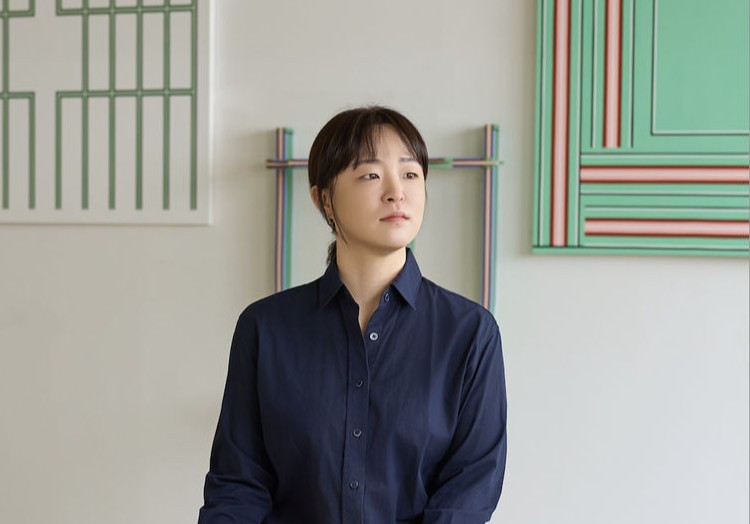
Artist Ahra Kim used to visit ancient palaces whenever she felt troubled or needed to take a break. Suwon, where she was born and raised, is a city of both tradition and modernity, with plenty of opportunities for the artist to observe and study the traditional dancheong patterns of ancient buildings. Walking along the ancient palace walls, one begins to wonder how these colorful patterns came to be painted on the exterior of these buildings, and where they originated.
According to research by Monk Manbong, bearer of the dancheong jang craft, important intangible cultural property no. 48 of Korea, not many historical records on ancient dancheong remain and the oldest surviving dancheong artifact in the present day is from a tomb dating back to the Western Han dynasty in China. Traces of dancheong patterns can be seen on this earthenware model in the shape of a house. The origins of the patterns can be traced as far as to ancient Greece and Rome, with similar patterns being found in ancient Mesopotamia, Islamic cultures, India, Taklamakan and closer to Korea, in the Mogao Caves of Dunhuang.
While many of the artifacts in the Mogao Caves have been destroyed by tomb robbers, colored murals can still be found in 469 of the remaining cave tombs. As the pigments used were difficult to obtain back then, dancheong was a symbol of wealth and power. Many historians believe that Western merchants travelling along the Silk Road brought these expensive materials to Korea through China, and with them came Buddhist symbols and patterns.
Monk Manbong cites the story of Solgeo from the ‘Samguk sagi’ and ‘Samguk yusa’ as the oldest documentary record of dancheong in Korea. Solgeo, who was a talented artist from birth, painted an old pine tree on the wall of Hwangnyongsa Temple, which was so realistic that birds would fly over to perch, hit the wall and fall. As the colors faded over time, the temple’s monks restored the painting with dancheong, after which the birds stopped coming. In this story, the introduction of dancheong to Solgeo’s painting damages its magical power.
The repetitive and vibrant colors of dancheong takes away the mystical realism of Solgeo’s old pine tree which could fool even birds, bringing it to a whole new world of abstraction. The writer of this historical record appears to be unaware of the magic of dancheong. The vibrant charm of dancheong has a different power to the realism of Solgeo’s painting. These patterns combine the radiance of modern color field paintings with the repetitive patterns of optical art, creating an almost dizzying visual phantasm.
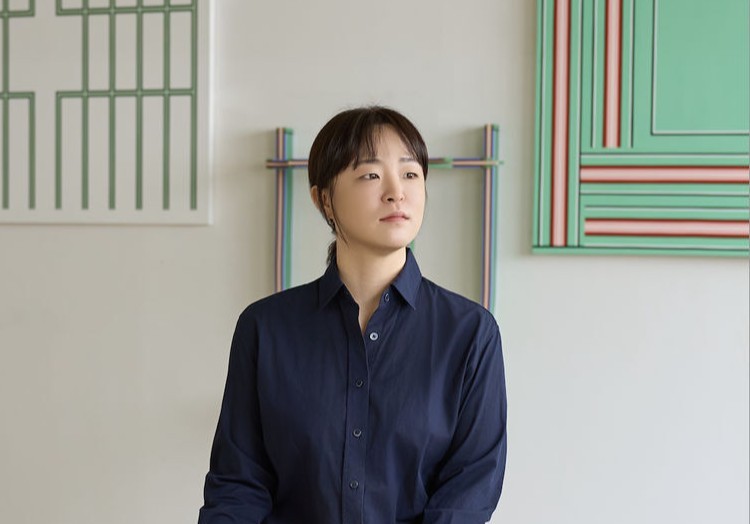
For many years, Ahra Kim has been creating works inspired by dancheong, mesmerized by its colors and abstract patterns. Dancheong is an old art form, adorning the eaves of old palaces and forest temples with its visual grandeur of densely repeating shapes. It might even go by unnoticed and ignored as a relic of the past, but the artist has reinvented it as something both traditional and new.
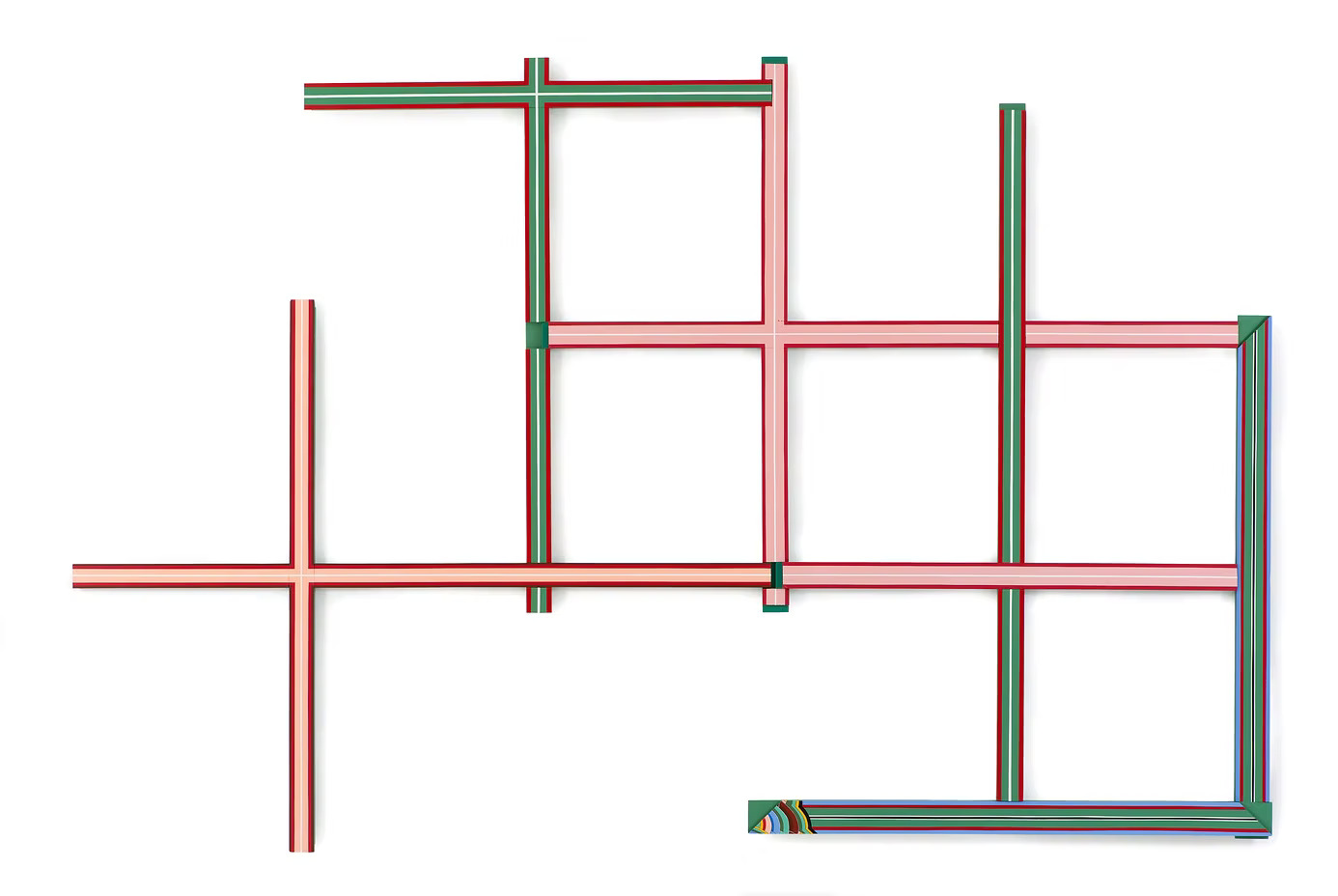
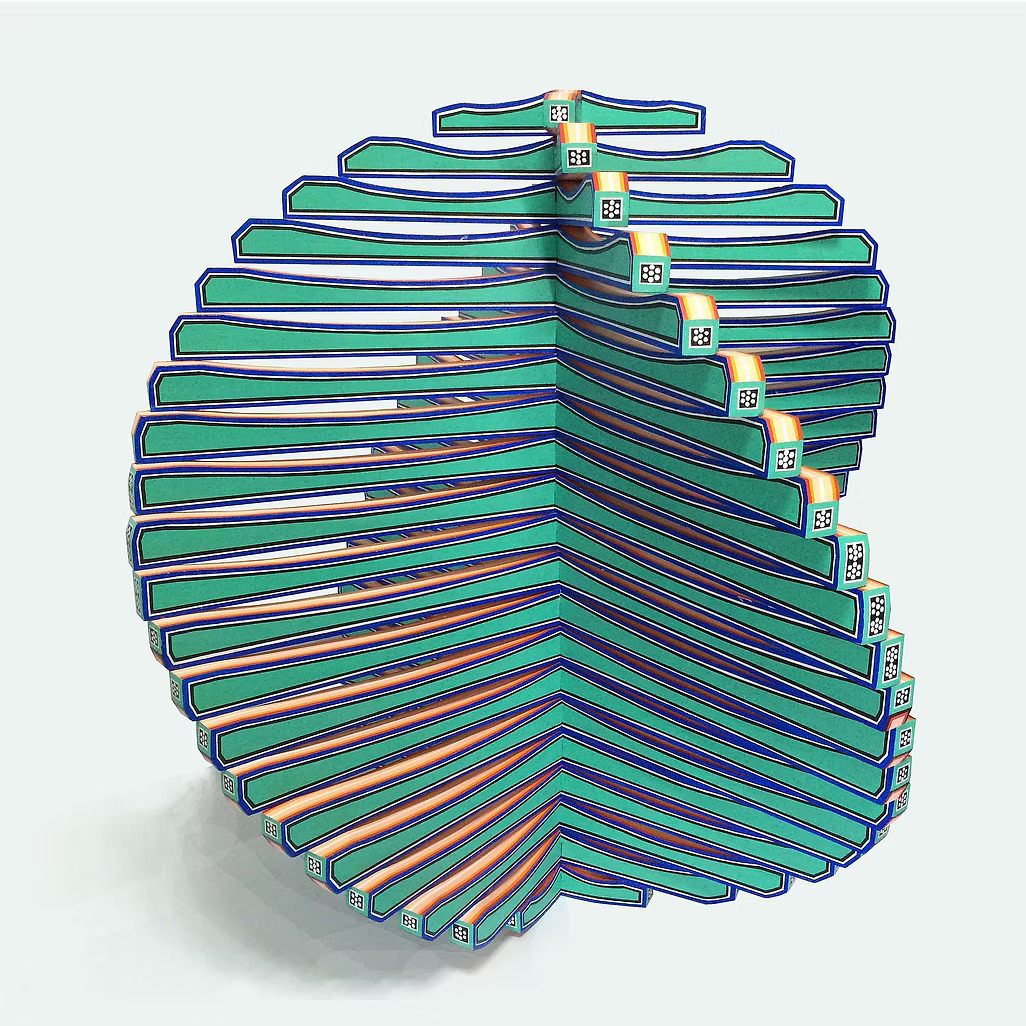
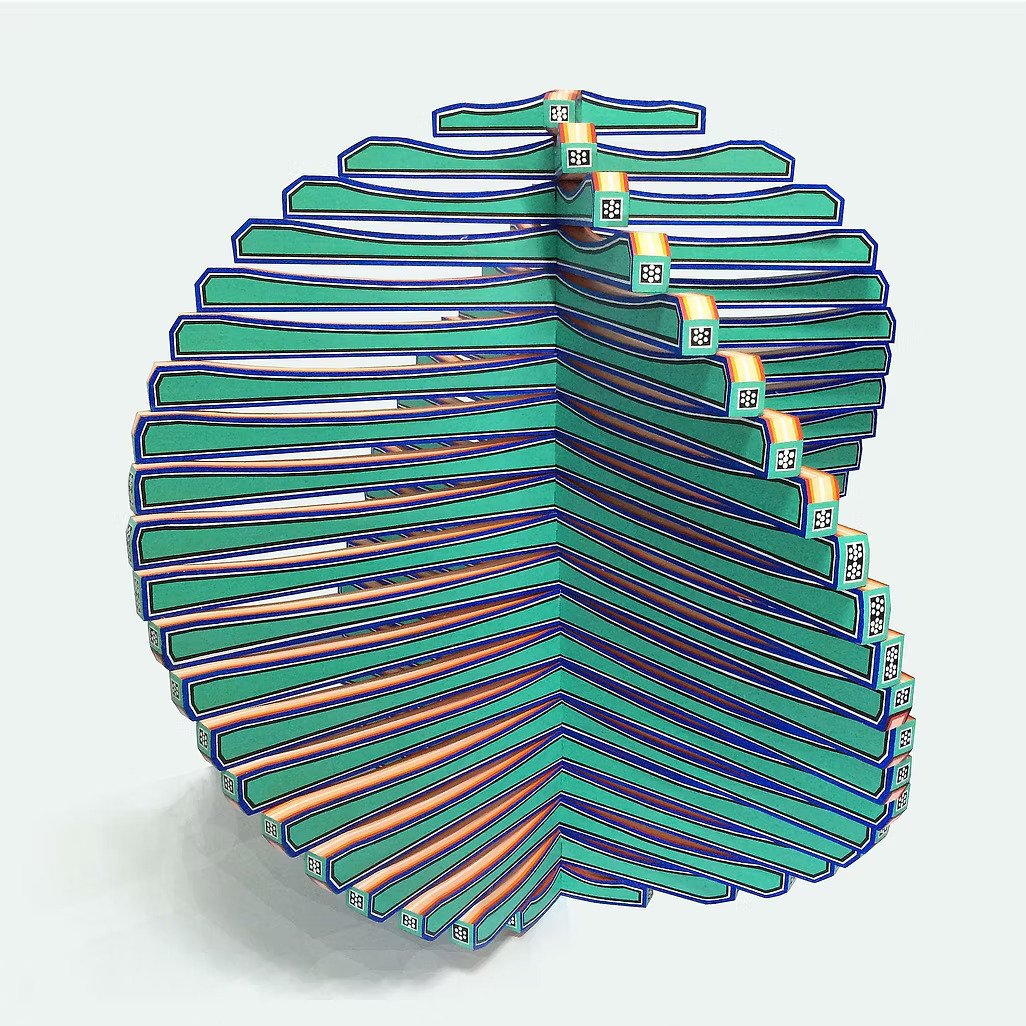
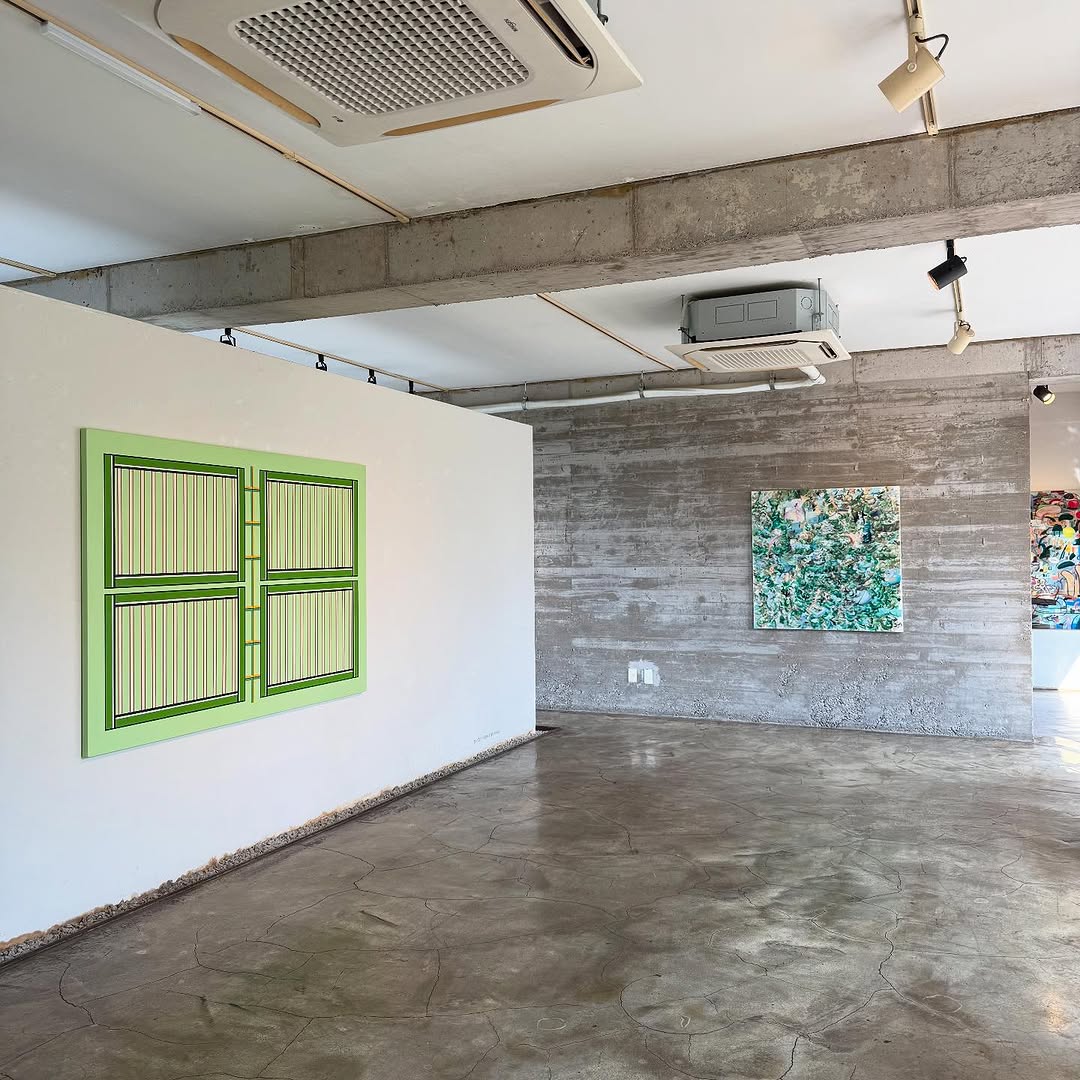
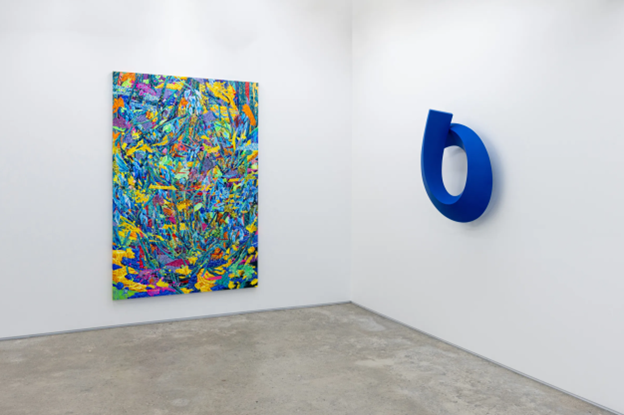
Ahra Kim’s first dancheong-inspired piece Jibhab #1 (Set #1), created in 2015, is a structure made of interconnected rafters painted with dancheong. It was, for a while, displayed in the windows of the Jongno Gallery in the heart of Seoul. The structure joins two twisted circles painted in the classic dancheong combination of turquoise green with blue outlines, and the six petaled taepyeonghwa motif at ends of each rafter. In Jibhab #3,4,5,8 (Sets #3,4,5,8) produced from 2016 to 2019, she takes the rafters structure and lays it flat on the canvas in surrealist digital graphic images. Sky blue, deep green and red for the taepyeonghwa pattern are the only colors used in this project.
In Korean Buddhism, color is used as a concept to explain the oneness of the perceived (color) and the perceiver (mind) based on the theory of dependent origination, and the tenets of “Saekjeuksigong (色卽是空)” of Banya thought, “Ilcheyushimjo (一切唯心造)” of Hwaeom thought, and “Yushikmugyeong (唯識無境)” of Yushik thought. In other words, no color can exist on its own, and color meets color to form a co-dependent relationship under the law of dependent origination. Color occurs in relationship, and is constantly changing, not permanent.
The meaning of the line ”Saekjeuksigong gongjeuksisaek (色卽是空 空卽是色, color is emptiness, emptiness is color)" in the Banyasimgyeong (Heart Sutra of the Perfection of Wisdom), one of the key scriptures of Korean Buddhism, is that the entire material world itself is emptiness. In other words, no object exists as a fixed reality. Kim’s work begins with clearly observing and categorizing the colors of dancheong. The colors resonate and combine with each other, sometimes being in opposition, entwining and tangling together as they line up within the screen.
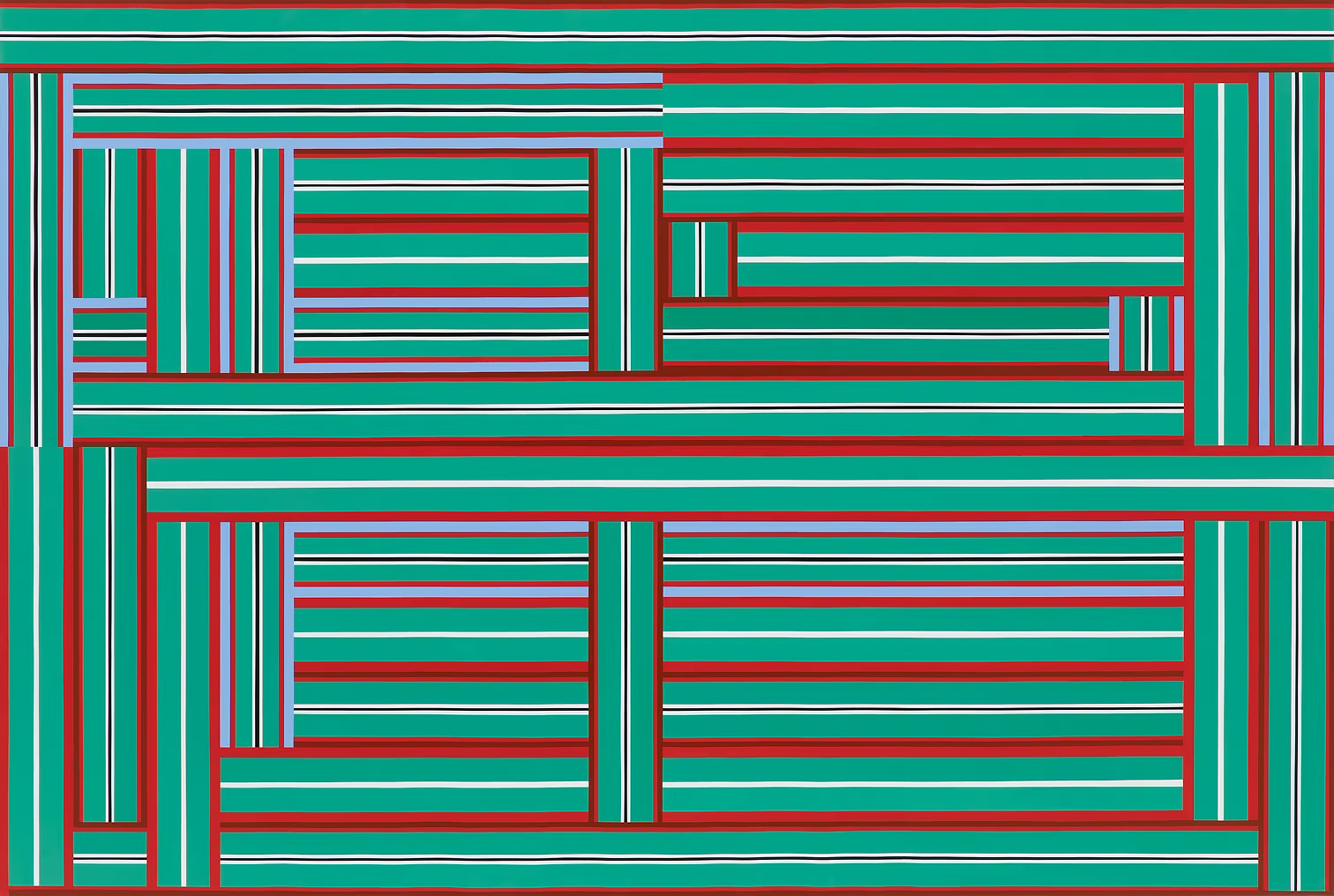
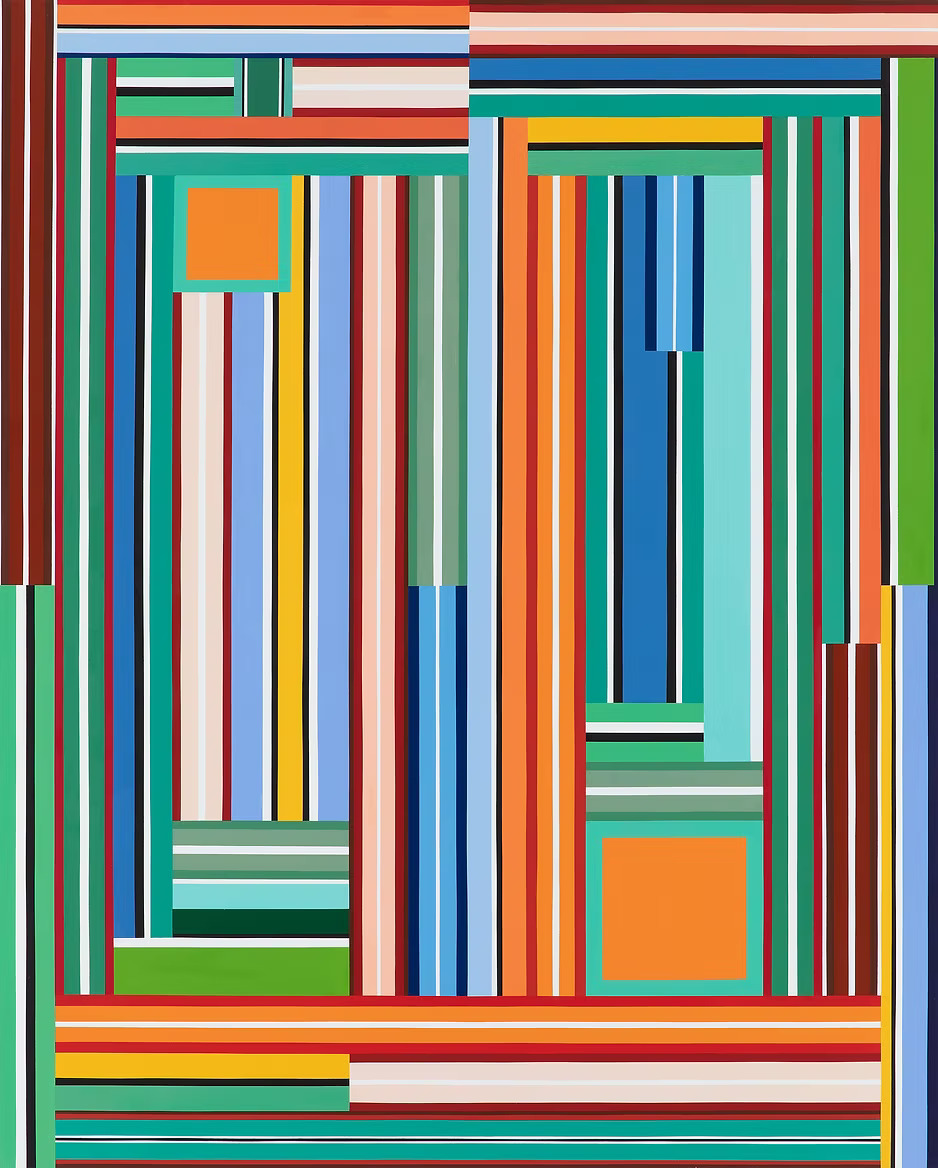
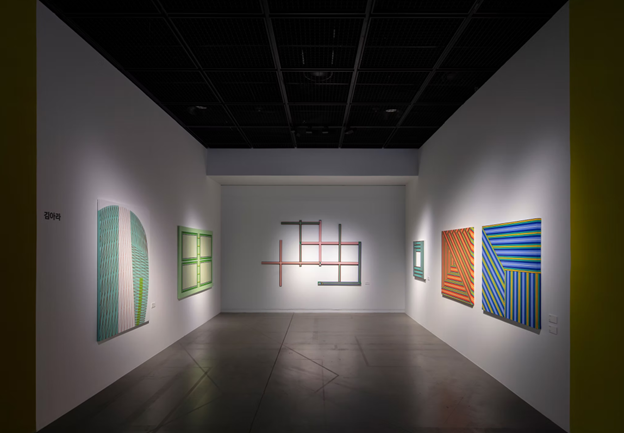
In her 2016 piece Untitled, the artist experiments with even more geometric and abstract forms. Where the Set series were three dimensional expressions of the rafters structure, this abstract painting is a flat pattern created by weaving together yellow, sky blue, red, orange and white threads. Two yellow lines separated by block borders follow a sky blue and turquoise pattern to meet a sky blue band with white stripes. Following this, the artist went fully into pattern making with Jibhab #6 (Set 6), which features repeating rhombus shapes overlaid with spinning sataegeuk motifs. Within the monotony of patterns, the artist experimented with geometric line divisions and combinations of traditional motifs on circular backgrounds, or explored new formats in using text and geometric abstraction as seen in Gyunhyeong (Balance) produced in 2018.
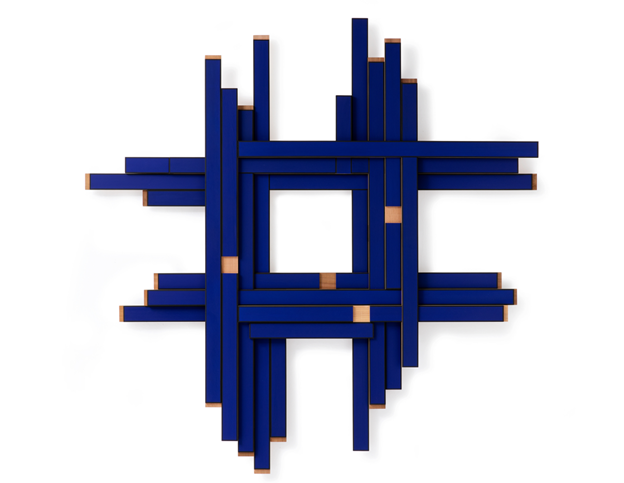
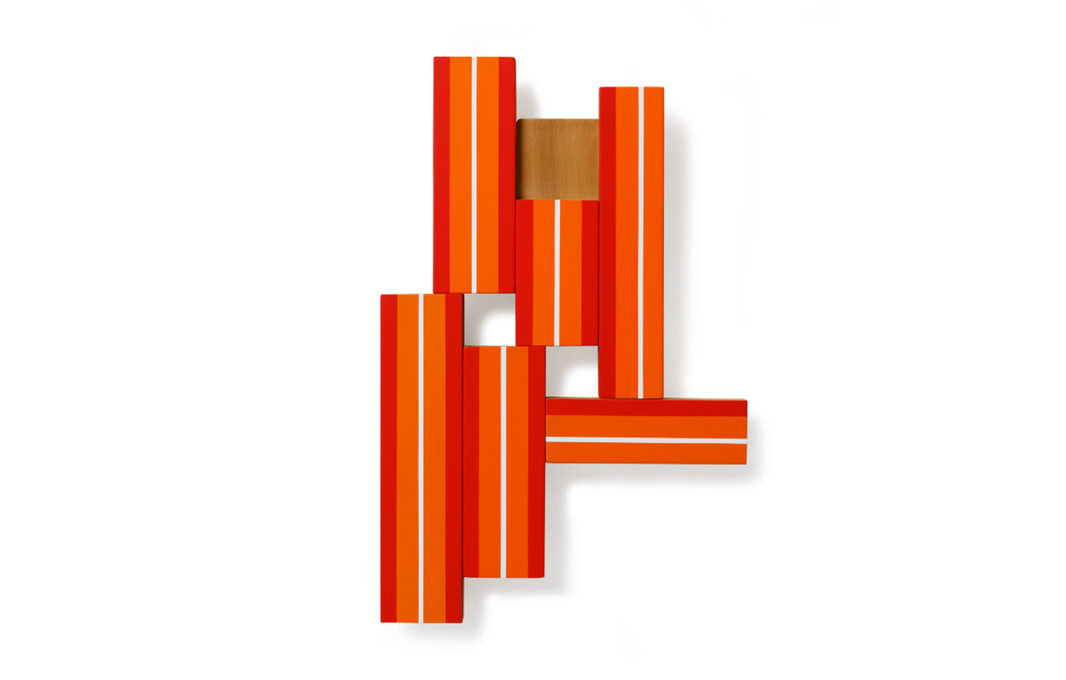
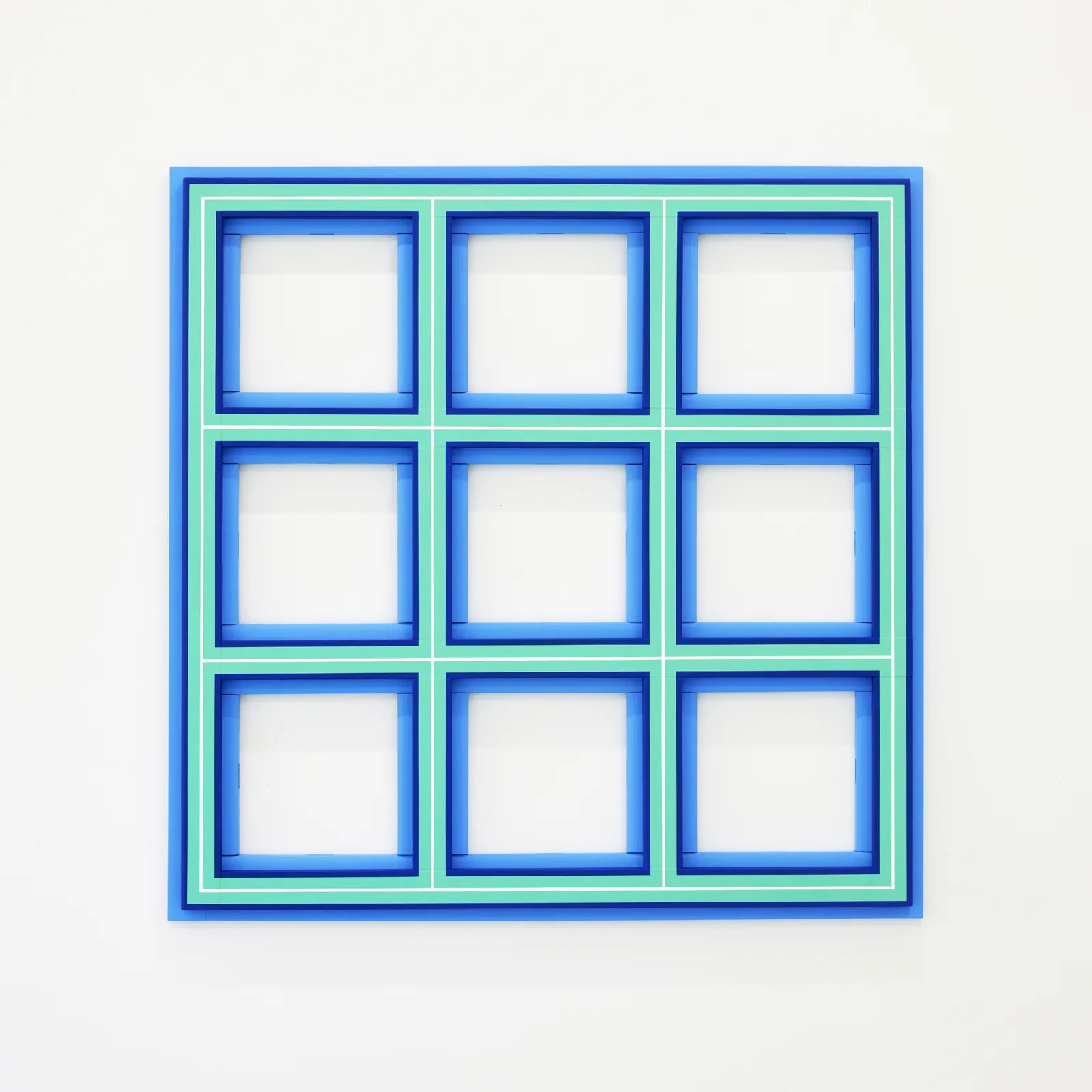
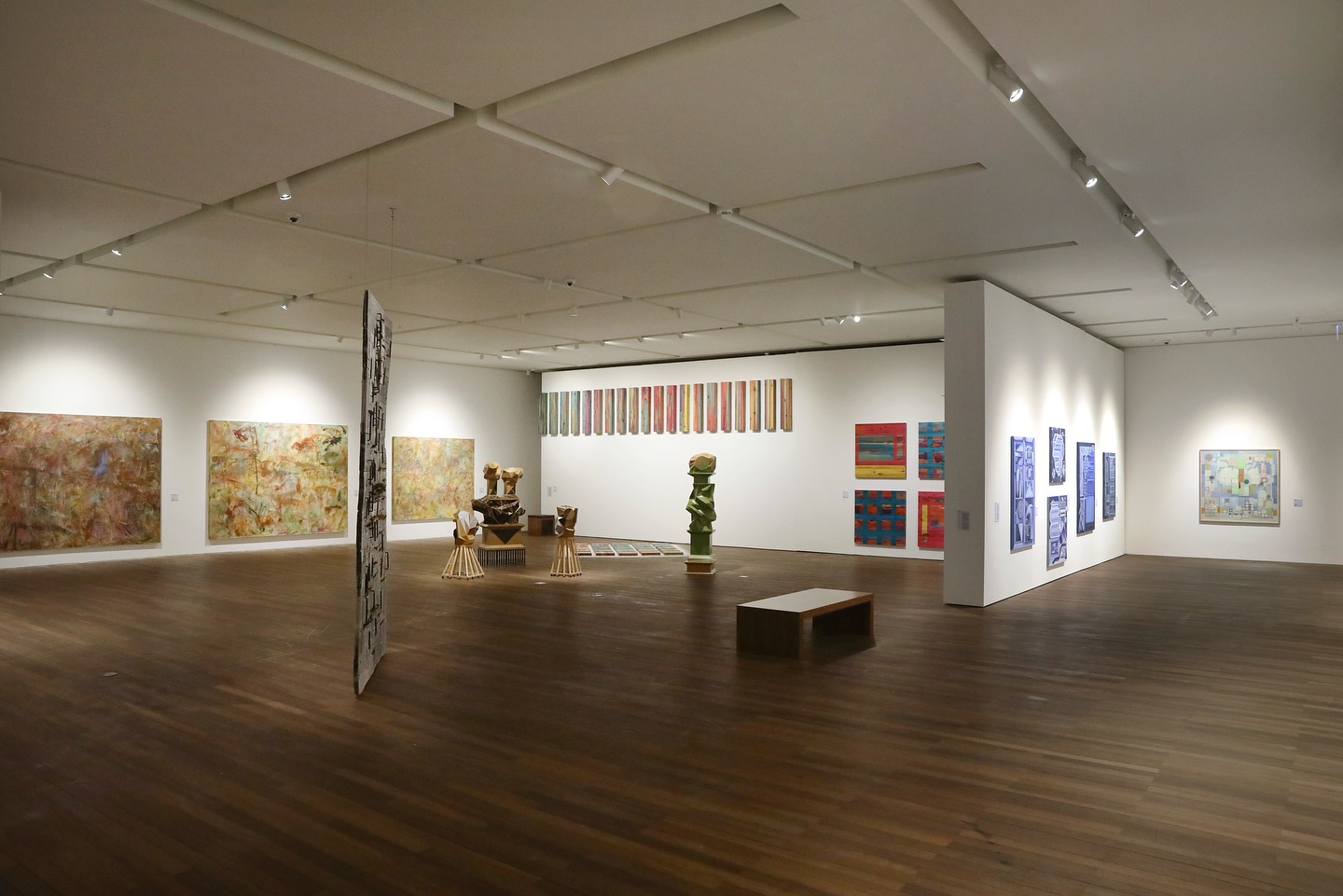
In the same year, she also created Eolkida (Entangled) which is filled with overlapping diagonal lines and clearly distinguishable from her earlier two dimensional pattern art. Heundeul Heundeul #1, #2 (Sway Sway #1, #2) feature colorful stripe pattern pieces waving on the canvas like a frame taken from an animation. Unlike her earlier works which were more apparently based on dancheong patterns, the only trace of tradition in these pieces is the mix of colors in the striped pieces. Such bold experimentation is taken a step further in the Sagakhyeong paeteon #1, #2, #3 (Square Pattern #1, #2, #3) series produced the following year. The colorful stripe patterns reminiscent of door frames and door posts of ancient palaces follow the outline of the square canvas, intersecting and overlapping each other.
Perhaps what the artist wants to express through such work is present reality rather than “taxidermied tradition”. In Gongjonhaneun imiji #1, #2, #3, #4, #5 (Coexisting Image #1, #2, #3, #4, #5) produced in 2019, hints of the dancheong aesthetic can only be found in the light turqoise background or thin lines of color, with minimal trace of traditional motifs or patterns. Muje-jeobhab (Untitled-Connect) produced in the same year further emphasized these linear elements while applying actual dancheong motifs to a very limited extent.
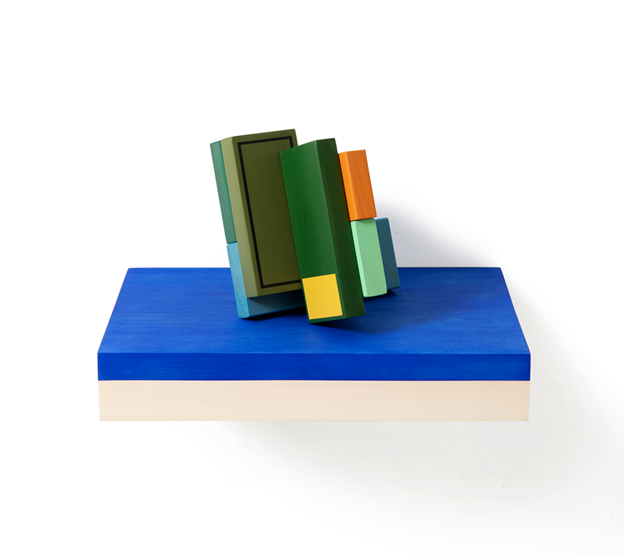
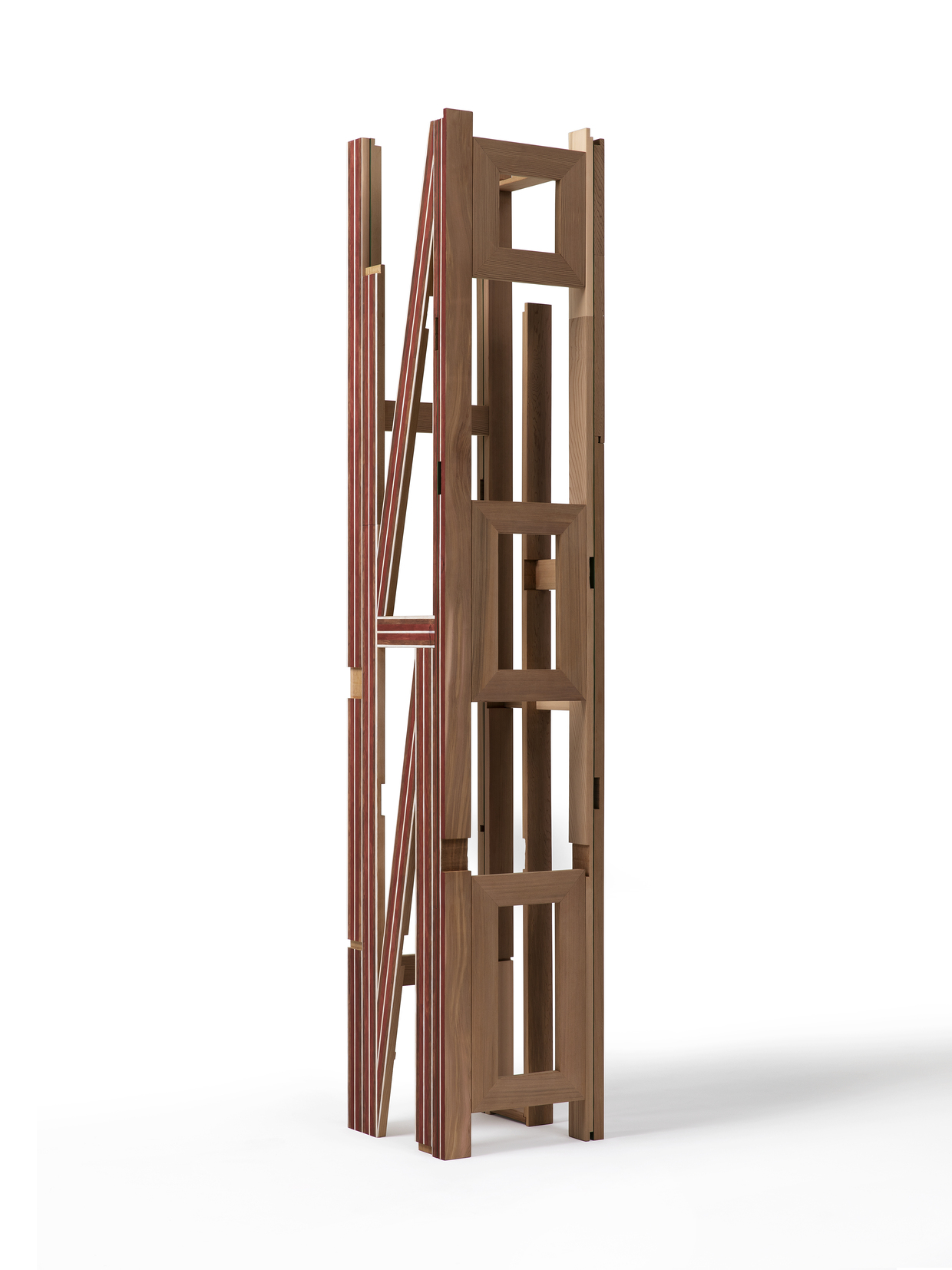
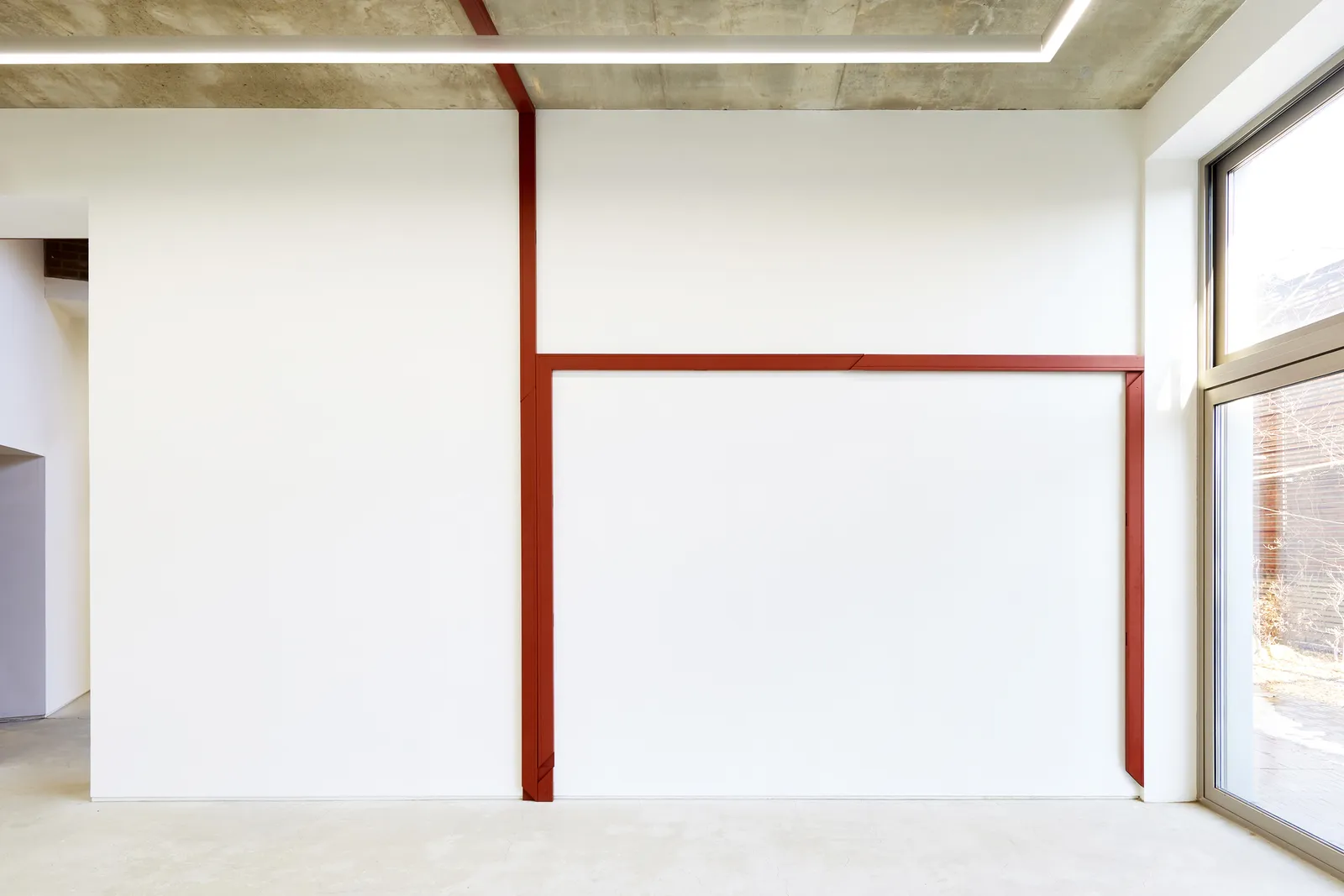
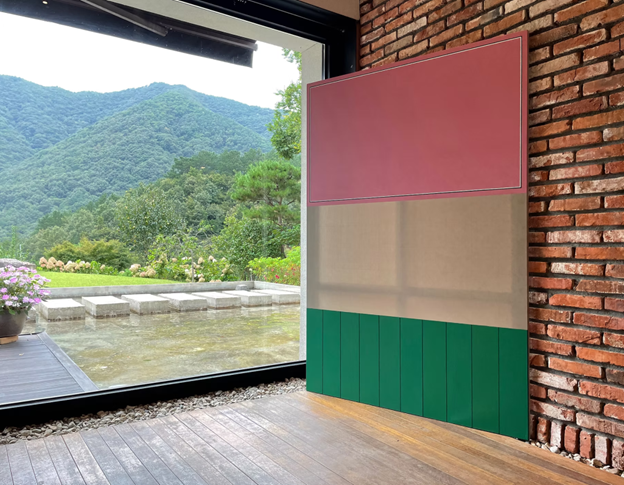
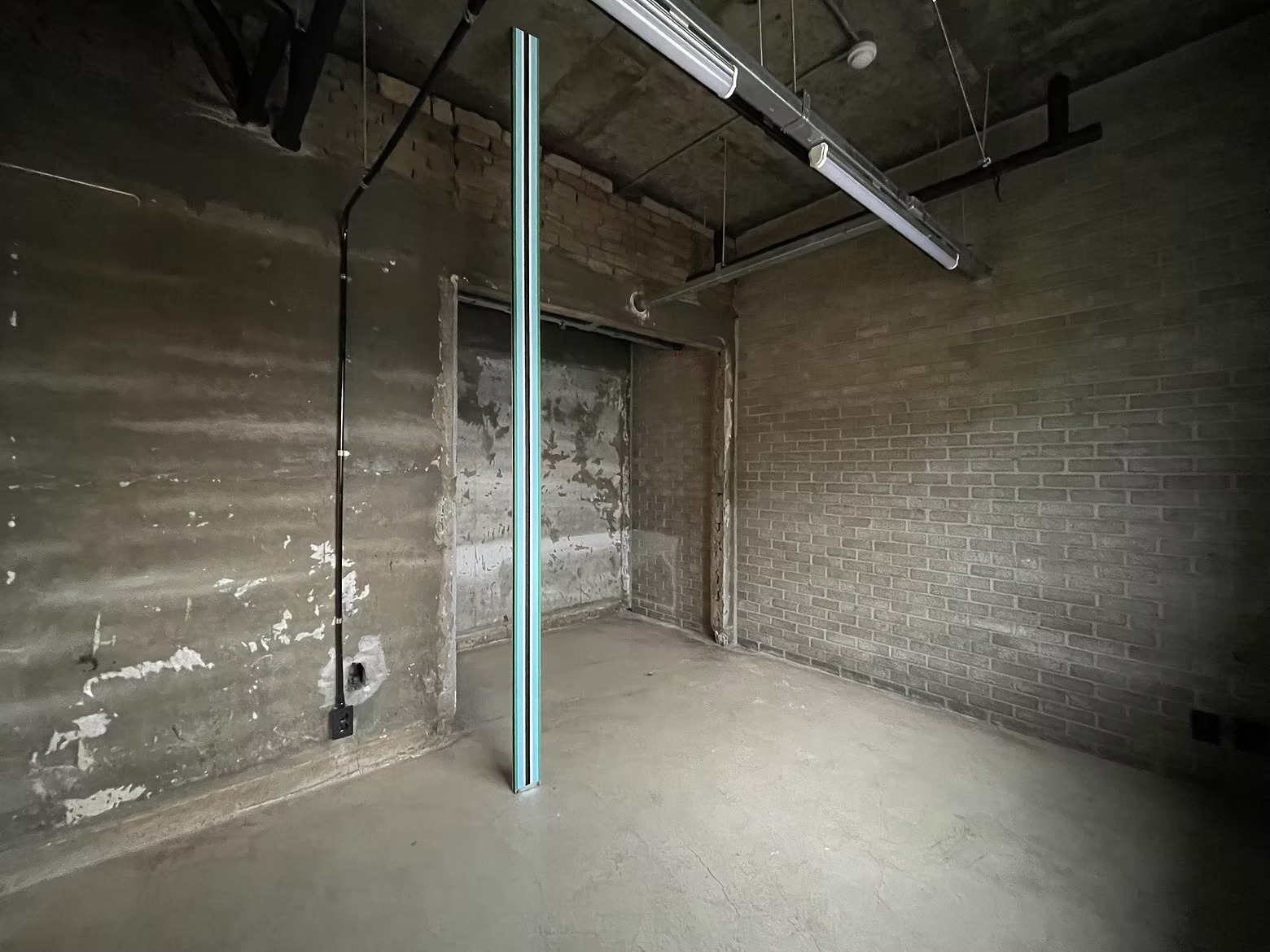
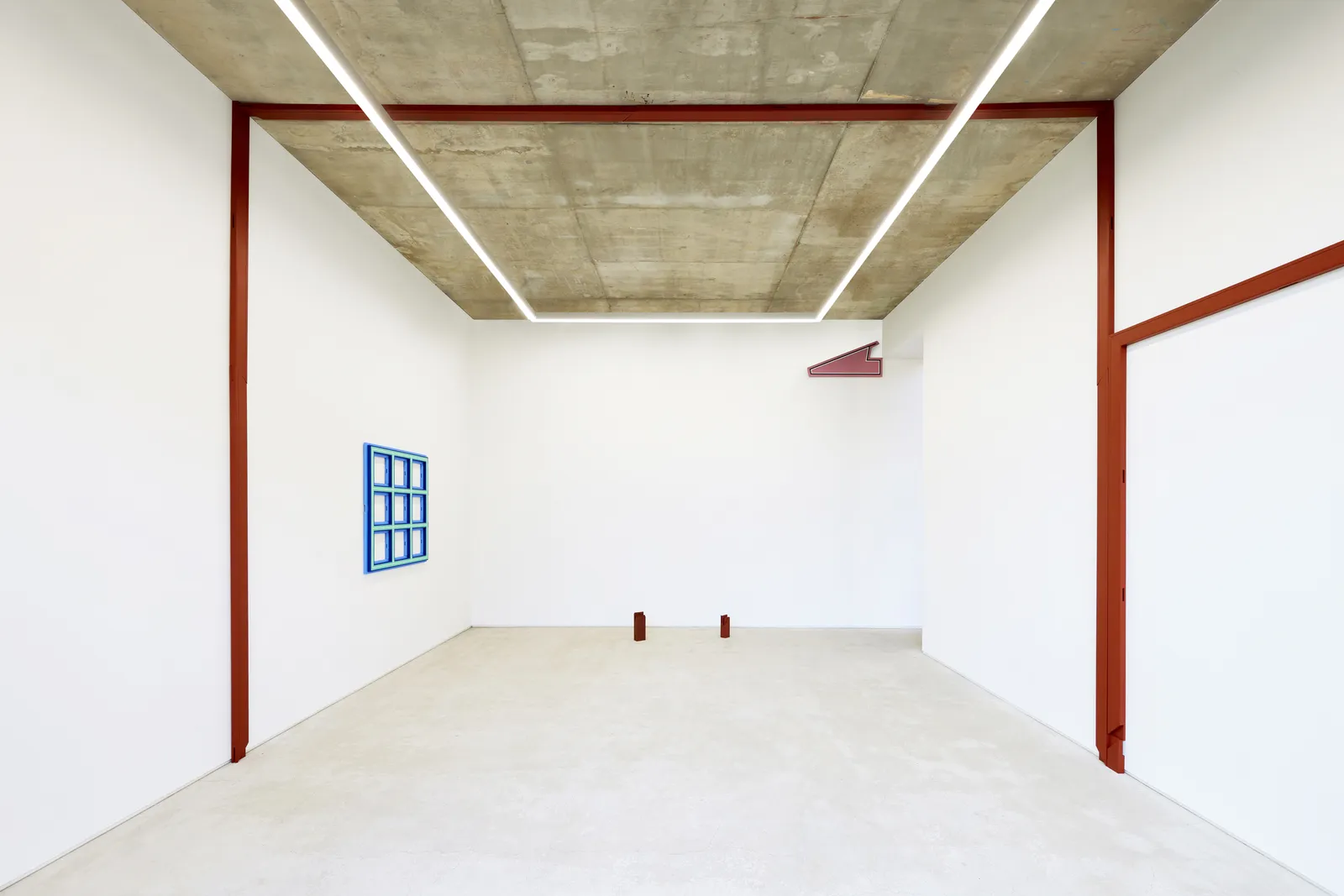
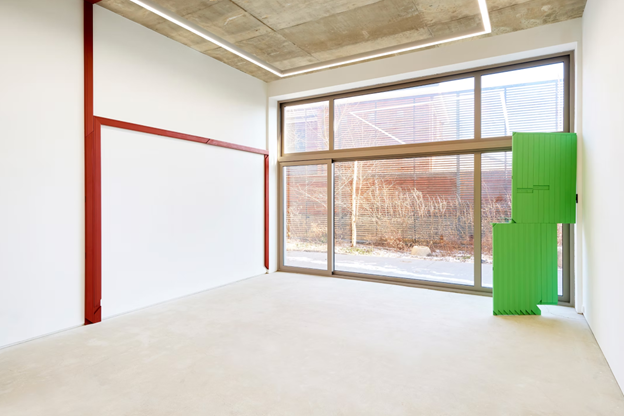
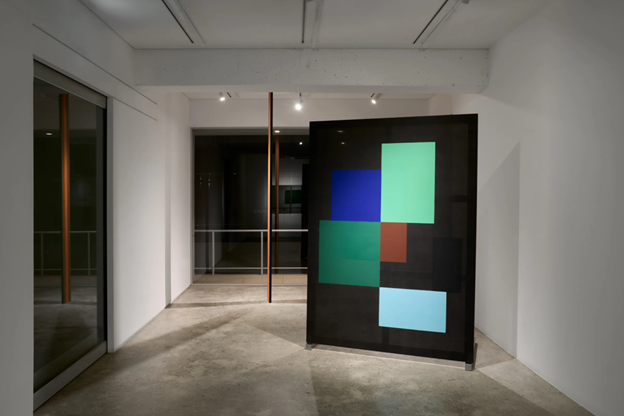
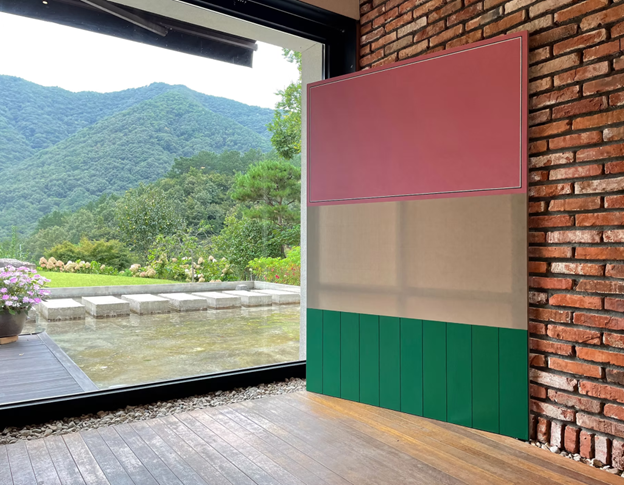
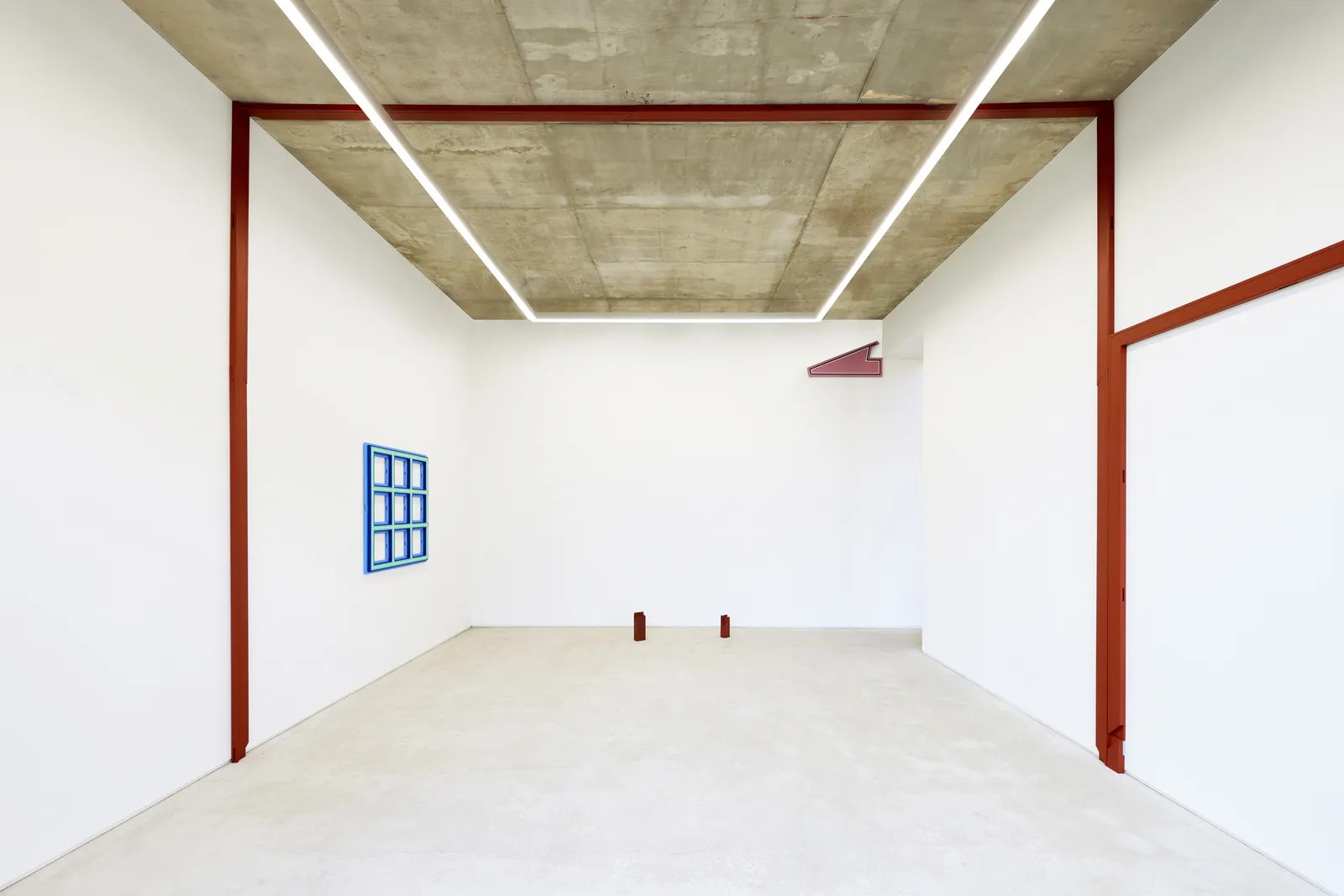
The artist’s recent work created during residency at the Factory of Contemporary Arts in Palbok (FoCA), Jeonju reads as an extension to the objects installation seen in this series. The ratios and structures of the colors and patterns are those typically seen in ancient palace buildings, temples or traditional houses. These patterns and structures are very familiar to the typical Korean viewer, who would find it easy to infer the whole from the parts presented.
Artist Park Chan-gyeong, who applied the small art museum narrative to his solo exhibition under the National Museum of Modern and Contemporary Art (MMCA) Hyundai Motors Project 2019, said the following about “taxidermied tradition.” “Tradition is a thing that touches the ‘subconscious’, a power that grabs at the back of your head, a captivation that gets in the way of ‘self-modernization’, and as they say these days, the archetypal ‘other’.
It seems the anxiety that one has been removed from it always cripples one’s critical thinking and capacity for cultural acceptance. Thus, more interesting to me than modernization or the reconstruction of tradition, is the kind of ‘regionalized pain’ with only symptoms and no scientific diagnosis, where tradition haunts as an ‘other’, an unknowable object...”
The ‘tradition’ that Ahra Kim came across in ancient palaces is now deeply integrated into her work. It may be, to use Park’s words, an archetypal other that continues to get in the way of her modernization, a subconscious urge at the back of her head. Thus, she tries to escape it, but it only reappears to haunt her like a ghost, becoming a regionalized pain, a symptom without a diagnosis. In this way, the present and the past combine, get shaken up and tangled together to form colors, and transform into motifs that are like regionalized pain in her work. We may end up calling it yet another tradition.
I hope her work continues to evolve and change. When it finally reaches the state of being constantly changing and impermanent, we may find the color we’ve been looking for- the full color that is emptiness.