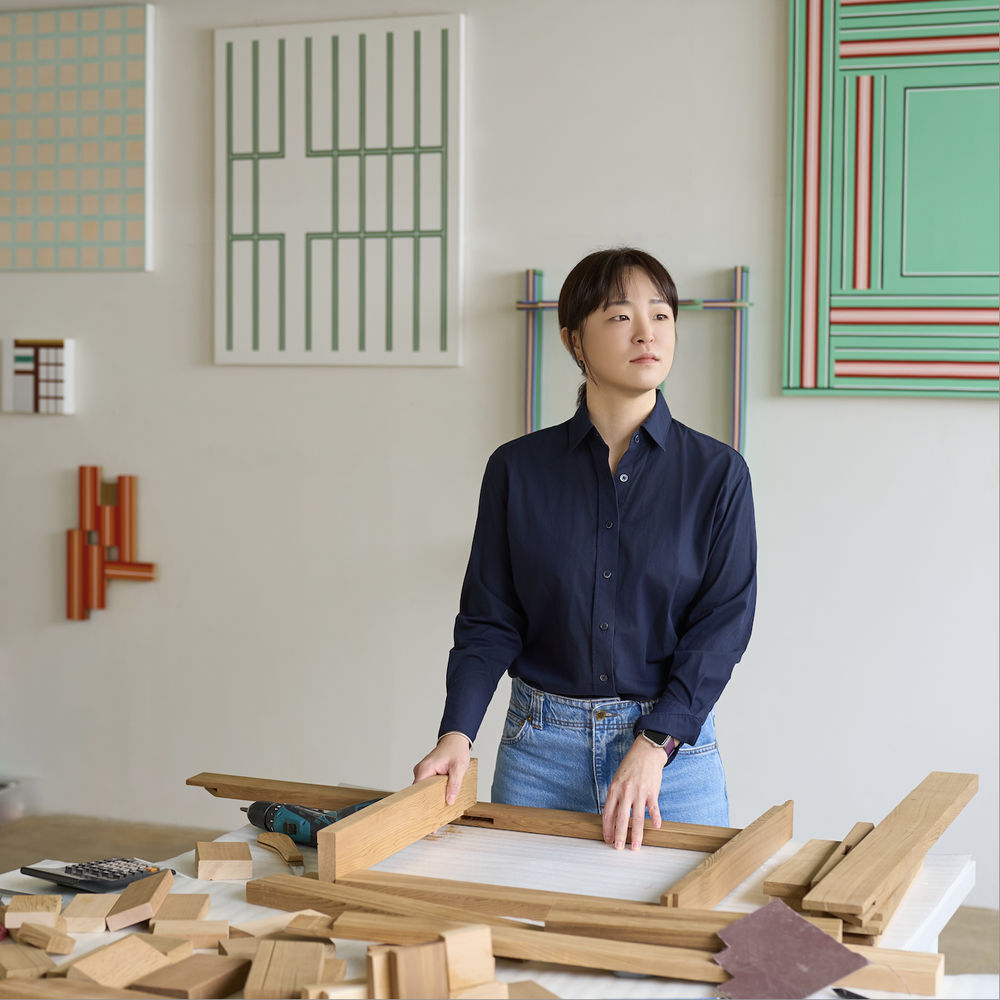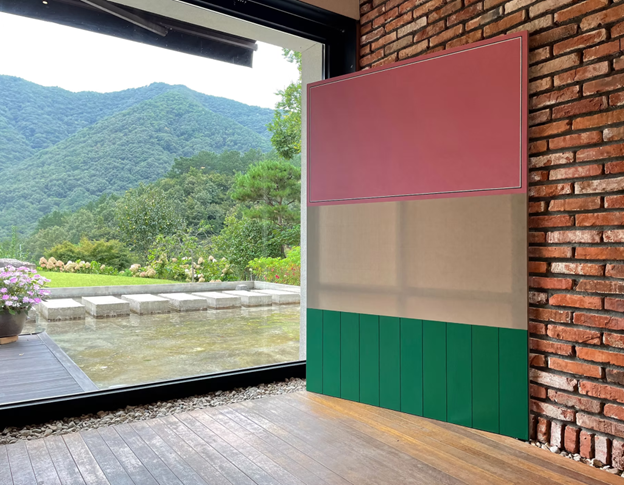


Ahra Kim (b. 1989) has developed a practice that moves across the boundaries of architecture, sculpture, and painting, exploring new formal languages at their intersection. In particular, she has focused on the structural aesthetics of traditional Korean architecture and interprets them through abstraction.
 
By dismantling and reconfiguring the structures of traditional architecture, her work reflects on the relationship between two- and three-dimensional forms, as well as the inside and outside of painting, while continuing to experiment along the boundary between tradition and the contemporary.


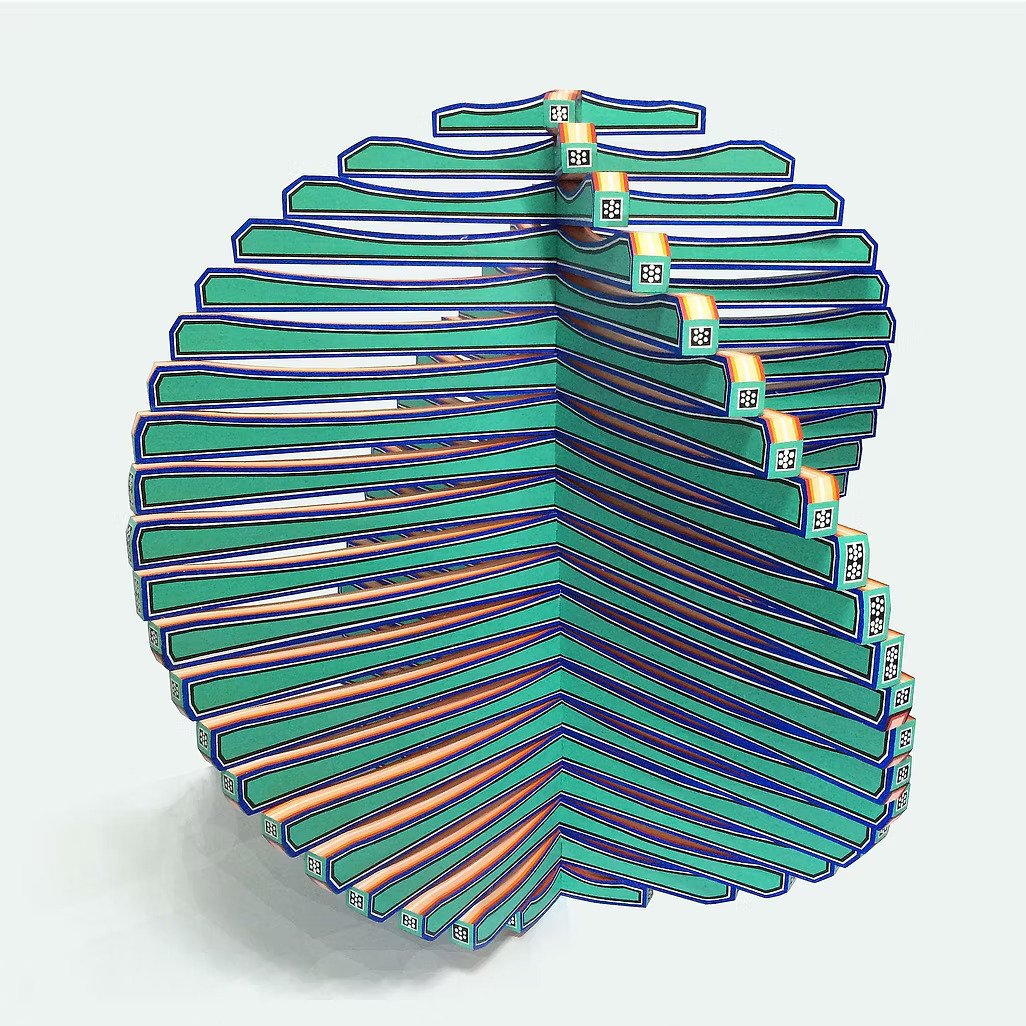
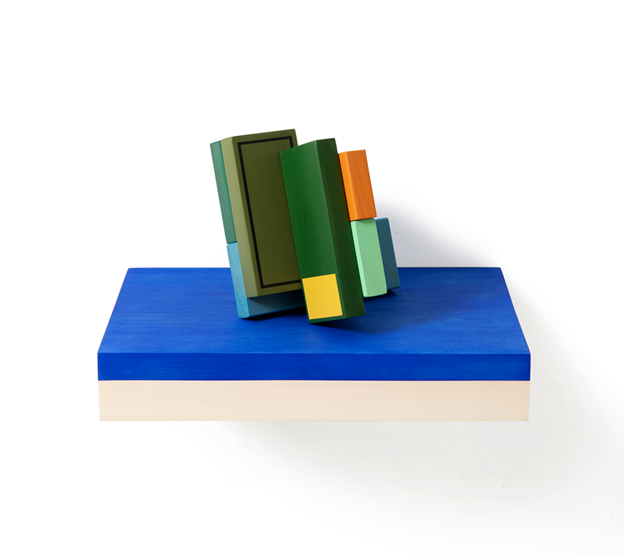
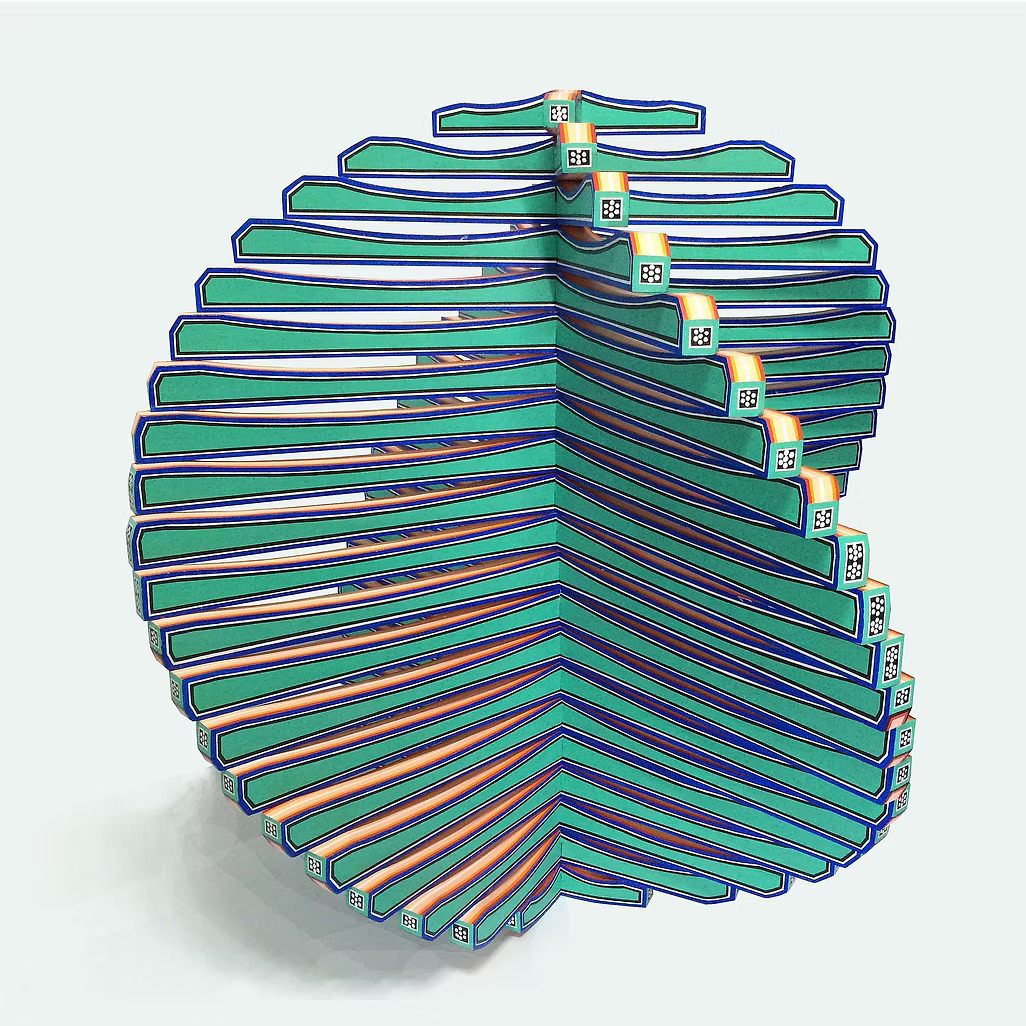
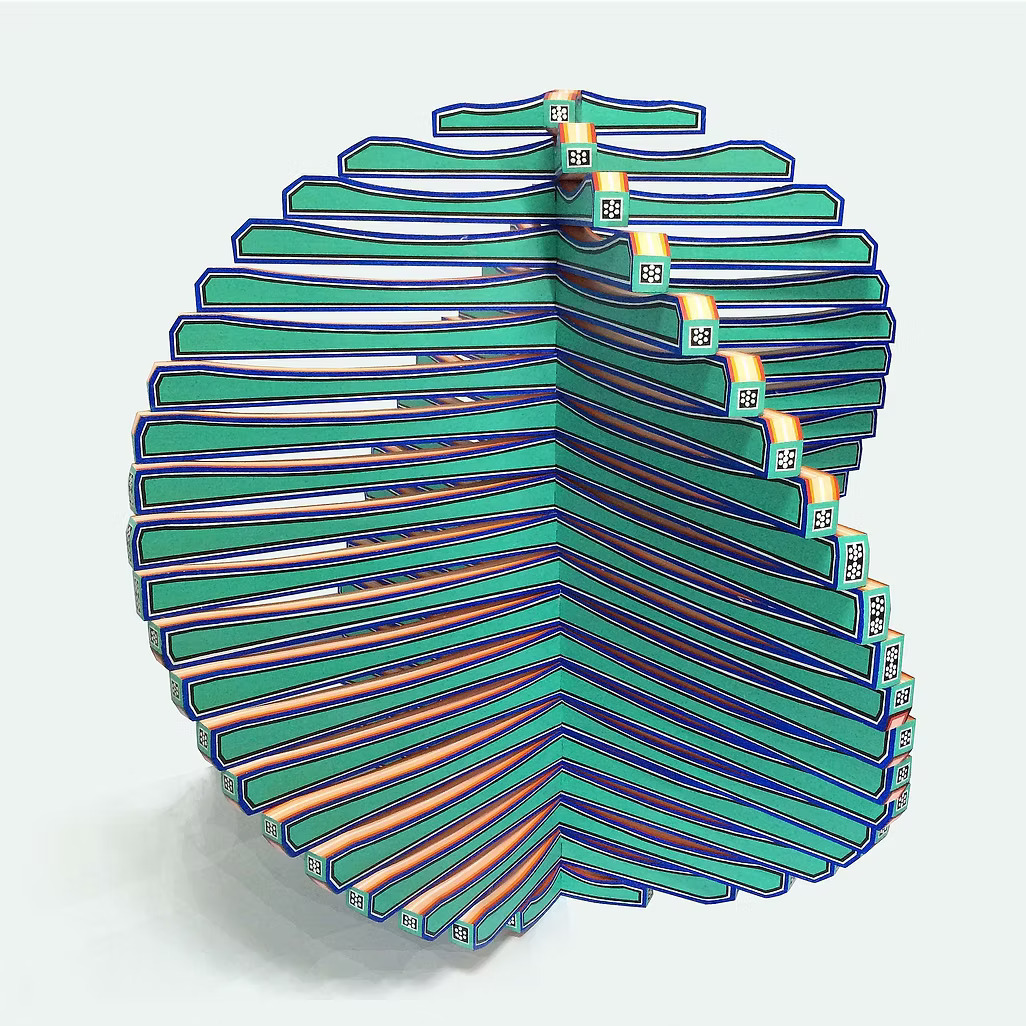
Ahra Kim, Set #1, 2015, Acrylic on wood, 60x60x60cm ©Ahra Kim

In Ahra Kim’s work, the canvas frame—one of the primary elements of her practice—is regarded not merely as a support for holding an image but as a physical and independent formal element. After completing graduate school, the artist began to feel the physical limitations of painting within the predetermined boundaries of a canvas frame. This realization led her to develop an interest in the frame of the canvas itself and the space beyond it.


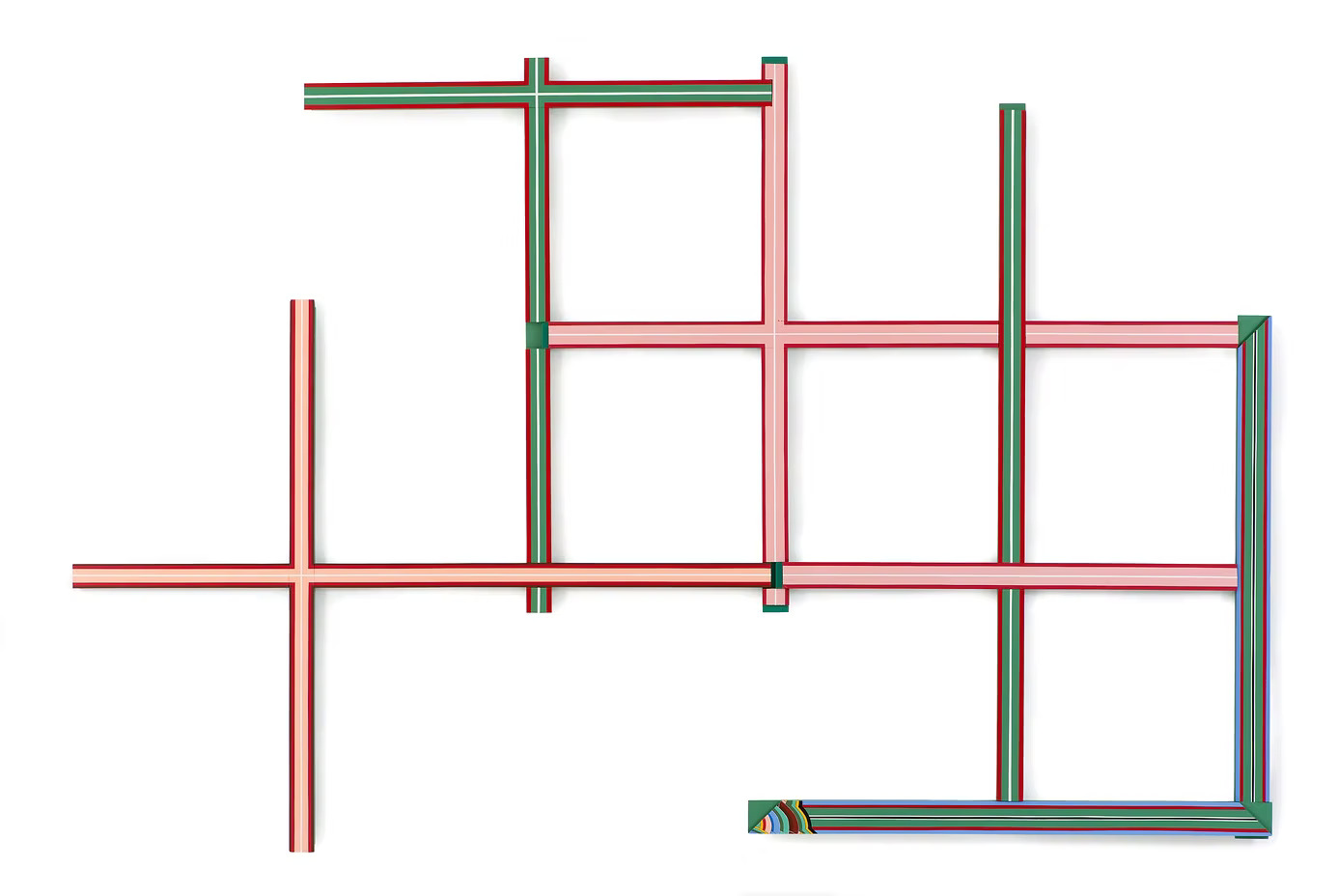
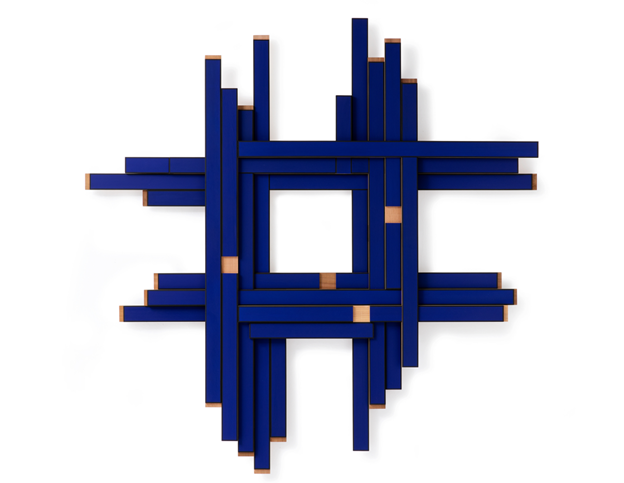
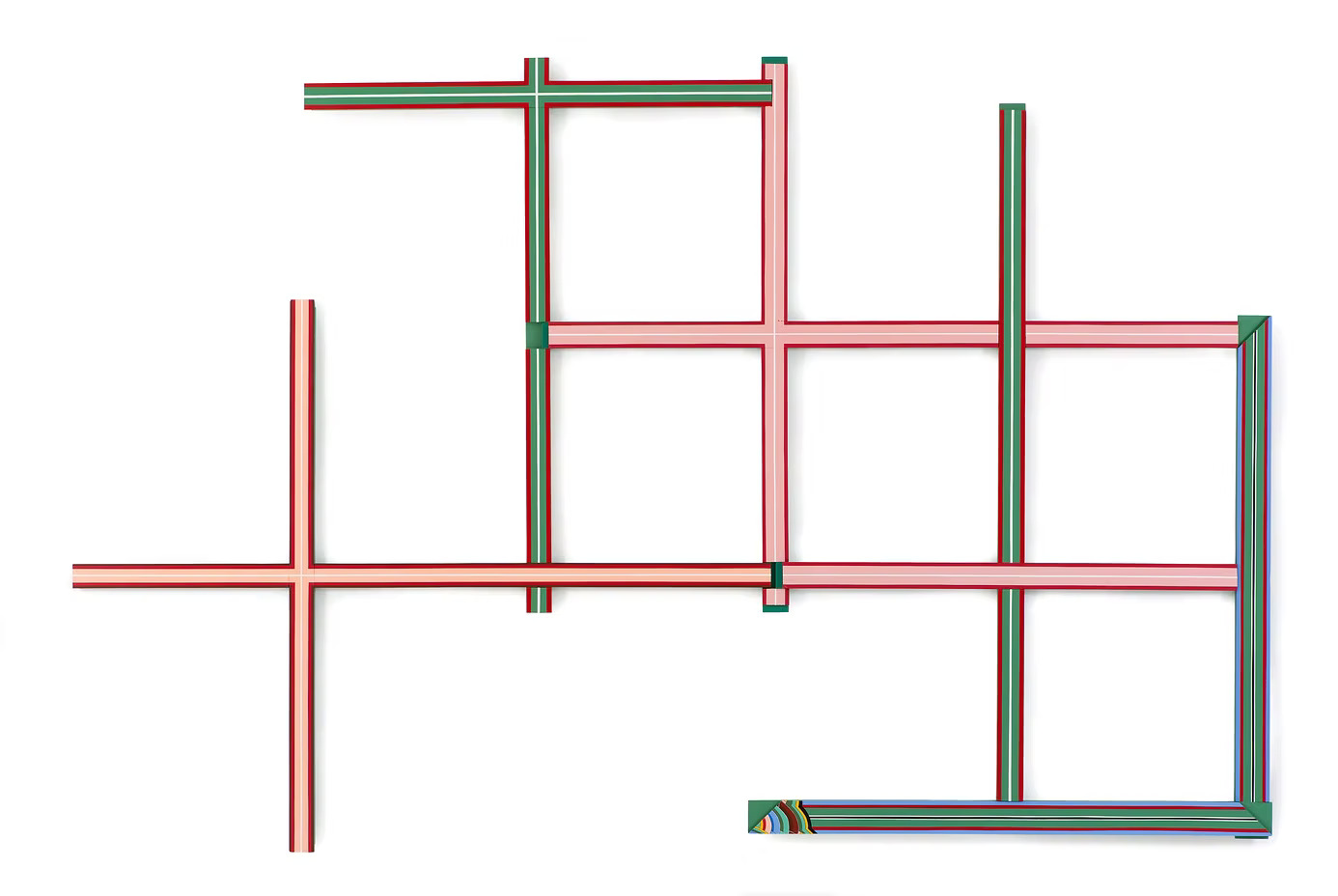
Ahra Kim, Untitled-Connection #1, 2019, Acrylic and pigment on wood frame for canvas, 165x257x2cm ©Ahra Kim

Ahra Kim drew a parallel between the structure of the wooden canvas frame—assembled by carving grooves and fitting the pieces together—and the joinery techniques of traditional Korean architecture, in which wooden pillars and beams are carefully carved and interlocked to construct a structural framework.
 
From this point on, she began to identify formal clues within the structures of traditional architecture, dismantling and reassembling the canvas to create original abstract works that embody the structural beauty of traditional Korean architecture.


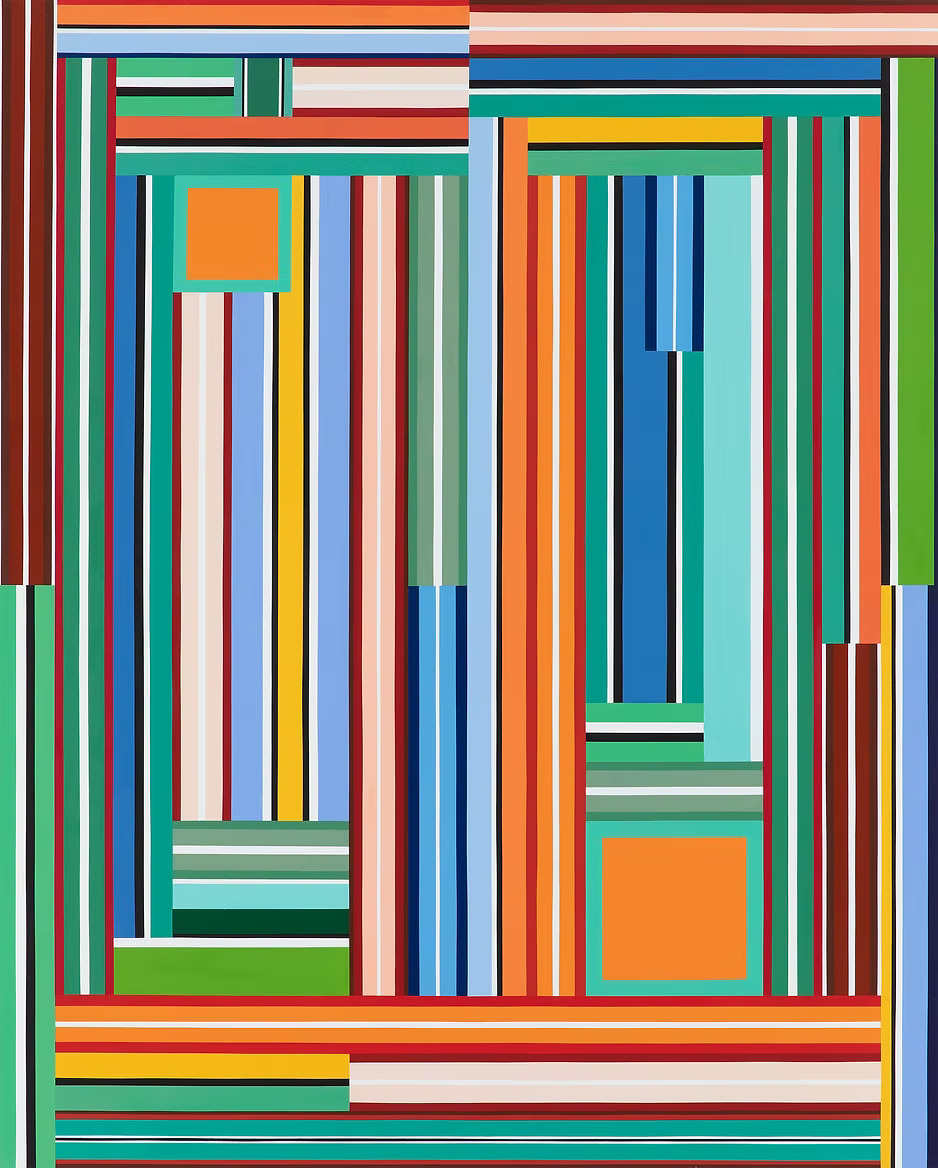
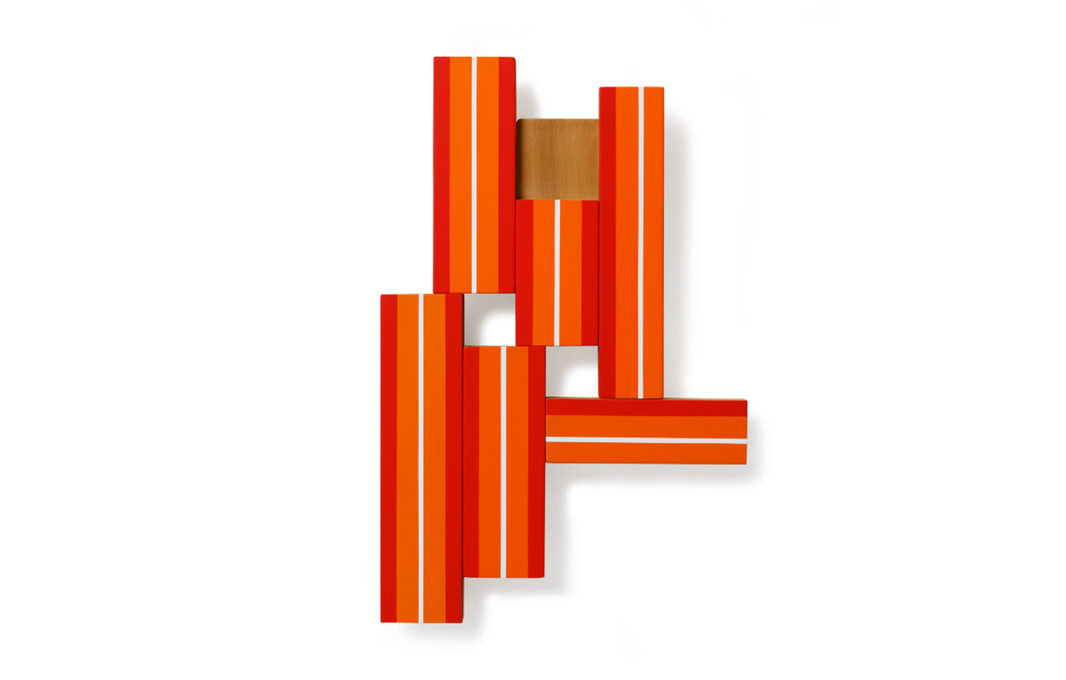
Ahra Kim, Untitled-C19-20, 2020, Acrylic and pigment on canvas, 162.2x130.3cm ©Ahra Kim

In her works, architectural components such as lattice windows, columns and beams, rafters, and brackets are visualized through proportion, texture, regularity, and repetition. The division of space into fixed modules and structures reveals how they are integrated into the whole, while the tension created by the intersections of vertical and horizontal lines generates new formal relationships.
 
By selectively incorporating details such as dancheong (traditional decorative painting) patterns or architectural ornaments into her compositions, she reinterprets the relationship between structure, motif, and space in abstract terms.

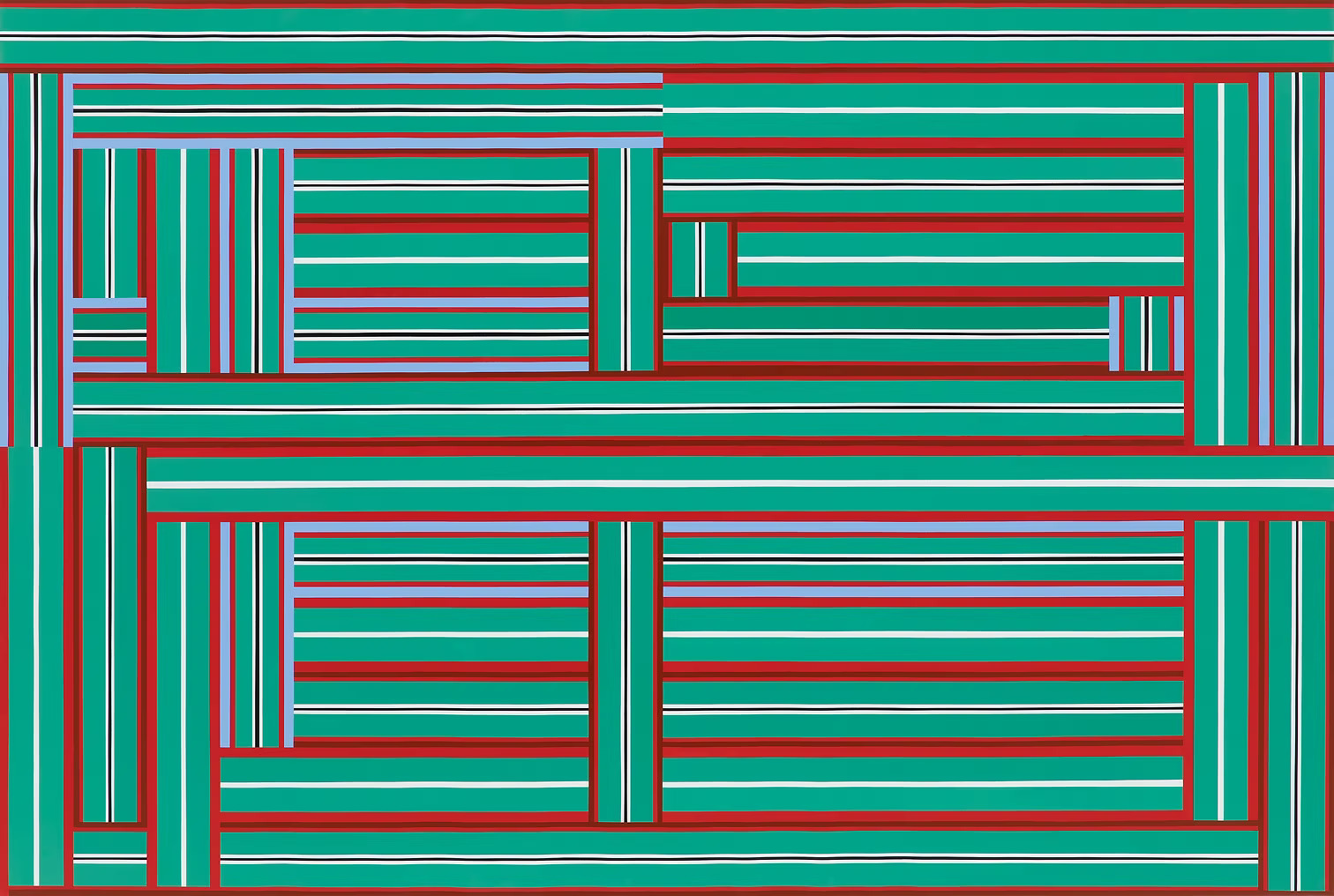
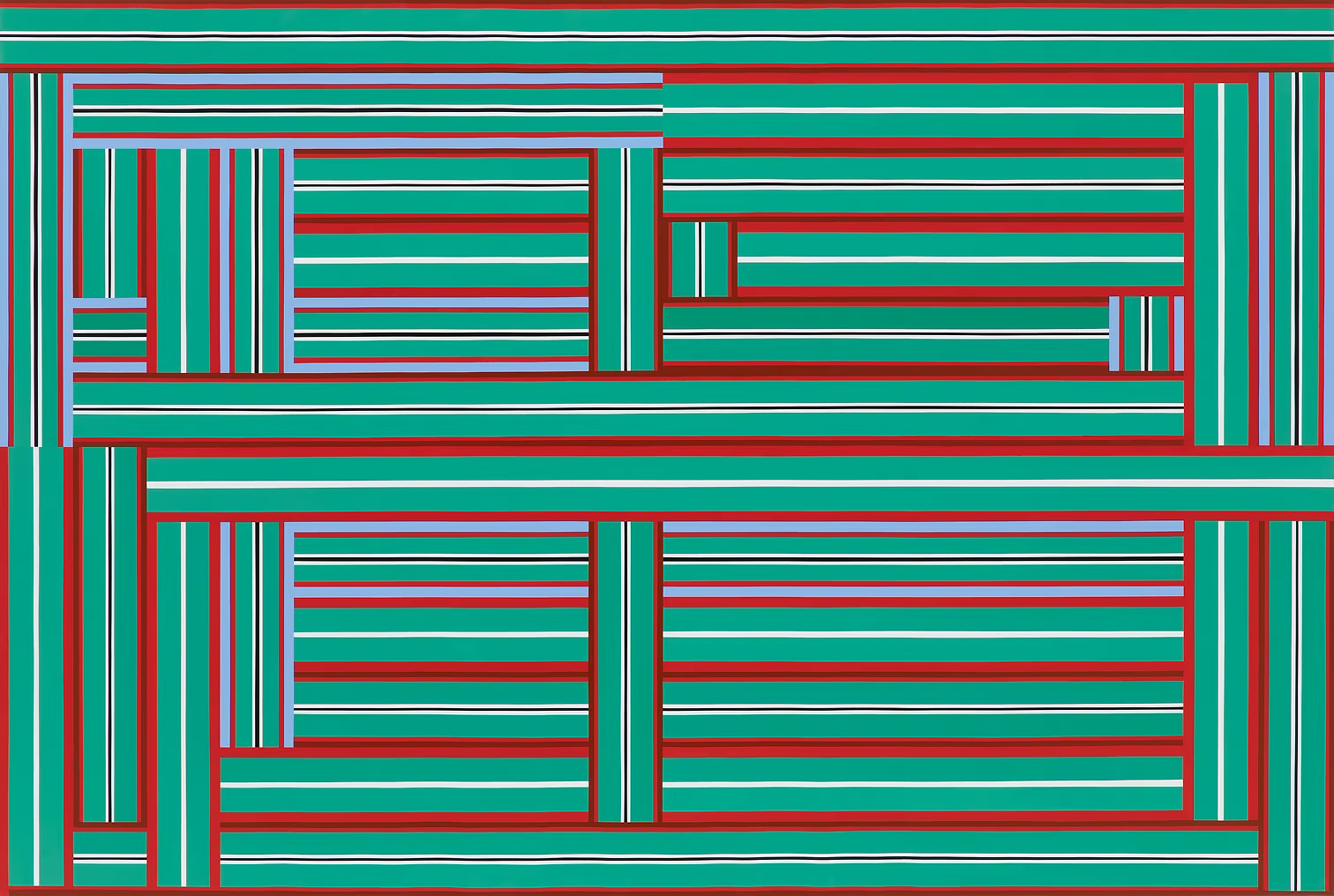
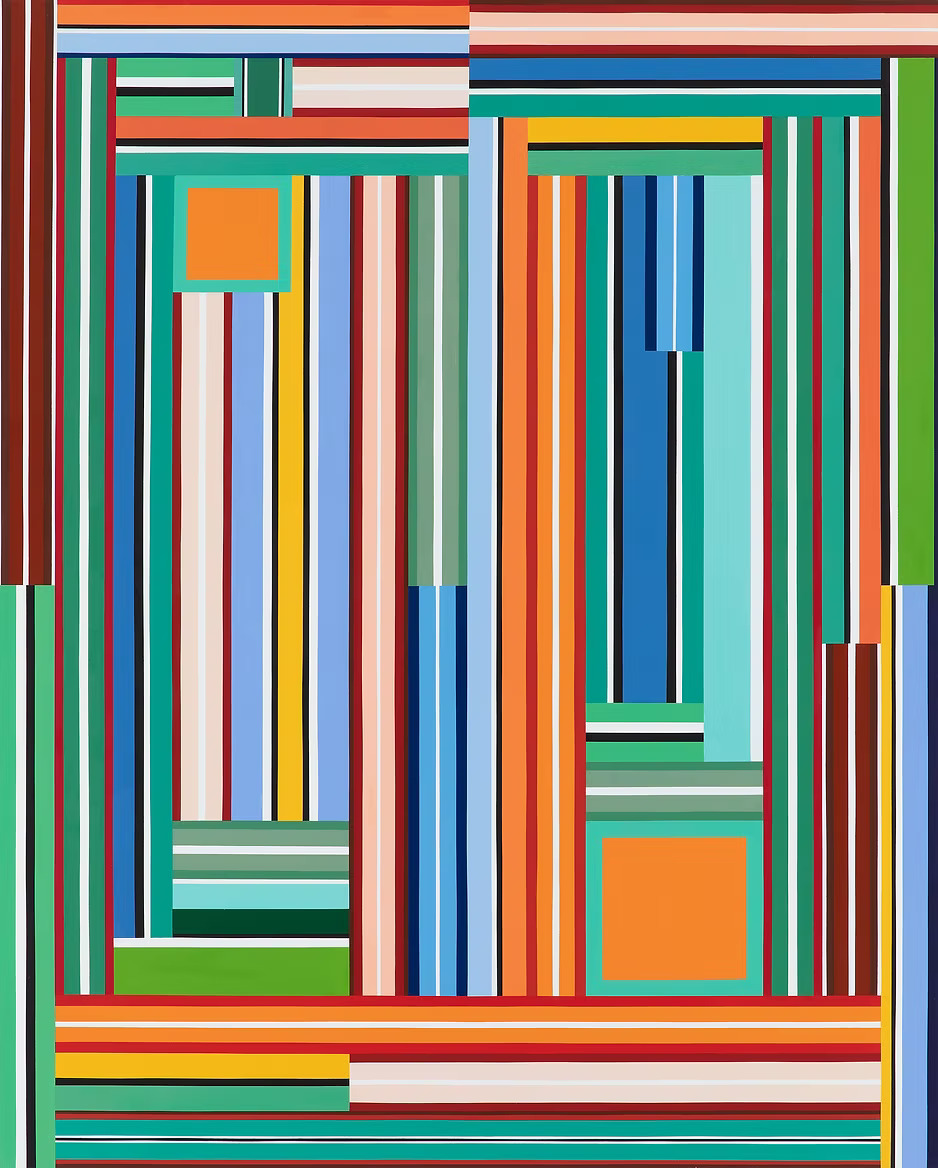
Ahra Kim, Untitled, 2021, Acrylic and pigment on canvas, 130.3x193.9cm ©Ahra Kim

The painting series ‘Untitled’ is one of the works that best represents Ahra Kim’s artistic world, which has long been inspired by the colors and patterns of dancheong. In this series, Kim reconstructs the motifs of dancheong, seeking to modernize tradition as a past tense while exploring an ideal sense of formal balance.
 
Another characteristic of these works is the emphasis on fundamental elements of vertical and horizontal linearity, combined with strong complementary color contrasts. Through this approach, the compositions achieve both a dynamic sense of color balance and visual harmony.


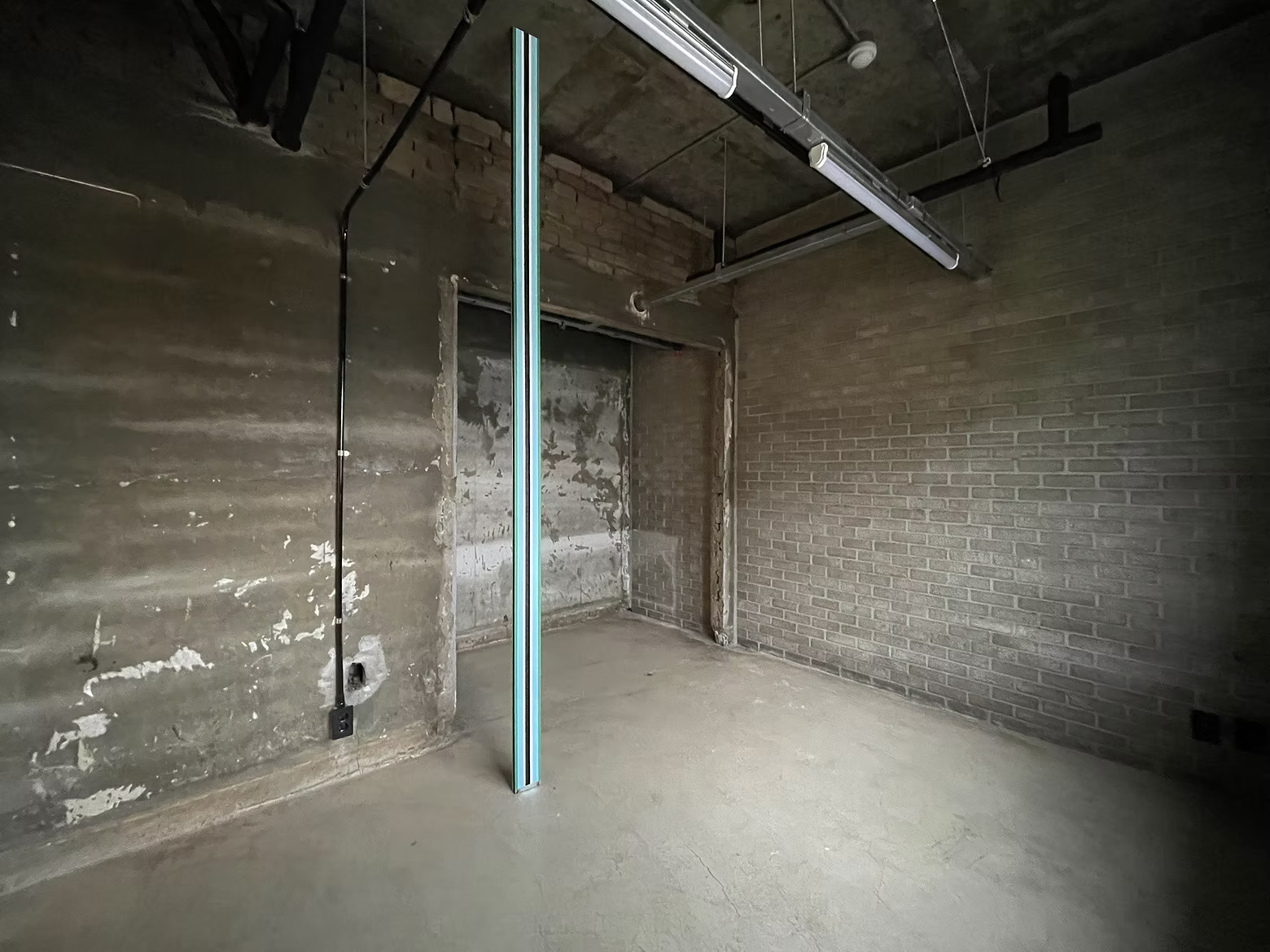
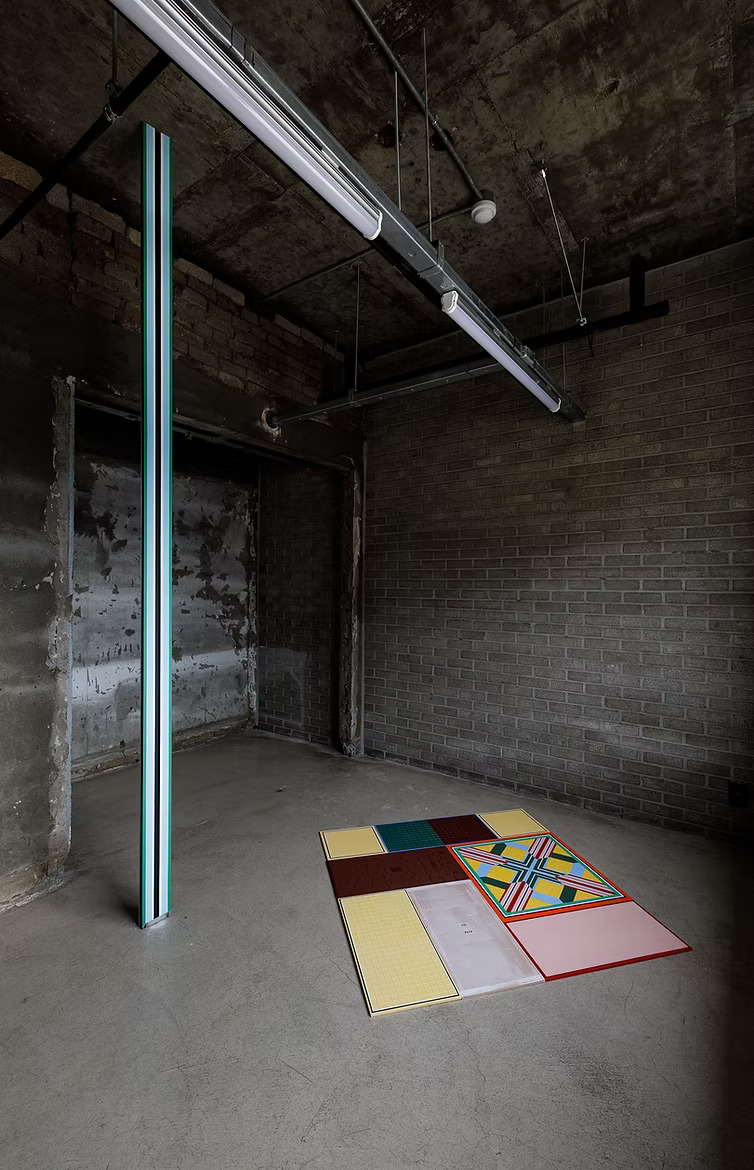
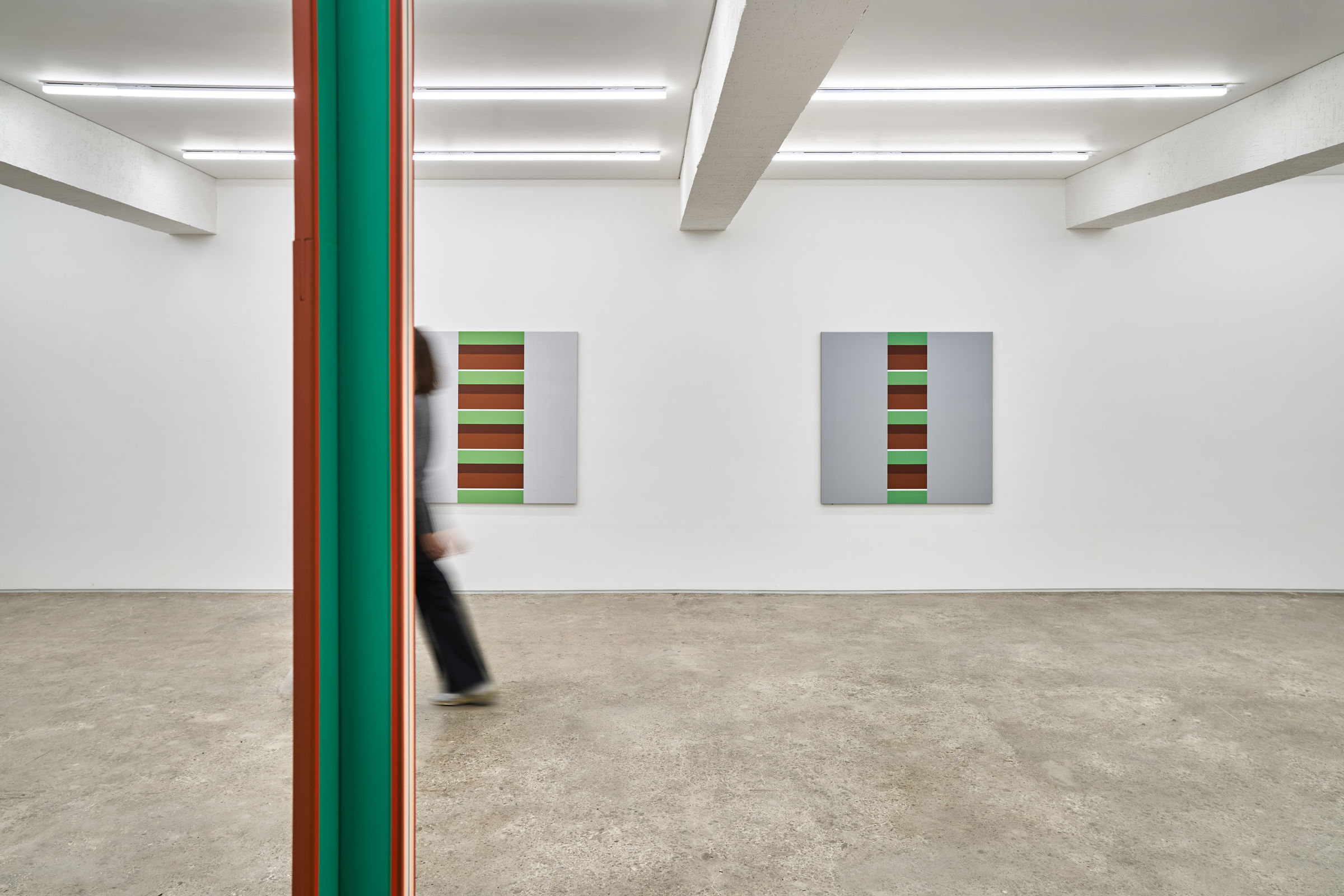
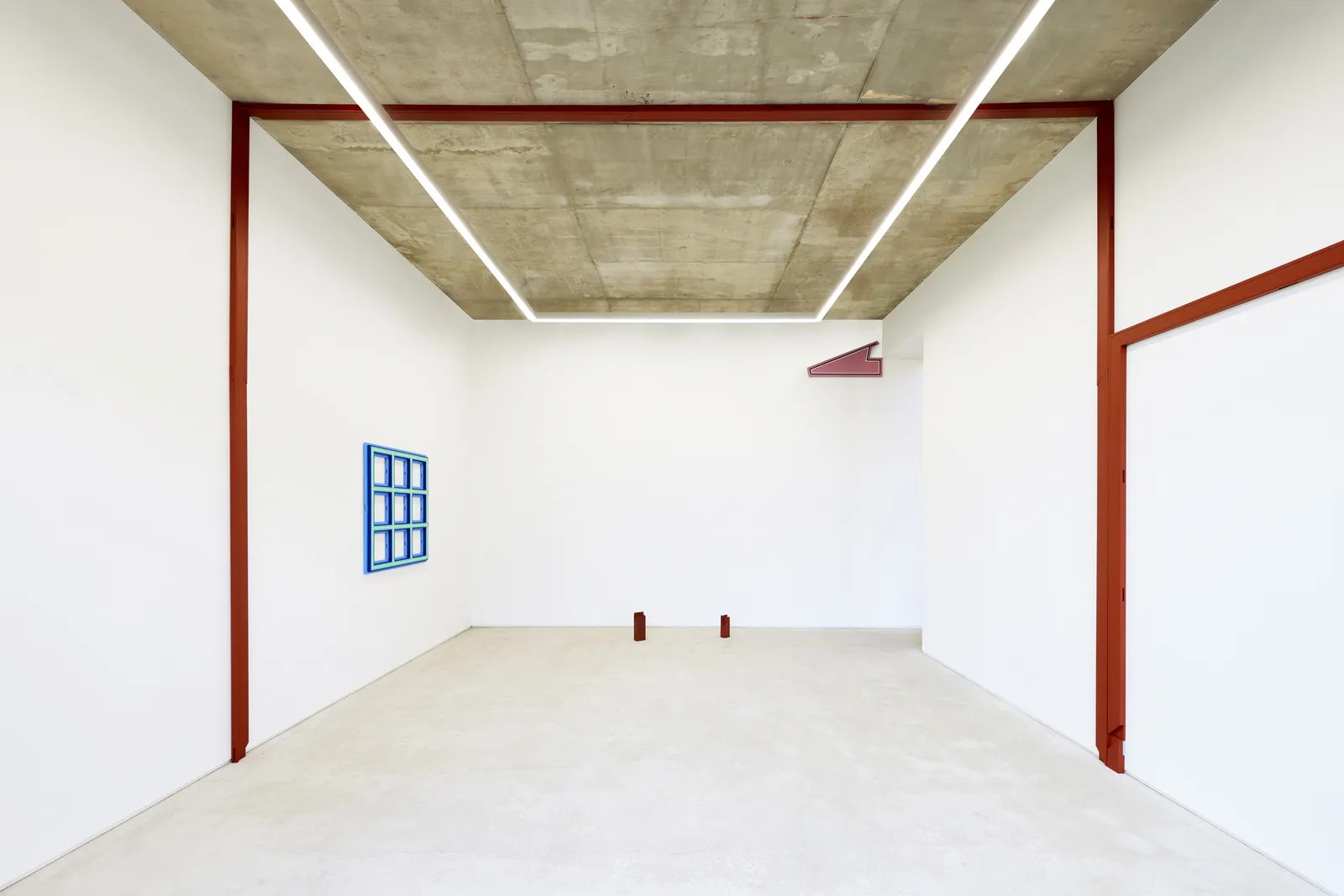
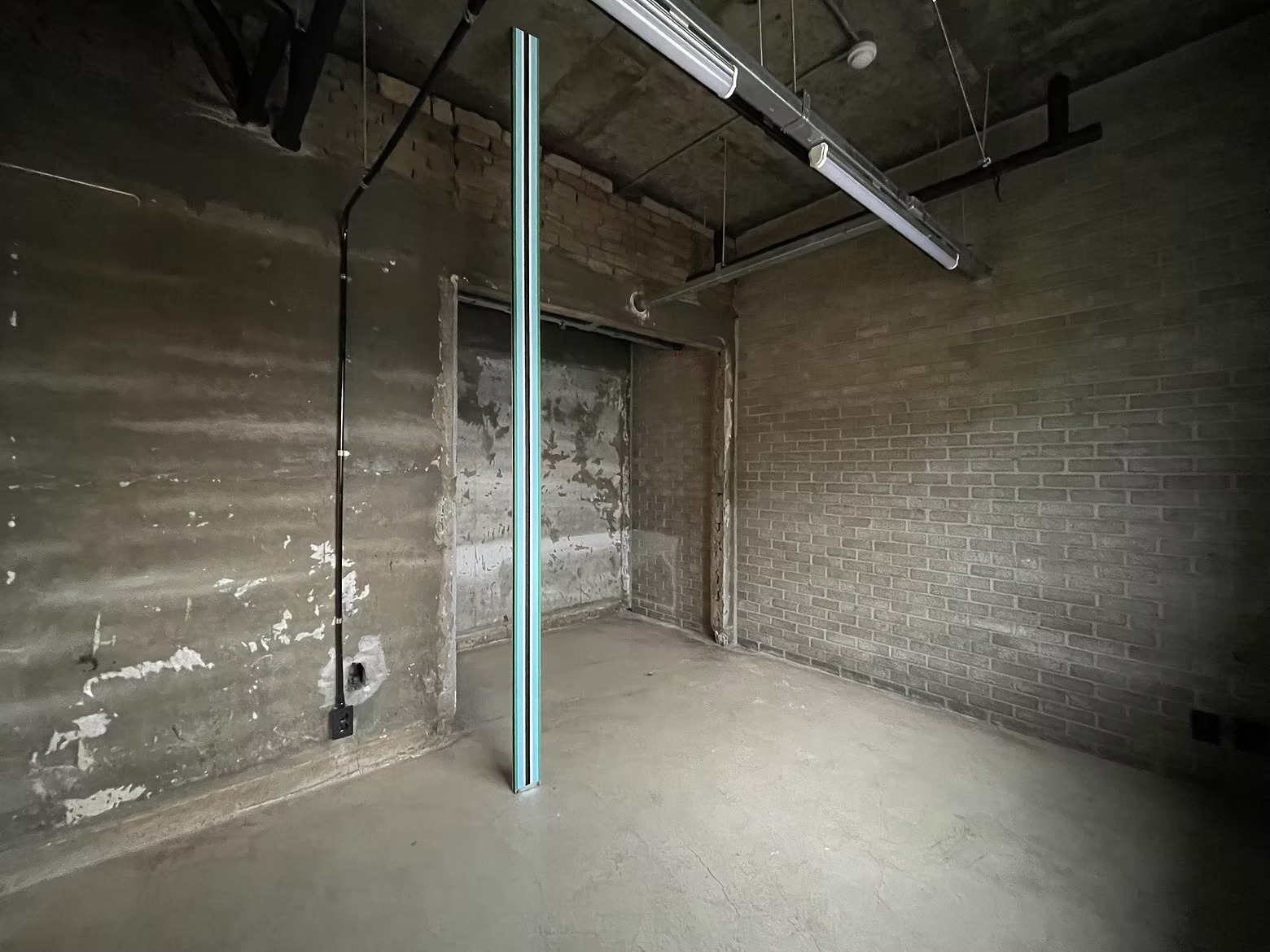
Ahra Kim, Vertical Line, 2021, Acrylic and pigment on iron, 306.9x11.4x2.4cm. Installation view of 《The Result Show of Suchang Youth Mansion Artists in Residency》 (Suchang Youth Mansion, 2021) ©Ahra Kim

Meanwhile, a shift in Ahra Kim’s artistic practice began to emerge with the works she presented in 《The Result Show of Suchang Youth Mansion Artists in Residency》, held at Suchang Youth Mansion in 2021. Unlike her earlier works, which drew motifs from the structural forms and colors of traditional architecture, this exhibition turned her attention toward spaces imbued with everydayness, contemporaneity, and site-specificity.
 
In her previous works, Kim had already explored contemporaneity through formal experimentation and expansion—for example, by creating shaped canvases that replaced the traditional canvas frame with architectural structures and combined them with dancheong patterns. However, the works presented in this exhibition reveal a different attitude from her earlier practice, suggesting a noticeable expansion in the scope of her gaze.


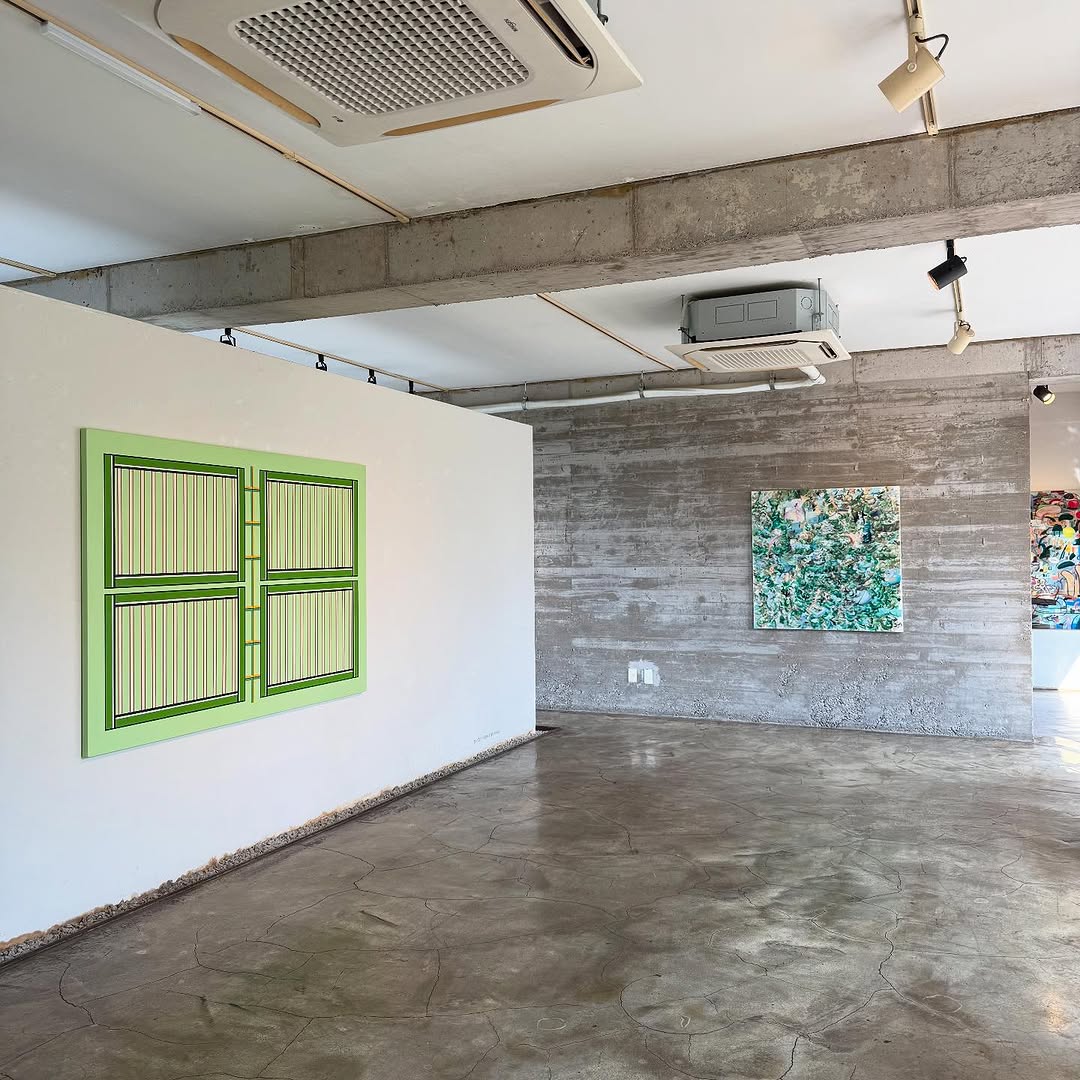
Installation view of 《The Result Show of Suchang Youth Mansion Artists in Residency》 (Suchang Youth Mansion, 2021) ©Ahra Kim

For example, Vertical Line (2021), a work in the form of a pillar that penetrates the ceiling and floor of the exhibition space, was derived from a metal column supporting a sliding sash door—an architectural steel structure the artist encountered in a hardware district near her studio, an ordinary everyday environment.
 
Kim selected the shutter-door pillar of a modest shop, a site shaped by the intensity of everyday labor, and reconfigured it as part of the structural framework of the exhibition space. Through this transformation, the iron pillar—originally existing purely for functional purposes—acquires the colors of traditional patterns and, once placed within the context of the gallery, assumes a new hierarchy.
 
In addition, the floor installation Flat Pieces (2021) combined mass-produced tiles bearing simple traditional motifs with the artist’s canvas works, creating a new sense of site-specific presence within the rough concrete exhibition space.


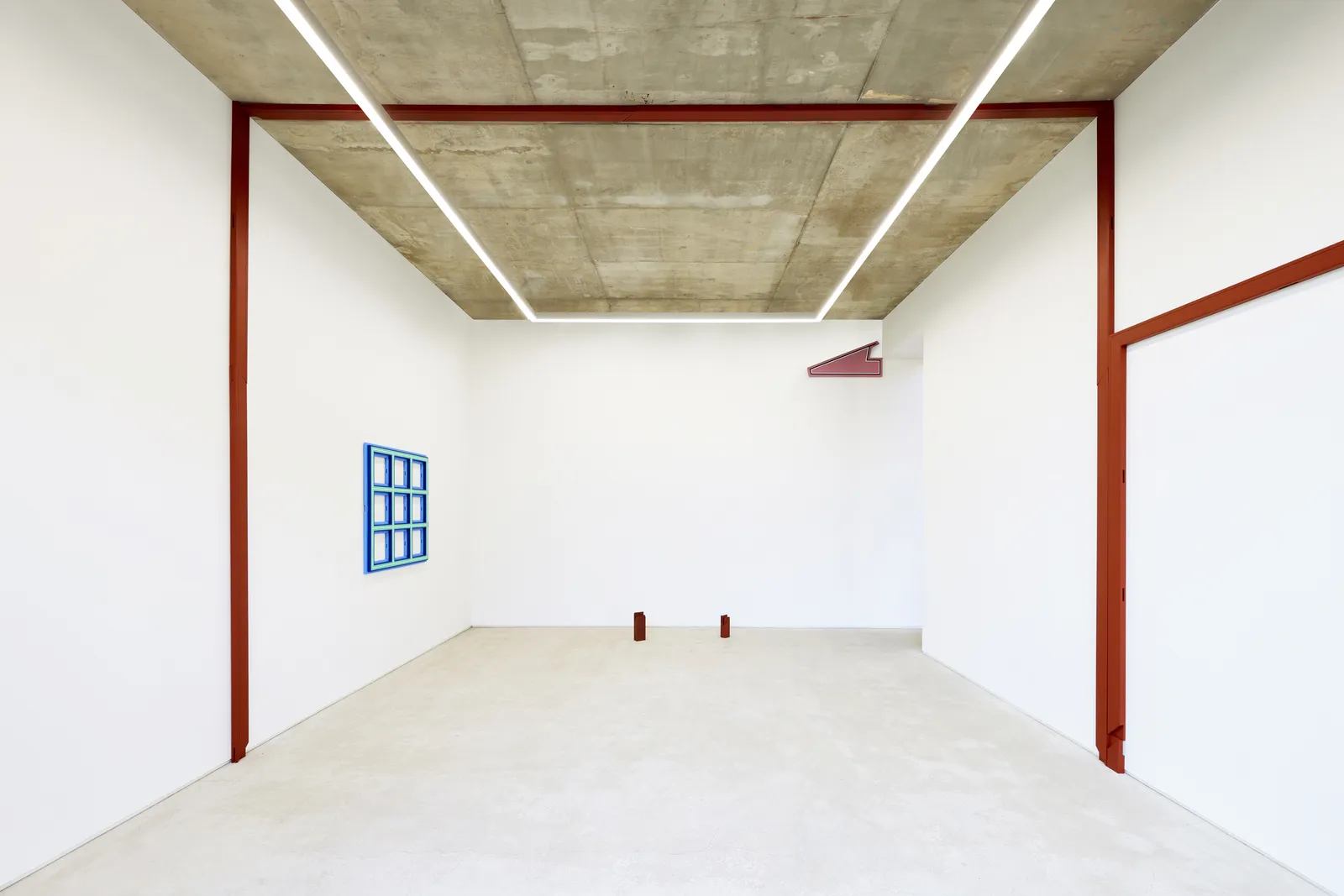
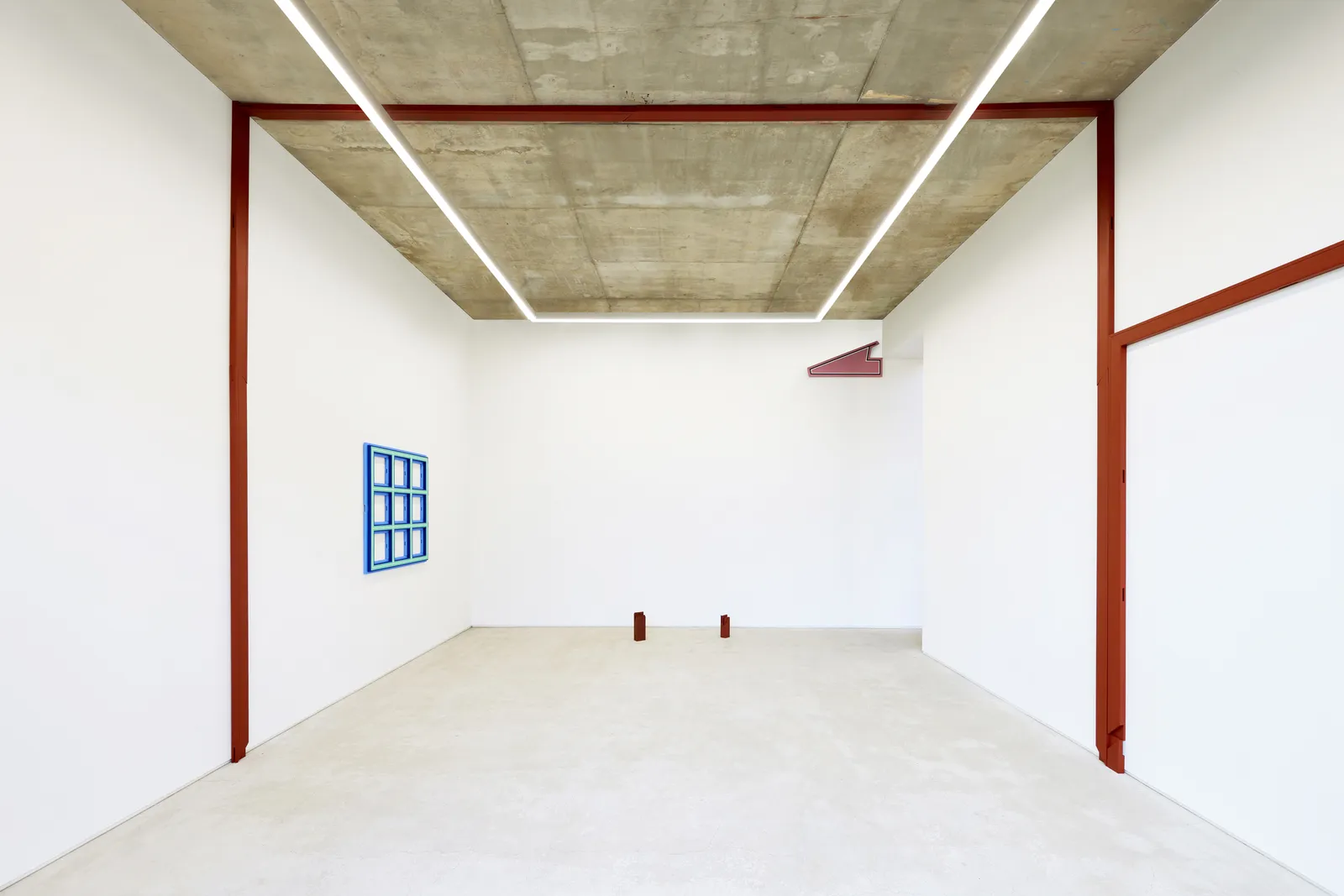
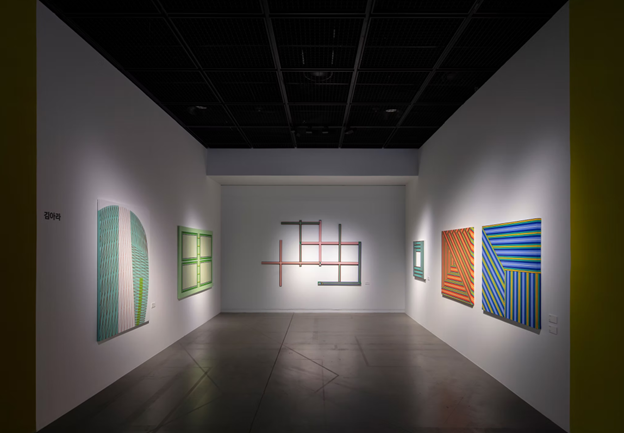
Installation view of 《Overpass》 (Gallery2, 2022) ©Gallery2

Furthermore, through her solo exhibition 《Overpass》 (2022) at Gallery2, Ahra Kim sought to construct a kind of “sculptural space” by approaching more closely the structures of space and objects. In this exhibition, in order to emphasize a structural approach, the artist set aside her previous method of filling the surfaces of her works with dancheong patterns and instead restrained the use of color, reconstructing the internal structure of a hanok within the exhibition space.
 
The objects of the exhibition space are metaphorical representations or iterations of structures found within and around the hanok - from the cross-board frame of the ceiling to the front gates, the wooden gate stop, and so on.


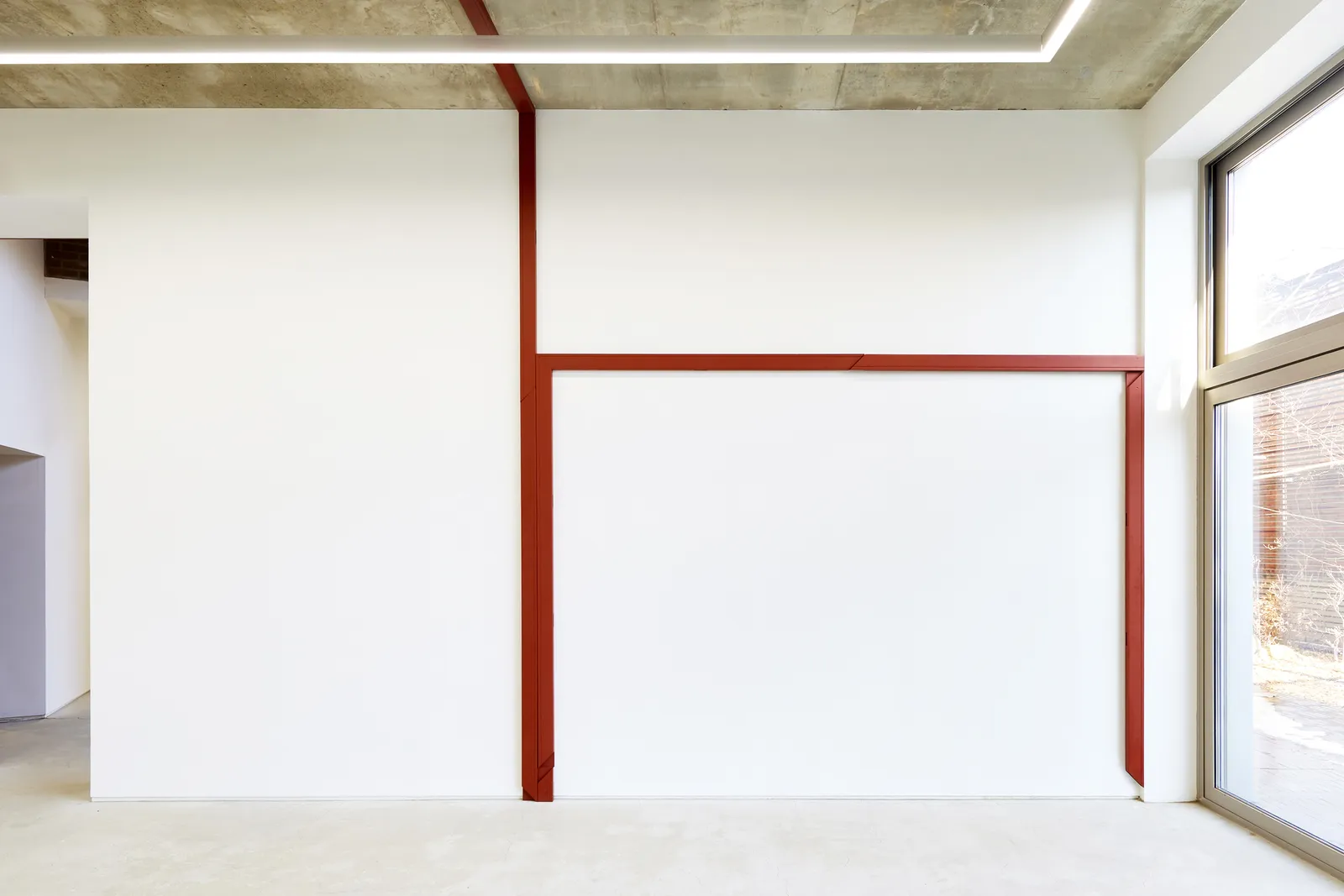
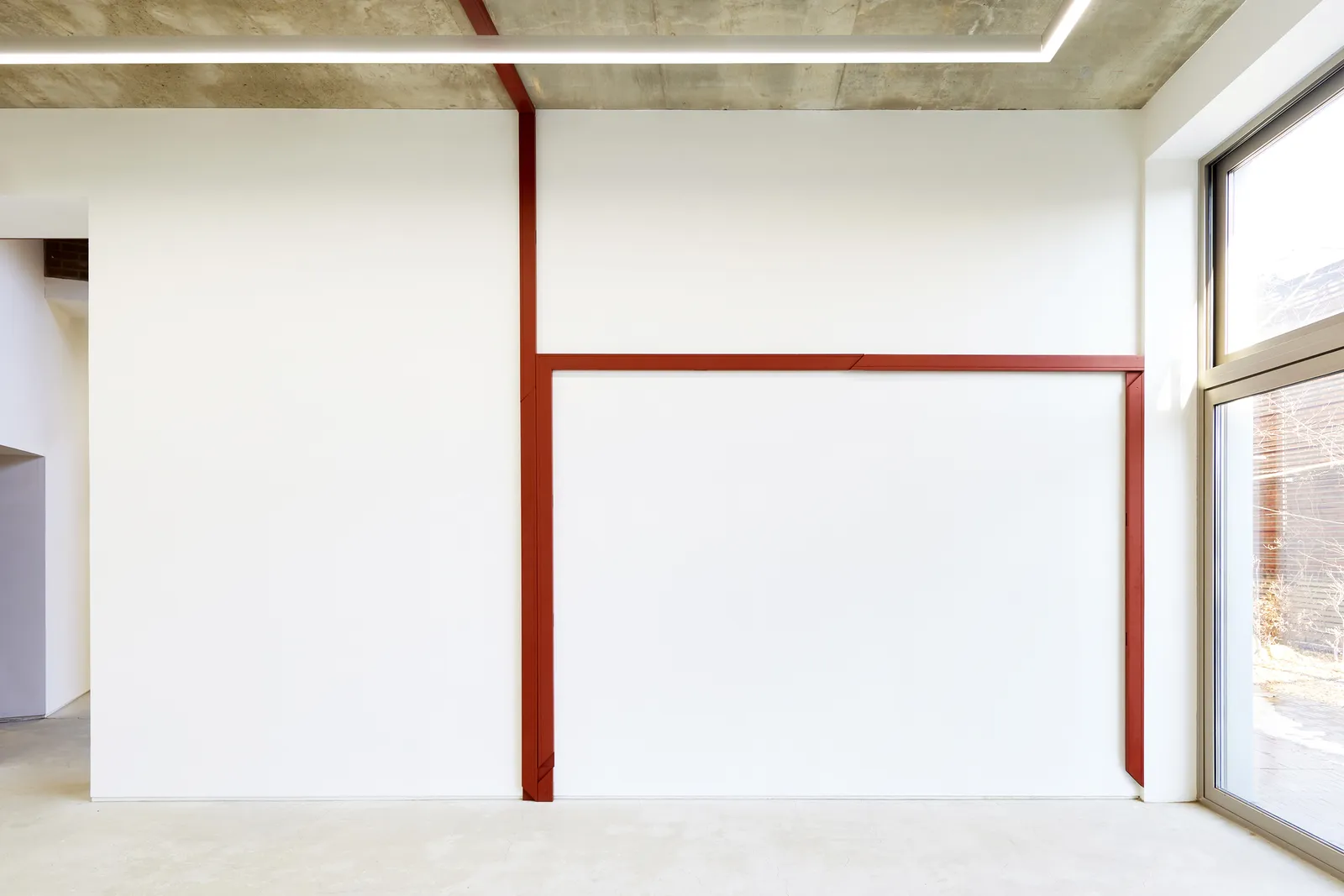
Ahra Kim, Vertical Line, 2022, Pigment on wood frame for canvas, Dimensions variable. Installation view of 《Overpass》 (Gallery2, 2022) ©Gallery2

Vertical Line (2022) traverses the wall and ceiling of the exhibition space and echoes the structure of the window and the window frame. The window and its window frame both connect and separate rooms and spaces, its structure extending to the ceiling. Kim dismantles this window-becomes-room structural frame and transposes it as her own reiteration.


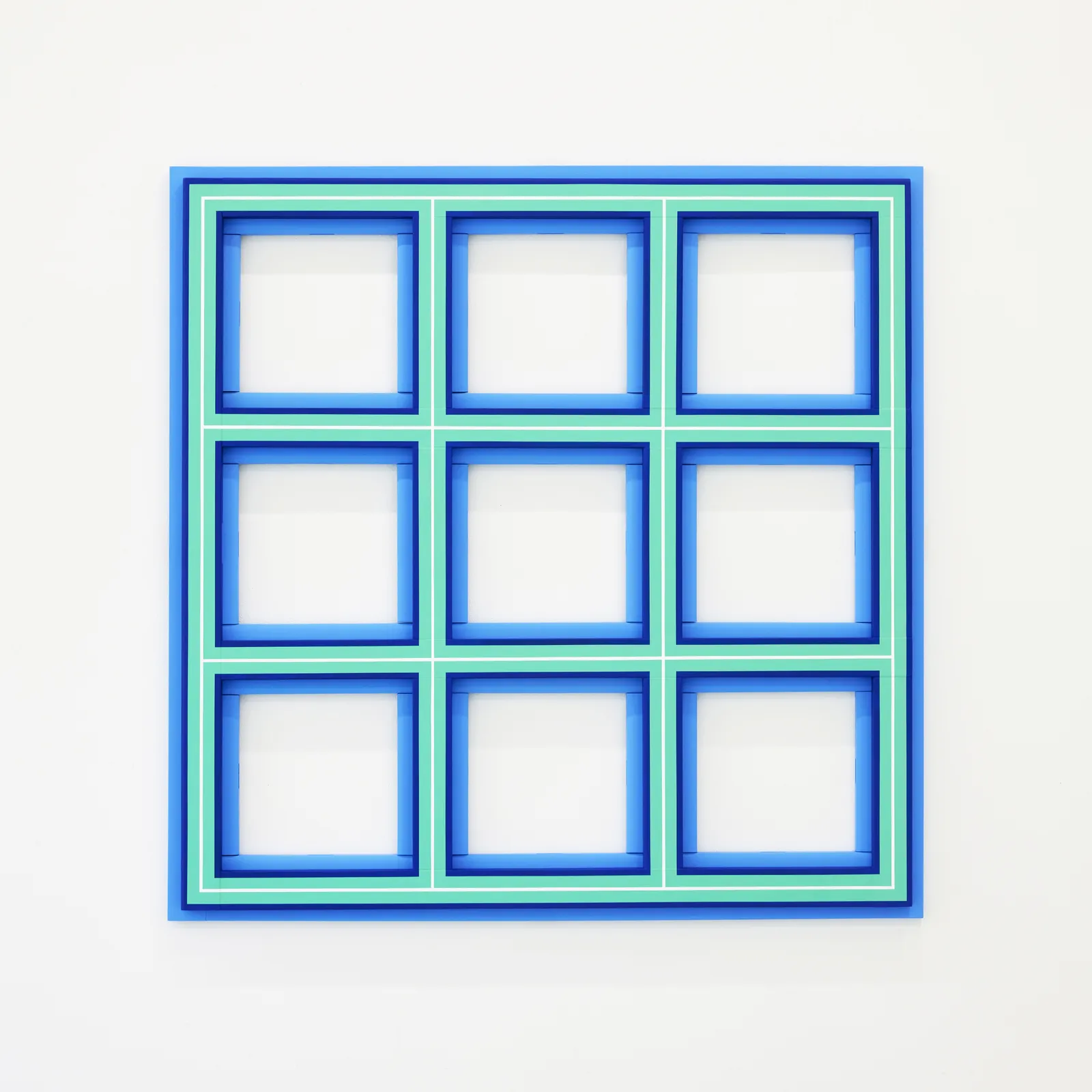
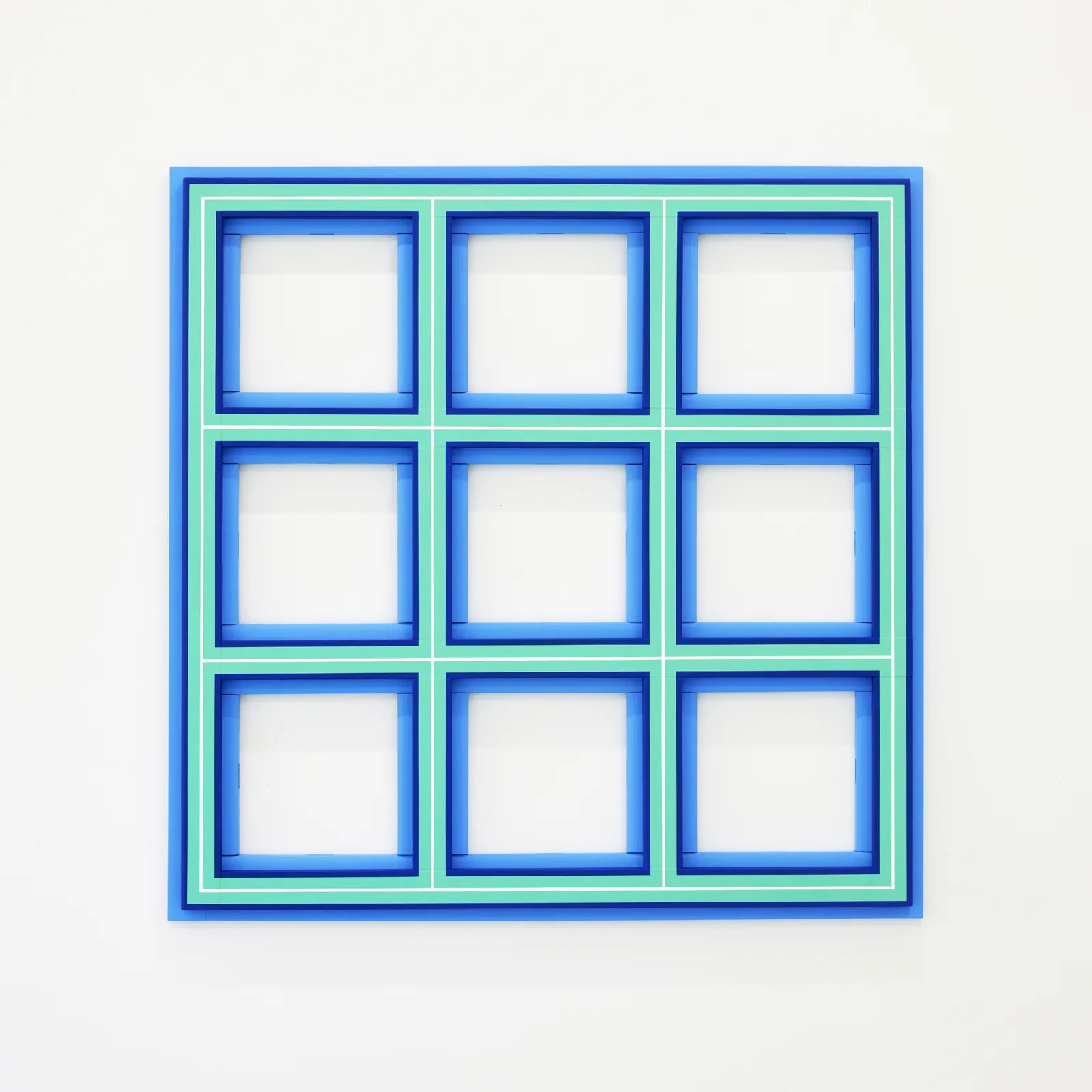
Ahra Kim, Untitled-Connection #3, 2022, Acrylic and pigment on wood frame for canvas, 107x107x4.1cm. Installation view of 《Overpass》 (Gallery2, 2022) ©Gallery2

Her works take to the canvas from and the hanok's brackets, give to the canvas surface and the hanok's windows, and return to the elements of space and structure. Rather than merely presenting the form of the structure visually, the artist sculpted the space so that viewers could enter and drift within it.
 
Composed of the balance between vertical and horizontal lines, the stability of rectangular forms, the materiality of wood, and an open spatial structure, the exhibition became a kind of “sculptural space.” Visitors were invited to walk through it, physically sensing and experiencing both the spatial environment and its formal qualities.


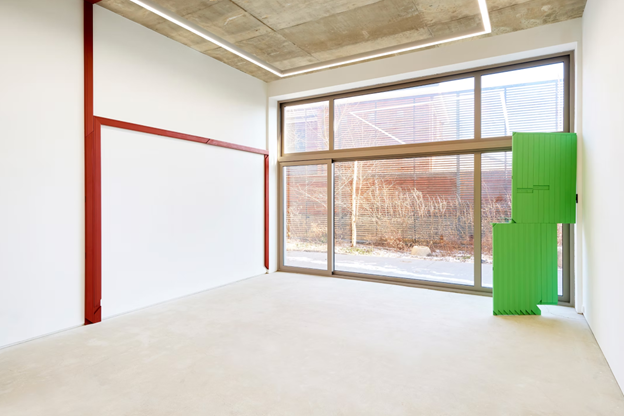
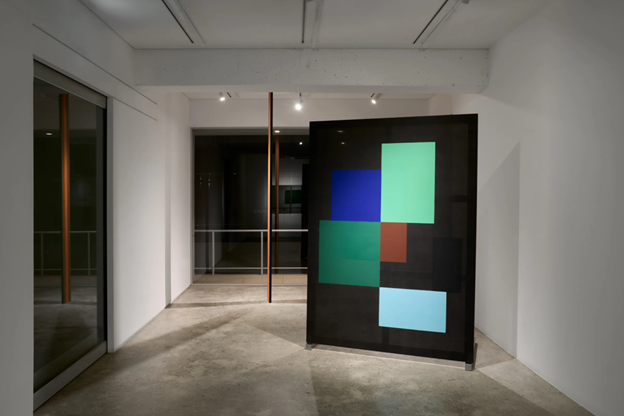
Installation view of 《Even a Single Day is Long, If You Try to Understand》 (Kimreeaa Gallery, 2026) ©Kimreeaa Gallery

In this way, Ahra Kim’s formal experiments, which have expanded into the spatial dimension, have recently progressed further into works that focus on the forms of sculpture, the void, and the relationship between that void and space.
 
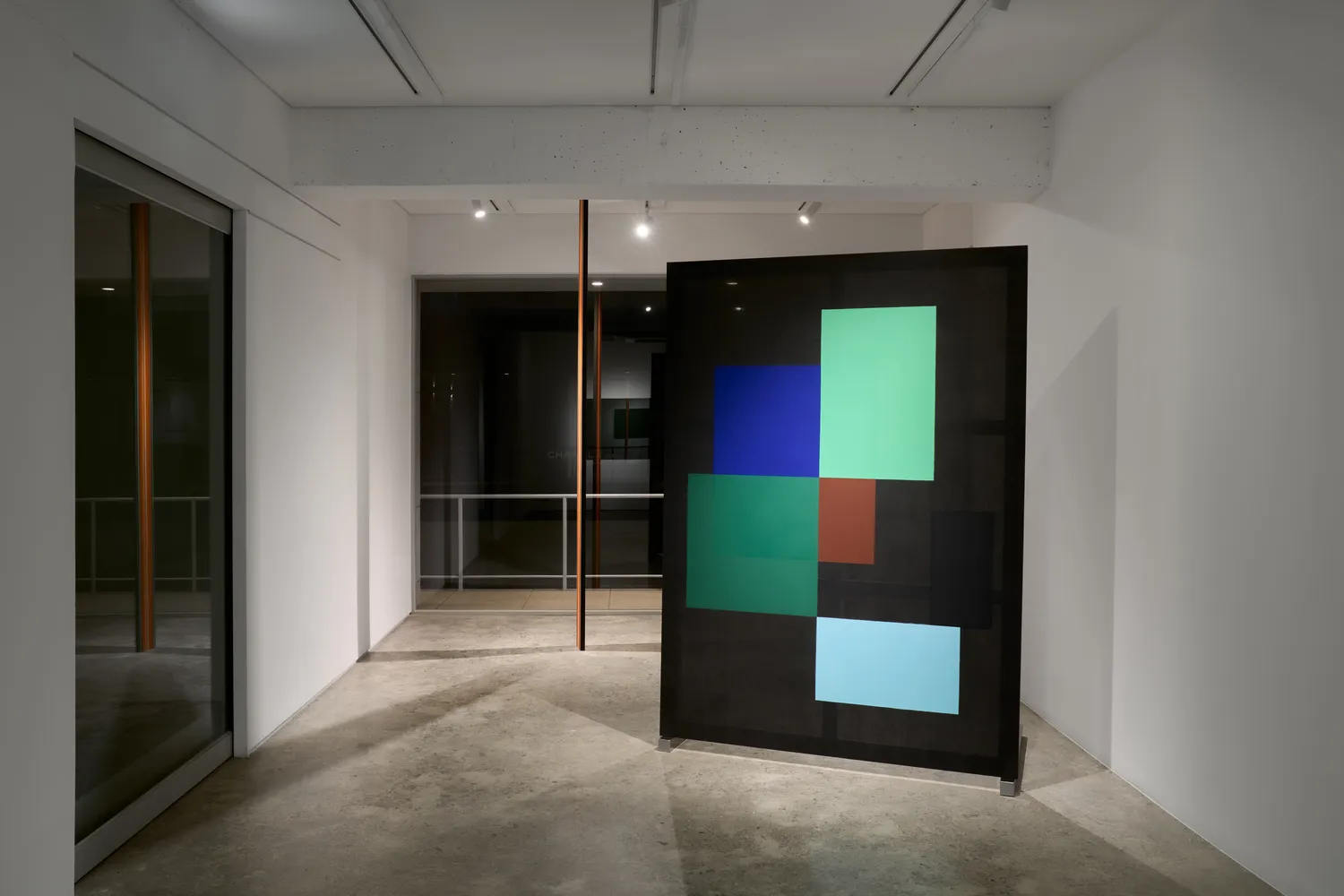
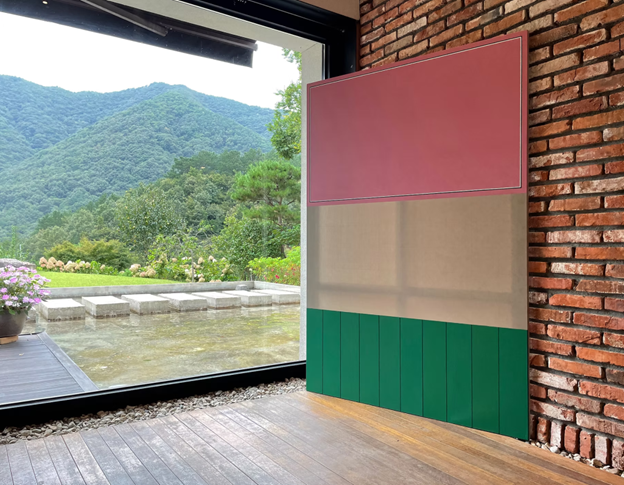
Her 2026 solo exhibition 《Even a Single Day is Long, If You Try to Understand》 at Kimreeaa Gallery offers a glimpse into the artist’s working method, which begins from a more deeply developed awareness of space. In this exhibition, Kim composed her works in consideration of the differences in natural lighting between the gallery’s floors and the flow of daylight within the space, seeking to reflect the varying degrees of darkness and depth on the surface according to the amount of light.


Installation view of 《Even a Single Day is Long, If You Try to Understand》 (Kimreeaa Gallery, 2026) ©Kimreeaa Gallery

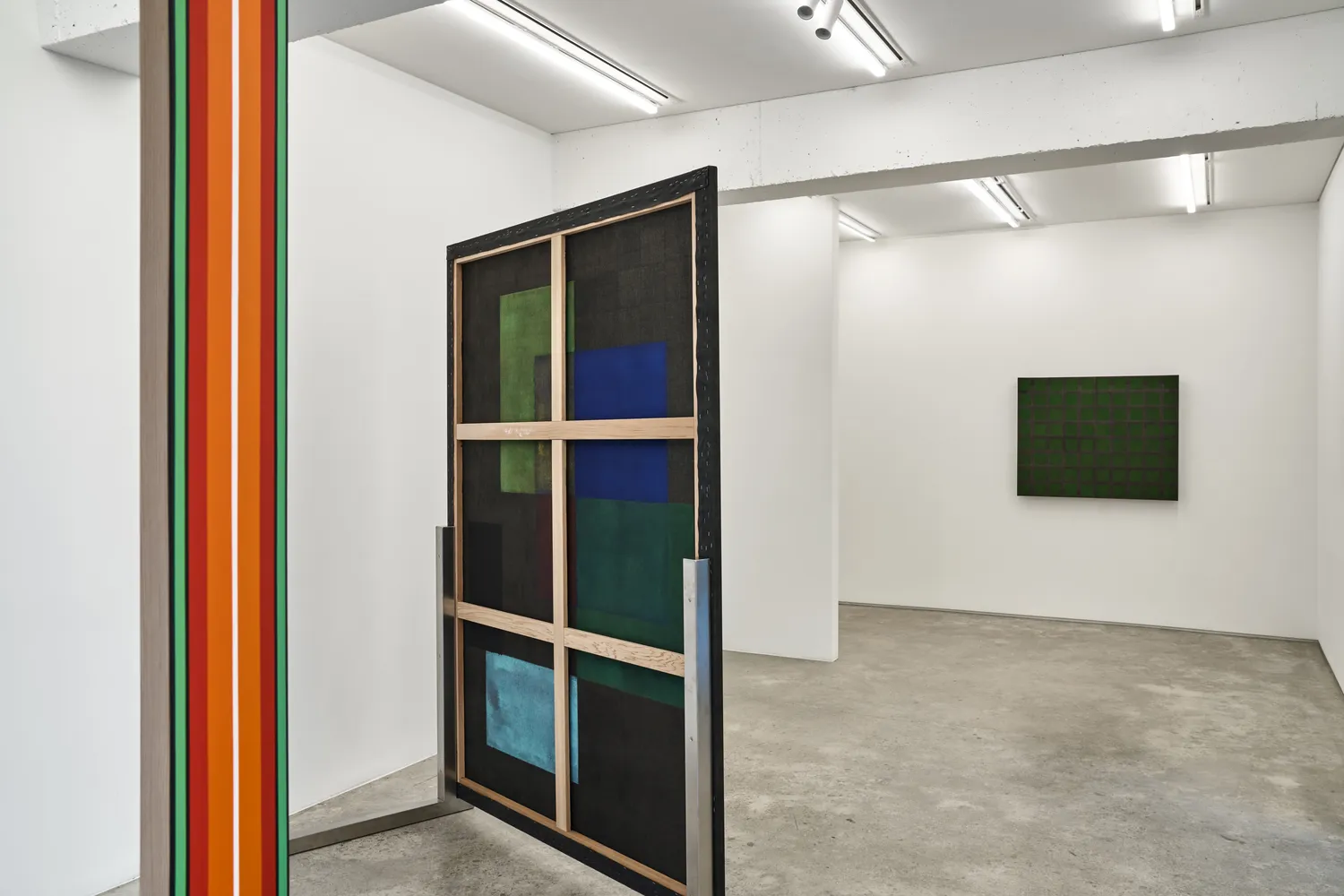
In this exhibition, the artist employs ink as her primary material. Through repeated processes of dyeing linen with ink, washing, and layering pigment, the surface gradually acquires a density of darkness. Yet this darkness does not conceal or obscure; rather, it clarifies form. The grain of wood permeated by ink becomes more distinct, and the light passing through the interstices of woven fabric subtly accentuates the structure of the canvas frame.


Installation view of 《Even a Single Day is Long, If You Try to Understand》 (Kimreeaa Gallery, 2026) ©Kimreeaa Gallery

In doing so, darkness and emptiness do not stand in opposition but operate in ways that reveal one another, allowing the surface to settle not as a single image but as a structure in which time and materiality accumulate. The varying levels of natural light and the presence or absence of windows on each floor of the exhibition space further intersect with this formal inquiry, generating different depths and sensorial experiences according to the amount of light.
 
In other words, the artist does not simply place her works within the exhibition space; rather, she designs them so that the space and the works operate as a single structure, establishing a close relationship between the paintings and the exhibition environment.
 
Rather than presenting a specific narrative or demanding a particular interpretation, the exhibition invites viewers to spend time in front of the works. The compositions—where structure and void, repetition and silence coexist—do not foreground immediate understanding. Instead, they encourage viewers to linger slowly within their own sense of time, guiding them toward moments in which perception gradually opens.


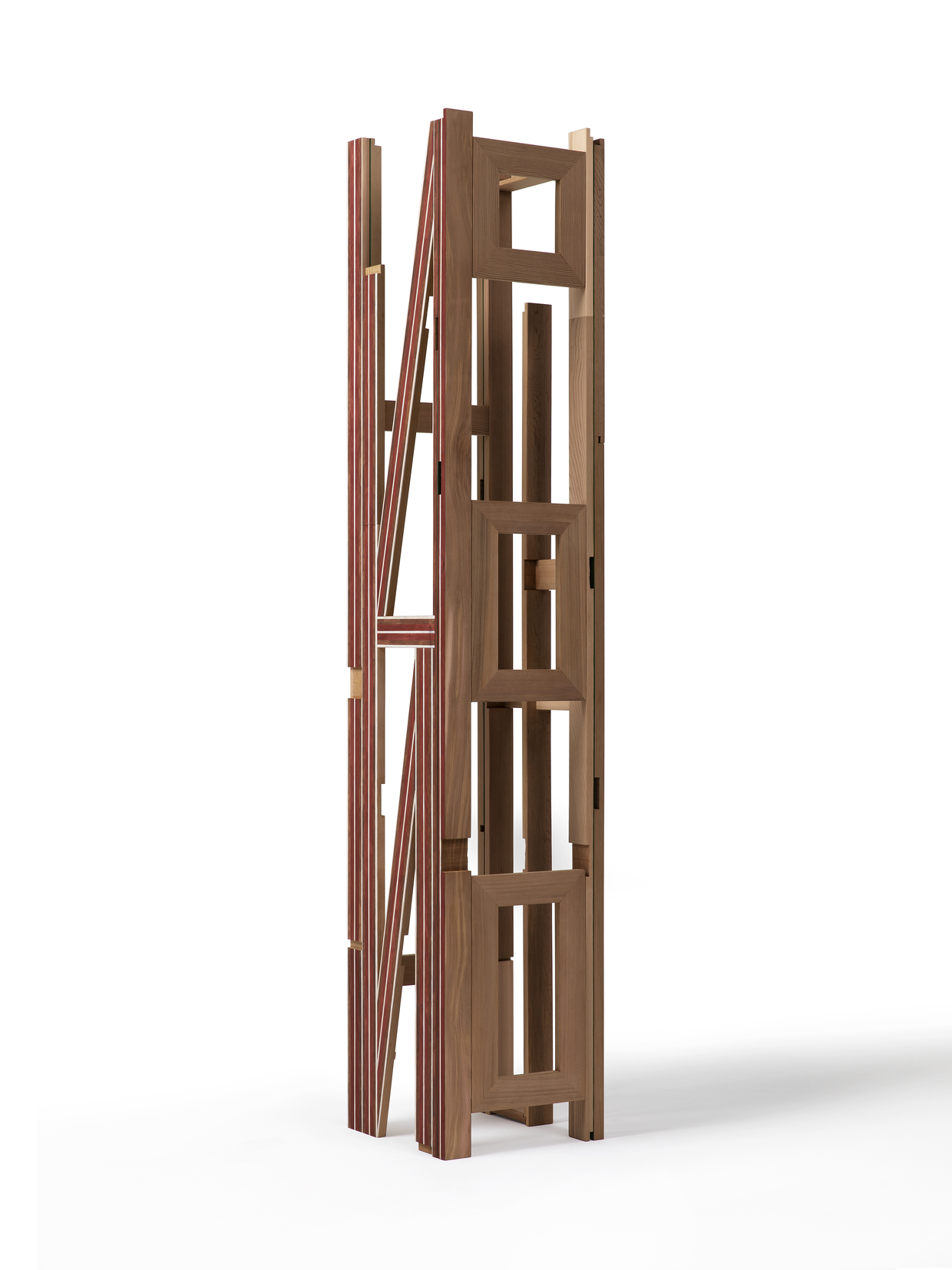
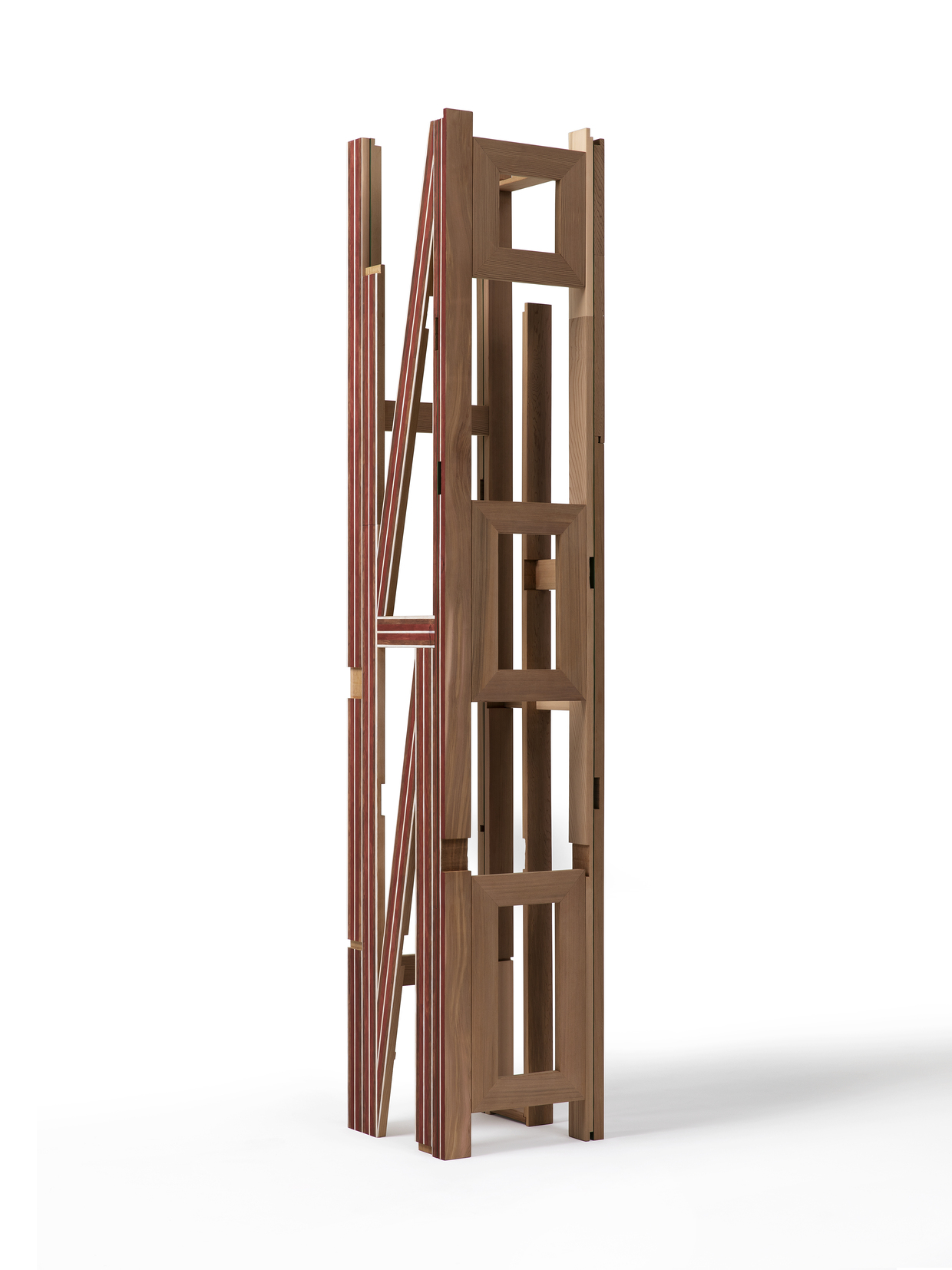
Ahra Kim, Untitled, 2025, Acrylic and pigment on wood frame for canvas, 180x33.8x33.8cm ©Ahra Kim

In this way, Ahra Kim’s work forms voids within sculpture, much like architecture shapes the relationship between interior and exterior spaces. This approach also resembles the experience of viewing natural scenery through the windows of traditional architecture. Sculptures that contain such voids breathe with the surrounding space and gradually expand into it, renewing the sensory experience embedded within familiar forms.
 
Beginning with her interest in the tension and balance found in the structures of traditional architecture, as well as the constructive logic created by the grain of wood, Kim’s artistic practice has moved beyond simply reconfiguring traditional elements and forms within a contemporary context. Instead, it has expanded into the spatial dimension, exploring how perception emerges in the relationships between work, space, and viewer.

“I constantly think about how three elements—three-dimensional form, the pictorial plane, and space—can be combined and presented at once. Within that process, I try to find a sense of visual stability among the intersecting forms.” (Ahra Kim, from an interview with Factory of Contemporary Arts in Palbok)


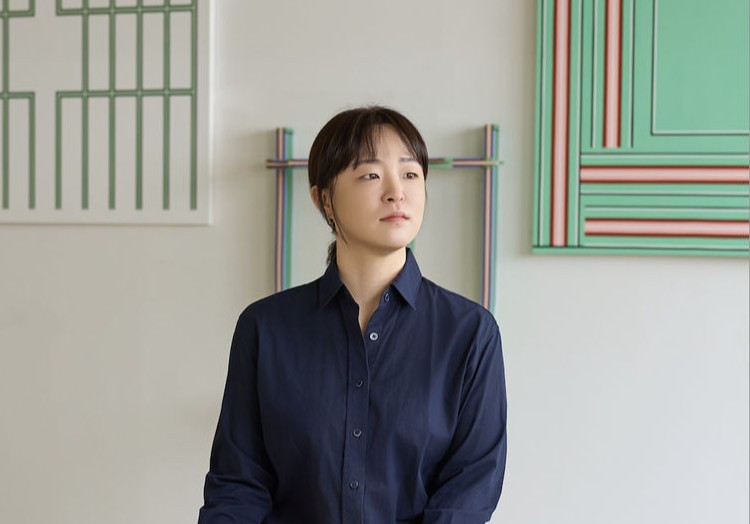
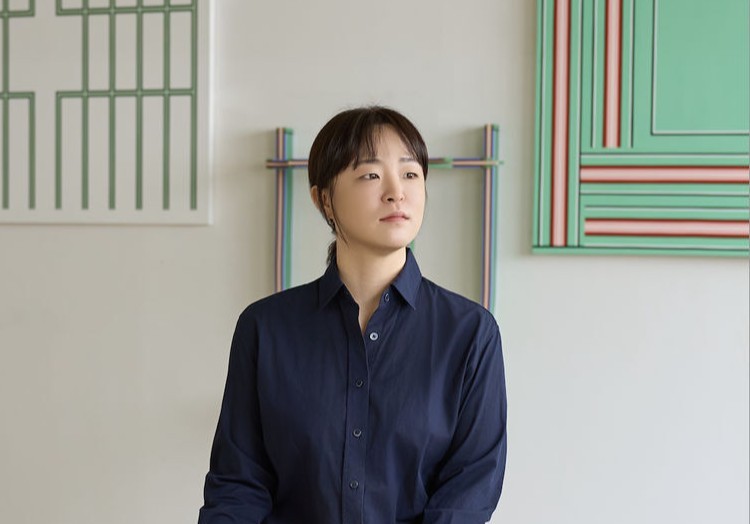
Artist Ahra Kim ©Kimreeaa Gallery

Ahra Kim received both her BFA and MFA in Environment of Sculpture from Kyonggi University. Her solo exhibitions include 《Even a Single Day is Long, If You Try to Understand》 (Kimreeaa Gallery, Seoul, 2026), 《Window》 (Soyang Gotaek, Wanju, 2022), 《Overpass》 (Gallery2, Seoul, 2022), and 《Intersecting Moment》 (Gallery Kang Ho, Seoul, 2021).
 
She has also participated in numerous group exhibitions, including 《UNBOXING PROJECT 6: Reading》 (New Spring Project, Seoul, 2025), 《Deep into Abstraction-On the Way》 (Seoul National University Museum of Art, Seoul, 2025), 《Wondersquare》 (Museumhead, Seoul, 2025), 《Home and Painting·》 (House Gallery, Seoul, 2024), 《The Moving Story in Autumn Breeze》 (Hwaseong Temporary Palace, Yuyeotaek (維與宅), Suwon, 2023), and 《UNBOXING PROJECT 2: Portable Gallery》 (New Spring Project, Seoul, 2021).
 
Kim was recently selected as a semi-finalist for the 2025 Kiaf HIGHLIGHTS, drawing significant attention to her practice. Her works are held in the collections of the Seoul National University Museum of Art, Gyeonggi Museum of Modern Art, and the Embassy/Permanent Mission of the Republic of Korea in Austria.
References