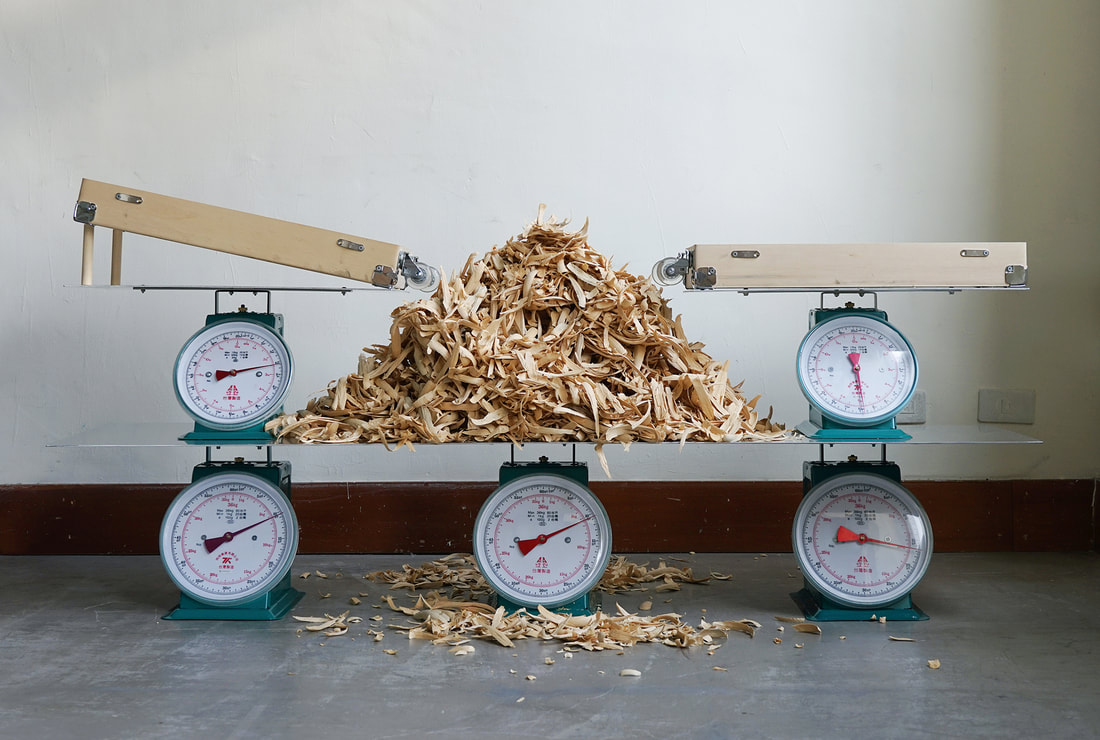
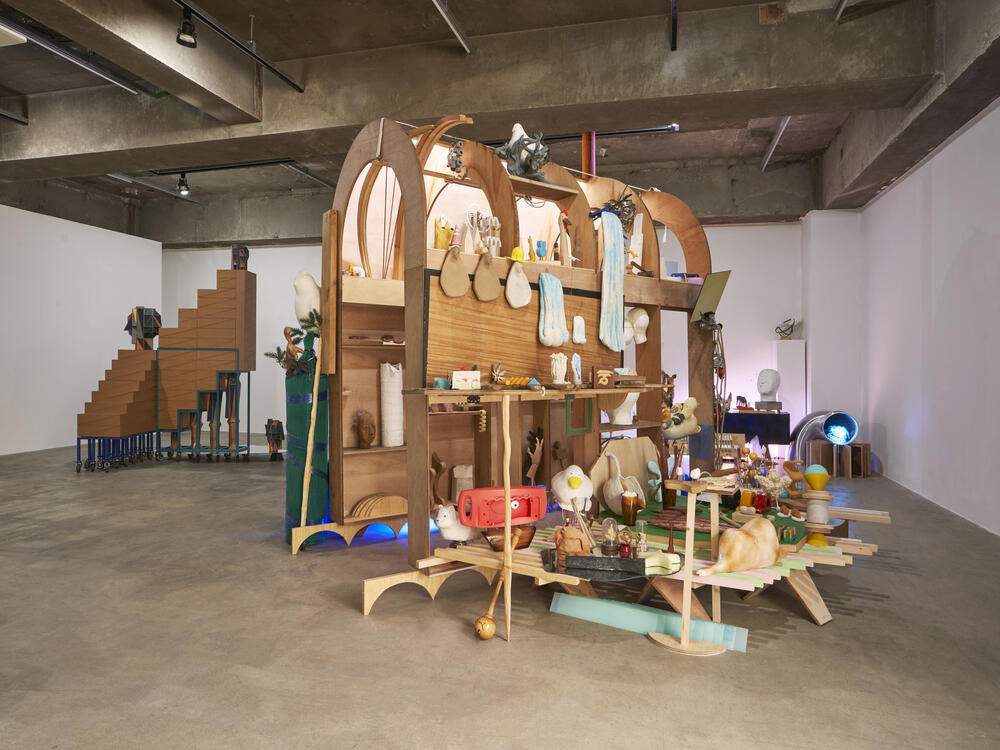
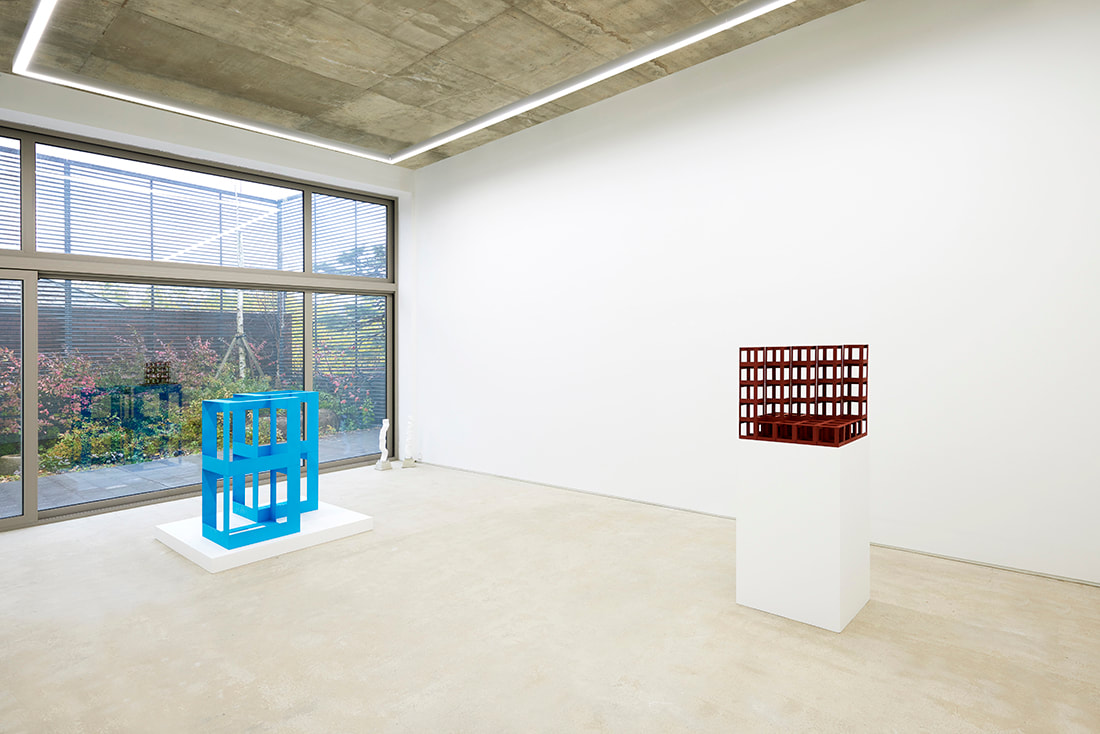
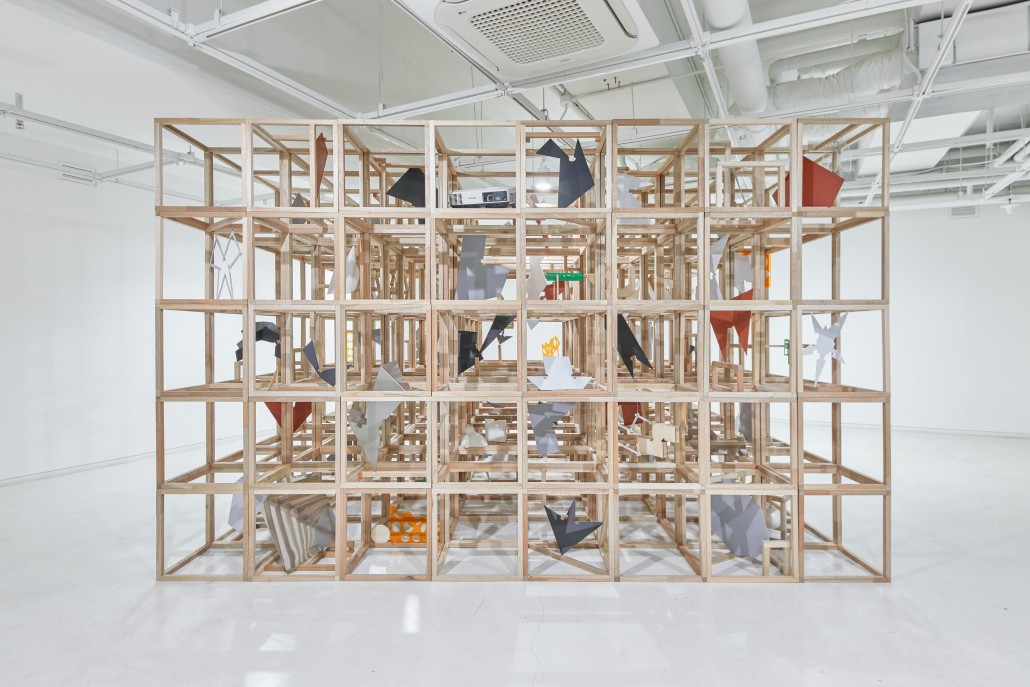
I first became aware of Taeyeon Kim’s work around 2019. I remember encountering sculptures in which large measuring tools—rulers and French curves—were bent and transformed into black three-dimensional forms in a small shop window and exhibition space (《The Ruler of the Shape》, 2019), and asking a simple question: is what interests him the dismantling of standardized units?
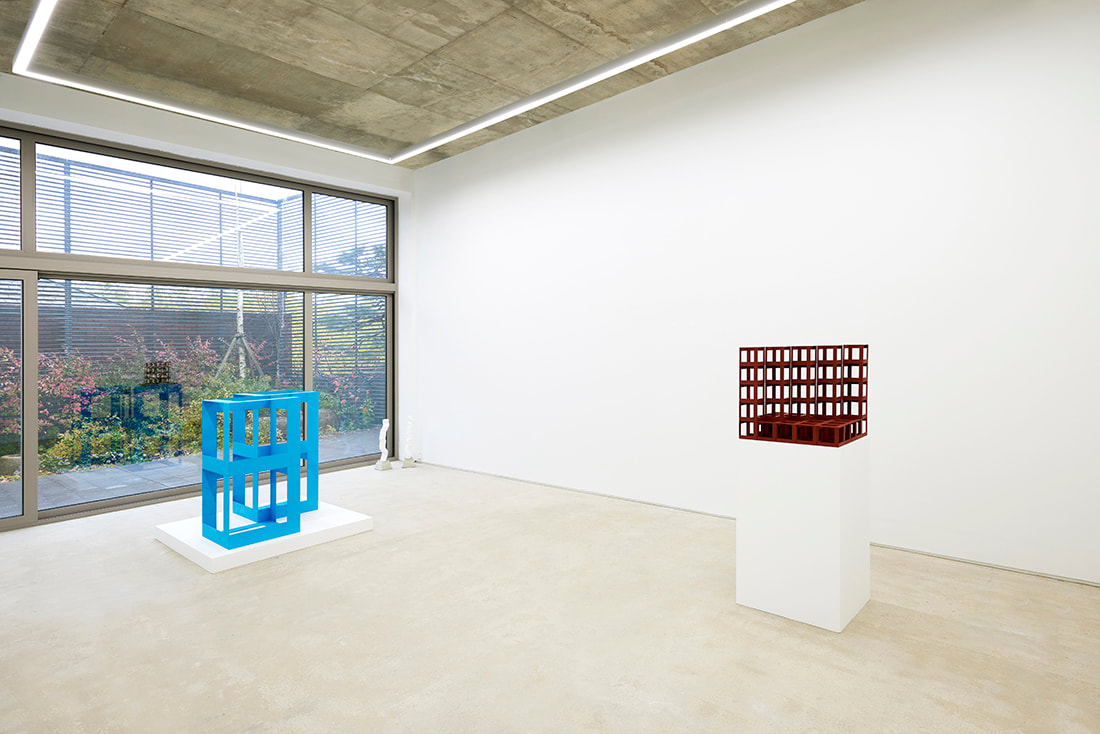
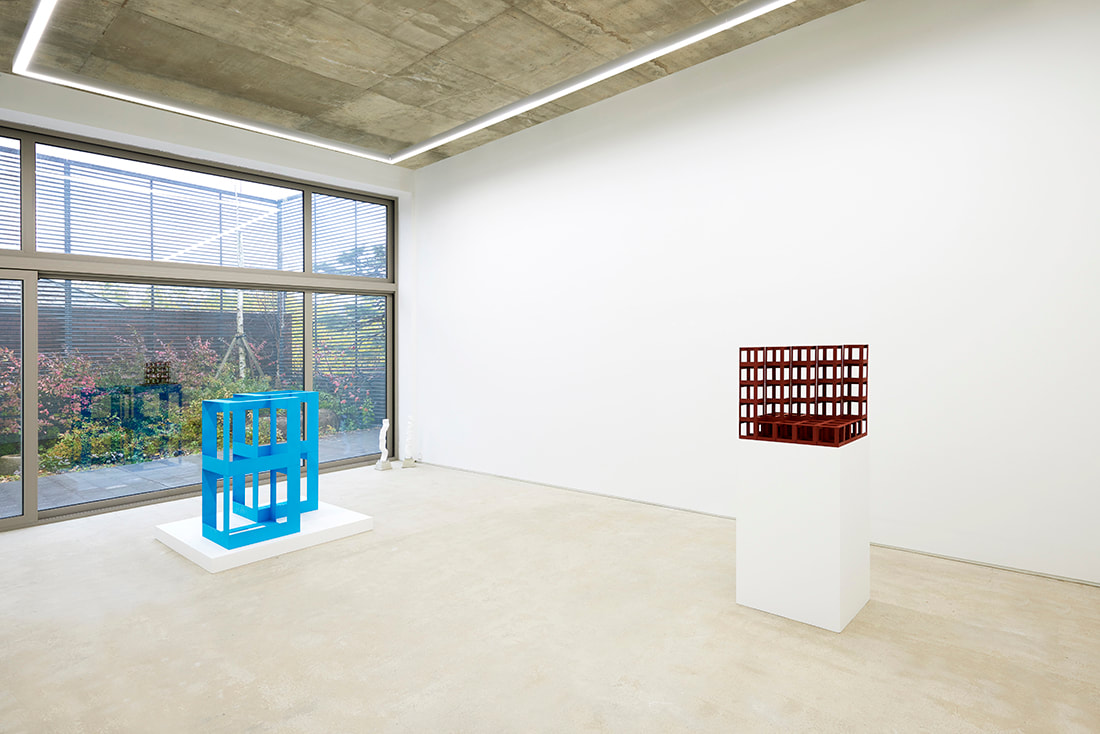
Now that I have been given the opportunity to reflect on her overall body of work, it may be appropriate to say that Taeyeon Kim’s practice begins from a consistent attitude of viewing both art and life from an oblique angle. Looking at what she has steadily produced so far, the outward forms are neither flamboyant nor complex. Most of what emerges from her hands consists of geometric and abstract lines and planes; colors are extremely restrained, and even when color appears, it often reveals the inherent color of the material itself.
In other words, rather than embellishing something, she focuses more on keenly perceiving the internal and external factors that lead her to decide to transform and reconstruct a given object. The characteristics of the observed phenomena then gradually influence her formal experiments.
Looking back, it is clear that Kim’s work has existed in a space where curiosity toward standardized forms and suspicion of them are in tension. Broadly speaking, the artificial material environments and systems surrounding contemporary individuals—such as social laws and conventions, industrial standards, and even languages that differ by culture—can all be included within the category of “standards.” These tangible and intangible boundaries, which appear rigid, become an uncomfortable playground for the artist.
Rather than rejecting or abolishing norms, he appropriates them, making their hidden structures visible and twisting them. She once made a suitcase out of wood weighing exactly the same as the luggage limit allowed on airplanes and transported it to an overseas residency (23kg, 2017), and created a slate structure fitted into each step of a staircase in his studio—one that had to be climbed without an elevator—so that objects could be moved more easily (When Trouble Become Works, 2018). By willingly carrying out these cumbersome and inefficient procedures, the artist subtly positions art along the edges of existing systems.
The various rules and standards that guarantee quantitative precision are, in fact, ghost-like entities that make us believe that the secure net called society exists as a tangible reality. This concept lurks somewhere in our unconscious with a peculiar force that leads us to perceive a line drawn outside a crosshatched grid as an error. Kim gathers the courage to step beyond that grid. The instability and trembling that arise in that moment become the nourishment that drives her.
Her will to reorganize preconditions already determined by others offers viewers a strange sense of liberation. Her light yet incisive remarks on the stereotypes and prejudices that permeate everyday life feel like signals that diversify circuits of thought that had been moving in a single direction. For a time, she seemed to move between installation and performance, sculpture and readymade, aligning her methods of labor with the message of her work.
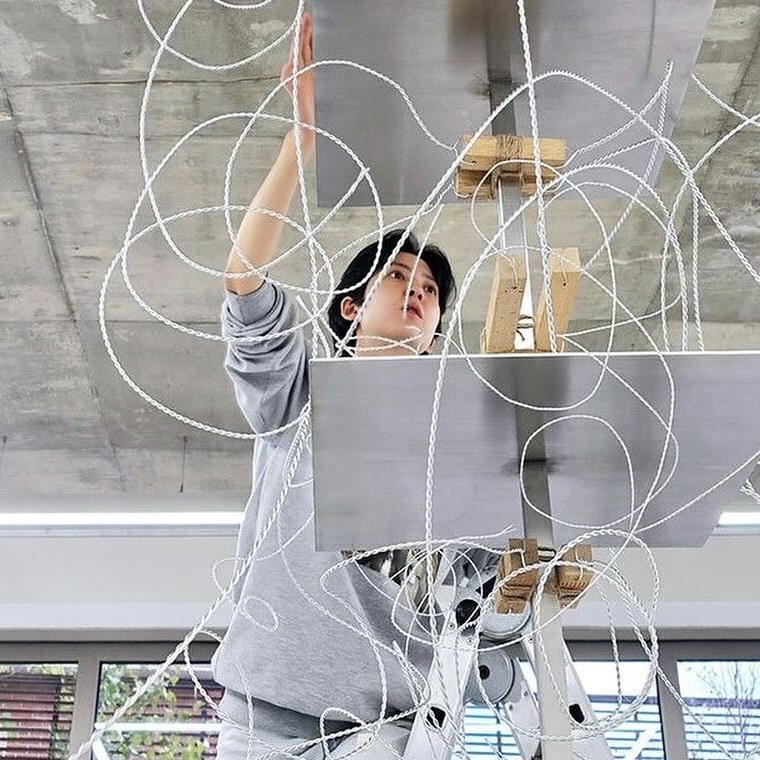
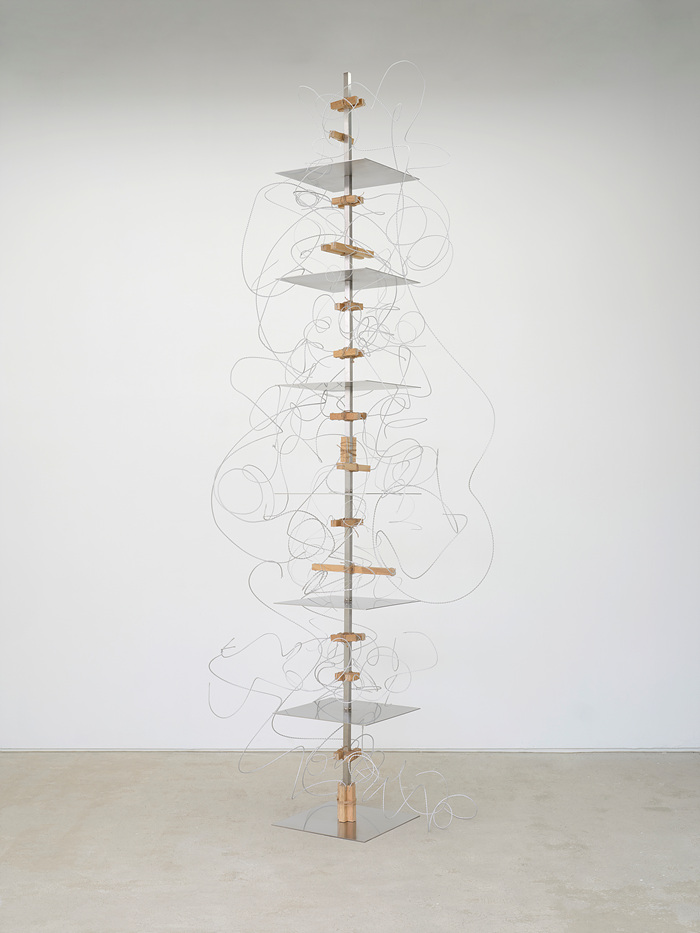
Her eye, which captures paradoxes and absurdities that go unnoticed unless carefully observed, turns toward examining the life cycles and functional limits of the many objects that fill his working environment. Generally, creating artworks and objects requires numerous auxiliary materials—wooden beams, silicone molds, protective materials, paper tape, even unnamed components. The artist contemplates how these elements, which contribute to the process but are ultimately hidden from view or easily discarded, might take on an active role within the work.
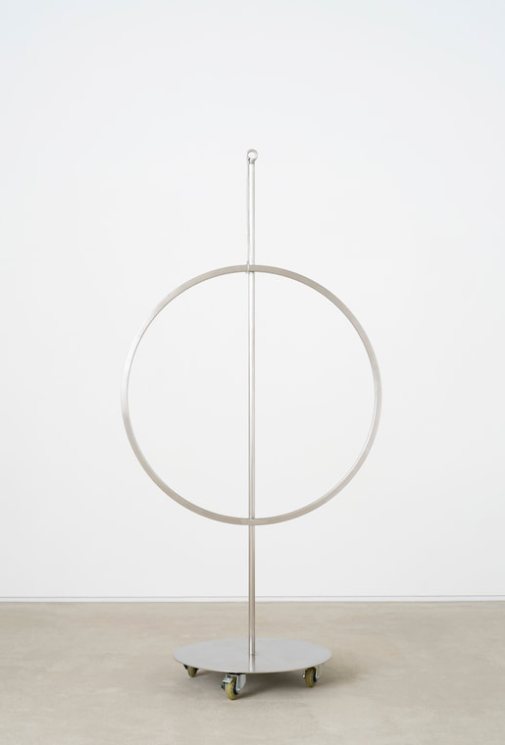
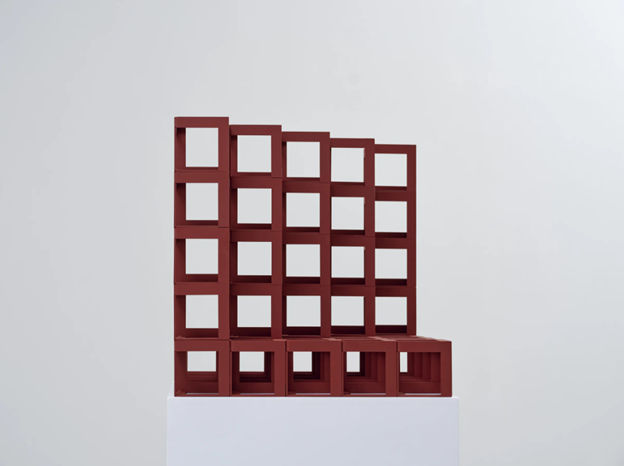
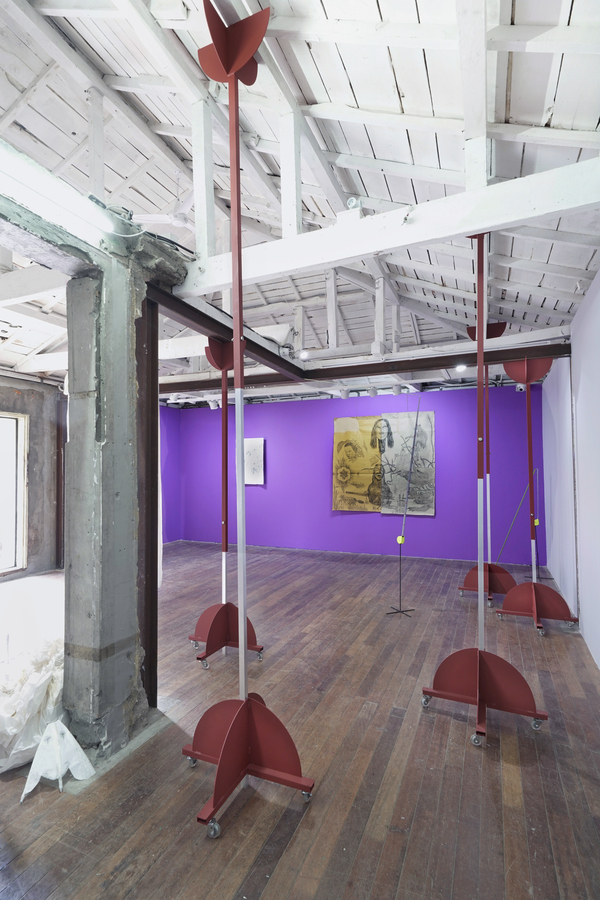
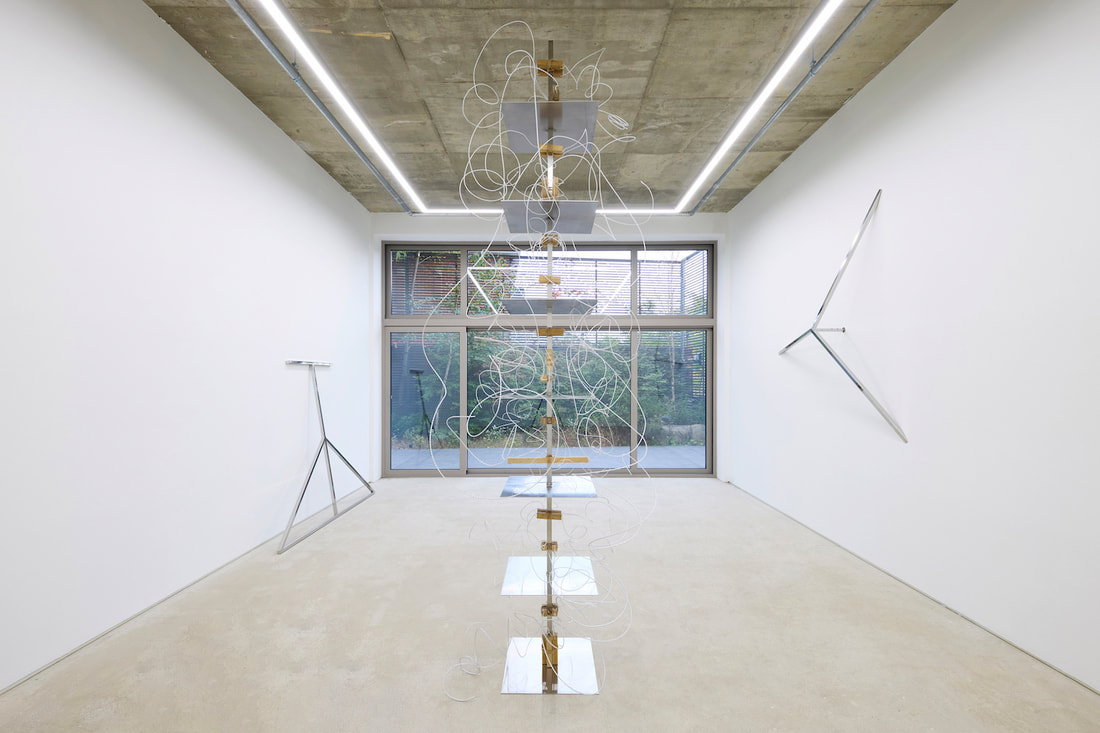
For example, Neutral Structure(2023) is an installation-sculpture composed by assembling materials—such as the shape of Styrofoam protectors, the color of rust-proof paint, and the length of aluminum pipes—without altering their original characteristics. The functional roles these objects originally had (components used to prevent damage during packaging, pigments used to reduce corrosion in metal) are not important to her. Instead, each material participates in the content and form of the sculpture in a “neutral state,” preserving its inherent physical properties.
This formal logic goes beyond mere affection or curiosity toward surrounding objects, revealing the values of an individual’s way of viewing life. In the socially accepted version of myself, countless thoughts, emotions, and sensations are erased. Errors or defects discovered through rational calculation are edited out and disappear as if they never existed. The artist calls forth values that have been pushed into the negative realm into the field of art, transforming the limits of failure and marginalization into concepts of possibility and regeneration.
At her solo exhibition 《Form and Variation》(2021) held at Gallery 2, one side of the exhibition space was filled with white Styrofoam masses carved out in the center using heated wires. Here, the work consists both of the core that once occupied the center of a cube and the hollowed frame that surrounded it. Fragments with distorted symmetry and proportion embrace both the indeterminate movements of the body executed outside mathematical calculation and their aftereffects, stepping onto the stage as artworks. In her world, both correct and incorrect answers are equally non-hierarchical sources of nourishment.
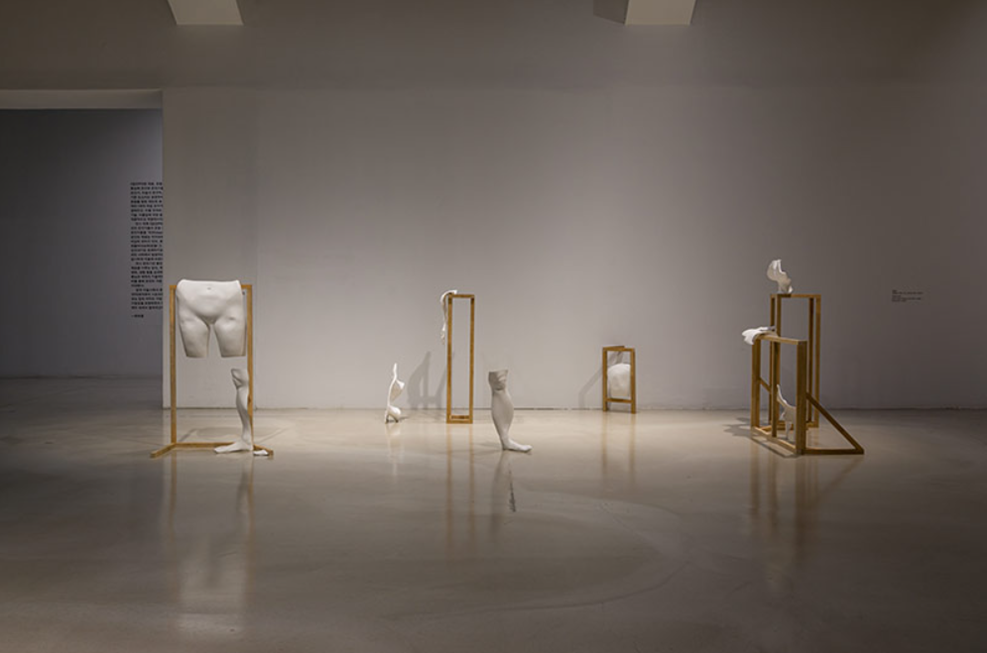
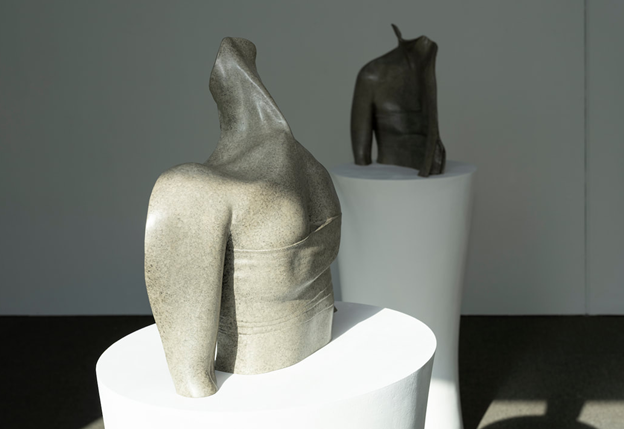
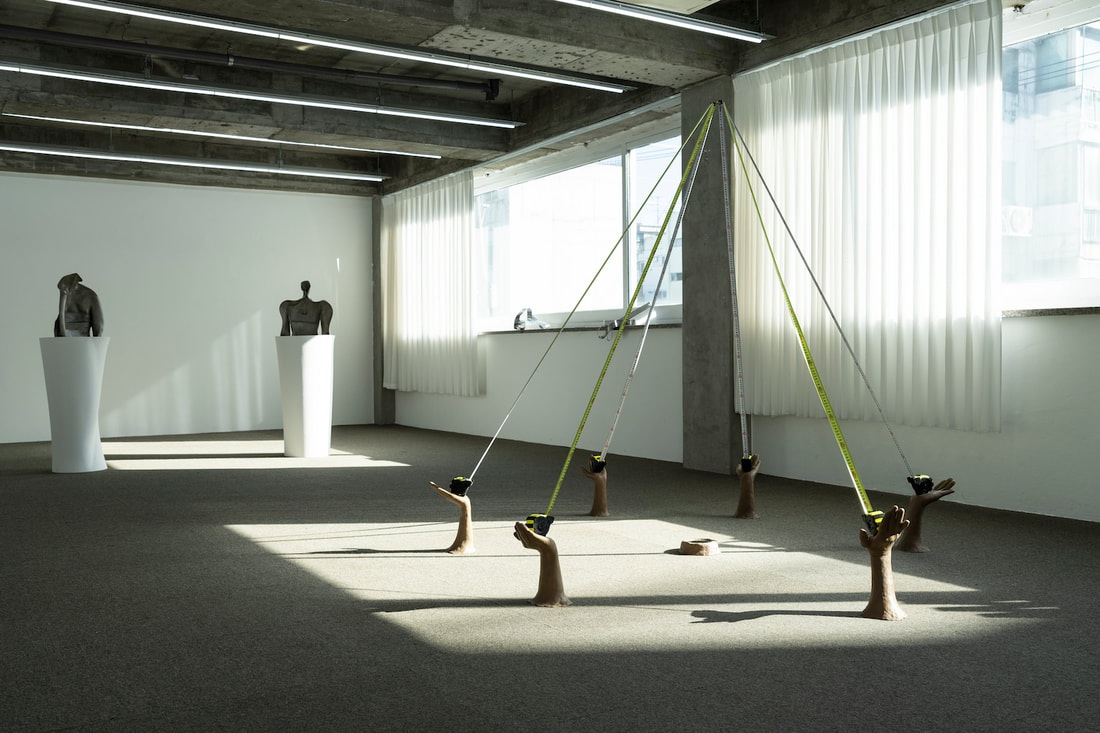
Meanwhile, the artist’s recent works seem to mark the beginning of an experiment in directly incorporating the human body into the surface of her work. At his 2023 solo exhibition 《Way Out》(2023), seeing the palm-shaped clay supporting a measuring tape and Rounded Shoulder, in which a hunched form curls inward so that the inner surface of the torso appears like an outer skin, I found myself wondering: is she now attempting to treat the human body as a mold and overturn the limits of that framework? The emergence of the body, which inevitably invites layered narratives unlike neutral objects, suggests that the artist is not solely preoccupied with questioning socially defined standards.
Perhaps this agent is, in fact, questioning herself. What language, what thoughts, what memories am I trying to shed? What can fill the holes between my inside and outside, and what tools, what others, what actions are needed to fill the remaining gaps? The shells of bodies cast in plaster and jute seem, somehow, like the questions she has shed momentarily taking on physical form and lingering in reality. The human skin entrusted to a soft membrane stands leaning against a temporarily constructed wooden framework, freed from the constraints of the body. The shadows that have detached from her body reveal their interior and exterior to us indifferently, without concealing complexes or highlighting desirable features.
A wit that disrupts the center of gravity of thought, an agility that transforms immediate problems into the driving force of art, and a calmness in the face of exaggerated situations adorned with ornate adjectives and adverbs—these, I believe, are the most fundamental values that keep Taeyeon Kim’s language alive both yesterday and today.
Her work, which places emphasis on visible formal variation rather than narrative, begins at some point to speak on its own. That narrative starts from the question marks given to her and moves toward incomplete sentences held within the minds of countless anonymous individuals, gradually dissolving the rigid and timeworn frameworks of the world that once seemed immovable. From the questions he poses, it is certain that reality is becoming more flexible, little by little.