The Persona Called Ram Han
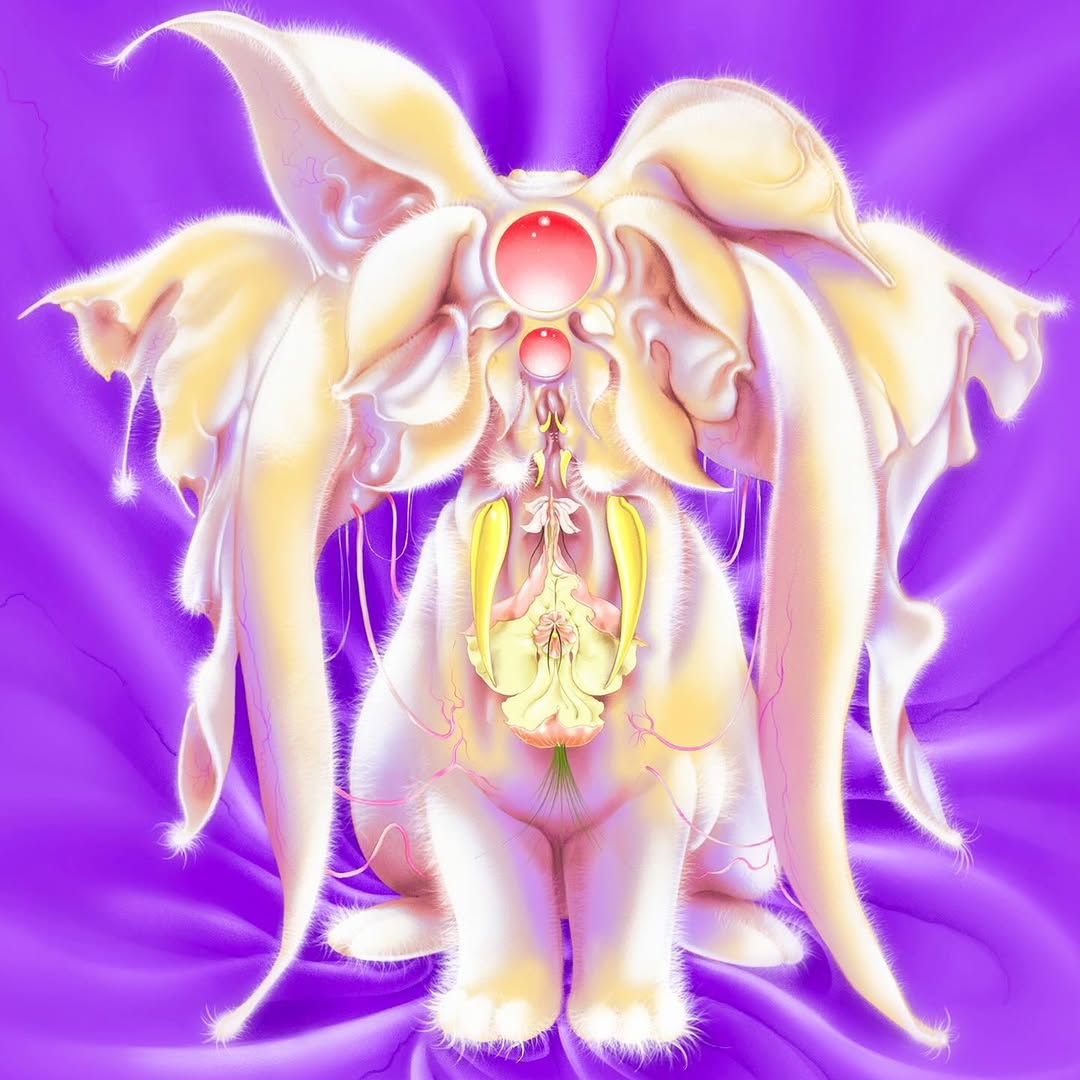
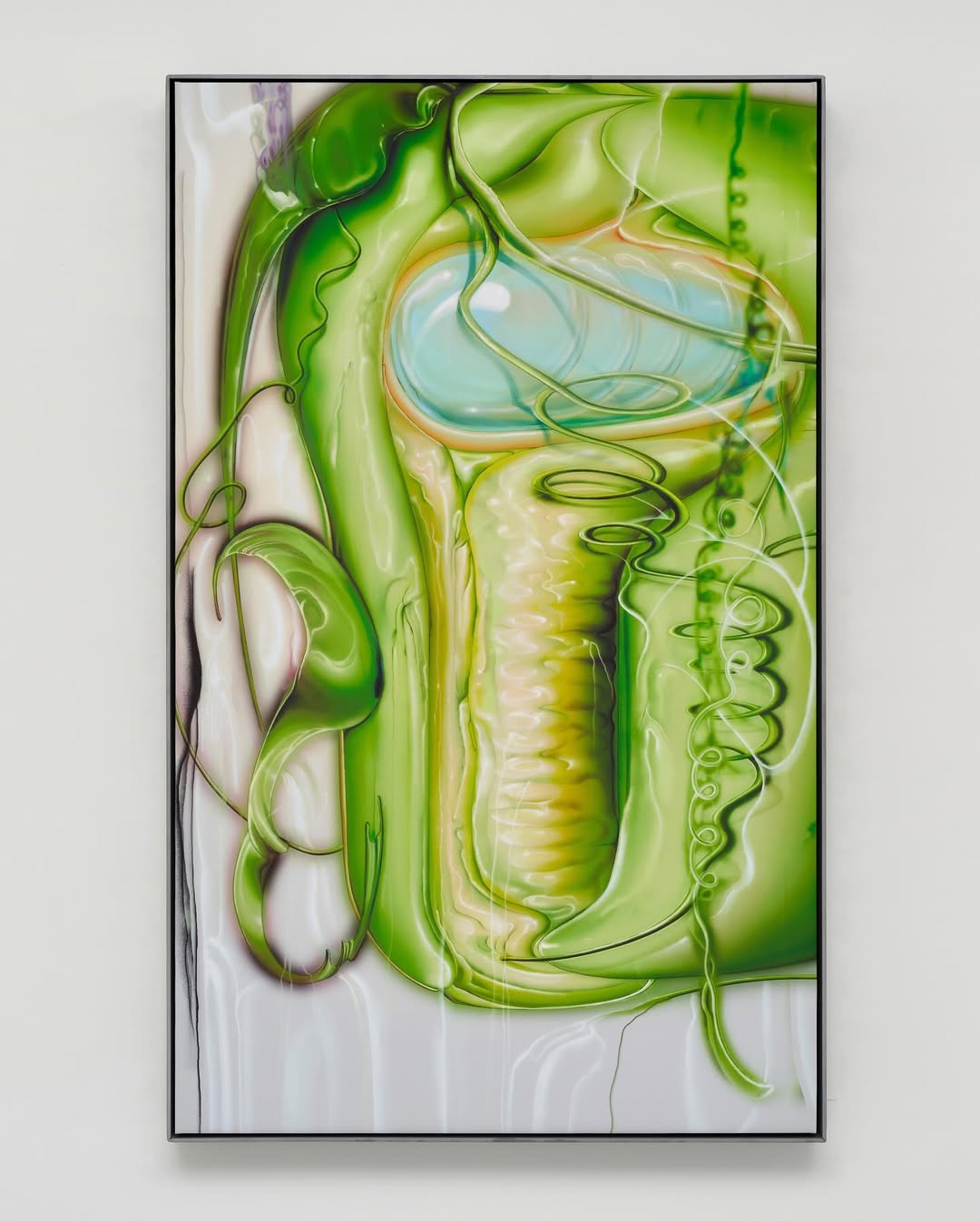
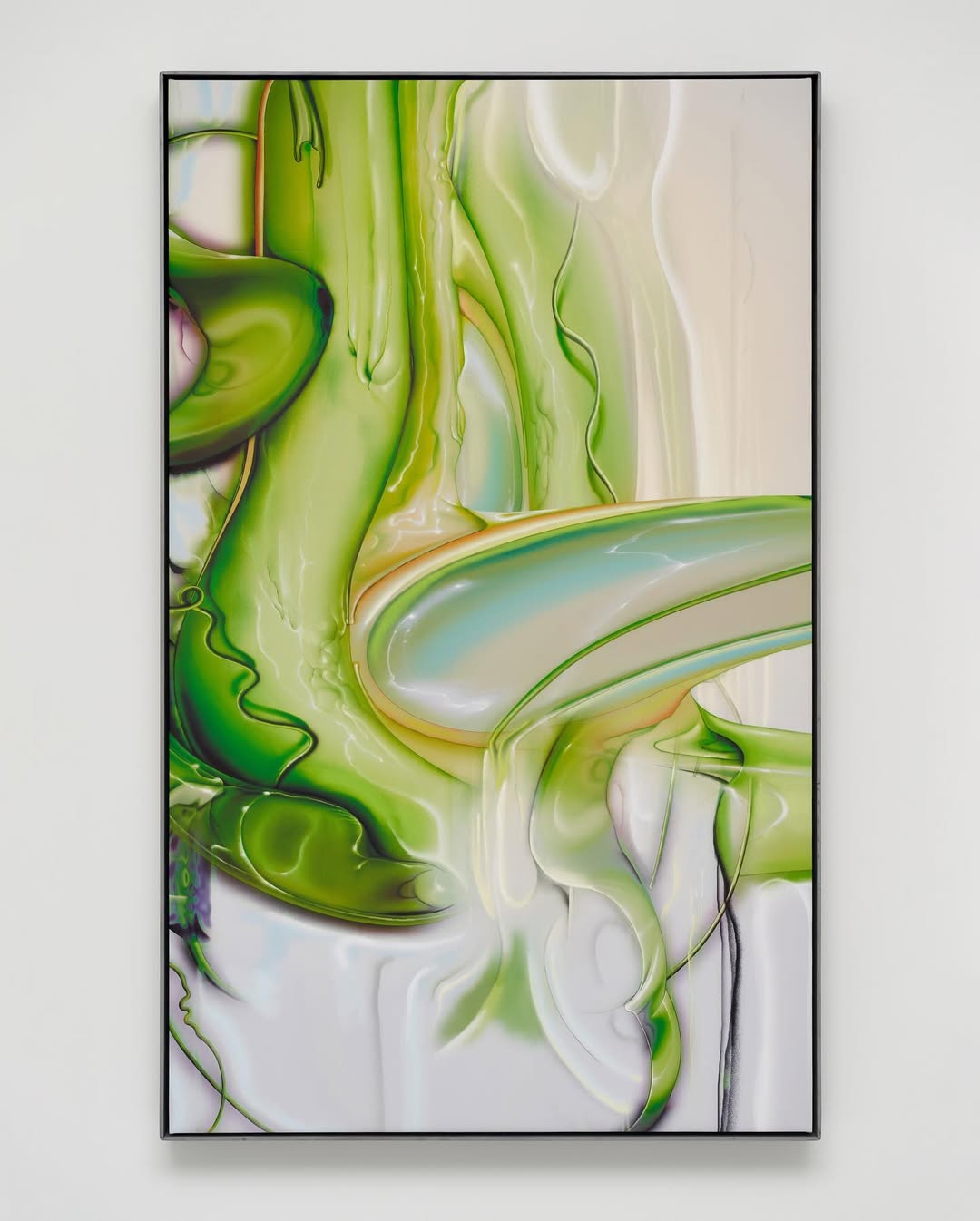
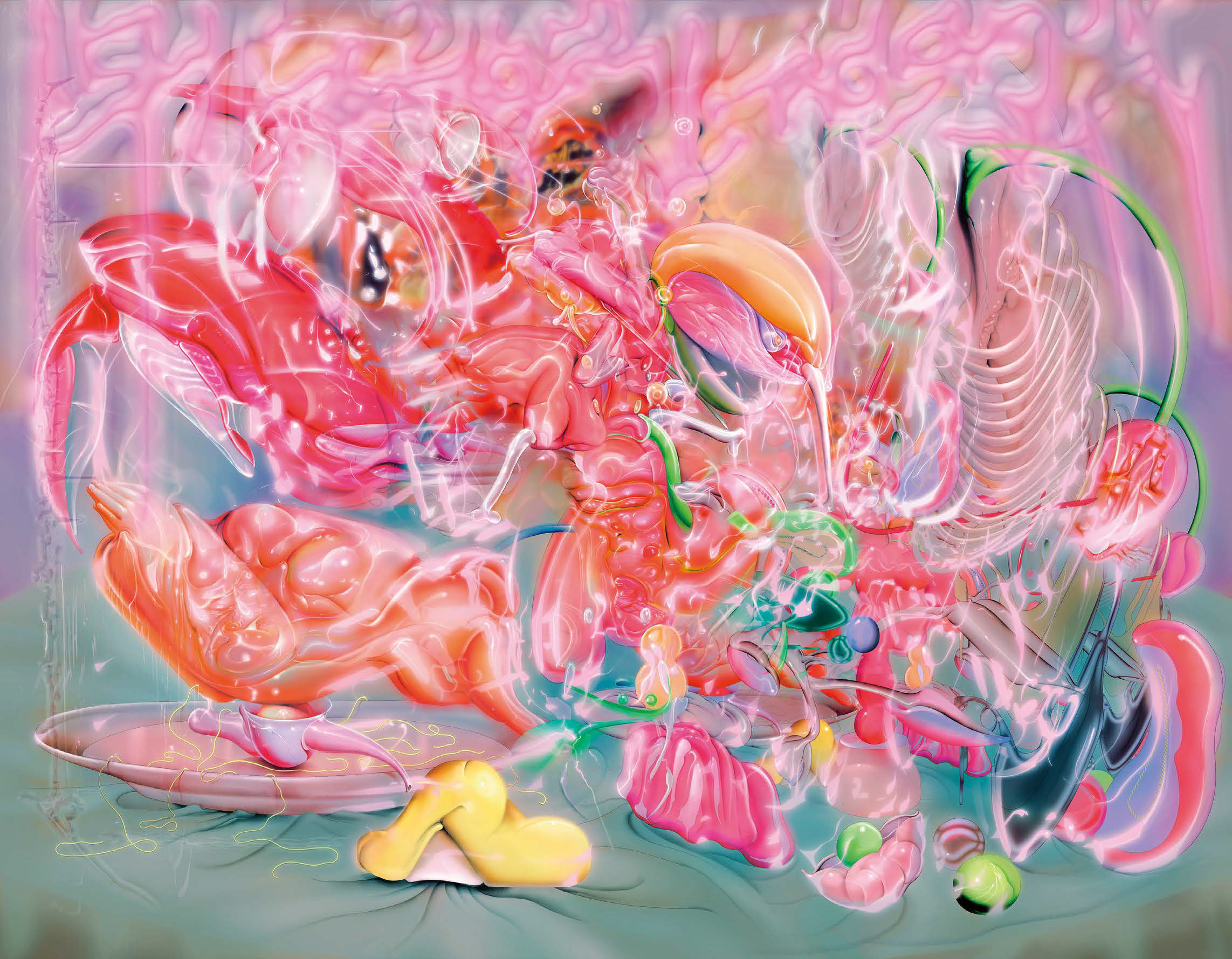
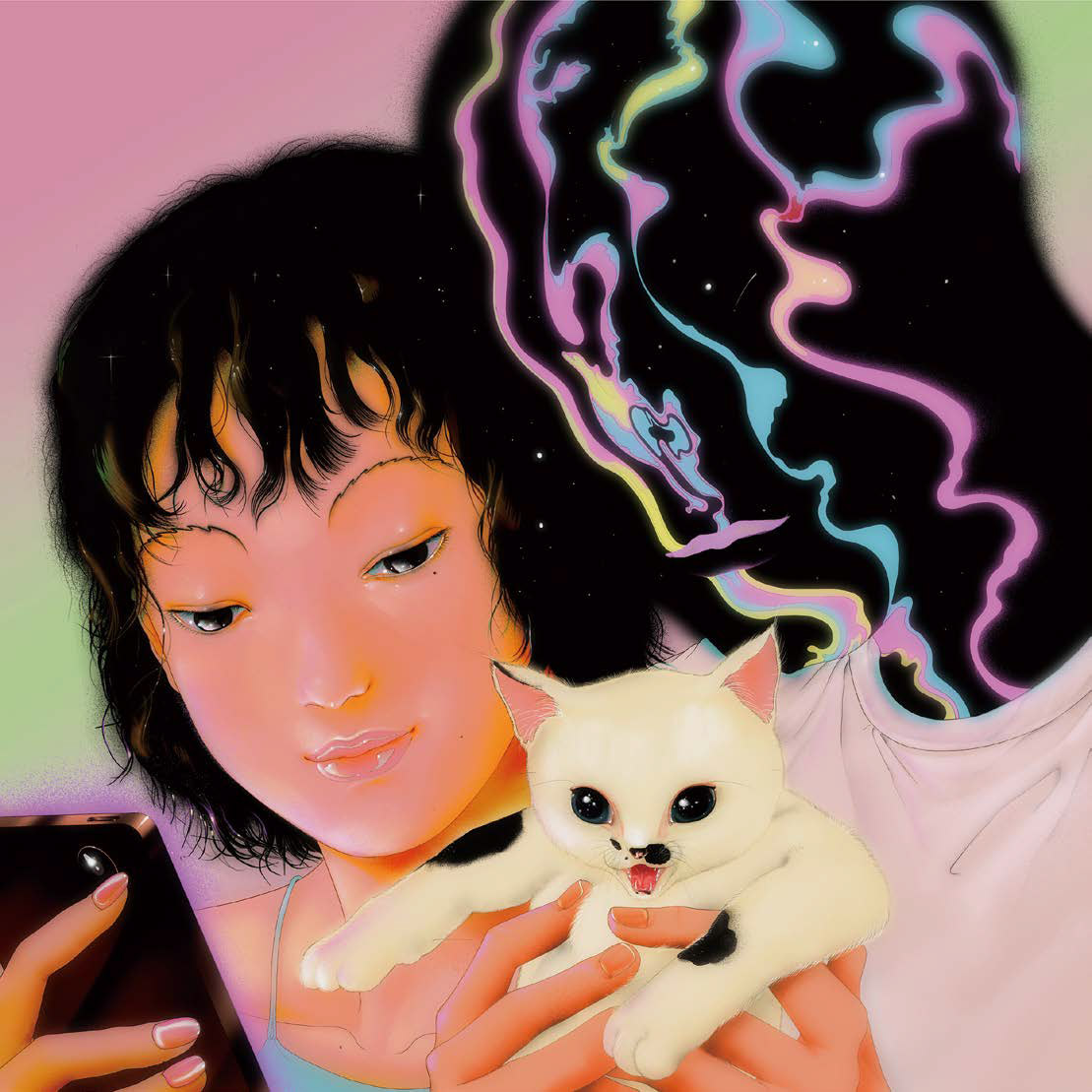
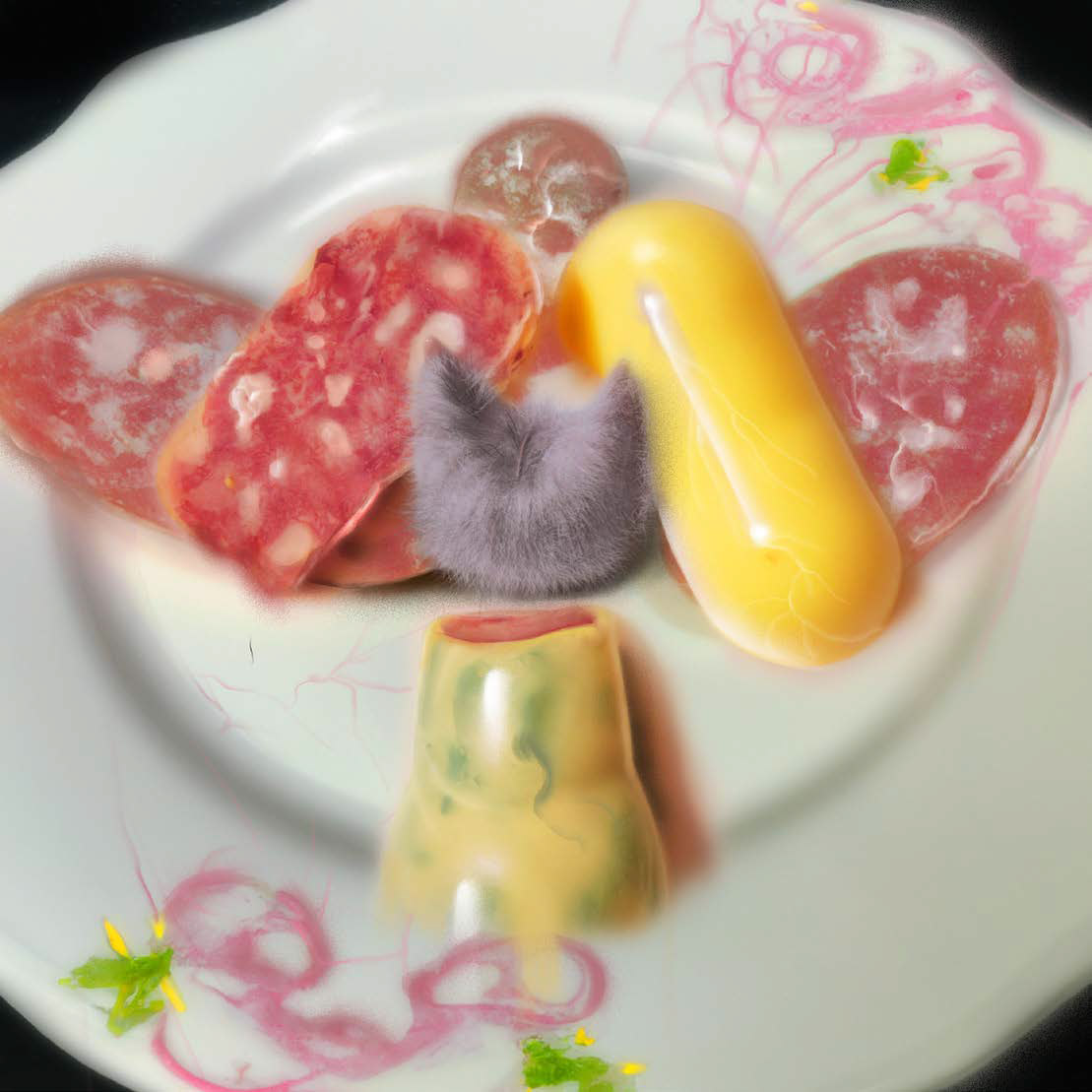
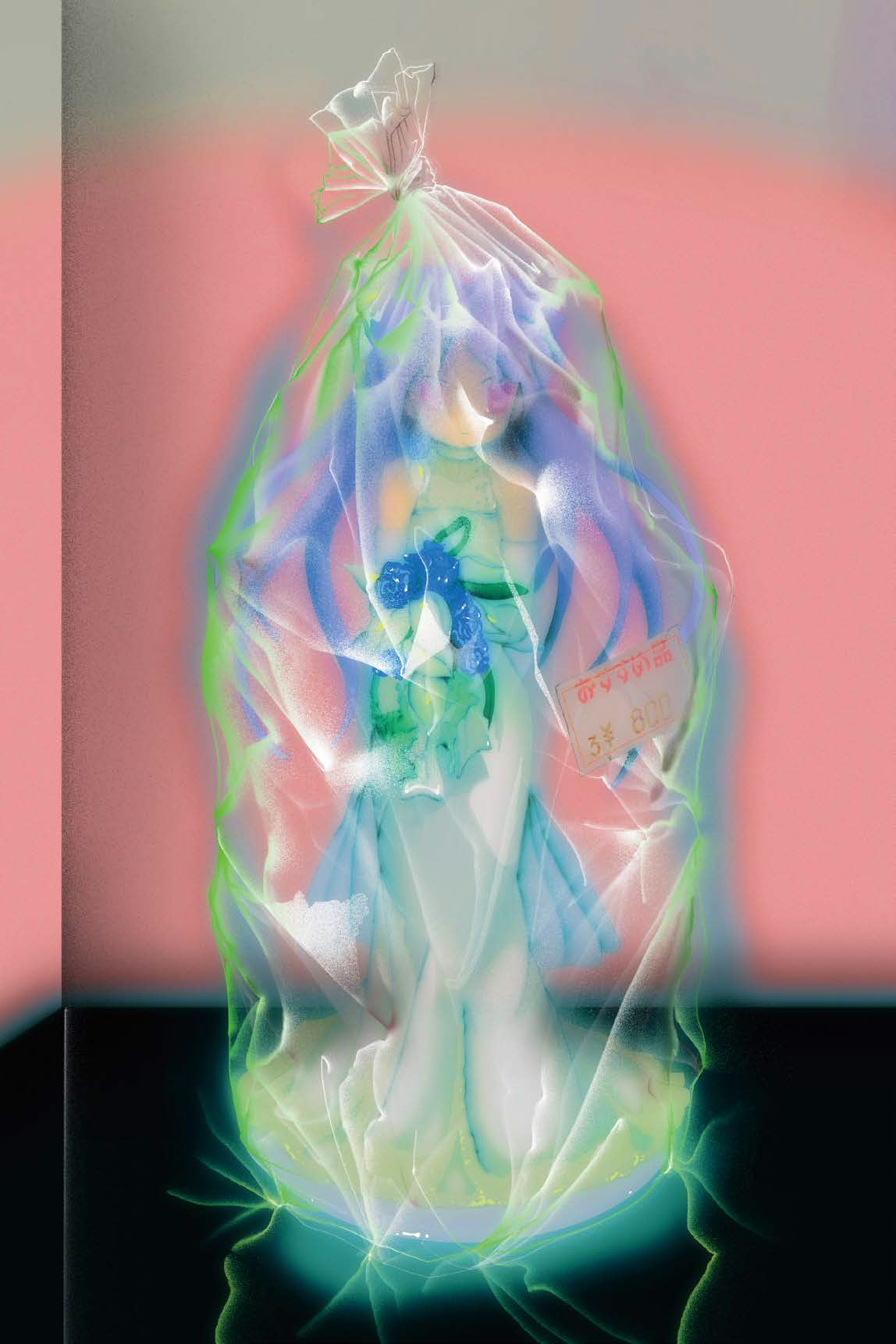
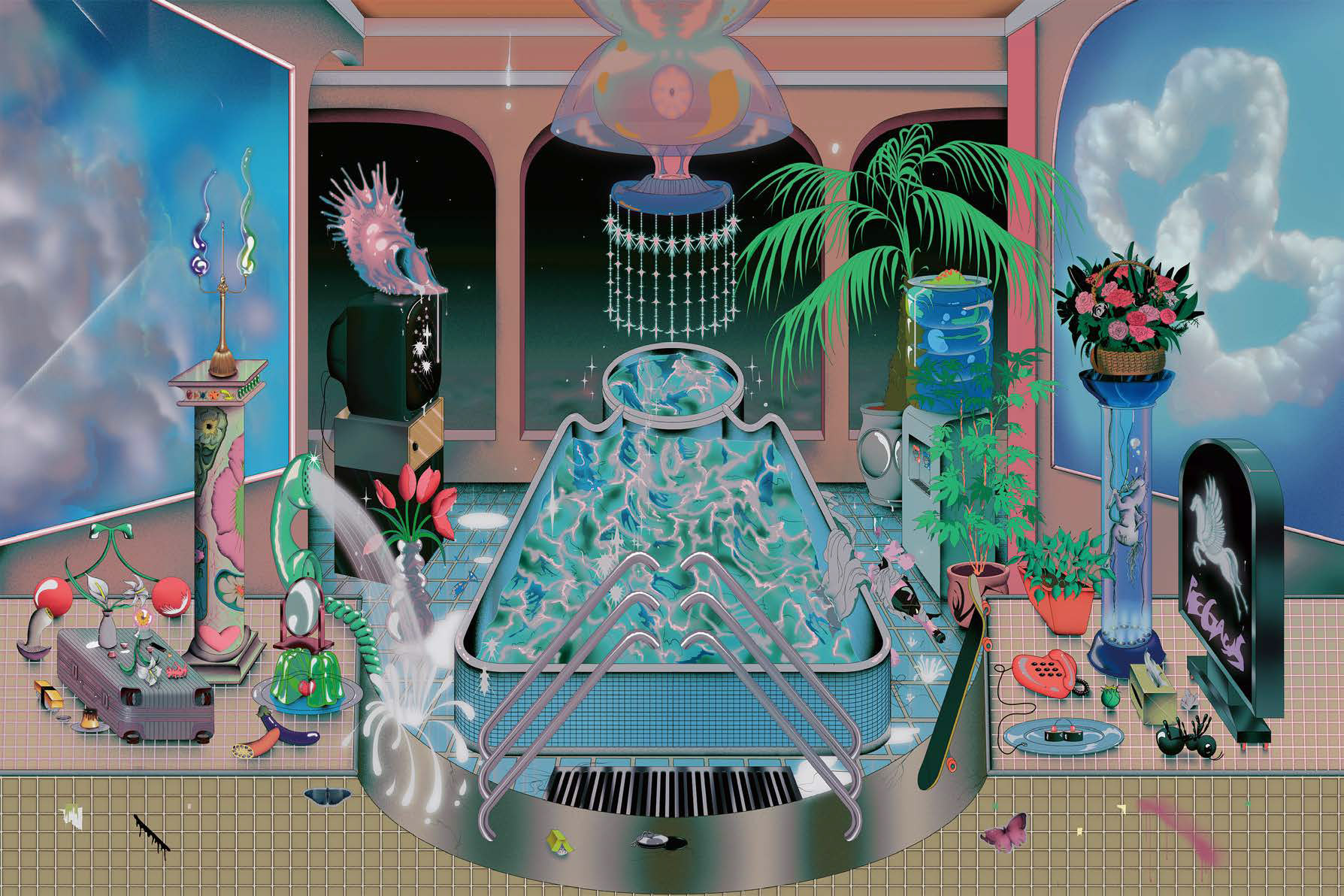
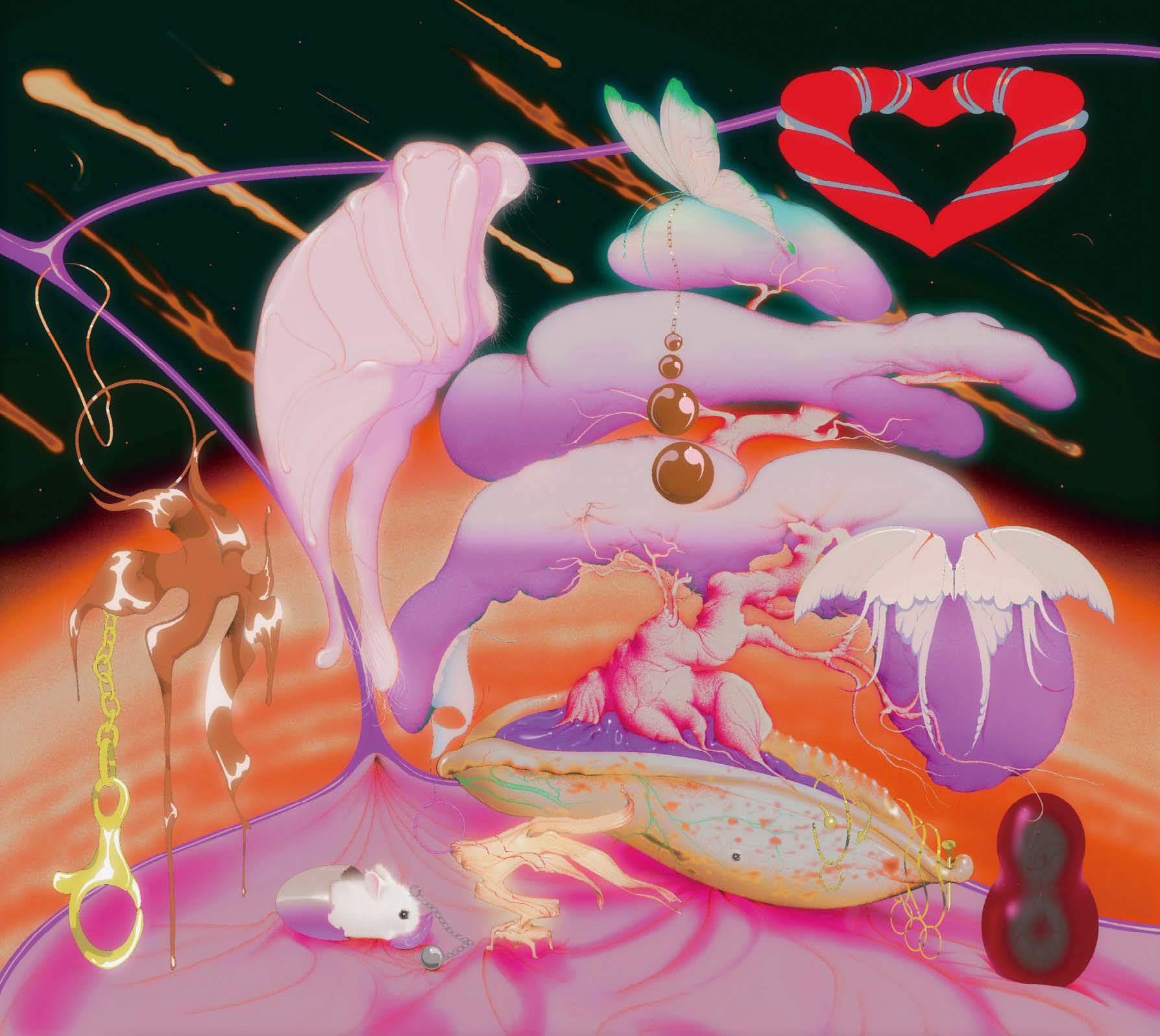
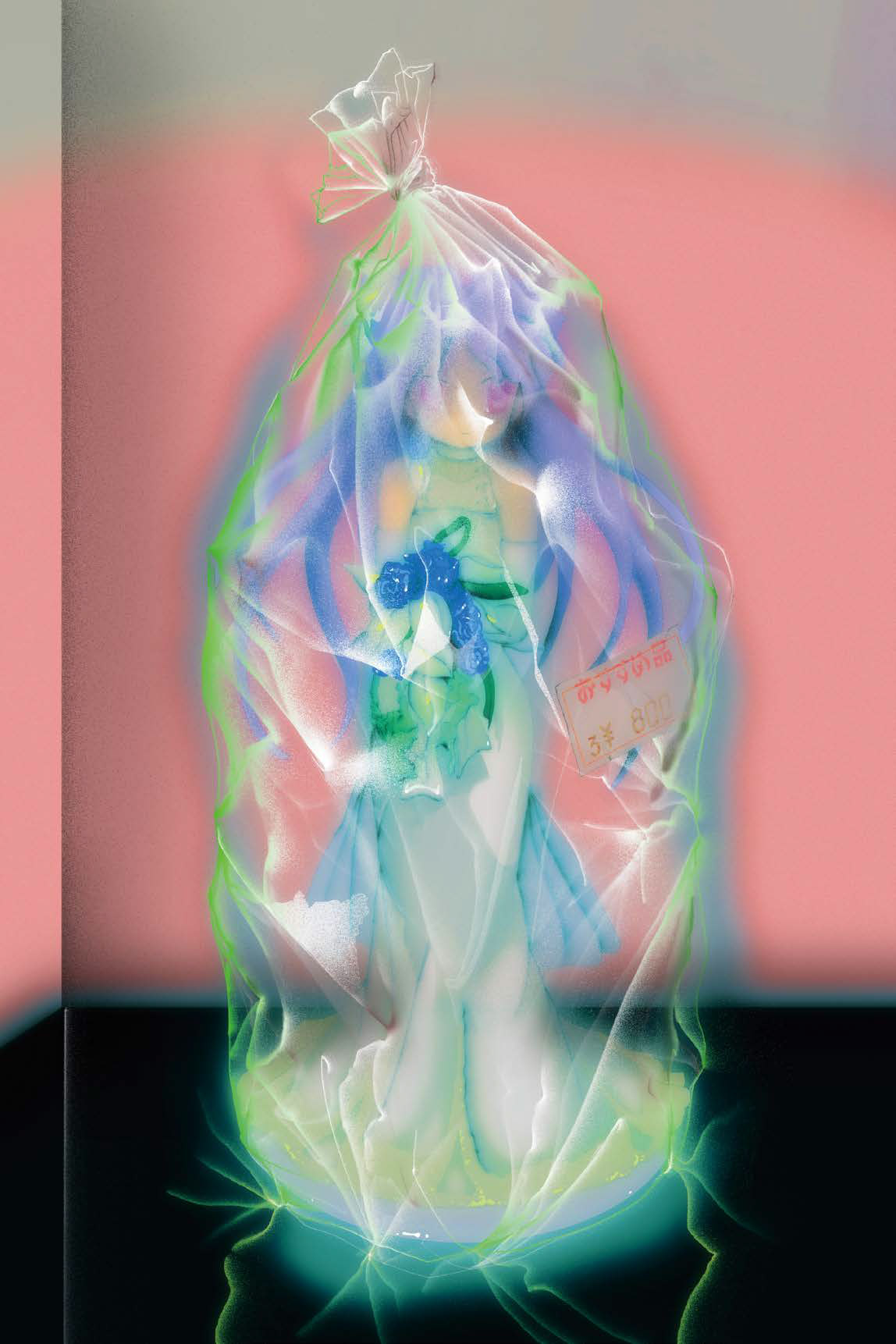
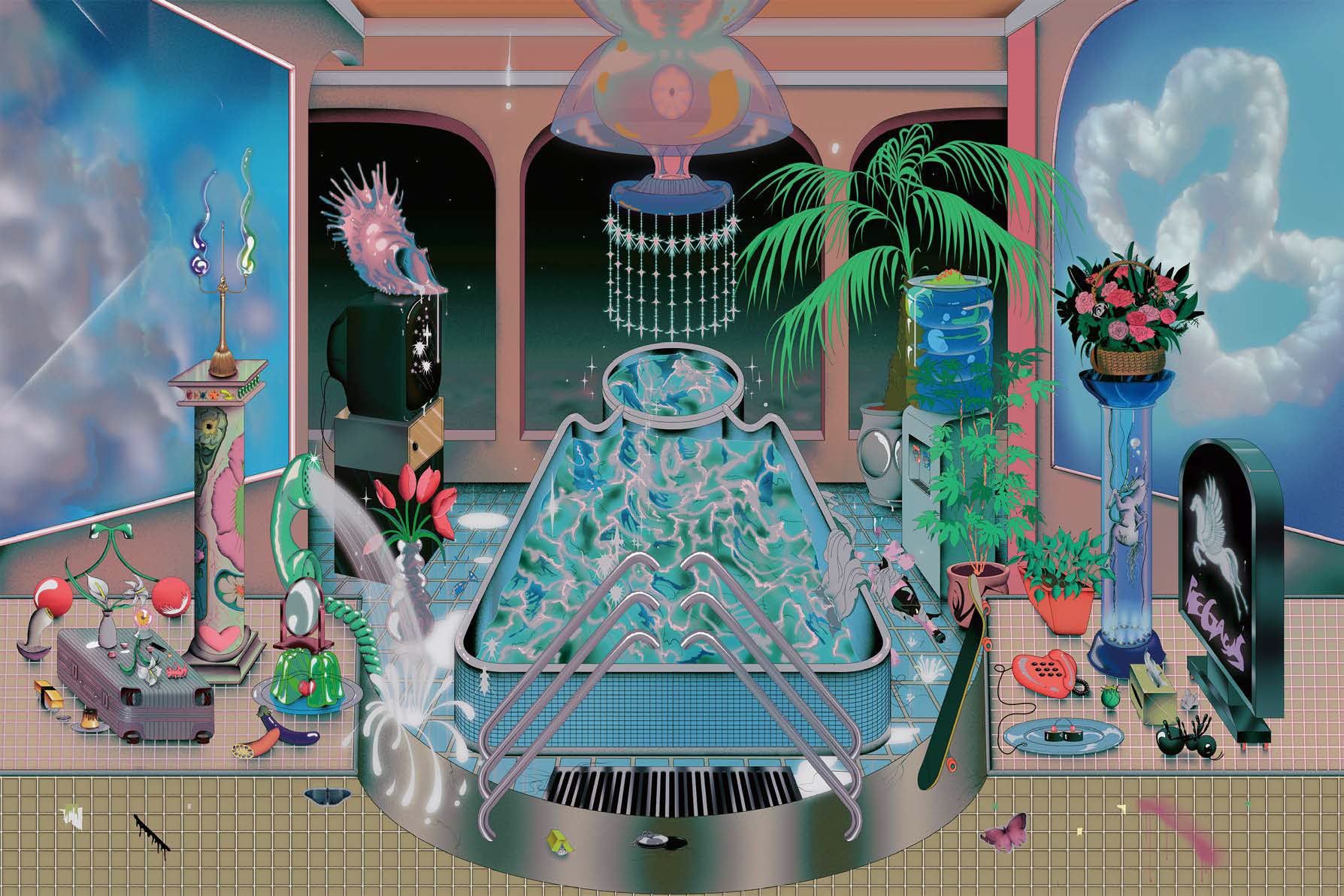
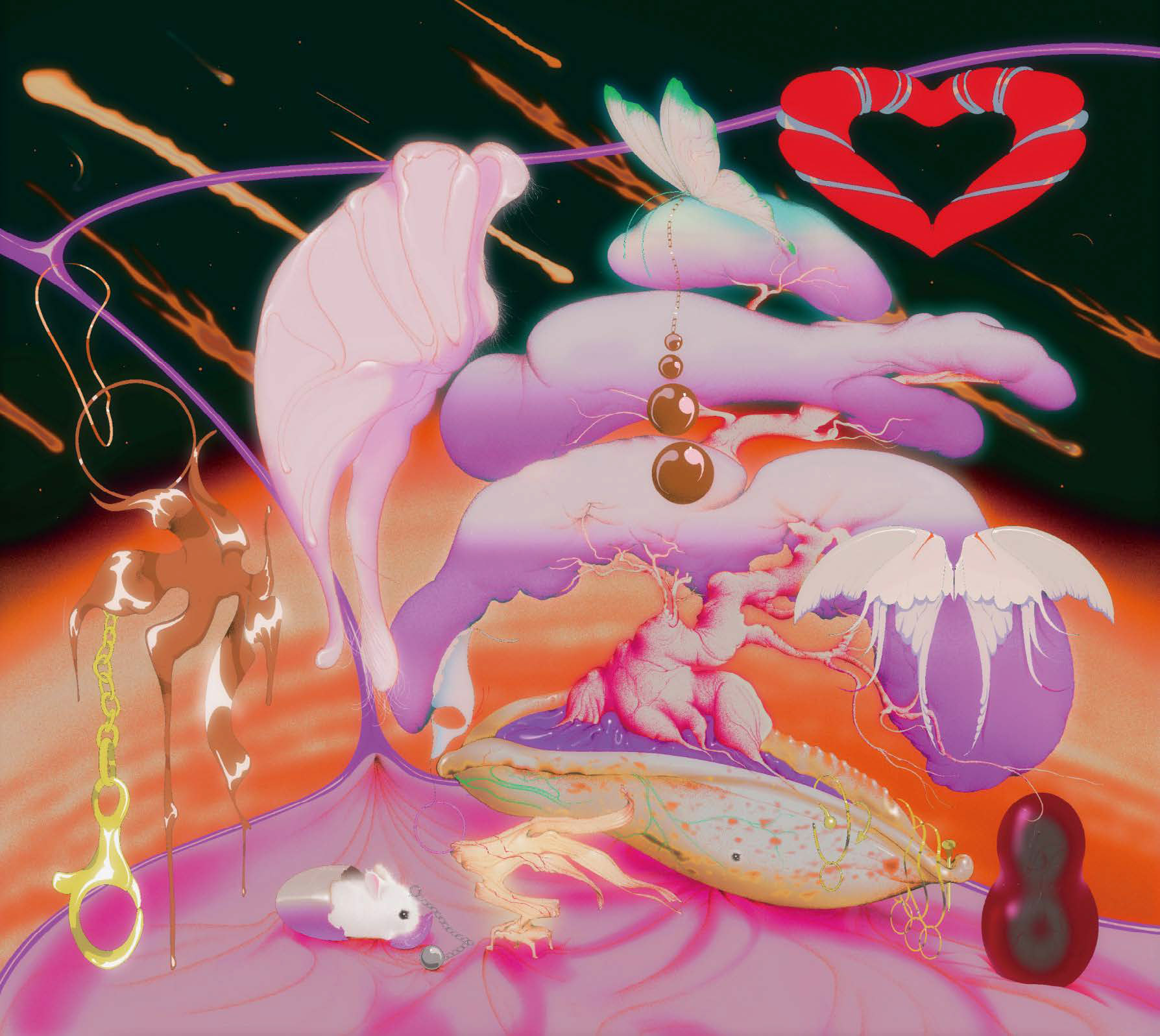
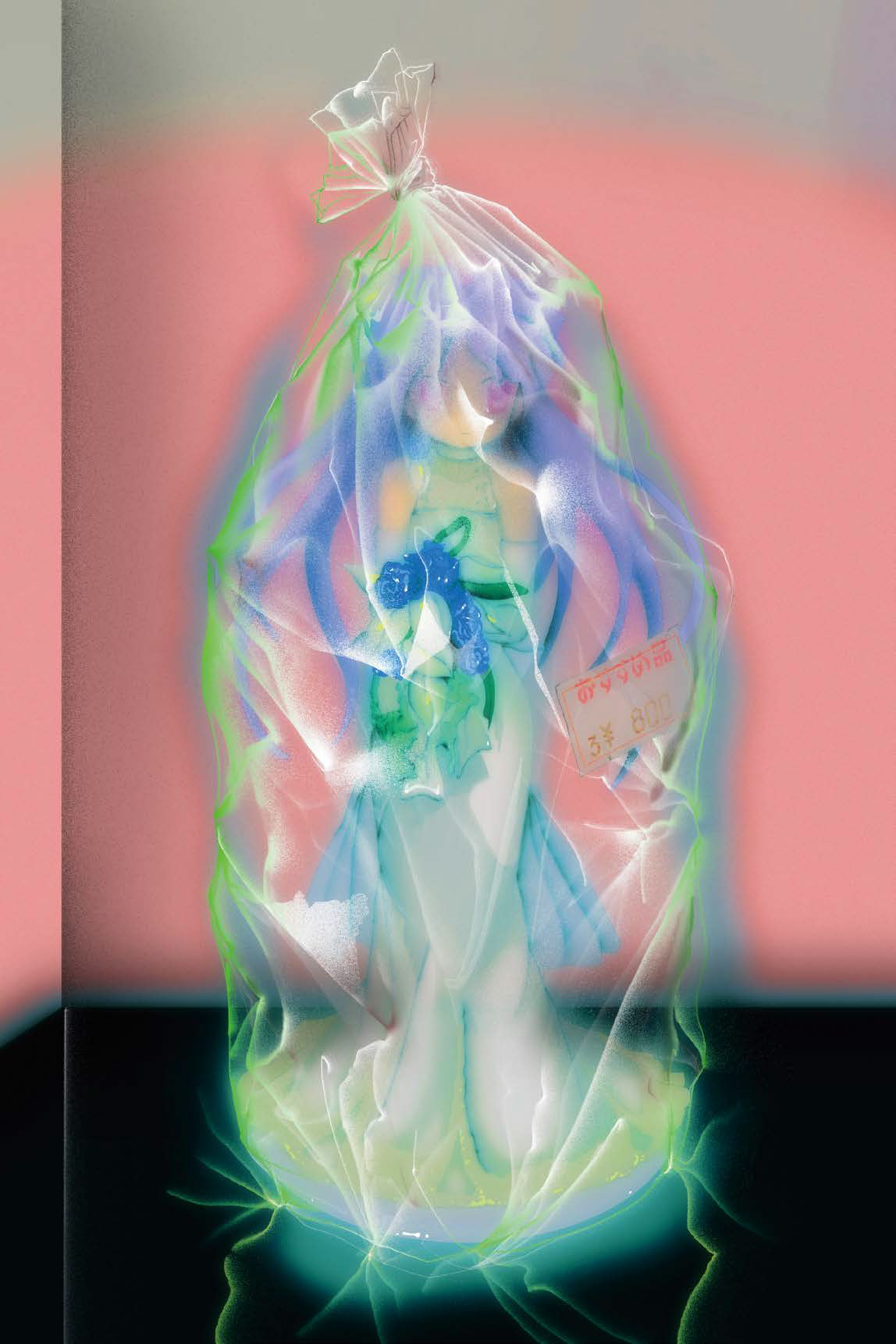
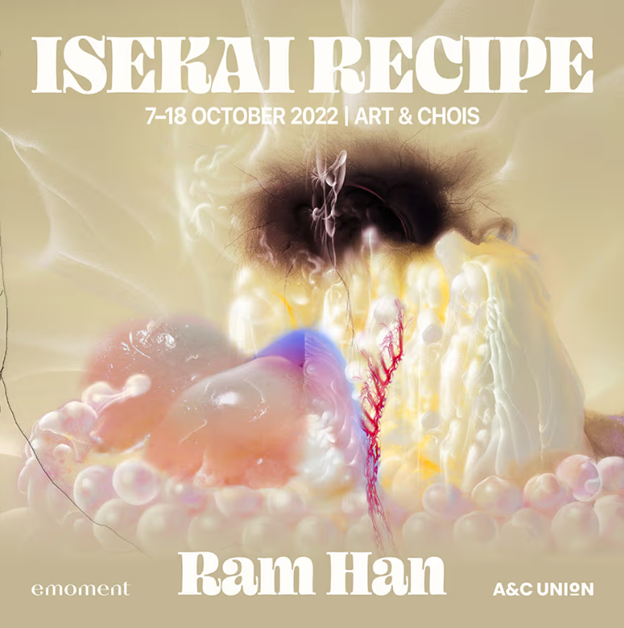
A flat and smooth image that emits light from countless particles
of an LED panel and settles upon the retina. Depicted in psychedelic colors, it
resembles the neon signs of a city where city pop music flows. Within that
artificial glow appear unique iconographies in which grotesque creatures and
objects intertwine their bodies together. Science fiction fantasy, fabricated
fiction, and the traces of degraded memories grotesquely coexist. It is a
provocative image difficult to explain through any single term or to assign a
linear narrative. It is beautiful yet eerie, glamorous yet lonely, leaving only
a confused sensation perceived at the periphery.
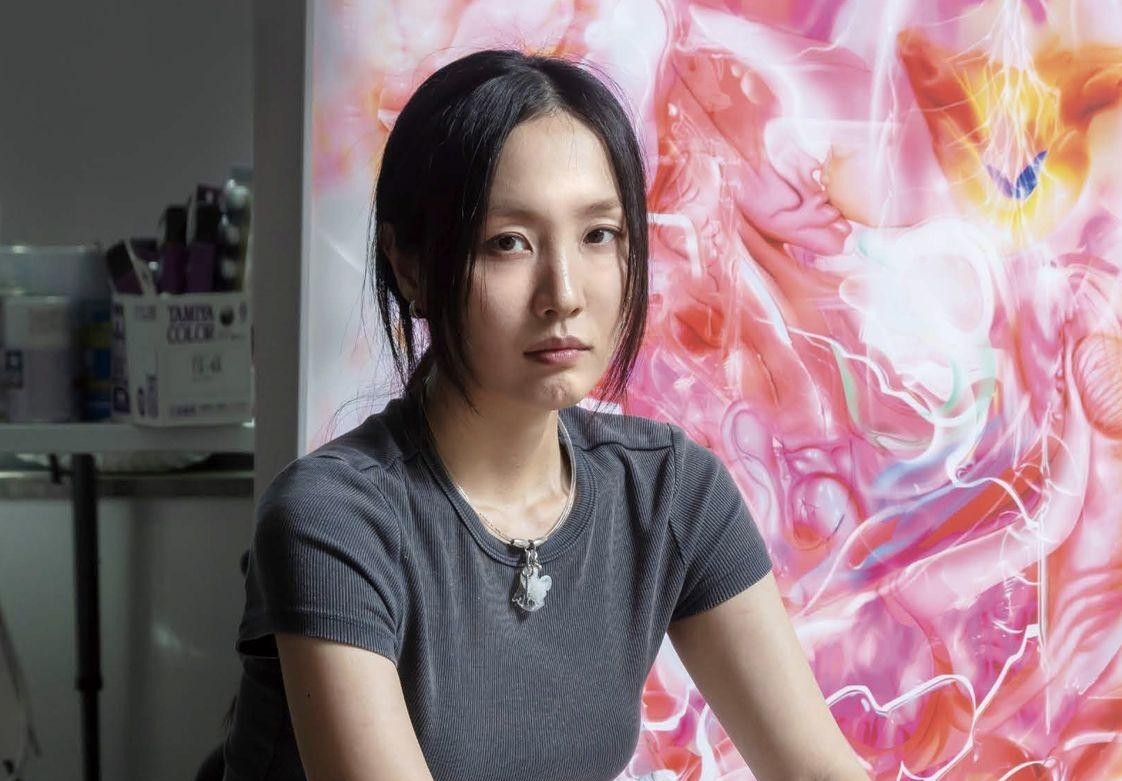
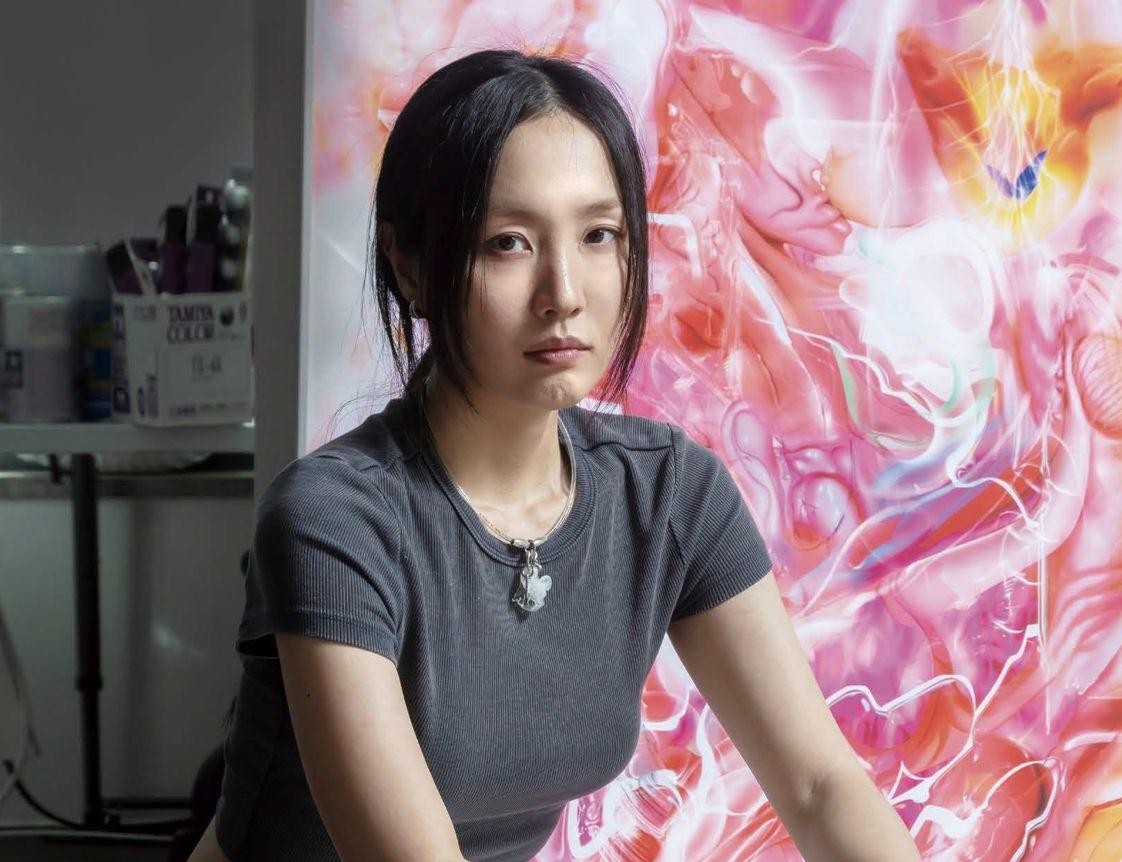
The artist Ram Han, who produces such visual images, has drawn
attention from both contemporary art and social culture. After majoring in
animation at the Korea National University of Arts, she initially revealed her
works through small-scale exhibitions and publications. Her entry into the
mainstream art world began with the exhibition 《Ghost Arm》(SeMA Buk-Seoul Museum of Art,
2018).
Curator Hong Iji, who organized the exhibition, sought to examine the
web space that had become a part of everyday life and invited Kang Jungseok,
Kim Jungtae, Park Aram, Compression and Expansion, Kim Donghee, and Ram Han,
referring to “artists born in the 1980s who do not dichotomously separate
analog and digital.”
At a time when many young artists who had gained
recognition through emerging spaces in the 2010s art discourse were either
“accessed” by institutions or quickly “evaporated,” Ram Han appeared somewhat
different—a “new face” introduced as an illustrator and cartoonist. She had not
participated in the physical spaces or artist markets such as 《Good-즈》(Sejong Center for the Performing
Arts, 2015) organized by the generation of emerging spaces, nor the related
events derived from them. Rather, she was called in from outside that sphere.
Ram Han emerged during the same period while working as an indie
artist, holding her first solo exhibition 《Ram Han: Nightcap》(Your-Mana, 2017) in a
space that exhibited and sold independent comics and character goods. She had
little direct connection to the generational discourse in the art world that
disappeared within a few years. Instead, after 《Ghost
Arm》 she was invited to exhibitions such as 《PACK 2018: The Journey of Tinkerbell》(Space
SiL13, 2018) and 《Ghost Shotgun》(Siheung Audiovisual, 2019), thereby experiencing spaces associated
with that discourse at a later stage.
Soon after, she received invitations from
commercial galleries and became a represented artist. In the meantime, she
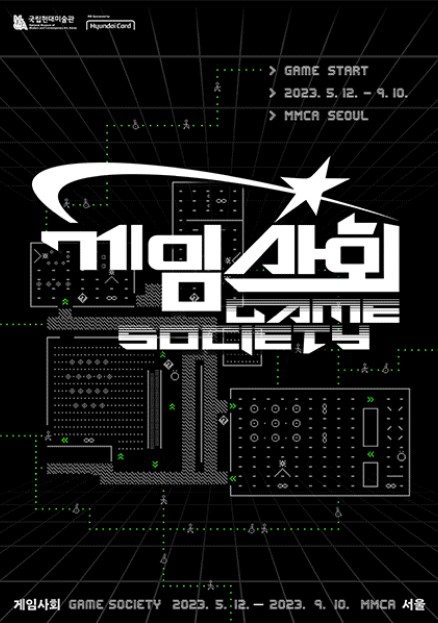
presented major commissioned works at 《Busan Biennale
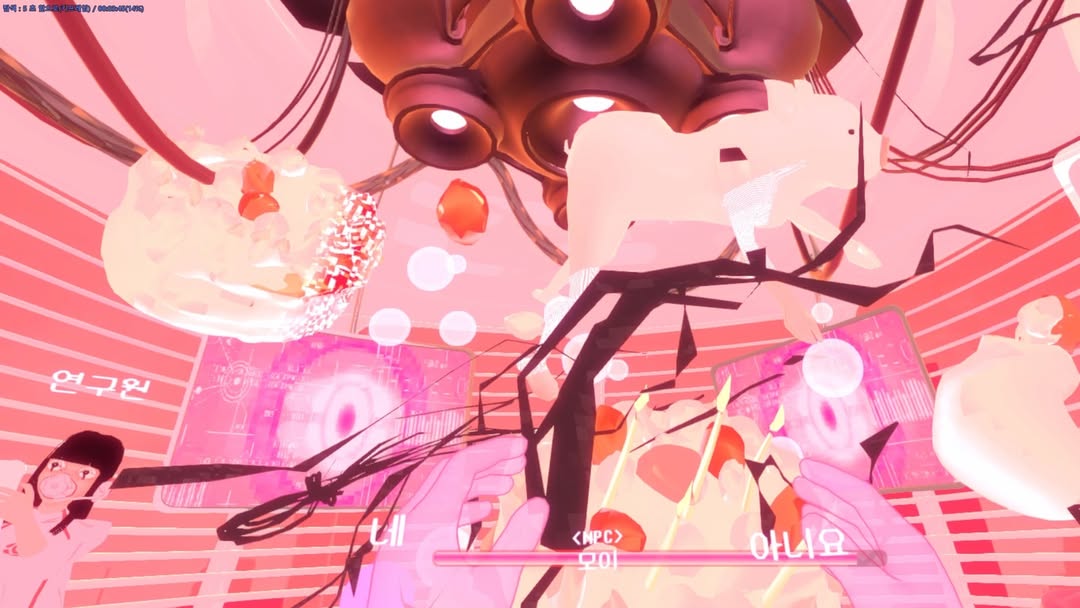
2020: Words at an Exhibition—An Exhibition in Ten Chapters and Five Poems》(Busan Old Downtown Area, 2020), 《SF2021:
Fantasy Odyssey》(SeMA Buk-Seoul Museum of Art, 2021),
and 《Game Society》(National
Museum of Modern and Contemporary Art, 2023). She was also introduced in the
“Discoveries” sector at Art Basel Hong Kong 2023. Beyond this, she has
participated in collaborations and advertisements with entertainment agencies
and global luxury brands, appeared directly as a model in fashion magazine
editorials, and accumulated diverse experiences while crossing implicit
barriers within the art world.
The rapid rise of Ram Han’s popularity—or her swift alignment with
contemporary culture—may be attributed to two opposing historical backgrounds.
First, the 2010s were a dystopian era in which youth had to endure life as the
so-called “880,000 won generation” or “Sampo generation.” Second, in the 2020s
youth are labeled the MZ generation, considered a new class capable of
self-expression and value-driven pursuits. In a bleak society where despair was
not overcome but rather abandoned until it reached a twisted form of
enlightenment, the hybrid aesthetic and multi-profile identity that Ram Han has
practiced may have served as a source of admiration for her generation.
More
precisely, the current figure of Ram Han was formed through the consumption of
the persona called Ram Han and the images produced by that persona. Before her
official debut, she posted works on blogs and social media where they
circulated widely. A curator who saw her Instagram account invited her to a
museum exhibition, and through that opportunity she exhibited screens optimized
for the web as physical objects, eventually settling into the designation of
“digital painter.”
Distinct from illustrators, cartoonists, or traditional
painters, Ram Han as a digital painter assumed a new rhetoric of media
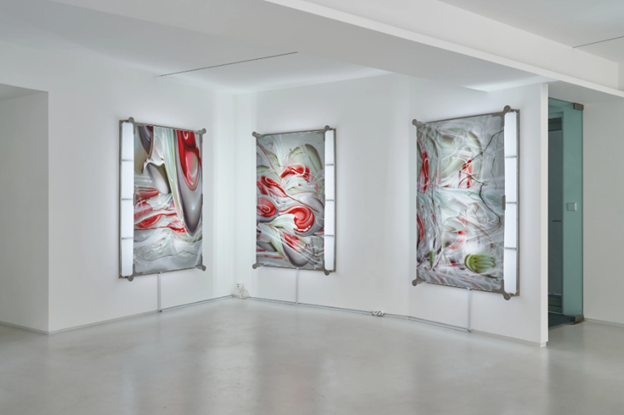
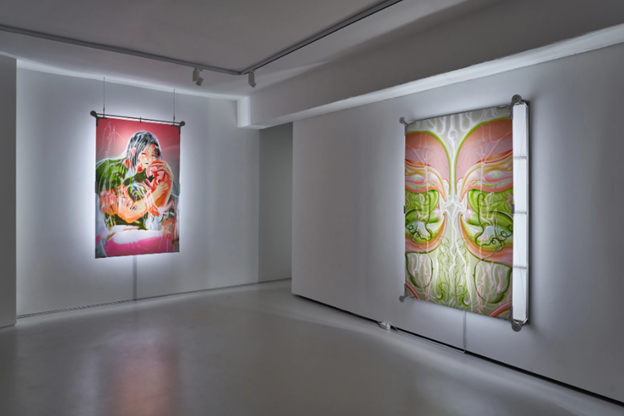
transformation. The ‘Room type’(2018) series—digital illustrations printed on
light boxes—was commissioned and collected by the Seoul Museum of Art, which
introduced it under the category of new media while hinting at future tasks for
art history:
“This work demonstrates a new genre that combines digital and
painting through digital painting. When the term ‘painting’ is generally used,
one easily imagines the method of using canvas and brush. However, Ram Han’s
digital painting is produced using a tablet and Photoshop. Genres newly
constructed with such ambiguous boundaries are difficult to incorporate into
the existing categories of collections. In this case, the work has been
registered in the new media section of the Seoul Museum of Art’s collection
management system.”¹
Ram Han appeared precisely at the moment when debates about
generational gaps and institutional responsibility that had emerged through
emerging spaces in the Korean art world were fading, and when discourse on
media began to take their place. As the economic difficulties and uncertainty
of becoming an artist experienced by artists born in the 1980s who graduated
from art schools became a central trend, attention turned toward the fresh
emergence of artists born in the 1990s, accompanied by issues of post-medium
discourse combined with sociological generational theory. 《Ghost Arm》 was an
exhibition that connected related themes and sensibilities through the
invisible connectivity inside and outside internet space.
Interest in the new
artistic language employed by younger generations and in the online environment
continued partially in exhibitions such as 《21st
Century Painting》(Hite Collection, 2021), 《Sculptural Impulse》(SeMA Buk-Seoul Museum of
Art, 2022), and 《Hysteria: Contemporary Realism
Painting》(Ilmin Museum of Art, 2023). These exhibitions
drew significant attention not only from MZ-generation audiences but also from
artists of the same generation.
“Based on the concerns and changes accumulated by young artists
since the 2010s, […] the exhibition was organized to examine more concretely
what methodologies artists employ. […] First, we can observe media-oriented
attempts such as establishing relationships between separated surfaces (images)
and bodies (physical entities), the gap when works produced in virtual space
are output into reality, and the combination of online circulation, fluidity,
and temporality.”²
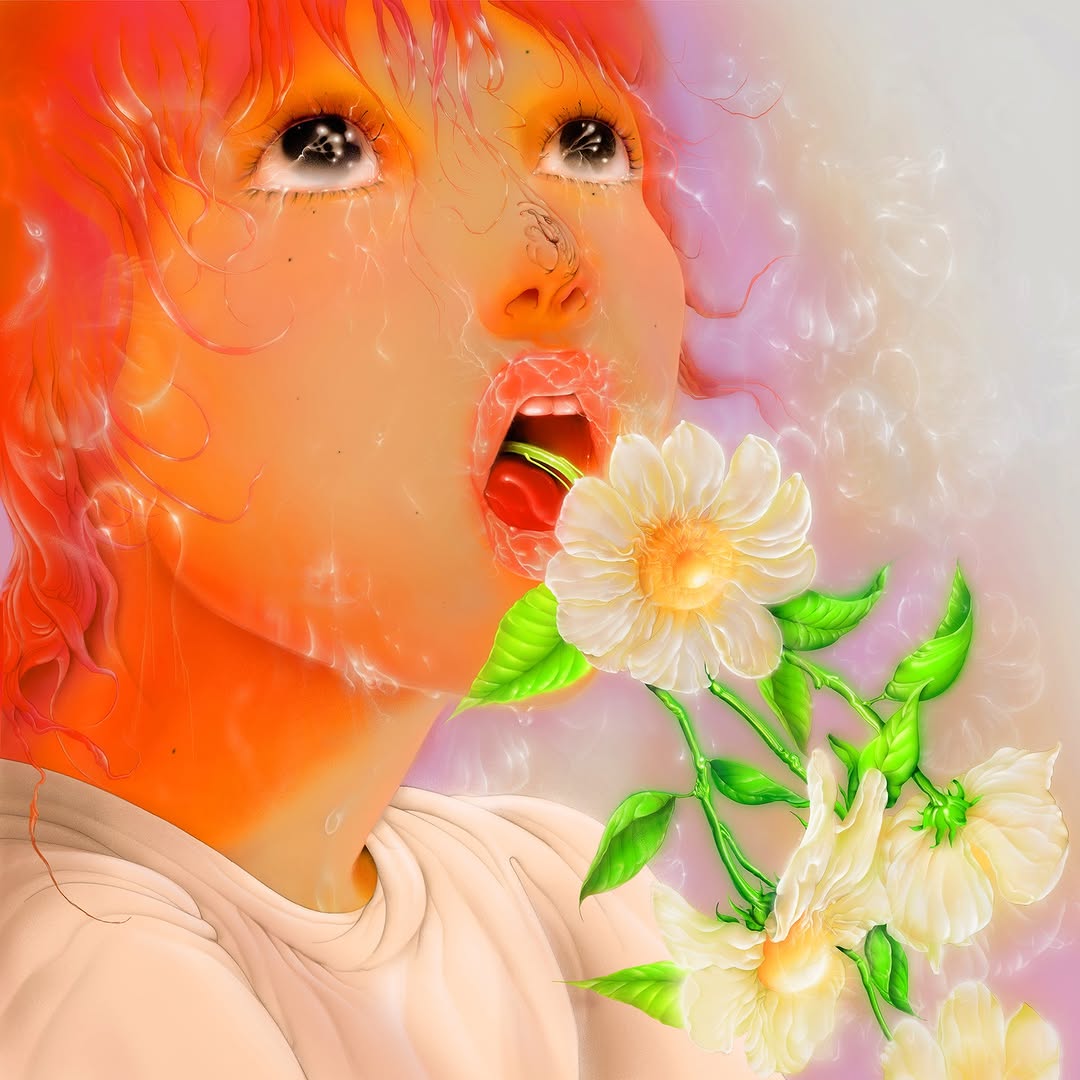
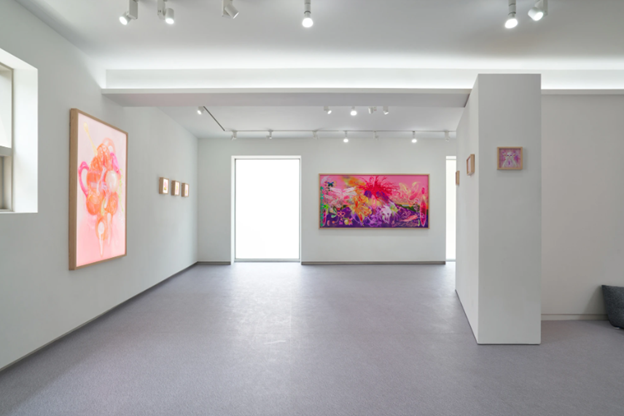
Ram Han emphasizes mediality by using RGB colors that become vivid
on digital screens and by intentionally employing square panels, thereby
clearly visualizing the theme of Instagrammable works. She uses her Instagram
account as a platform for presenting and archiving her work, and also edits and
publishes images of herself that appeared in catalogs and advertisements.
Currently, approximately 88,000 followers quantify the identity of Ram Han as
an influencer. Naturally, there is no complete factuality there. Ram Han simply
uses the influence of her stylistically ambiguous works as a term projecting
the present age. Like the brilliant glow of the bubble economy desired by a
public exhausted in times of recession, the persona of Ram Han shines in that
way.
“There is no despair on Instagram. That is why it appears somewhat
grotesque. Stories about the youth generation usually converge on despair and
giving up. The question is always how difficult young people’s lives are, and
how phenomena such as depression, frustration, hatred, and resentment have
become everyday occurrences. Yet on SNS, which the youth generation commonly
uses, there is no trace of that. It is always bright, hopeful, and glamorous.”³