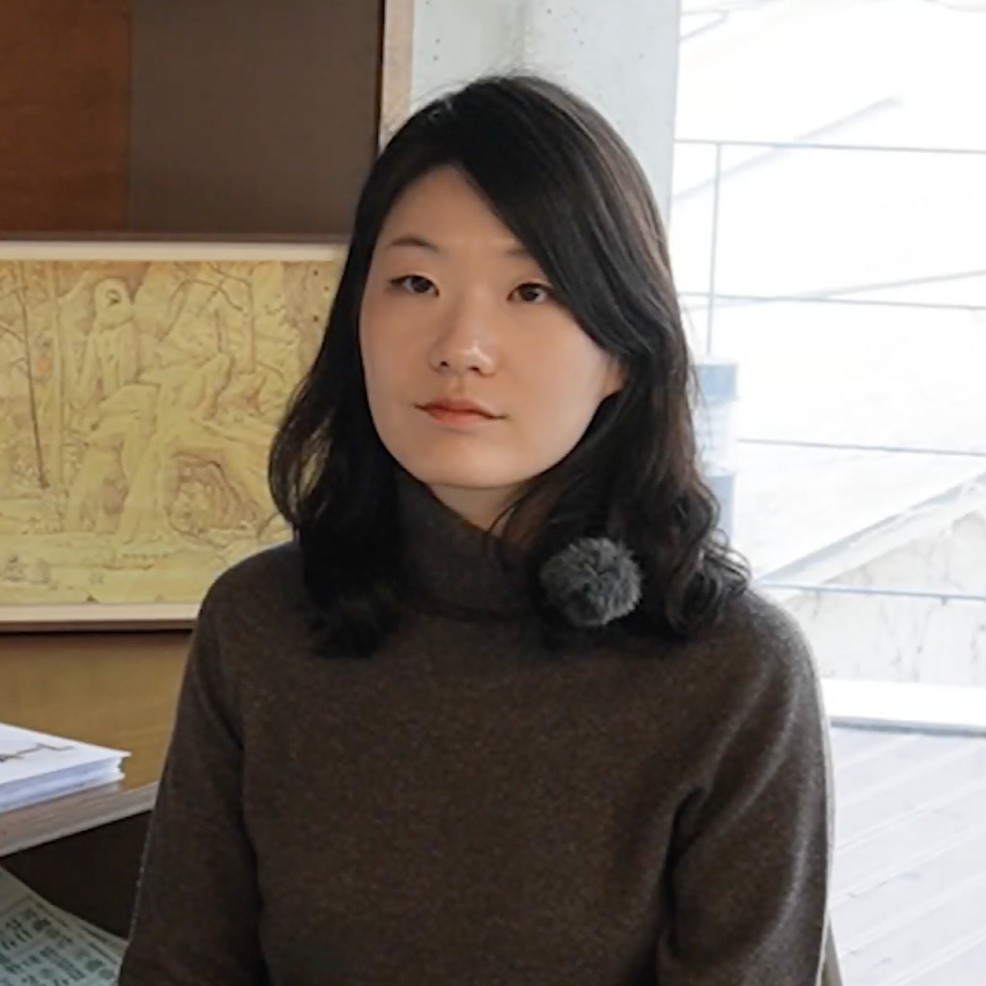
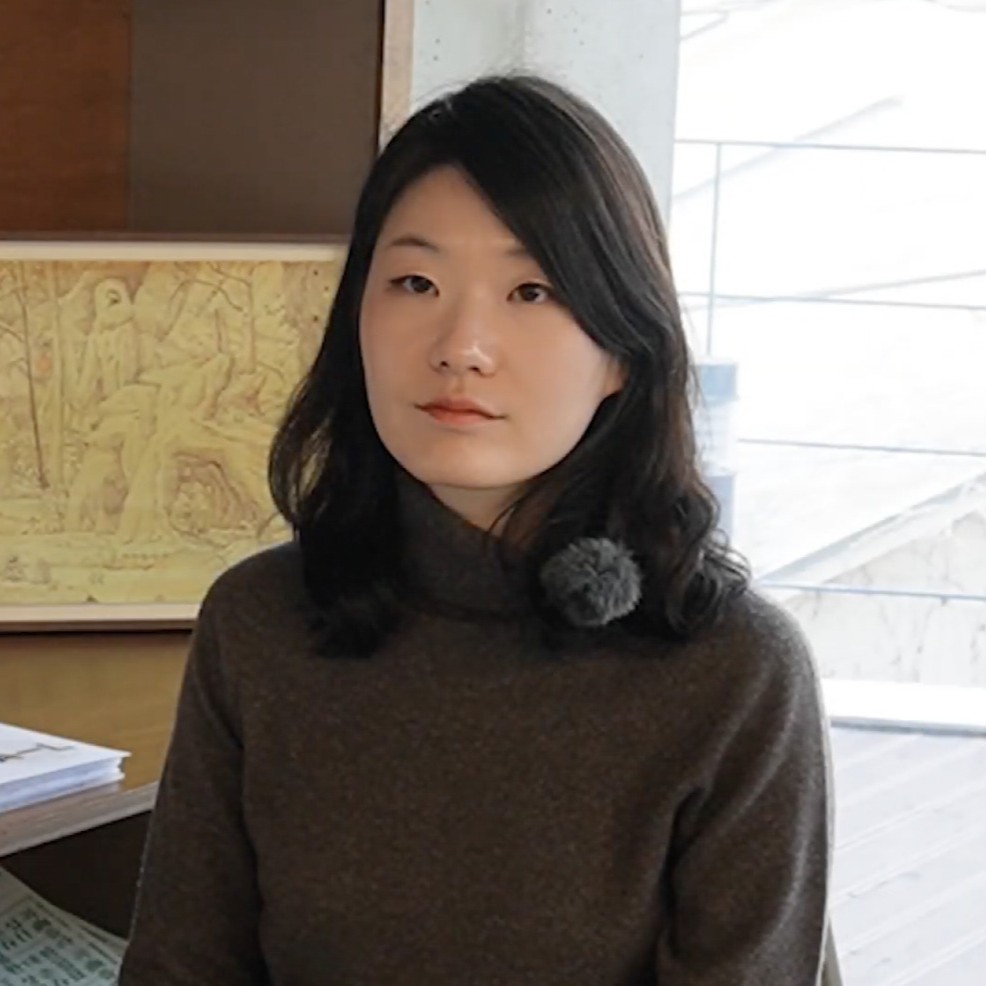
Mira Park, an artist-in-residence at the Gyeonggi Creation Center
and an active presence in the Korean art scene through exhibitions and
publications, experiments with a range of media in this exhibition, including
painting, animation, sculpture, and objects. After encountering news reports
about urban sinkholes, Park produced the work Rabbit Hole(Year
unknown), which imagines a journey to another world through a sinkhole—an idea
reminiscent of ‘Alice in Wonderland’.
Since then, she has consistently rendered
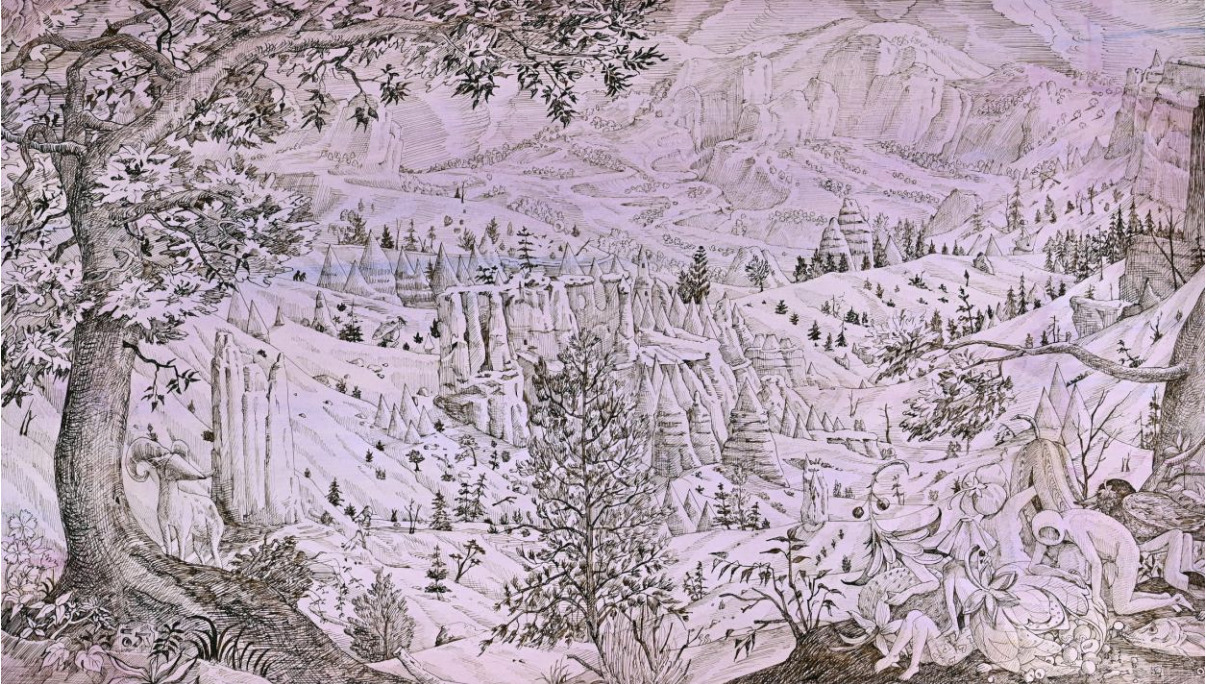
fairy-tale-like imaginary worlds on canvas using a black-and-white palette. In
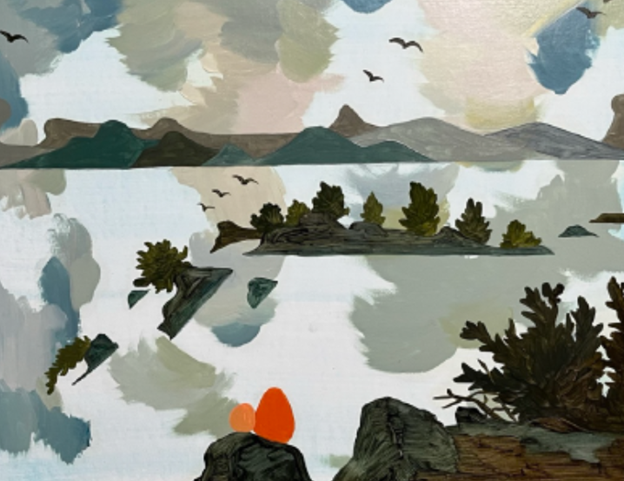
this exhibition, she presents works in which characters are absent and space
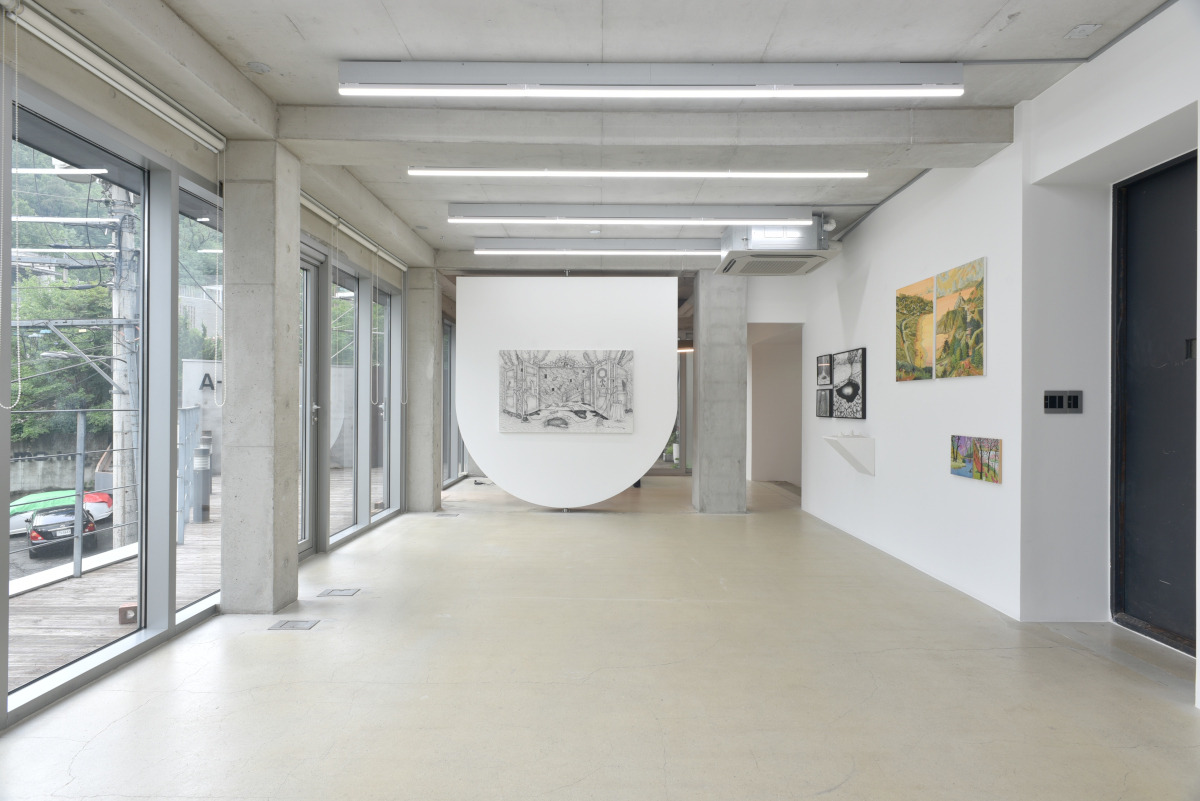
itself becomes the central subject. The artist developed these works using the
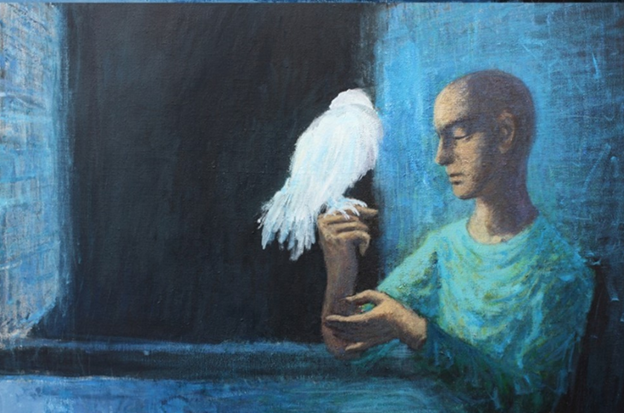
motif of the curtain—the “fourth wall” that separates the stage and audience in
theatrical space. For Park, the curtain represents both a boundary dividing
reality and unreality and a passage connecting misaligned worlds. Closed
Door(Year unknown) directly embodies this intention.
Through the
curtain-like surface of the canvas, viewers confront the imaginary world that
Park has constructed. At the center of the painting Black Walk(Year
unknown) lies a dark form resembling either a deep pond or a black hole whose
depth cannot be discerned, provoking curiosity rather than fear. Viewers begin
to wonder about the other world that might lie beyond this dark veil of the
abyss. In Unspeakable Secret(Year unknown), severed
tree trunks in a forest are surrounded by ears and candles that glow against a
black background.
These motifs function as allegories: the ear may symbolize
misunderstandings arising from the absence of face-to-face communication—or
gossip—during the COVID-19 era, while the candle may represent hope shining
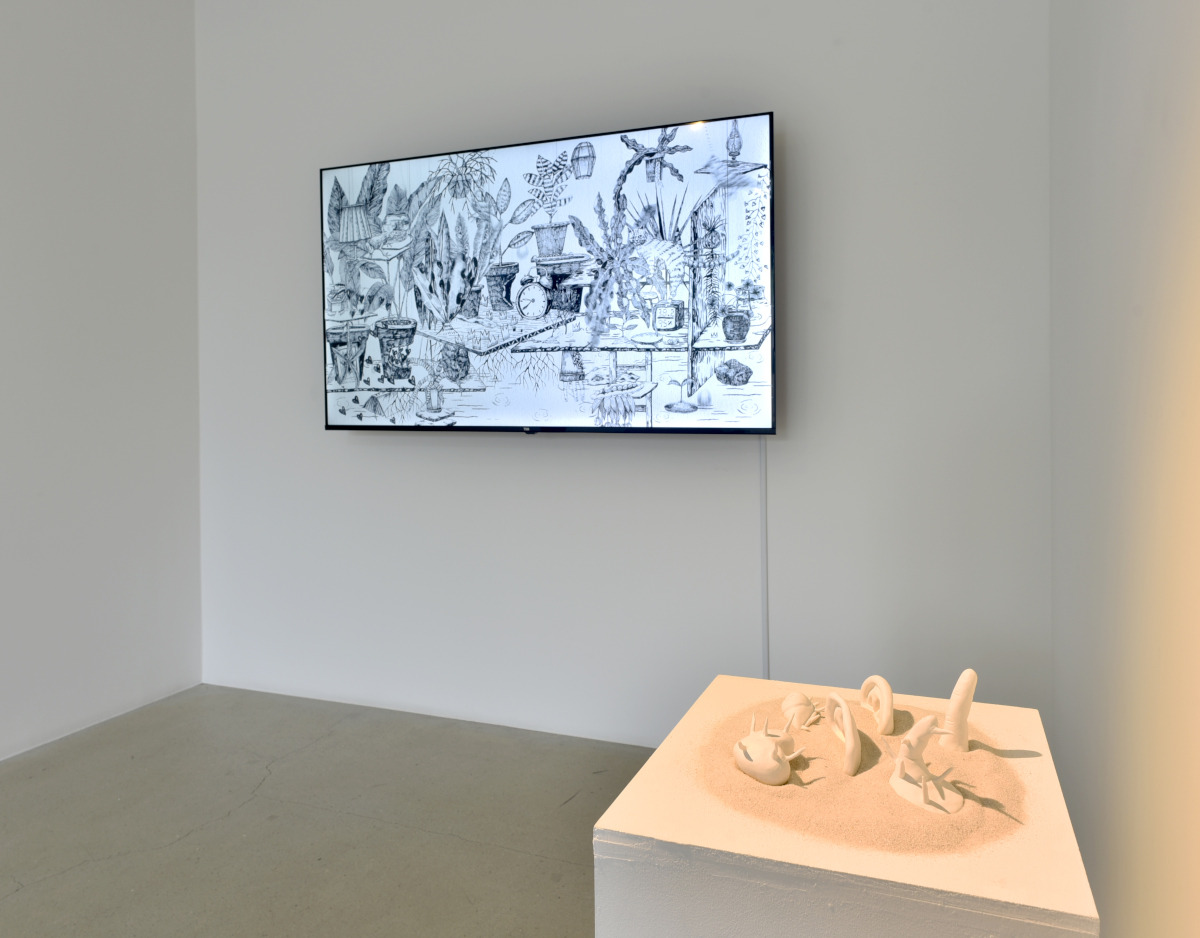
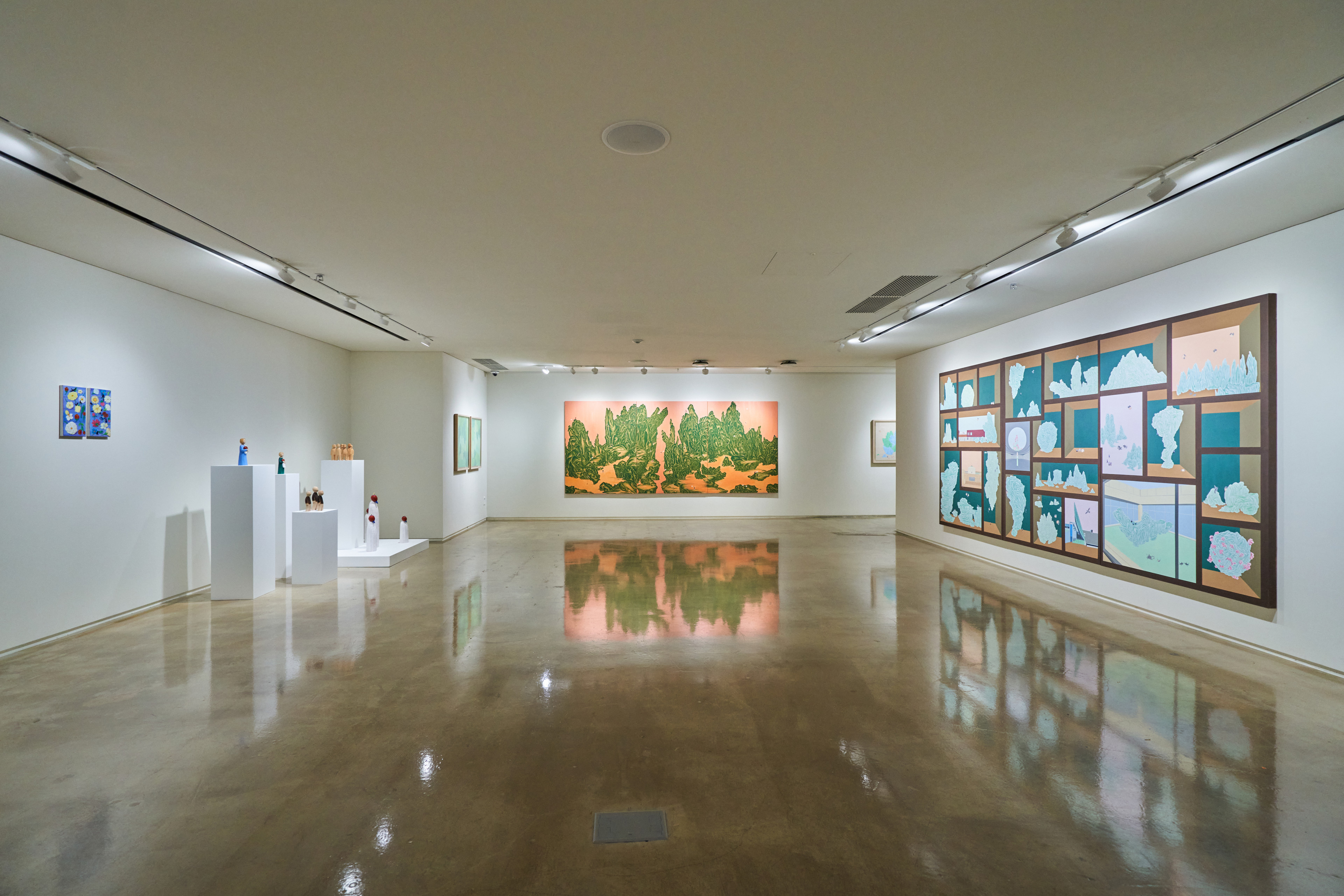
within the darkness of a bleak time. In Pop-up Drawing(Year
unknown), Park gathers various motifs that previously appeared in her paintings
into small sculptural forms. Seen in three dimensions, these strange yet
humorous motifs offer viewers a playful experience. Her new work Drawing
Hole(Year unknown) layers drawings on transparent acrylic panels so
that when viewed from above, the shifting images resemble the changing patterns
of a kaleidoscope.
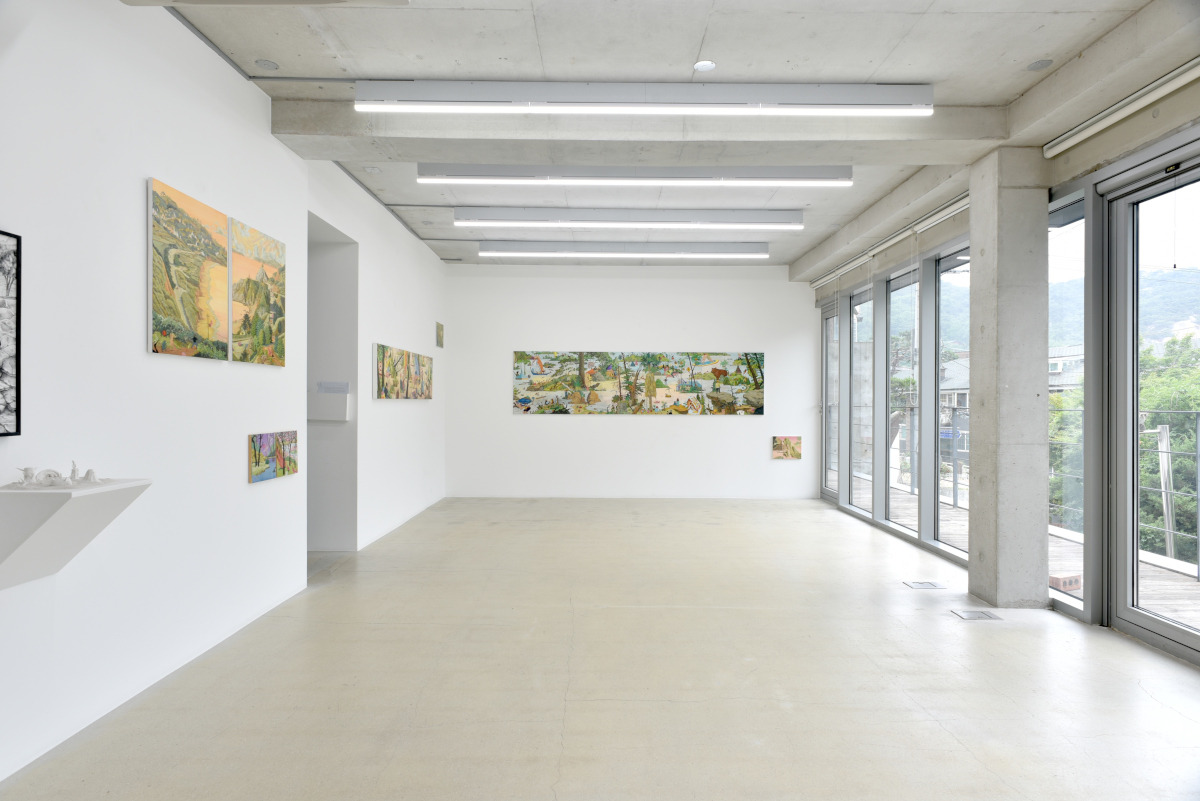
Hyunjeong Lim, who had been active as a resident artist at Nanji
Creative Studio and was selected for “OCI Young Creatives 2016,” returns to
greet Korean audiences in this two-person exhibition after about four years
since moving to the United States in 2018. Although she continued to work
diligently while living in the U.S. and was occasionally introduced through
group exhibitions in Korea, it has been some time since she has presented such
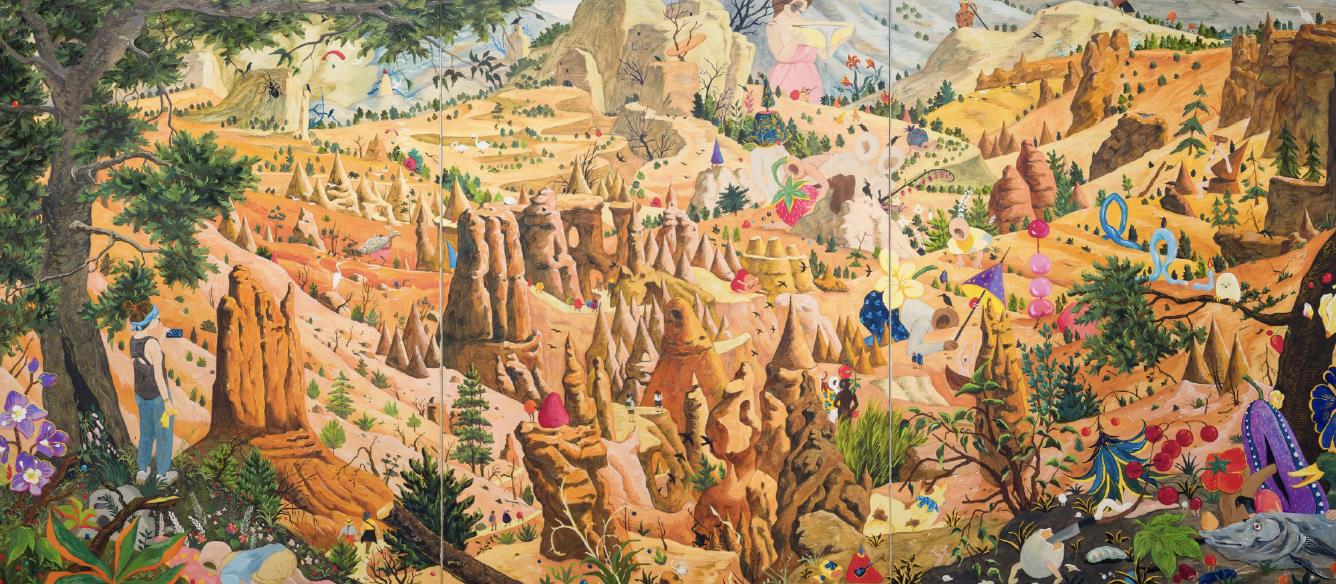
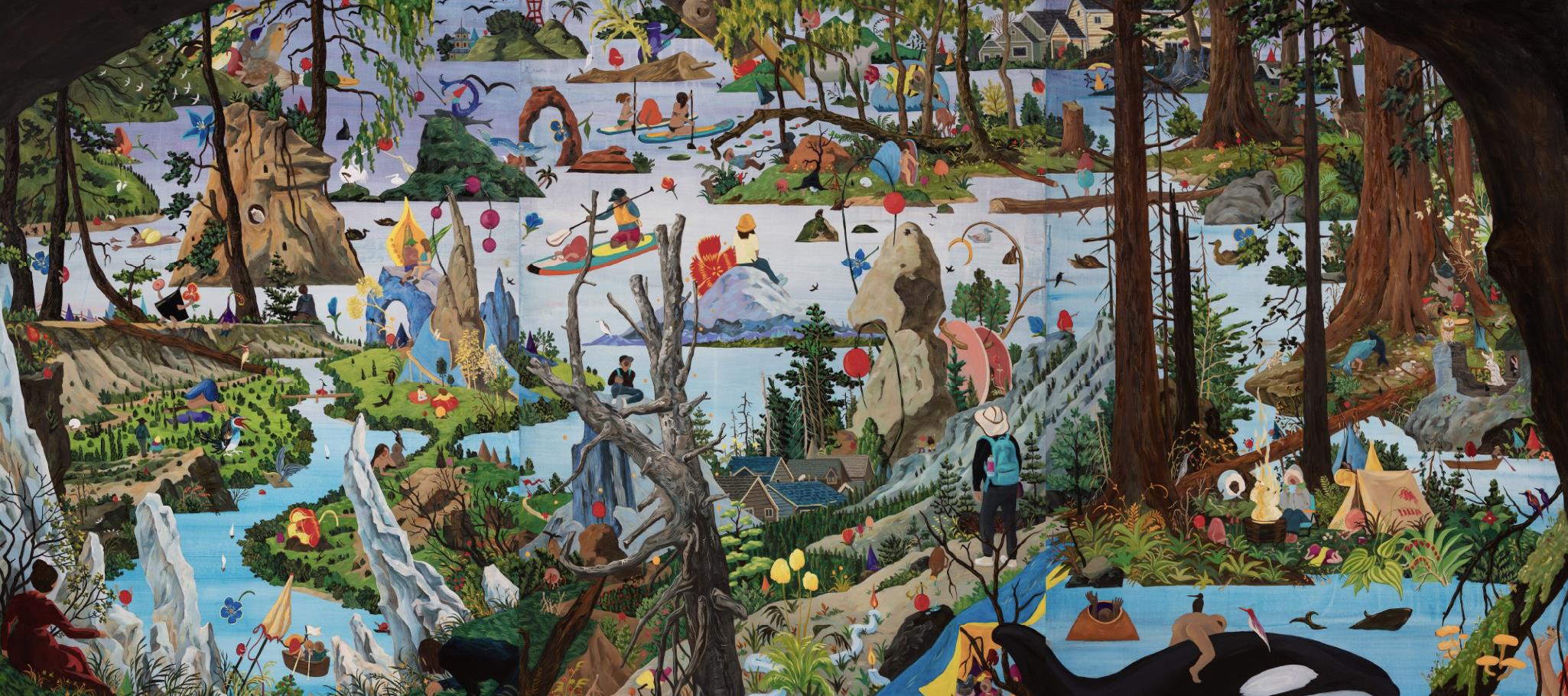
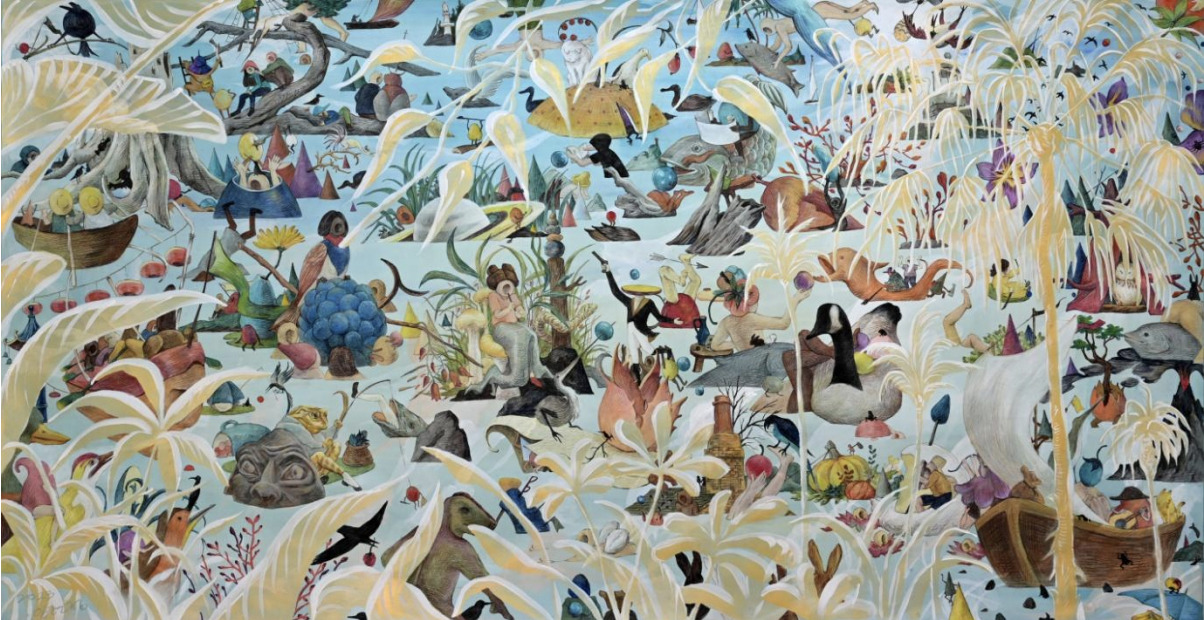
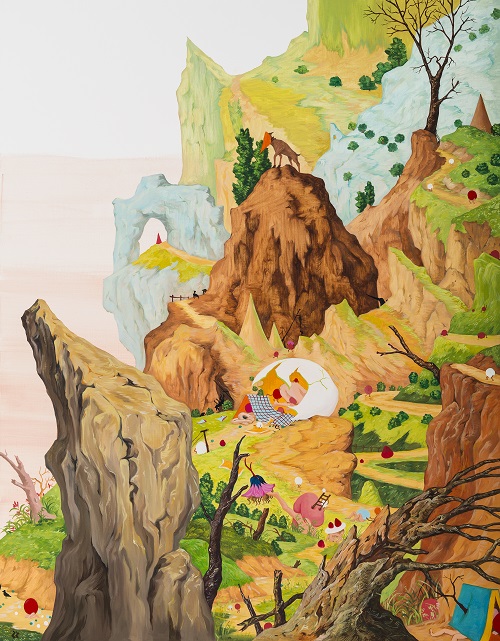
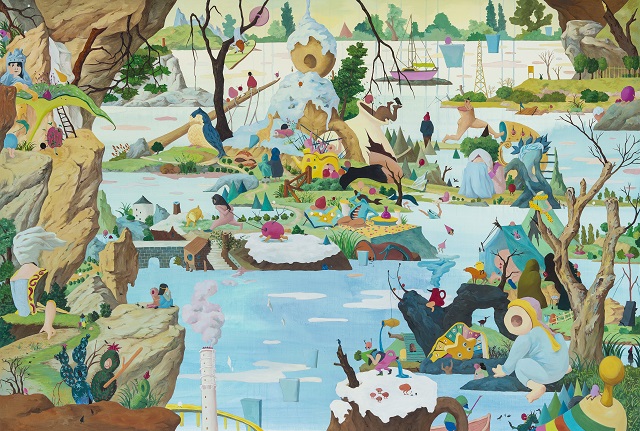
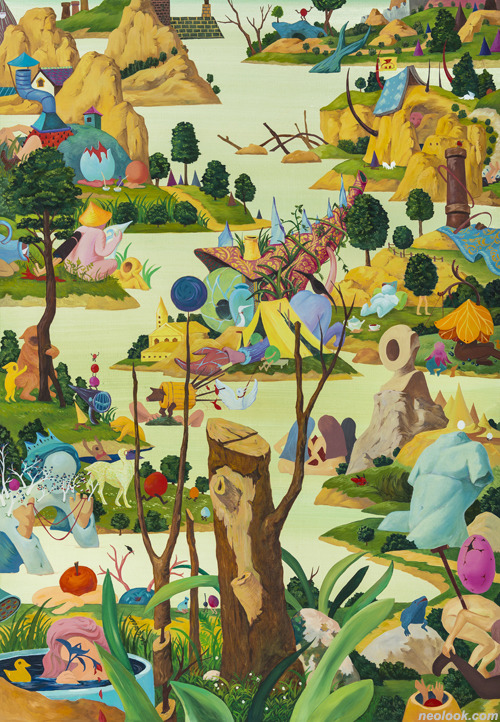
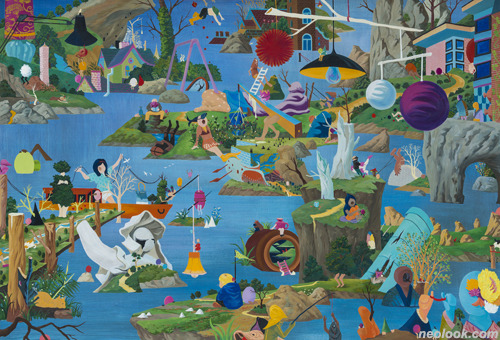
a substantial body of work. Lim, previously noted for imaginative and inventive
works reminiscent of Northern
Renaissance artists such as Hieronymus Bosch and
Pieter Bruegel, now incorporates her experiences of life in the United States
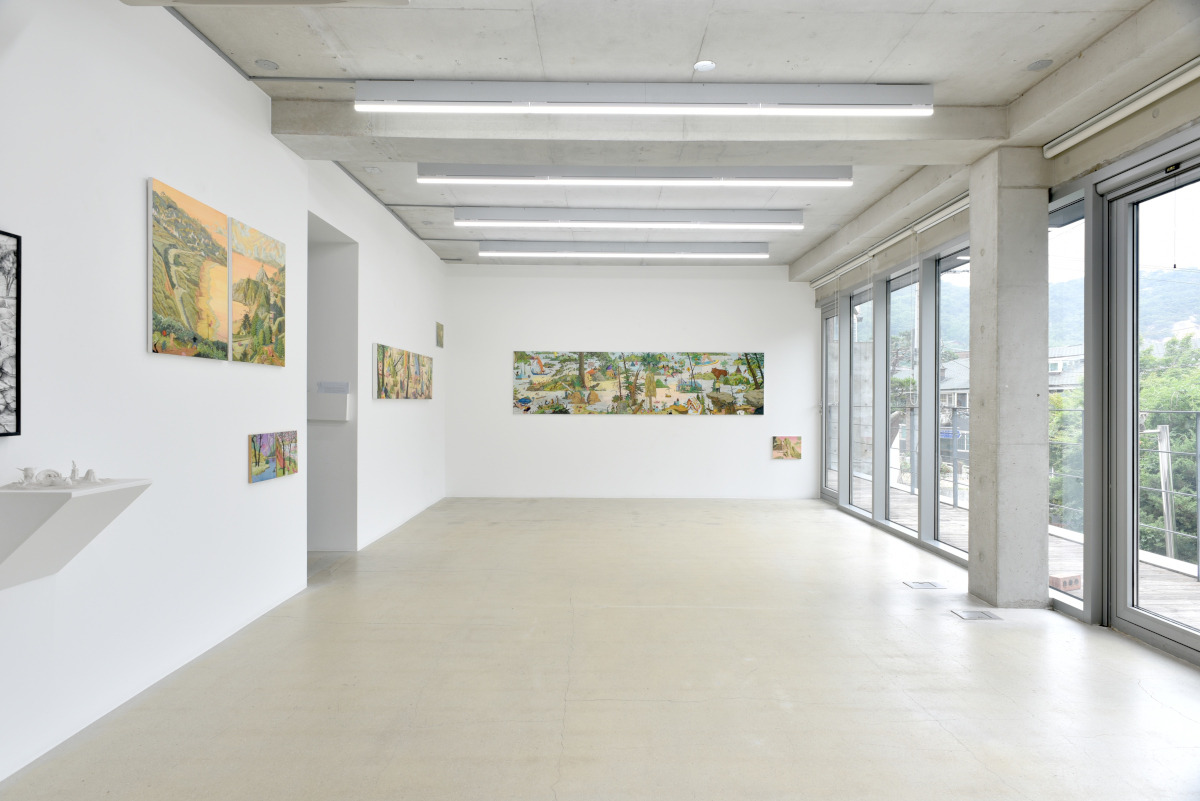
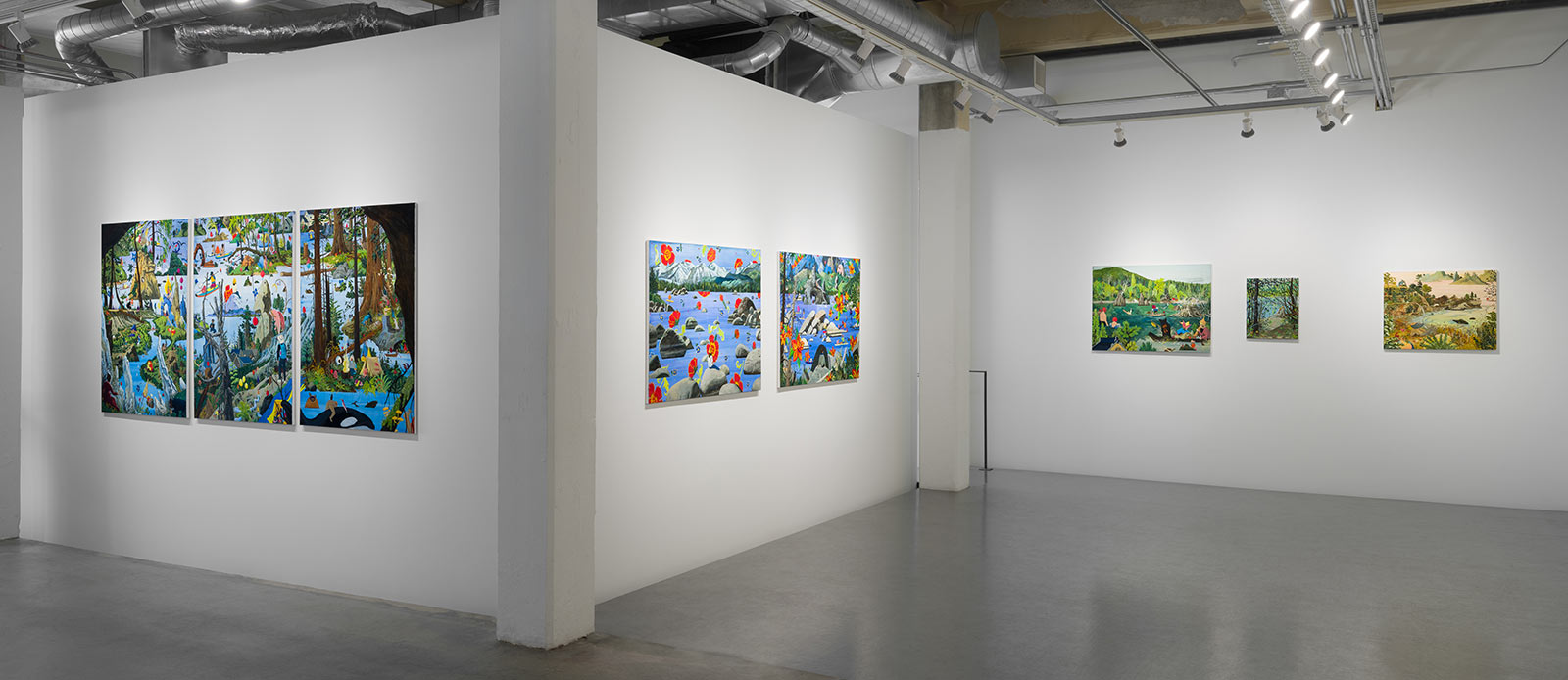
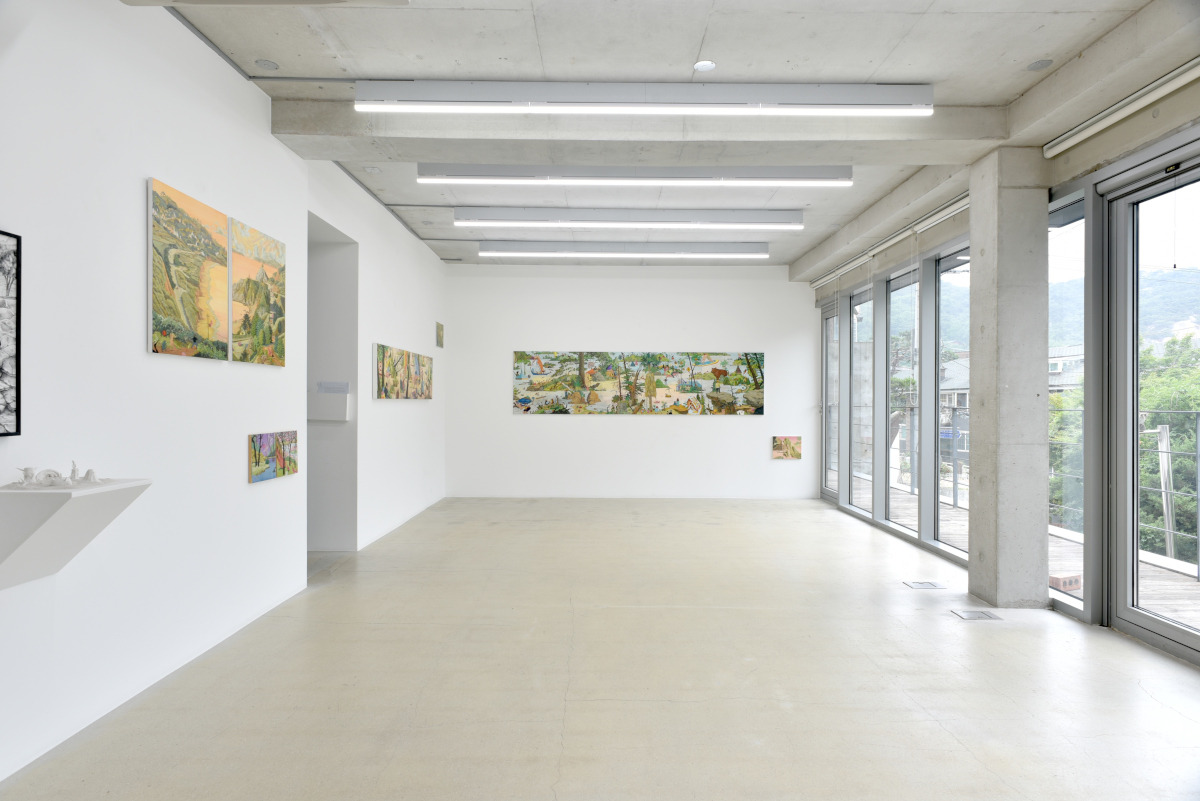
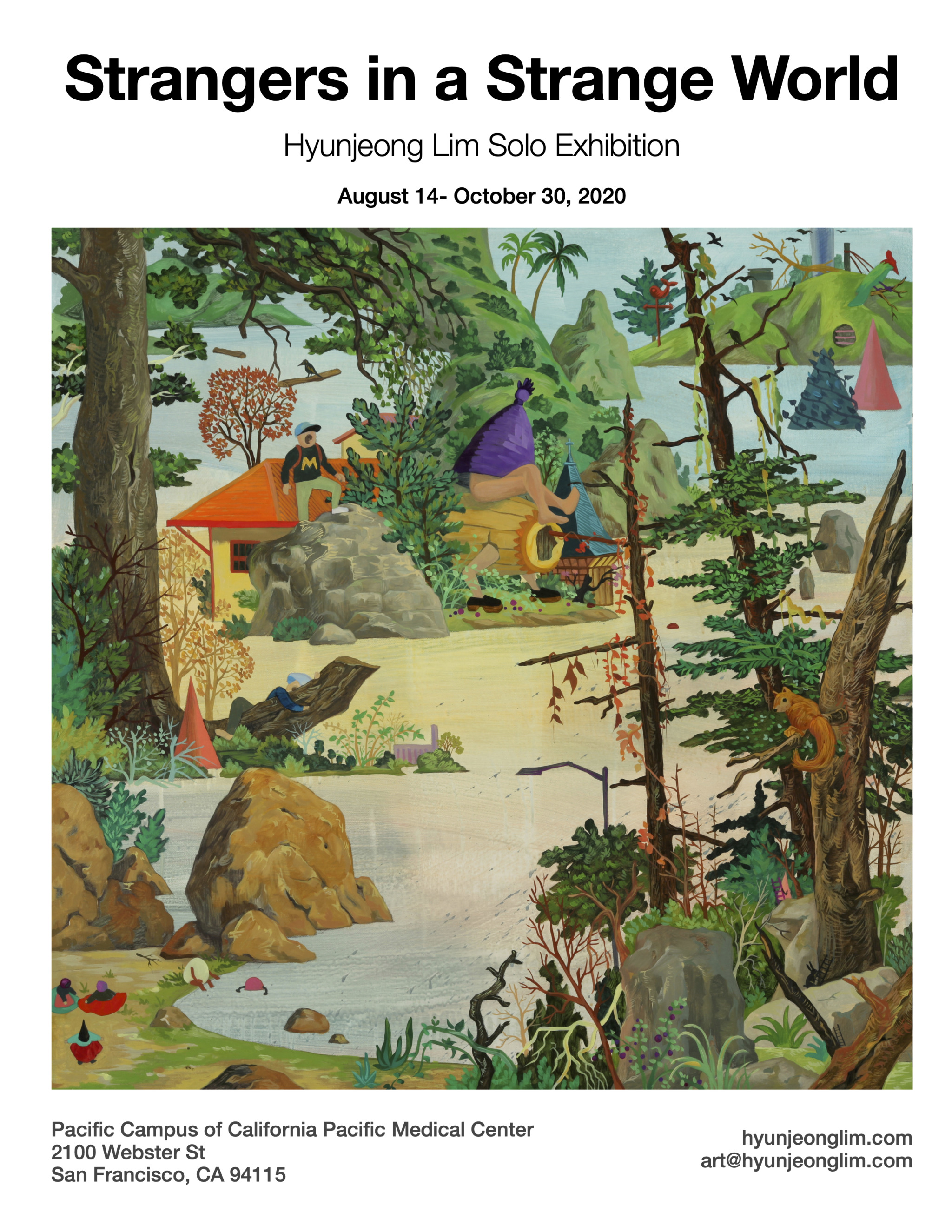
into new works. Her series 'Strangers in a Strange World'(Year unknown) series,
consisting of six and two works respectively, takes as its motif the experience
of American life that entered deeply into her life as someone living from the
perspective of an outsider. An exhibition at the San Francisco Museum of Modern
Art featuring Asian artists living in California prompted the artist to reflect
more objectively on her own migration to the United States.
Ultimately arriving
at the thought that “we are all strangers living in a strange world,” Lim
merges her experiences and landscapes from the U.S. with the imaginative
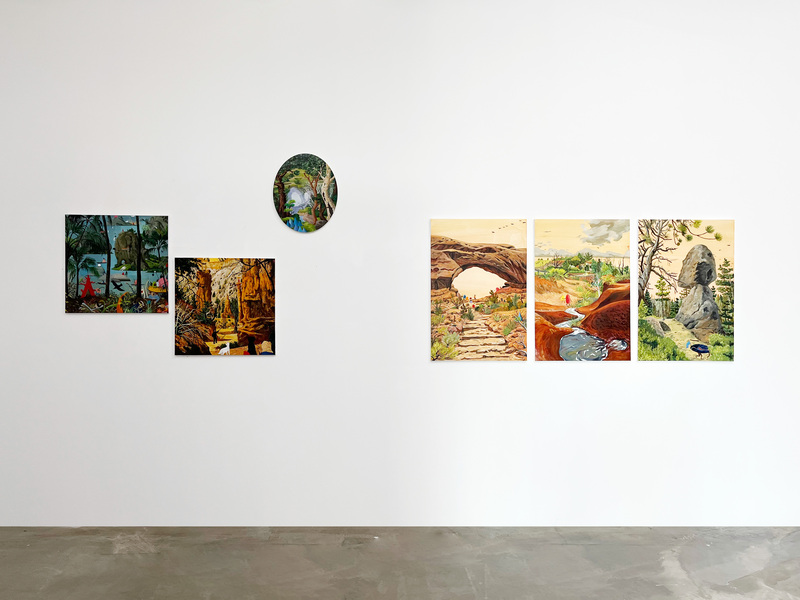
environments characteristic of her practice. Works such as Somewhere(Year
unknown), reminiscent of Egyptian or Middle Eastern landscapes, and Stranded(Year
unknown), humorously depicting a dog wearing an overturned bucket, demonstrate
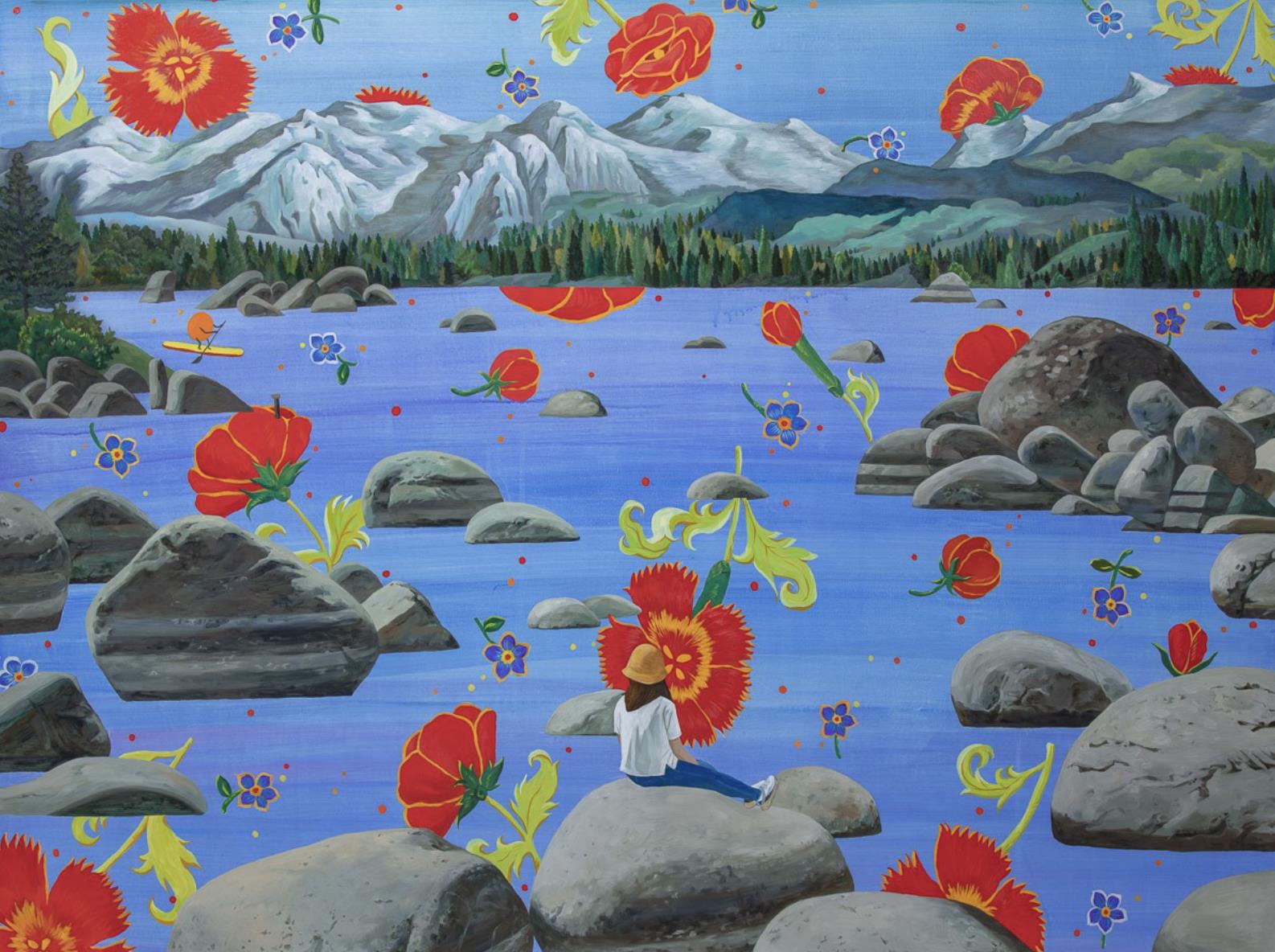
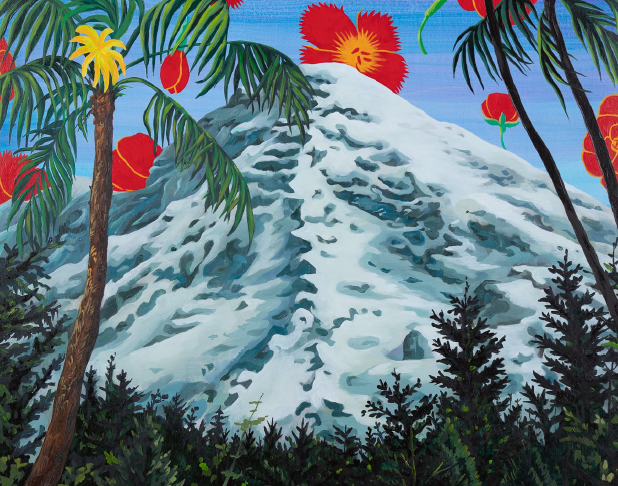
continuity with her earlier works. A noticeable shift appears in her later
work, triggered by the outbreak of COVID-19.
The pandemic brought lockdown
conditions to the place where the artist lived, and as she spent extended
periods confined indoors, she began to paint her surroundings and the places
she had visited in a more realistic manner. As a result of focusing intensely
on painting in the isolation of her studio, works such as Pacifica(Year
unknown) and Grey Whale Cove(Year unknown) gained
greater density in brushwork and color. While the artist intended for these
works to evoke a sense of freedom for viewers, the process ultimately served as
a form of healing for her own sense of isolation.
The small new work Study
of Book of Hours(Year unknown), inspired by medieval prayer books
that depicted daily tasks in calendar form, humorously reveals how the artist
spent her time during the pandemic. In particular, her interest in
flowers—visible throughout the painting—began during a trip to Hawaii before
the pandemic, and the brightly colored flowers now offer a quiet sense of
comfort to those living through the COVID-19 era.