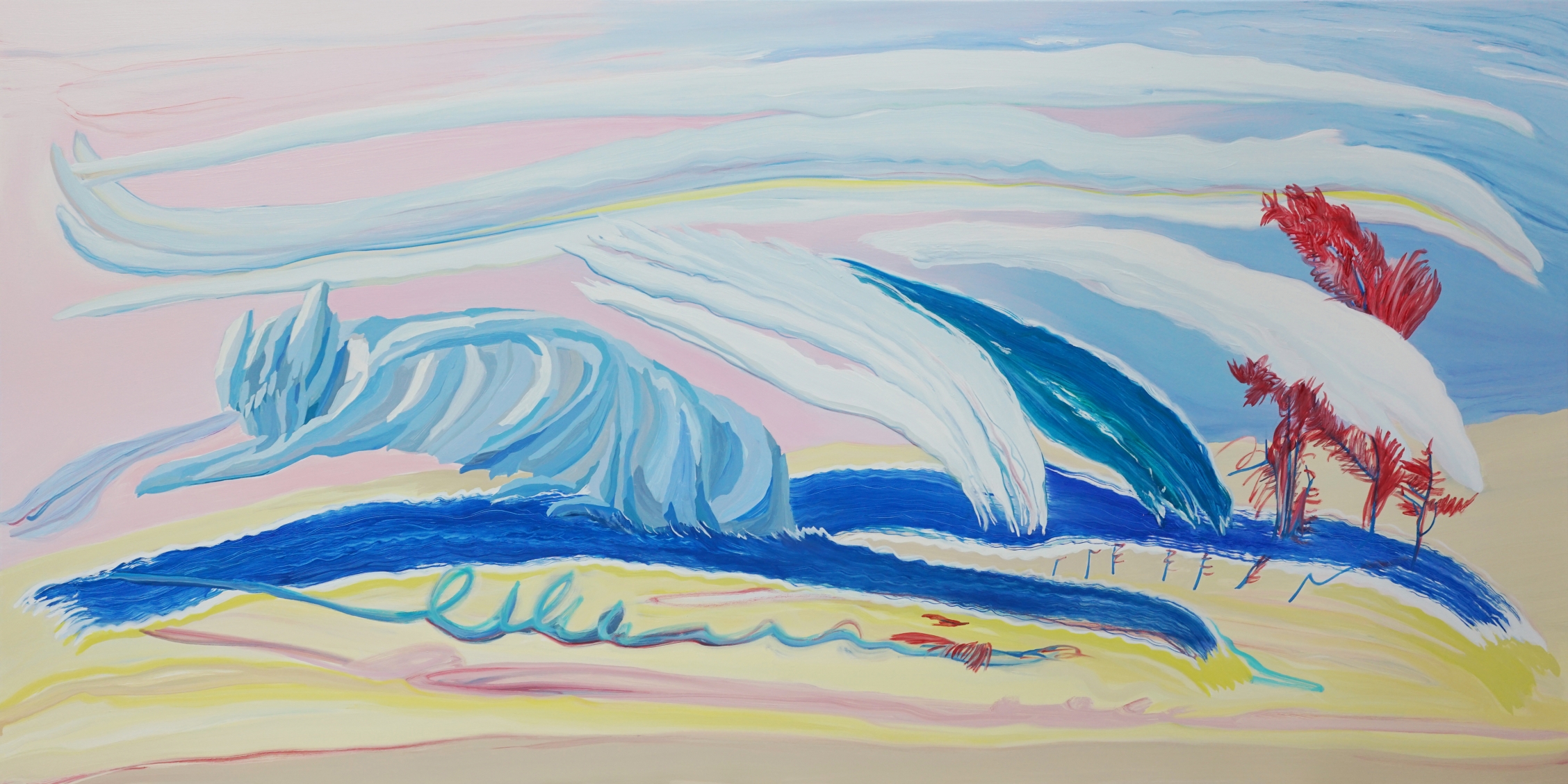
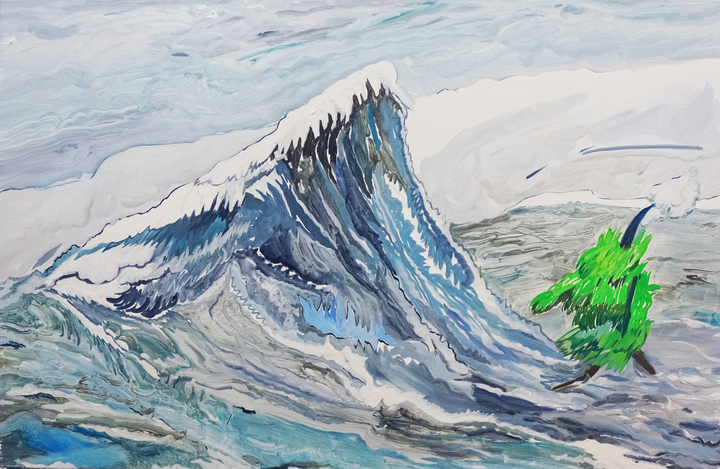
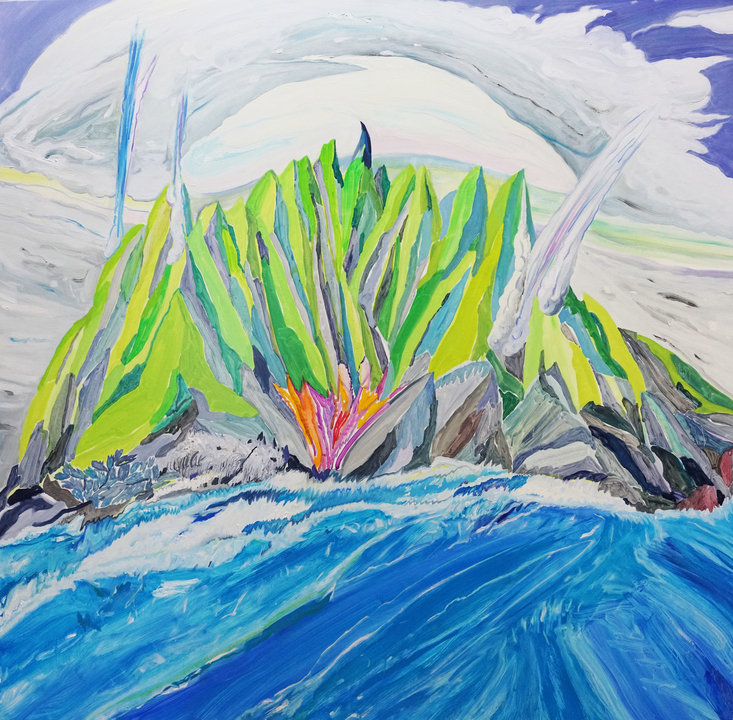
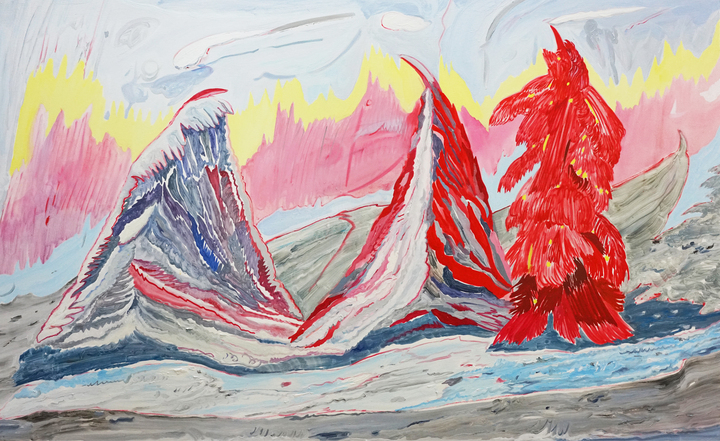
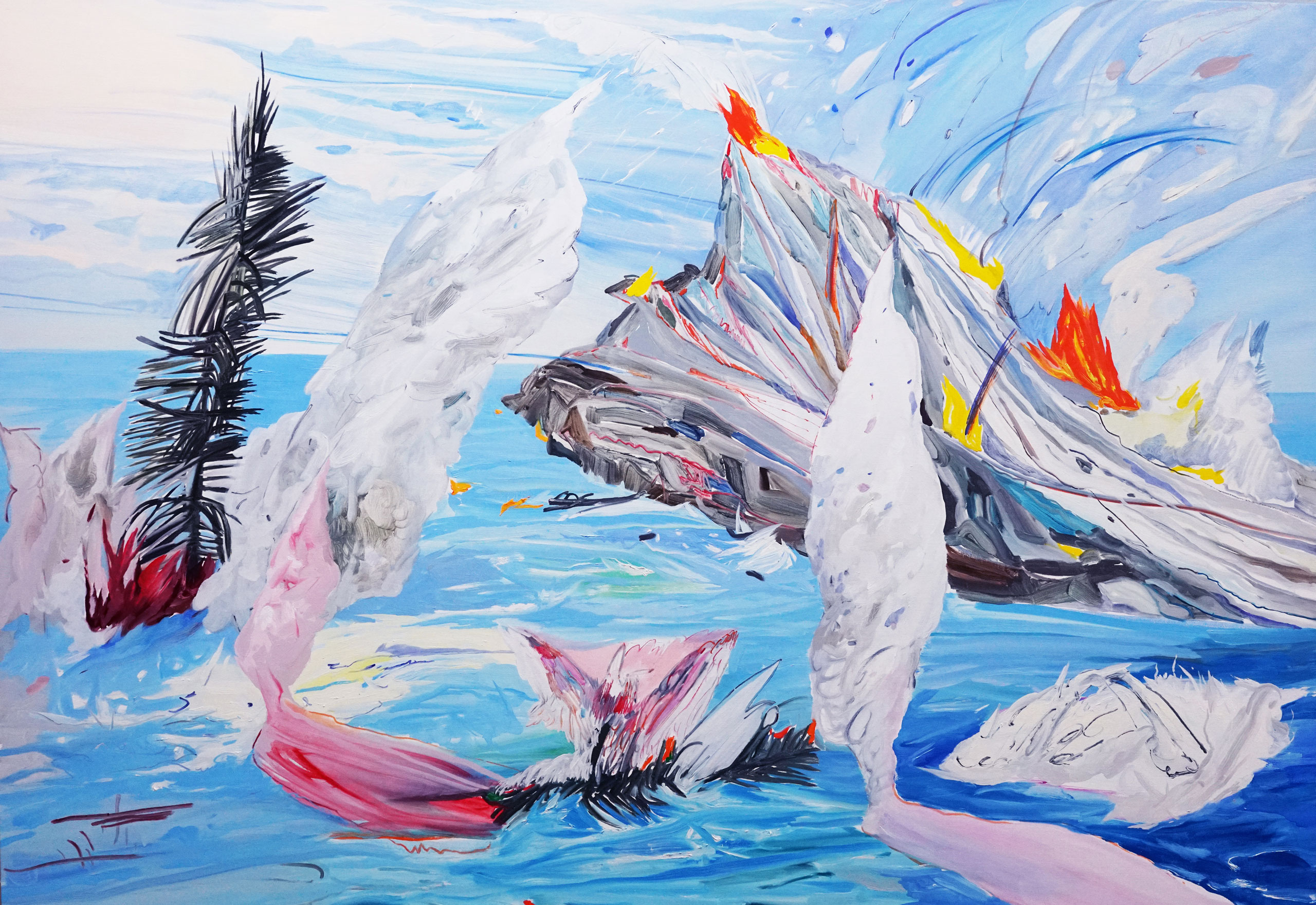
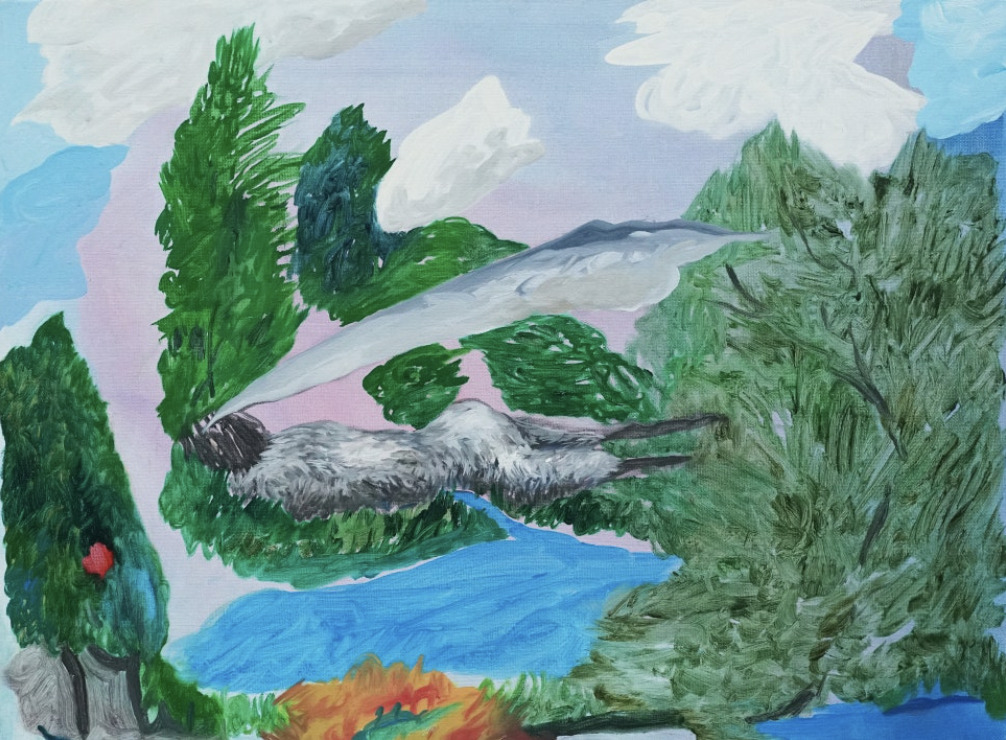
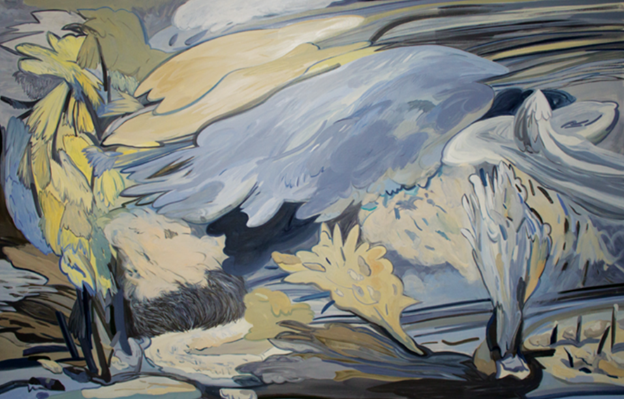
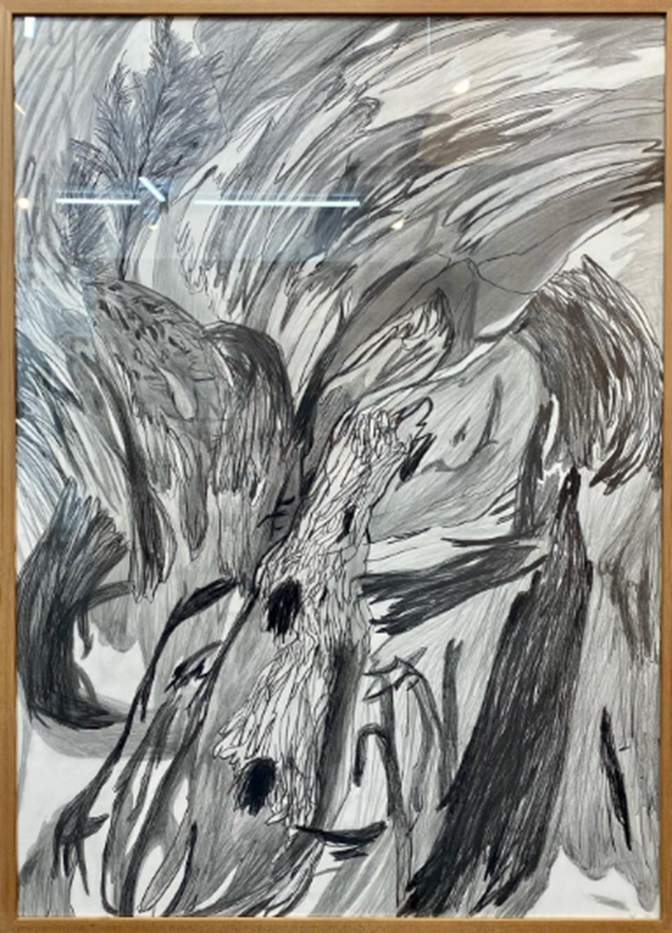
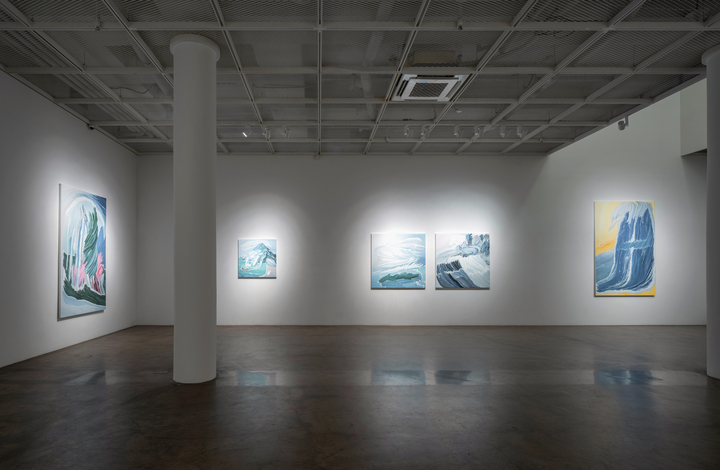
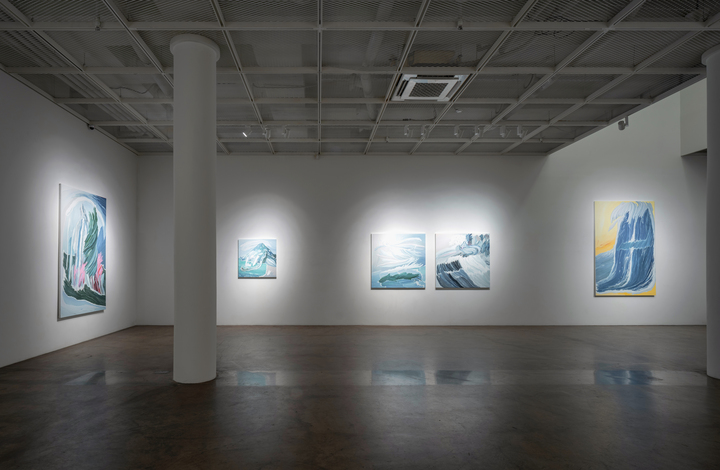
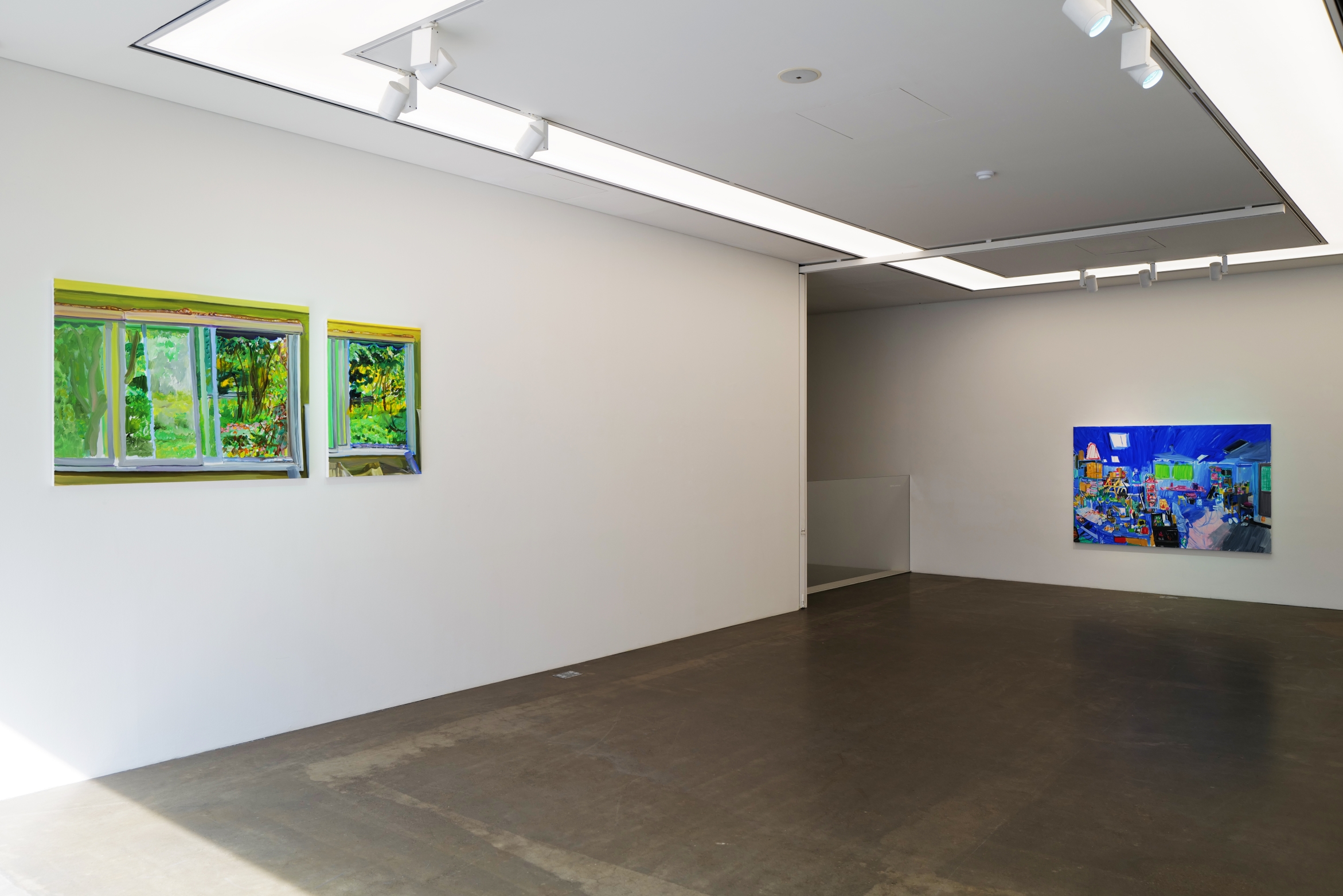
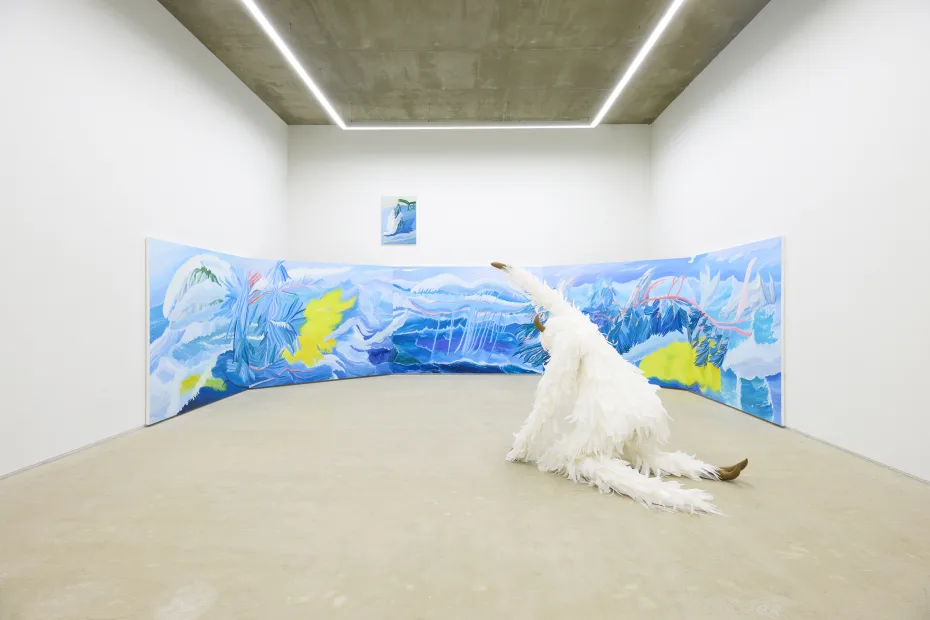
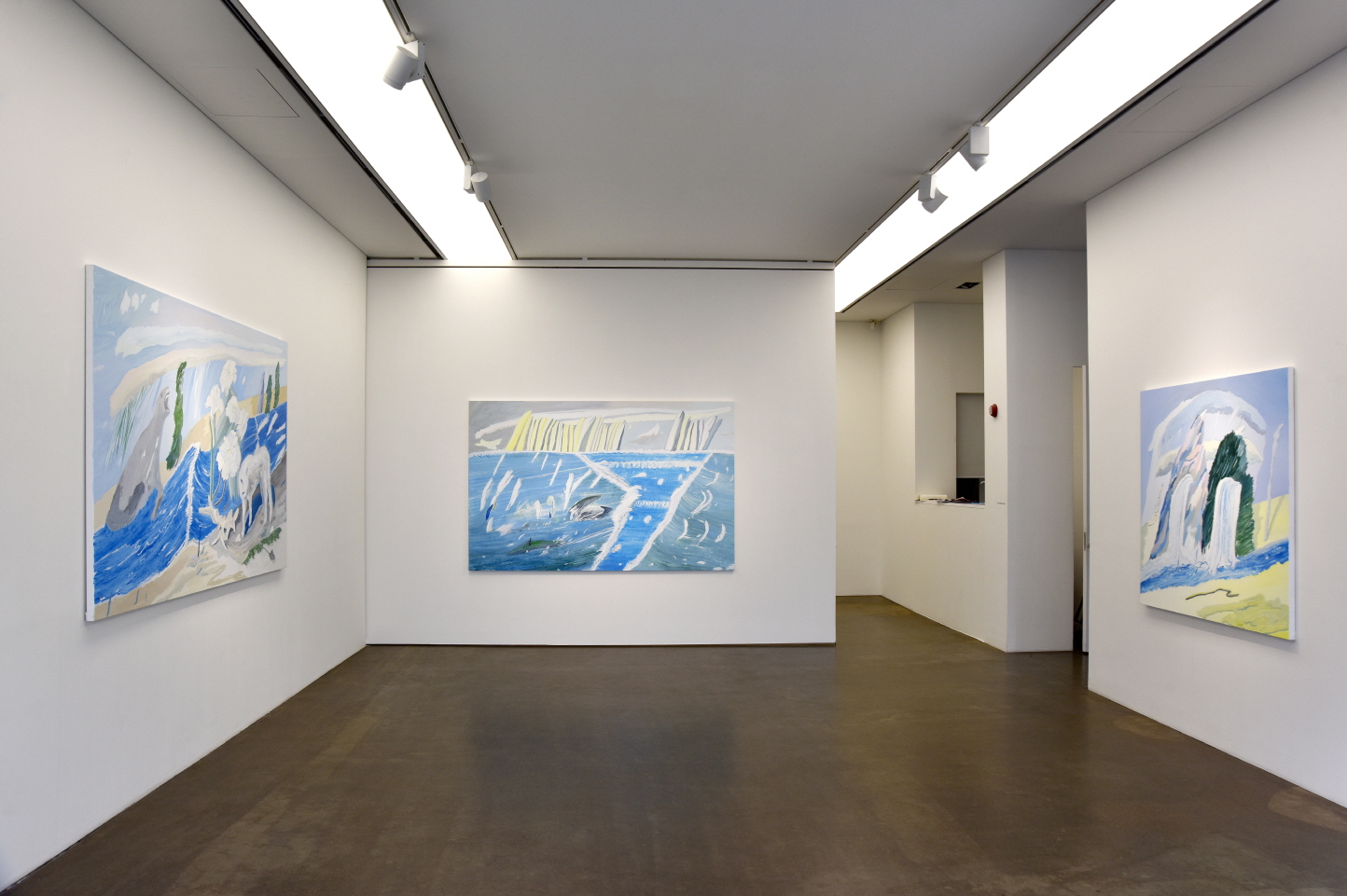
Perhaps because her paintings move between comedy and tragedy, her
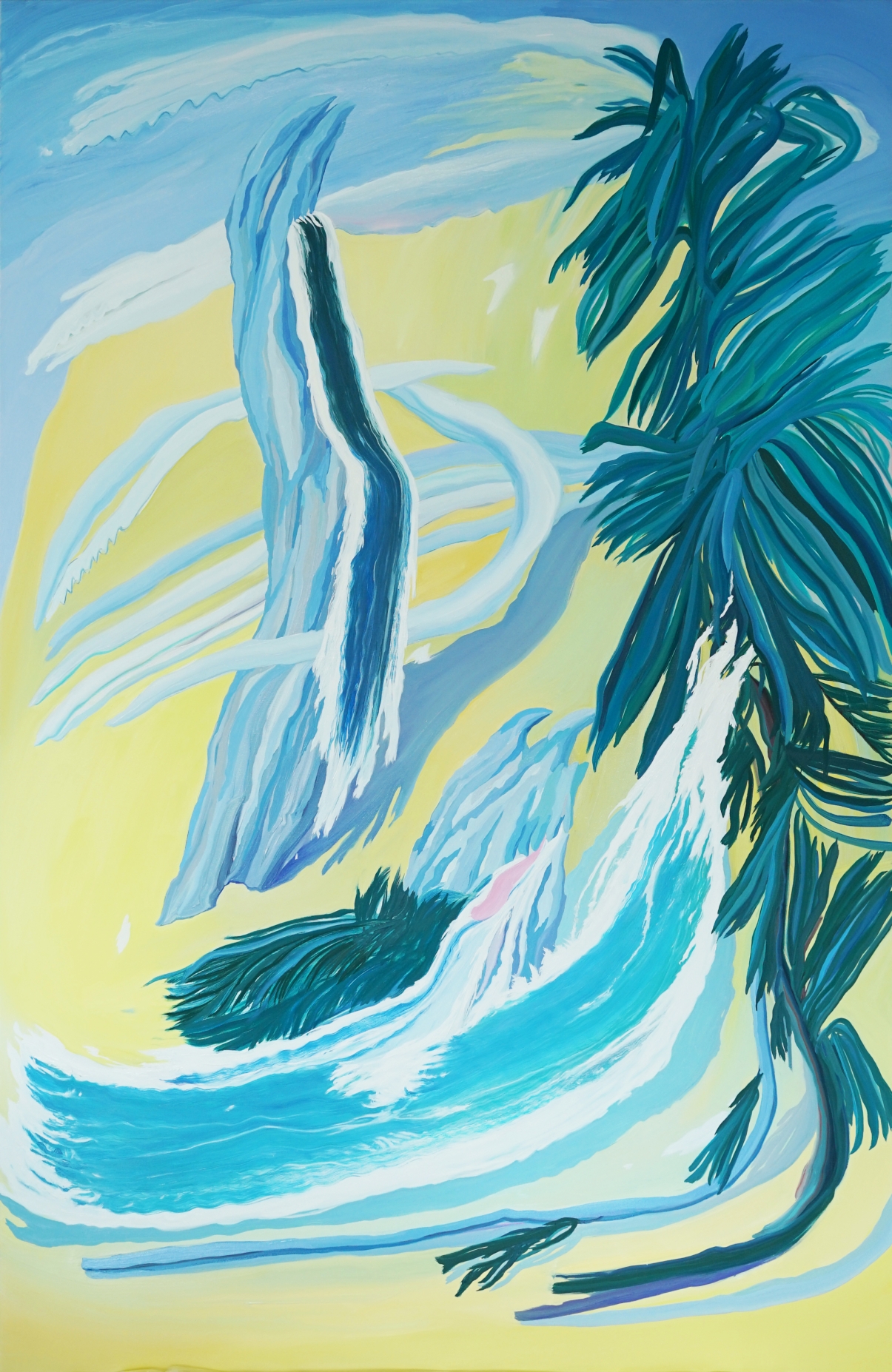
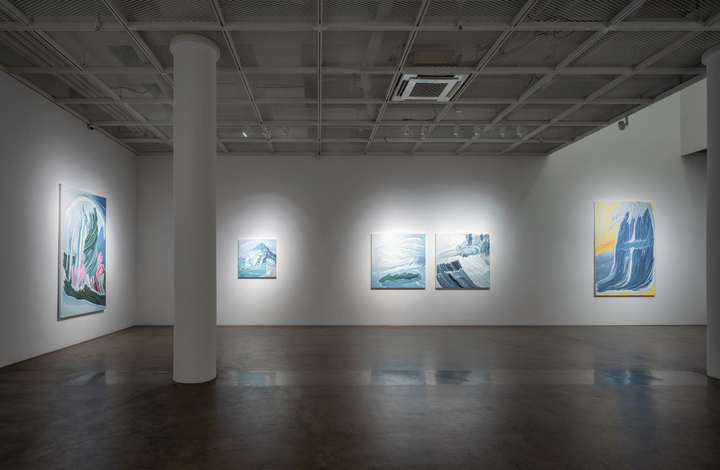
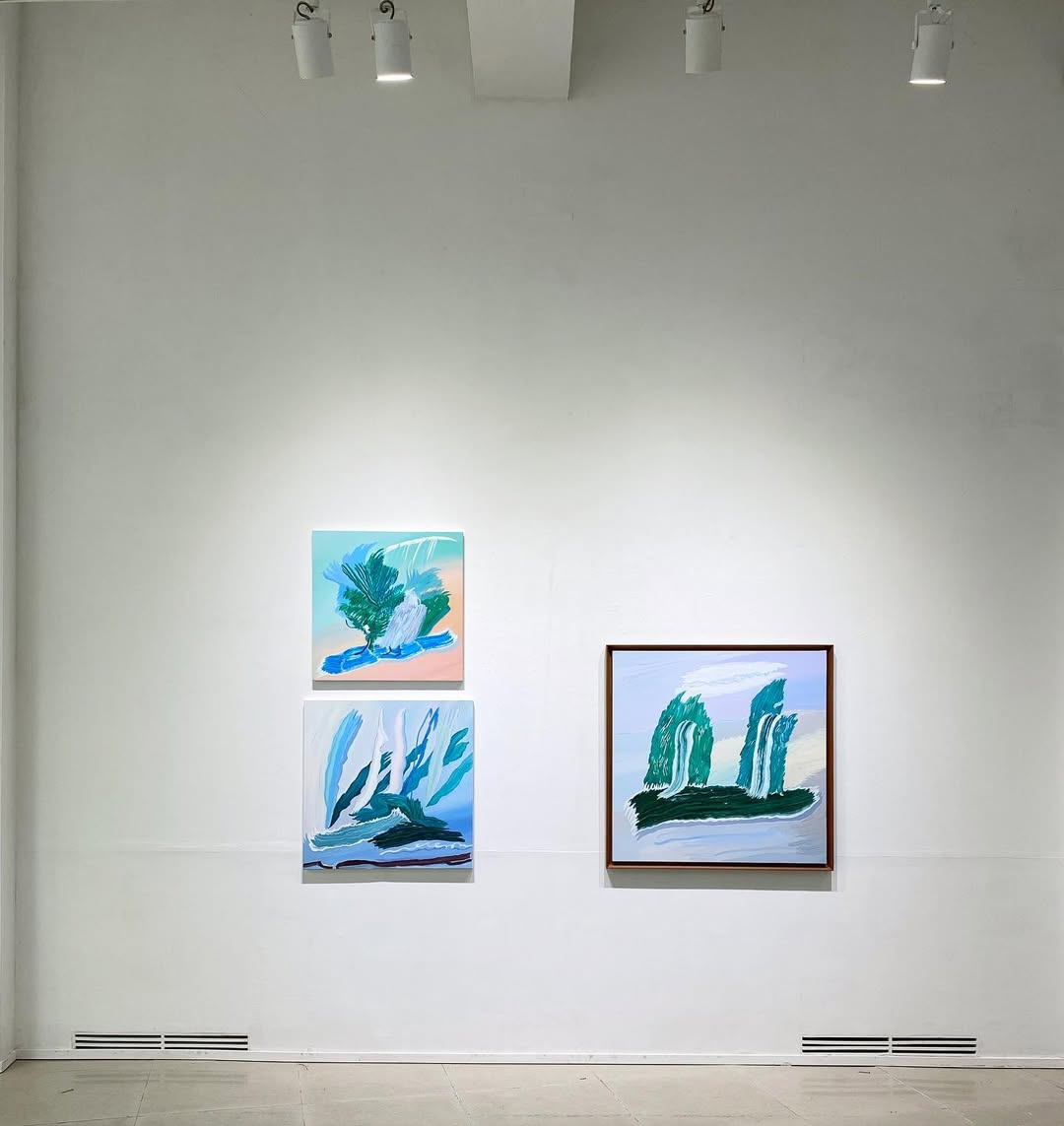
canvases are filled with contradiction. Blunt brushstrokes and warm pastel
tones create an overall sense of comfort, yet closer inspection reveals scenes
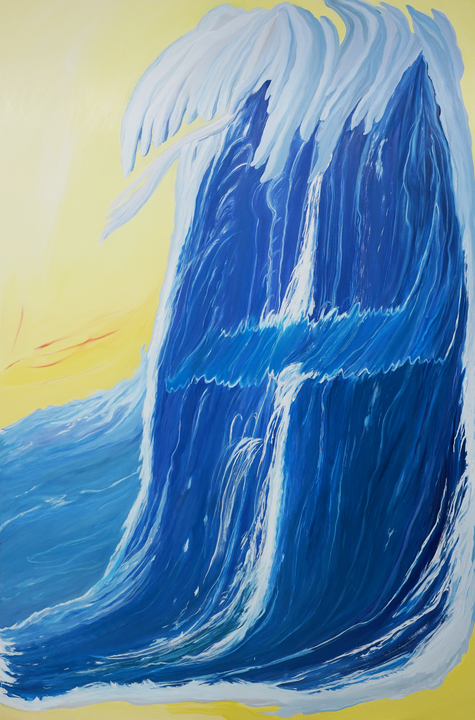
bordering on catastrophe. Fierce winds that raise tidal waves, trees bent at
the waist, and massive clouds swallowing the sky appear ready to reduce the
landscape to ruins. This paradox carries two meanings. First, the artist
focuses not on the result but on the process—the “moment.” Even as the sea
calms, signs of a coming storm are detected; even as disaster strikes, there
remains a thread of hope that bad weather will pass. For Choi, love is not
completion but a process that repeatedly trembles and solidifies.
Second, the gentle color palette intensifies the tragedy while
also inviting viewers to approach the painting. “I wanted to use colors as if a
festival were taking place. I once read a line in a book: ‘If you want to show
depression, tell a joke.’ A face so sad that its tears have dried… That way,
wouldn’t someone come closer?” Perhaps for this reason, a gaze that might
otherwise turn away from sheer devastation instead deepens, following the joke
metaphorized in soft colors. The courage to live with tragedy, and the hope to
overcome it, coexist within the image.
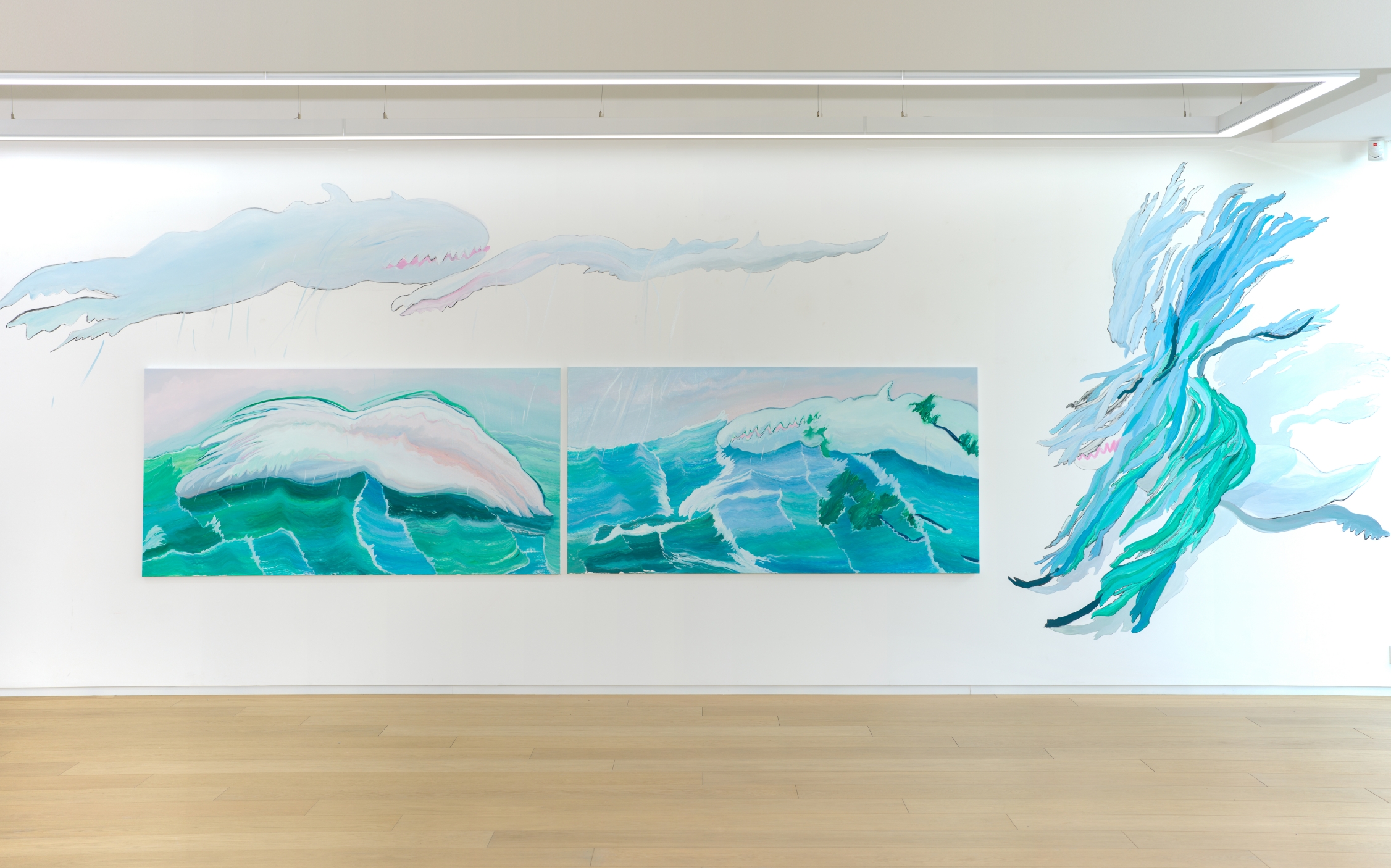
For instance, Kiss(2023) depicts lovers
kissing through colliding waves. Tidal surges that rise to the sky extend pink
tongues, indulging in one another. The truth here lies in their
devotion—leaping into the air at the risk of falling in order to meet the
beloved. The pair supports each other, promising eternal love. Yet at the same
time, they foresee that this promise may be false. The waves overlap only
briefly before separating, each following its own current. It is the moment
when love is realized and the moment just before separation. For Choi Suin,
these two instants are the same scene.
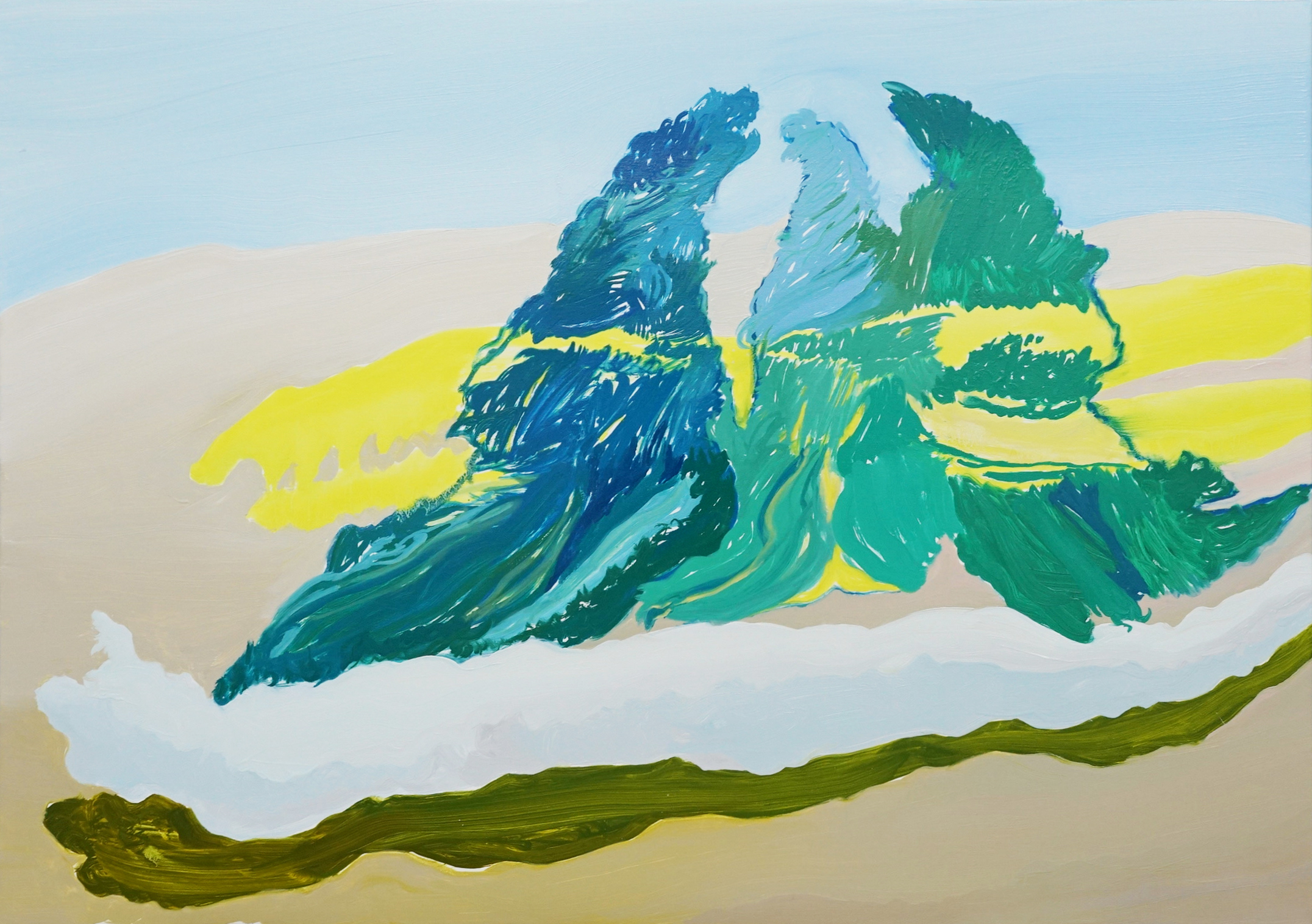
The artist’s note attached to Bite(2023)
clarifies this theme further. In the work, two clouds attempt to hold onto one
another by biting into the other’s body, only to realize that they are drifting
apart. Choi writes: “At the moment we faced each other, I wanted to bite. So
when I bit immediately, I felt the distance. I realized we were a relationship
unable to share even a single truth.” Still, she adds that coming to know this
brought her a sense of calm. The meeting of the two clouds leads to torrential
rain over the sea. Even if they cannot remain forever, the earnestness of that
fleeting stay falls upon the ocean and remains there eternally.
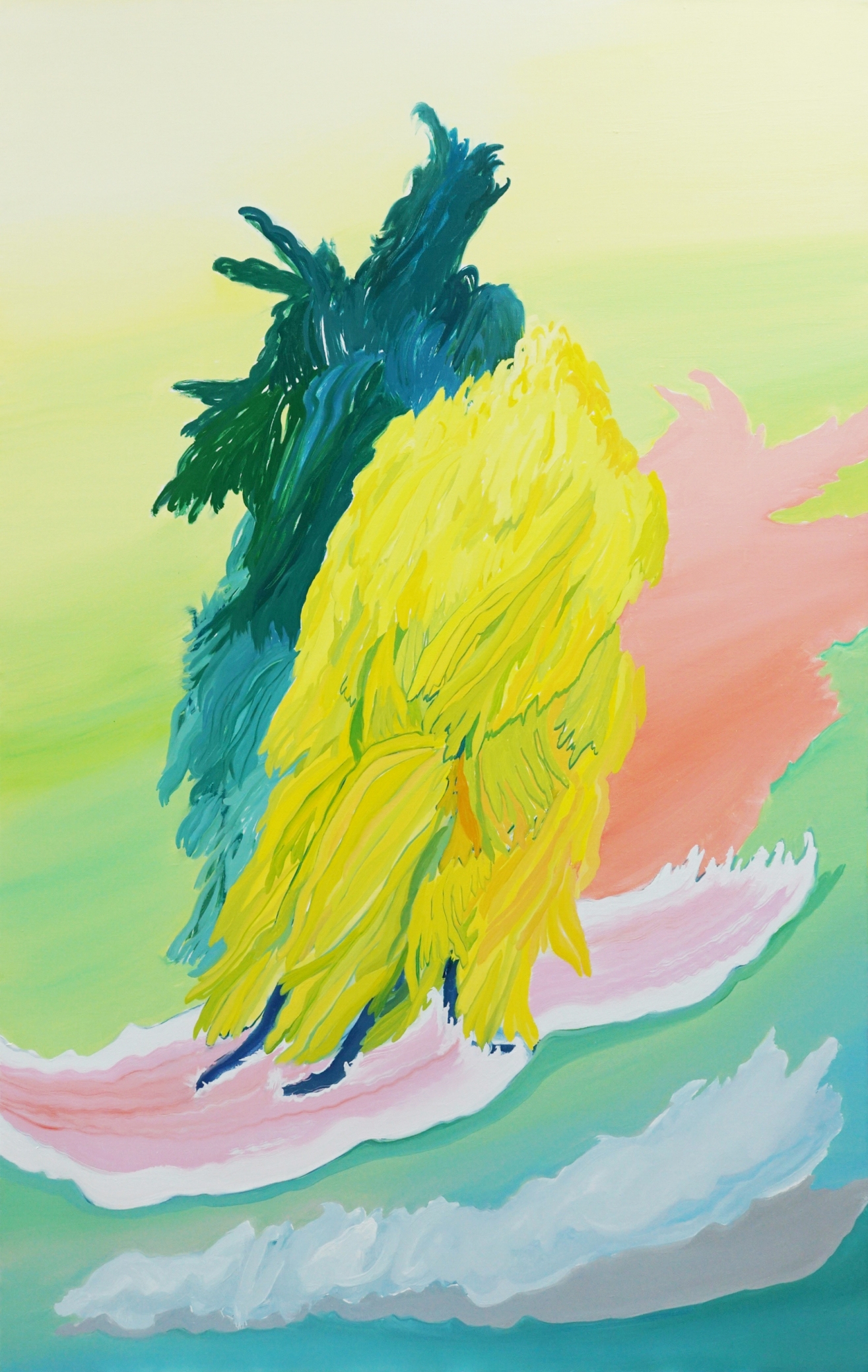
Another distinctive element in this exhibition is urine. In Pink
Pee(2023) and the 'Peeing'(2023) series, natural forms explicitly
urinate. This prompts viewers to question whether even the streams of water
appearing in other works might in fact be urine. The deepening of melancholy
through humor, and the coexistence of truth and falsehood—this is where Choi
Suin’s composition and themes converge. The subject finds itself in a situation
where it cannot cry but must wet itself instead. Urine, which lingers longer
than tears through its trace and odor, becomes momentarily comic yet remains
tragic over time. But tragedy is not the end. The blue wave rises toward the
sky, using waste as fuel. Only after the yellow and red have poured out does
the sea reveal how blue it truly is.
“Unlike words, painting cannot lie. No matter how much I censor or
plan, primal movements are ultimately recorded.” There are things that do not
surface in language, yet in painting there are things that cannot be hidden.
Choi Suin says this is why she began to paint. Perhaps for that reason, despite
her claim that she wished to confess depression, hope does not remain concealed
in her paintings—it quietly spreads.