THE
WEIRDLY DISTANT: MINYOUNG CHOI’S PAINTINGS
“Are
we being watched by an entity that has not revealed itself to us?”
Mark Fisher, ‘The Weird and the Eerie” (2016)
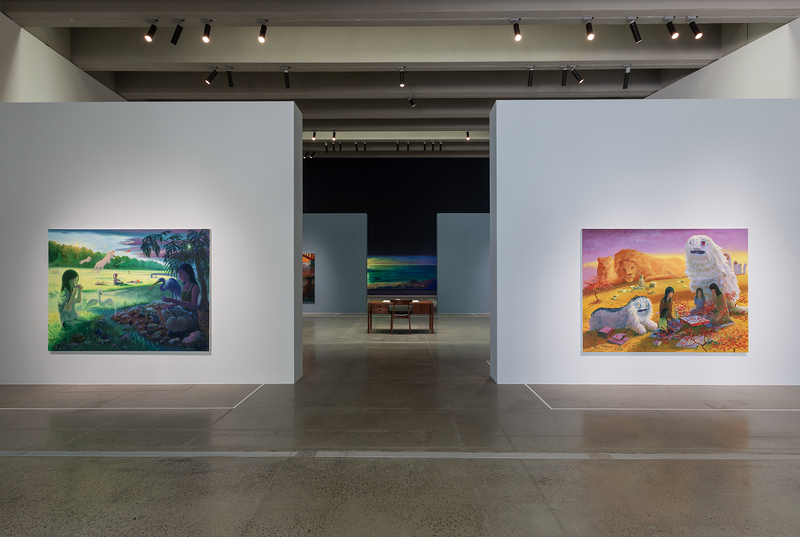
Minyoung
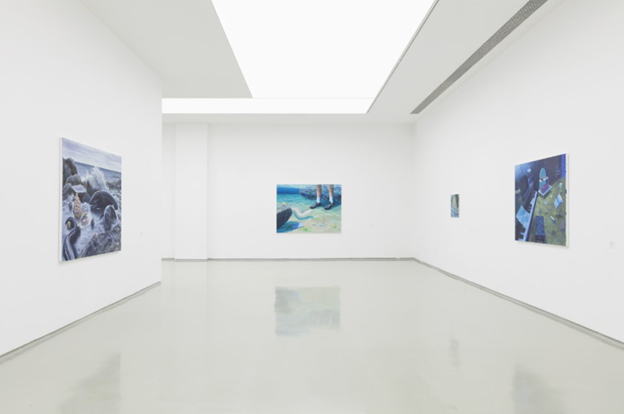
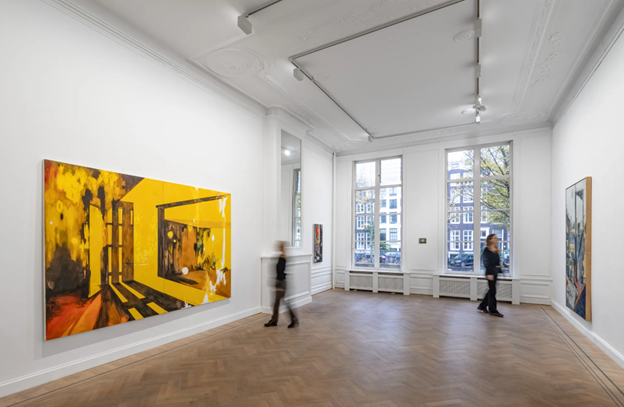
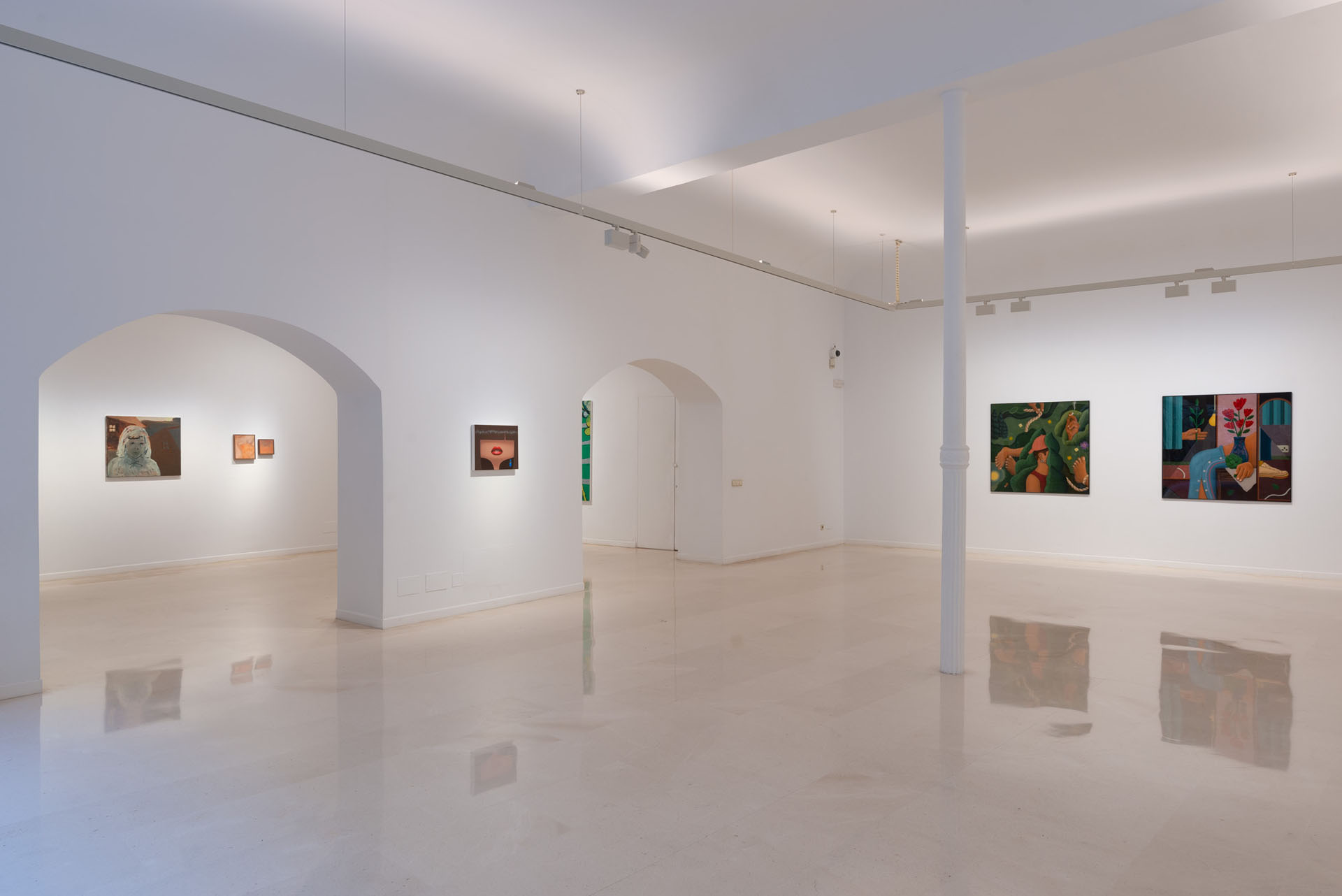
Choi’s paintings are pictures of places that are somewhere else. It is not
possible to locate or date these scenes; we could be looking at the past, the
present or the future. Or they could also easily be an alternate past, an
adjacent present or a substituted future. We are looking into, through and over
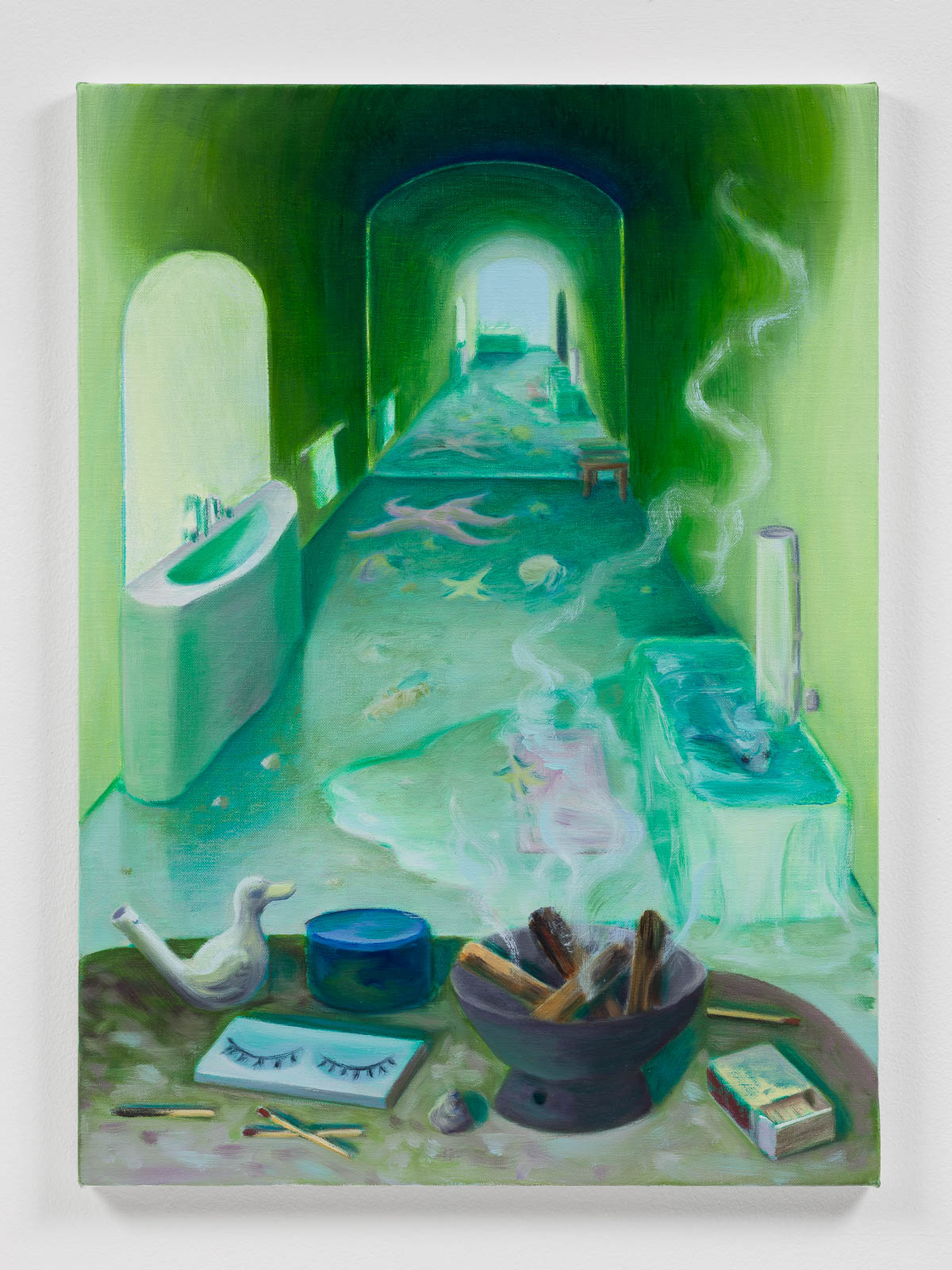
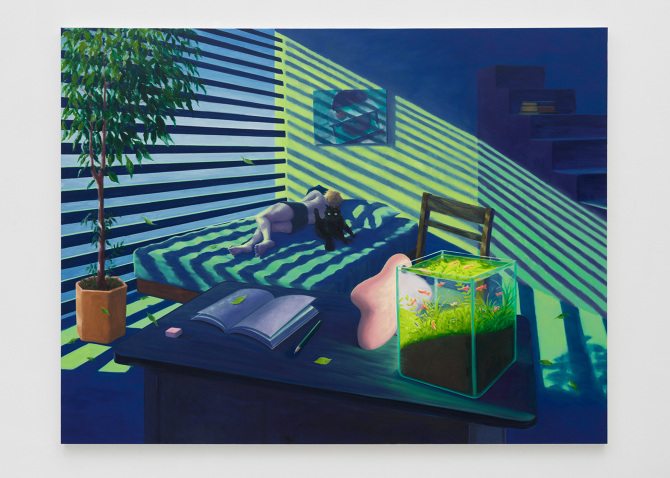
a place that is both particular and yet unremarkable. It may be a domestic
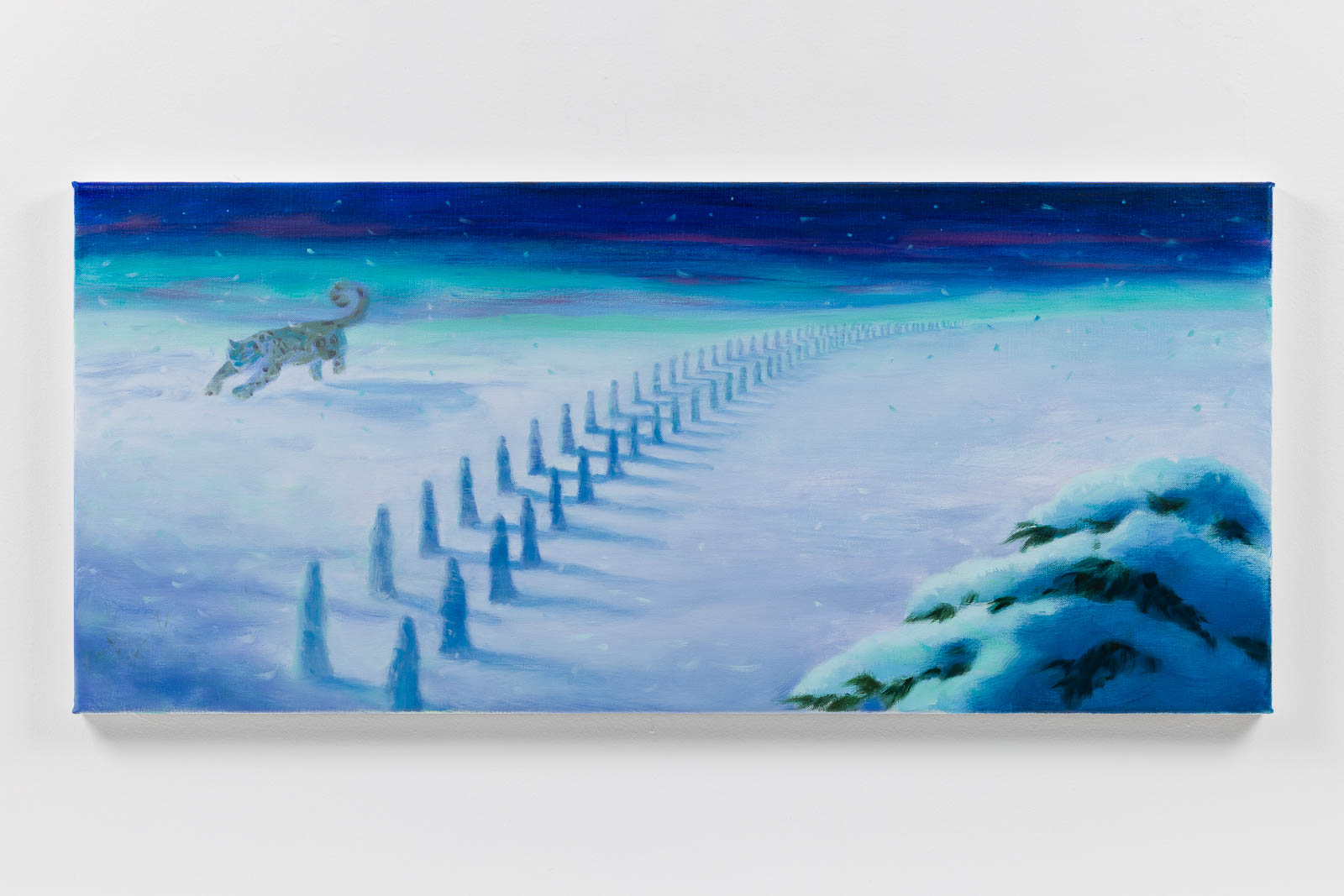
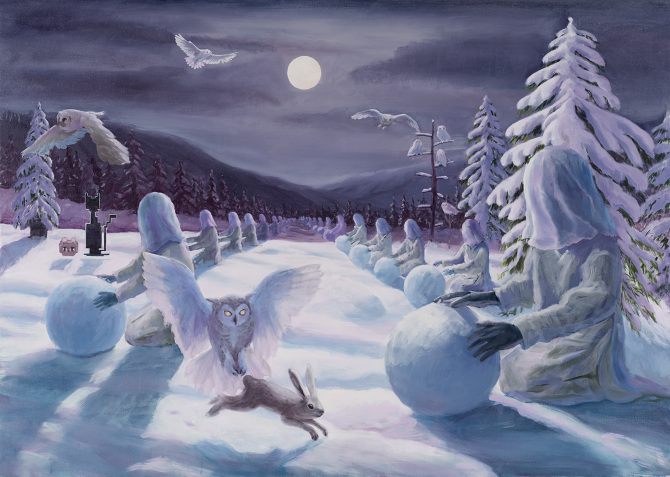
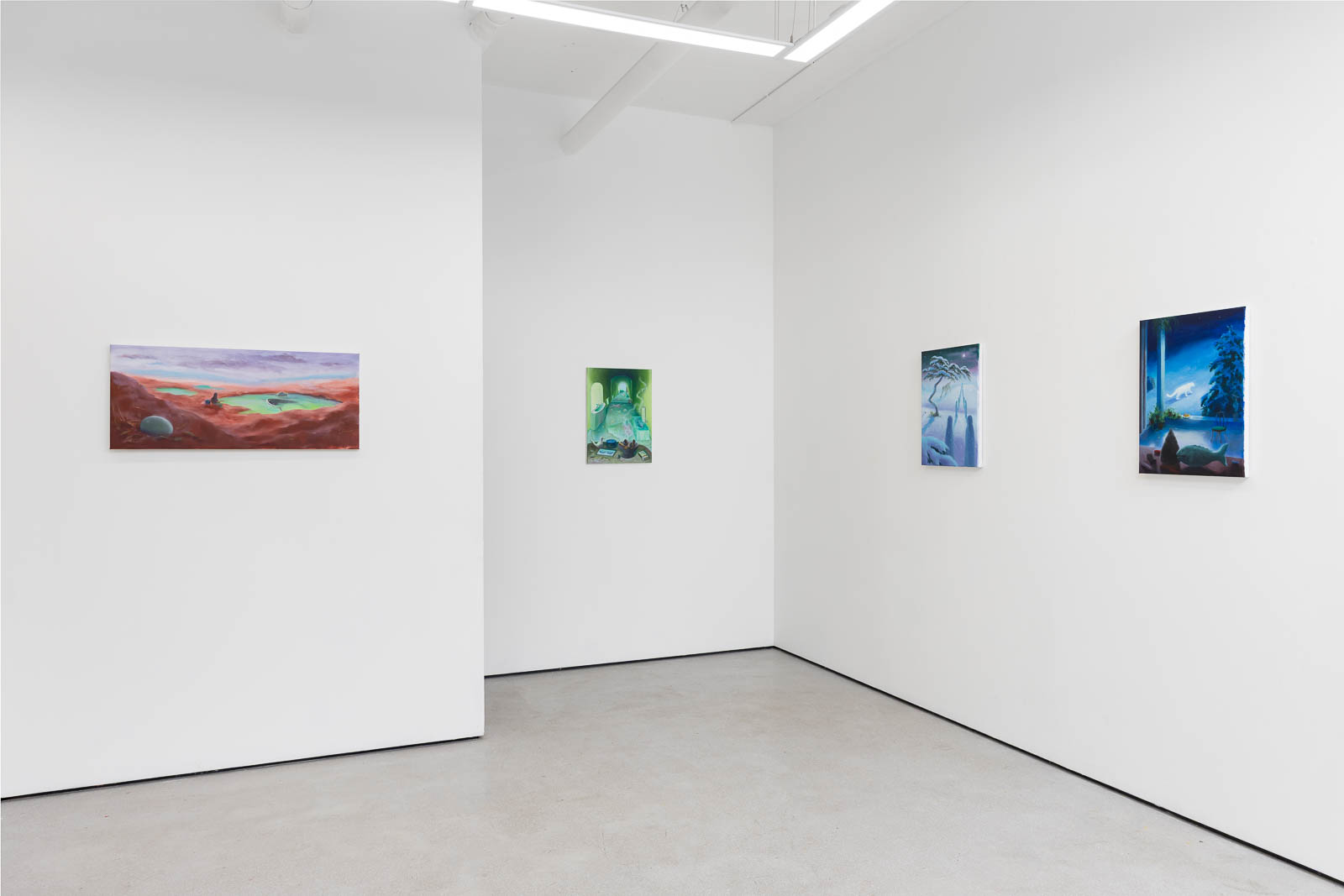
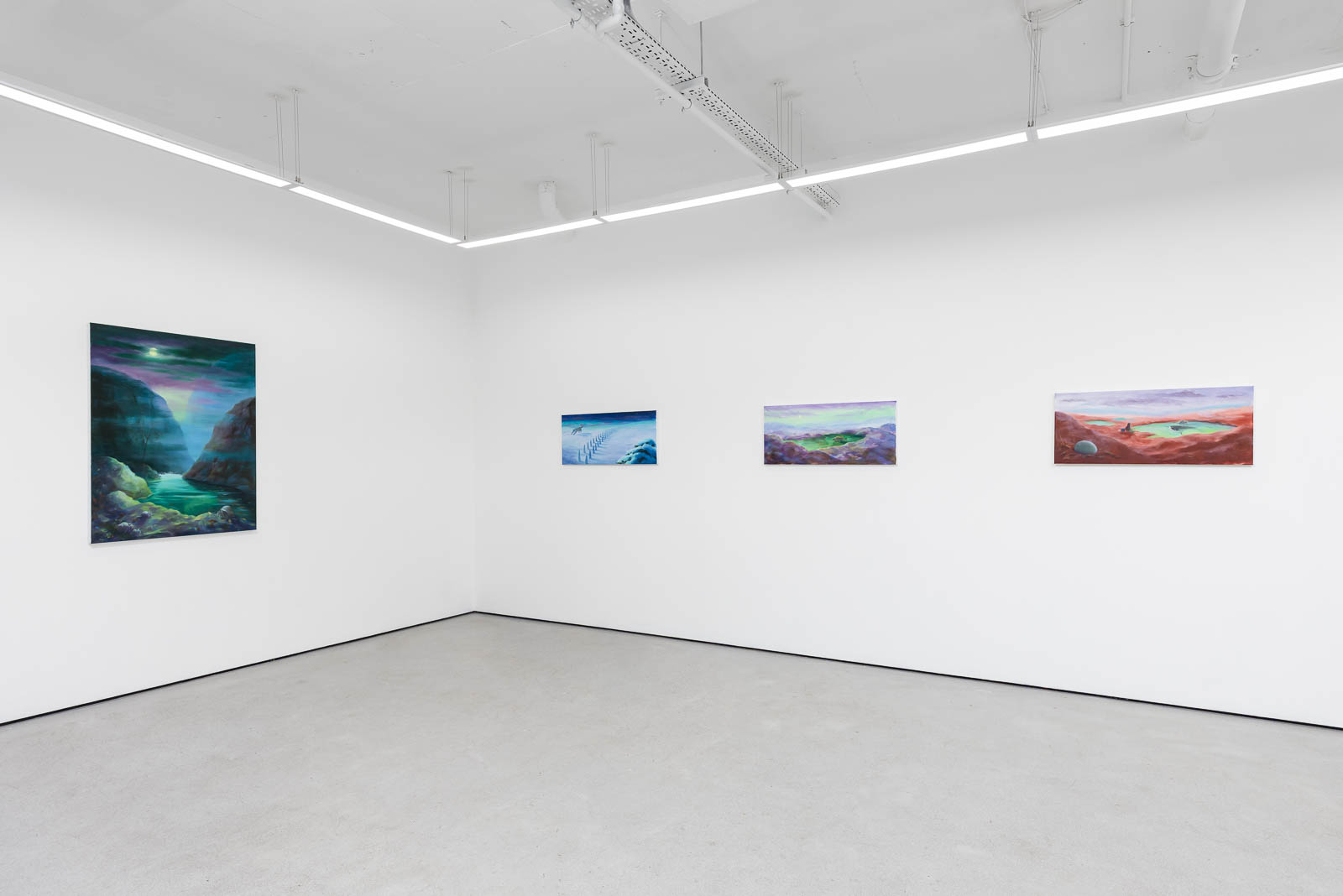
setting, such as a bathroom bathed in fluorescent light. It may be a snowy
nocturne where stillness has been disturbed by a duo of play-fighting lynx.
In
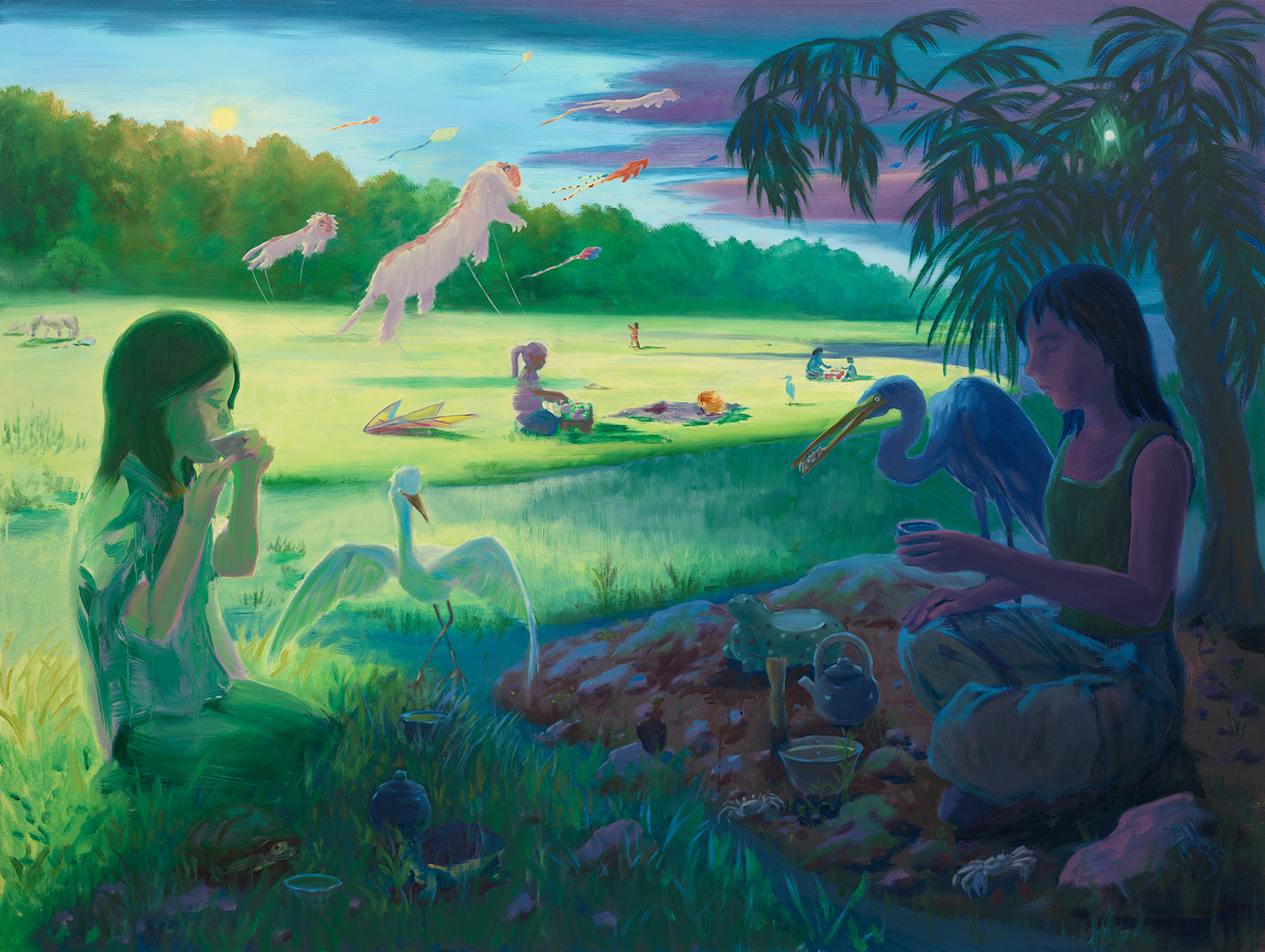
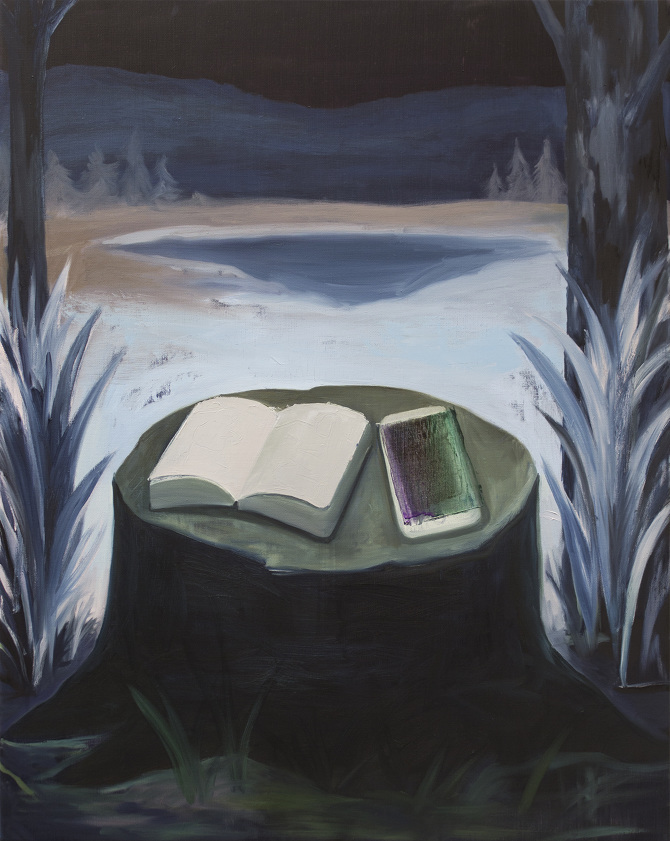
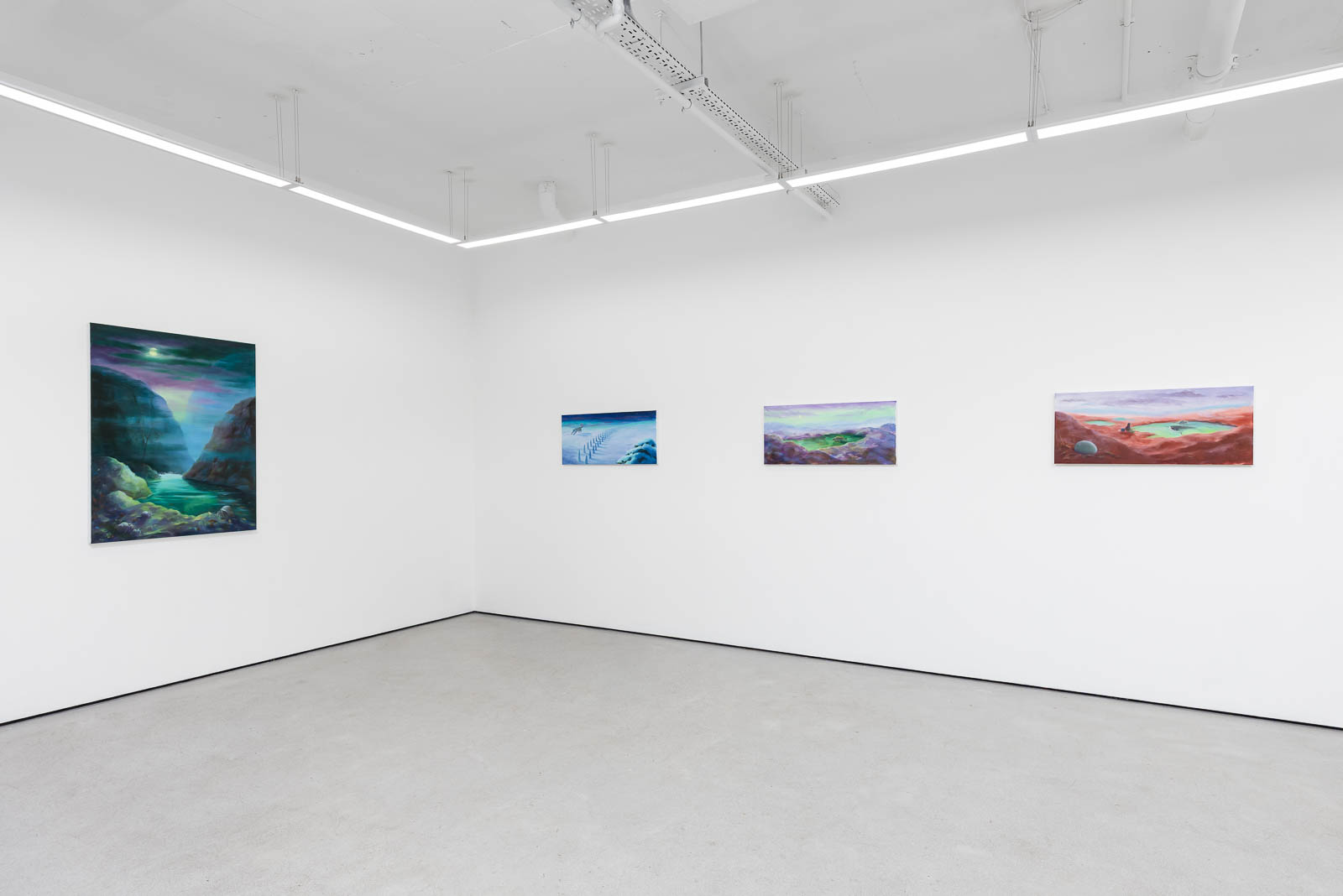
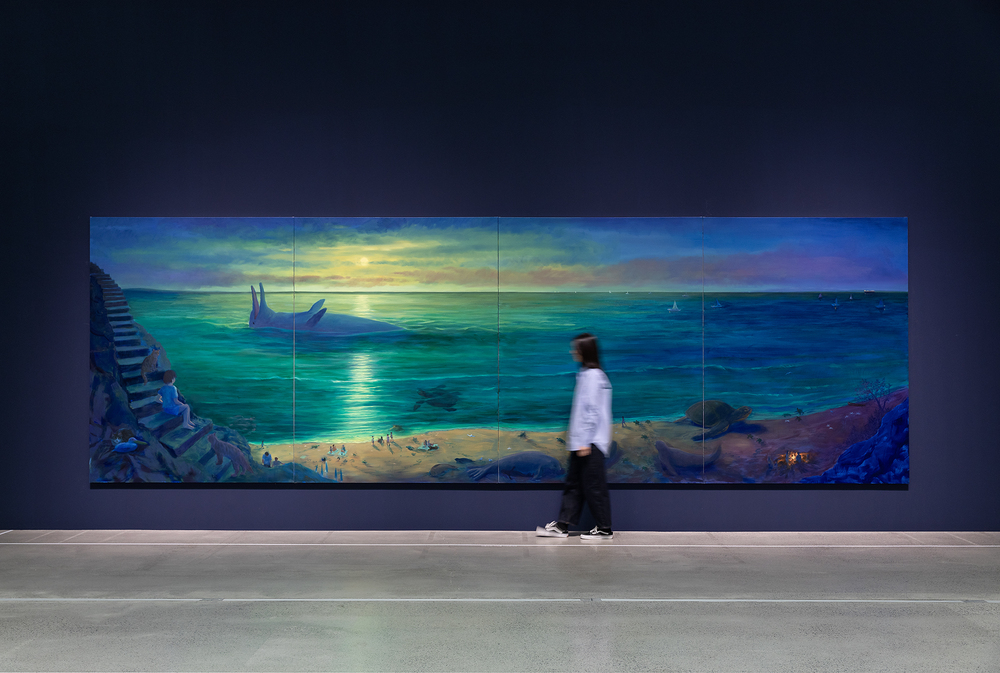
many of the paintings, it is night-time. We are outdoors or at the edge of it.
There is terrain and sky, a ground in front and an expanse above. Something is
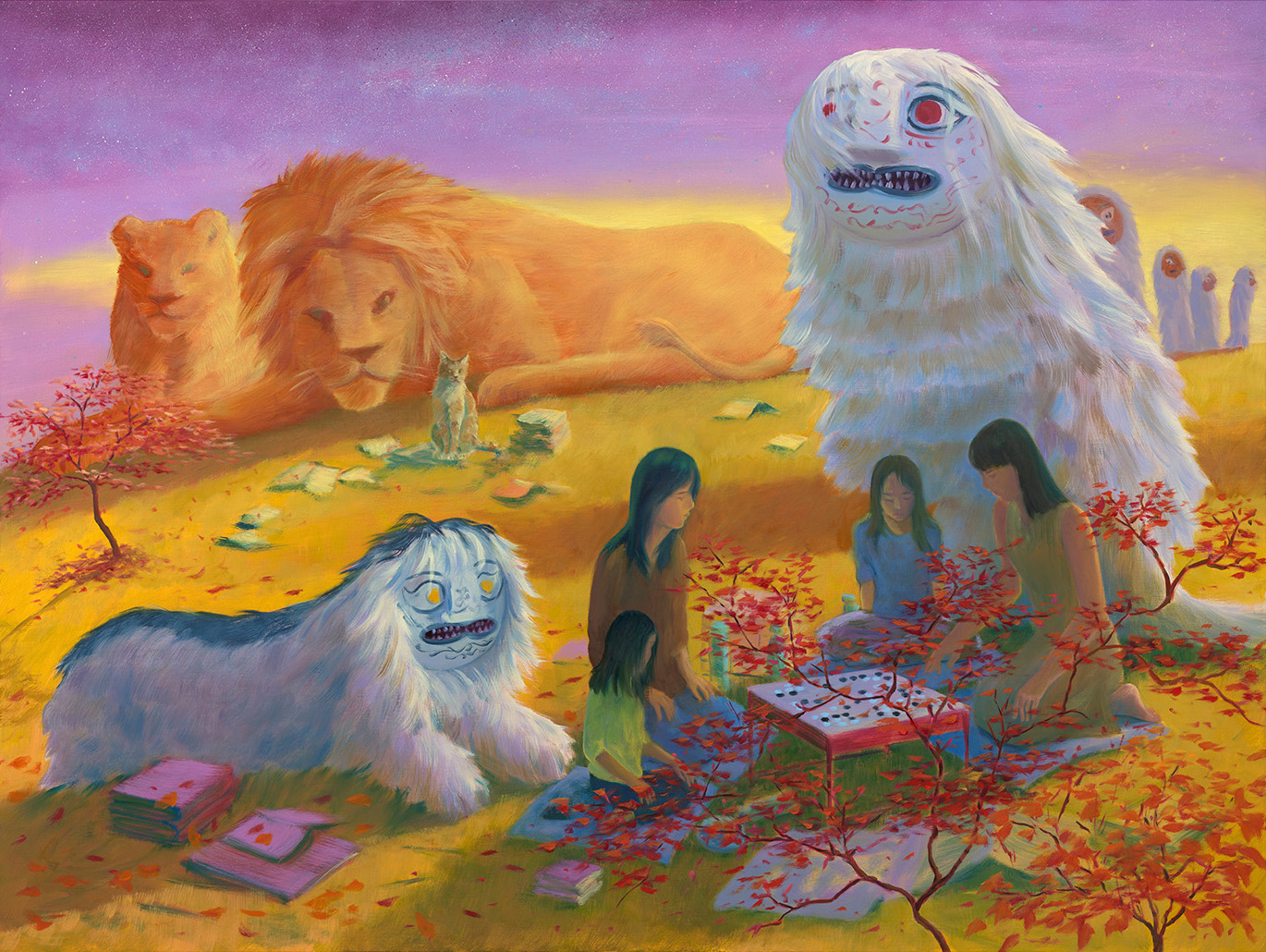
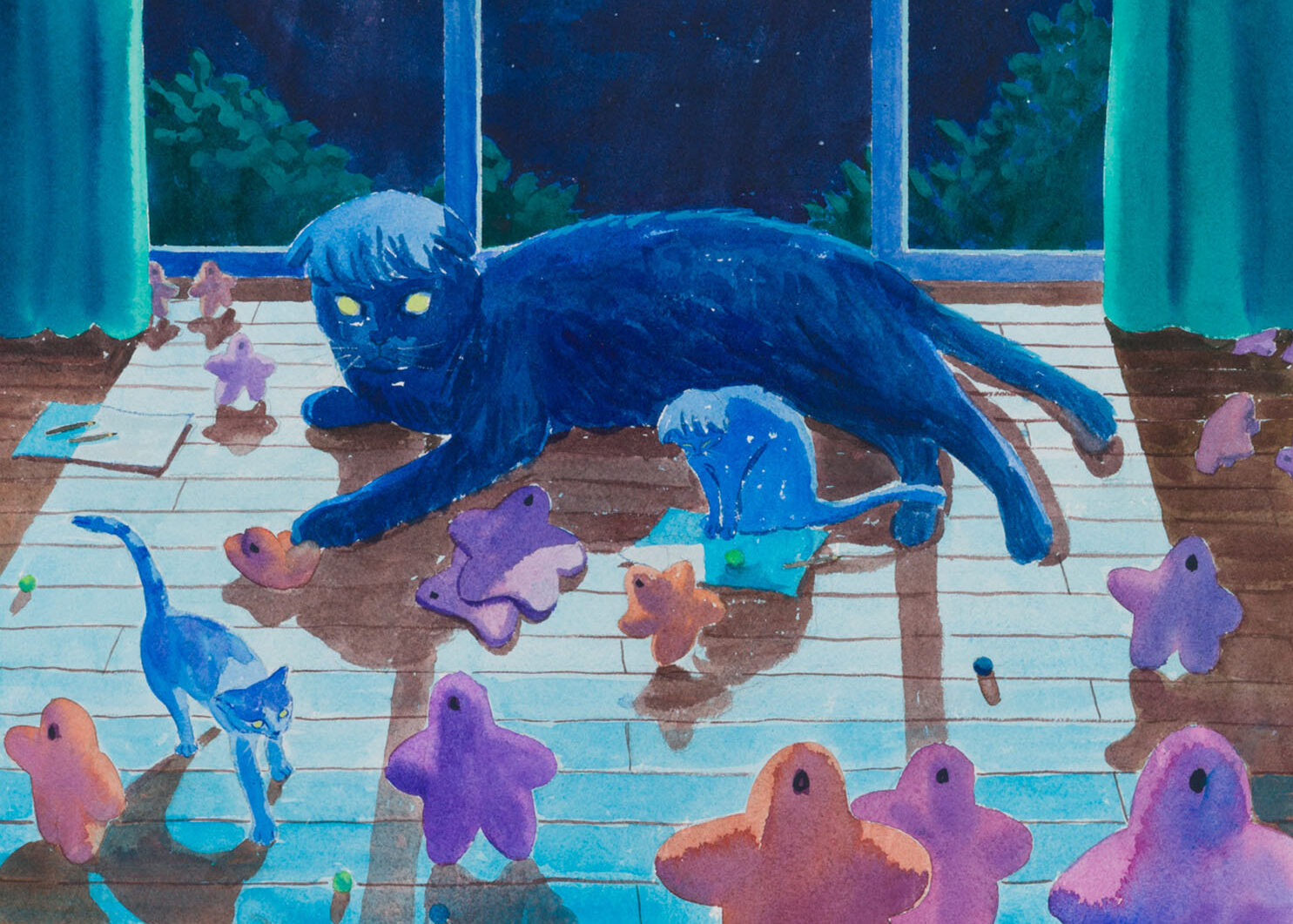
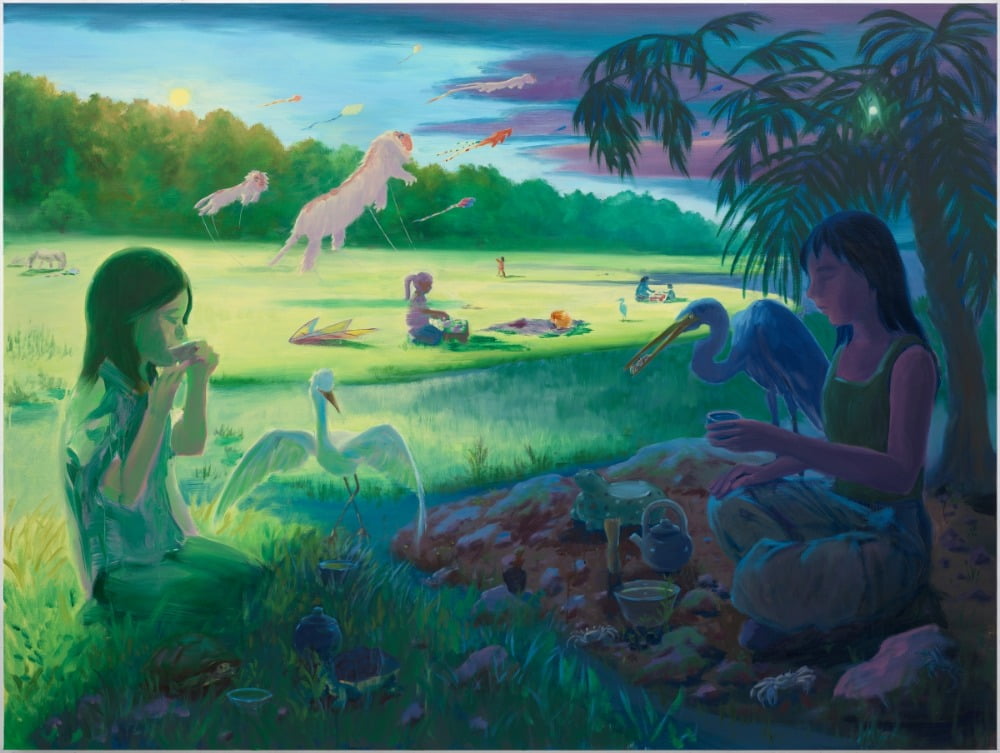
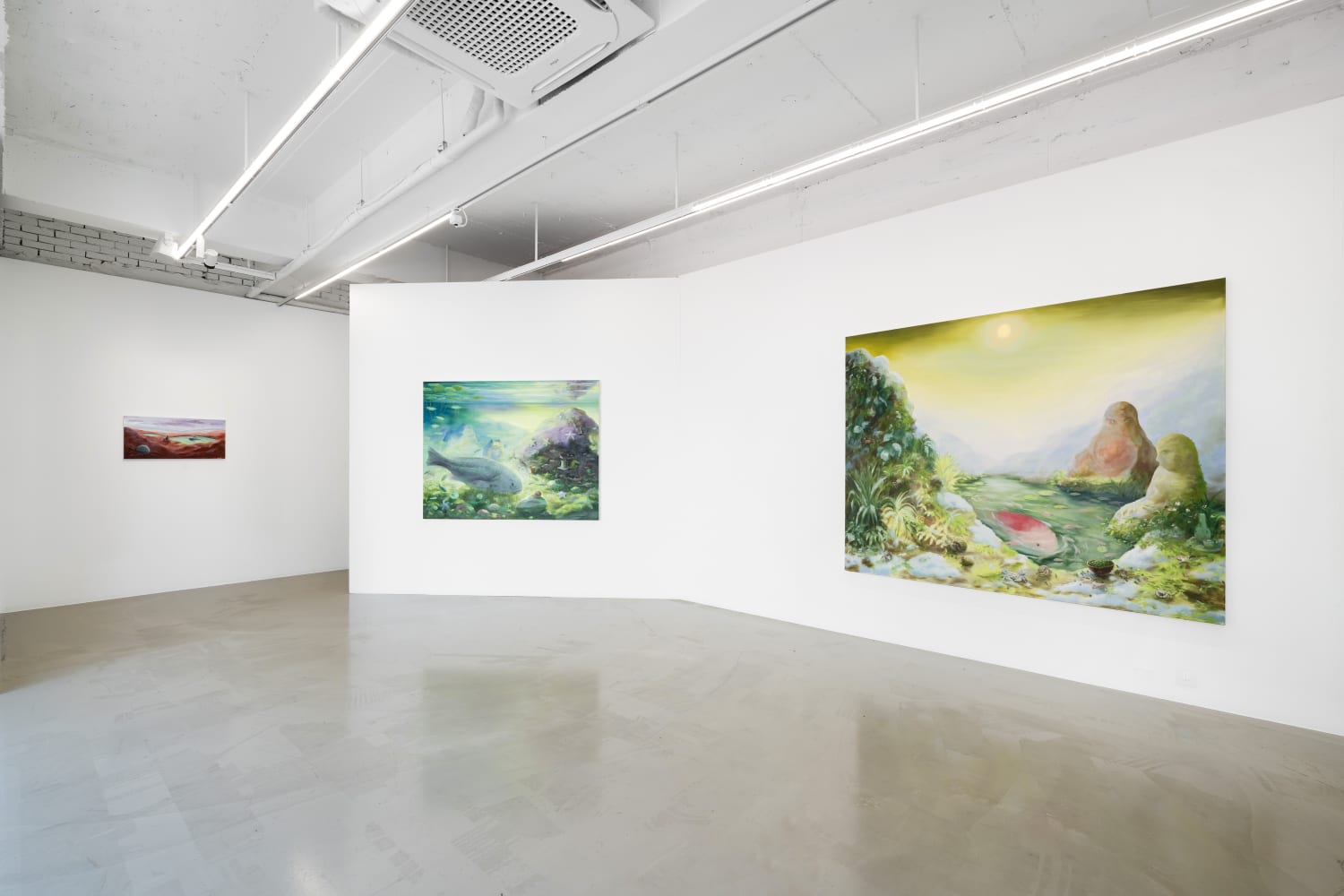
occurring. Snow leopards, lynx, catfish modestly populate the paintings.
Occasionally, there may be a person depicted, but they often have a secondary
or supporting role in Choi’s paintings; the animals of the natural world are
prioritised.
These creatures may be in their native habitat where they are
unbound to freely roam and drift; a snow leopard ambling across a snowy plain
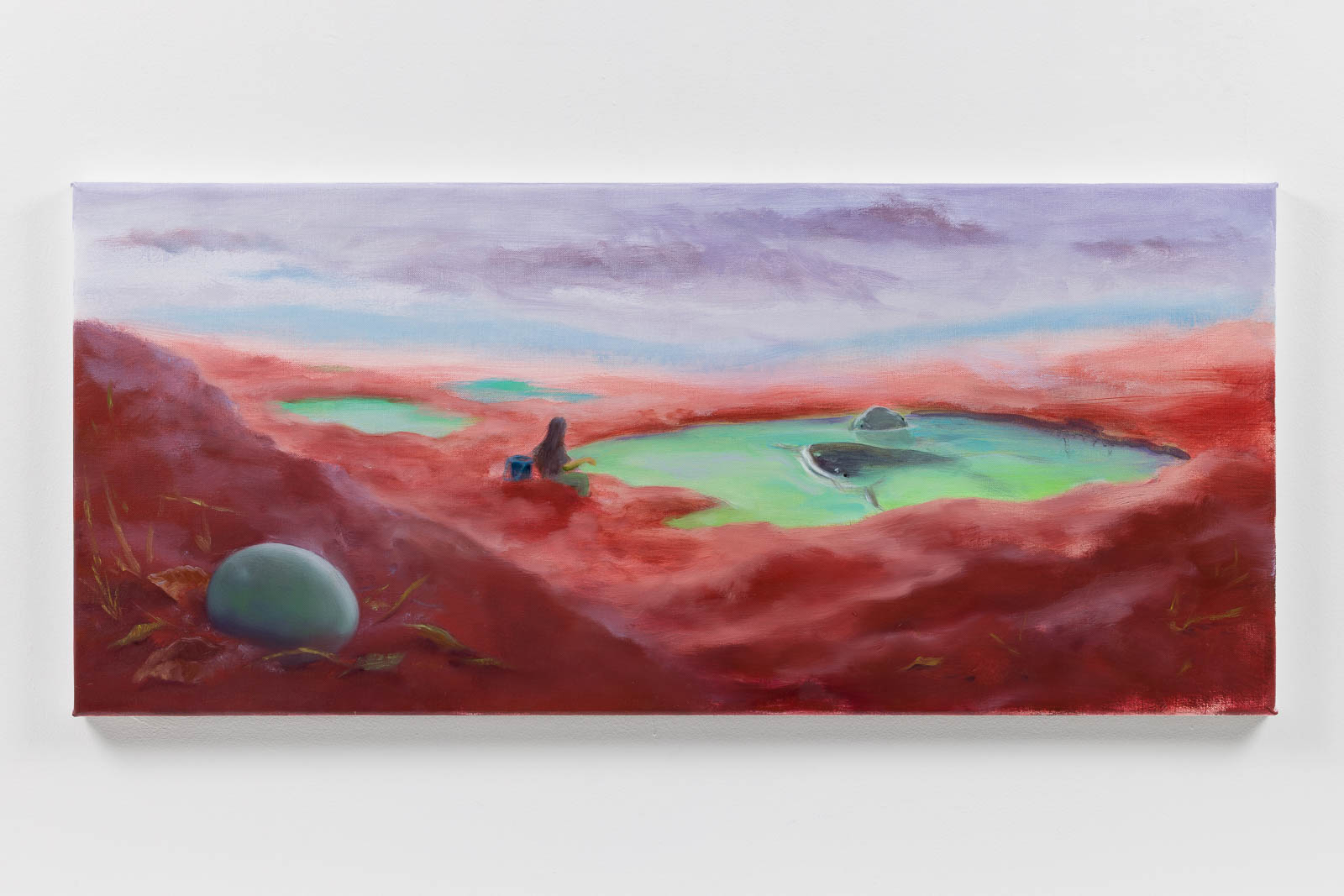
at night. Elseways, it may be an unnatural habitat where they are fettered, and
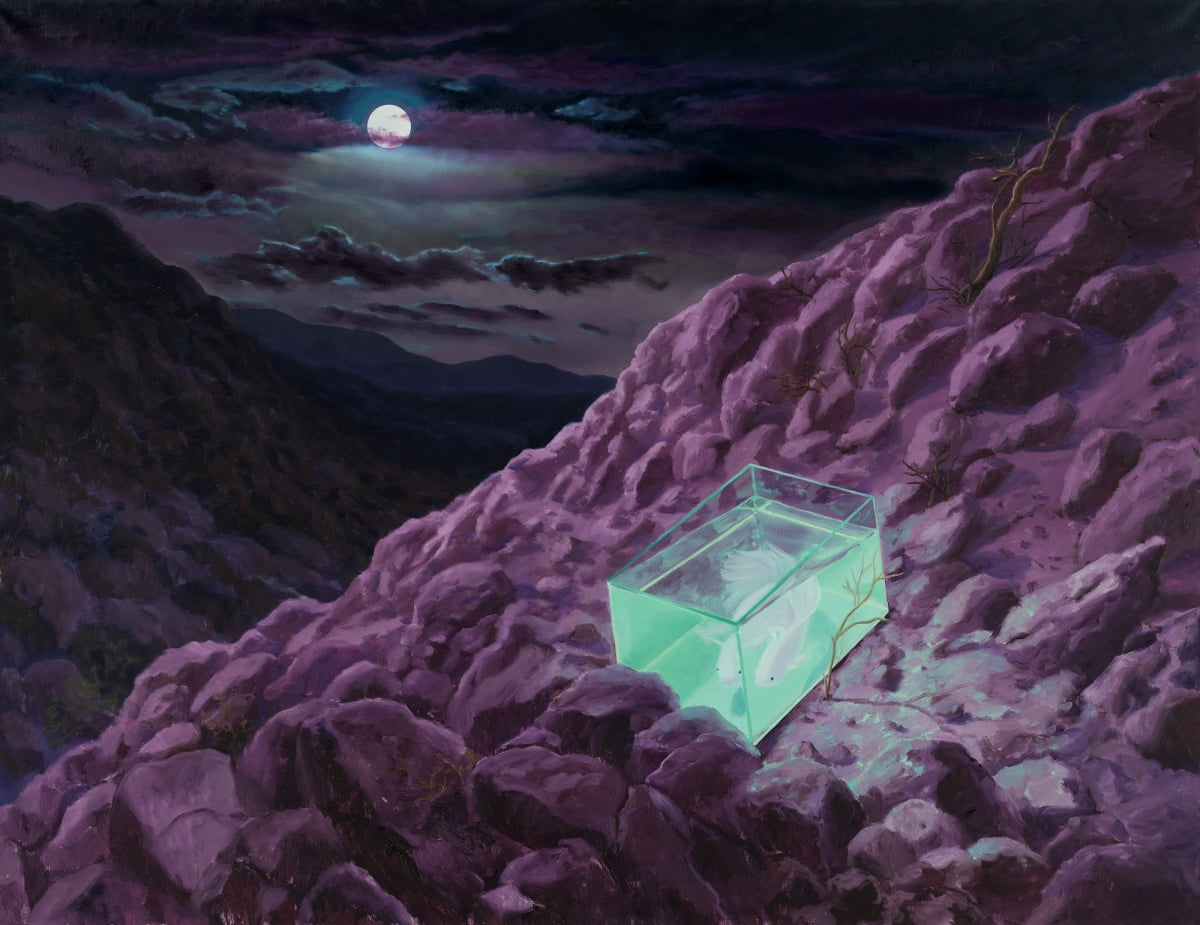
their freedom is curtailed; an out of water fish seen wedged on a rock unable
to reach the water’s surface below. Could it be that the animals are metaphors
for us? Should we see ourselves in them? Were they once us but have
metamorphosed into big cats and at the behest of some unseen entity?
There
is the intimation of a quasi-narrative that is playing out across the
paintings. At first, each work appears to represent an isolated moment. These
moments are not necessarily exceptional in their description, but are customary
and habitual, verging on the prosaic. The daily ritual of hunting for food or
burning incense. Cyclical. An extreme analogy could be a kind of wildlife soap
opera with its anticipated portrayal of the routine and the recognisable, but
where artifice and incongruence irritate at the periphery. With these pictures,
we are given the minimal of strangeness through the maximal of the ordinary as,
while the paintings gently brush against surrealism, they also persist in
denying its usual absurdist dream logic.
But
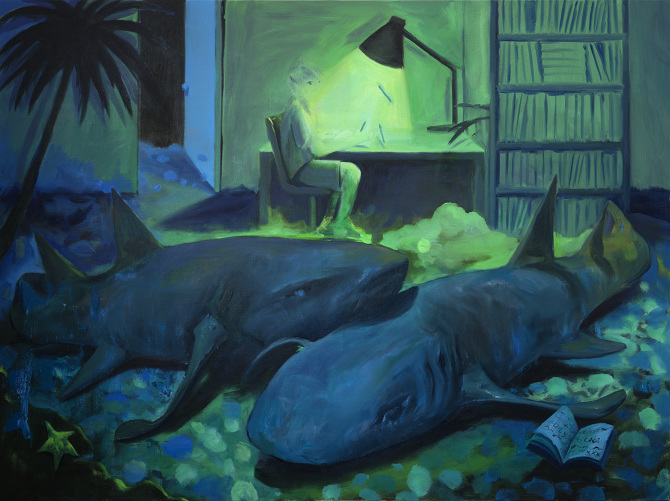
the paintings still subtly unsettle and displace us. The colour is
exaggeratedly saturated whilst still being more or less faithful and contiguous
to the material world as we know it. This is not a world of greys and browns,
but of unwavering purples, blues and greens. It feels altered, just as one may
adjust the brightness and saturation of their display, the colour in these
paintings has been retuned.
Turned on. Naturally unnatural. An incompatible
scaling is another way the paintings gently deceive us; animals are described
much larger or smaller than one would expect – sometimes it’s difficult to know
exactly which, as they can feel gigantic in one instant and then miniscule the
next. Each of the characters, along with the nearby inanimate motifs, such as
trees and mountains, are deposited into the composition, becoming staged and
lit up so as to ensure a pictorial equilibrium. In that respect, there is as
much an absorption with picture-making as there is with story-telling.