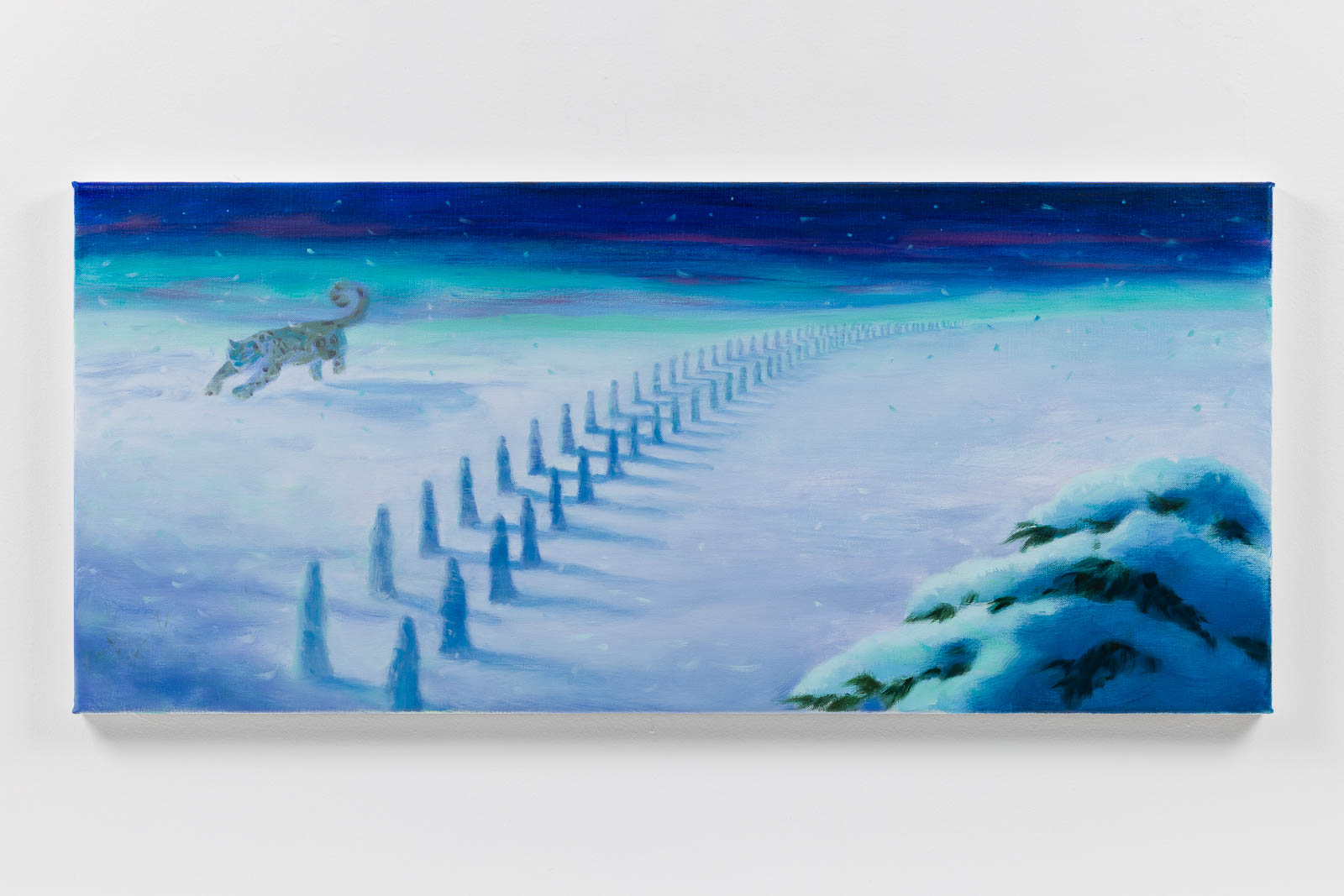
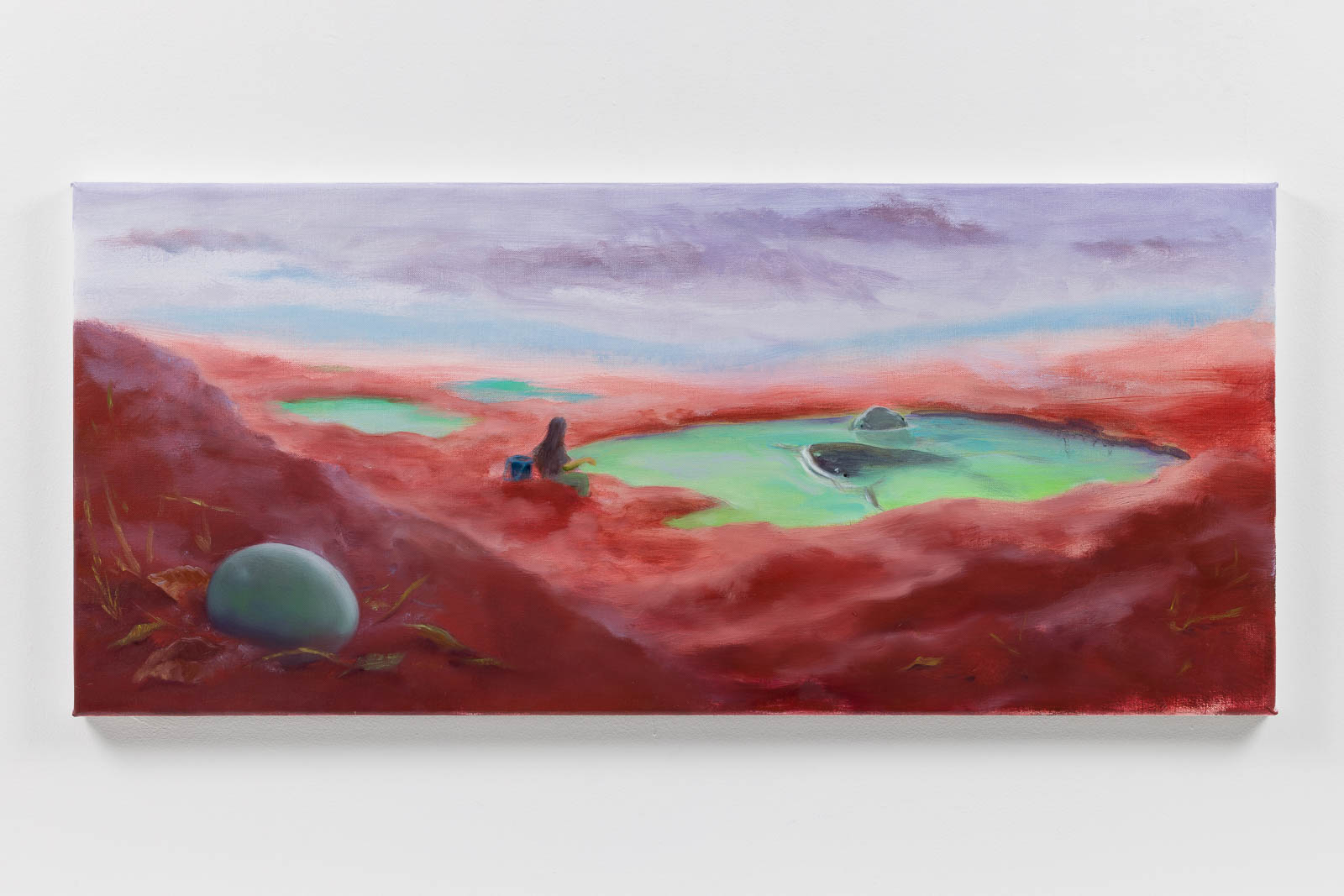
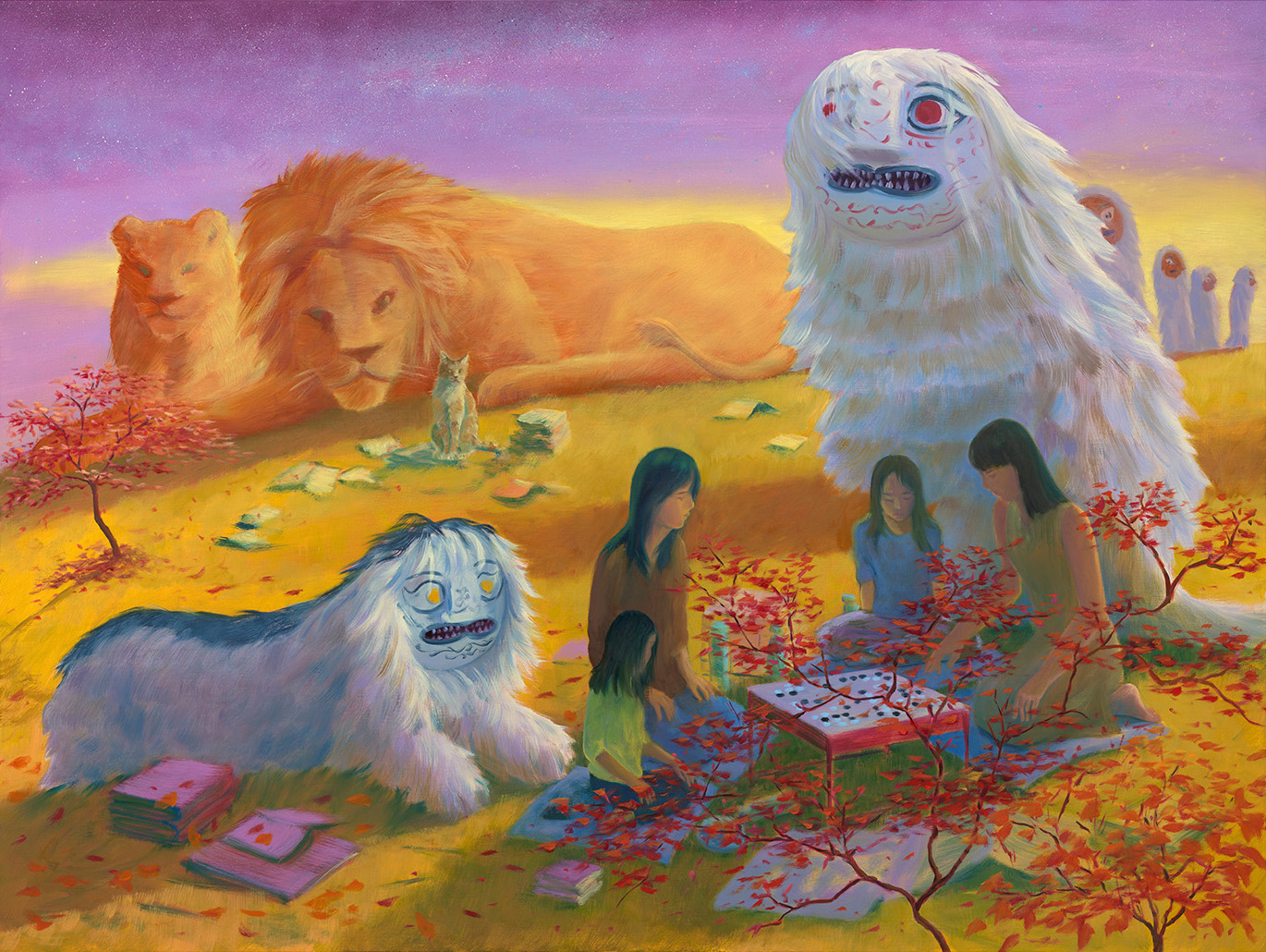
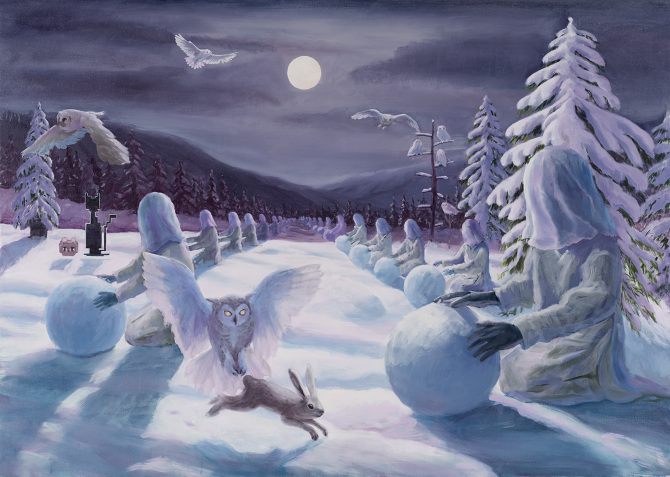
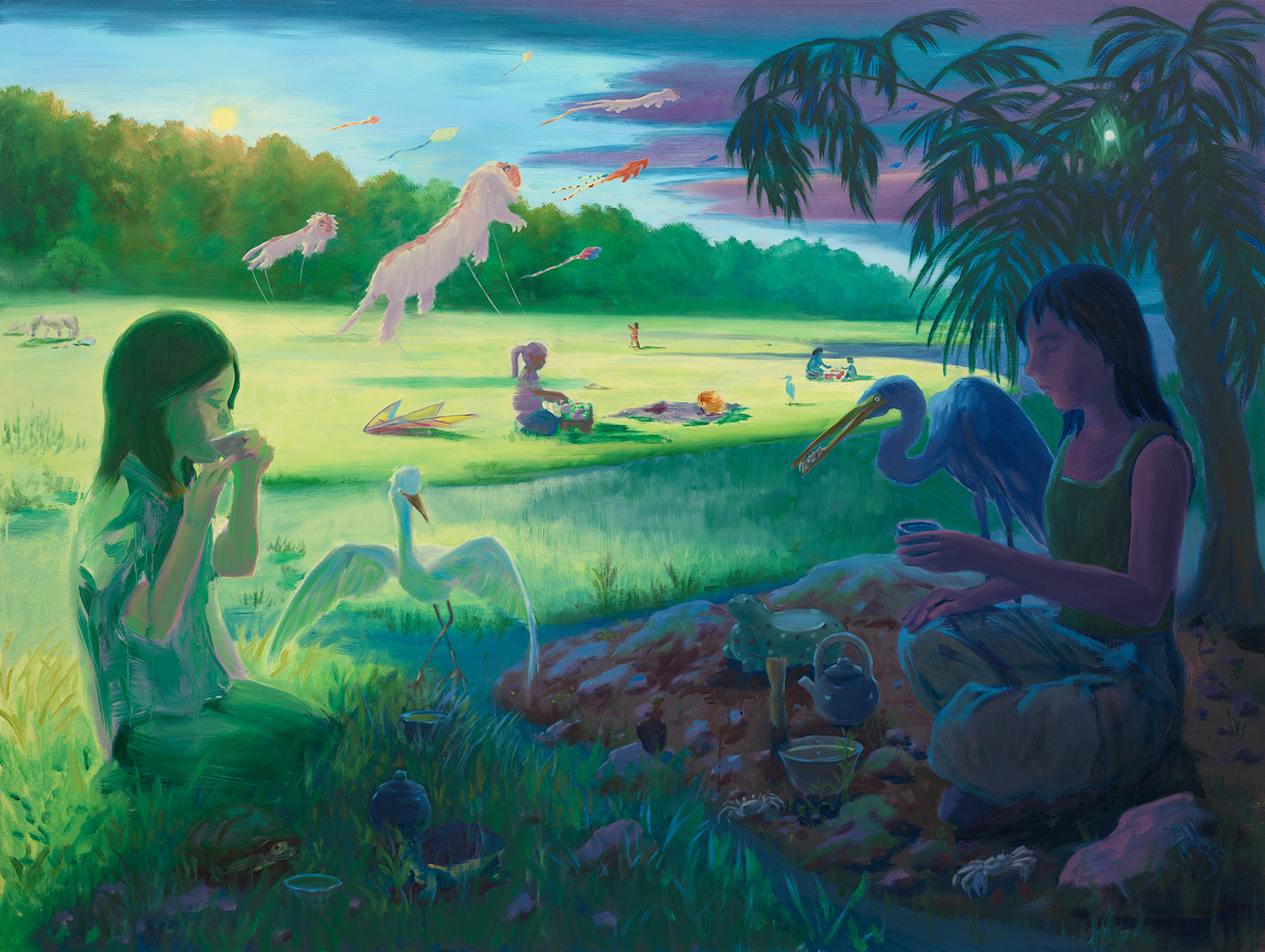
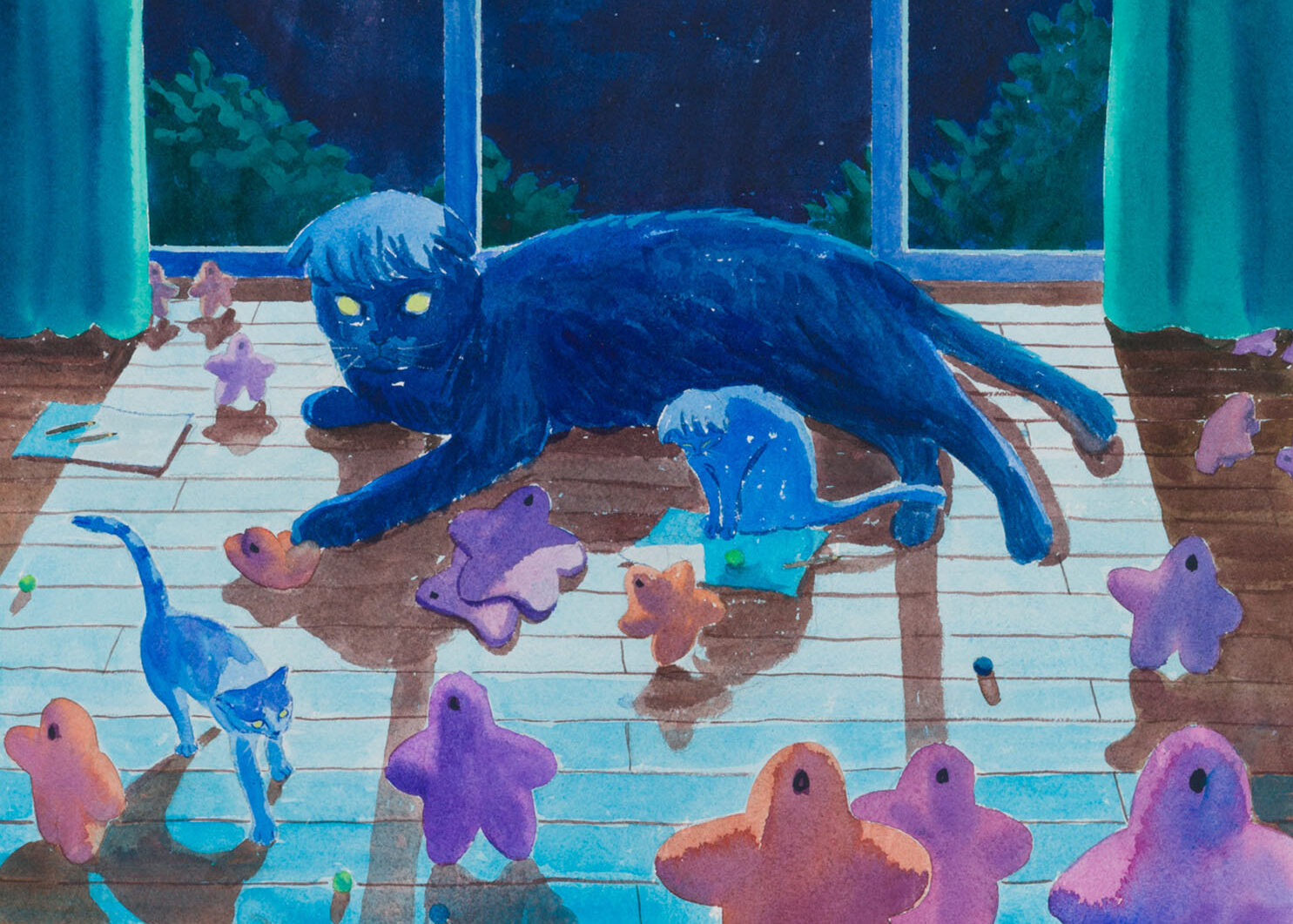
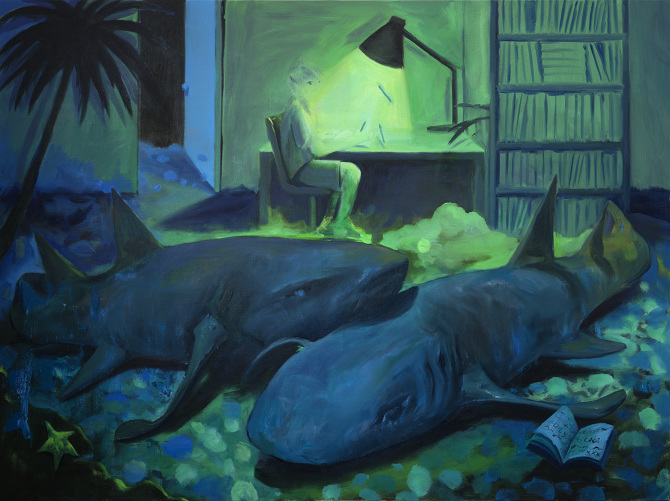
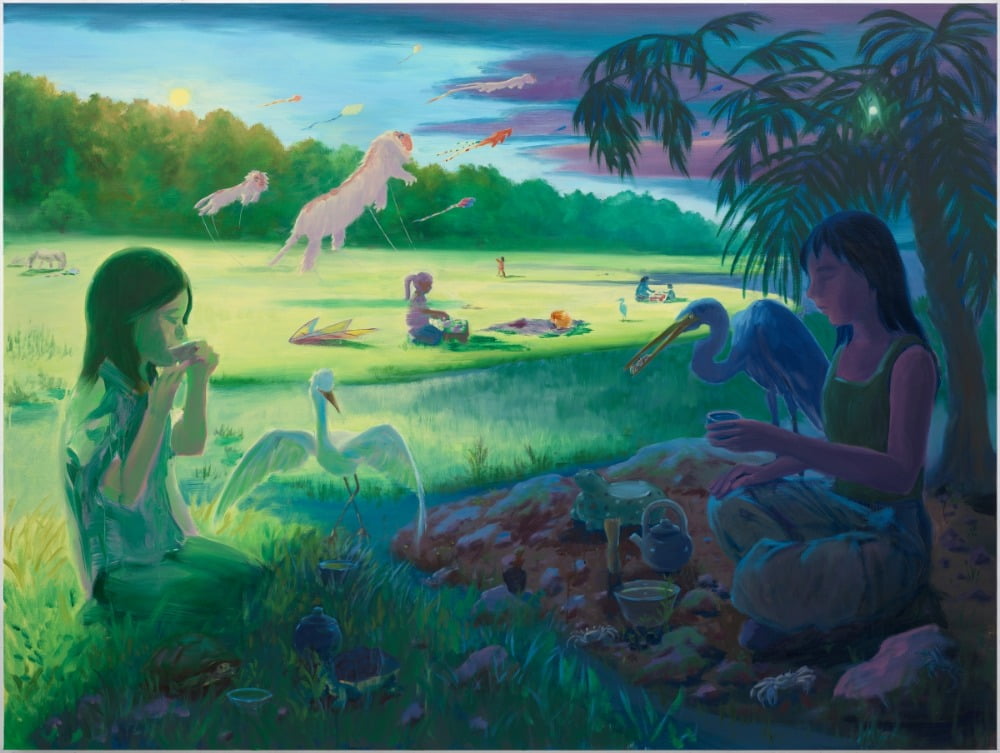
Animals always appear in Minyoung Choi’s paintings. The fish,
cats, snails, and turtles that frequently inhabit her canvases are not mere
motifs; they are companions who share emotions with humans and beings that
drift between memory and imagination. Like Eoeun-dong (魚隱洞, meaning “the village where fish hide”),
where the artist spent her childhood, these living creatures are remnants of
memory rising from her emotional terrain and living representations of the
unconscious.
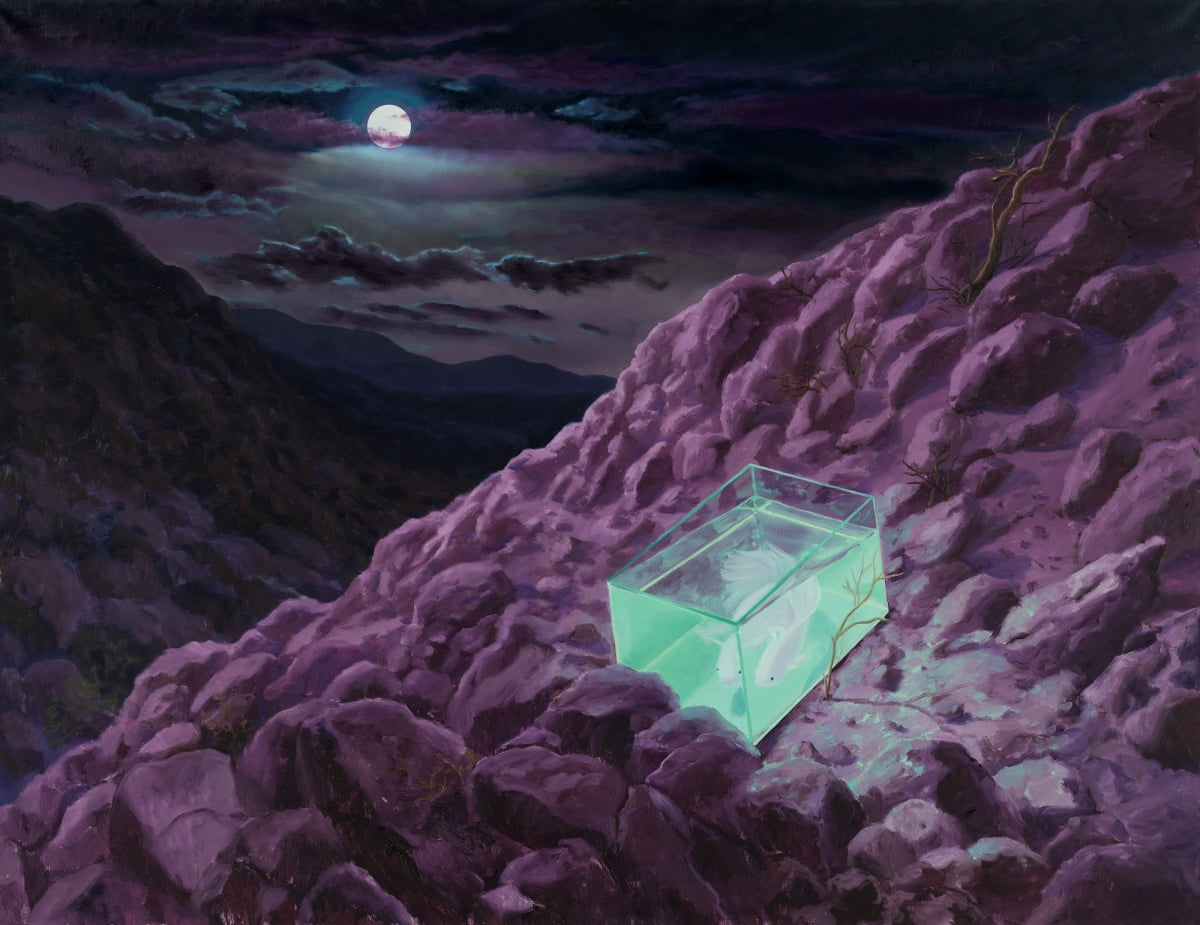
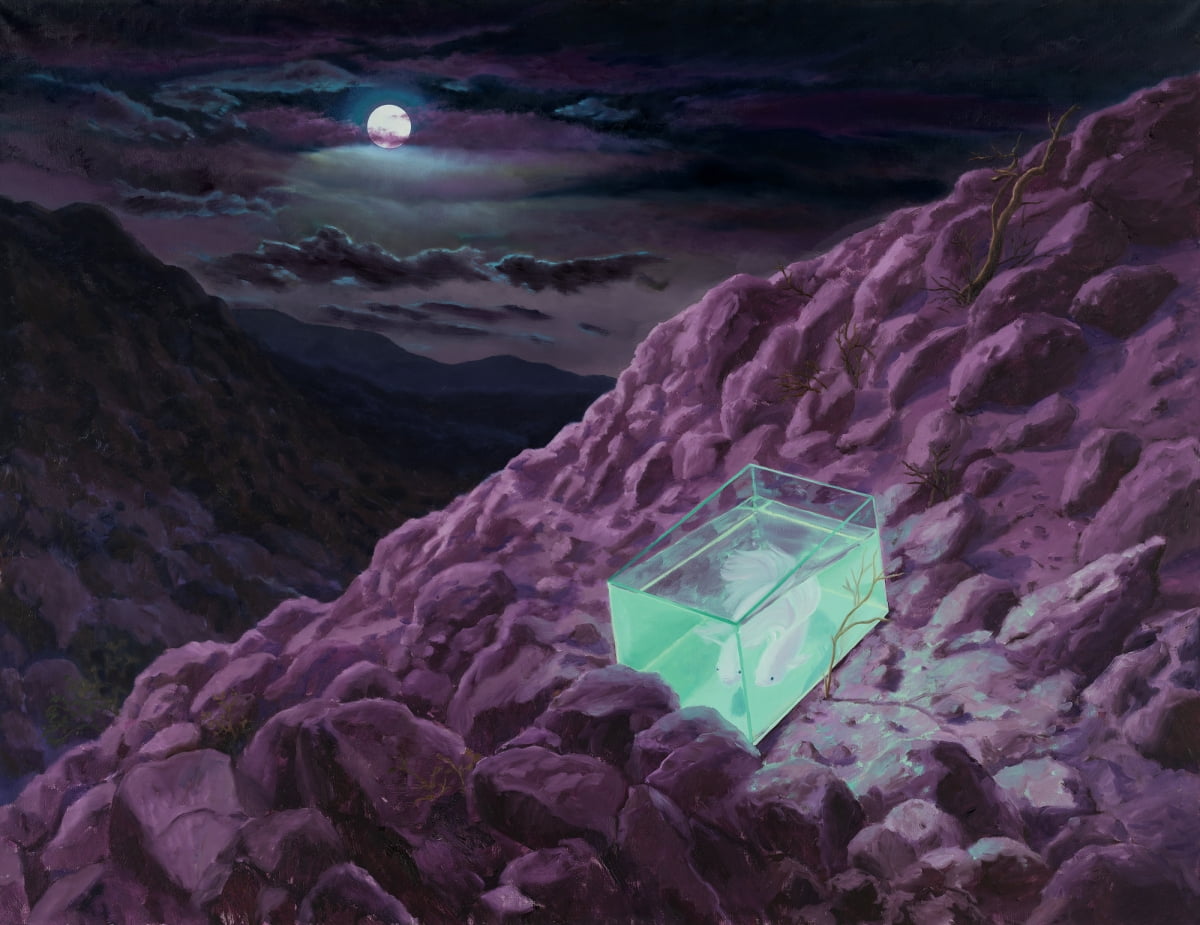
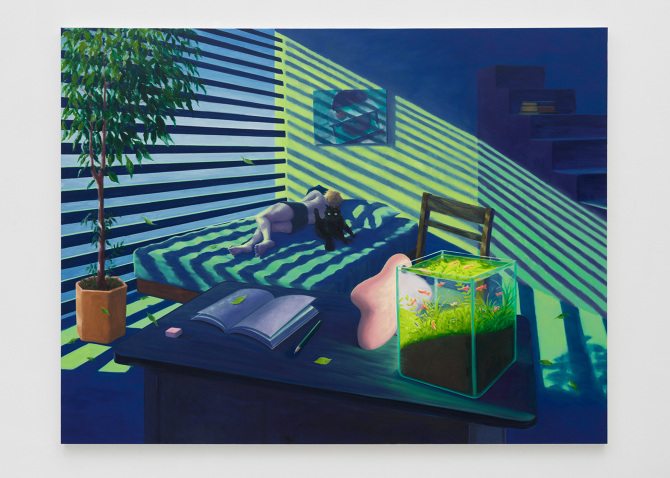
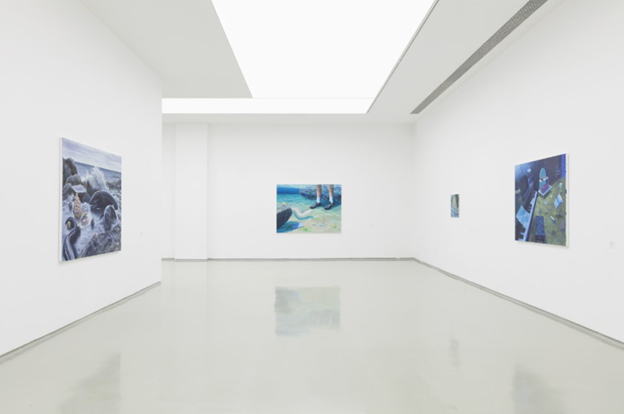
The fish that appear in Landscape (Fish Tank) originate
from the afterimage of tropical fish she kept as a child, yet within her
pictorial world they transform into a far more complex language of emotion. At
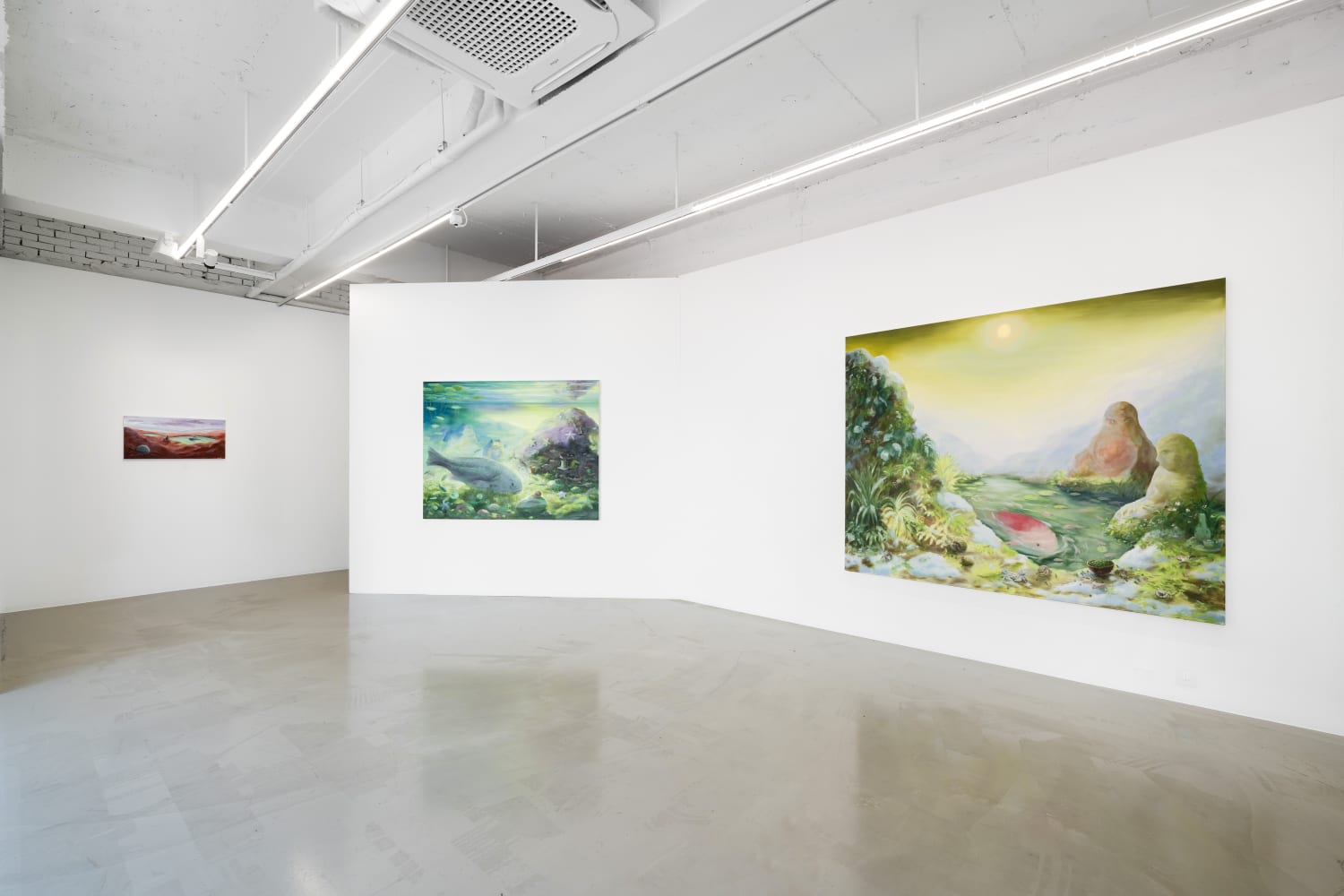
times, they rise sacredly, wrapped in moonlight; at others, they are depicted
like strangers left among piles of stones, embodying emotions that resist
verbal translation.
As in After School, when fantastical
creatures emerge above a concrete city, we come to realize that the unconscious
of the urban dweller and mythic imagination spring from the same root, and that
painting quietly juxtaposes the two to create a field of emotion. Here, “color”
is not decorative. It visualizes memory, connects reality and imagination, and
deepens emotional resonance. Her painting always begins from emotion rather
than narrative. Thousands of colored-pencil drawings are not preparatory sketches
for form but traces of exploring the structure of sensation, nurturing thought
and image together. For this reason, her canvases never close themselves off.
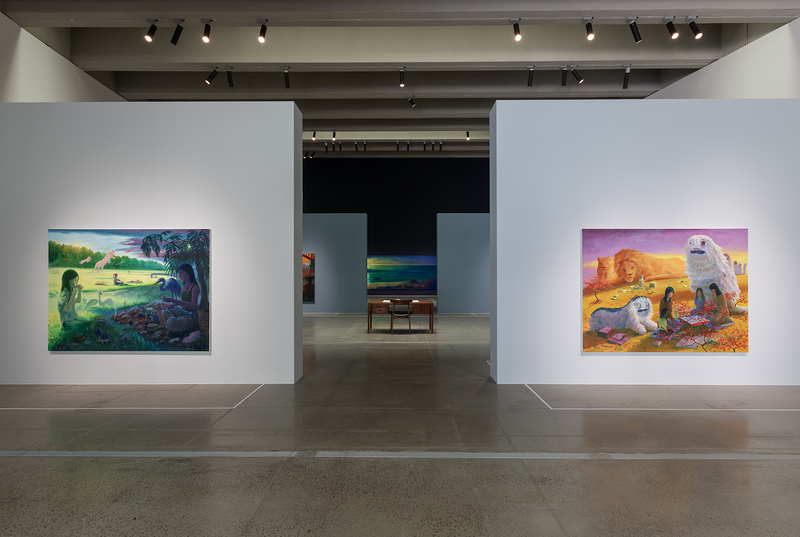
Juxtaposition of Reverie, A Stage of Imagination
Her painting shares an atmospheric sensibility and breath with
William Turner. Like the canvases of Arkhip Kuindzhi, she treats light not as
mere illumination or highlight but as an independent presence. If Kuindzhi
created mysterious and transcendent atmospheres through twilight sources of
light, Minyoung Choi gently crosses the boundary between reality and fantasy
through the subtle intersection of moonlight and artificial light. Her
chromatic sensibility also resonates with the physical illusions of color
explored by James Turrell and Olafur Eliasson. As they fill entire spaces with
color to overturn sensory perception, Minyoung Choi renders the depth of
emotion as if it were a physical phenomenon, modulating the viewer’s
sensibility through color.
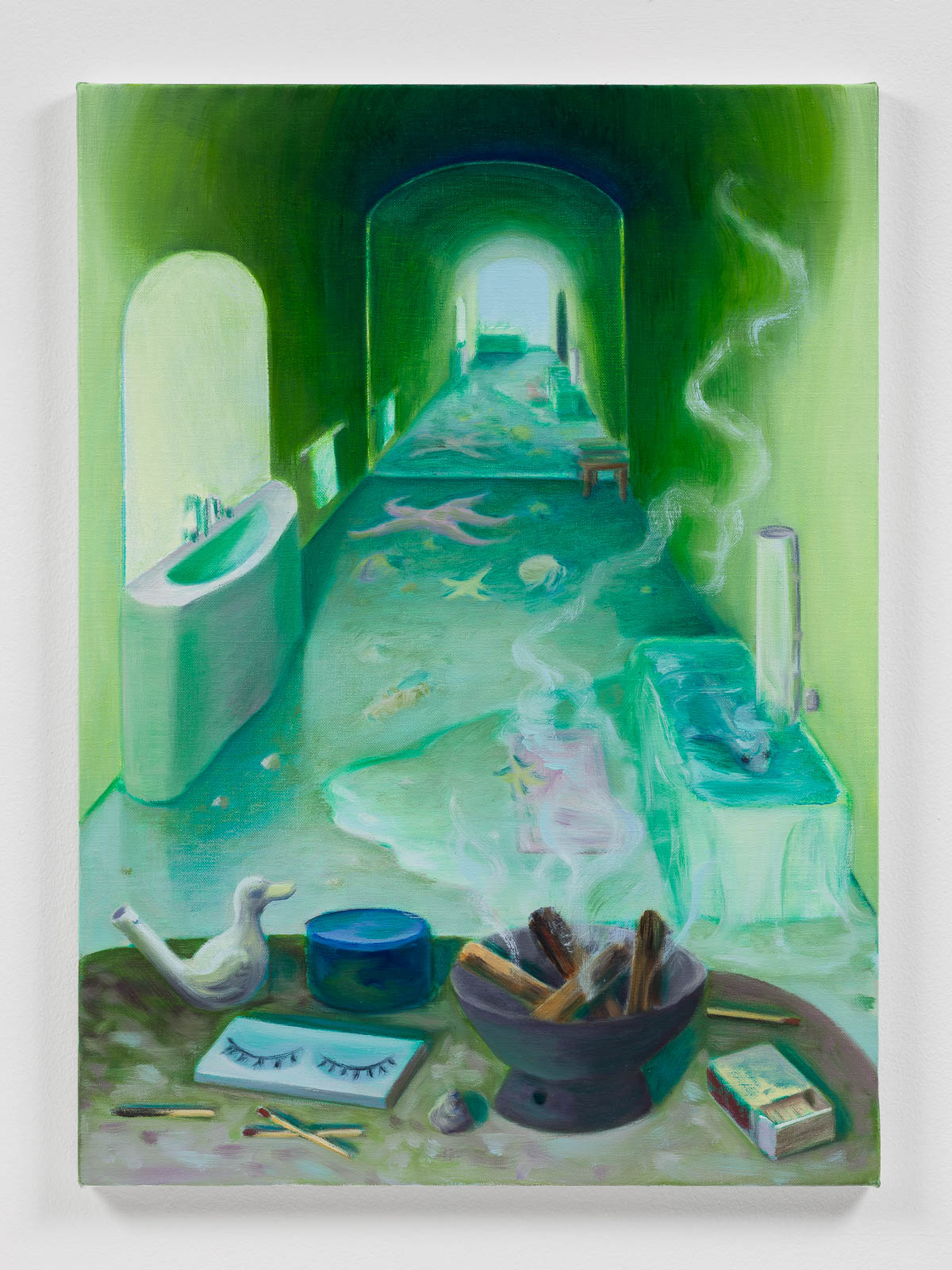
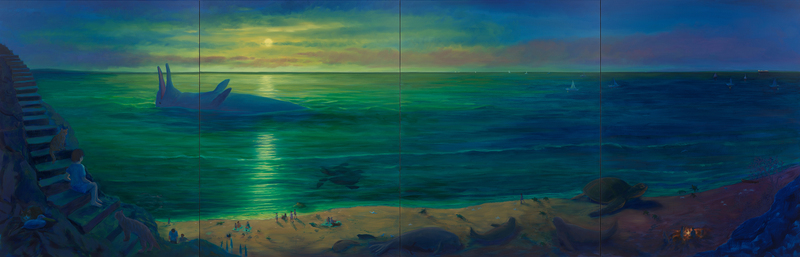
Moonlight carves a path across the water, and artificial light
brushes against glass windows, designing a space where emotion lingers beyond
the structural elements of the scene. Before it, viewers quietly pause at an
image where time and emotion overlap.
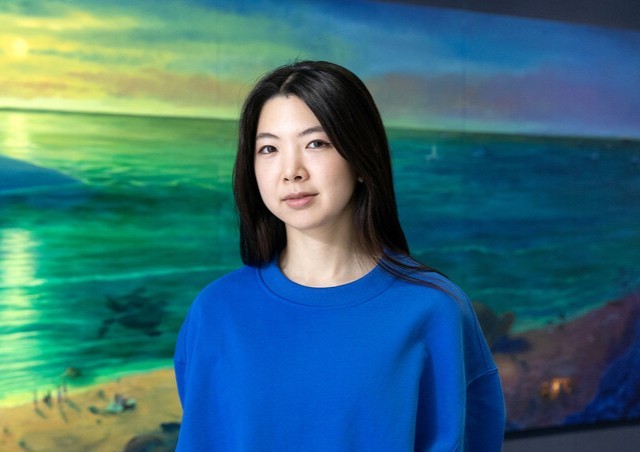
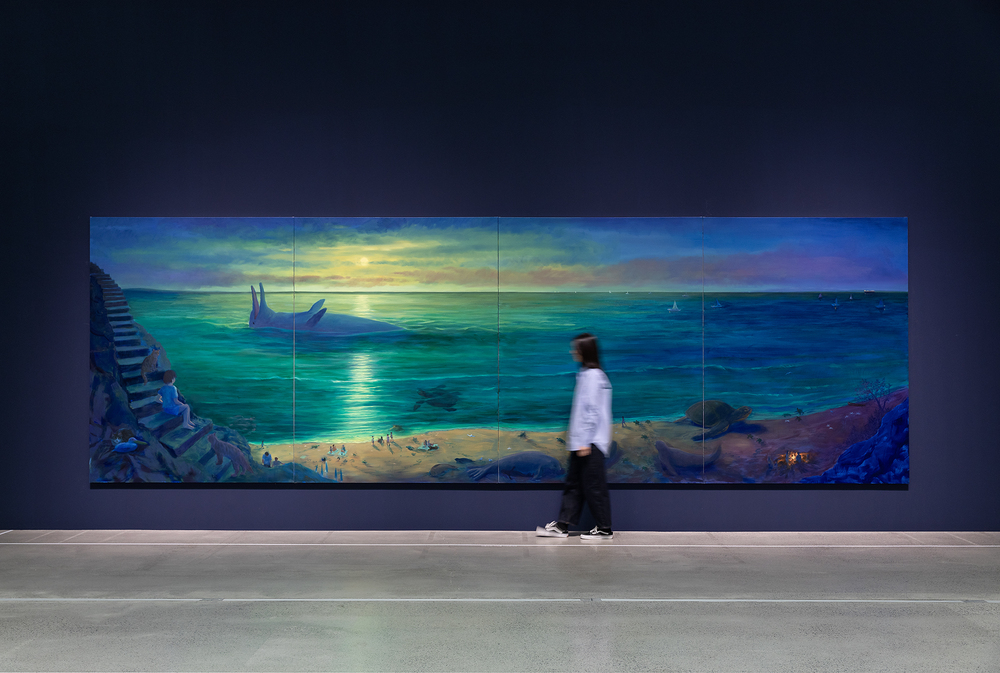
In particular, in the large-scale work Night
Swimming, spanning 6.8 meters in width, the moonlight crossing the
water and the bonfire at the lower edge of the canvas weave different temporal
zones into a single emotional terrain. The moonlight envelops the past, while
the fire holds the warmth of the present. Within that intersection, the viewer
does not drift through a fantasy world but instead encounters the deepest layer
of reality.