A Day of Twenty Thousand Steps
“(…) And endless hopes
Clothed in gray
Approach
Like evening mist after sunset.”
Novalis, ‘Hymns to the Night’¹
A space becomes the site—or stage—that concretizes a scene. Just
as certain scenes are repeatedly described and remembered, we reenact and
reproduce particular moments in daily life, summoning memories that are at once
familiar and strange, strange and terrifying. These uncanny memories already
exist through isolation, sorrow, dreams, and oblivion, yet they arrive
fragmentarily, unnoticed, folded into the ordinariness of everyday life. A
fantasy so hidden as to seem almost cliché may in fact be disguised beneath
reality, with memory and fantasy settling into a different form of unfamiliar
silence.
We spend much of our daily lives seeking places where silence does
not dominate, devoting ourselves to escaping the fear of silence. Yet
paradoxically, while struggling to flee the city’s bustle and the relentless
urgency of life, we hide within the stubborn stillness that surrounds us.
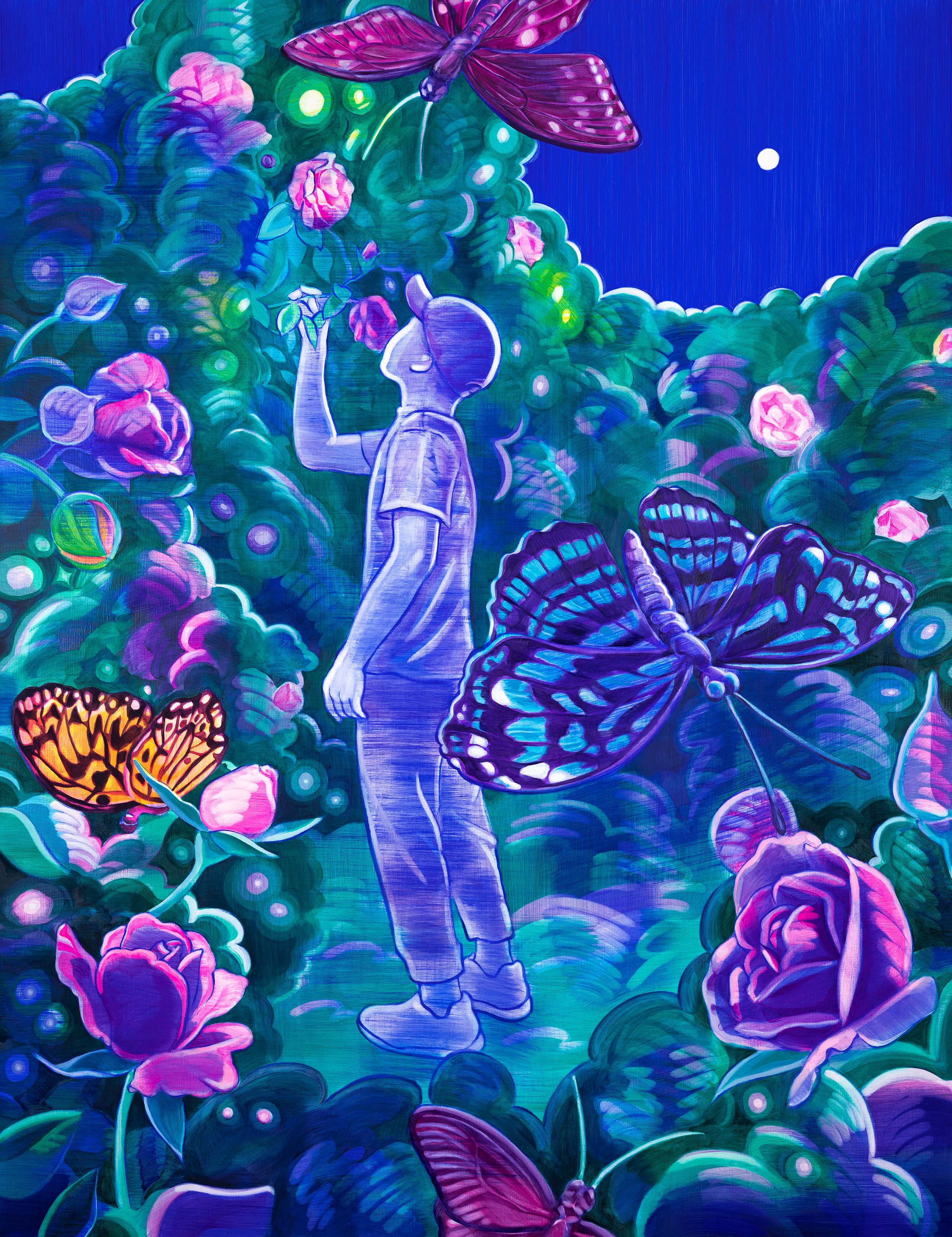
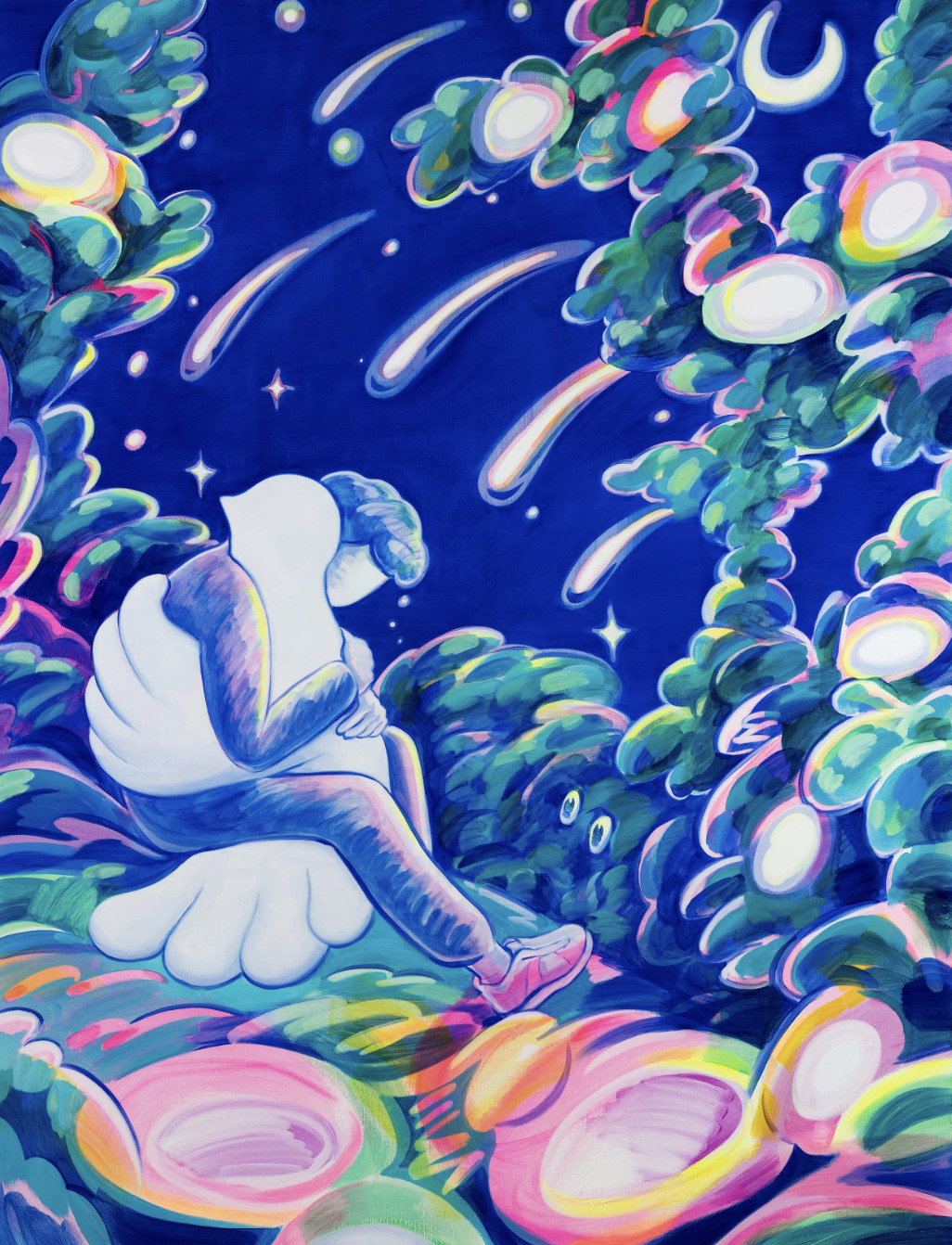
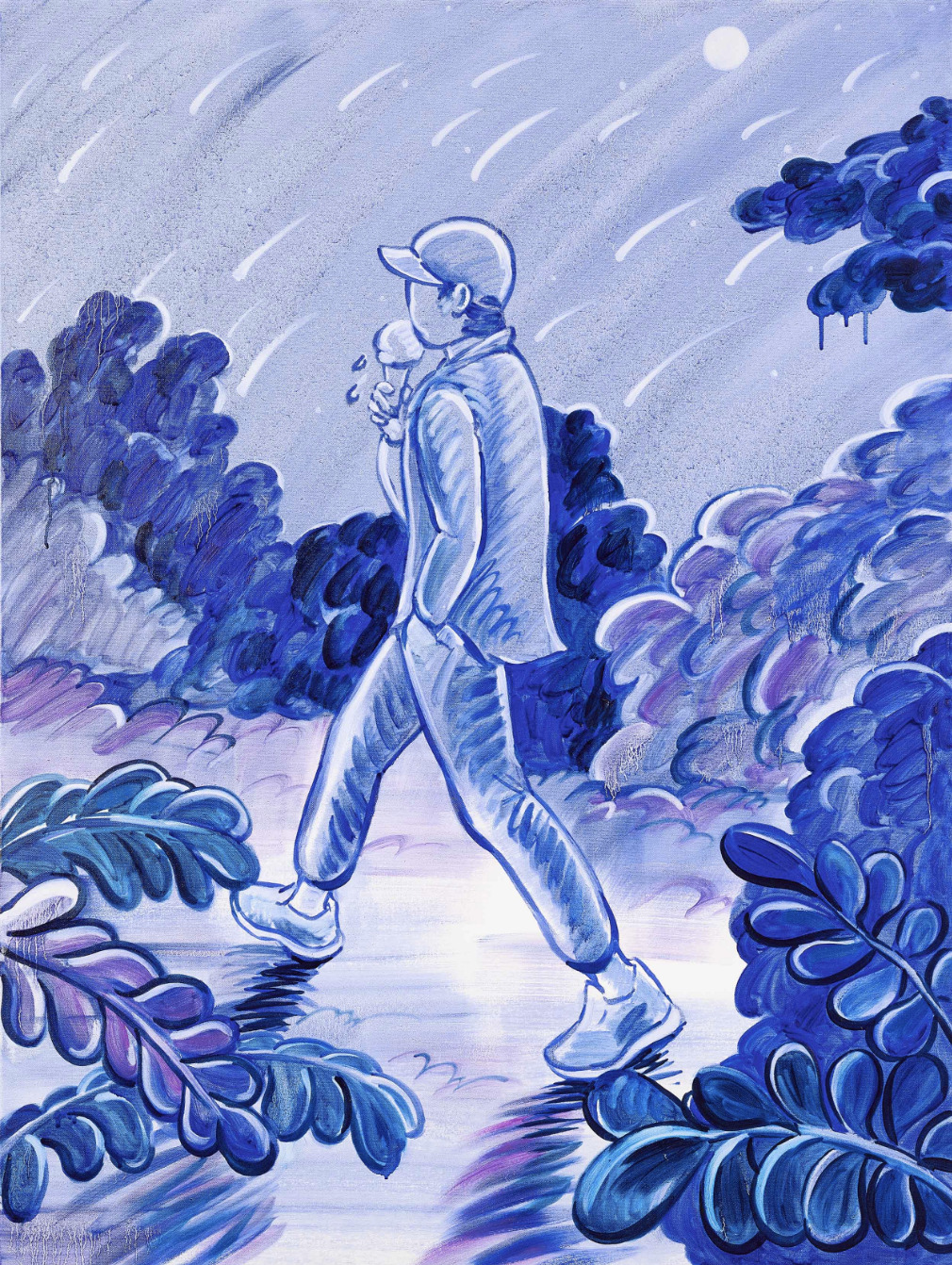
Jaeyeon Yoo’s day consists of leaving home, traveling back and
forth for three hours by walking and transit, lunchtime, studio work, meetings,
and night walks. Her daily distance amounts to twenty thousand steps—the same
count as many travelers visiting London. Yoo’s twenty thousand steps differ
markedly from the flâneur described by Charles Baudelaire and Walter Benjamin.
While wandering in the city—long a condition of modern life—resembles becoming
part of the urban landscape while simultaneously observing and being observed,
the twenty-first-century flâneur becomes singularly distinct at night rather
than during the day.
The contradiction of the flâneur—part of the crowd yet
distinguishing oneself as observer—may prompt reflection on both the artist’s
attitude and her subjects: the people walking through parks at night.
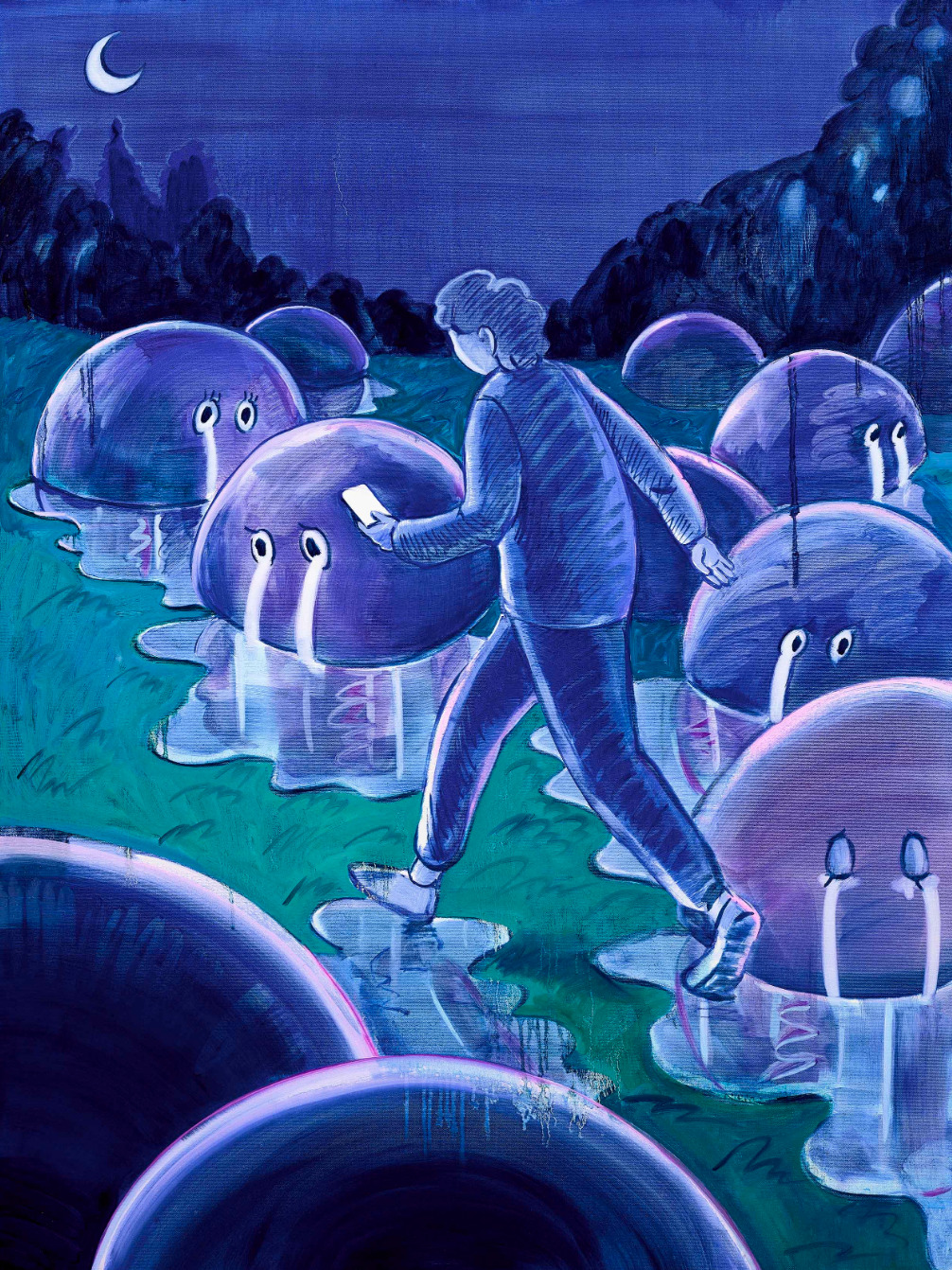
Unlike the daytime landscape, the night walker drifts without
clear purpose once dusk falls. Yet rather than lingering in contemplative
silence, observing surroundings, the walker is suffocated by fear and
strangeness born of prolonged silence, staring at the white glow of a
smartphone held in one hand. Yoo, observing these nocturnal wanderers in the
park, remains at a distance behind them, careful not to reveal her gaze.
In Dylan Trigg’s ‘The Memory of Place’ (2012), the uncanny is
described as a perspective of fragmented and distorted place, referring to
“un-place.” Similarly, the night walker drifts endlessly within the smartphone,
where interpretation of physical space becomes unnecessary. Thus the walker—the
night wanderer—remains as a dissolved figure of the night, rendering the
purpose of walking itself pale. This diverts us toward a mysterious and tense
fantasy born of complete alienation and isolation. As primordial fear of darkness takes root, night falls
continuously. Or rather—night has fallen.
¹ Novalis, early 19th-century German Romantic poet. ‘Hymns to the
Night’ (1800) consists of six prose poems.
Blue Moon, Night, Sleep, and Dream
“I cannot sleep. I can only dream. Dream without sleep.”
Franz Kafka, ‘Dreams’
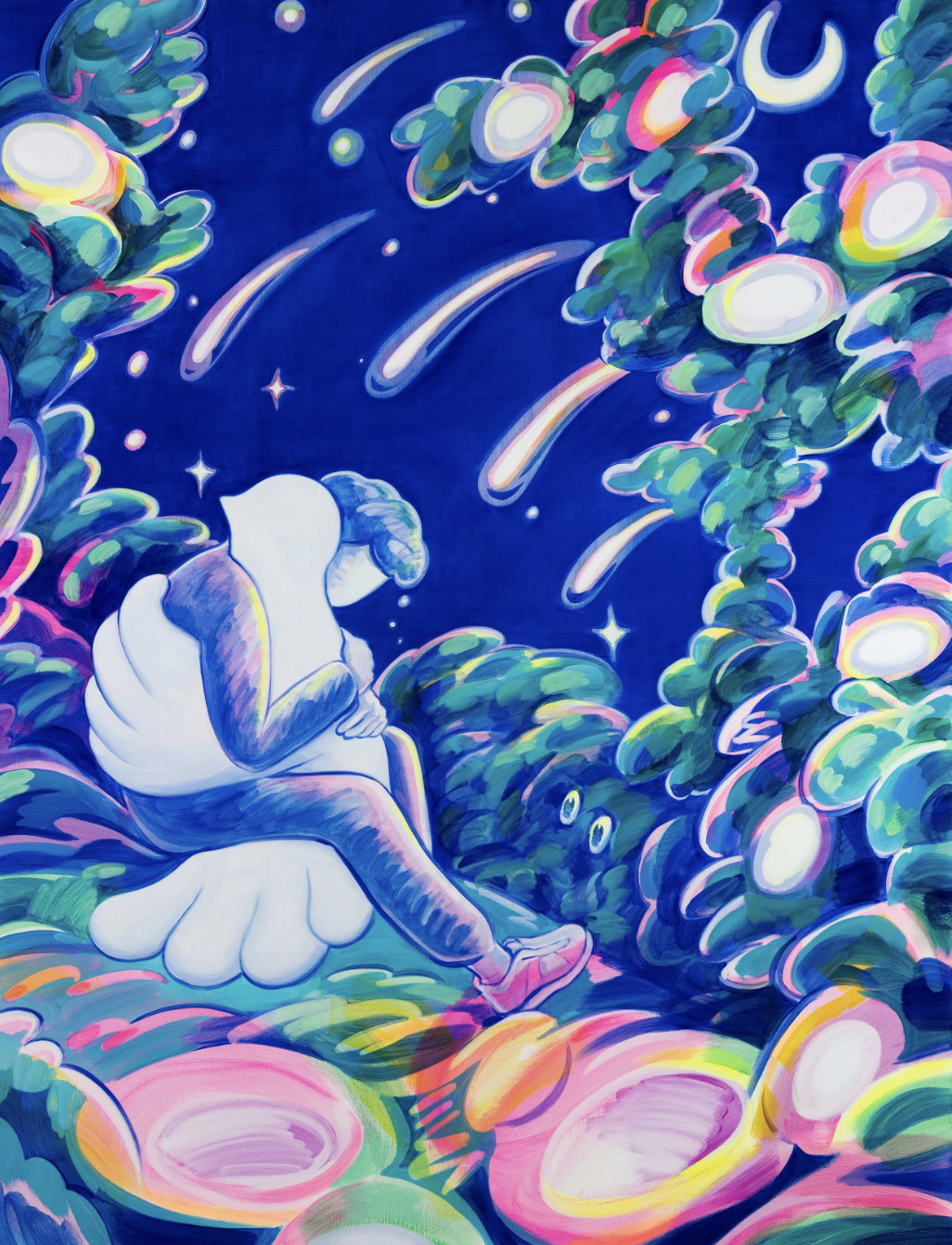
Beneath an unusually large and uncanny full moon that seems
capable of swallowing passersby, rectangular screens of artificial light move
busily up and down in the darkness. A night walk may feel atmospheric, yet the
abundance of illumination makes deep darkness almost irrelevant. Tonight,
filled with the round brightness of the moon, reality feels confused—is this
truly night, or a stage, or a dream? Perhaps I am dreaming a murky dream.
Calling it a night walk, I wander slowly through parks and
alleyways. While walking, I confront myself staring blankly at the smartphone
screen, unaware of who passes by, whether an animal flees at some sound, or
whether a car brushes past me. Surveying the surroundings, tonight feels
different. Was I hoping for a certain temperature of night? Surely, as one who
walks nightly, I have often circled within the same route, capturing subtle
currents of air drifting around me. Yet tonight something feels unfamiliar.
Perhaps rain will come tomorrow; the night air is damp and carries
a faint blue-rusted scent. “Blue-rusted scent.” Not merely blue light, but
something akin to the “blue flower” in Novalis’s ‘Heinrich von Ofterdingen’
(1802)² or Béla Bartók’s opera ‘Duke Bluebeard’s Castle’ (1911)³—fantastic
literature or tragic opera saturated with longing, loss, and darkness.
Fragmentary events that already exist but remain unrecognized draw me in like a
magnetic field. My eyes and ears sharpen. I insert earphones and scroll through
playlists, repeating small, distracted gestures. Eventually I listen again to
yesterday’s music. Though it may not be what I desired at this moment, I find
myself seeking familiarity (heimliche).
Kafka’s brief writings on dreams reveal how the boundaries between
waking, sleeping, and dreaming collapse, coexisting painfully between ordinary
life and fear disguised as reality. We dream endlessly in sleepless hours or in
deep slumber, yet remember little. Dreams dissolve into mingled sorrow and
happiness, ultimately forgotten.
² Novalis’s Romantic novel ‘Heinrich von Ofterdingen’ (1802)
centers on the symbol of the blue flower.
³ Béla Bartók’s one-act opera ‘Duke Bluebeard’s Castle’ (1911).
The Place of the Dead and the Bird
In English, one says night “falls” and “darkens.” Night is not
merely something seen; it opens all senses, accommodating a consciousness
distinct from that of day. As the Scottish proverb states, “In the daytime
there are eyes; at night there are ears.” John M. Hull, in ‘Touching the Rock’
(1990), remarks that “sound comes and goes,” intensifying tension within
silence like the delicate bow of an instrument.
Thus, beyond cliché, we associate night’s darkness with death,
longing, fear, isolation. Is walking among graves in the suffocating long night
an attempt to understand the essence of silence? Or is it a confessional time
to release sorrow and guilt each must bear?
In ‘The Death of Virgil’ (1945)⁴, Hermann Broch speaks of “silence
within silence.” Silence, he suggests, ultimately belongs to the dead, not the
living. For the night walker in a cemetery, silence evokes fear, curiosity,
strangeness, and desire—only for the living.
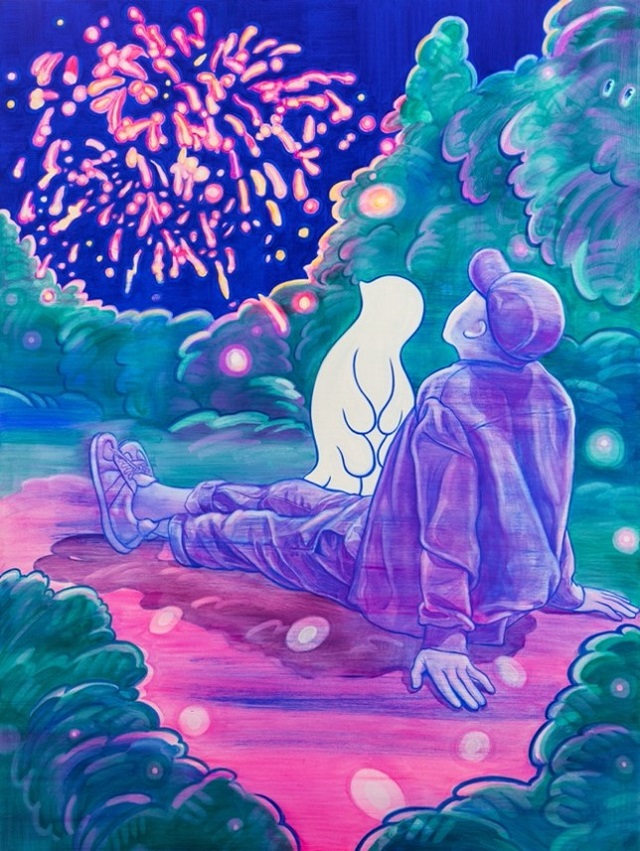
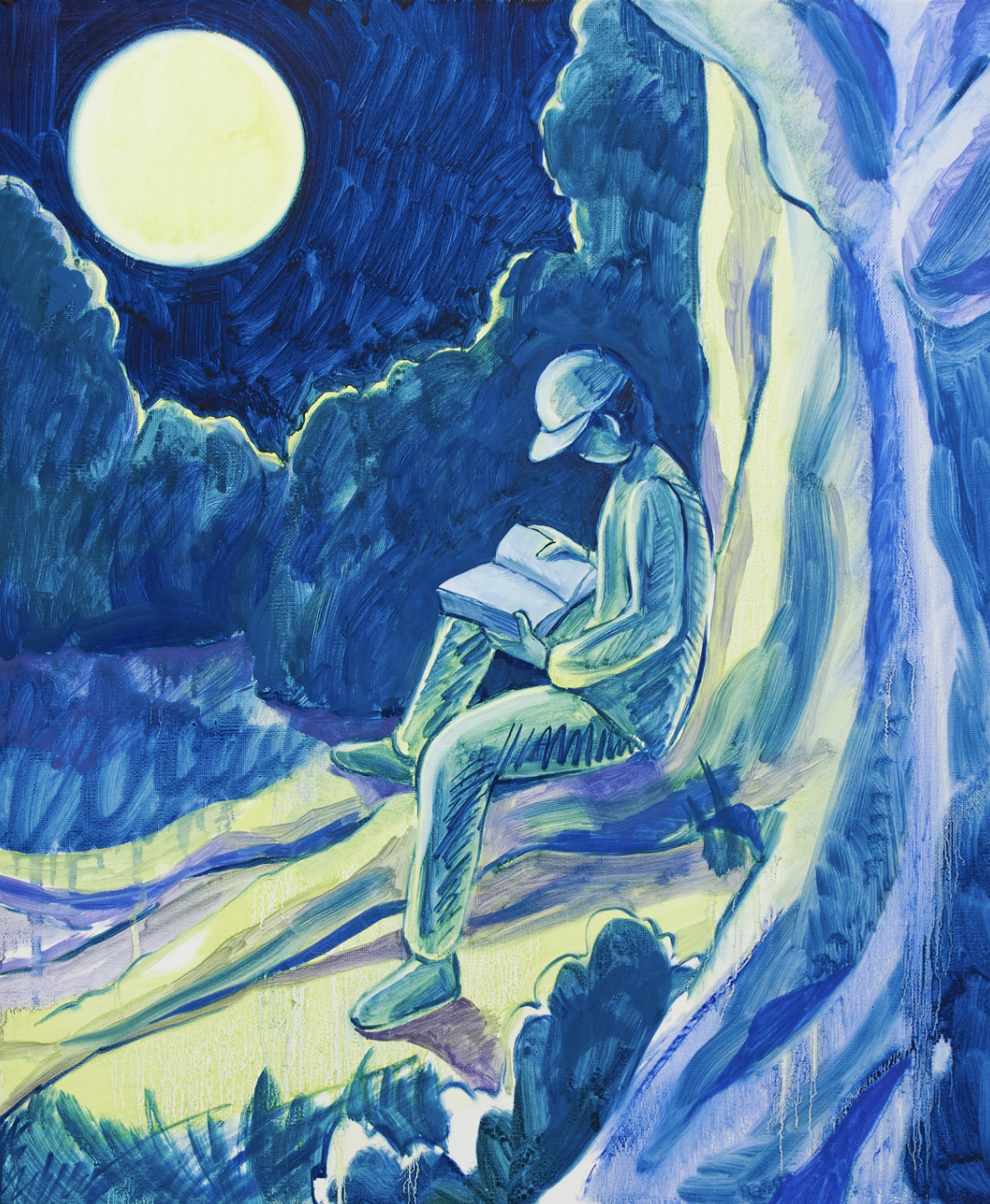
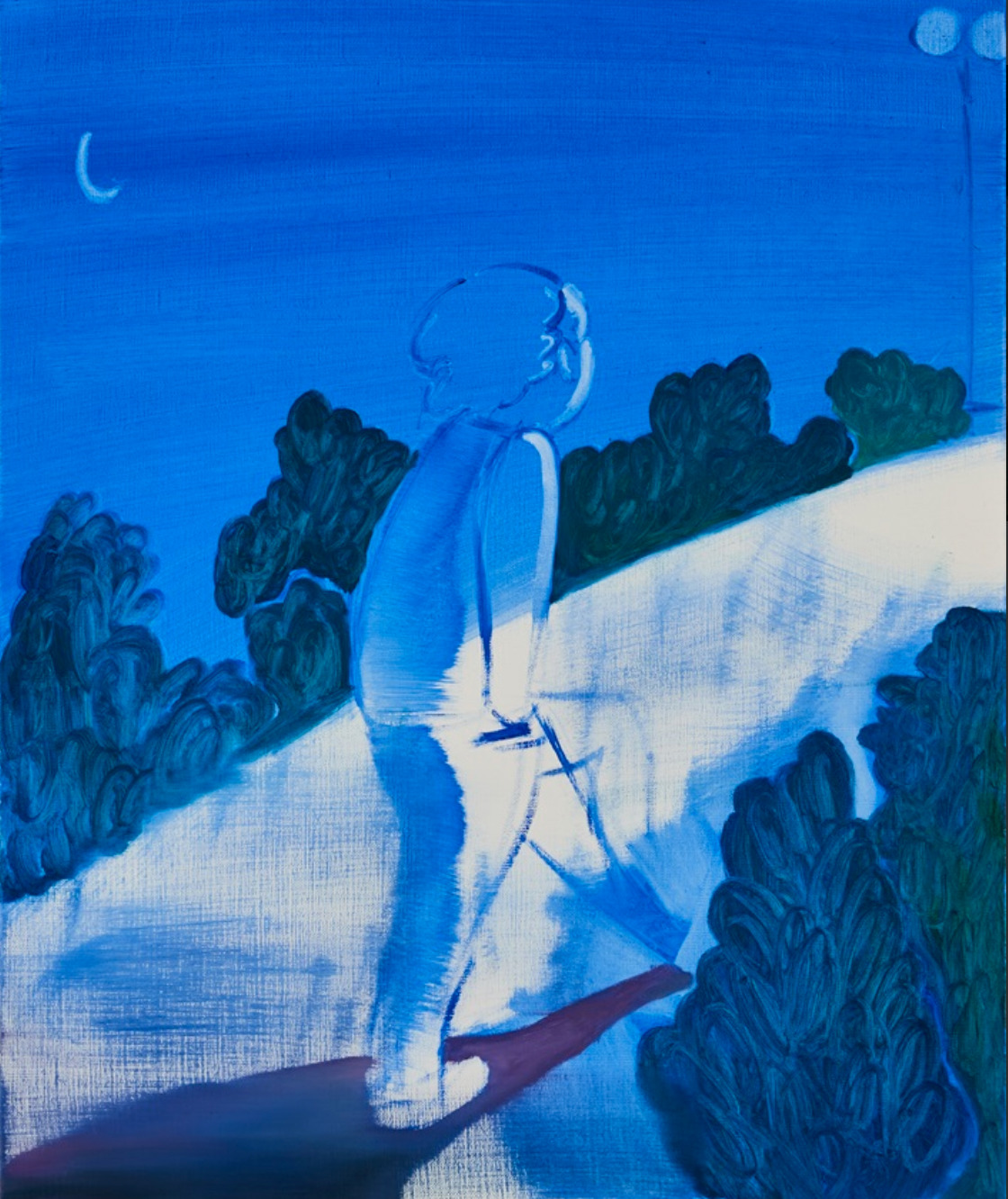
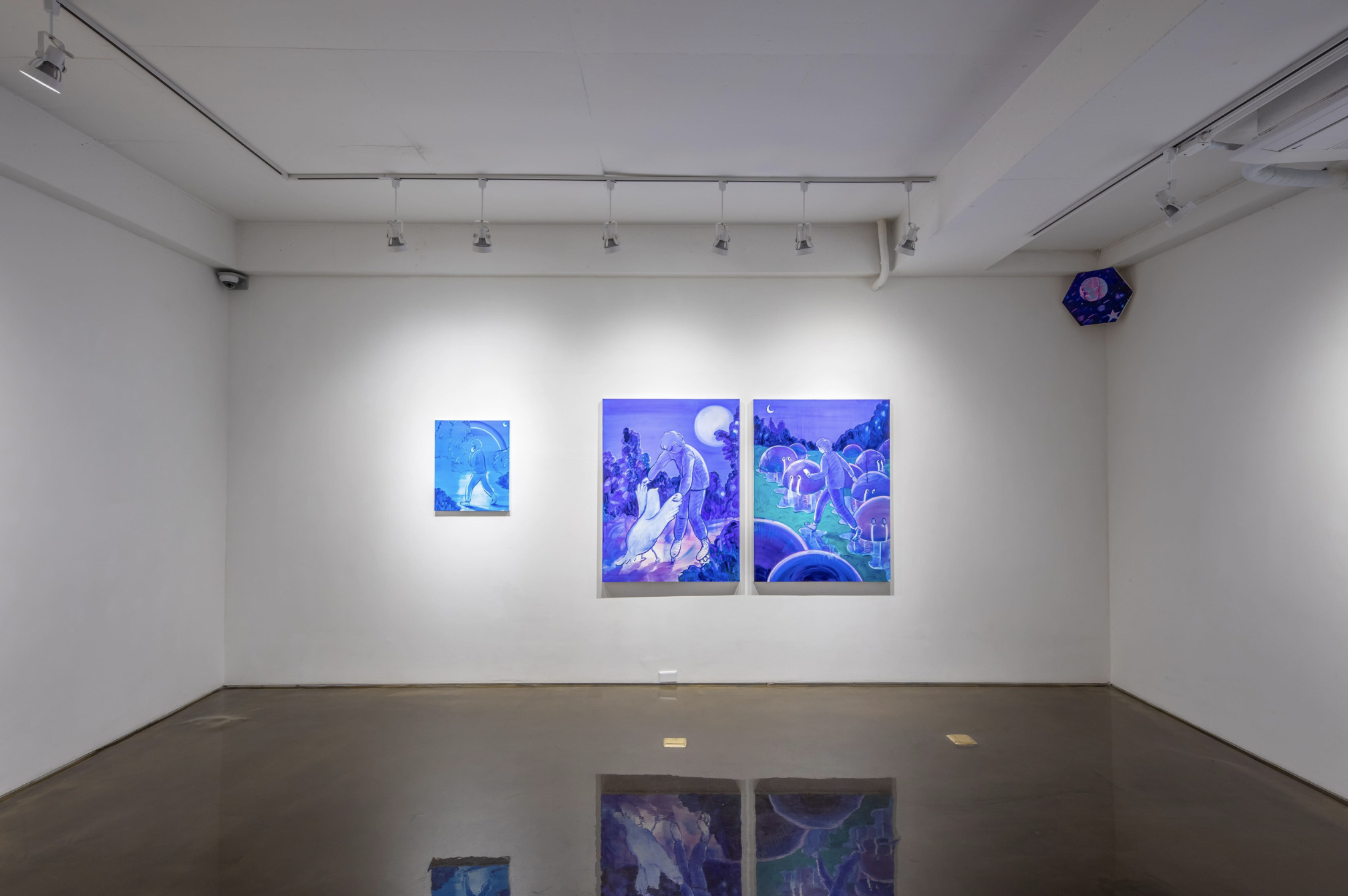
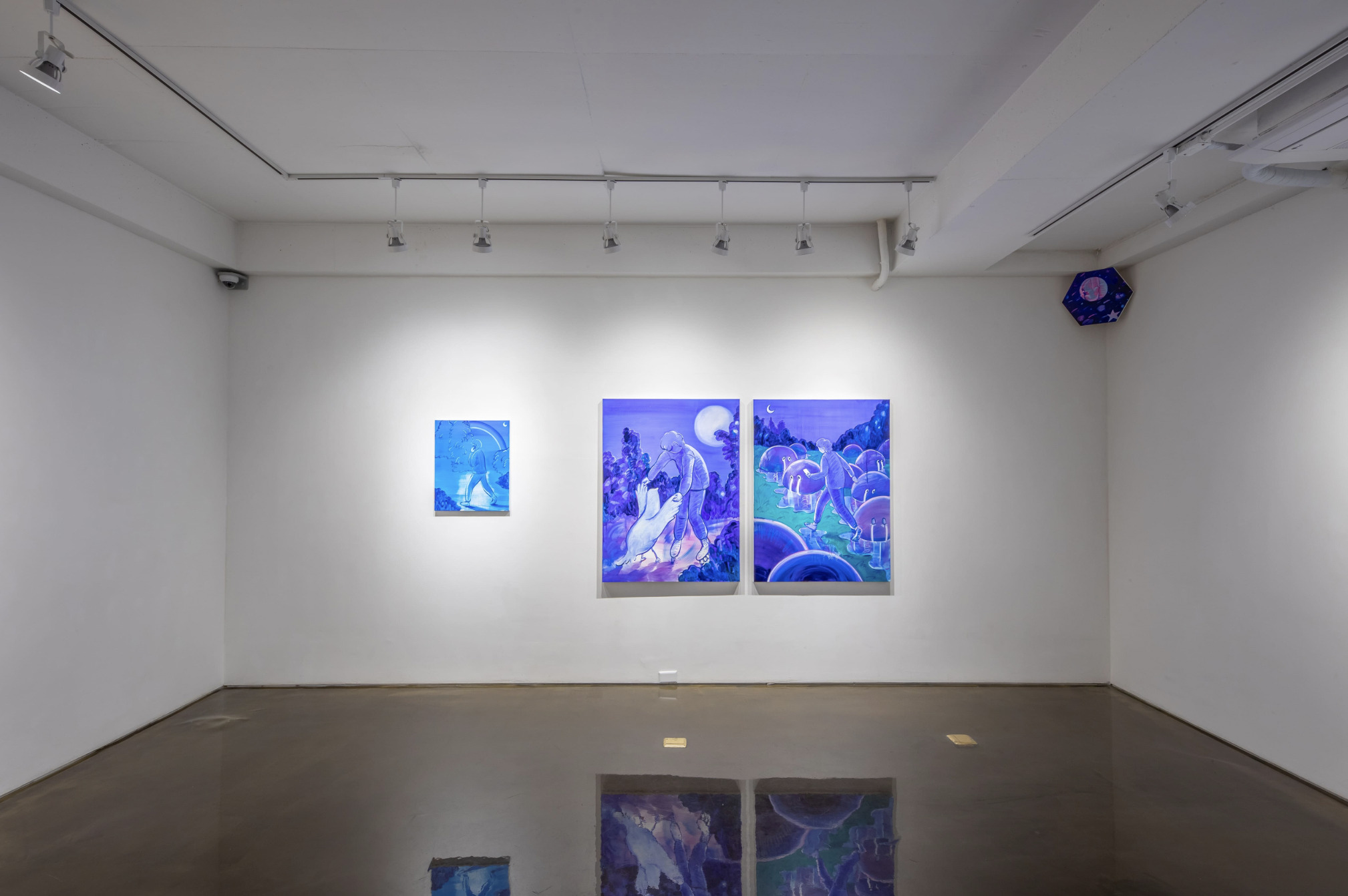
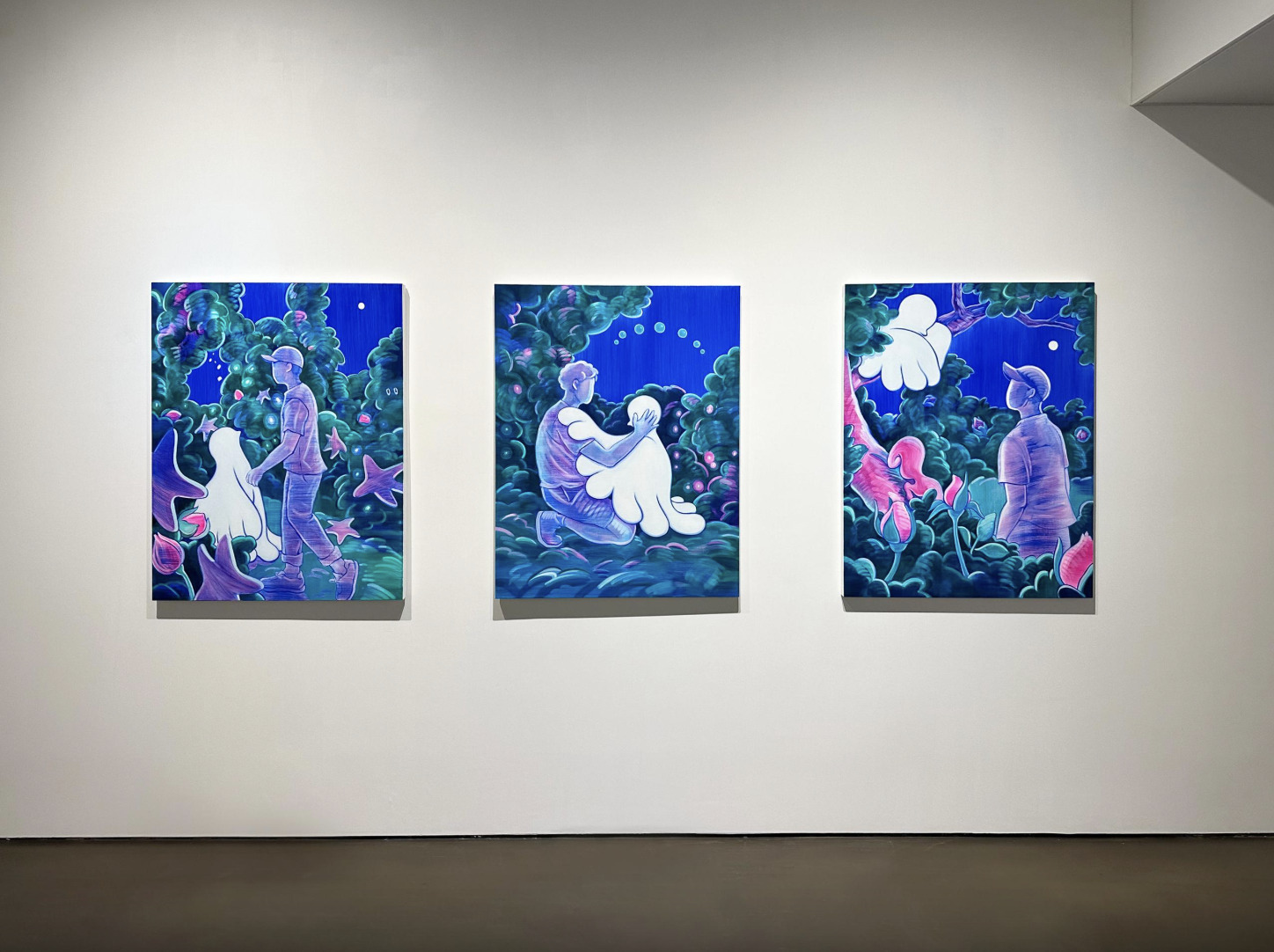
In the small paintings of the Moving Graves(2019)
series and Wetland Stroller(2019), the observer lingers
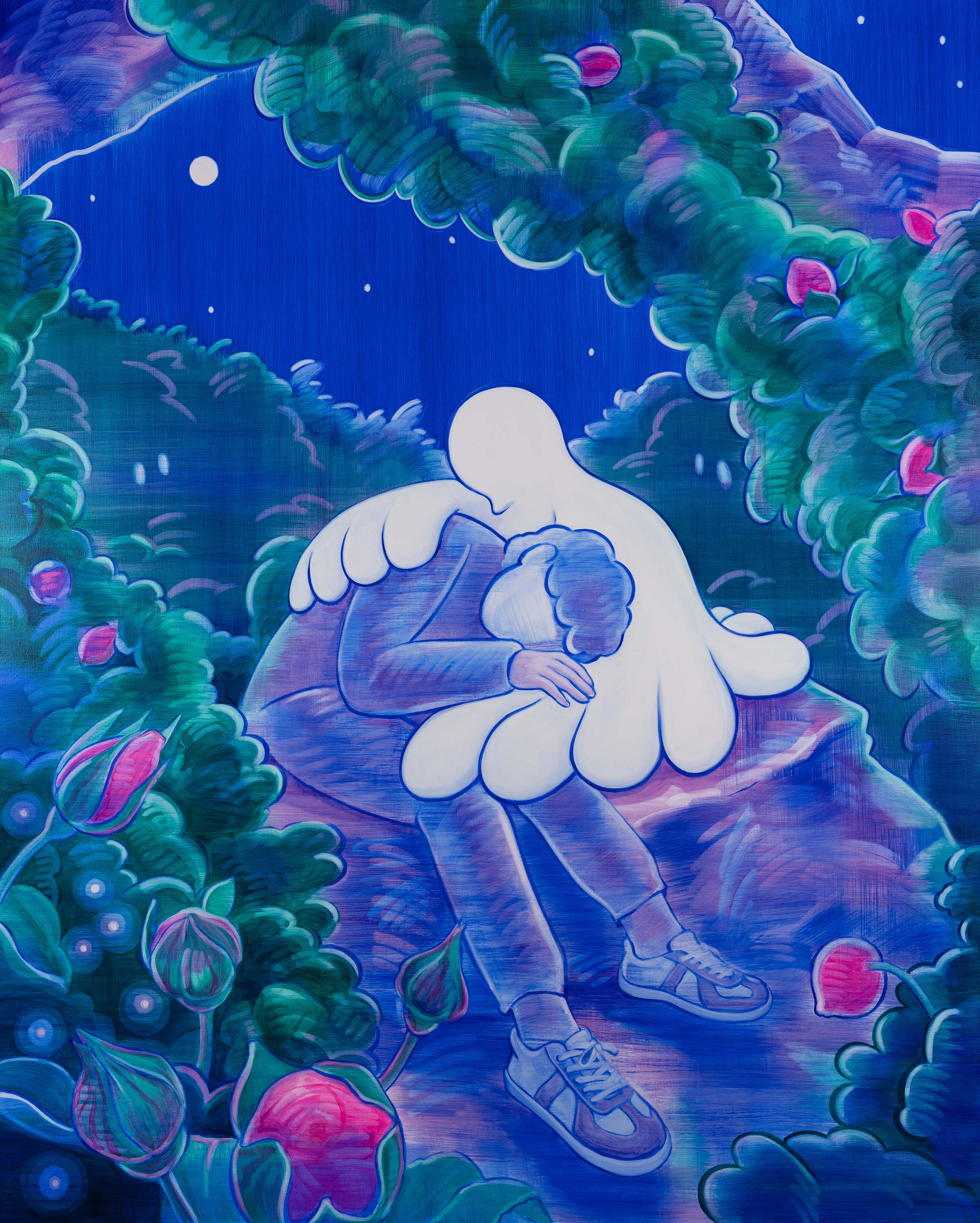
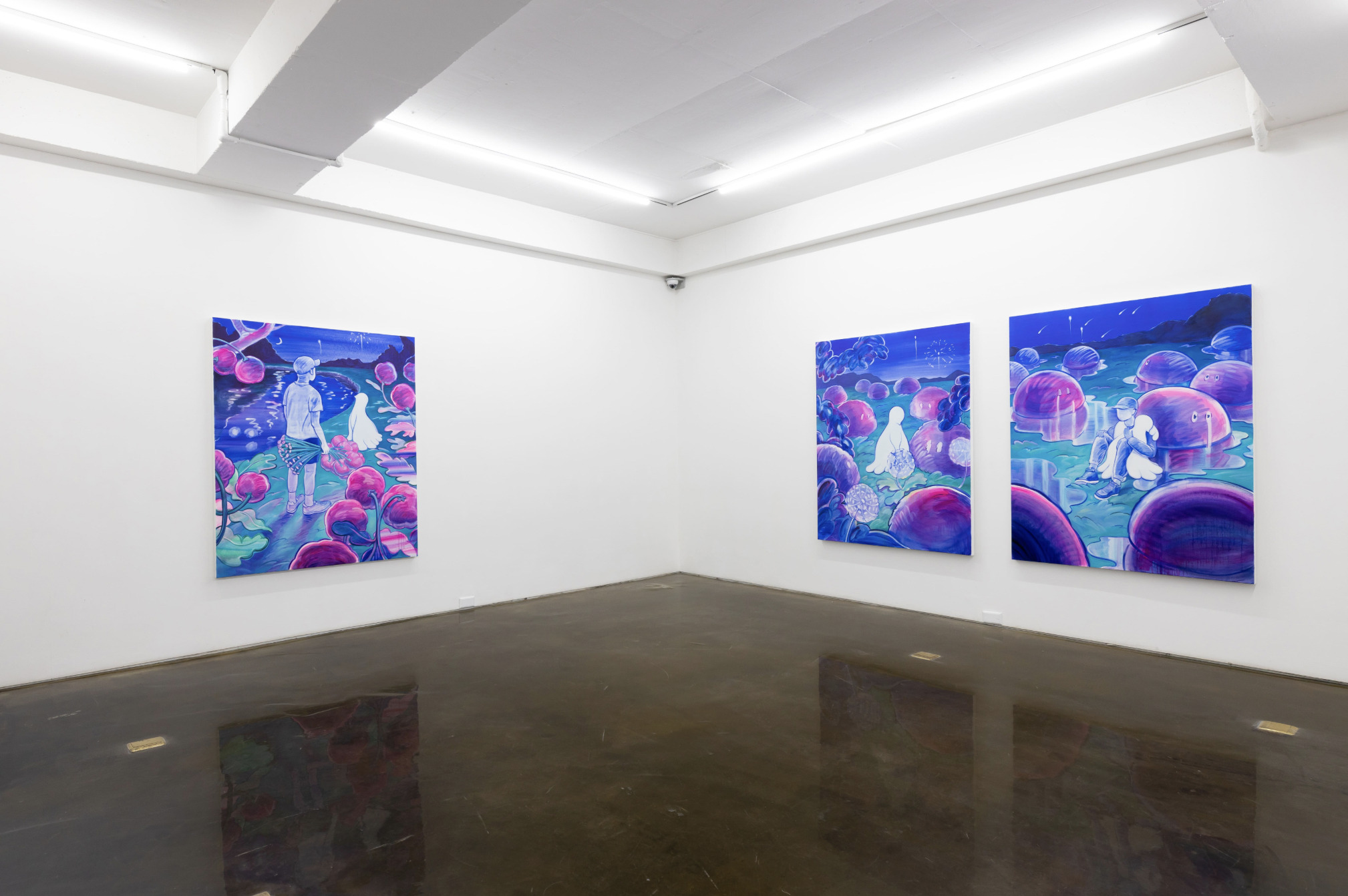
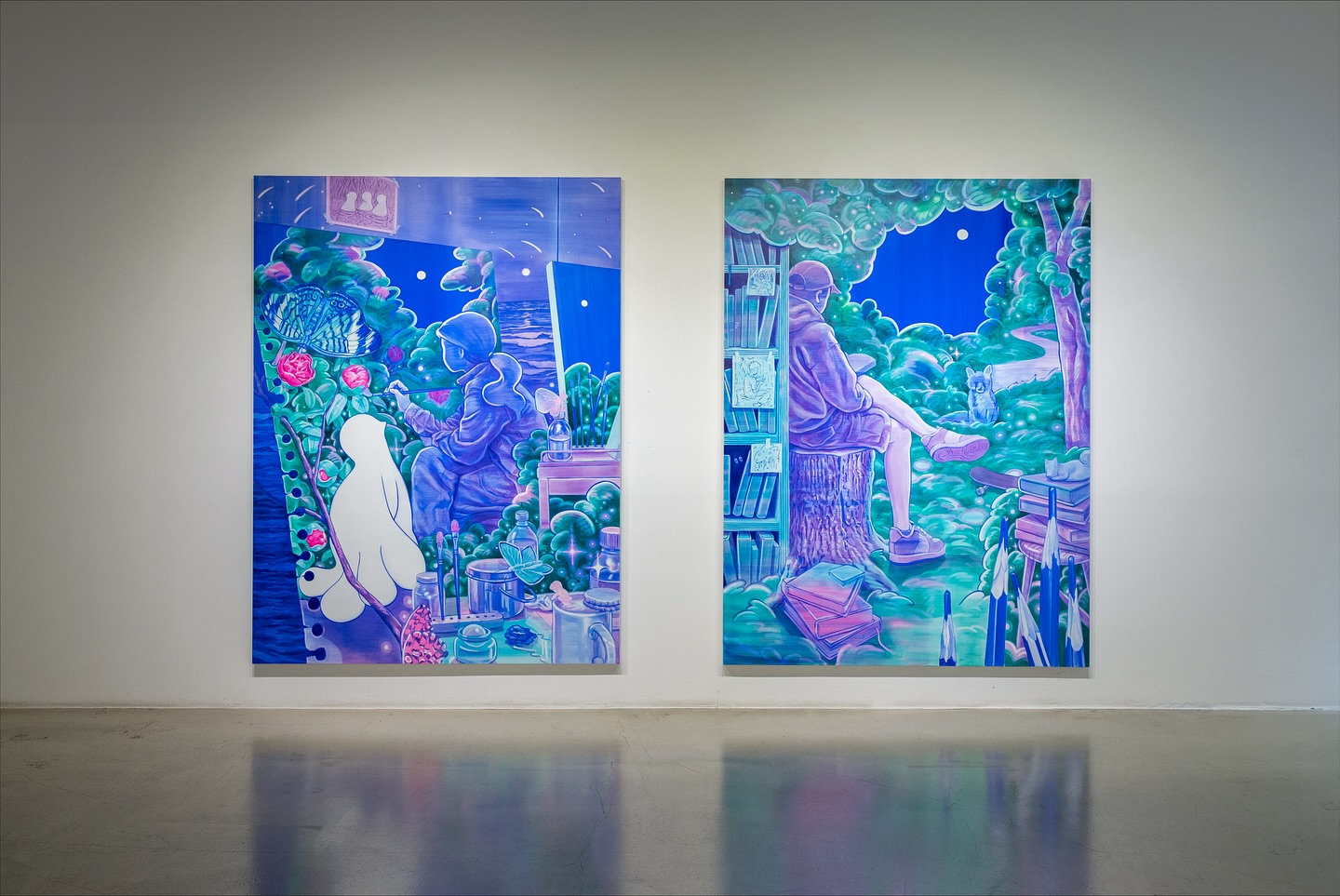
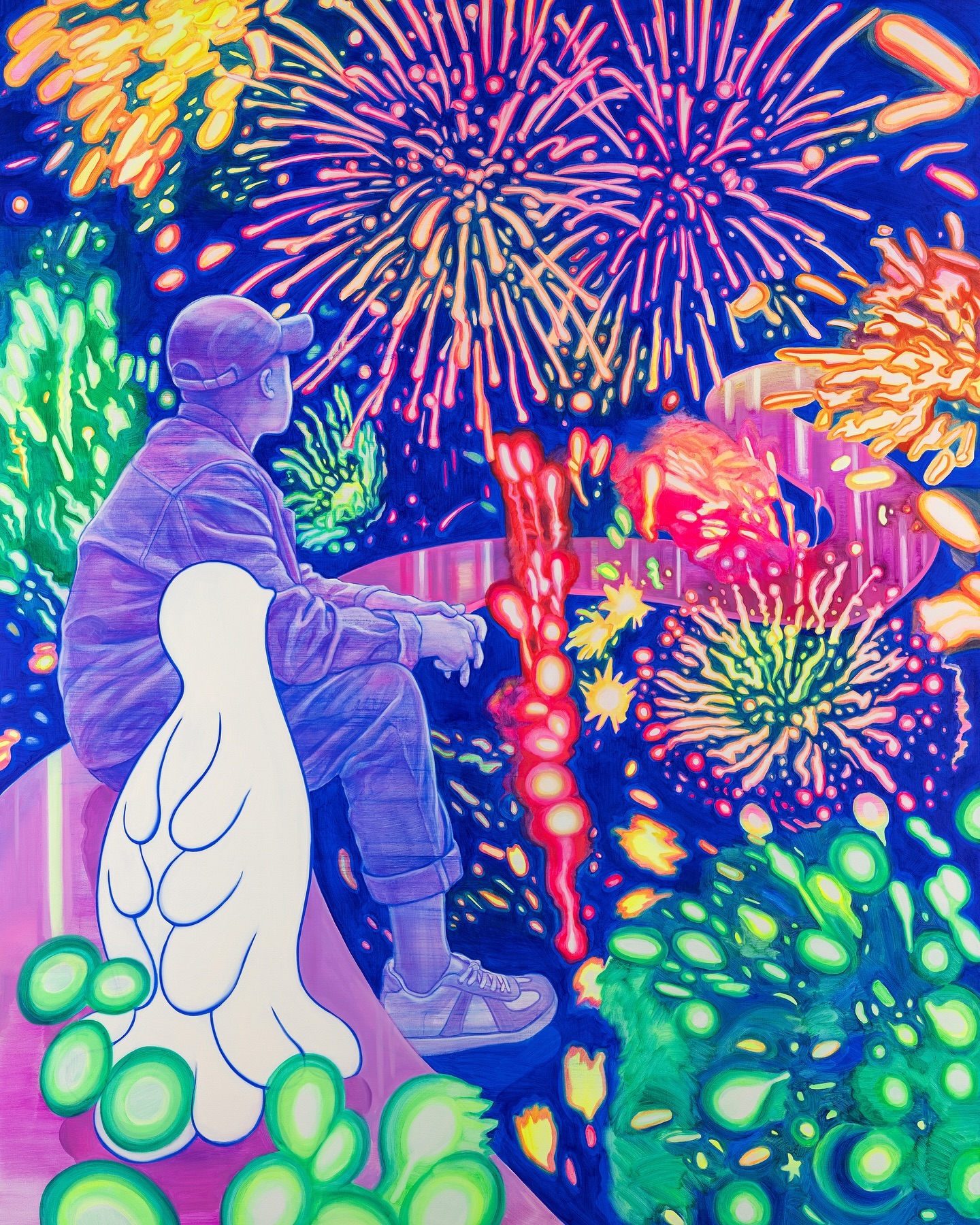
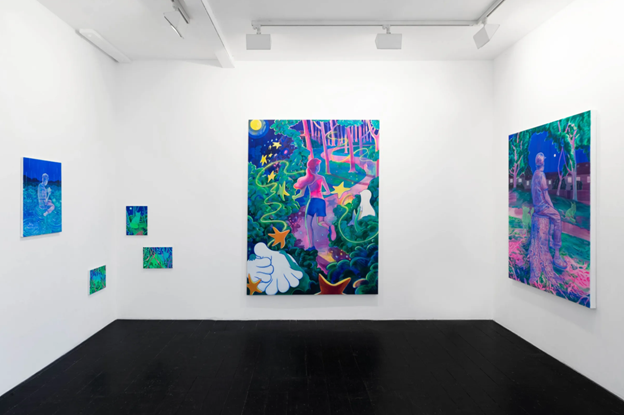
around graves staged beneath a crescent moon. In Yoo’s blue paintings, reality
and fantasy, forgotten childhood memories, hidden desire, anxiety, guilt, and
death appear as walkers roaming among graves or encountering birds.
In Bird Talk(2019), Bird
Waltz(2019), and Bird Waltz [skater](2019), a
bird standing roughly at waist height faces or dances with the walker. Its gaze
is ambiguous; it is difficult to meet it directly. The bird may function as a
metaphor for death or peace. In Virginia Woolf’s ‘A Room of One’s Own’ (1929),
Woolf imagines plums and custard while repeating lines from Tennyson’s poem:
“(…) Splendid tears drop from the passion flower at the gate. My
dove, my dear, is coming to me.”
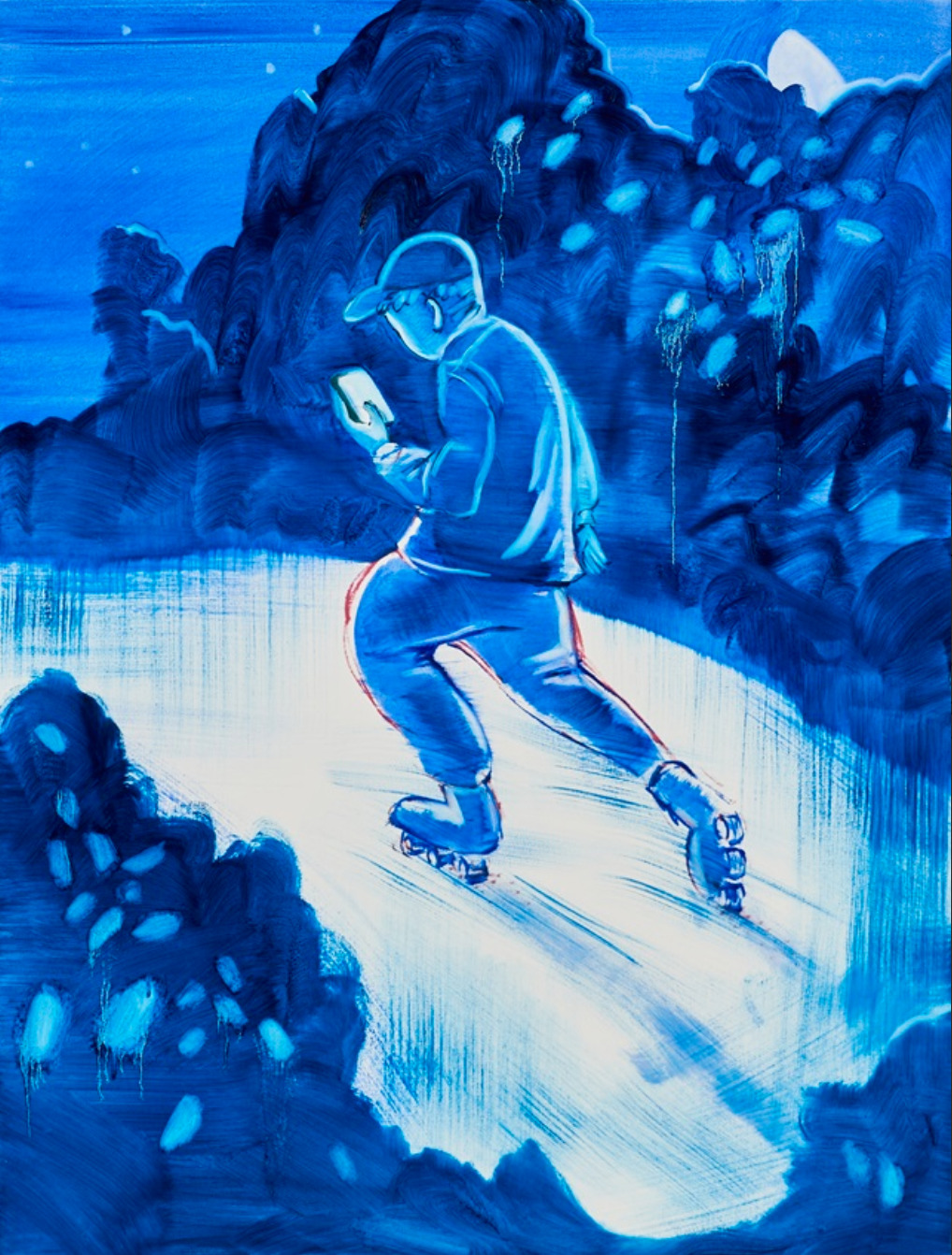
Under blue moonlight, the roller skater and smartphone-bearing
walker encountering the bird shift attention from subject to observer—the
artist herself. The bird that seems indifferent to our gaze may replace “my”
fear and desire; perhaps we have already become that bird within the frame. As
in Alejandro González Iñárritu’s film ‘Birdman’ (2014), where tension between
reality and fantasy intensifies through the figure of the bird, the bird in
Yoo’s blue painting may embody anxiety, denial, and the residue of childhood
memory.
⁴ Hermann Broch, novelist and philosopher, wrote ‘The Death of
Virgil’ while imprisoned by the Nazis.
Cut-Outs, Fragments of Painting
Yoo’s moons and stars are among the earliest elements in her
process. She cuts them out and reconstructs the surface, loosening composition
within small ready-made frames. The hexagonal painting Escaping
Moon(2019), derived from a phrase in Shrigley’s drawing, begins with
the question: might the moon wish to escape the stars? Focusing on the moon’s
aspect and their relationship, Yoo unravels connections among color, image, and
frame. She emphasizes wiping away layers of paint rather than simply stacking
them, activating painting’s looseness.
The second cut-out begins with small marker drawings. She uses
moons, stars, light, figures, and movement like “found footage”⁵,
stitching images together. These spontaneously gathered drawings are traced
digitally and recombined into new compositions. Printed onto life-sized birch
panels, they are thinly painted in oil, filling surfaces as if coloring within
lines. What began as raw emotional fragments becomes calculated spectacle—a “piece-painting.” Should
works such as Moon
Disco 2(2019), Moon
Glow(2019), and Stage Earth(2019) be called
color-field painting, painterly sculpture, or sculptural painting?
From early Cubist collage to experiments by Pablo Picasso and
Georges Braque, to Man Ray’s photomontage and William Carlos Williams’s
five-part poem ‘Paterson’ (1946)⁶, collage has destabilized boundaries across media. Yoo names her
works “piece-paintings,” crossing
drawing (plane) – computer (collage) – sculpture (plane) – painting (plane) – sculpture (collage). By erasing objects once present in actual
landscapes and flattening materiality, she seeks to view painting, sculpture,
and drawing as singular “pieces” across ambiguous boundaries.
The third cut-out, Night Skater(2019), is
a four-minute stop-motion animation created from painted canvases and tracing
paper. Deep ultramarine blue renders the landscape, walker, and skater both
familiar and strange. Insect sounds, bird wings, and skateboard wheels hold the
frame with clarity, narrating memory from first-person perspective and that of
a third-party observer. Interestingly, this moving painting reveals brush
texture and materiality even more strongly than her blue painting series, reconstructed
through self-censorship. Editing may have altered the truth of memory and the
emotions felt at the time. The quiet, painterly video awakens subtle units we
had forgotten, peeling back concealed desire across time and space.
⁵ Found
footage refers to re-editing existing images into new works.
⁶ ‘Paterson’ employs collage to explore dissonance between language and
object.
Epilogue, The Night is Young
E.T.A. Hoffmann’s ‘Nachtstücke’ (1817) speaks of night in painting
as sharply contrasted light and shadow producing unease. Yoo is drawn to
writers such as Hoffmann and Kafka, who unfold narratives of fantasy and dream.
She searches for the roots of memories that continually question her—memories
that feel inexplicably familiar and strange.
In night’s time and sensory field, in the wandering gaze of the
aimless walker, she discovers faint traces of their color and form. The
emotions we seek as others’ gaze are often displaced into images, leading us to
select various objects and techniques. In Guy Debord’s final film ‘In girum
imus nocte et consumimur igni’ (1978), night wandering mediates the gap between
human beings and reality.
Night becomes a time where the memory of dreams—representing a
world separate from reality—and the dull, ordinary sensations of everyday life
coexist. And thus, the night we are able to dream is long.