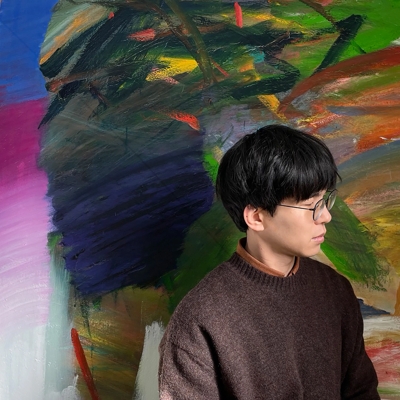
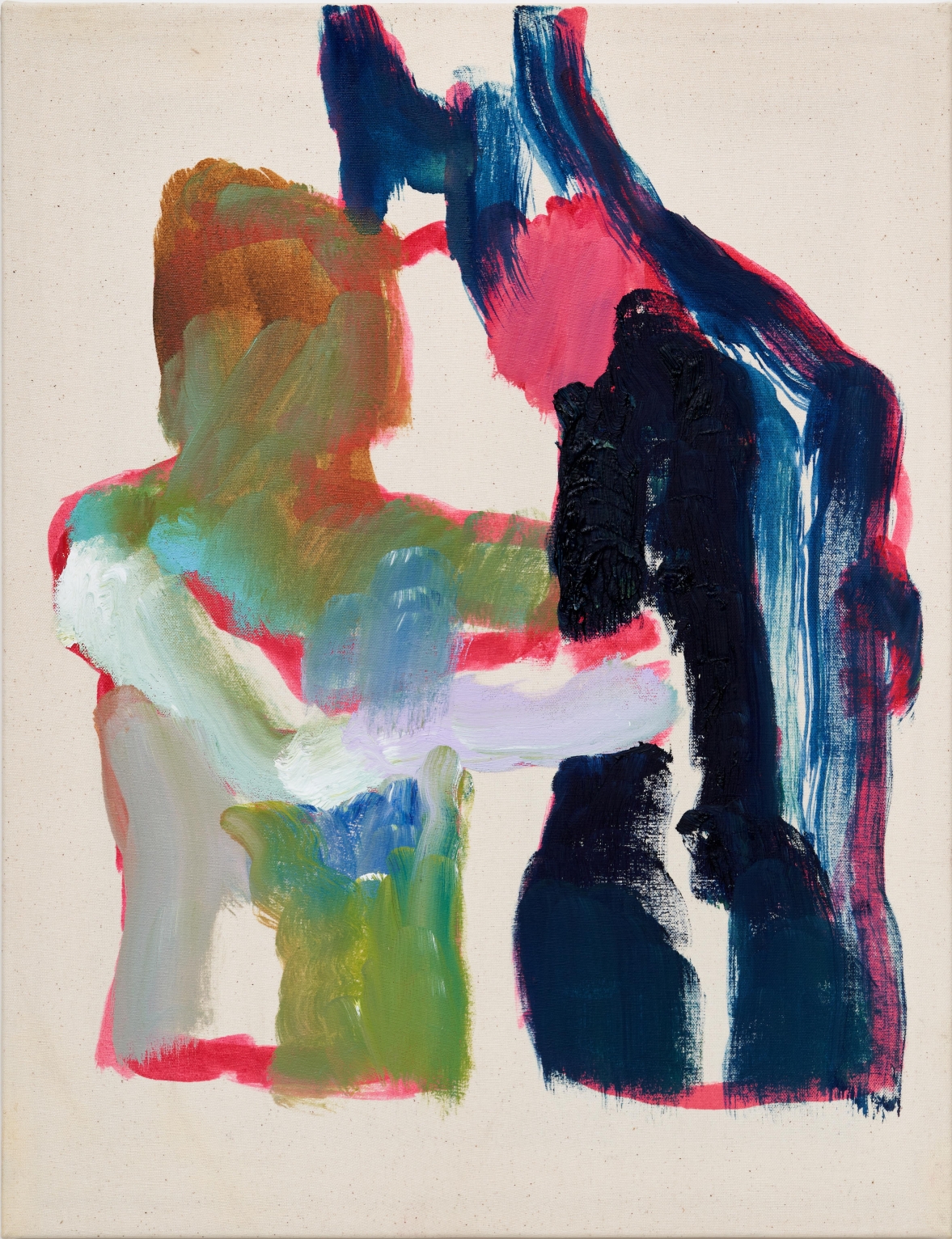
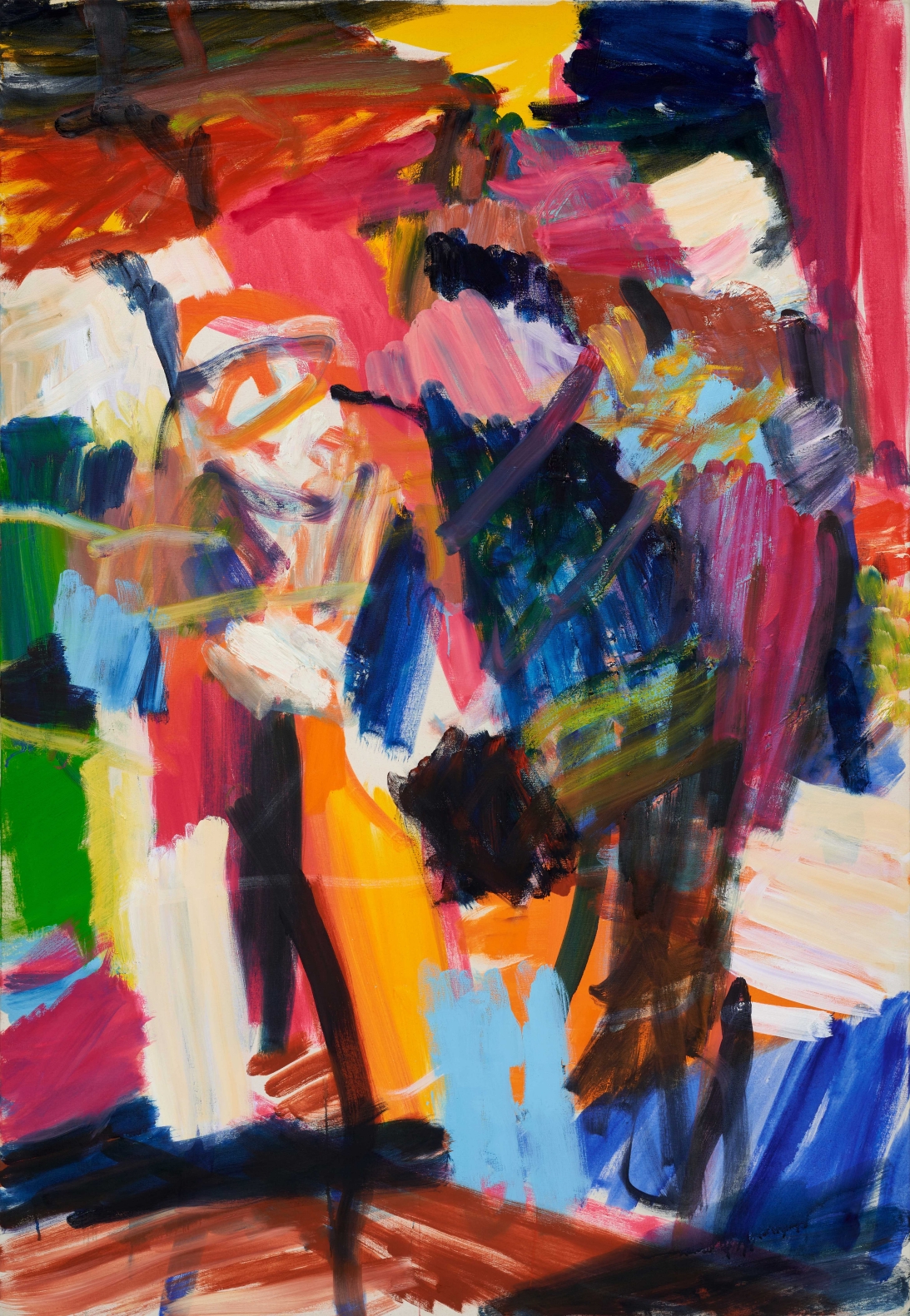
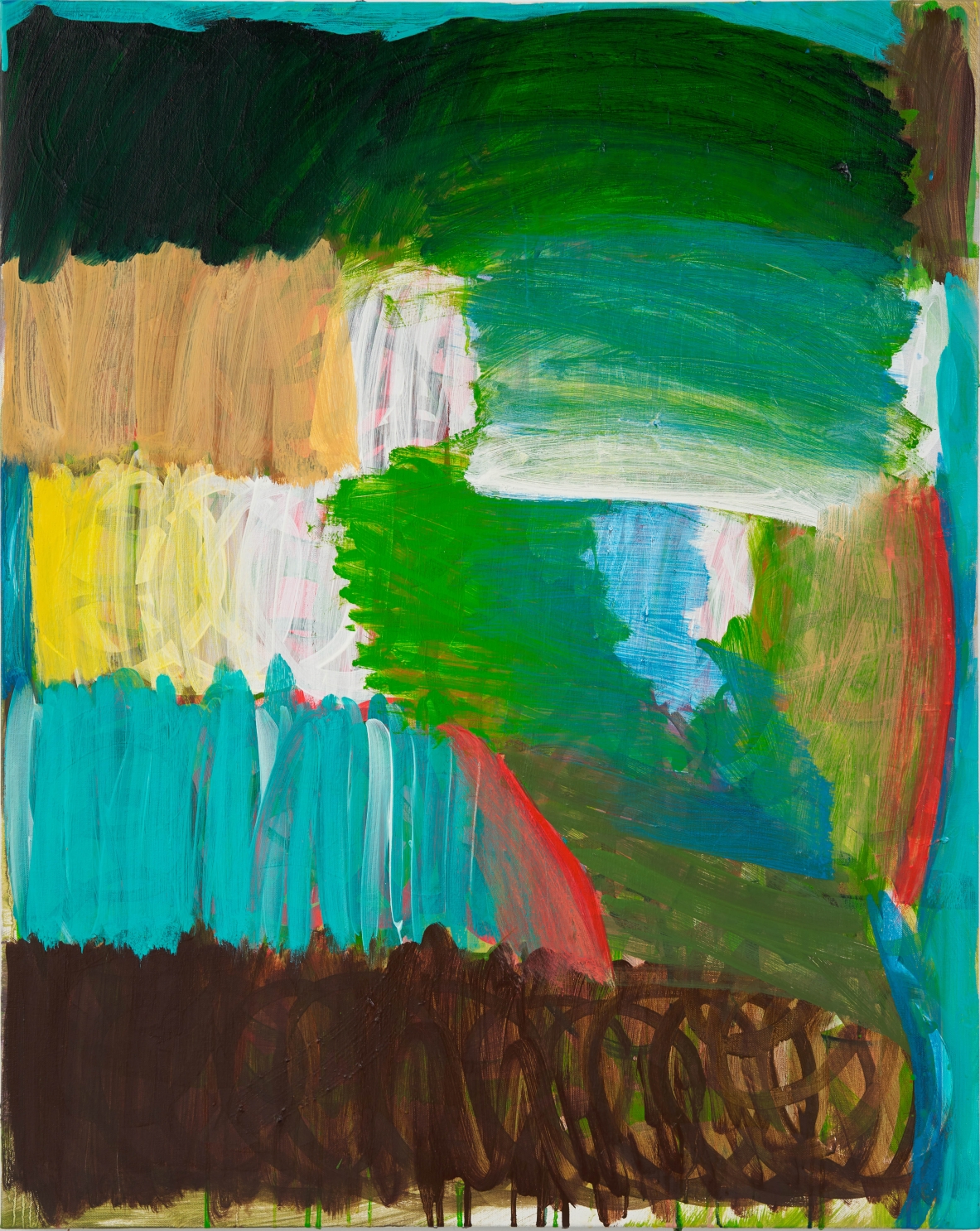
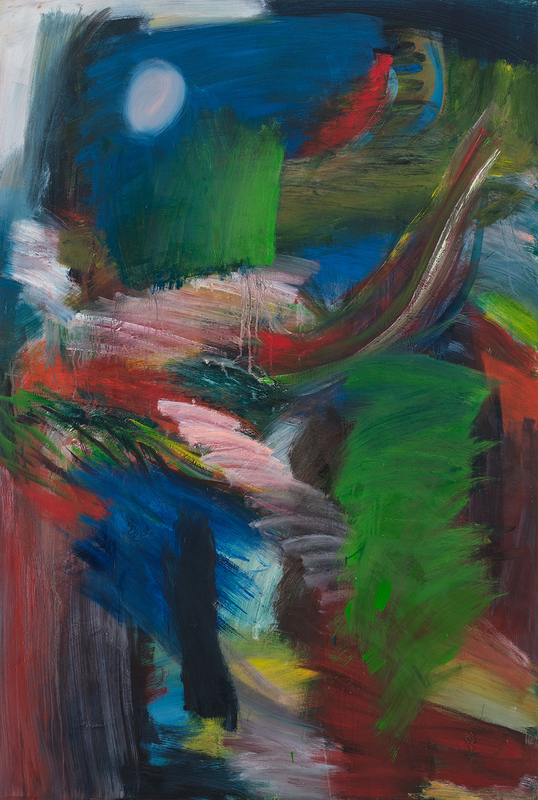
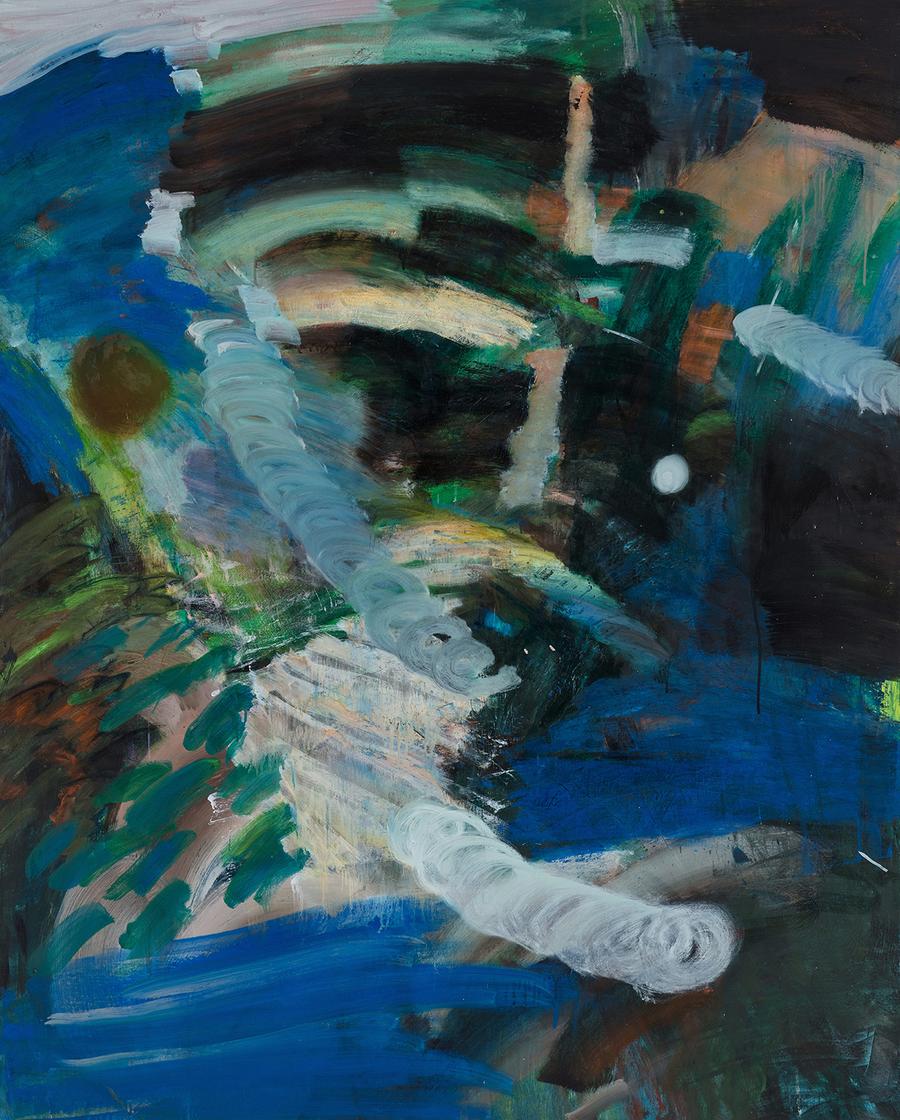
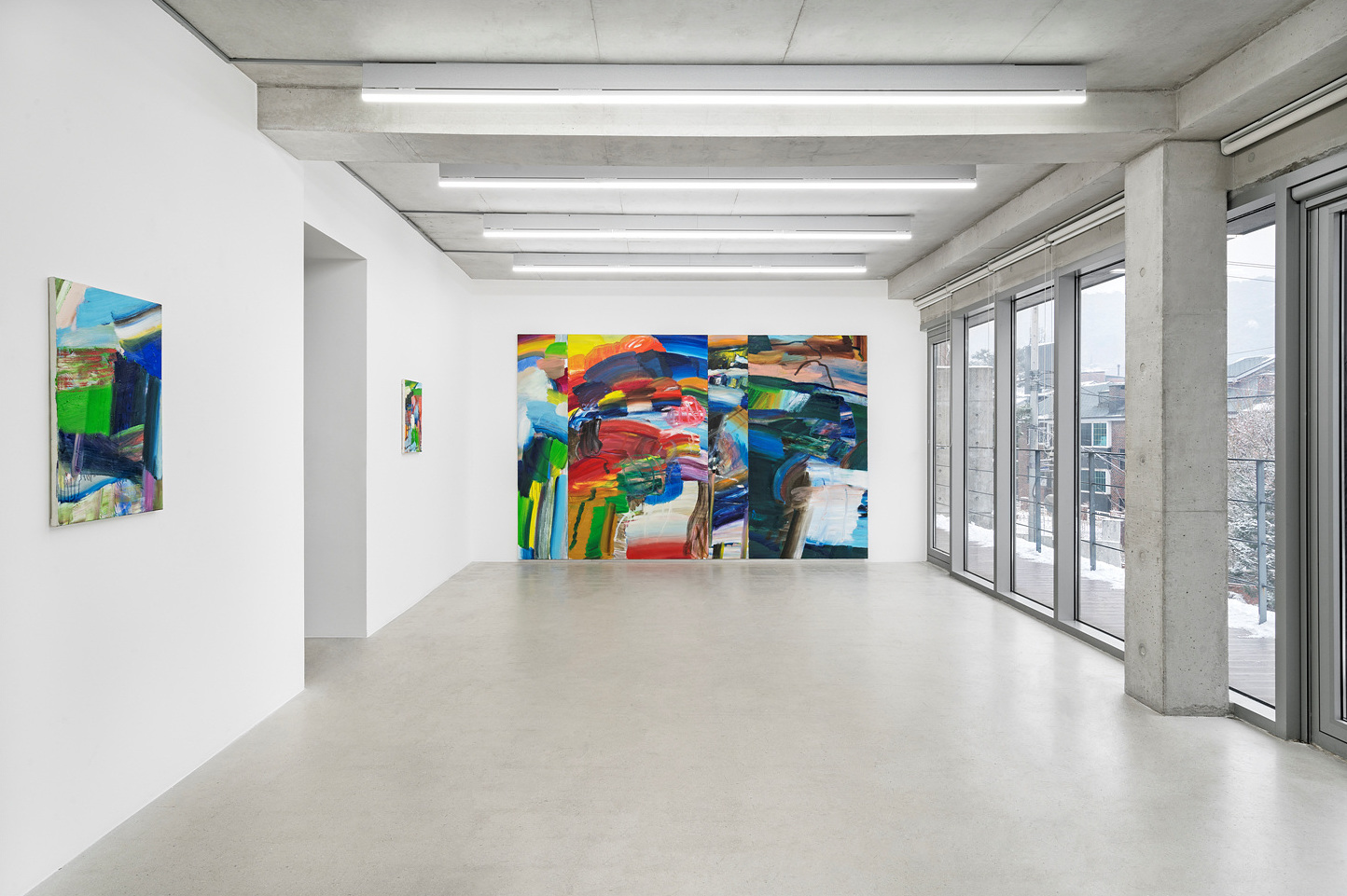
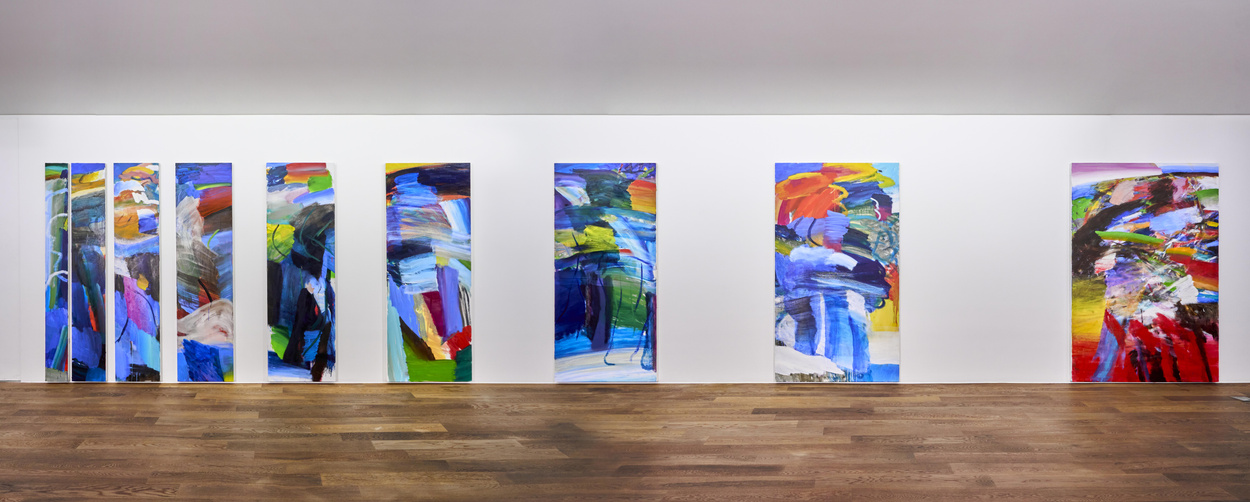
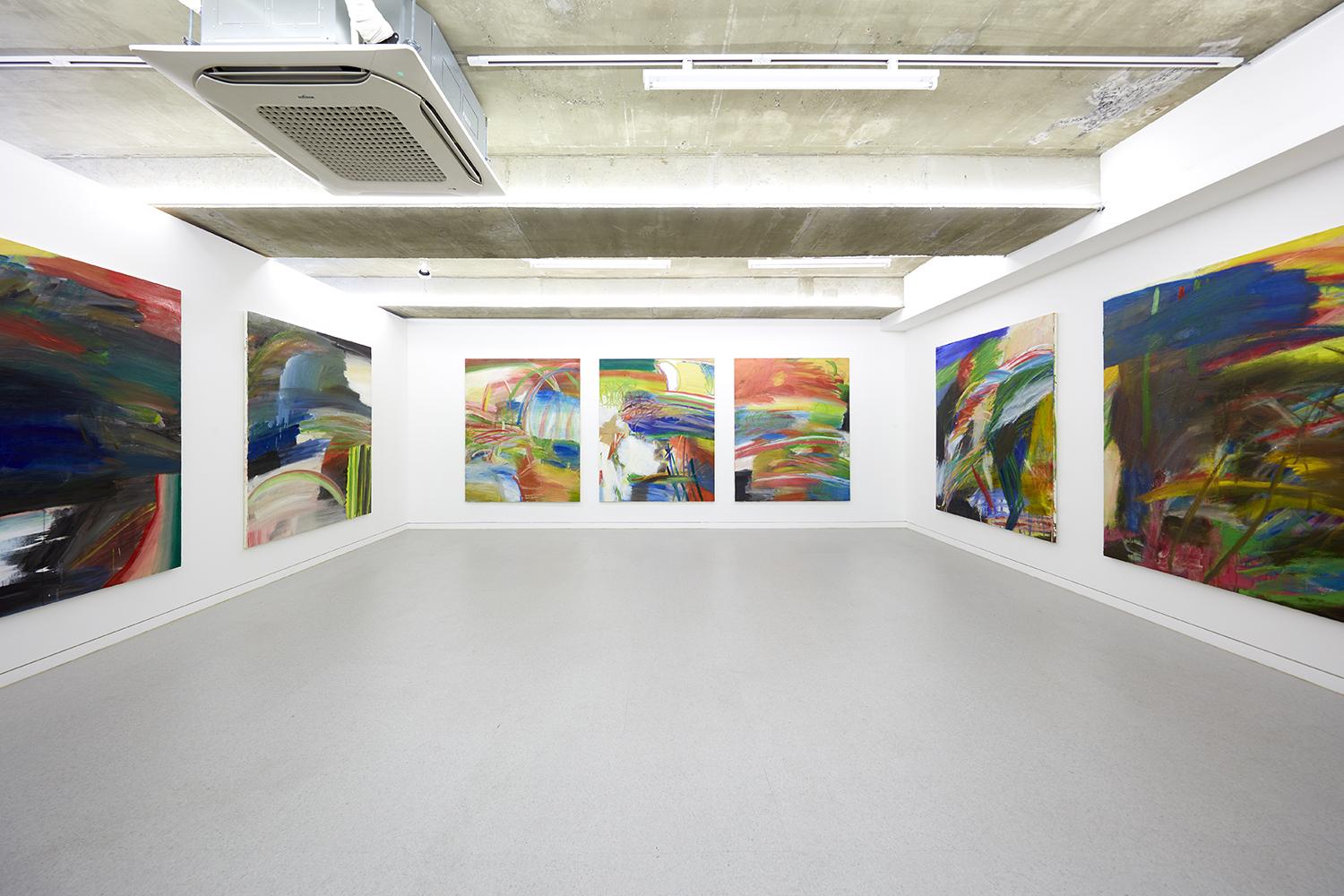
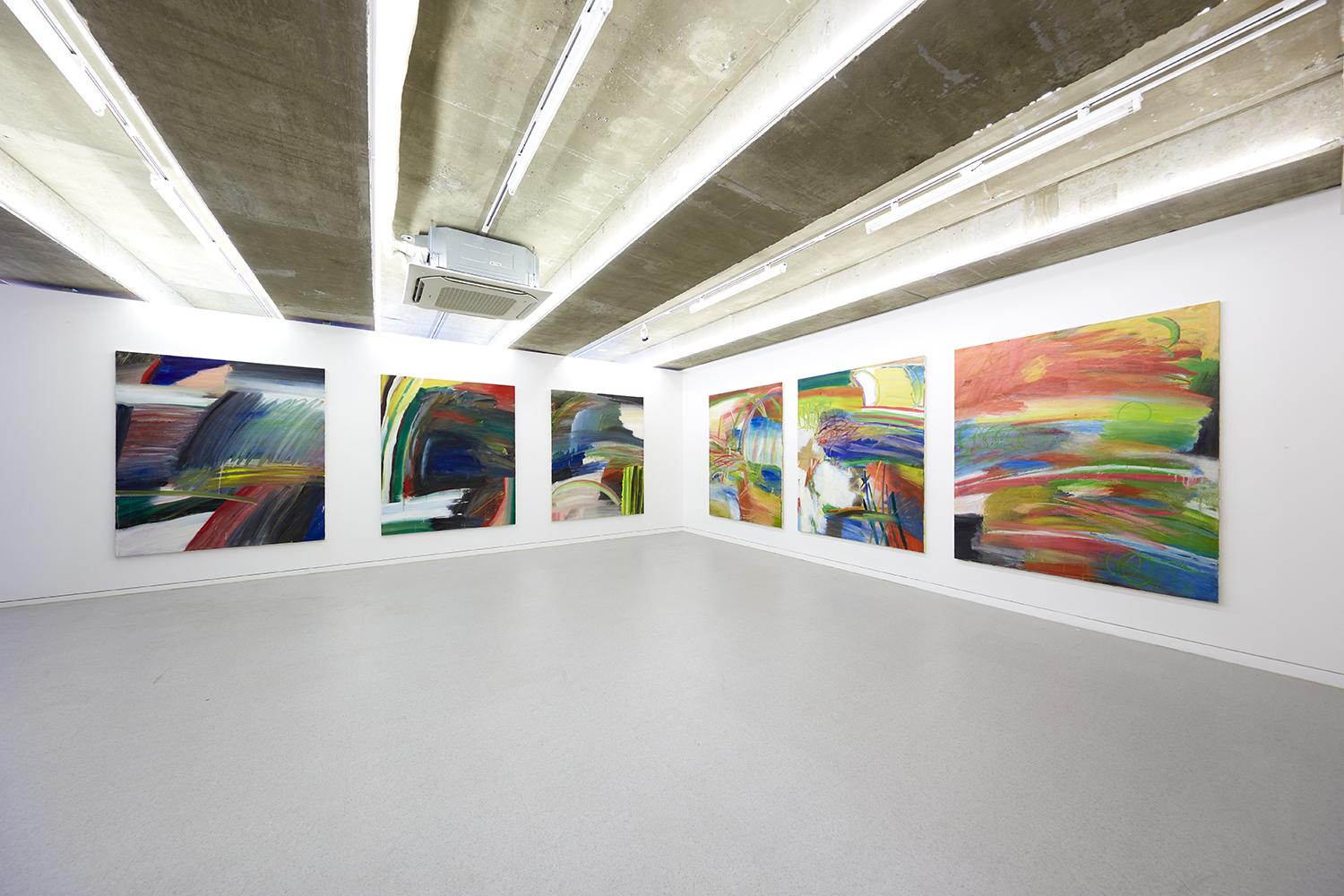
Selected for the 2019 PT&Critic program at Space Willing N
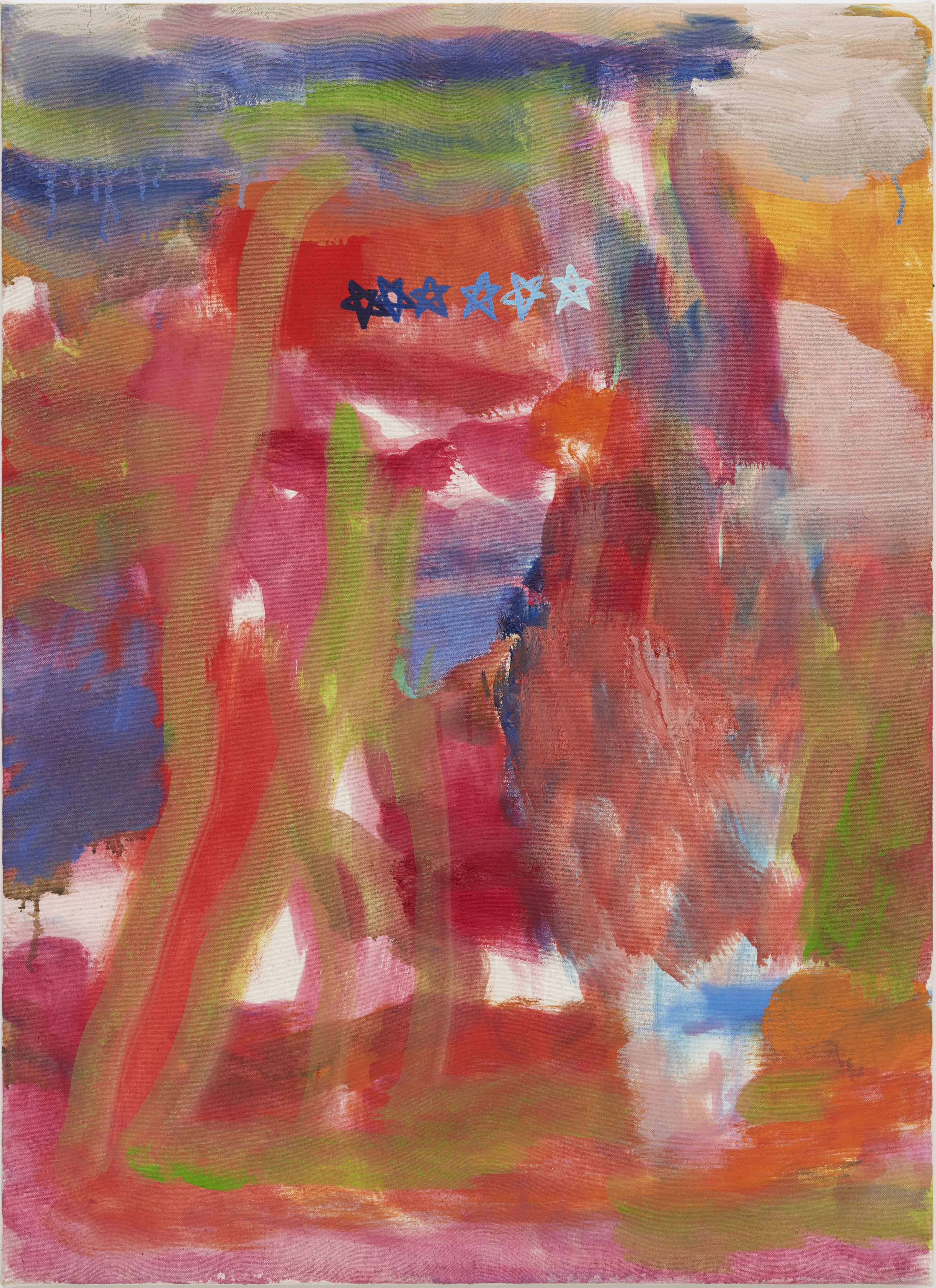
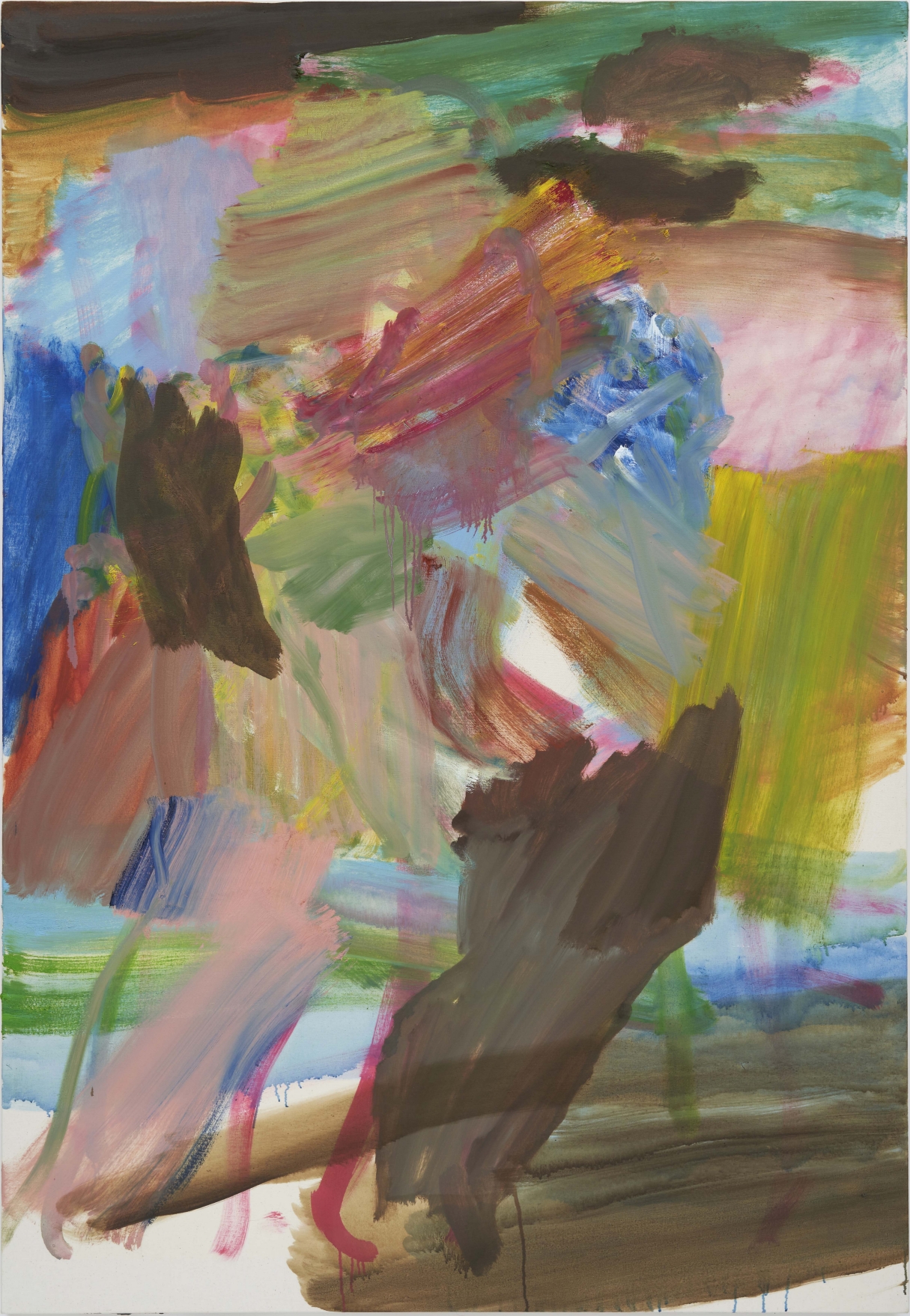
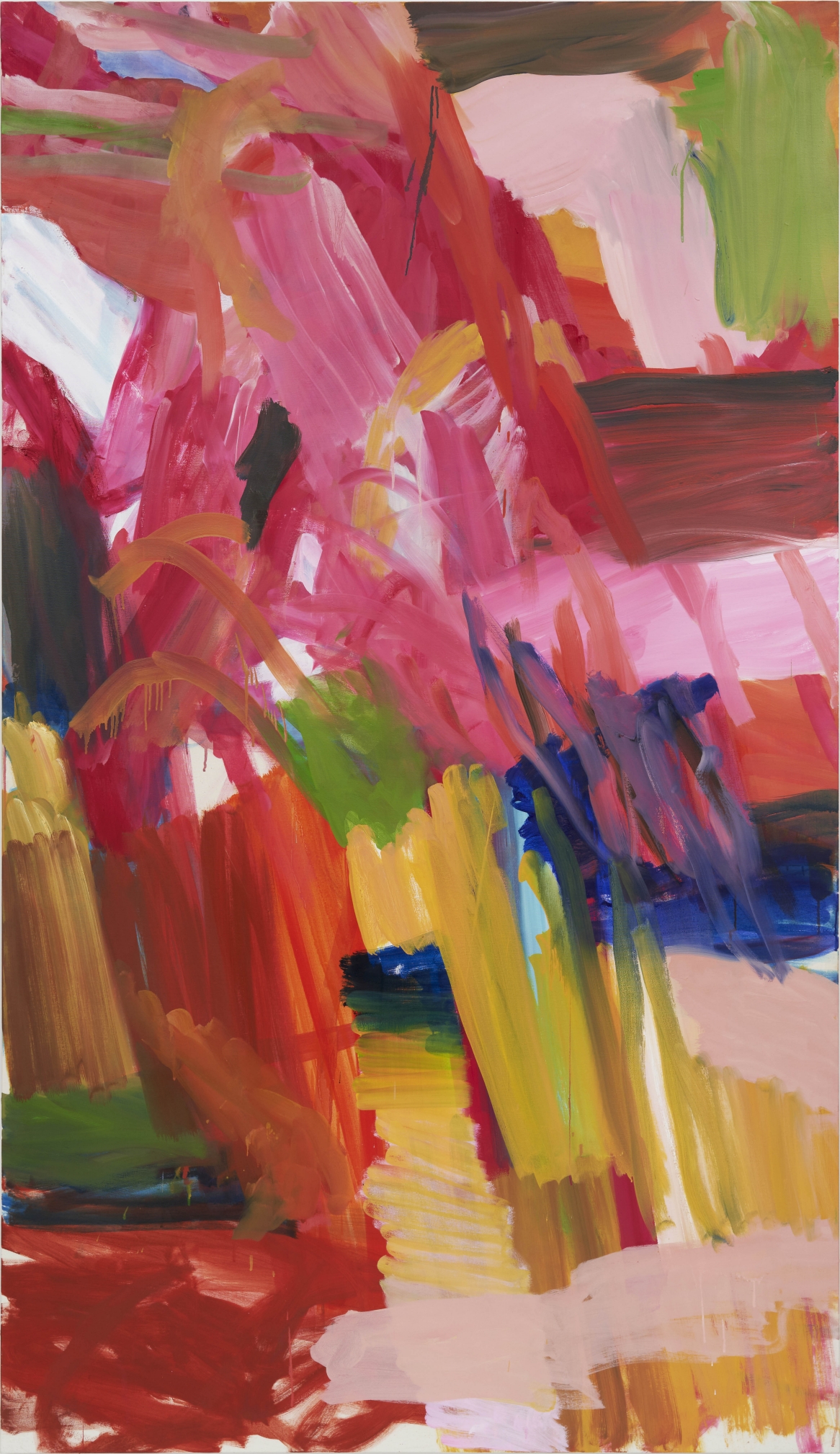
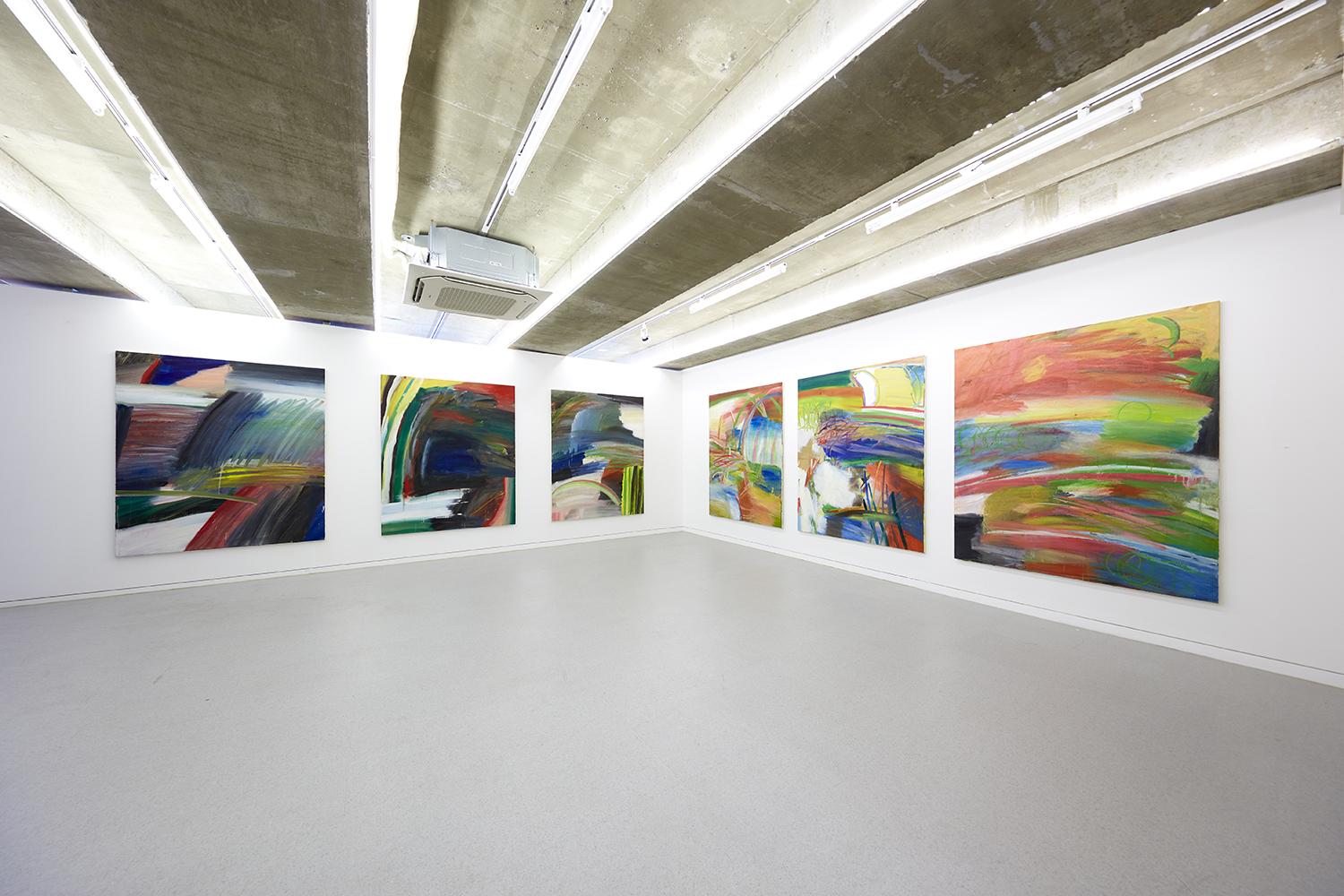
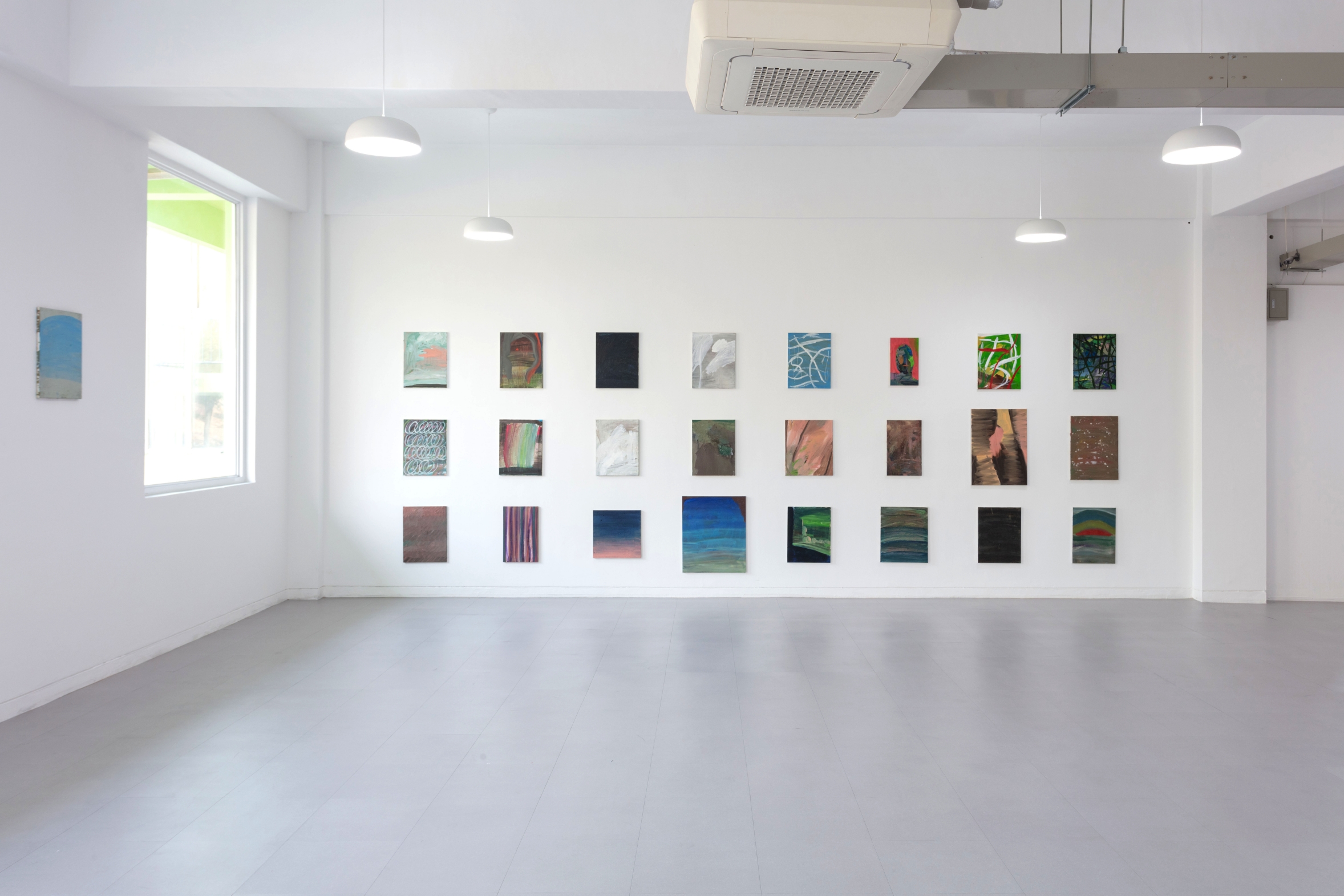
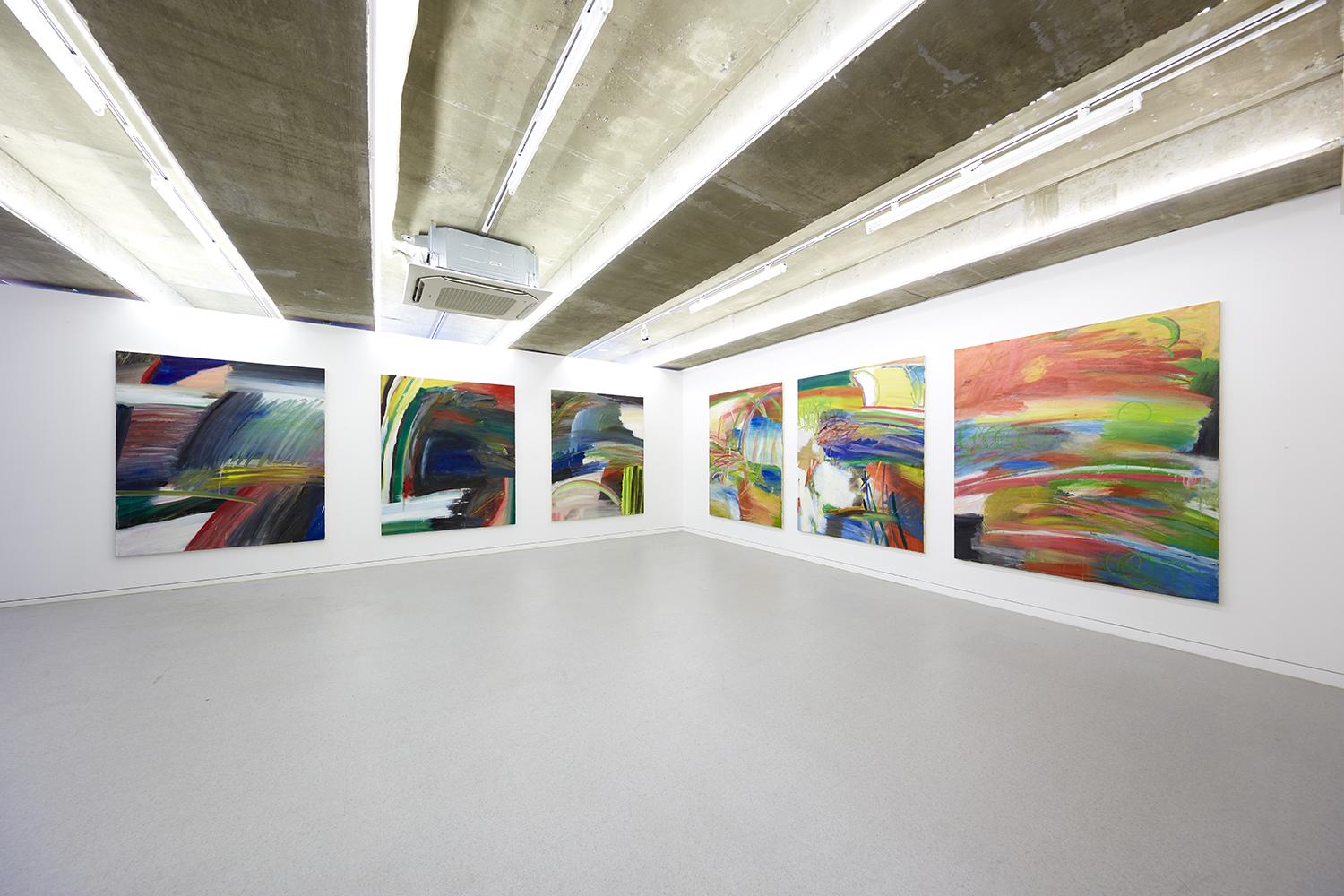
Dealing, Hyundoo Jung presented nine abstract paintings, each 100-ho in size,
filled with vibrant colors and traces of brushstrokes. The PT&Critic
program had previously been aimed at artists preparing for their first solo
exhibition. It was conducted as such because we believed that this was the time
when good artists, grappling with uncertainties about their work, could most
concretely discuss their concerns and best absorb realistic advice from senior
artists.
However, beginning in 2019, the selection criteria changed; it was no
longer limited to first solo exhibitions but to young artists who could engage
more concretely and realistically in exchanges of opinion and presentations. Hyundoo
Jung had already held two solo exhibitions and written several statements about
his work. Differences in methodology across generations and changes in the
language used to describe work are natural phenomena.
Rather than correcting
the language of young artists, it seemed more important to create a space that
listened to their stories, a place where they could speak in their own language
and narrow the distance of mutual understanding. Thus, PT&Critic has come
to function as a “forum for intergenerational understanding.”
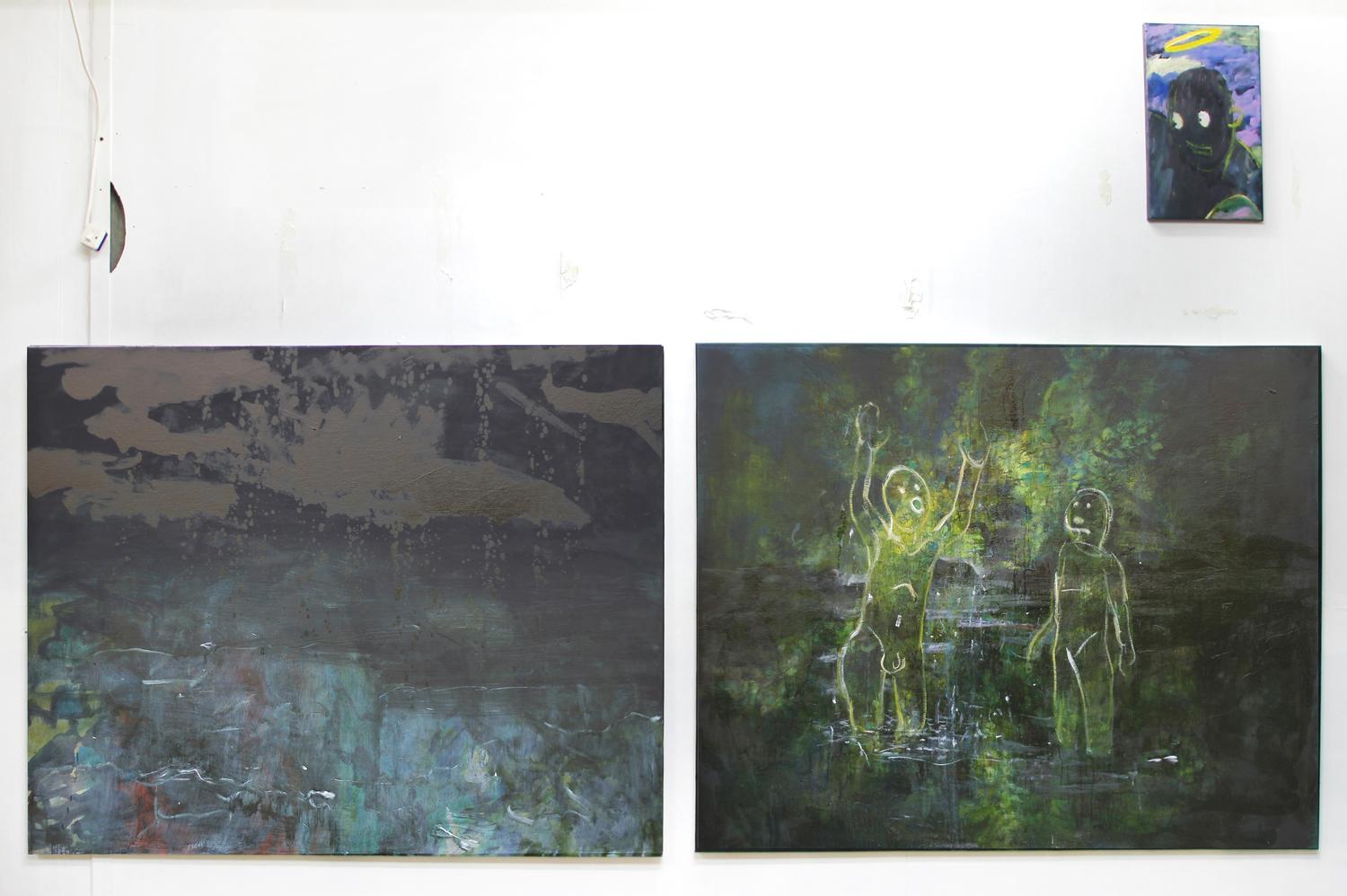
Did Hyundoo Jung paint faces, or erase them? Positioning us
between the refreshing nuance of “throwing” and the ambiguity of painterly
language, he presents something like a riddle that invites multiple
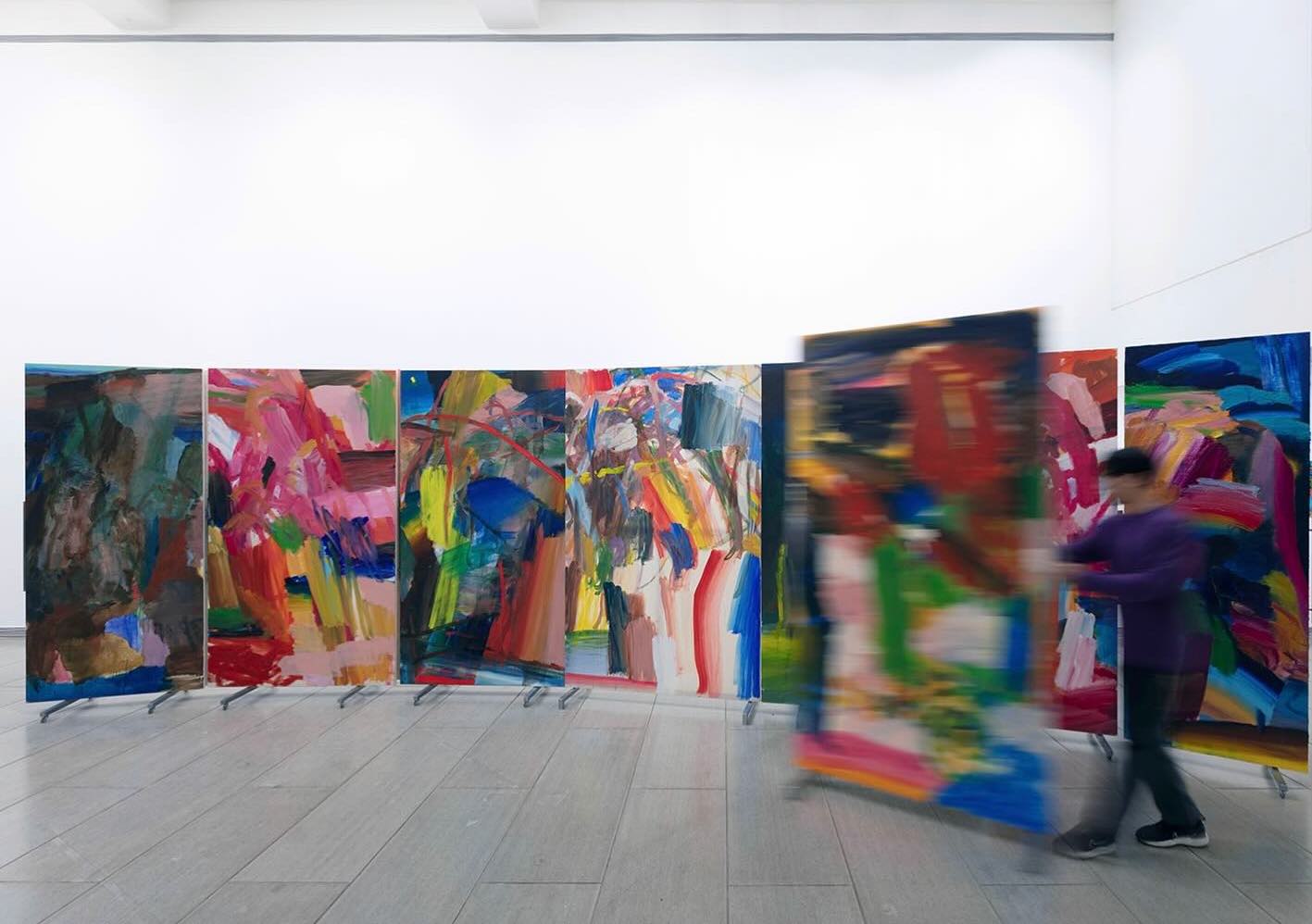
interpretations. He actively reveals intuitive bodily movements across the
surface. The viewer’s eye responds to these seemingly disordered,
free-spirited, bold movements, exploring the artist’s language.
There are several clues on his canvas that allow one to gauge
speed and direction. The exhibition title 《The Face Throwers》 suggests that the image
is not merely an illusion confined to visual flatness, but the result of a
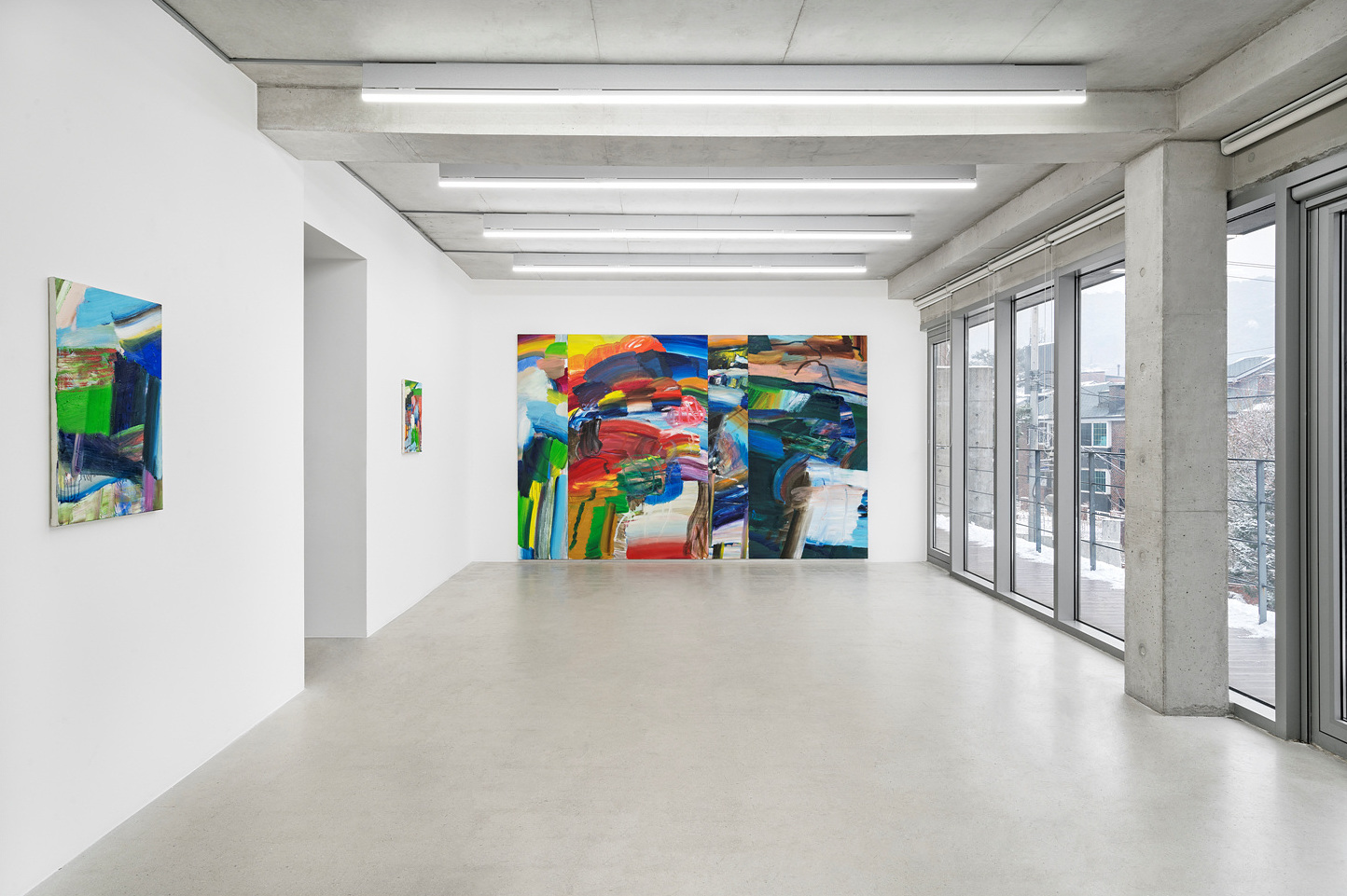
physical body passing through and materializing it. Each of the nine paintings
in this series originates from the methodology of a previous drawing series. He
would draw a single image across three sheets of paper, then change their
arrangement while repeating the same drawing process. As a result, the three
works hung on the wall contain both connected and separated parts. This also
explains why the canvases in this exhibition can be viewed as individual images
or as attempts to connect all images across the wall.
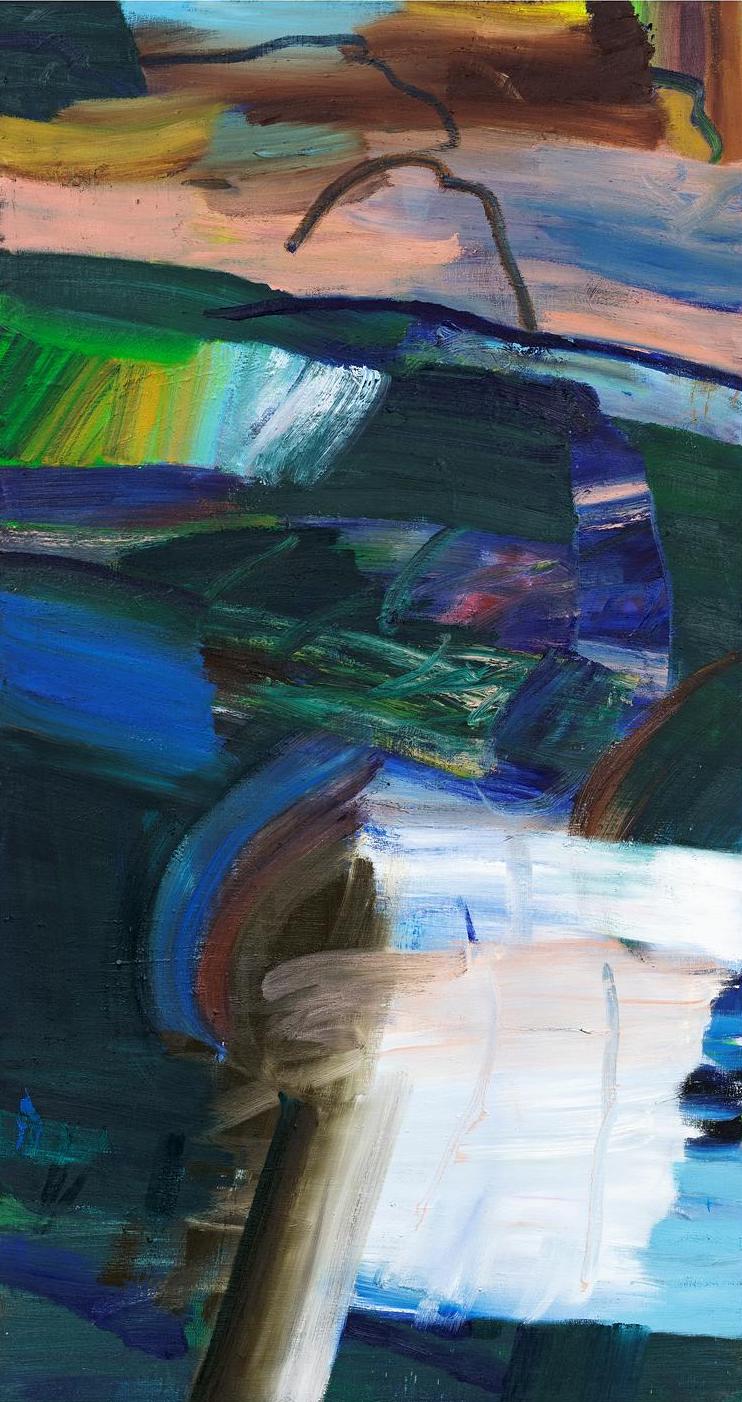
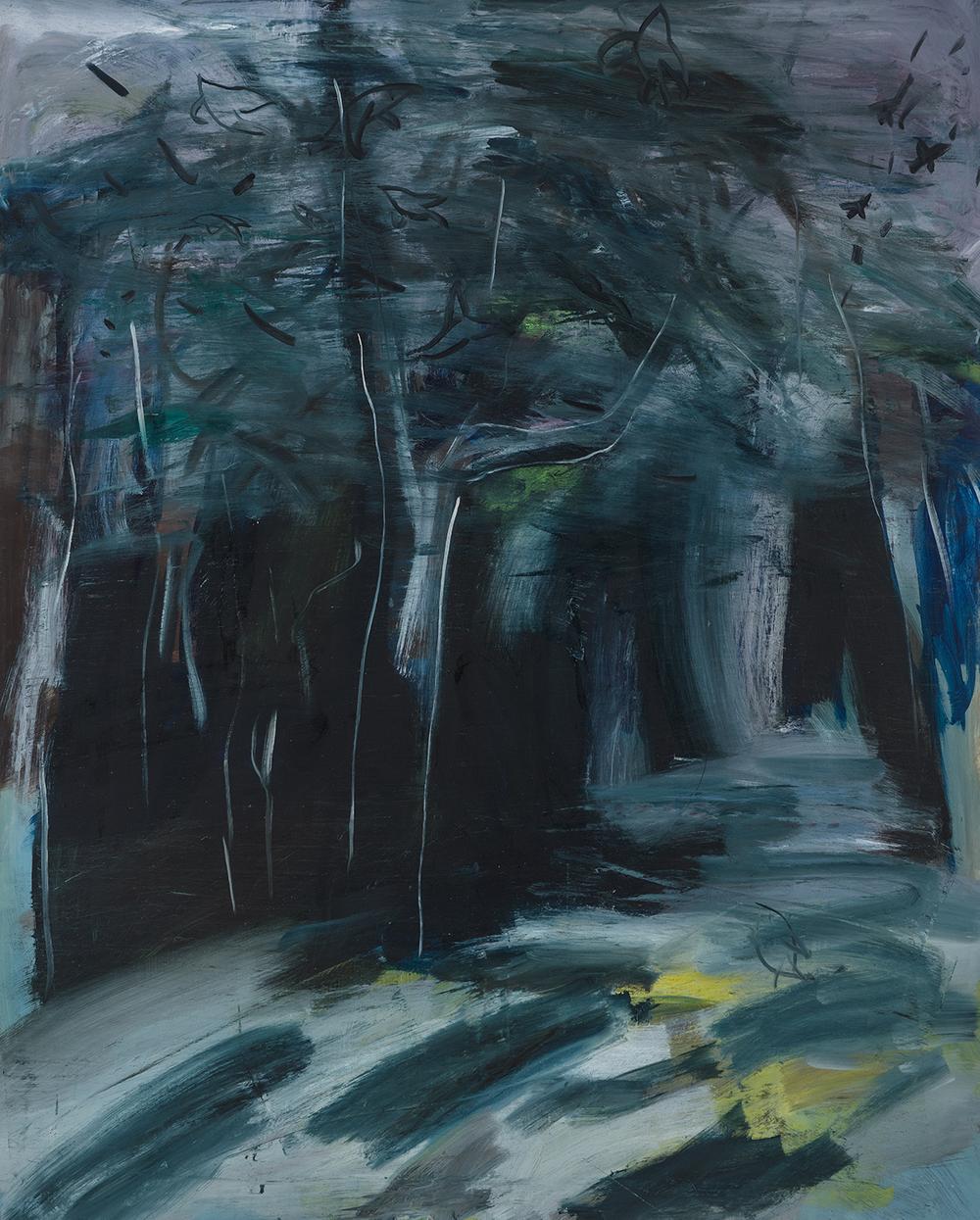
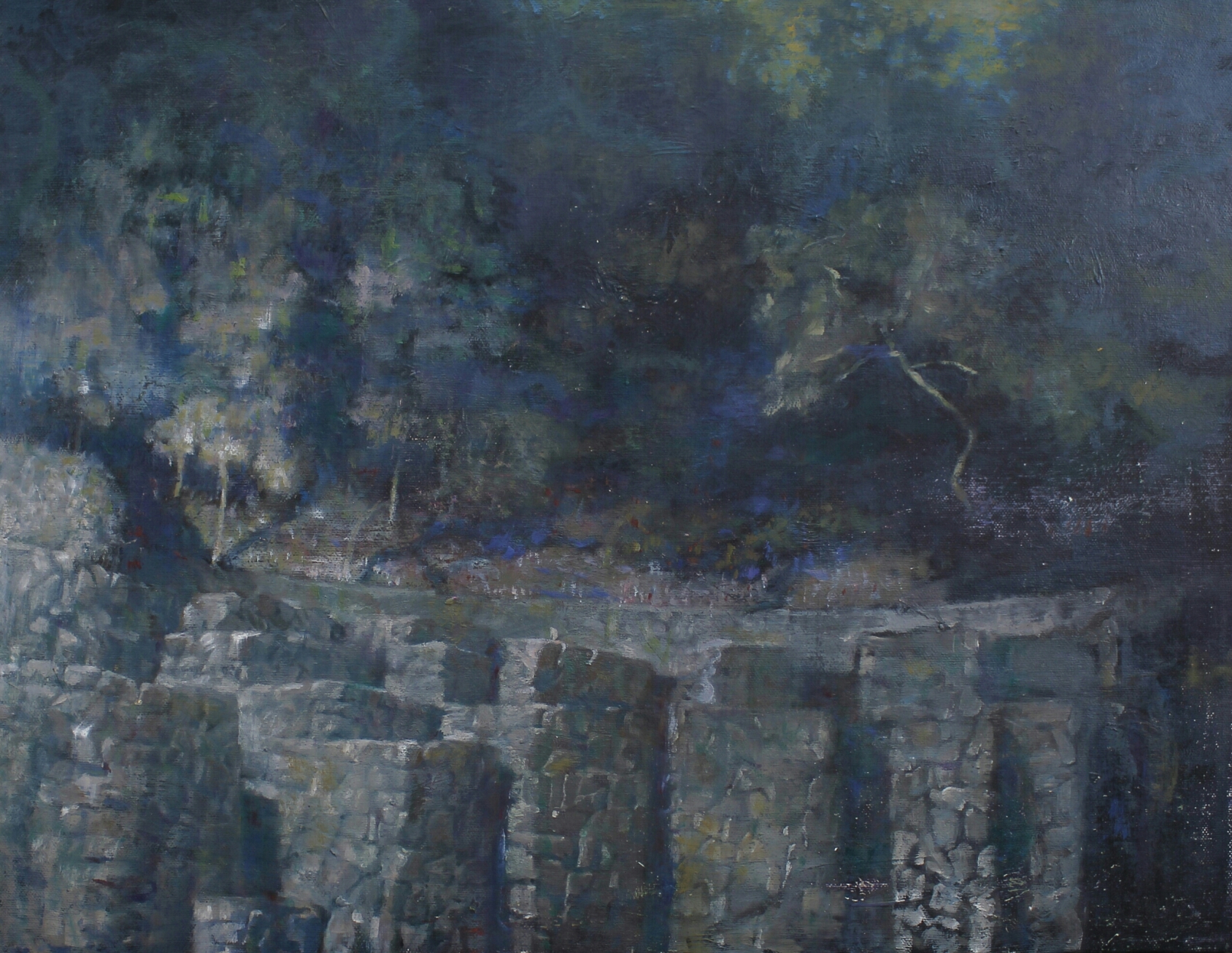
In his early work, he painted forest landscapes, focusing on
several elements that composed the forest and rendering them. The method of
representation generally involved describing visual information received
through the eye. Although it was an act of capturing the scene in order to
convey the subtle emotion delivered by a particular landscape, he soon realized
that this method of representation was insufficient to communicate his
emotions.
Subjective feelings extracted from visual information likely felt like
a fixed frame when described in objective form or when re-extracted from the
depicted scene. Thus, Jung began erasing the image again. The traces of his
movements left at the end of the vanished forms recall a dynamic, immersive
attitude that mercilessly erases the original shape. In doing so, another image
is formed on the surface of the canvas where the previous image has been
erased.
He suggests that the traces of paint drawn or applied on the
surface of his work can become a formal language in themselves, or even the
very object he is looking at. When a specific word arising in his mind
manifests as a visual image, the particular color and form emerging at his
fingertips through bodily gesture clearly embody the object he desires. As
hinted in his early works (see transcript), his painting process can be
understood not as describing the surface before his eyes, but as transferring tactile
sensations that can be physically felt from the object before him onto the
canvas.