In the course of daily life, we pass through countless scenes.
Often, we move past repetitive scenes, classifying and remembering them by
relying on the unit of time. Even this occurs when we consciously trace memory
backward; yet the unit of time may be too instantaneous and too formal a
classification to remember a fleeting moment. If instead of categorizing memory
as morning or night, days or hours, we choose to remember everyday life by
classifying “that time” not as a specific moment or portion of time but as a “scene”
or “landscape,” would “that time” be misaligned?
I think about the word “landscape.” It may be a grand word that is
rarely used in daily speech, even when it need not be so grand. Apart from
facing nature worthy of being called a spectacle, it is mostly used within the
realm of art, and even then attached to terms such as “landscape painting” or
“shanshui painting” that contain nature. Countless words can follow in the
manner of ~scape to designate various landscapes—Landscape, Cityscape,
Nightscape, Mindscape, and so on; if one wished, this page could easily be
filled. At this point, I once again call to mind the word “landscape,” and
imagine it as a term that focuses not on natural scenery but on certain
situations, moments, or scenes.
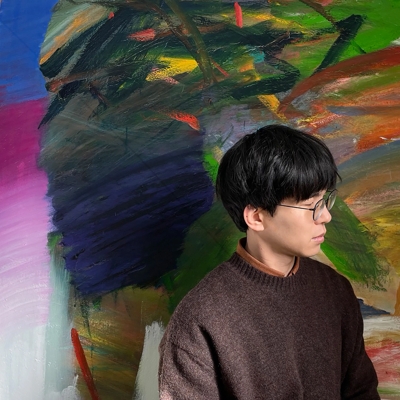
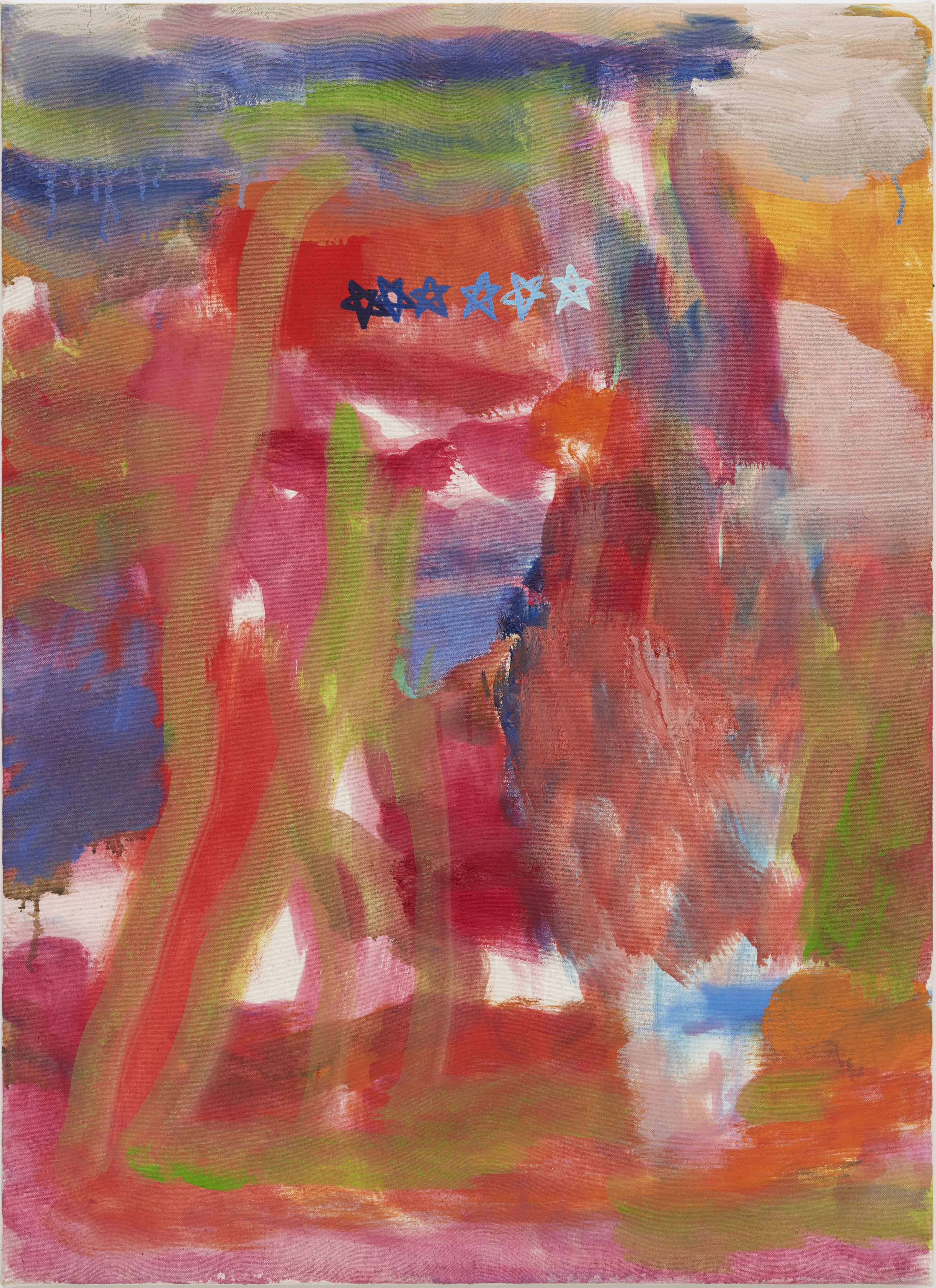
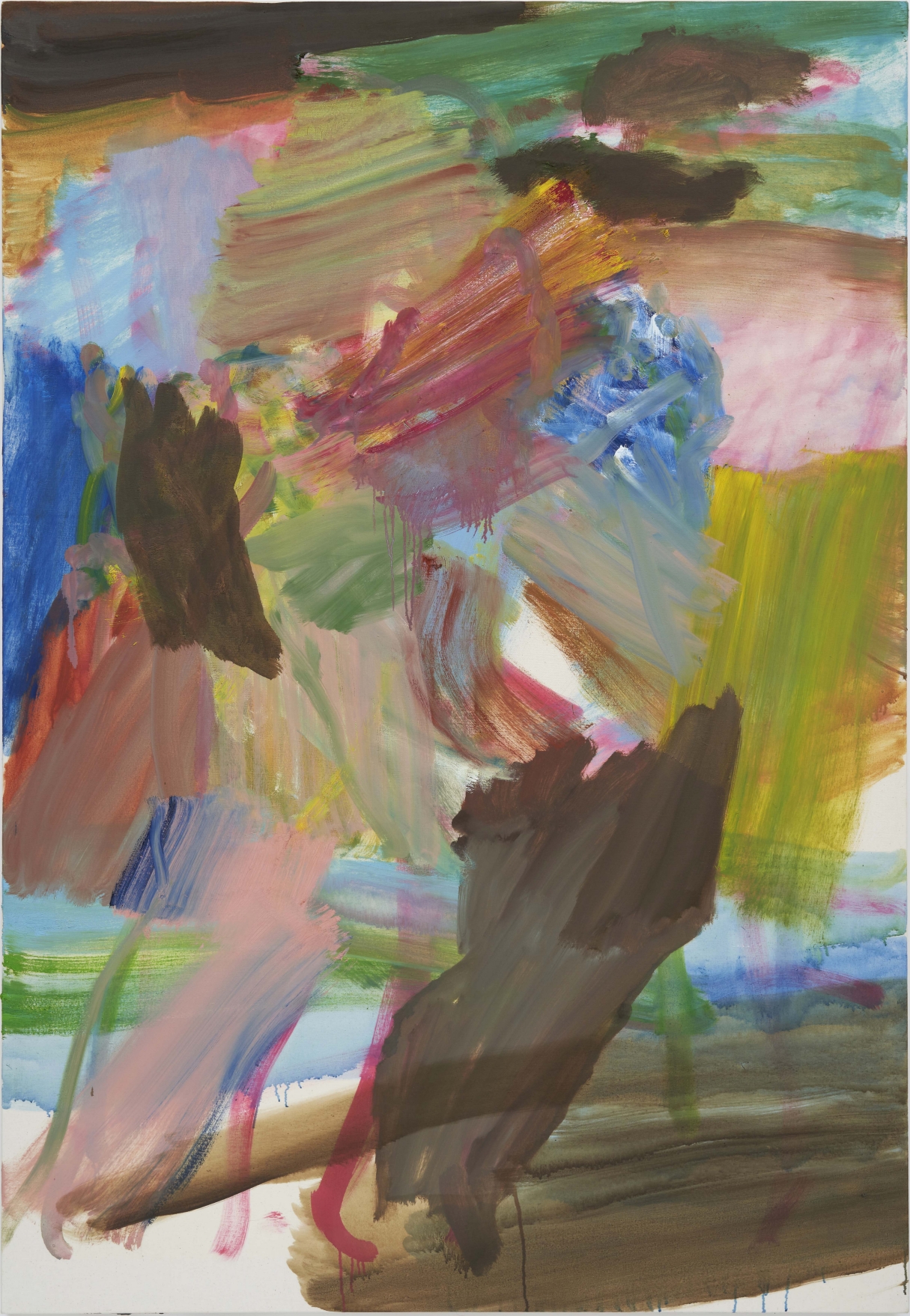
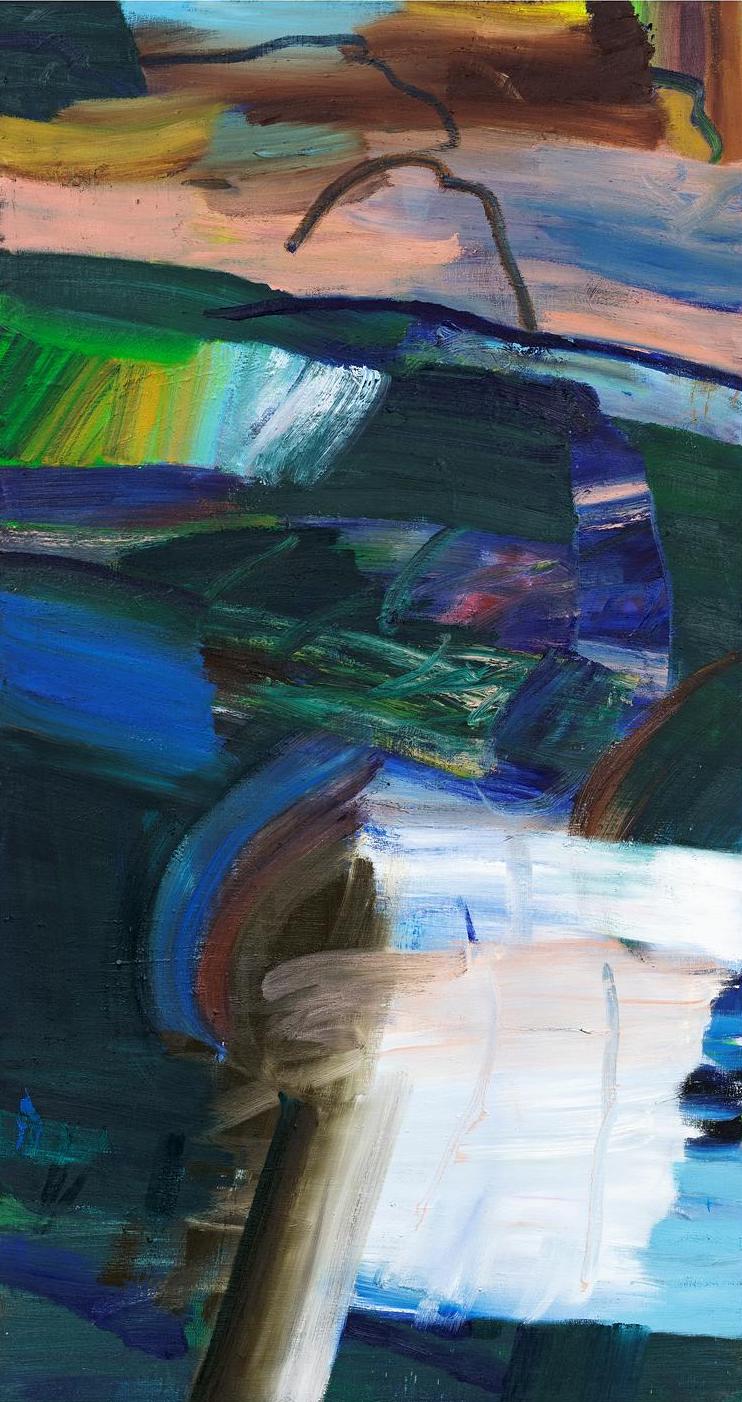
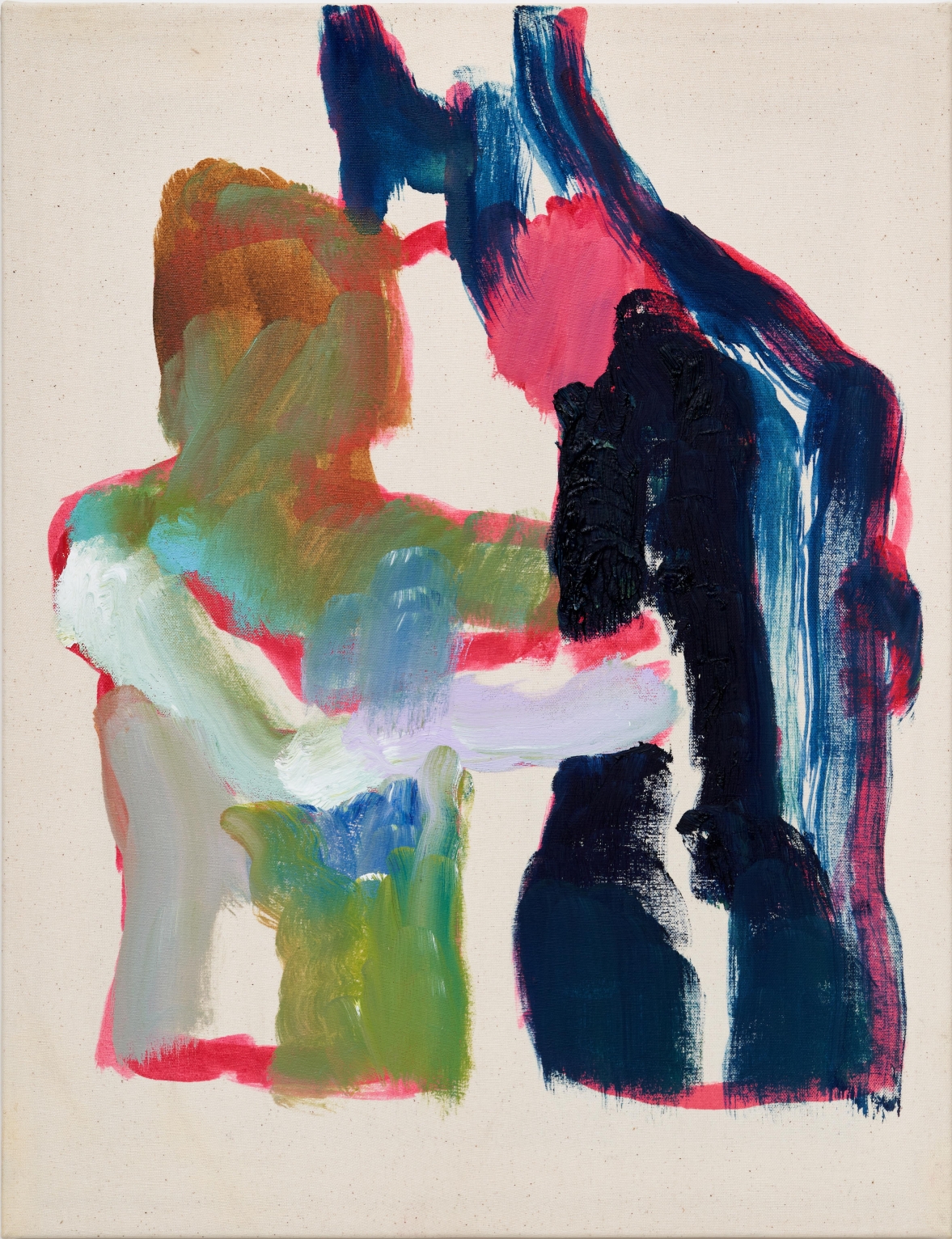
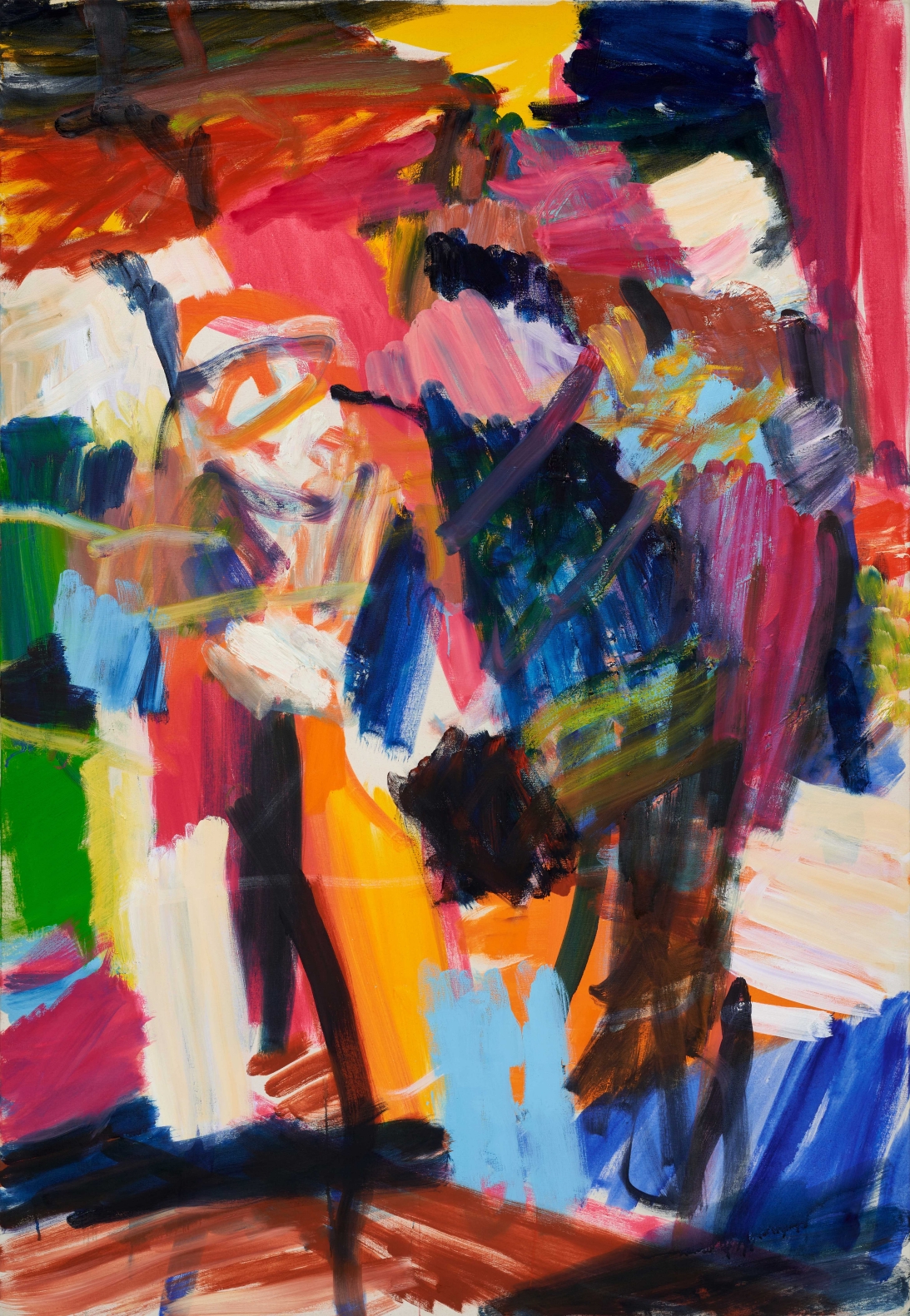
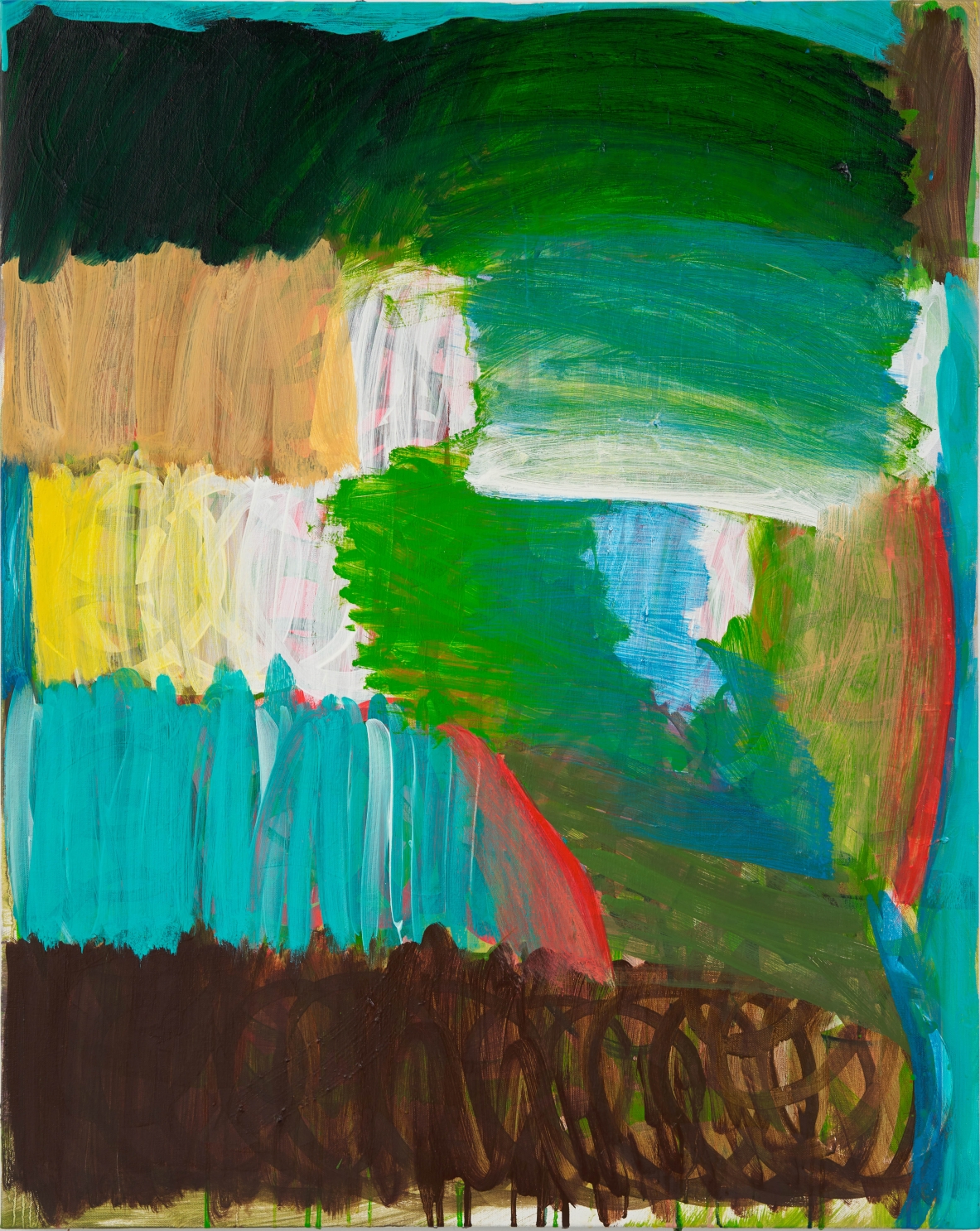
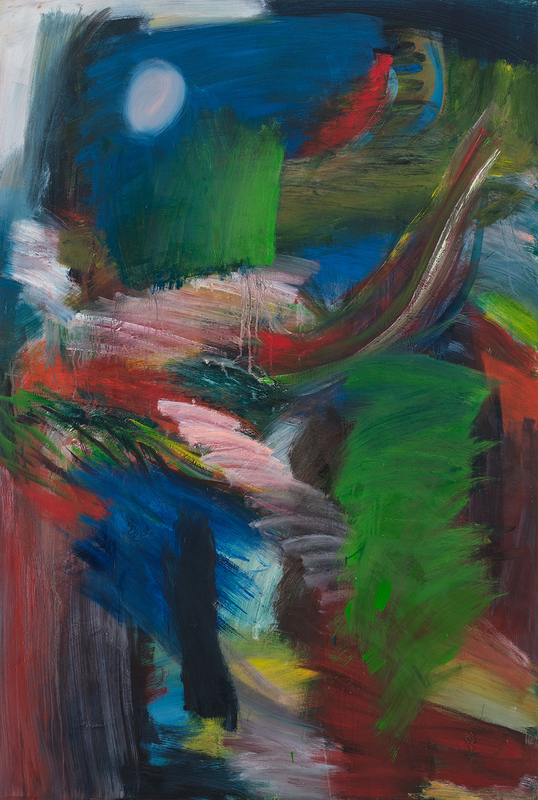
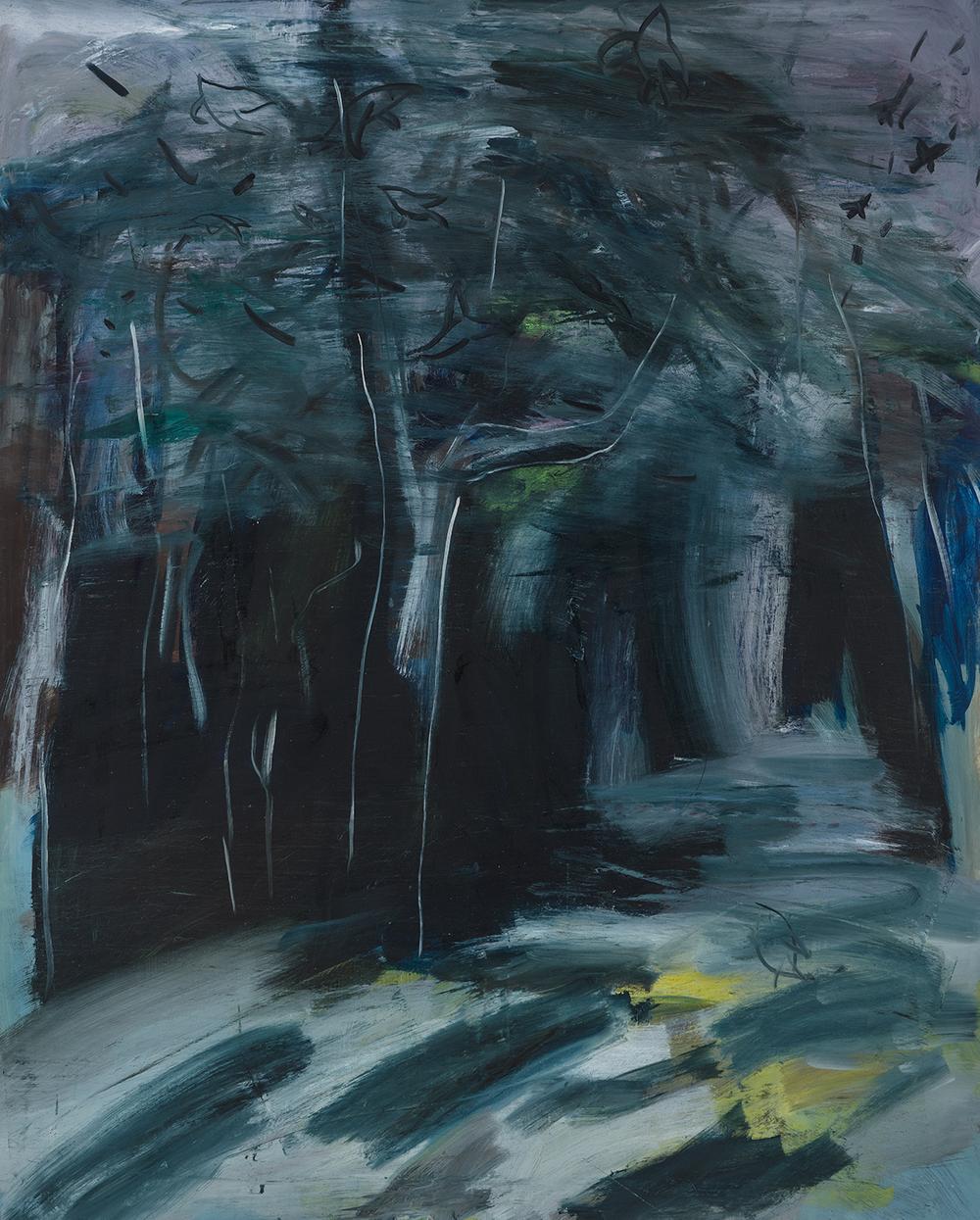
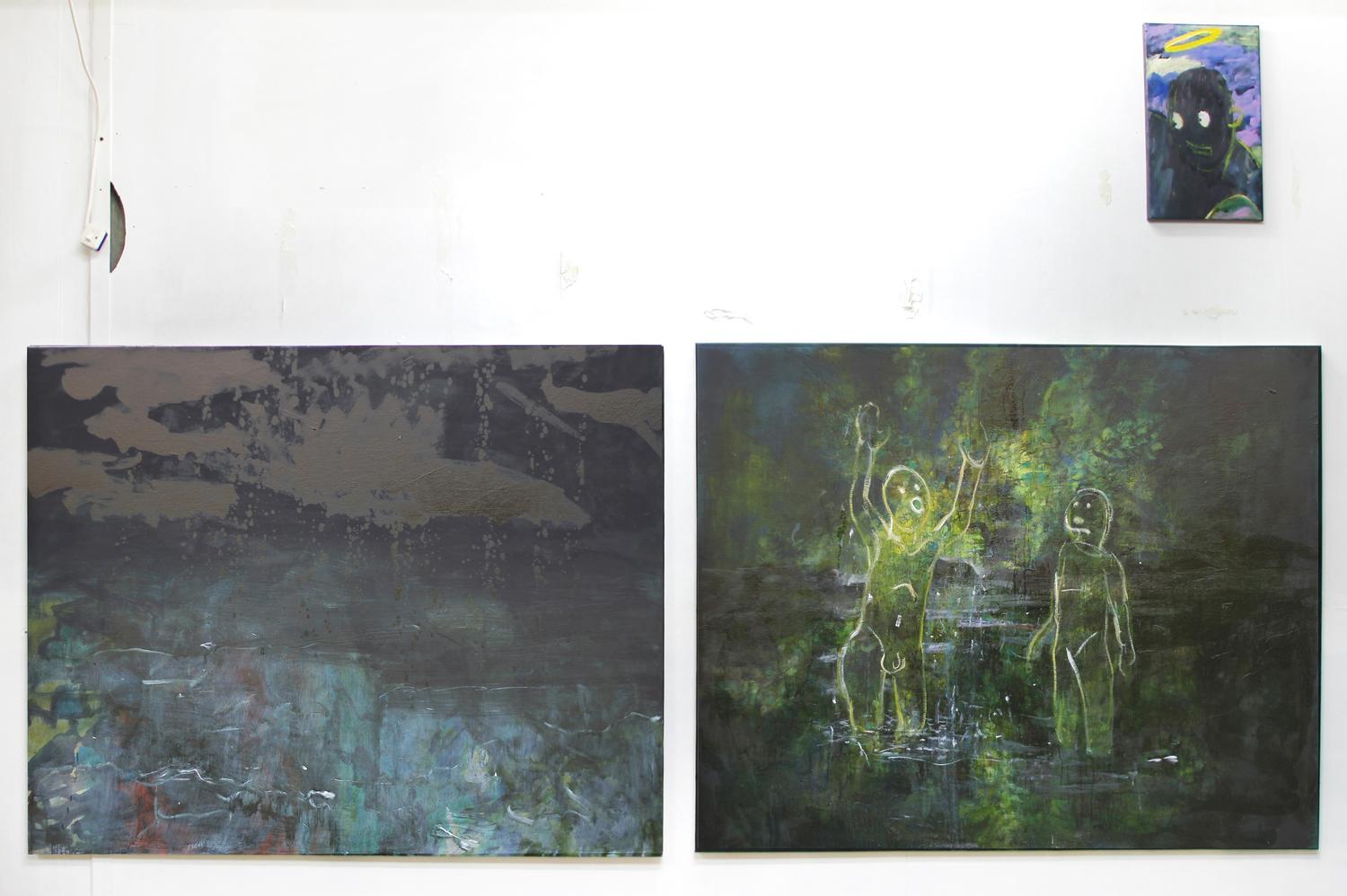
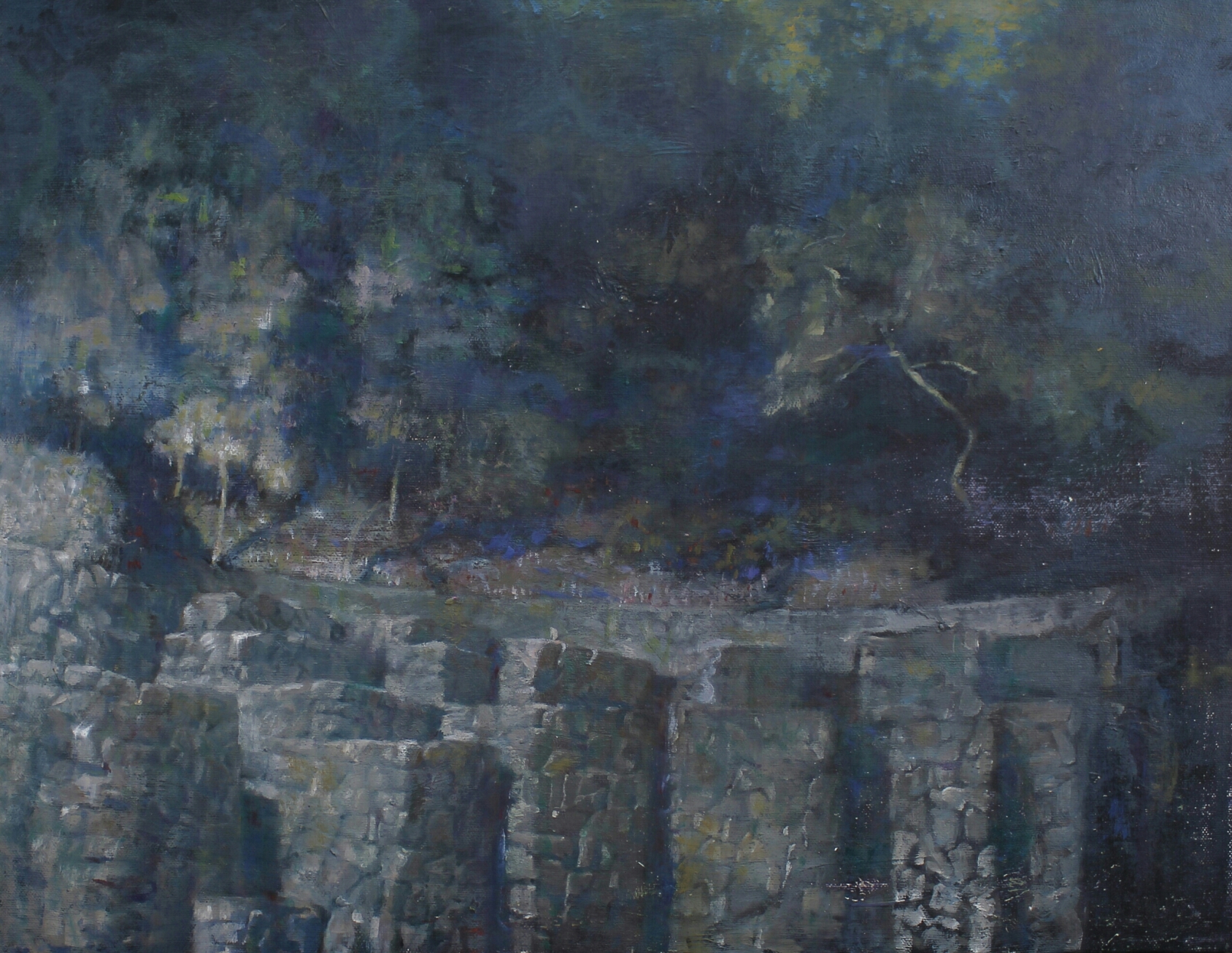
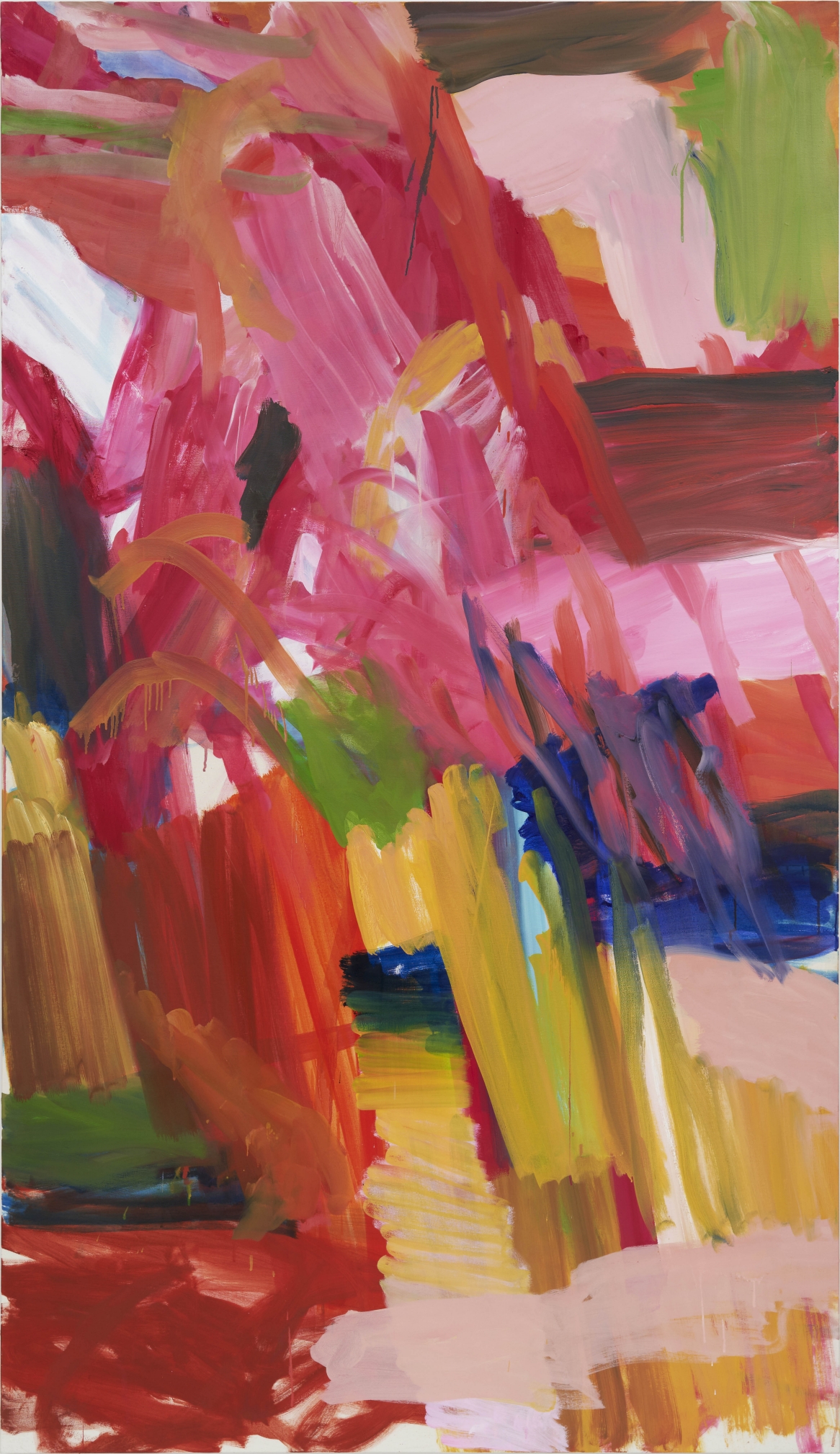
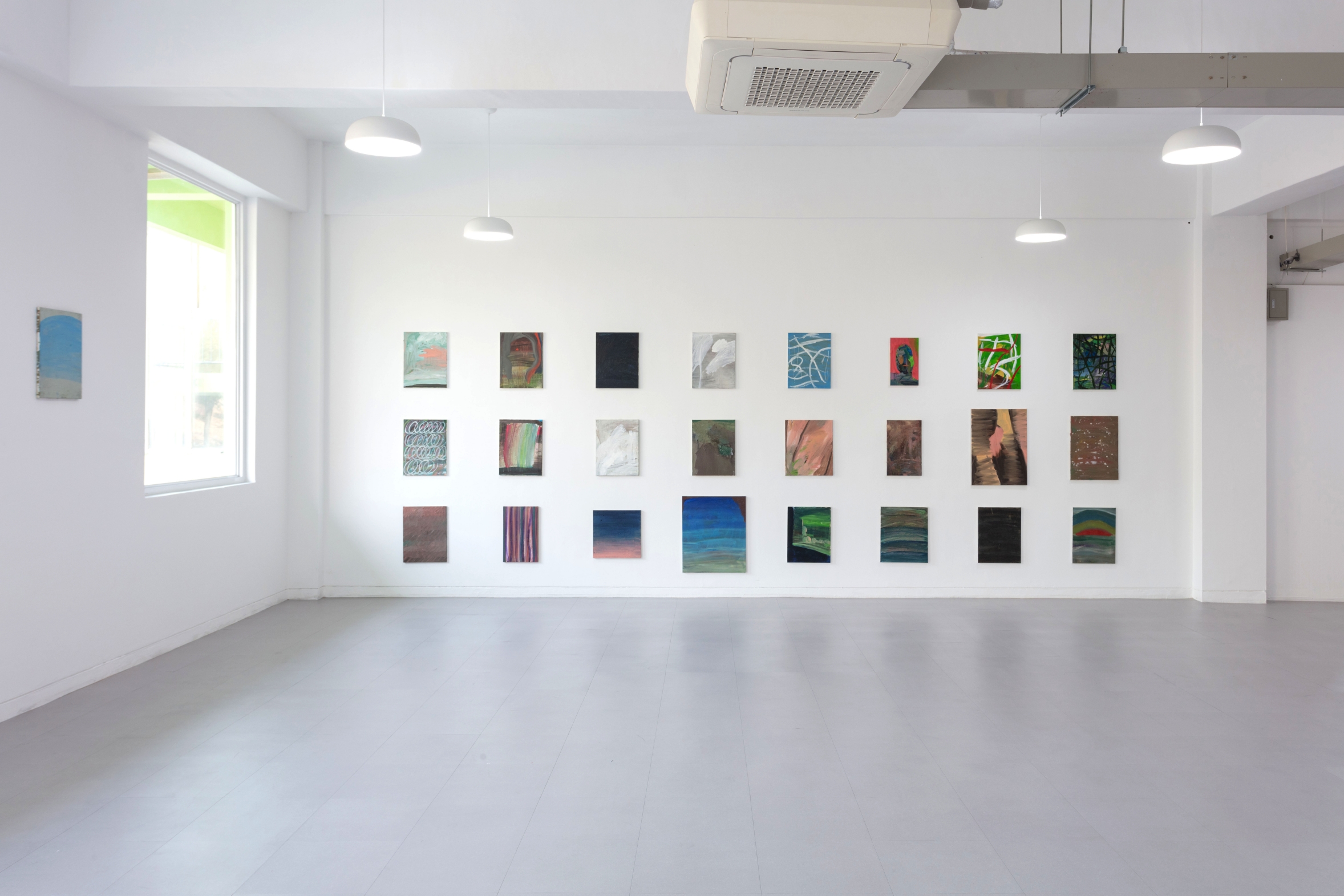
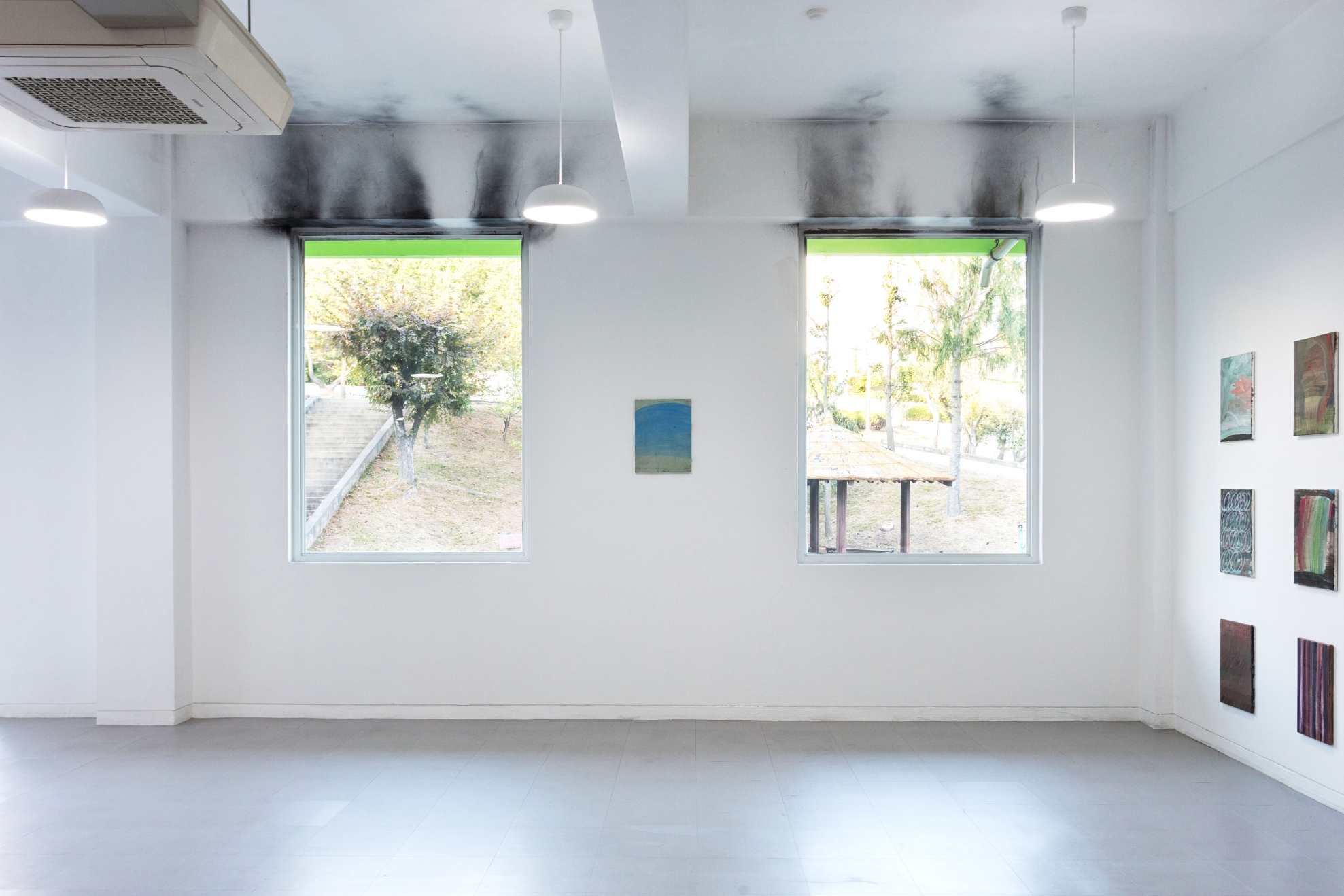
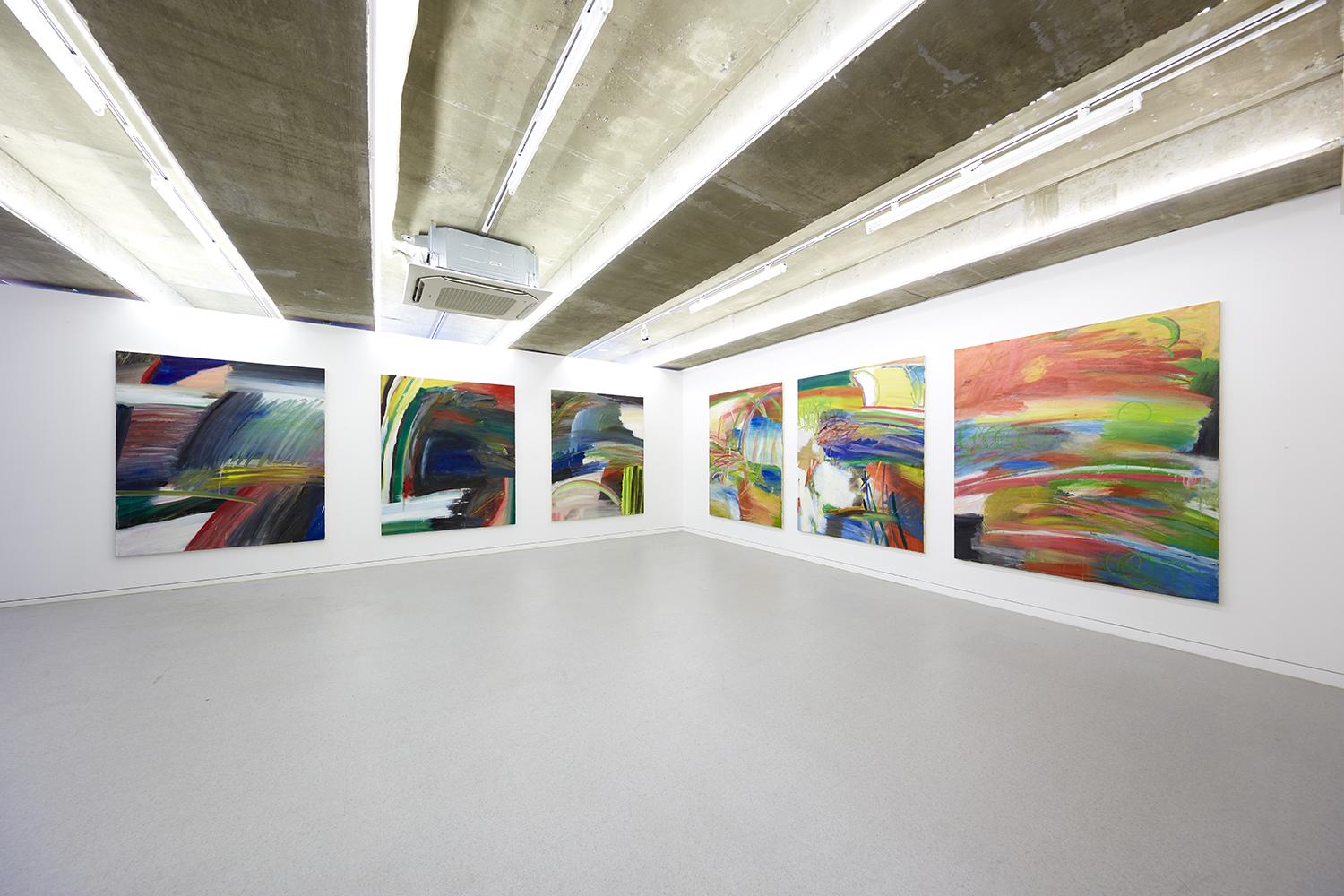
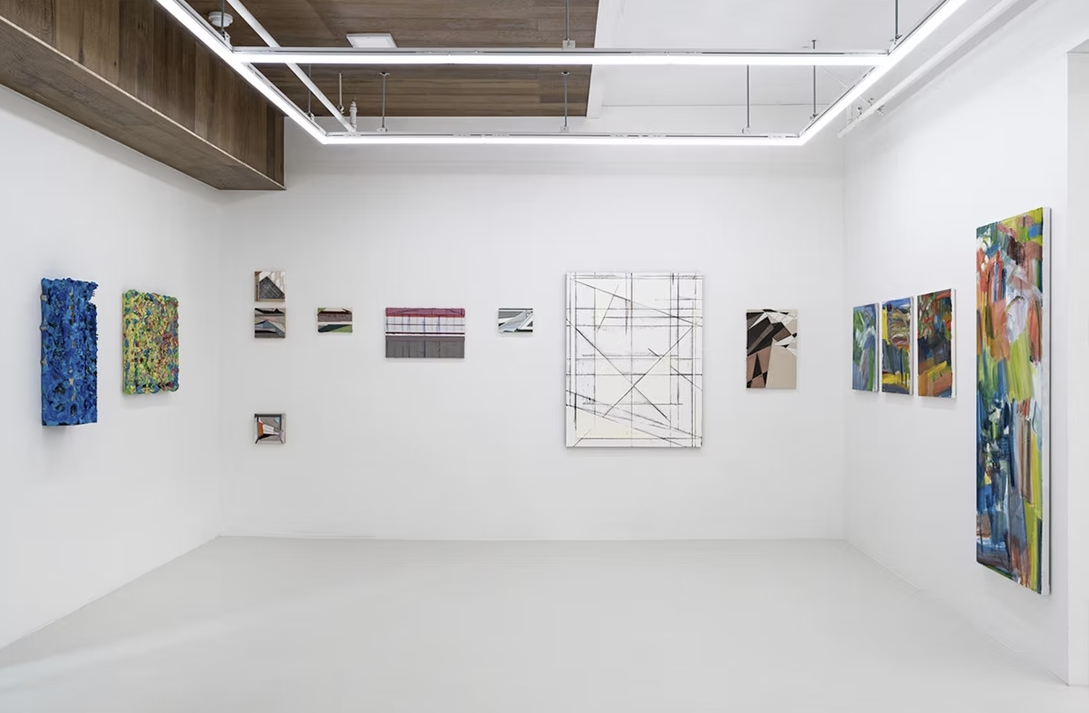
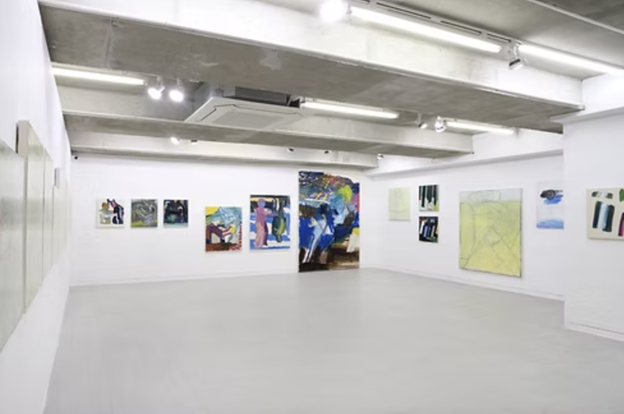
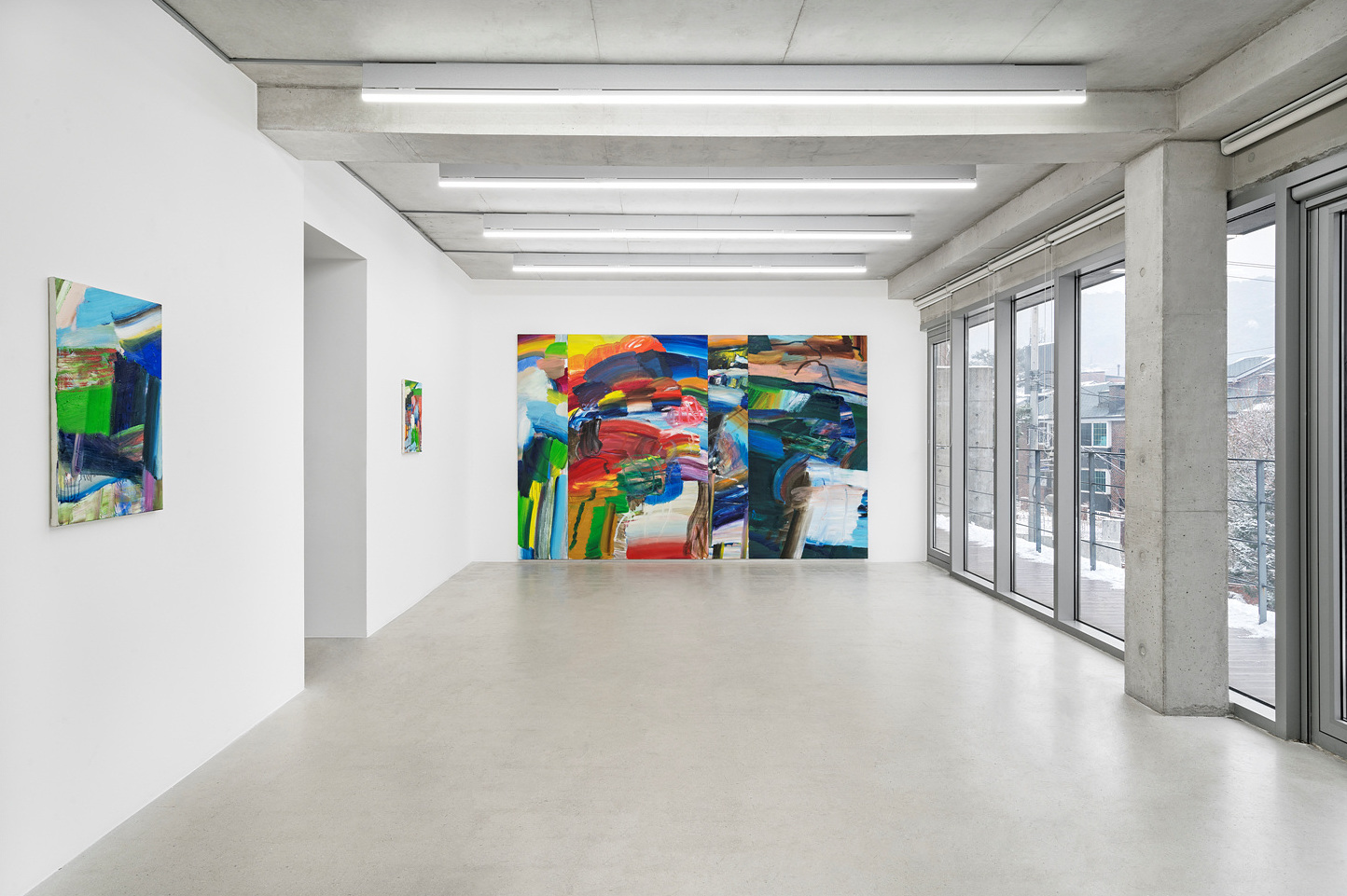
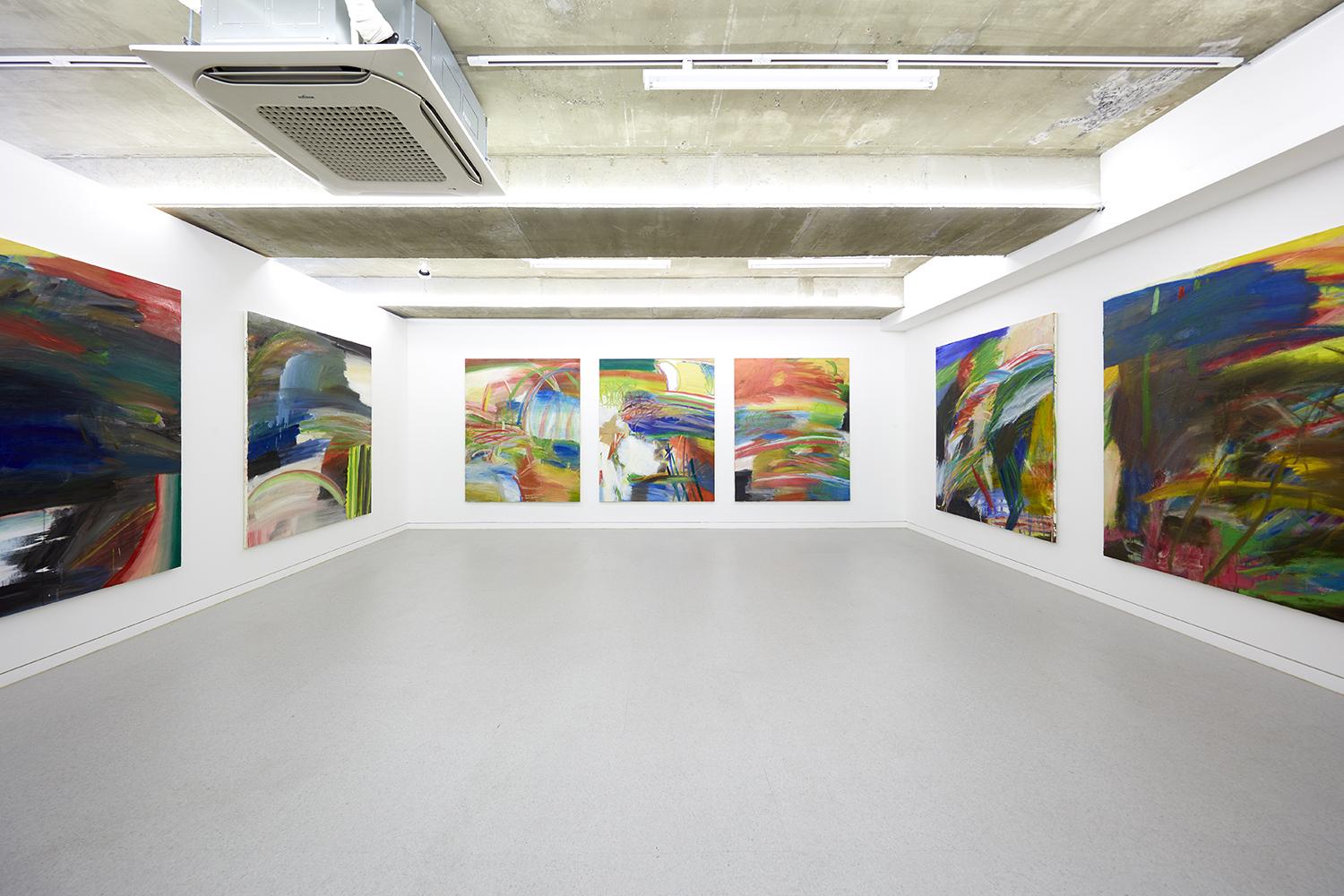
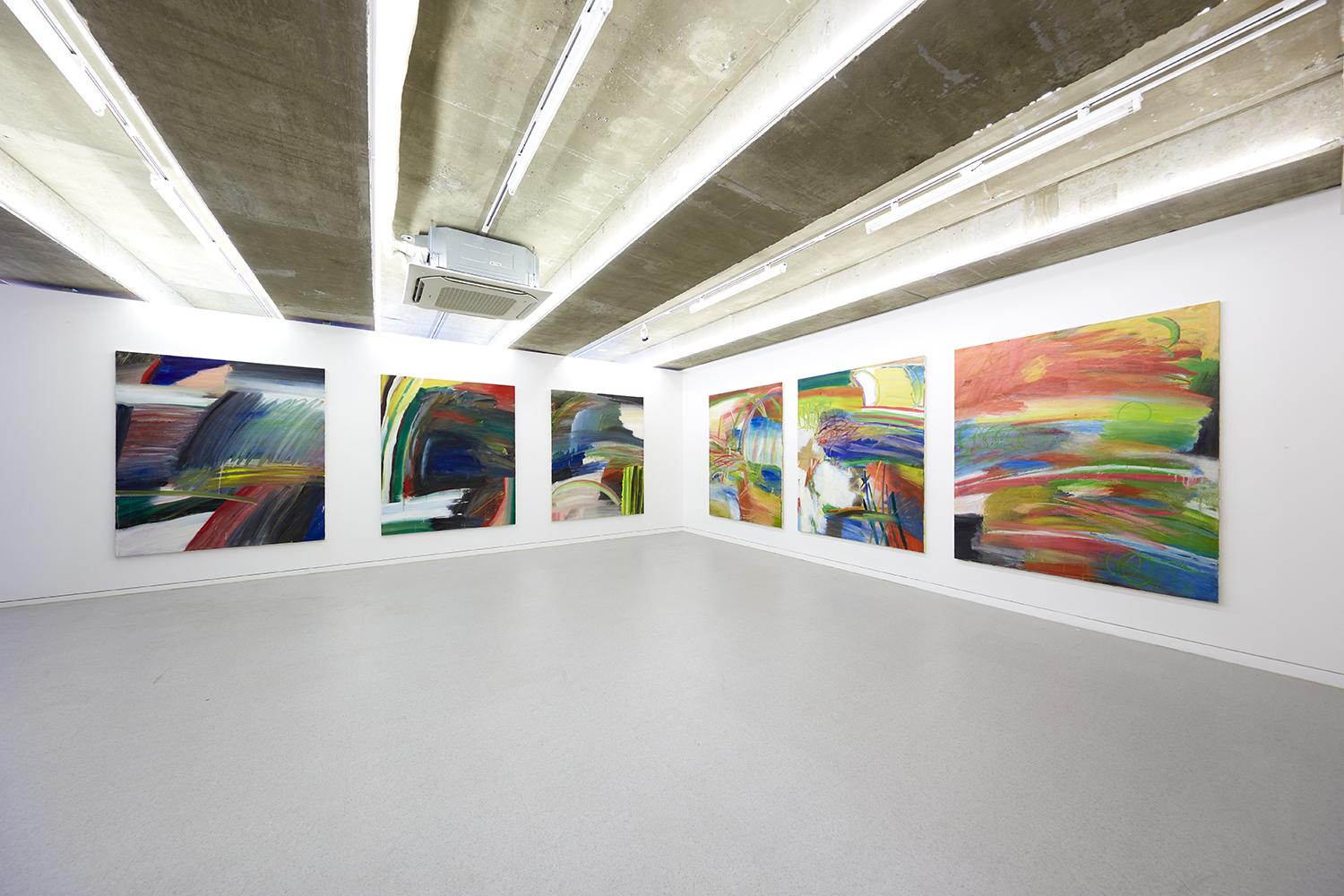
Here is a strange landscape painting. A landscape that cannot be
understood unless told, and perhaps not even then. Traces that seem erased
somewhere, fragments of what was left or remains. A flow that attempts
concealment yet appears vivid, an emphasized revelation through disorder.
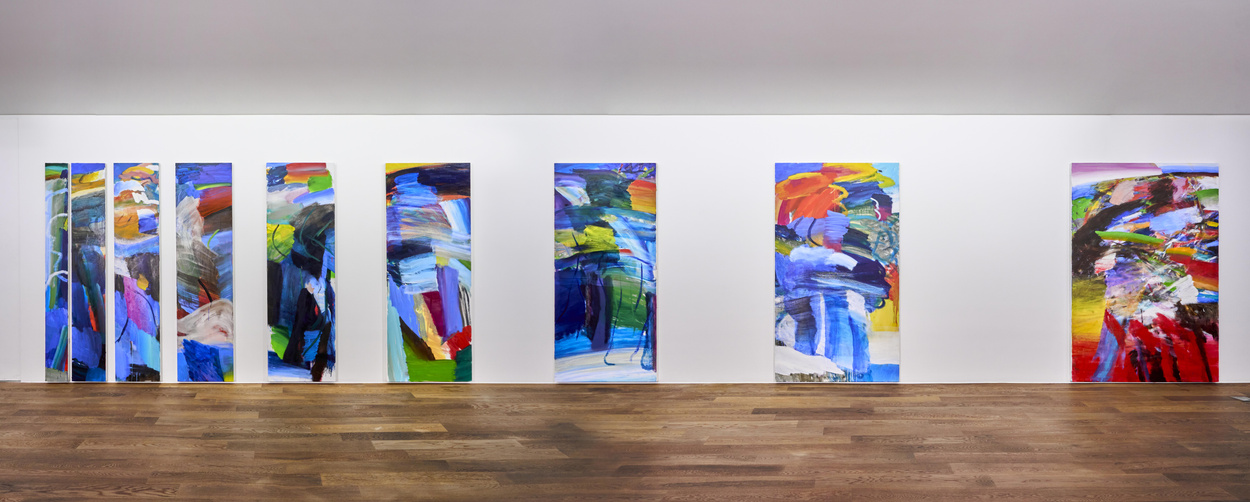
As I look at the painting, there are things that are visible and
things that are not shown. I see, yet I cannot tell what I am seeing; sometimes
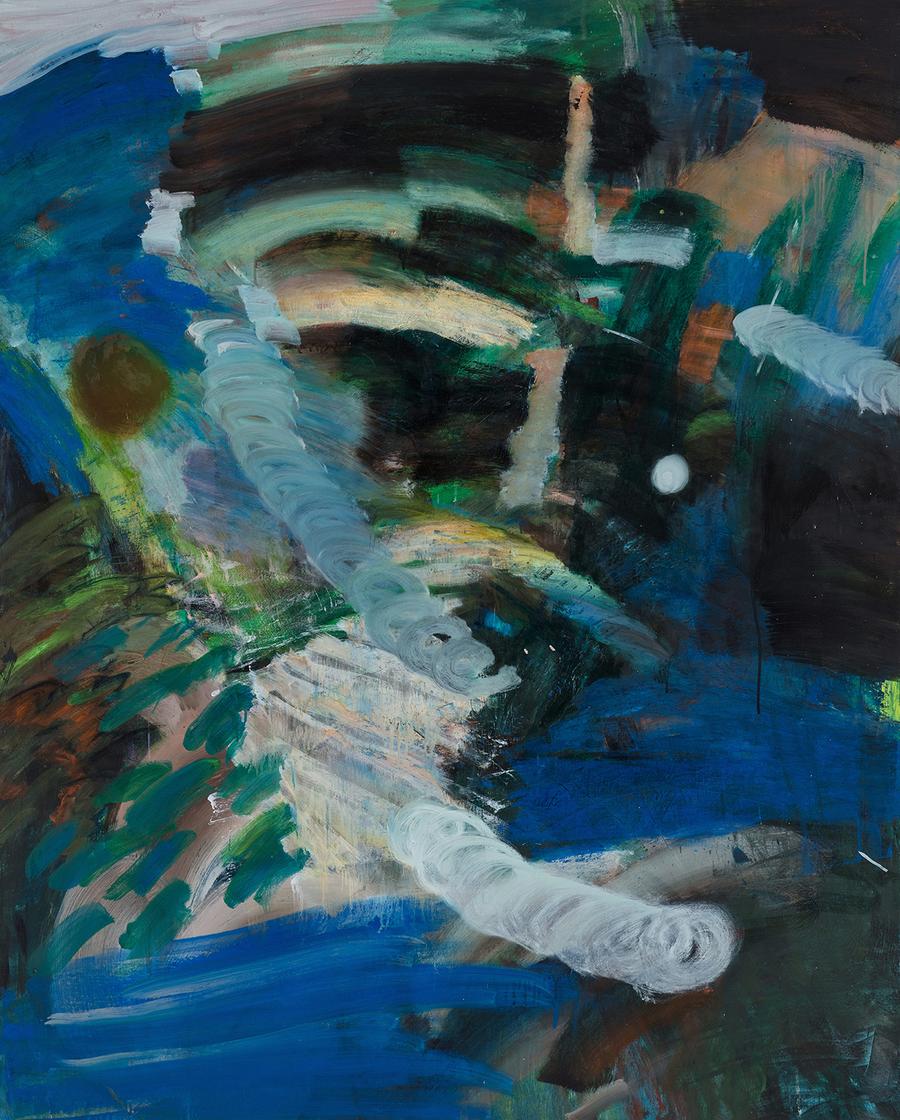
something appears, yet it may not feel real. Thus, when looking at these
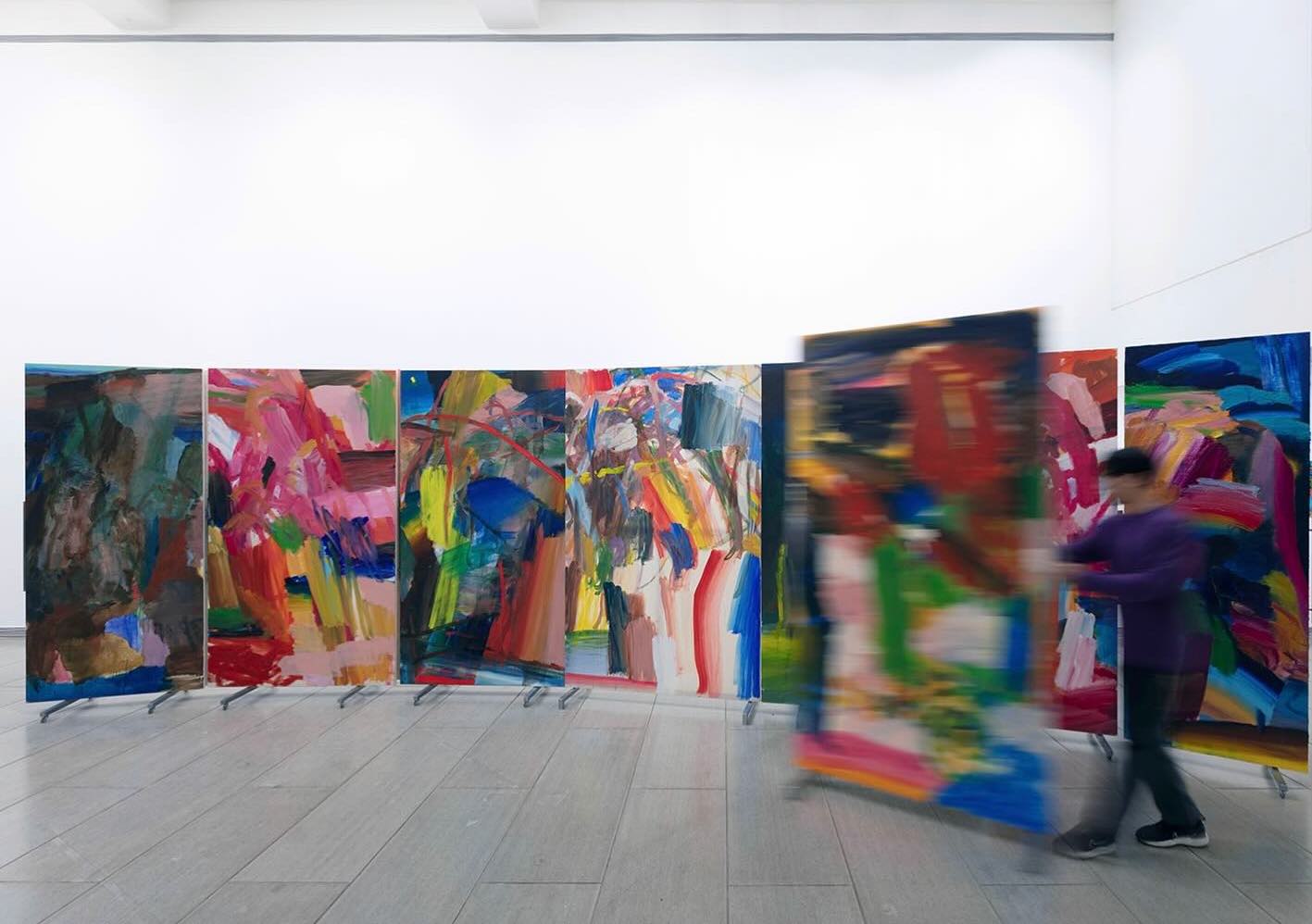
paintings, I tend to follow the visible forms. Though nothing is intentionally
left behind, I move my eyes, head, and heart along the carelessly scattered
traces. A sense of movement is conveyed. What seems like it might begin lightly
gradually grows heavier.
Heavier than expected. Not too light, nor unbearably
heavy—perhaps a moderate weight. There is no fixed pattern. Yet the movement
occasionally felt seeps in naturally and repeatedly, and at that moment a
certain rhythm comes alive. The free rhythm is inverted before I realize it,
placed gently upon a rhythm like the flow of the unconscious. The rhythm, in
turn, reveals deviation within a certain cadence, repeating disappearance.
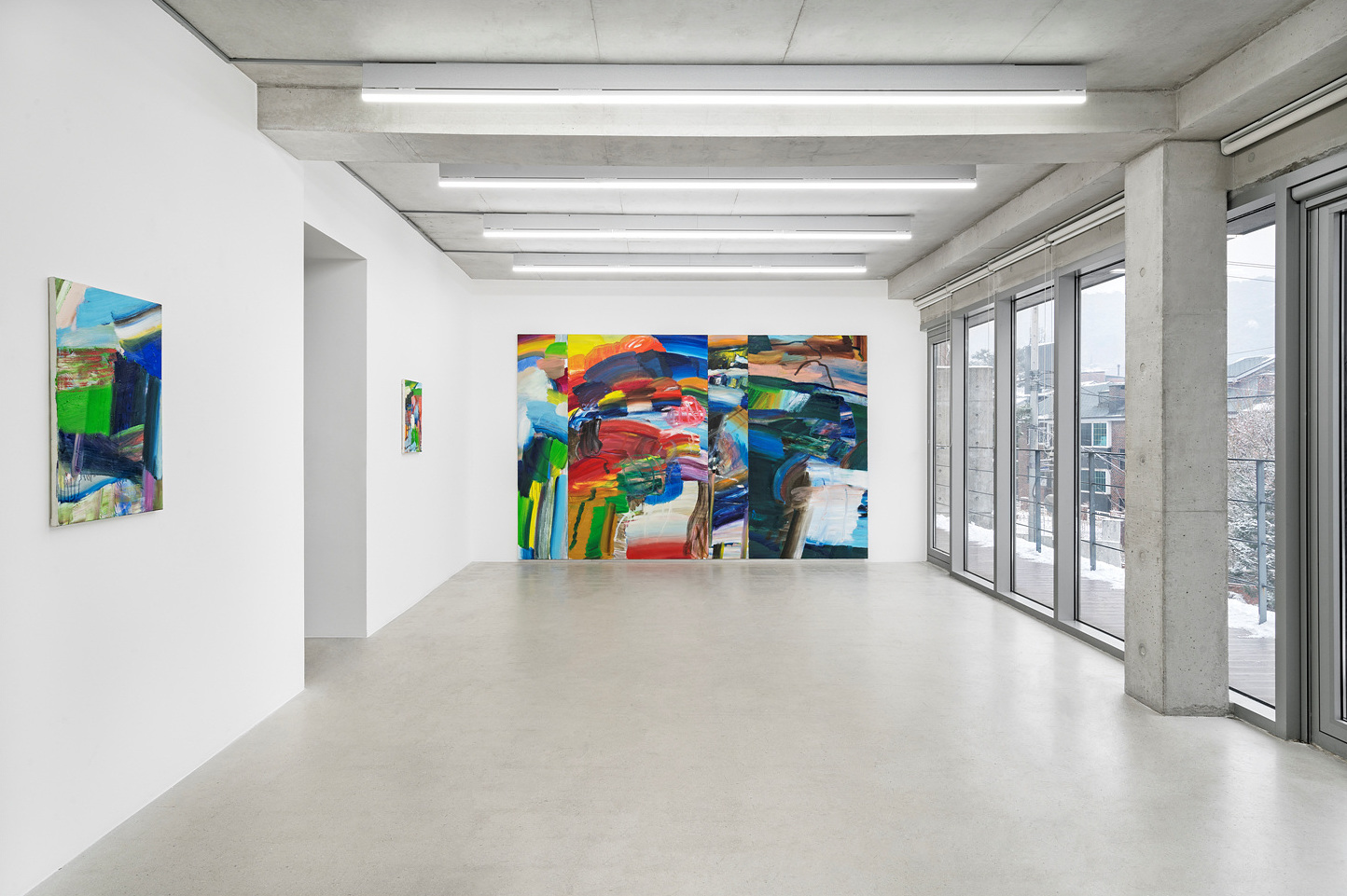
A misaligned landscape. Or perhaps one might wish to call it an
expanded landscape. Yet by “expanded,” I do not mean a simple enlargement of
nature in the conventional sense; rather, the domain of landscape itself
deviates, accompanied by a kind of delight and exhilaration. If we trace and
follow that constantly misaligned “then” between the painting and myself,
between the artist and myself, between the painting and the artist, might we
approach, at least slightly, that point which is nowhere and yet everywhere.