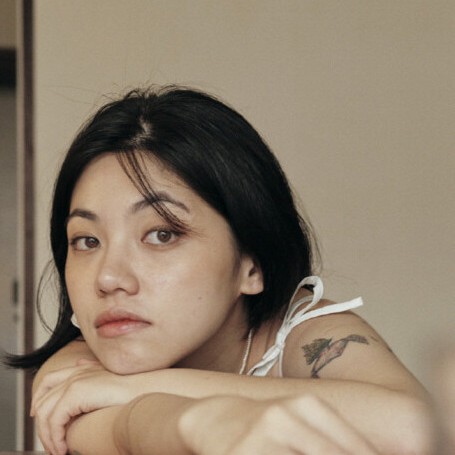
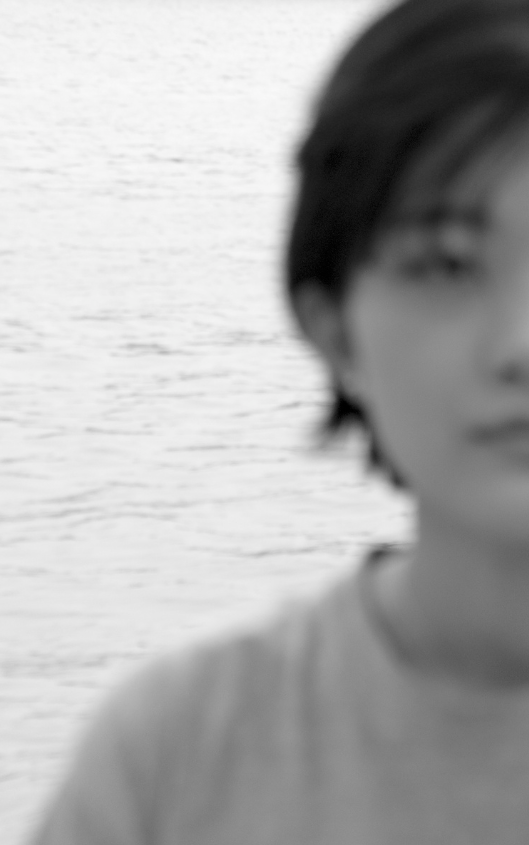
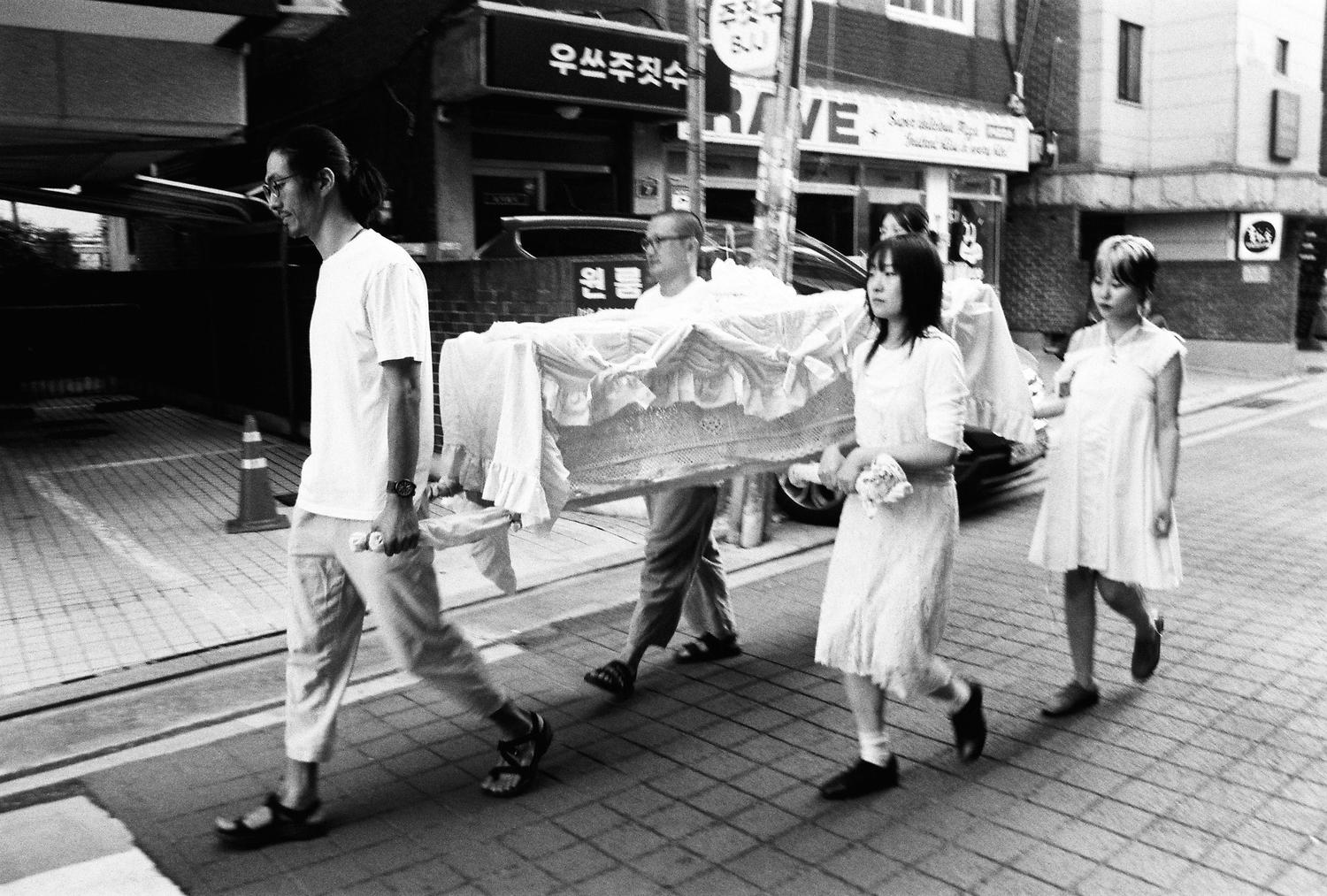
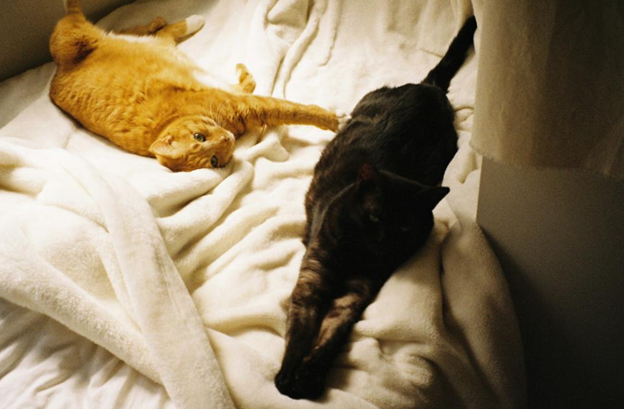
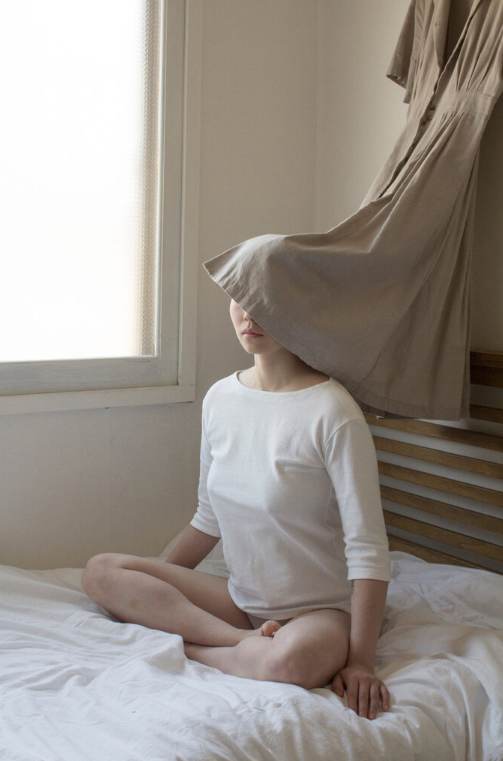
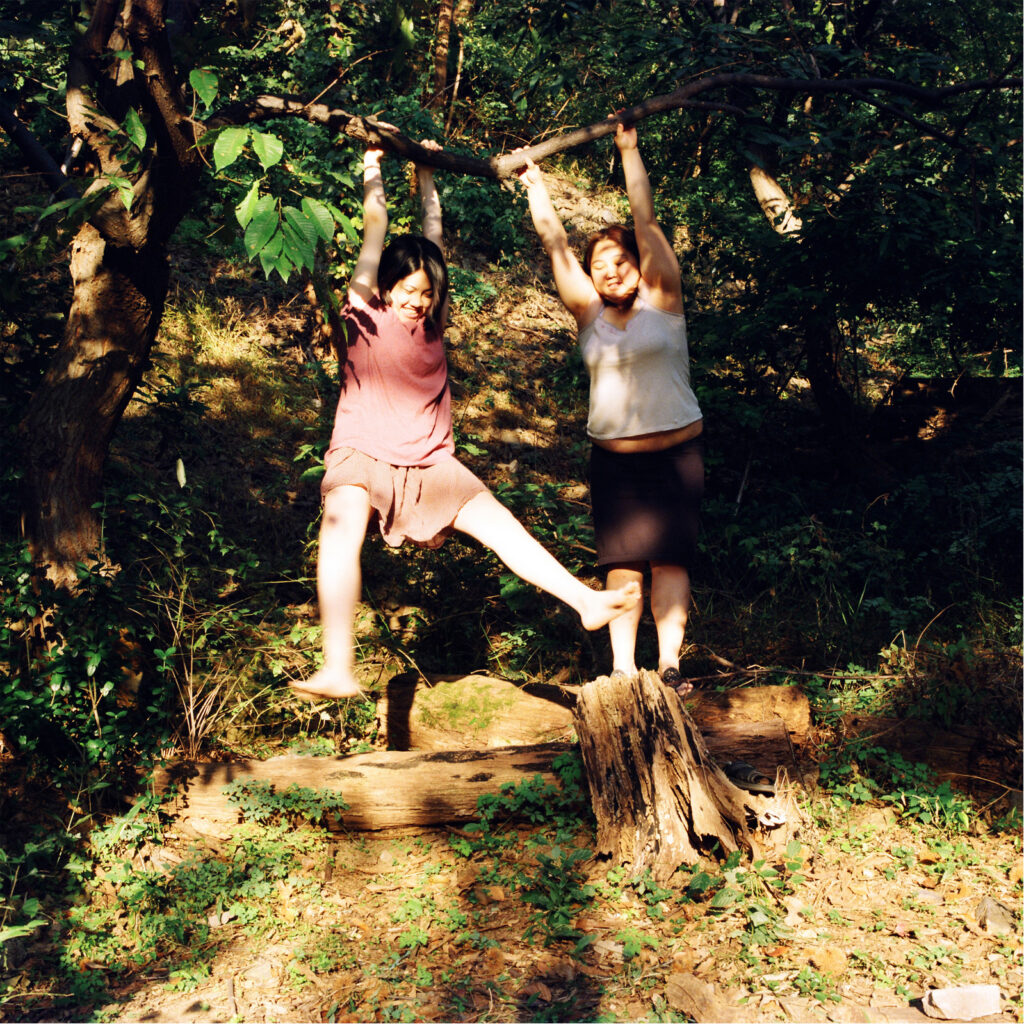
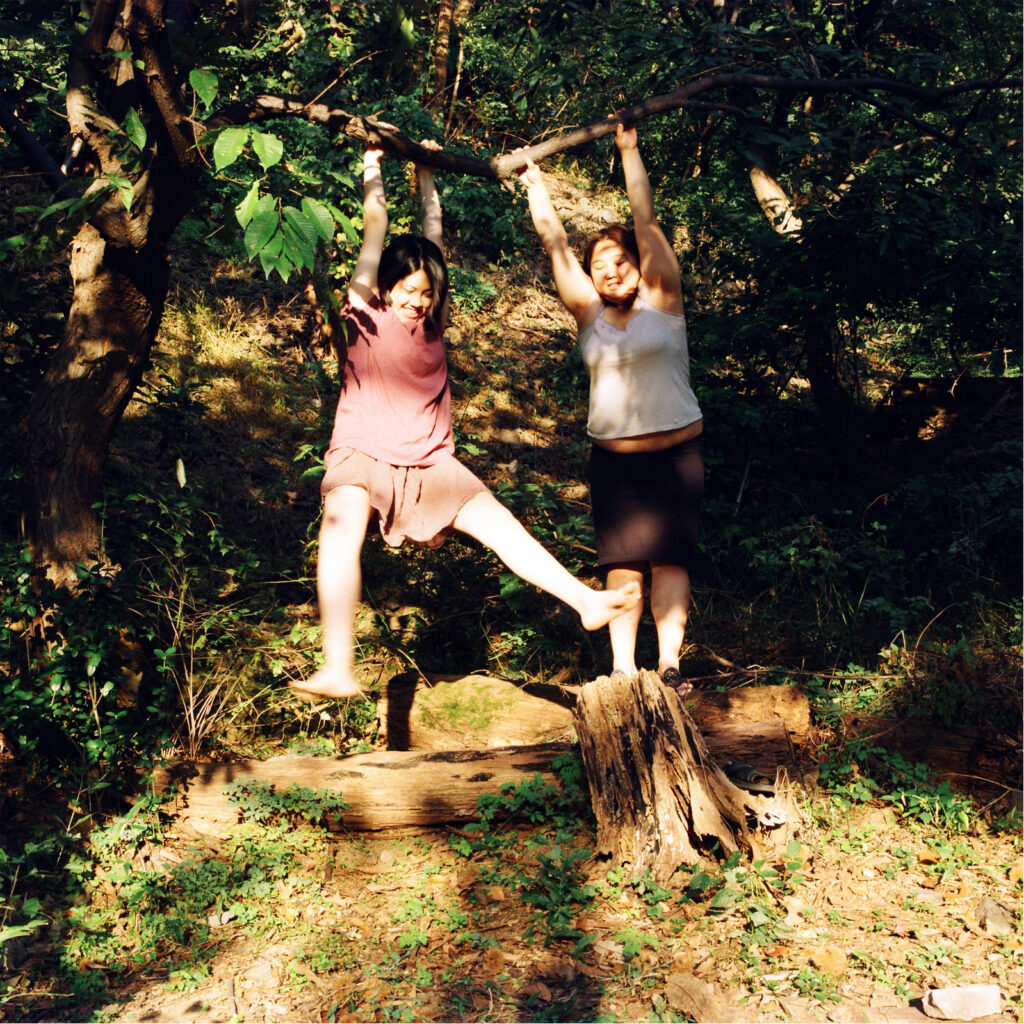
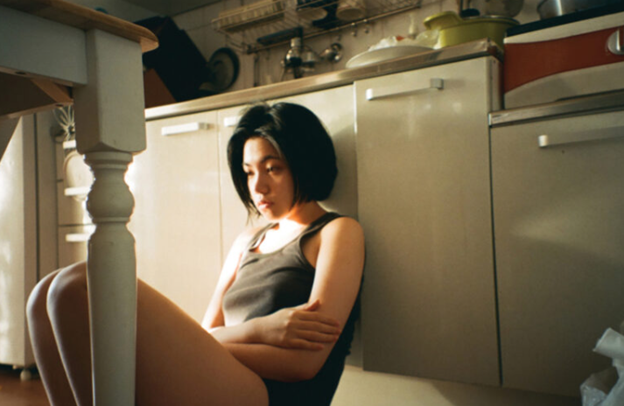
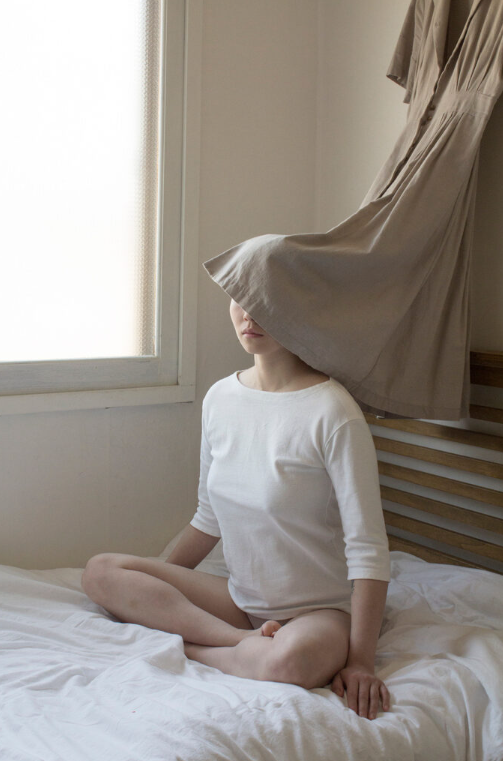
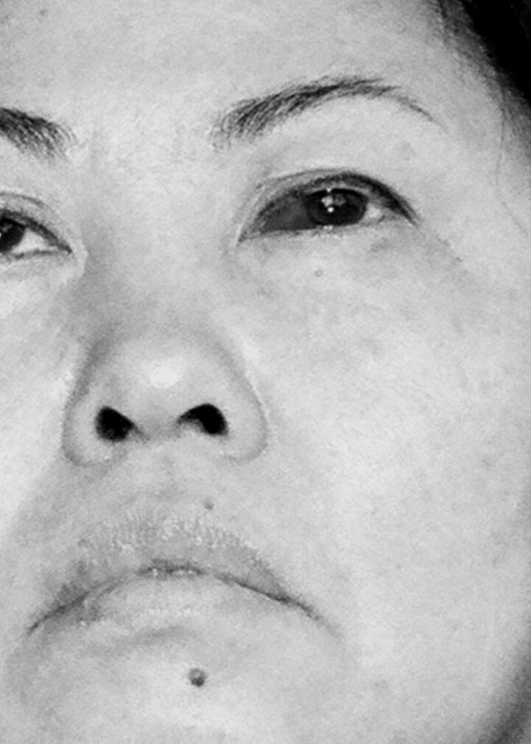
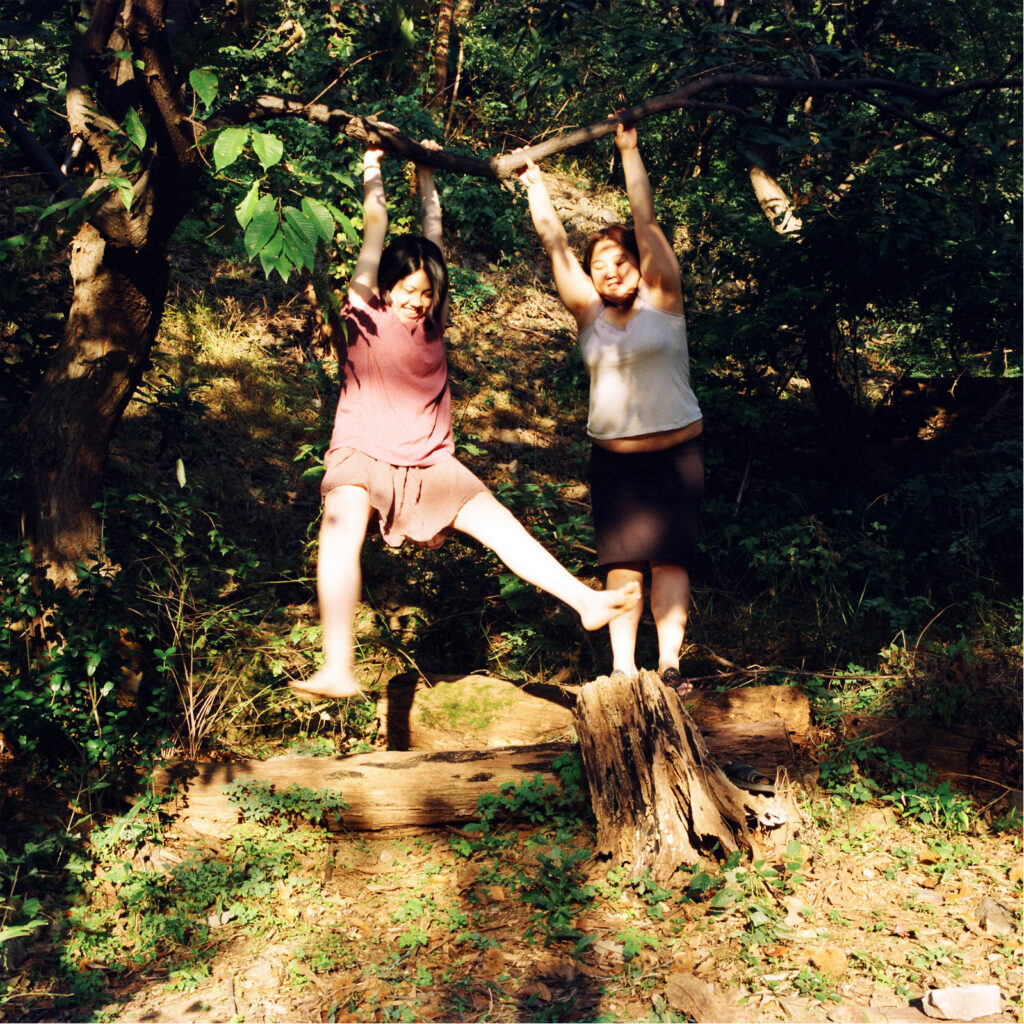
Yezoi Hwang, Season_2, 2017, Digital pigment print, 60.9 × 60.9 cm © Yezoi Hwang

1.
To put it simply, we are surrounded by too much “lyricism.” One could say that lyricism has already been exhausted. Anchored in a triangle whose vertices are “the everyday” as its ground, “the interior” as its means, and “nature” as its ideal, lyricism no longer functions as a style but is depleted as a mechanism. The logic of lyricism—attending to minor surrounding existences, cherishing them, and extracting special and precious emotions from an otherwise banal day to arrive at a form of realization—is either repeated as a formal device within art or comes to be regarded as art itself. Yet even after this, life remains stubbornly unspecial.

This is because realizations born of lyricism may be morally virtuous or aesthetically beautiful, but they are not threatening. The truth of life—that is, truth itself—is always threatening. Yet the self does not wish to know this truth. Rather than inventing life anew, it retreats from truth by insisting that it is enough to leave life as it is and simply discover what the self had failed to notice. In this logic, the world is never at fault; only the self’s lack of realization is blamed, resulting in a devotion so excessive it becomes almost sublime. Here, lyricism confirms the identity between self and world, savoring their unity, and in doing so aligns itself with absurdity.

Yezoi Hwang’s photographs likewise oscillate among the everyday, the interior, and nature. Her subjects are often people with whom she maintains personal relationships; her images focus on emotions entangled with them, accompanied by intimate, diary-like texts; and nature ultimately serves as the stage that embraces these elements. One might therefore assume that her photography, too, can only be contained within lyricism. Yet just as one reaches this conclusion, the photographs begin to speak differently—not settling into this triangular structure, but rather floating among its elements through fissure and implosion. Her self cannot embrace any world.

It is powerless and incapable before the world, and yet precisely because of this desperation, it possesses a formidable strength with which to confront it. Rather than singing of gentle and beautiful realizations, the self that sings of catastrophe and unhappiness does not polish itself but instead sets out to bite into the world. This clarifies once again why lyricism was the most social of genres in the age of modernism: it is a monologue that does not explicitly invoke society, yet relentlessly asks how such experiences were possible for the individual, thereby exposing the society mediated behind the artist’s back. Yezoi Hwang traverses three paths both separately and together, exploring society from outside society: subjectifying the self, othering the other, and turning landscape into wound. In all three realms, her photographs are threatening.


Yezoi Hwang, mixer bowl_30, 2016 © Yezoi Hwang

2.
The self grows through modes of identification or internalization. Traveling through the world, it encounters what is different from itself, but these differences soon become mirrors that reflect the self back to itself, allowing it to preserve itself. Encounters with others, the discovery of unfamiliar objects in everyday life, or the experience of new landscapes while traveling ultimately focus on the “I” that reconciles with the unknown. The ascent in which the self is everywhere and can become anything may appear sublime due to the degree of self-inflicted strain it entails, but paradoxically it ends in narcissism by proving the endurance of the self.

This tendency—to foreground the “I” through innumerable existences—also appears in Yezoi Hwang’s photography. Yet narcissism is absent here. Rather than the pleasure of transformation, her work seems driven by the pain of exploration. Despite foregrounding a multitude of beings—mother, sister, friend, others, objects, and nature—there is no central force that governs these characters. At some point, Hwang may have attempted to swallow all her subjects. But she photographs as if, like someone suffering from anorexia, she fails at bingeing and ends up expelling instead. The self she reaches is not one defined through determining “what” it is, but one arrived at by erasing what is not “I.” Only this flickering can be called a “subject.”

When the attempt to swallow the subject fails—when the subject cannot be identified as one’s own—the photograph emerges in a raw state. “Raw,” here, does not mean the absence of staging as in snapshots or straight photography. Whether intention is present or not, the shutter always stops at a final moment. Just as our hands stop at the most pleasing moment rather than the most truthful when taking a selfie, the act of controlling the shutter is always a form of direction. Hwang’s photographs, however, remain opaque between staging and non-staging.

There is clearly a relationship between photographer and subject at the site of shooting, and there are carefully selected backgrounds and situations, yet the moment is entangled with hesitation. The model oscillates between immersion and estrangement (Verfremdung), while situation and background fluctuate between order and disorder. Thus, the two selves within the photograph—the self projected onto the model and the self derived from situation and background—fail both to present fiction and to reveal nonfiction. It is a flicker between the image I know and the truth of myself I do not know. Psychoanalysis tells us that truth resides in this flicker, that this flicker alone constitutes the “subject.”


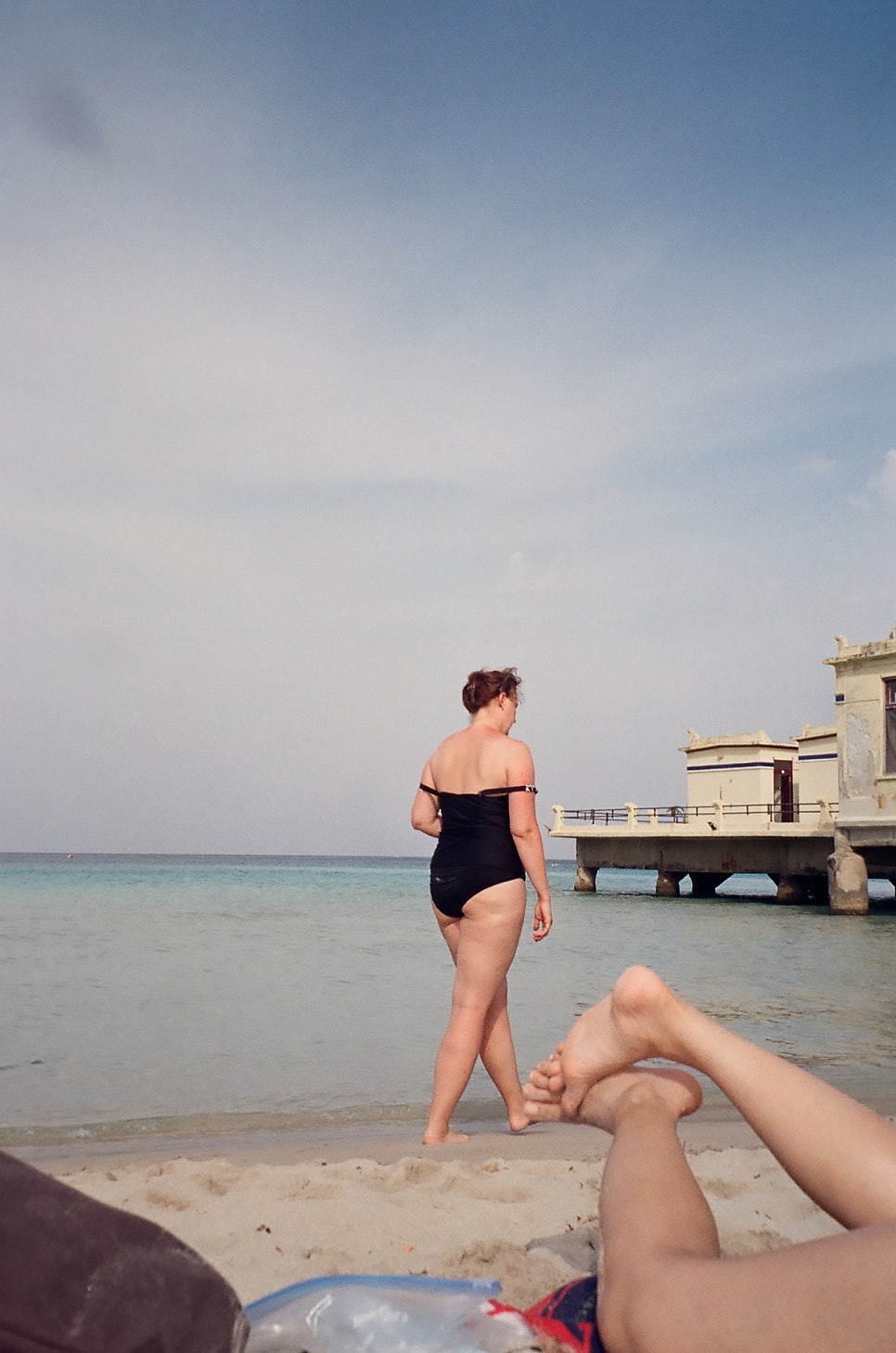
Yezoi Hwang, Maria, 2019, Digital pigment print, 40 × 60 cm © Yezoi Hwang

3.
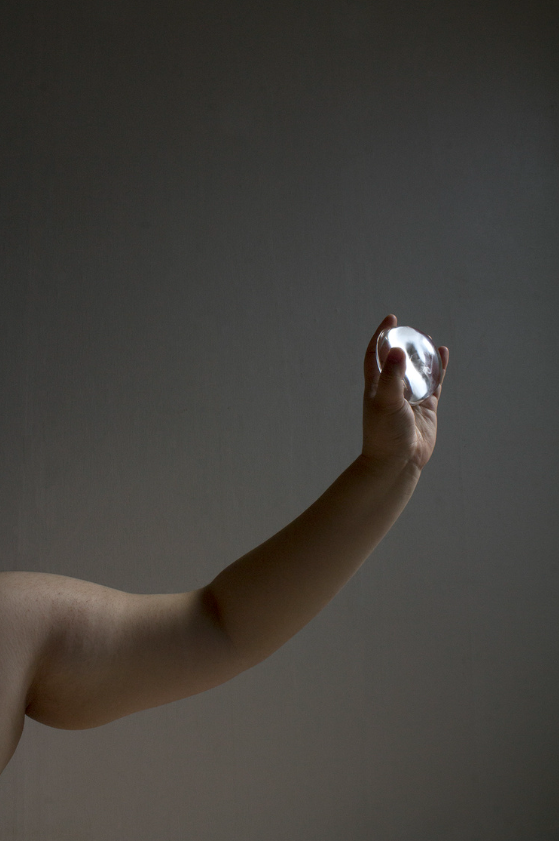
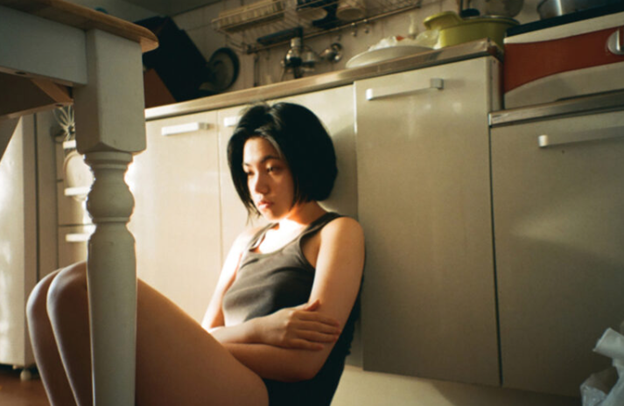
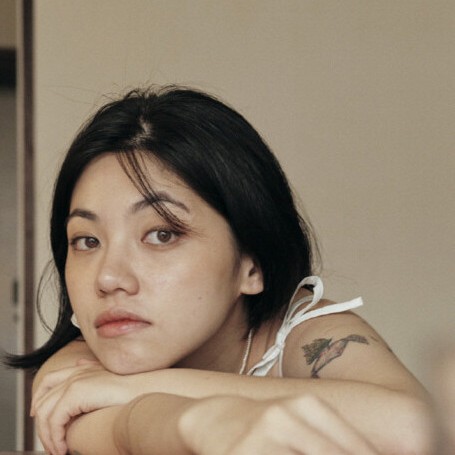
The self-portrait, in which the self is most directly projected, provides an important key. In Hwang’s first photobook “mixer bowl” (2016), her appearance repeatedly falls into a role, awakens from it, and then falls in again. As immersion and awakening repeat, the figure that might be called “Yezoi Hwang” becomes increasingly indistinct. In mixer bowl_30(2016), she gazes vacantly with blurred eyes. This clouded gaze symbolizes immersion into a role. The camera’s focus also becomes hazy, echoing the unfocused eyes. Her exposed body, leaning back with all tension released, may appear to express pain, but this is rather a symptom accompanying the process of distancing herself from what she possesses.

Yet the self that could become anything ultimately fails to transform. The blurred vision withdraws the clarity of reality and sends her toward an ideal realm, but her rigid shoulders pull her consciousness back to reality. The uncertain outline clashes with the firm geometry of objects. As if consciousness is repeatedly submerged and awakened at the threshold of sleep, the work vibrates between immersion and awakening, disappearance and existence.

mixer bowl_6(2016) and mixer bowl_11(2016) show how the artist loses herself at opposing poles. In the former, the subject is discovered by the camera; in the latter, the subject discovers the camera. Yet this passivity and activity collapse into each other at the moment the photograph emerges. In mixer bowl_6, at the moment of discovery, the model begins an absurd meal in the shoe cabinet, as if she had anticipated the appearance of the lens. The passivity of being discovered is neutralized through performance that defies the situation.

Yet the entrance positioned to the right of the figure explains why she must be there. Hwang may have placed herself in this position to look outward. If there is a cause behind the action, the figure returns to passivity. Once again, vibration. Conversely, mixer bowl_11 is active in that the subject leaps into the lens herself. Through exaggerated poses unseen in mirrors, she transforms her existing self. Yet this activity cannot erase the mark left upon her. As long as the tattoo remains, she will always be identifiable, unable to escape her fate. Still, there is vibration: the edges of the frame foretell change. Wet hair will dry; precariously placed objects will fall—nothing, it seems, is eternal.


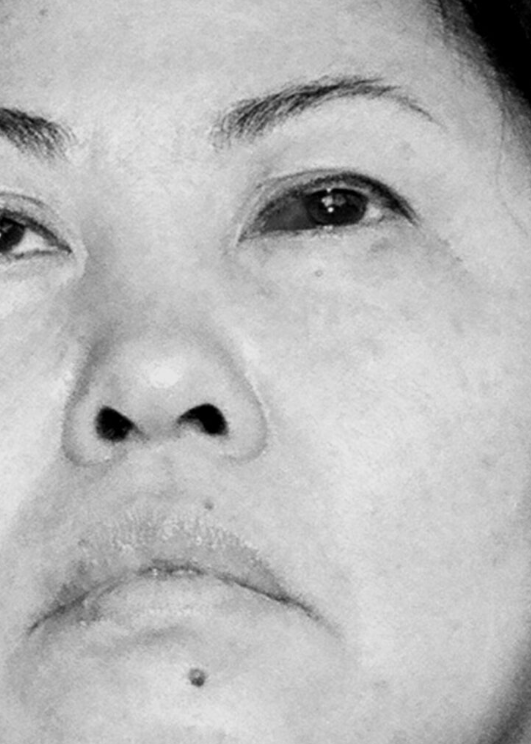
Yezoi Hwang, ill, evil, ghost_19, 2016, Digital pigment print, 27.9 × 20.3 cm © Yezoi Hwang

4.
Clearly, Yezoi Hwang is absent from her photographs. This means that others appear in her work as true “others.” The astonishing power of the self lies in finding its mirror image in others; it always sees only what it wishes to see. Conventional lyricism uses experiences and relationships with others in everyday life as its primary material, but this ultimately amounts to a reunion with oneself. Distance from the other is recognized only in order to be integrated; difference exists to serve the expansion of the self.

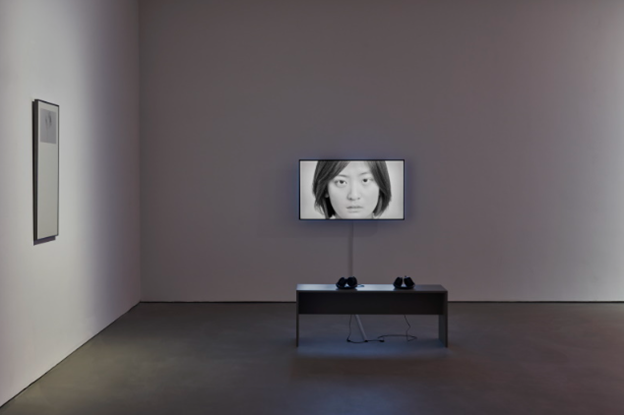
Like the frog or the beast that becomes human through love, the self absorbs the other, making them part of “my” world. Understanding someone—whether of or through them—is something already known. Love, too, is something already confessed and loved. In Hwang’s photographs, however, the frog remains a frog, and the beast remains a beast. In the photobook Season (2017), when she chooses “gap” over understanding toward a mother who returned after ten years, reciting that she is “making work that clarifies the distance between the two by tracing the marks left on face and body,” the other remains eternally other, never swallowed by the self.

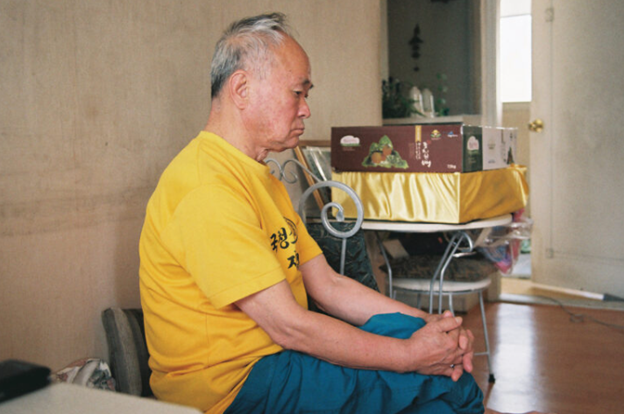
Hwang does not evade the “real” that frogs and beasts are ultimately frogs and beasts. Her subjects appear not to be staged by the camera, but as if they have crash-landed at the place where the camera stands—or rather, as if the camera has crash-landed at the place of the subject. They appear free from the artist, to the extent that even calling them models seems inadequate. In mixer bowl_17(2016), the reason viewers cannot immerse themselves in the contemplative figure is not because his concerns are trivial, but because he exists as an other, like a piece of furniture sharing the same color scheme as the box beside him.

This is not mere chromatic harmony; the body, built up in the same yellow and reddish-brown as the boxes, insists on its existence as an object that cannot bridge the gap except by being used—as a model. In mixer bowl_48(2016), Season_18(2017), Season_21(2017), Season_24(2017), and Maria(2019), figures are stacked, contained, or affixed like surrounding patterns. Until darkness falls, camera and being exist separately. Furniture does not speak.

That the model becomes objectified stems from the firm physical and emotional distance between “I” and the other. No situation opens a path to understanding. In the photobook “ill, evil, ghost”, figures are often shown in close-up with expressions that resist interpretation, or only from behind with the background erased, blocking contextual reading. In ill, evil, ghost_29(2016), what is visible is not a narrative “truth” derived from emotional identification, but merely the fact that a person stands with their back turned. In ill, evil, ghost_19(2016) and ill, evil, ghost_20(2016), the mother appears repeatedly in the same place, provoking narrative linkage, yet the self cannot pry open her closed mouth. The images verge on abstraction: darkened eyes become circles rather than pain, wrinkles become lines rather than time. Where the tyranny of the self is prohibited, the other’s alterity erupts. Like the mother who appears unbidden, the other arrives suddenly, contrary to intention, and the shutter is released in surprise.


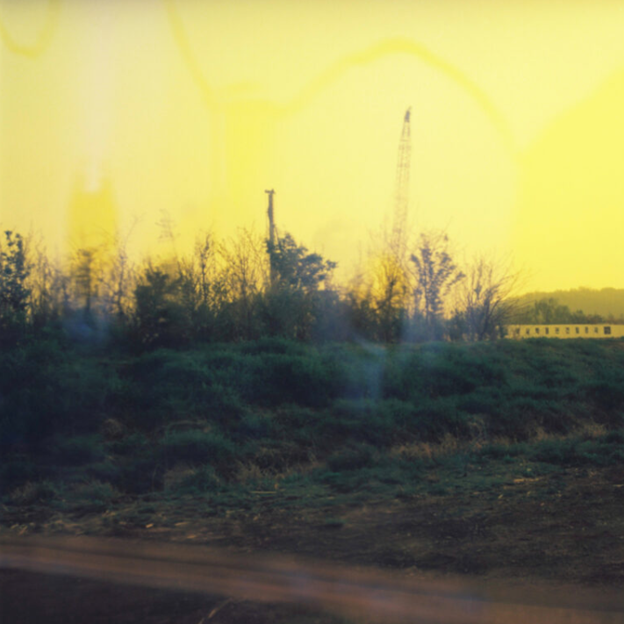
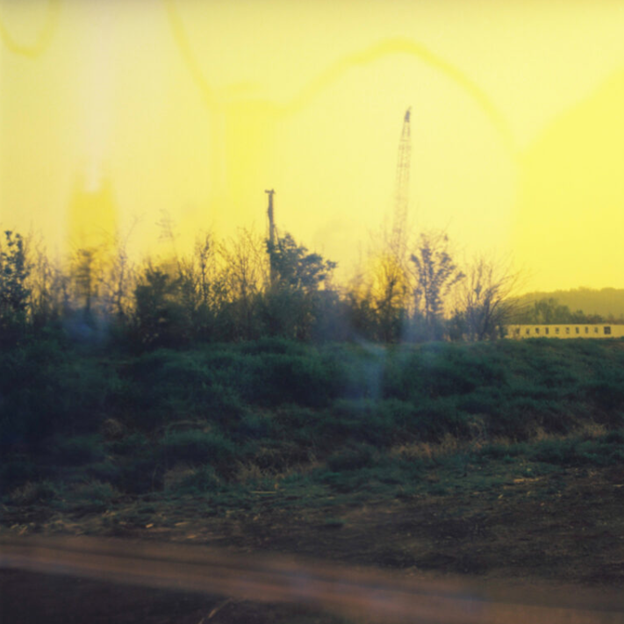
Yezoi Hwang, Yellow, 2020, Digital pigment print, 51 × 51 cm © Yezoi Hwang

5.
In art depicting the everyday, the phenomenon of nature appearing as a “matrix” reflects both an era where virtualization is symptomatic and an inherent danger of lyricism. Nature is always rediscovered—but this rediscovery usually loops back to rediscovering the self. Awe toward the sublime, infinity, vitality, or beauty ultimately concludes as homage not to nature itself, but to the self capable of encountering such feelings.

Though framed as reflection, this process illuminates the self that reflects, never straying far from narcissism. Here, nature becomes mere “landscape.” Landscape demands no accountability. Before a landscape that silently embraces all, anyone can speak, yet responsibility for why the landscape appears as it does remains unaddressed. In Hwang’s nature, by contrast, the figure must constantly open their mouth—to excuse themselves, to scream. The landscape here is a wound of the world. It is not a separated place; even locations far from sites of disaster or struggle remain connected.

Reading disaster and struggle in Hwang’s recent photographs is hardly surprising. Her images include groups of people holding flags, scenes from Paengmok Harbor, and yellow ribbons. What feels unfamiliar instead is the ordinary nature derived from these sites. In everyday landscapes devoid of visible tragedy, the gaze realizes that this place is not the whole world. Ordinary streets are deeply connected to paths once marched by angry crowds; calm skies are inexorably linked to seas where innocent lives were lost.

In Yellow(2020), the seemingly innocent sunset compels speech about the Sewol Ferry disaster. Crushed foliage lies down as if from grief; a solitary crane bearing its weight suggests guilt for having lifted nothing. Scattering(2018), which dryly captures falling snow, prompts concern for those who could not cross that weather. The sky scattering snow toward lower ground is not merely the sky of the photograph, but the sky of reality that inflicts suffering.

This awareness does not arise because photography demands the self become moral. The force compelling engagement emerges because nature itself is already situated within society. Rather than reducing nature to scenery and internalizing it, or presenting the image as a closed world, Hwang opens the frame outward so that nature itself accentuates the scars of the world. Whether a landscape is the site of a social event is beside the point.

What matters is enabling a scene to be recognized as part of society. And here, Hwang’s photography remains lyric rather than realist. Even a desolate night sea (Y’s Night(2023)) burdens the viewer with ethical guilt simply by existing. Even if she photographed someone entering the water for leisure (Long and Deep Water(2023)), the calm sea does not heal the self’s wounds but aggravates them, returning endlessly as trauma rather than abstraction. Here, what is ethical—and threatening—is nature.

Yezoi Hwang, Scattering, 2018, Digital pigment print, 28 × 40 cm © Yezoi Hwang

6.
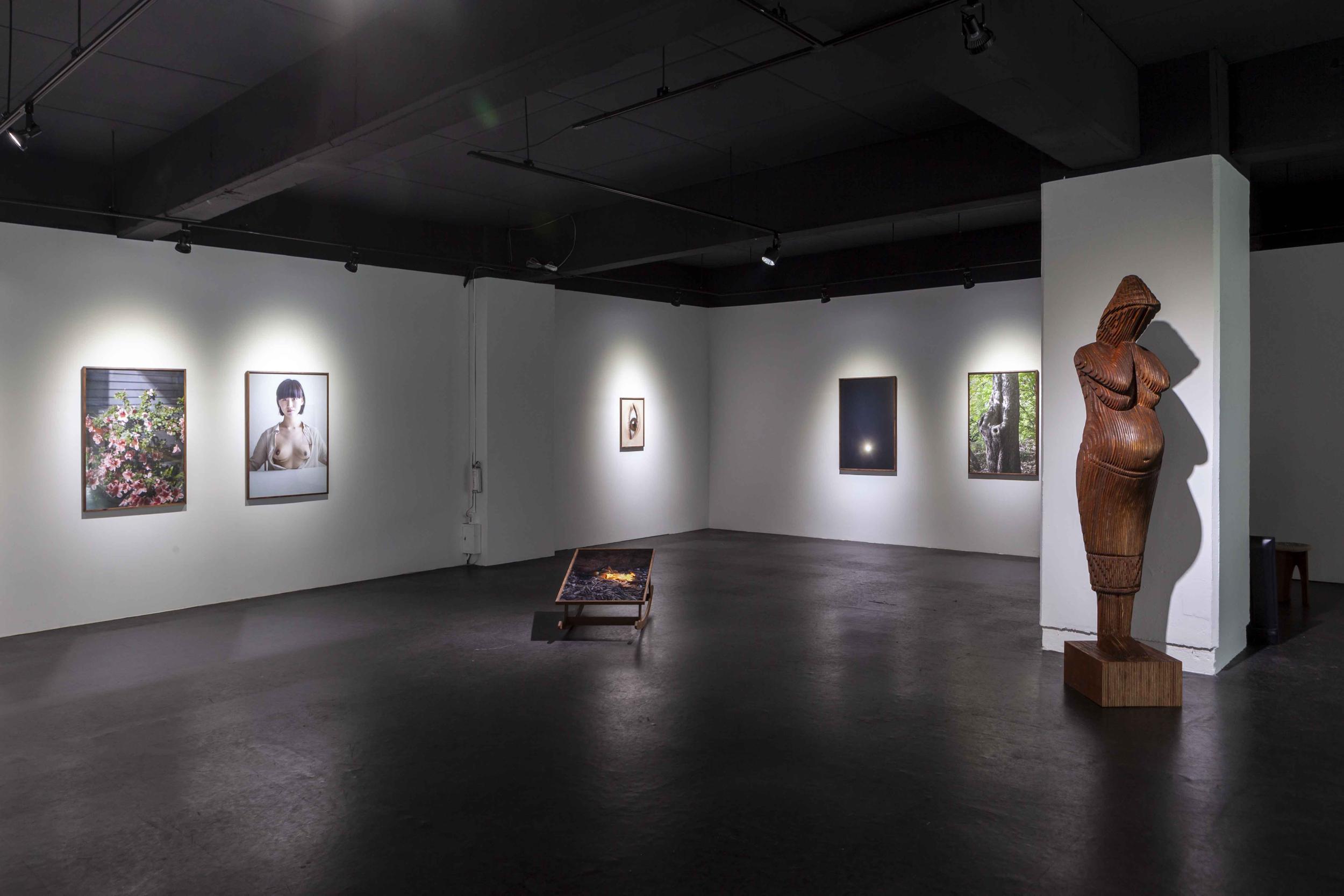
To reiterate, we have too much lyricism—and yet lyricism remains necessary. This text expresses doubt toward lyricism as the center of art while resisting categorizing Yezoi Hwang’s practice as anti- or post-lyrical. Her photographs present no “I.” The obvious self is erased; the capacity to become anything is lost. Freed from narcissism, the work advances toward what is not “I,” amid flickering non-self. Rejecting the lyrical mechanism that assimilates others—and lacking the capacity to do so—Hwang repeatedly experiments with refusing the directorial power of photography in order to encounter the other.

She also rejects the longing to aestheticize nature into landscape and construct a virtual Arcadia, piercing the complicity that builds a “virtual of the virtual” in an increasingly dematerialized reality. Nature may not be immediate reality, but it advances toward the Real where “I” and “other” coexist. The self is powerless; it can never fully reach the other; nature is not detached metaphysics but an extension of a wounded world. Such powerless, lonely, wound-witnessing photographs are threatening. Yet they remain beautiful. Were they not, criticism would not move. Even when lyricism fights the world, it must fight for beauty and with beauty. Revolution? Perhaps that arrives when lyricism radicalizes.


References
Seo Dong-jin, “Lyric Poetry and Society, Again,” After the Contemporary: Time—Experience—Image, Reality Culture Research, 2018, pp. 188–207.
Shin Hyung-chul, “The Problem Is Not Lyricism,” The Ethics of Collapse, Munhakdongne, 2008, pp. 181–203.
Shin Hyung-chul, “The Angel of Poetry – Jin Eun-young’s Stealing Songs,” Studying Sorrow, Hangyoreh Publishing, 2018, pp. 270–273.
Theodor Adorno, “On Lyric Poetry and Society,” Notes to Literature, vol. 1, trans. Sherry Weber Nicholsen, Columbia University Press, 1991, pp. 37–54.
 

*This manuscript was published as a special contribution supported by the Arts Management Support Center.

References