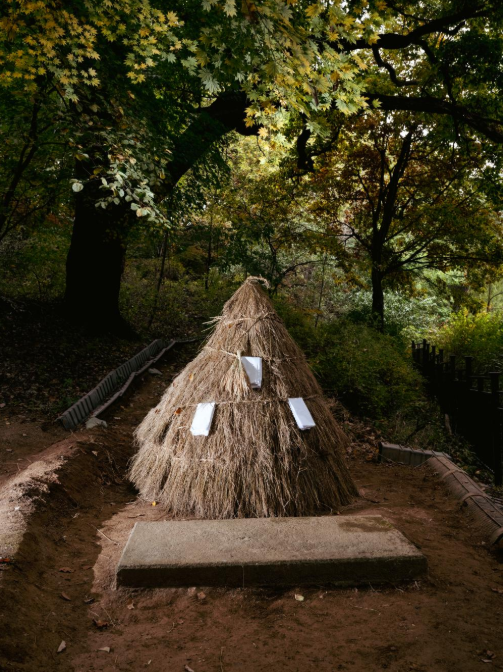
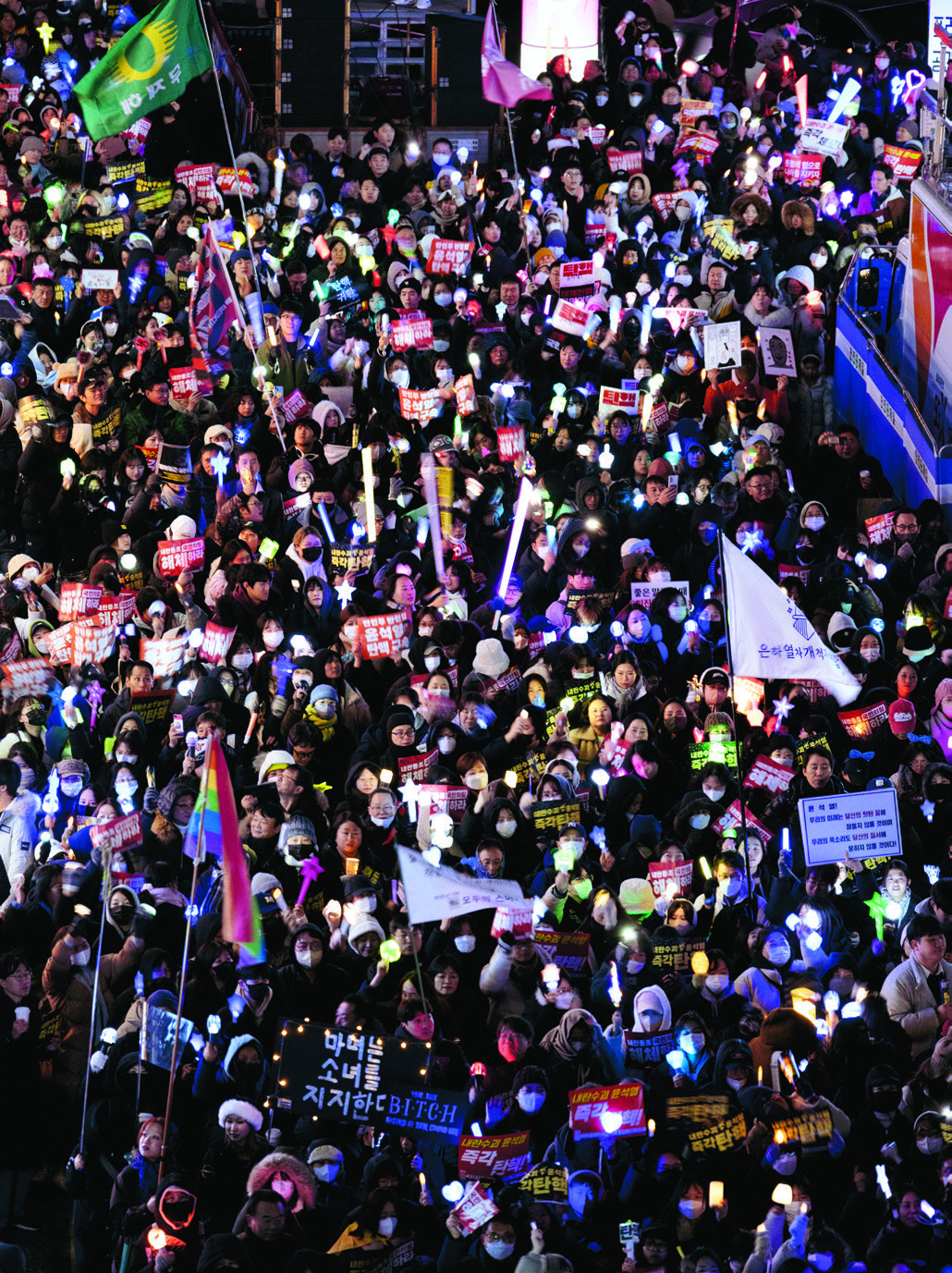
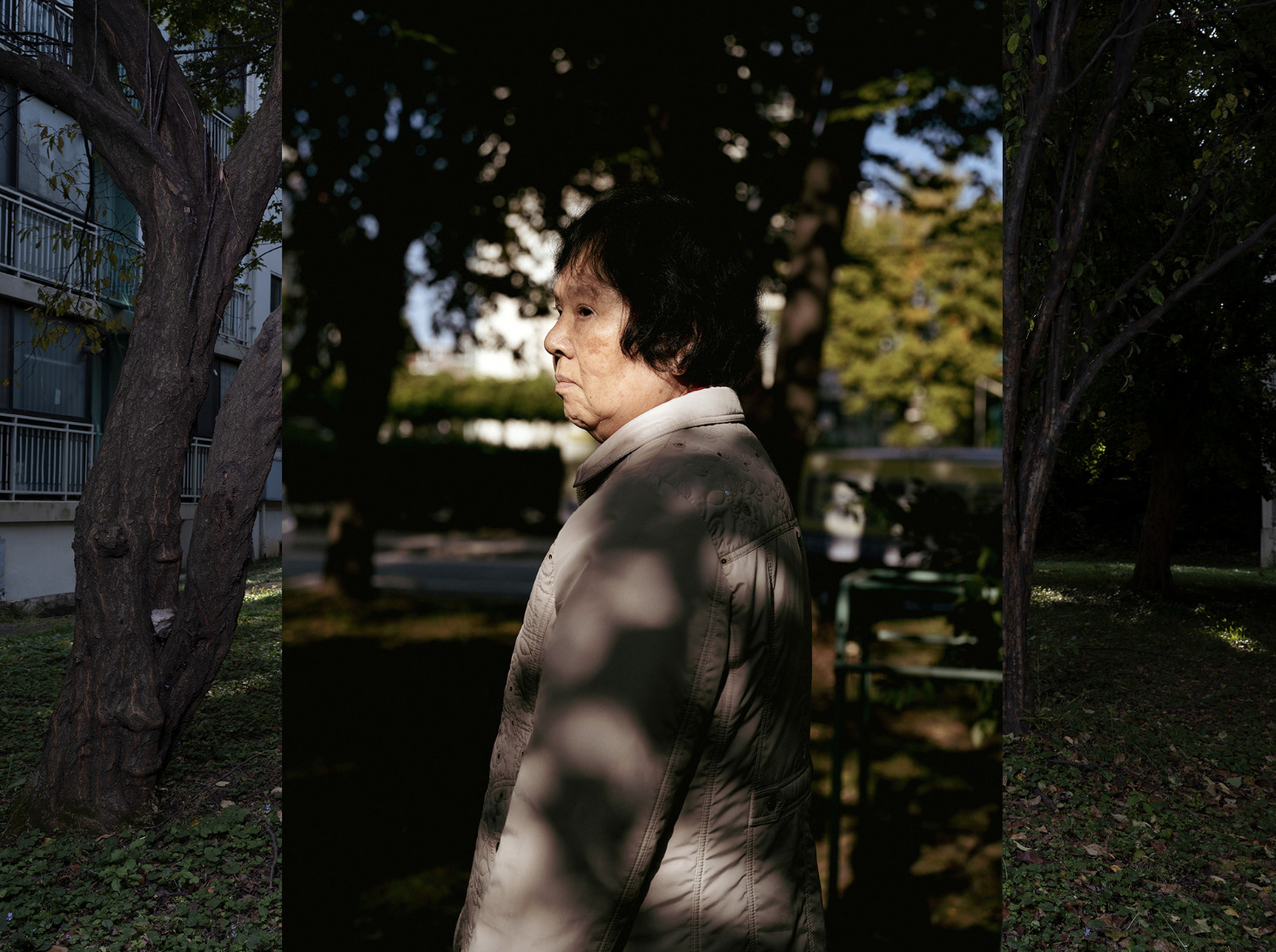
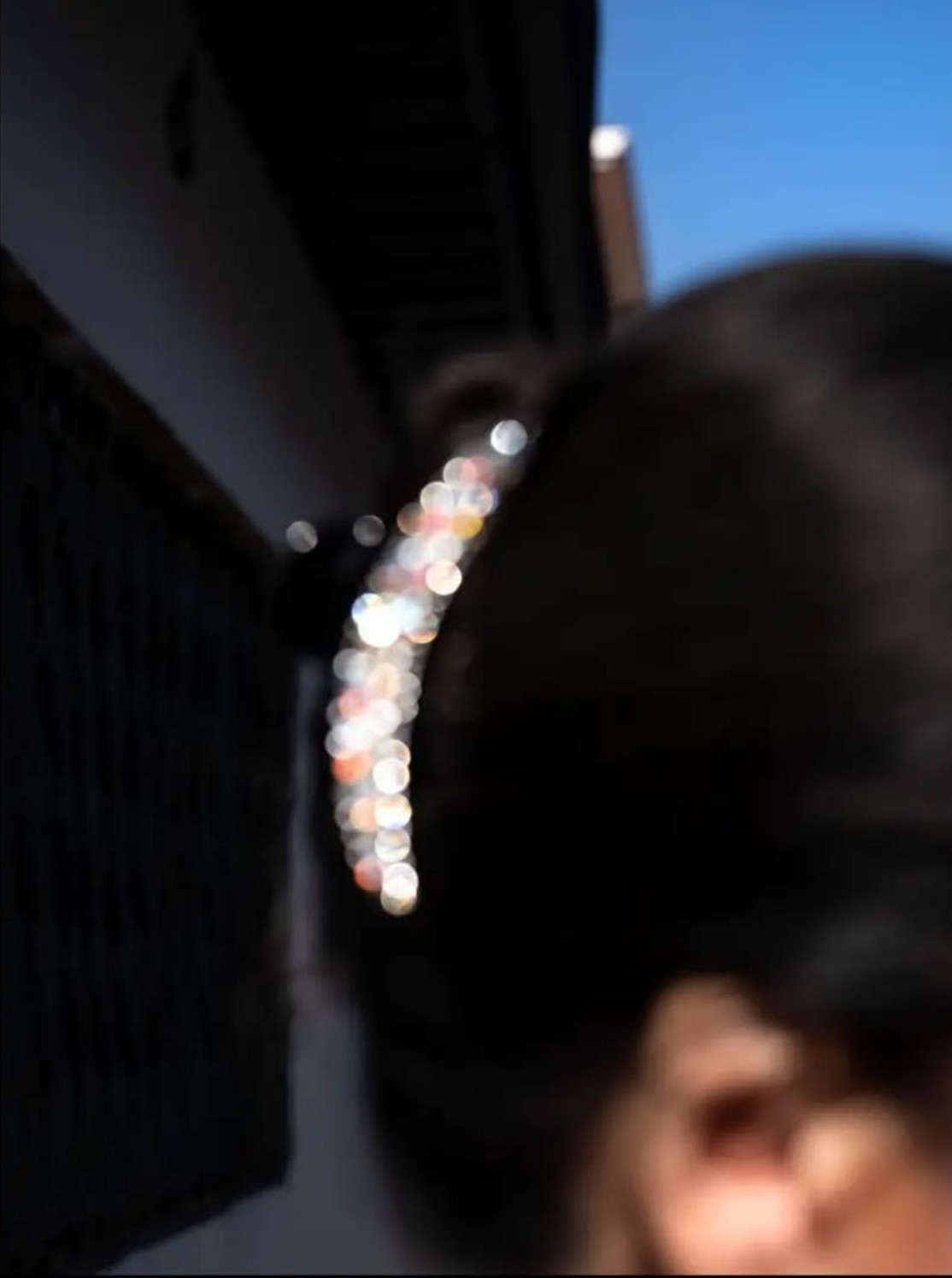
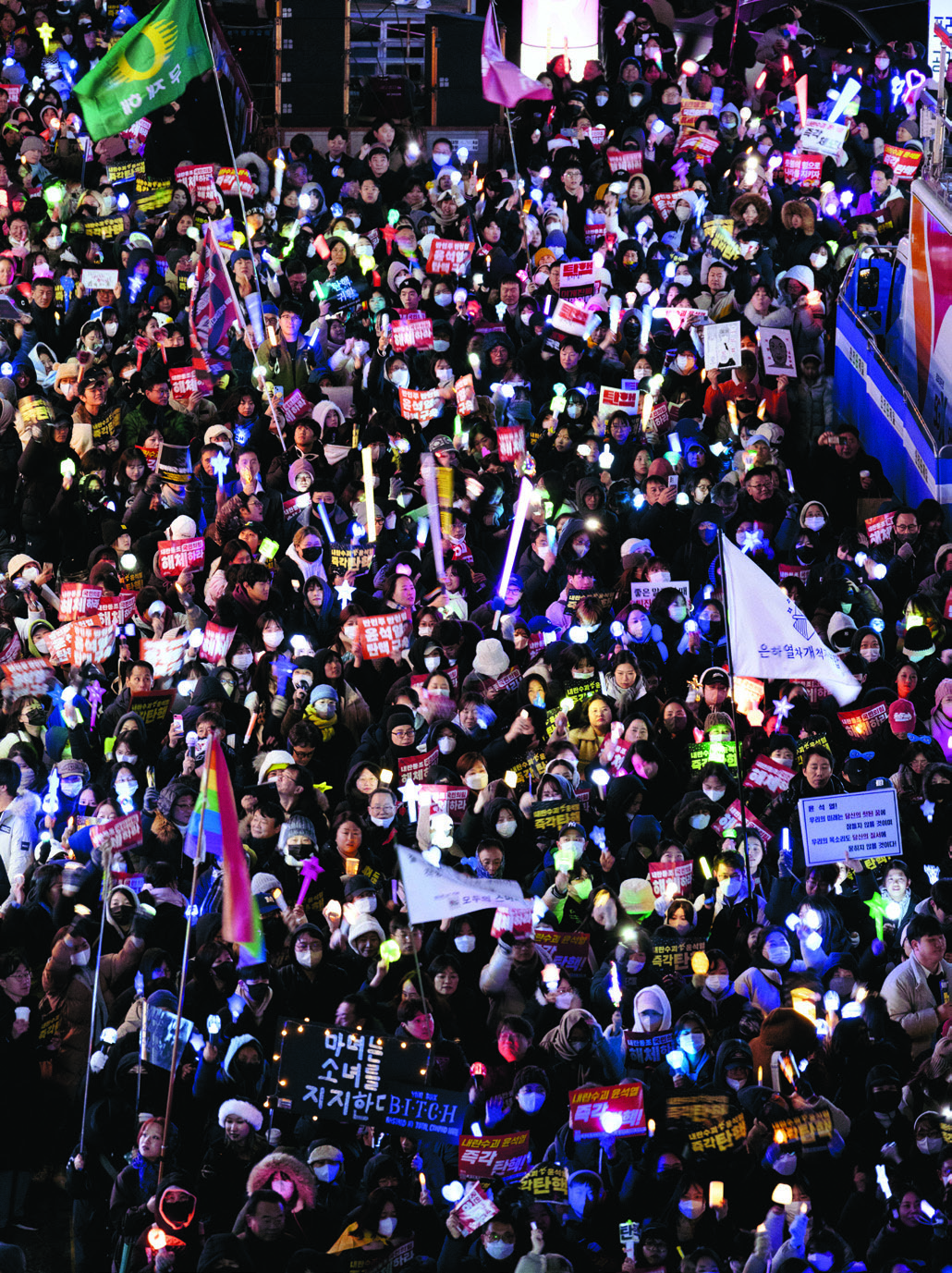
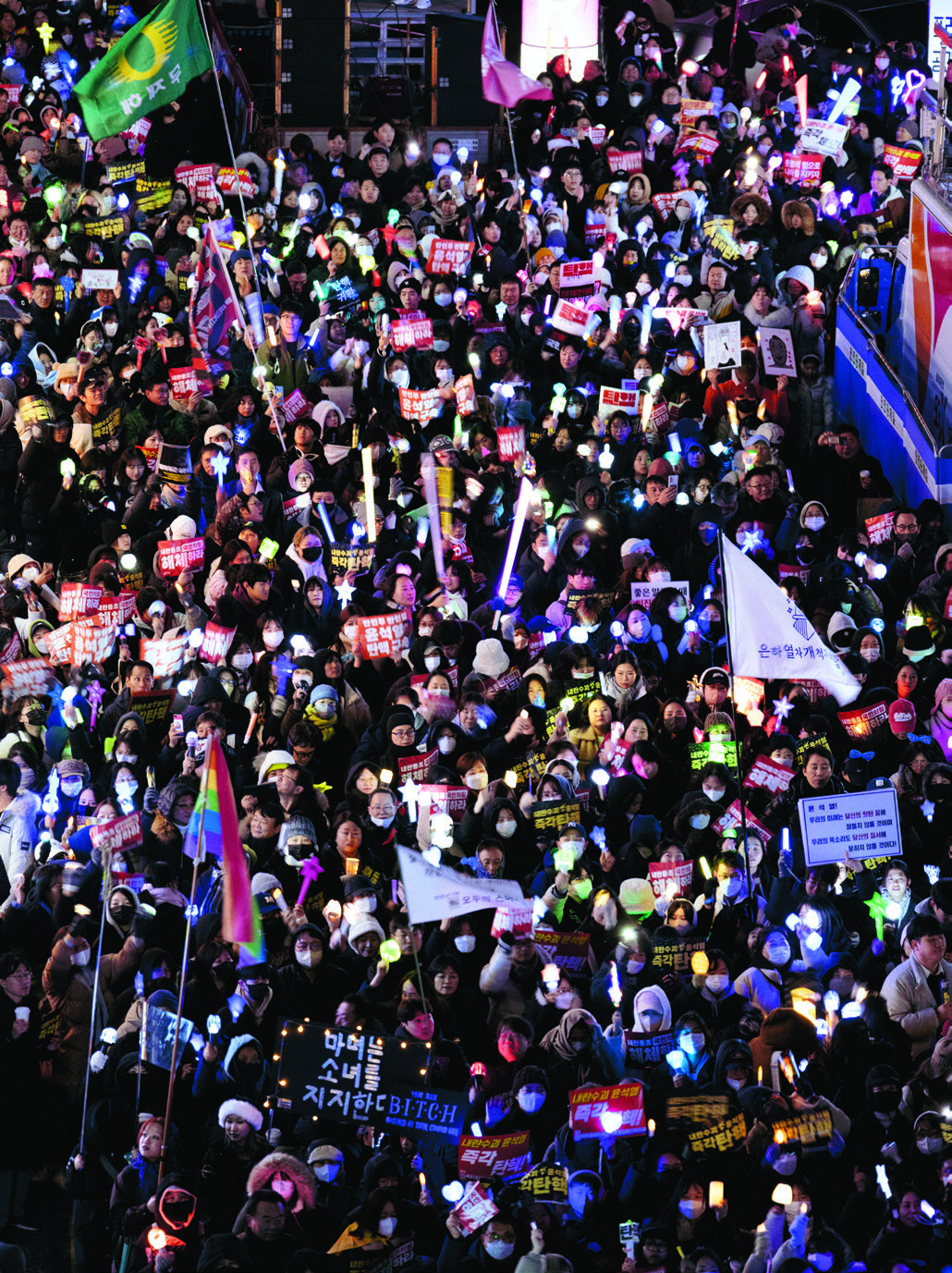
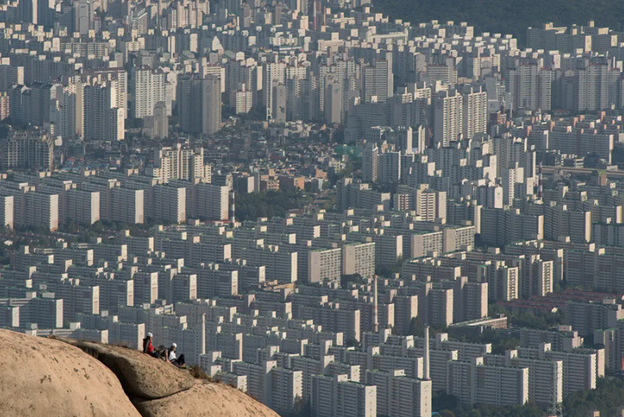
Joo Yongseong, A Landscape Where Shining Hearts Gathered, 2024 © Joo Yongseong

At the end of 2024, Korean society was immersed in an unprecedented state of confusion amid the crisis of democracy and the tragedy of social disasters. News of people gathering in the streets to protect a safe world and to support one another, and of citizens standing up against state power and violence, flooded social media feeds and news articles without pause. Watching from abroad at a distance, I begin each day by checking in on friends and colleagues who attend the rallies, following their words and records on a daily basis.

Citizens standing bare-handed in front of tanks, citizens handing pocket warmers to police officers, multicolored lights assembled through K-pop light sticks, and a variety of flags that transform so-called “fan” identities into acts of activism—all of these scenes come together. In a photograph taken on December 13, 2024, and posted on Instagram by photographer Joo Yongseong, who has long documented sites of struggle against public authority, the glowing orbs of light emitted from cheering light sticks are tightly formed one by one, creating a warm solidarity of light. Recording the protest scene in Yeouido ahead of the National Assembly vote on the impeachment motion against the president, he titled this image A Landscape Where Shining Hearts Gathered (2024).

What stands out in the recent protests, which have spread primarily among women in their twenties and thirties, is a strong sense of connection and solidarity. The phrase “00, I’ll make a world worth living in for you,” which originated in K-pop fandom culture and spread to protest flags and hand-held signs, has evolved from addressing a “bias” (one’s favorite member) to expressing a sense of solidarity that extends beyond friends and colleagues toward future citizens.

Rather than the solemnity of the “eradication of entrenched evils and sweeping social reform” once led by large organizations, this contemporary language of resistance confronts power and violence through a will toward peace rather than gravitas, and through a desire for micropolitical change rather than grand declarations.

Communities of women in their twenties and thirties, who have long challenged established society through feminism, have emerged as new political subjects resisting state power, leading a new chapter in cultural politics. Within lives governed by individual survival, the solidarity of ordinary citizens, and the courageous self-disclosure of fragile, marginalized individuals and minorities, demonstrate the possibilities of connection and solidarity—proving that the public sphere constructed through such relations is precisely the space in which citizens can confront unjust power.

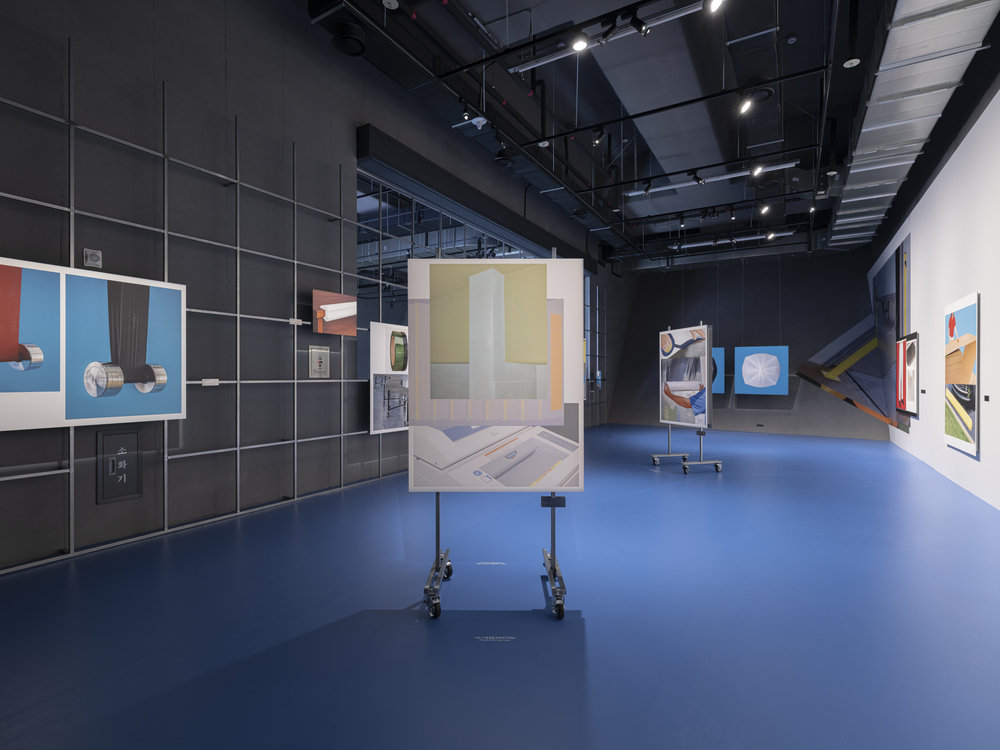
Amid these developments, images and videos circulated on social media showing a monastery near the presidential residence in Hannam-dong opening its restrooms to protesters who came out late at night, and a gallery opening its exhibition space as a shelter for demonstrators. Scenes of citizens wrapped in silver thermal blankets coexisting alongside artworks raise significant questions about how contemporary art spaces can participate in democracy and exercise public responsibility today.


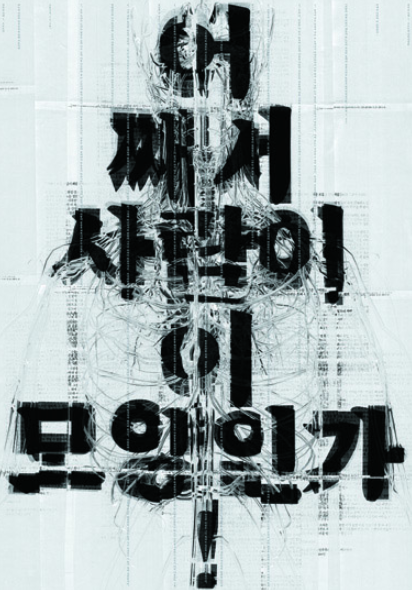
Poster of ‘Spirit of the Times’ Project ©Kwon Joonho

Since the 2000s, contemporary exhibitions have sought to create various participatory spaces—sites of encounter, exchange, and assembly—among people. At a time when new forms of citizenship and the capacities of cultural politics are emerging, how can exhibitions, as platforms, connect with and communicate with the real world? As seen in the gallery example mentioned above, what kinds of practices allow the potential of relationships that enter exhibition spaces as flexible public spheres to be extended further?

These cascading questions suggest that answers must begin with breaking away from the conventions of the exhibition format itself. Exhibitions contain methodologies for connecting art with the world, along with art institutions, artistic norms, modes of communication with audiences, and the imaginative potential for alternative ways of thinking. Therefore, at this moment when democratic organizations of the public sphere are being sought, exhibitions must be reorganized beyond conventional forms—confronting existing institutions and norms and functioning as alternative territories for imagining the future.
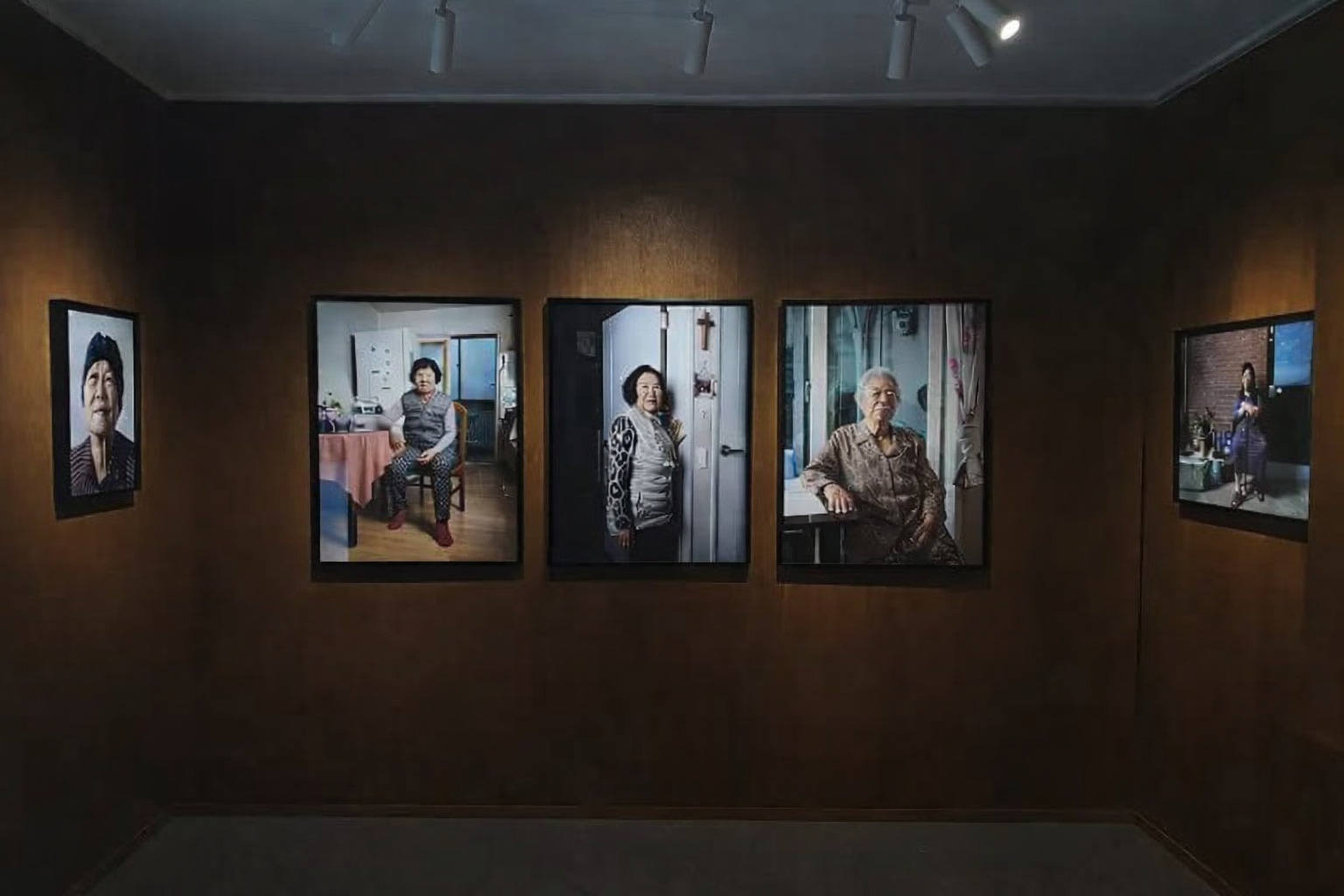
Within this context of questioning and reflection, the recent “Spirit of the Times” project (planned by Everyday Practice), formed through the solidarity of 63 graphic design teams, unfolds contemporary designers’ political declarations across social media, a web platform (launched January 24, https://manifesto.ing), and an offline exhibition (February 24–March 17), raising expectations for the expansion of oppositional visual culture and social participation. Experiments that extend possibilities existing between aesthetics and politics toward fellow citizens and the real world, and that move beyond art’s internal hegemonic spaces into the public sphere, present a task that lies beyond the exhibition format itself in 2025.

References