
Yeoreum Jeong (b. 1994) explores the relationship between place and the memories embedded within it through meticulous research and sustained observation, weaving together collected clues and reconfiguring them into moving-image works.
 
Her practice interlaces autobiographical experiences with close observation, while drawing unseen elements to the surface of specific sites, uncovering the underlying structures of systems such as history and capital that lie beneath the visible layers of place.


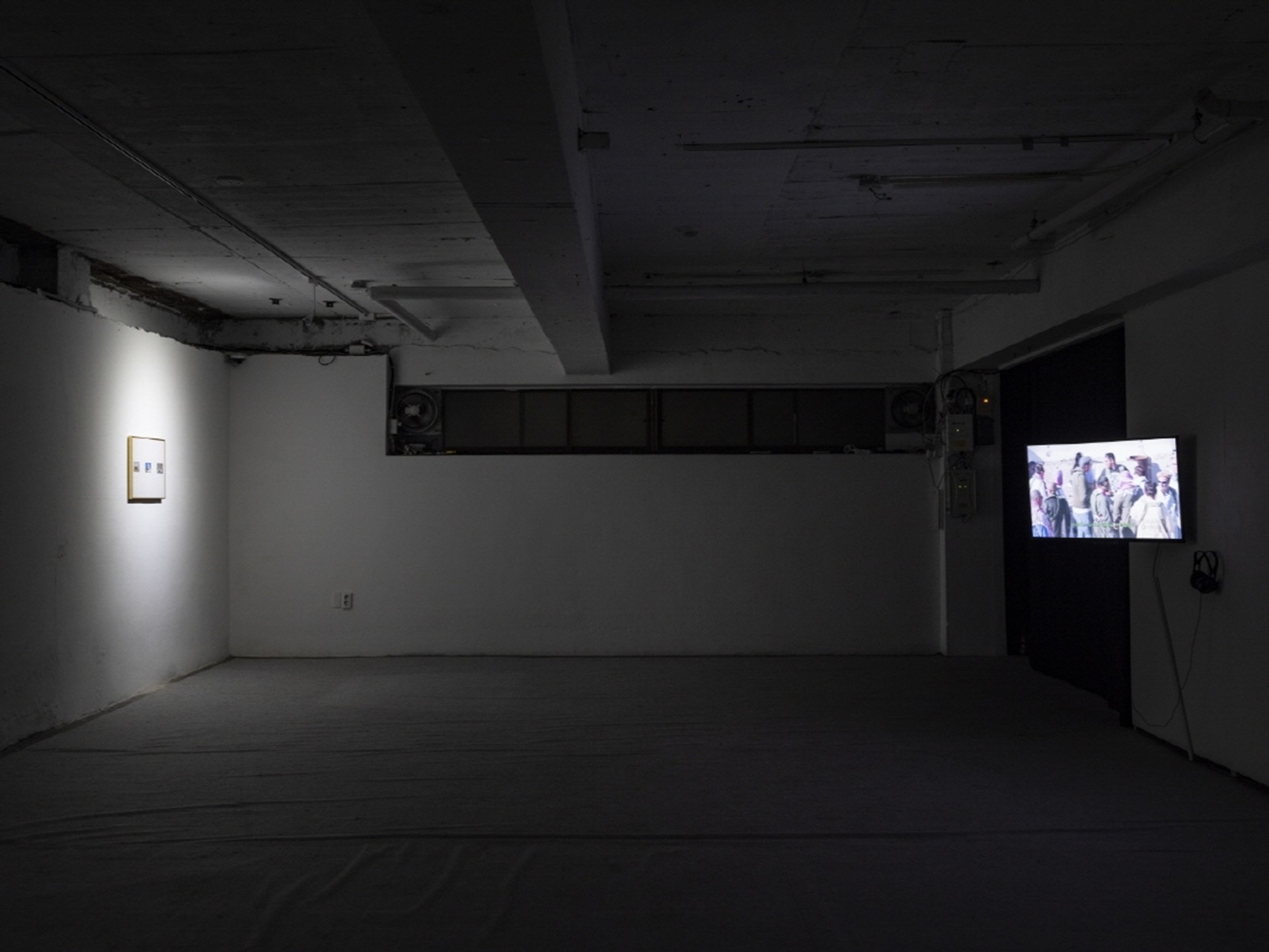
Installation view of 《HAPPY TIME IS GOOD》 (Hapjungjigu, 2021) ©Hapjungjigu

Her first solo exhibition, 《HAPPY TIME IS GOOD》 (2021), held at Hapjungjigu, explores the public and private experiences and ideologies that have accumulated around U.S. military bases in South Korea—a geopolitical site—and articulates them through the moving-image medium.
 
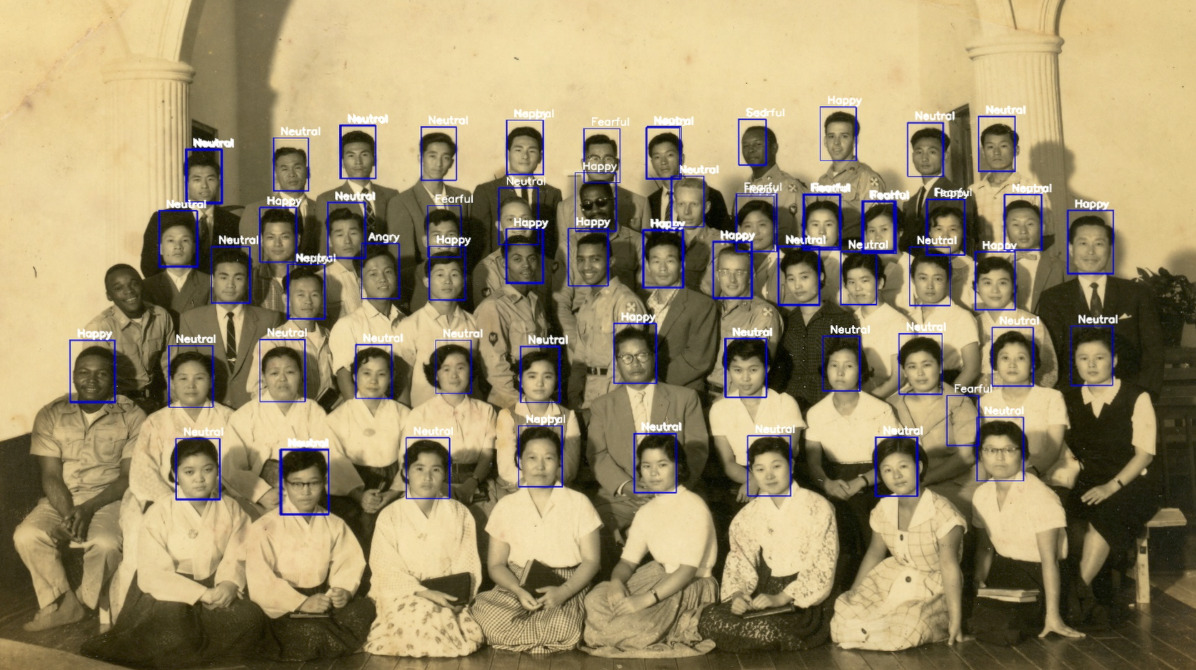
U.S. military bases on the Korean Peninsula are places that evoke the tragic reality of national division, while also functioning as repositories of orders stemming from occupations or wars that have yet to fully end. Above all, for the original inhabitants of the land, these sites resemble an Olympus—taboo, inaccessible, and shrouded in secrecy.


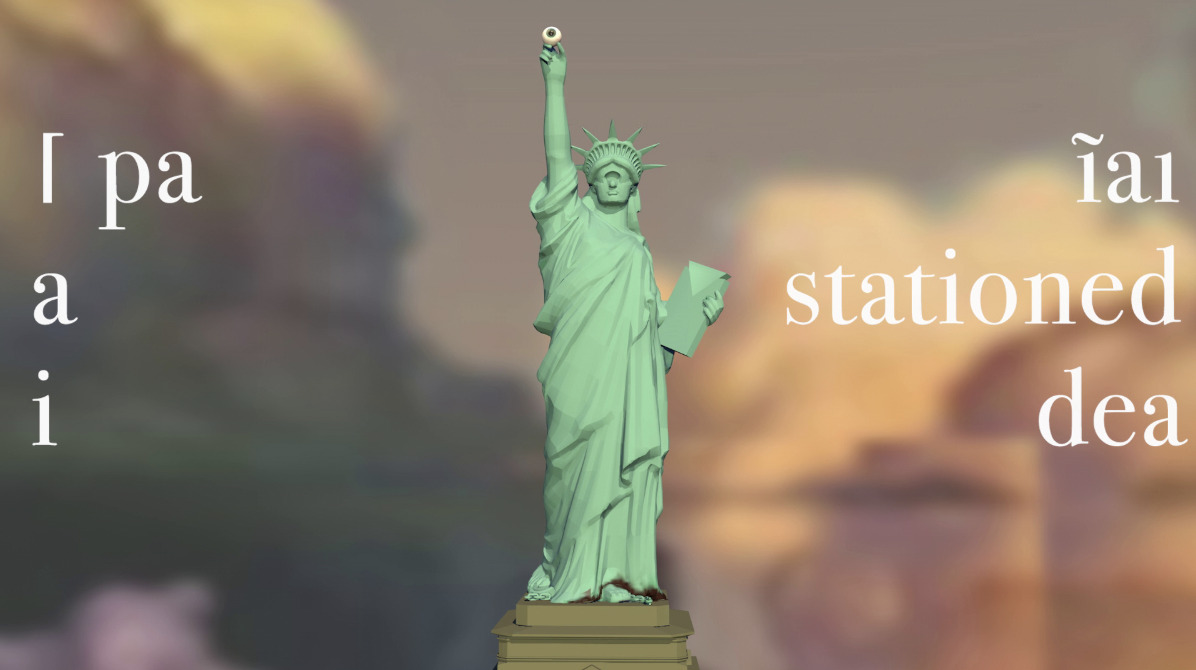
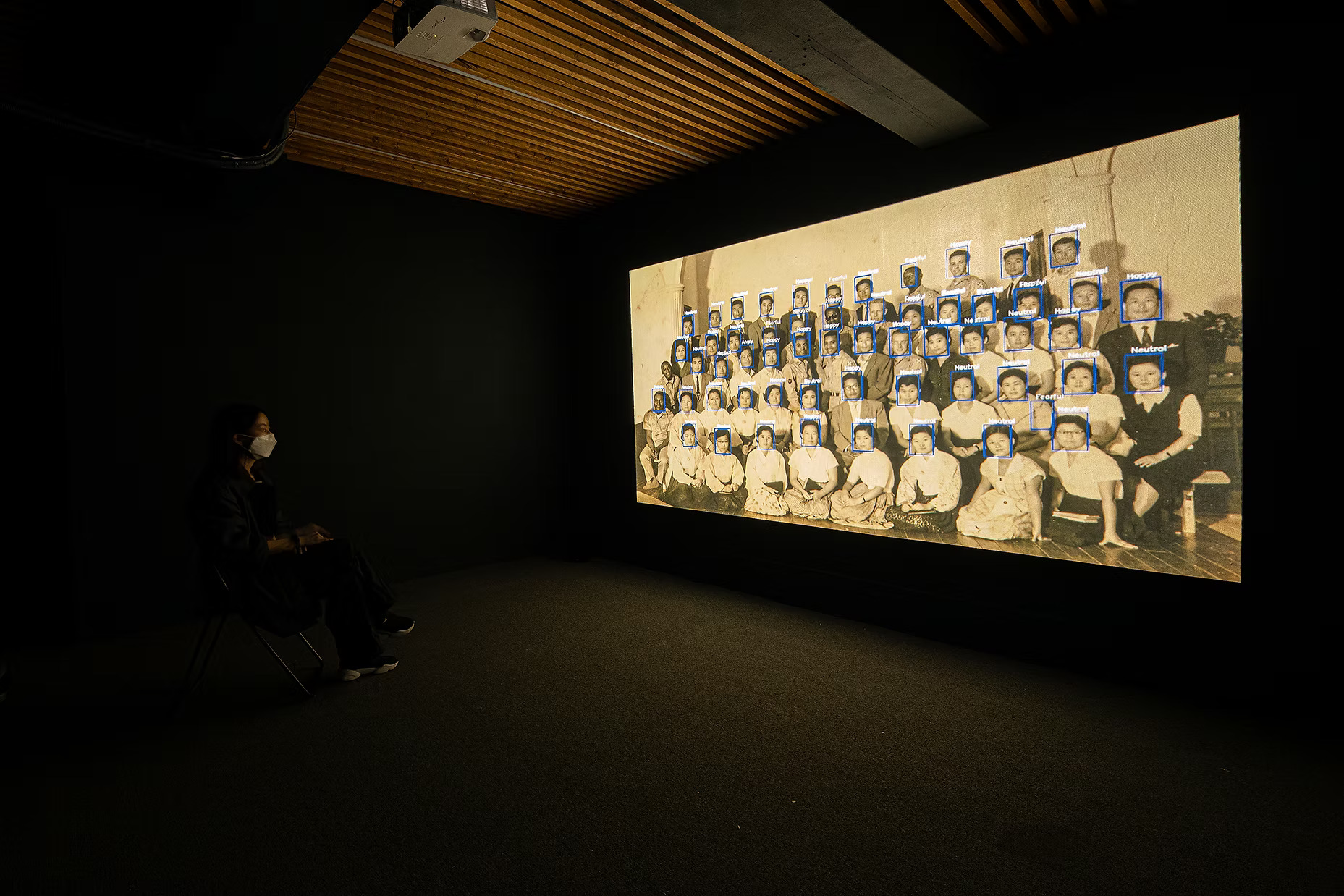
Yeoreum Jeong, Graeae: A Stationed Idea, 2020, Single-channel video, HD, color+B&W, stereo, 33min. ©Yeoreum Jeong

Although acts of return and relocation take place, U.S. military bases—an invisible territory marked nowhere—become, in Yeoreum Jeong’s work, complex terrains where visibility and invisibility, camouflage and emergence intertwine and at times collide.
 
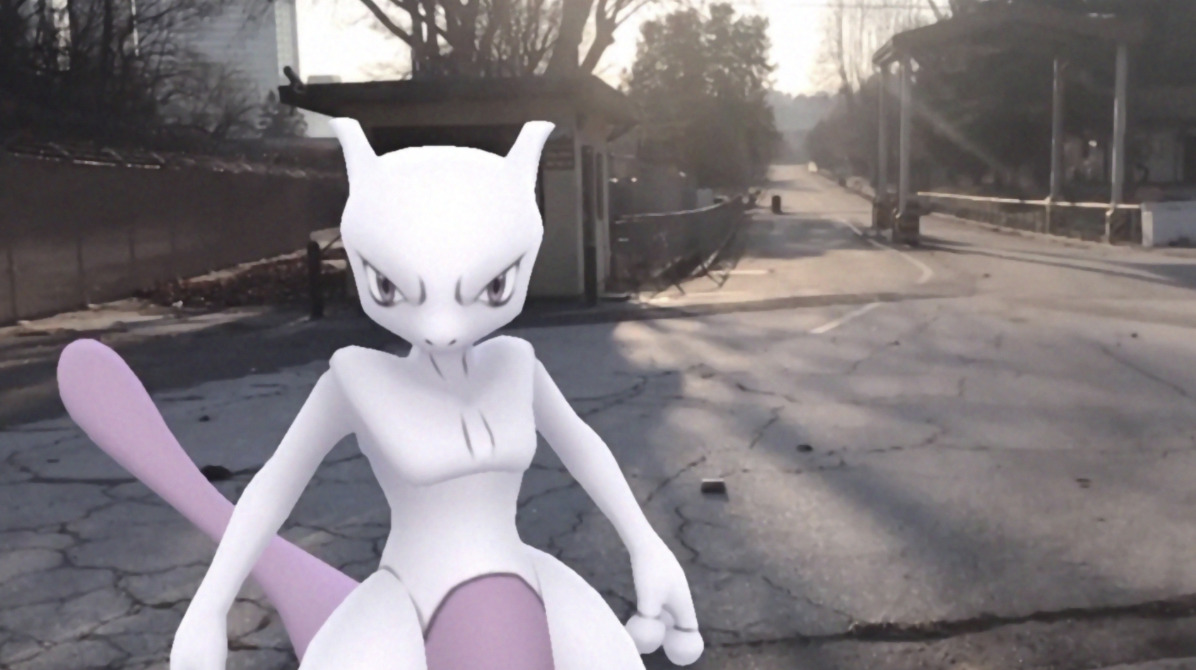
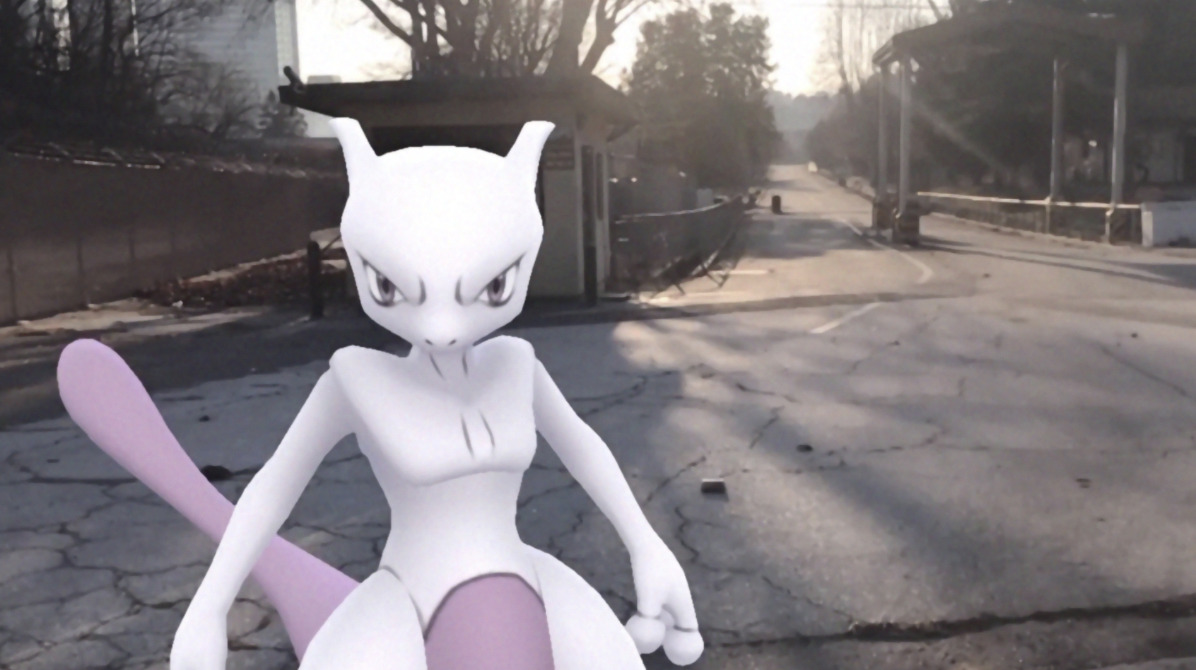
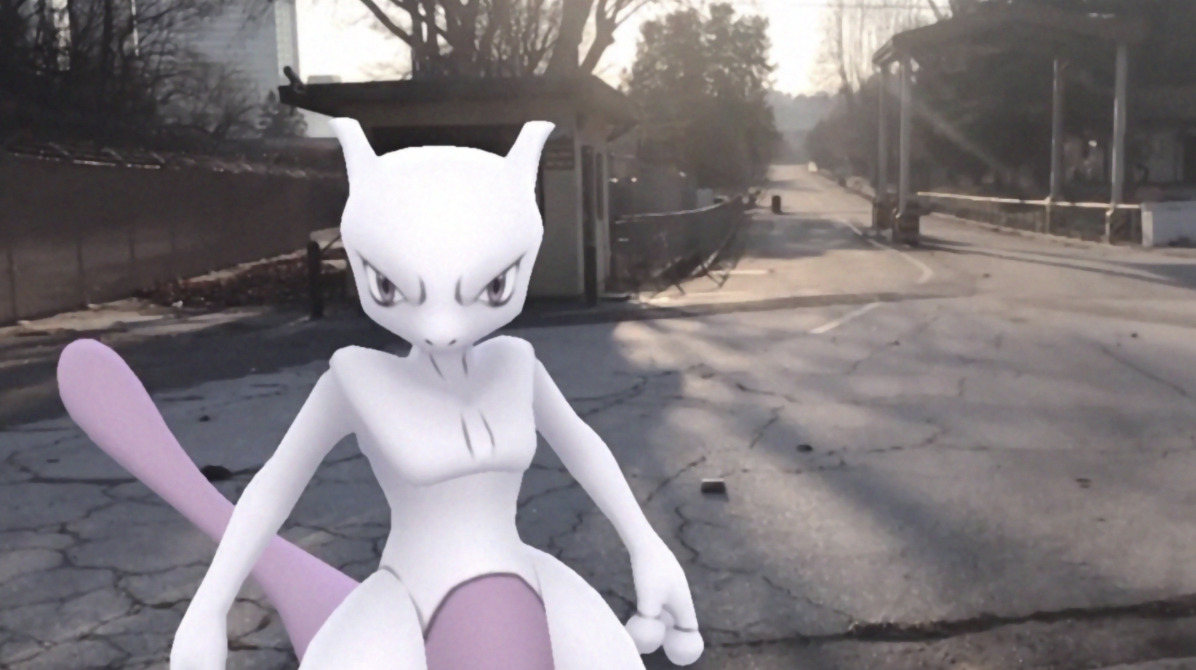
Jeong has obsessively and persistently excavated such sites in which the contradictions of colonialism are condensed. Her 2020 work Graeae: A Stationed Idea is based on the artist’s attempt to enter the inaccessible Yongsan U.S. military base through the augmented reality game ‘Pokémon Go,’ probing the logics at work within the site’s spatial signs and symbols.

Yeoreum Jeong, Graeae: A Stationed Idea, 2020, Single-channel video, HD, color+B&W, stereo, 33min. ©Yeoreum Jeong

The interior of the Yongsan U.S. military base, sealed off by barbed wire and walls, remains inaccessible even through satellite imagery, obscured instead by green, pixelated camouflage. Yet contemporary networked environments—such as augmented reality games and social media—open up alternative detours that lead toward these concealed sites.
 
Graeae: A Stationed Idea assembles the desires and signs that leak from this camouflaged place as if piecing together a puzzle. Traversing both ends of time—from archival materials dating to the Japanese colonial period to 3D blueprints of Yongsan Park from when it had yet to be completed—the work prompts a simultaneous interrogation of the values, meanings, and ideologies embedded in the signs that lie between the visible and the invisible.

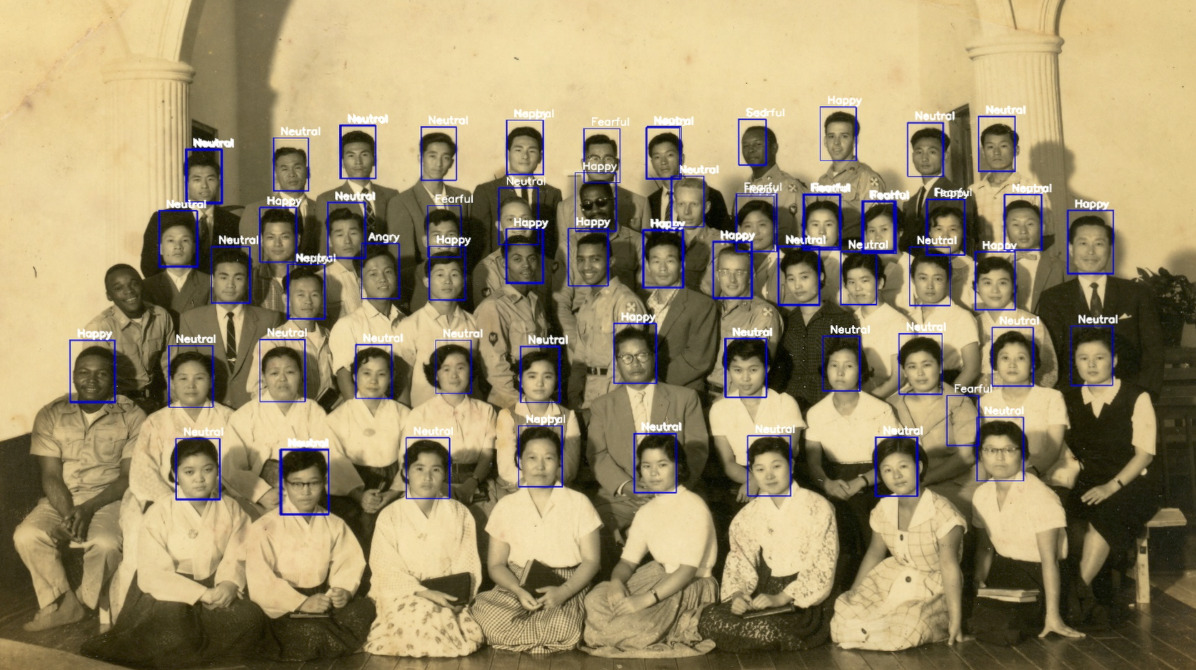
Yeoreum Jeong, The Long Hole, 2021, Single-channel video, HD, color, stereo, 36min. ©Yeoreum Jeong

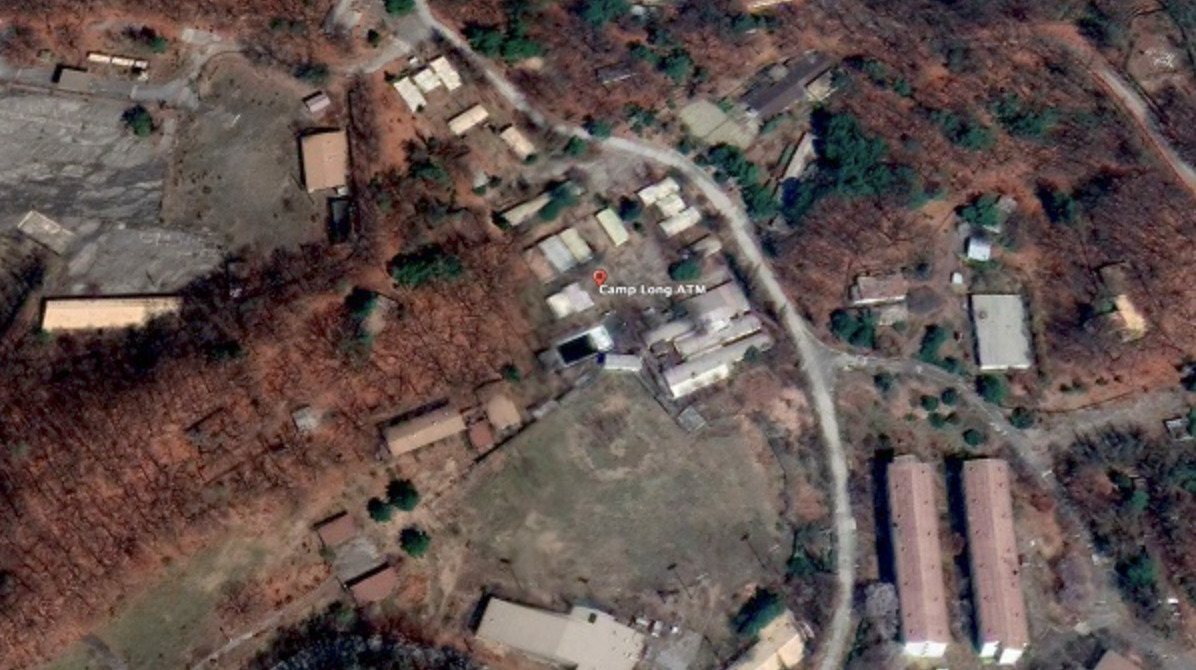
In The Long Hole (2021), Yeoreum Jeong once again investigates the complex historical memories and experiences embedded in the U.S. military base as a site of camouflage, expanding the problematic horizon of the base as a colonial space. The work began when the artist participated as an exhibiting artist in 《CAMP 2020》, a celebratory event marking the return of the U.S. military base “Camp Long” to the city of Wonju after 69 years, in 2020.


Yeoreum Jeong, The Long Hole, 2021, Single-channel video, HD, color, stereo, 36min. ©Yeoreum Jeong

It was, in fact, also the place where the artist’s grandparents once lived. However, their actual home was burned down by U.S. troops to make way for the military base, and her grandfather went on to support the family by working as a “houseboy” at the base’s PX.
 
Camp Long thus functioned both as a tidal wave that swept away their lives and, paradoxically, as the site that made their survival possible. The video The Long Hole unfolds as a detective’s investigative report that probes the layers of time entangled with this place. In the film, a detective sets out to explore Camp Long, a U.S. military base indicated by a postcard she receives by chance.


Yeoreum Jeong, The Long Hole, 2021, Single-channel video, HD, color, stereo, 36min. ©Yeoreum Jeong

Together with her partner (an AI), the detective investigates ruined memories and oblivion, private and public histories, and the multiple worlds that coexist beneath transparent spatiotemporal coordinates—worlds we collectively refer to as the present.
 
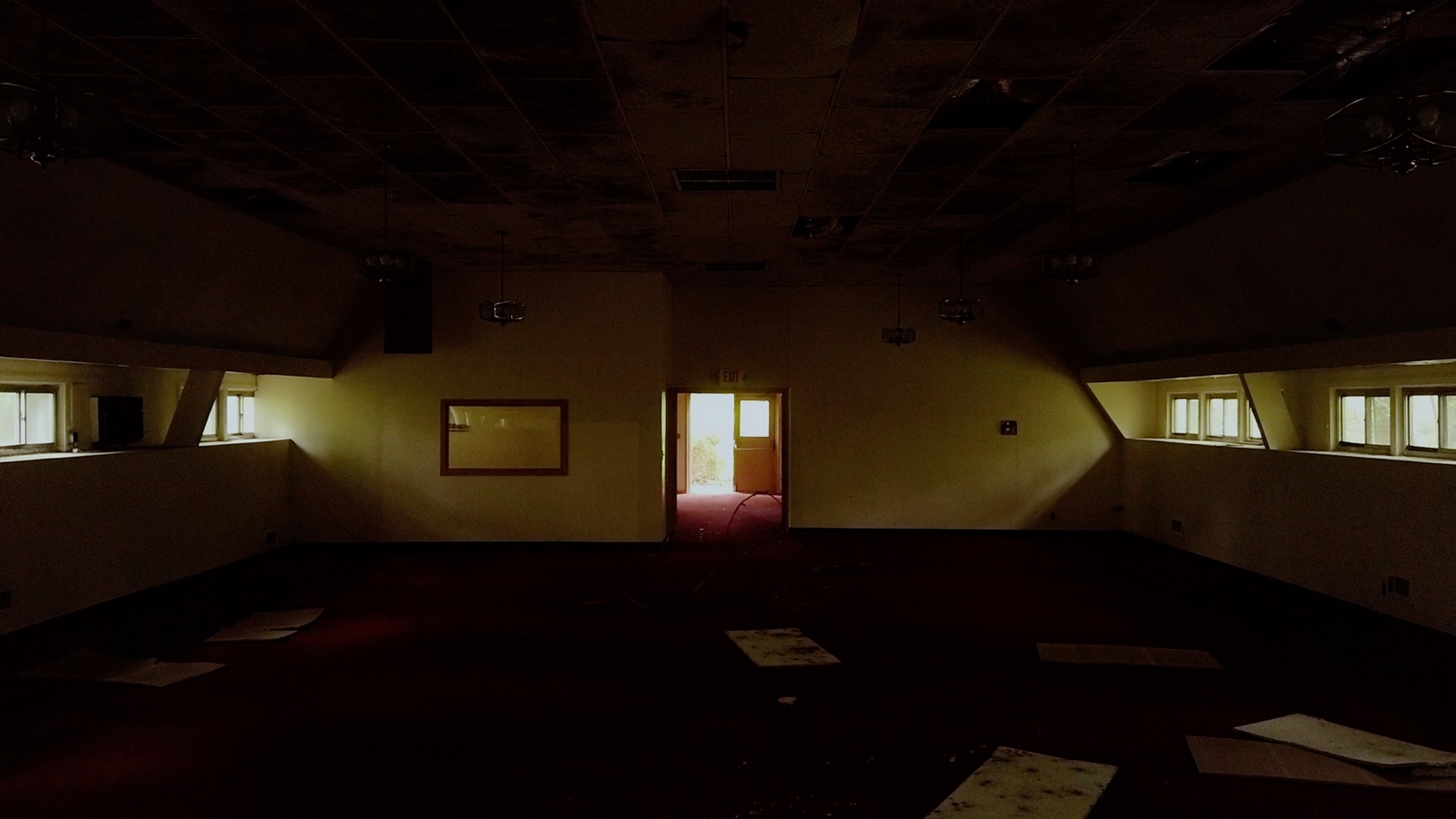
On Google Maps, the only identifiable data point for Camp Long in Wonju is “Camp Long ATM,” an entity that reveals, behind its military façade, the network of financial capitalism. Yet on site, there is no trace of finance at all; only vivid crimson bloodstains remain, masquerading as evidence.
 
Within the long temporal arc of transformation—from forest to military base to wasteland—the detective treats this coordinate, rising through the camouflage as a persistent signifier, as a hole through which ruptures and acts of forgetting can be excavated.


Yeoreum Jeong, To a Natural Witness, 2021, 2-channel video, sound, HD, stereo, 8 hours, 1 hour, 15min. ©Yeoreum Jeong

In this way, the primary mediators through which Yeoreum Jeong intersects the two axes of history as the past and contemporaneity as the present are visual information technologies such as GPS, satellite imagery, and CCTV.
 
By invoking these technologies—which are themselves transforming ways of seeing and modes of spatial perception—her work calls attention to the blind spots embedded in what we believe we are seeing, as well as to the presence of another gaze lurking behind them.


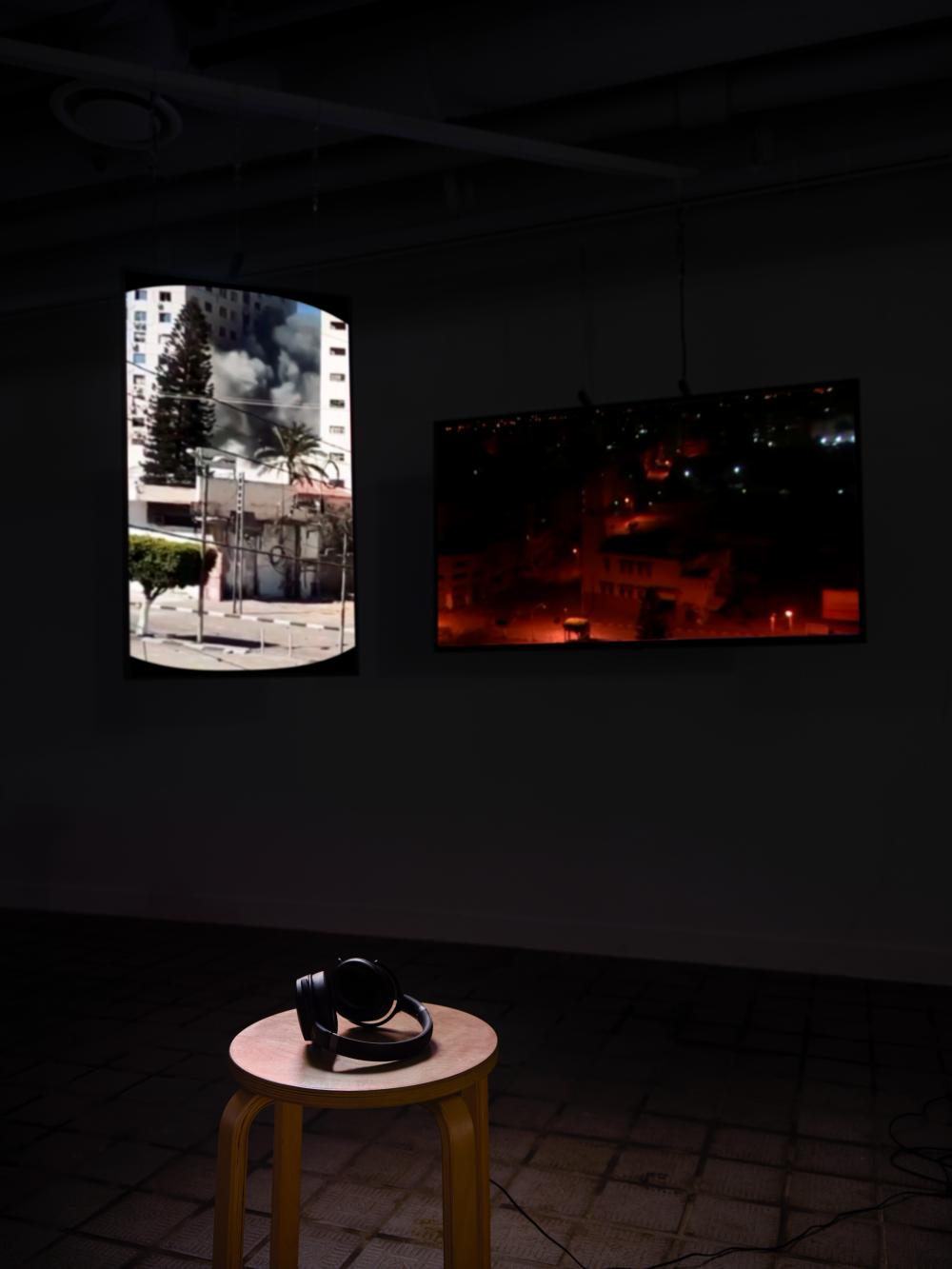
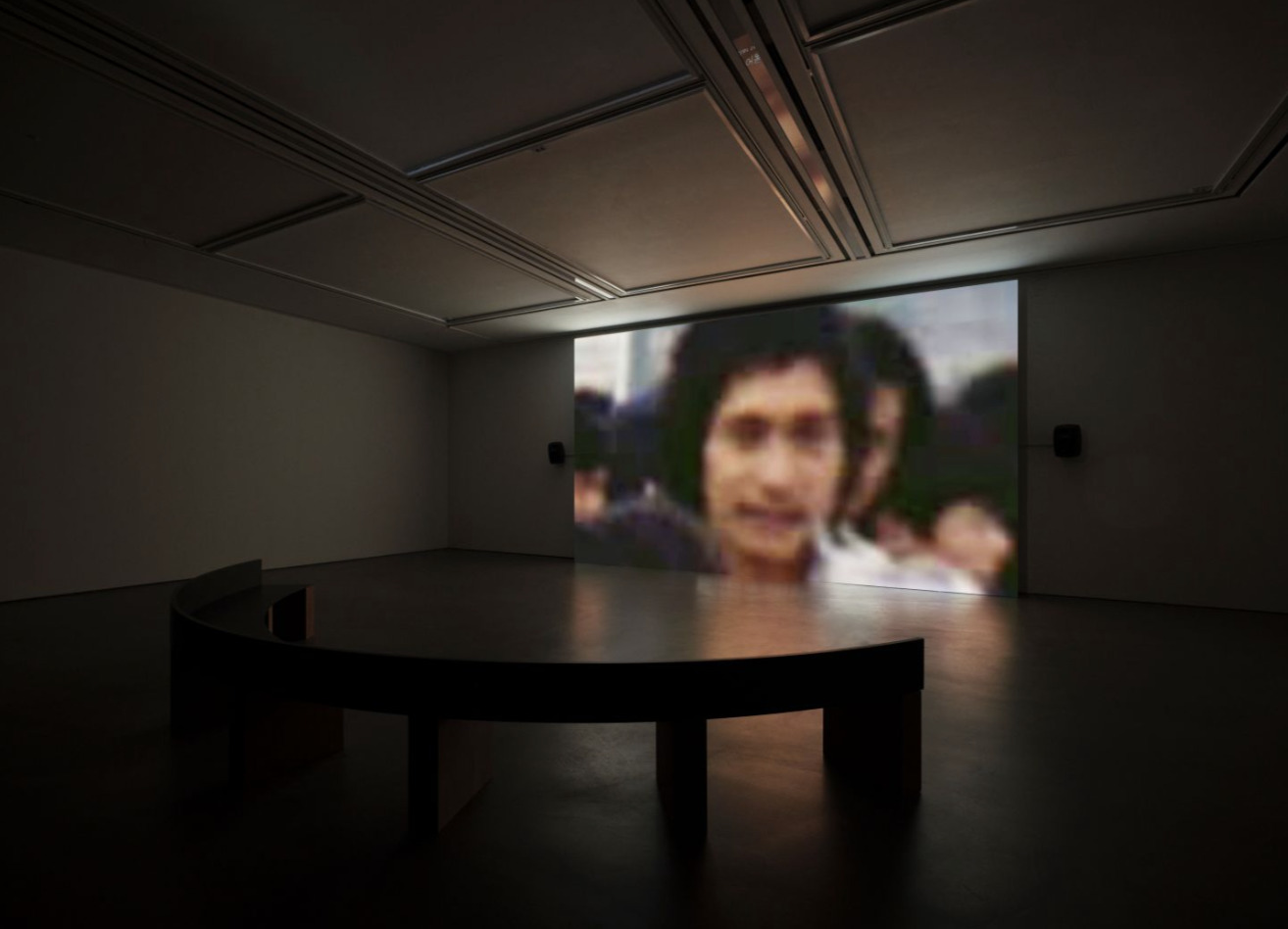
Yeoreum Jeong, To a Natural Witness, 2021, 2-channel video, sound, HD, stereo, 8 hours, 1 hour, 15min. Installation view of 《Centuries in the distant mist》 (SeMA Bunker, 2023) ©Seoul Museum of Art

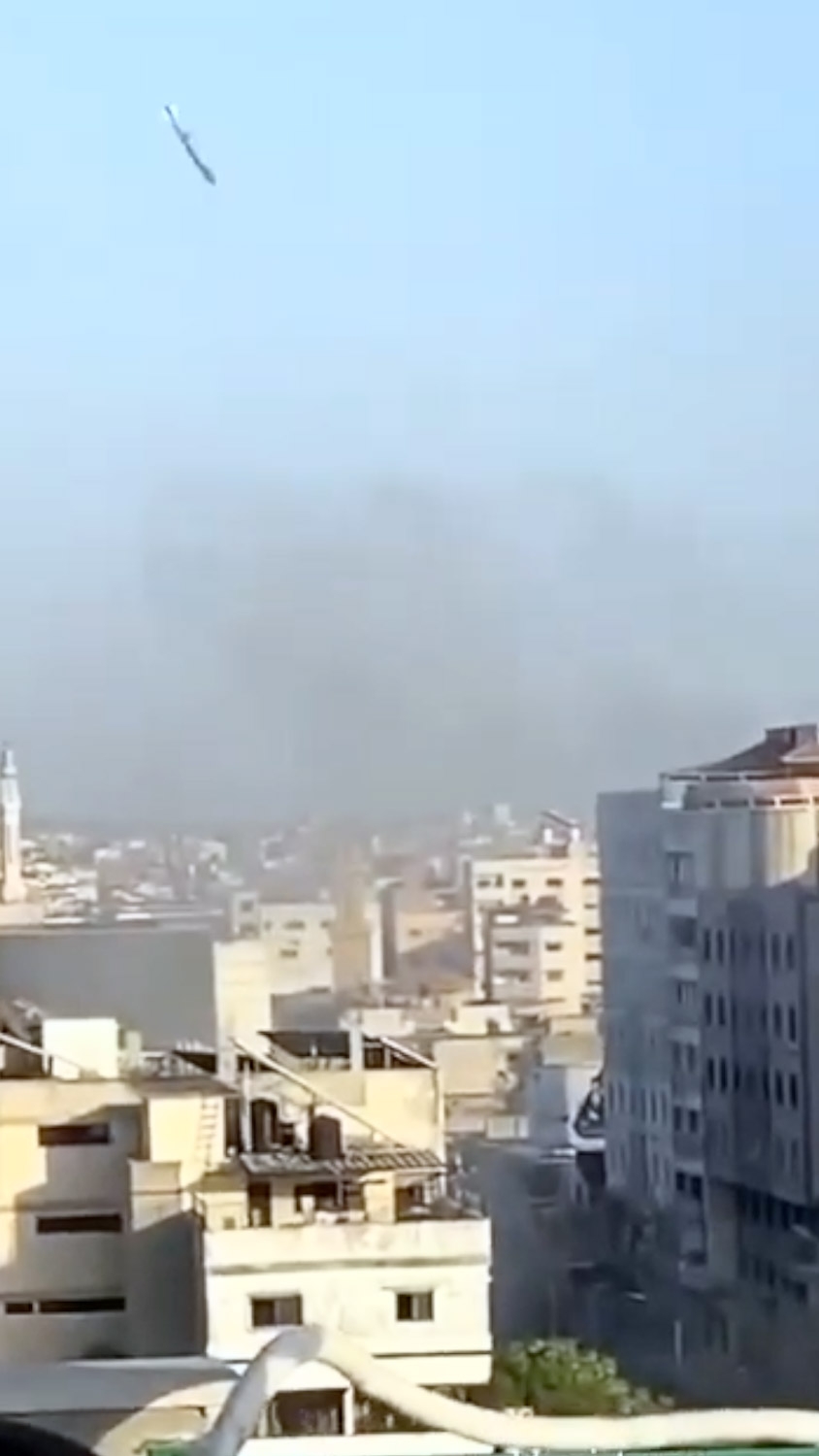
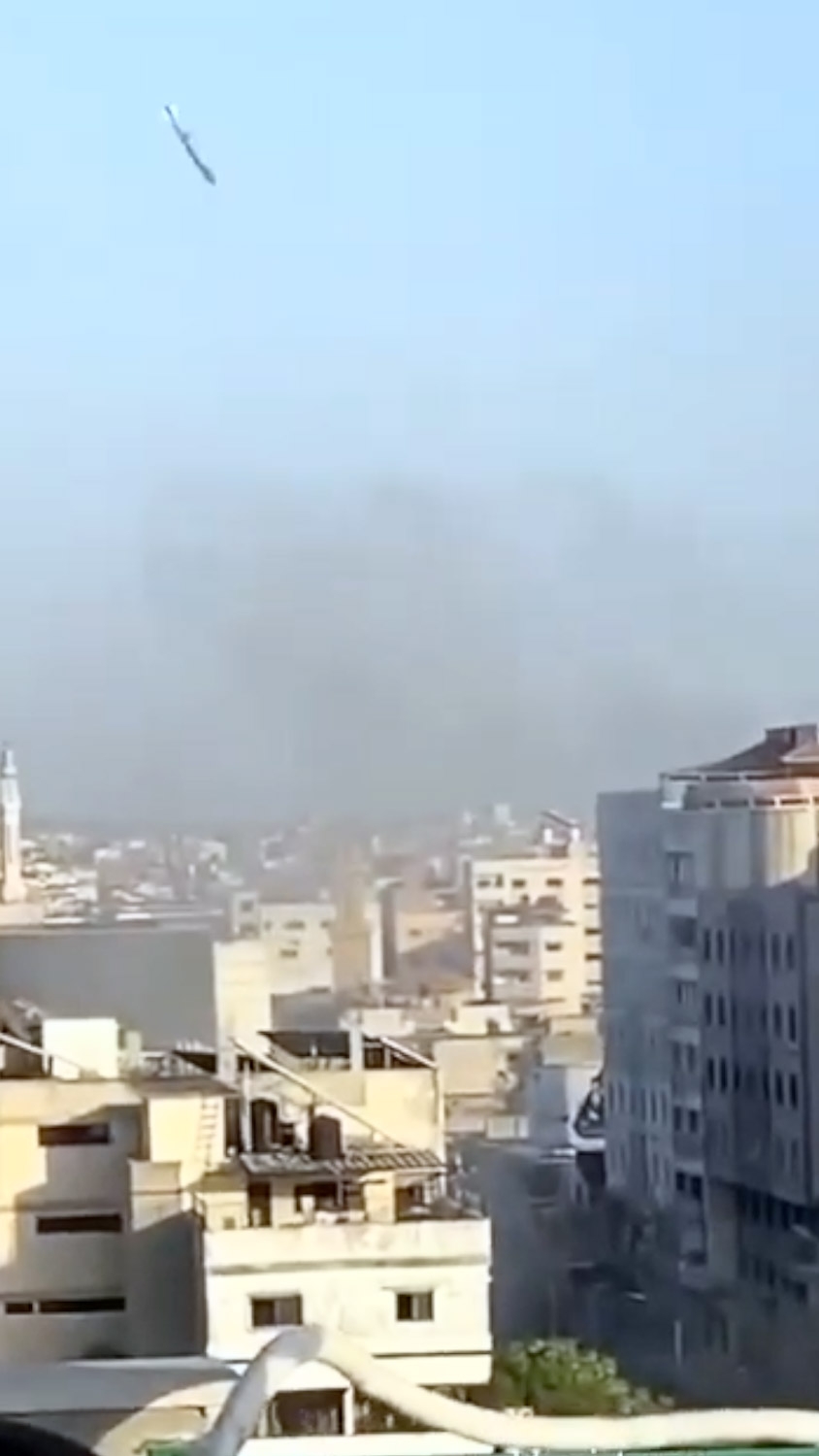
In her 2021 work To a Natural Witness, Yeoreum Jeong compiles footage that was live-streamed in real time by individuals during the Israeli airstrikes on Gaza and weaves it into a single video. Tracing images uploaded by residents over the three months following the bombardment, the artist observed how second-by-second images—whose immediacy vanishes the moment they are captured—fail to condense a single violent reality. Instead, they become flattened fragments that layer reality over itself again and again.
 
The work examines the collusive relationship between the artist’s obsessive gaze, relentlessly searching for traces of bombing within static landscapes, and visual information that is flattened and mediated through the screen.


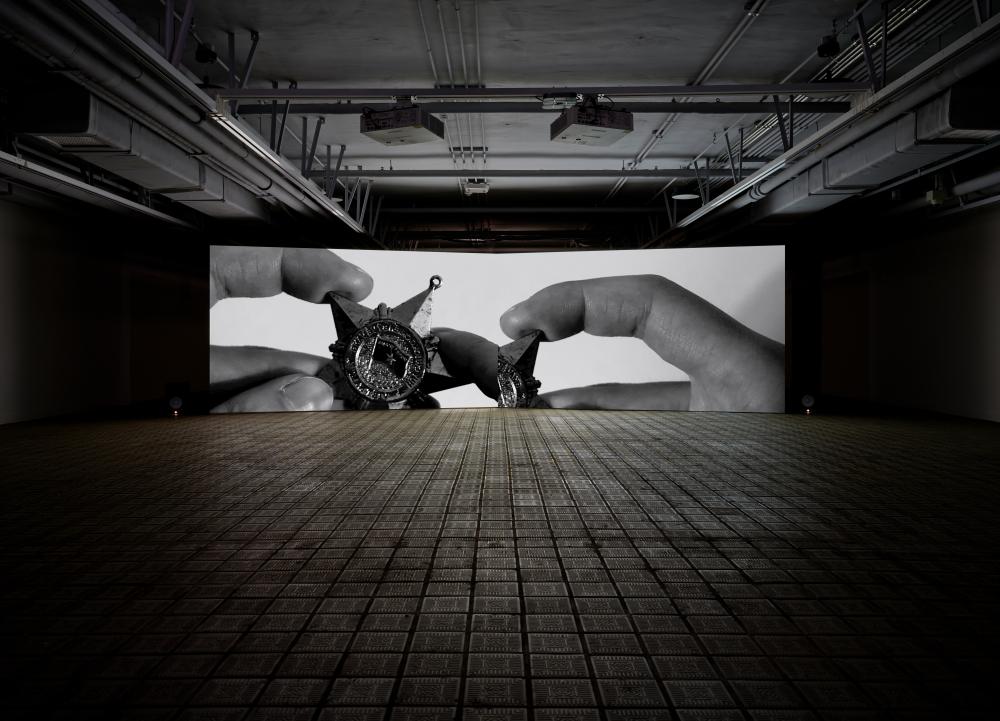
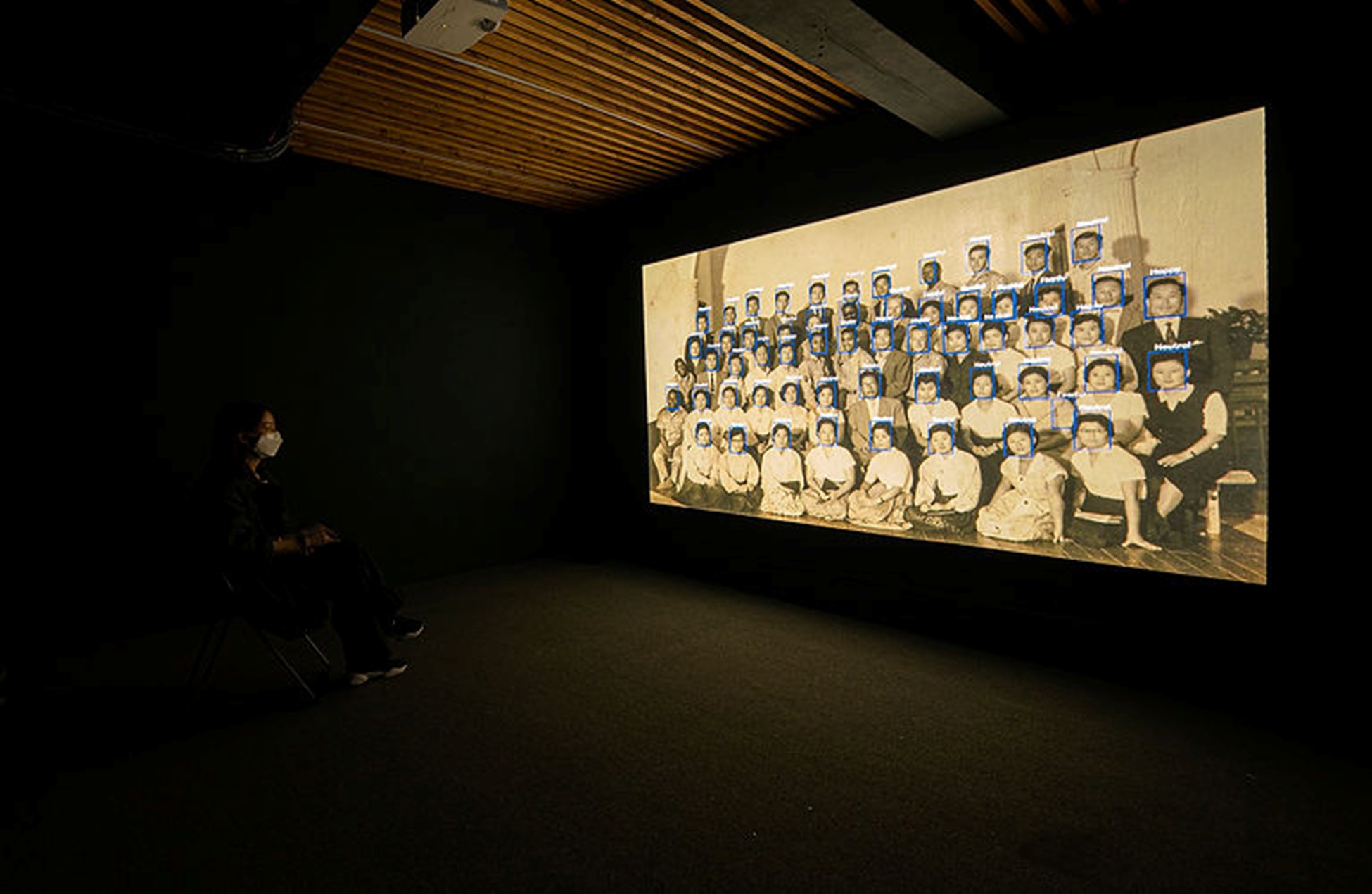
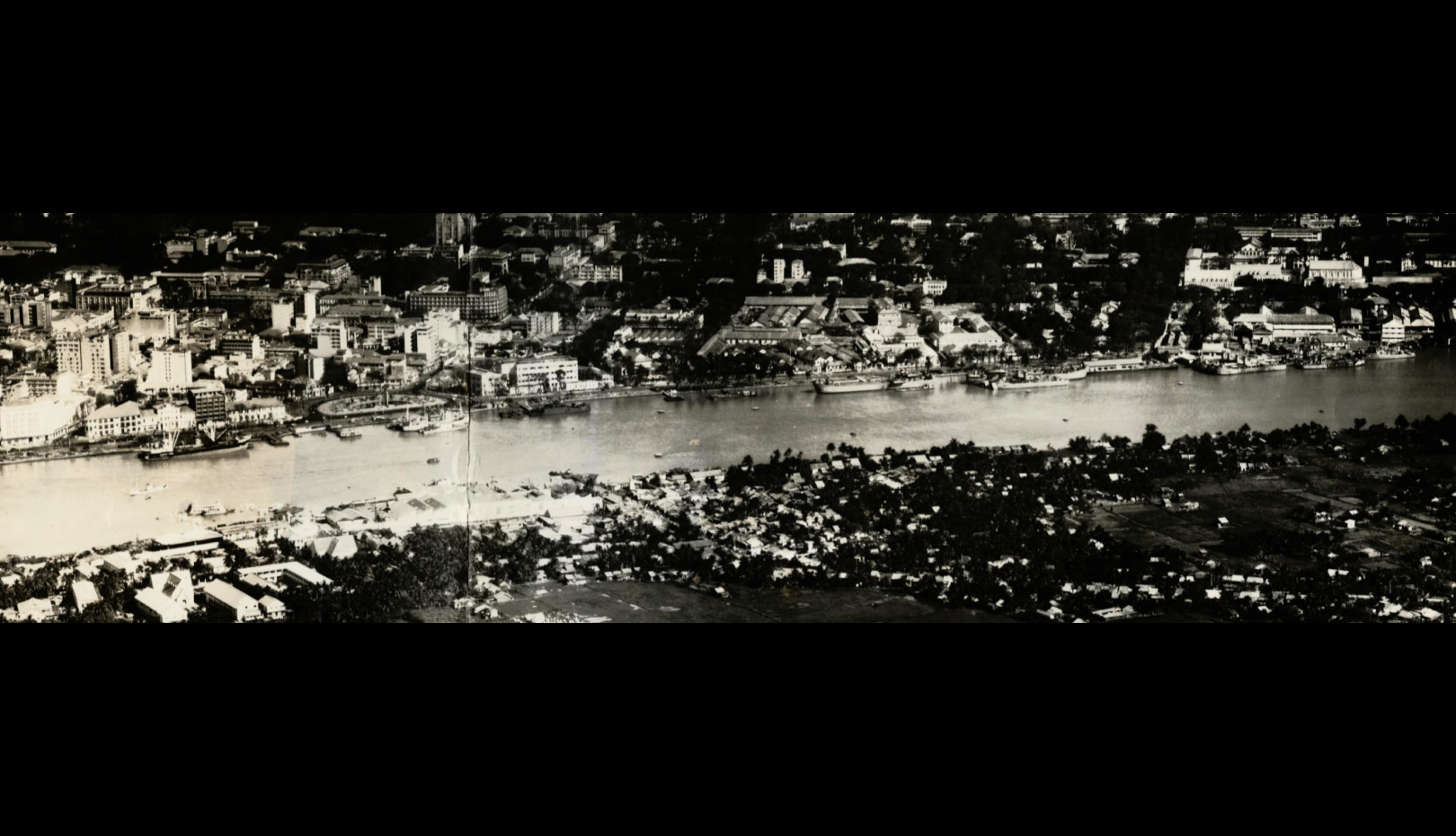
Yeoreum Jeong, The Silent Bearers, 2023, 2-channel video, 4K, color+B&W, stereo, 26min. ©Yeoreum Jeong

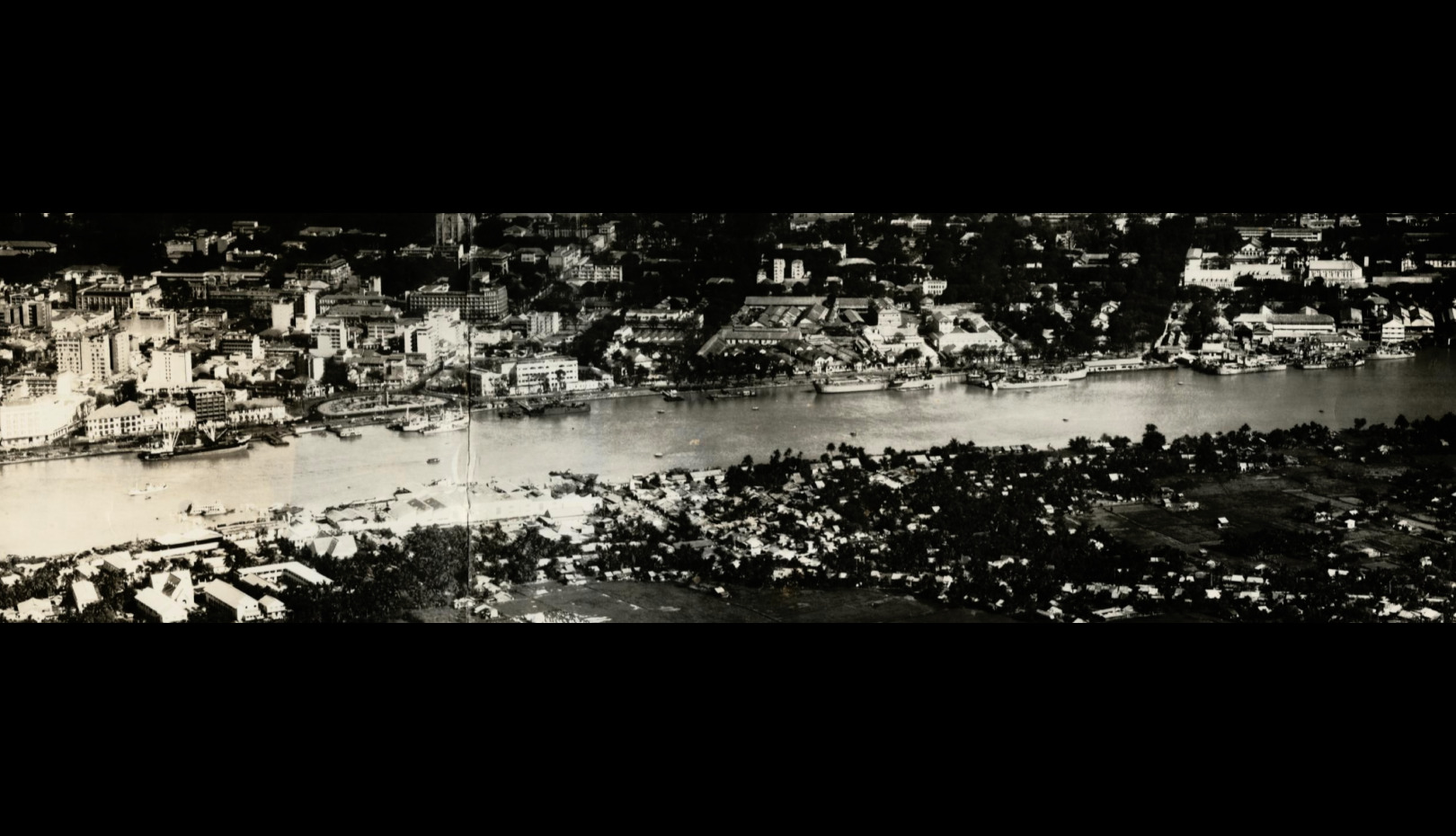
On the other hand, unlike Jeong’s earlier works that focused on “seeing” through collecting and combining images produced by various visual technologies, The Silent Bearers (2023) illuminates the past and present of a place through the medium of photography, including photos taken by Jeong herself.


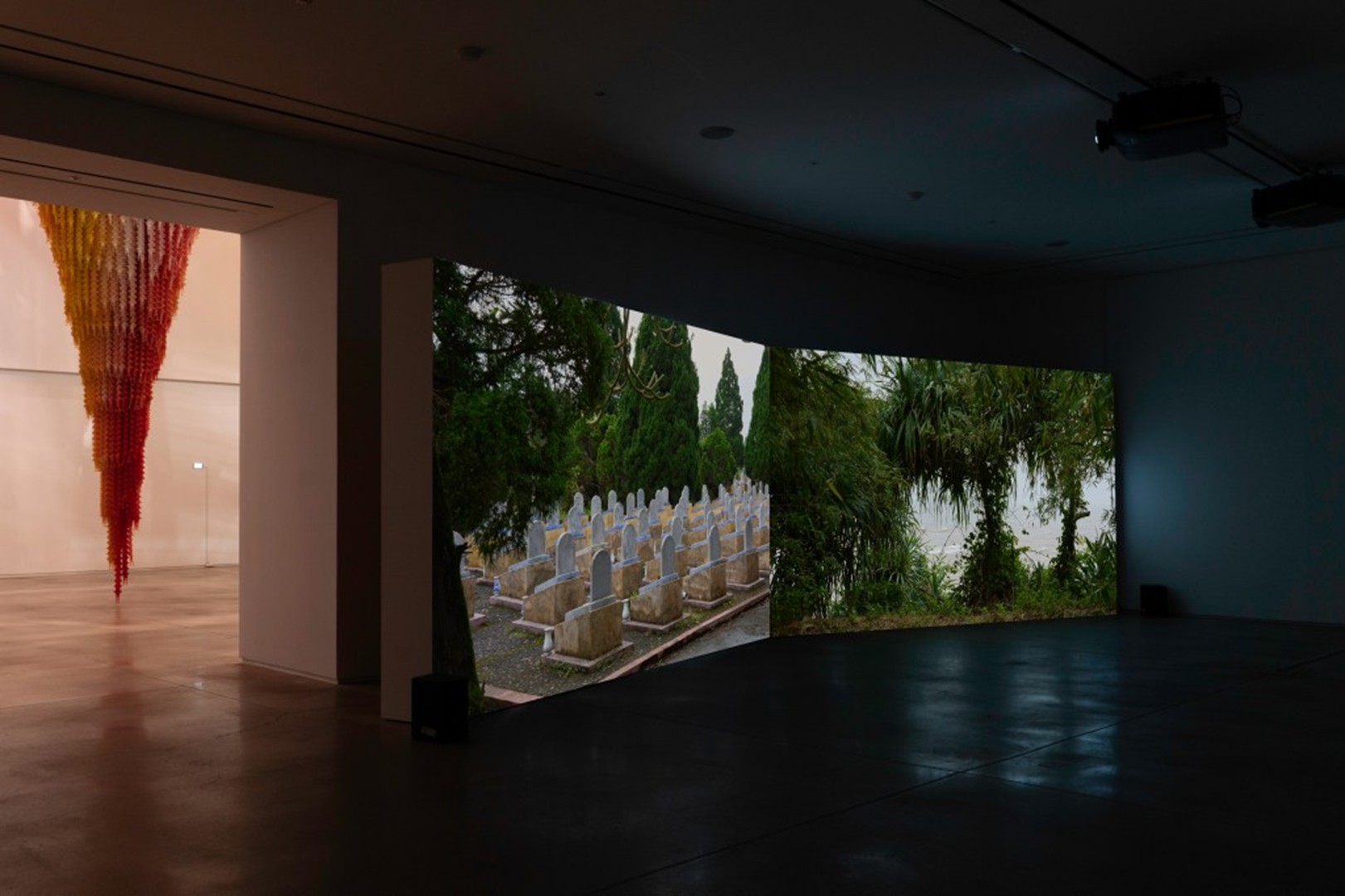
Yeoreum Jeong, The Silent Bearers, 2023, 2-channel video, 4K, color+B&W, stereo, 26min. Installation view of 《Centuries in the distant mist》 (SeMA Bunker, 2023) ©Seoul Museum of Art

The video unfolds around a narrator who participates in a tour of a region that once served as the demilitarized zone in Vietnam. Major sites in Vietnam are presented through photographs taken by tourists and the voice of “Minh,” a tour guide and war veteran. Minh’s narration generates an irreducible temporal gap between experience, traces, and landscape.
 
Confronted with battlefields-turned-tourist attractions, the narrator reflects on the materiality of steel—a resilient yet unpredictably malleable substance.


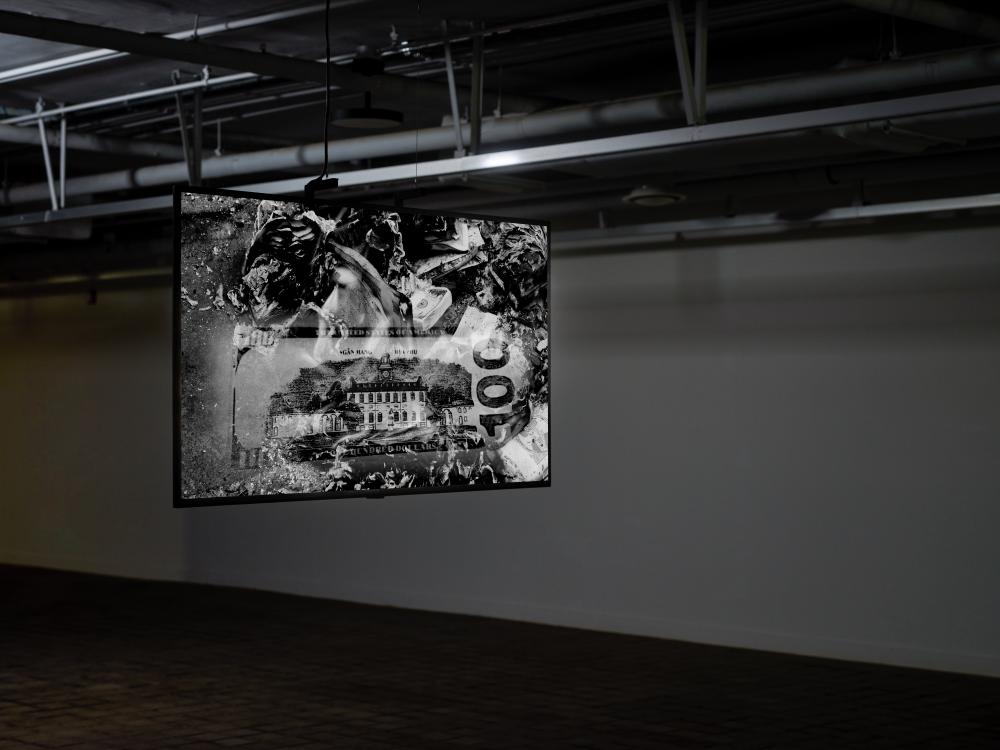
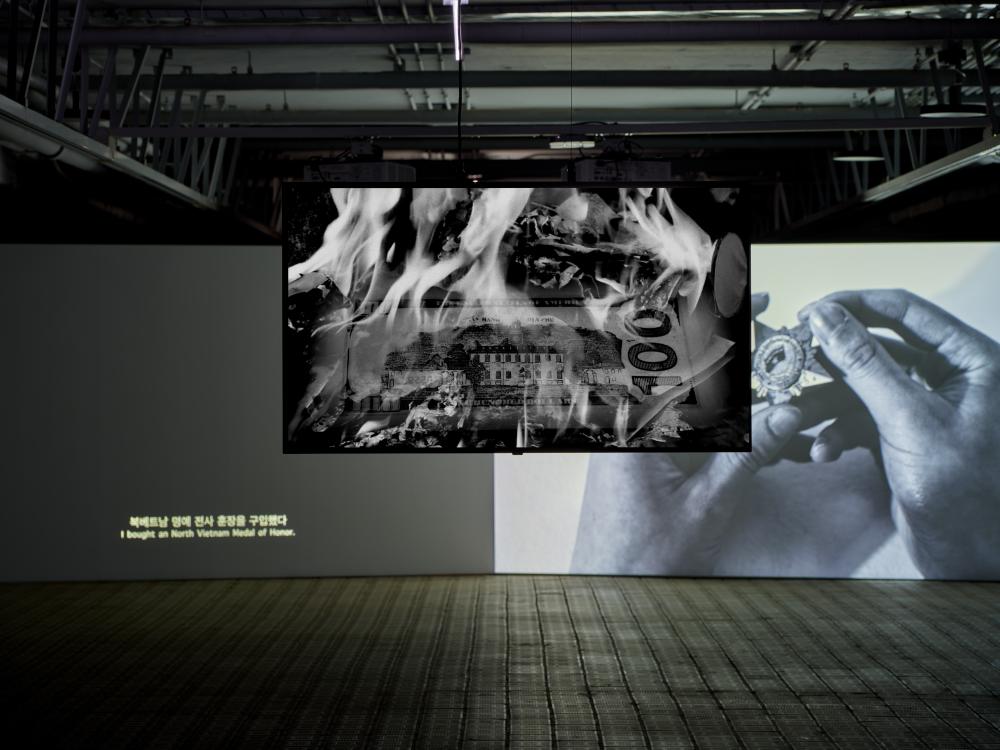
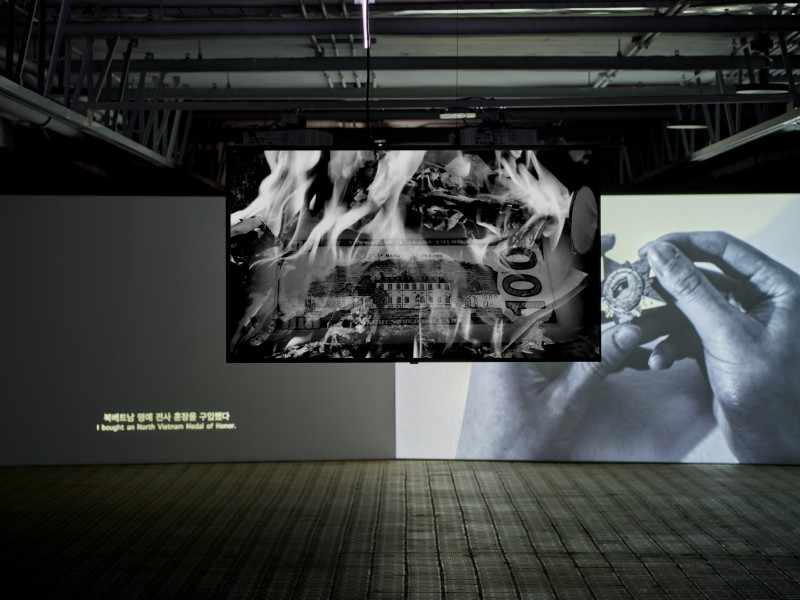
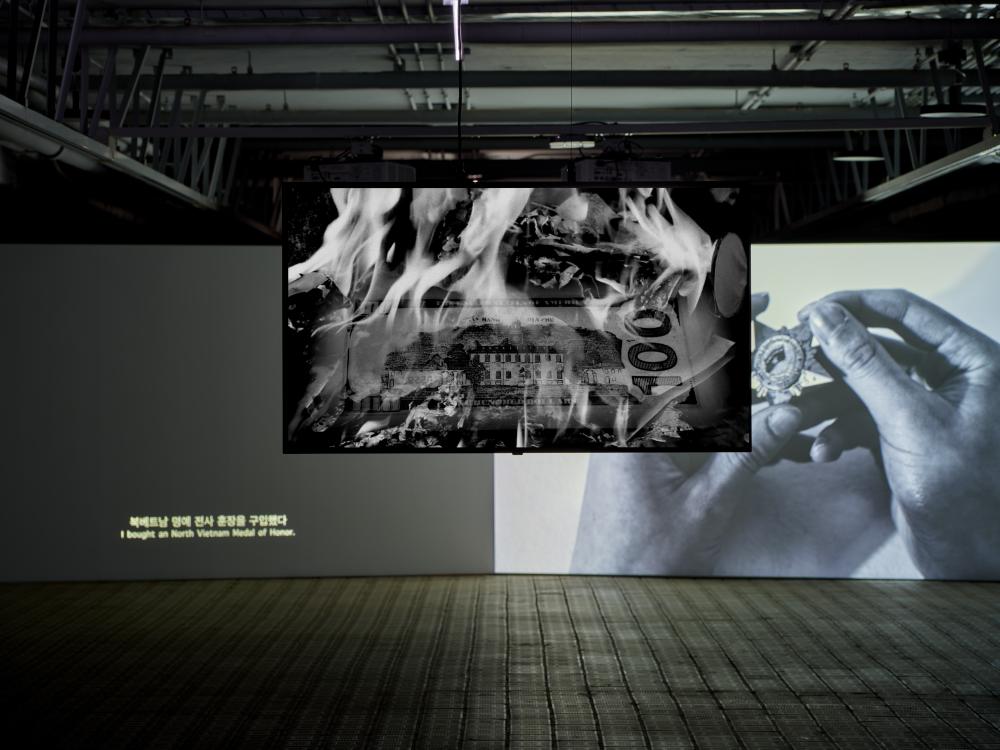
Yeoreum Jeong, In God We Trust, 2023, Single-channel video, HD, B&W, 5min. Installation view of 《Centuries in the distant mist》 (SeMA Bunker, 2023) ©Seoul Museum of Art

The video In God We Trust (2023), produced for Yeoreum Jeong’s solo exhibition 《Centuries in the Distant Mist》 held at SeMA Bunker in 2023, focuses on how individuals who have experienced tragic events such as death or war attempt to overcome trauma while simultaneously striving not to forget their memories.
 
By overlaying images of U.S. dollar bills onto scenes of burning spirit money, the work reveals the process through which banknotes are stripped of their economic value, exposing the gap between the economic order we inhabit and the ideologies that sustain it.


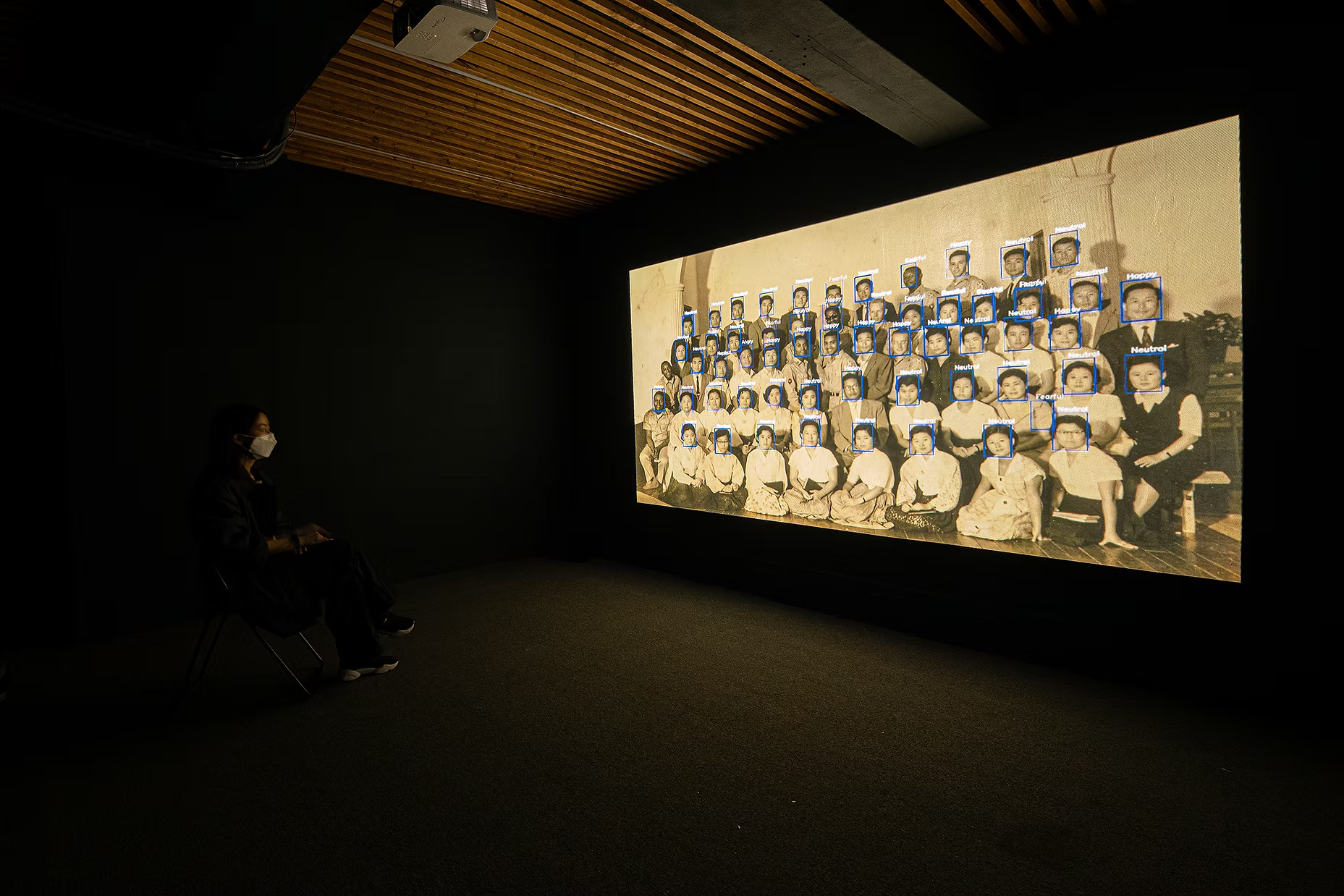
Installation view of 《Centuries in the distant mist》 (SeMA Bunker, 2023) ©Seoul Museum of Art

In this way, Yeoreum Jeong moves fluidly between and interweaves image-making methods from the past and the present—ranging from scenes she films herself to found footage embedded with historical contexts, as well as technologically generated 3D images—to probe the “invisible truths” inherent in specific places.
 
Traversing between past and present, her works gather and weave together images of memory that are scattered like fragments or consigned to oblivion. Through this process, recorded history and the sites left behind as its residue are transformed into landscapes of the present, restoring what has been forgotten and buried.

 “Records disappear in reality, yet persist in the virtual realm.”  (Yeoreum Jeong, Graeae: A Stationed Idea (2020)) 


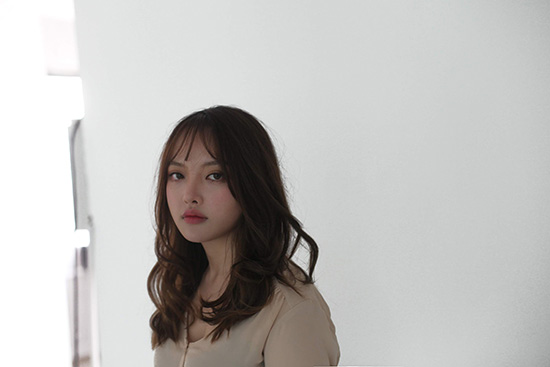
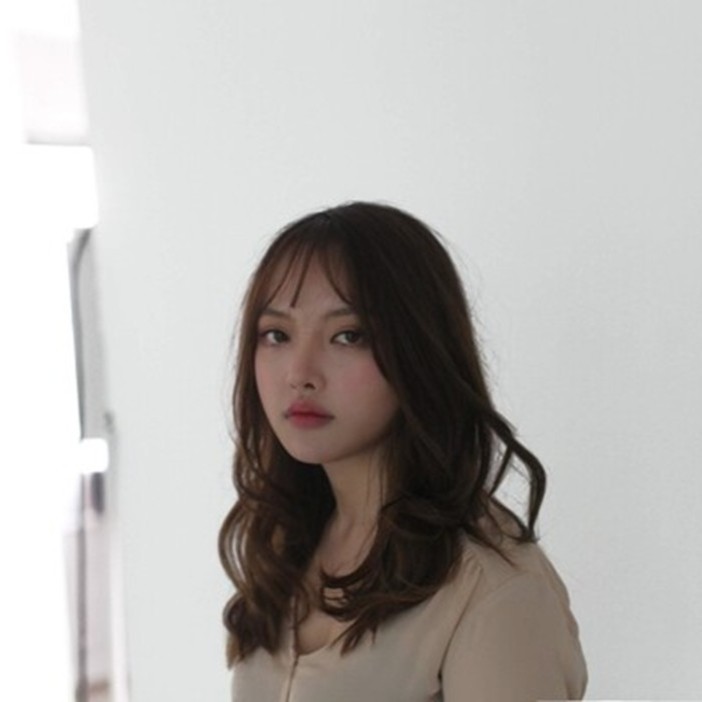
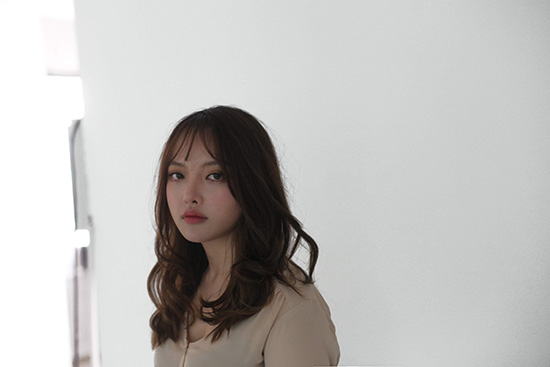
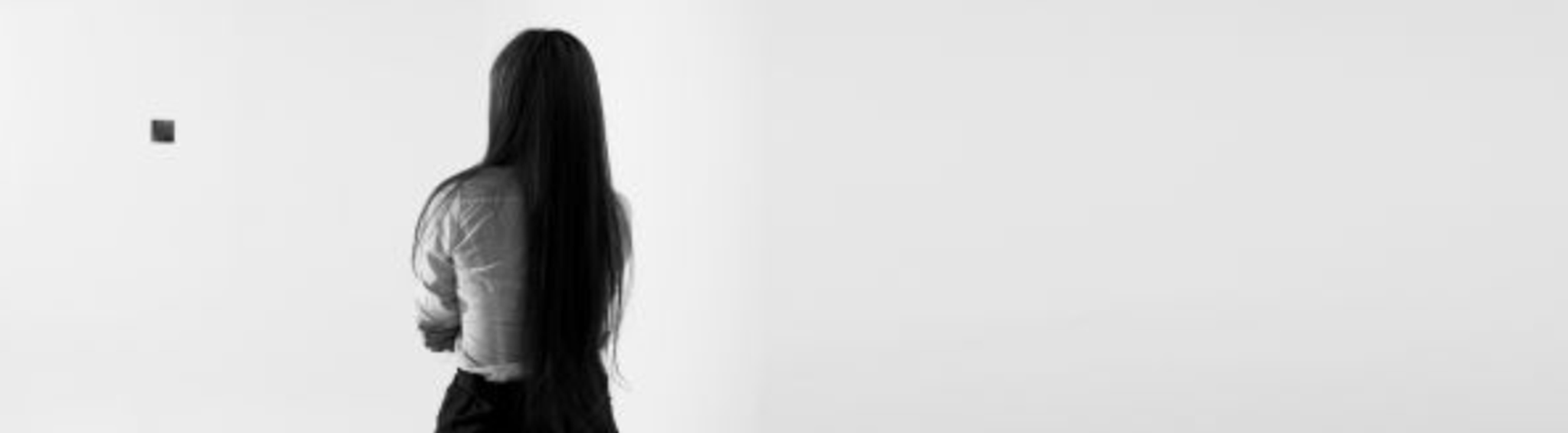
Artist Yeoreum Jeong ©DMZ International Documentary Film Festival

Yeoreum Jeong graduated from the Intermedia Art program at Kaywon University of Art & Design. Her solo exhibitions include 《Centuries in the Distant Mist》 (SeMA Bunker, Seoul, 2023) and 《HAPPY TIME IS GOOD》 (Hapjungjigu, Seoul, 2021).
 
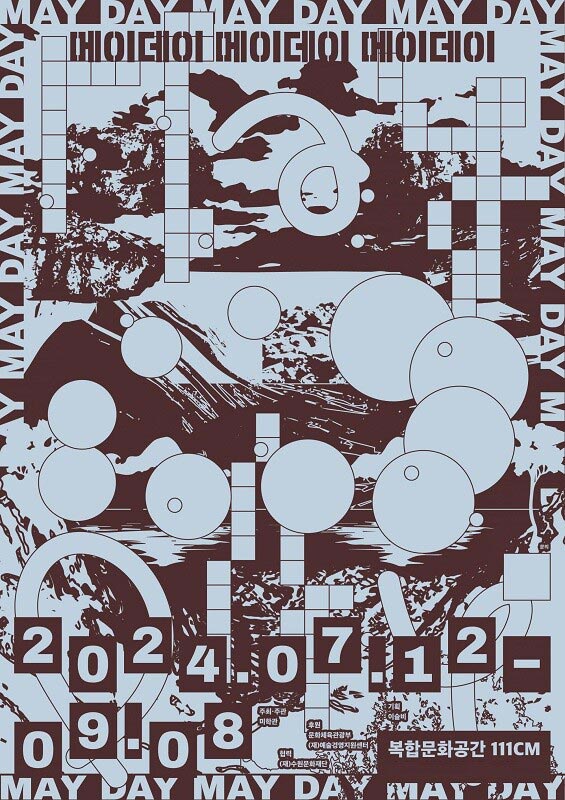
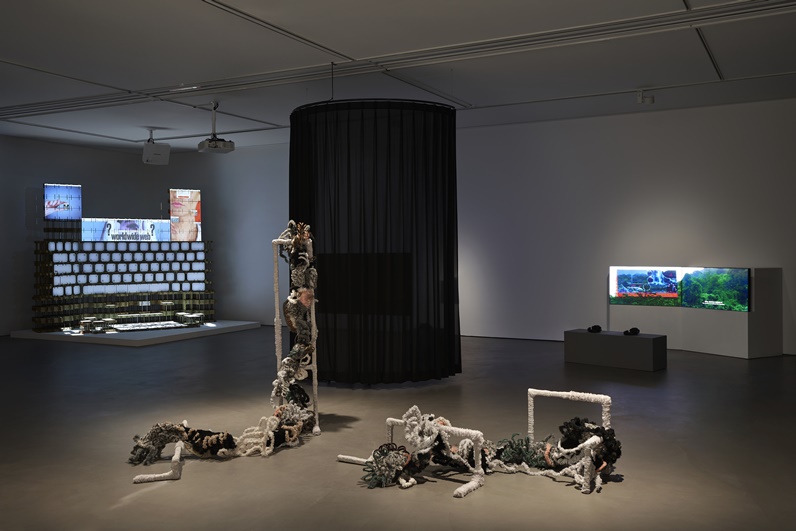
She has also participated in numerous group exhibitions, including 《MAY DAY MAY DAY MAY DAY》 (111CM, Suwon, 2024), 《DOOSAN Art Lab Exhibition 2024》 (DOOSAN Gallery, Seoul, 2024), 《All the Past Comes to the Present》 (HITE Collection, Seoul, 2023), 《2022 AAMP Forum Festival》 (Manzi Art Space, Hanoi, Vietnam, 2022), and 《Objects in Mirror are closer than they appear》 (OCAT Shanghai, Shanghai, China, 2021), as well as in a number of film festivals.
 
Jeong was selected as the recipient of the 15th DOOSAN Yonkang Art Award, and her works are held in the collection of the Korean Film Archive.
References