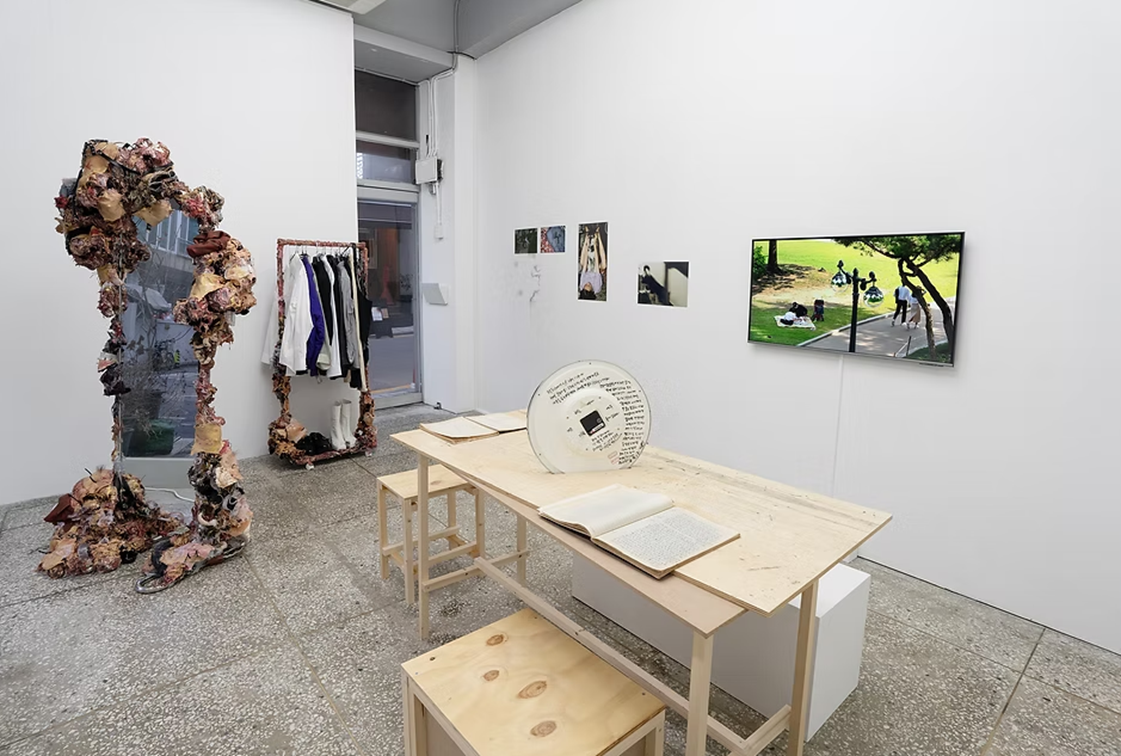
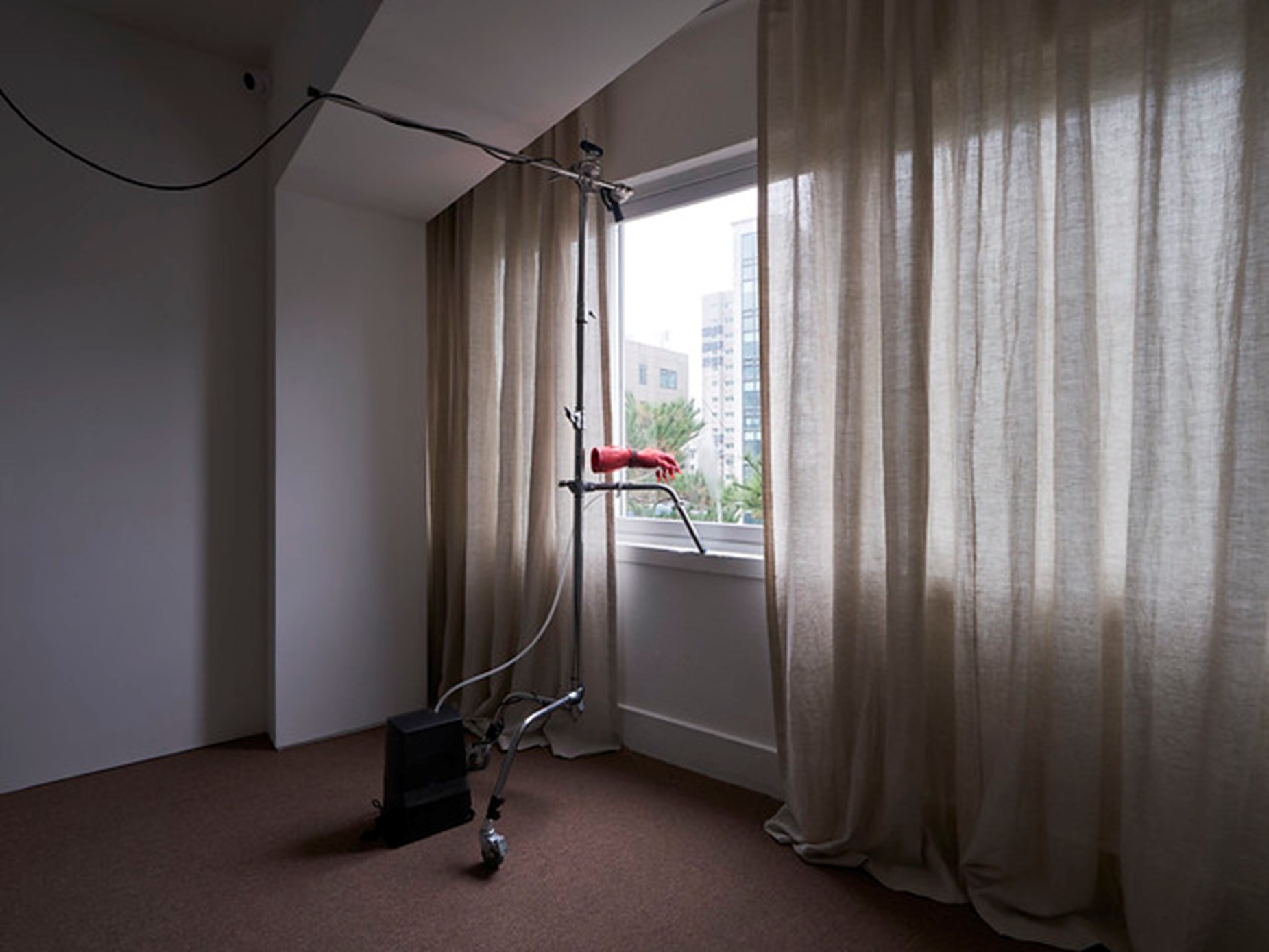
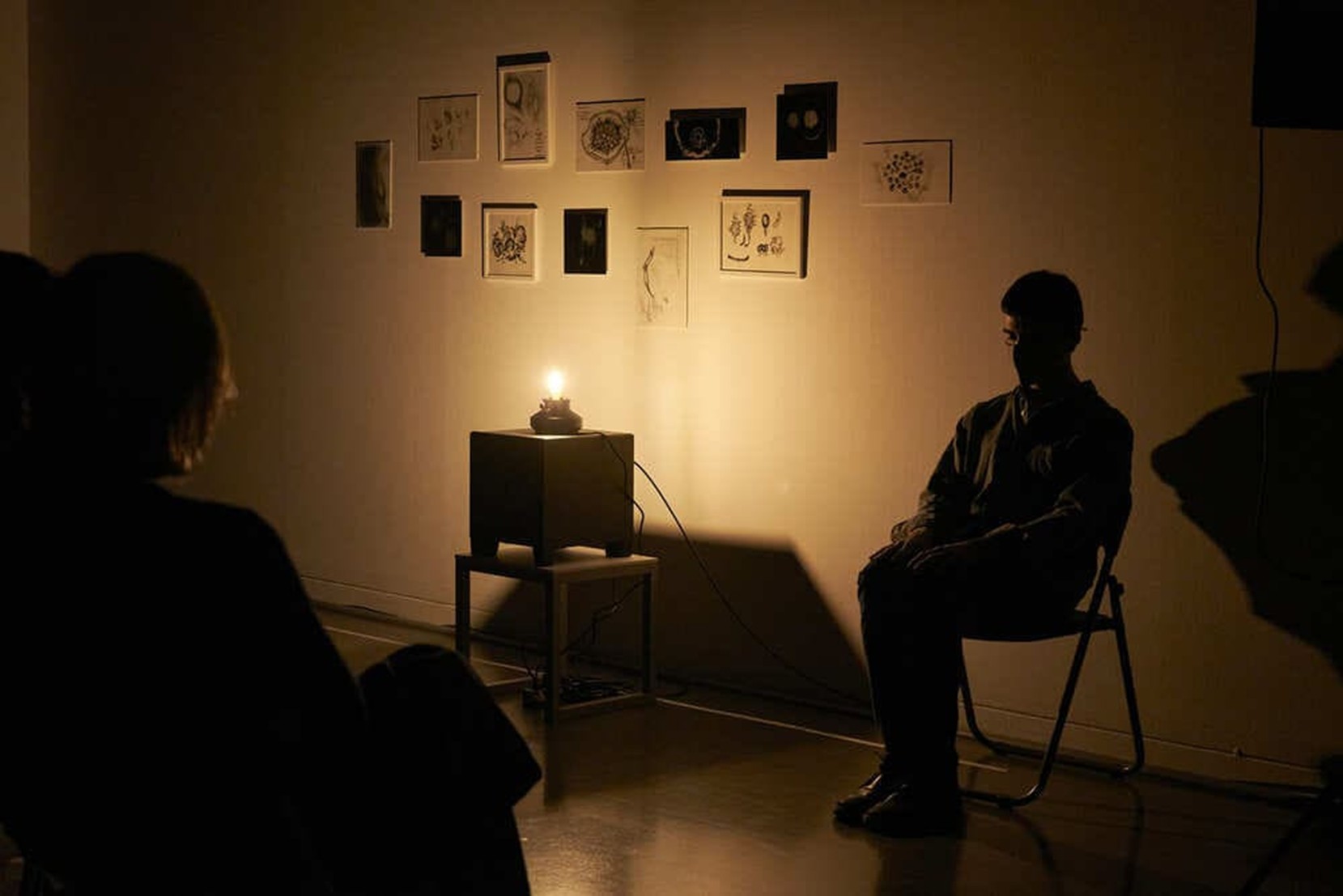
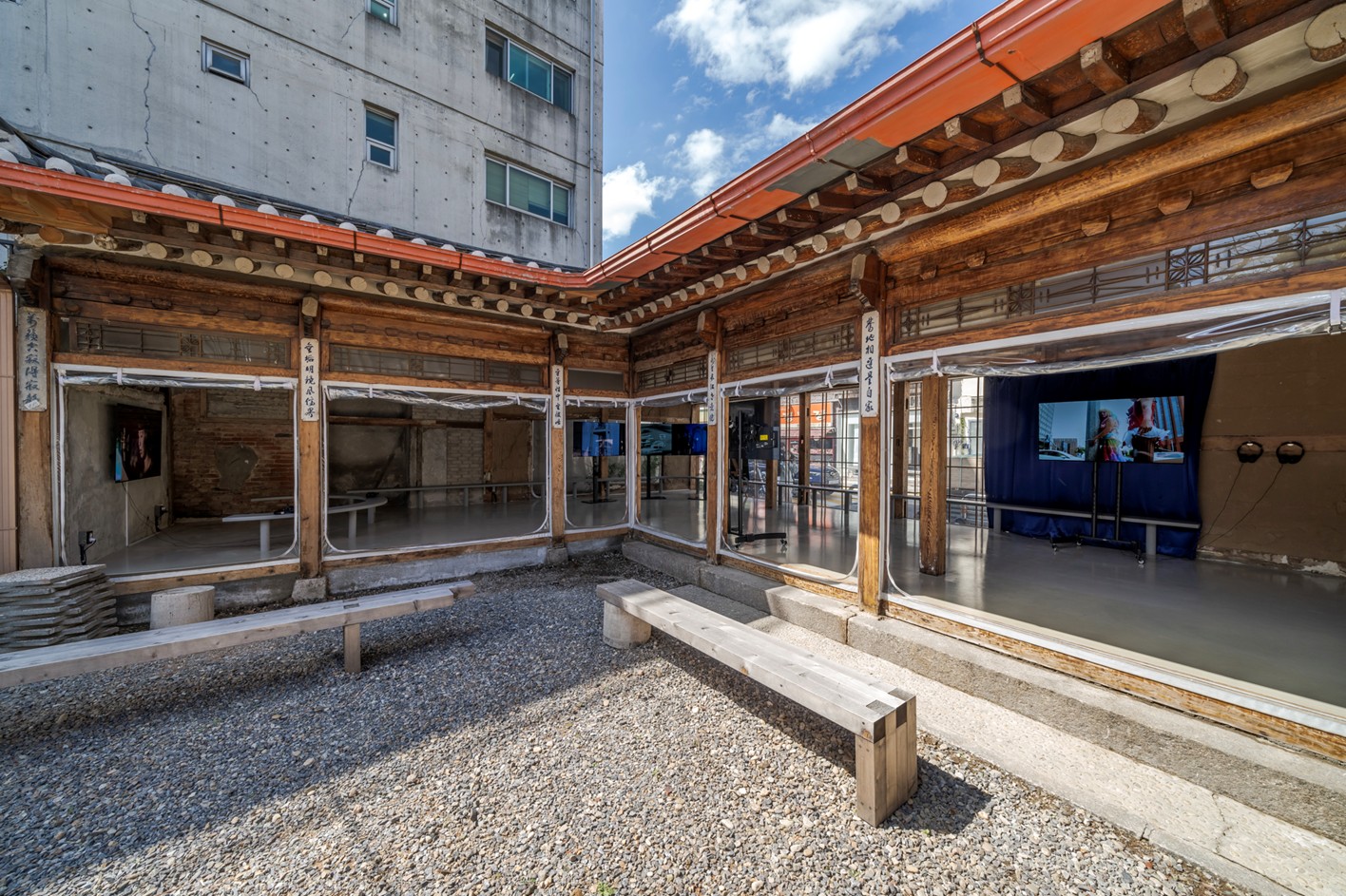
Each
participant cannot live completely detached from the already-demarcated
boundaries and the language they are already using; yet, when encountering
relationships and lives that cannot be spoken through those languages, they are
situated within a site that refuses to omit them. When the other comes to be
recognized and positioned under the name of “difference,” the other becomes
“the saviour who came to tear my life apart.”
If differences between one
another are not suppressed but allowed to resonate and form relations, only
then might we awkwardly begin to utter the word “we,” rather than merely
“each.” When a community is understood not as a unity but as a multiplicity,
when it is recognized that each body has already been formed through certain
relations, perhaps we may be able to use the word we*.
We* holds,
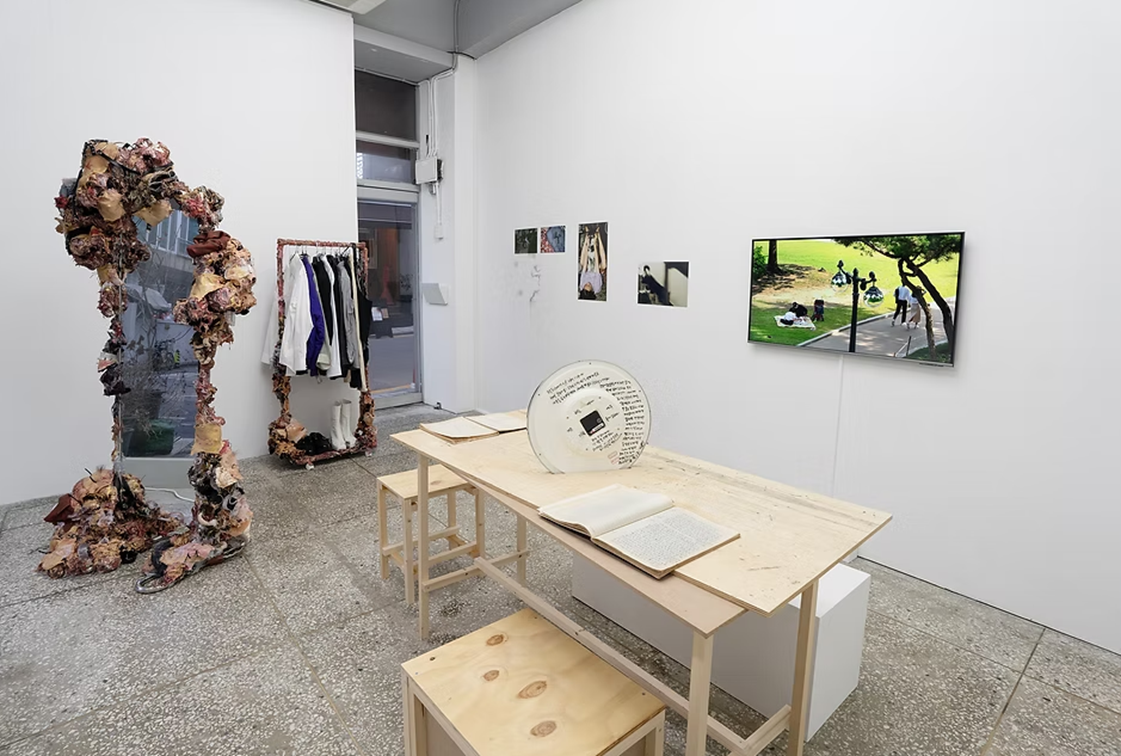
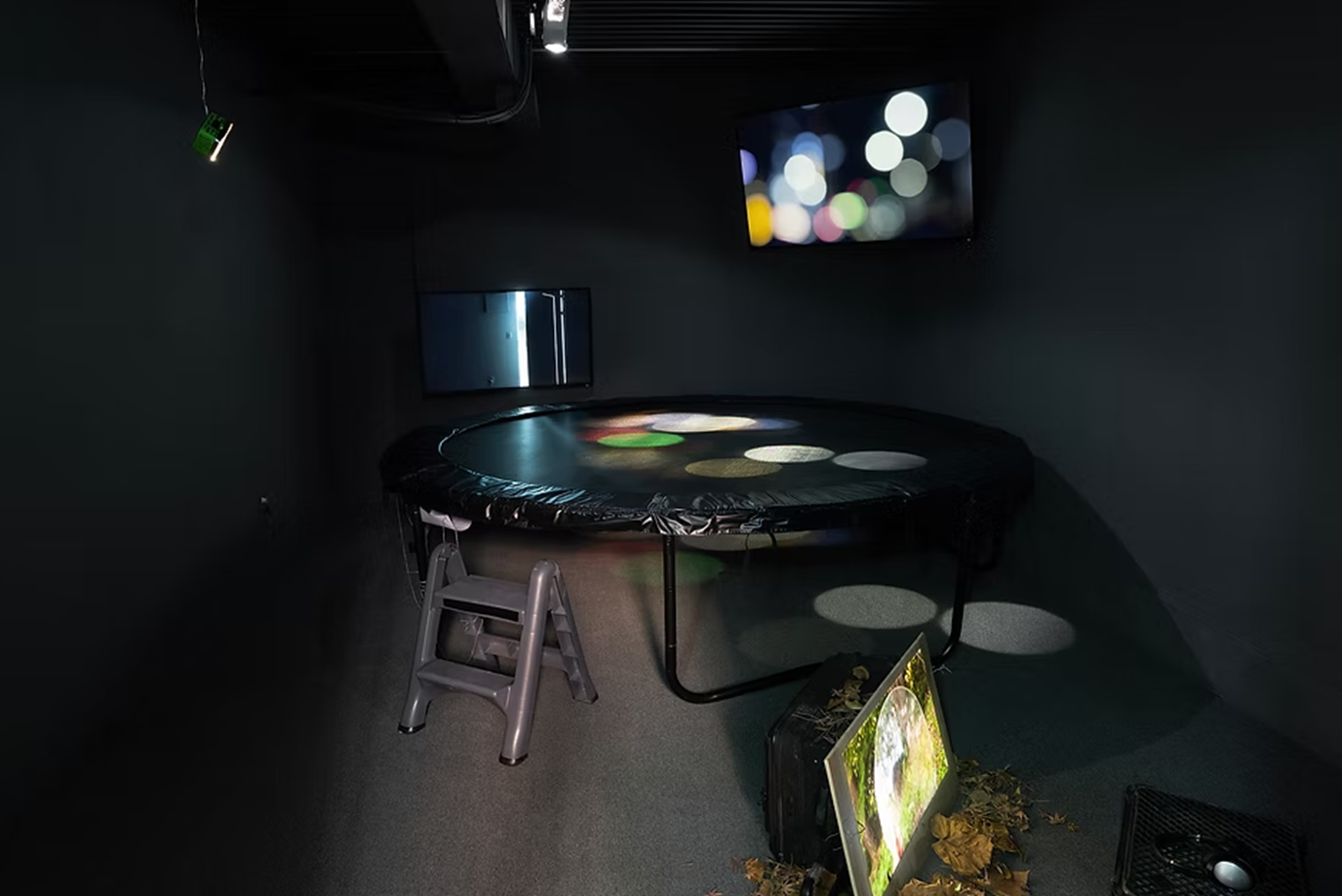
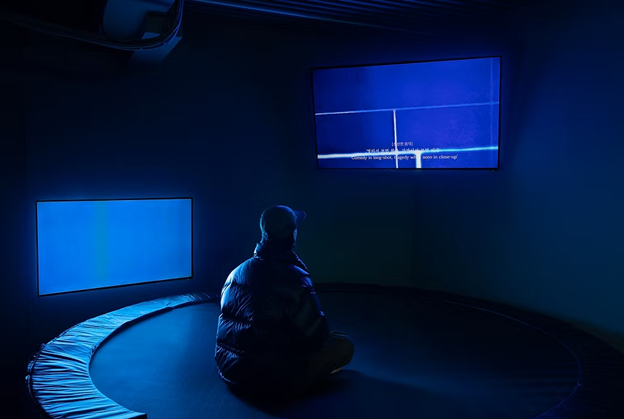
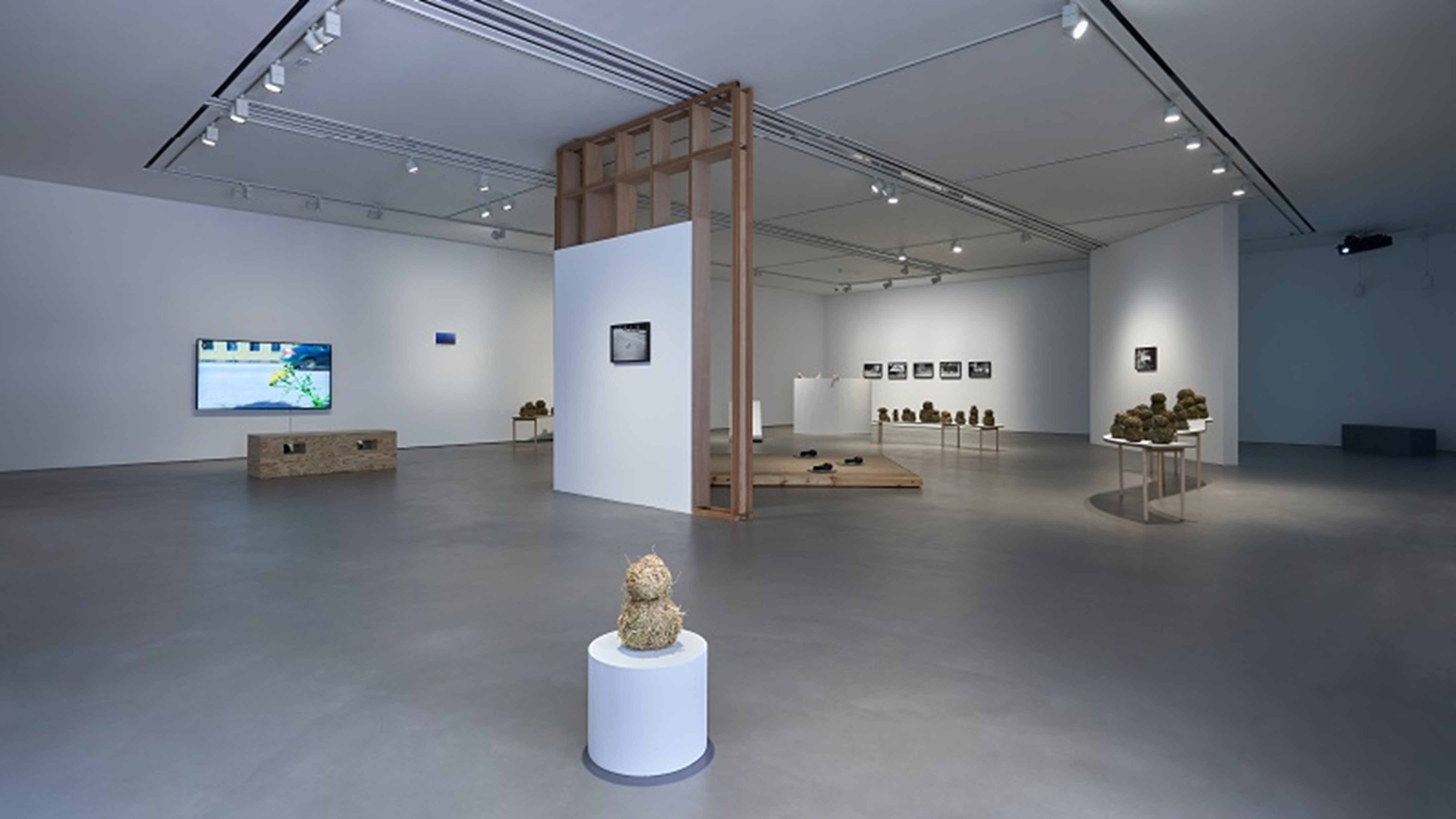
within this exhibition, an impossible dream: that the connections between one
another might not become a “hell of the same,”¹ but rather a “community of
resonance.”² A community that is not recuperated into a “familiar community.”³
A generative community that shares “uncomfortable friendships.”⁴
Here,
community is closer to a sensation. That is, we* hopes to become a hybrid
assemblage that shares the sensation of a generative community. This hybrid
assemblage—one that creates a sense of being connected without reducing each
specificity to sameness or totality, and whose connections produce a
reconfiguration of the existing—has not yet arrived. “Mixture is an eternal
process, yet also something new, like the imaginary.”⁵ Within a mélange state of diverse hybridities, we* can only hope for,
imagine, and attempt to generate a (hybrid) assemblage that seeks the
antagonistic.
“We do not
stop speaking about our experiences, but we do not insist that only our
discrimination and oppression are special or important. Together with
minorities in similar conditions, together with those who question and struggle
against normalcy and universality, we will not cease the struggle to rewrite
the meaning of dependence and solidarity.”– 20th Anniversary Declaration of Disabled Women’s Solidarity, 2018
*. we/us,
‘we/us’, we/////us, we‘us’, we, ᄋ,ᅮ,ᄅ,ᅵ, ᄋ,ᅮ-ᄅ,ᅵ, we; us, …
1. Byung-Chul
Han, The Expulsion of the Other, trans. Jaeyoung Lee, Munhakdongne, 2017,
p. 56
2. Byung-Chul
Han, The Disappearance of Rituals, trans. Daeh Ho Jeon, Gimmyoung
Publishers, 2021, p. 21
3. Myung-Ah
Kwon, Infinitely Political Loneliness, Galmuri, 2012, p. 104
4. In
2009, Jin Eun-young, borrowing Nietzsche’s words, proposed becoming an
“uncomfortable community” together with Sim Bo-seon in issue no. 87
of Literature and Society. Kwon Myung-Ah (2012) actively cites this in
Chapter 2 of the aforementioned book, positioning “uncomfortable friendship” in
a binary opposition to the affect of familiar community and mobilizing it as a
force to neutralize ostentatious bonds of comradeship. The participants of this
exhibition, we*, re-quote “uncomfortable friendship” while imagining a
community that continues to generate relationships by questioning difference.
5. Jan
Nederveen Pieterse, Globalization and Culture, trans. Kwan-Yeon Cho and
Seon-Ae Son, EcoLivre, 2017, p. 86
In this book, Pieterse introduces perspectives and limitations of viewing
globalization through hybridity, and explores its possibilities. In doing so,
he uses the term mélange to refer to a certain state: the (eternal)
mixture among entities that exist in a hybridized condition, already affecting
and being affected by one another. The state in which this exhibition and each
participant’s work are mixed and connected—and the relationships that will be
generated with audiences going forward—will not be very different from this.