Articles
Gwon Donghyun × Kwon Seajung: Imagining Other Forms of Relationship Emerging from the Human–Animal Connection
February 02, 2026
A Team
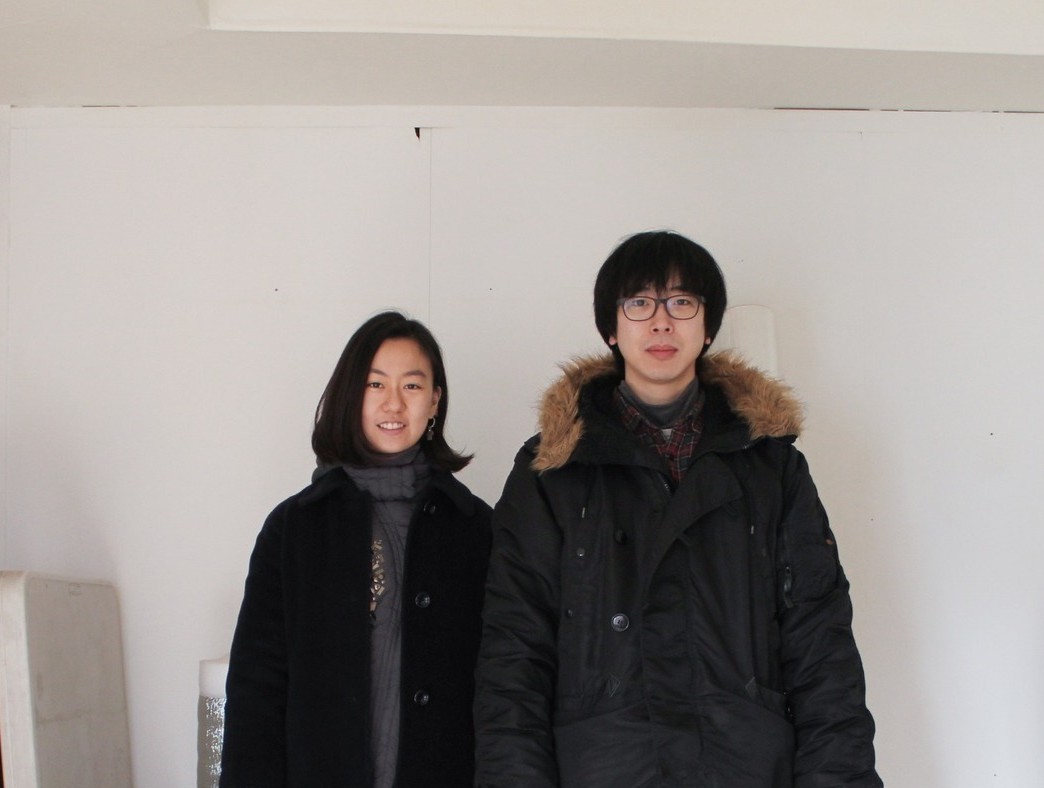
Gwon Donghyun (b. 1982) and Kwon Seajung
(b. 1988) formed a collective in 2020 and have since explored and re-presented
moments in which human and non-human subjects become entangled and
interconnected through video, sculpture, and installation. Gwon Donghyun has
primarily worked with sculpture, while Kwon Seajung has focused on installation
and video; in their collaborative practice, the two complement one another by
addressing what each medium alone cannot fully articulate.
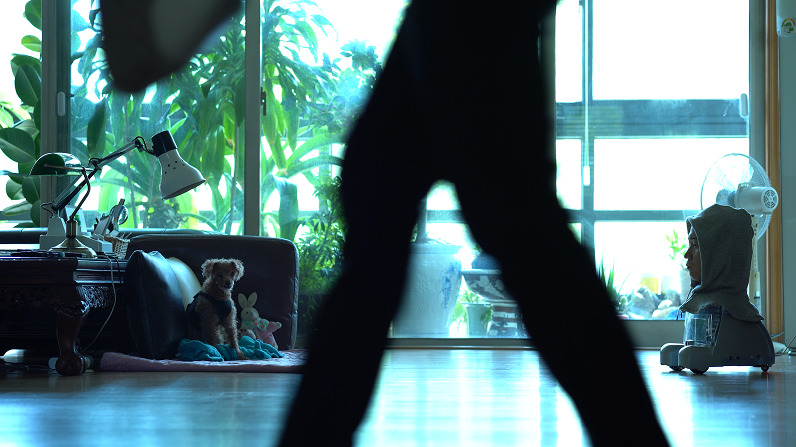 Gwon Donghyun ×
Kwon Seajung, Seddy, How to meet Dodo, 2021, Single-channel
video, FHD, color+BW, stereo sound, 15min 8sec. ©Gwon Donghyun × Kwon Seajung
Gwon Donghyun ×
Kwon Seajung, Seddy, How to meet Dodo, 2021, Single-channel
video, FHD, color+BW, stereo sound, 15min 8sec. ©Gwon Donghyun × Kwon Seajung
Gwon Donghyun and Kwon Seajung began to
seriously envision their collaboration in 2021, during conversations about a
dog that Kwon Seajung had lived with for many years and that had fallen ill.
Since forming the collective, the artists have presented experimental
documentary videos, sculptures, and installations that center on dogs, weaving
together themes of human–animal relationships, care, the city, and
modernization.
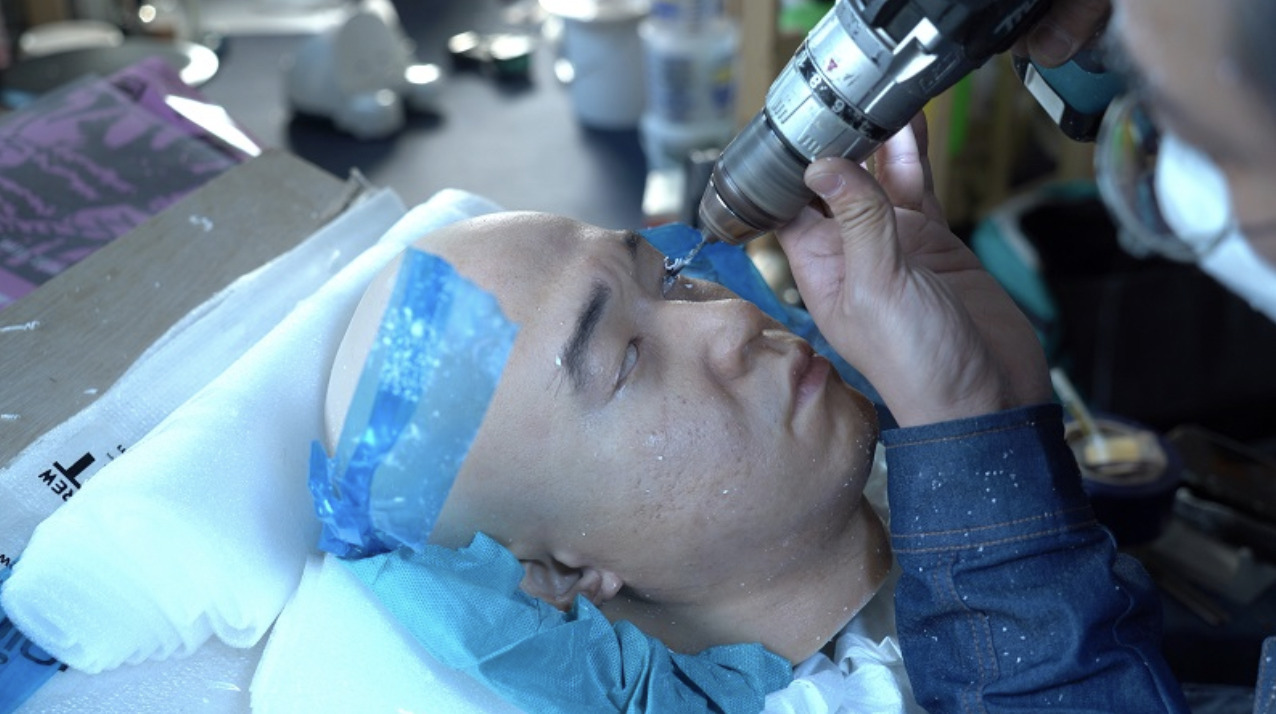 Gwon Donghyun ×
Kwon Seajung, Seddy, How to meet Dodo, 2021, Single-channel
video, FHD, color+BW, stereo sound, 15min 8sec. ©Gwon Donghyun × Kwon Seajung
Gwon Donghyun ×
Kwon Seajung, Seddy, How to meet Dodo, 2021, Single-channel
video, FHD, color+BW, stereo sound, 15min 8sec. ©Gwon Donghyun × Kwon Seajung
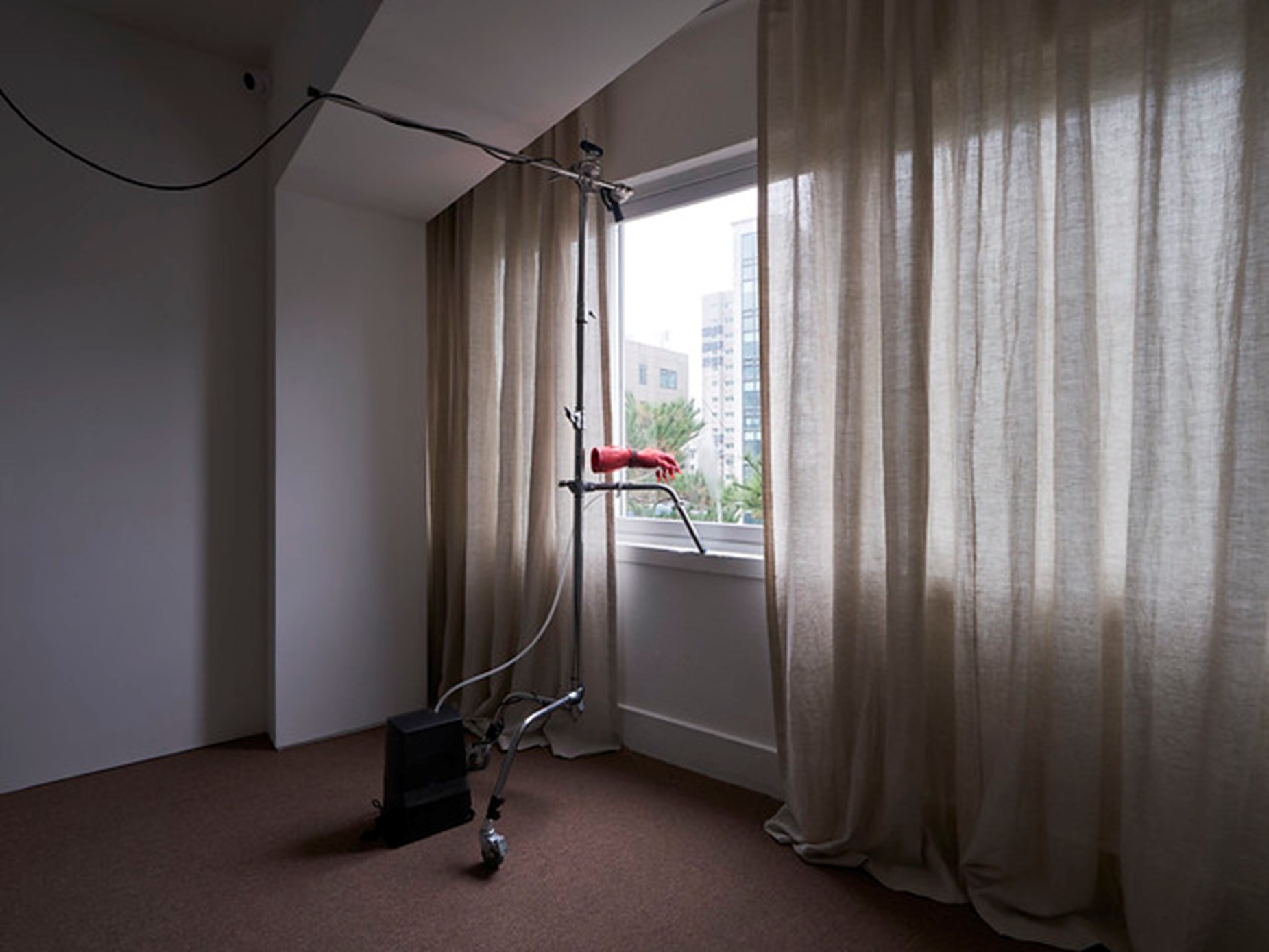
The work Seddy, How to Meet
Dodo (2021), created as a result of this collaboration, is a video
that documents the experience of introducing a pet care robot when “Dodo,” an
elderly dog who had long lived with Kwon Seajung, became ill. While away from
home, the artists remotely operated the care robot “Seddy” to check whether
Dodo was in any kind of emergency.
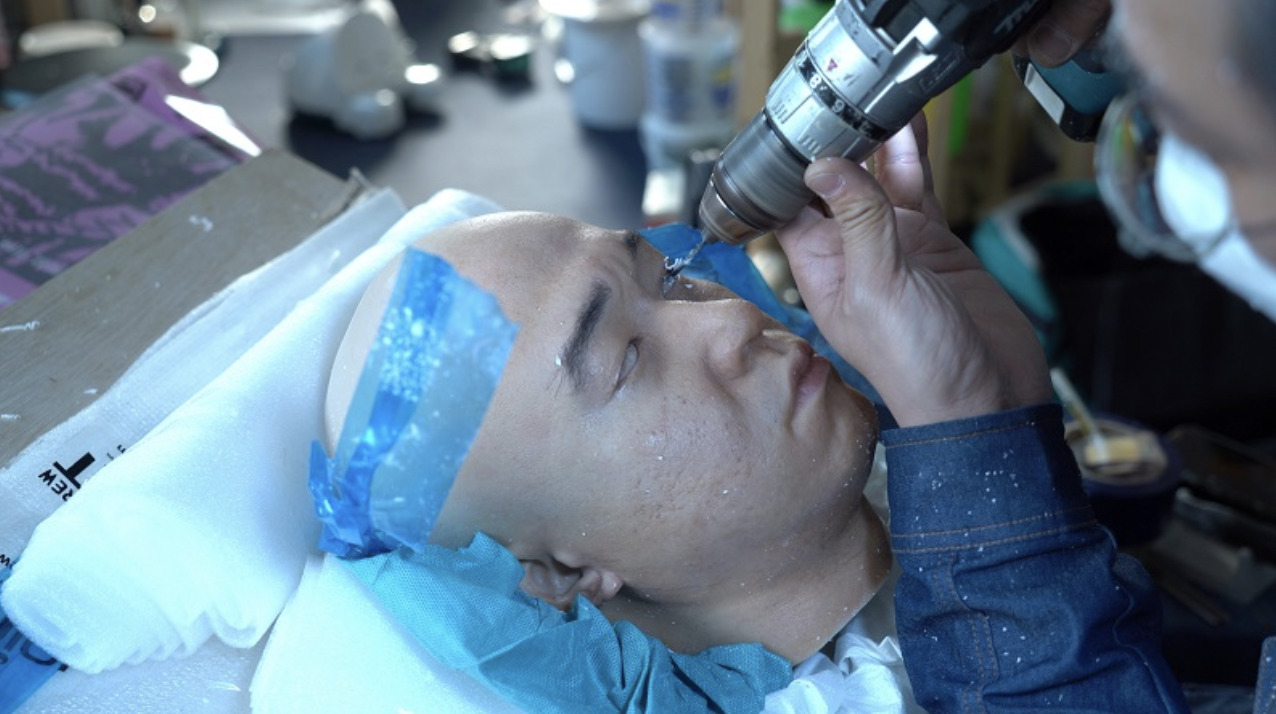
In fact, “Seddy” was nothing more than a
home camera on wheels that moved around and filmed the interior. However, by
fabricating and attaching a human-like face to the body of this home camera,
Gwon Donghyun × Kwon Seajung endowed it with the status of a robot.
Borrowing the body of “Seddy”—a robot that
conveys the owner’s voice through a human-like form familiar to a dog—the
artists attempt to communicate with Dodo. Transforming into “Seddy,” which
operates from a lower vantage point than Dodo and moves in a crude, awkward
manner, evokes emotions that are at once familiar and strange, opening a
fissure within the notions of care and the habitual relationship between
companion and companion animal.
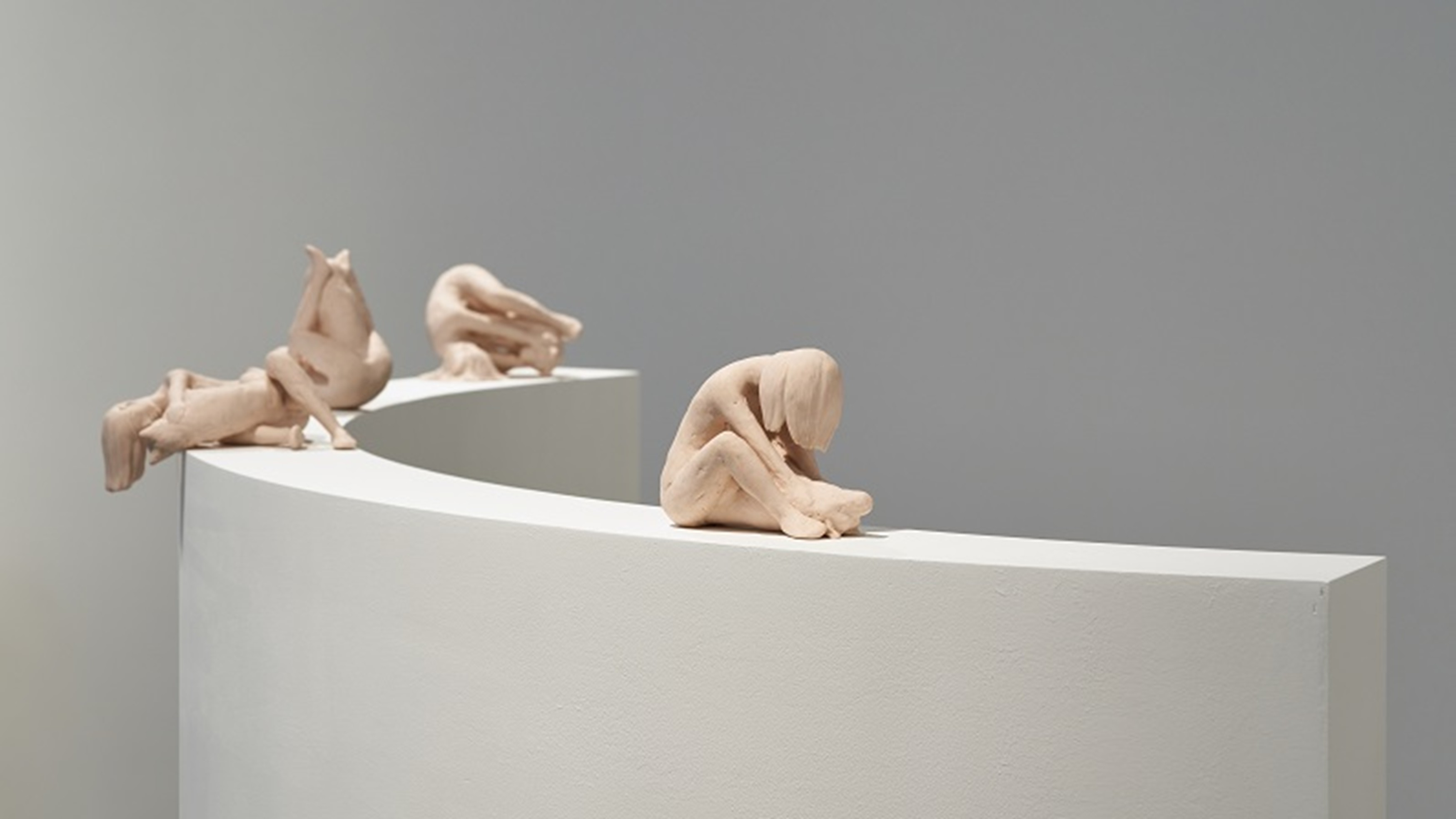
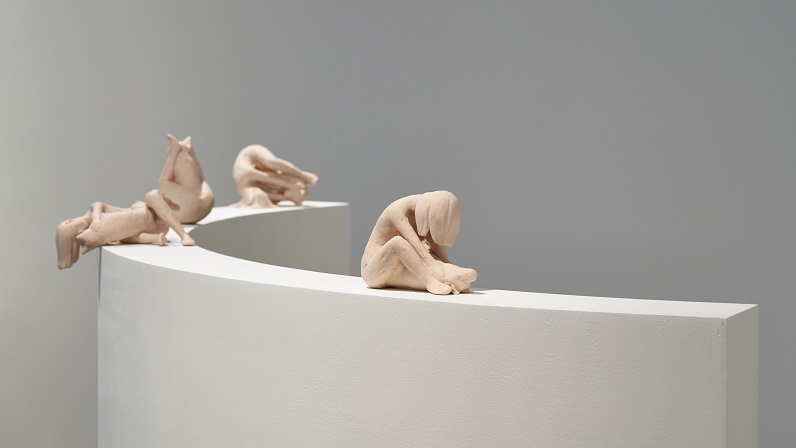 Gwon Donghyun ×
Kwon Seajung, Woman with Dog, Dog with Woman, 2023-2024,
Polymer clay, 15×7.5×11 cm, 15×13.5×9 cm, 12.5×8×9.5 cm, 16×12.5×9.5 cm,
14.5×15×6.5 cm, 5pieces ©DOOSAN Art Center
Gwon Donghyun ×
Kwon Seajung, Woman with Dog, Dog with Woman, 2023-2024,
Polymer clay, 15×7.5×11 cm, 15×13.5×9 cm, 12.5×8×9.5 cm, 16×12.5×9.5 cm,
14.5×15×6.5 cm, 5pieces ©DOOSAN Art Center
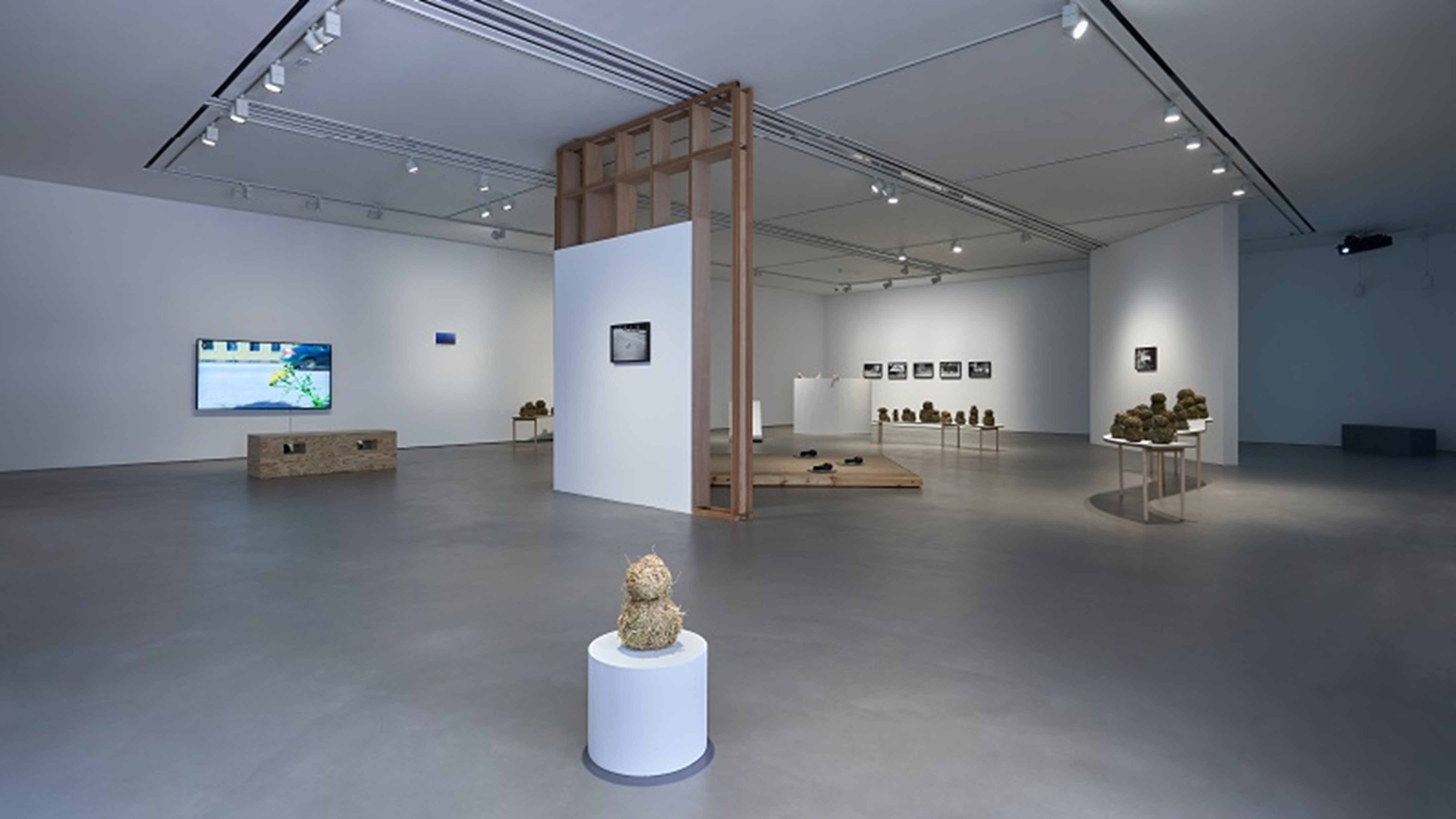
Furthermore, in the group exhibition 《You Cannot Elaborate the Dark Thickness of Night As They Can》 (2024) at DOOSAN Gallery, the duo presented the sculptural work
Woman with Dog, Dog with Woman (2023–2024) alongside
Seddy, How to Meet Dodo, seeking to render more sensorially
the moments spent caring for an ailing dog at home.
These sculptures are modeled after figures
captured in photographs taken during that period of home care. While conveying
intimacy, they also suggest a relationship in flux through gestures that appear
similar yet subtly divergent, leaving behind an afterimage—as if the moment,
and the relationship itself, might continue to unfold.
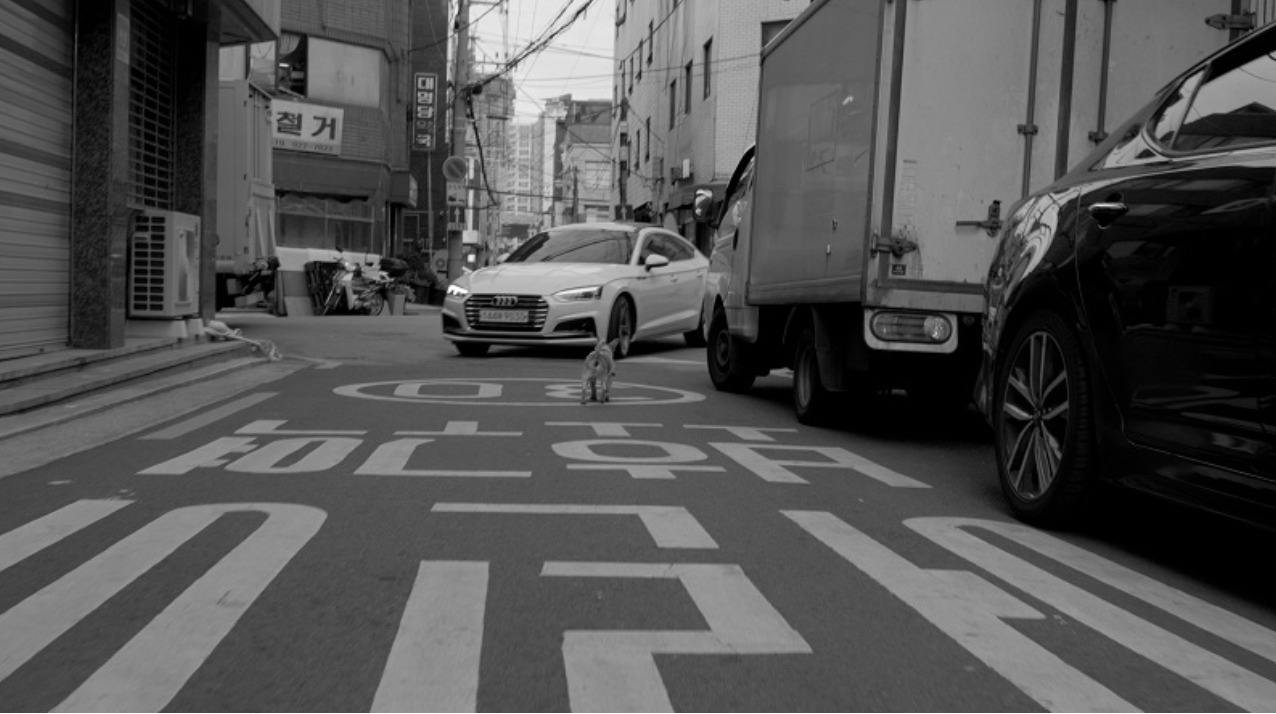 Gwon Donghyun ×
Kwon Seajung, Love Death Dog City, 2022, Single-channel
video, FHD, color+BW, 16:9, stereo sound, 29min 41sec. ©Gwon Donghyun × Kwon
Seajung
Gwon Donghyun ×
Kwon Seajung, Love Death Dog City, 2022, Single-channel
video, FHD, color+BW, 16:9, stereo sound, 29min 41sec. ©Gwon Donghyun × Kwon
Seajung
Building on this work, Gwon Donghyun × Kwon
Seajung went on to develop the long-term project series ‘Love Death Dog’
(2022–). This research-based project traces the ways in which humans and
animals have coexisted, spanning from narratives of the past shaped by
modernization and urbanization to the present, and addressing the diverse
histories of relationships between humans and animals.
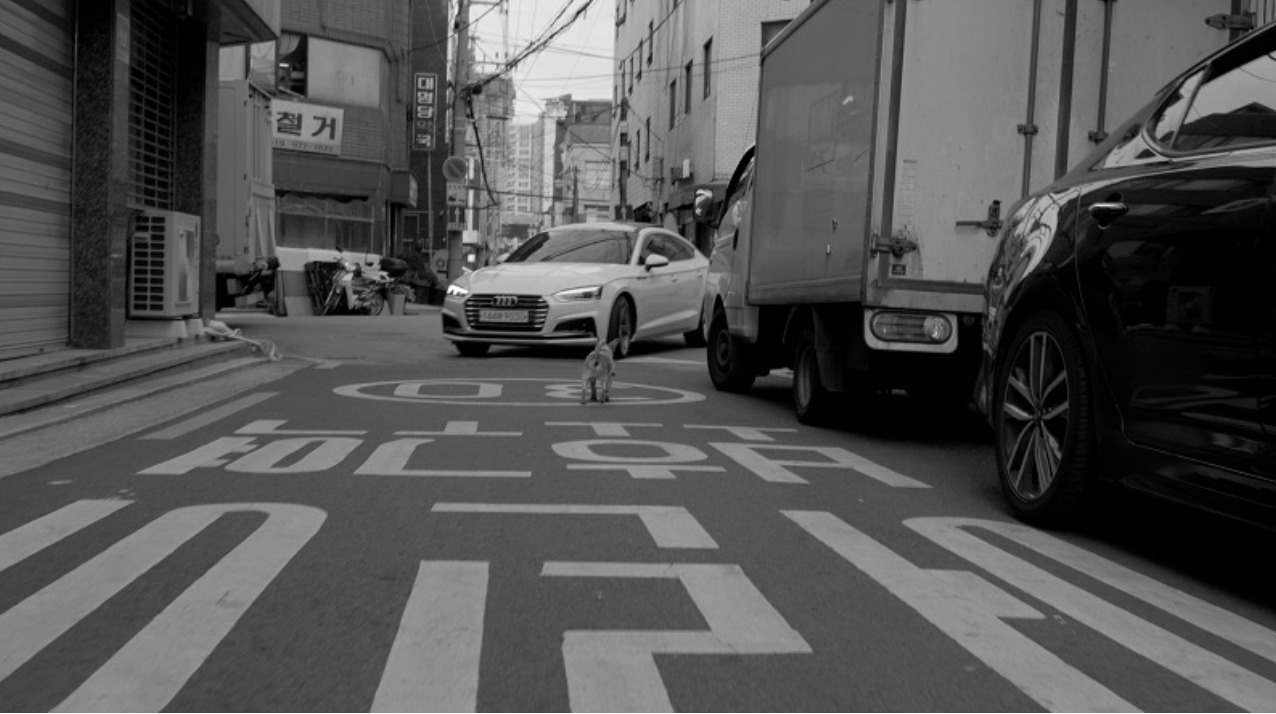
In Love Death Dog City
(2022), the artists examine the process by which, since the 1950s, dogs’ place
shifted from village alleys into indoor spaces alongside urbanization, tracing
how changes in spatial conditions affected the status of dogs. By collecting
archival materials from Seoul of that period, Gwon and Kwon sought to better
understand the relationships formed between humans and dogs in today’s urban
environment.
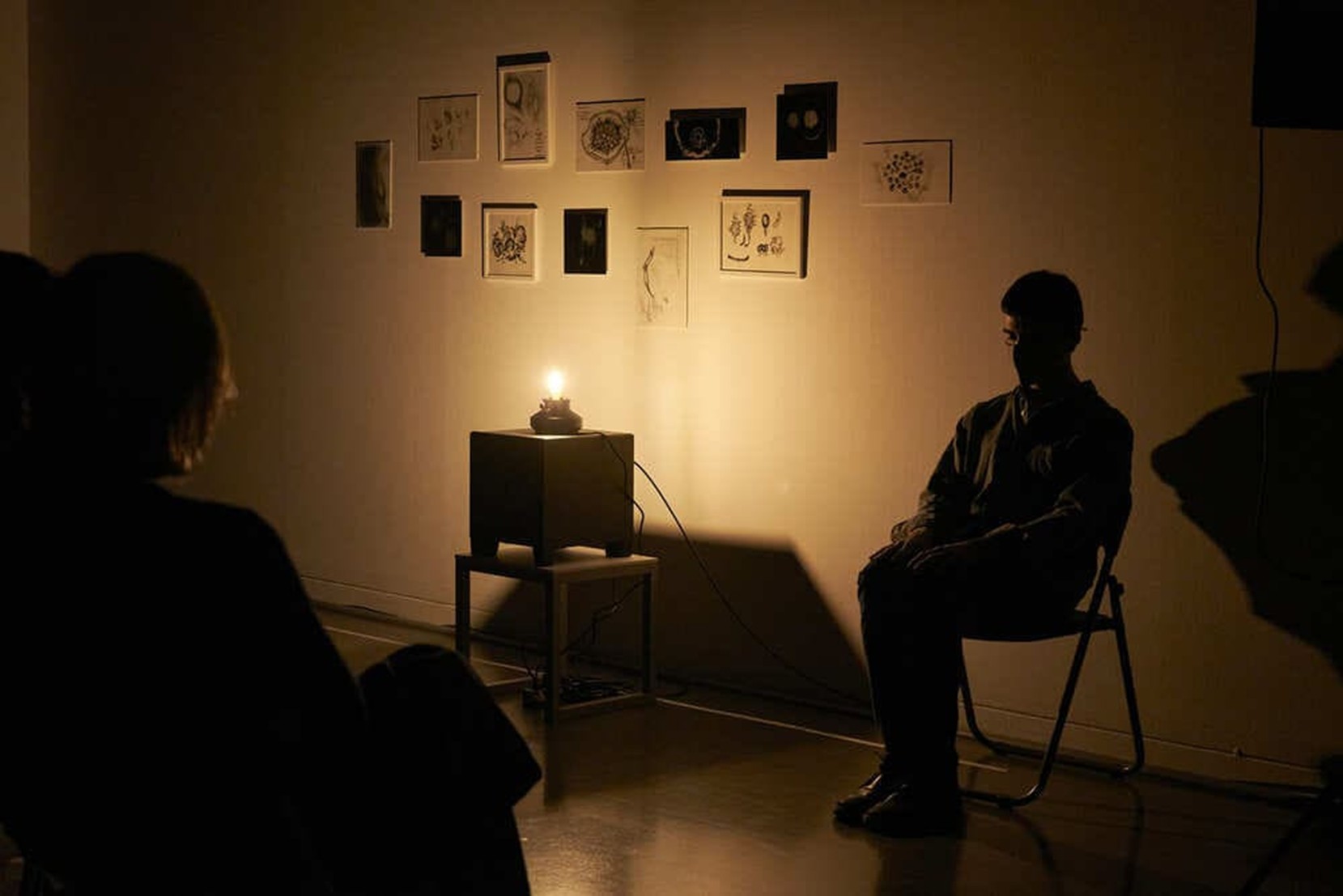
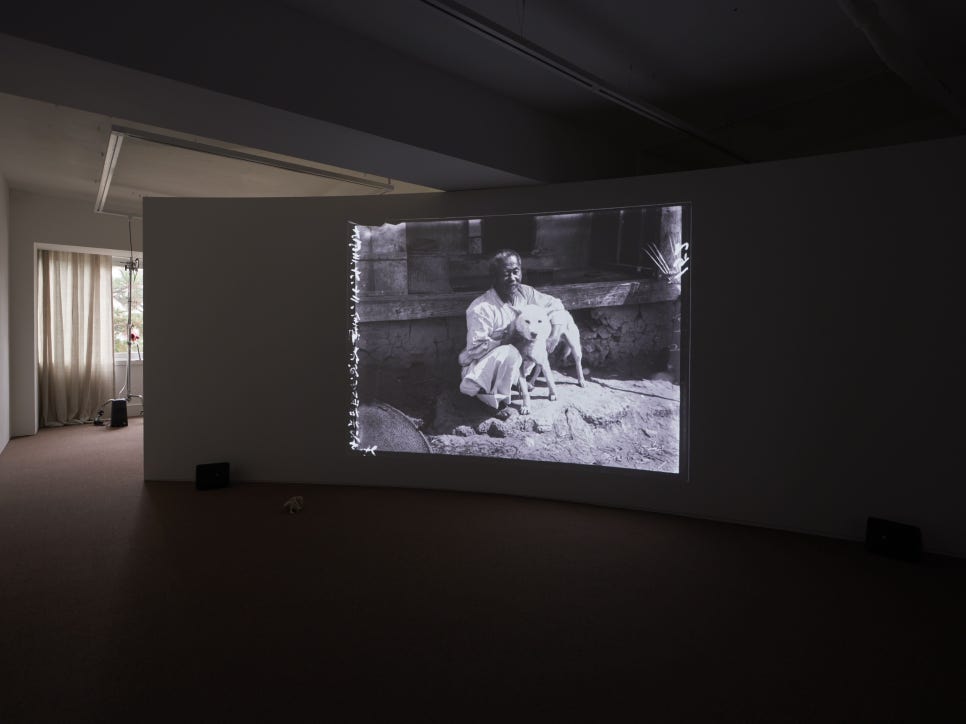 Gwon Donghyun ×
Kwon Seajung, Love Death Dog & Epilogue, 2023,
Single-channel video, FHD, color+BW, stereo sound, 24min 30sec. Installation
view of 《Love Death Dog》 (YPC SPACE, 2023)
©YPC SPACE
Gwon Donghyun ×
Kwon Seajung, Love Death Dog & Epilogue, 2023,
Single-channel video, FHD, color+BW, stereo sound, 24min 30sec. Installation
view of 《Love Death Dog》 (YPC SPACE, 2023)
©YPC SPACE
Subsequently, as the artists revisited the
research materials from Love Death Dog City, they sought to
address aspects of urbanization that had not been fully examined in the
previous work, connecting the structural dimensions of this transformation to
the relationship between humans and dogs.
In this process, Gwon Donghyun and Kwon
Seajung returned to one of the archival photographs they had collected,
Jindo Dog of Usuyeong (1914), and began to investigate the
historical contexts surrounding it. This inquiry prompted a shift in the
project’s focus toward examining how the forced imposition of modernization
during Korea’s colonial period intervened in and reshaped relationships between
humans and dogs.
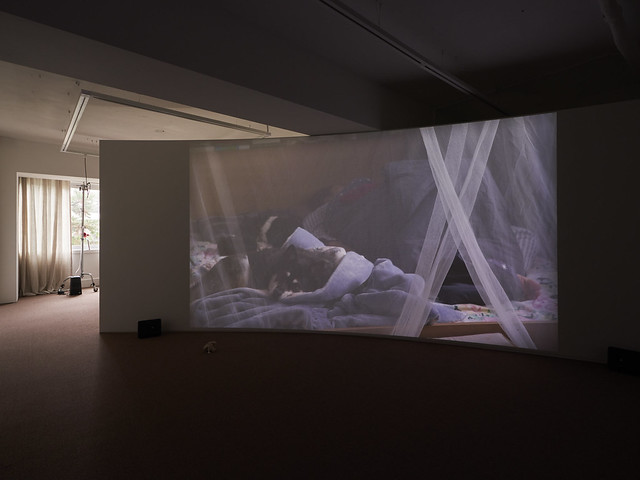 Gwon Donghyun ×
Kwon Seajung, Love Death Dog & Epilogue, 2023,
Single-channel video, FHD, color+BW, stereo sound, 24min 30sec. Installation
view of 《Love Death Dog》 (YPC SPACE, 2023)
©YPC SPACE
Gwon Donghyun ×
Kwon Seajung, Love Death Dog & Epilogue, 2023,
Single-channel video, FHD, color+BW, stereo sound, 24min 30sec. Installation
view of 《Love Death Dog》 (YPC SPACE, 2023)
©YPC SPACE
The resulting exhibition, 《Love Death Dog》 (YPC SPACE, 2023), marked
Gwon Donghyun × Kwon Seajung’s first solo exhibition and brought together a new
video work with speculative sculptural practices that trace stories of dogs and
humans from over a century ago.
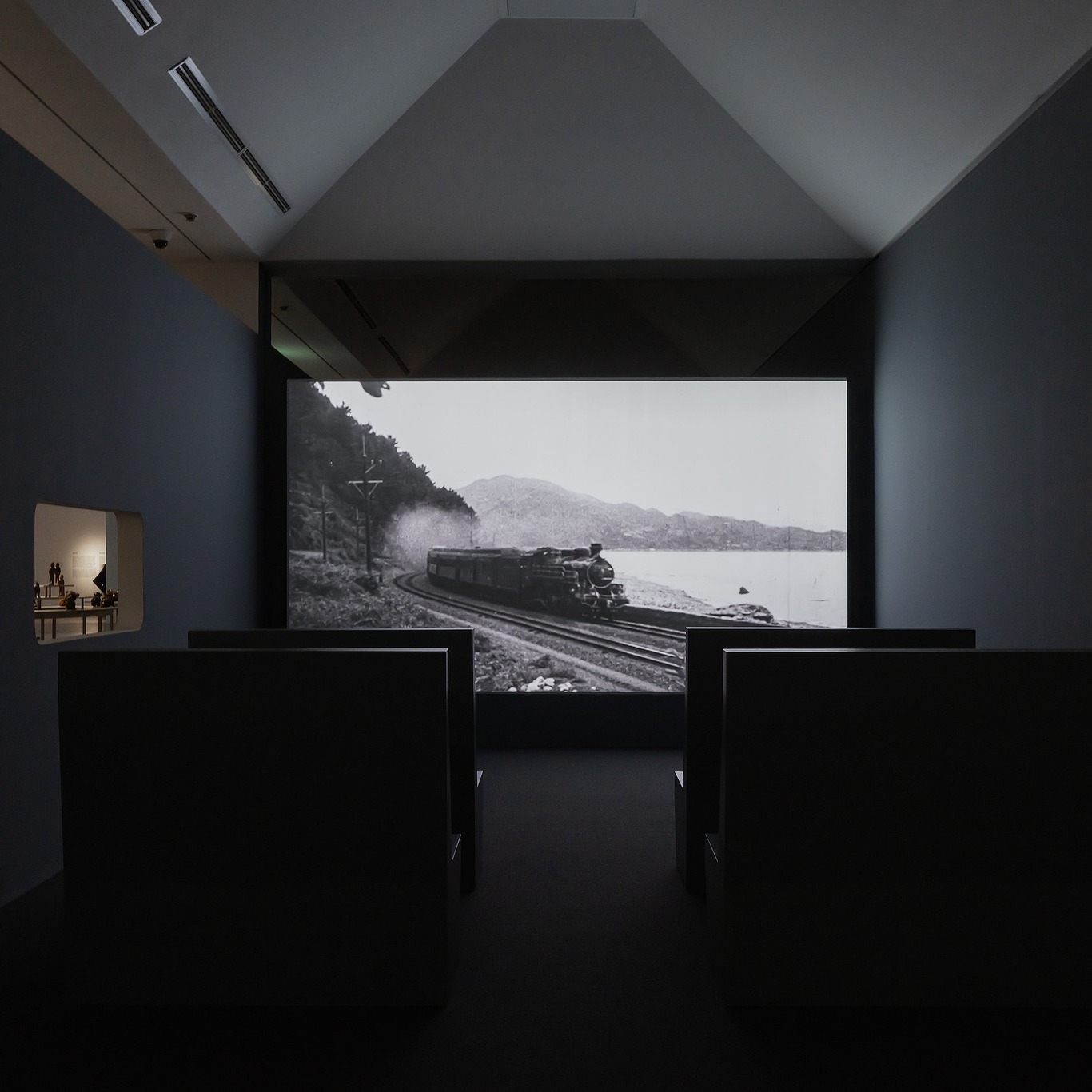
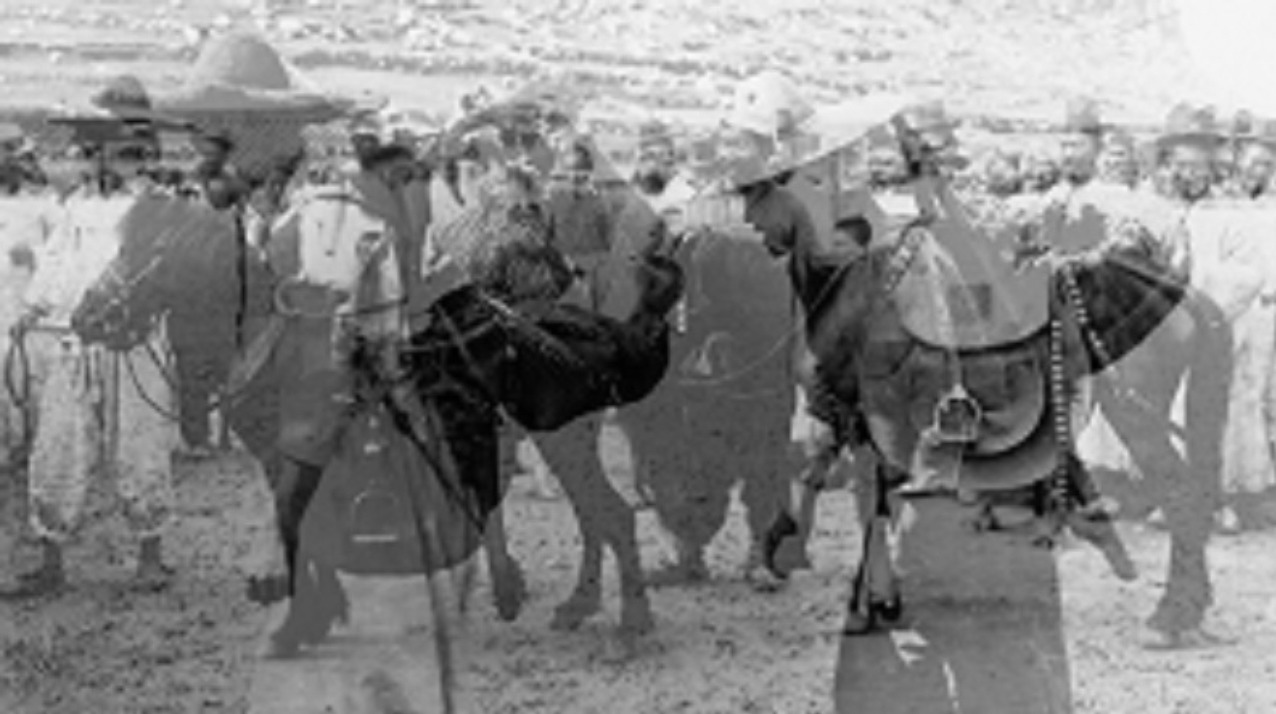
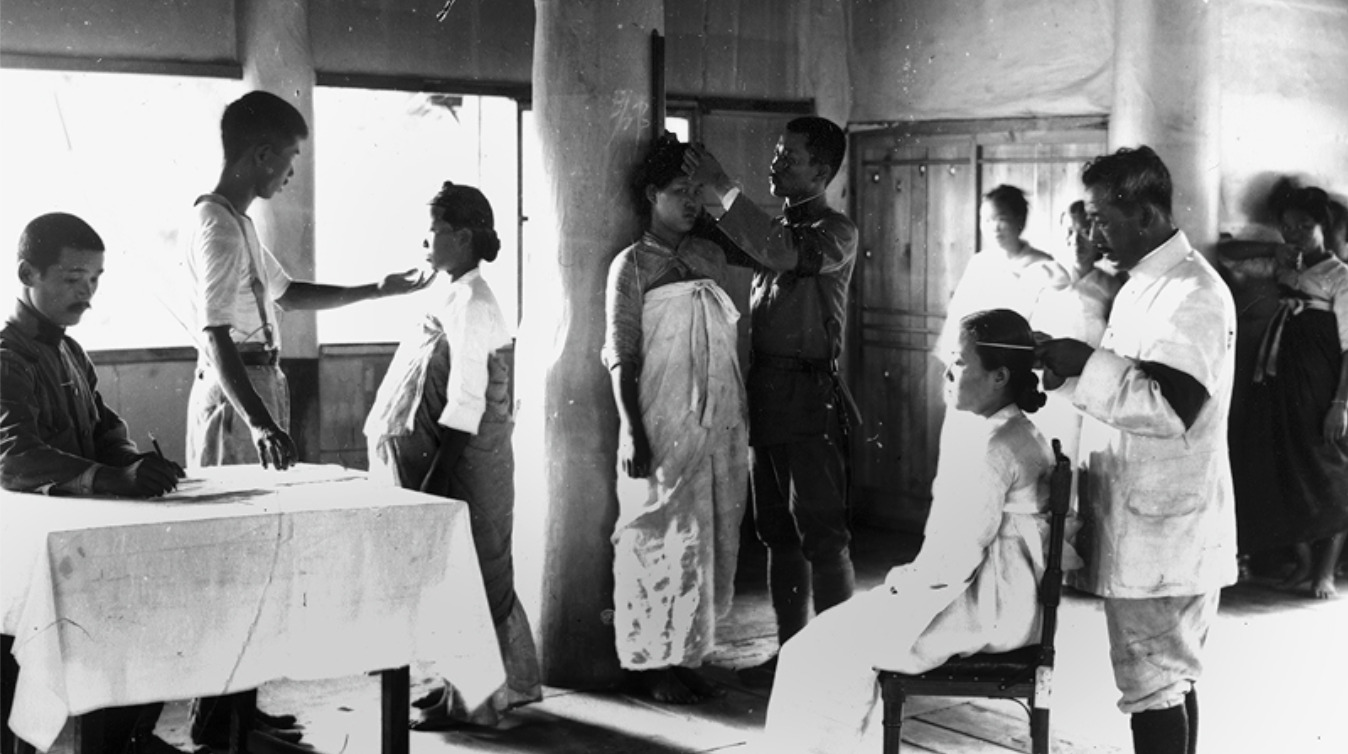
The video work Love Death Dog
& Epilogue (2023) begins by examining dry glass photographs,
which serve as an archive of anthropological investigation conducted on Joseon
by the Japanese Empire in the early 20th century. Among the faded images from a
series of research measuring Joseon people’s bodies and documenting the local
landscape and custom to justify the colonial rule, dogs are with us, as if they’ve
been there all along.
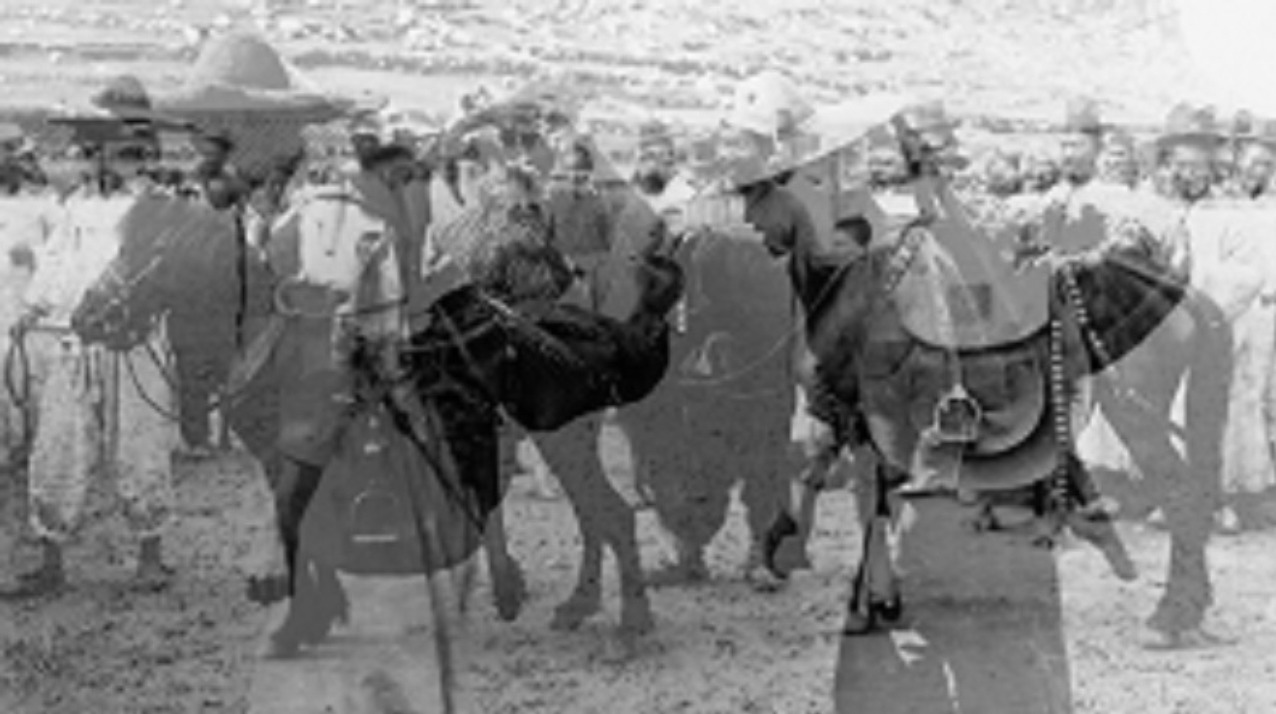 Gwon Donghyun ×
Kwon Seajung, Love Death Dog & Epilogue, 2023,
Single-channel video, FHD, color+BW, stereo sound, 24min 30sec. ©Gwon Donghyun
× Kwon Seajung
Gwon Donghyun ×
Kwon Seajung, Love Death Dog & Epilogue, 2023,
Single-channel video, FHD, color+BW, stereo sound, 24min 30sec. ©Gwon Donghyun
× Kwon Seajung
Posing the question, “How did this dog end
up in a photograph during an anthropological investigation by the Japanese
Government-General of Korea?”, the artists trace a history in which the logics
of control and domination imposed upon Koreans were extended to the animals
living alongside them.
Accordingly, in this video, Gwon Donghyun
and Kwon Seajung delineate a situation in which humans and nonhumans coexisted
at what they describe as an “equally low” position. As measures were taken to
limit dogs to human ownership, dispose of ones that were out of human control,
and rob their - humans’ and dogs’ alike - bodies as war materials, humans and animals
entered modern society together.
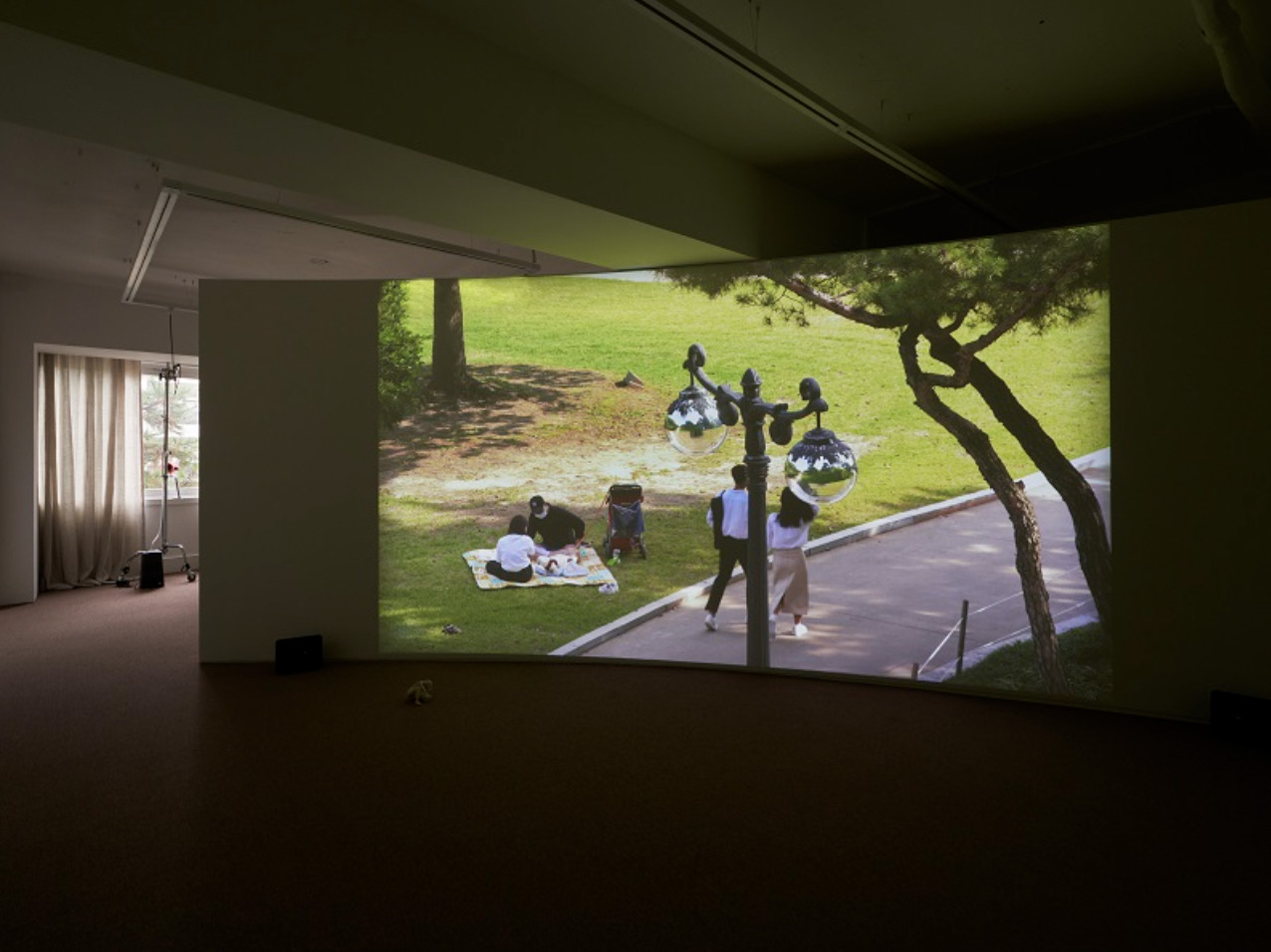 Gwon Donghyun ×
Kwon Seajung, Love Death Dog & Epilogue, 2023,
Single-channel video, FHD, color+BW, stereo sound, 24min 30sec. Installation
view of 《Love Death Dog》 (YPC SPACE, 2023)
©YPC SPACE
Gwon Donghyun ×
Kwon Seajung, Love Death Dog & Epilogue, 2023,
Single-channel video, FHD, color+BW, stereo sound, 24min 30sec. Installation
view of 《Love Death Dog》 (YPC SPACE, 2023)
©YPC SPACE
Compared to earlier works in the project,
Gwon Donghyun × Kwon Seajung adopt a more explicitly archival and historical
perspective, drawing on documentary sources to derive, from a macroscopic
viewpoint, the grounds for interspecies solidarity. At the same time, they
address the ethics of the gaze—that is, the hierarchies embedded in acts of
looking, capturing, and recording.
In the opening section of the video, the
artists present a speculative historical epilogue articulated from the
perspective of an entity from a distant past, a time when the distinction
between humans and animals was not yet clearly defined. In contrast, the latter
part features closely observed footage of a companion dog’s final days, filmed
with an almost caressing intimacy. By excavating the time nonhuman beings,
including dogs, have spent alongside humans, the work prompts viewers to
reconsider how we look at the animals that exist beside us today.
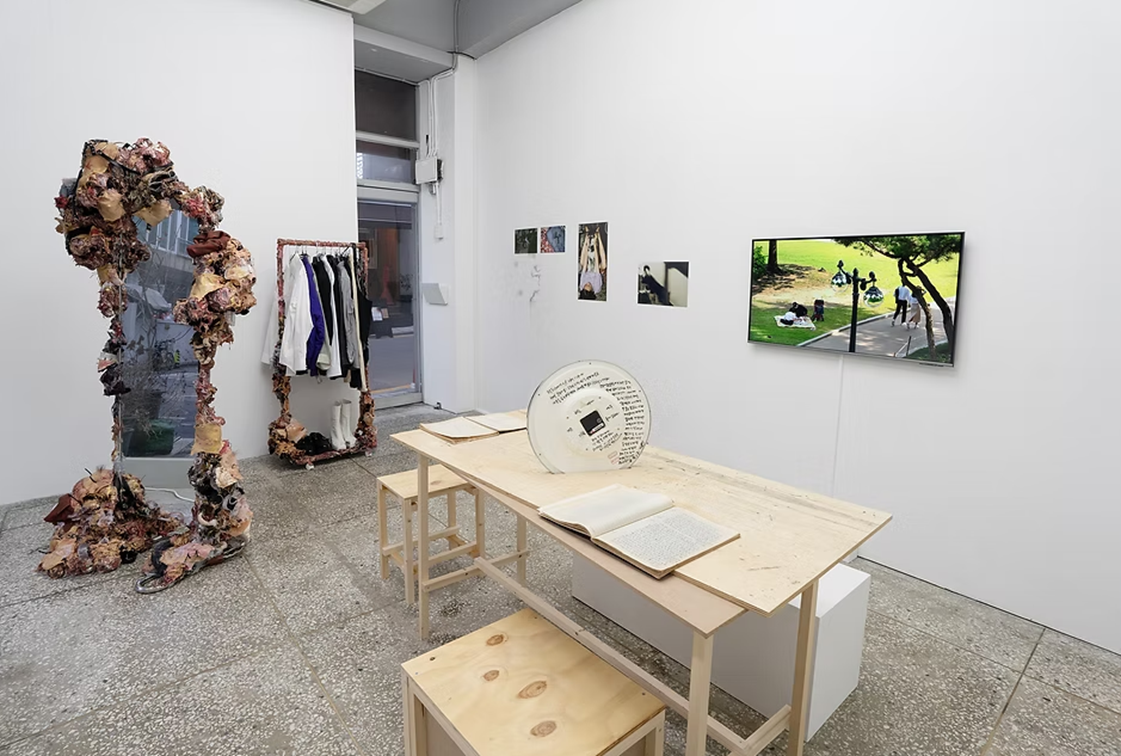
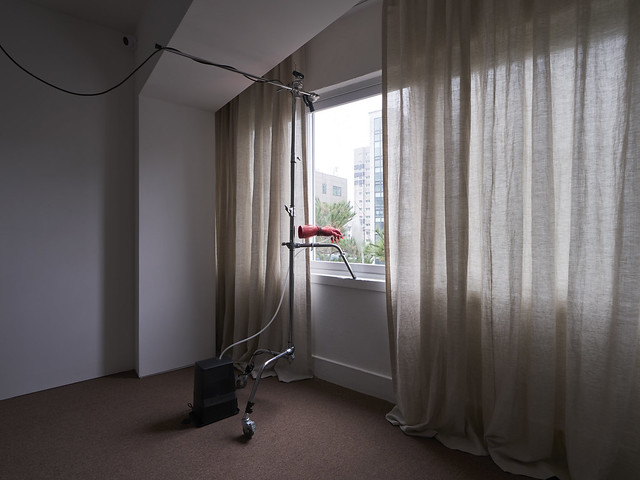 Installation view
of 《Love Death Dog》 (YPC SPACE, 2023) ©YPC SPACE
Installation view
of 《Love Death Dog》 (YPC SPACE, 2023) ©YPC SPACE
Alongside the video, fragments of
artificial bodies were dispersed throughout the exhibition space. Sculptural
forms—such as sparsely haired forearms and faces that appeared neither fully
human nor animal—evoked intermediary beings that could not be anchored to any
specific point in the past or future.
Situated in the physical space outside the
screen, these liminal entities emerge as excavated figures summoned to narrate
stories of humans and nonhumans alike. They extend Gwon Donghyun × Kwon
Seajung’s ongoing inquiry, developed through the moving image, into the ethics
of the gaze through which historical human–nonhuman relations are viewed. This
is an attempt to imagine a long-awaited being could finally tell the broader
story about “us.”
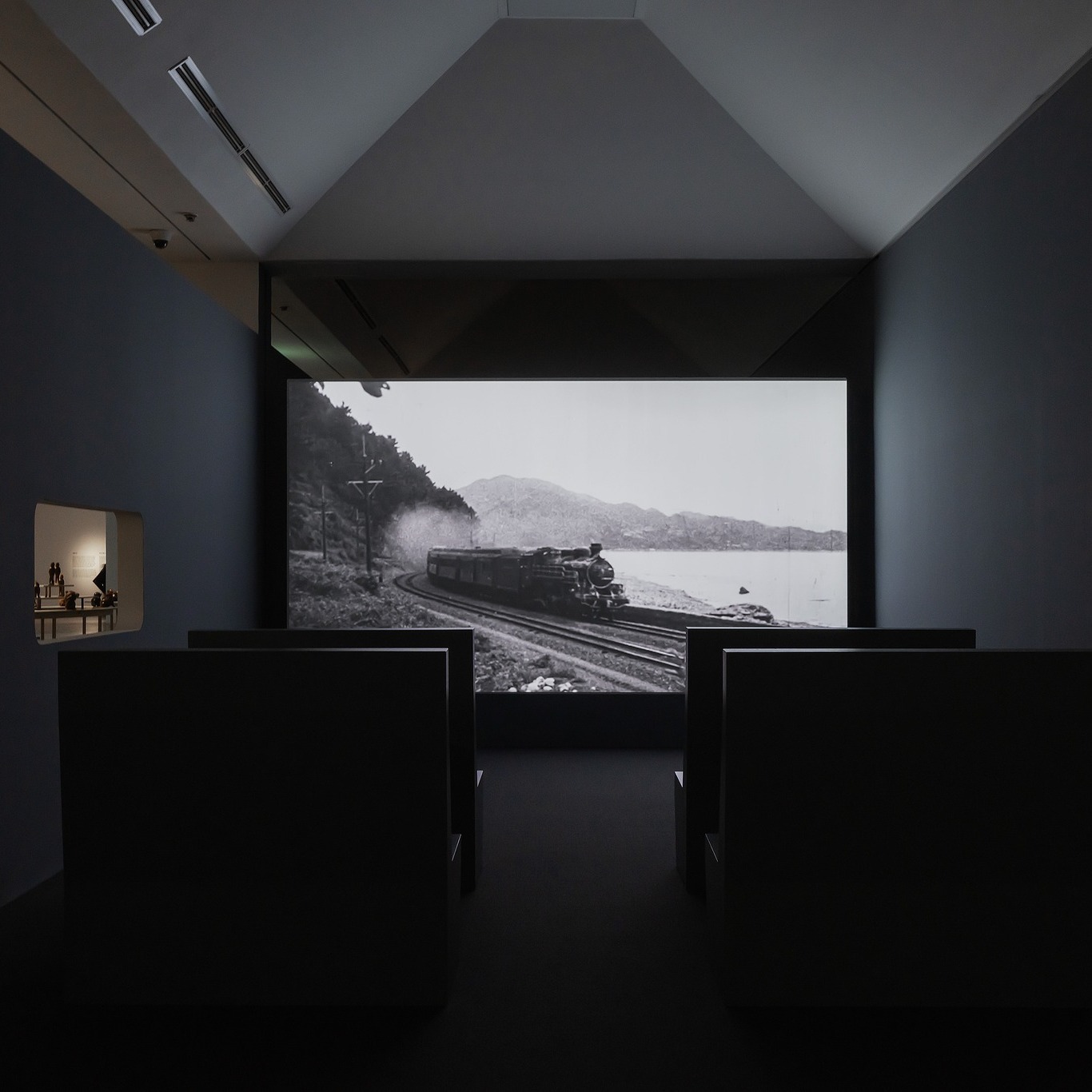 Gwon Donghyun ×
Kwon Seajung, Love Death Dog & Epilogue, 2023-2025,
2-channel video, color+BW, 6-channel sound, transducers, 24min 30sec. Installation
view of 《Young Korean Artists 2025: Here and Now》 (MMCA, 2025) ©MMCA
Gwon Donghyun ×
Kwon Seajung, Love Death Dog & Epilogue, 2023-2025,
2-channel video, color+BW, 6-channel sound, transducers, 24min 30sec. Installation
view of 《Young Korean Artists 2025: Here and Now》 (MMCA, 2025) ©MMCA
Following this, Gwon Donghyun × Kwon
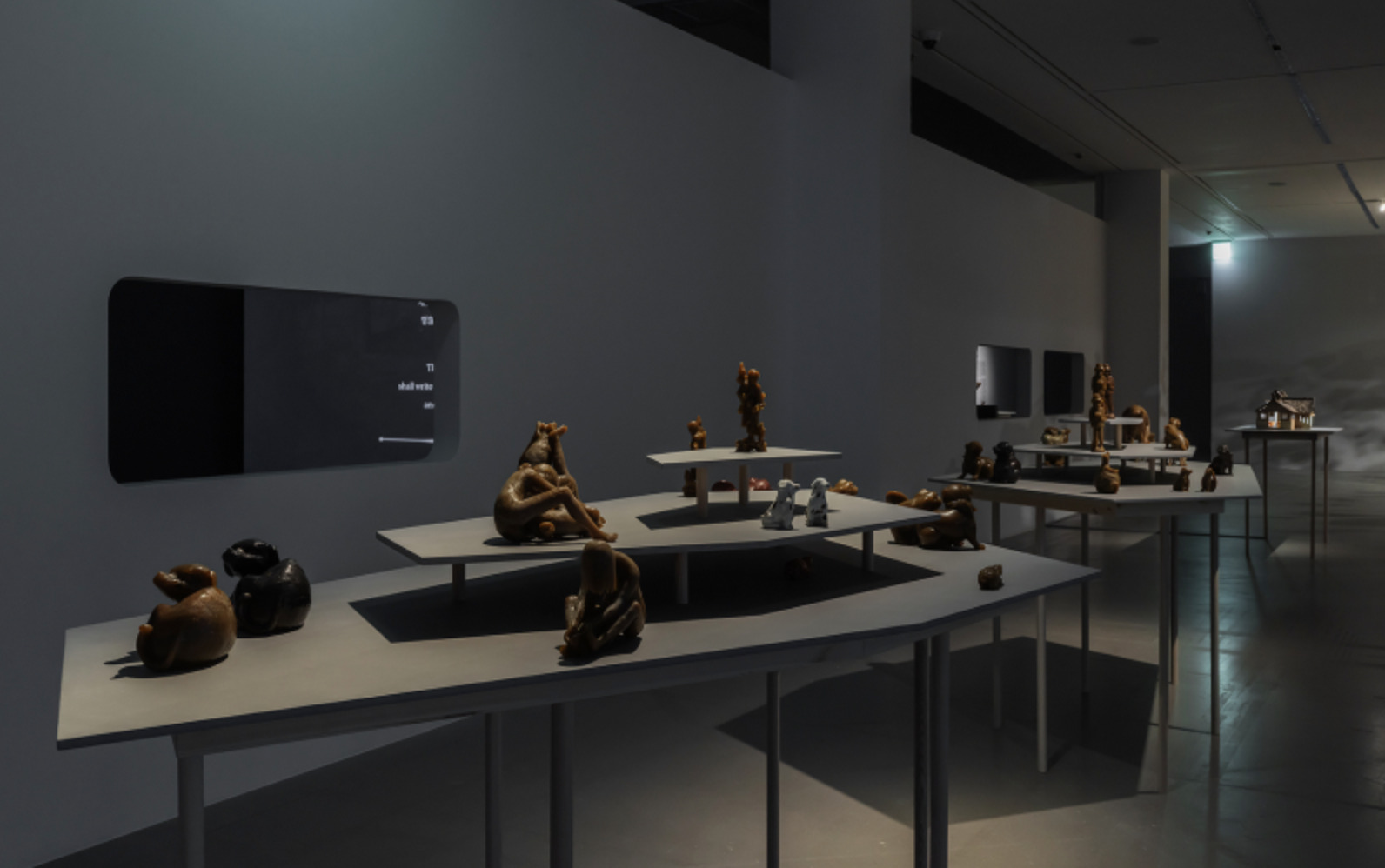
Seajung further expanded the ‘Love Death Dog’ project at 《Young Korean Artists 2025: Here and Now》
(MMCA, 2025). Alongside a newly developed multi-channel video work, they
presented archival objects gathered throughout the project as well as small
sculptural works derived from these materials.
While Love Death Dog &
Epilogue (2023) sought to trace and speculate on the present
relationship between dogs and humans through public archives and research-based
materials, the new iteration, Love Death Dog & Epilogue
(2025), broadens its scope to encompass a wider range of private records and
traces. Through this expansion, the work offers a more panoramic view of
contemporary human–animal relations.
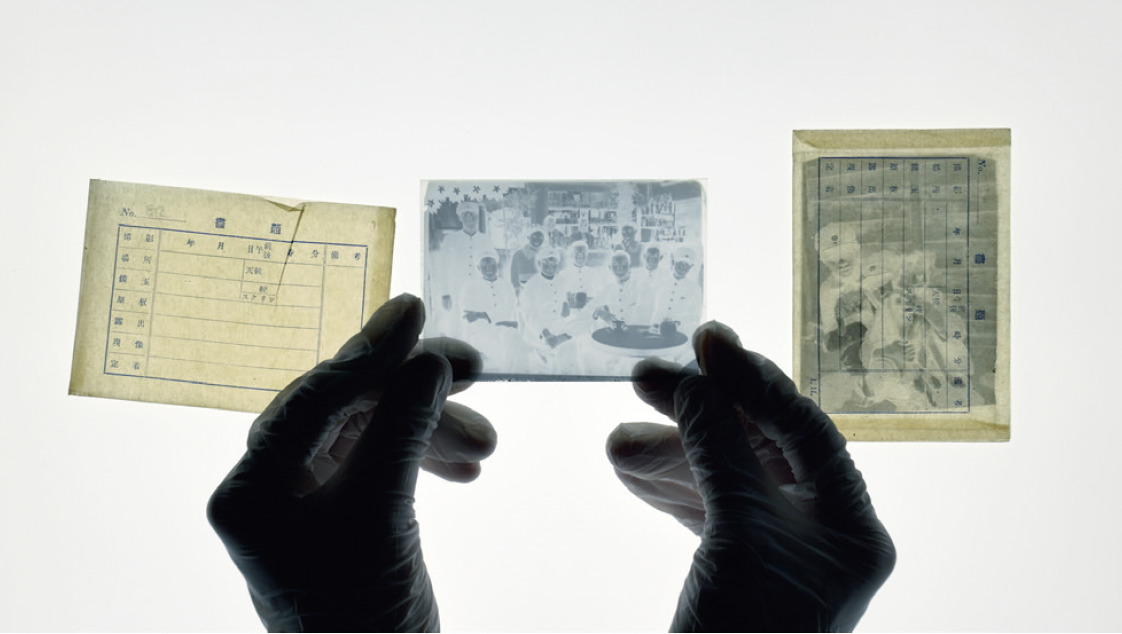 Gwon Donghyun ×
Kwon Seajung, Love Death Dog & Epilogue, 2023-2025,
2-channel video, color+BW, 6-channel sound, transducers, 24min 30sec. ©MMCA
Gwon Donghyun ×
Kwon Seajung, Love Death Dog & Epilogue, 2023-2025,
2-channel video, color+BW, 6-channel sound, transducers, 24min 30sec. ©MMCA
Furthermore, the new work multilayeredly
examines the relationships and narratives between humans and animals by
centering not only on dogs but also on another non-human subject: cows. In the
Korean Peninsula of the early twentieth century, an agrarian society at the
time, cows occupied a central position within institutional systems and state
policies. By contrast, despite having long maintained close relationships with
humans, dogs were excluded from the social center and treated as peripheral
beings—subject to control and objectification.
Within the context of human-made systems
and cultures, Gwon Donghyun × Kwon Seajung expand their inquiry beyond dogs to
include cows as an additional non-human subject. By weaving together the
stories of multiple beings, they seek to reconsider human–animal relationships
within a broader network of interconnections.
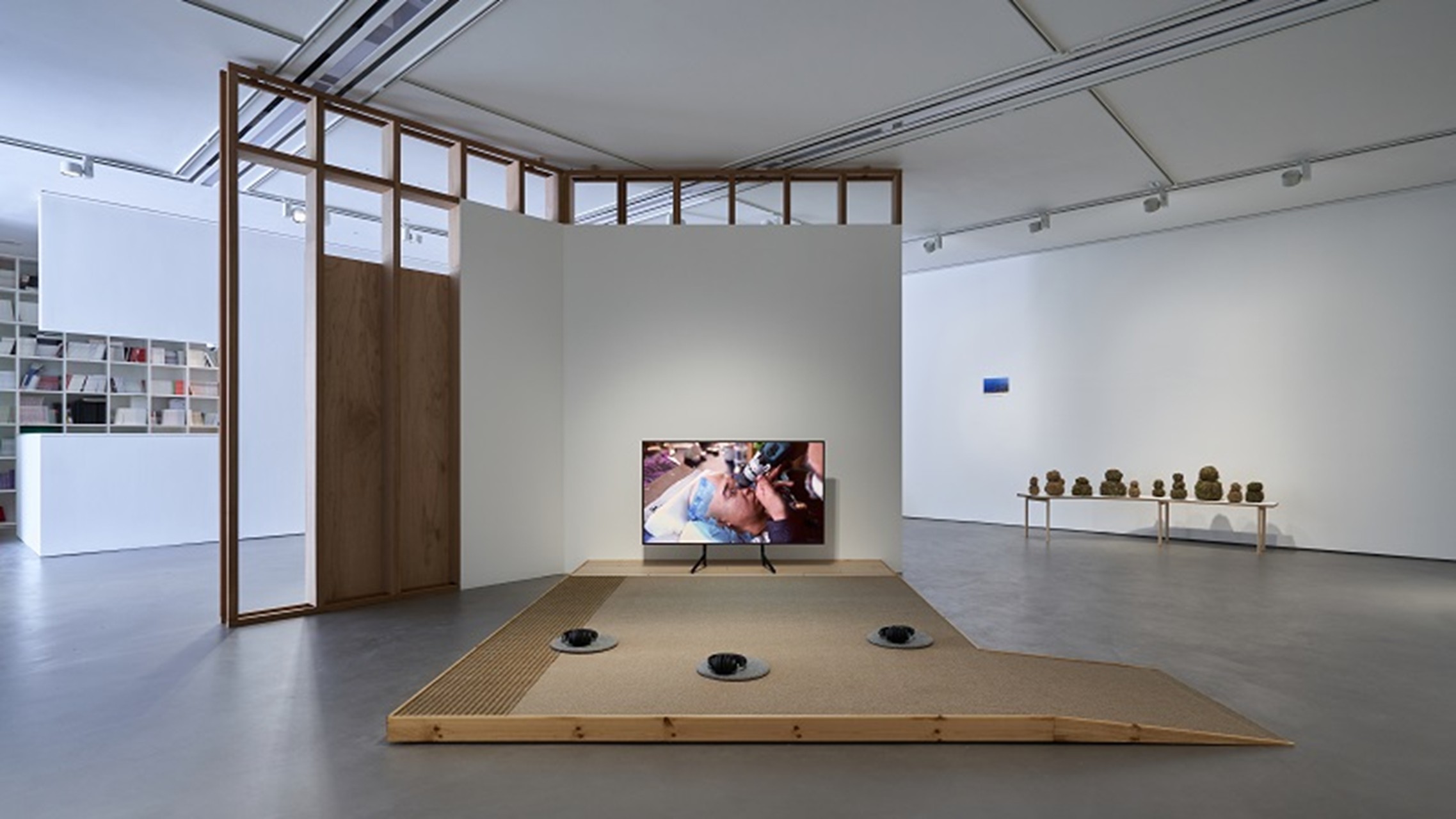
 Gwon Donghyun ×
Kwon Seajung, Installation view of 《Young Korean Artists
2025: Here and Now》 (MMCA, 2025) ©MMCA
Gwon Donghyun ×
Kwon Seajung, Installation view of 《Young Korean Artists
2025: Here and Now》 (MMCA, 2025) ©MMCA
The various objects presented alongside the
video work move beyond the linear narratives of the materials encountered
during the research process, taking form instead as sculptures and crafted
objects, each with its own specificity. These sculptures and objects offer
insight into how humans have perceived animals, allowing viewers to reflect on
the attitudes and gazes through which animals have been regarded.
 Gwon Donghyun ×
Kwon Seajung, Love Death Dog & Epilogue, 2023-2025,
2-channel video, color+BW, 6-channel sound, transducers, 24min 30sec. ©MMCA
Gwon Donghyun ×
Kwon Seajung, Love Death Dog & Epilogue, 2023-2025,
2-channel video, color+BW, 6-channel sound, transducers, 24min 30sec. ©MMCA
In this way, Gwon Donghyun × Kwon Seajung continues
to delve into the narratives and discourses surrounding hierarchy and
coexistence between humans and animals, as well as among humans, as unveiled
throughout Korea’s modern and contemporary history. Rather than constructing
linear narratives centered on a single event or individual, they pursue
open-ended narratives in which the entangled relationships between humans and
animals are layered and accumulated. Within these interstices, they reflect on
and imagine the possibility of other relationships yet to come.
“By addressing human stories that
are closely intertwined with the situations faced by animals, we came to pursue
an open narrative in which relationships between humans and animals are
gradually added and layered, rather than a linear narrative centered on a
single event or individual.
If there is one point that became increasingly
clear through the course of this project, it is that the relationship we now
have with dogs in urban settings is, in fact, an arbitrary form that has been
shaped over a very short period of time. We believe that retracing the process
through which such relationships were formed can serve as an important point of
departure for imagining other relationships in the future.” (Gwon Donghyun × Kwon Seajung, interview for 《Young Korean Artists 2025: Here
and Now》, MMCA)
 Gwon Donghyun ×
Kwon Seajung ©MMCA
Gwon Donghyun ×
Kwon Seajung ©MMCA
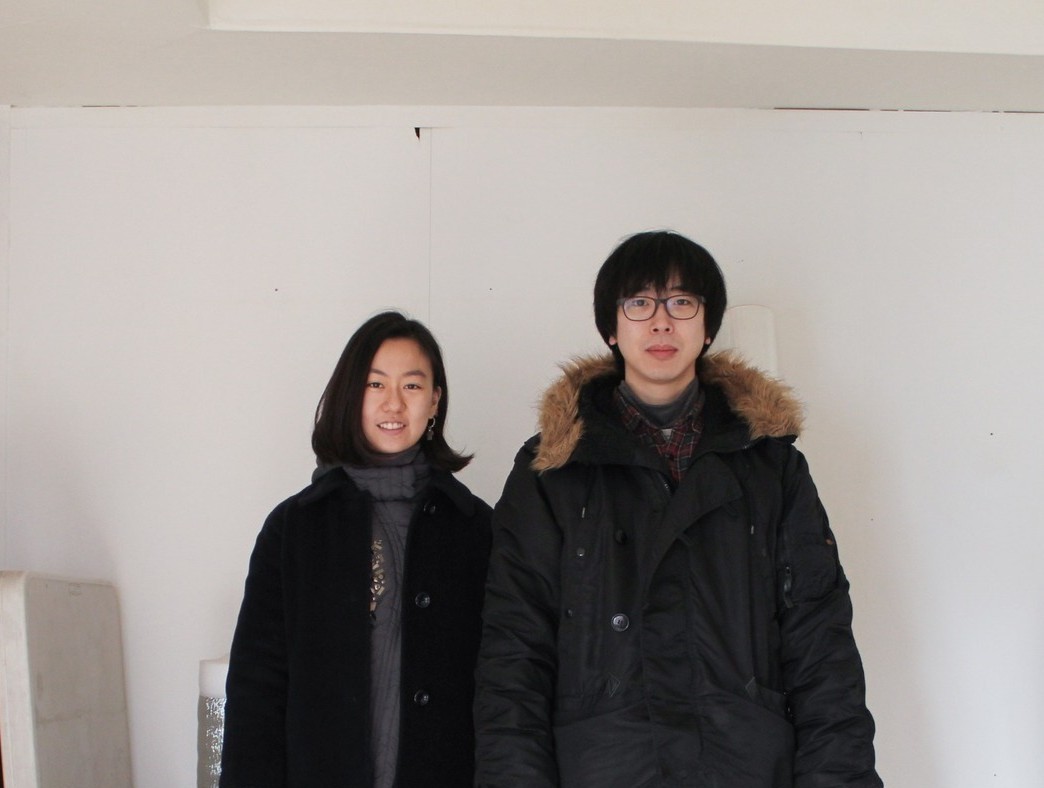
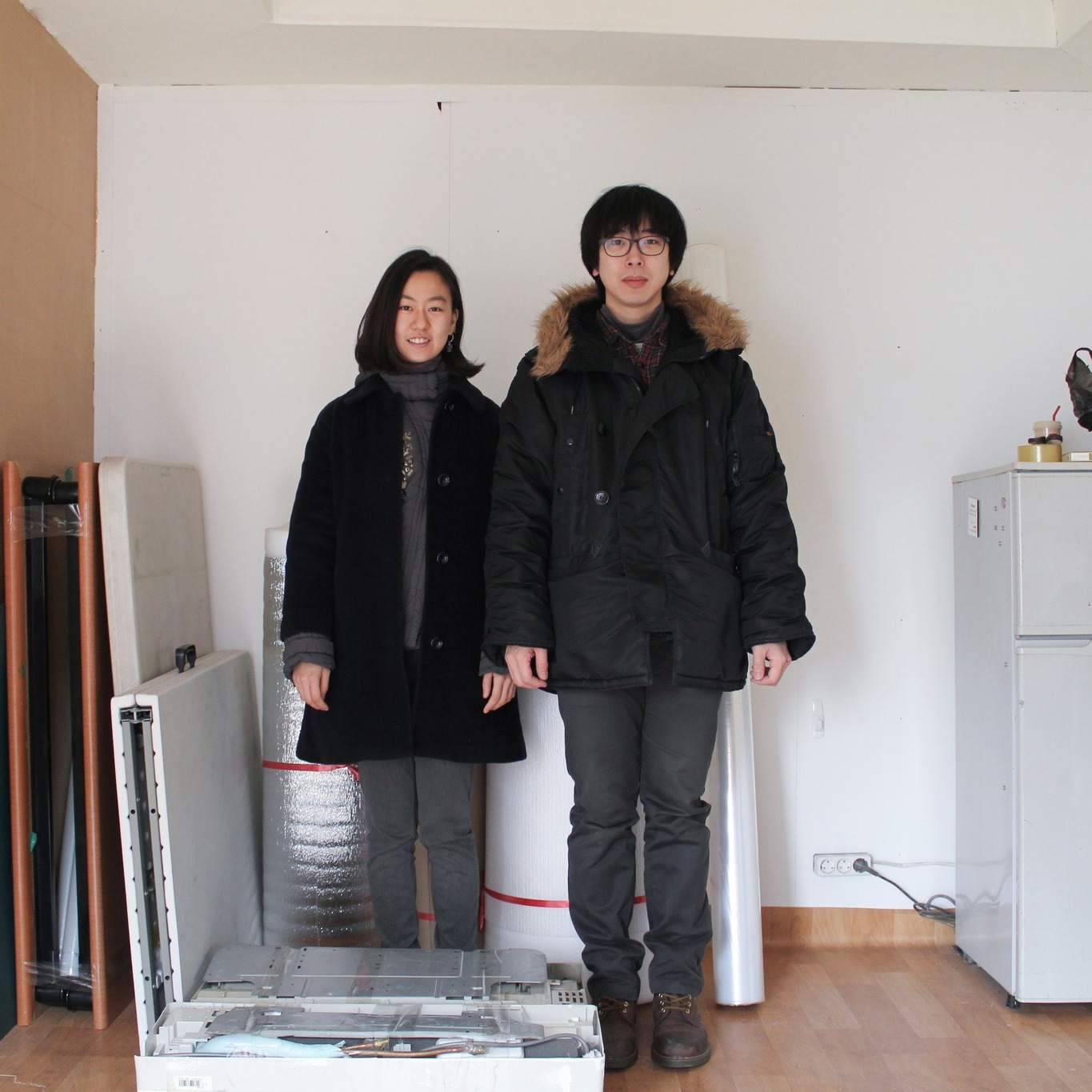
Gwon Donghyun × Kwon Seajung both graduated
from Hongik University, majoring in Sculpture and Painting respectively, and
formed a collaborative team in 2020. They are currently based in Seoul. Their
solo exhibition includes 《Love Death Dog》 (YPC SPACE, Seoul, 2023).
Their works have also been presented in
numerous group exhibitions and film festivals, including 《Young Korean Artists 2025: Here and Now》
(MMCA, Gwacheon, 2025); 《You Cannot Elaborate the Dark
Thickness of Night As They Can》 (DOOSAN Gallery, Seoul,
2024); 《The Saviour Who Came To Tear My Life Apart, and
We*》 (Hapjungjigu, Seoul, 2023); the 49th Seoul
Independent Film Festival (SIFF) (Seoul, 2023); Frieze Film Seoul 2022 《I Am My Own Other》 (Together Together,
Seoul, 2022); and The 13th Seoul Mediacity Biennale Pre-Program II 《Terra-informing》 (Seoul Museum of Art,
Seoul, 2022).
- 국립현대미술관, ARTIST INTERVIEW | Gwon
Donghyun×Kwon Seajung | Young Korean Artists 2025: Here and Now (National
Museum of Modern and Contemporary Art, Korea (MMCA), ARTIST INTERVIEW | Gwon
Donghyun×Kwon Seajung | Young Korean Artists 2025: Here and Now)
- 국립현대미술관, [리플렛] 젊은
모색 2025: 지금, 여기 (National Museum of Modern and Contemporary Art, Korea (MMCA), [Reflet]
Young Korean Artists 2025: Here and Now)
- 한국문화예술위원회, [다원예술] 권동현×권세정: 인간과 개를 넘어, 동물과
동물이 서로 마주하는 순간
- 두산아트센터, [서문] 우리는
개처럼 밤의 깊은 어둠을 파헤칠 수 없다 (DOOSAN Art Center, [Preface] You
Cannot Elaborate the Dark Thickness of Night As They Can)
- YPC SPACE, [전시 핸드아웃]
러브 데스 도그 (YPC SPACE, [Handout] Love Death Dog)
- 국립현대미술관, 관계 맺기의 새로운 미학, «젊은 모색 2025: 지금, 여기» 인터뷰 2편