

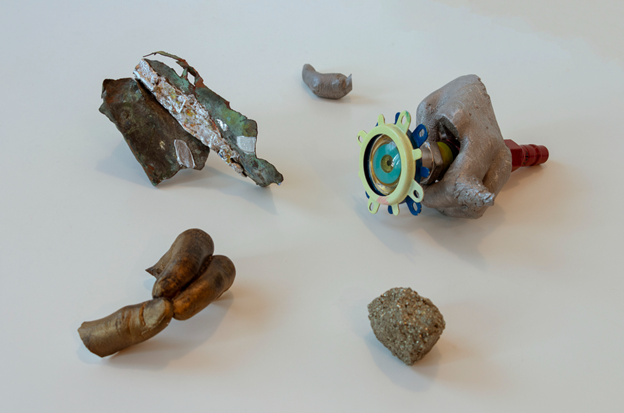
Hosu Lee (b. 1990) explores the underlying essence of the space–time we inhabit through a wide range of media, including kinetic art, sound, sculpture, and drawing. His work articulates, in synesthetic and non-linear ways, the gaps inherent in the nature of time—those that cannot be reached through objective quantification or bodily perception—inviting viewers into realms beyond the surface of conscious experience.


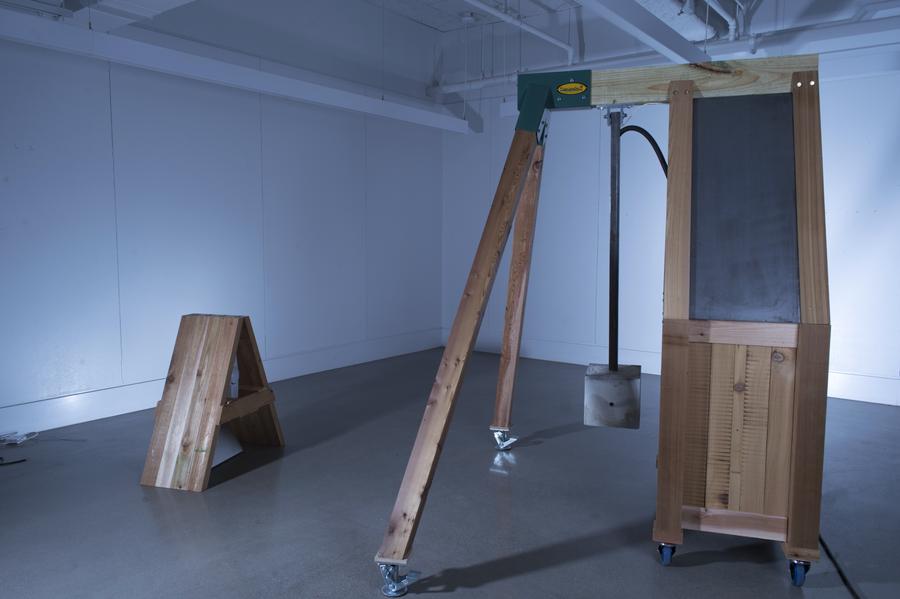
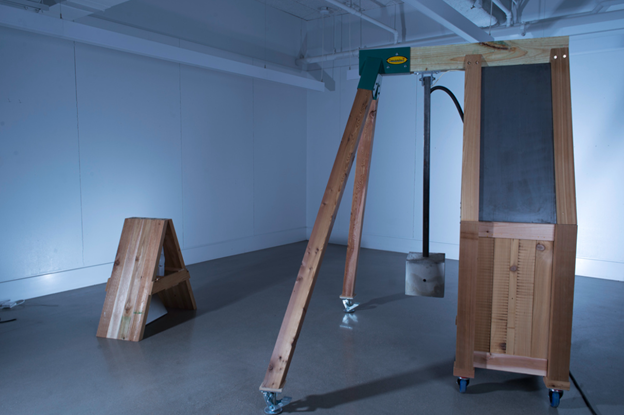
Hosu Lee, Pendulum Project (Time Machine), 2017, Mixed media, Dimensions variable ©Hosu Lee

Hosu Lee’s artistic practice has evolved around the ‘Pendulum Project,’ which he has developed since 2017. Originating from an inquiry into the nonlinearity of space and time, the project unfolds through sound, kinetic performance, painting, and sculpture, generating synesthetic experiences that guide viewers toward a preconscious state.


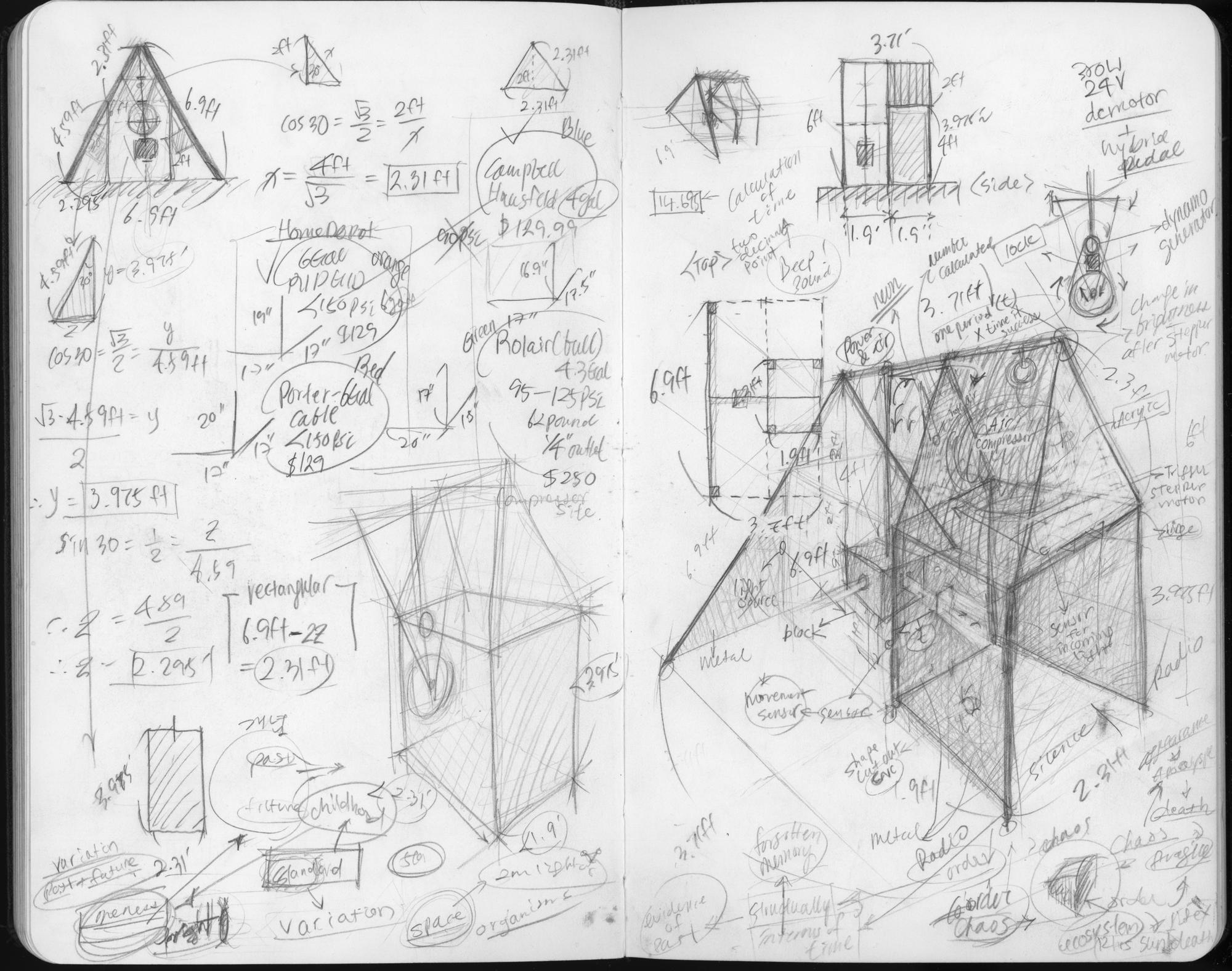
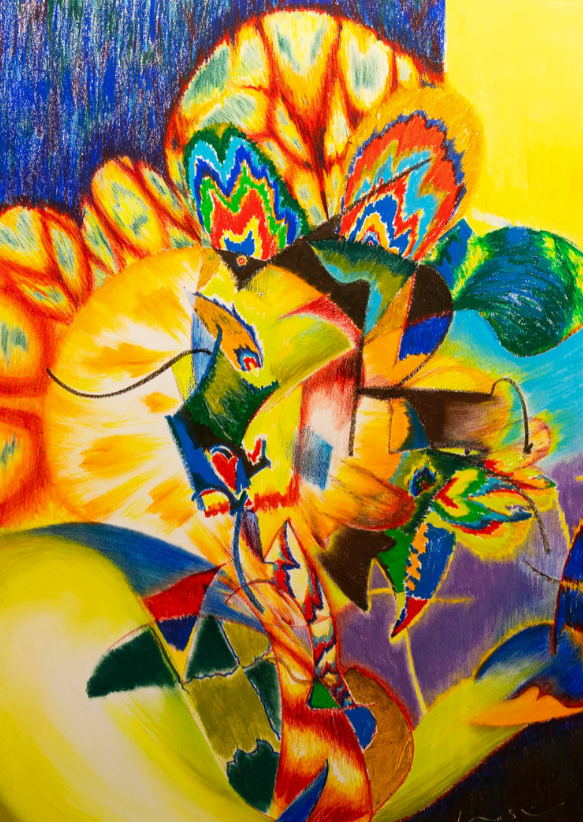
Idea sketch of ‘Time Machine’ ©Hosu Lee

The ‘Time Machine’ series, a central body of work within this project, employs hypnotic motion and sound derived from pendular movement. It begins with the question, “When was the moment we did not yet know the concept of time?” From this point of departure, the artist turns to the phenomenon of infantile amnesia—the stage at which most people lose not only everyday memories of early childhood but also their experiential sense of space and time.
 
Lee speculates that this condition may stem from the loss of a mechanism capable of recalling embodied memories of space and time. From this intuition, he began devising an apparatus that might revive a time that can no longer be consciously remembered.

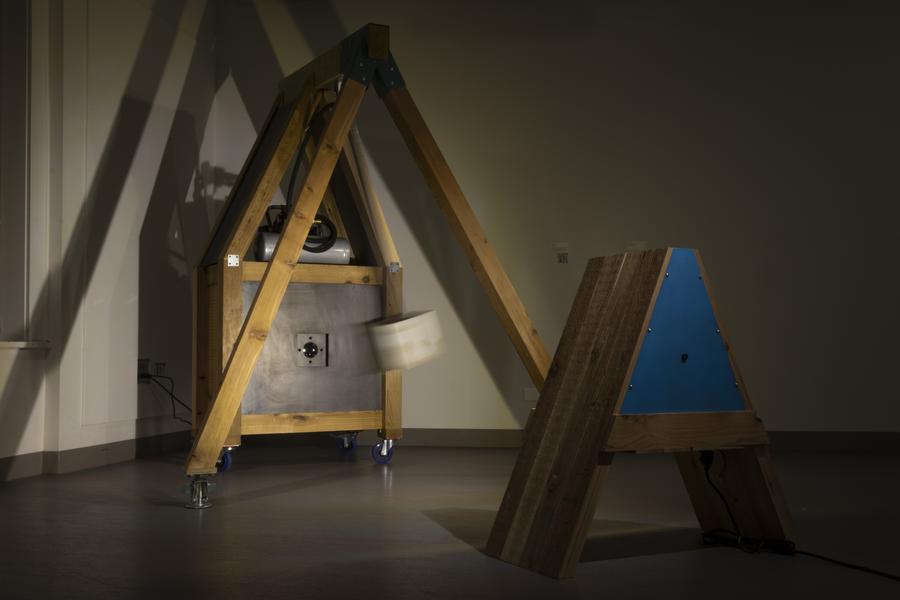
Hosu Lee, The Symphony of Time Machine, 2018, Kinetic installation, performance ©Hosu Lee

The first work in the ‘Time Machine’ series, developed from this line of inquiry, was inspired by the motion of a swing often ridden in childhood and by the spatial memory of the playground. By constructing and staging an architectural form that resonates with such early-life experiences, Lee proposes the work as a catalyst for re-experiencing time—not as a socially or culturally constructed concept, but as something sensed in its essence.

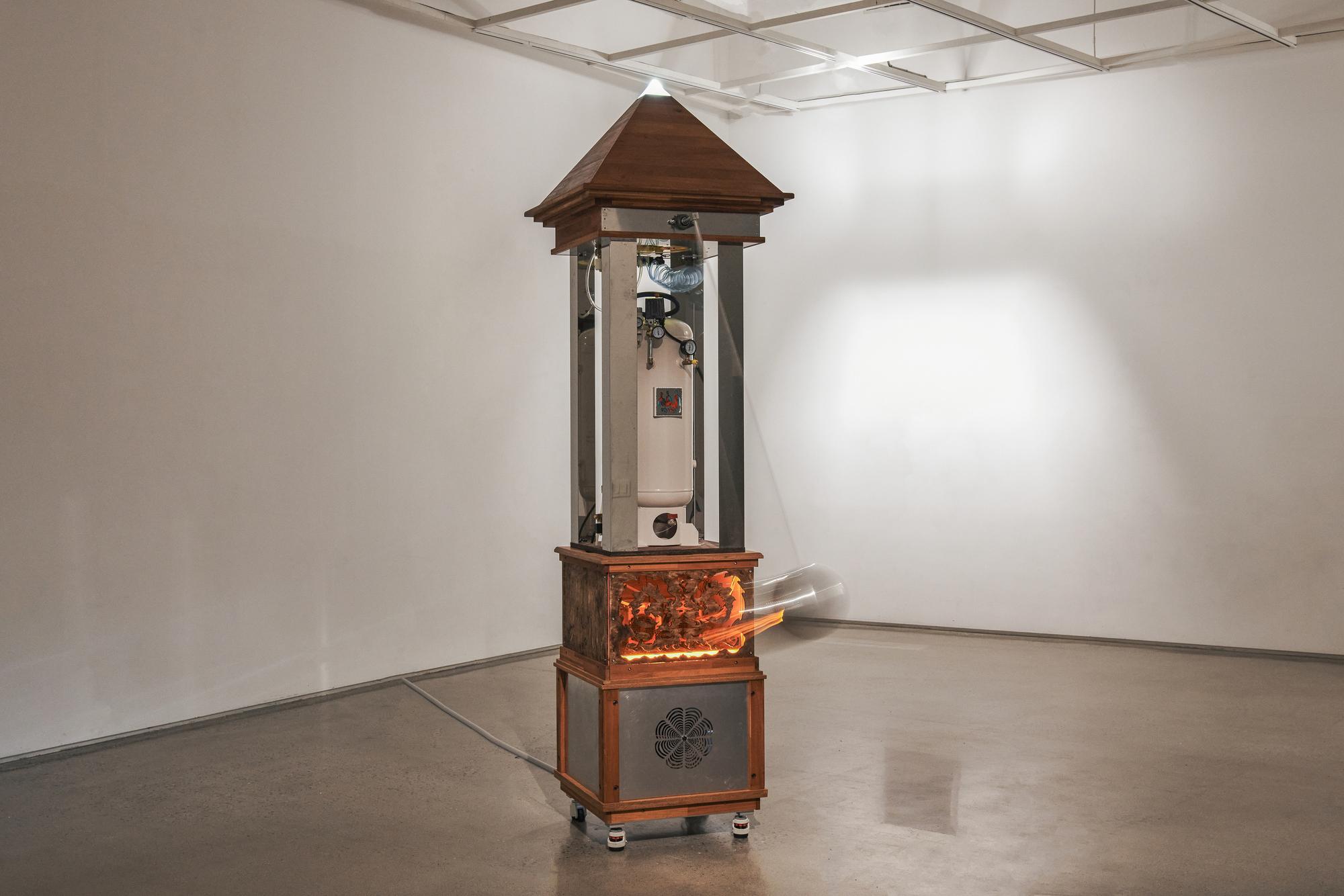
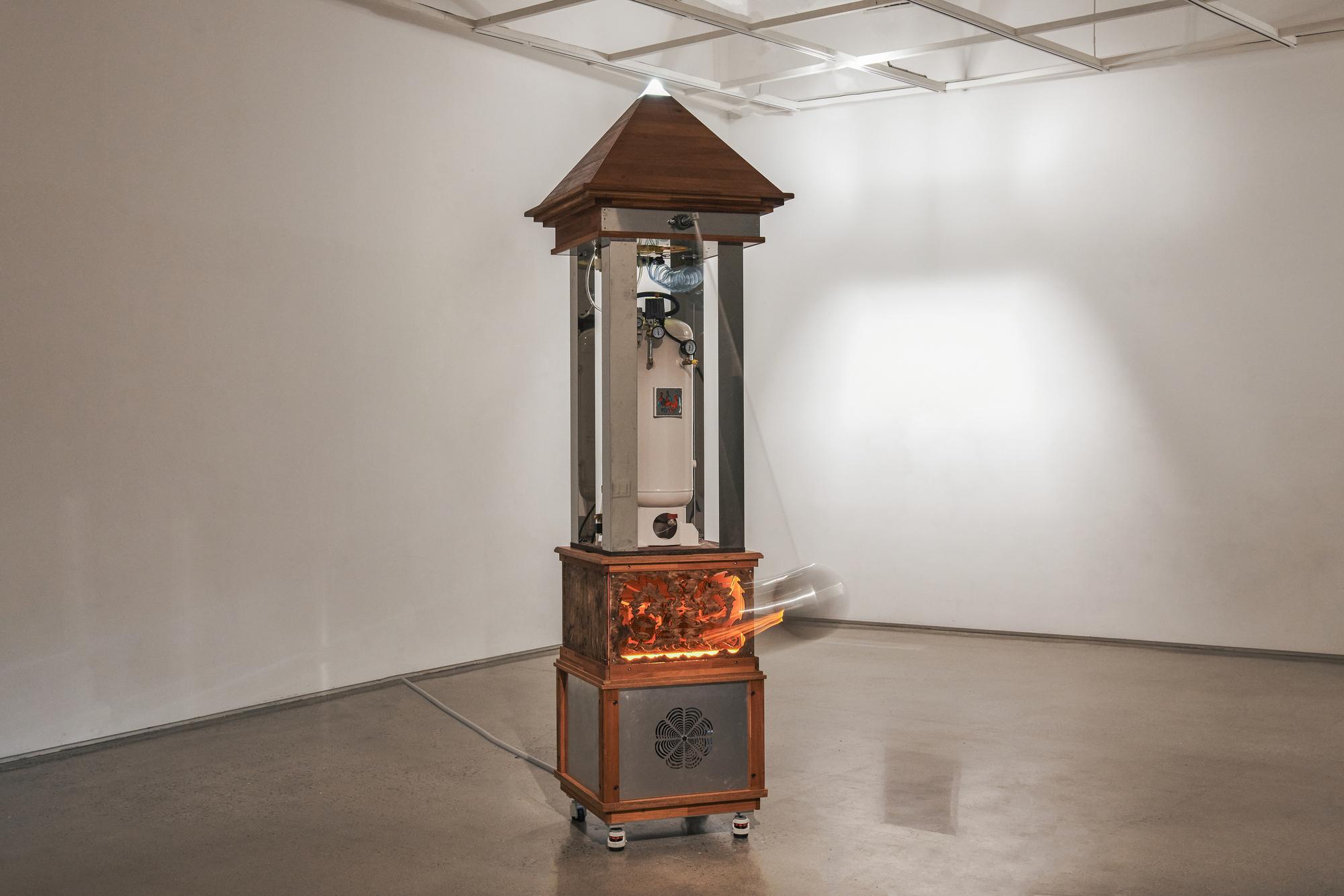
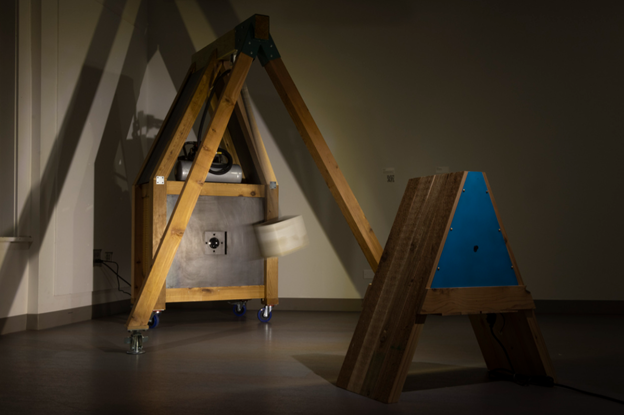
Hosu Lee, Time Machine II, 2023, Mixed media, 96x67x320 cm ©Hosu Lee

Furthermore, the second ‘Time Machine’ work, Time Machine II (2023), began by linking the difference between ancient forms of consciousness and contemporary consciousness to the phenomenon of infantile amnesia. The artist draws attention to Julian Jaynes’s argument in The Origin of Consciousness in the Breakdown of the Bicameral Mind (1976), in which he proposes that ancient human consciousness operated in a bicameral mode fundamentally different from that of today.
 
According to Jaynes, there was once a clear distinction within humans between the voices of gods and those of humans themselves. However, with the development of civilization and the establishment of writing and record-keeping, the voices of the gods gradually disappeared from our inner world. In the wake of the collapse of the bicameral mind, what emerged in its place was “consciousness” as we understand it today—characterized by introspection and self-reflection.


Hosu Lee, Time Machine II, 2023, Mixed media, 96x67x320 cm ©Hosu Lee

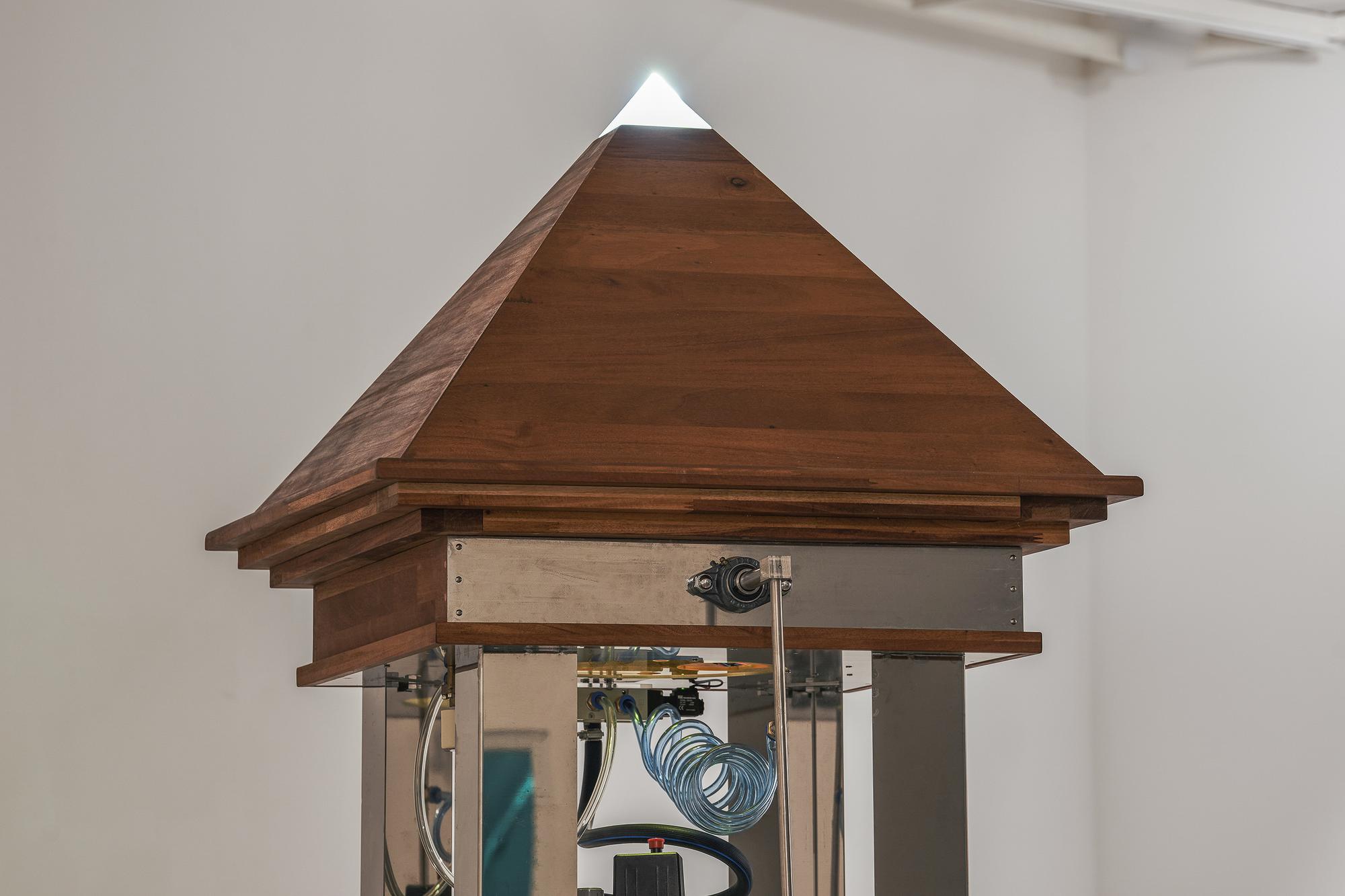
The artist reflected on this transformation through the lens of infantile amnesia. In other words, viewing the ancient bicameral mind and the preconscious state of early childhood as points along a single continuum, the artist created Time Machine II, a work that reinterprets the ancient pyramid—an architecture imbued with such a mentality—through a contemporary lens.


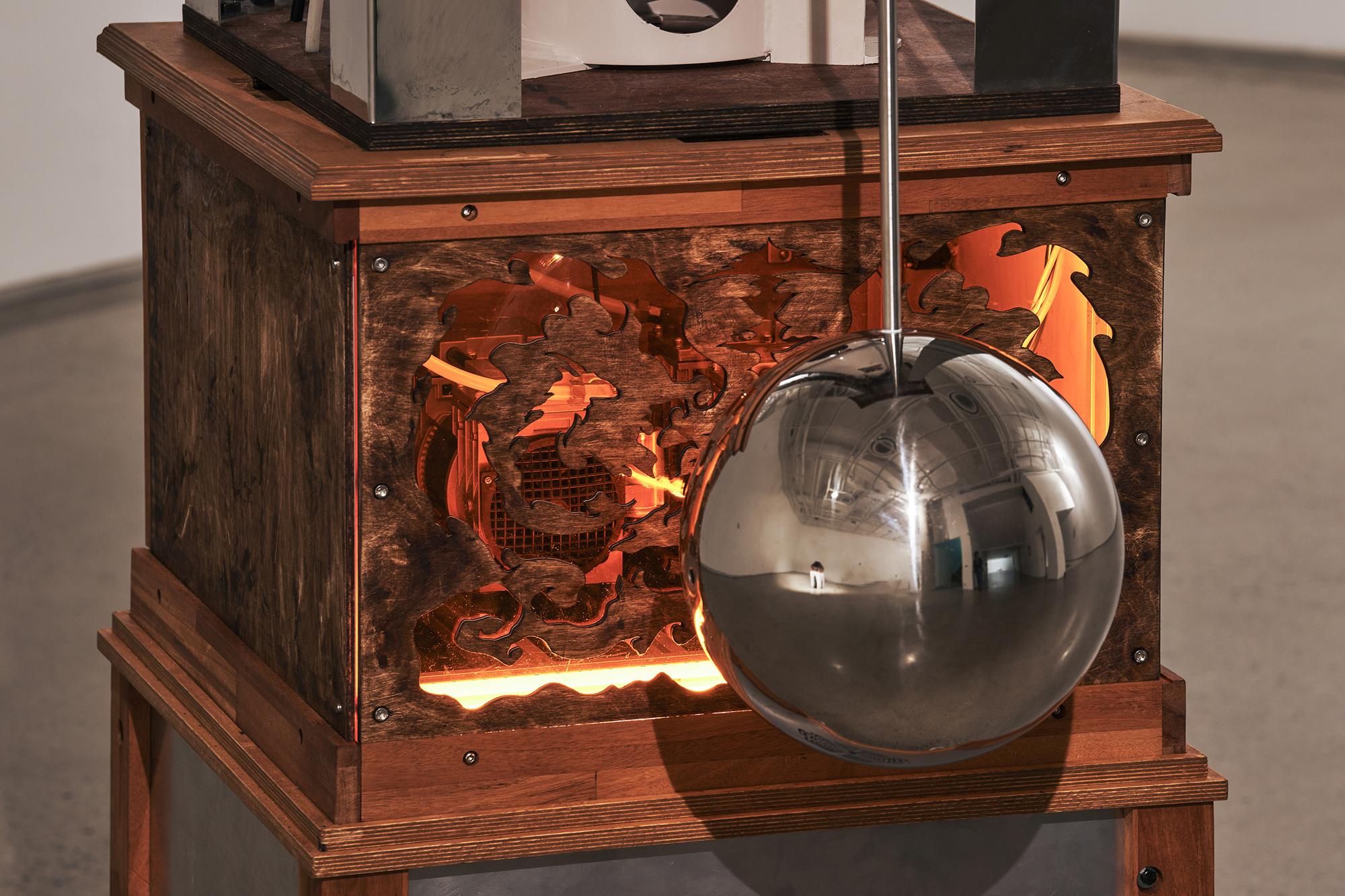
Hosu Lee, Time Machine II, 2023, Mixed media, 96x67x320 cm ©Hosu Lee

Within the column shaped like a pyramid, a pendulum swings repeatedly, inducing an almost hypnotic sensation. Accompanying this motion is a soundscape composed of indistinct, vibrating tones that seem to emanate from within an unknown interior. These sounds were recorded by the artist using a stethoscope, capturing and amplifying primordial internal bodily sounds that remain imperceptible to our ordinary sensory system and beyond conscious awareness.


Installation view of 《Space-Time Travel》 (Windmill, 2023) ©Hosu Lee

The solo exhibition 《Space-Time Travel》, held at Windmill in 2023, centered on Time Machine II and brought together works that destabilize the linear concept of space and time. The exhibition emerged from the artist’s inquiry into how we might sense the relativity of time even as we remain grounded in the routines of everyday life.


Installation view of 《Space-Time Travel》 (Windmill, 2023) ©Hosu Lee

As a result, the works presented emerged as a constellation of events unfolding at different rhythms and speeds, like vibrating pendulums that circulate energy much as a heartbeat drives blood through a living body. The multisensory, non-linear environment they generate not only reawakens viewers’ perception of space and time as lived reality, but also invites deeper ontological reflection.


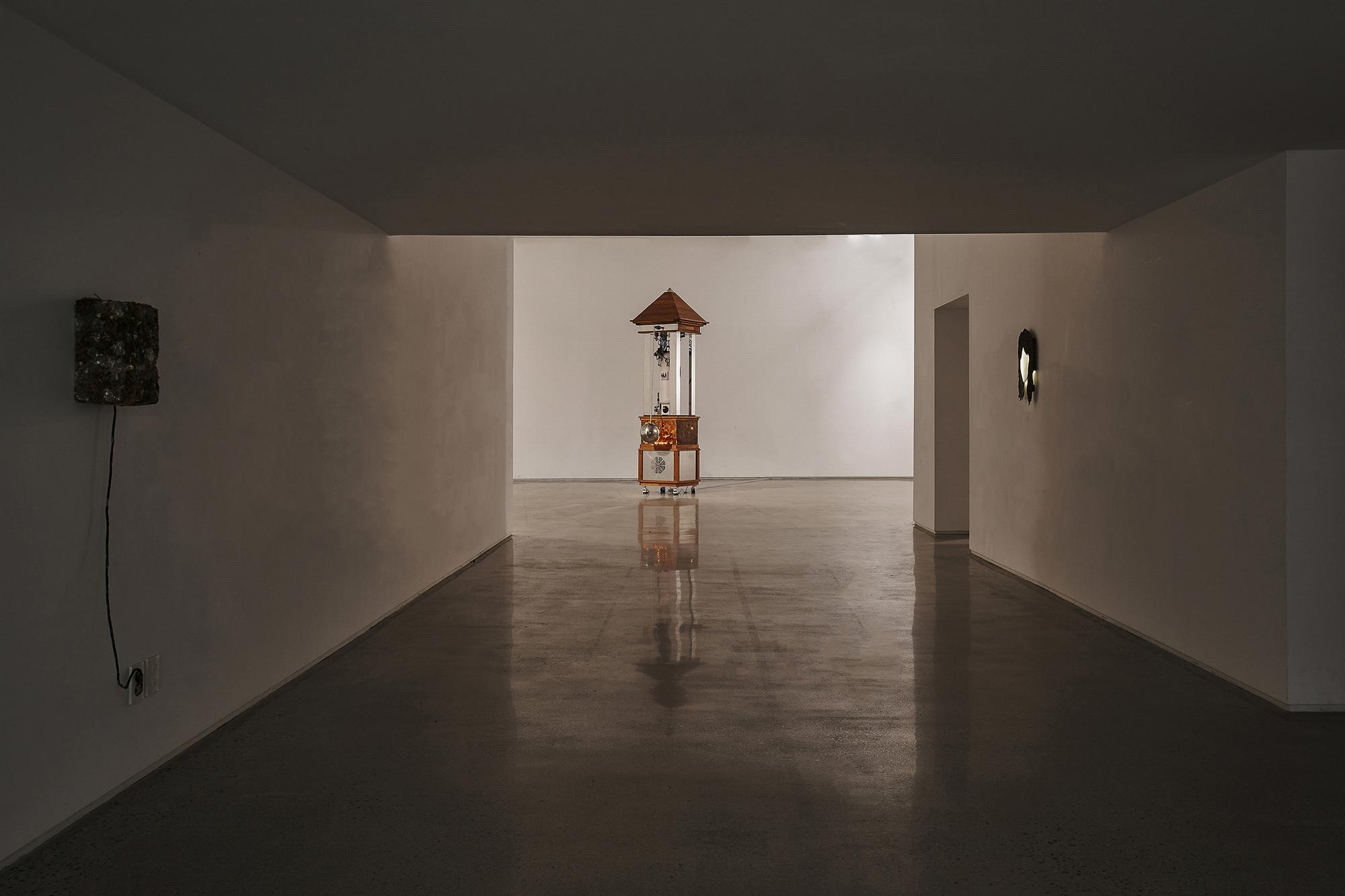
Installation view of 《Time And Machine》 (OCI Museum of Art, 2025) ©Hosu Lee

And through his solo exhibition 《Time And Machine》 (2025) at the OCI Museum of Art, Hosu Lee further expanded the long-running ‘Time Machine’ series by incorporating the notion of place, disentangling “Time” and “Machine” into distinct sites, segments, and conceptual frameworks.
 
As an outcome of this expanded inquiry, 《Time And Machine》 treats the entire exhibition space as a single sculptural body. Whereas earlier works allowed viewers to maintain a certain distance from individual sculptural objects, in this exhibition the sculpture transforms into a situational environment, drawing visitors directly into its interior.


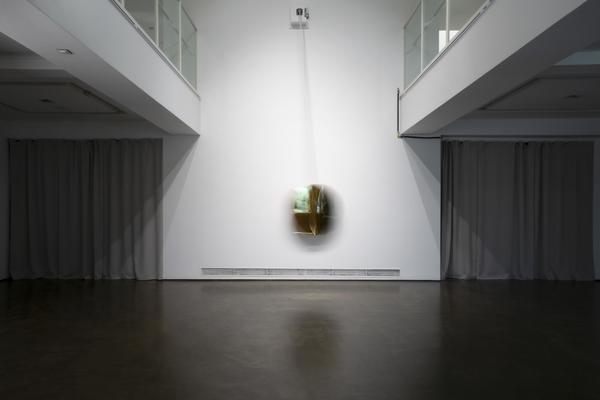
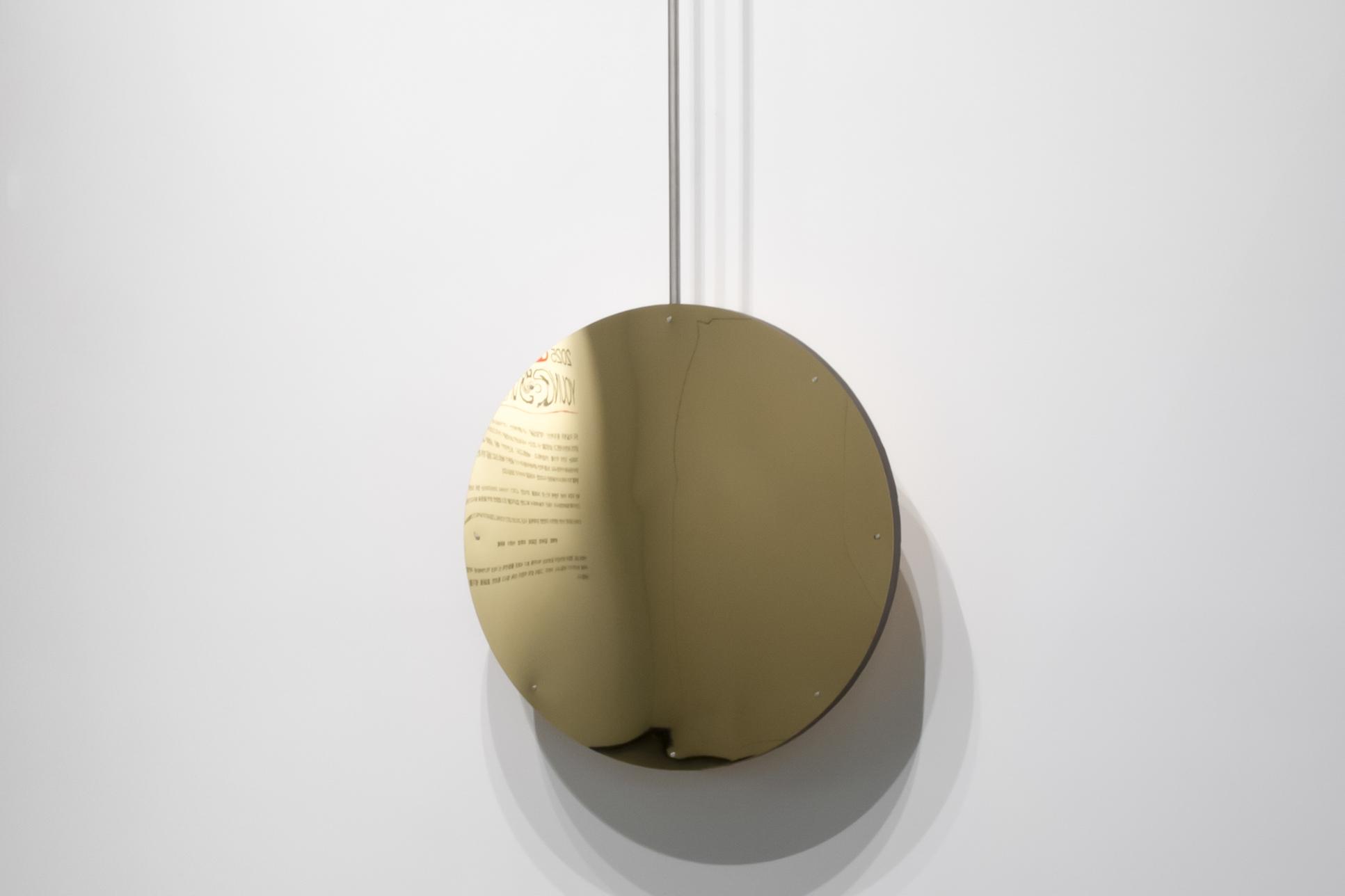
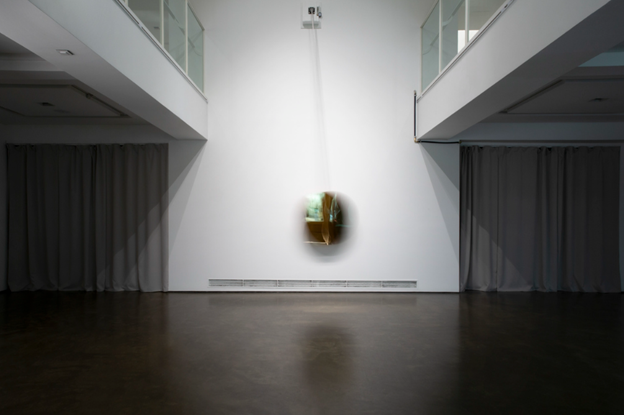
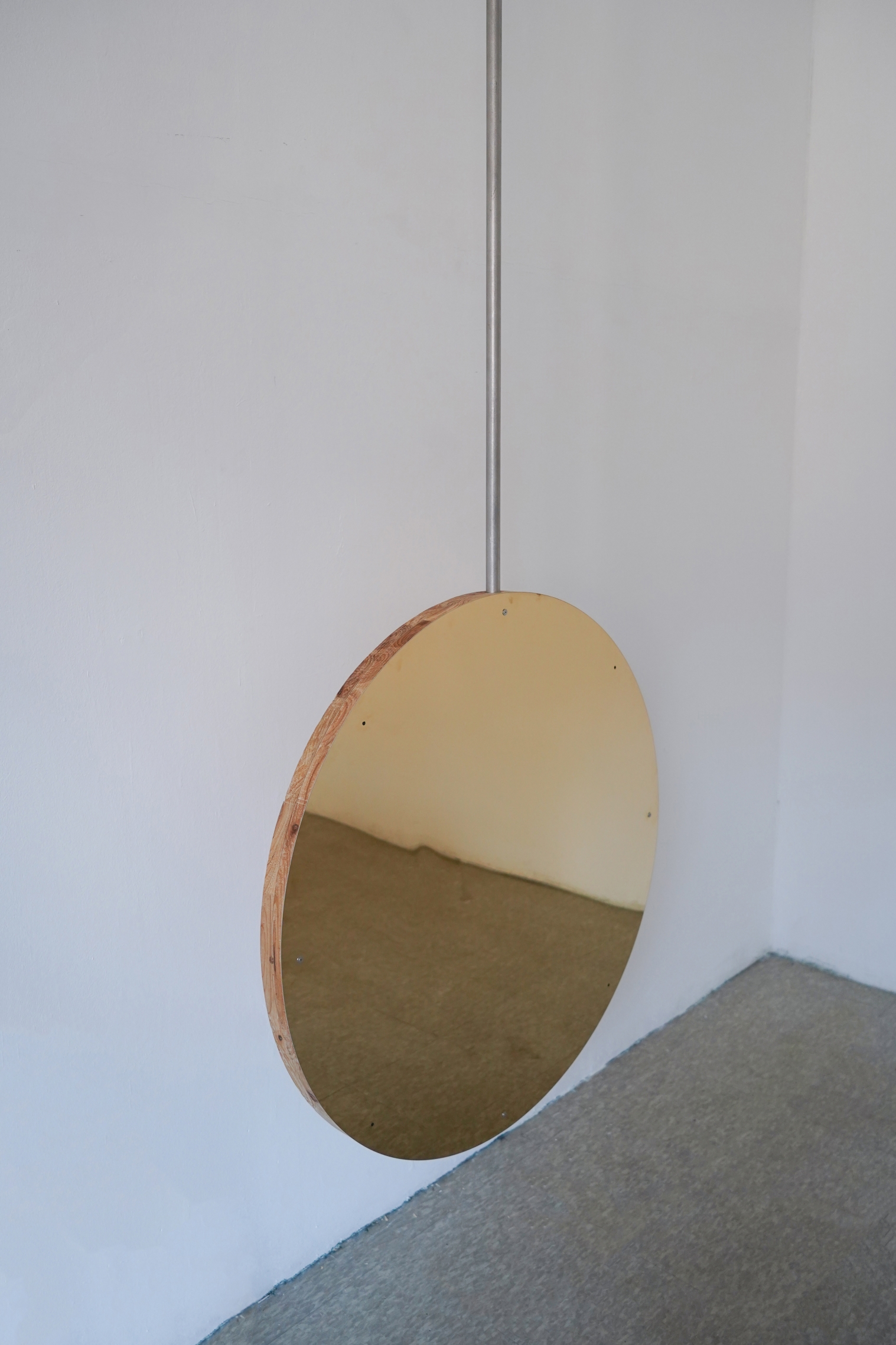
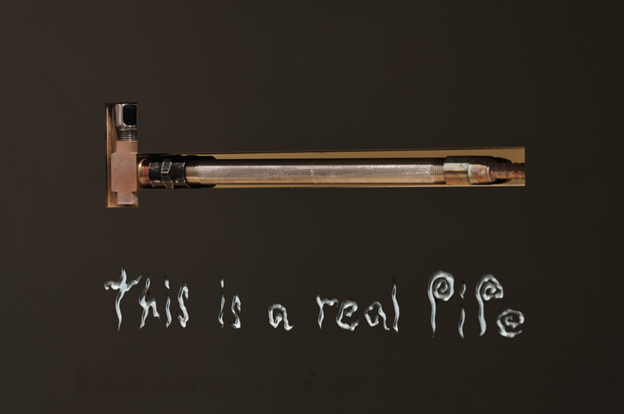
Hosu Lee, Time, 2025, pneumatic pipe, solenoids, cedar, hinoki plywood, mirror-polished stainless steel, rechargeable battery, custom-designed PCB, etc, 390×88×10cm, Installation view of 《Time And Machine》 (OCI Museum of Art, 2025) ©Hosu Lee

The first work visitors encounter in the exhibition, Time (2025), features a monumental pendulum with a reflective surface that moves as it projects and occupies the surrounding space. Meanwhile, after passing through a dark corridor—almost as if hypnotized by the inexorable force of time—visitors arrive at Machine (2025), a work that presents uncanny scenes in which the familiar and the unfamiliar coexist.
 
The dark passageway that mediates between the two functions as a threshold leading to experiences beyond ordinary sensory systems, as well as the interstitial gap between Time and Machine—the space that corresponds to the “And.”


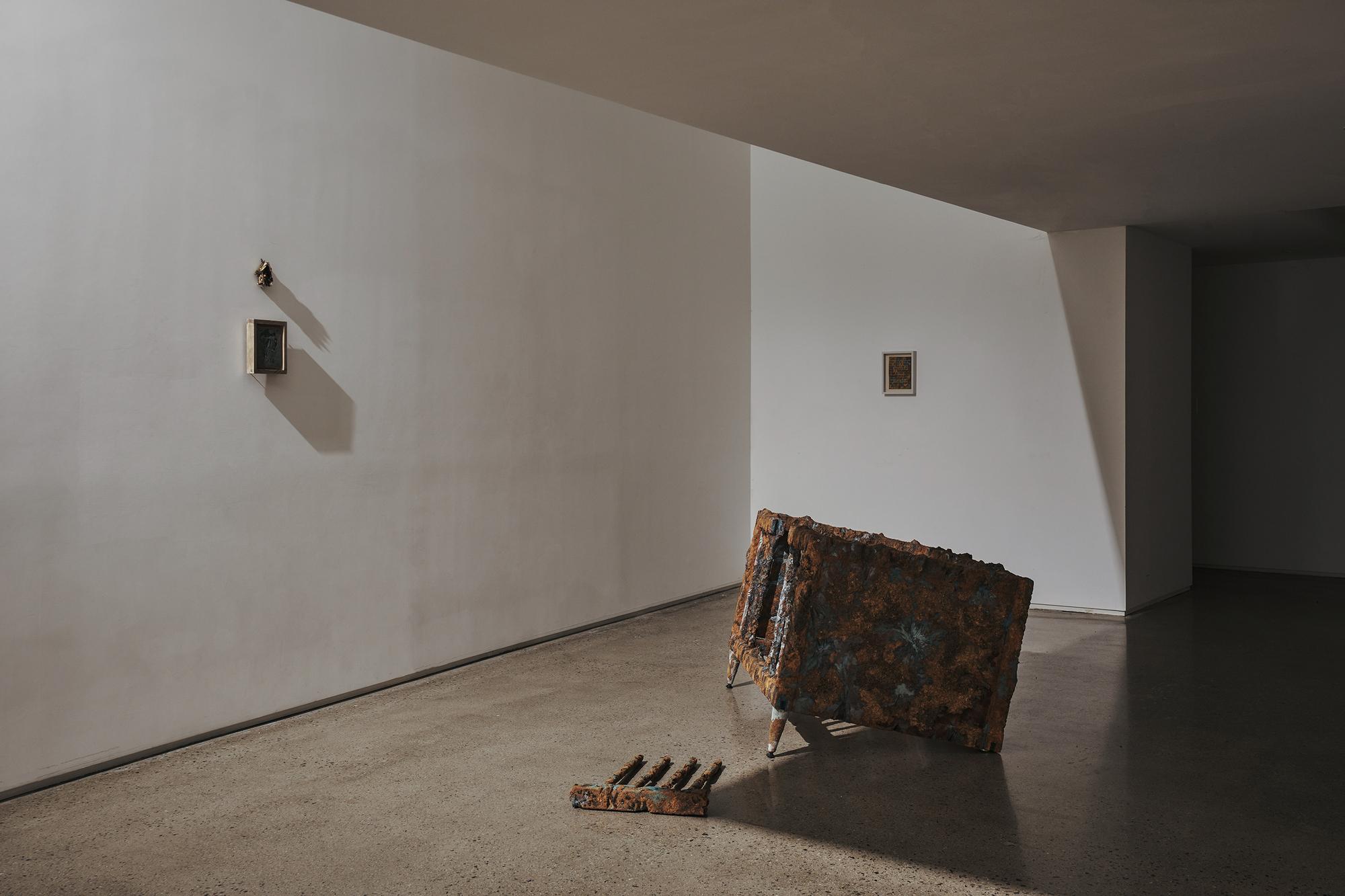
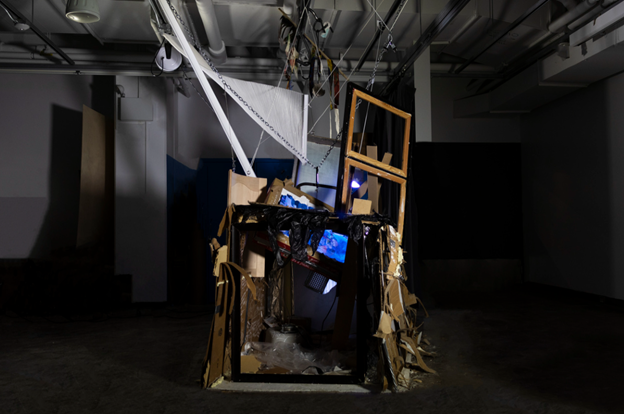
Installation view of 《Time And Machine》 (OCI Museum of Art, 2025) ©Hosu Lee

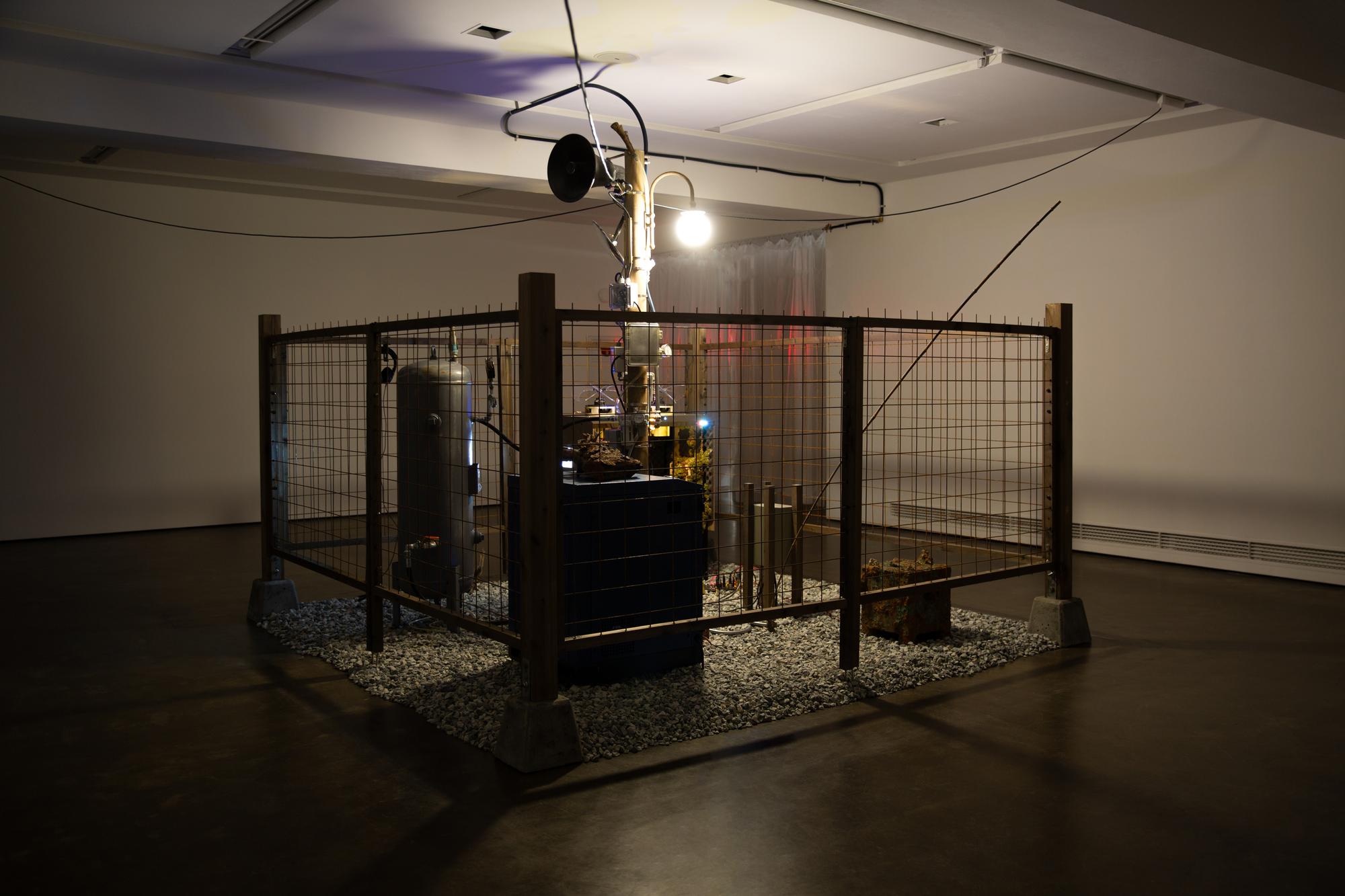
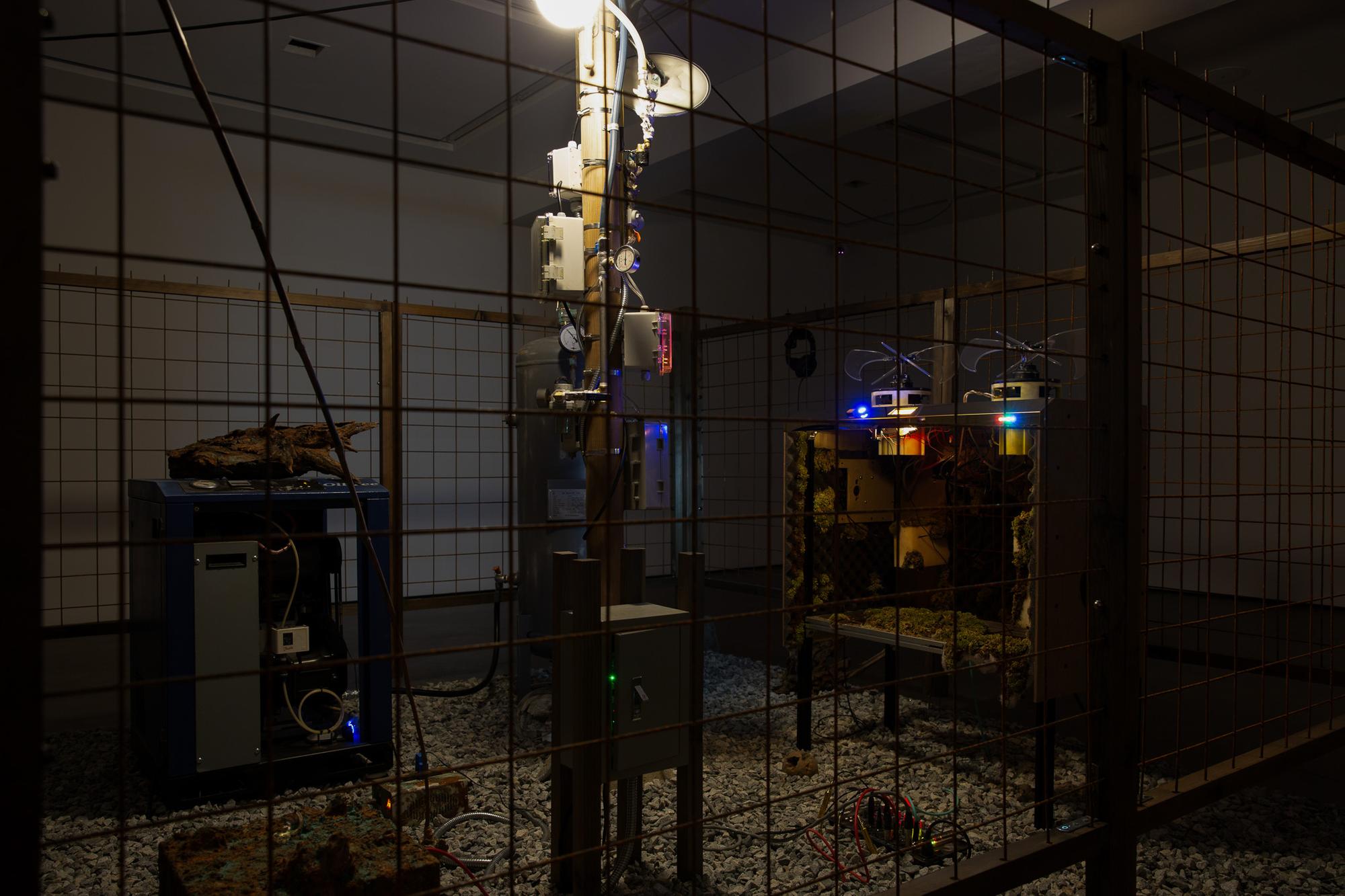
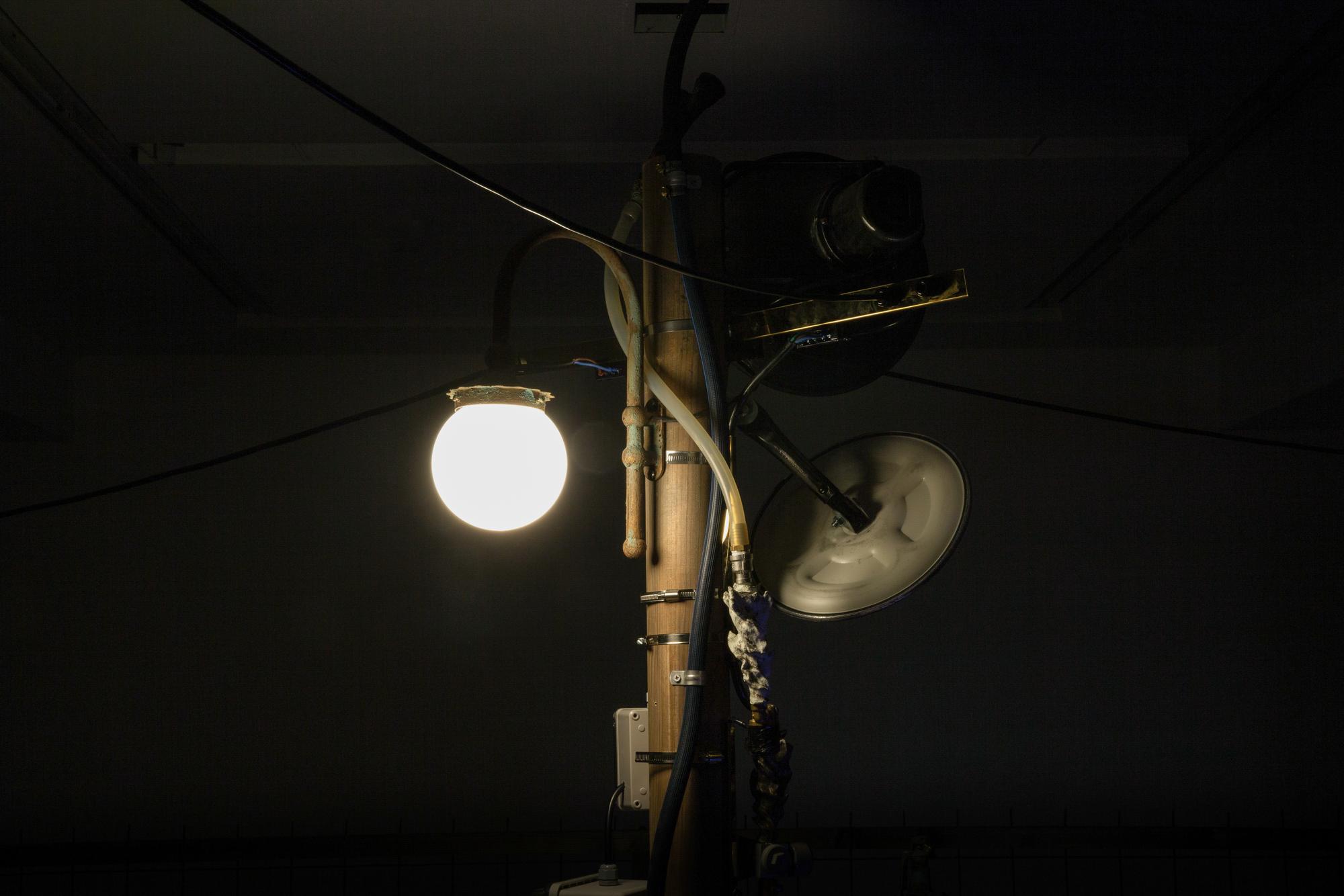
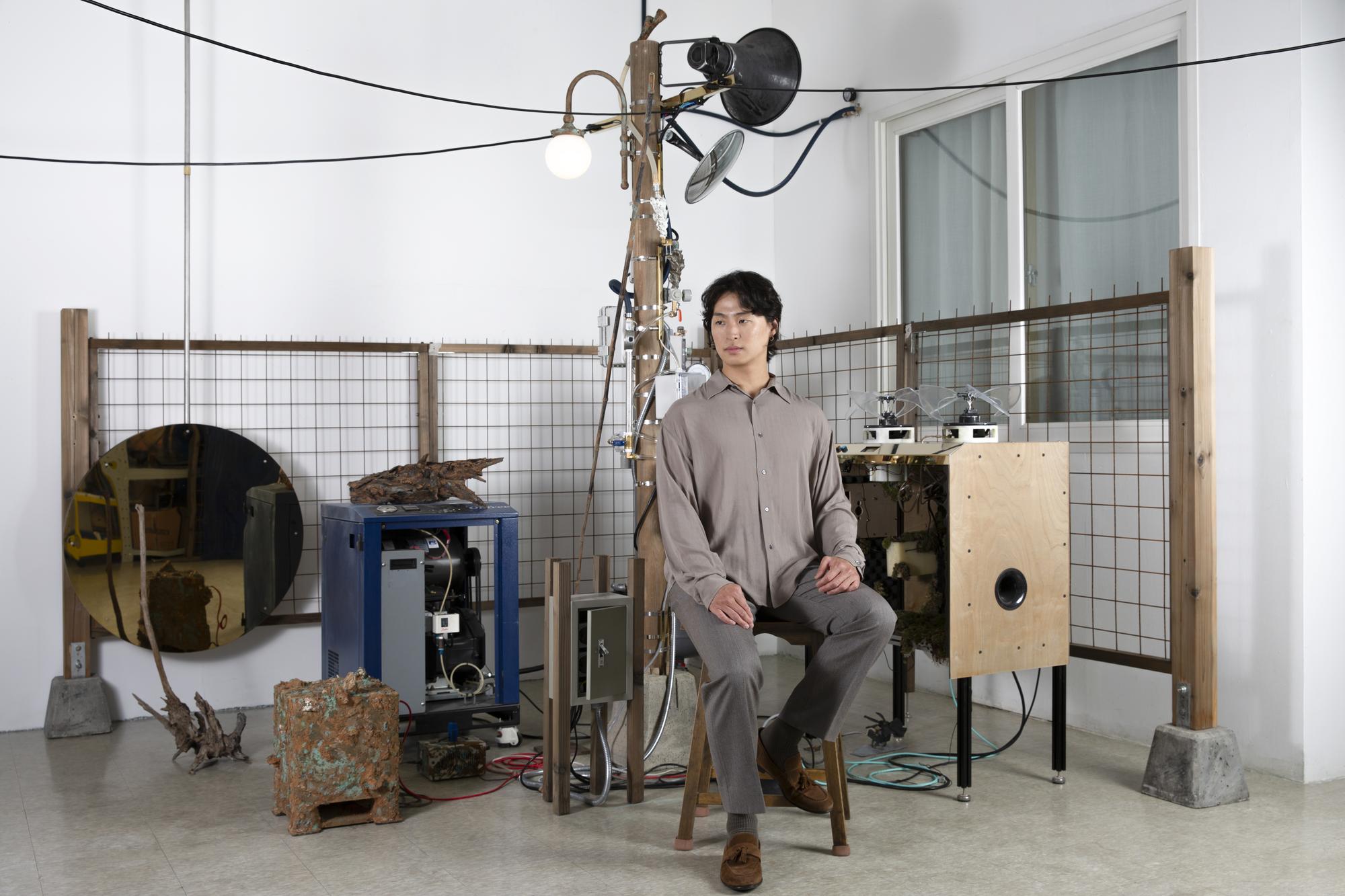
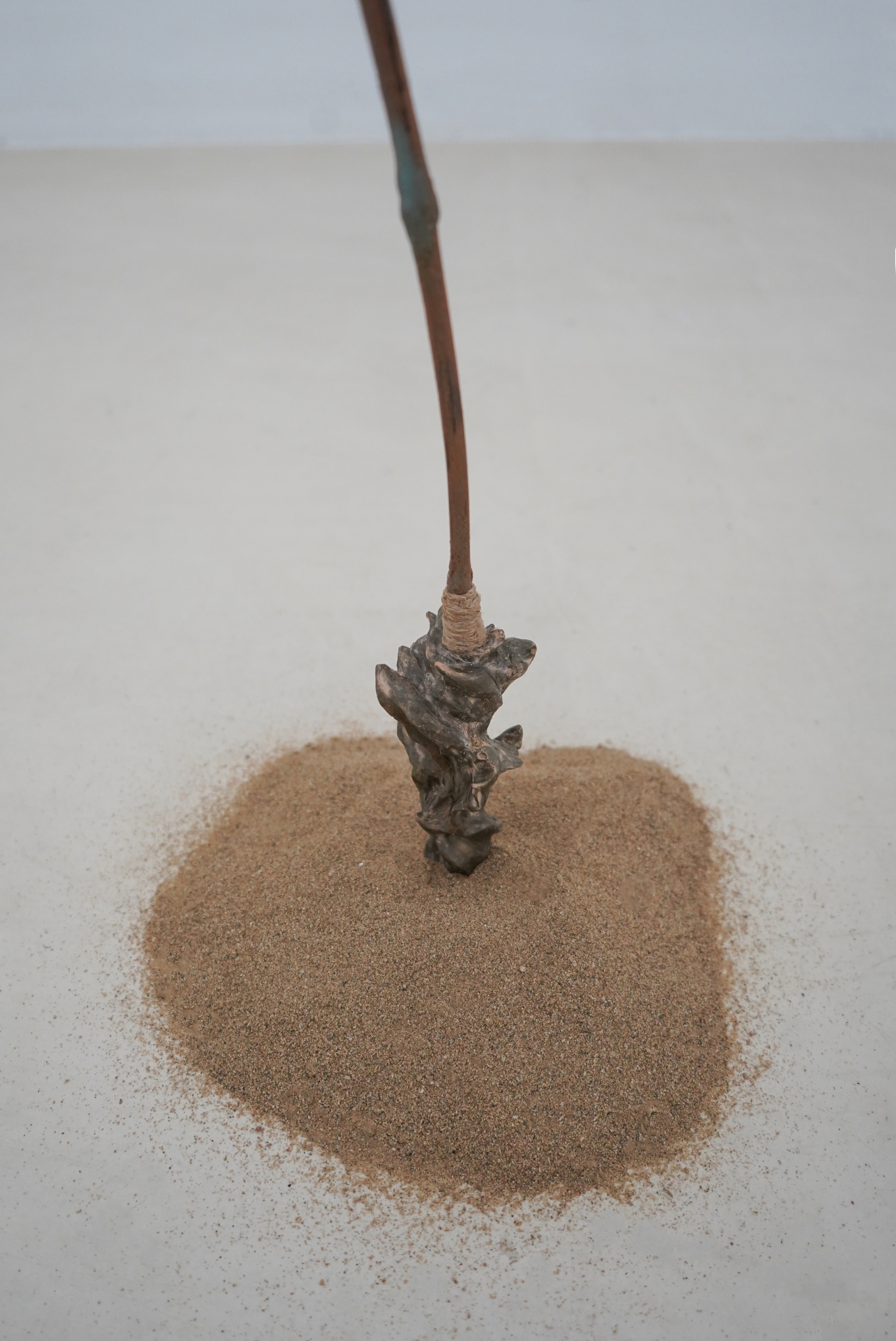
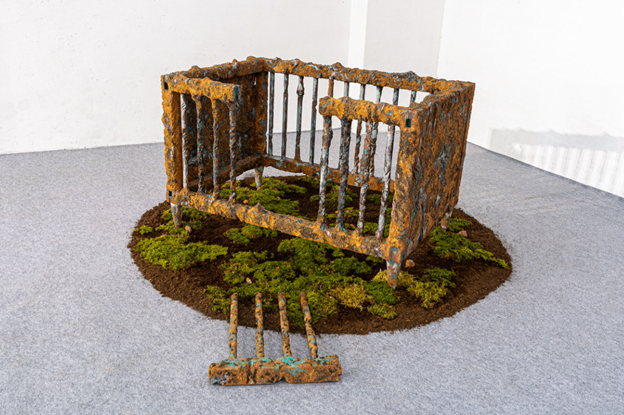
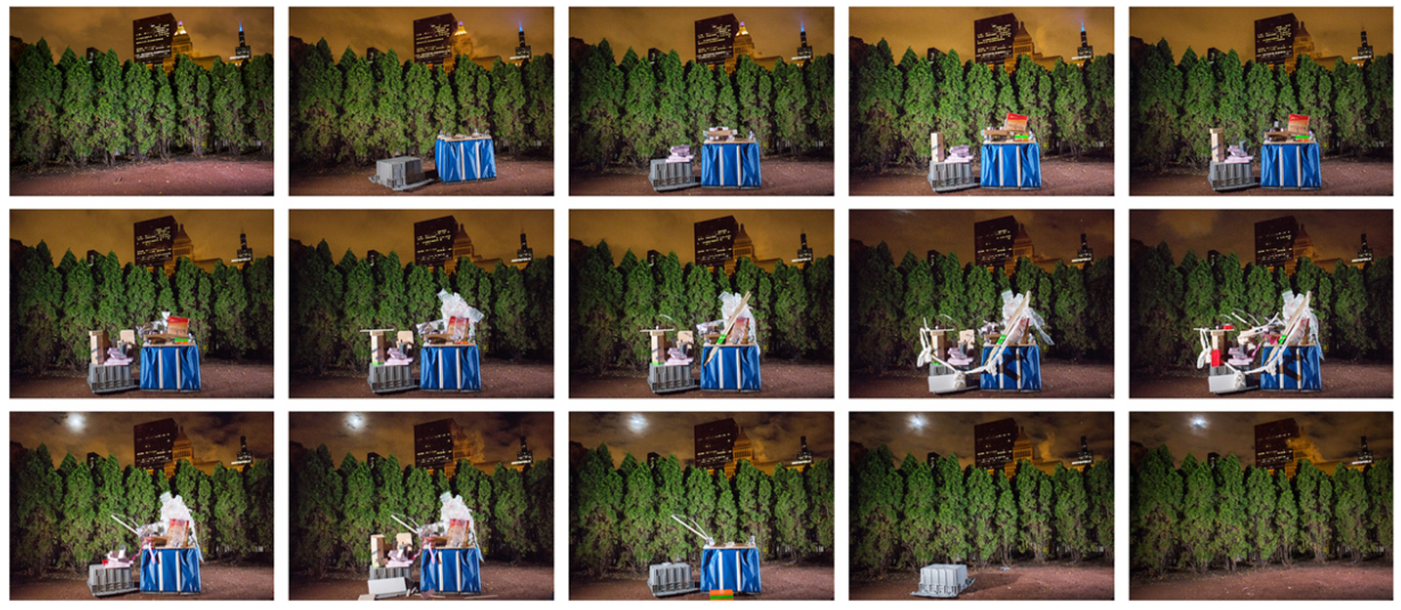
Taking a closer look at Machine inside the exhibition space, one finds that it paradoxically contains sensations of the outside world. Utility poles, outdoor air-conditioning units, compressors, storage containers, and surrounding “No Entry” fences occupy the interior of the gallery as if it were a landscape from which people have vanished, blurring the boundary between inside and outside.
 
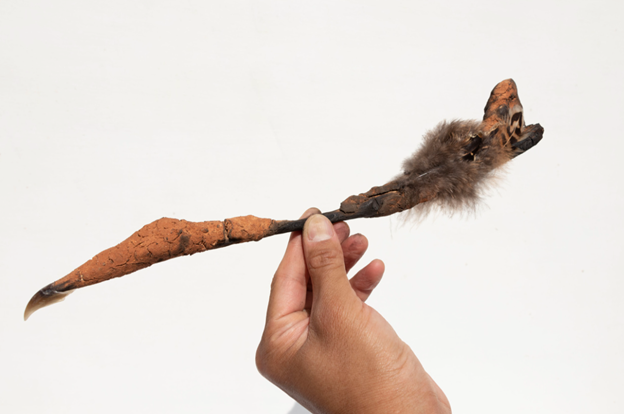
Within the work, not only the boundary between interior and exterior but also that between the artificial and the natural becomes entangled through hybrid sculptural forms. Some elements appear new, while others exist in a state of decay.
 
Those in between—artificial objects in the process of oxidizing—reveal the inherent temporality of things, while simultaneously being situated within natural processes. In doing so, the work foregrounds the gradual dissolution of the boundary between the man-made and the natural.


Installation view of 《Time And Machine》 (OCI Museum of Art, 2025) ©Hosu Lee

Installed alongside the work, a range of sound systems relayed in real time the various operational noises emitted by mechanical facilities. For instance, the machines’ primal sounds were released as deep low frequencies through subwoofers, spread outward as flat tones through horn speakers mounted on utility poles, or rendered via rotary speakers as ultra-low infrastructural sounds beyond the threshold of human hearing. Together, sounds across multiple registers filled the space in its entirety.


Installation view of 《Time And Machine》 (OCI Museum of Art, 2025) ©Hosu Lee

In 《Time And Machine》, Hosu Lee widens the gap between the two words that compose “Time Machine” and inserts a conjunction between them, suggesting that time and machine do not exist as separate entities. Rather, it is the motility of the machine that generates, transforms, and renders time perceptible.
 
The machine’s constant movement between inside and outside, essence and appearance, opens up unfamiliar temporalities, dismantling the walls between dimensions and creating a space for reflection. Situated within contemporary conditions marked by the absence of faith and the uncertainty of existence, Lee’s practice proposes a new performative system — a ‘mechanical ritual’ — through which new sensorial orders and spiritual protocols may emerge.

 ”How can we experience space and time beyond the sensory boundaries of consciousness? What is the nature of time and space? And how can we truly come to understand it?”  (Hosu Lee, Artist’s Note) 


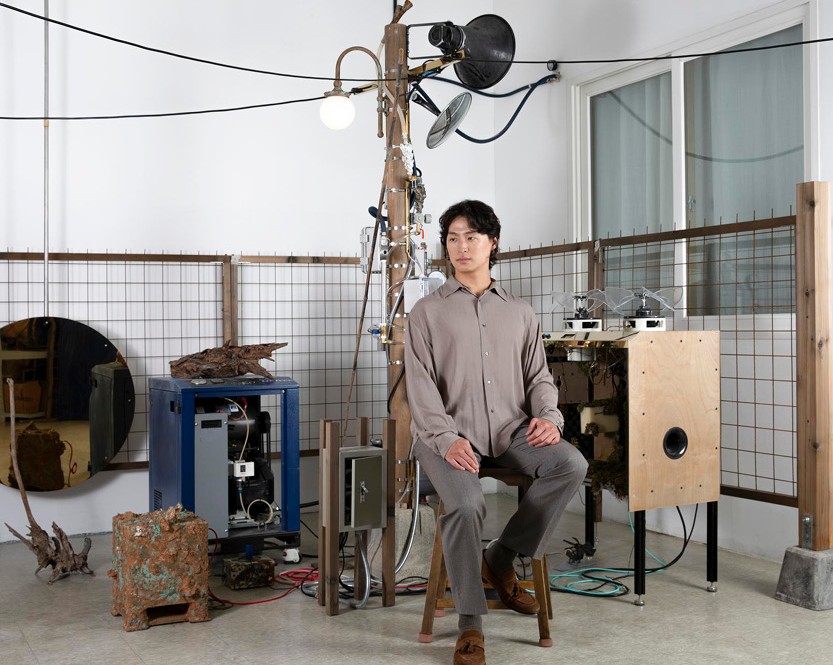
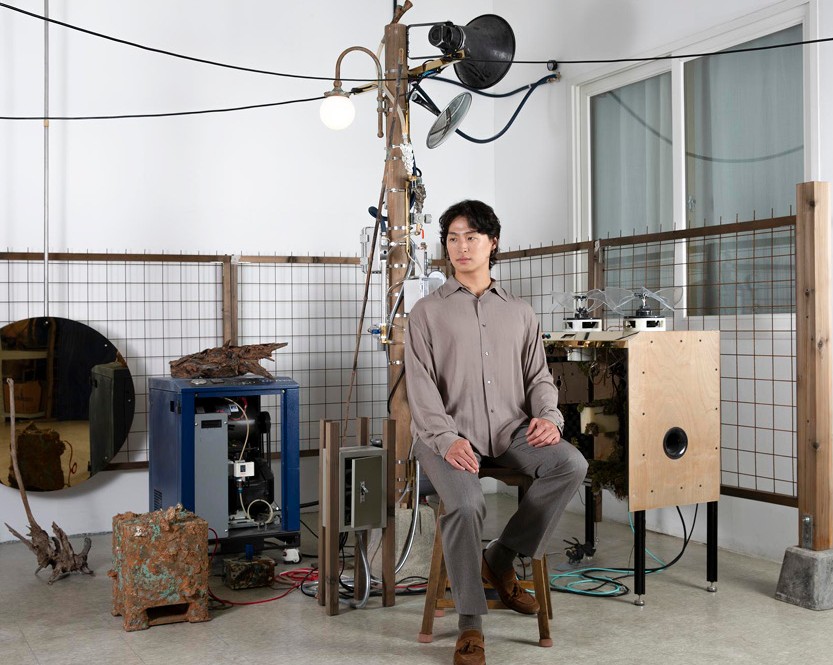
Artist Hosu Lee ©Hosu Lee, Photo: Seokwoo Song.

Hosu Lee graduated with a BFA from the School of the Art Institute of Chicago (SAIC) and is currently based in Seoul. His solo exhibitions include 《Time And Machine》 (OCI Museum of Art, Seoul, 2025), 《Space-Time Travel》 (Windmill, Seoul, 2023), and 《On the Verge of Consciousness》 (Greenpoint Gallery, Brooklyn, USA, 2021).
 
He has also participated in numerous group exhibitions, including 《We May Be Separated Like Island, But》 (Daegu Art Factory, Daegu, 2024), 《Sonic Arts Biennale》 (Het HEM, Netherlands, 2024), 《National Juried Show》 (First Street Gallery, New York, USA, 2022), 《Portraiture: Photography Now》 (Black Box Gallery, Portland, USA, 2020), and 《Data Corpse》 (Chelsea College of Arts, London, 2018).
 
Lee was selected as a 2025 OCI YOUNG CREATIVES artist and a 2025 ARKO DAY “Artist Lounge” participant. In 2020, he received the ‘Emerging Artist Prize’ hosted by Greenpoint Gallery.

References