At
one time, Impressionist painters captured outdoor landscapes on canvas. The
surface, reflecting the painter’s sensations shaped by weather and sunlight,
came to hold flickering impressions and momentary time. Such sensations—liable
to disappear at any moment—are also evident in Claude Monet’s ‘Cathedral’ series.
Over time, sensations that might vanish came to orient not toward sensation
itself, but toward substance.
The frame of the canvas, which once held fleeting
sensations reflected in the atmosphere, became the frame of the camera,
capturing moments when objects are destroyed or collapse. In Monet’s canvases,
architecture is born and dispersed as fragments of color alongside perception.
In the camera’s frame, by contrast, architecture waits for the moment when it
may disperse—a moment yet to come. Together with us—the photographer and the
viewer.
The
light that once flickered within the sunlit canvas does not scatter
instantaneously within the camera frame. Rather than illuminating the present
moment, it illuminates a moment that may occur someday. The development of
light that allows us to see distant things has also allowed us to observe
temporally distant moments. Only through this context can the reliability tests
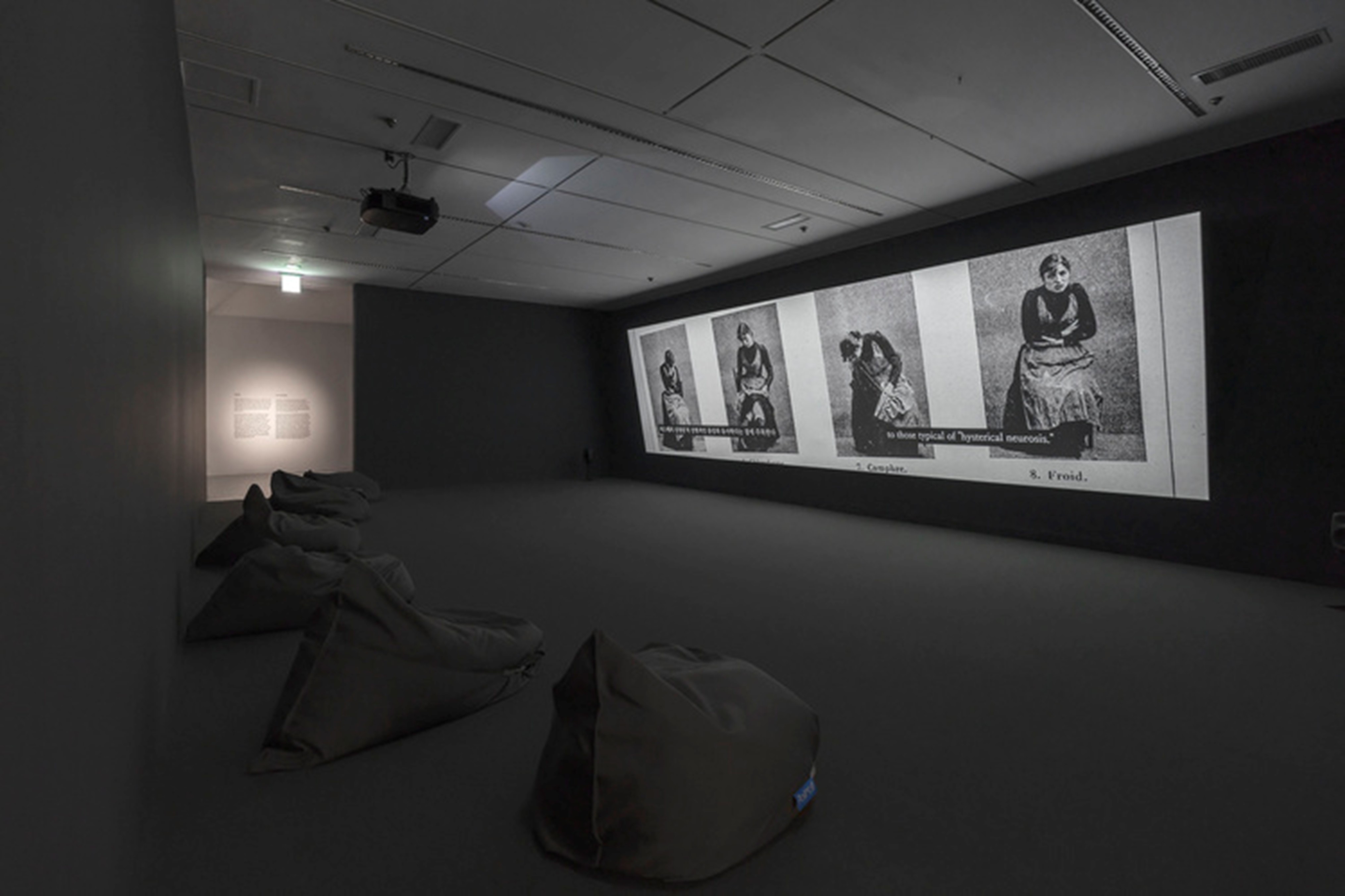
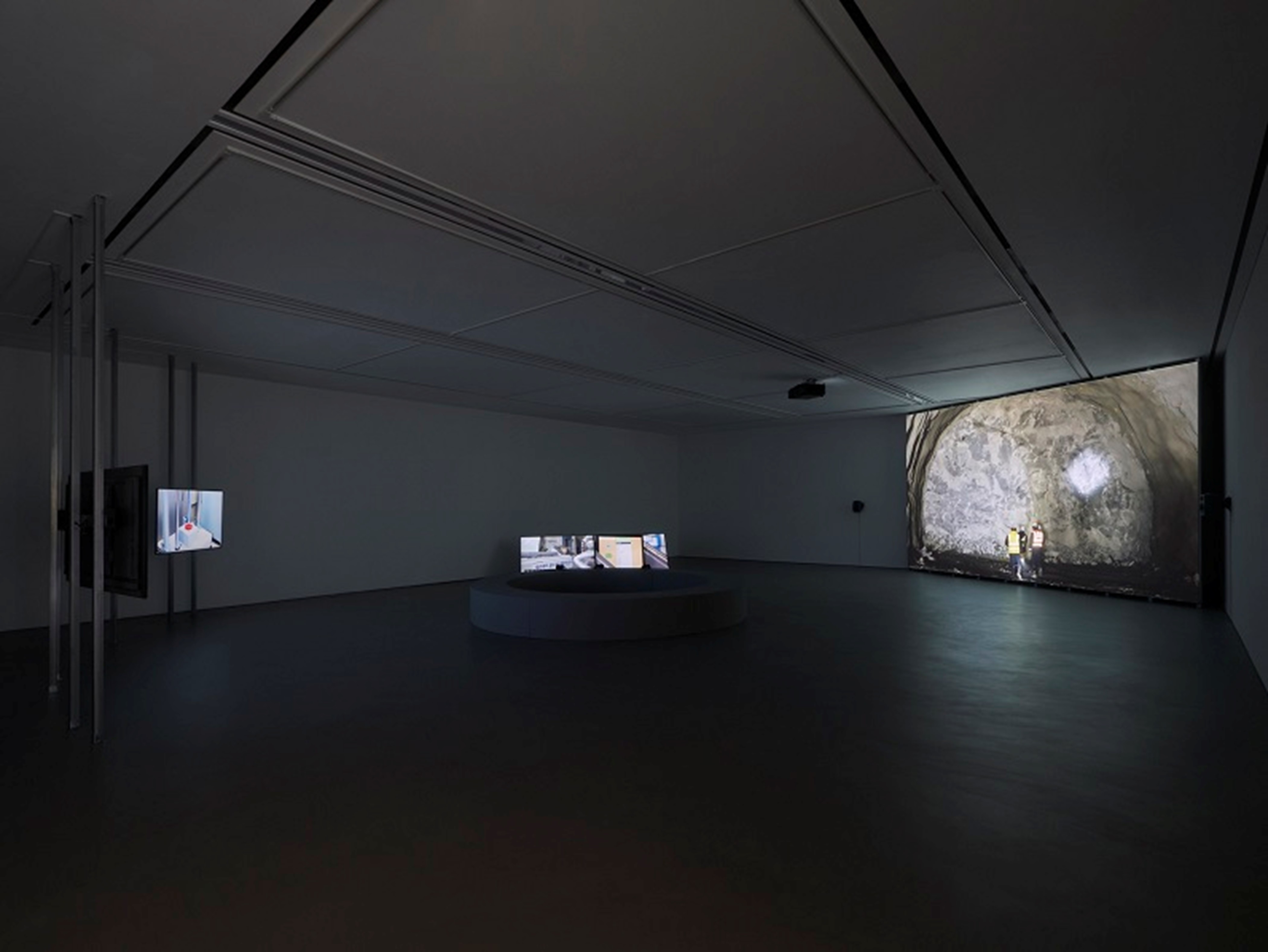
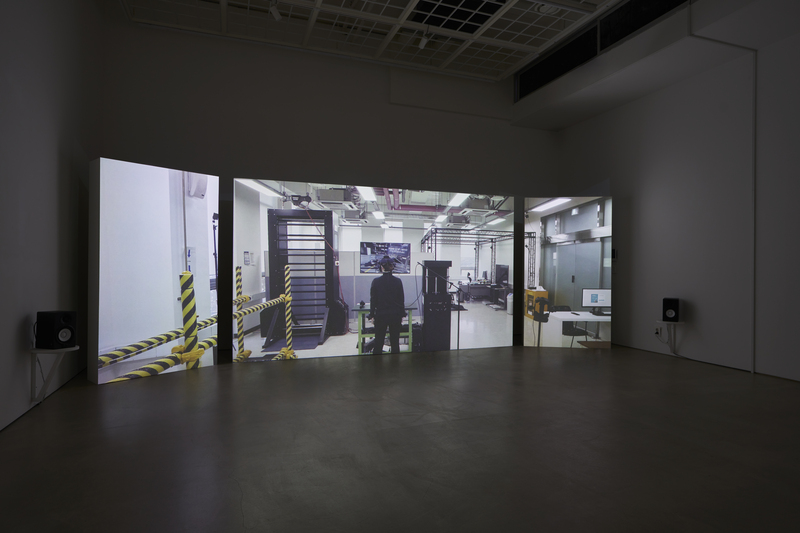
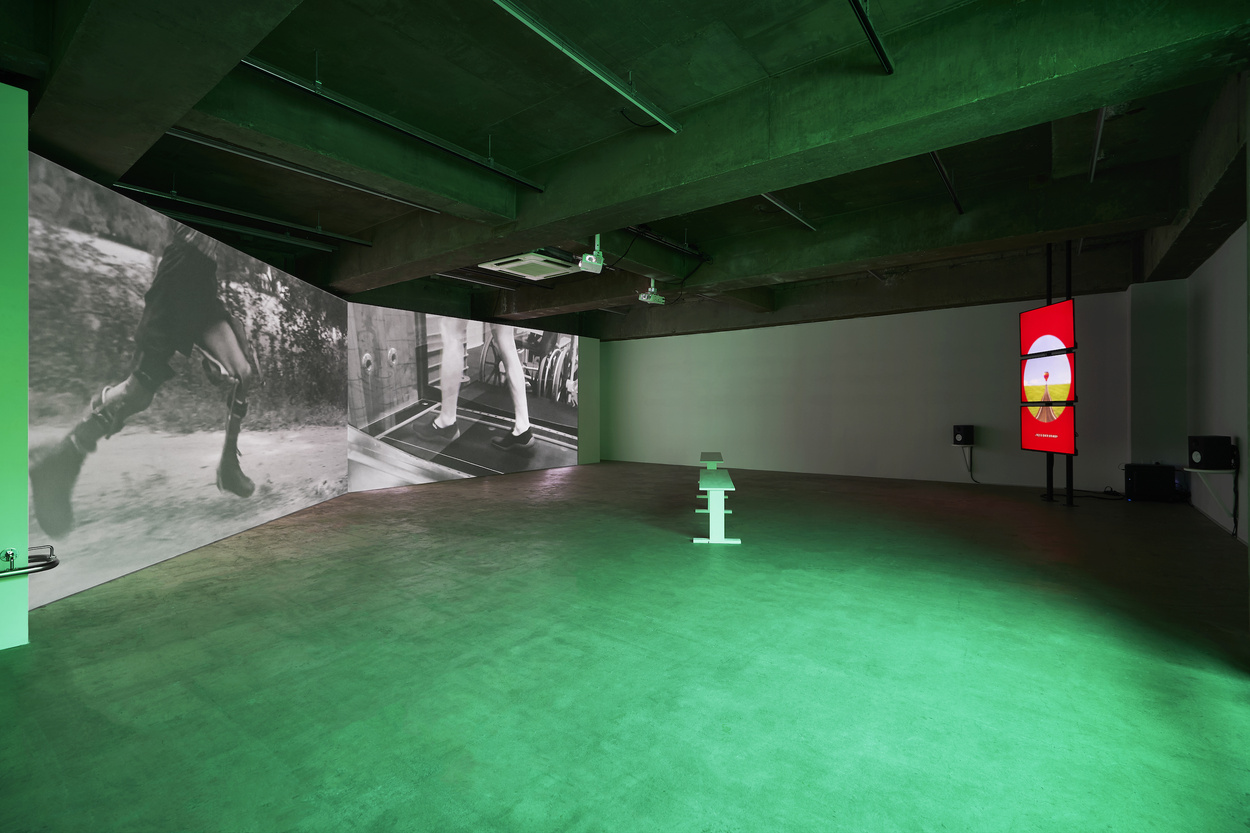
and blasting videos addressed in Eunhee Lee’s solo exhibition 《Mechanics of Stress》 at DOOSAN Gallery Seoul
be properly understood. In today’s visual environment, light renders objects
present as images—so to speak, at the speed of light.
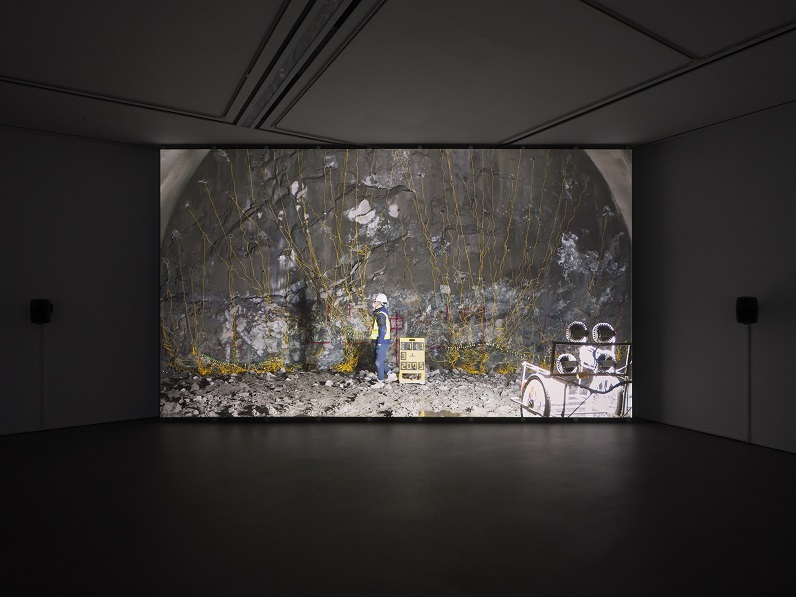
While blasting as a
subject easily evokes images of speed and immediacy, in the exhibited works
light captures not a rapid gaze, but a deep gaze. To analyze 《Mechanics of Stress》, the term “rapid gaze”
in the earlier description—“light that allows us to see what is distant, and
temporally distant as well”—must be replaced with “deep gaze.” A deep gaze
refers to penetrating the material–qualitative conditions inherent in objects
in reliability testing and blasting, and appropriating them as resources.
Material–qualitative
conditions are formed through a relationship in which the conditions of
materiality determine quality. The reliability tests and blasting addressed in
this exhibition reveal two aspects of such material–qualitative conditions. In
reliability testing, these conditions are derived by measuring the lifespan and
durability of the tested object.
In other words, through externally applied
impacts administered by apparatuses, we come to know the critical threshold of
an object’s quality. By contrast, blasting sites might be considered nothing
more than destruction—or rather, a negative loss from which nothing can be
produced once destruction has occurred. Just as experimental processes reveal
an object’s limits through machinery, blasting too may be regarded as exposing
the limits of the ground itself.
However,
as described in Mechanics of Stress #3 as an
“action” undertaken by engineering to address and resolve a problem,
material–qualitative conditions can update thresholds and negatives through the
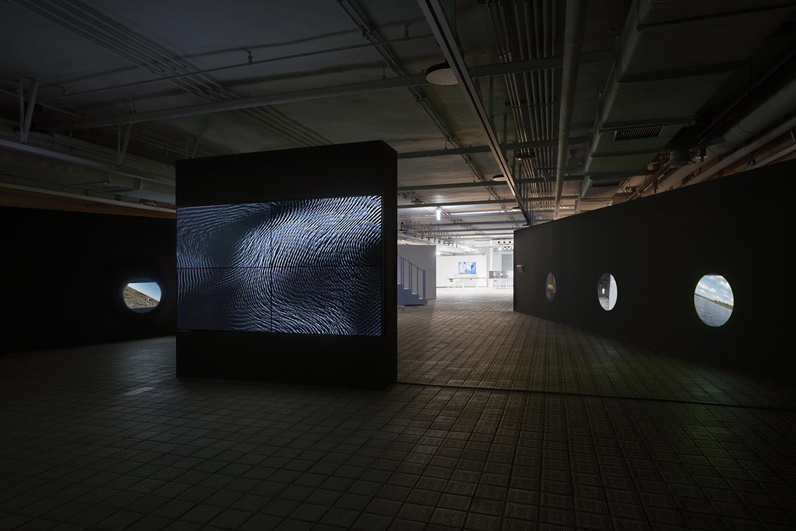
action of human intervention. Blasting, used in infrastructure construction
technologies, constitutes the first step toward activating underground space
for human life. From the history of mines extracting coal as fuel, to urban
development, subways, and even fiber-optic cables forming global internet
networks, the underground embodies qualitative robustness that supports human
existence through its material solidity.
This is the material–qualitative
condition. Accordingly, the deep gaze is closely connected not only to
metaphorical outlooks, but also to directing attention toward physically
inaccessible spaces such as the underground. Within the frame of Eunhee Lee’s
videos, the viewer’s gaze turns toward underground space as “remaining land”—a
margin that, accompanied by additional resources and technologies, can enable
better living—alongside the temporal point of objects that have not yet been
destroyed, but may be destroyed someday.
From
this perspective, one might interpret Lee’s solo exhibition as drawing out the
literal “underside” of contemporary life through a deep gaze. We live without
knowing what materials constitute the objects we touch and handle, and without
awareness of the infrastructures behind communication environments; the
exhibition could be said to redirect attention toward these hidden conditions.
Yet the question to pose to such interpretations concerns the distance between
the deep gaze established as a condition of video documentation and Eunhee
Lee’s works themselves.
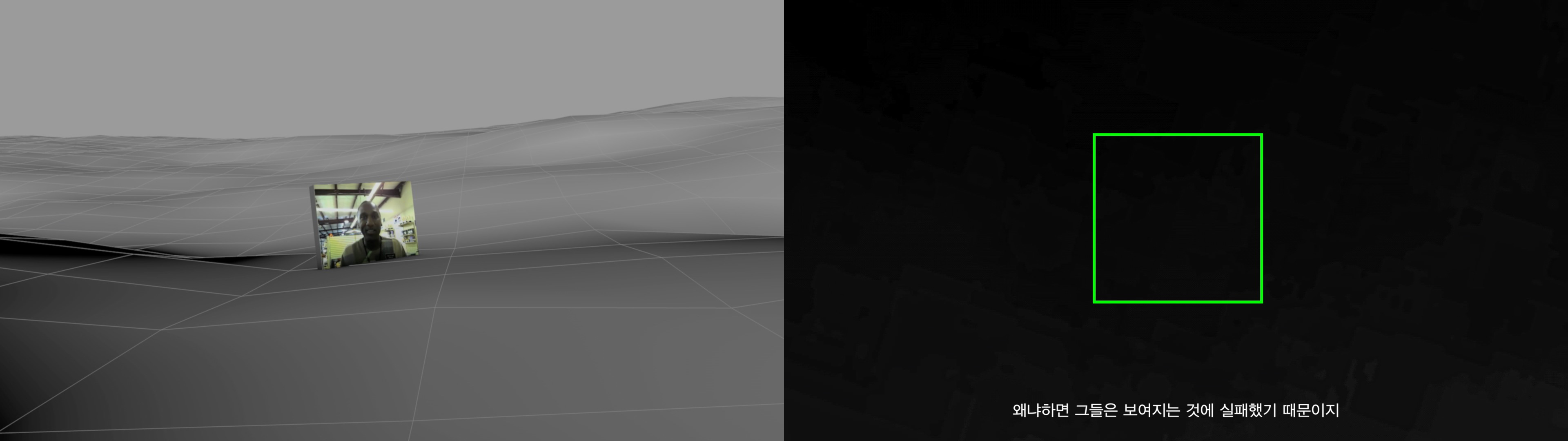
As surprise spectacles—like “Mentos and
cola”—proliferate, and as smartphones and CCTV systems produce continuous human
and non-human surveillance, gazes wait passively or actively to capture moments
that may or may not arrive. It is necessary to consider how Lee’s work differs
from these contemporary modes of video recording and sharing. As seen in
so-called “challenge videos” or prank videos, video documentation has become an
experimental space for drawing out hidden sides. In today’s visual environment,
frames contain moments that viewers wish to see more of, held within a
long-term outlook.
Such prospective or anticipatory attitudes form a cyclical
structure in which all video works circulate between post-production and
pre-production. Within this cycle, the critical point to be scrutinized and the
anticipated conclusion are already embedded. While a rapid gaze dulls sharp
awareness through mood changes or channel surfing, a deep gaze subjects its target
to persistence. Like planning and implementing land use in order to envision
surface prospects by preserving subterranean margins, it operates in a
post-productive mode. From this perspective, Nicolas Bourriaud’s question,
“What can we do with what we already have?” does not serve as an alternative to
the question, “What new things can we create?” The deep gaze binds
pre-production and post-production together in a continuous cycle.4)
Judging
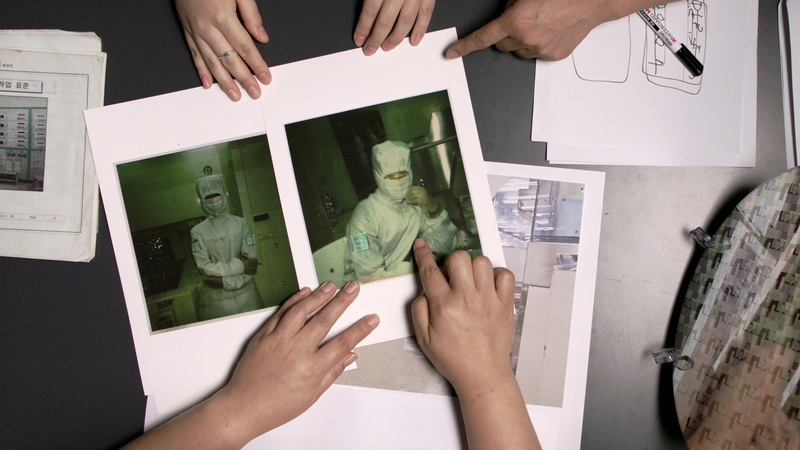
by the materials she addresses, Eunhee Lee’s works can be understood as cycles
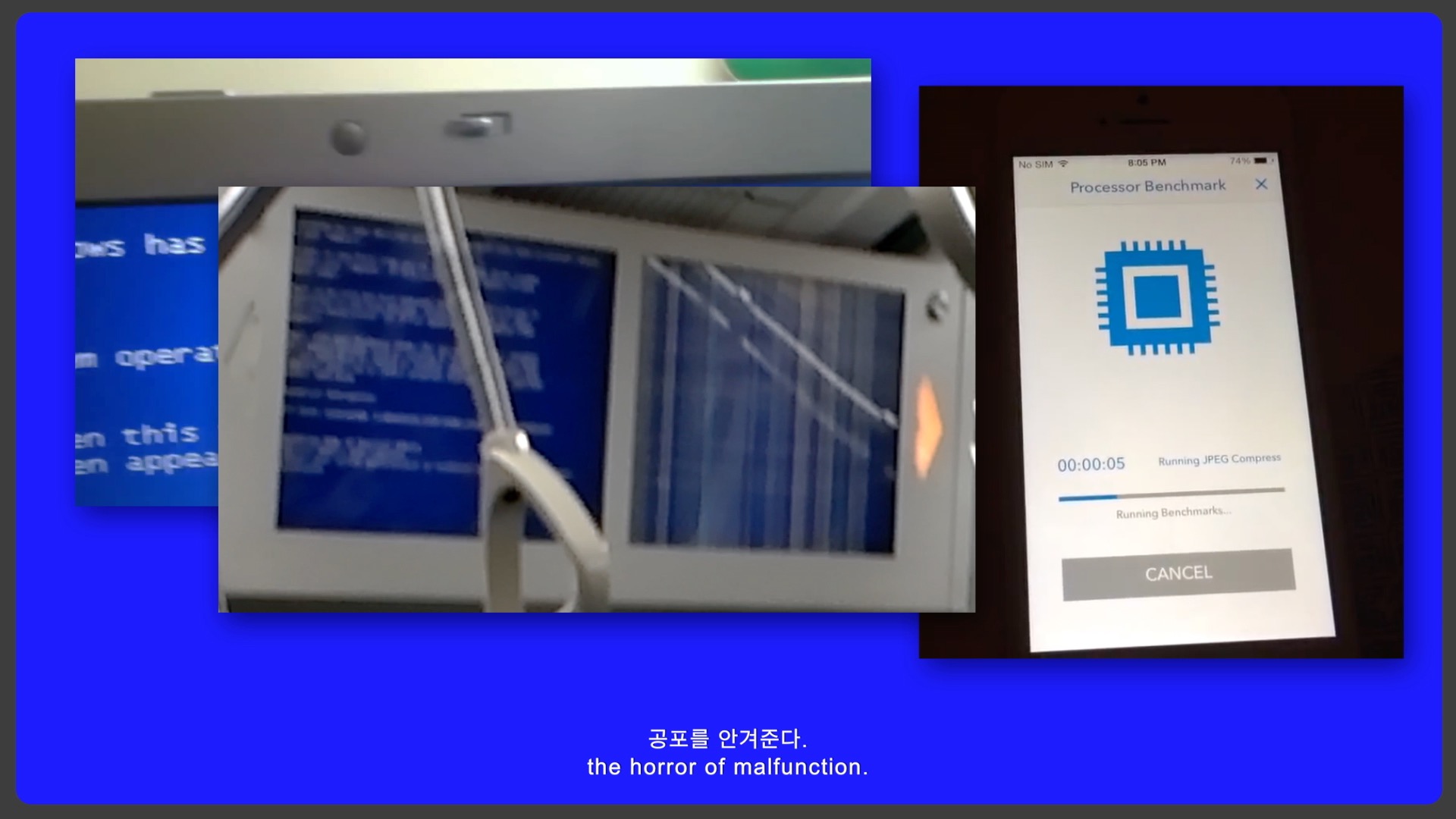
of pre- and post-production generated by a deep gaze. Reliability testing
refers to an engineering industry that categorizes and simulates external
stimuli a product may experience in order to calculate its lifespan or failure
rate.5) Environmental stresses such as temperature, vibration, and electric
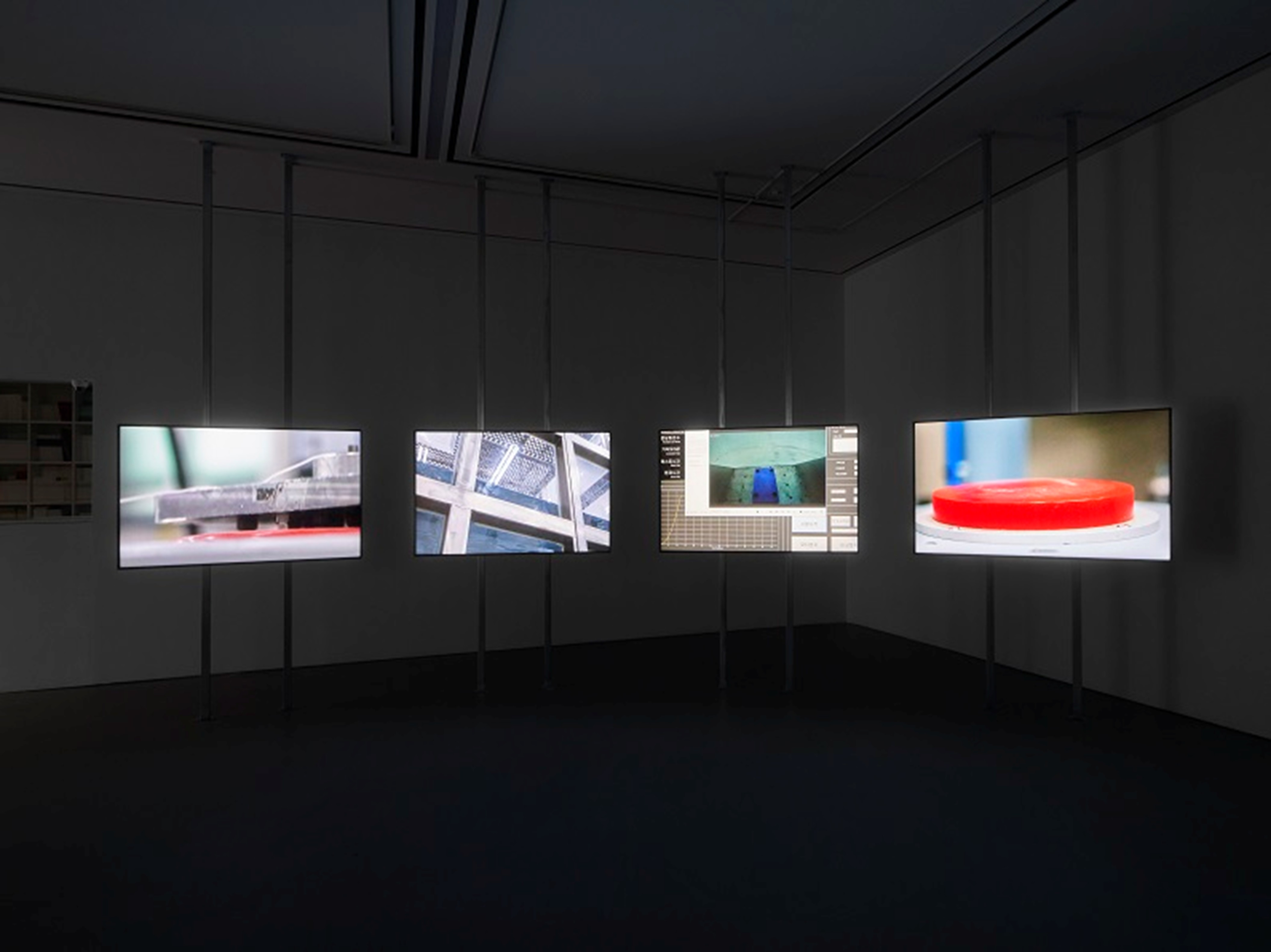
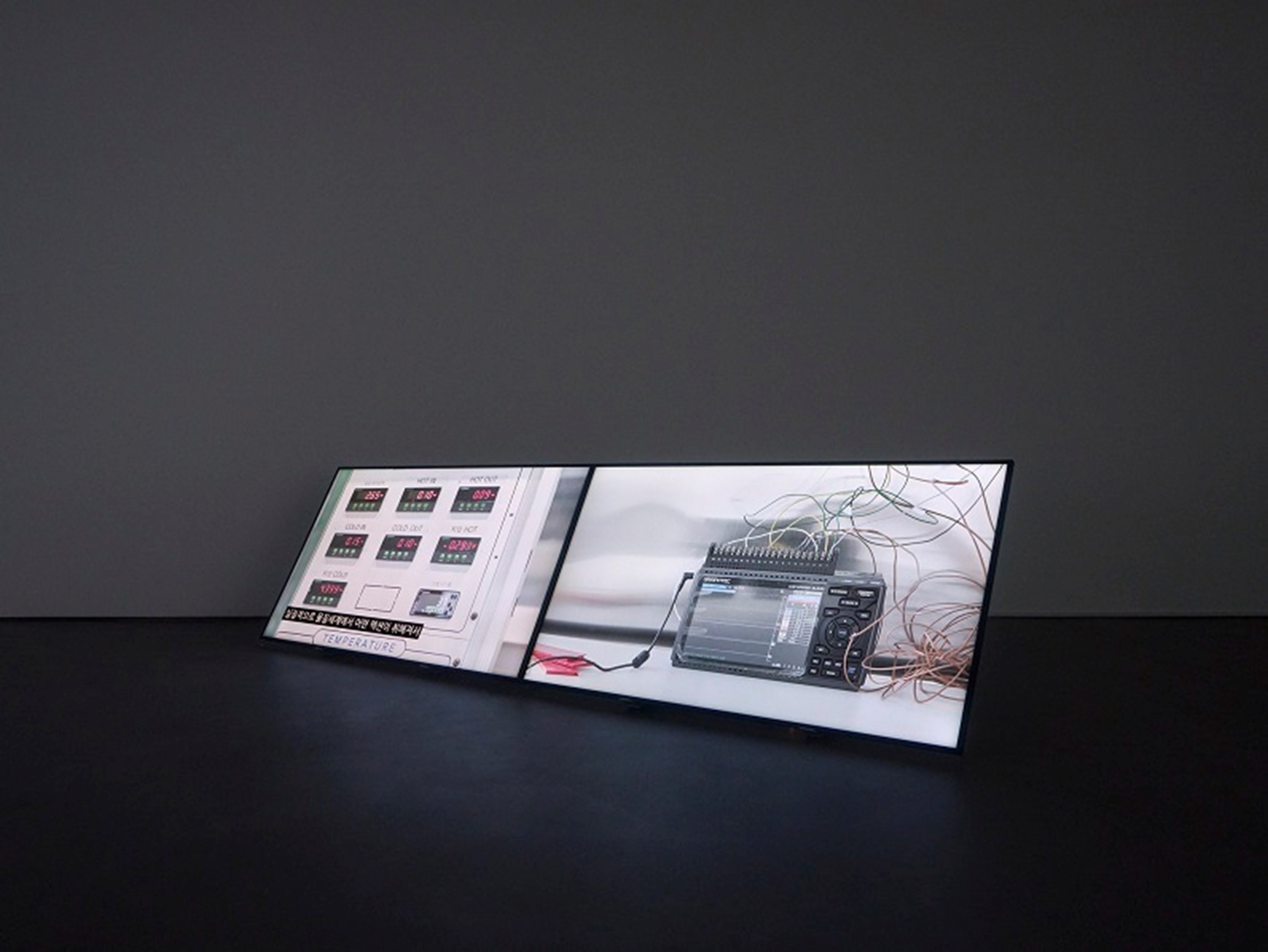
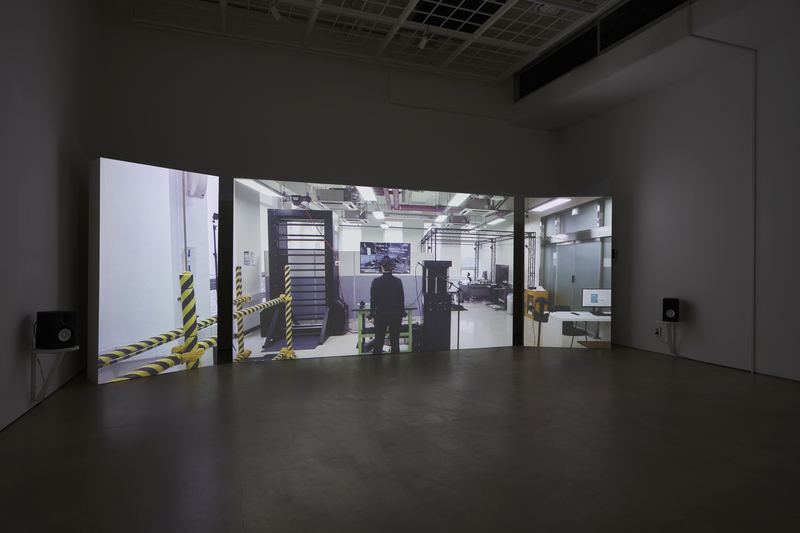
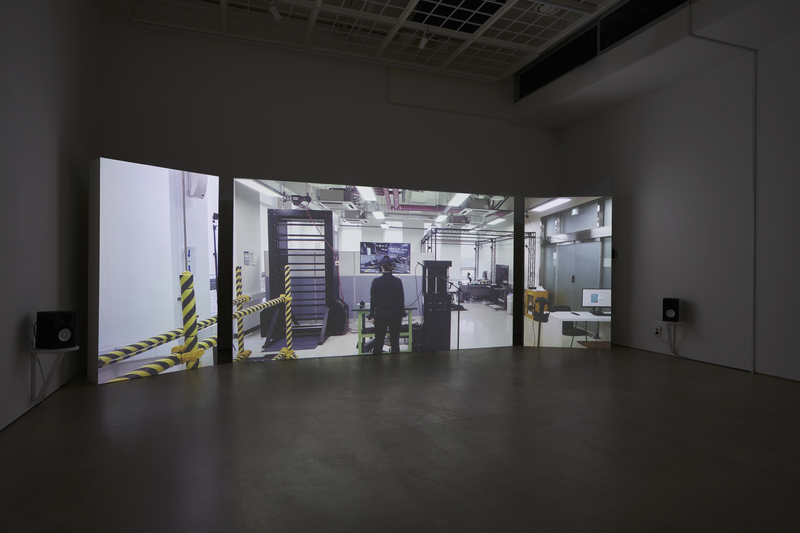
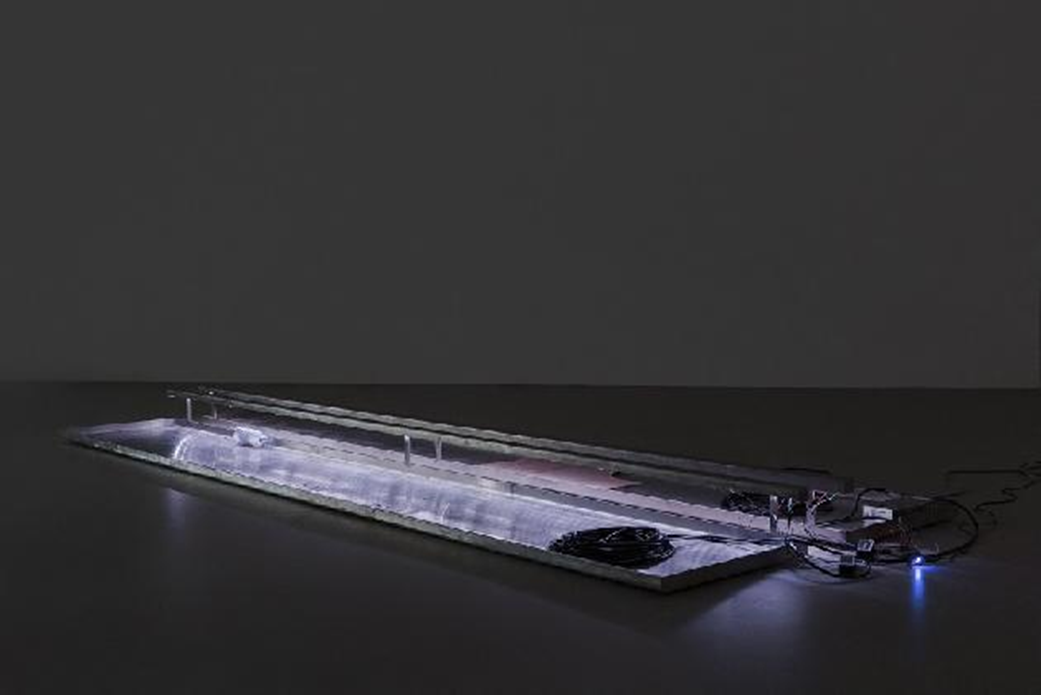
current are applied to test durability, and in Mechanics of
Stress #1, these tests appear as images of objects that, fortunately,
have not yet been destroyed.
What is notable here is that before objects reach
the “fatigue limit”—the technical term reflected in the title—viewers perceive
the lights of measuring instruments attached to devices, fluctuations in
numerical values, and fragments of vibration as sensory impressions. What is
occurring inside the object cannot be known simply by opening the machine
unless one looks inside or destroys the object. In tests that track the
conditions an object can endure, its qualitative characteristics remain in a
state of doubt, becoming apparent as limits only when destruction occurs. More
fundamentally, viewers find it difficult to identify the object under test. It
is certainly an object—but precisely because it is an object, assuming a
recognizable form, its identity and function remain unclear as it undergoes
impact within the machine.
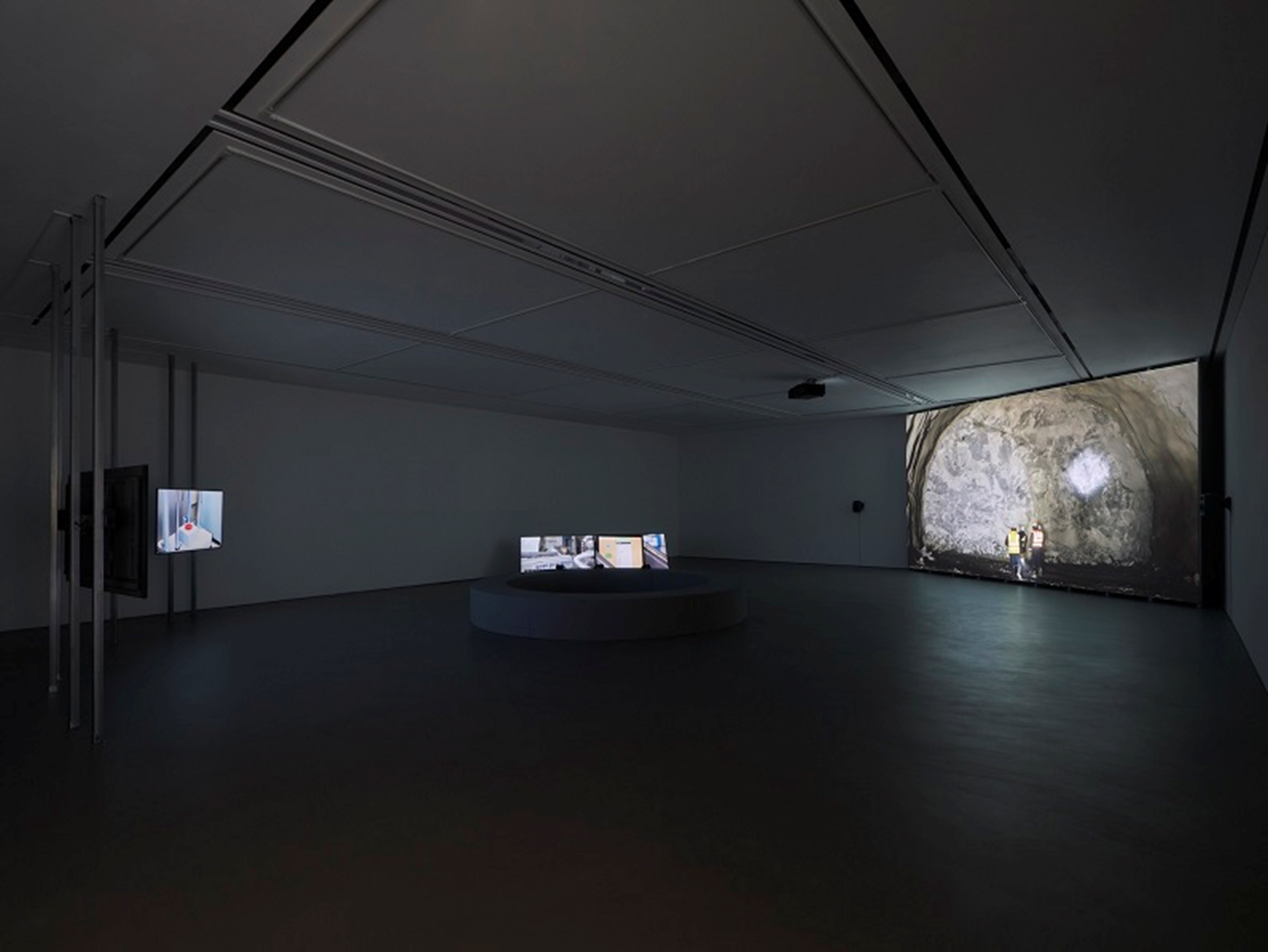
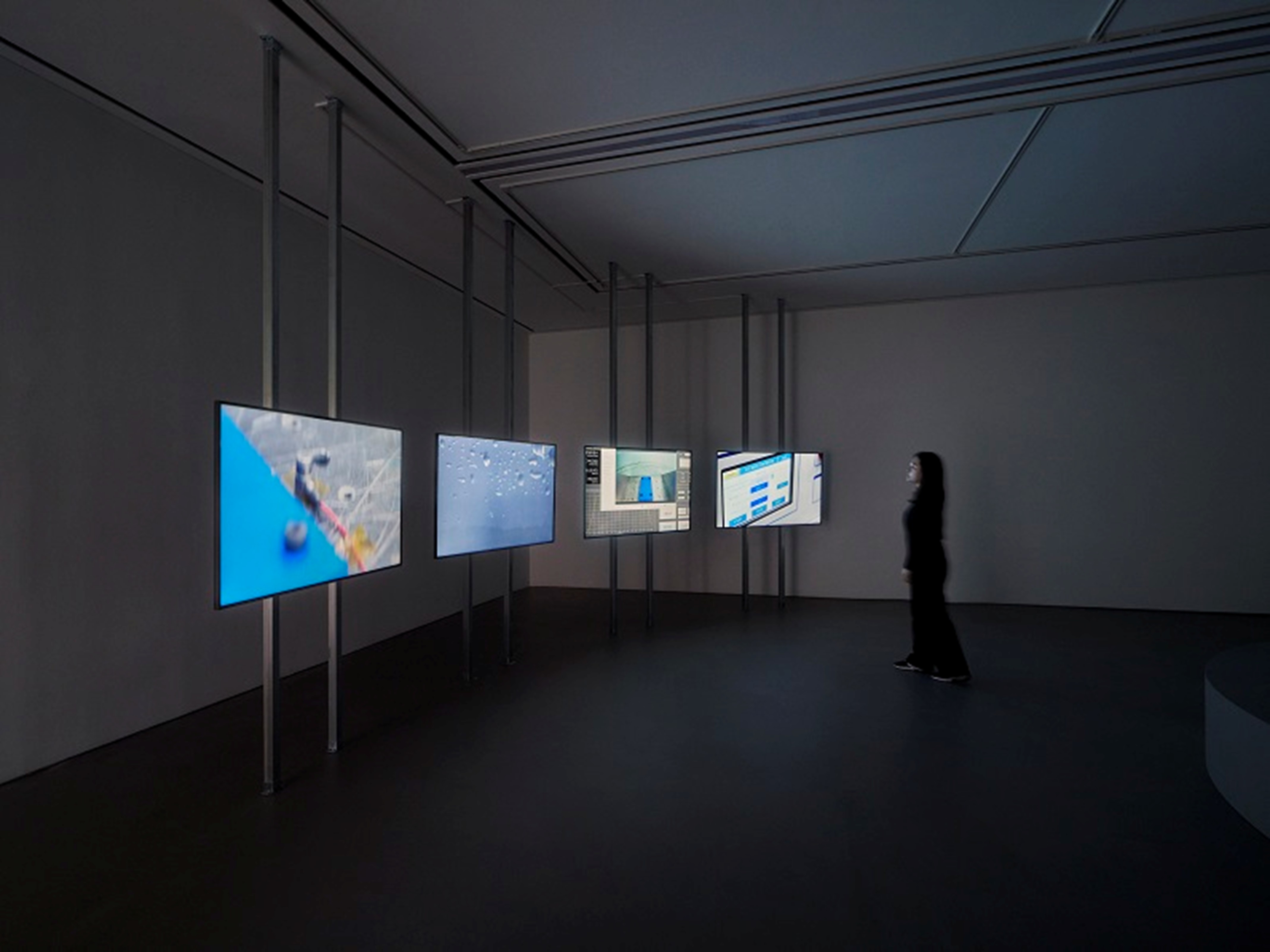
The
video documenting this testing process—where the object remains in
doubt—unfolds across four channels, capturing scenes of sound, water,
vibration, and detailed mechanical movements. Here, the deep gaze shifts into
momentary description. When qualitative characteristics are confined within
doubt, the deep gaze directed toward the object is blocked and becomes
descriptive. Although a test is being conducted on an object, its identity,
without destruction, disperses within the video frame as sensory, non-integrated
information.
What
we can clearly discern in the exhibited videos are the fragmentary sensations
circulating around objects (in a broad sense, including underground spaces).
Laboratory vibrations, machine noises, illuminated buttons, and splashing water
disperse the viewer’s gaze toward moments that may precede destruction,
diffusing attention before the threshold of destruction. In this sense, Lee’s
video works share characteristics with Impressionist painting, where subjects
are constituted according to the viewer’s perception.
Just as Monet’s
cathedrals retain their substance beyond his visual field while his sensations
disappear, objects not yet destroyed scatter and recombine as fragmentary
sensations within frames documenting laboratories. Sensory information rendered
before a deep gaze flickers around the object. Rather than functioning as
frames that record moments yet to arrive, the works depict moments of sensorial
encirclement occurring before the viewer’s eyes.
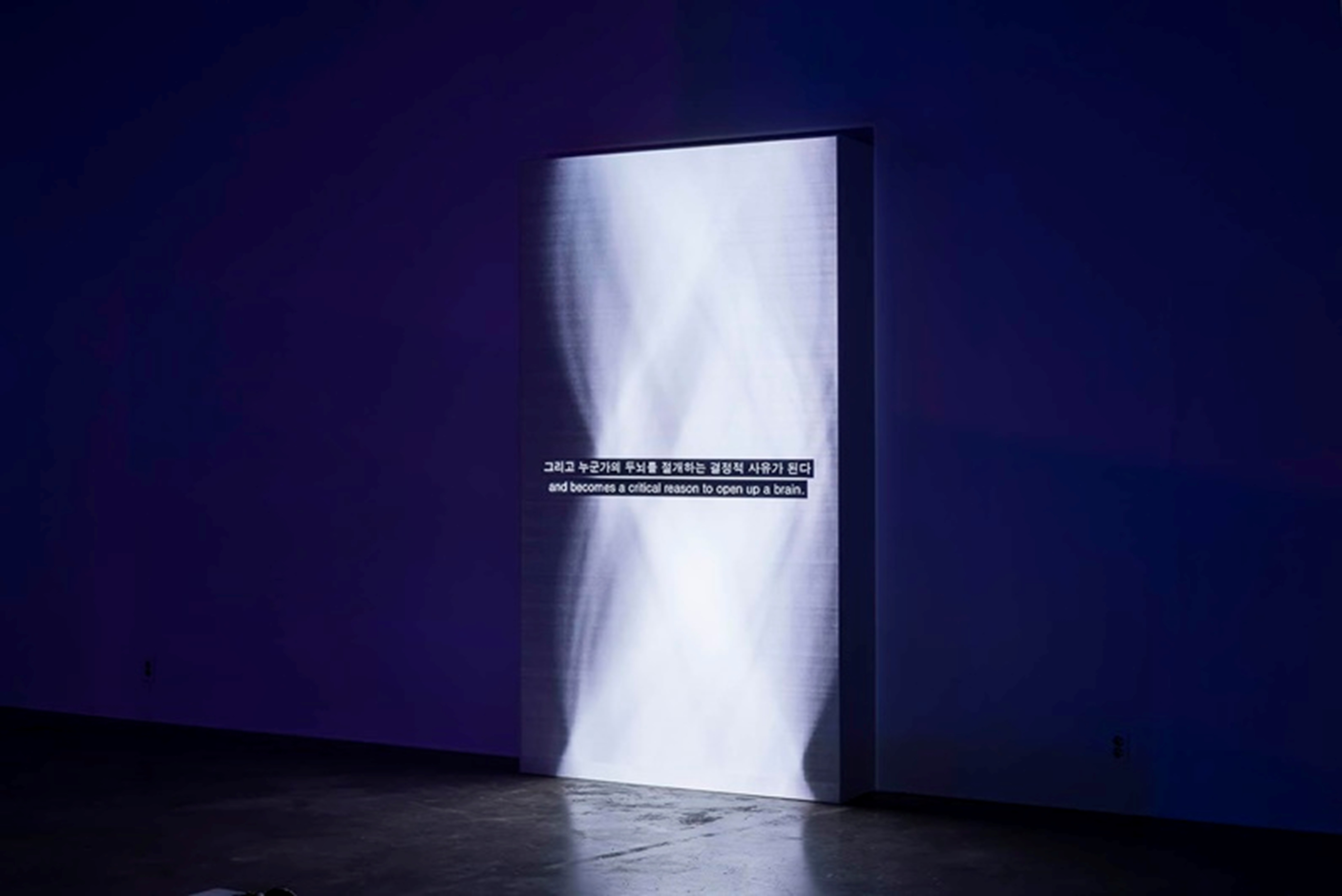
Even
if blasting appears as destruction, it differs from loss in that it creates
margins. The outward eruption in blasting scenes serves material–qualitative
fulfillment of life on the surface, grounded in investigations of subterranean
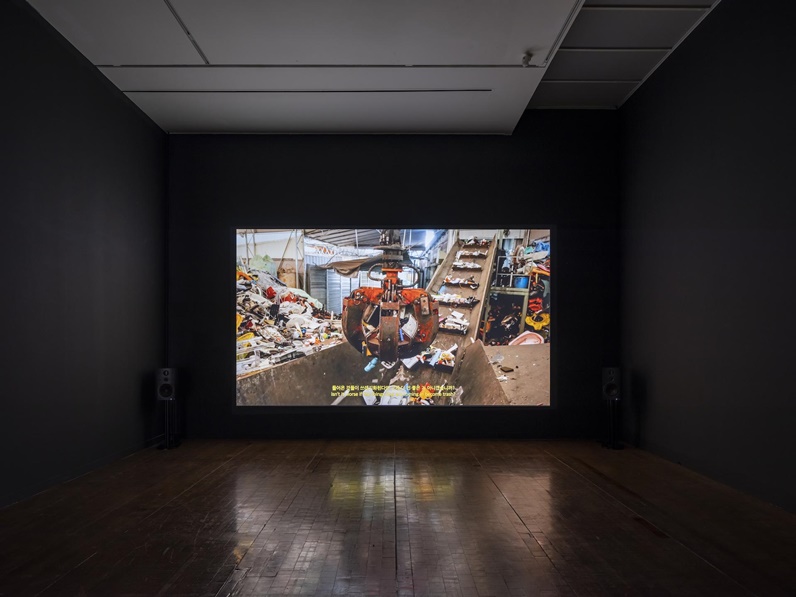
material conditions. The smoke rising with the explosion sound at the end
of Mechanics of Stress #2 disrupts the cycle of
pre- and post-production pursued by the deep gaze, allowing us to witness, here
and now, that “screen”—once a canvas that held a fleeting moment—toward which
our senses had been drawn.
1.
See 1’50–2’20. Emphasis by the author.
2.
Rosalind Williams, Notes on the Underground, 1990; Japanese
translation: Chika Sekai: Image no Hen’yō, Hyōshō, Gūi,
Heibonsha, 1992, p. 71.
3.
Susan Sontag, Regarding the Pain of Others, 2003; Japanese translation,
Misuzu Shobo, 2003, pp. 105, 116–117.
4.
Nicolas Bourriaud, Postproduction, p. 24, even though he referred to it as
an “artistic” question.
5.
See exhibition introduction.