Can
a machine die? This question has nothing to do with ontological questions of
whether machines are conscious agents like human beings, or moral questions of
whether machines should be perceived/ recognized as living things. It is more a
question of whether machinery can simply remain in the realm of valuelessness
when it stops working or loses its effectiveness because of some defect. This
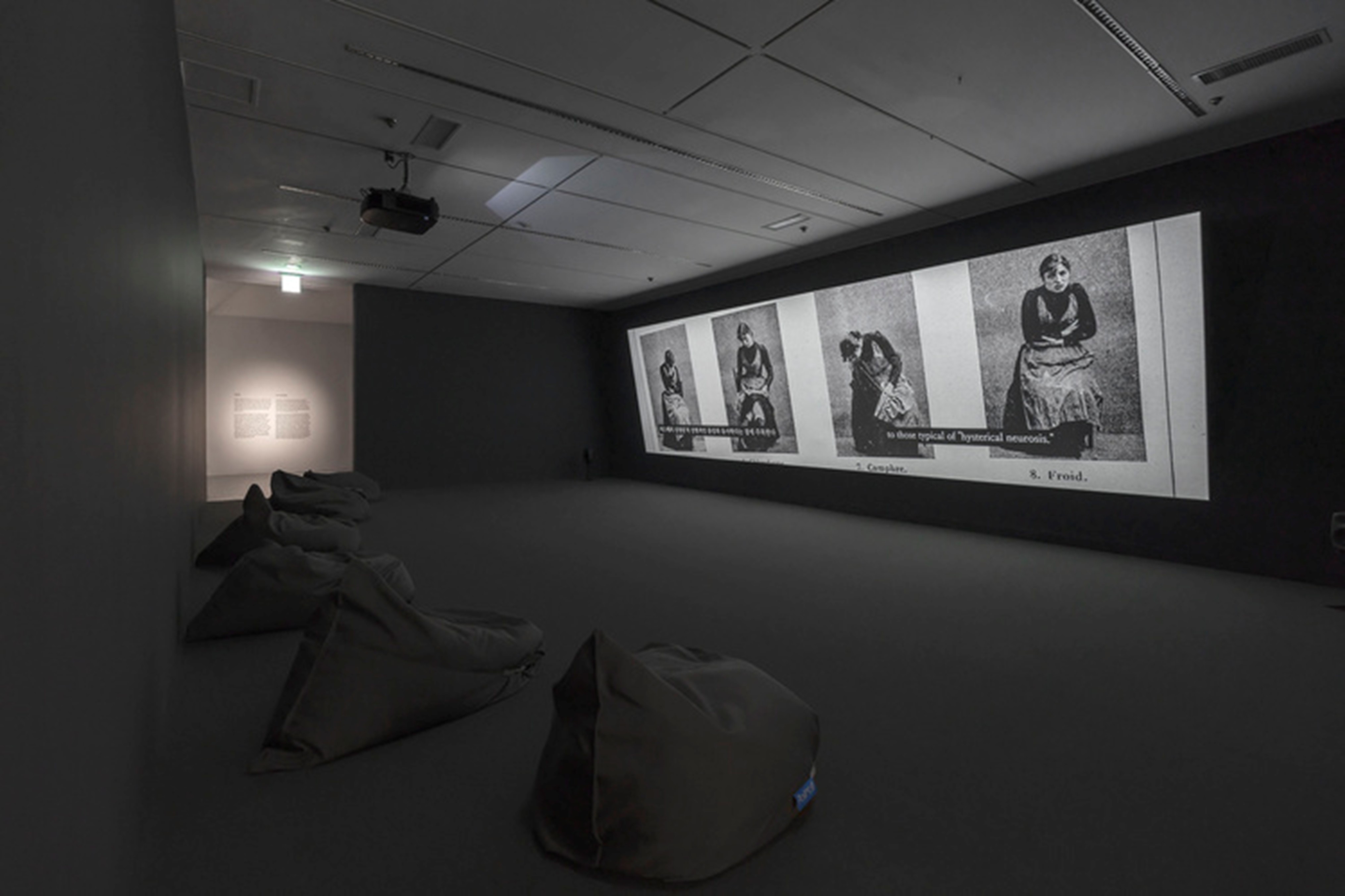
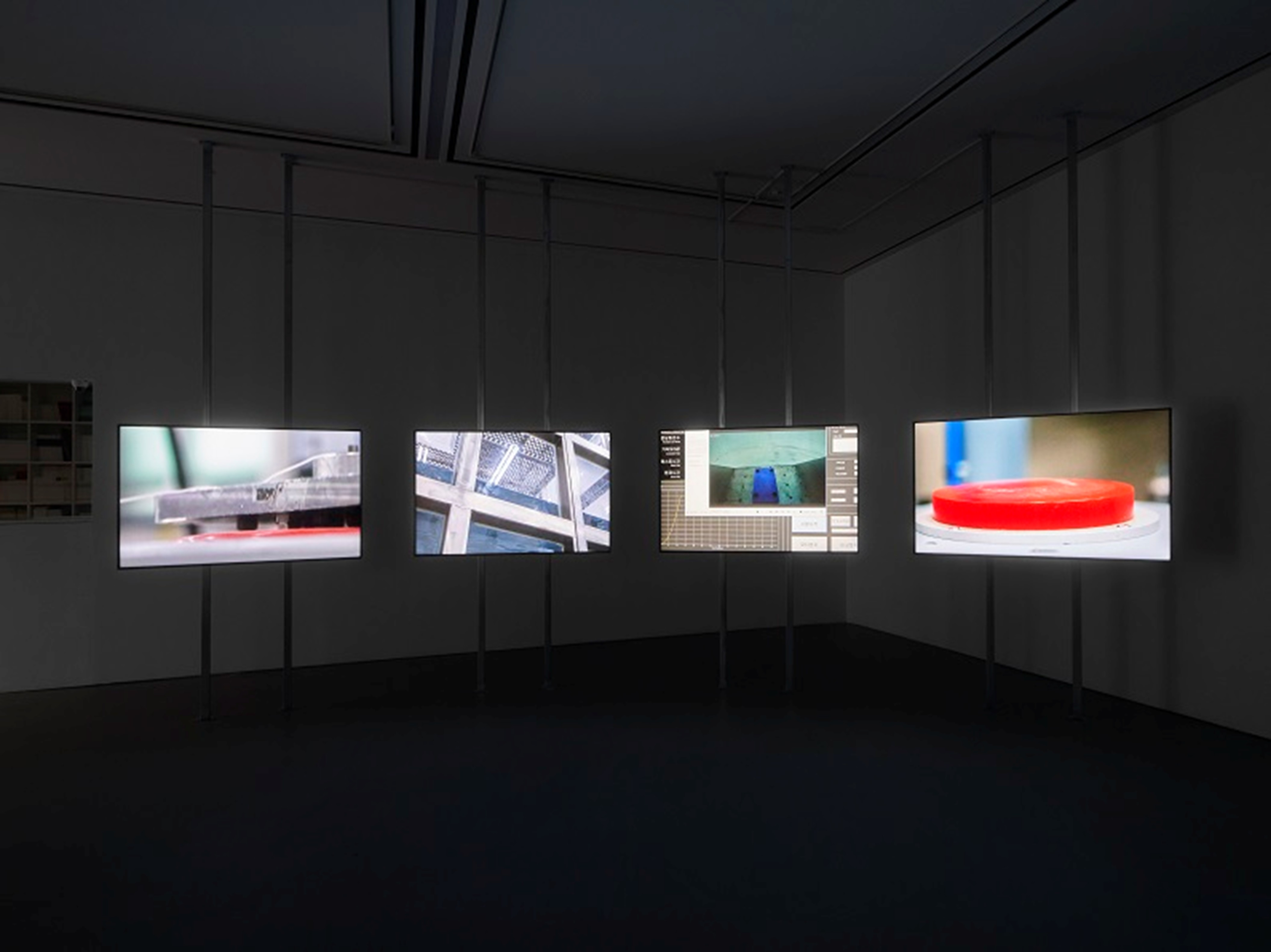
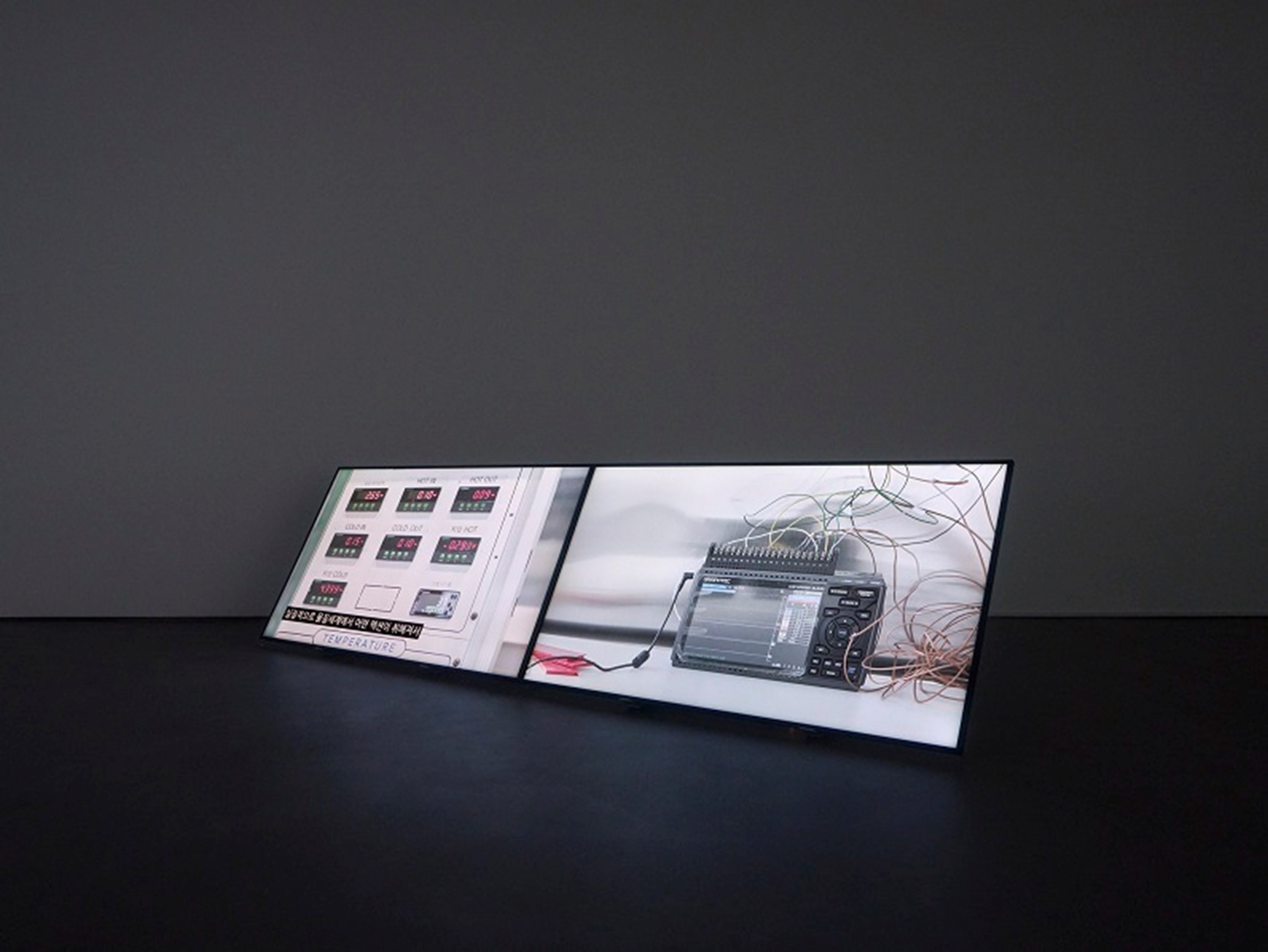
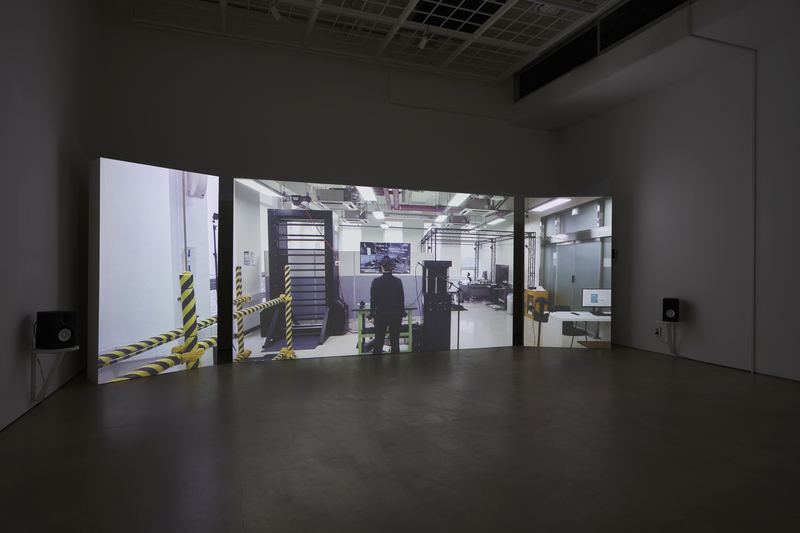
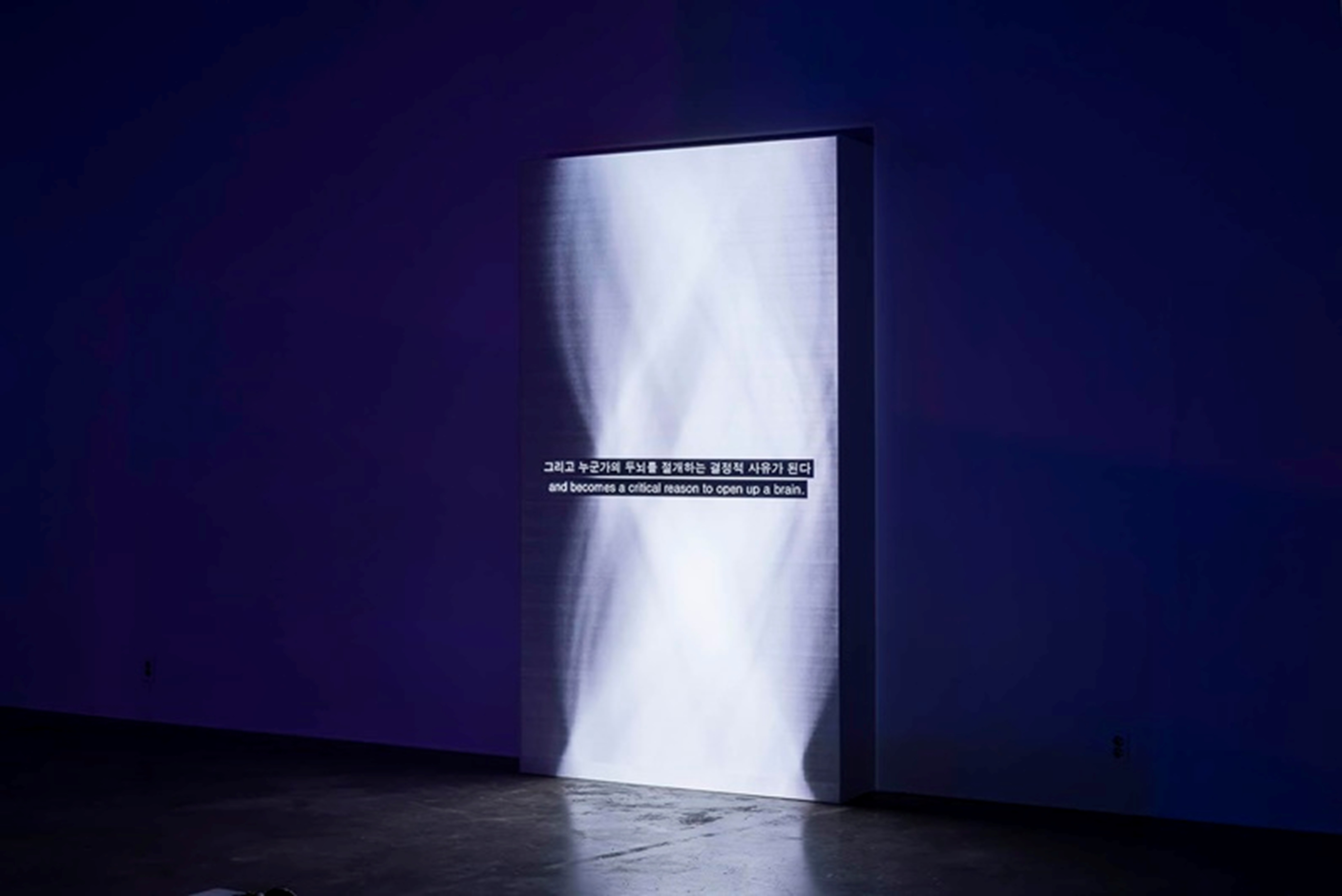
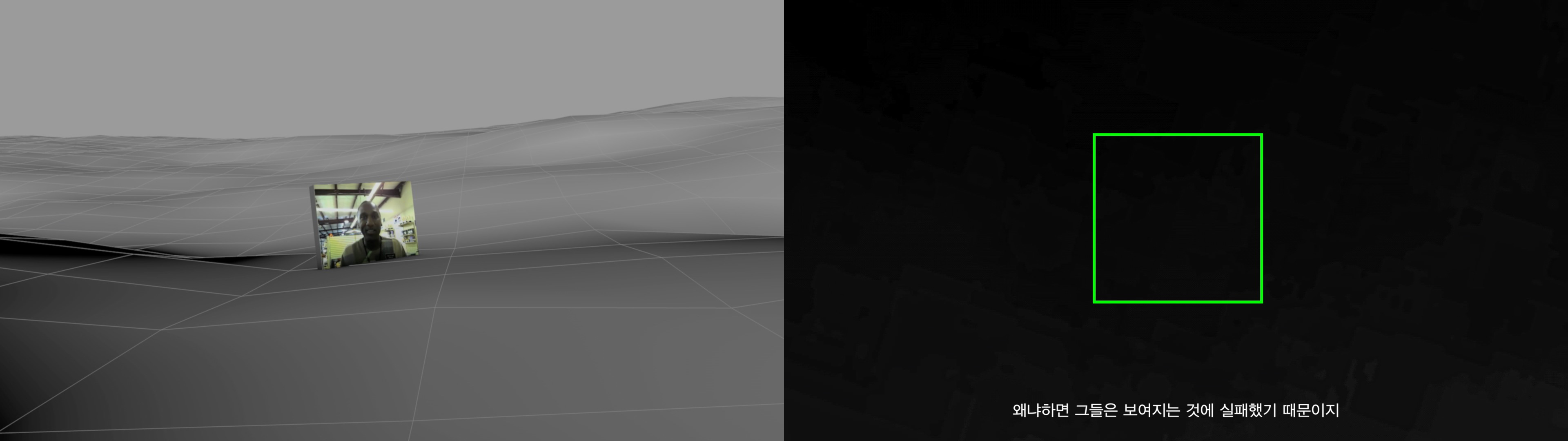
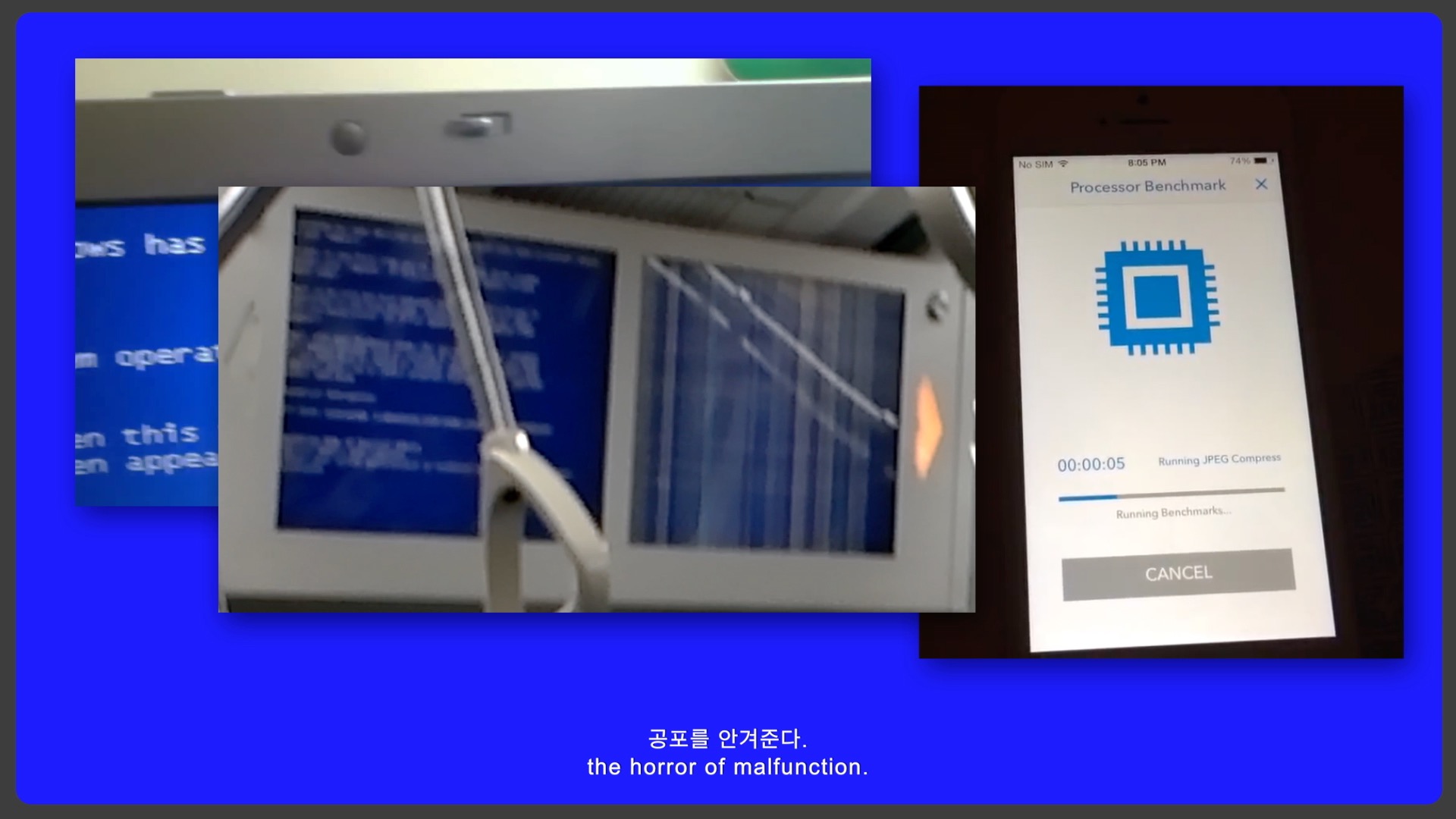
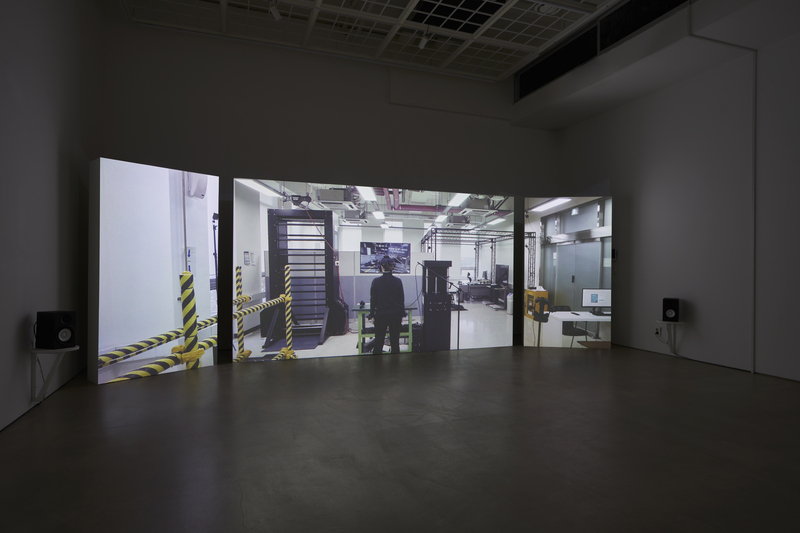
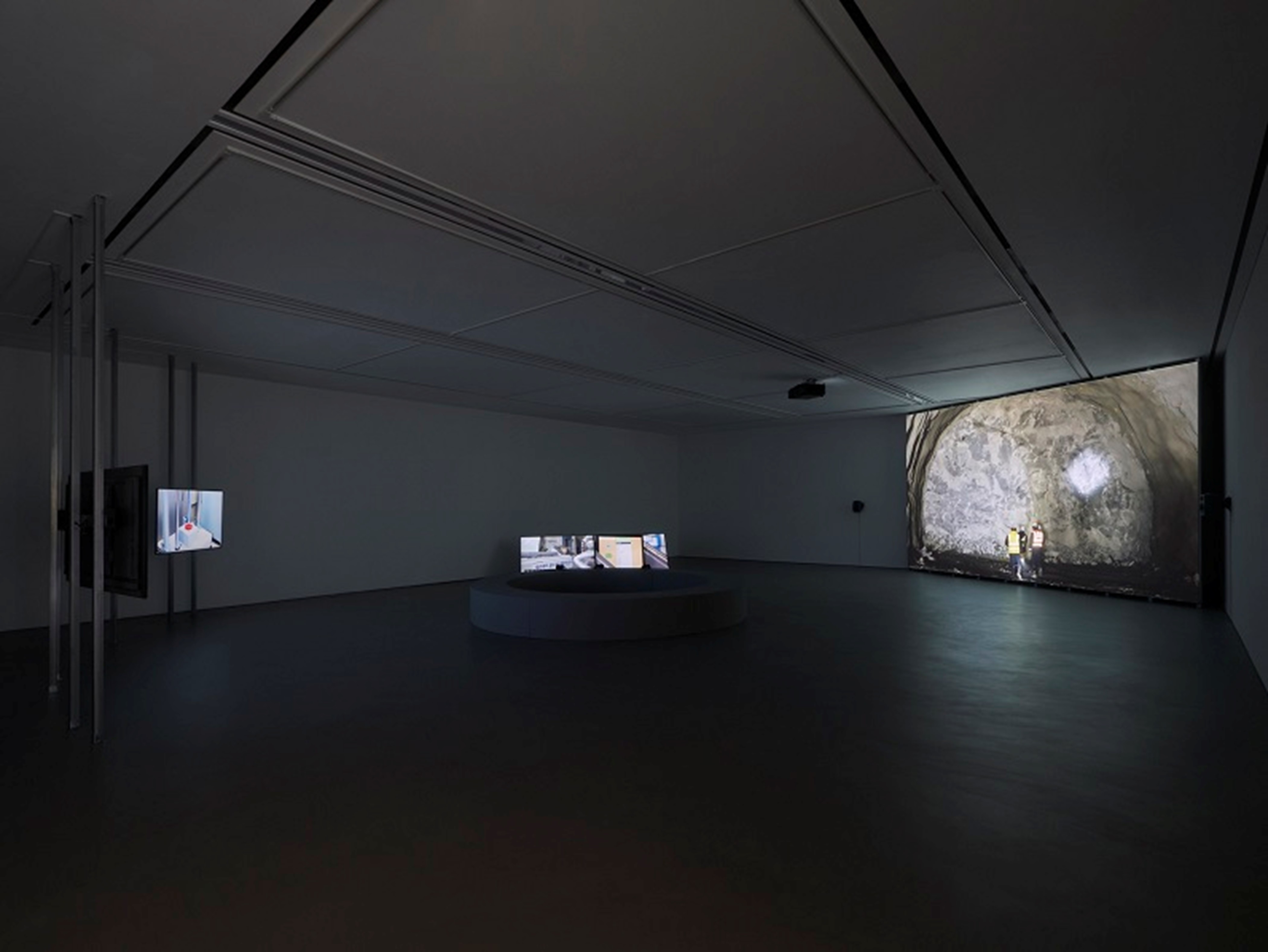
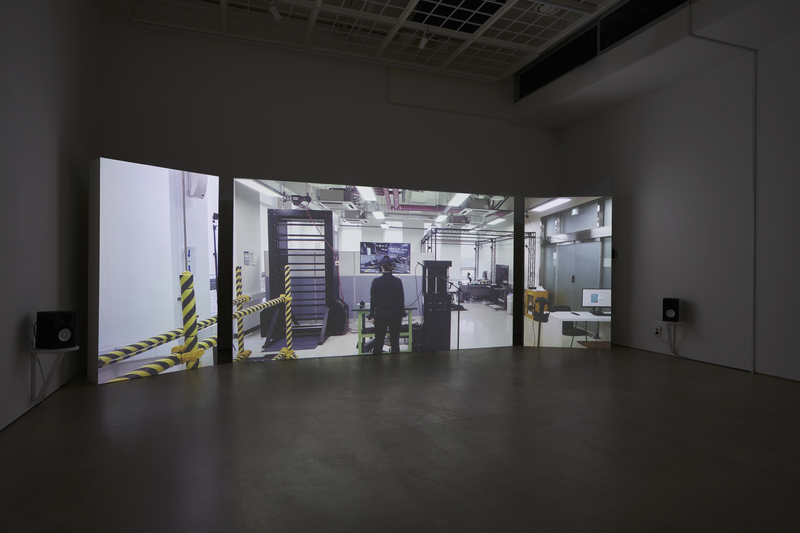
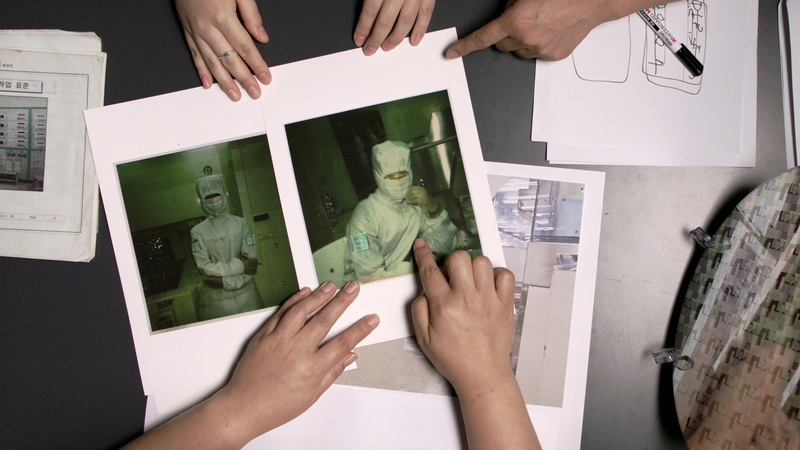
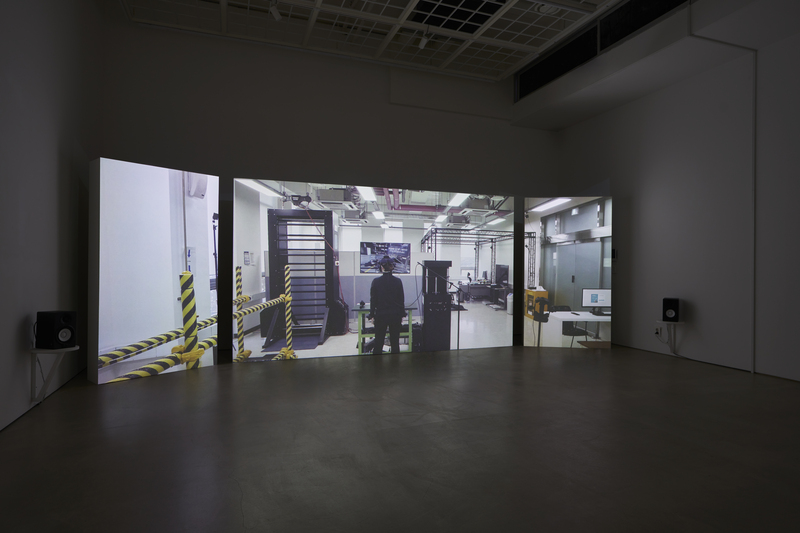
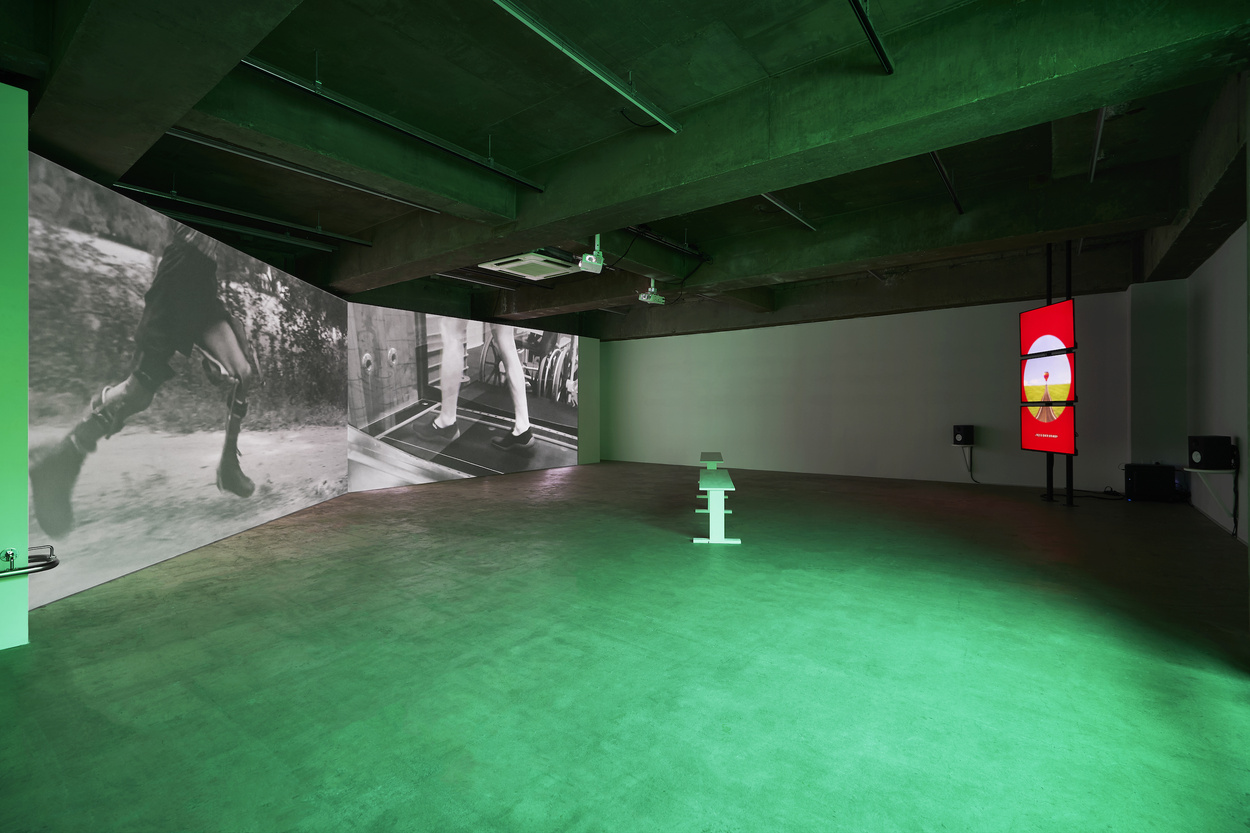
is both a preface and a conclusion for talking about Eunhee Lee's recent work HOT/STUCK/DEAD(2021)
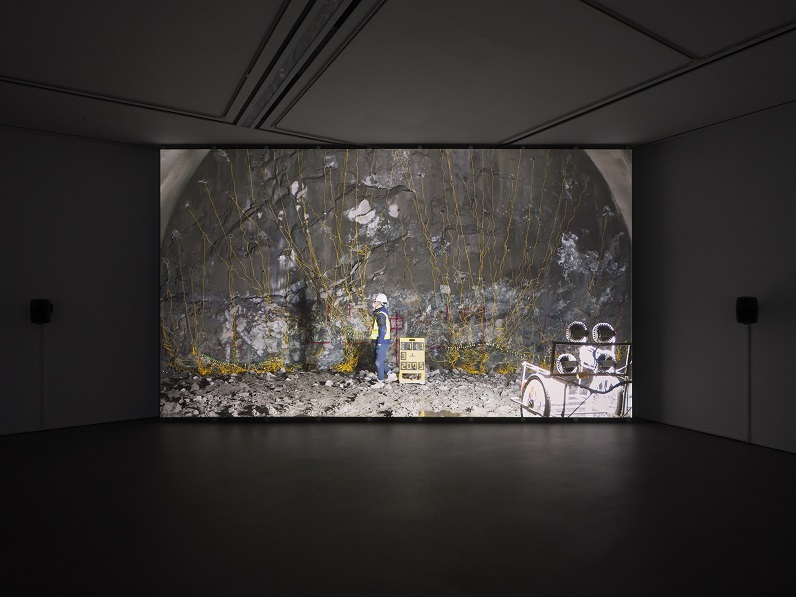
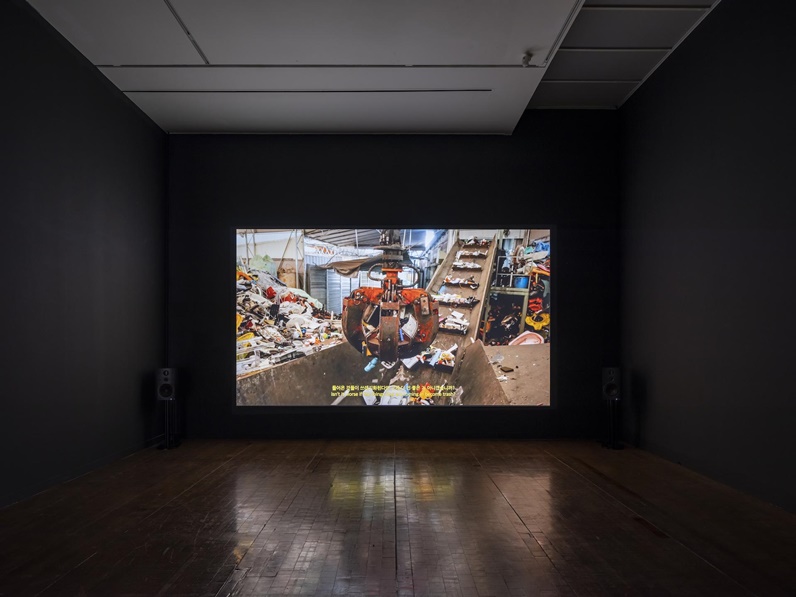
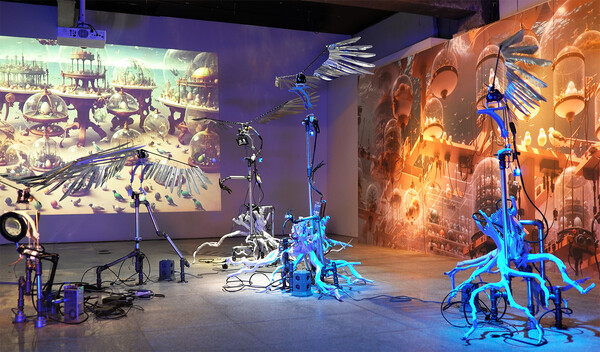
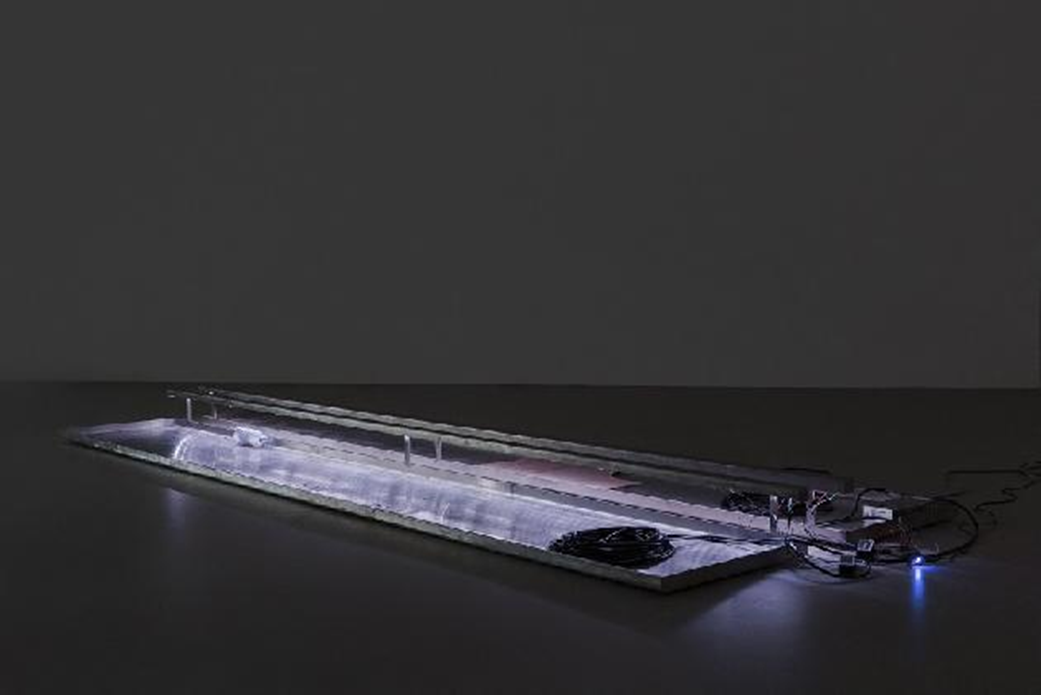
and her latest work Machines Don't Die(2022). In the latter
case, the artist has already stipulated that “machines don't die."
But she
has not said that machines are alive. We don't ordinarily speak of machines as
being alive, but when a machine that has had some problems returns to normal
functioning, we might also speak of it as having "come back to life."
In other words, since a machine is obviously alive–or ought to be–we only
recognize that "life" when it is at the brink of death.
At
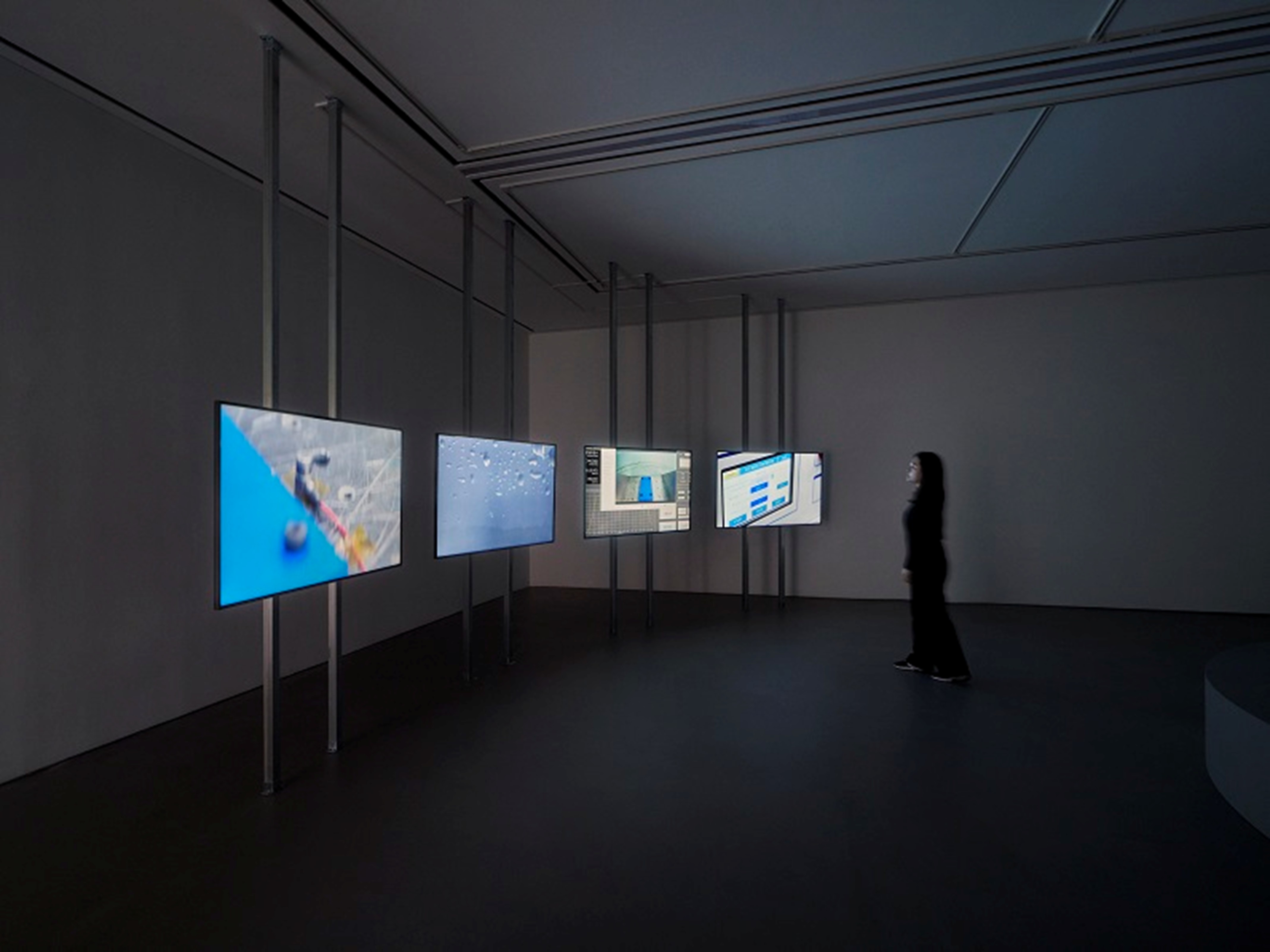
the start of HOT/STUCK/DEAD, the artist/narrator sees a hand
emerging from an electronic display panel on the street one day and is reminded
anew of the self-evident truth that "screens and images [...] must have
been made by a great many hands, [...] by complex hands." This too
resonates with the idea that a machine alerts us to its aliveness when it is
close to death.
The hand that pushes through the electronic display with its
partly dead panels is a defect that inhibits the normal functioning of the
medium/machine, and it is a flaw that explodes the premise of an automated,
autonomous machine. This human/hand, as dual flaw, is defective enough to be
described as a literal defect, yet it can only emerge through the normalization
process of fixing the flaws of a machine that is malfunctioning but not totally
ruined.
Midway through the work, for instance, a hammer wielded by the human
hand emerges as external noise/defect kills off roughly half the screen. The
defective image that pokes through the cracked screen and split surface can
still be mediated normally because the screen/machine continues to function; in
this sense, it indirectly illustrates the normal nature of the medium and the
physical limits and material nature of the medium/machine.
Conversely, the end
of the work shows that when noise fully transcends signals and defects fully
transcend normal functioning, defects no longer appear as defects. As the
screen ruptures, what is revealed is not a (defective) machine that has almost
died but remains "alive"-all that remains is normal debris,
consisting of glass and metal fragments and a fluid that emits an acrid stench.
When
a machine has become a pile of waste, we obviously cannot say that it is not
dead. Yet it seems absurd even to refer to a dead machine as a
"machine." The machines that emerged with the dawn of industrialism
were automated devices created from the outset to maximum production efficiency
and profit. In that sense, they must be kept in an autonomously complete state
for maximum gains; any defects that could inhibit production or bring them to a
halt must be ruled out or subsumed.
In a word, a machine is only a machine when
it operates ad infinitum–when it does not die. The defects that have to be
ruled out or subsumed for the machine to live on eternally do not just include
things like rust or misalignments on cogwheels. They also include flaws in the
products that the machines give life to, and flaws in the people who gave life
to the machines. This is borne out by the calibration features and screen
savers that nearly all screen-based machines carry to prevent or minimize
display flaws. The defective images they project hold no value in terms of
information or meaning.
Their value lives in preventing or reducing
sickness" for the screen-based machine, and as screen technology
advancements obviate their functional role, they are eliminated, or they end up
having to prove their worth through their entertainment role (the most
"useless" of all). Moreover, the first defects to be ruled out are
the passivity, inefficiency, and instability associated with the human beings
who create the machines. The human being and human labor can only be subsumed
when they are transformed into part of the machinery, an ancillary process in
the machine's function, or a mechanistic presence in their own right (laboring
"like machines" or transcending "normal" humanity through
the additional of mechanical elements).
For instance, if the panels on the LED
display were all dead, the human hand that the narrator encounters could not
have been able to tear through the image and screen. As a result, there would
have been no moment of recognition through the rupturing of the
"reality" of machinery, as represented by the "complex
hands." Had it remained simply scraps of metal rather than a machine that
had only partially died out, all that would be shown there is the image of
people working to dispose of it, or simply working, without it being mediated
in terms of any value or meaning. (Or, more likely, it would not be shown at
all, covered up by screens like most of the production and disposal processes
in the city.)
The
partial death of the screen/machine and the resulting awareness of the
machine's life leads automatically into an exploration of ways of reviving the
screen. Amid this examination of the screen's material and physical composition
and principles for the sake of its restoration, the liquid crystal of the
screen takes on the essential quality of a "topological defect structure,”
and it emerges that all screen/machines have a sort of functional shelf life,
where their luminance necessarily degrades over time. This seems to demonstrate
how all screen/machines are intrinsically flawed and bound for death.
But just
as the normal operating mechanism of the screen involves applying stimuli to
disordered liquid crystal substances to arrange them in the intended sequence
to project an image, the machine operates by overcoming or appropriating its
own death. The only time the blackness of death is granted to the screen is
when it should not be displaying any image. In the same way, the death of the
machine is granted when it becomes more efficient to replace it with a more
normal machine; as the repair worker says, “‘Repairing' a screen is a
lie." Obviously, this means the death of one machine, but it raises the
immediate need for another living machine.
In that sense, it leads to the
propagation of machines and the maximization of overall profit through
machinery. This shares echoes with the various events where the companies and
developers working on the front lines of cutting-edge digital machinery
production unhesitatingly share examples of technical defects and failures
rather than attempting to conceal them. In machinery and the machinery-based
society (a world used more or less equivalently to "economy"), things
like errors, failures, defects, and valuelessness are simply incorporated into
the process toward creating more normality, more value, and more profit; they
are not confined simply to the realm of death.
In
the end, the machine cannot die. Machines Don't Die depicts
the process of machinery's revival and rebirth–fated never to die as the
components of discarded devices are reduced to the purest minerals/goods. In a
similar way to defective substances that were never before treated as minerals,
only for their value to be discovered later as rare earth elements, the waste
machines that people once had to pay money to dispose of now negate their own
deaths as they are finely ground and burned to cough up the rare earth elements
concentrated within them.
The defects that are incinerated here include not
only the uselessness of the waste machine, but also the consumption of profits
in the form of wasted time. It is more efficient in terms of time–and by extension
profit–to repurpose the concentrated minerals present as available resources in
machine products than it would be to extract and process new minerals for use
in products.
Urban mining, which has the aim of achieving "zero
waste," succeeds in cleanly condensing the long process leading from
resource extraction to machine production-and thus in flattening the volume of
the biggest defects in capitalism, namely the waste of time and profit. Here,
there is no such thing as death or a dead machine.
But like the repeated
pushing and pulling of a timeline bar in a production process, like an endless
loop playing on fast forward, the machine is trapped in an eternally undead
state, forever alternating between its form as broken waste and its form as
something separated into different components just before production.
As
the pompous pronouncements of "making everything into resources"
suggest, the immortality of machinery based on the acceleration of time and
revival must have the ability to resuscitate all the defects of the capitalist
society in the form of profit. This is borne out by the urban mining process of
re-resourcification, where the defects among the defects and waste among the
waste must still be winnowed out, left as plastic machine parts condemned to
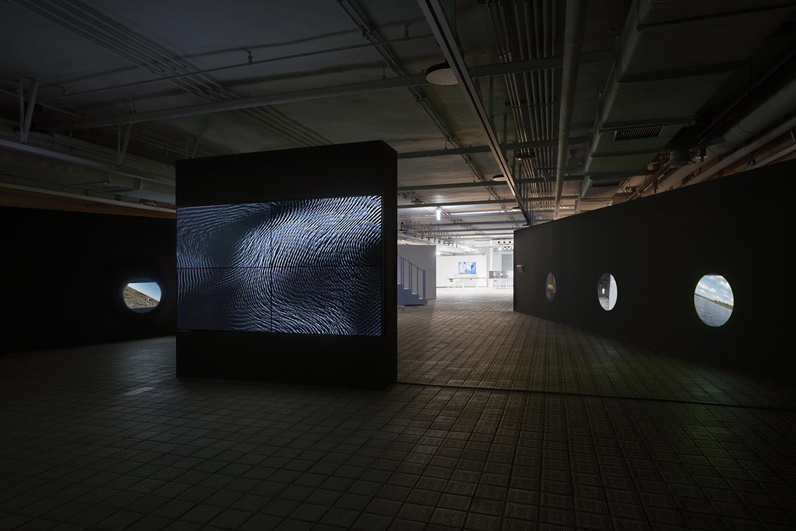
burn up in black smoke. In Machines Don't Die, images of machine waste from
which any remaining has once again been extracted are interspersed with images
of stalactites, products of the accretion of countless years on Earth.
The
images of two seemingly opposing objects, the most artificial products and the products
of nature itself, intermingle as the typical outward manifestations of
datamoshing that arise through the feedback and recycling of digital
images–condensed as codecs for easy use and fast processing of large amounts of
data– into another process of condensed encoding. The "flawless"
world of analog and digital machines is constructed through the availability of
the Earth's condensed time with its accretion of organic and inorganic deaths,
compressed in accelerating ways.
As it endlessly sends its own defects into an
automated feedback loop of profit-making, it produces fatal external glitches.
As this global system of profit feedback revolves ever faster–bringing even
death back to life–irreversible degrees of randomness shorten humankind's
remaining time at breathtaking speeds.
The
conclusion that Eunhee Lee is attempting to ultimately achieve in her work is
not some final judgment, where she is saying that because machines do not die,
humans do not die either, so that human beings and machines alike will soon
meet their deaths. Just as the defective images on the screen are products of
mediation by a screen that is not yet fully dead, the terror caused by global
defects and a contemporary apocalypse is another "defect" that allows
us to see the shackles of capitalist profit generation, which has not yet fully
collapsed either.
The fear of death evokes a longing for endless life. The
tired desire for immortality has merely been replaced by the tireless drive for
more living things, more new life, and by the eternal adage "live
today" that (we are deluded into believing) will be achieved through this.
"Malfunction and failure are not signs of improper production," it
has been argued. "On the contrary, they indicate the active production of
the ‘accidental potential' in any product." 1
The defect of undying driven
by machinery/capitalism and the defects caused by our attempts not to leave
behind any flaws may have the potential for value and meaning at an unintended
level beyond profit and goods. In the past, Eunhee Lee's art visualized the
defects of "normal things" maintaining their position of
"non-defects" by means of obvious defects. Now we look forward to her
future explorations. As Paul Virilio and Sylvère Lotringer said, "Failure
is failure," and "Failure is an accident." 2
1
Rosa Menkman, The glitch moment (um) (Amsterdam: Institute of Network Cultures,
2011) 26
2
Sylvère Lotringer; Paul Virilio, The Accident of Art (Los Angeles:
Semiotext(e), 2005) 63.