The
constraints of the system called the “contemporary,” which constantly demands
renewal, are also applied to art, driving repeated transformations through
frameworks such as expansion, deconstruction, recontextualization, and
post-genre practices. Texts seemingly trapped within fixed “wordings” such as
“new generation,” “post-sculpture/painting,” or “aspects of contemporary art”
often resemble trend reports in fashion magazines or the entertainment
industry’s incessant introductions of newly debuted idols.
Within this climate,
where a generation has become accustomed to presenting itself as a kind of
multi-player—either by choice or necessity—Kwon Osang and Haneyl Choi do not
hesitate to introduce themselves as “sculptors,” and through their respective methodologies,
they explore new trajectories for sculpture as a medium.
Since
the moment when concerns about the expansion of sculpture and the meaning of
“sculpture” itself began to grow somewhat ambiguous,¹ the fate of sculpture has
been continuously swayed. Today, the term “installation” is used
frequently—sometimes indiscriminately—provoking renewed debates about the norms
of traditional sculpture.
Even artists who work through sculpture are divided
between those who introduce themselves as sculptors and those who do not,
making one’s attitude toward self-positioning increasingly significant.
Moreover, perspectives on sculpture have migrated into flat screens, extending
discussions to sculpture within virtual reality. At a time when sensitivity to
the boundary between online and offline has dulled, experiences of sculpture
encountered in immaterial worlds must also be reconsidered.
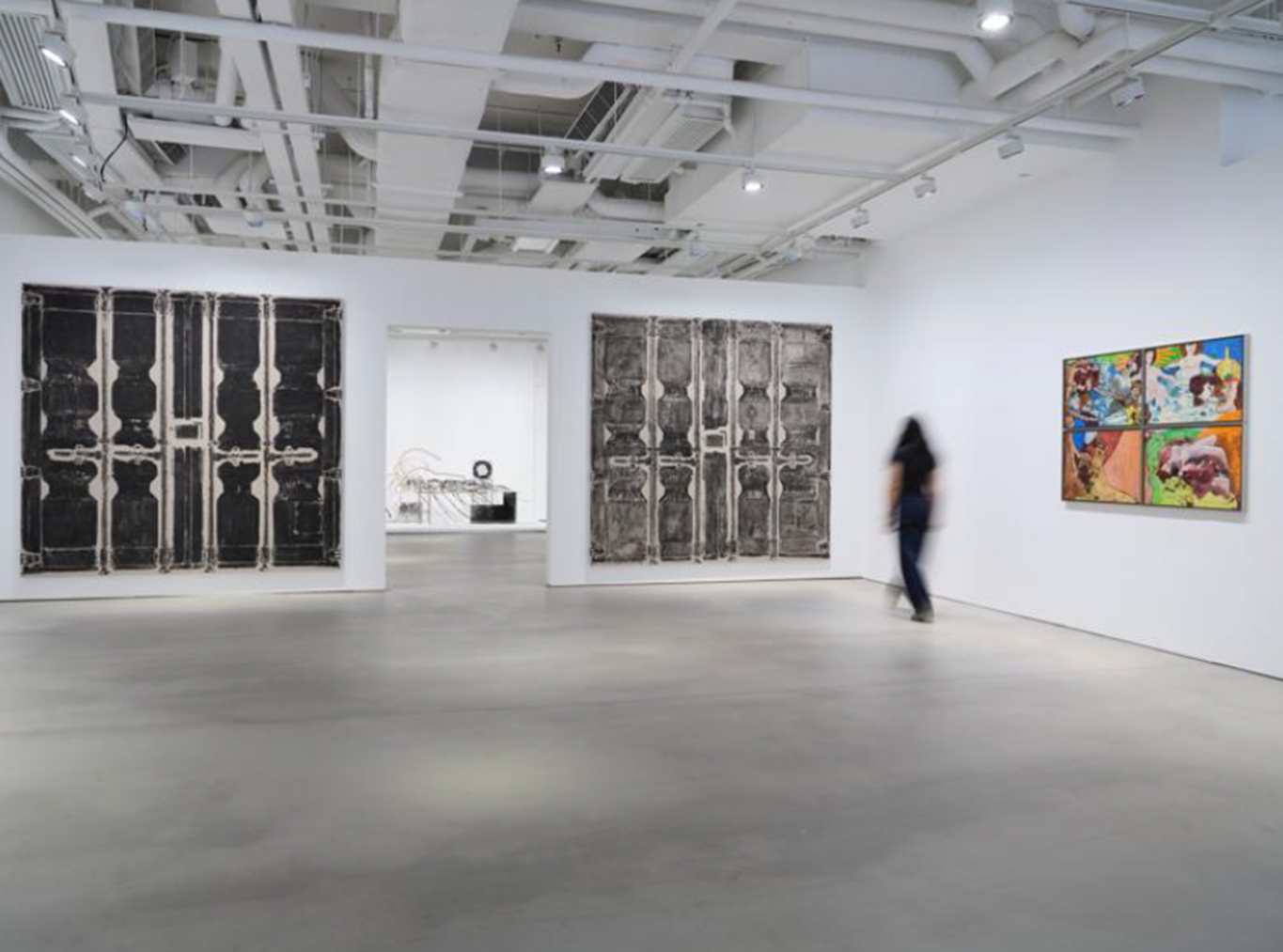
《The Other Self》 likewise examines the
identity of sculpture within the foundation of contemporary art, where
fundamental debates surrounding the medium have accumulated. While Kwon Osang
rejects conventional sculptural methodologies and adopts everyday elements and
materials as his own sculptural language, Haneyl Choi leads new currents in
contemporary sculpture through the reference and reactivation of tradition. By
sharing the exhibition space, the two artists present sculptures as outcomes
(or processes) born of mutual exchange and reference between their
long-developed methodologies, revealing a medium-specific reflection on the
origins of sculpture.
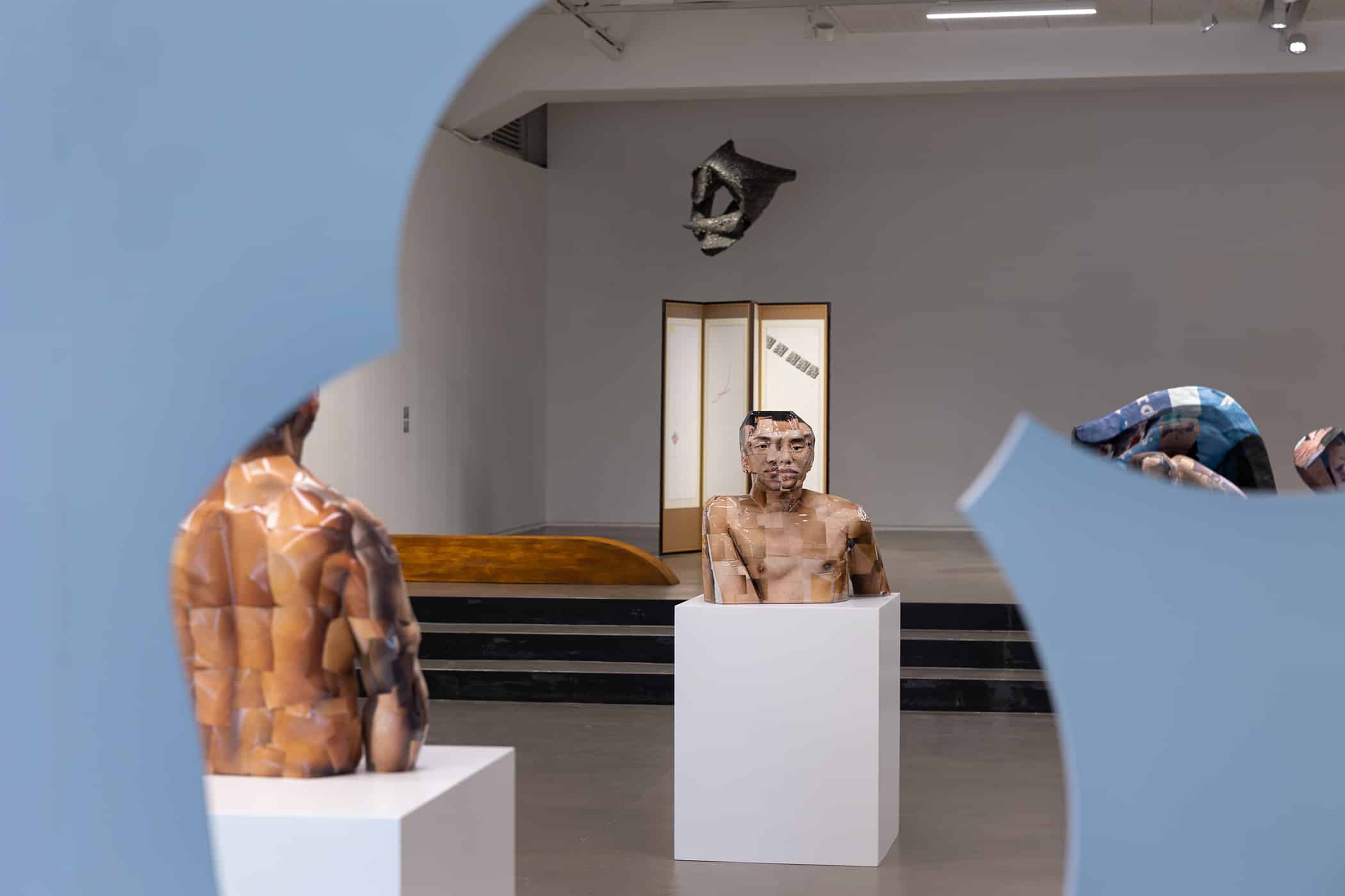
In
this exhibition, Kwon Osang adopts Haneyl Choi’s sculptures as supports,
reapproaching traditionally defined sculptural concepts from a new angle.
Haneyl Choi, in turn, places side by side 3D-printed works produced through
reference to Kwon Osang’s practice, while also exploring the material
properties of hollow, surface-only sculptures found in Kwon’s early ‘Deodorant
Type’ works.
Additionally, by attaching QR codes—the language of machines—to
sculptural surfaces perceived three-dimensionally by the human eye, and
mediating the experience through a separate object (the smartphone), Choi
invites viewers to encounter sculpture via mobile scanning, thereby probing
sculpture’s material domain through immaterial forms.
In
an era overflowing with new materials and technologies in response to shifting
demands and currents, artists are constantly required to engage in different
forms of assemblage. In this exhibition, Kwon Osang and Haneyl Choi deeply
investigate and exchange each other’s artistic worlds, encountering a demand to
assemble sculpture at the boundary between material and immaterial.
Their
media-based reflections—assembled in the exhibition space—resemble movements of
assemblage that resist being bound: they assemble at opportune moments, then
disassemble and scatter. Although both “assemblage” (結合) and “binding” (結縛) refer to states in
which separate entities, objects, or relationships are joined through certain
factors, their underlying logics differ fundamentally. Assemblage implies a
temporary union that presupposes the possibility of disassembly, whereas binding
denotes a state of stasis in which subjectivity is lost and escape is
impossible.
For
heavy sculptural bodies, binding is often inevitable. In this sense, the shared
remarks made by both artists in interviews² regarding the weight of sculpture
and the harmful material properties that affect sculptors’ health—and their
resulting search for lighter materials—are noteworthy. Through their pursuit of
lightness, the artists’ works are no longer “fixed” within the exhibition space
but instead appear as “placed.”
The use of lightweight materials that abandon
heavy bodies, hollow sculptural forms derived from each artist’s stance toward
art history, and the mobile scanning method that envelops the exhibition space
within an immaterial environment to generate new sculptural experiences—these
are the methodologies of Kwon Osang and Haneyl Choi. This essay examines their
infinitely light sculptural “-ic”³ movements through three interrelated flows.
Even
when sculpture possesses physically light properties, an assemblage devoid of
any perceptible movement ultimately becomes bound. In this regard, Kwon Osang’s
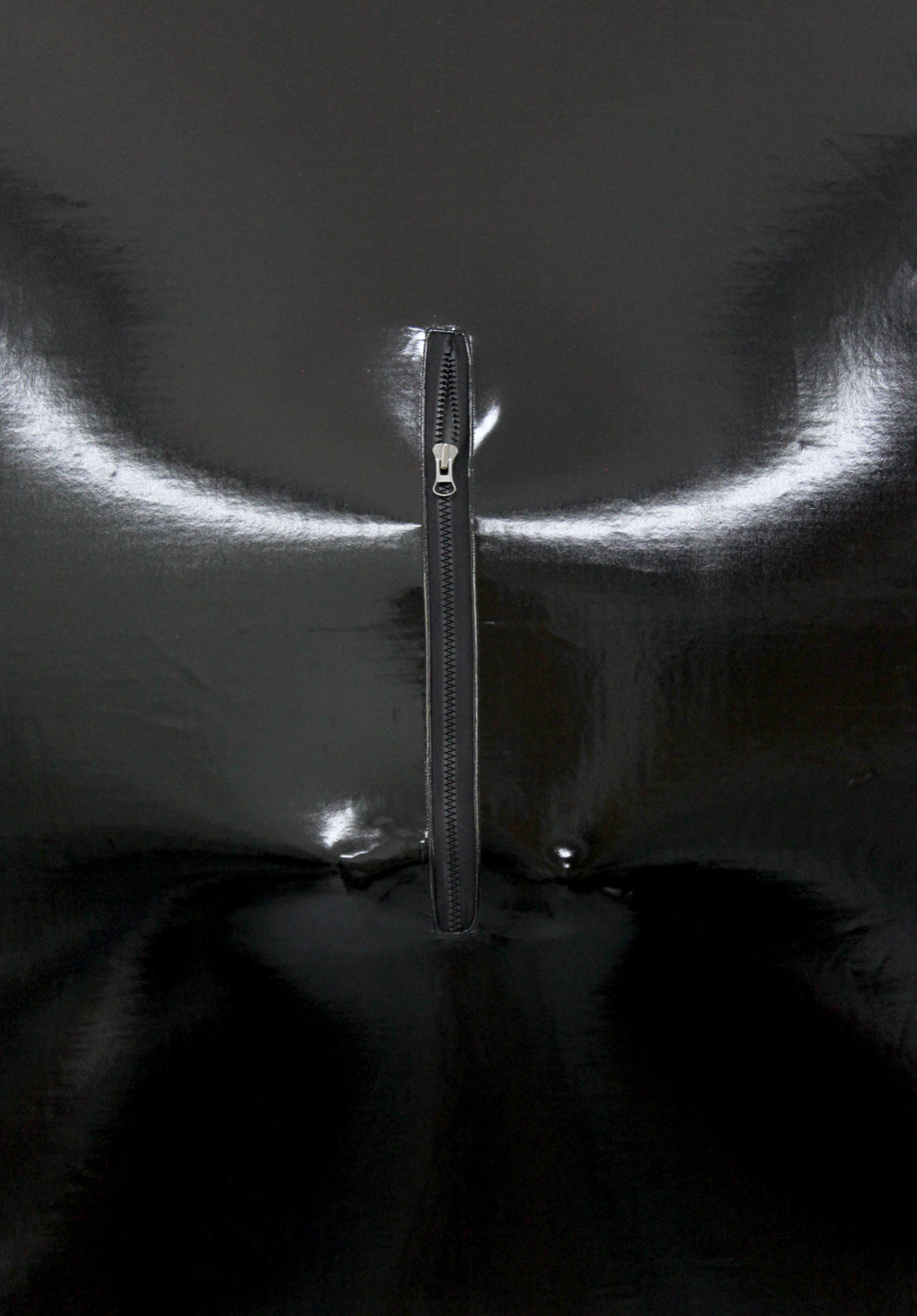
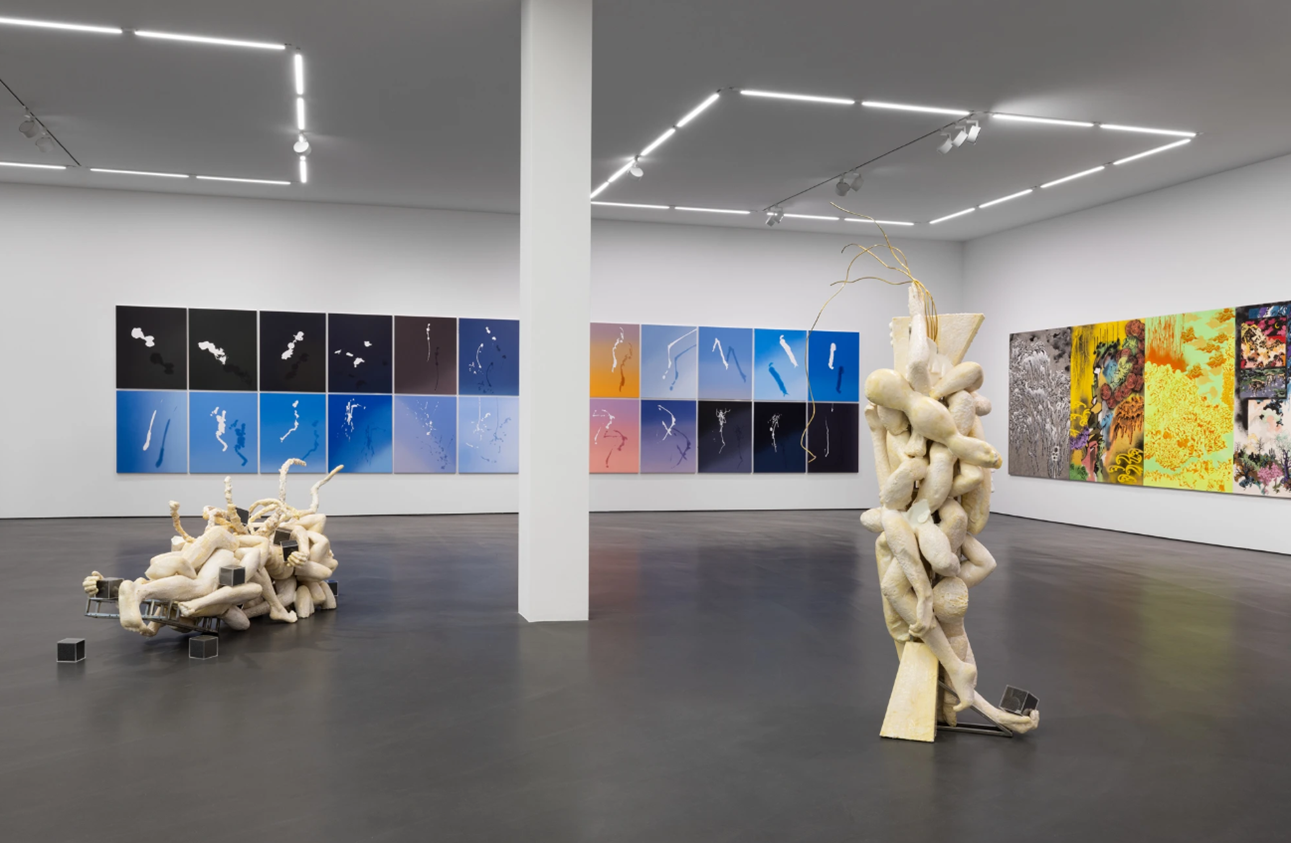
The Three Shades–Wrinkles(2022) and Haneyl Choi’s Old?(2022)
evade binding by operating through their own sculptural “-ic” movements within
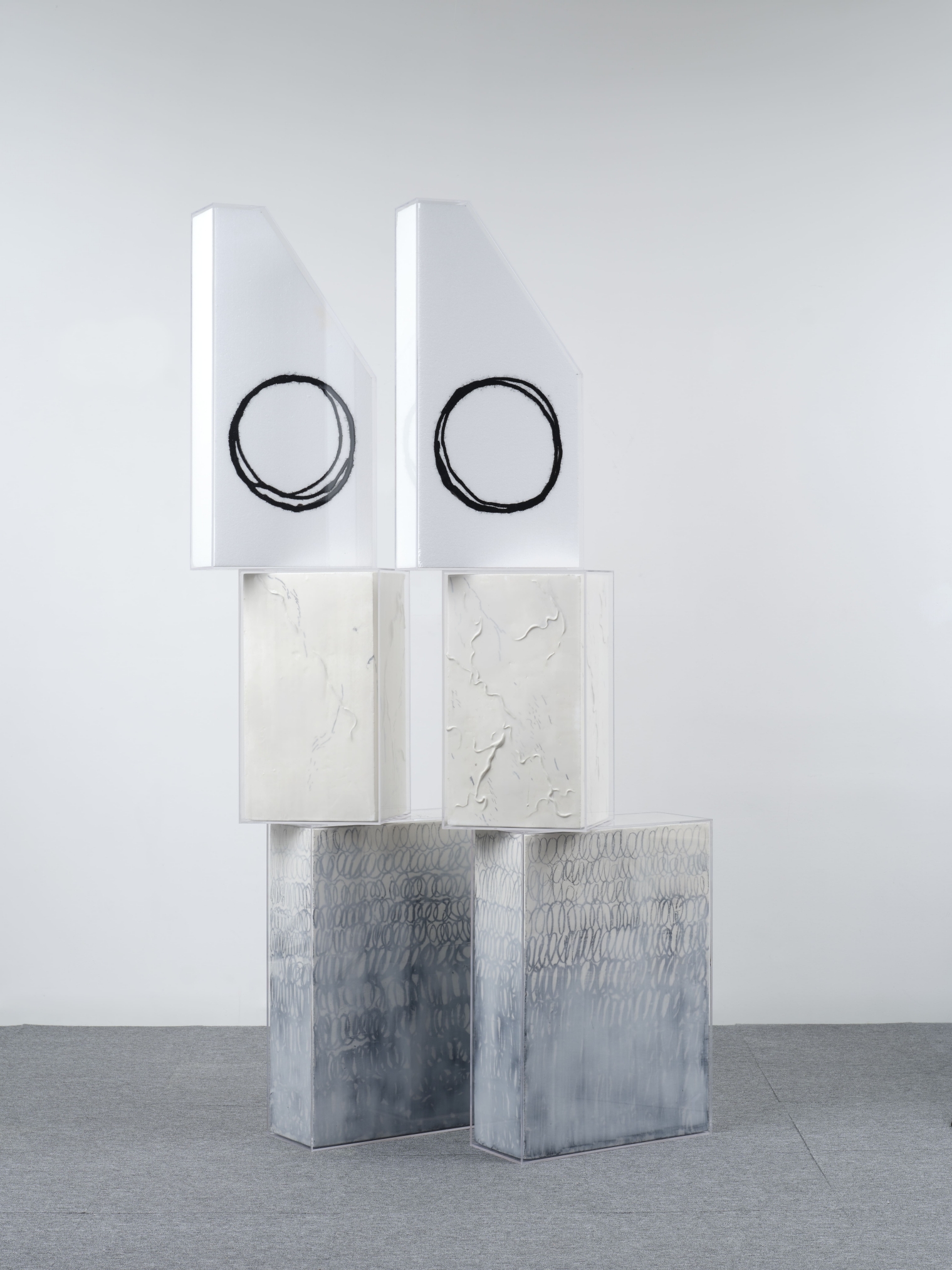
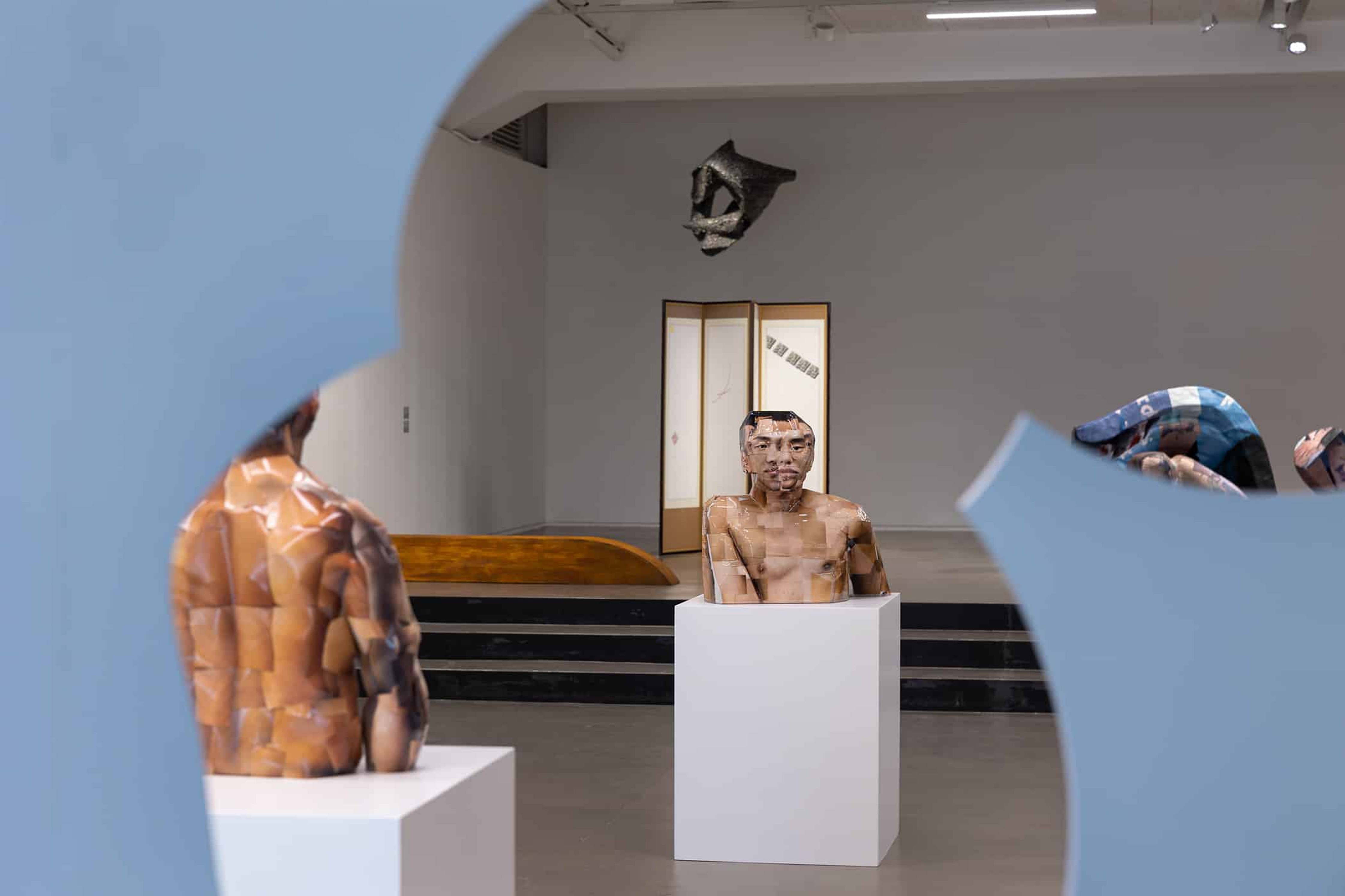
the exhibition. In 〈The Three
Shades〉, Kwon employs flat photographic images, yet the
wrinkles of sphynx cat skin render the photographs as undulating images,
producing an optical illusion of surface depth.
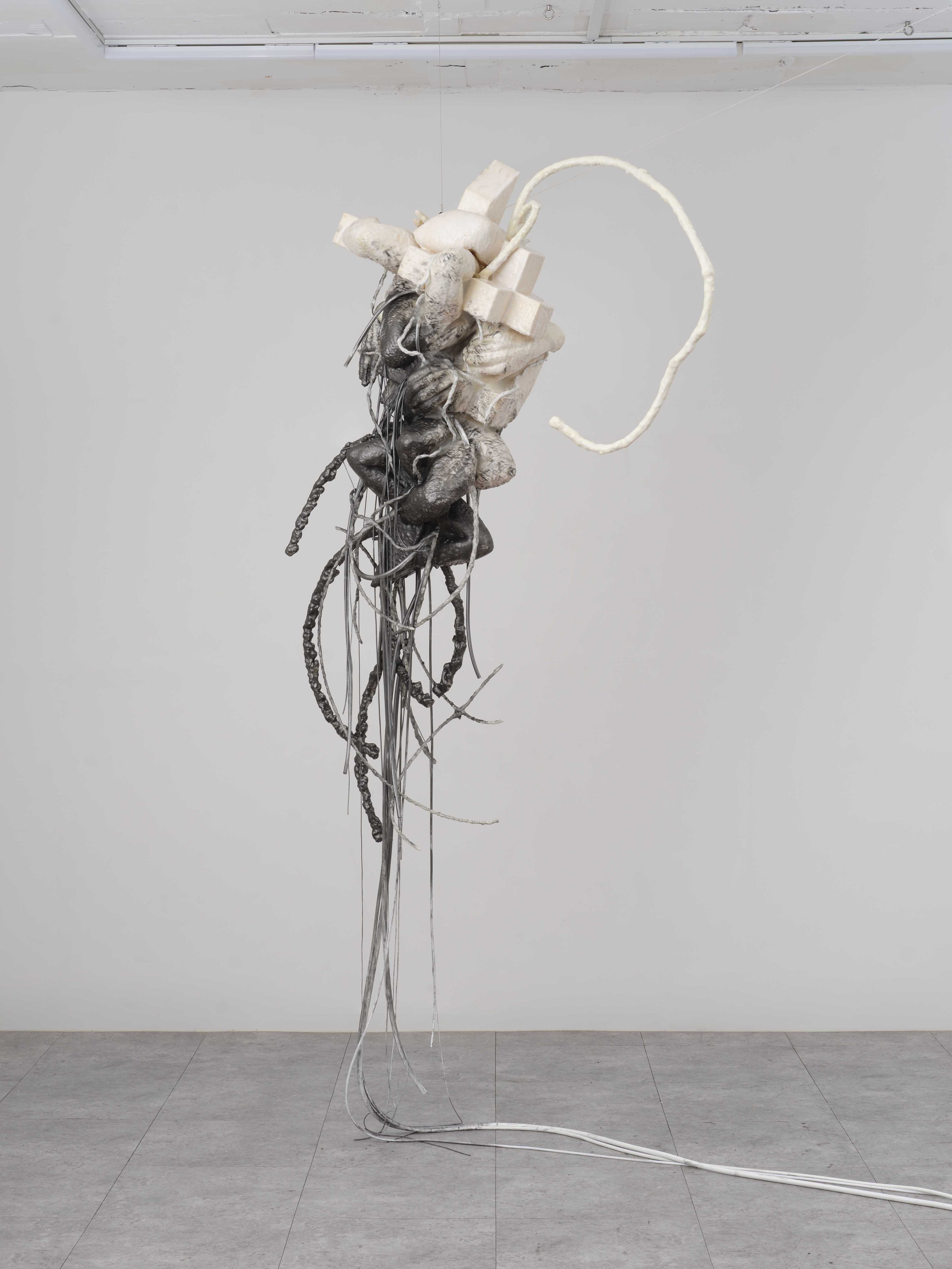
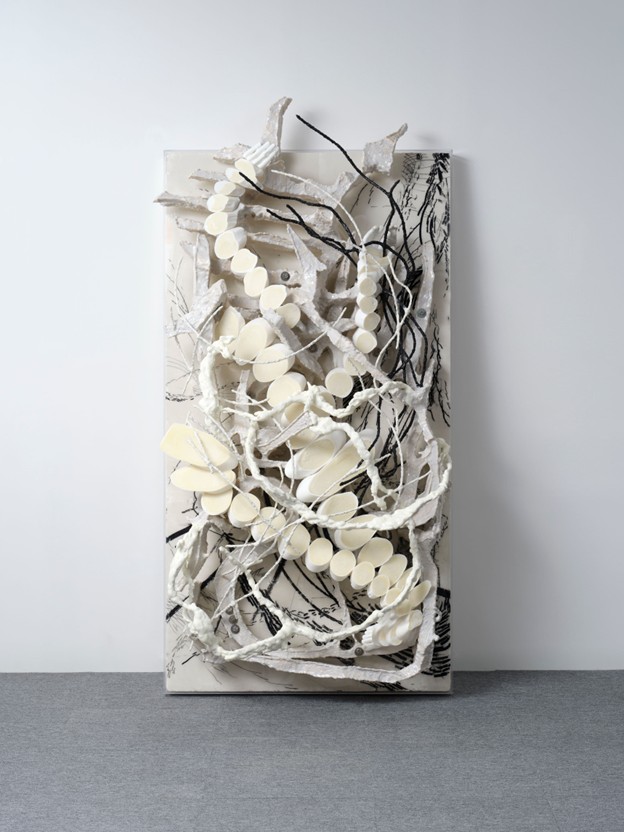
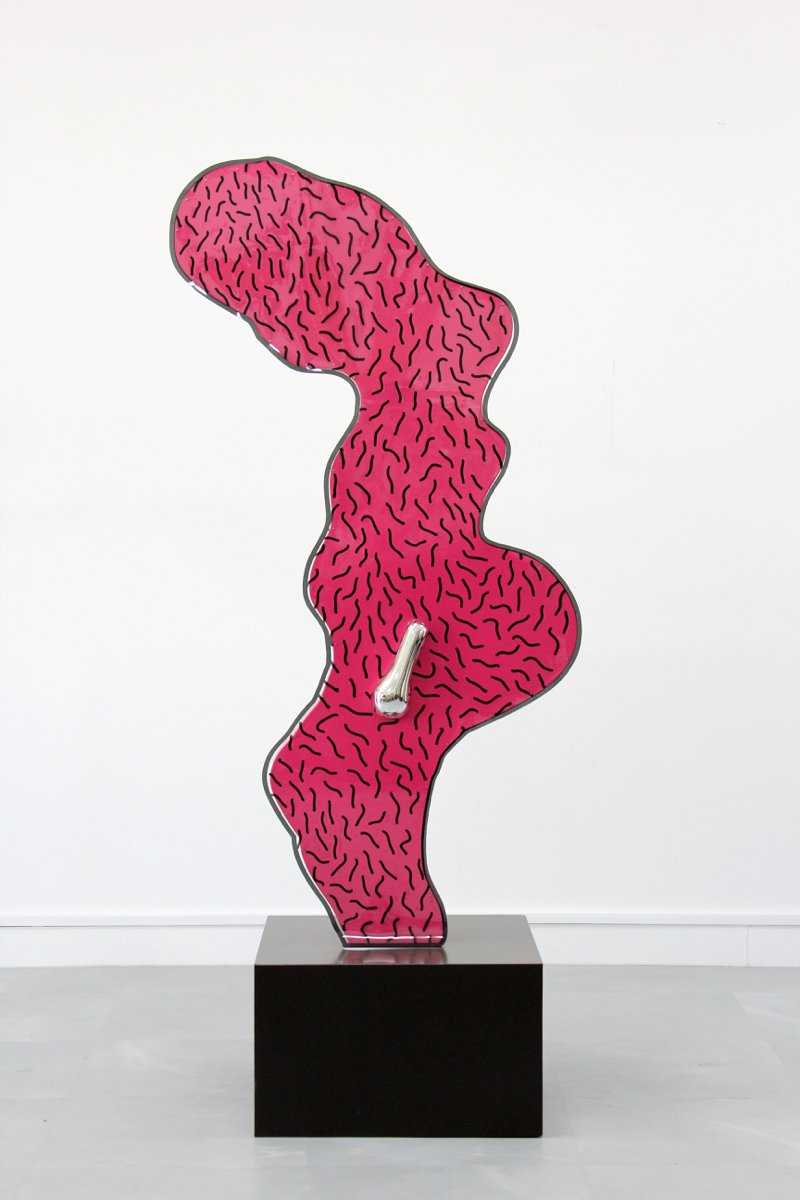
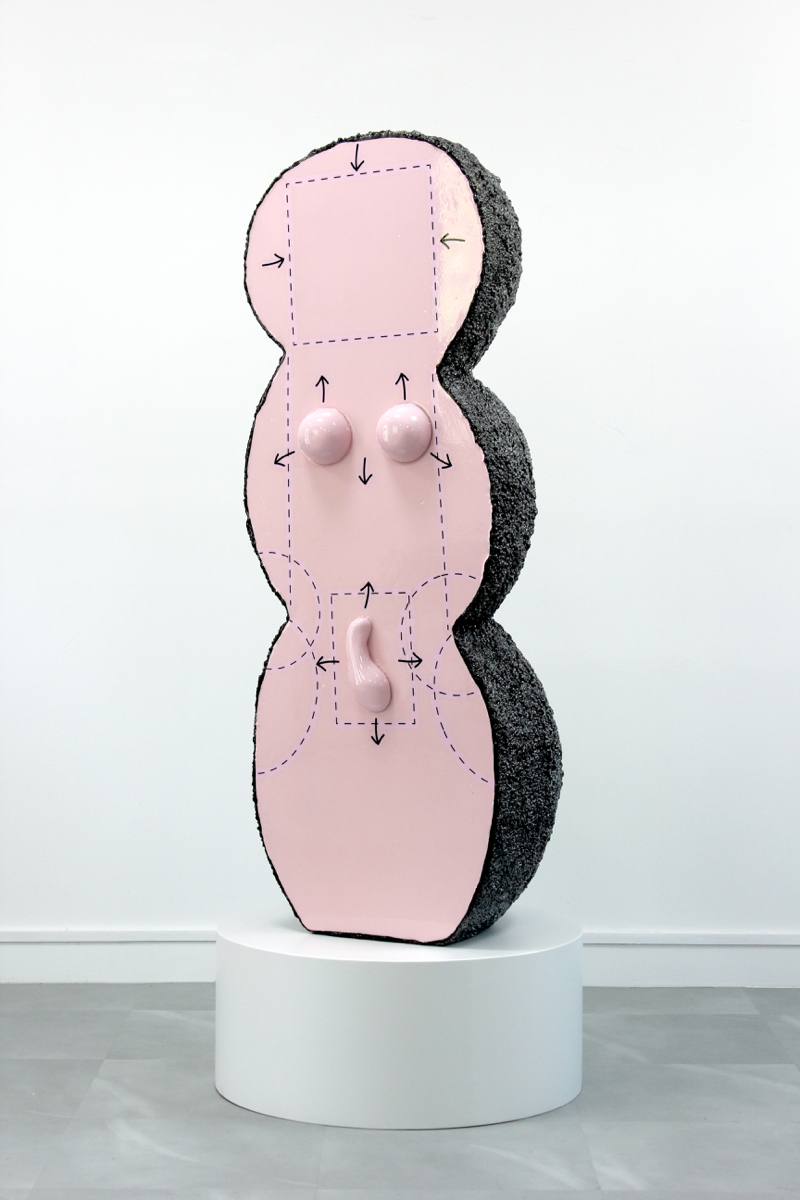
Haneyl Choi’s Old?,
which bears a formal resemblance to The Three Shades,
appears as a heavily weighted sculpture due to its corroded iron-like texture,
but is in fact a lightweight work made from 3D printing or Styrofoam. While
Kwon generates illusion through the volumetric effect of flat images rather
than sculpture’s inherent three-dimensionality, Choi disrupts the viewer’s
perceptual cognition through sculptural techniques that induce misrecognition
of material properties.
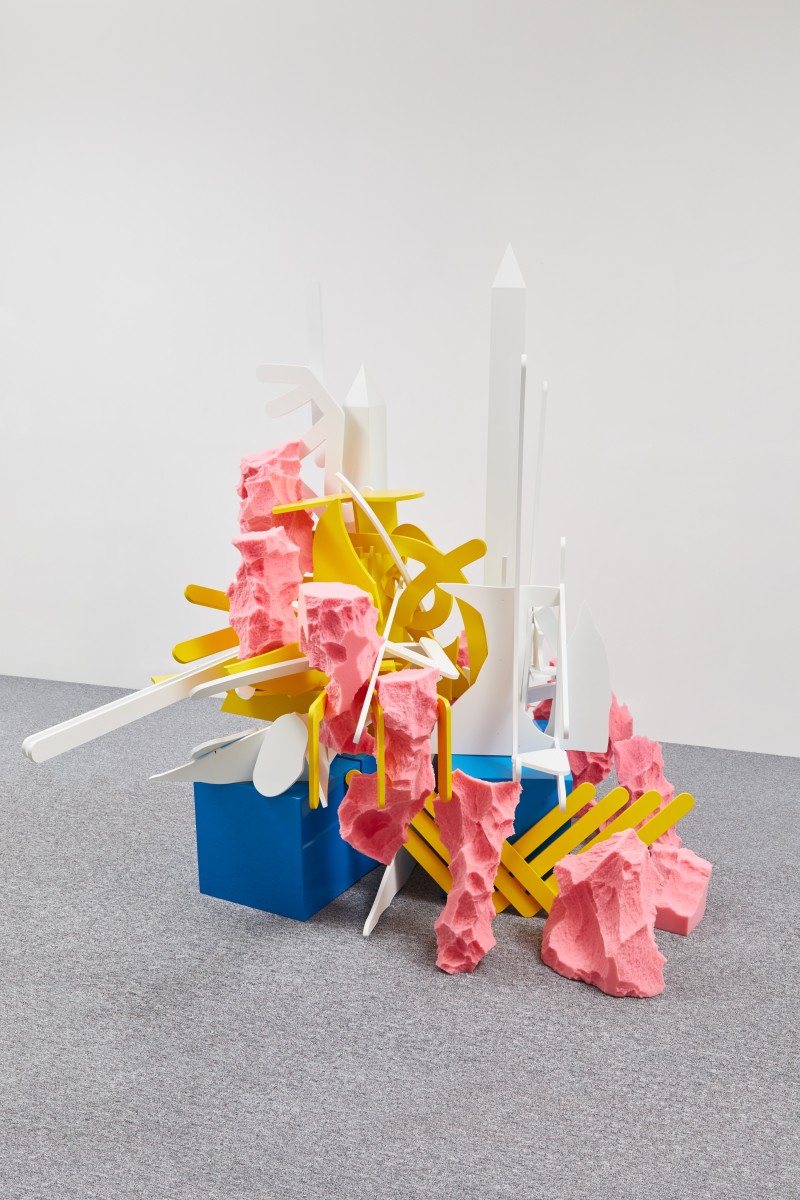
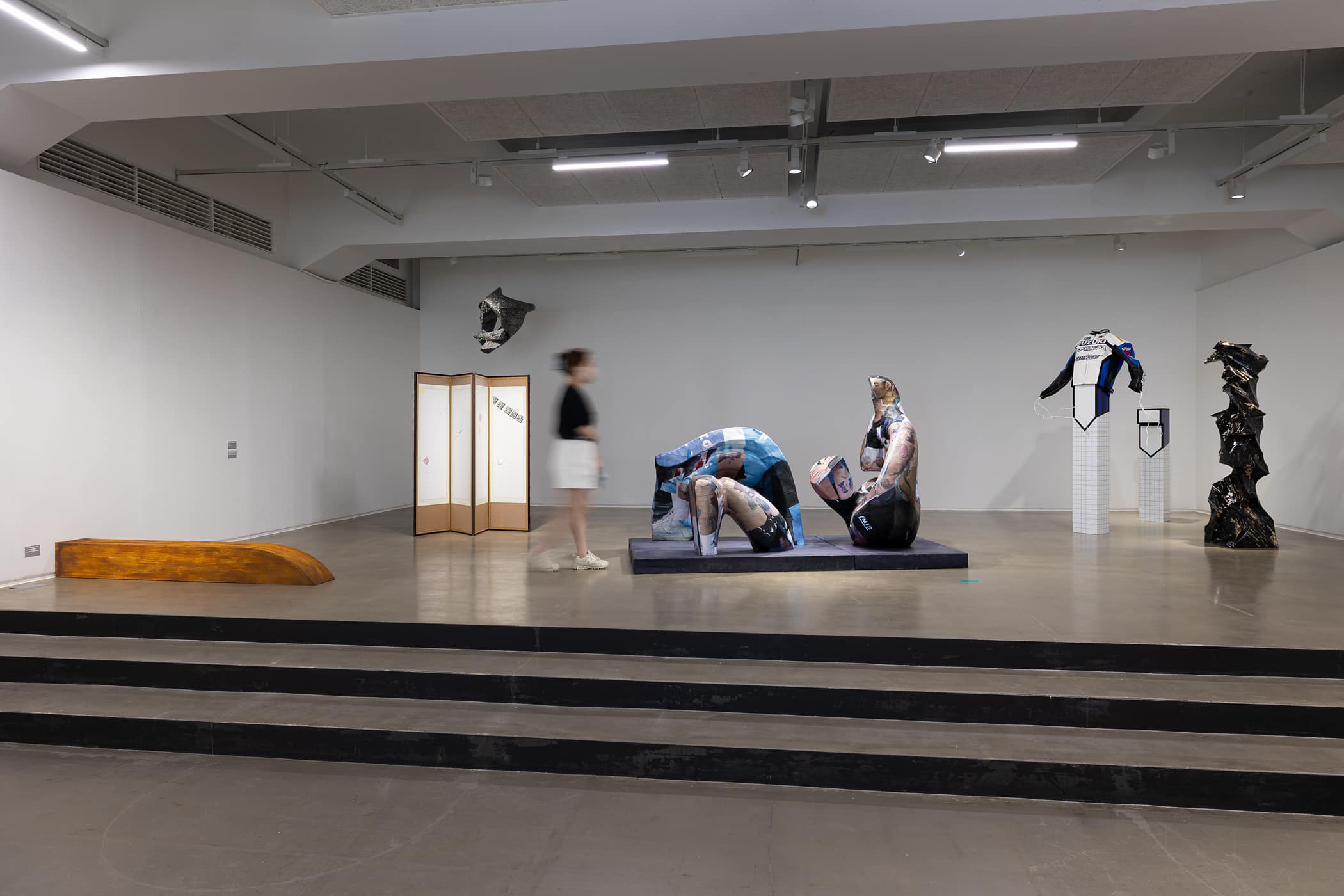
The
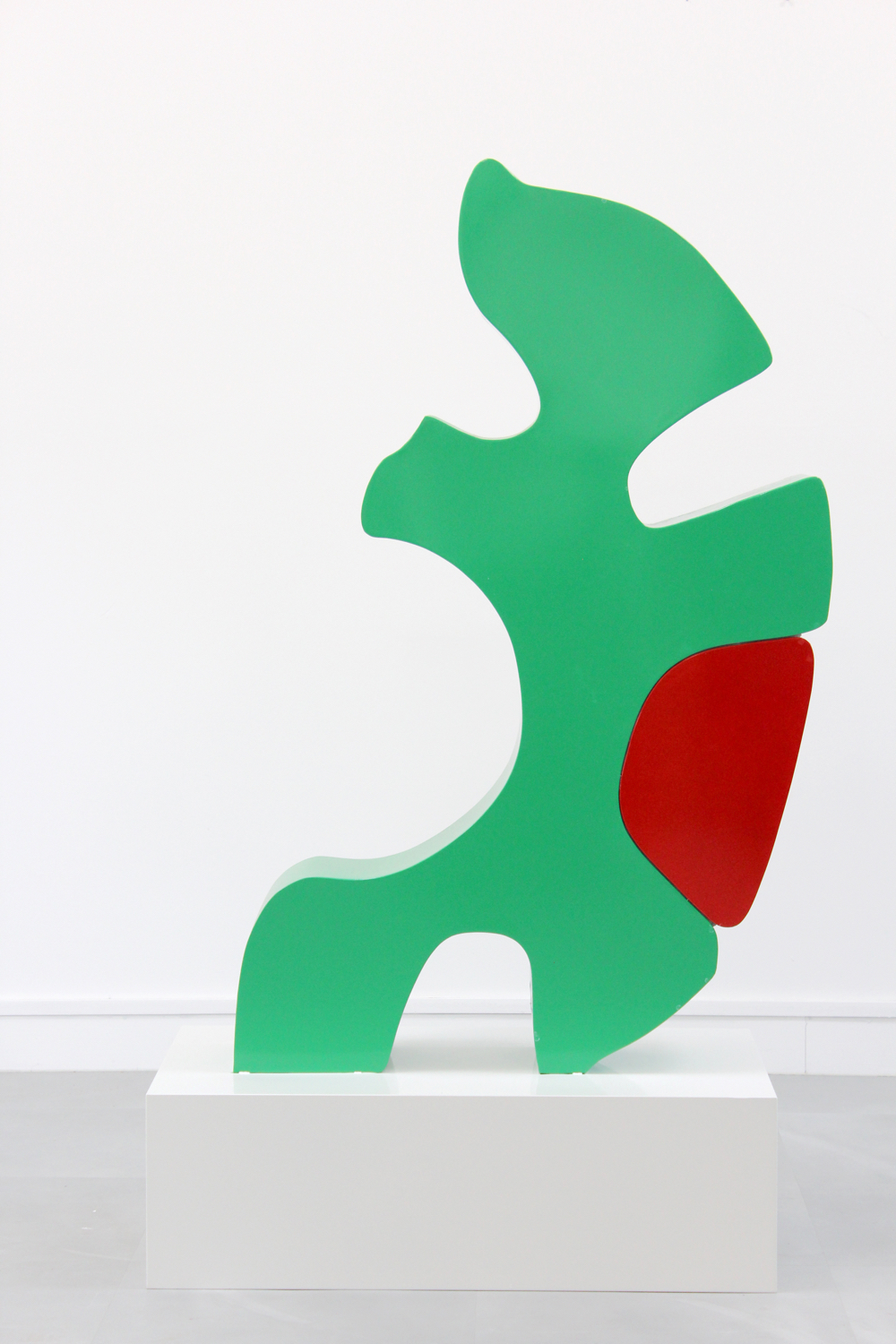
relationship between Kwon Osang’s Meaningless Emission
(2022), leaning against Haneyl Choi’s Become a kenta(2022),
also merits attention. Become a kent takes as its motif the
centaur of Greco-Roman mythology, a creature with a human upper body and a
horse’s lower body. Drawing from art history as reference, Choi reworks this
long-standing cultural and art-historical figure—frequently addressed over centuries
in cultural history, humanities, and popular culture—into a sculpture completed
in just four hours.
Casually leaning against this work is Kwon Osang’s Meaningless
Emission, a photo-sculpture shaped like a standardized trash bag,
installed as if actually discarded, using Choi’s work as a makeshift pole. The
installation of these two works resonates with the intersection of Kwon’s
attempt to dismantle traditional sculptural norms and Choi’s sculptural “-ic”
movement grounded in art-historical reinterpretation.
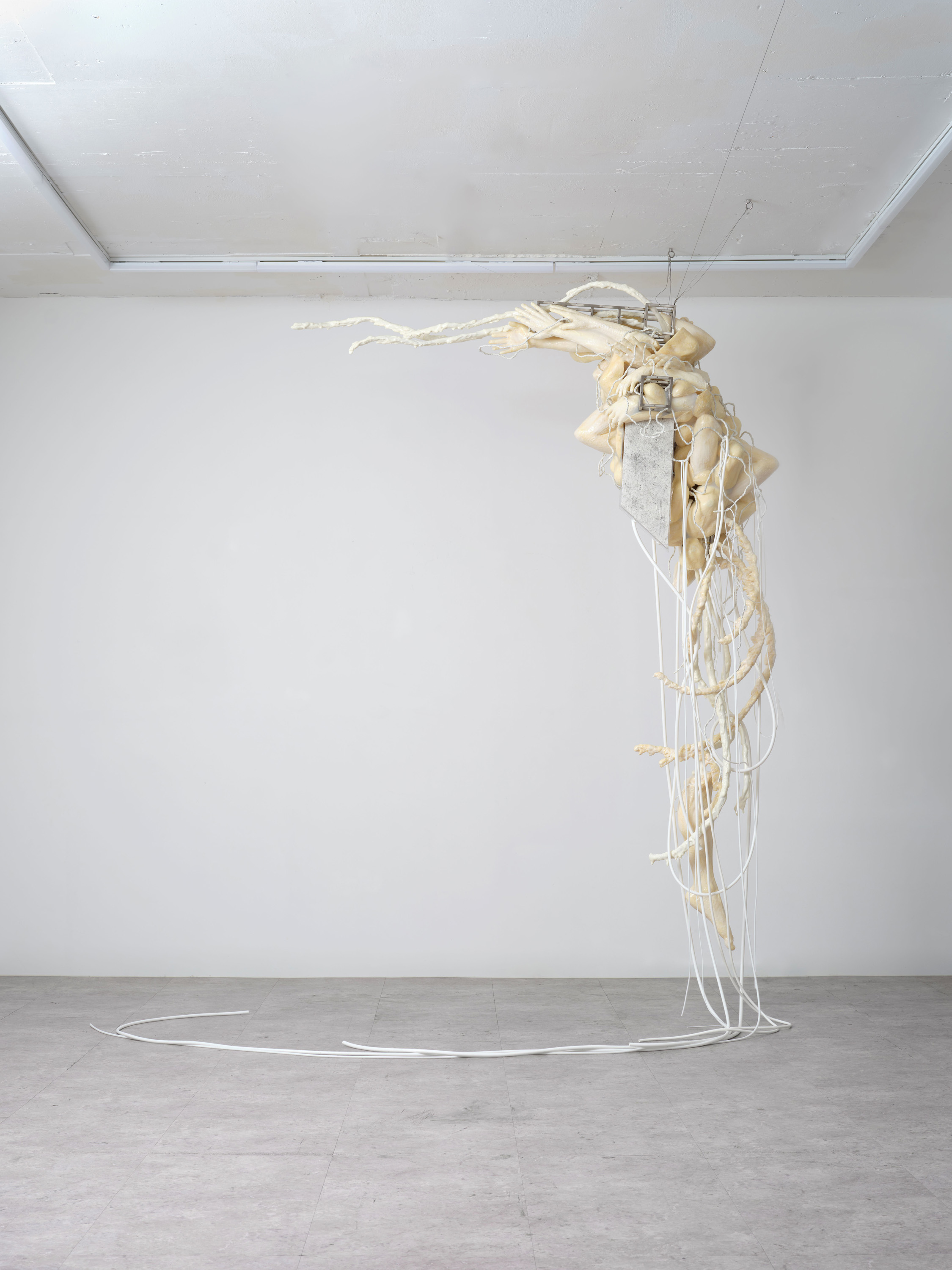
Haneyl
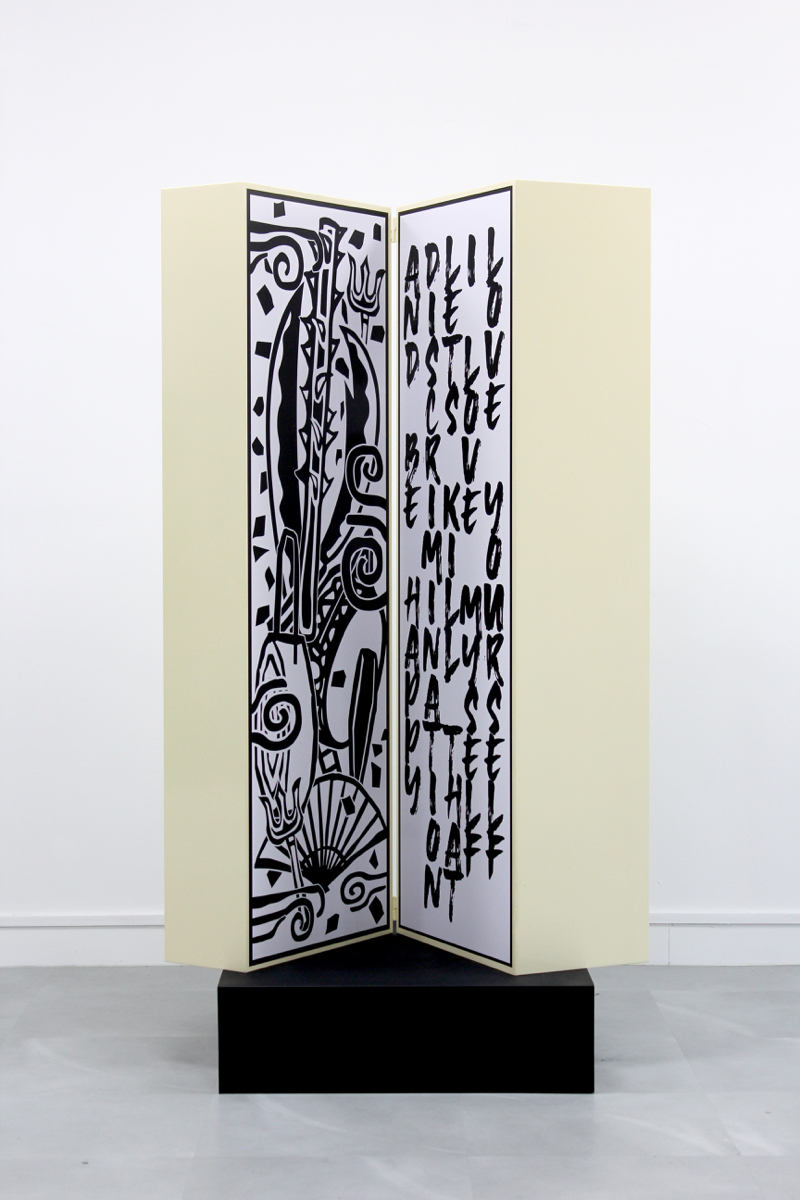
Choi’s Always reboot: Ghost (2022; reprinted), suspended in
the gallery and directing viewers toward Instagram filters through QR codes
affixed to its uneven surface, along with the unfamiliar codes encountered when
scanning QR codes stamped onto folding screen-like forms that resist easy
categorization as either flat or volumetric, entice viewers to raise their
smartphones and scan.
The presence of QR codes in the exhibition space can be
interpreted not merely as a natural linkage between online and offline prompted
by the pandemic, but rather as a manifestation of an intensified desire to bind
online and offline realms more tightly than ever before.⁴ Before viewers can
even reach a stage of contemplation or judgment, the exhibition space is
incessantly converted into image data and rapidly consumed via social media.
Rather than resisting this trend, the artist actively incorporates it,
unhesitatingly embracing the status of “instagrammable” objects and signs. In
this process, Kwon Osang’s sculptures are also absorbed into the immaterial
smartphone-user environment invited by Haneyl Choi, acquiring new bodies within
virtual space.
While
Haneyl Choi’s SNS-based sculptures allow his works to be summoned outside the
exhibition space, paradoxically, the sculptural “-ic” movement of these works
can only be fully experienced when the codes attempt an immaterial assemblage
that envelops the physically present sculptures during the exhibition period.
Assemblage is completed when viewers physically sense that Kwon Osang’s and
Haneyl Choi’s sculptures have shed their heavy bodies and become infinitely
light, and when the experience of weight is transferred into the virtual realm.
As echoed in Haneyl Choi’s question—“Will sculpture in the future gradually
abandon its body and become lighter?”⁵—only by relinquishing heavy mass
and becoming endlessly light can binding be blocked. Their sculptural “-ic” movements will continue to grow lighter, and they will not be
bound.
1.
Rosalind Krauss argued that from 1968 through the 1970s, many artists felt a
simultaneous permission (or pressure) to conceive of an expanded field, at
which point the meaning of “sculpture” began to grow ambiguous. Rosalind
Krauss, “Sculpture in the Expanded Field,” in Issues in Postmodern Art,
trans. Seungmin Yoo (Seoul: Noonbit, 2017), 158.
2.
Ilmin Museum of Art, “Kwon Osang × Ilmin Museum of Art – What’s my
collection?”, August 26, 2022, https://youtu.be/MSpI6jxewkM; Ilmin Museum of Art, “Haneyl Choi × Ilmin Museum of Art – What’s
my IDOL?”, September 8, 2022, https://youtu.be/Wv9C4AjeZuI.
3.
The dependent noun “-ic” is attached to “sculpture” to emphasize that their
movements are ongoing. Accordingly, this essay refers to their attitudes toward
the medium as sculptural “-ic.”
4.
Cultural studies scholar Sangmin Kim has noted that the active intervention of
QR codes in exhibition spaces prompts reflection (or compels reflection) on
binary boundaries such as reality/virtuality and offline/online. He argues that
offline exhibitions ultimately risk being perceived as limited experiences if
they fail to expand into online connectivity (searching, sharing, saving,
etc.). Sangmin Kim, “Art Experience in the Age of Non-Human Visuality,”
in Curating the Pandemic: Art Experience in the Age of Non-Place and
Immateriality (Movingbook, 2021), 89.
5.
Haneyl Choi, interview with Moonjung Lee, “[The Gallery by Critic Moonjung Lee
(90) ‘Sculptural Impulse’] Will Sculpture Remain Three-Dimensional in the
Metaverse Era?”, Cultural Economy, June 29, 2022, https://m.weekly.cnbnews.com/m/m_article.html?no=143997.