Cho
Ho Young’s works are filled with a sense of bustle. Because she visually
translates what she feels about the countless movements—namely
“verbs”—performed in everyday life, a distinctive energy generated from these
actions radiates from her work. Cho Ho Young is still at a stage of questioning
what kind of “artist” she is.
While she has, through long contemplation,
established with some solidity what she wants to talk about and what kinds of
subjects she wishes to address as an artist, she says that the methods by which
she will unfold these ideas still feel like an unresolved task. For her, the
outward form of a work is merely a “tool” or a “device.” The true core of her
practice lies in recognizing the “movement” that emanates from the dynamics and
transformations inherent in a given subject, and in unfolding that movement
through her work.
She
emphasizes that a single idea running through her practice is that of a
“treasure hunt.” Like a game of carefully scanning and exploring everyday
spaces to discover hidden treasures, Cho Ho Young explains that through her
work she seeks to reveal things in people’s lives that are easily forgotten or
difficult to notice precisely because they are so small and seemingly trivial.
Her “treasures” are not simply objects or other nouns.
Rather, they are
everything that changes according to environment, degree, and
direction—elements that, in her work, become the very things to be discovered.
For this reason, as mentioned earlier, her works are dynamic, imbued with flow,
and continuously evolving. She believes that “when viewers subtly sense and
share the altered ‘flow of verbs’ through the work, the work is truly alive and
active.”
Sensation is essential in her practice. The artist must first detect
shifts arising from movement, emotion, atmosphere, thought, or doubt, and then
give concrete form to those sensations. She then begins to plan by asking
questions such as: “Does the work temporarily separate these elements from
everyday environments in a way that allows them to be more readily discovered
later?” or “Is it capable of fulfilling that role effectively?”
Active
terms such as “people,” “action,” and “participation” invariably appear in her
work. Consequently, “audience participation” holds great significance for the
artist. She explains that although certain elements undeniably exist in our
daily lives, the reason we often fail to recognize their flow and meaning lies
in people’s tendency to quickly adapt to their surroundings. In order to
present a fresh perspective that encourages viewers to pose new questions
within familiar environments, she found it necessary to draw attention to the
audience’s active engagement.
Only when lively interaction occurs between
artwork and viewer does even a small possibility for change emerge. She also
felt that works that are merely “visible” in a visual sense were insufficient
for conveying the core of what she wanted to communicate, both naturally and
accurately.In terms of expression, inducing “action” and the corresponding
“reaction (response)” made participatory works, as she practices them now, the
most suitable approach.
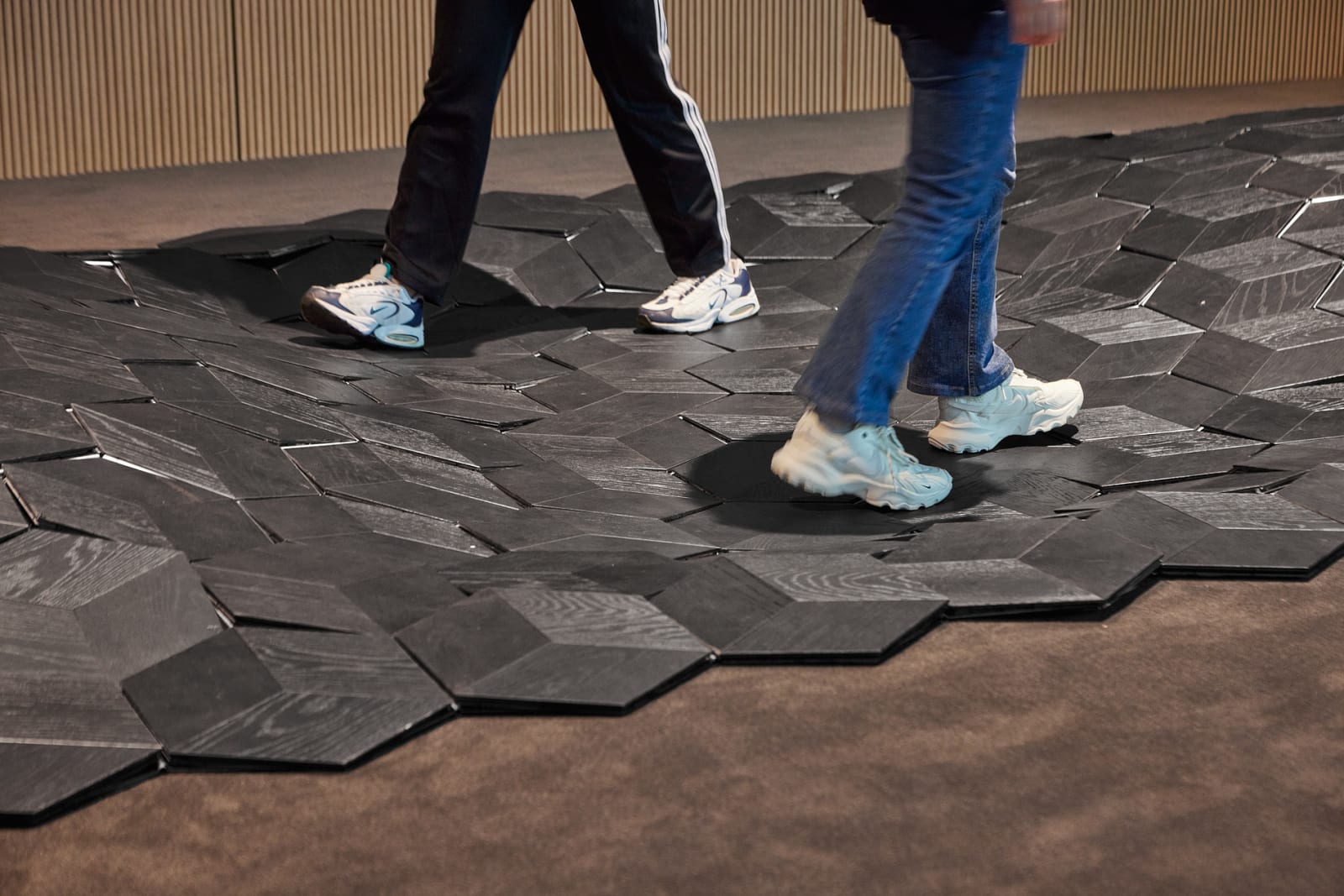
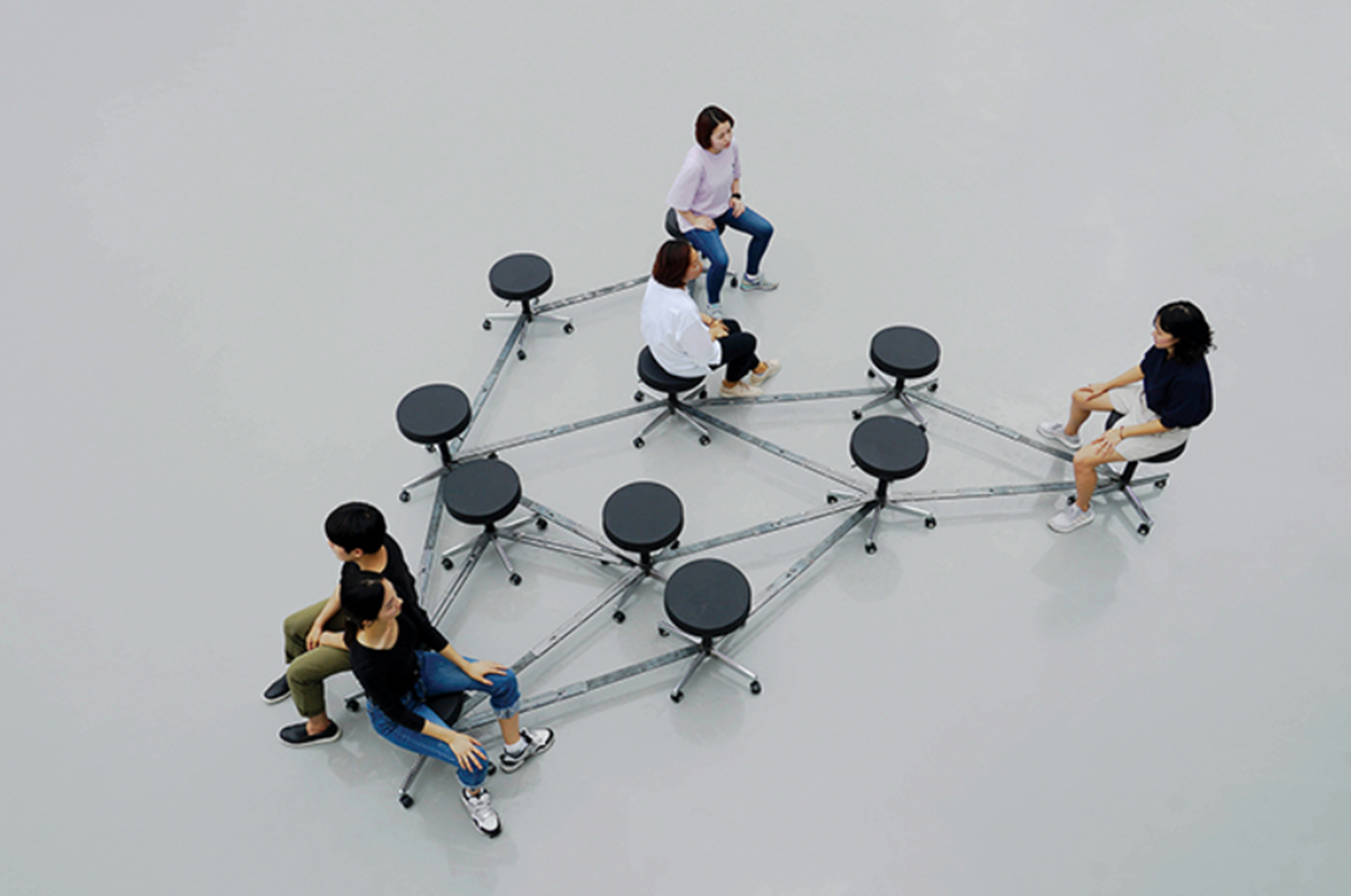
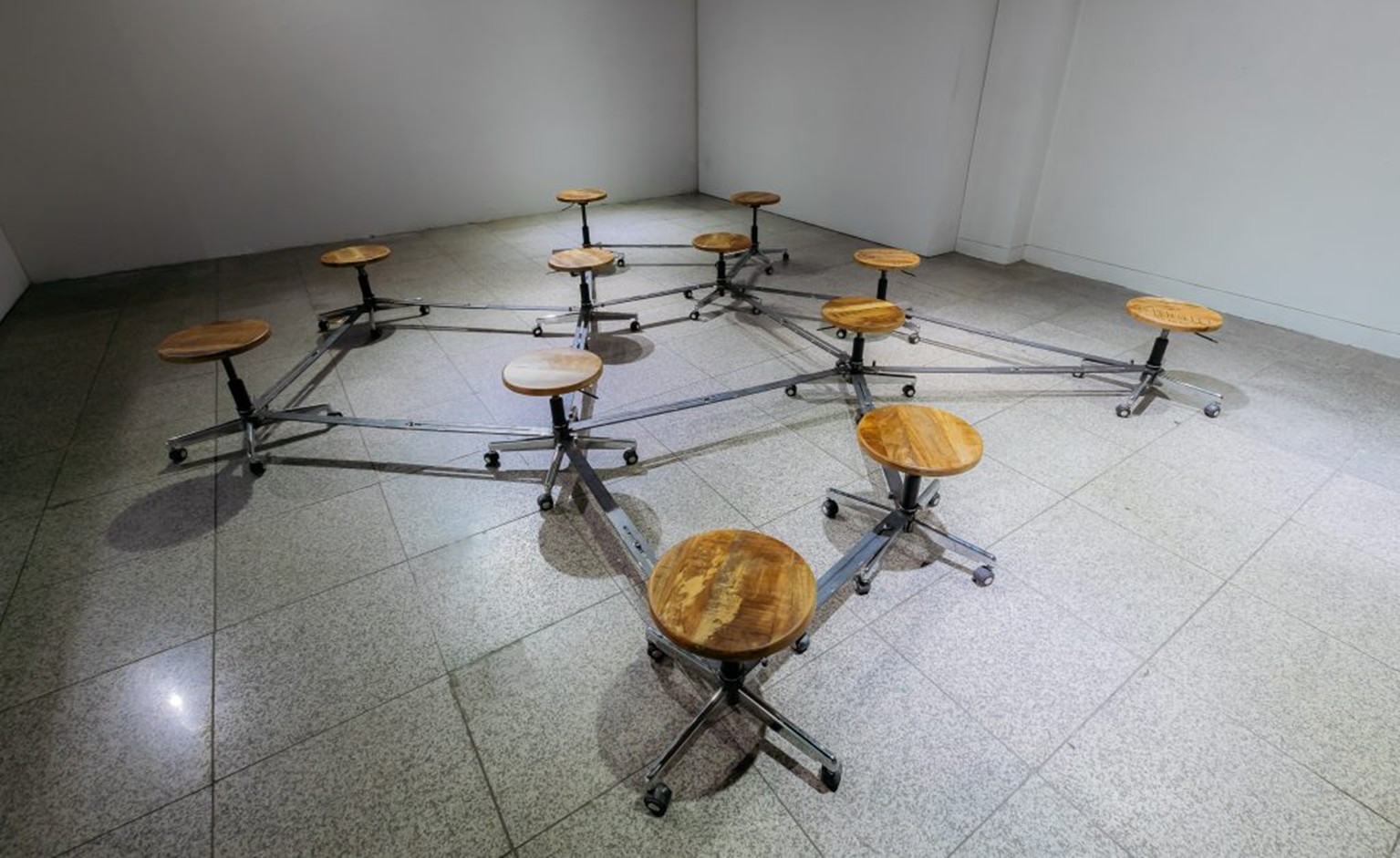
Taking
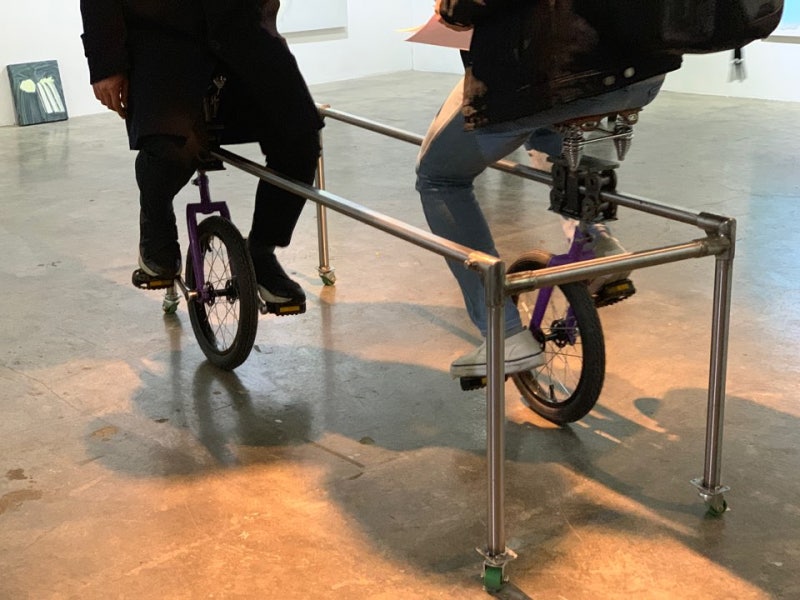
one of her representative works, From
60cm to 120cm, as an example, Cho Ho Young addresses the
“private space” in which people feel comfortable between one another. She
became interested in the behaviors people instinctively adopt to maintain
personal space by keeping a certain distance from others, as well as actions
such as looking at one’s phone in crowded elevators to alleviate awkwardness
and discomfort—behaviors that constantly shift according to atmosphere and
context. Although these observations accumulated over time, it took quite a
while to translate them into a work, as she struggled to find an appropriate
form of expression.
In order for viewers to fully share the “changes” in
sensation that she personally experienced, she wanted them to be placed within
changing situations themselves, allowing them to observe those environments
firsthand. The hint for this work came from the Toy Museum in Rothenburg,
Germany. Seeing toys connected in zigzag formations, she realized that she could
use this principle to create a structure in which viewers could freely move and
observe within a specific range she had designated. Through active
participation, viewers directly experience what we call the comfort zone of
private space, thereby becoming more aware of the emotions and sensations
associated with it.