
Chang Hanna (b. 1988) is interested in the various desires humans possess and explores through her work how those desires return to us in different ways. In particular, she focuses on the phenomenon in which artificial objects produced by human desire and capital become part of nature and take on new forms. She reveals her collected, observed, and researched findings on this subject through photography, drawing, installation, video, and other media.


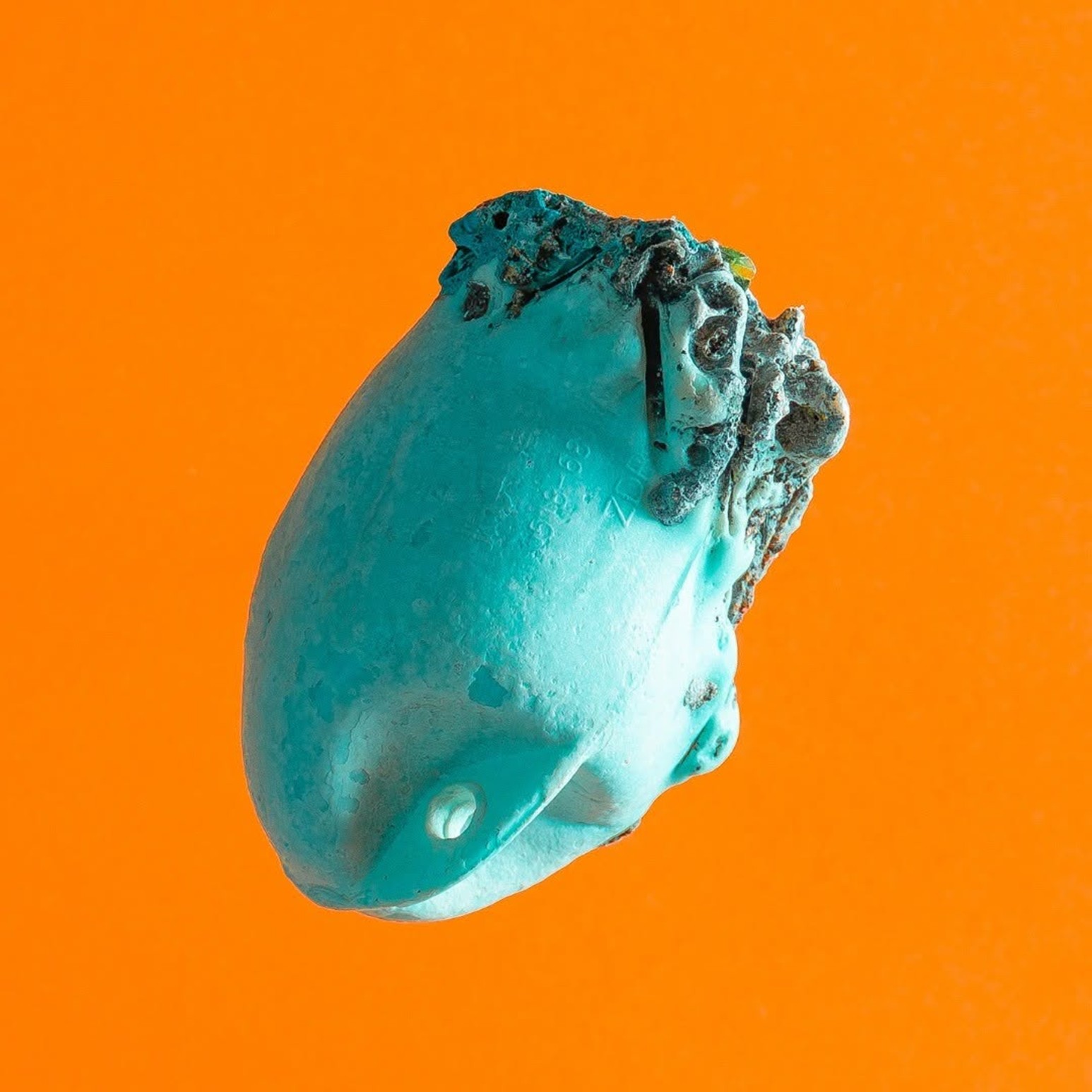
Chang Hanna, Newmorphic Rock_plastic bottle, 2018, Jeju island, Korea ©Chang Hanna

The artist’s interest in the phenomenon of artificial objects becoming part of nature and returning to our living environment connects naturally with her early works, in which she explored things that exist on the “borderline.” In the early stages of her practice, Chang Hanna walked through redevelopment areas, turning her attention to the animals and plants that had lived there.
 
She collected objects and potted plants that were on the verge of disappearing, transplanted the plants and distributed them to people, and carried out projects in which she exhibited the items she had gathered in empty spaces. In 2017, she also conducted a project where she traced the garbage truck that came to her neighborhood.


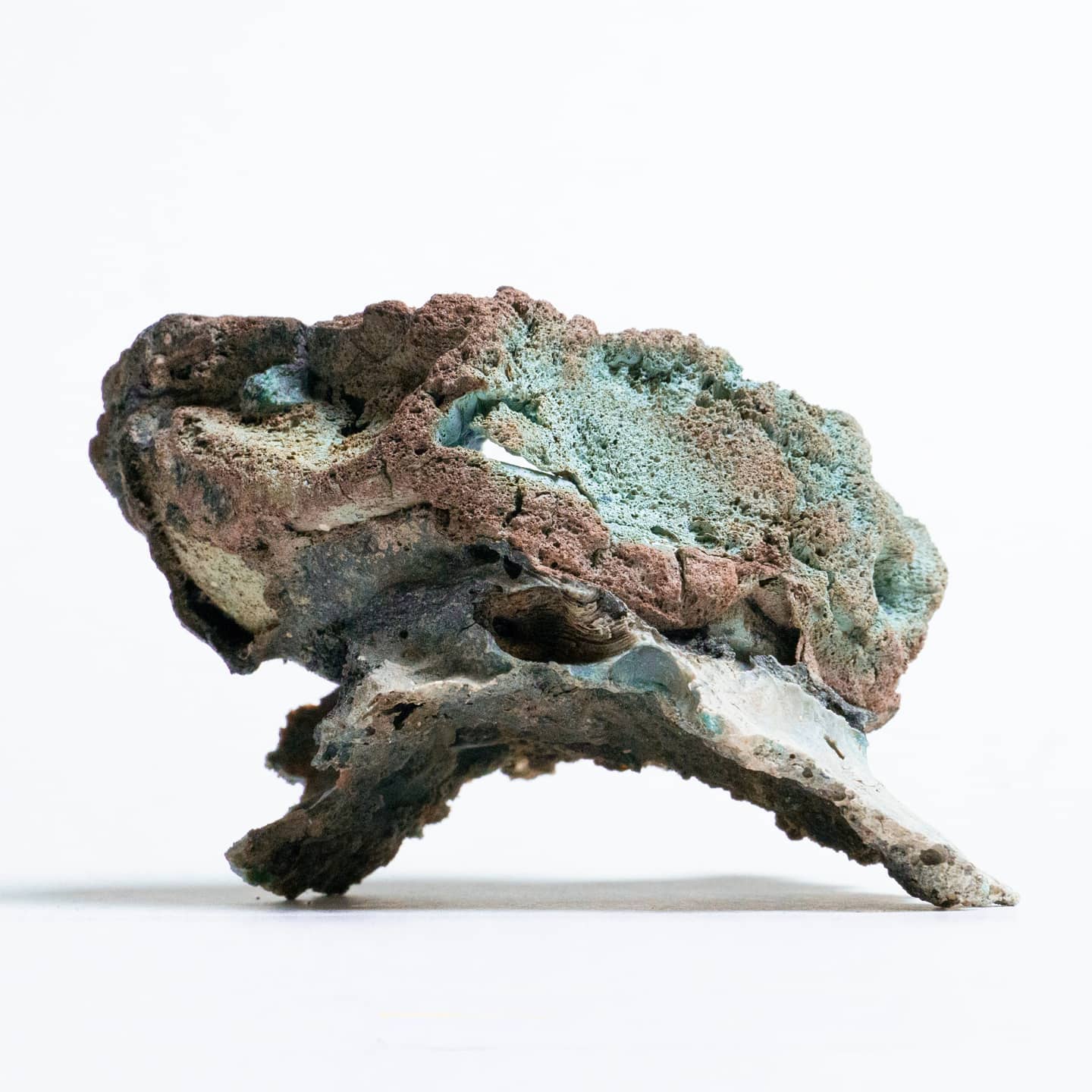
Chang Hanna, Newmorphic Rock_plastic bottle, 2019, Jeju island, Korea ©Chang Hanna

At this time, she traced what happens to a plastic cup after it is discarded, following the process through which it is eventually recycled. While conducting research on plastic production, she naturally began to take interest in the environmental issues associated with this human-made material. During this process, she happened to discover a peculiar plastic lump resembling a stone on the coast of Ulsan, Korea, in 2017, which became the starting point for her ongoing ‘New Rock’ project.
 
Chang Hanna named these objects “New Rocks”—plastics discarded on the beach that, over time, come to function like stones or even assume the form of stones. They are entities in which nature and artificiality are intertwined: although they are artificial materials produced through human desire and capital, they have been transformed and lithified by sea winds and sunlight over long periods of natural time.

Chang Hanna, Newmorphic Rock_plastic bottle, 2019, Jeju island, Korea ©Chang Hanna

Chang Hanna observes how discarded plastics, once released into nature, enter into unexpected relationships and spend time in ways humans could never anticipate. She explains that these objects appeared to her as a “next stage of matter,” having already surpassed the boundary between the artificial and the natural. They felt like entities taking on the role of “a new kind of stone” or even “a new ground” of our time, and thus she named them New Rocks.


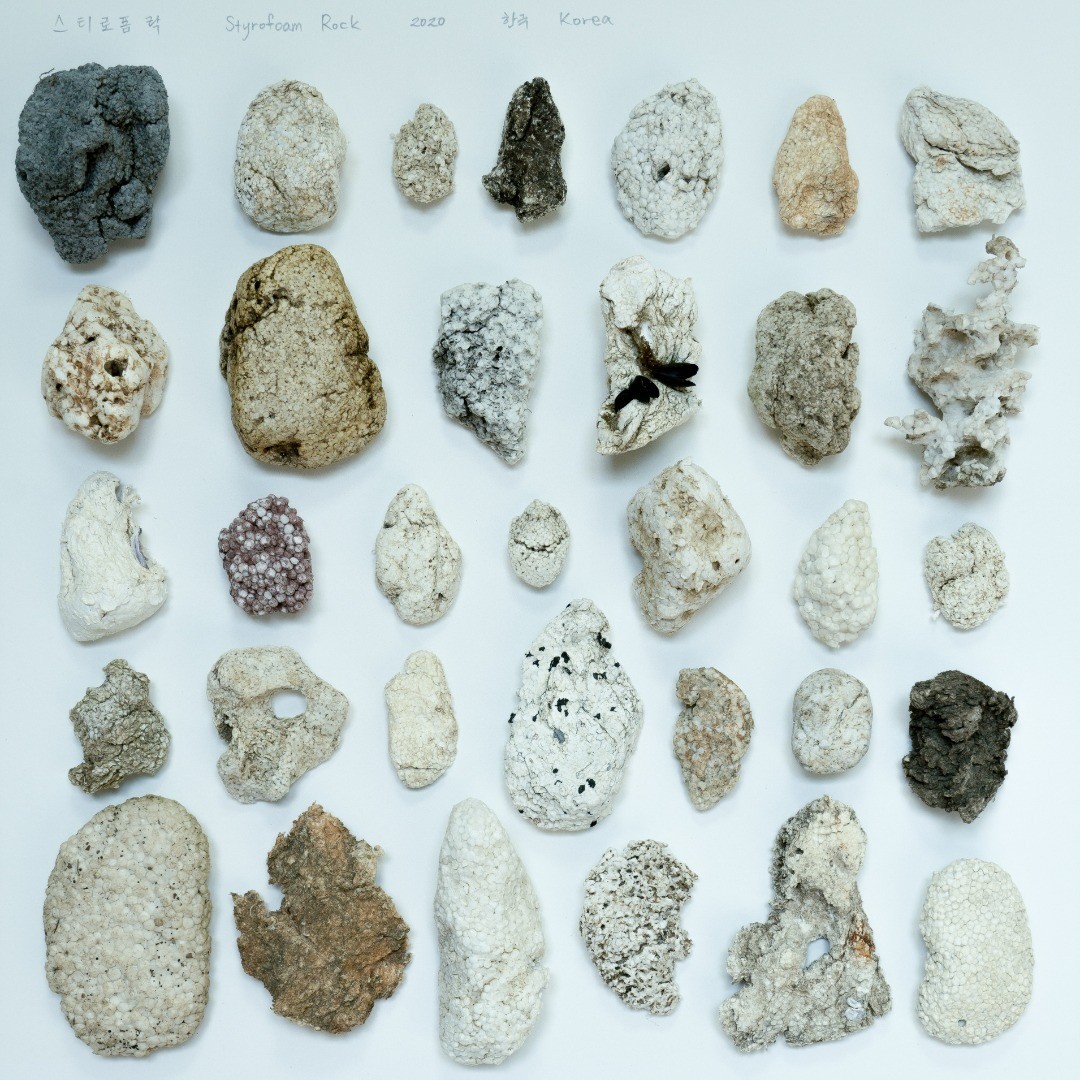
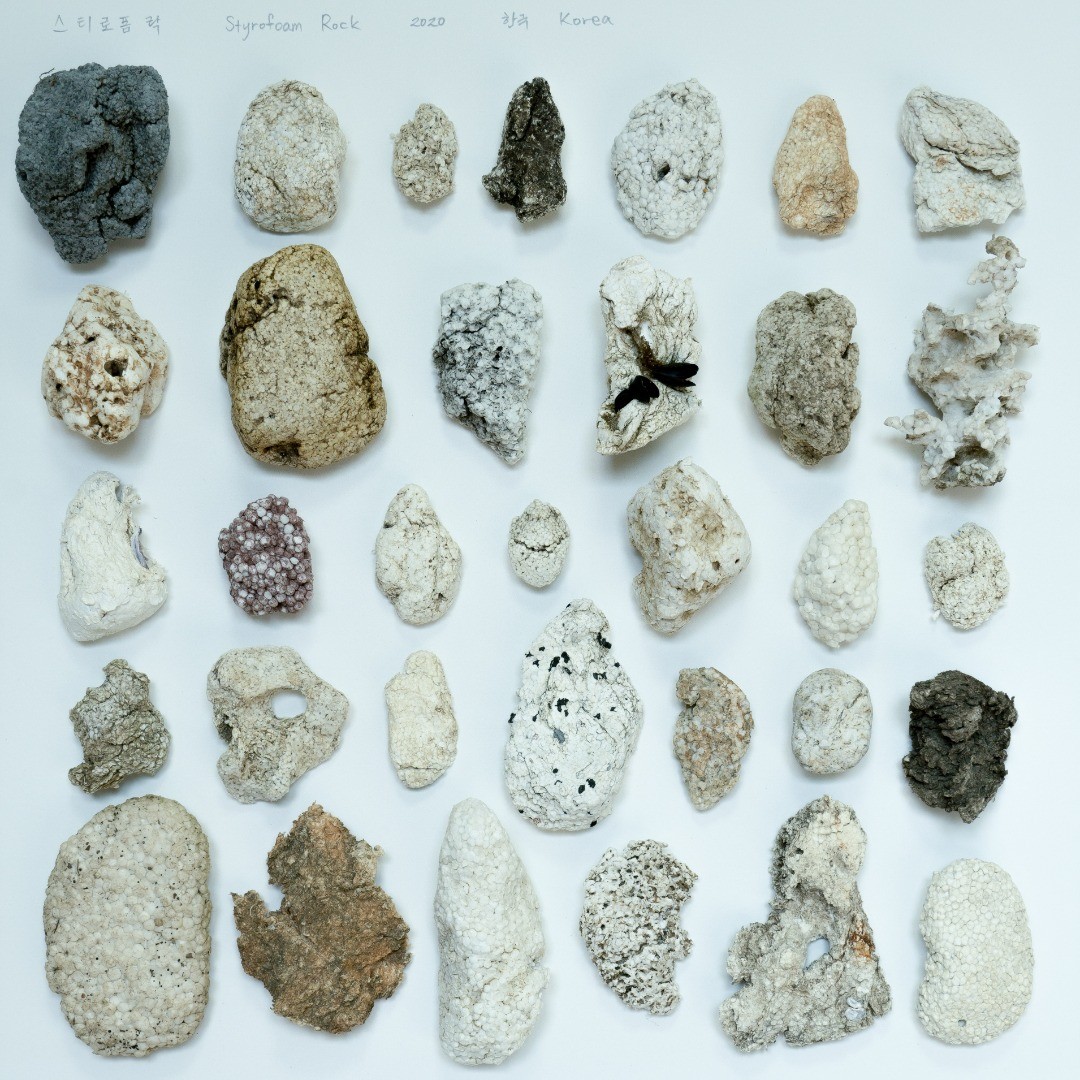
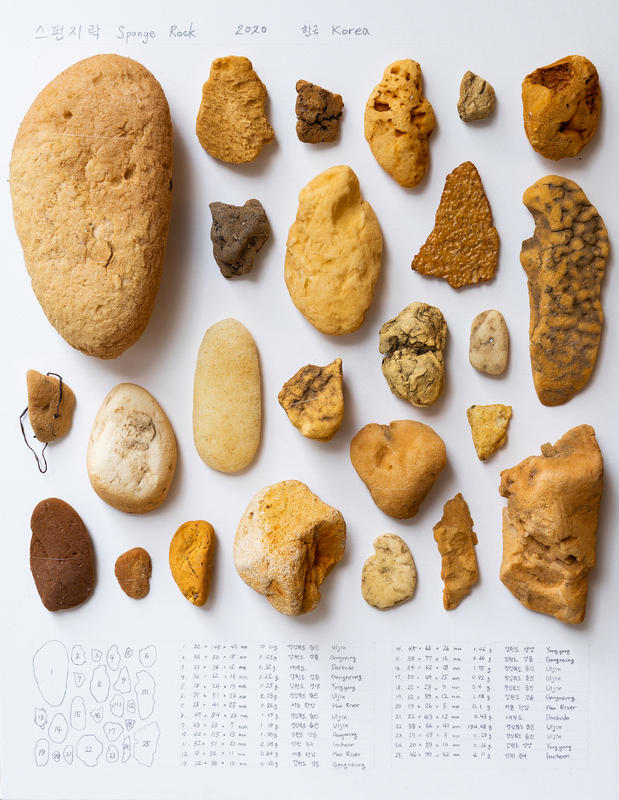
Chang Hanna, Styrofoam Rock Specimen 2020, 2020, Korea ©Chang Hanna

Observing these New Rocks, Chang Hanna says she felt a subtle sense of beauty intertwined with an unsettling, almost eerie sensation. Since then, she has collected and studied these artificial objects that have become part of nature, exploring the relationship between human-made materials and the natural environment.
 
In carrying out the ‘New Rock’ project, Chang adopts a working method that minimizes production and centers on collecting and researching. This approach stems from her awareness of the climate crisis. Accordingly, she avoids processing the New Rocks she gathers in order to prevent the creation of microplastics, and she also minimizes her range of movement and actions during collection, striving not to engage in behaviors that could further impact nature.


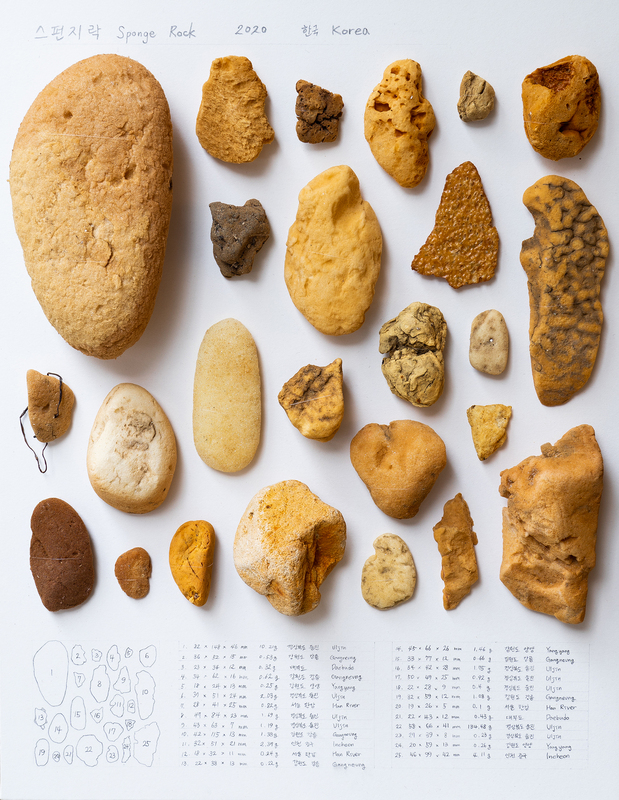
Chang Hanna, New Rock Specimen 2020, 2020 ©Chang Hanna

In this way, her works—created through minimal intervention in nature—take various forms: presenting New Rocks as specimens, displaying them as sculptural objects in their own right, or sharing her reflections through video pieces.
 
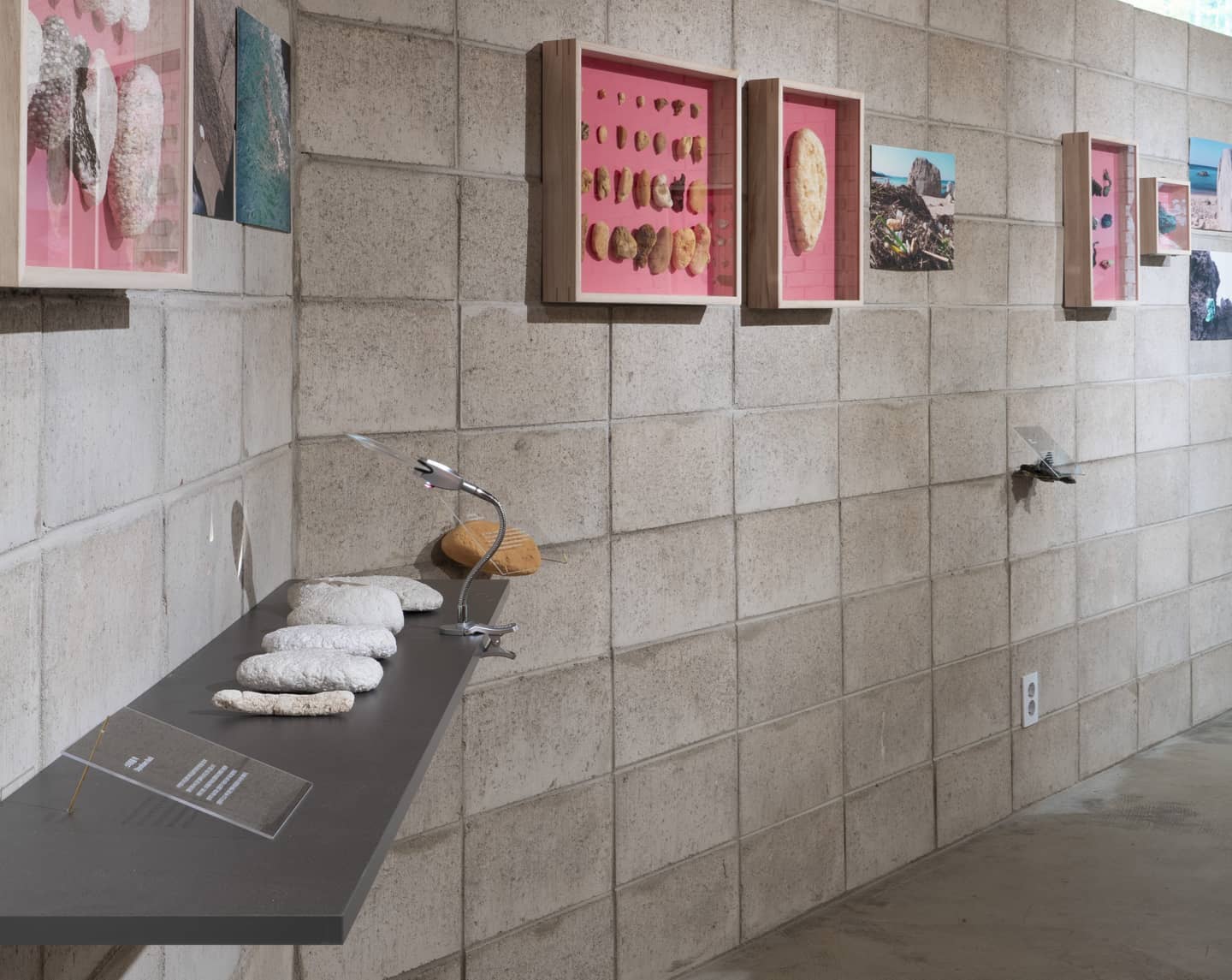
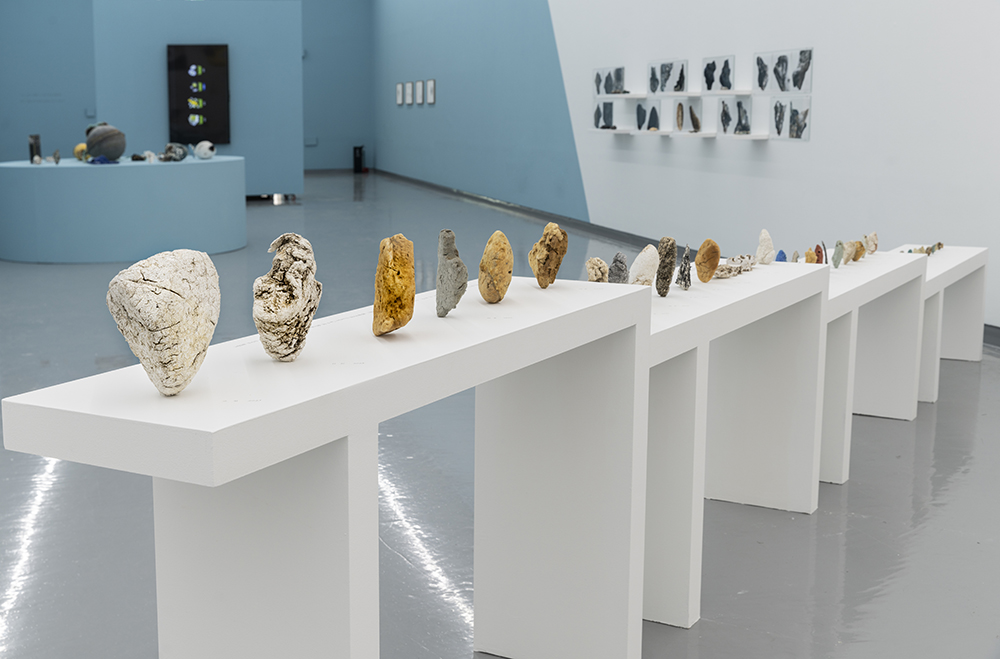
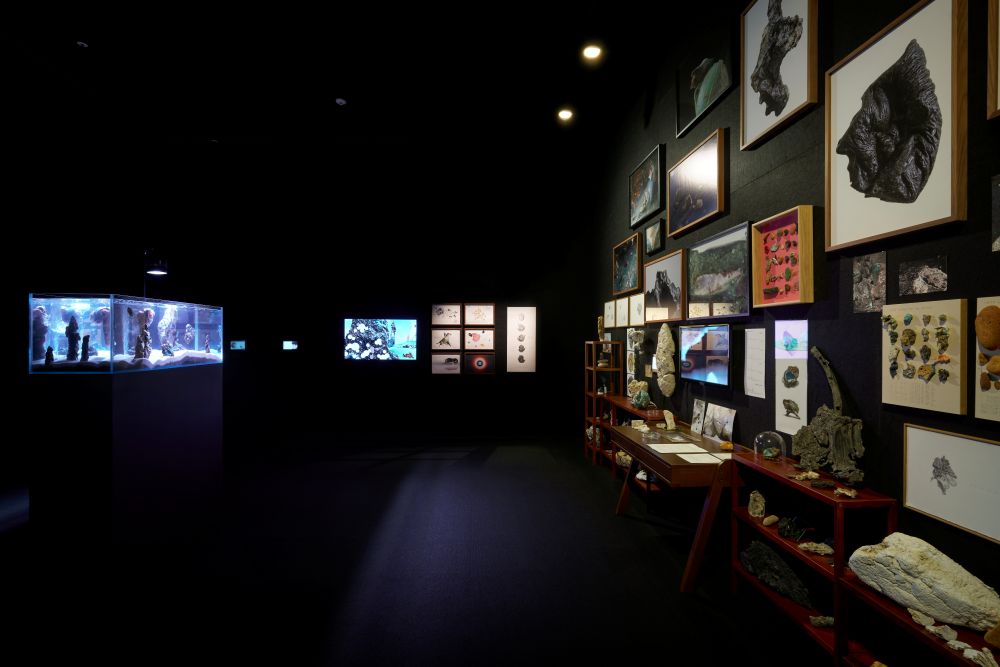
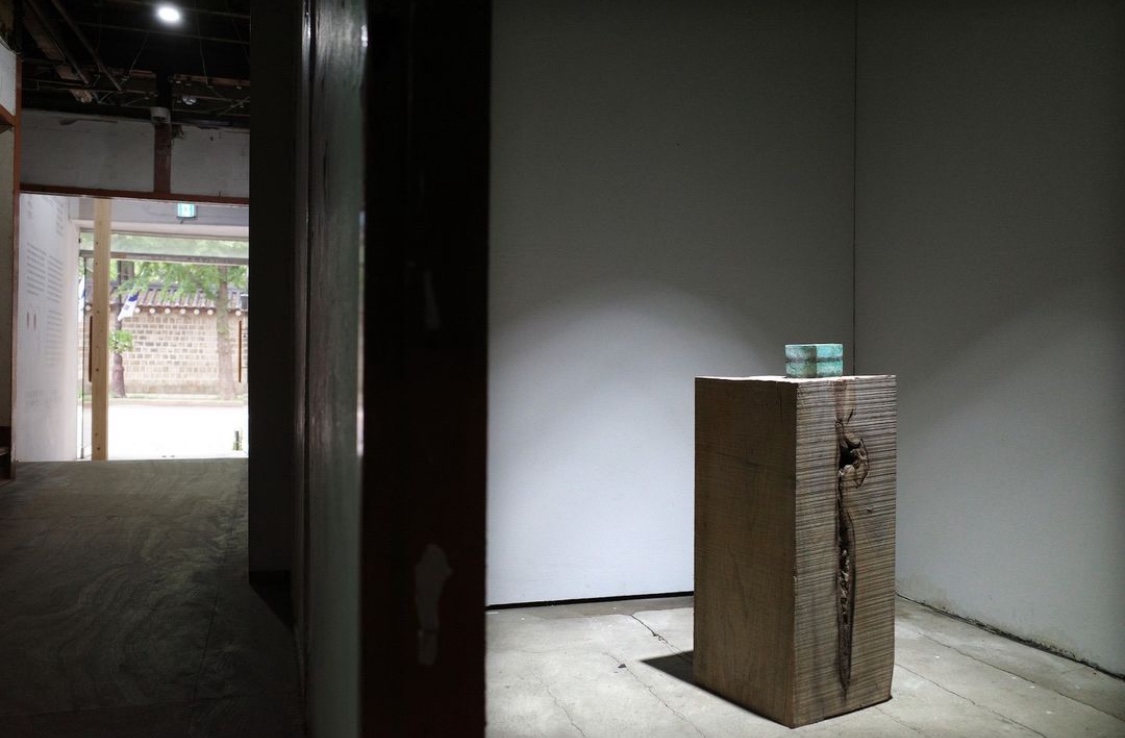
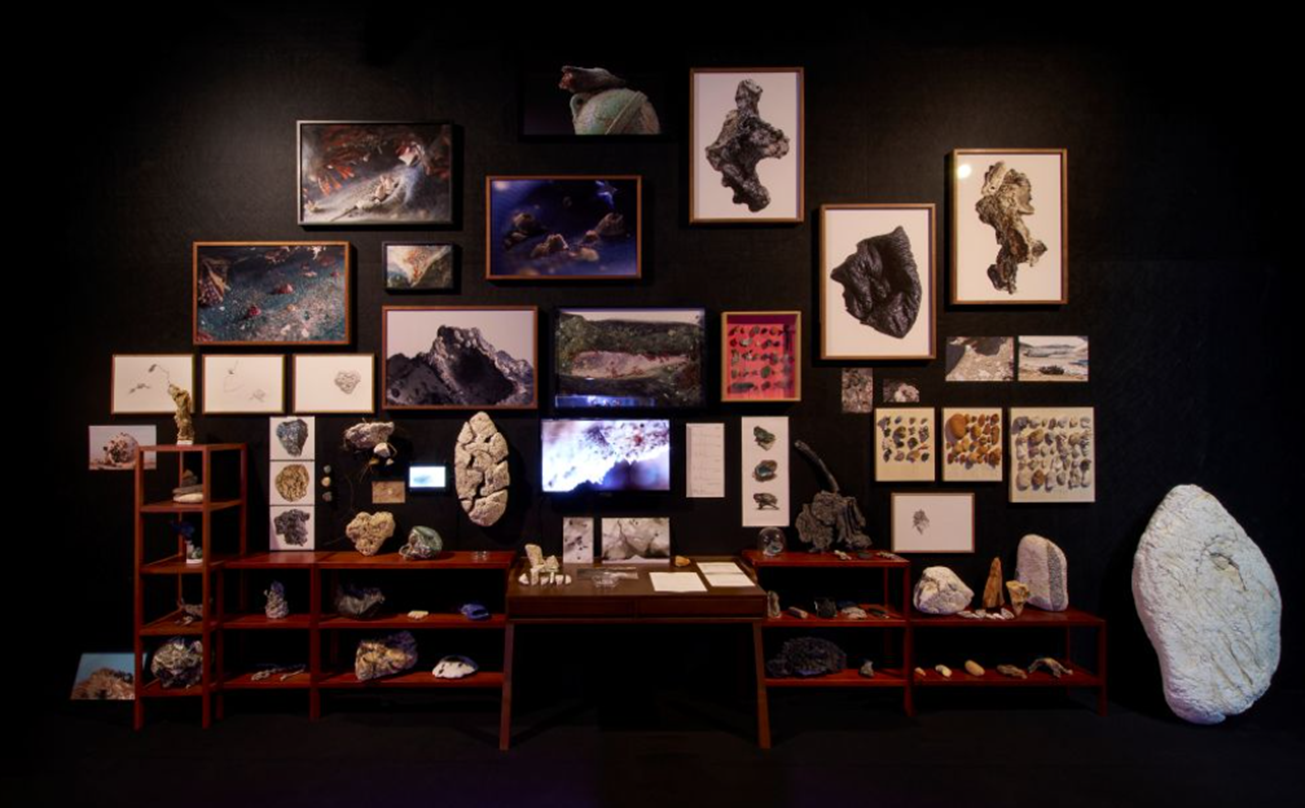
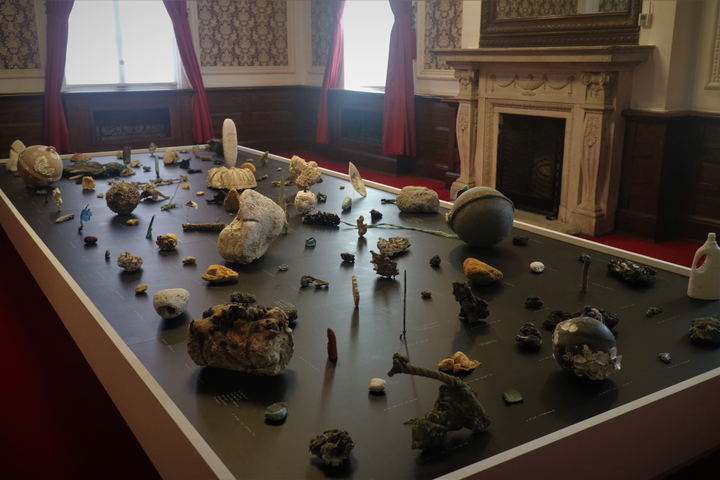
Her 2020 solo exhibition 《New Rock》 at Studio Square was the first presentation of the New Rocks she had collected over four years since 2017, during her visits to various coastal sites. The artist gathered New Rocks of diverse forms washed ashore by the tide and selected those with particularly striking shapes—ones she wished to contemplate again—to present as a suseok (scholar’s rock) collection.


Installation view of 《New Rock》 (Studio Square, 2020) ©Chang Hanna

The smooth surface of the original plastic becomes textured and irregular through contact with nature; as waves break and erode it, the inward hollows left behind can become new habitats for marine life. Chang Hanna’s New Rock suseok collection appears to us not as familiar plastic, but as intermediate forms—neither purely natural nor purely artificial—and evokes the passage of time these objects have endured in nature after being discarded by humans.


Installation view of 《New Rock》 (Studio Square, 2020) ©Chang Hanna

The sense of strangeness that arises from the New Rock soon turns into discomfort. It reminds us that the massive amounts of plastic waste we use briefly and discard every day are buried in the ground or thrown into the sea, and over time become part of nature—only to return to us once again.


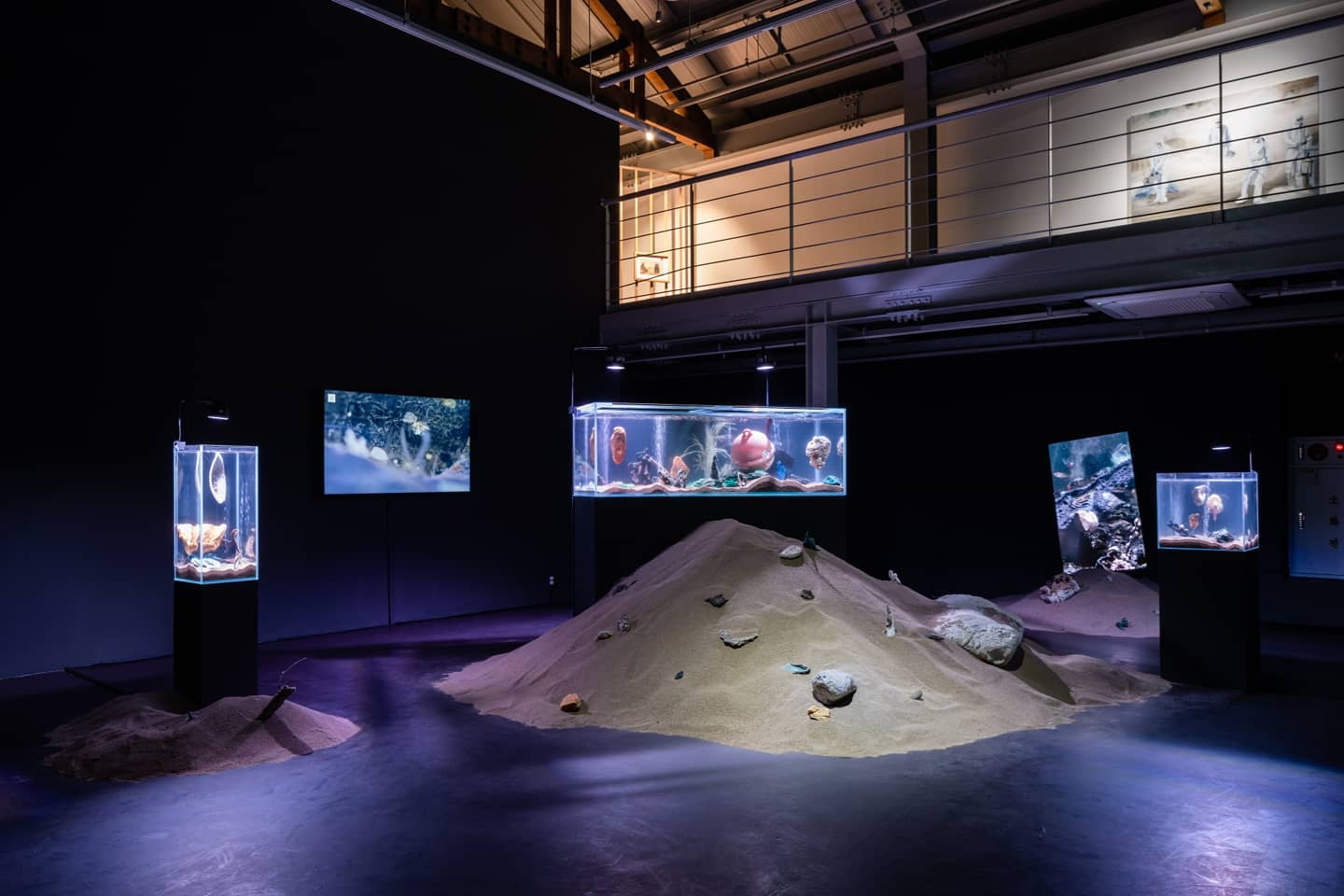
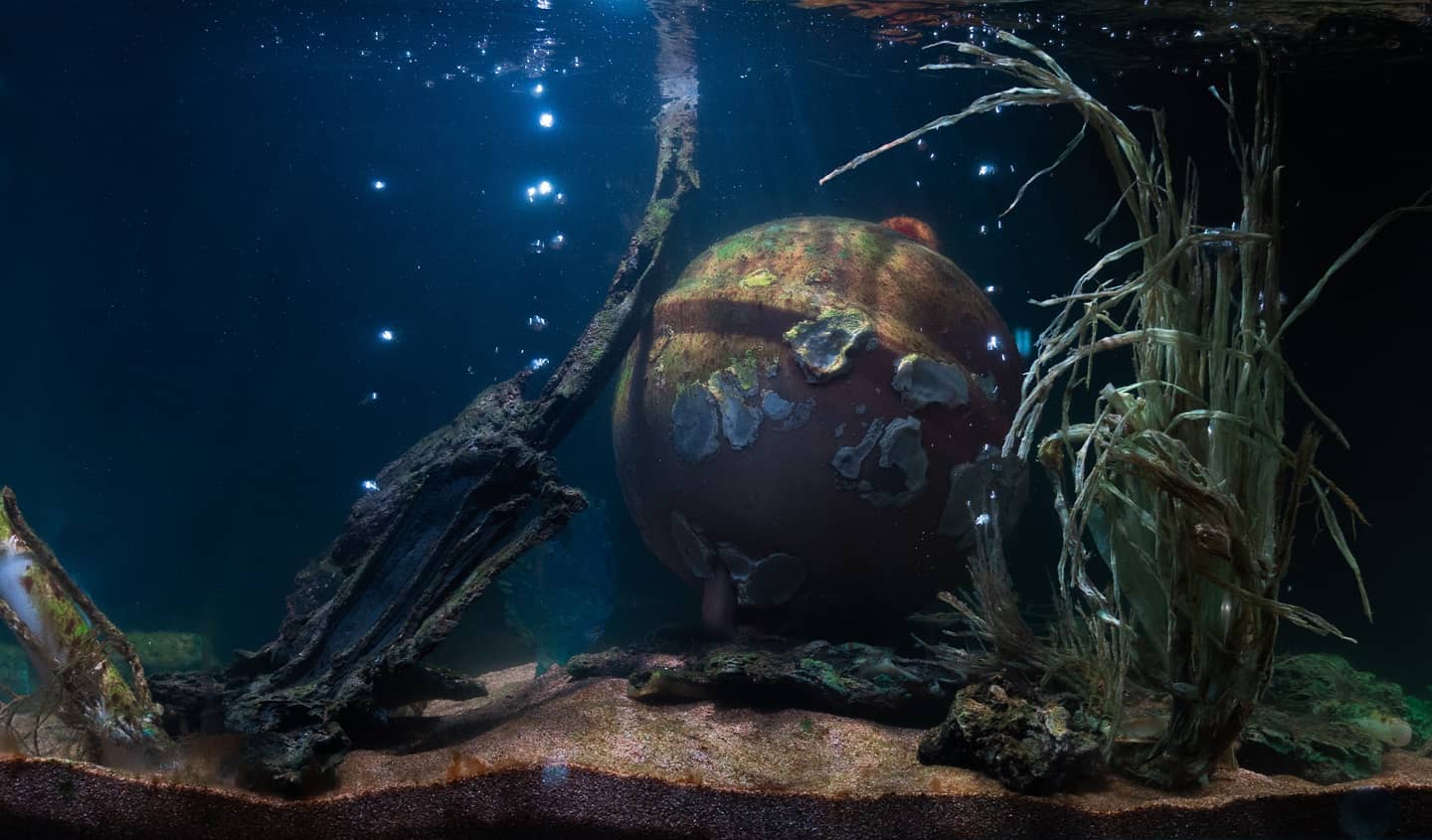
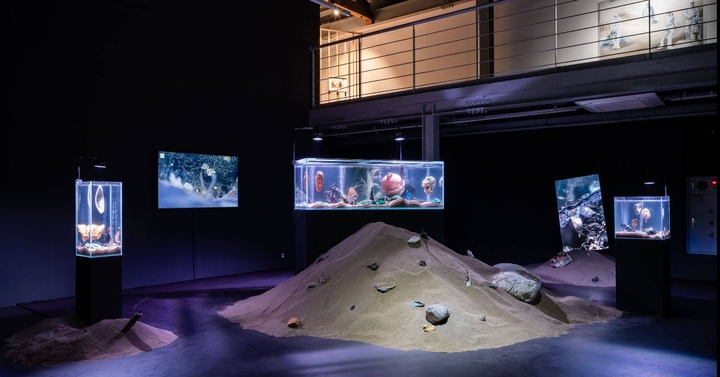
Chang Hanna, New Ecosystem, 2021, Installation with collected plastic pieces, fish tanks, bubble generator, lights, sand, dimensions variable, Installation view of 《Reclamation, New Rocks, Stray Dogs, Birds, and Acoustics of the Garden》 (Incheon Art Platform, 2021) ©Chang Hanna

Meanwhile, in her 2021 installation New Ecosystem, Chang Hanna presented an underwater ecological space composed of “New Rocks.” The plastic fragments she collected formed small ecosystems inside water tanks of different sizes, and these three tanks, covered with sand, occupied the exhibition space as another form of nature.
 
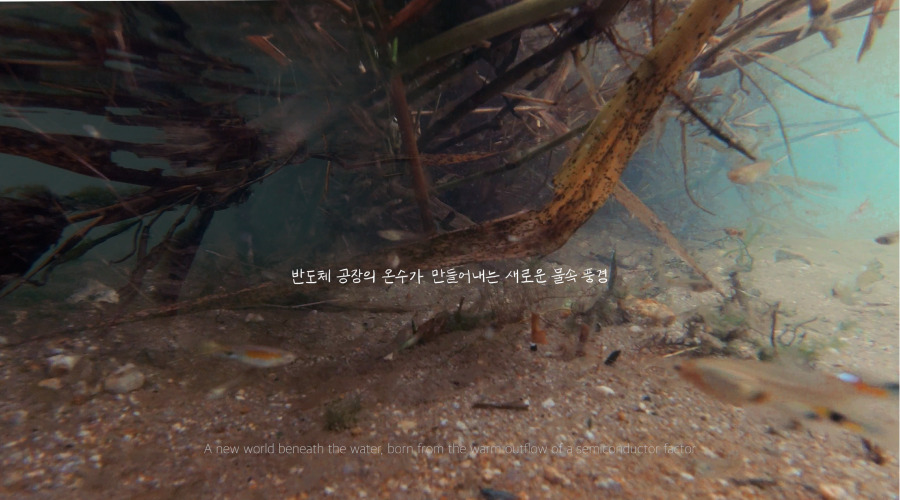
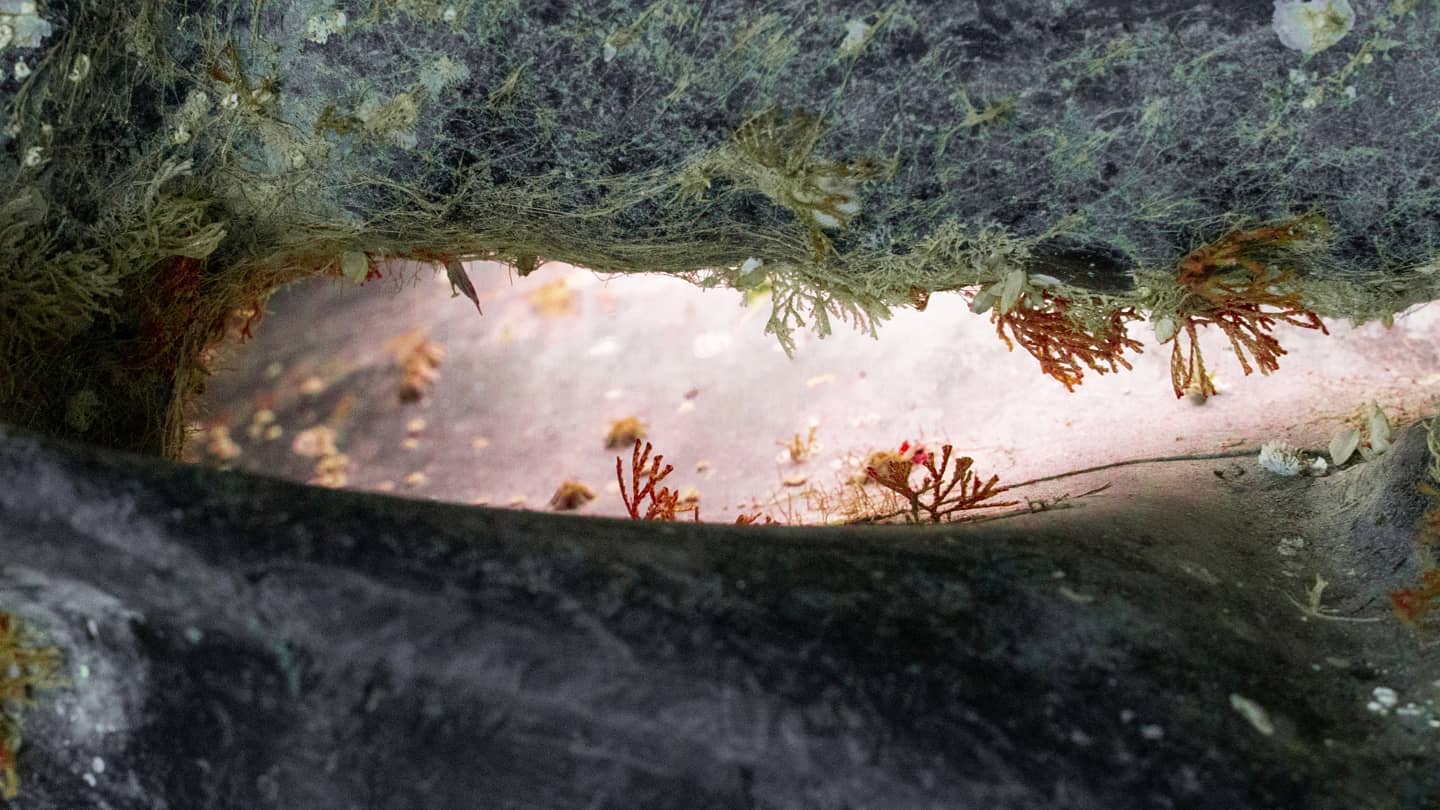
A strange and uncanny two-channel video featuring actual living organisms was installed alongside the tanks. Following the journey of the New Rocks, the video captured the surrounding environment, nature, and the creatures that coexist within it, allowing viewers to observe the relationships formed among them.


Chang Hanna, New Ecosystem, 2021, Installation with collected plastic pieces, fish tanks, bubble generator, lights, sand, dimensions variable ©Chang Hanna

Through this, viewers confront the severity of the massive waste that accumulates on remote beaches, as well as the paradoxical reality in which plastic—once thought impossible to merge with nature—becomes part of geology, shapes marine ecosystems, and even transforms into strange yet beautiful new rocks of the sea that provide habitats for underwater organisms.
 
As she continued to explore the relationship between nature and artificiality through New Rocks, the artist naturally began to question, “Does pure nature truly exist?” This line of inquiry eventually led to a new body of work titled the ‘New Nature’ project.


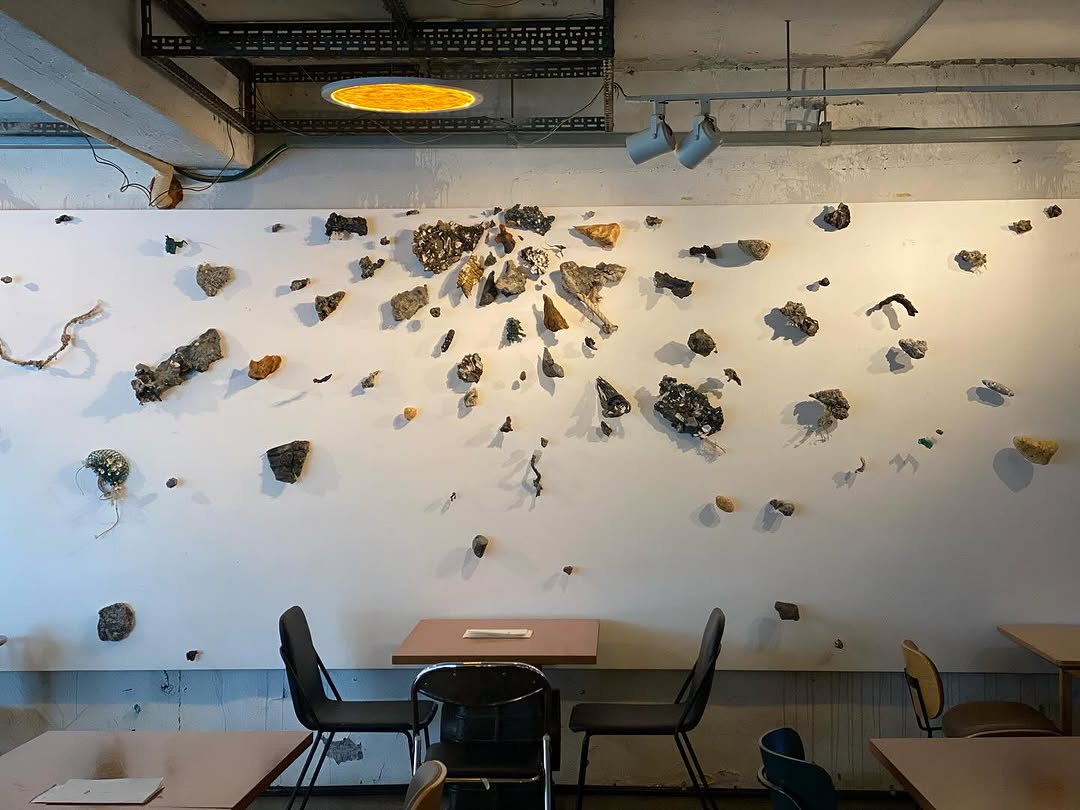
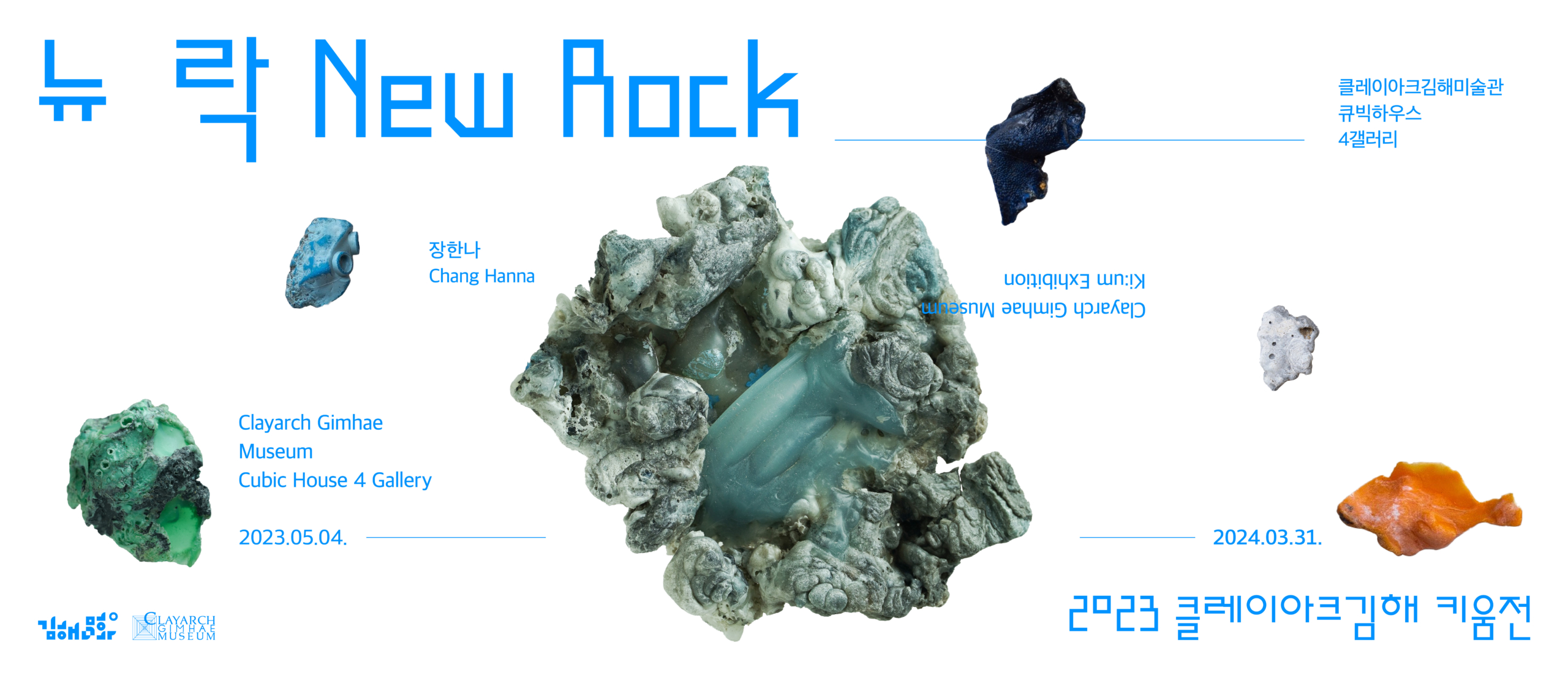
Installation view of 《New Rock》 (Clayarch Gimhae Museum, 2023) © Clayarch Gimhae Museum

Encountering “New Rocks,” entities in which the boundaries between the artificial and the natural are blurred, the artist began to reflect on the fabricated nature of what humans define as “nature” and the idealized images of nature that we desire. Although ecosystems untouched by human hands are often defined as pure nature, the artist questions, “Is nature without human influence even possible today?” and further asks whether this so-called “pure” nature is in fact a limited and objectified version of nature—one shaped by human needs and desires.


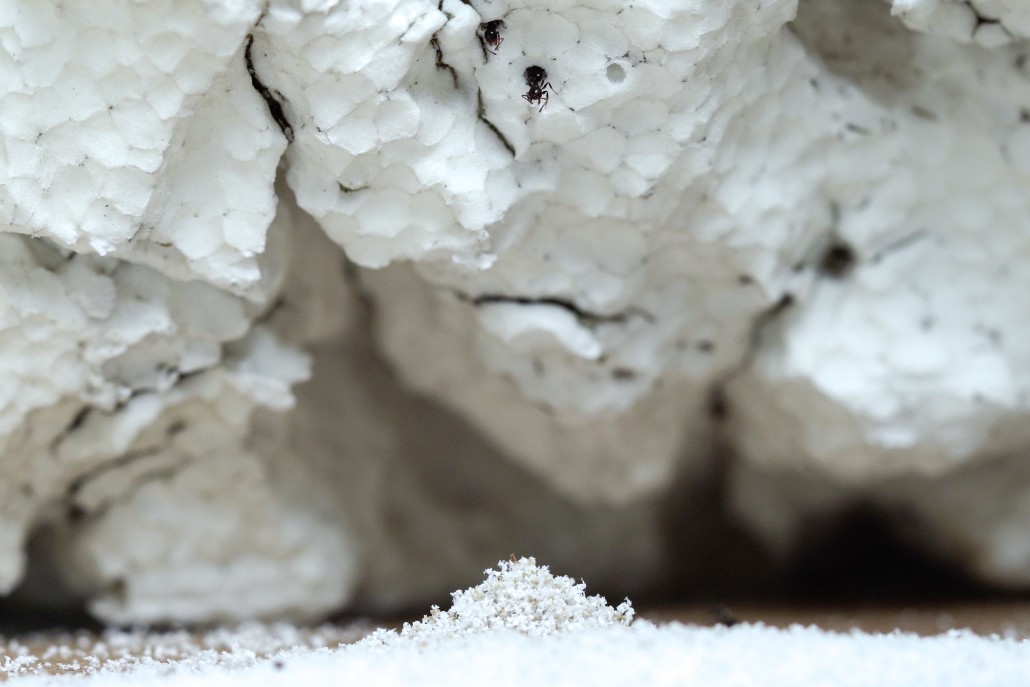
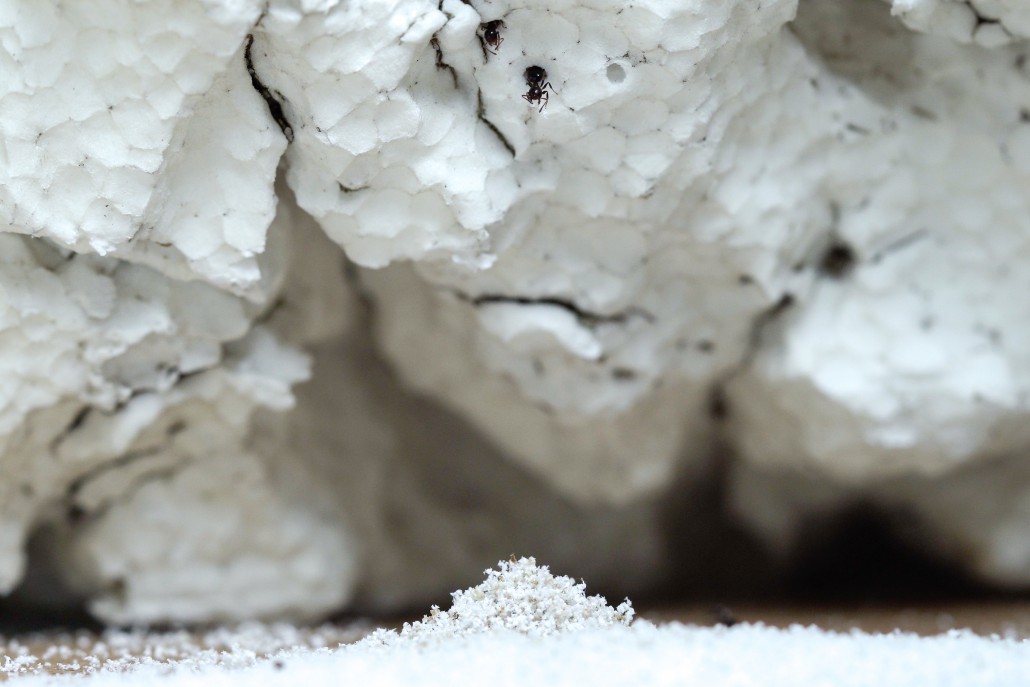
Chang Hanna, New Nature, Ants in New Rock, 2023 (editing 2025), Single-channel video, color, 5min 30sec. ©MMCA

Through the ‘New Nature’ project, which emerged from these questions, the artist presents a realistic portrait of contemporary nature—one that continues to adapt and survive despite human-induced pollution. Even after enduring prolonged and repeated contamination, nature demonstrates a persistent vitality, continually adapting, even altering its DNA in order to endure.
 
By revealing this natural environment that coexists with countless human-made objects, the artist prompts us to consider whether humans, too, are capable of adapting to change at such a rapid pace. As the vast array of artificial materials discarded by humans increasingly becomes part of a new nature, the artist asks: How, then, are we—humankind—changing within it?


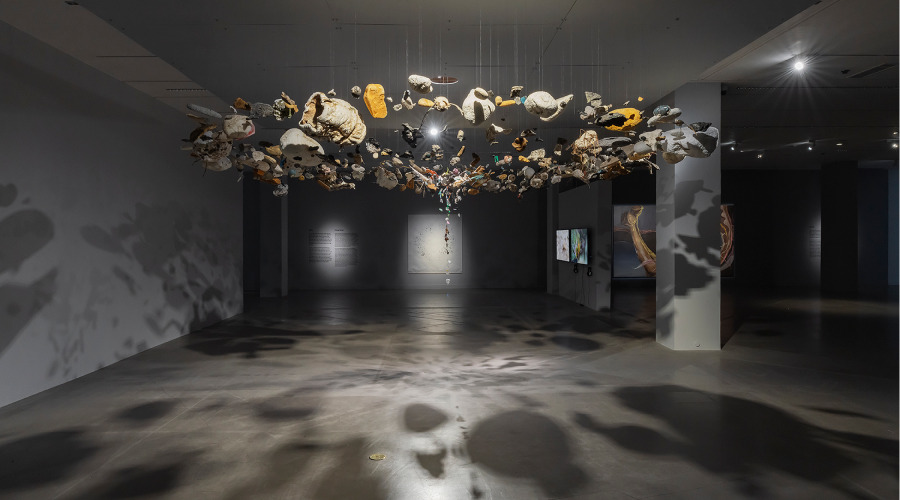
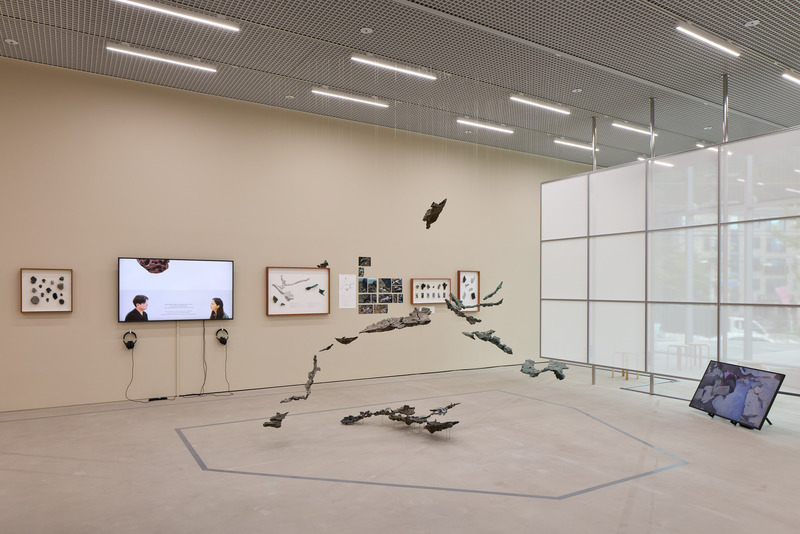
Chang Hanna, Being, 2025, Installation view of 《Young Korean Artists 2025: Here and Now》 (MMCA, 2025) ©MMCA

The series of new works presented in the 2025 exhibition 《Young Korean Artists 2025: Here and Now》 at the National Museum of Modern and Contemporary Art, Korea (MMCA) reflects this line of inquiry.
 
Among them, the large-scale installation Being (2025) is composed of more than 500 New Rocks collected from coastlines across the country, forming a massive structure built from New Rocks—plastics that have transformed through natural processes into stone-like forms.


Chang Hanna, New Nature: Being, 2025, Single-channel video, color, sound, 7min 40sec. ©MMCA

The work is composed of vertically suspended plastic fragments at the center and horizontally expanded New Rocks. The vertical plastic structure symbolizes human desire—an impulse that continually seeks growth and the accumulation of capital by creating hierarchies above and below.
 
In contrast, the horizontal formation of New Rocks metaphorically represents nature, which, unlike humans, creates no divisions or judgments, establishes no hierarchy, and instead accepts even the artificial as part of itself, folding it back into continuous cycles.
 
Presented alongside this installation, the video New Nature: Being (2025) illustrates how nature absorbs and recirculates not only plastic but also other human-made substances—such as industrial wastewater and rapidly emitted carbon—integrating them into its own processes as part of a new natural order.


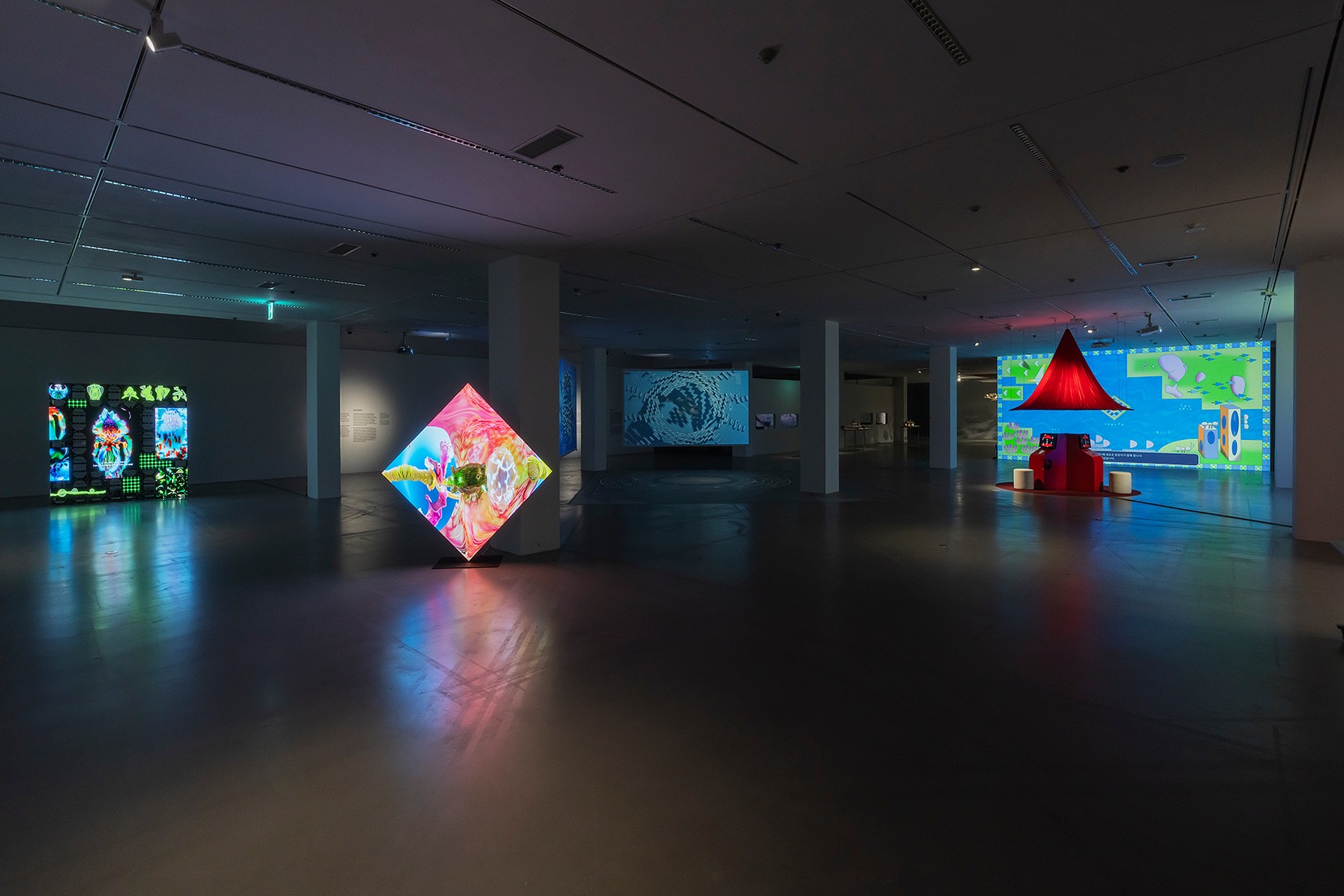
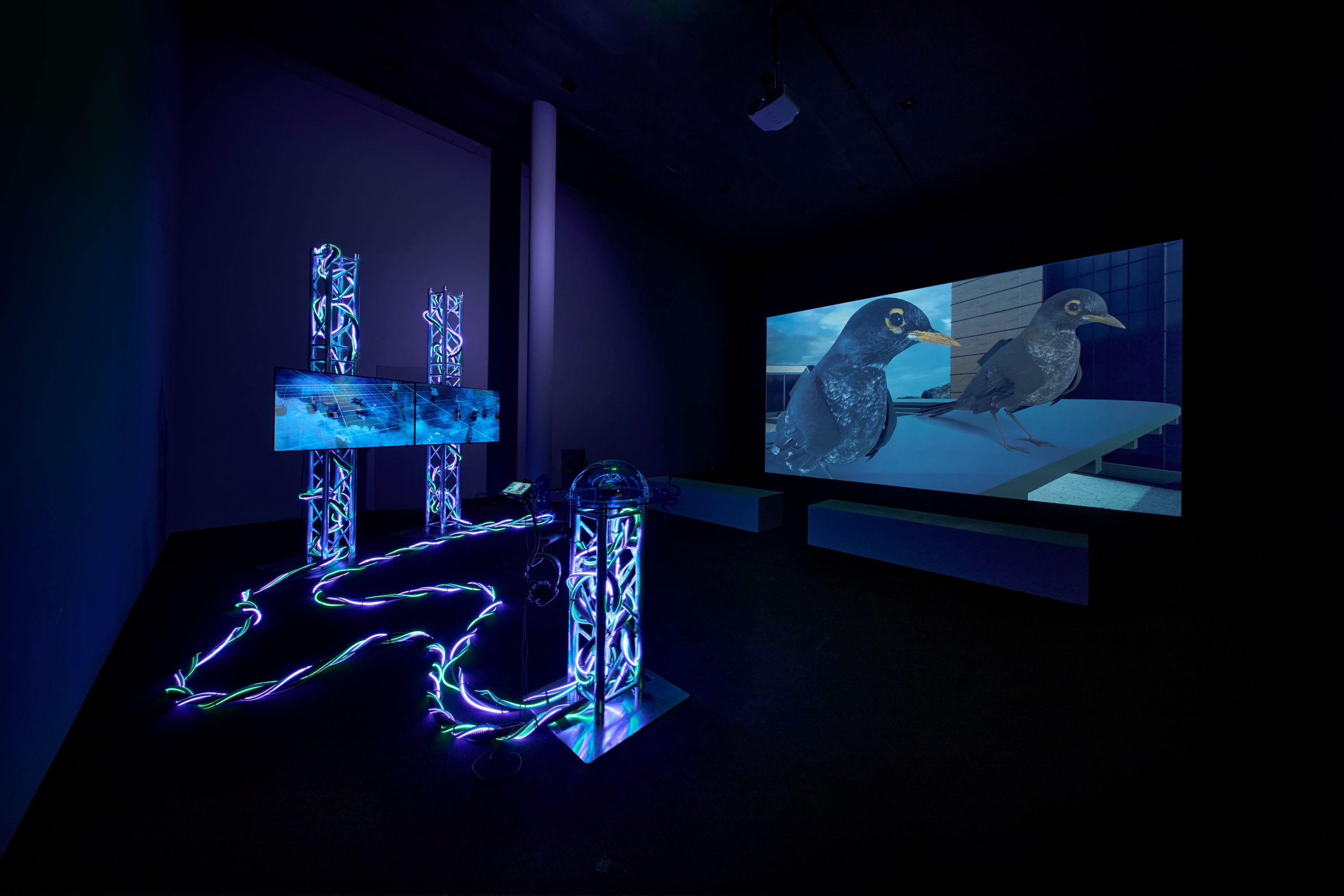
Chang Hanna, Installation view of 《Random Access Project 4.0》 (Nam June Paik Art Center, 2025) ©Nam June Paik Art Center

Chang Hanna’s work confronts us with the fact that, contrary to our expectation that everything humans produce will be processed under human control, our creations return to us as part of nature in ways we could never have anticipated.
 
By revealing New Rock—a new material of our time born at the boundary between the artificial and the natural—Chang invites viewers to move beyond anthropocentric, binary ways of thinking and to reconsider contemporary nature and artificial objects from a renewed perspective. In doing so, she leads us toward a deeper reflection on coexistence.

 “By looking again at the time of plastic, I realized that the end of the human system was underground, on the ground, or in the sea—ultimately, it was nature.”  (Hanna Chang, interview for 《Young Korean Artists 2025: Here and Now》, MMCA) 


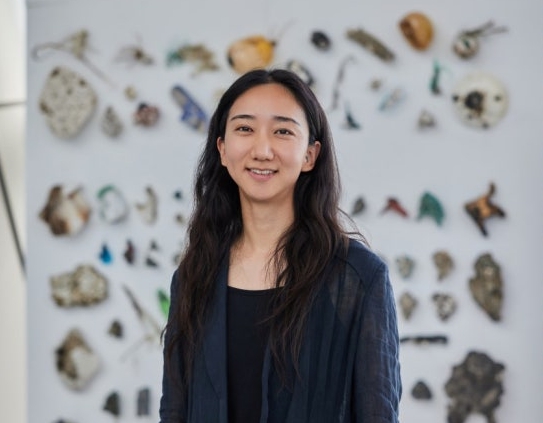
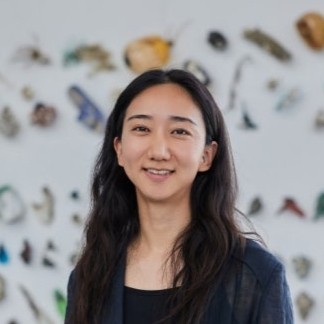
Artist Chang Hanna ©KOO HOUSE MUSEUM

Chang Hanna graduated from the Department of Sculpture at Seoul National University. Her solo exhibitions include 《Neo-Nature, Neo-Land Art》 (Chilsung Shipyard, Sokcho, 2024), 《New Rock》 (Clayarch Gimhae Museum, Gimhae, 2023), 《The Birth of New Nature》 (Mudaeruk, Seoul, 2023), and 《New Rock》 (Studio Square, Suwon, 2020).
 
She has also participated in numerous group exhibitions, including 《Earth, Once More: Responding with a New Sensibility》 (Art Archives Seoul Museum of Art, Seoul, 2025), 《Random Access Project 4.0》 (Nam June Paik Art Center, Yongin, 2025), 《Young Korean Artists 2025: Here and Now》 (MMCA, Gwacheon, 2025), 《Equity: Peaceful Strain》 (Gwangju Biennale Pavilion, Gwangju, 2024), 《Climate in Everyday Life and Strange Climate》 (The National Science Museum, Daejeon, 2022), and more.
References