Floating
people share a commonality in that they presuppose some purpose and
destination. Yet when we say “floating,” the term does not refer solely to a
carefree life. In cities, on the sea, and inside subway cars, people sometimes
form groups that clearly articulate a shared purpose, while at other times they
form collectives without any specific sense of purpose. Driven by a wide range
of external factors, these individuals are influenced, on a macro level, by
social and political conditions that emerge between nations or between states
and individuals.
On a micro level, their movements are shaped by corporate
restructuring, familial relationships, and academic pursuits. All of these
individuals move toward purposes that are partially similar or different.
Particularly from an individual, micro perspective, it becomes difficult to
judge purpose at the level of the group. Like people waiting together for a
flight at an airport, in situations where means of transportation are widely
shared, individuals may be together without sharing the same destination—the
means alone are common. Likewise, on social network services, followers
appearing on a timeline do not all use the space with the same purpose. Even
when the means are identical, each person’s orientation can differ.
Means
not only homogenize differences without allowing them to surface, but also view
and control everyone as the same. When wielded under the banner of human nature
or universal equality, means acquire a totalitarian character and become ends
in themselves. In pursuing an ideal, macro-level subjects and individual
subjects move—or attempt to move—in different directions. While the former
seeks to construct an overall outline, the latter struggles to escape from
within that outline. Both nonetheless involve someone’s movement—footsteps
taken to reach a purpose and destination.
Yet footsteps function differently
depending on what drives them. Unlike broad categories such as citizens, youth,
or all app downloaders, individuals break away from such frames—sometimes with
clear intentionality. The micro level seeks to open forward against the
totalization and homogenization enacted by the macro level that mixes
everything into one. This series of relationships can be described as
“stirring.” A leader’s uniform stance, the confusion it generates, the
individual gestures mobilized to carry out a purpose, and the collective voices
raised to break through stifling situations—each exerts its own force.
Stirring, as a means, can either produce homogenization or create fissures
within it, depending on what is being stirred.
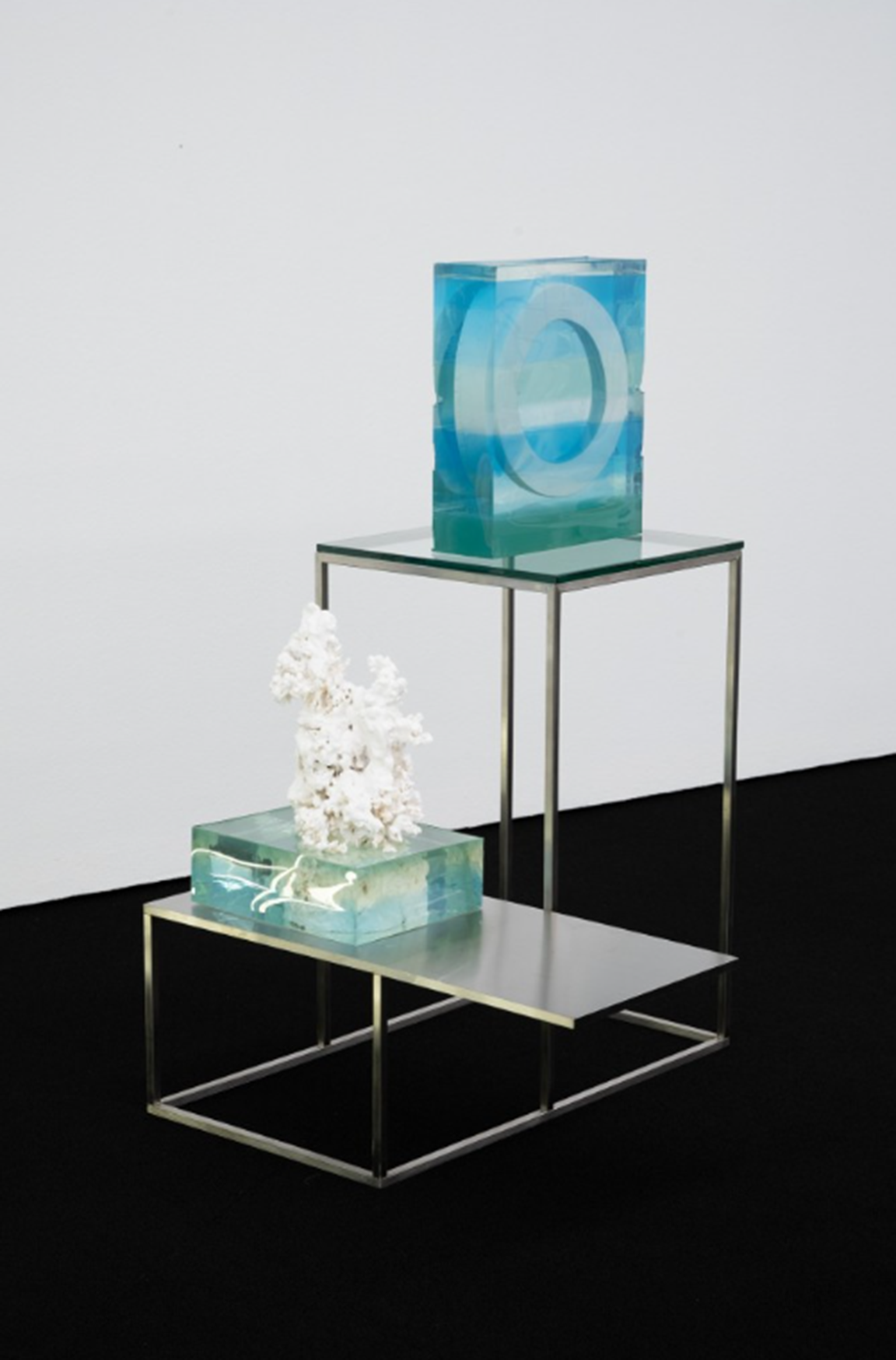
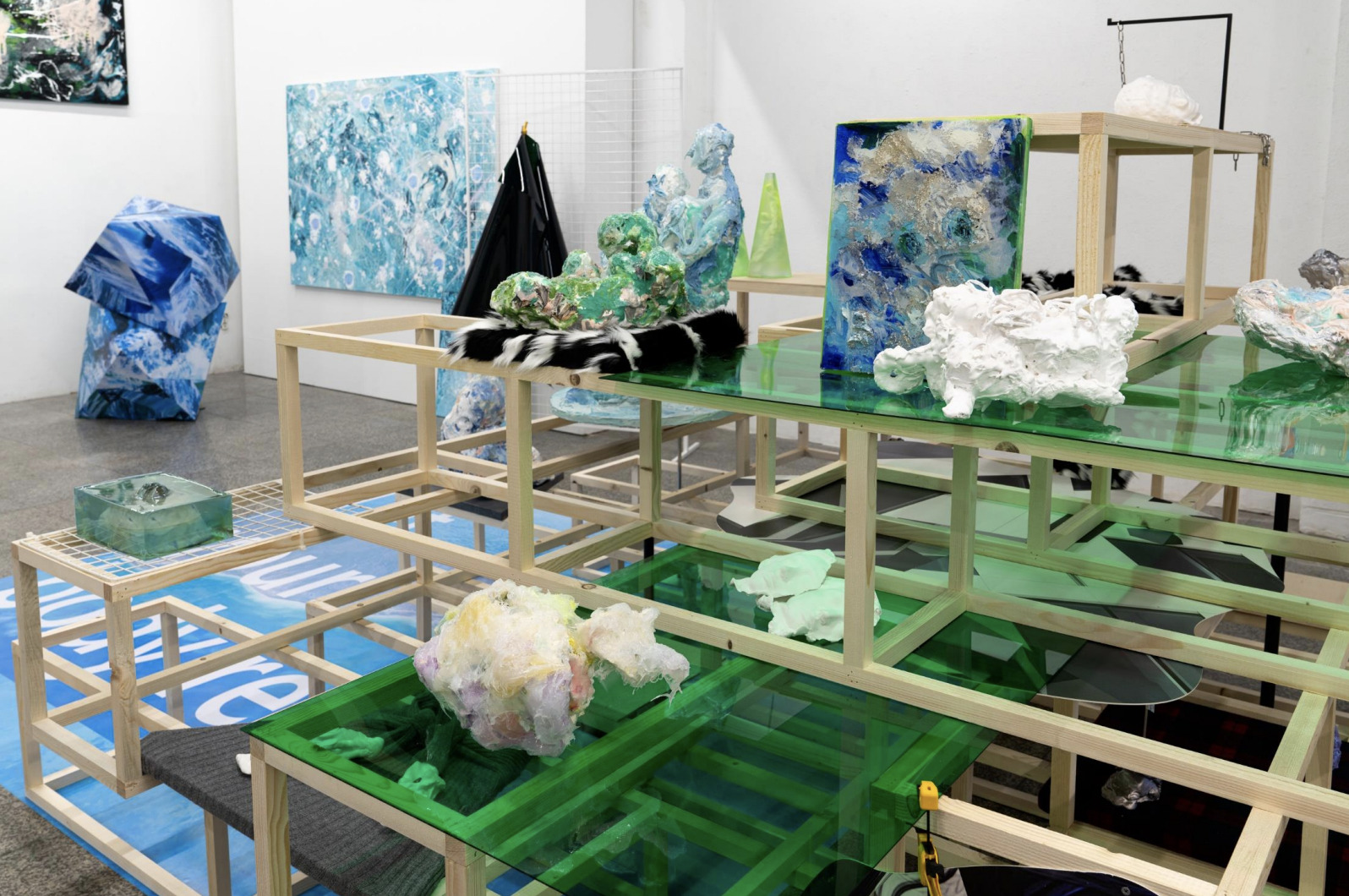
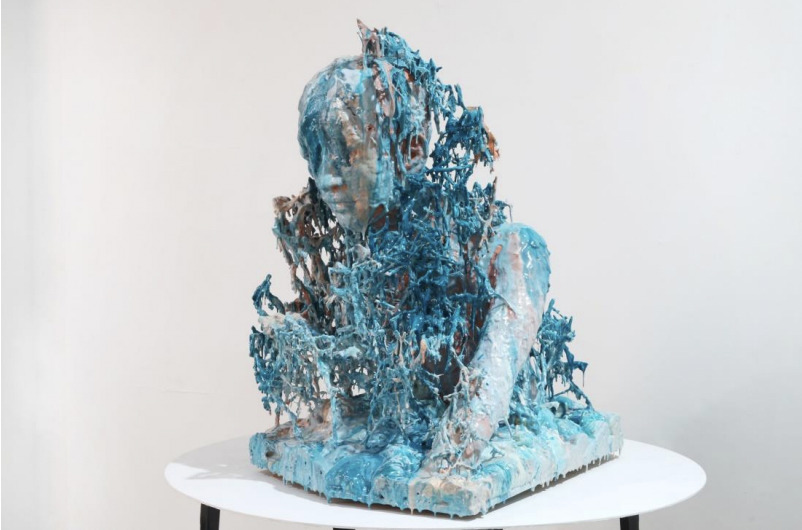
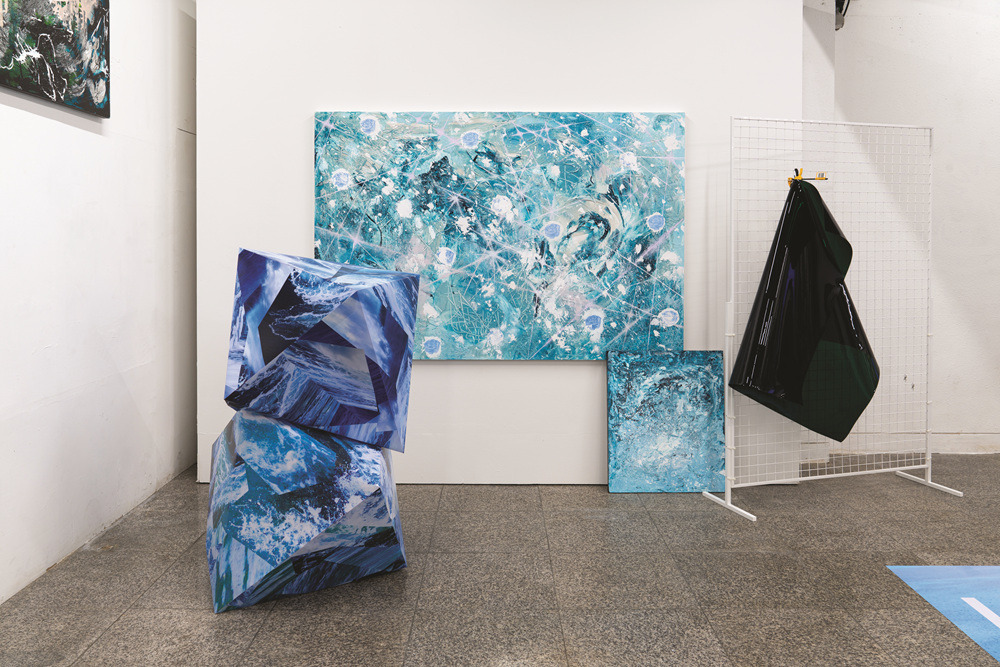
In
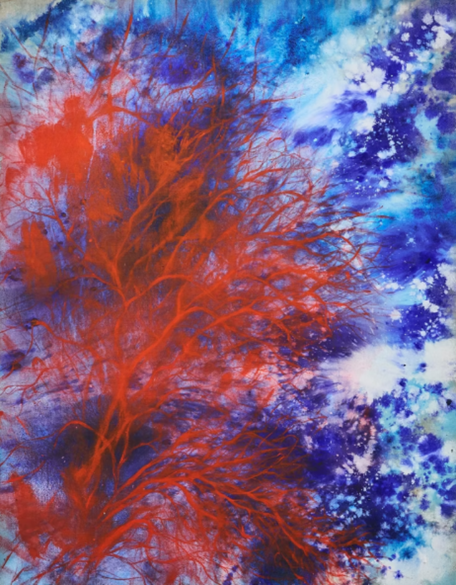
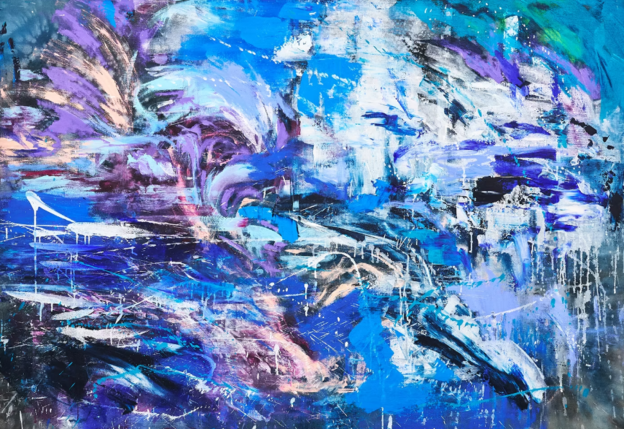
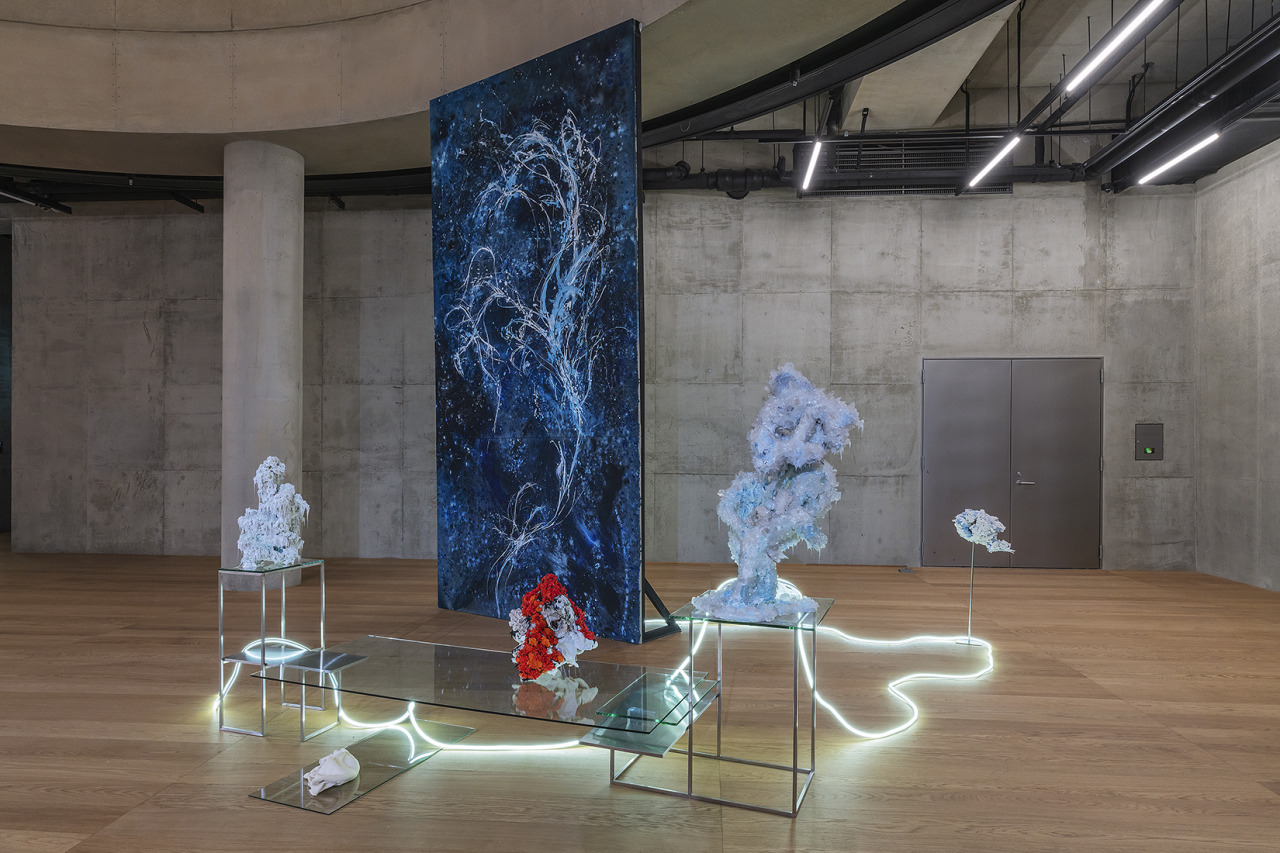
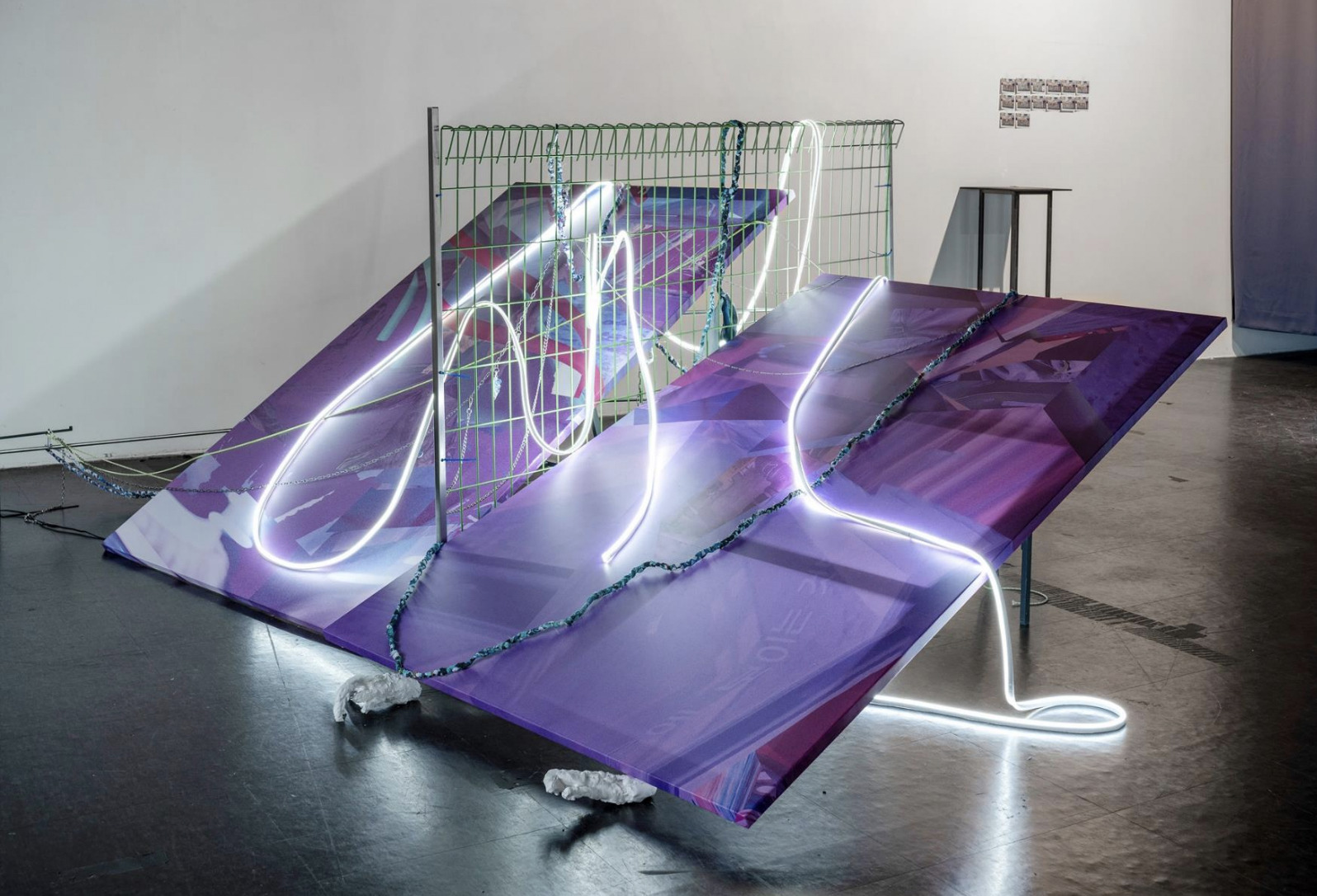
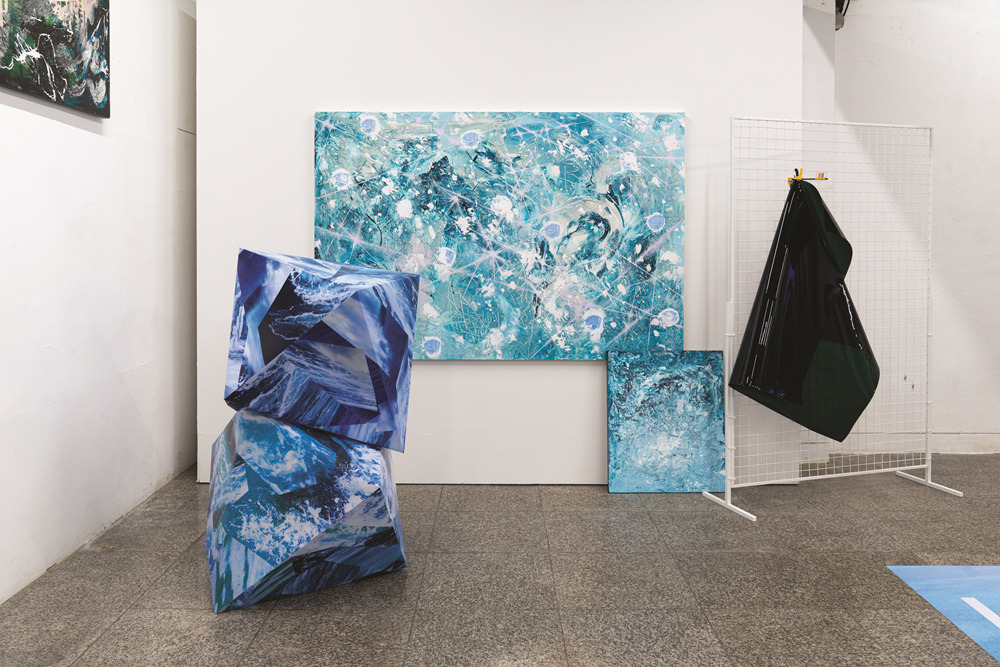
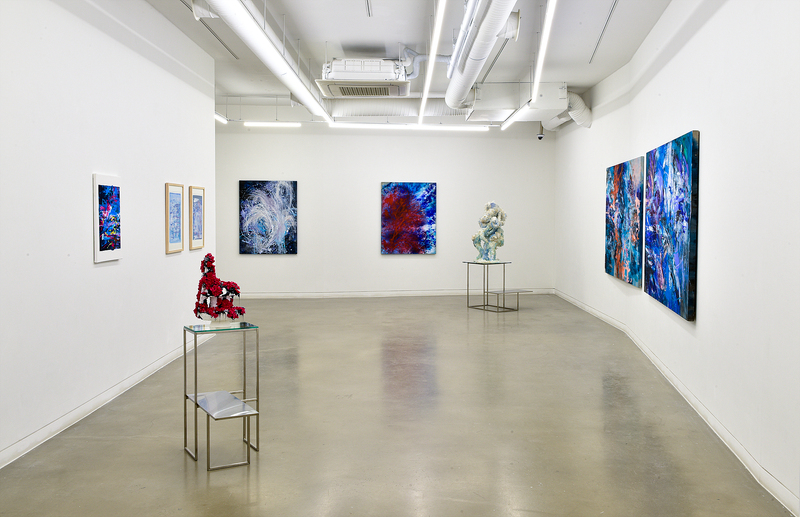
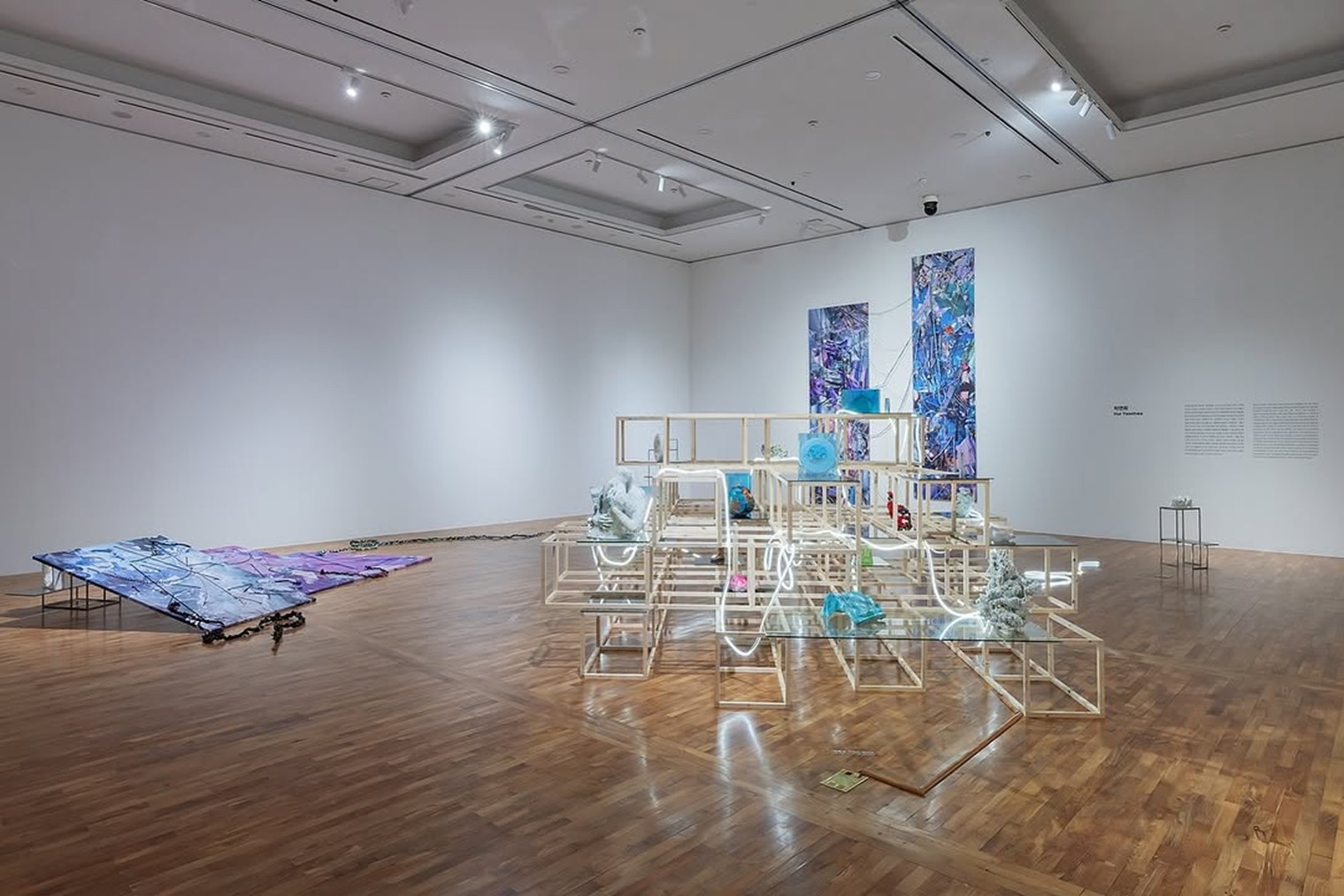
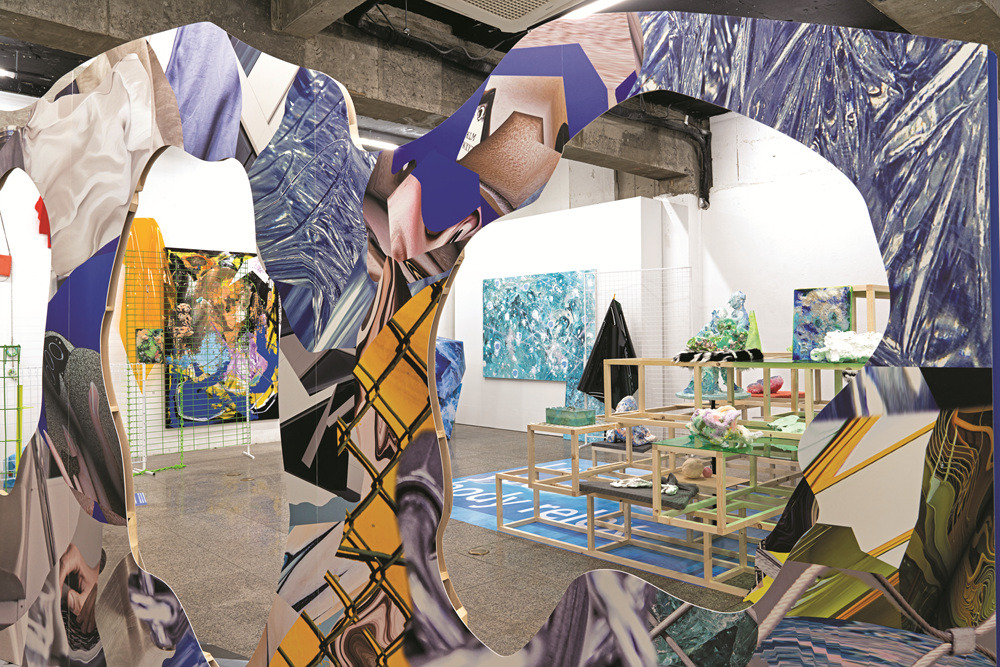
Hur Yeonhwa’s solo exhibition 《Floating People》, viewers encounter a range of media, including edited and printed
images, paintings, clothed canvases, and figurative objects. Though each work
is formally distinct and individual, their placement in multiplicity across
wooden structures and interior/exterior wire fencing causes them to appear
collectively. The exhibition title comes to mind in light of the
permutation-free arrangement of multiple components within a single space.
Meanwhile, phrases such as “variable exchange” or “datafied bodies” allow us to
infer the thematic consciousness embedded in the title.
Exchanges and
relationships that drift and hover inevitably evoke contemporary social
conditions. How, then, is “stirring” emphasized in this exhibition, and how
does it relate to the thematic consciousness implied by the title? Stirring
operates on a technical level through abstraction. By editing and merging
multiple images, painting them to appear ambiguous, revealing only parts of
objects through thin or perforated materials, and presenting viscous objects,
stirring is shown through works that mix multiple entities or condense them
into one.
In this exhibition, the dispersive and aggregative effects of
stirring are manifested not only in the collective or individual installation
of works within the space, but also in attempts within the works themselves to
integrate and arrange collective or individual elements. In this sense, the
works create a site in which the targets and elements of “mixed media” and
“medium mixed” are swapped.
However,
abstraction may be perceived negatively, as in criticisms that accuse works of
distortion or of failing to present things straightforwardly. If one adopts
evaluative criteria that prioritize direct representation of reality or
actuality, these works might be reduced to “fiction” in a pejorative sense. In
Hur Yeonhwa’s exhibition, abstraction is neither a distortion of reality nor a
misinterpretation of the real. Rather, abstraction here articulates the bodily
gestures humans perform in reality—namely stirring—and the effects those
gestures generate.
As noted earlier, stirring in itself cannot be declared
either negative or positive. It can erase differences to create sameness, or
become the footsteps of individuals seeking to break through homogenization,
eventually forming collective voices. In this exhibition, abstraction appears
as a field that not only suppresses and excludes but also mixes, unifies, and
allows disparate elements to coexist. Stirring thus captures the ambivalence of
abstraction and resonates with the contemporary dynamics of dispersion and
aggregation that the artist considers.
Stirring
is reflected not only in the thematic aspects of the works but also in their
placement within the exhibition space and in their production methods. Rather
than judging stirring as inherently negative or positive, viewers come to
understand that its value depends on the results produced after something—be it
the state, a particular group, oneself, or society—is stirred. The gesture of
stirring is concentrated in a work consisting of a triangular canvas clothed
and bearing hand-shaped objects.
This piece can be read as depicting a leader
with arms crossed, an oppressed individual, or a figure expressing solidarity,
demonstrating how meaning shifts between binding—oppressively confining an
object—and joining forces. The subjective stance of stirring to bind, and the
footsteps that seek to open and move forward from a bound state, lead to
different destinations depending on what is stirred and whether the movement is
total or detailed. What the artist presents in this exhibition is the
operational logic of stirring: a dynamic relationship that encompasses macro
and micro levels, control and solidarity, and both incorporation toward unity
and deviation that escapes from it.