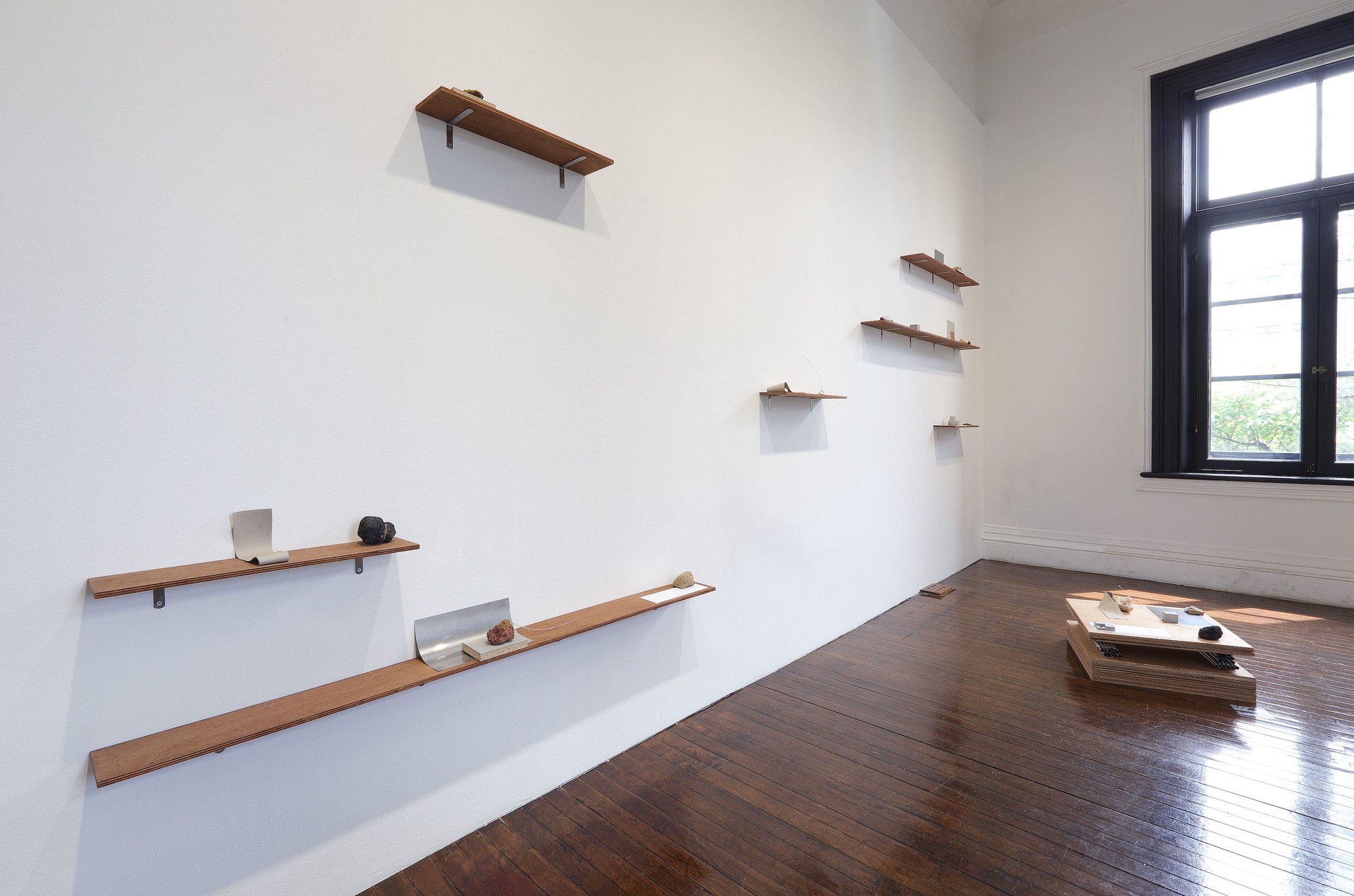
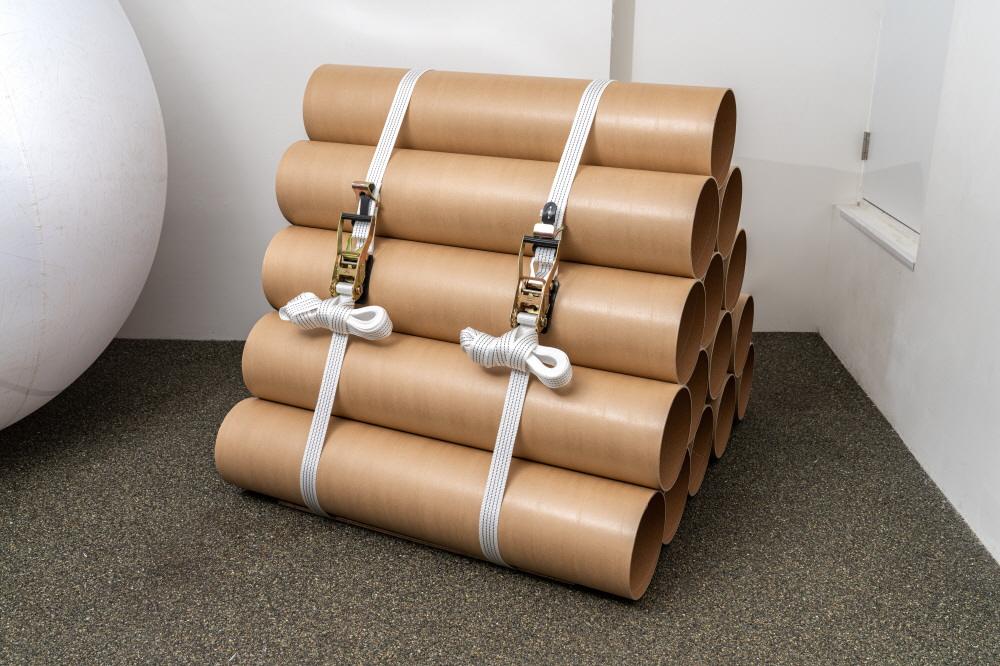
A
swollen plastic sphere filled with air, a piece of black cloth resting on
foldable metal legs, chunks of cement, a large cylindrical paper tube secured
with cargo straps, and a thin sheet of galvanized metal—everything in the small
space is quivering or making a clicking, trembling motion.
Jinseon
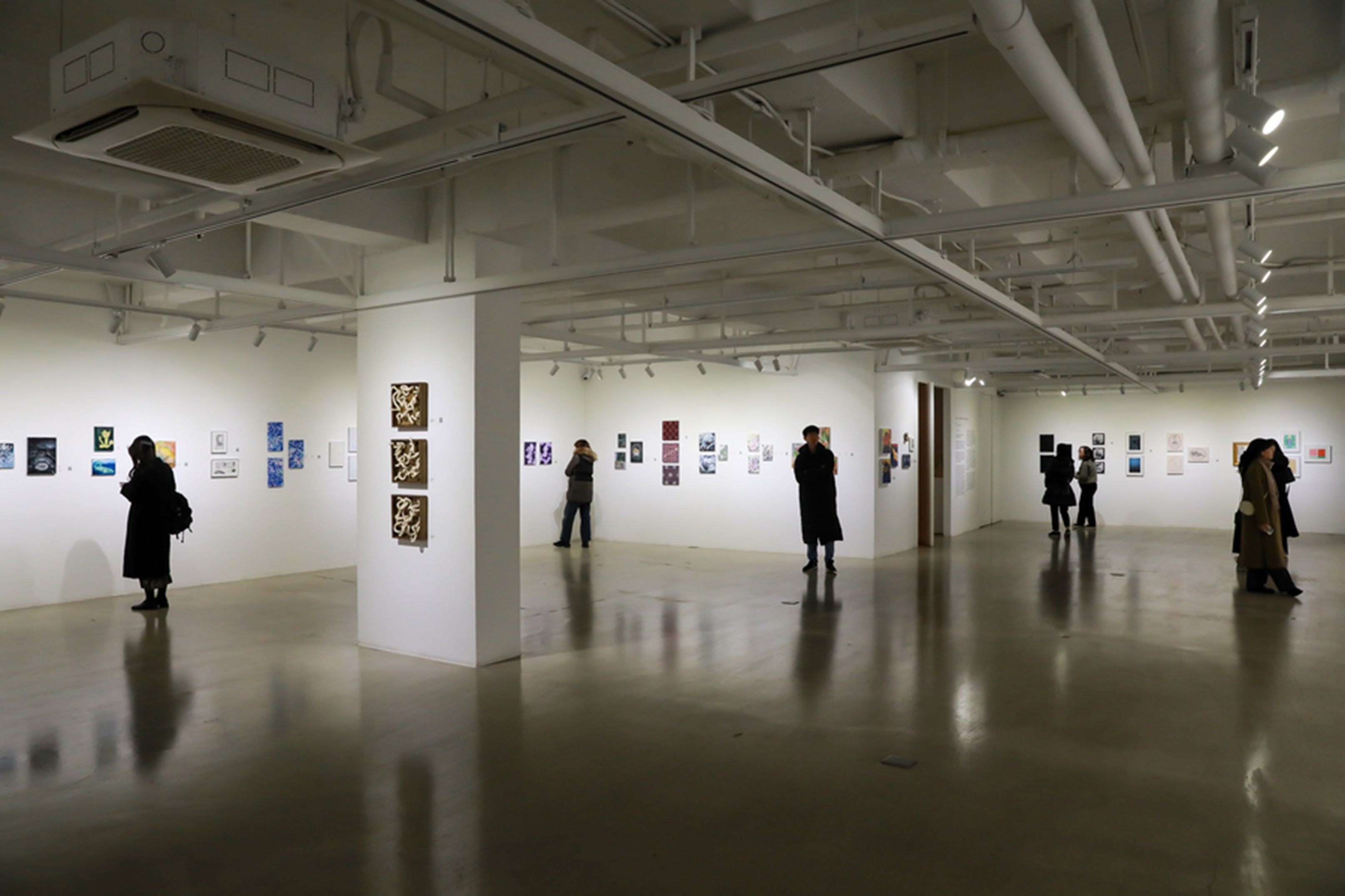
Ahn’s solo exhibition resembles less an art exhibition than the recreation of a
small storage unit into which everyday urban objects have been hastily pushed
together. The works are placed so close to one another, and crowded against a
pane of glass, that the space evokes an improvised warehouse more than a white
cube. Visitors who open the gallery’s glass door—as if letting the outside
noise and vibration flow into the space—must move sideways through the objects.
For those accustomed to artworks treated as fixed, secure entities in spacious
galleries, the sight of these nearly life-sized objects arranged in ways that
barely fit the room, positioned loosely rather than firmly installed, generates
immediate unease.
White
Ball (2017) has the scale and form of the balloons often hung
over buildings or parks, yet despite its volume, it trembles delicately. The
only mechanism keeping it in place is a transparent fishing line wound around a
screw drilled into the wall. Throbbing
Ground (2023), placed before it, resembles an improvised street
vendor’s stand, with uneven and loosely set legs that look as though a strong
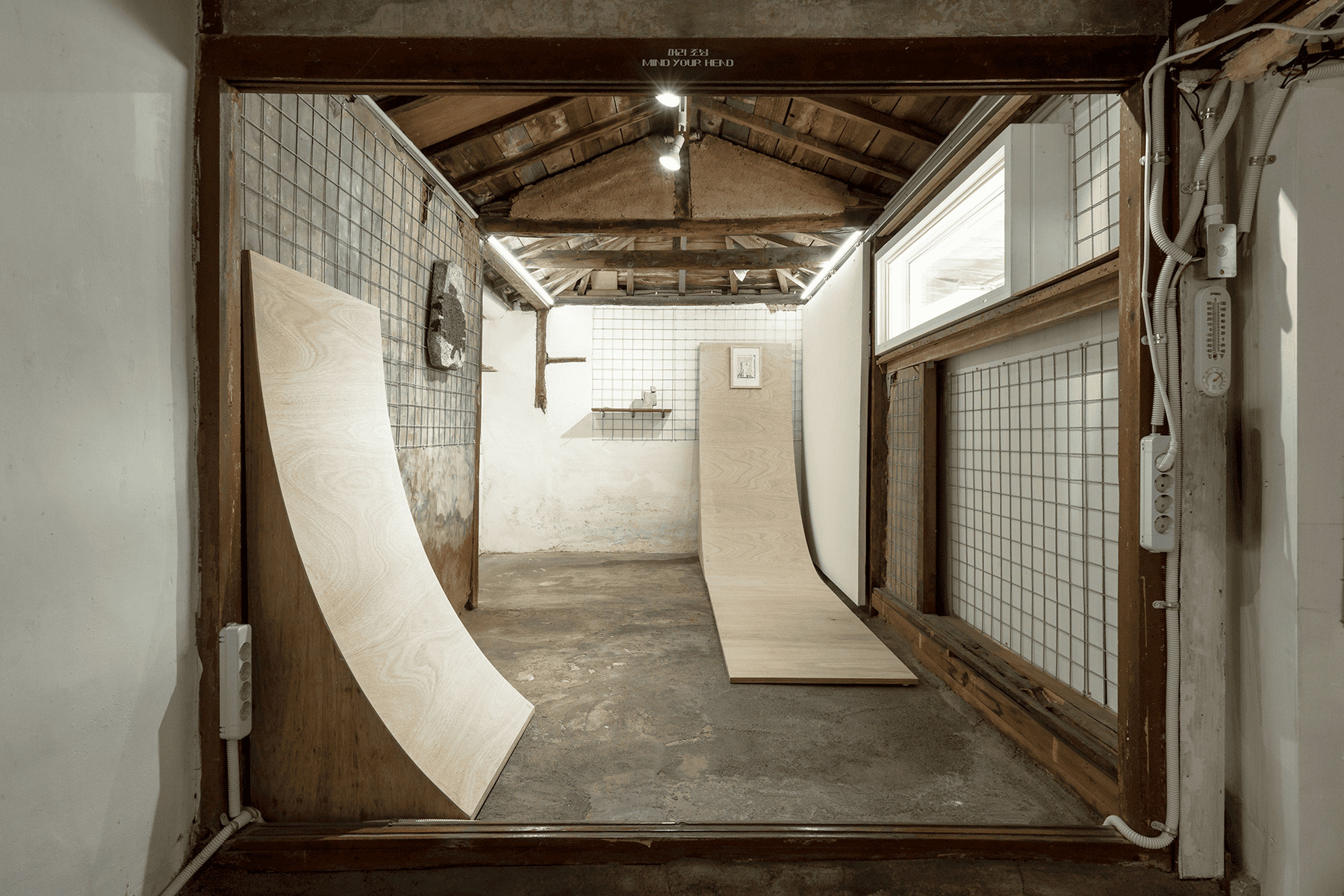
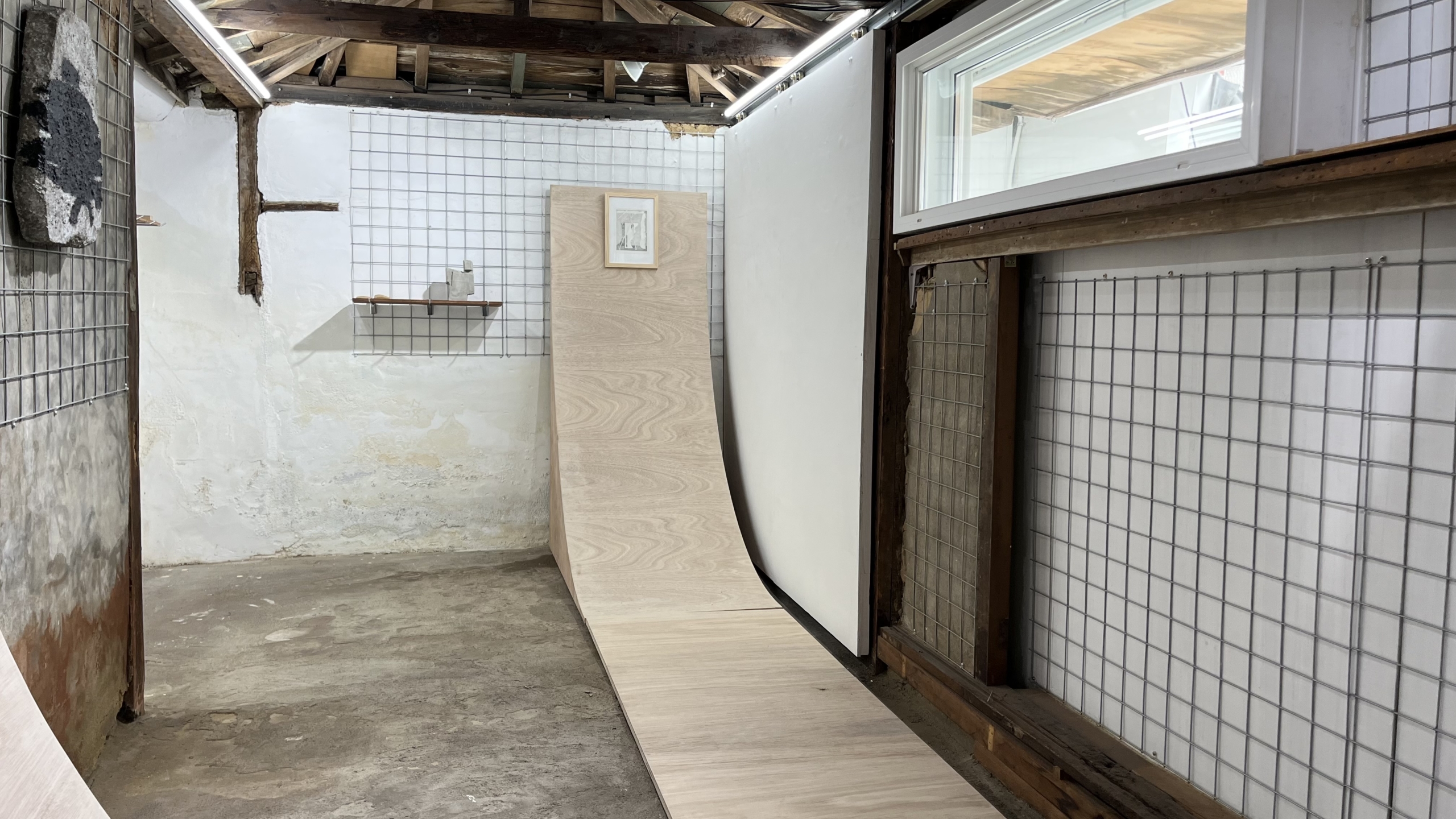
push would topple it. Overpass (2023), made of
cement, insulation foam, and workbench components, appears sturdier than the
other works but still gives the impression of being constructed not from a
single solid mass, but from precariously stacked layers.
These
five sculptures operate as samples of the things that constitute our living
conditions, conjuring once again the sensation of being placed in the middle of
an ordinary city. Standing in a subway car that shakes above a temporary
platform; sitting still inside a stopped train car while your body quivers from
the speed of passing trains; walking hurriedly across black asphalt only to
encounter the collapse of a sinkhole or the sinking feeling of despair—these
are the visceral memories invoked by the works.
We forget that the seemingly
solid world is in fact constructed from patched-together metal, wood, vinyl,
and plastic, until encountering these trembling specimens of the city
again. Overpass, positioned at a tilt, recalls the
fragments of overpasses and elevated pedestrian bridges that forcefully connect
divided urban zones—a reminder of bridges that have collapsed, the fragments of
accidents, and the memories resurfaced by their failures.
The
ominous familiarity emanating from each work—and from the space they form
collectively—resonates with the individual experience of 2023 in Korea: the
ongoing struggle to secure a stable sense of self, body, and environment, and
the repeated failures of that attempt. The sculptures Ahn selects and assembles
affect not only the viewer’s body but also her psyche.
Viewers
feel pressured but not terrified because they trust that the artist must have
calculated the range of movement for each object, and that the works are not
truly dangerous. However, when we encounter these objects—fragile enough to
collapse or be discarded at any time, just like the unstable environments we
inhabit—the tension between them leaves a subtle afterimage on the body. Even
as we follow the news, we find ourselves embedded in a precarious world defined
by rapid technological growth and constant acceleration. Our bodies are
gradually depleted of the ability to retain embodied experience, turning into
bodies that no longer remember.
In
the “moving yet stopped” space Ahn constructs, we are reminded of the materials
and infrastructures—like cables laid beneath the ground and spanning the whole
city—that wrap around our daily lives. Through these works, the viewer
rediscovers the unseen physical layers beneath the city surface and the
quivering matter that sustains it.