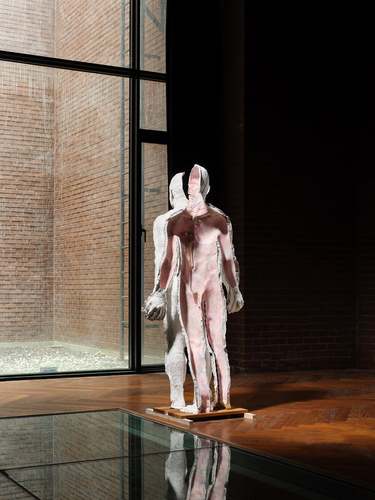


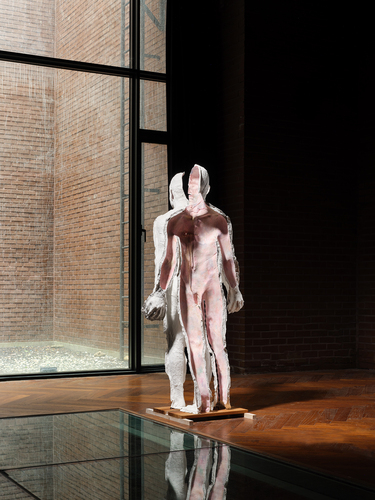
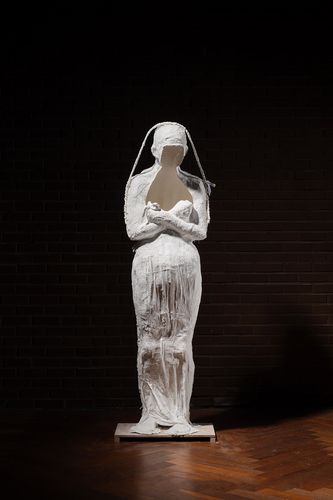
Eusung Lee, Medicine Buddha Standing Statue, 2023, plaster bandage with So Minkyung’s drawing, wood, 40 × 45 × 165 cm © Eusung Lee

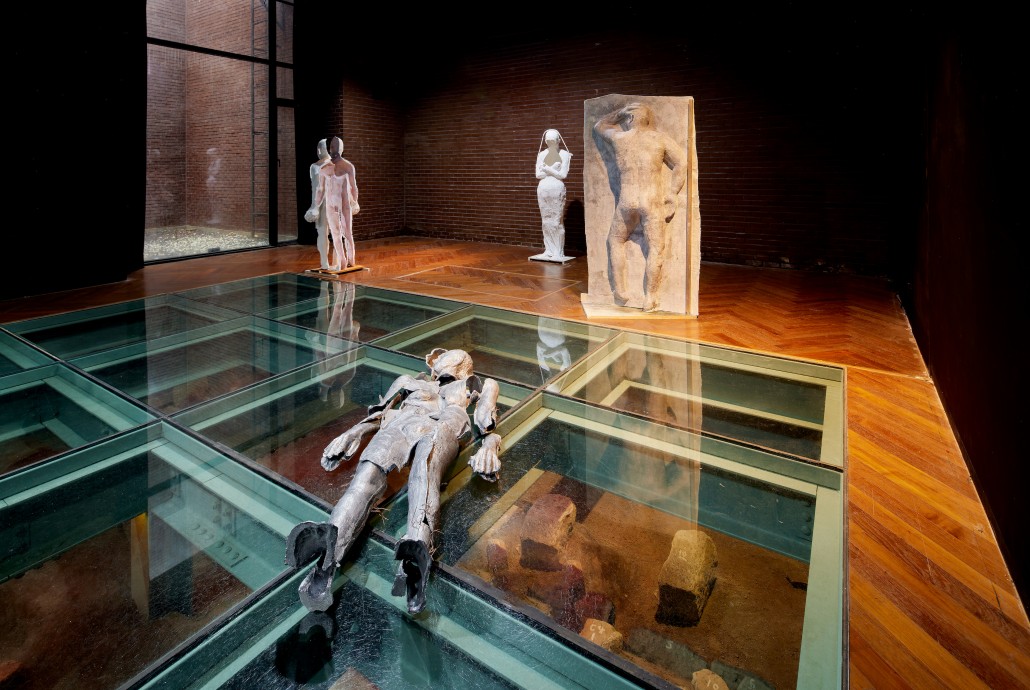
A bright white mass gleams in the dark exhibition space. On the floor, which resembles the interior of an excavation site, lies a figure in armor. As I approached, I realized that these figures were all “half-bodies.” They resemble ancient Egyptian sculptures or a bride praying with folded hands, yet the backs and insides are hollowed out.

Frozen as if time has stopped, these “human sculptures” are the works of artist Eusung Lee, shown in her first solo exhibition in four years at Artspace Boan 3, 《Cowboy》 (Jul. 28–Aug. 20). The exhibition consists of five human figures made of plaster bandages and one self-portrait cast in aluminum fragments.


The Methodology of Shells and Sutures

Although this exhibition features cast human bodies, Lee’s starting point was painting. Early on, her focus was on the “frame.” Both formally—as in the canvas and panel—and conceptually—as a structure that contains the narrative—the “body” of the object played a central role.

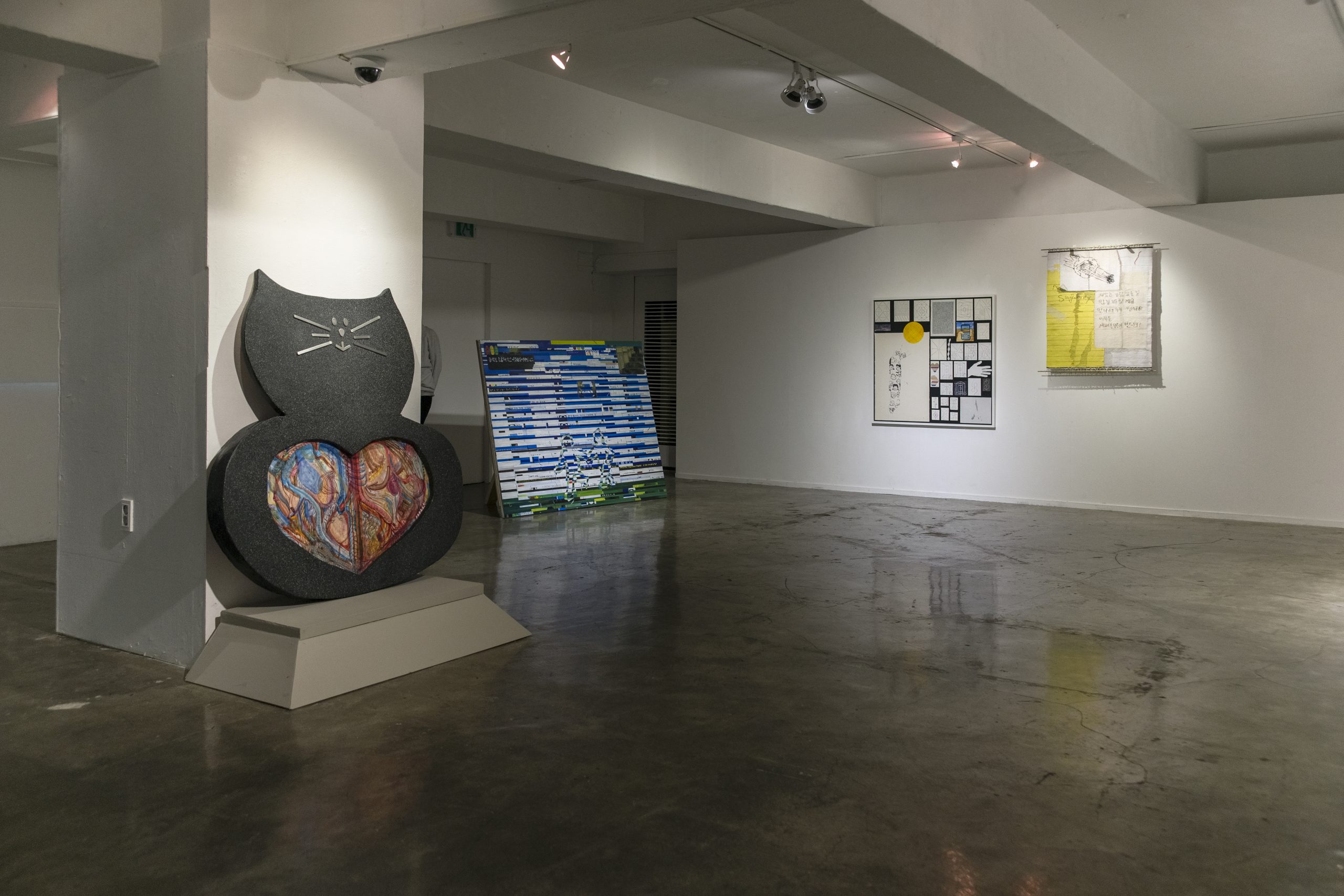
Her first solo exhibition, 《Floppy Hard Compact》(Gallery 175, 2016), addressed storage devices such as floppy disks and cloud systems and presented textiles and paintings. She inverted the perception of memory being stored through compression into data by reproducing the outer structure of memory devices as painting. It was an artistic attempt to reconsider the relationship between the material and the immaterial.

Her second solo exhibition 《Jane》(WEEKEND/2W 2019) included both reliefs and free-standing sculptures. If the first exhibition dealt with abstract concepts such as “memory” and “body,” this exhibition embodied the theme on a more concrete level—“the real body and real life.” 《Jane》 marked the transitional moment when Lee shifted from painting to sculpture.

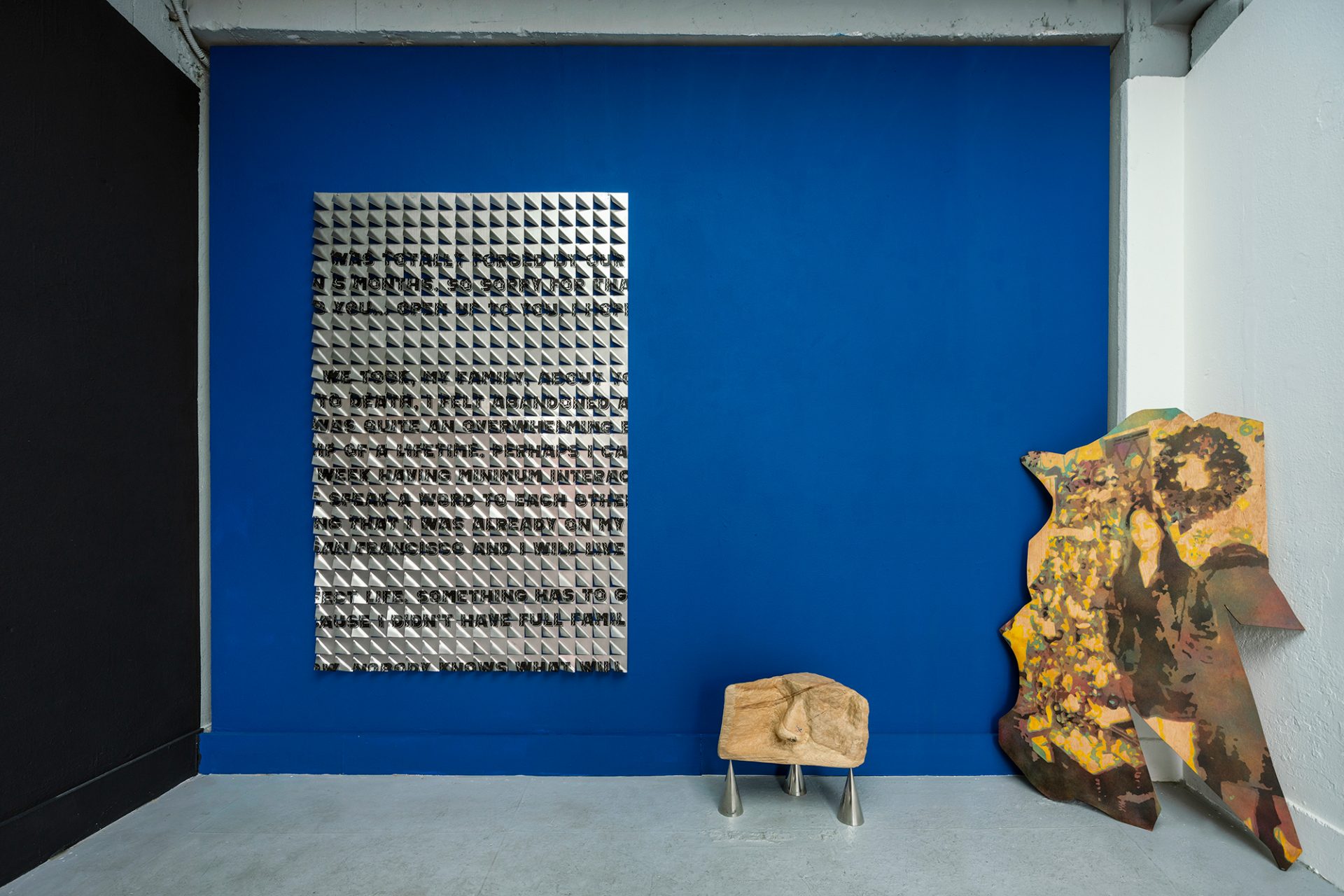
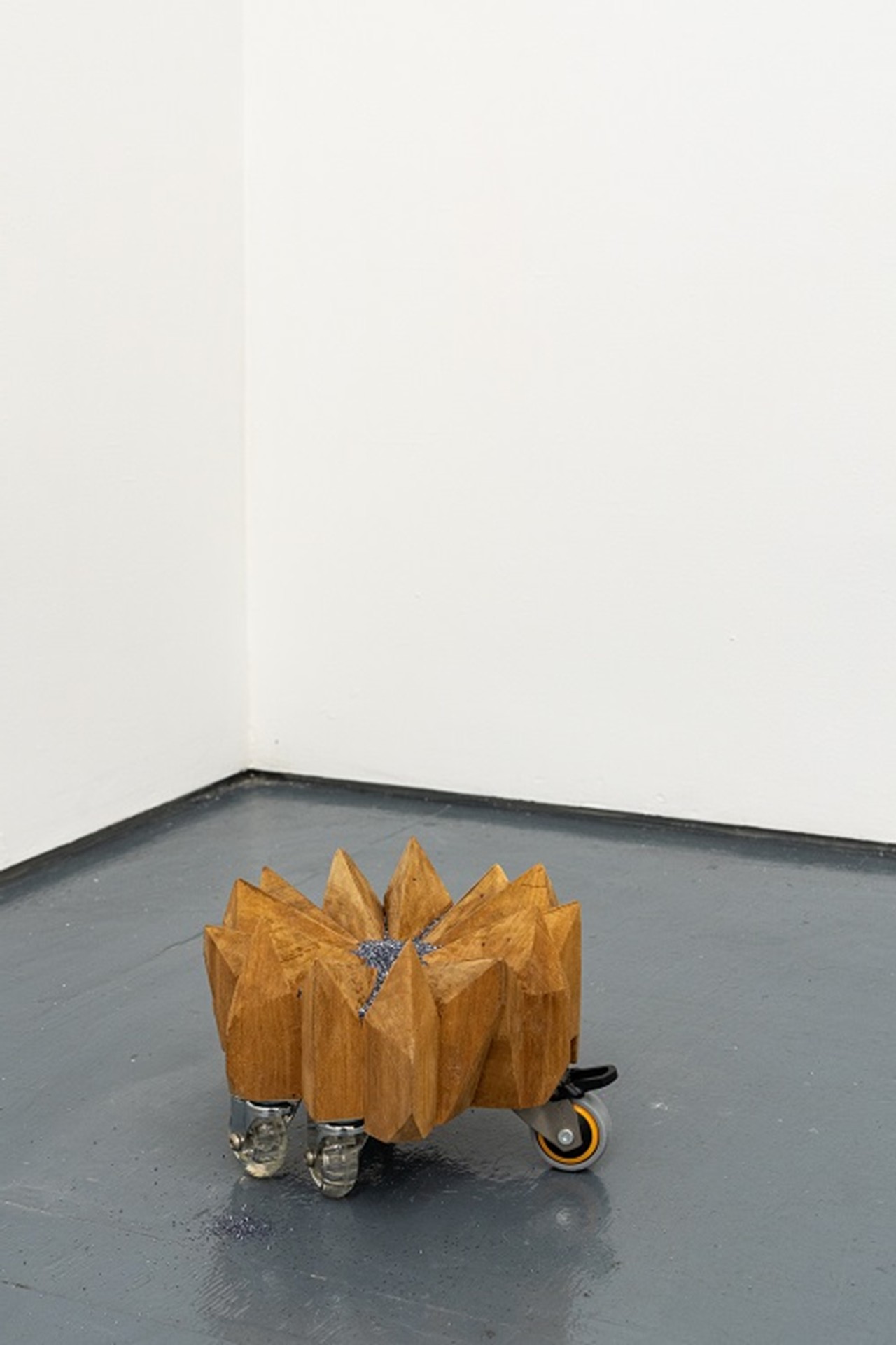
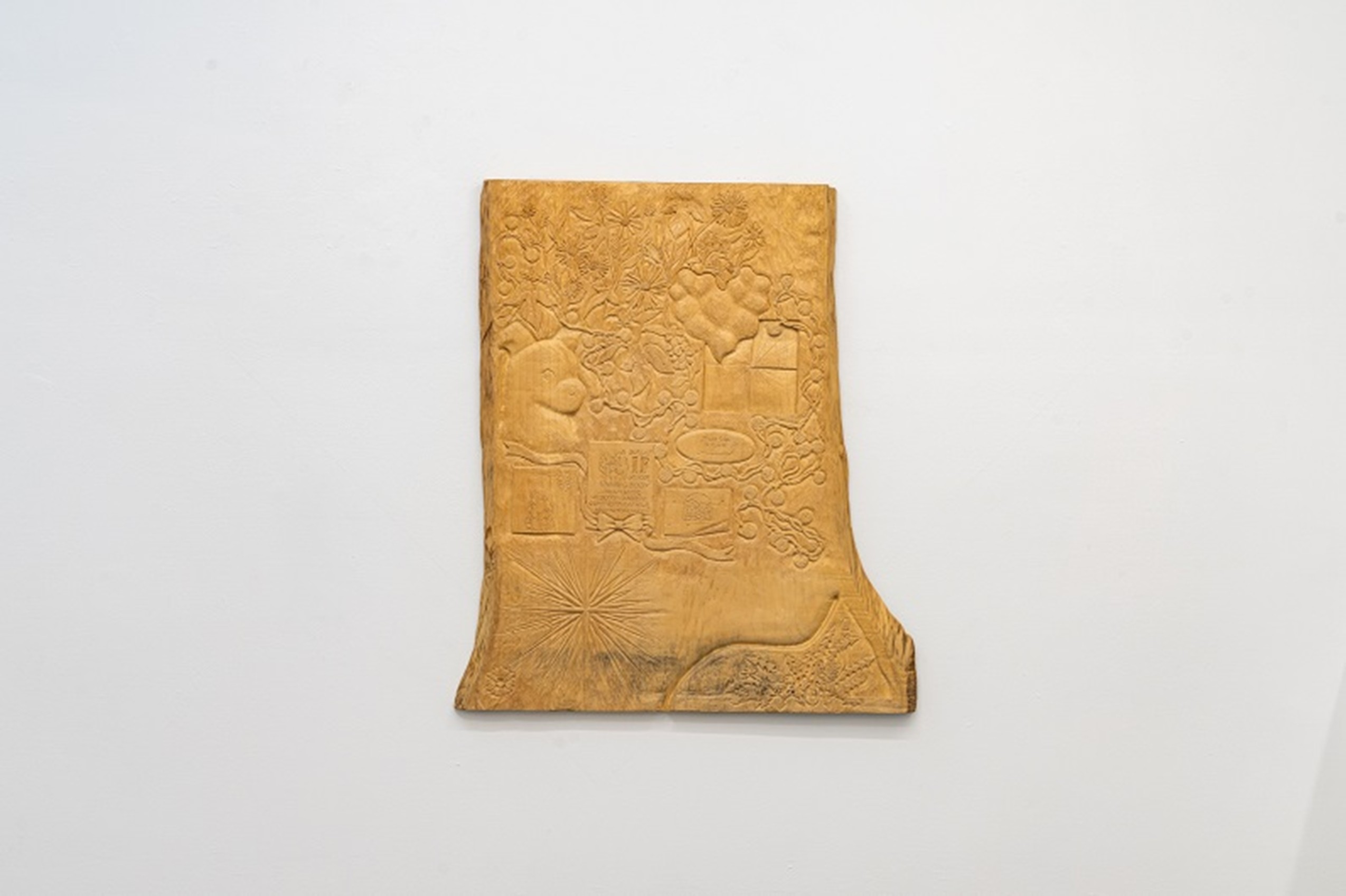
She called reliefs “paintings hung on the wall,” and she engraved letters and symbols on wooden frames and panels using the familiar format of painting. Her free-standing sculptures incorporated industrial objects into fragments of human bodies. Lee metaphorically described the fragmented life of modern people as a “hybrid body.” In this way, her work, which has long observed contemporary systems, narrowed its perspective from humanity to “the human body.”

Returning to the current exhibition, let us pose four questions. First: Why the human body? After she began working in sculpture, the body was a subject that she had “unconsciously avoided.” Figurative sculpture is traditionally considered the most advanced stage in handling a material. Anatomically complex and difficult to transfer from observation into form, the human figure is much more challenging than inanimate subject matter. None of her previous sculptures presented a complete body. Her new full-body upright figures are the result of confronting the task head-on—a painter taking on sculpture.

Lee sees the human body as an assemblage of objects and adopts the formal methods of “shell” and “suture.” Like assembling objects, she divides the body into different surfaces and recombines them. Previously, she attached objects to body fragments to create a “mechanized human,” but in this exhibition she stitches together separately crafted fragments of the body into a full figure.

What material would allow this kind of suturing? The answer is “plaster bandage.” Normally, plaster bandages are used only for preliminary casting before large-scale sculpture due to their weak durability. Lee, however, took advantage of this quality. Plaster removed from the body is extremely thin, capturing the skin and muscle in detail. The softness of the material was paradoxically suitable for conveying the impression of something alive. The finished sculptures appear solid and complete, but in reality, they are hollow—what she calls “ghost-like archetypes.”

The exhibition presents six human figures in total. Who are they? Although she has narrowed her focus to the human body, Lee continues to trace the patterns of contemporary systems. In Medicine Buddha Standing Statue, she imagines a Buddha who might save people from the illnesses of our modern era. In the past, people died because they could not acquire medicine. Today, people are sick because medicine has become so readily available.

“If the Medicine Buddha were to descend in the 21st century, wouldn’t she consume the medicine instead to save us from our addiction?” While thinking about how to breathe life into the sculpture, she recalled the cell-like drawings of artist So Minkyung. The two artists had collaborated in their two-person exhibition 《Embassy》(Katalog) in 2021, and they discussed the production of the work. So Minkyung painted the caduceus, snakes, and symbols of Asclepius onto the dried surface, highlighting spinal cords and blood vessels with colored dots, giving the sculpture vitality.


Installation view of 《Cowboy》 (Artspace Boan, 2023) ©Artspace Boan

The aluminum sculpture Eggshell is the only work cast from the artist’s own body. She reveals that she, too, is part of the contemporary society she observes. Aluminum has a metallic texture yet is lightweight, and Lee chose it because she was able to cast her body without assistance. As a result, Eggshell has loose connections between fragments and a rough surface, further removed from the idea of a complete body.

Finally, why does she sculpt bodies that resemble objects? For Lee, sculpture is a medium that mystifies the human body beyond reality. Unlike the living body, sculpture has no soul and therefore does not submit to life and death. She reflected upon classical sculpture across Eastern and Western art history—the David, the Medicine Buddha, death masks, and mummies. Their paradoxical nature troubled her. “The legacy of sculpture felt like a towering monument built by sanctifying the object more than the living person.” She grew skeptical of the sculptural attitude that prioritizes objects over living human beings.

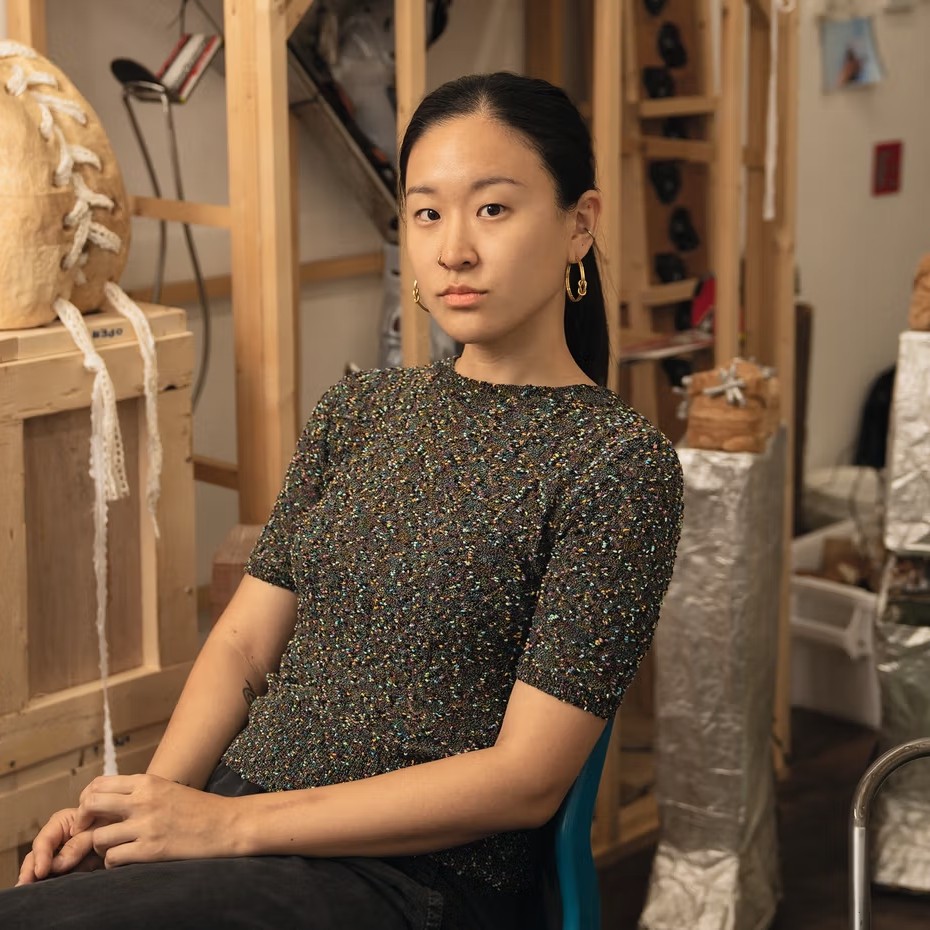
After much contemplation, she titled the exhibition 《Cowboy》. In contrast to their stereotypical image as “rugged explorers,” cowboys of the American West were actually social outsiders. Lee saw the shadow of the wandering cowboy in the contradictions of sculpture. 《Cowboy》 is her most serious solo exhibition to date. She said that in an age when making pretty things has become the easiest task, the resistance to superficial sensibility is her creative driving force. The essence of her work lies in probing what lies beneath the shell of the human body. That is the core of Eusung Lee’s sculpture.

References