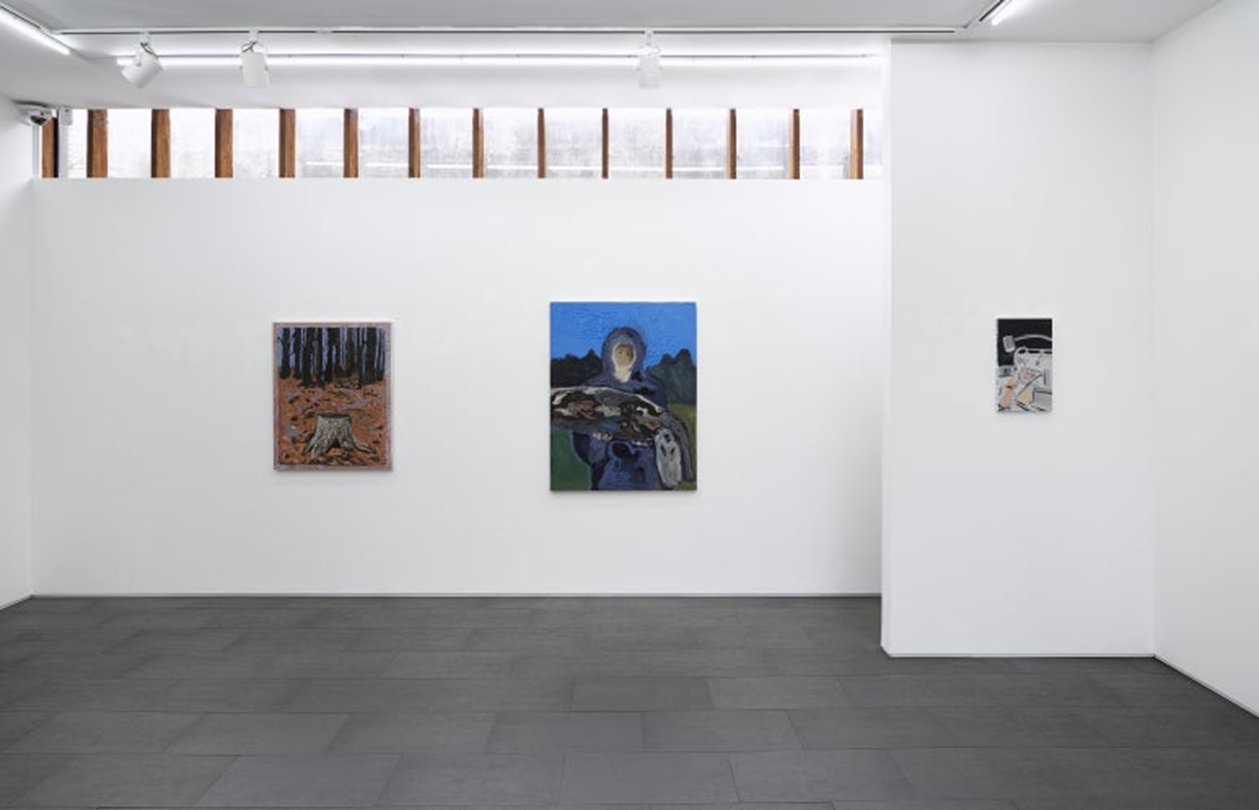
Cheolgyu Kang presents works that
utilize literary narratives in conceiving paintings. Therefore, the methodology
of constructing a ctitious world based on autobiographical novels becomes the
predominant form recurring throughout the series. He explains his construction
of paintings as akin to the literary concept of 'projection.' The process of
outwardly expressing the author's subjective thoughts, emotions, and symbols
evolves within the world of painting, settling into concrete narratives based
on literature.
Thus, painting as a means of projecting one's own circumstances
or psychological states, based on autobiographical novels, portrays a series of
narrative stages allegorizing individual growth. His works, which primarily
express crises, anxieties, and sublimations, consequently introduce various
subjects projected from himself, utilizing concepts such as black spheres or
hybrids of humans and machines, reecting existential questions experienced by
individuals living in the present era.
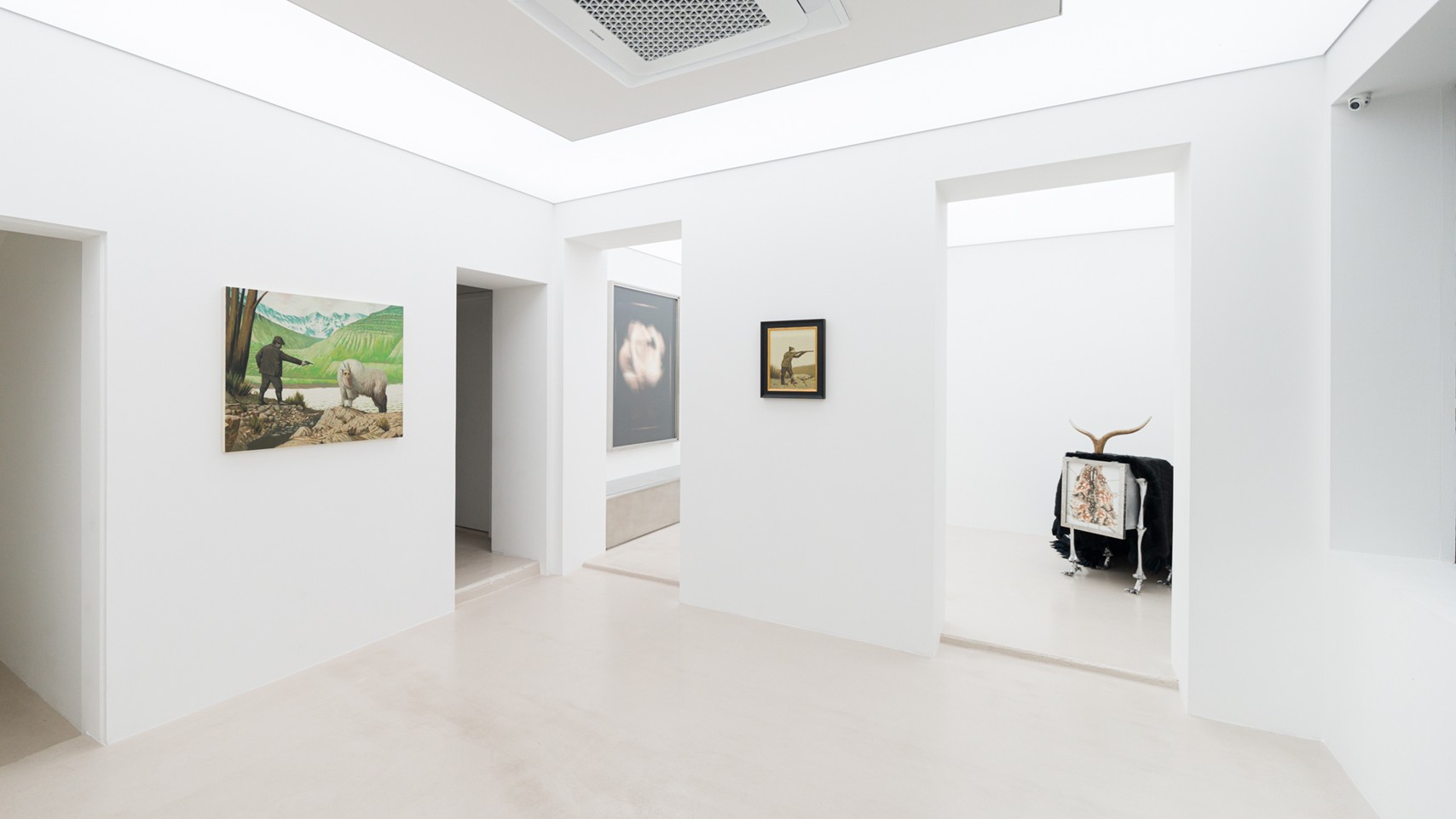
Jeonggeun Lee extends his
previous works depicting ood events in his studio to present works that
associate his experiences of disasters and problematic environments with
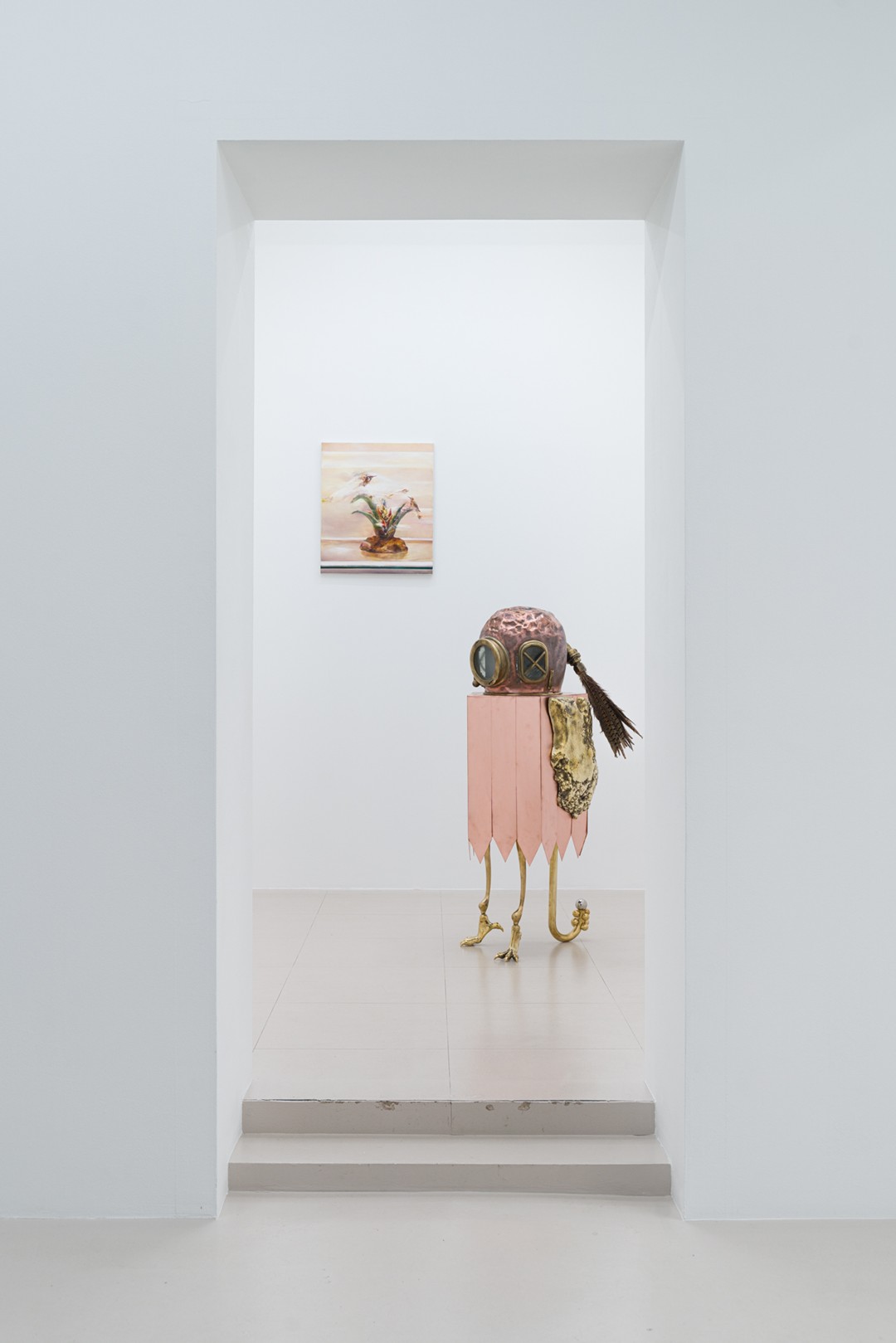
dystopian experiences. Going beyond attempts to develop three-dimensional forms
of frames to protect at works, in this exhibition, he unfolds his artistic
world through objects bearing animal shapes. The objects, reminiscent of a kind
of creature, exhibit the form of 'electric animals' that can be primitive yet
strongly functional.
Starting from reminiscences of dystopian electric animals
from Philip K. Dick's novel Do Androids Dream of Electric Sheep?
(1968), these objects serve as mediums substituting the author's
autobiographical experiences. The works, which preserve the roles of
photographs and frames, intertwine images of deer antlers with photographs of
deer horns and waves inside a diving helmet, creating bizarre spectacles. By
concretely visualizing animal forms, the works encourage viewers to imagine
their experiential dystopias in a more three-dimensional manner.
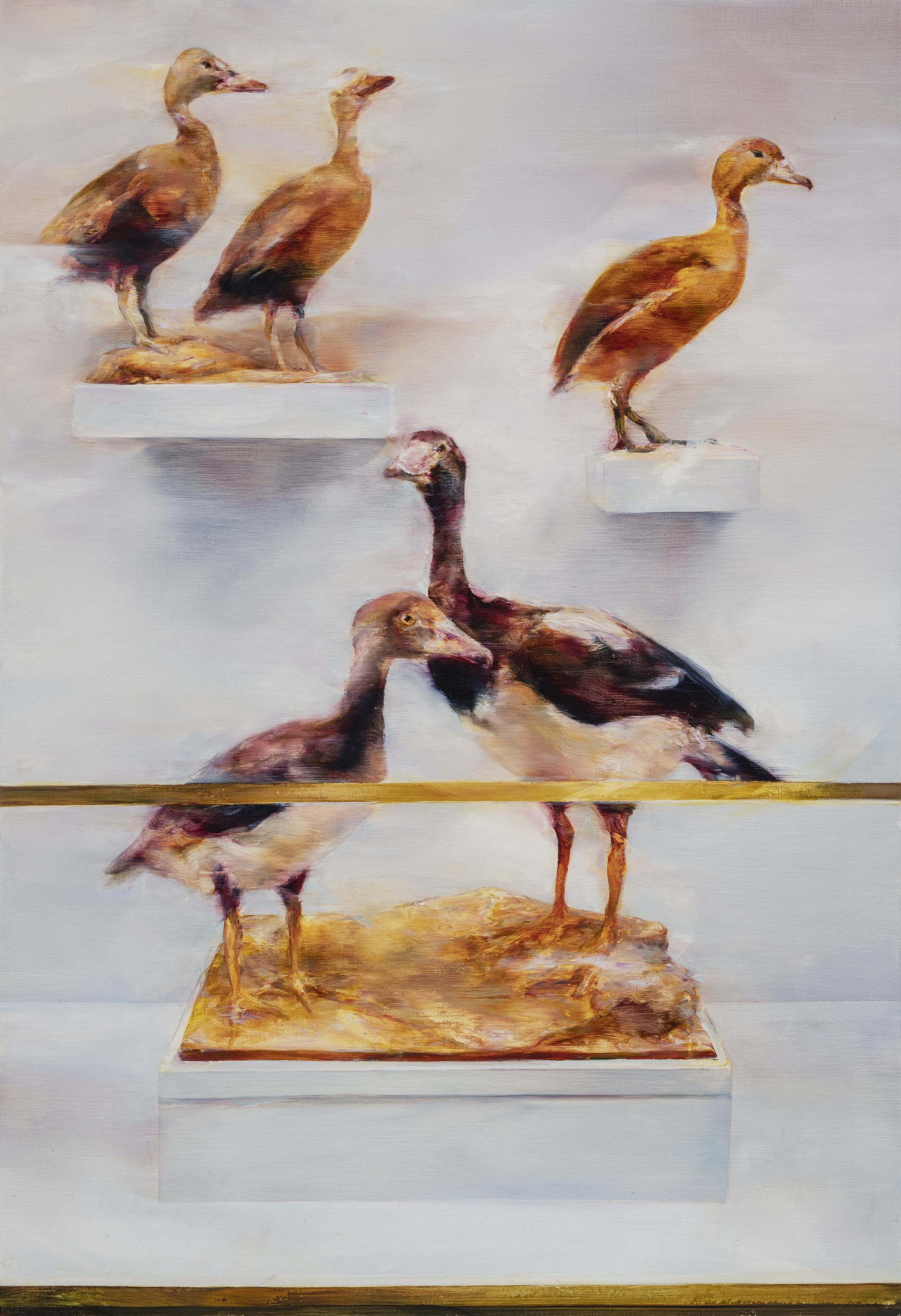
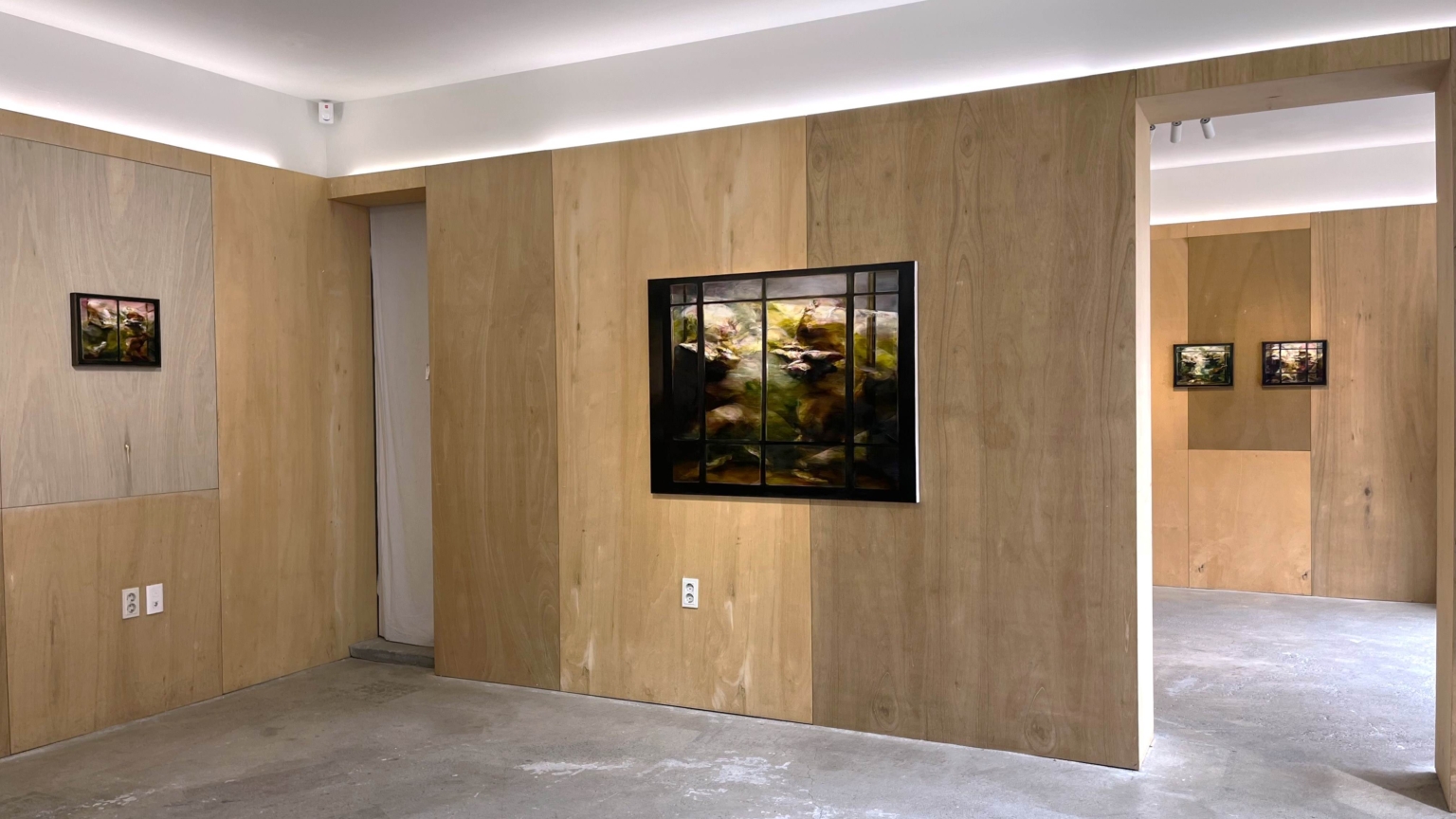
Heejae Lim focuses on the
vitality of animals with dynamic movements in nature being edited or erased
into the form of 'processed nature' in documentary-like records. She associates
the manner in which images of nature are reprocessed and presented with thoughts
on the essence of images, exploring 'image transformations' through the process
of translating 'sang' (a Korean term for the abstract concept of 'image' or
'appearance') into painting.
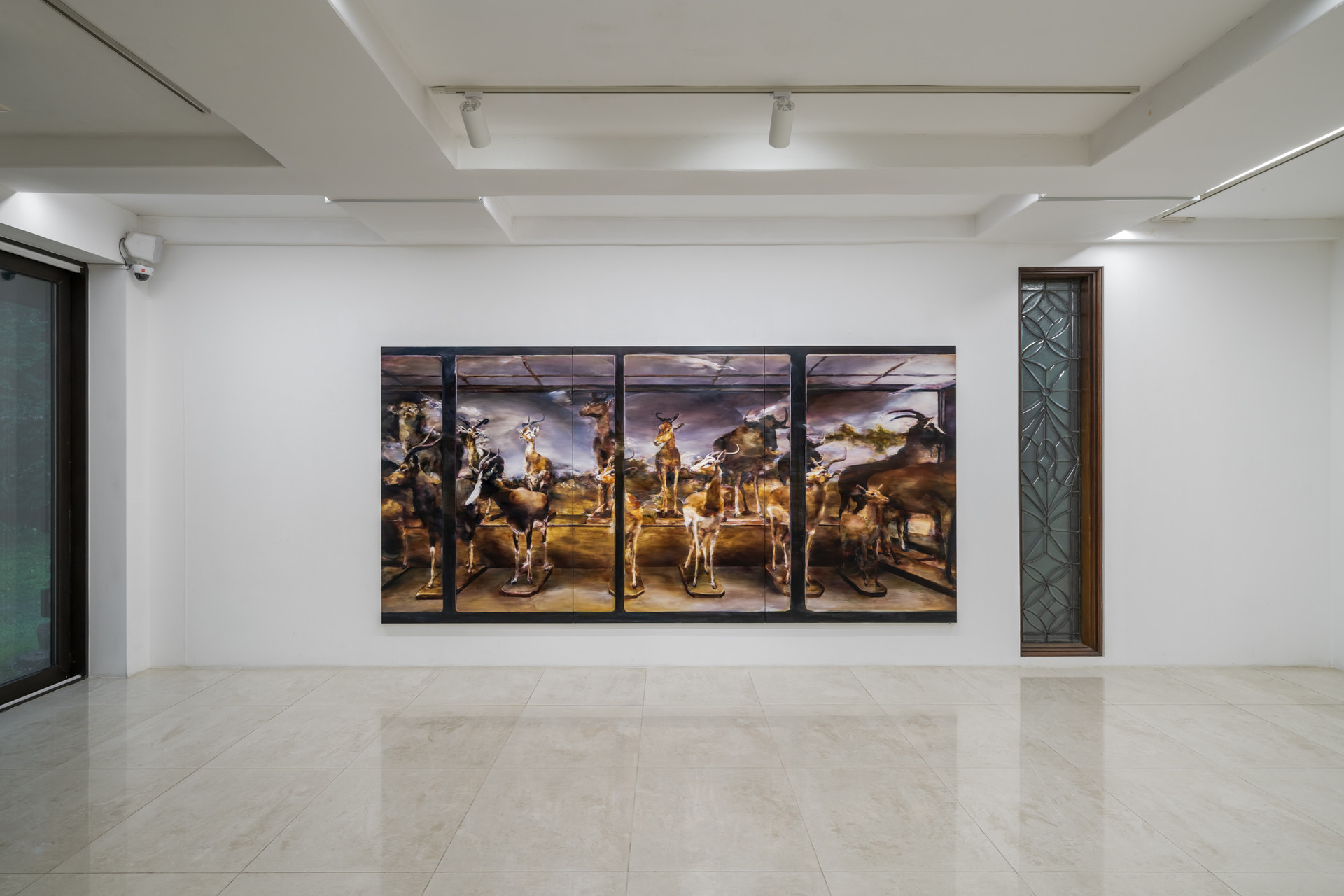
The complex transformations undergone by forms
devoid of dynamic movements transition into painting actions, transferred onto
canvas as a pictorial process. Hence, her works feature images of wild animals
from documentary footage, taxidermied birds, or specimens of organisms in
museums. The images of specimen animals, translated through the framework of
painting and glass, appear as multifaceted images reformed or distorted,
demonstrating contradictory possibilities by rekindling dynamism through the
artist's hand.
Doooo (Masataka Shishido)
transforms realistically depicted parts of the body into objects, creating
grotesque forms. His works, which one may have encountered through social
media, astonish viewers by staging images that evoke an uncanny sensation through
the movement of eyes, nose, and mouth, thus captivating the gaze of viewers in
the digital realm. Inspired by special eects used in horror lms, the works are
produced as wearable accessories, such as pendants that blink eyes or USBs
shaped like severed ngers, settling into the possession of the audience.
Despite excessively realistic depictions of body parts, the forms, which seem
to be alive and moving despite only parts of the body remaining, resemble a
format that has emerged from subcultures. By transferring such cultural
phenomena to small objects, the artist phenomenologically captures the trends
of contemporary dystopias existing as images.
- Hyunjeoung Moon