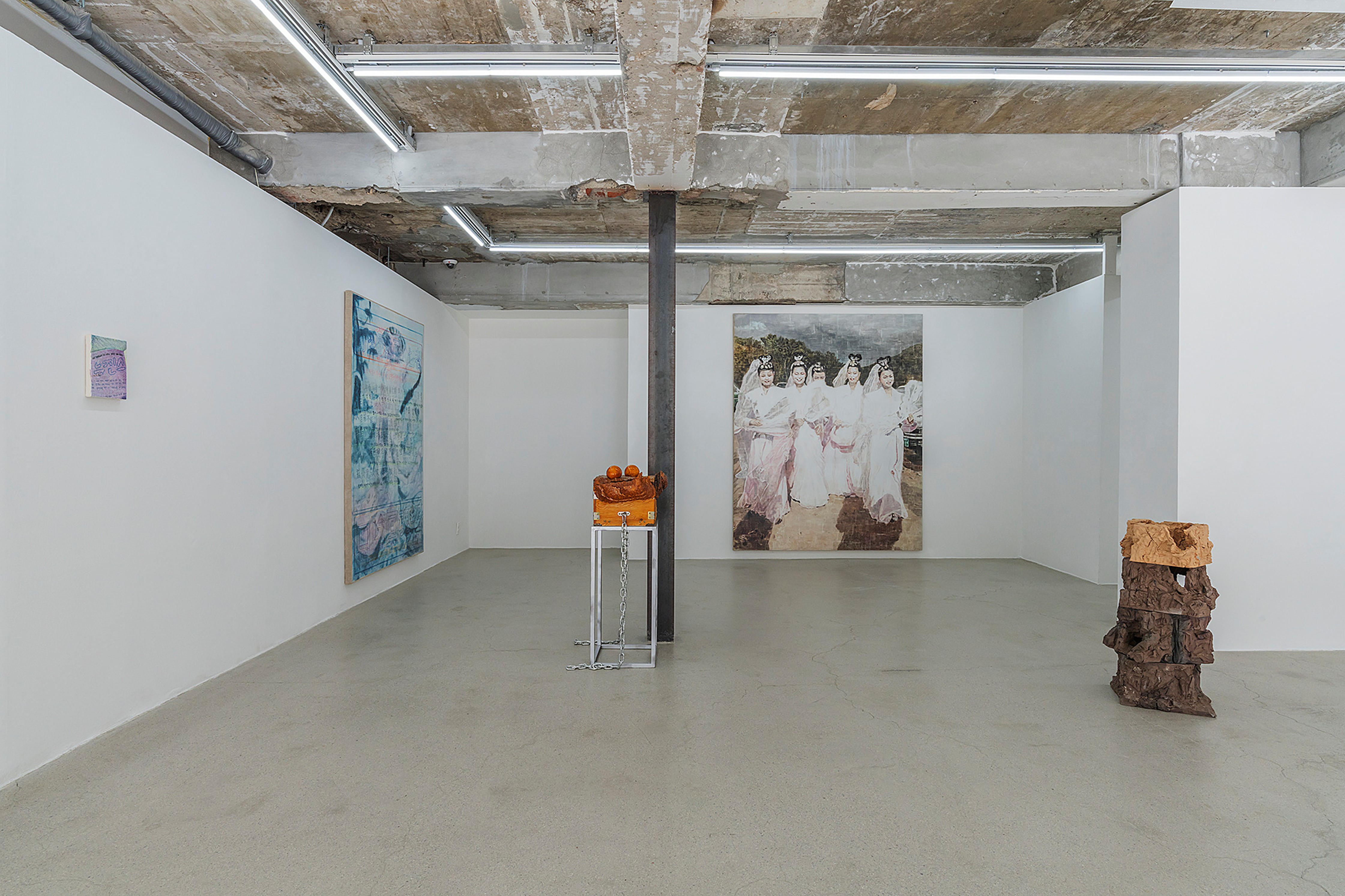
I
believe that anyone who encounters Hyewon Kim’s paintings will likely find
themselves drawn to them. She seeks out the things she frequently
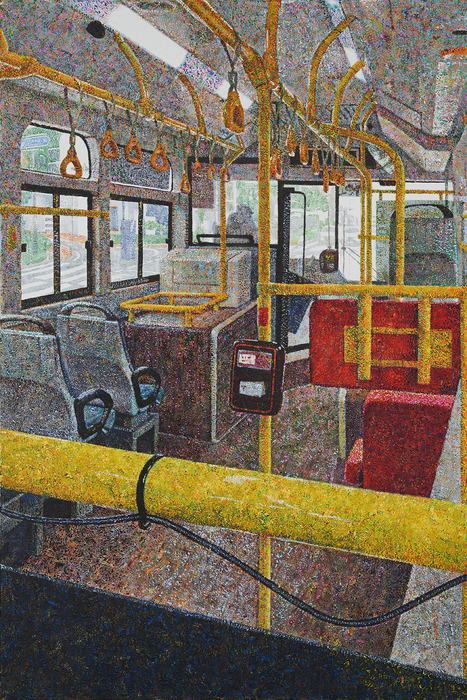
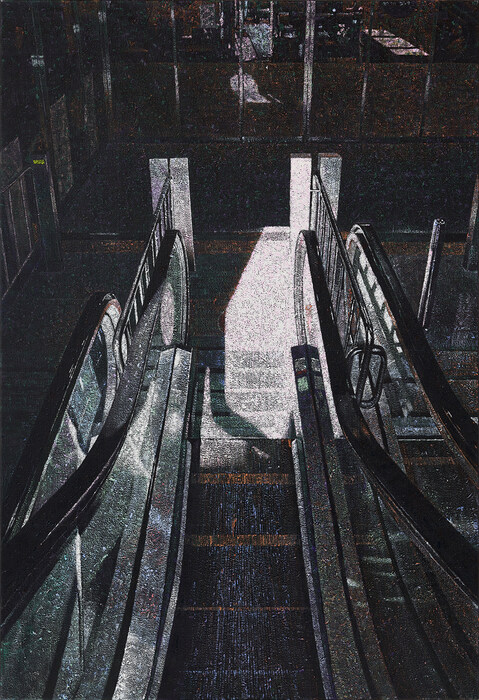
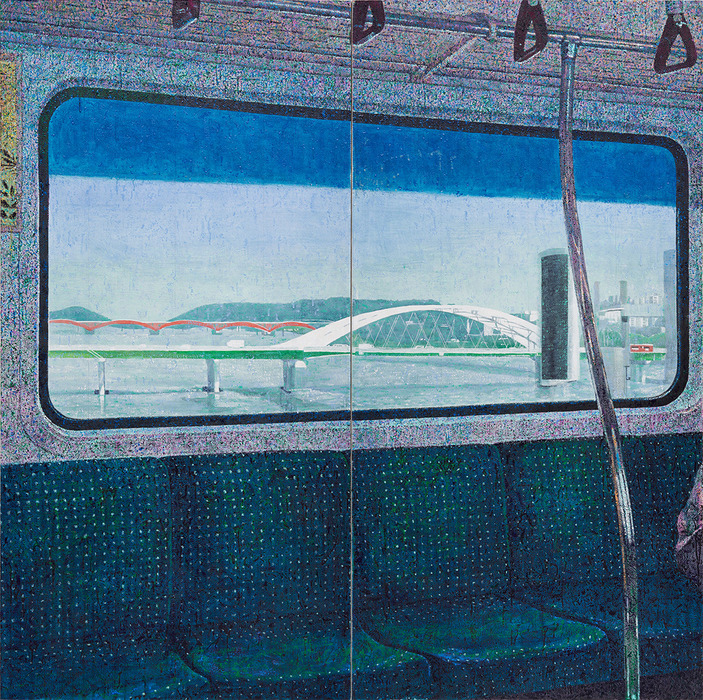
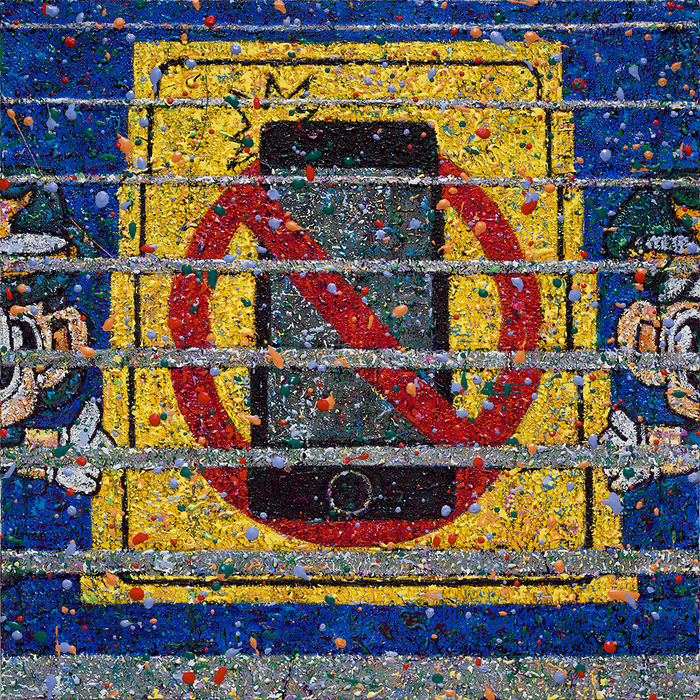
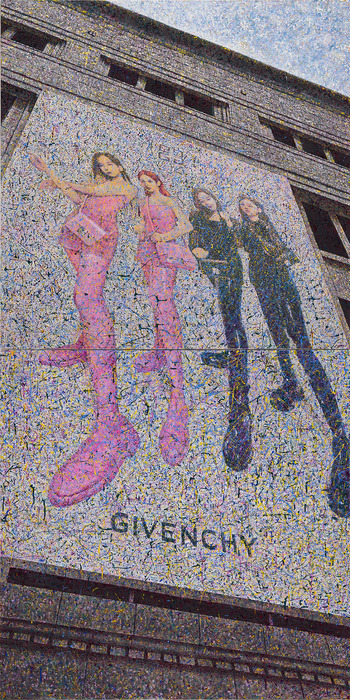
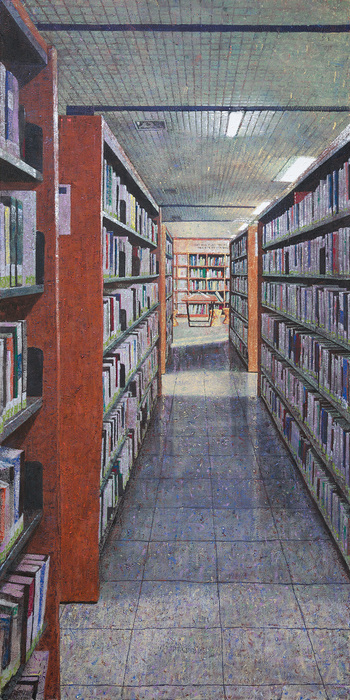
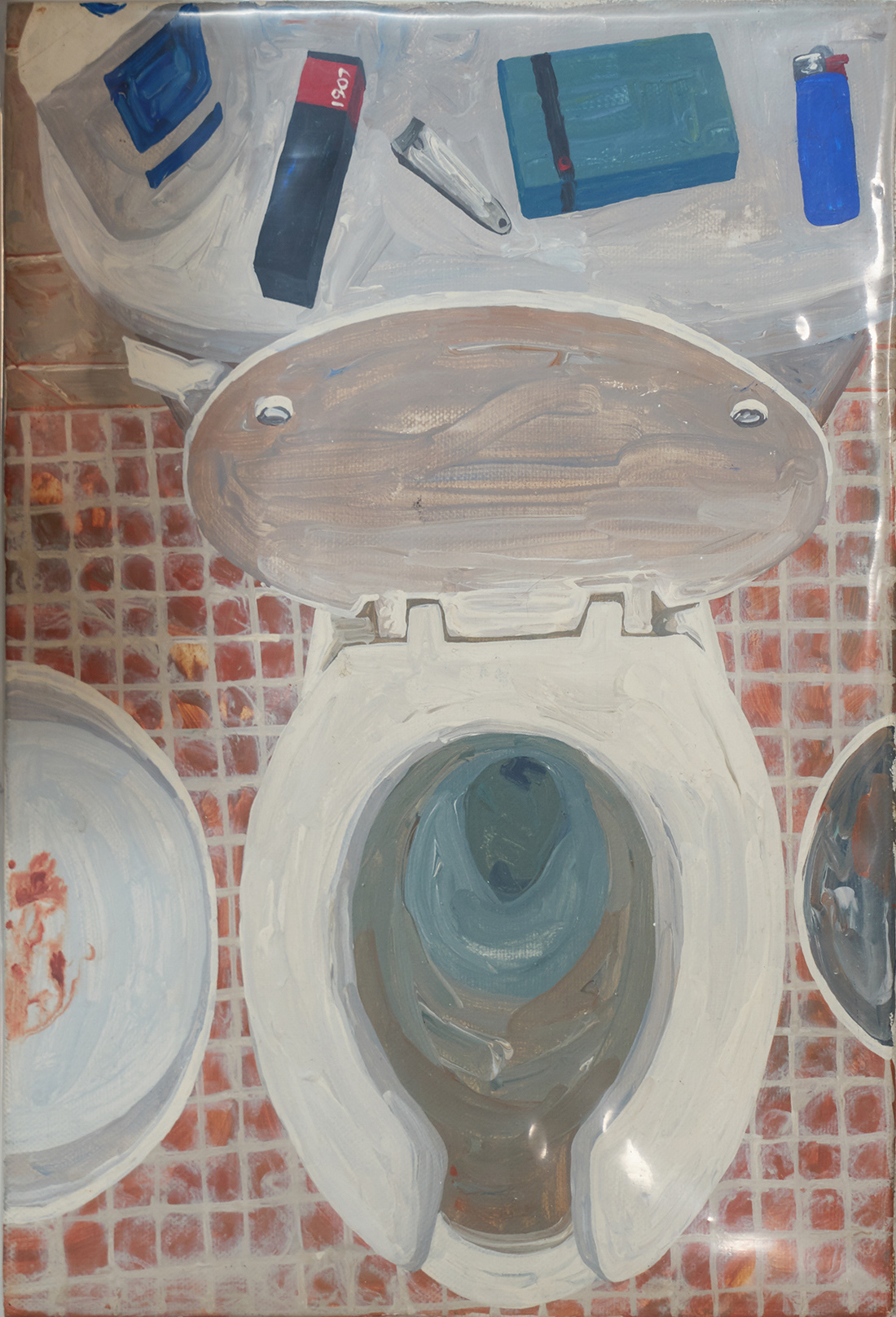
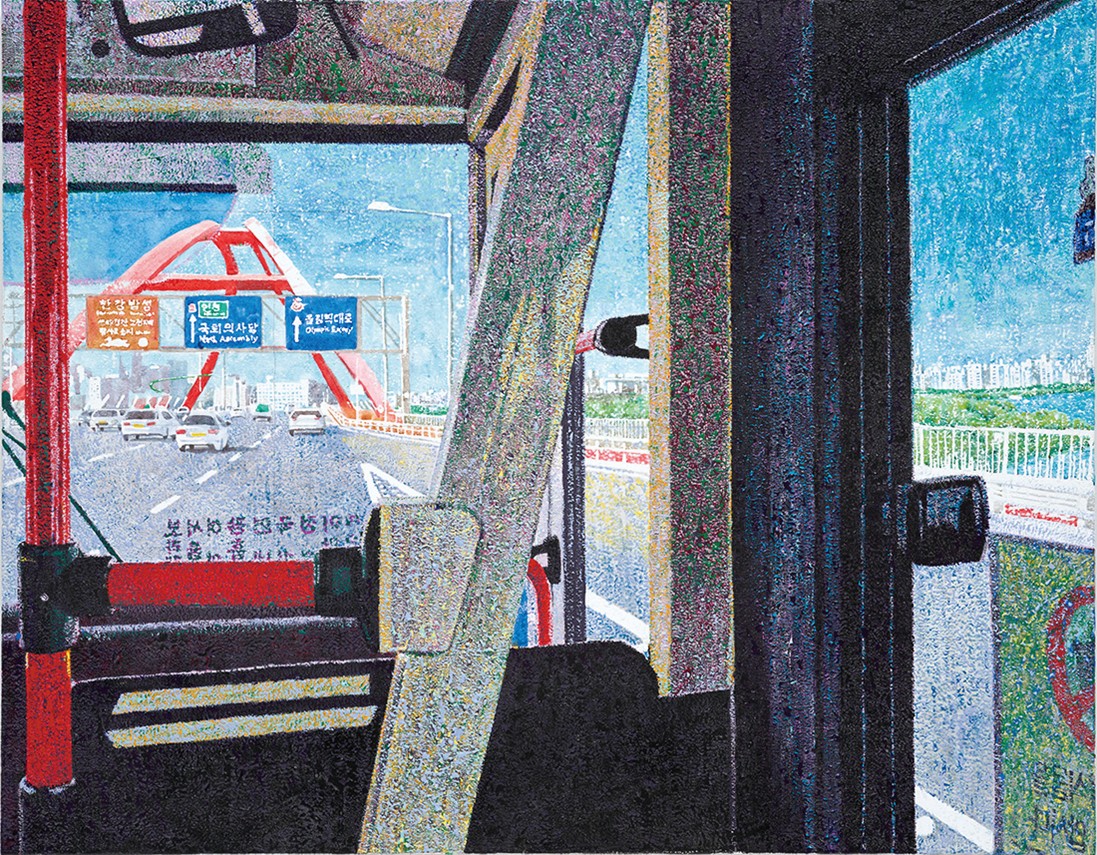
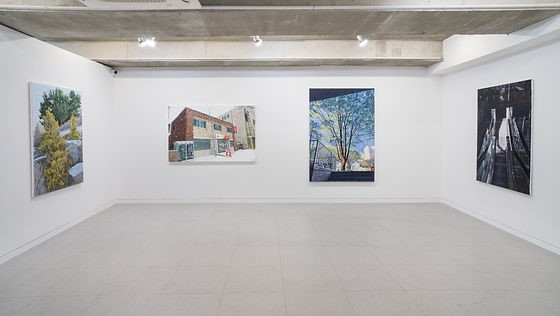
sees—ordinary, everyday landscapes—and captures them in paint. Shelves in a
library, the bus she always takes, or the scenery outside a subway window
become the subjects of her work. Yet when one approaches these seemingly
ordinary images, an unexpected scene unfolds. Layers of pigment—colors and
delicate textures that were not visible from afar—come into view. From the
surface of everyday landscapes emerges an exceptional kind of beauty.
One
might say that her paintings “reveal” the colors and textures hidden within the
everyday. However, once we observe the way she paints, the word “reveal” begins
to feel somewhat strange. Kim describes the landscape in watercolor and then
adds layers by mixing in acrylic medium. Thin strata of paint rise, one after
another, through meticulous brushwork. The pigments accumulate and accumulate,
but never so much that they entirely obscure the image—only just enough to veil
it precariously. Rather than “revealing” something, her method feels more like
“covering” it. As layers accumulate and partially conceal the image, the
familiar sensibility with which we view daily life is peeled away, and a new
landscape paradoxically emerges on the surface of the canvas.
I
once found Kim’s artist notes particularly intriguing. To summarize a portion:
“Squeezing paint, calculating color, selecting a brush of the right size, and
applying paint to the surface makes me forget that I am depicting a particular
object. As I mechanically spread paint across the canvas, the thought of
drawing something approaches zero, and only the movement of my hand stimulates
my vision.” Contrary to the expectation that she would approach painting with a
creative, “artist-like” attitude inspired by daily life, she instead describes
her practice as one shaped by mechanical, repetitive motions. This repetition,
in which thought dissolves and only movement remains, resembles labor far more
than an artist’s creative act.
It
is important to note here that Kim also has a deep interest in handicrafts such
as embroidery and knitting. Art critic Jungwoo Park, who wrote about her first
solo exhibition 《Thickness of
Pictures》 (2022), observed that the delicate
sensibilities she developed through working with craft practices are reflected
in her method of painting. Situated between creation and labor, handicraft
forms an inseparable sensory foundation for her work. Kim’s paintings arise
from the convergence of three different modes of action—painting, handicraft,
and mechanical, repetitive movement—coming together almost accidentally.
Philosopher
Hannah Arendt famously divided the fundamental activities of human life into
three categories. To quote this widely referenced distinction: first, there is
labor, the biological activity directly tied to human survival. Then there is
work, the activity that constructs an artificial world apart from nature. Labor
and work both serve to fulfill human needs and desires. Finally, there is
action. Action is not an activity for necessity or desire but one for freedom,
and it is a privileged realm in which human agency and uniqueness can be
revealed. Arendt’s concept of action has often been invoked to explain the
essential nature of artistic activity. Yet in Kim’s painting practice, action
does not feel like the creative act of self-realization—it feels closer to a
form of labor. As she works, she suddenly confronts the contradictory aspects
hidden within what we typically think of as free, privileged artistic action.
Anyone
who encounters Kim’s paintings will likely enjoy them. The canvases, filled
with practiced, meticulous strokes, offer delight to the viewer. I, too, found
her works beautiful when I observed them up close. But this beauty does not
originate from the artist’s intention. If beauty is present, it is merely an
accidental outcome appearing at the end of tedious, unconscious hand movements.
Kim’s paintings do not beautify daily life; instead, they point to the fact
that daily life is built from dull, mechanical repetition. From this
repetition, coincidence may arise—or it may not. Whether the paintings are
beautiful is, in the end, not important at all.