Yoo
consistently merges material and immaterial elements to reconstruct narratives
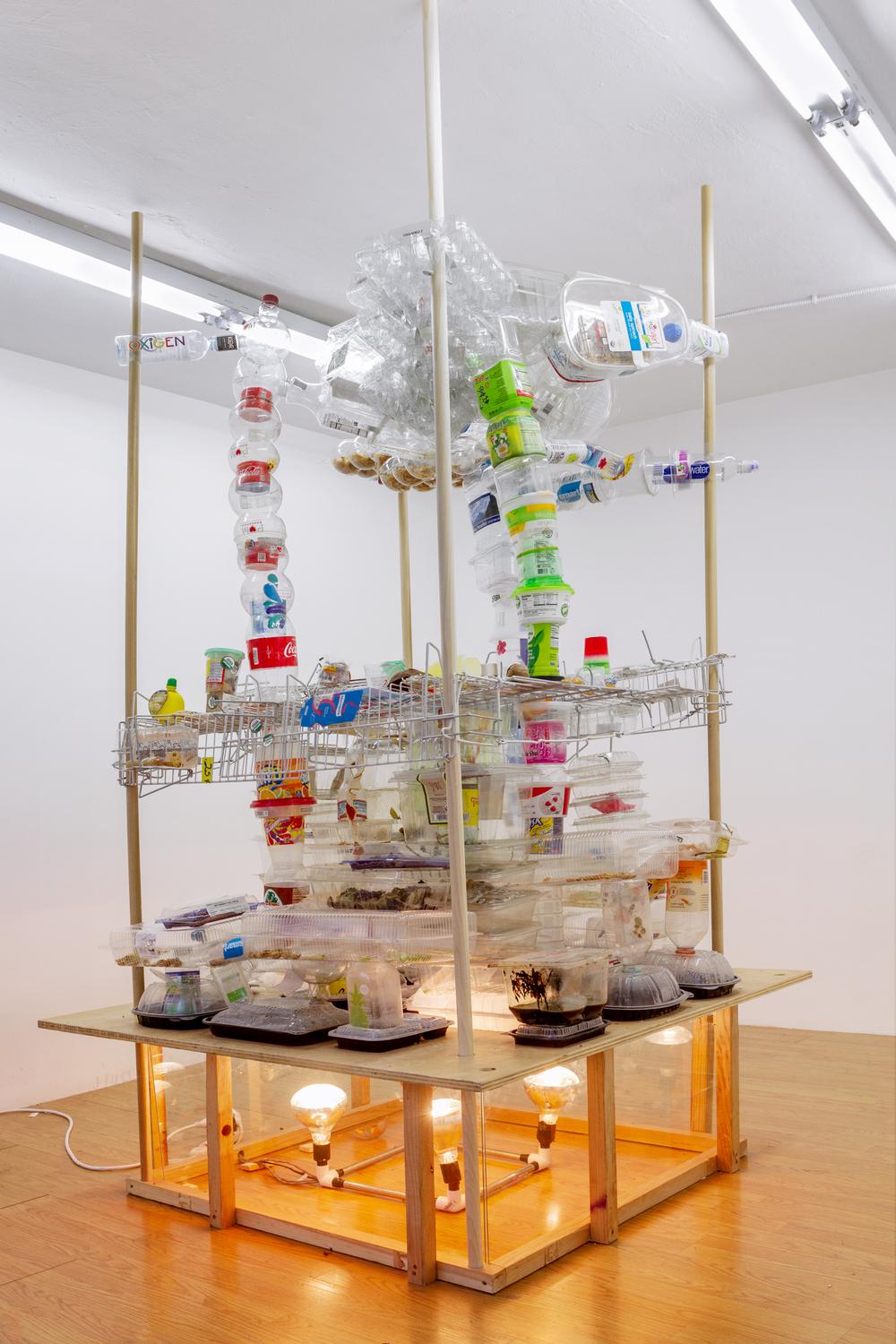
and systems. In works like Maintain Disgust, the
juxtaposition of waste, disposable containers, and cultivation materials
visually articulates cycles of circulation and stagnation while operating as
metaphors for political and economic structures. Her formal language exists in
a hybrid state between sculpture, installation, and performative mechanism,
allowing the materials themselves to drive meaning.
In The
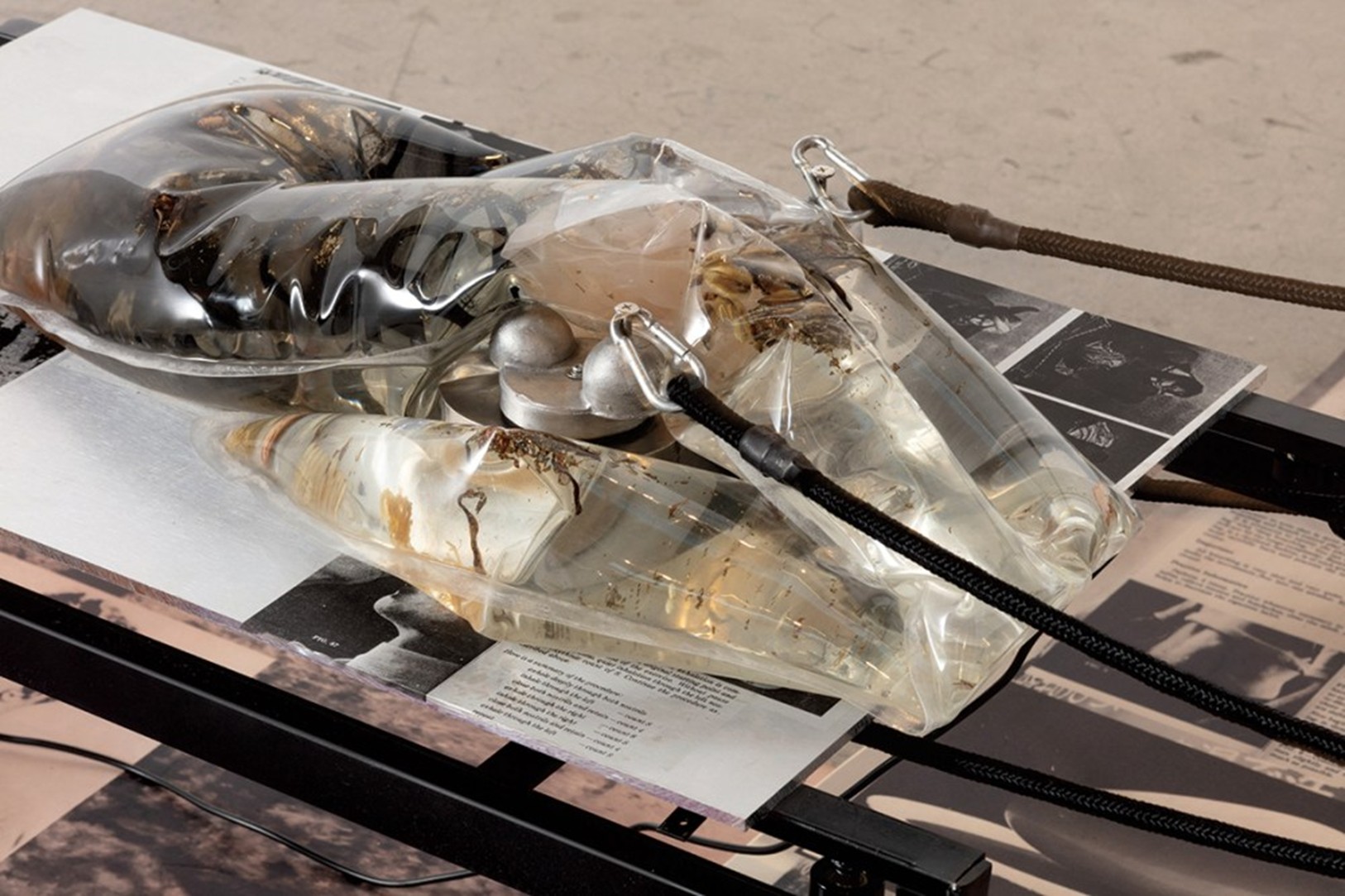
Birth of Venus(2019), products associated with bodily
management—cosmetics, oils, herbs, medications, exfoliating masks, perfume
samples—constitute the primary materials. Combined with texts by Susan Sontag
and Chantal Akerman, these elements reveal how the body, illness, and death
become metaphorized and commodified. During this phase, her work embodied the
aesthetics and violence of “body maintenance” through the inherent properties
of the materials—scent, viscosity, texture, and functionality.
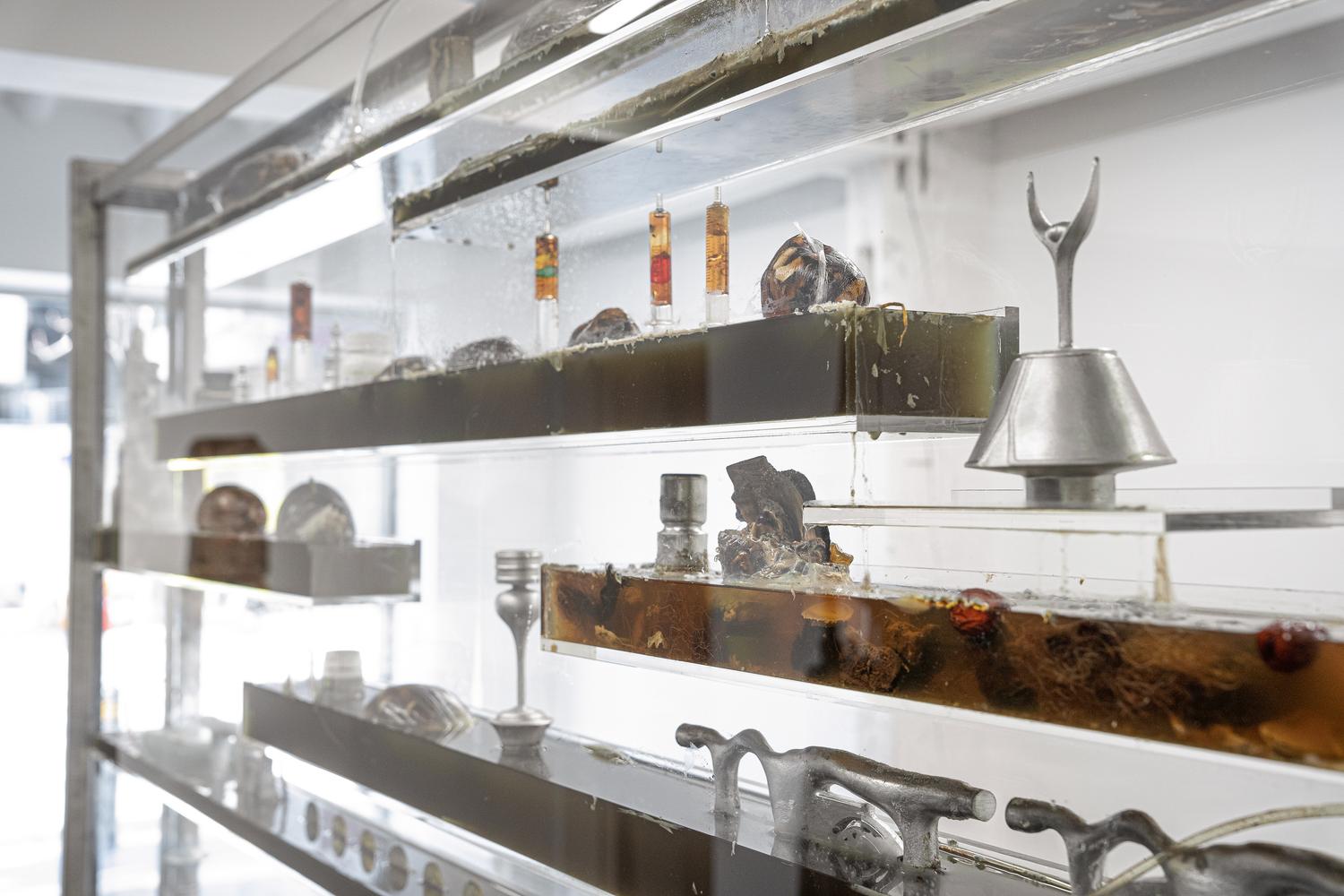
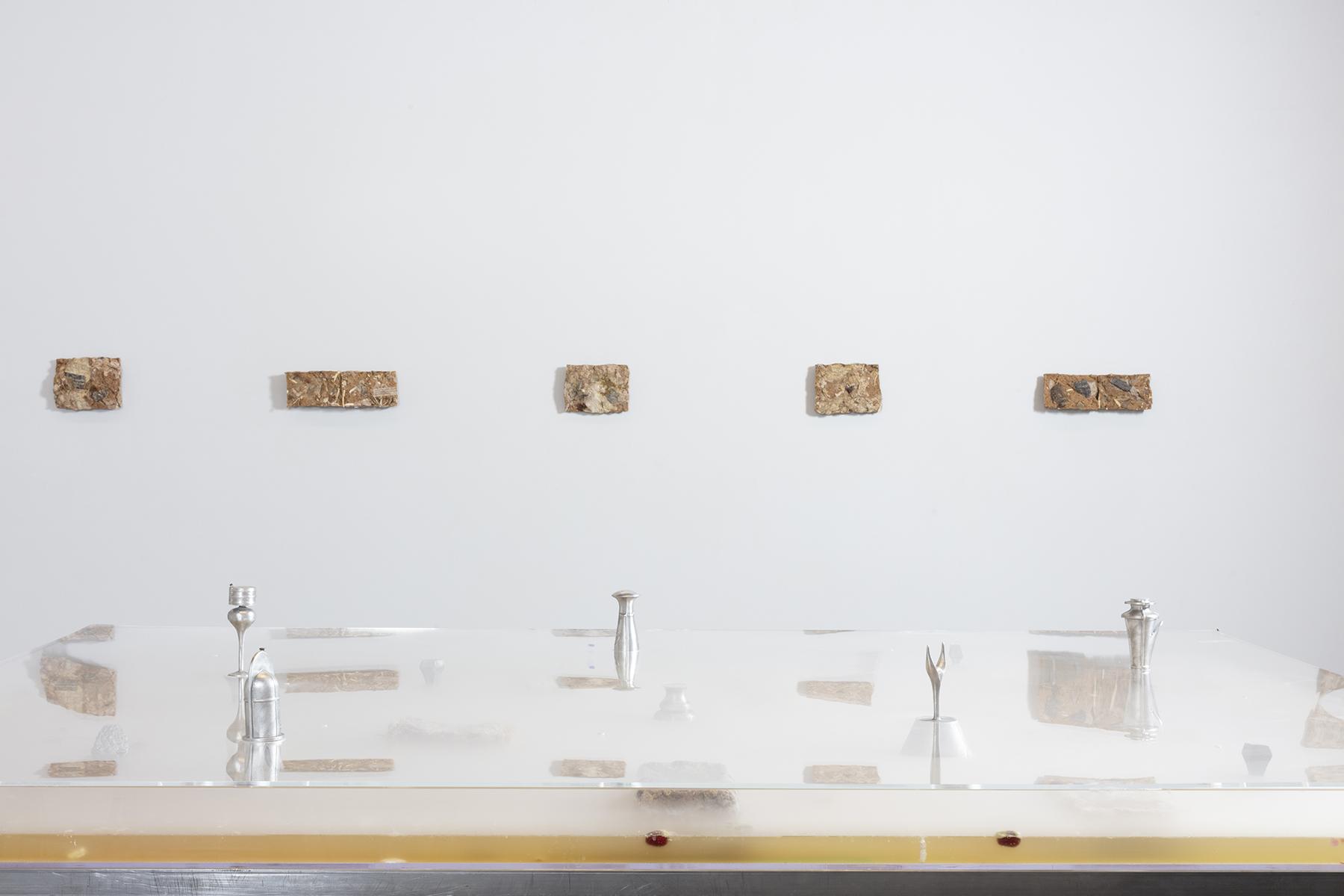
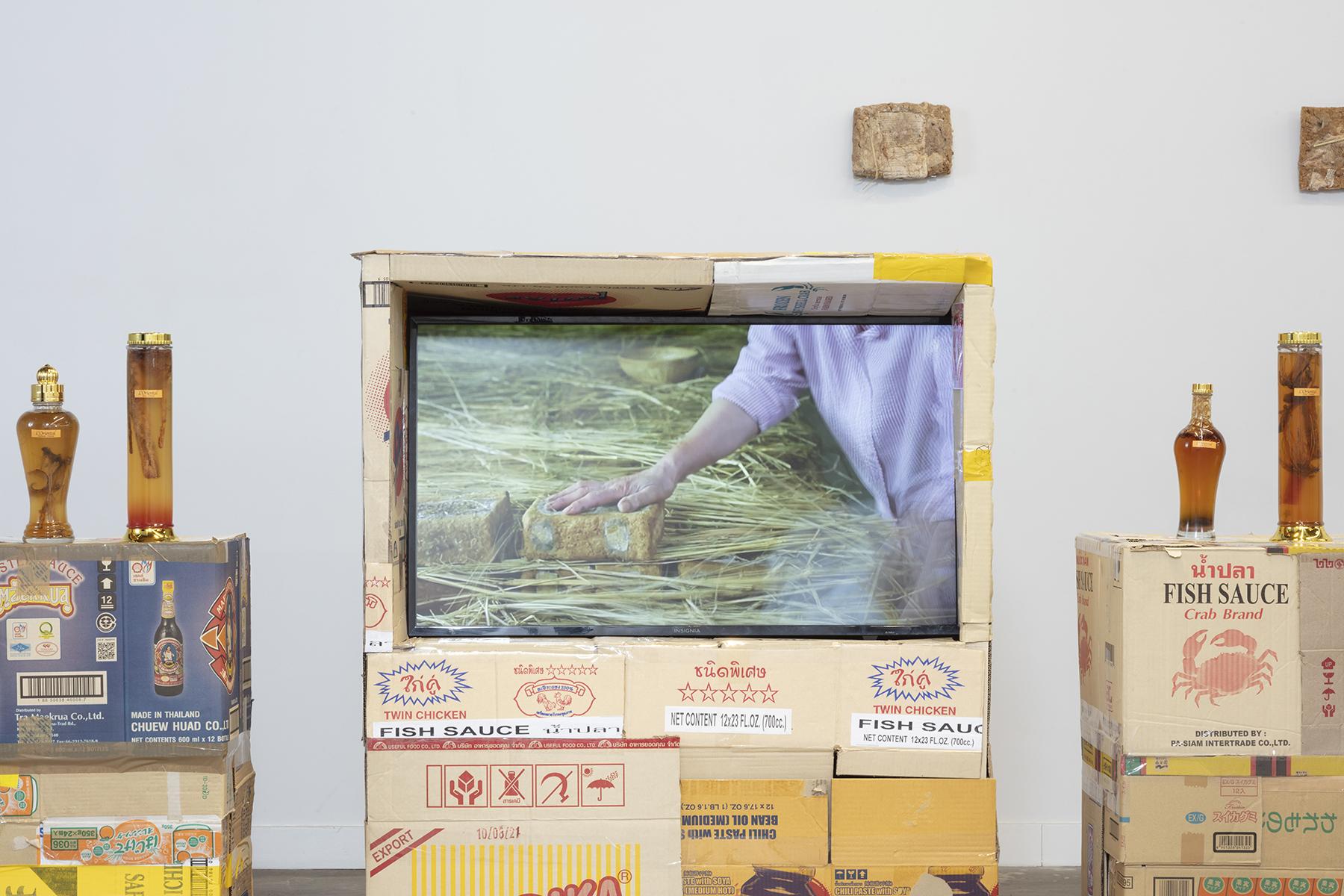
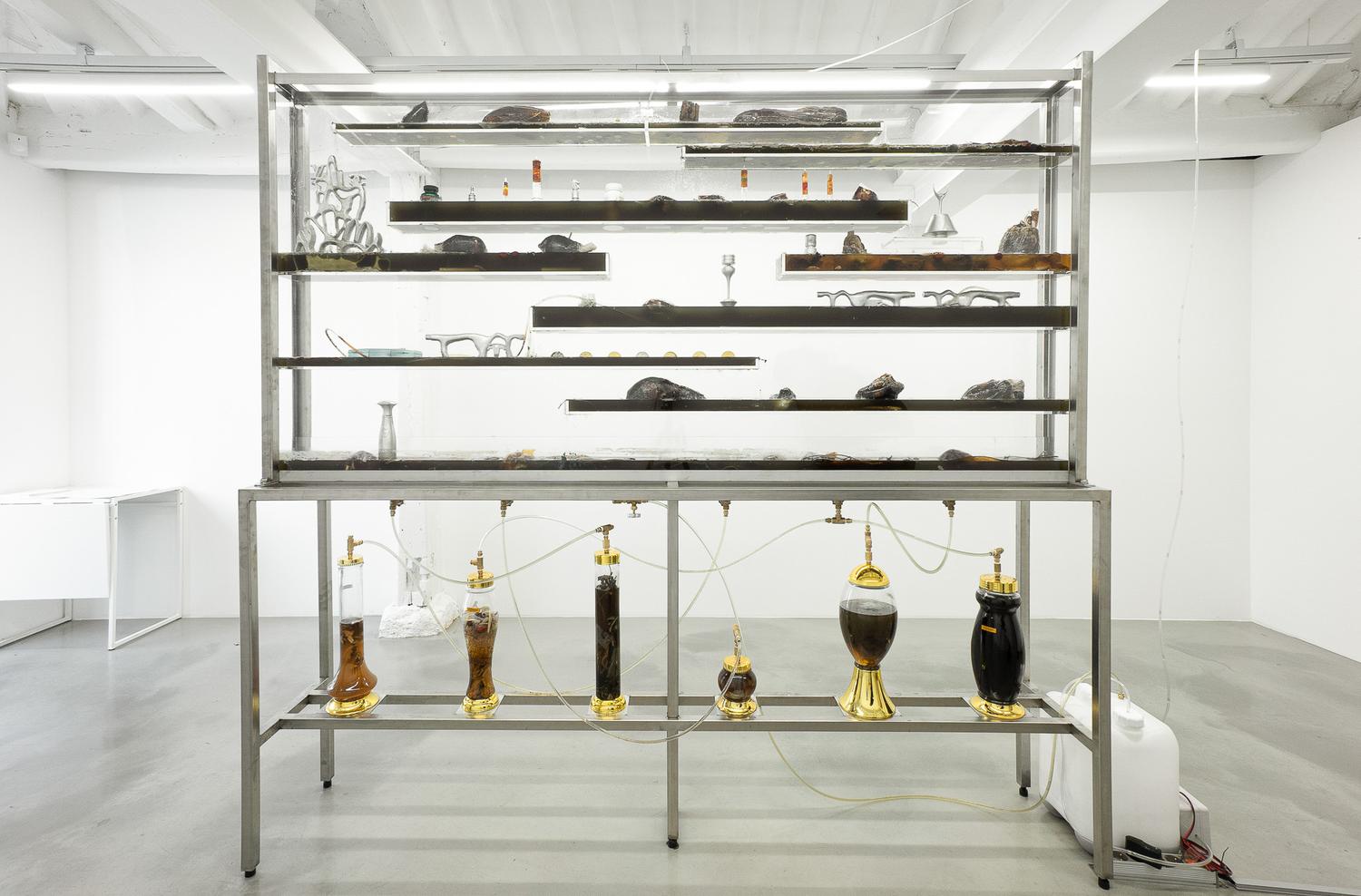
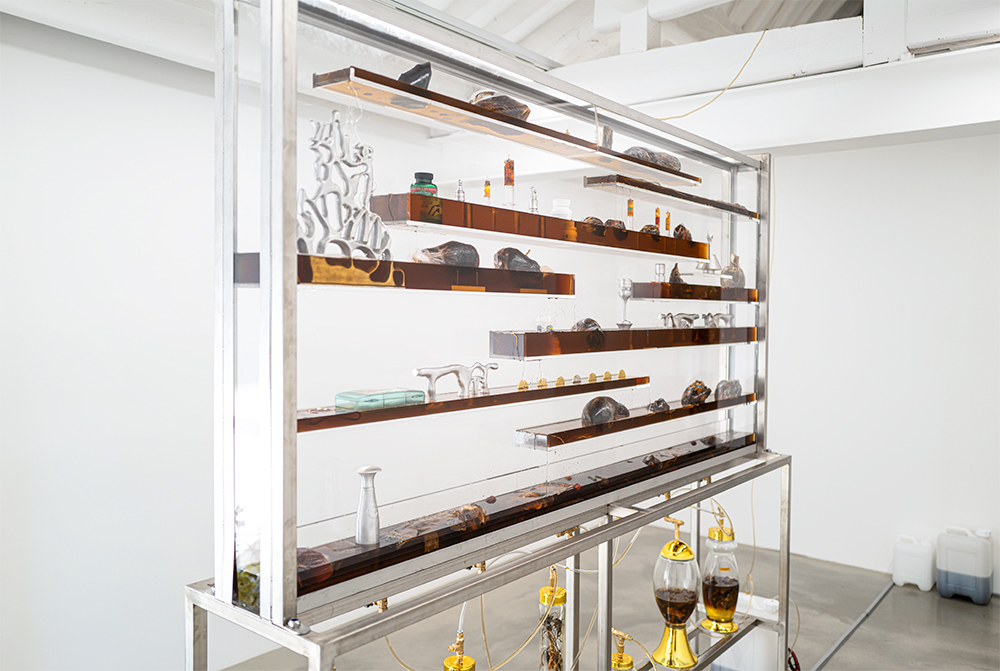
In 《The Oriental Sauce Factory》, her formal
language expanded toward more systemic and mechanical structures. The
installation’s “liquid circulation and filtration device,” which borrows the
logic of a factory system, forms an ecosystem in which soy sauce flows and
ferments as sculpture, video, scent, sound, and mechanical movement operate
together. In the work Injection Machine: Tu m’(2022),
ingredients such as fermented soybean blocks, jujubes, medicinal herbs,
Tylenol, Advil, and oregano oil mix within a single tank, colliding with
sculptural obstacles—demonstrating Yoo’s shift from object-based installation
to a “functioning sculptural system.”
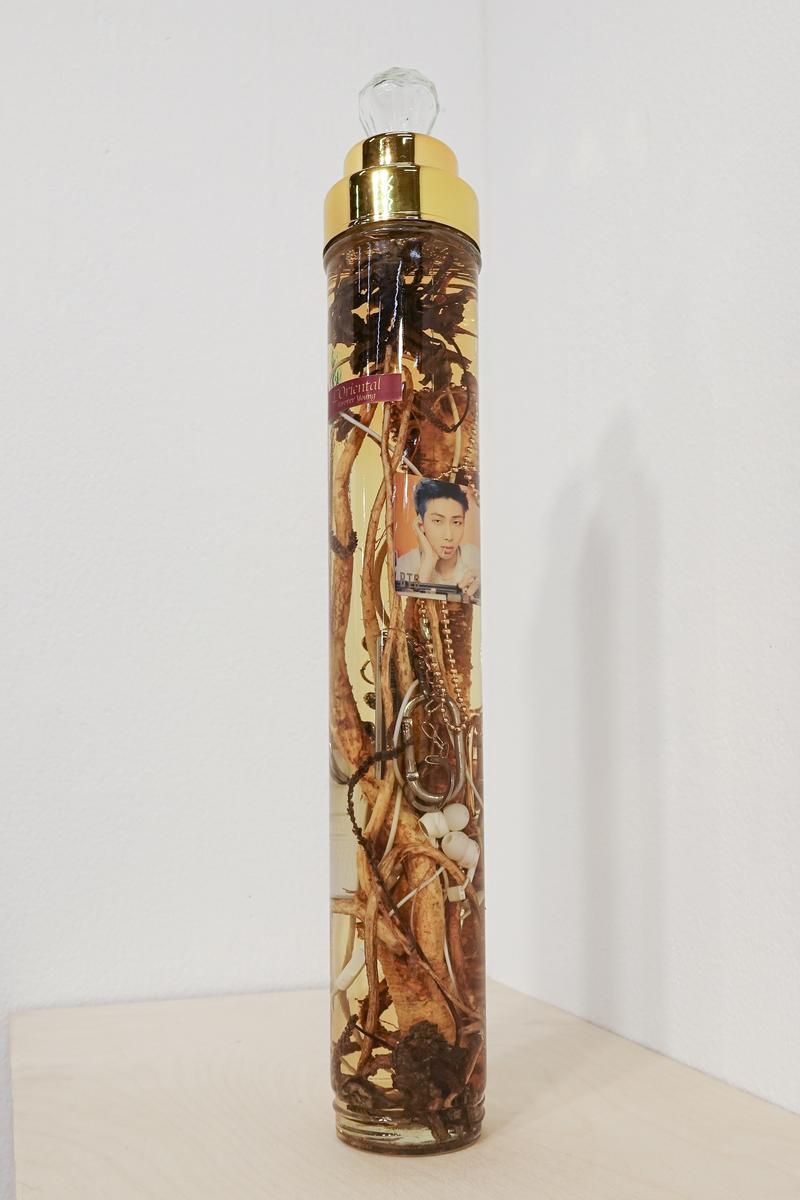
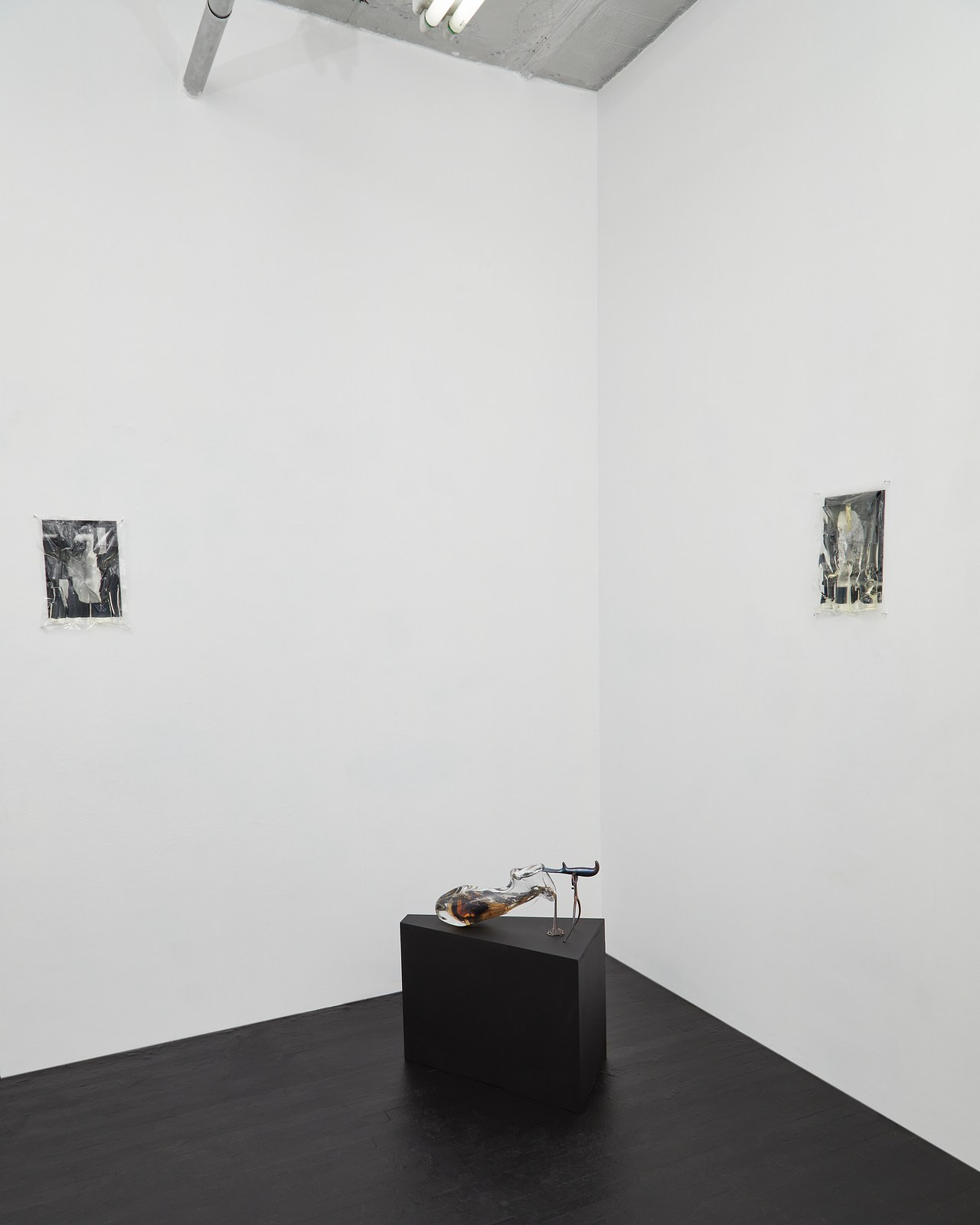
In the
‘L’Oriental’ series and the ‘I Was Placebo’ series in 2023-2024, Yoo narrows
her focus toward experiments with glass, alcohol, medicinal herbs, jewelry
components, and medical tools, developing a sculptural language in which
preservation and decay, desire and healing, body and machine collide. In
particular, the glass spheres of ‘I Was Placebo’ bind together surgical
retractors and clamps with organic substances, constructing a single vessel
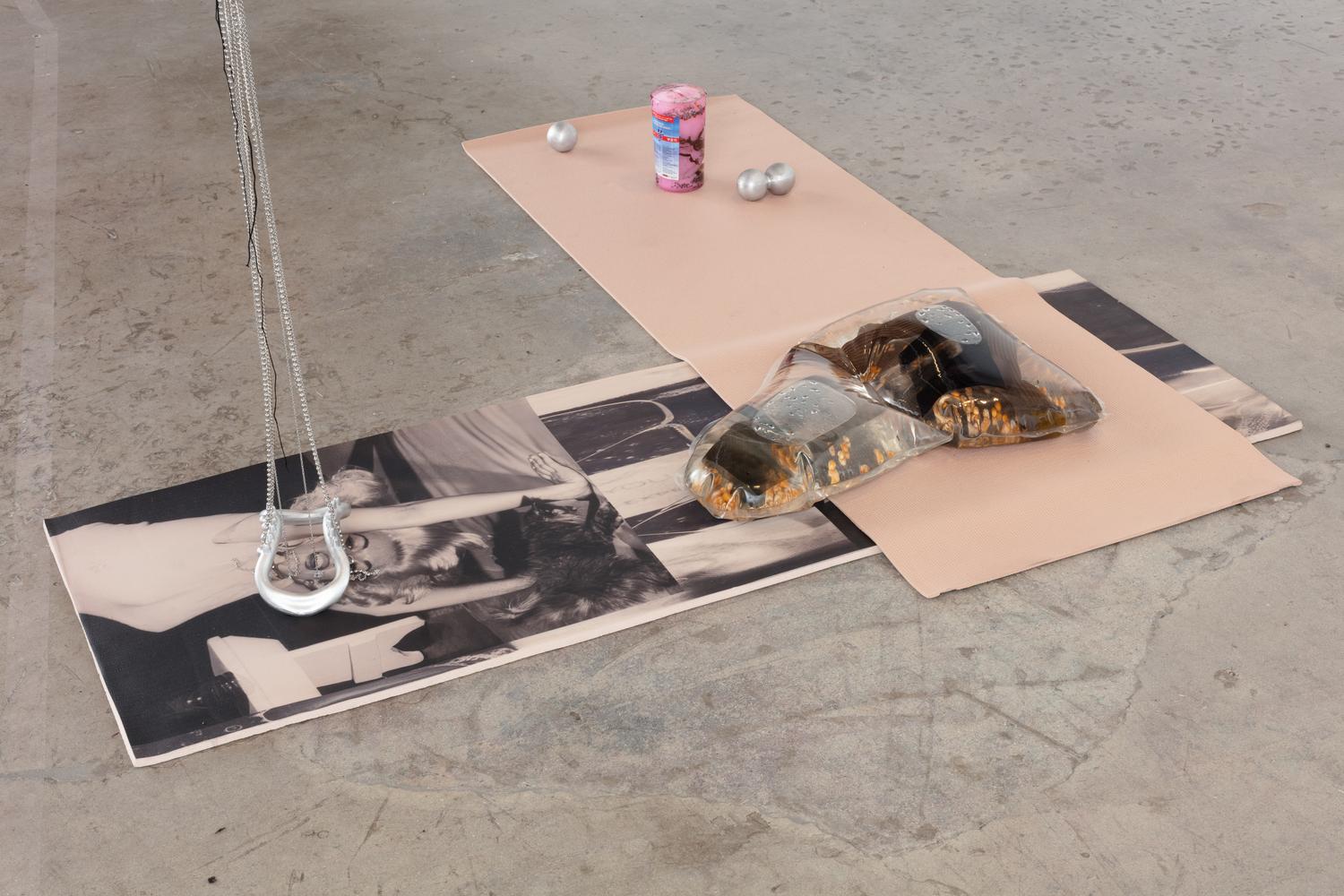
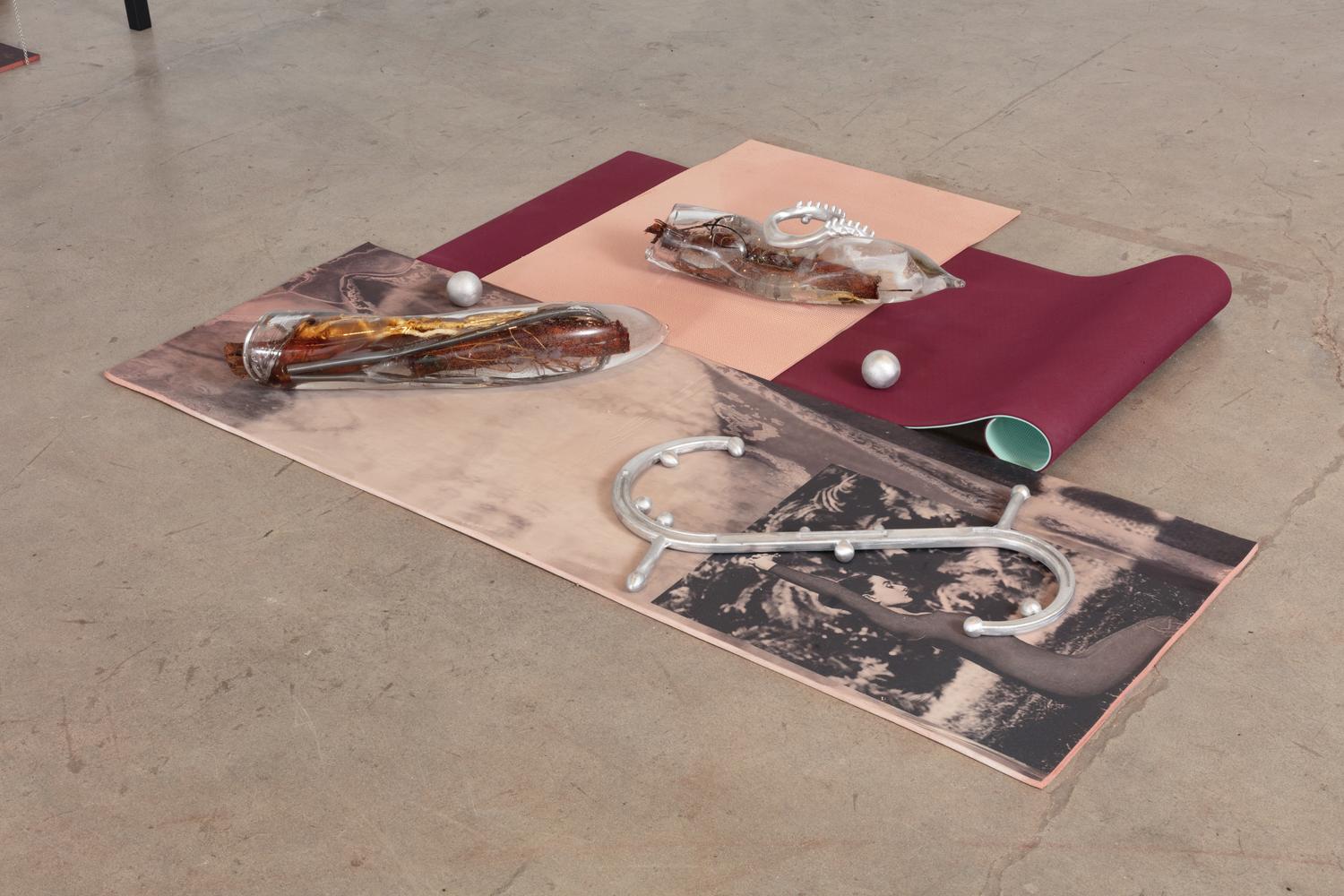
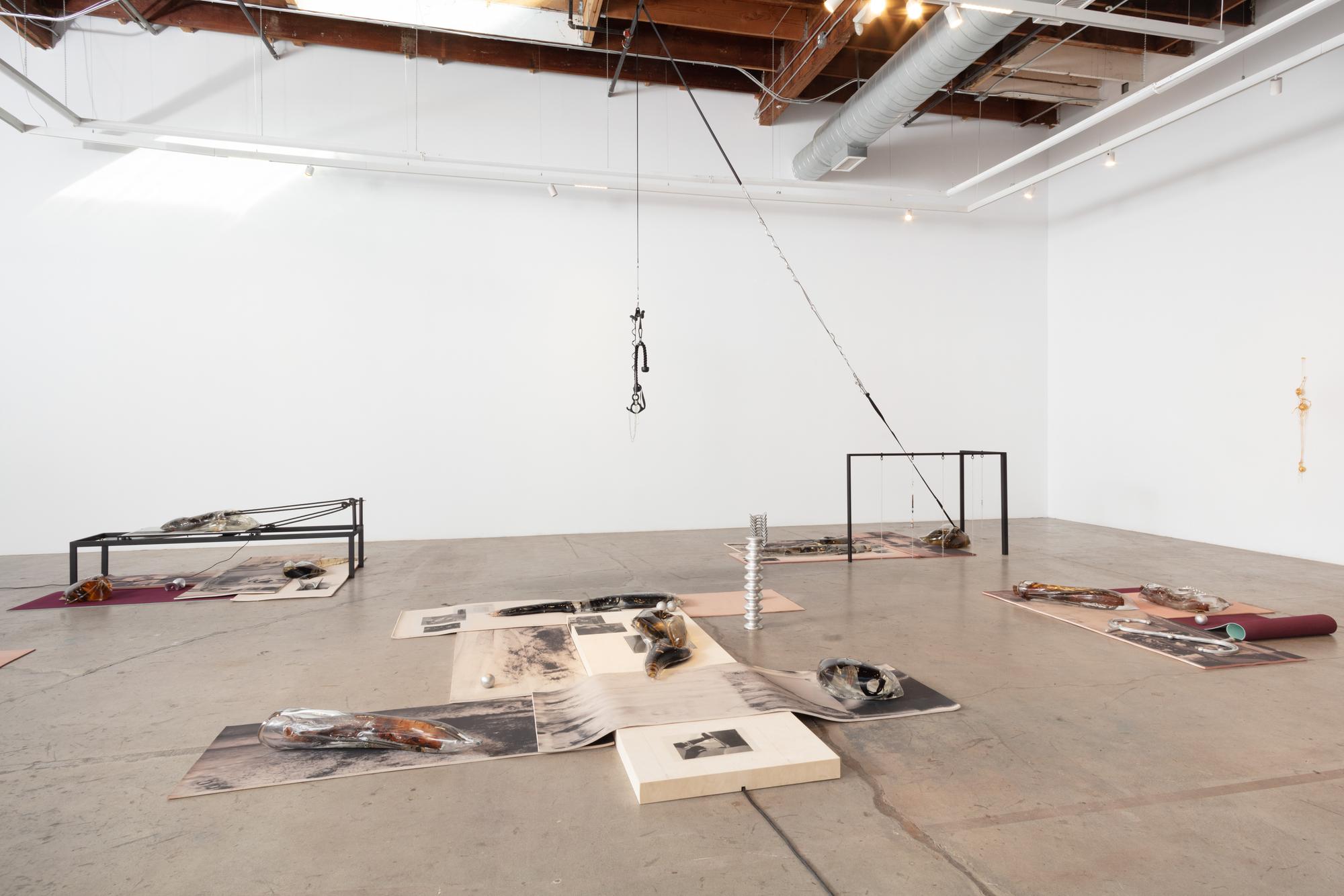
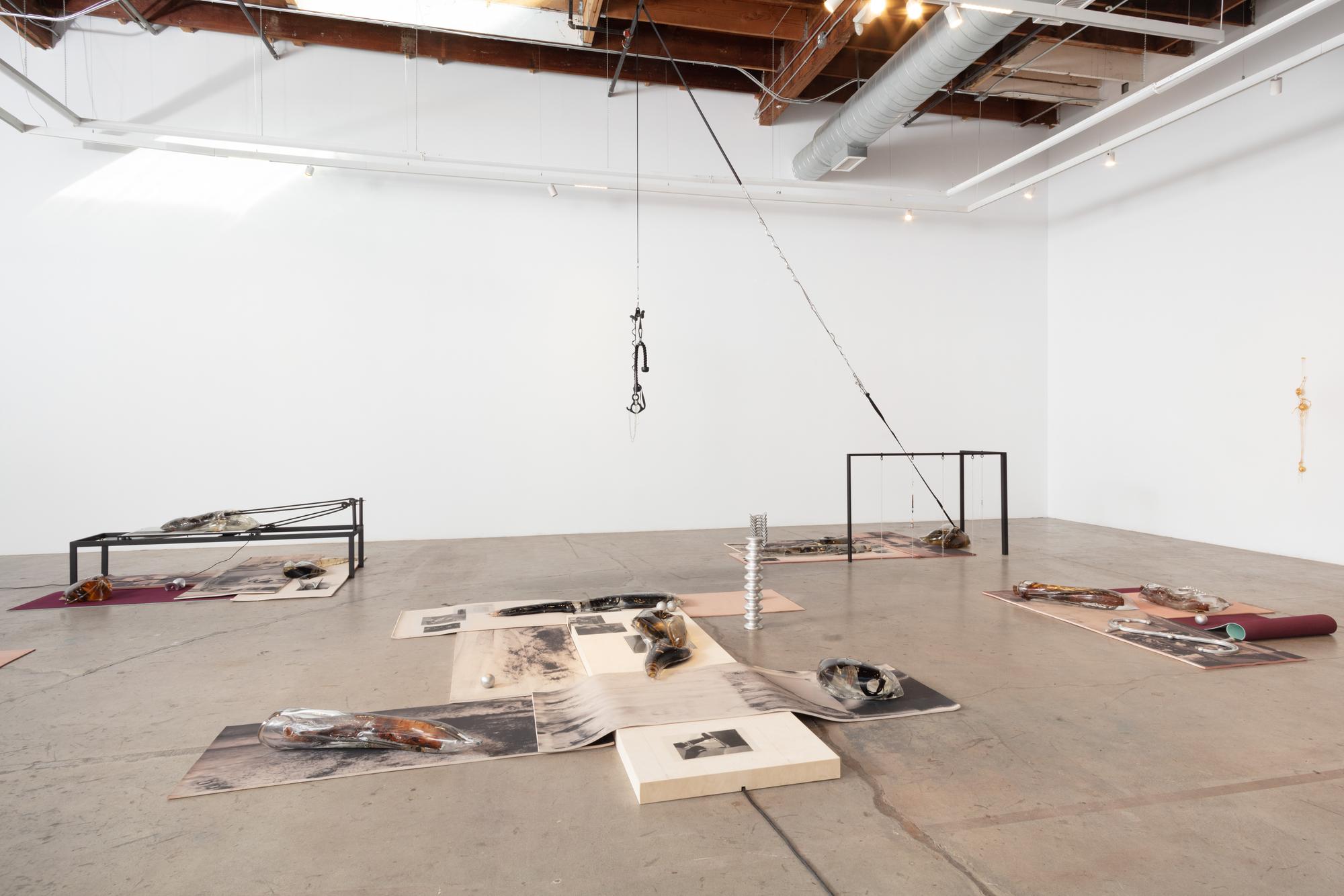
that merges medical imagery with the materiality of private desire. In 《Self Love Club》, yoga mats, massage devices,
exercise tools, herbs, mushrooms, and supplements expand across sculptural
surfaces and structures, generating a sensorial environment in which body,
industry, and history become densely entangled.