Exhibitions
《Our Dawns Art Not What They Seem》, 2023.04.14 – 2023.05.27, ThisWeekendRoom
April 14, 2023
ThisWeekendRoom
 Installation
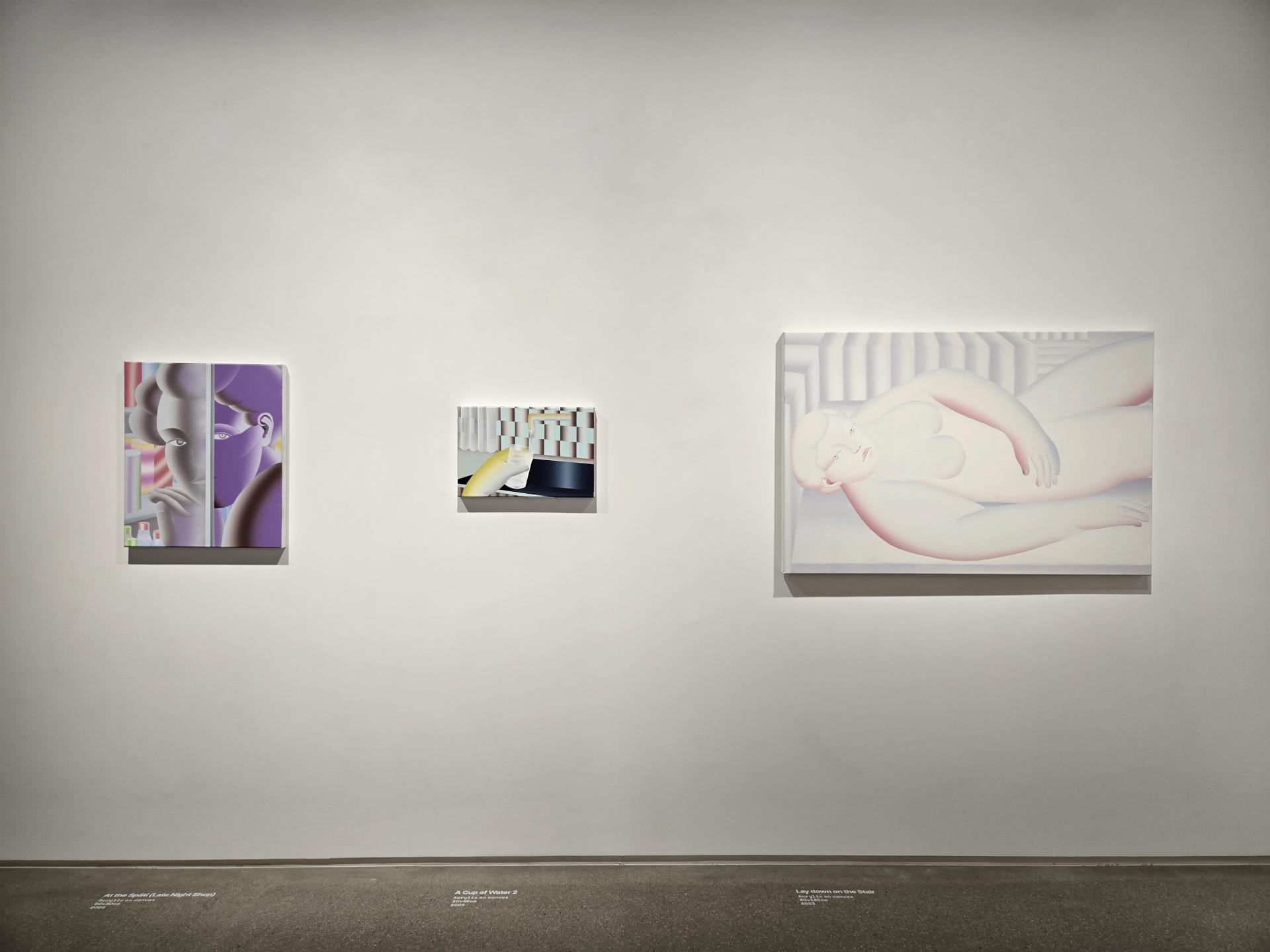
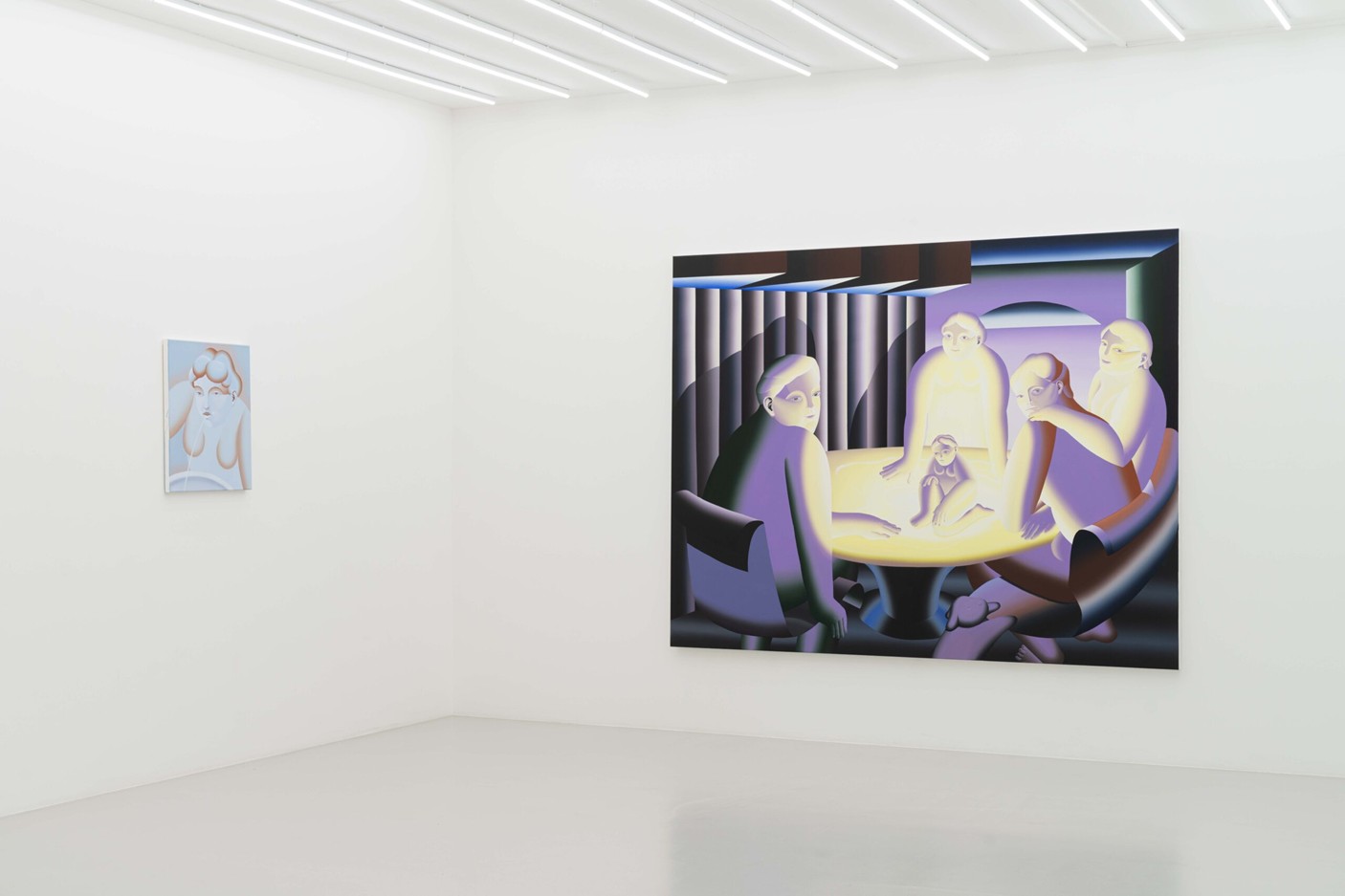
view of 《Our Dawns Art
Not What They Seem》 © ThisWeekendRoom
Installation
view of 《Our Dawns Art
Not What They Seem》 © ThisWeekendRoom
Some things begin to fade as soon as they are named.
Things like sadness, loss, and emptiness are so immense and vague that no human
word can fully capture them, much like mysterious beings lurking in the depths
of outer space. Jinhee Kim recognizes the limits of representation that are
corollary to systems of expression. She endeavors to capture the nonlexical
aspects beyond the visible realm in her work.
Accordingly, she associates her
paintings with metaphorical devices that can convey the various subtleties that
pop up around her. In her first solo exhibition in Korea, 《Our Dawns Art Not What They
Seem》, Kim attempts to strip away the veil of dawn, a
symbolic setting, and reveal the moments hidden underneath it. In other words,
her curiosity is not pointed at the time and space of dawn but the subtle and
trivial inner vibrations buried in it.
 Installation
view of 《Our Dawns Art
Not What They Seem》 © ThisWeekendRoom
Installation
view of 《Our Dawns Art
Not What They Seem》 © ThisWeekendRoom
Dawn. Neither utter darkness nor bright light rules over this time
of the day. Instead, it is defined by ambiguity or uneven energy. The
uncertainty and apprehension of not knowing what will happen when light
permeates the sky, the illusions that appear when dull silhouettes and colors
fill the space, the faint memories shrouded in fog and cold air brushing
against the skin—the secrets
within cannot be accurately written or spoken. Kim imagines the hidden scenes
beneath the veil of dawn and decides to shed light on them momentarily. What
will we discover there? What will emerge to the surface once the shadows of
dawn recede for a moment?
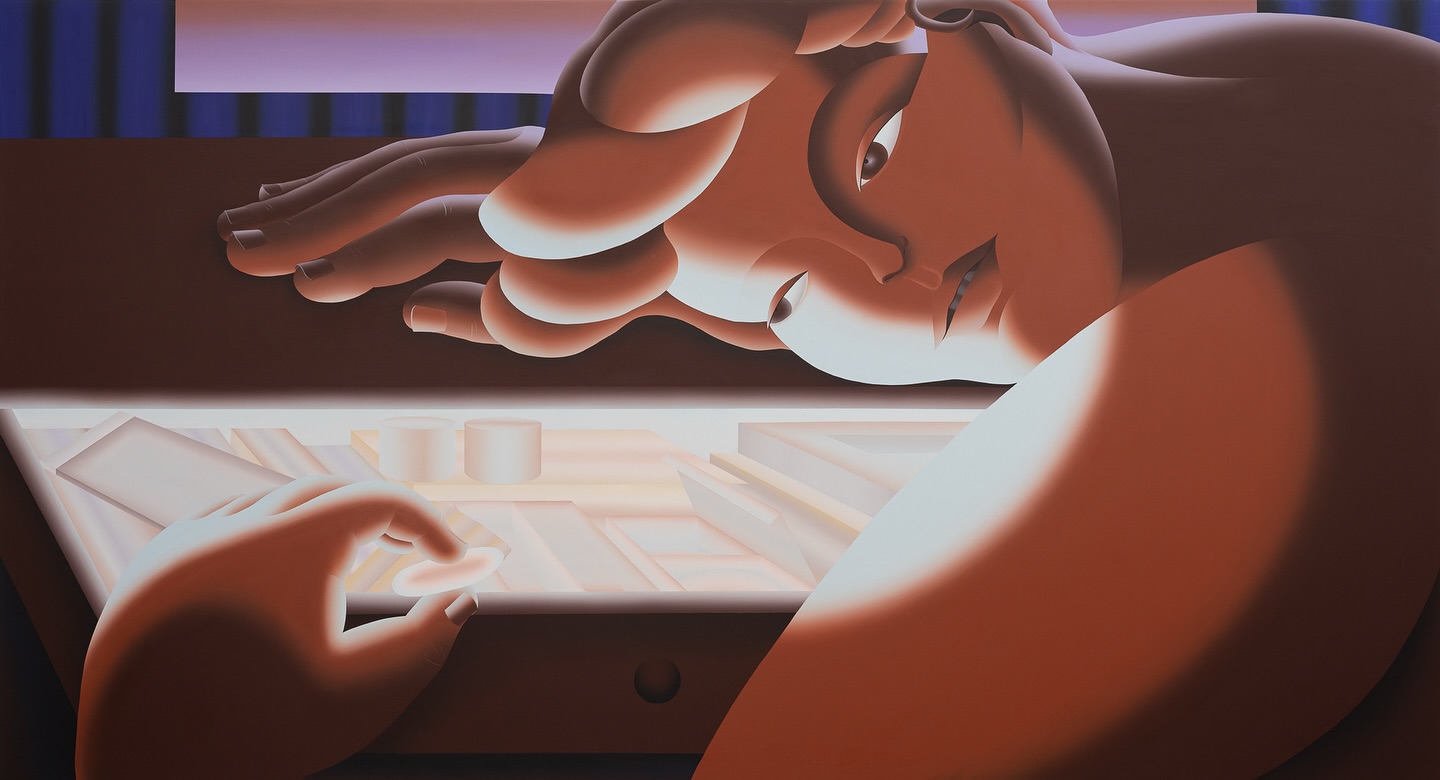
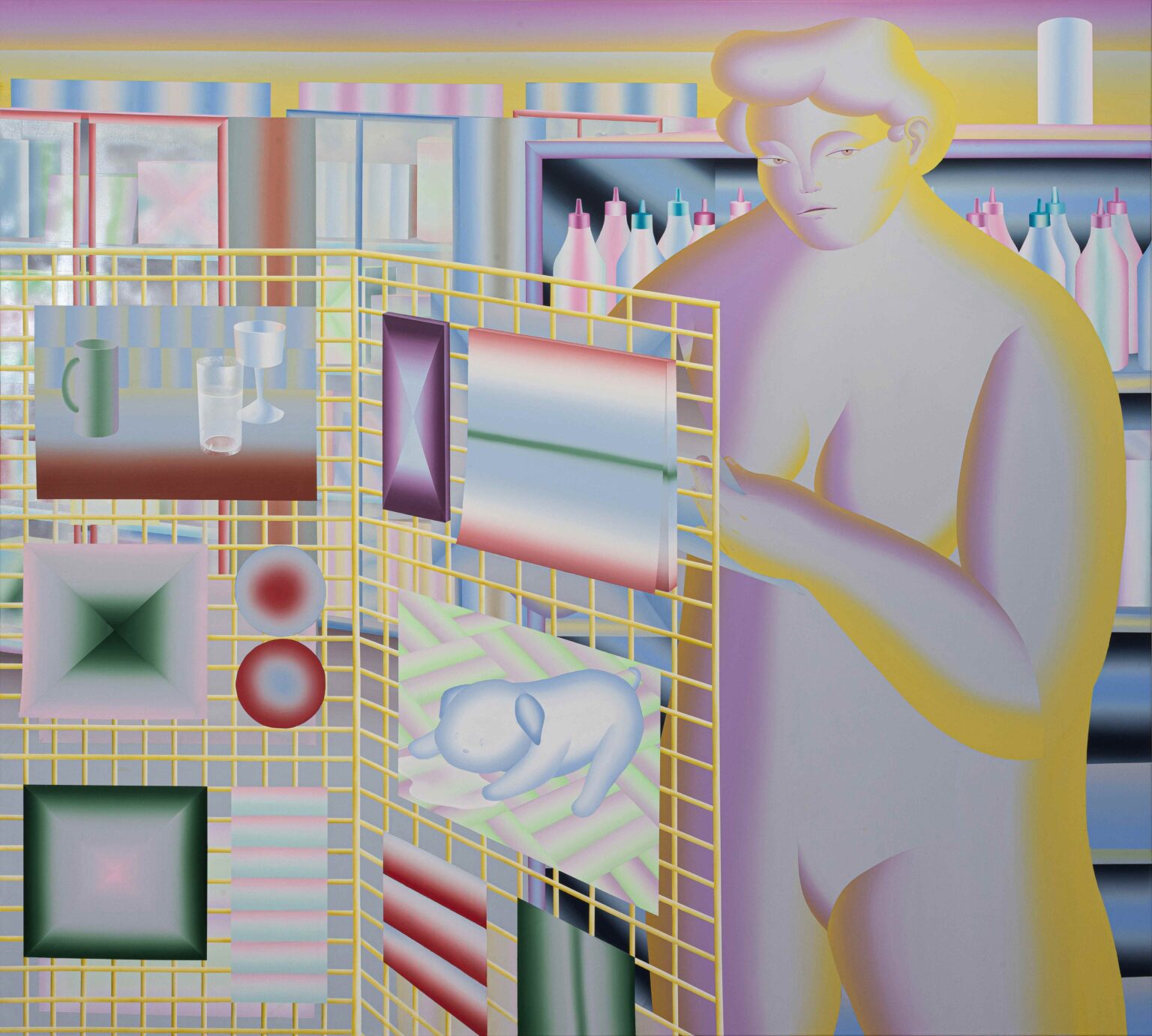
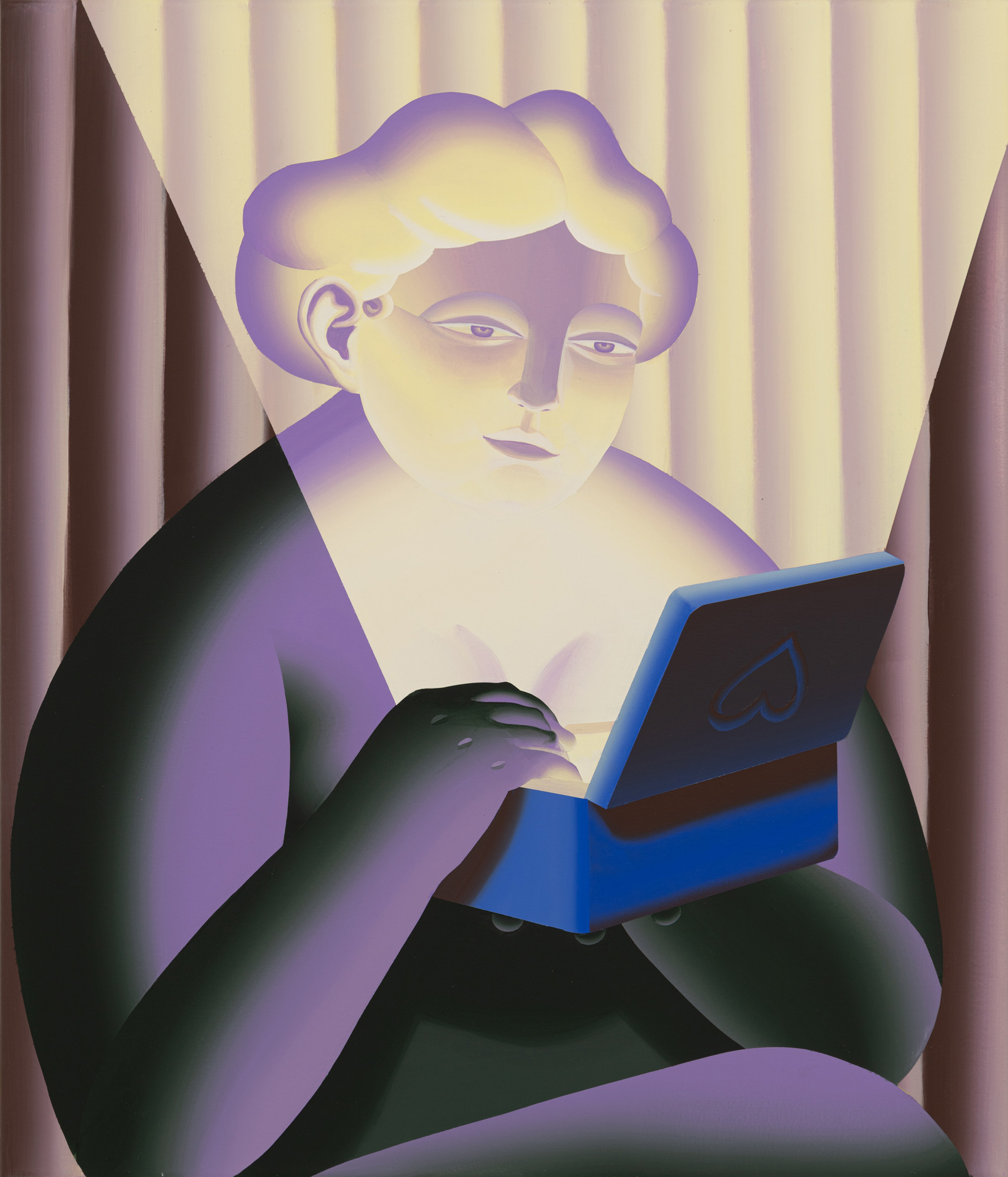
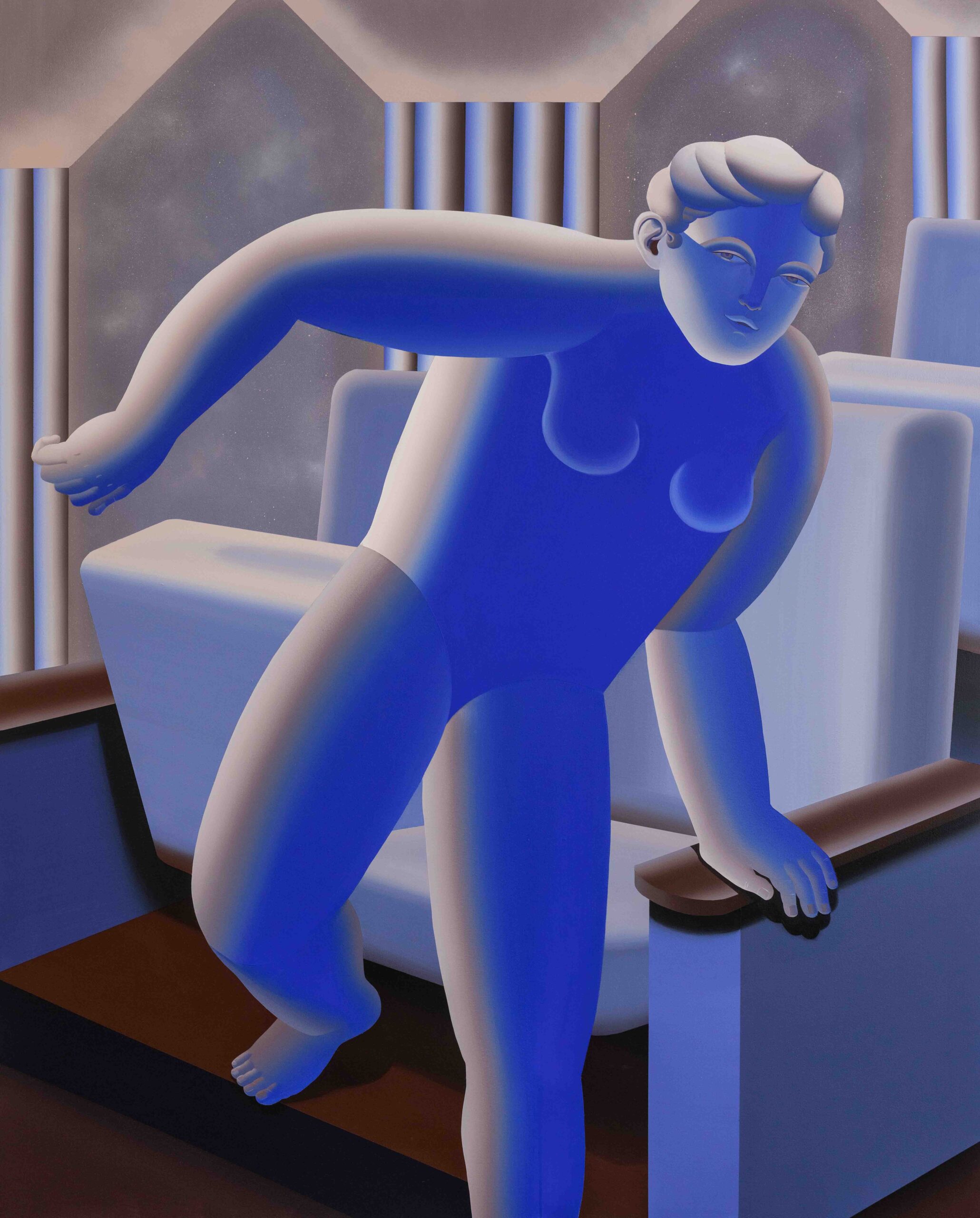
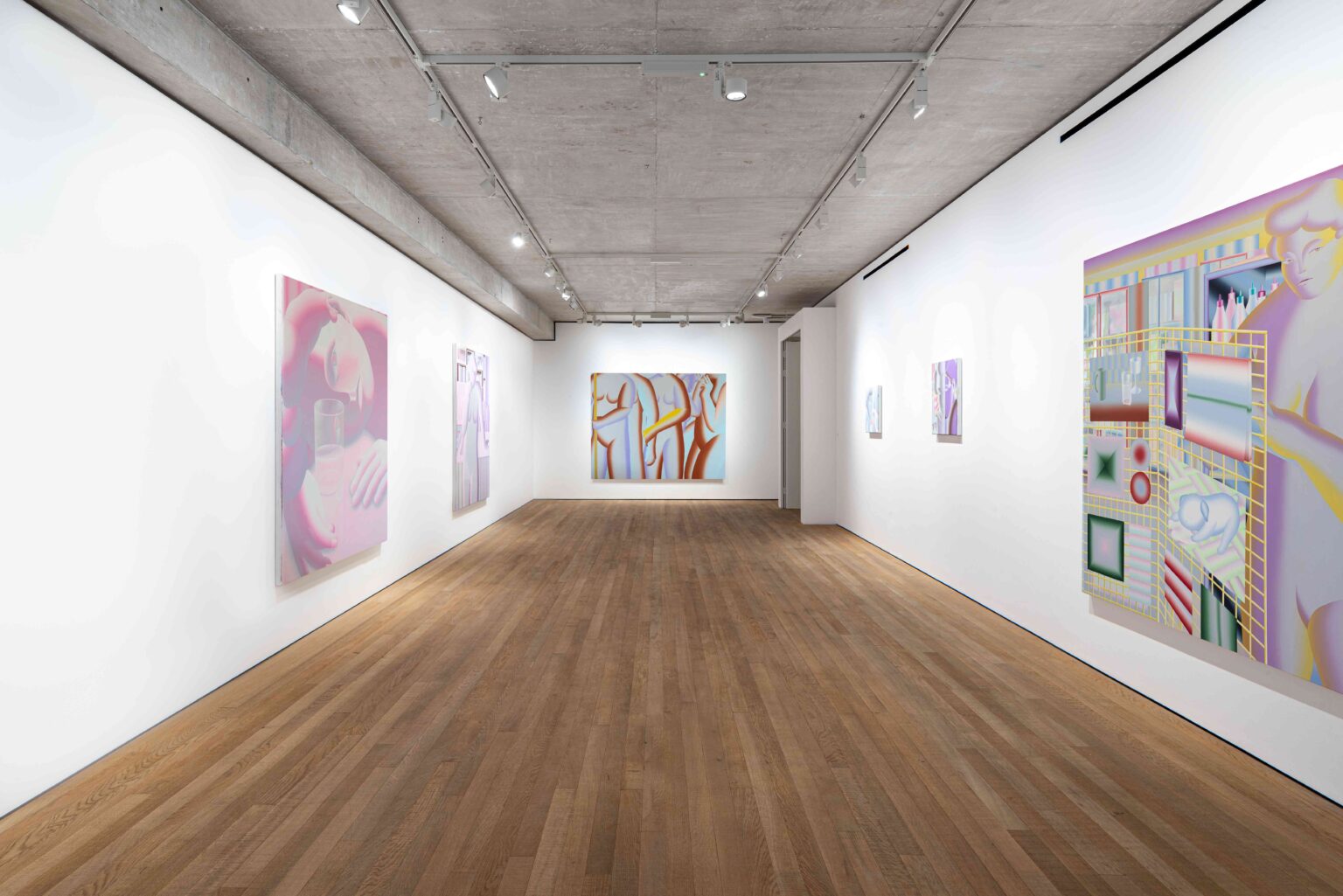
Kim creates and maneuvers an artificial light, awakening those
immersed in the darkness of dawn and causing a type of isolating effect. In
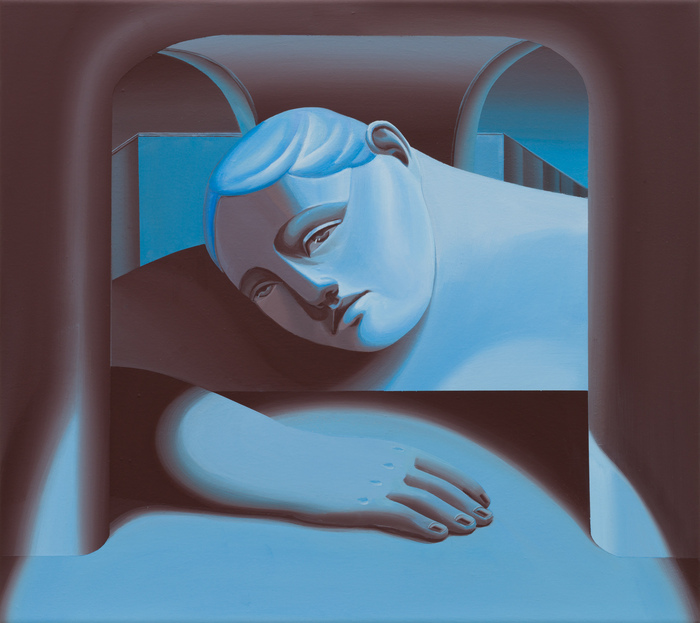
each depicted scene, disturbed by the artist’s intervention, the figures are caught in a sudden unexpected
moment. One figure is captured in the moment of leaving a dark theater, another
is alone in a room, observing the mysterious light emanating from a music box.
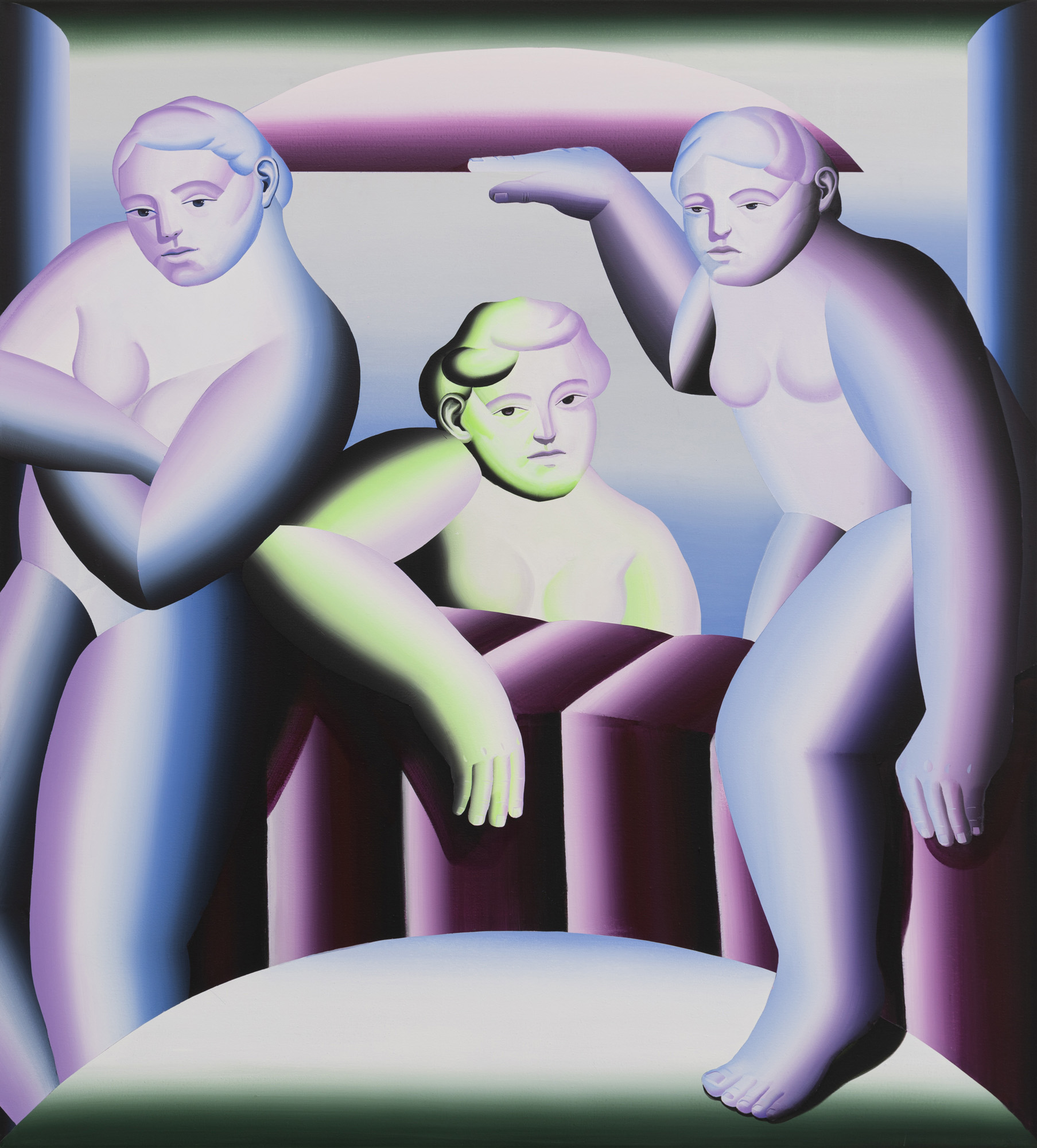
A group of people sits at a table surrounding a small figure with glowing skin,
seemingly warming themselves in the light, while another group sits on a bench,
each figure staring off in different directions and recalling different
memories. Nevertheless, the narratives in each painting have no apparent
resonance or connection with one another. More than that, the figures appear
somewhat emotionless, not particularly optimistic or unhappy. In the fragmented
and ambivalently selected scenes, each figure’s
nameless emotions and thoughts only vaguely come through via subtle gazes,
gestures, and melancholic color variations.
 Installation
view of 《Our Dawns Art
Not What They Seem》 © ThisWeekendRoom
Installation
view of 《Our Dawns Art
Not What They Seem》 © ThisWeekendRoom
In a way, Kim’s pursuit may
be to grapple with the rough coordinates or signals of nascent and shapeless
feelings rather than fully developed narratives. On the stage Kim built, these
emotions are brought to life in vibrant or soft colors and transformed into
images of evanescent moments. Kim acknowledges that the nuanced palette of
emotions does not imply emptiness or meaninglessness. This is because, although
invisible, non-representational human thoughts are still tactile, physical, and
deeply impressionable for the person they belong to.
Thus, Kim stands in front
of her paintings, determined to fully embrace these fleeting images that are
not outwardly expressed. Instead of quickly approaching her figures and
engaging with them, Kim chooses to imagine what dawn looks like from each of
their positions. Believing that those enigmatic beings will not remain forever
in the shadows, she awaits the moment when the veil is lifted and the empty
space is filled with an array of colors. Perhaps, one by one, each of these
beings will emerge into the world as reflections of her mind.
Jihyung Park (Curator, ThisWeekendRoom)