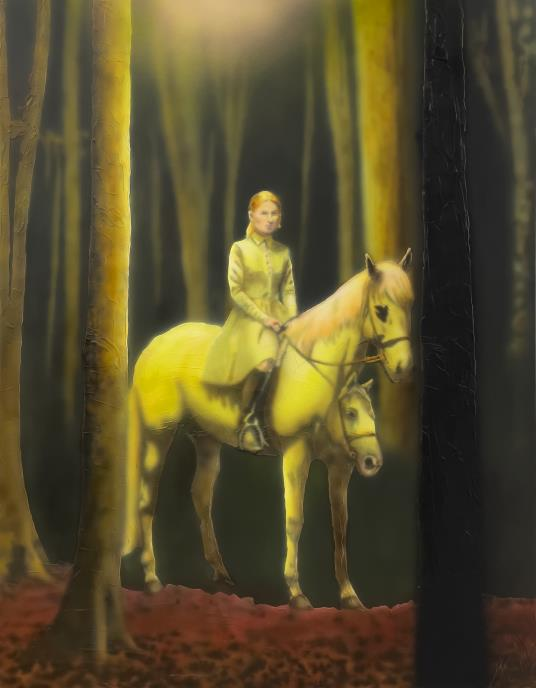
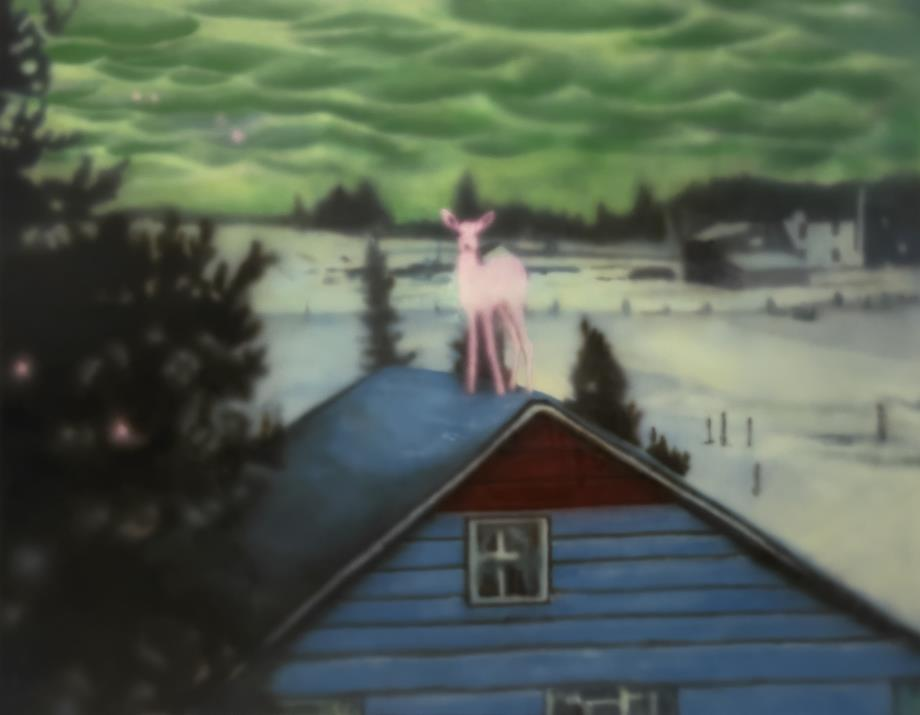
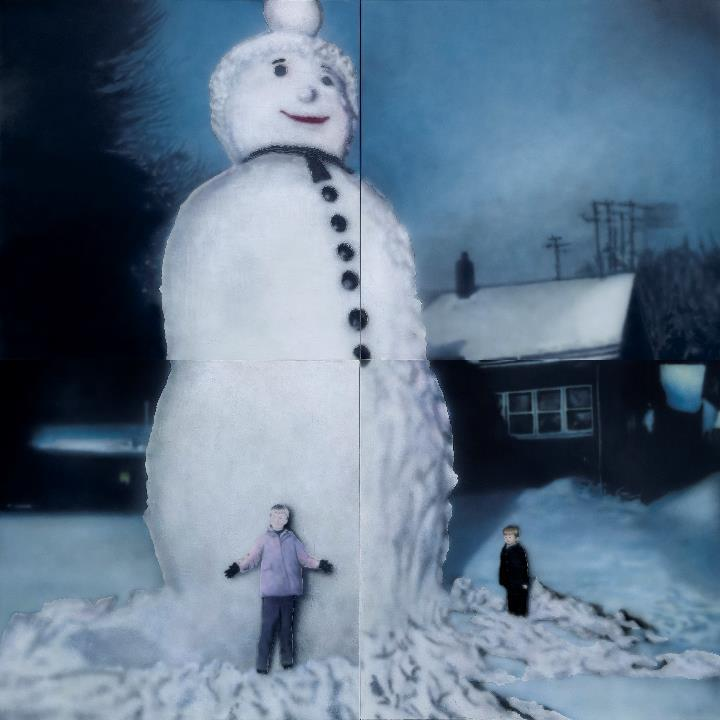
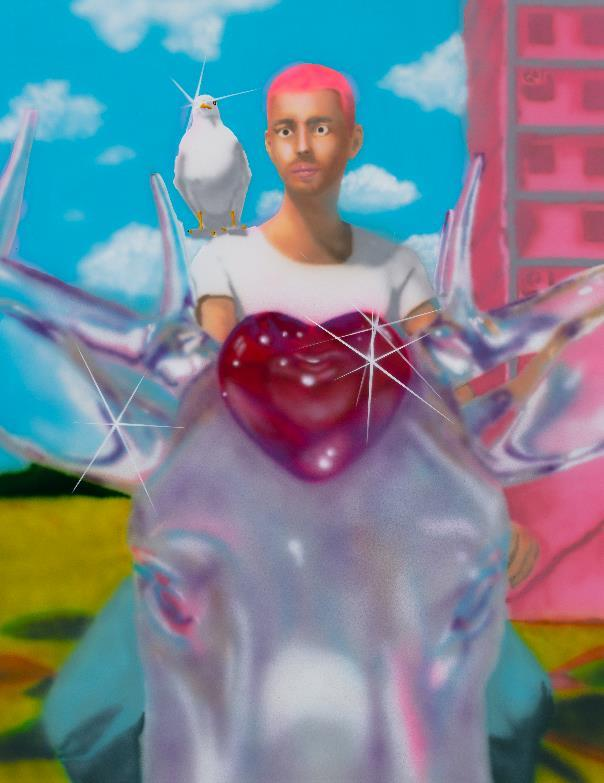
The
“town” that Noh Sangho created
Let’s
go directly to the conclusion. What type of storyteller is Noh Sangho? Is it
reasonable to use the word “story?” Why did he bring up the German word
“Märchen” to suggest his “world of a story” in order to stimulate his
production?1) Before we talk about the artist, let’s refer to the way Walter
BENJAMIN categorizes stories. Benjamin has compares a storyteller to a sailor
and a farmer. He defines storytellers as the people who pass down their
experience and maintain their own perspectives. He also supposes that these
people are disappearing now.
He also says that a sailor travels far and brings
back stories, while a farmer stays in one place for a long time and delivers
stories he/she discovers from a history. If we can find the broad sources of
stories — the space and time — from Benjamin’s words, Noh finds and creates
countless stories from unknown authors; the stories are sourceless because of a
jumbled time and space. Of course he cannot be compared to either a sailor or a
farmer. He is a storyteller of the “dark freestanding wall” who recovers
materials from the jump and the cut of indistinguishable time and space— the
flattened clues from the Internet.
At
the end of the stories Noh creates, there are at times his drawings, images,
installation structures, and performances. For this artist who applies “every
possible form including books, murals, drawings, and installations”(quote from
his Portfolio), the “world” is more important than the story. This world is
shallow and enormous. It is physically intangible and accepts any viewpoint and
perspective. The stories and drawings accumulate experiences through printable
and manipulated image as a makeshift stage, whose stories and drawings are also
mutable.
Instead of the earth and ocean that a sailor or farmer uses as a
stage, the closest reality of Noh’s era is the time and space of the Internet.
One clicks the article of a capsized ferry, but no one jumps into the ocean.
One eats organic rice, but the labor of a farmer comes through a delivery
service. NOH Sangho builds his “world of story” from the Internet that is full
of indistinguishable ideas and images that are already mixed and manipulated
over and over and based on countless ideas as well as fake online accounts.
After
collecting online images, editing them, and making a carbon copy of the image,
NOH Sangho’s final images show his childhood experience and experiences heard
from others. However in his works of diverse form there is a strong impulse to
conceal the original stories and images - as much as there is a strong will to
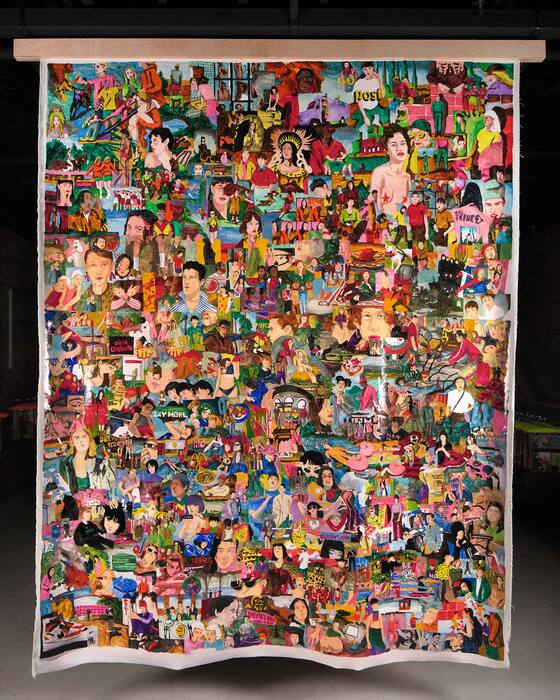
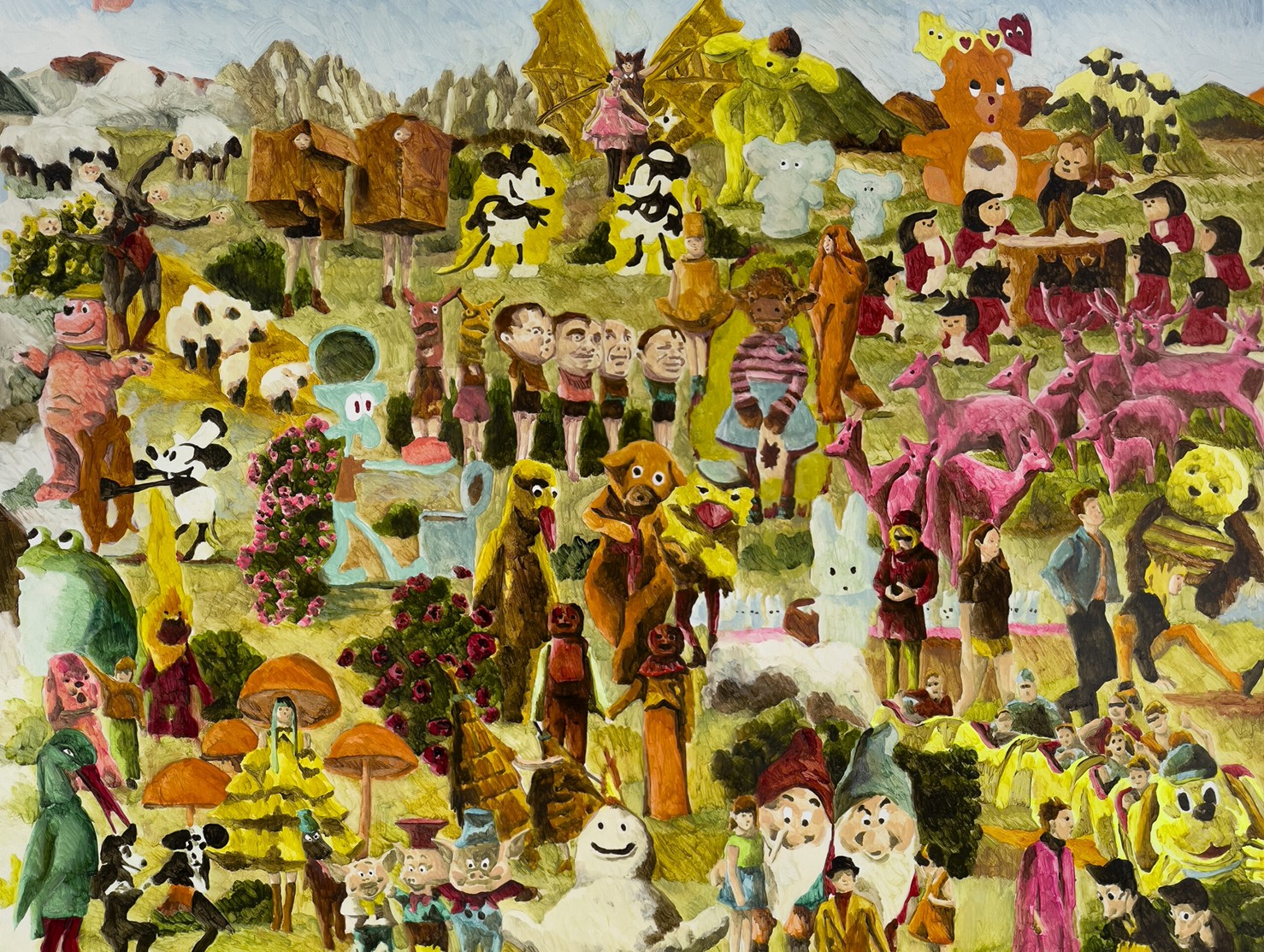
create new things. Isn’t that bizarre? On his flowing mural with black
background, the scattered seemingly irrelevant images with linear narration
conceal Noh’s story. Let’s see Daily Fiction, which is updated on his homepage.
There are writings and drawings about a girl who has had three arms since
birth, (‘Three Arms’), and Sally who dreams to be the best dancer to receive
great applause, (‘Sally’s Dance’). Although they come with stories, the thin
drawings of people with blank face are disguised illustrations that do not
speak nor claim anything.
The
term “Dark freestanding wall” I mention above to describe the artist as the
storyteller of the dark freestanding wall was actually first used by NOH Sangho
himself. It was taken from a short sentence he wrote to introduce his works.
What is interesting is that this dark freestanding wall is a suitable,
realistic matter from which he controls and produces works.2) As he says, Noh
is not interested in the narrative or conclusion of the story.
Rather than the
quality or the length of the story, he values a story as an entrance to produce
works, including drawings. Although it is impermanent and fake, he uses the
term “freestanding wall” to switch from the system of reality (at least for a
while). As a way to switch, he uses a blackout, artificial world of light using
a small lantern, and cave-like long passageway (with a curtain that blocks
outside light). In the spring 2015 exhibition spectators open the blackout
curtain to enter.
Then
what is his story? The most interesting part of his story is that it starts
from inside a town. Whether this town is named or not, there are no clues for
placing it within an accurate time and space. However, there is a trigger for
an event. Beginning with this trigger the story takes on three elements:
character, event, and background. For example, in There's a Town Where All The
People Have Had to Keep Their Eyes Closed Since They Were Born, the king—the
problematic individual and emperor—desires the witch’s eyes, that can see the
entire world. As a result the witch casts a spell so that when villagers open
their eyes, they turn into stone. In this story that deals with uncontrollable
magic and oracles, the townsmen are tiny powerless elements, who must obey.
Noh’s
story is based on absence. Here, absence implies that the story is already
finished - it is the story of the past. It is also absent in that the story
deals with loss and Noh produces and volatilizes each drawing rather than
creating stable platforms for his drawings. The world he creates vanishes and
drifts around, perhaps because his town already believes in fiction and the
first major reader of the story is the artist himself. Through the fragments of
his story Daily Fiction, the artist builds another town. Although the town is a
world of the imagination, fake, and artificial, these artifacts gather and
create a real matter - the drawings fulfill Noh’s actual time.
Meanwhile,
rather than painting his drawings are closer to the concept of an image.3) As
the elements of painting and image mix, he confuses a world full of drawings
and the other world of images. He observes every journal and online stock
image, including fashion, culture, filled with women, men, and people who wear
things, drink, are born, and die. But, this is not an act of collection for
collection's sake, these images are easily employed and people glance over
them. This leads to his works that employ disassembling and reassembling images
and quick drawings on carbon paper, playing with a sense of “copy & paste.”
Based on this collecting and assembling, he saves his drawing as an image with
a digital filename and uploads them on his homepage and Instagram. As he
creates and develops a media called exhibition, his uploaded images seek a
different life from other high/low quality online images.
Supposing
that an exhibition is a type of media, Noh approaches it from the outside. Not
only exploring the possibility of a process-based exhibition with an open
installation in operation, Noh also utilizes the exhibition (as one of its
oldest functions) to present drawings. To provide the reason for a spectator to
come to an exhibition, he turns the exhibition hall into a playground of
images. He puts spectators into a cave at 《Young Korean Artists》 and turns the empty
part of the building in the Hongdae area into an exhibition space with murals.
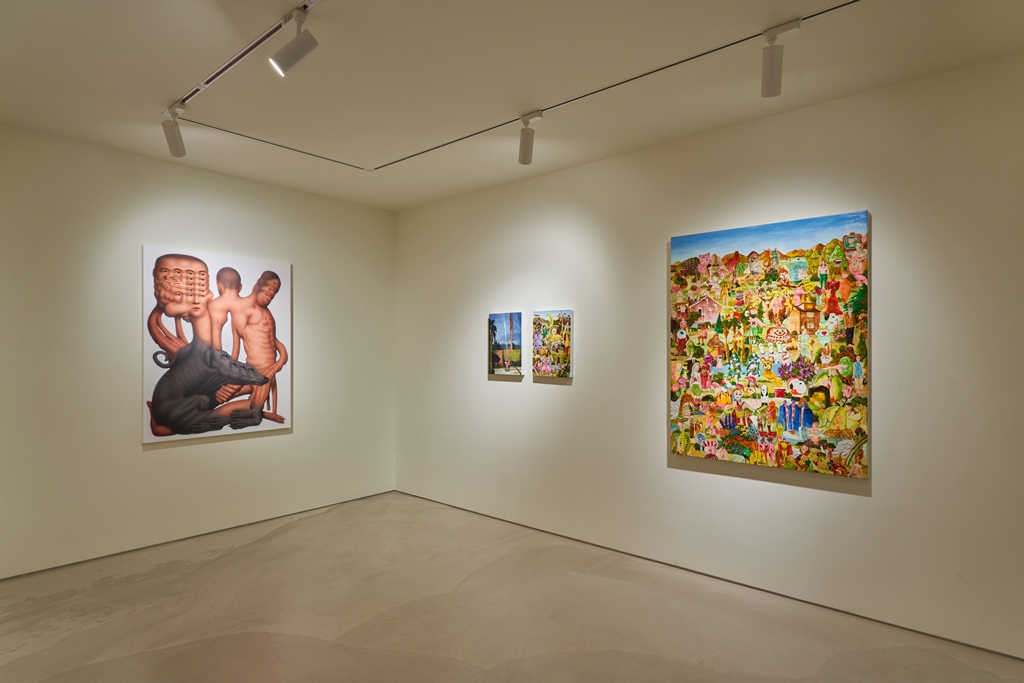
Here, Noh sees an exhibition space as an empty canvas or a blank computer
monitor, not an empty wall to bring a complete work to hang. He actively
applies the condition and situation of the exhibition space into his work and
uses it to frame his works.
Noh Sangho may shake and produce the medium called
an exhibition, because his big and small drawings form a crowd — like a town —
being represented in a completely different mode. Depending on how his stories
are located and vanish into the exhibition space and depending on whether his
drawings are murals or within a frame, his works make contact points with
another world. His drawings produced in this way also rely on the imagination.
He takes a way of seeing drawings as a way of producing a work. His work
exhibited in 《Young Korean Artists》 was full of many images, but the spectator could only explore parts
of the drawings with a flashlight because it was completely dark. While the
artist is seemingly not interested in showing the whole, what can he develop
for a new exhibition space?
An
artist and doubt
There
are many more interesting things than “art,” at least seemingly to Noh Sangho.
A single great work, i.e., a piece that involves developing one’s own
methodology or existence as an author having one’s own originality, is too
heavy for Noh Sangho who lives for today — it is too heavy a concept to be
stored in Noh’s folder, even temporarily. On the other hand, his artistic
strategy seems too casual, but its process does not allow his images to be
easily consumed.
Noh produces his works infinitely (as in Daily Fiction)
instead of following conventional gestures that have certain mode of
dissemination. His spectators are positioned here and there with eyes open
(there are spectators in the online follower system). By joining and parting
with colleagues, instead of presenting each artist’s individual work he can
produce an event as an efficient alternative to an exhibition or project. But
here one might wonder where is the “real” work?
Thinking
back now, Noh Sangho takes the world of story as the contact point for the
invisible world with the visible world. Many of his stories rely on the world
of disability, the other, and bizarreness. The characters in these stories do
not know how miserable they are and whether they can break through to the
world. Thus, these characters do not realize their misery and are represented
without “eyes,” living in darkness. However this ignorance is used as a device
to maintain the mystery of the events. Thus, while NOH Sangho’s drawings
represent parts of his constructed story, they are also fragments of a volatile
drawing - we do not get the whole picture. Writing and drawing fictions
everyday, Noh randomly collects online images and draws them using carbon
paper.
Here, I doubt if he is an artist who cannot stand without a narrative.
Seeing this left-handed artist who says he must produce at least one drawing
everyday, I keep wondering if we can separate the (repeatedly) expanding
stories, from the artist (or from his works). No matter what type of
storyteller NOH Sangho is, he shows an interesting way of existing – he
physically responds to the fact of living with images today and persistently
operates his practice. Noh, who says he gets nervous if he does not draw at
least one drawing a day, engages in various practices: upon request, he says ha
can handle design, illustration, even exhibitions and recreations.
1)
Cited from his introduction of Märchen from his portfolio: “‘Märchen’
originates from the ‘domestic story’, ‘fireside story,’ when families sat
around and talked. This is based on fantasy and imagination and stories of
people who face an unspecified place and time.”
2)
In 《Young Korean Artists》(2014)
hosted by the National Museum of Modern and Contemporary Art, he drew mural on
a long, black freestanding wall and filled it with drawings. For his portfolio,
he wrote a short sentence to describe There's a Town Where All The People Have
Had to Keep Their Eyes Closed Since They Were Born: “For this work produced
through ‘Märchen cart project,’ I displayed Märchen inside the dark
freestanding walls and let spectators observe the work using lanterns.”
3)
Noh Sangho’s images resemble what the artist and author Hito Steyerl express
with her unique rhetoric of the “poor image.” As image is a moving damaged text
and fragmented world, it loses its value every time it is transmitted to
others—it is a film of and about everyone that we download at home, instead of
watching it in a theater, like the rich flavor of a dessert that everyone eats
and drinks, seen through Instagram.