
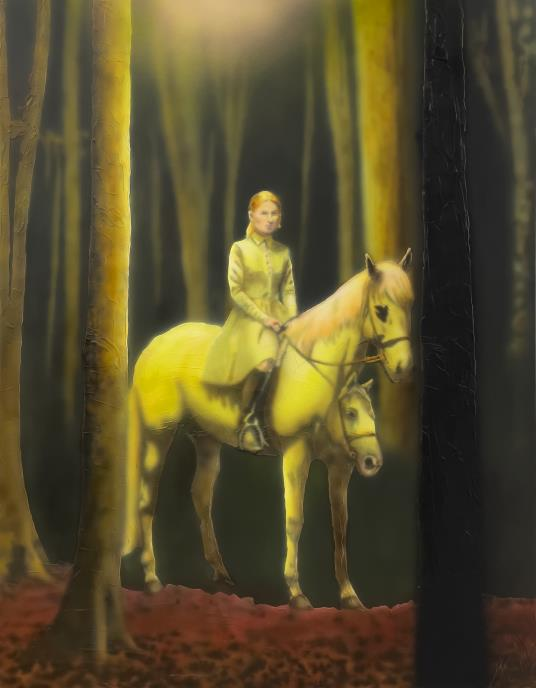
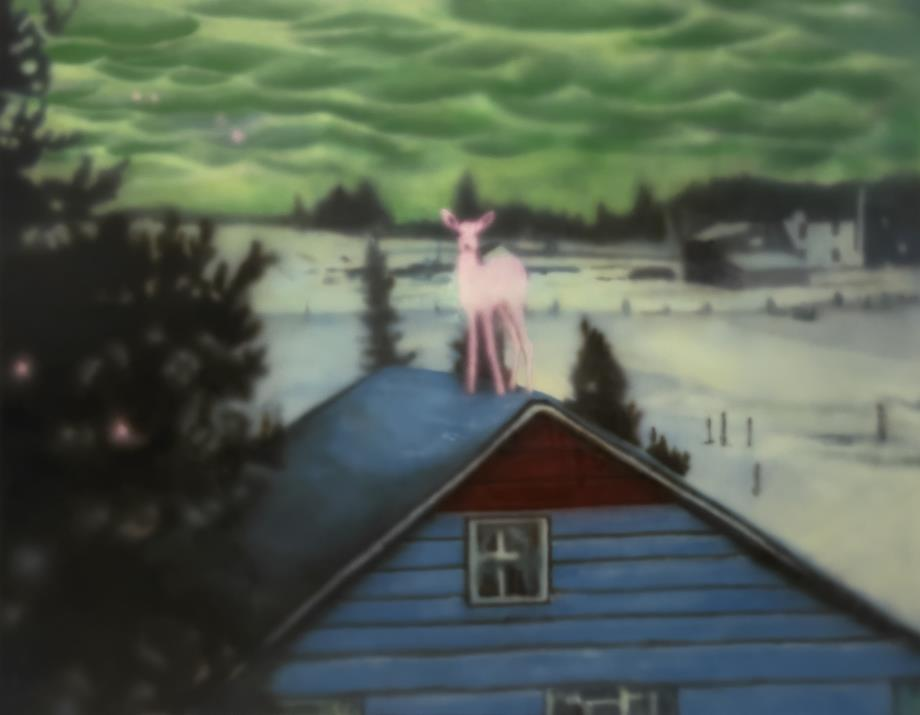
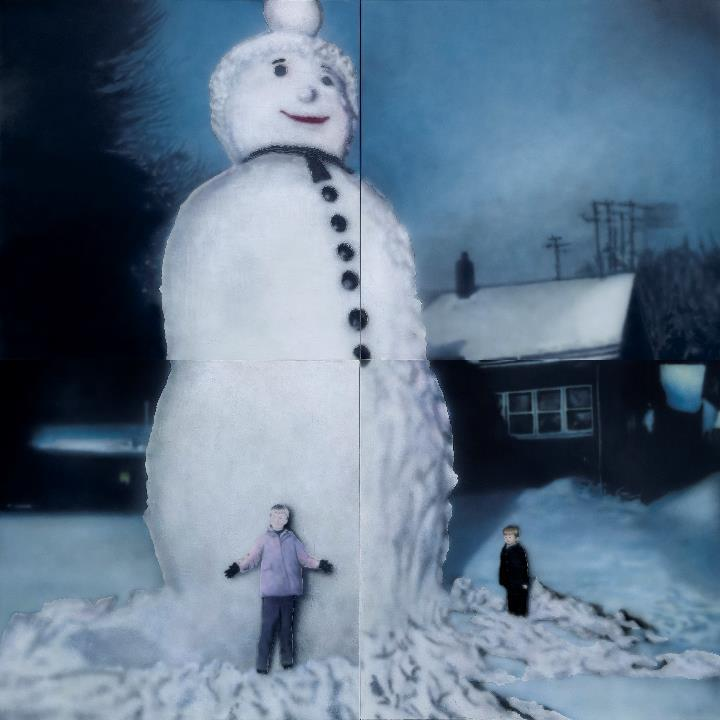
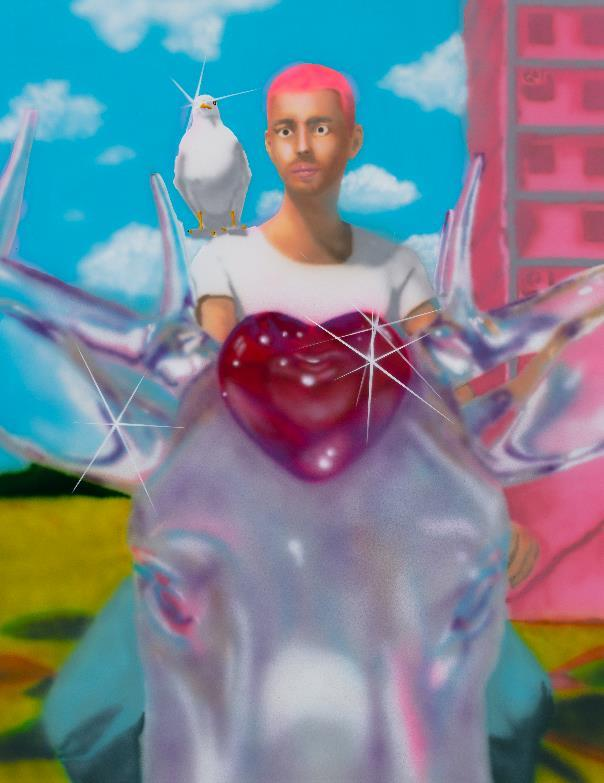
Noh Sangho (b. 1986) has built a distinctive artistic practice centered on paintings that draw from the countless images drifting across the internet, including social media. The artist collects fragments of images encountered in daily life, traces them using carbon paper, and reconstructs them into new compositions based on his unique imagination and sensibility.

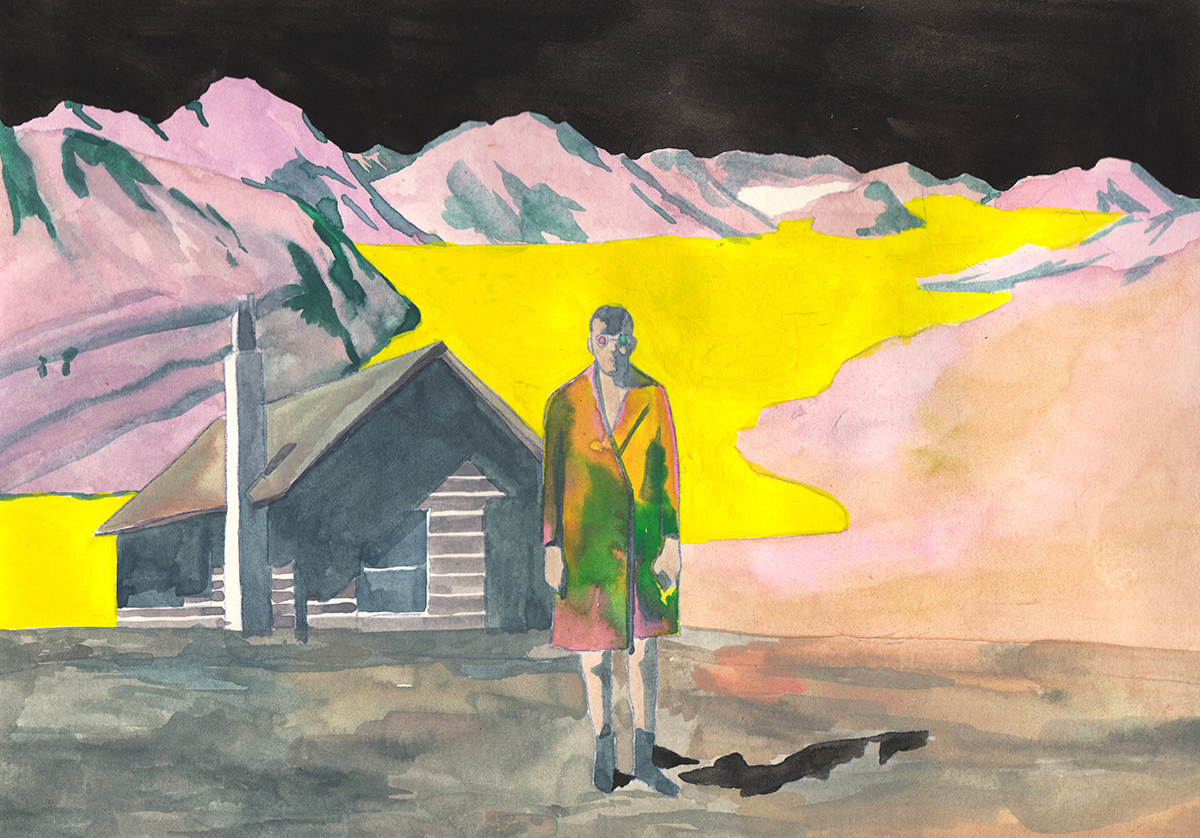
Noh Sangho, There's a Town Where All The People Have Had to Keep Their Eyes Closed, 2016, Watercolor on carbon transfer drawing, 29x21cm ©Noh Sangho

Noh Sangho’s working process reflects his contemplation on how images are consumed and created within contemporary conditions. In particular, the carbon paper that serves as the foundation of his paintings also functions as a medium that represents the artist himself.
 
His use of carbon paper as a medium reveals, with candor, Noh’s flexible philosophy of images in the digital age—an era defined by the overflow of visual material and the fluid migration and transformation of images across various platforms.


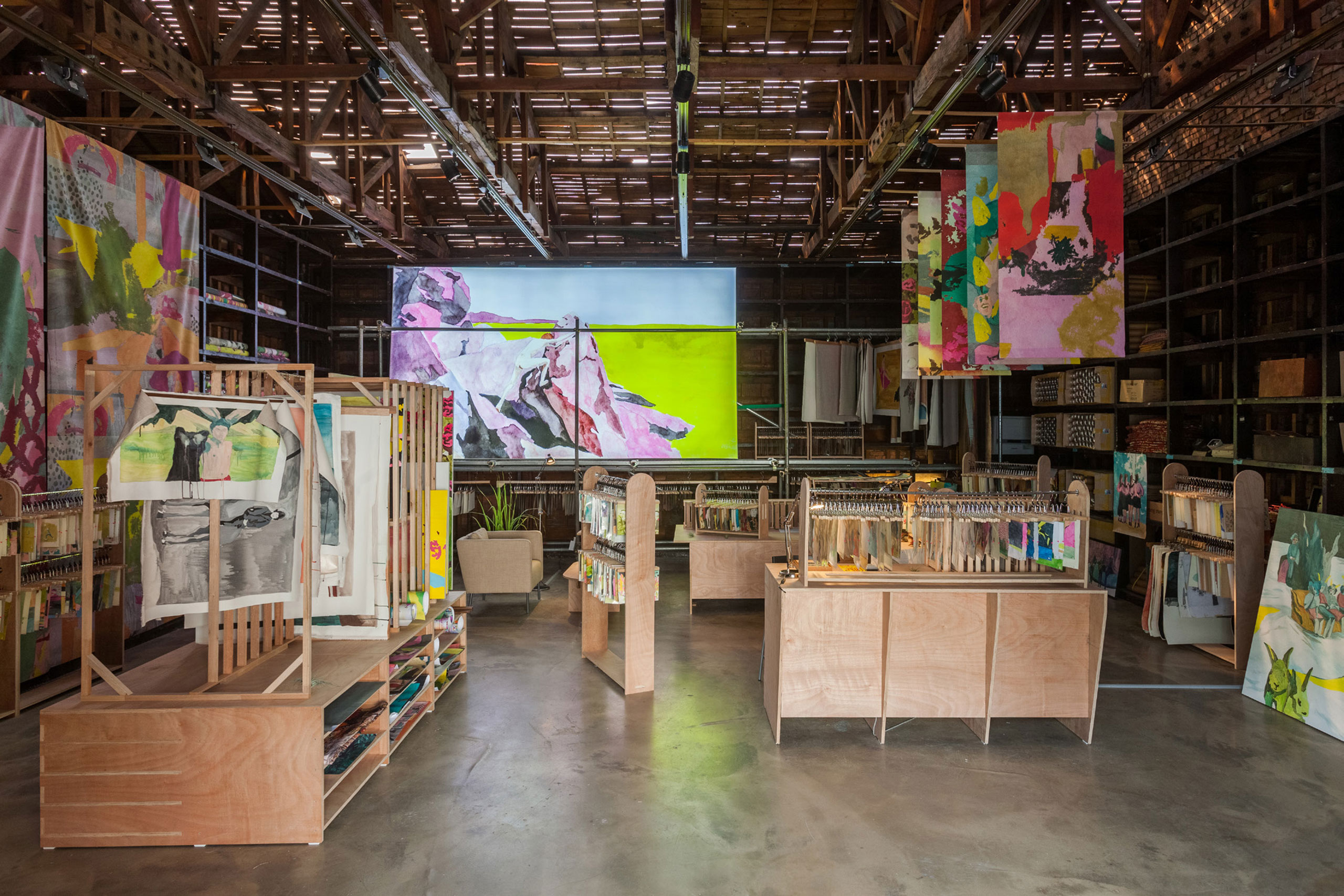
Installation view of 《THE GREAT CHAPBOOK》 (West Warehouse, 2016) ©Noh Sangho

Since 2011, Noh Sangho has been uploading one A4-sized drawing each day as part of his ‘Daily Fiction’ series, almost like a serialized publication online. This project, which has grown into a collection of several thousand works, draws from low-resolution images circulating on the internet, ownerless stories, and fleeting pieces of news.
 
Meaning “stories created daily,” the series merges the images Noh encounters online with his own lived experiences, those of people around him, and memories from his childhood. Although the materials originate from the reality of everyday life, the completed images depict a fictional world far removed from it, transforming the ordinary into new “fictions.”


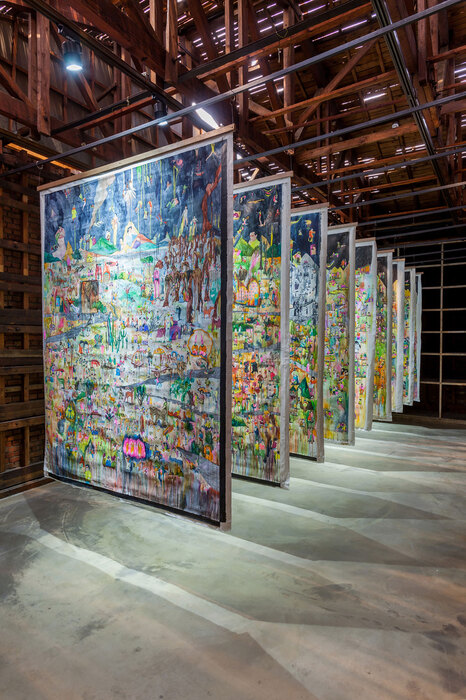
Installation view of 《THE GREAT CHAPBOOK》 (West Warehouse, 2016) ©Noh Sangho

Furthermore, the ‘Daily Fiction’ series expanded into an oil painting series titled ‘The Great Chapbook’ (2016–). The title combines the term “chapbook”—meaning a cheap, one-dollar booklet—with the adjective “great,” reflecting the artist’s method of layering numerous daily drawings onto large canvases to construct a vast, unified world.
 
Originally, chapbooks were thin, mass-produced publications containing short stories and prints—light, easily read, and quickly consumed. Noh connects this form to the contemporary circulation and production of digital images, extending his exploration of the fluid boundaries between reality and the virtual, the analog and the digital.

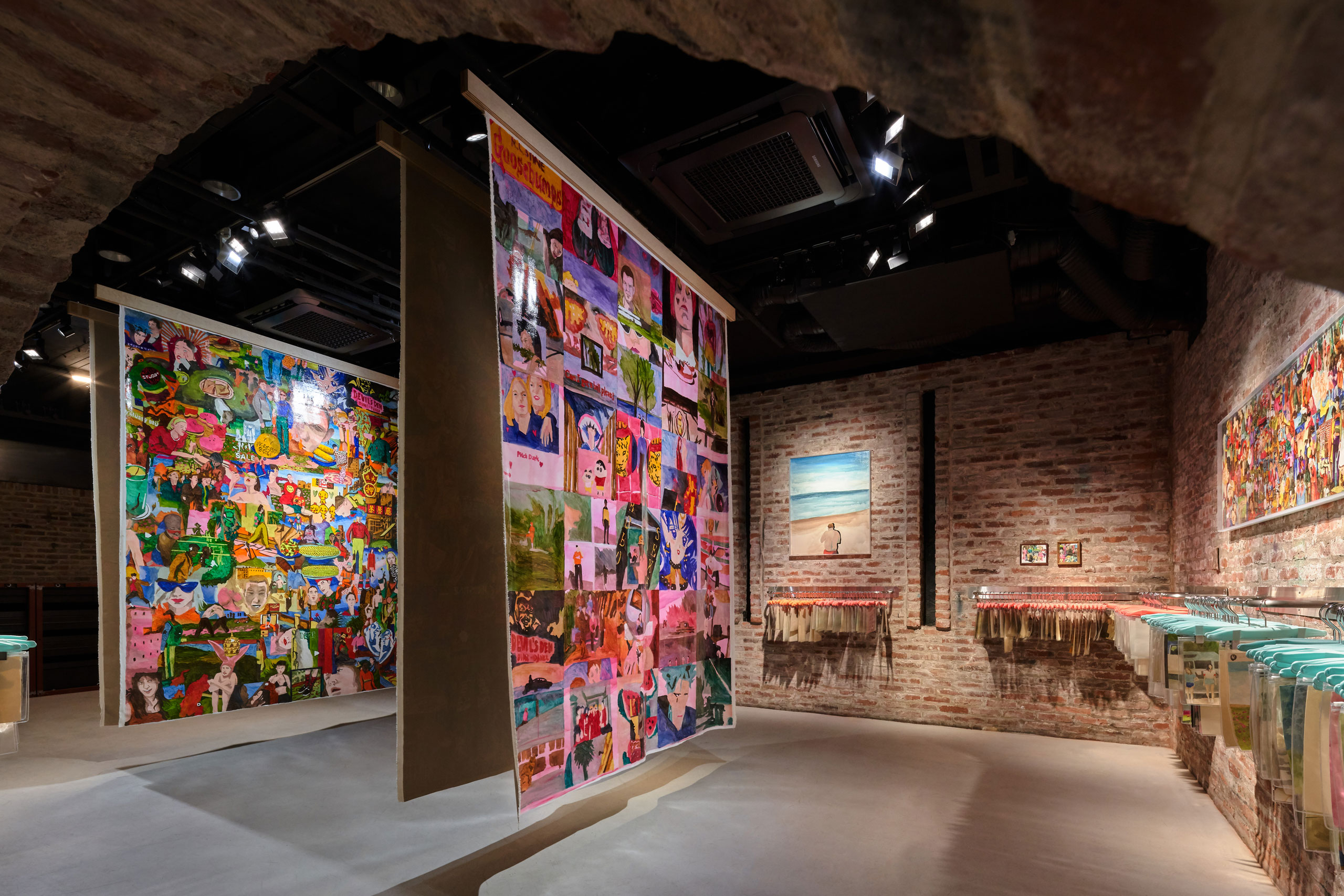
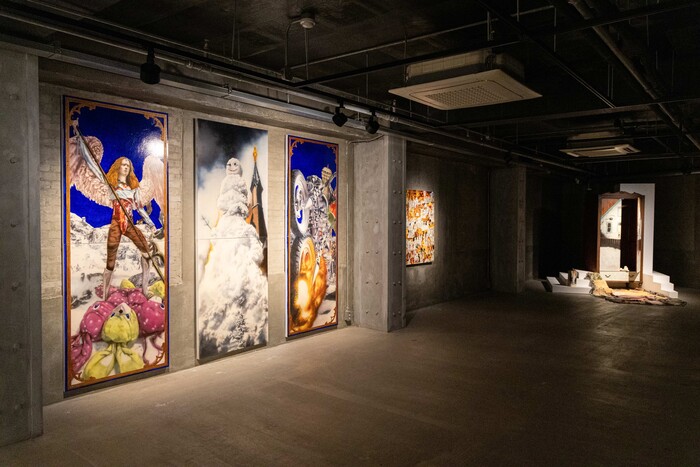
Installation view of 《THE GREAT CHAPBOOK II》 (ARARIO MUSEUM in Space, 2018) ©Noh Sangho

From this point on, Noh Sangho began to focus less on “stories” and more on the way images themselves are consumed today. In his 2018 solo exhibition 《The Great Chapbook II》 at ARARIO MUSEUM in SPACE, Noh presented works in which narrative elements were almost entirely removed, leaving only images behind.
 
The exhibition, consisting of approximately 1,500 paintings, featured large hanging canvases that descended from the ceiling to the floor, while hundreds of smaller drawings were displayed on hangers encircling the brick walls—arranged like garments in a clothing store, allowing visitors to browse and view them freely.


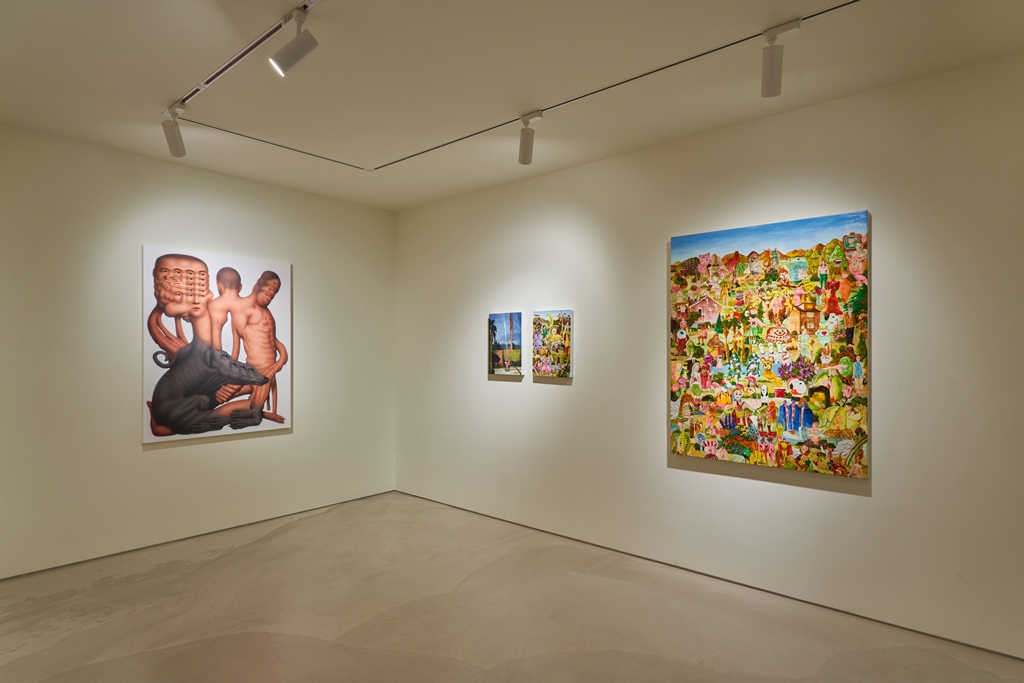
Installation view of 《THE GREAT CHAPBOOK II》 (ARARIO MUSEUM in Space, 2018) ©Noh Sangho

In the final section of the exhibition, small framed and canvas works densely filled three white walls, creating an overwhelming sense of visual inundation. The paintings occupying the space were, in fact, reconfigured pieces—cut and recomposed from the 1,000 drawings previously exhibited in Noh’s earlier solo show.


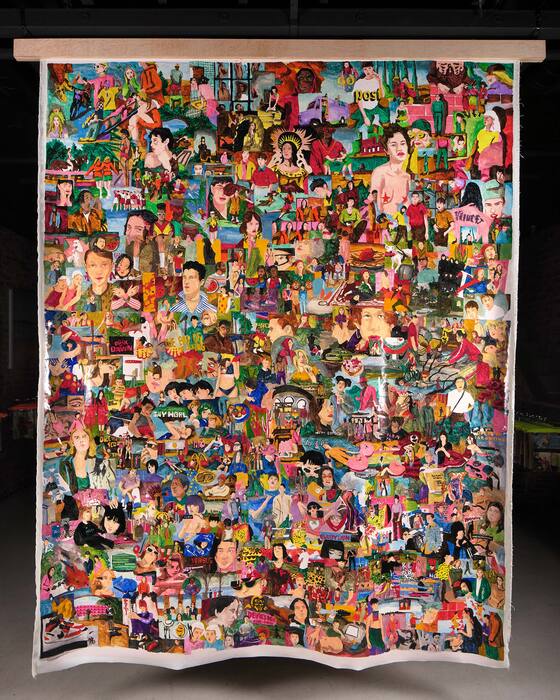
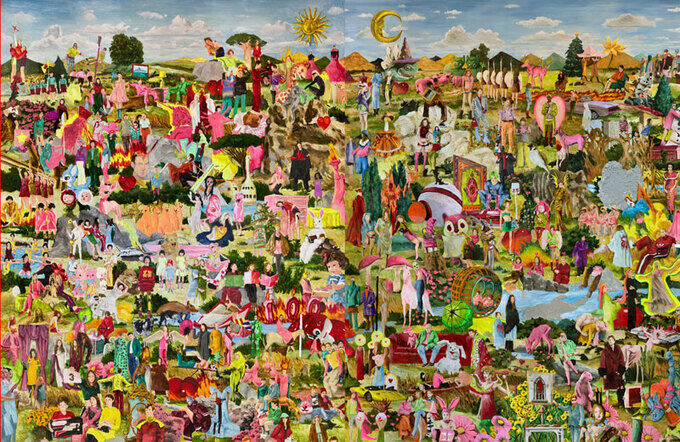
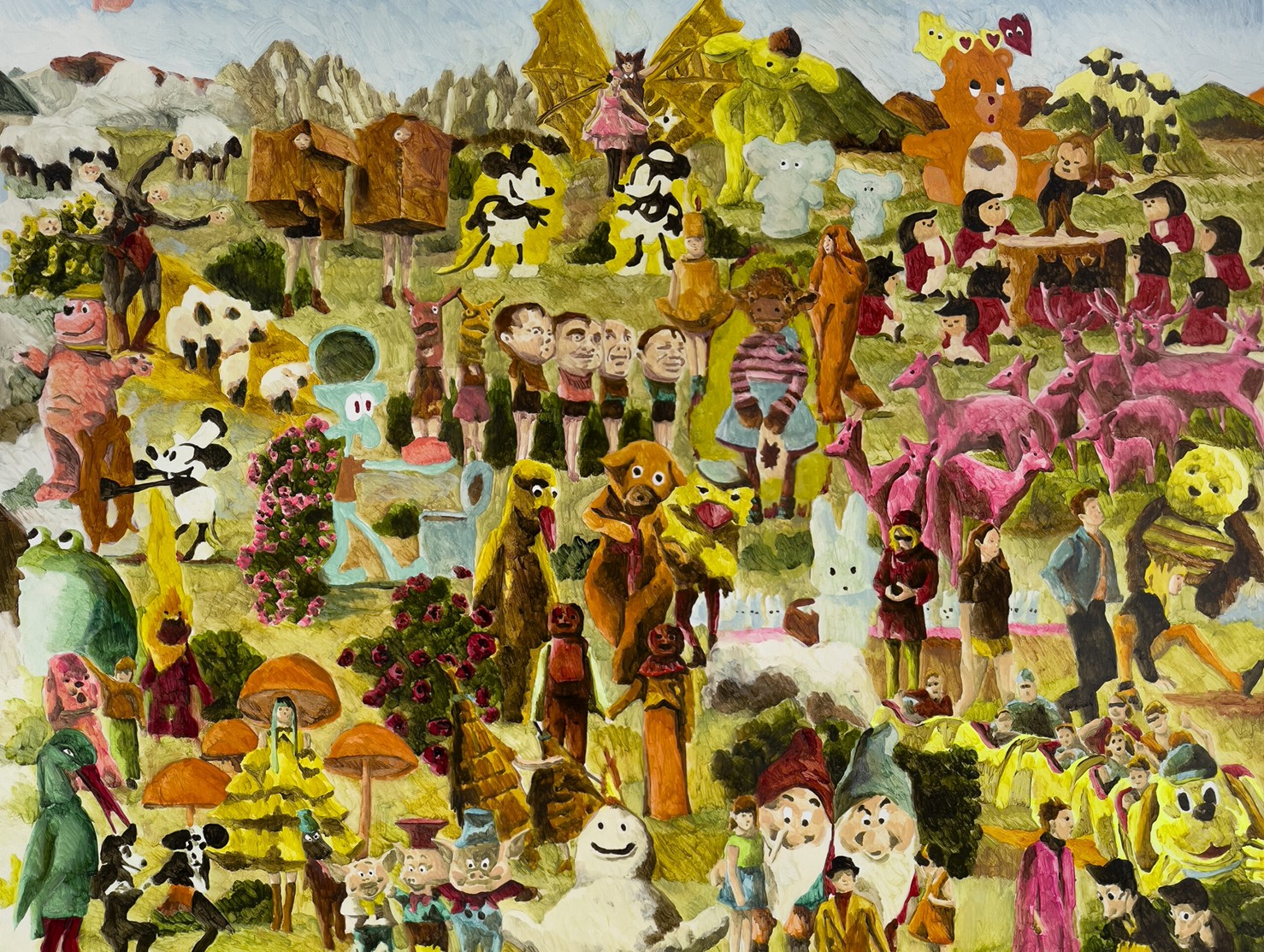
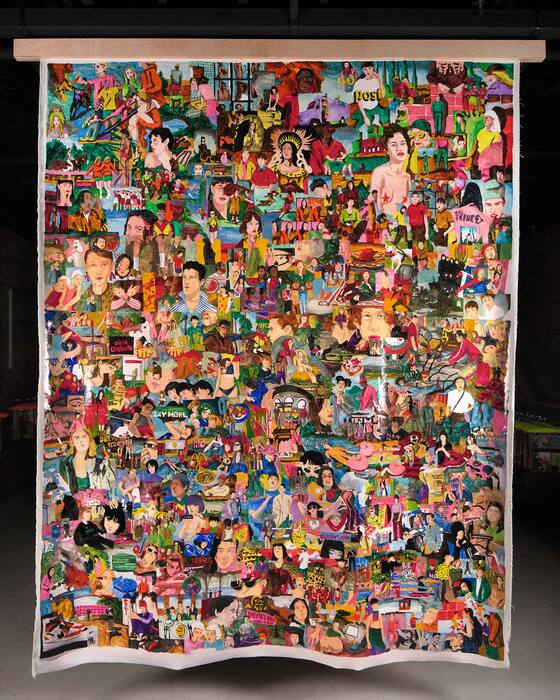
Noh Sangho, The Great Chapbook II, 2018, Water-soluble oil on canvas, 270x220cm  ©Noh Sangho

In this series of works, unlike his earlier pieces, the background that once symbolized narrative has been removed, leaving only the combination of images themselves. In particular, for the large-scale hanging paintings, Noh replaced watercolor with water-soluble oil paint to achieve sharper and more vivid imagery.
 
Through this approach, Noh has not only explored the online ecosystem where vast amounts of information and images are endlessly replicated and edited but has also re-edited his own works in response, continually reshaping his visual language.


Noh Sangho, The Great Chapbook 3, 2021, Oil on canvas, 130x97cm ©Noh Sangho

Since 2021, Noh Sangho has been expanding his practice to include 3D work, incorporating 3D video production techniques as a new strand of his artistic process. He combines elements extracted from freely distributed junk 3D models or video games found online and develops new works through the same process he uses for constructing his 2D images.
 
Noh creates videos by arranging various collected elements in three-dimensional space, or he transforms figures produced in 3D into 2D forms, integrating them into the canvases of ‘The Great Chapbook’ series.
 
Through this method, his practice has evolved into an organically connected interplay between 2D imagery and 3D moving visuals. For instance, in ‘The Great Chapbook’ series presented in 2021, Noh developed the work through a combination of 3D animation, 3D capture, and the independent translation of these captured images onto canvas.


Noh Sangho, The Great Chapbook 4 - Holy, 2023, Acrylic on canvas, 117x91cm ©ARARIO Gallery

Furthermore, since 2022, Noh Sangho has incorporated AI-generated imagery into his paintings, demonstrating a keen responsiveness to new media environments and introducing variations to his creative process.
 
For example, in the series ‘The Great Chapbook 4 – Holy’ (2023), presented at the group exhibition 《Romantic Irony》 at ARARIO Gallery in 2023, Noh constructed his compositions using freely available 3D images and employed AI image-generation tools to produce specific visual elements within the works.

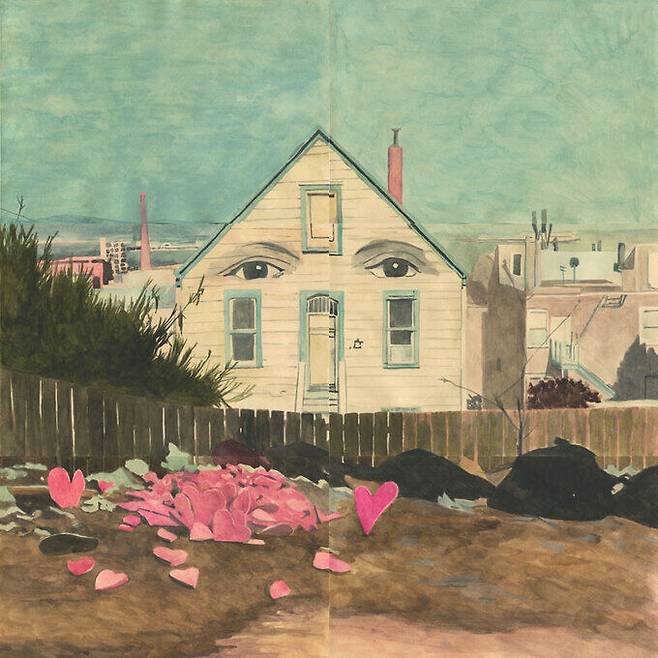
Noh Sangho, The Great Chapbook 4 - Holy, 2023, Acrylic on canvas, 60.6x60.6cm ©ARARIO Gallery

Among these works, a painting featuring a large, wide-eyed house was created by layering a residential neighborhood scene and portrait photographs found online. During the process of blending these otherwise unrelated images, the artist’s subjective imagination plays an active role.
 
In the lower-left corner of the canvas, pink heart-shaped motifs appear scattered like fallen leaves—these were generated by an AI. Specifically, the artist input certain prompts into an AI program to produce digital motifs, which he then manually traced and incorporated into the painting. Other works in the series similarly feature motifs created in collaboration with AI.

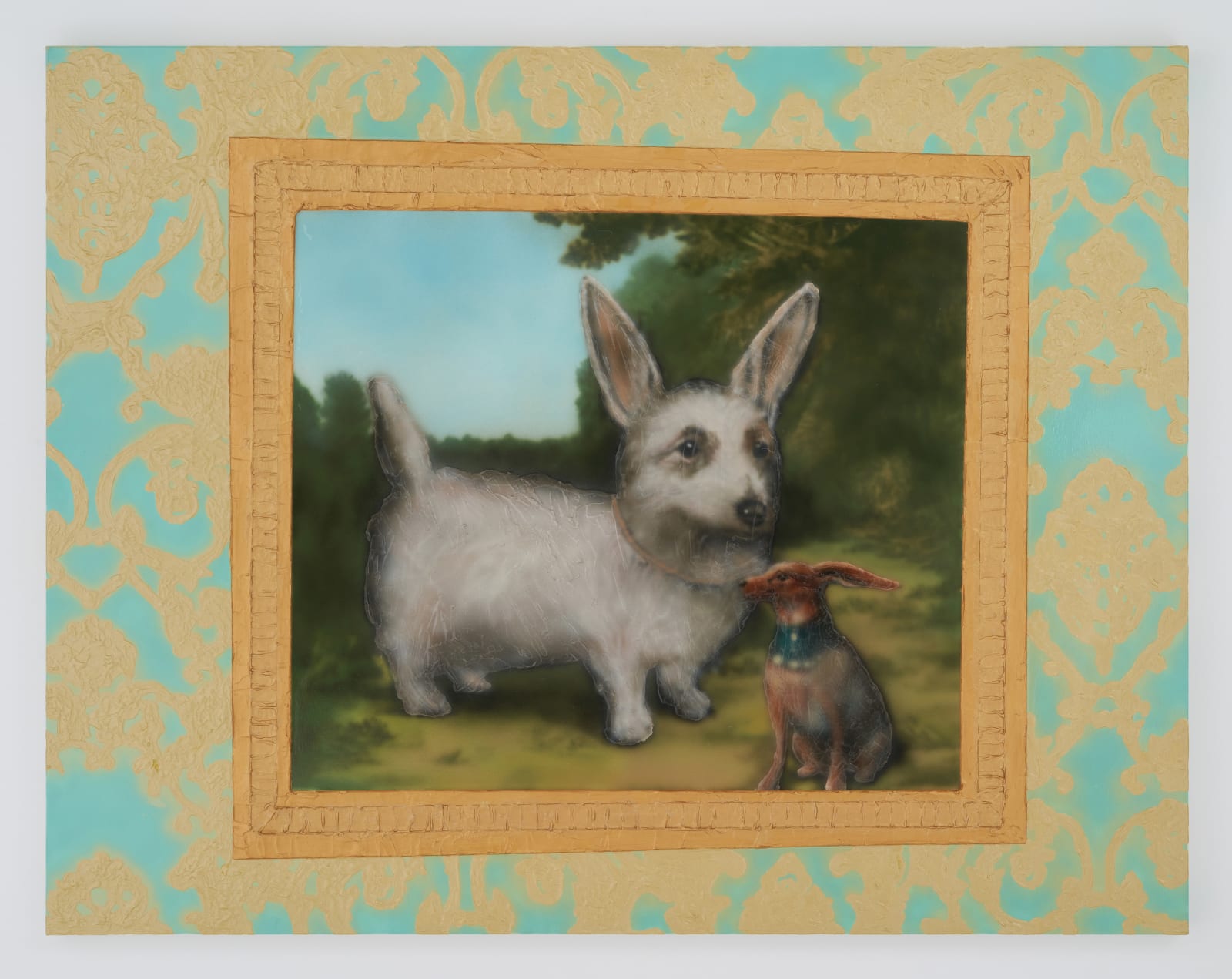
Noh Sangho, The Great Chapbook 4 - Holy, 2023, Acrylic on canvas, 91x117cm ©ARARIO Gallery

In this series, Noh Sangho introduced the use of an airbrush for the first time, spraying paint instead of applying it with a brush. The airbrush allows him to partially conceal the traces of his hand, creating a smooth, digital-like surface. At the same time, he also layered the canvas with thick, textured materials such as specialty pigments and plaster. This approach produces a sleek, screen-like texture while simultaneously emphasizing the contrasting materiality of painting.


Noh Sangho, The Great Chapbook 3, 2023, Oil on canvas, each 117x91cm (2 panels) ©ARARIO Gallery

Upon closer inspection, subtle irregularities appear across the surfaces of his works. These arise from Noh Sangho’s method developed while figuring out how to maintain the consistency of his daily unit when scaling up his paintings.
 
Reversing his previous approach of creating one painting per day, he divided a single large canvas into A4-sized sections and filled in one section each day. Consequently, each partition carries a slight temporal shift, resulting in variations in expression and thought. To emphasize these differences, the artist intentionally avoided seamlessly connecting the edges between sections.


Noh Sangho, The Great Chapbook 4 - Holy, 2023, Acrylic on canvas, 117x91cm ©ARARIO Gallery

Through these works, the artist exposes the hybridization between real and virtual images in the digital world and the resulting outcomes, inviting reflection on this phenomenon. While actively employing digital technologies and revealing their characteristics, he simultaneously integrates analog, hand-executed techniques, amplifying the contrasting sensory experiences between the two realms.


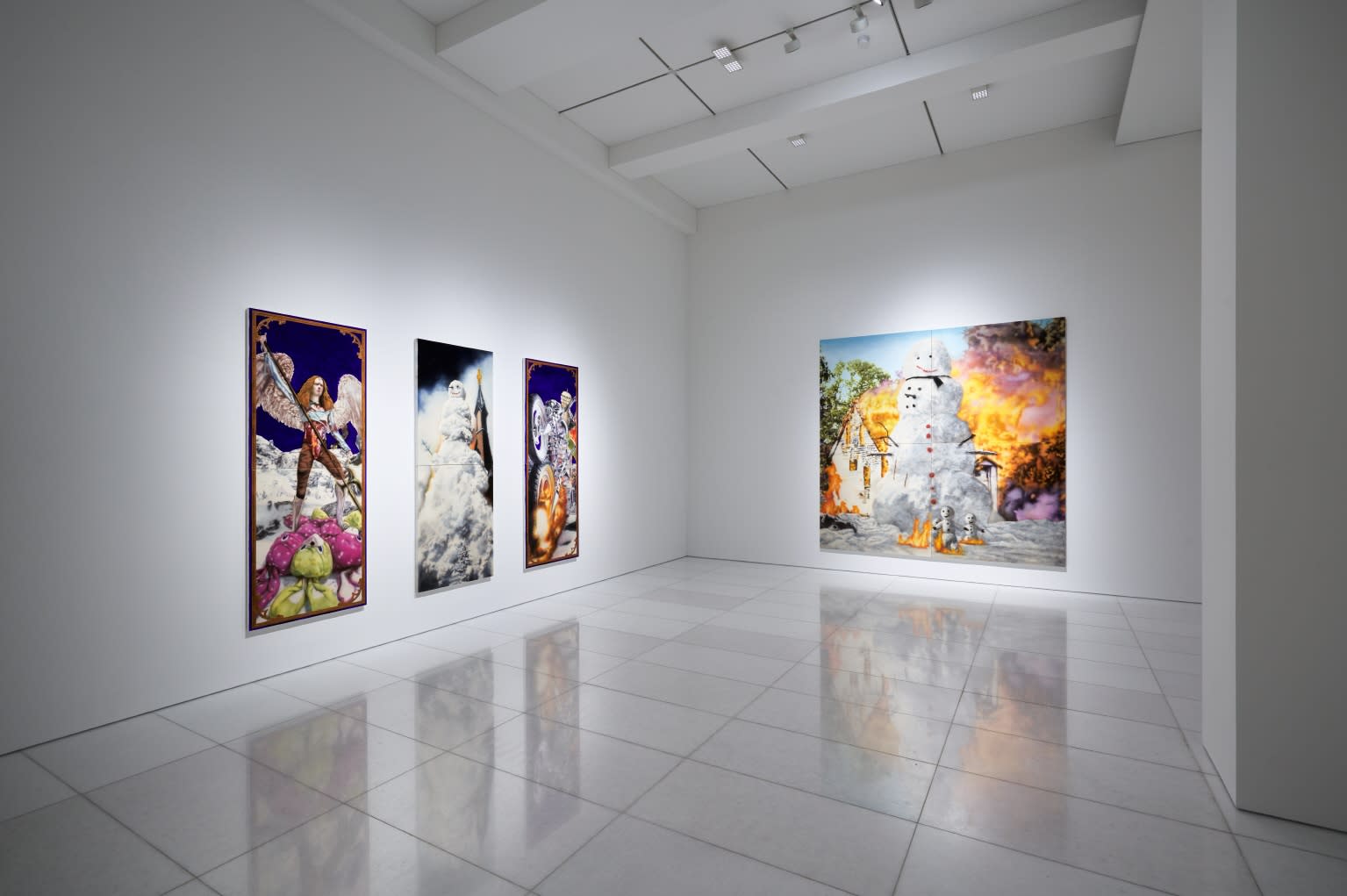
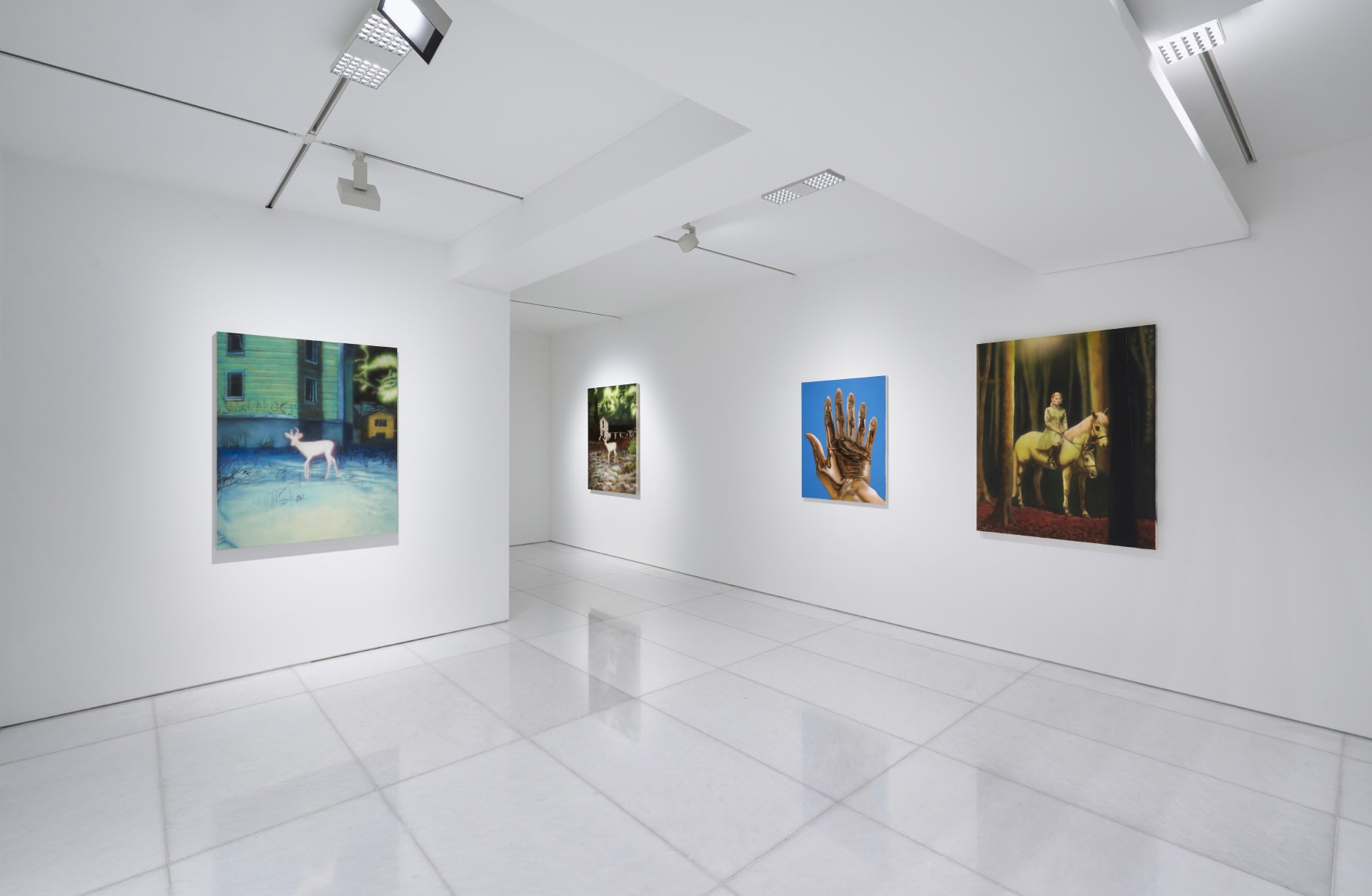
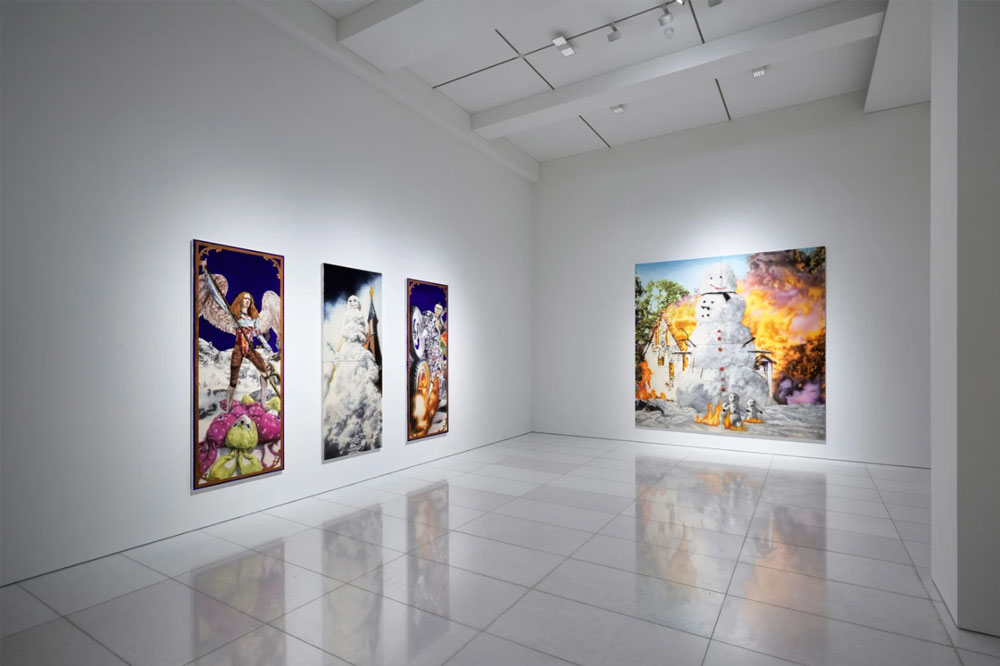
Installation view of 《Holy》 (ARARIO Gallery, 2024) ©ARARIO Gallery

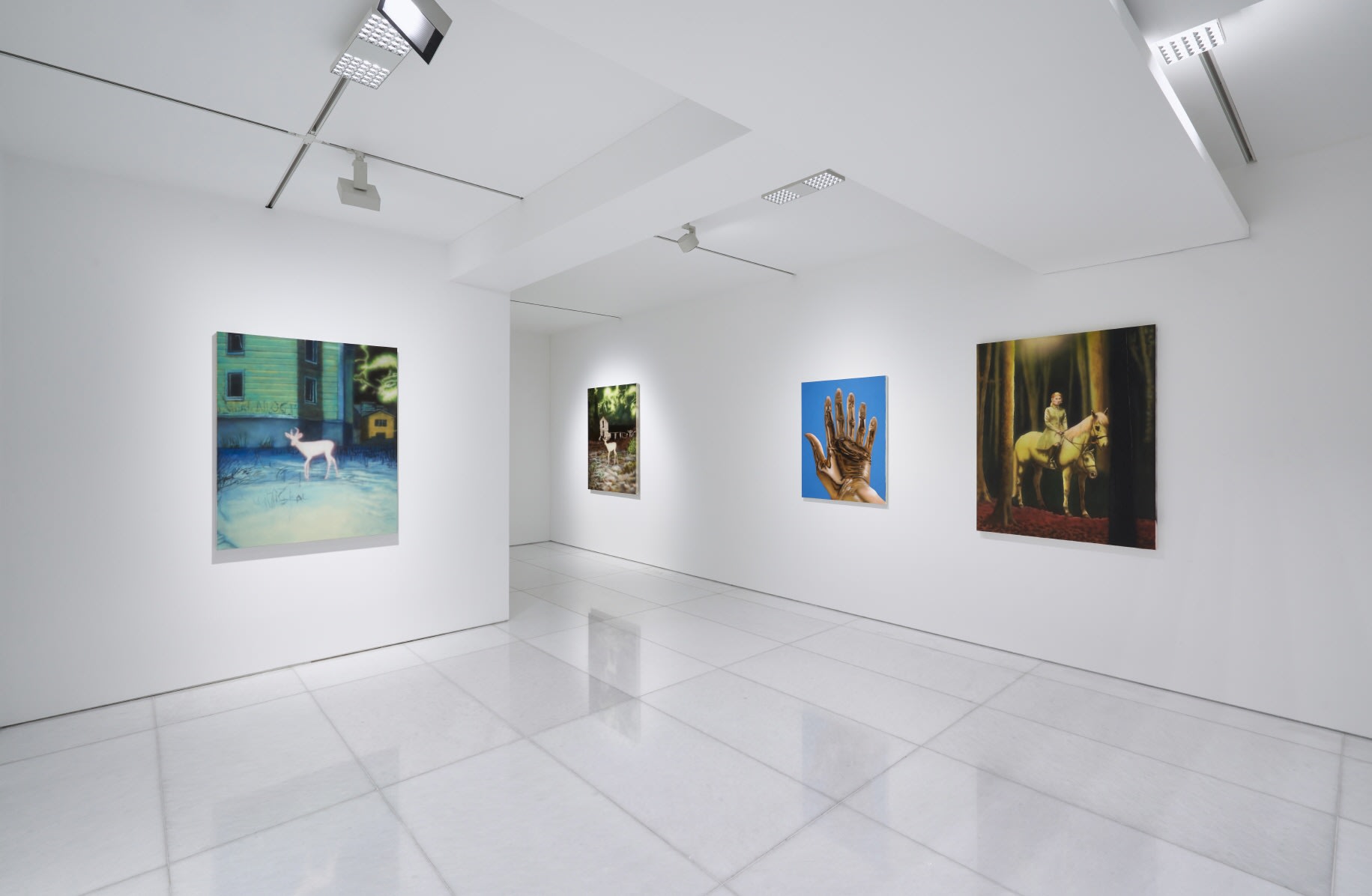
In his 2024 solo exhibition 《Holy》 at ARARIO Gallery, Noh Sangho focused on the ‘Holy’ series, which emerged from intuitively selected motifs among the myriad images generated by AI since 2022.
 
By using AI-generated images as material, the reconstructed canvases resemble the real world while presenting more dramatic scenes. Current commercially available AI image-generation programs are often trained to produce results that appear “realistic,” frequently composing scenes that are as solid as photographs.
 
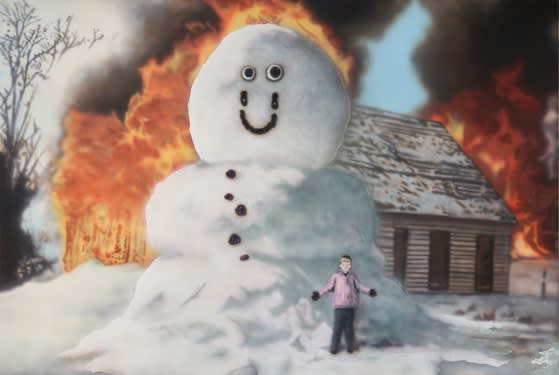
Yet, due to the inherent imperfections of the technology, they can also generate bizarre motifs slightly at odds with real-world logic—such as two-headed deer, humans with six fingers, or enormous burning snowmen. Viewers are thus confronted with images that depict the unreal in an ostensibly realistic manner.


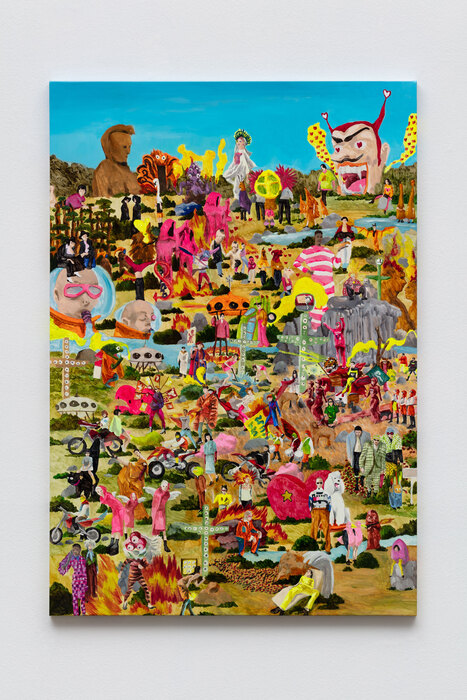
Noh Sangho, Holy, 2023, Acrylic on canvas, 130x193.9cm ©ARARIO Gallery

Noh Sangho likened the ambivalent emotions of awe and fear evoked by certain AI-generated scenes to myth and religious sanctity. Based on this context, the ‘Holy’ series is primarily produced by inputting images from the artist’s existing works into an AI image-generation program to induce reinterpretation, then selecting motifs from the outputs and translating them onto new painted canvases.
 
A frequently appearing motif, the “burning snowman,” was obtained in this way. Noh Sangho found that the large, flaming snowman encapsulated the essence of his theme, prompting him to depict it repeatedly on the canvas. Mystical and bizarre scenes that could never exist in the real world are thus recreated on the painted surface, traversing from the digital screen into the physical medium of painting.


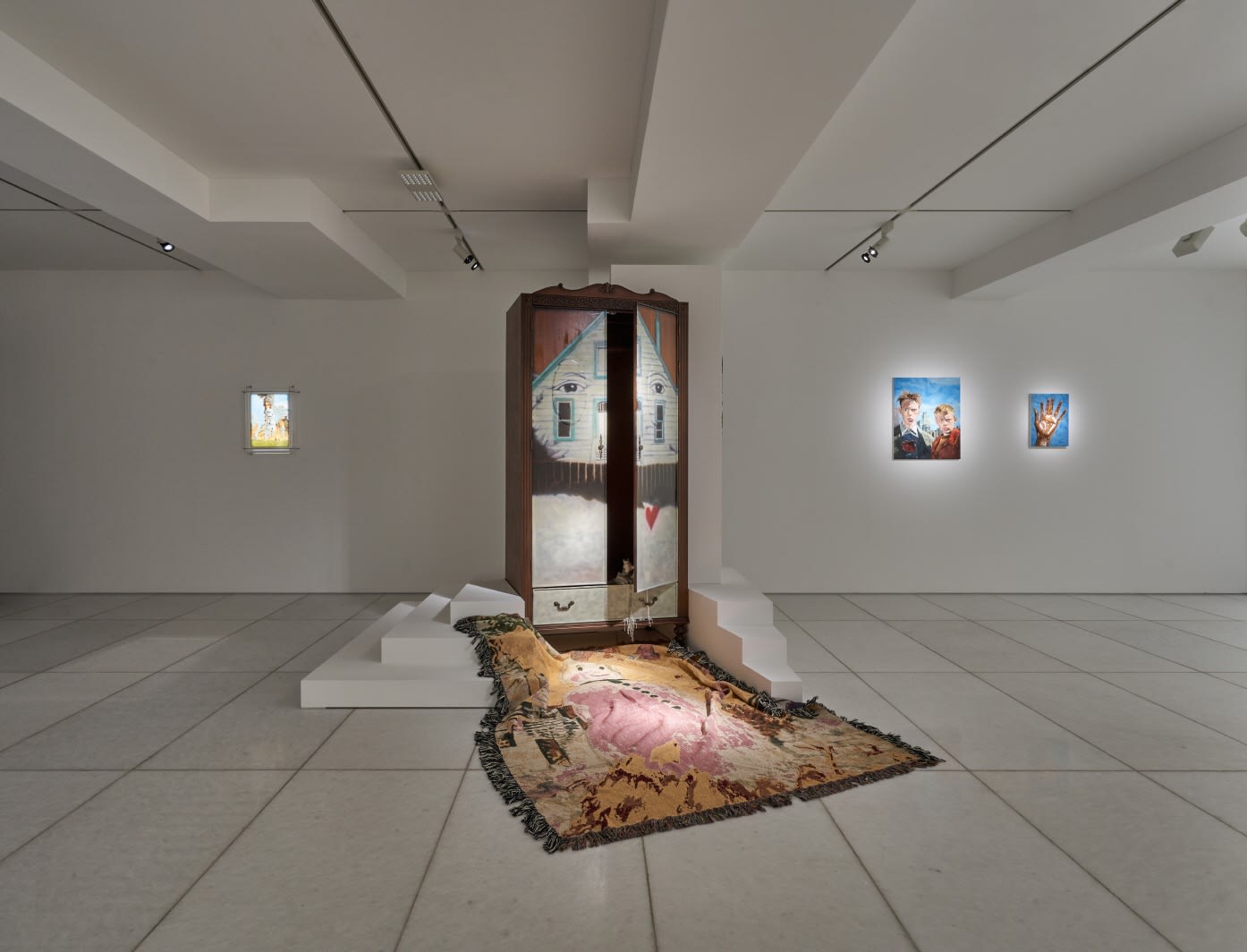
Installation view of 《Holy》 (ARARIO Gallery, 2024) ©ARARIO Gallery

Additionally, the ‘Holy’ series has been reinterpreted in various formats beyond painting, including 3D-printed sculptures, videos created with 3D animation software, and installation works. For example, the installation Holy (2024) was realized by using a vintage wardrobe collected by the artist as a canvas, painting on it, and then combining it with wooden structures, fabric, candles, and other elements.
 
In the exhibition space, the wardrobe was positioned diagonally against a pillar, simulating a glitching phenomenon in video games—where technical errors cause elements within a scene to become bizarrely entangled. At the same time, the arrangement was intended to evoke a sense of an altar. The work presents an instance of unreal events from the digital virtual world within a physical location, bringing a surreal digital scenario into tangible space.


Installation view of 《Holy》 (ARARIO Gallery, 2024) ©ARARIO Gallery

In this way, Noh Sangho has focused on how the countless images that circulate on social media timelines—updated by the second—are consumed, fragmented, and survive within virtual environments. His work, which transforms fleeting digital images into tangible, materially substantial artworks, provides a point of reflection on the very definition of art and the scope of creative practice.

 "For me, art is the study and investigation of the politics of images found in the shared senses and emotions of contemporary times or generations, and making them visually complete."    (Noh Sangho, Artist’s Note)


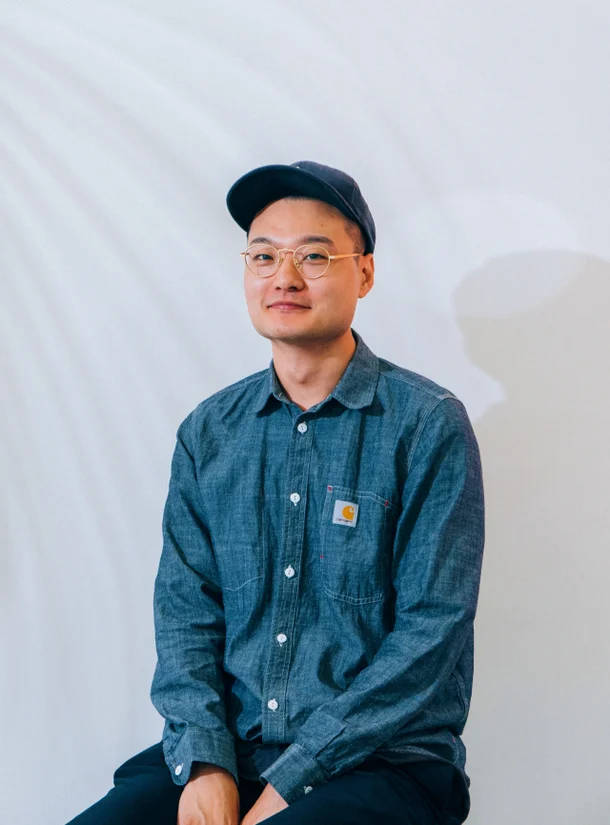
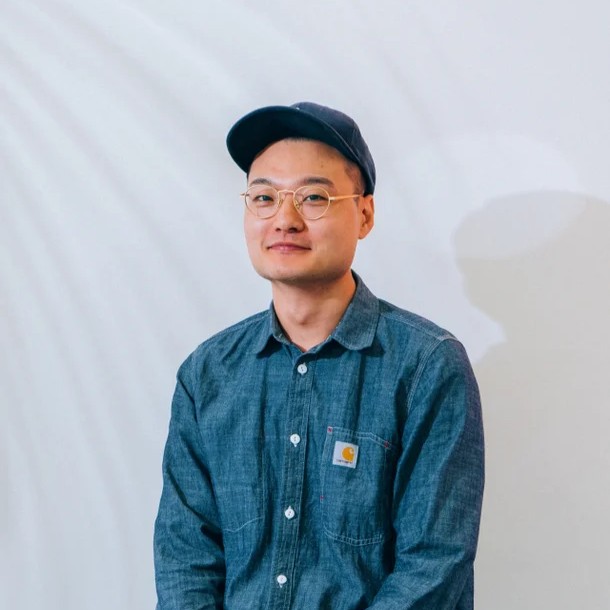
Artist Noh Sangho ©ARRIO Gallery

Noh Sangho received his BFA in Printmaking at Hongik University, and MFA in Fine Arts at Seoul National University of Science & Technology. His recent solo exhibitions include 《Holy》 (ARARIO Gallery Seoul, Seoul, 2024), 《Ghost Brush》 (Yukikomizutani, Tokyo, 2024), 《The Great Chapbook》 (ARARIO Gallery Shanghai, Shanghai, China, 2023), 《The Great Chapbook II》 (ARARIO MUSEUM in SPACE, Seoul, 2018), and 《The Great Chapbook》 (West Warehouse, Seoul, 2016).
 
He has also participated in numerous group exhibitions, including 《Kitsch & Pop》 (Korean Cultural Center, Shanghai, China; Korean Cultural Center, Hong Kong, 2025), 《Godzilla 70th Anniversary: Godzilla the Art Exhibition》 (Mori Arts Center Gallery, Tokyo, 2025), 《The 24th SONGEUN Art Award Exhibition》 (SONGEUN, Seoul, 2024), 《Art and Artificial Intelligence》 (Ulsan Art Museum, Ulsan, 2024), and 《Hysteria: Contemporary Realism Painting》 (Ilmin Museum of Art, Seoul, 2023).
 
Noh gained attention for being selected in MMCA’s 《Young Korean Artists 2014》 (2014). He was the artist-in-residence at the SeMA Nanji Residency (Seoul, Korea) in 2015, and also participated in an artist residency exchange program between Hungary and Korea (Budapest, Hungary) in 2016. His works are collected by institutions such as the MMCA Government Art Bank, Koo House Museum, ARARIO MUSEUM, and more.
References