Since
her debut solo exhibition in 2017, Jeong Juwon has held five solo shows, each
reflecting the sentiments and thoughts of its time. Her early exhibitions
revealed her anguish over art as labor—an effort to prove sincerity and
confront the social precarity of being an artist. Her unexpected trip to
Mongolia, chosen as a way to distance herself from the frantic art scene of
Seoul and its relentless demand for diligence, led her into self-reflection on
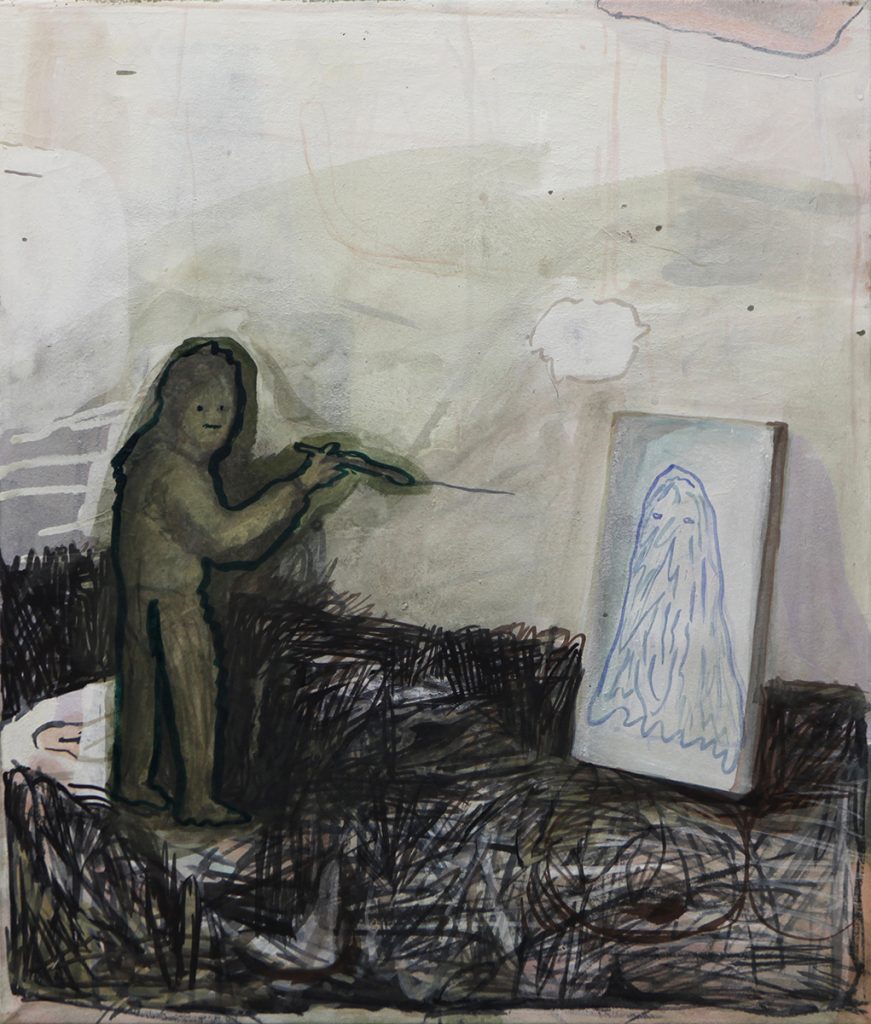
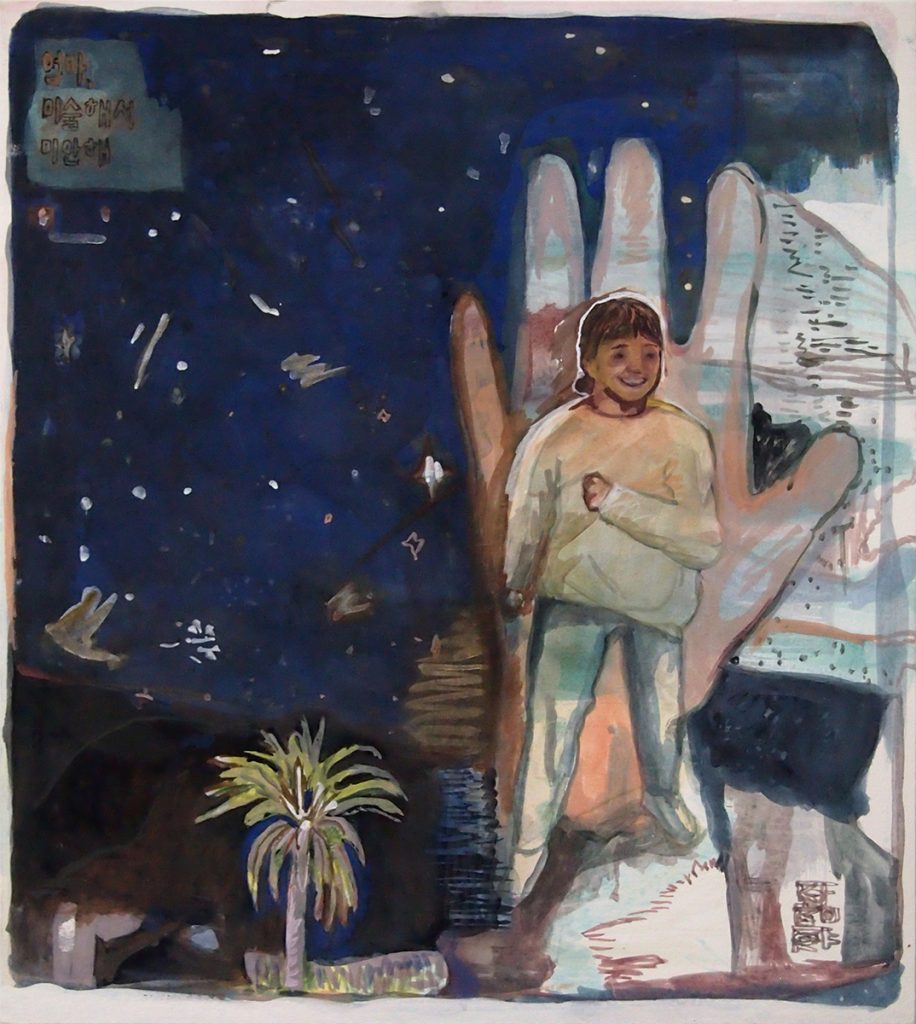
usefulness, a contemplation that carried over into her next exhibition 《Starry, starry ghost》(2020, Gallery 175). By
this point, Jeong seemed to have decided to build a parallel world of her own
pace rather than align herself with social labels or measures of success—as if
discord were her destiny.
The solo exhibition 《Go Up to
Your Neck in Love》(2021, Onsu Gonggan) directly
preceded and conceptually connected to the current show, presenting works that
delved more explicitly into the theme of love. Afterward came a period of
material exploration centered on the properties of glue-tempera, culminating in
《Immortal Crack》(2022, GOP
Factory). Though eight years have passed, the artist still carries the question
of her foundation— her roots—continuing what Jack Halberstam calls “staying
lost.”[5] Here, to “stay lost” does not bear a negative meaning but rather
implies a creative act of seeking new possibilities within a world of different
shapes and tempos—of groping through the dark to find forms of invention.
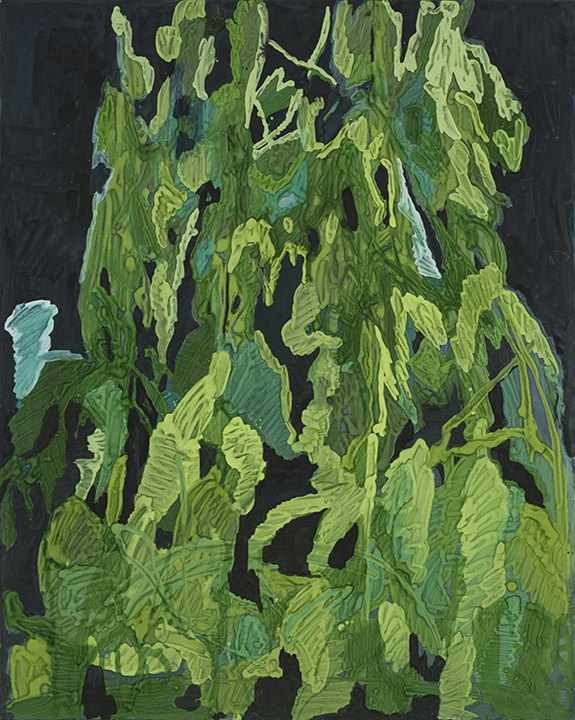
Let
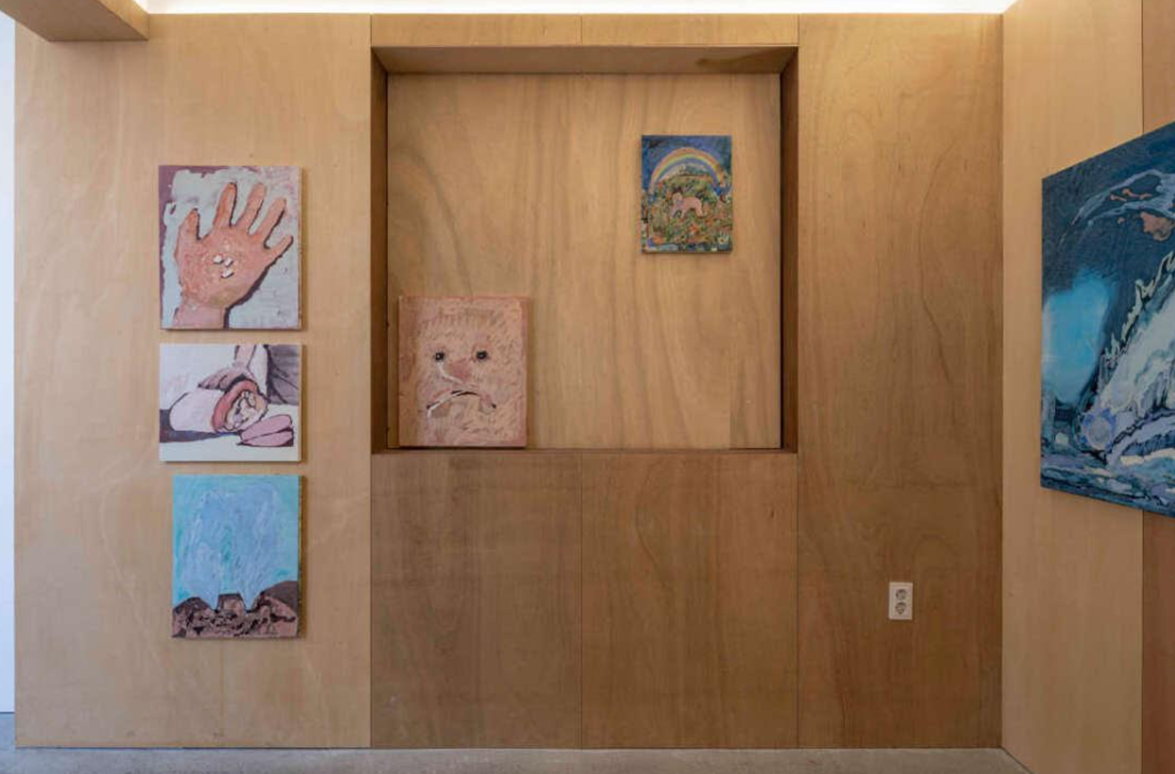
us look at her lines. The lines in Jeong Juwon’s paintings resemble water
stains. They sometimes appear like traces of tears, and indeed faces that seem
to be crying often surface in her work. These water-stain-like marks reflect
both the emotional undercurrent of her practice and the results of her material
research. The unavoidable cracks produced by the glue-tempera mixture[6] were
once regarded by the artist as an obstacle.
Yet now she embraces them as a
distinct feature, adjusting them flexibly by applying thin layers of pigment
and allowing the cracks to settle naturally within the composition. What she
once perceived as failure has become a means to reorganize existing
perceptions, conventions, and norms—an attitude that aligns with her broader
artistic direction. Her drawn lines are not sharp or decisive but hesitant and
blurred—not to divide, but to soften. When a clear form emerges amid these
overlapping lines, and when a moment of humanity flickers beyond the shape, the
work reaches completion.
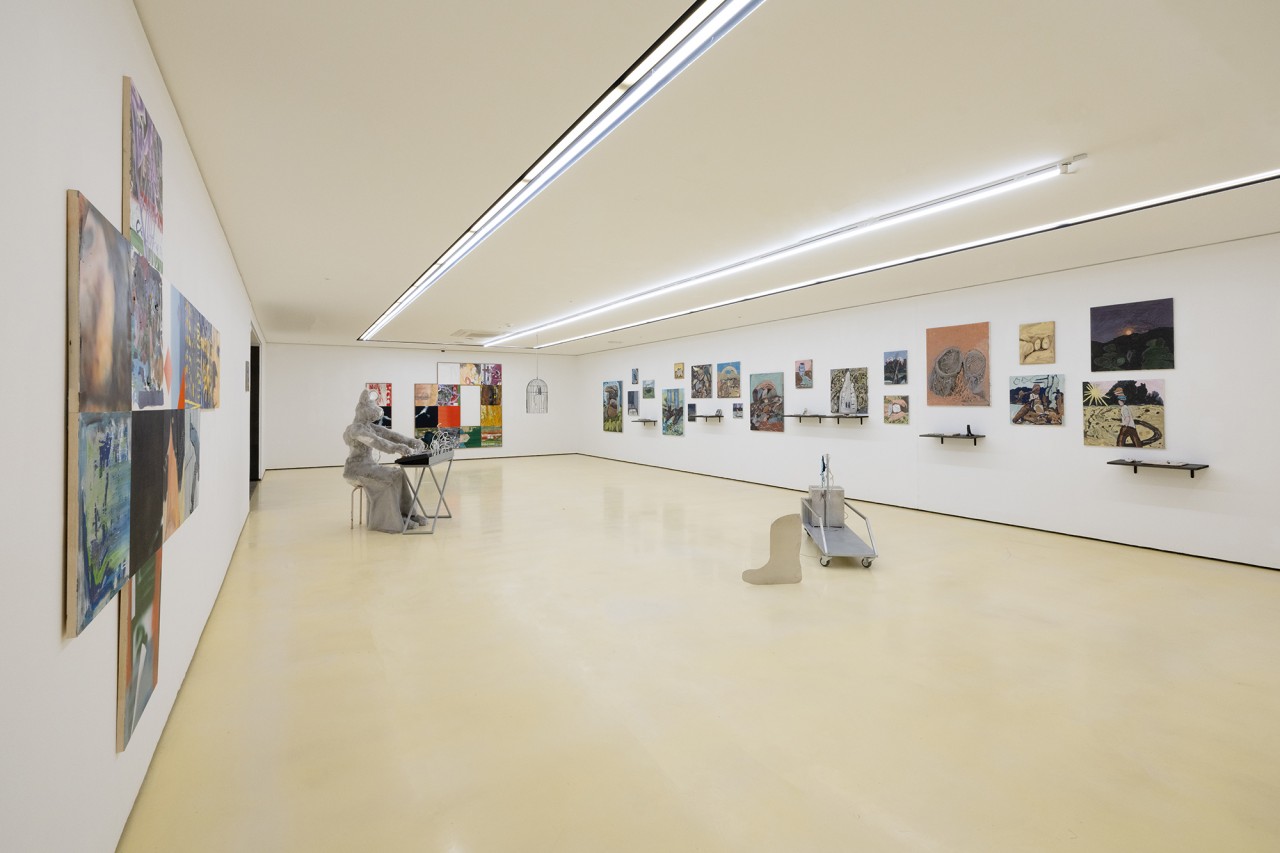
On
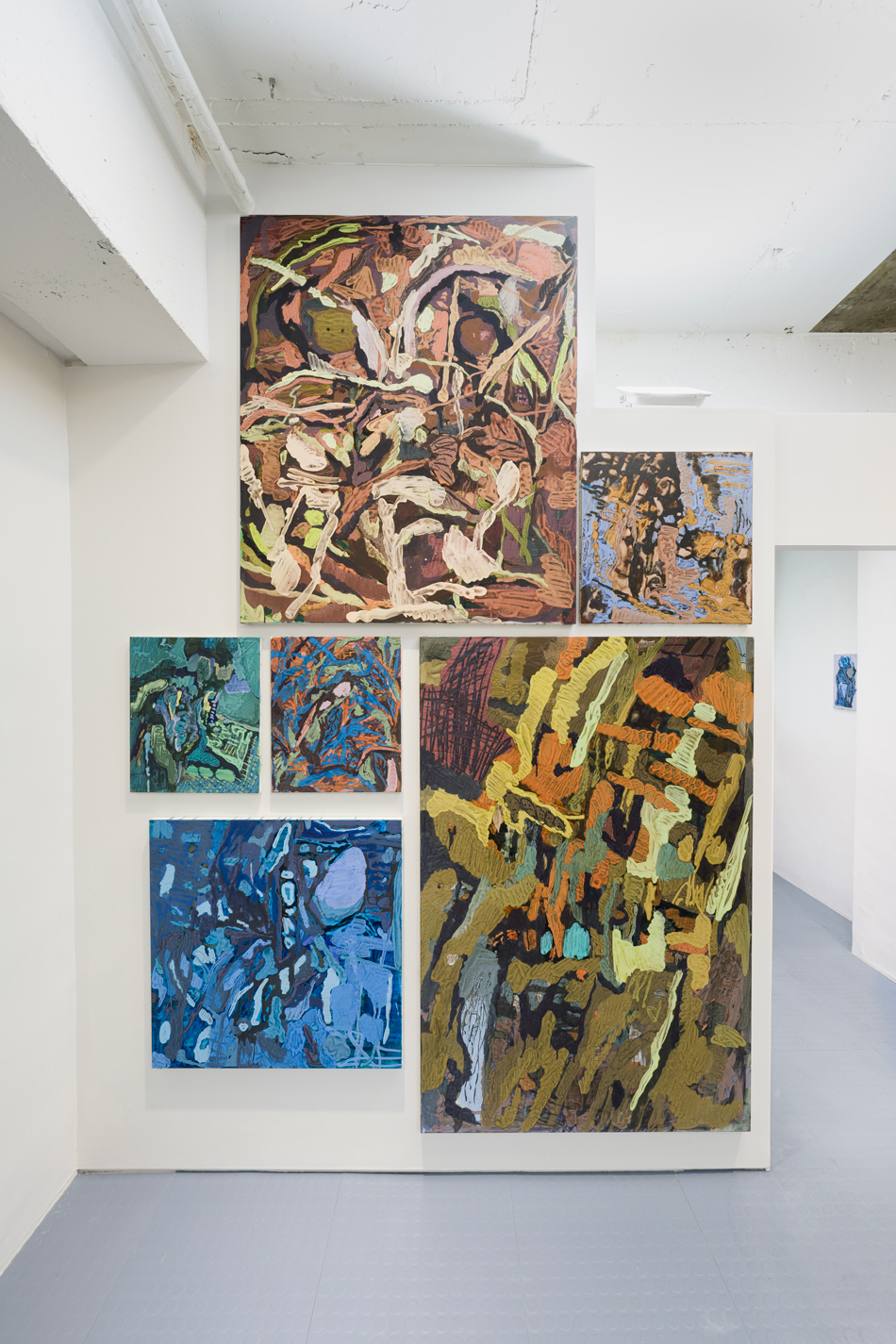
one side of the gallery stands an awkward sculptural structure, Great
Wall (2024), which can be read in the same context. It is a kind of
partition meant to hang paintings on, yet this brick-like wall, roughly woven
together with a 3D pen, occupies neither the center nor effectively blocks
anything; it merely supports a few small paintings.[7] In its very ambiguity,
it performs its role, guiding the viewer’s path and perception through the
space.
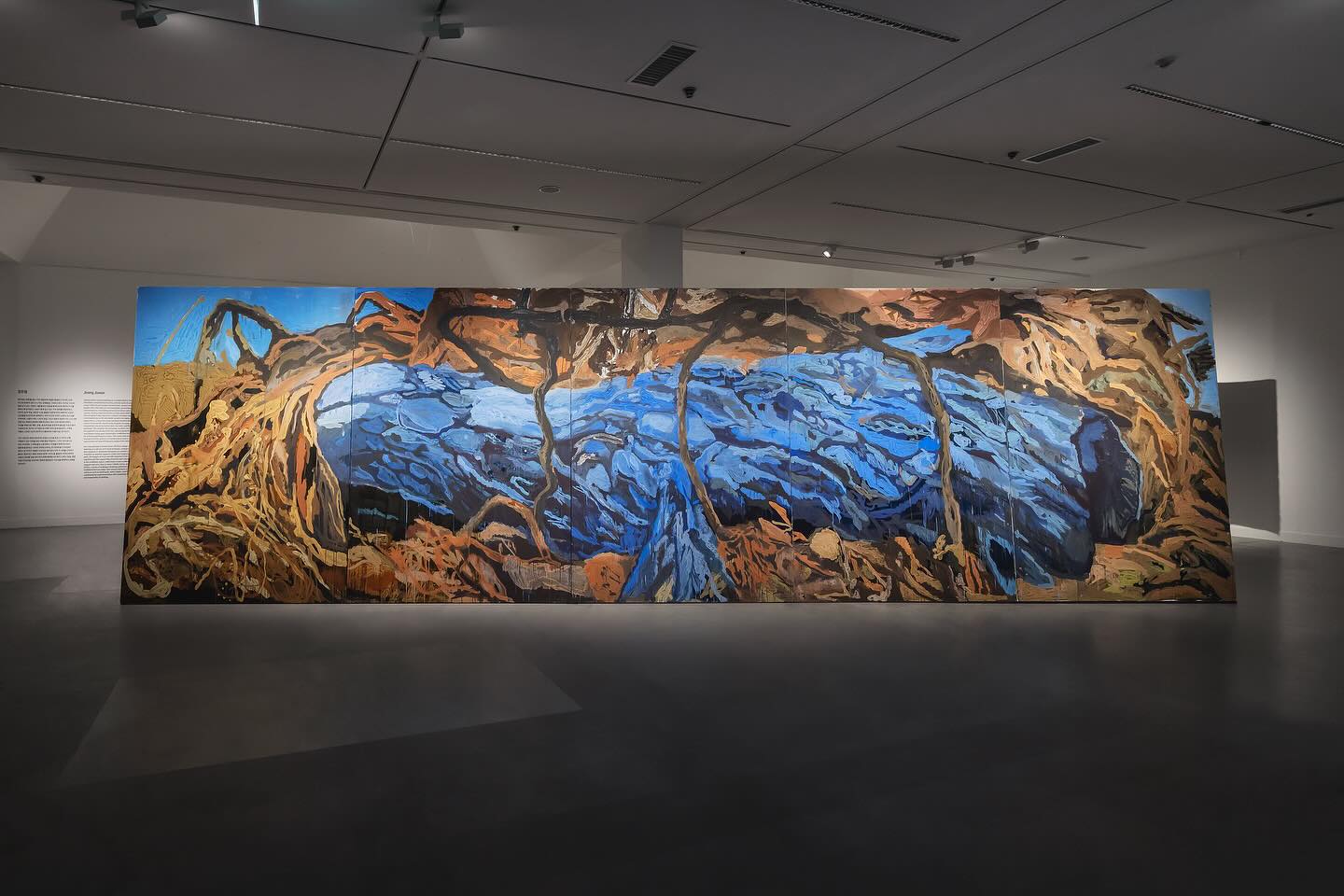
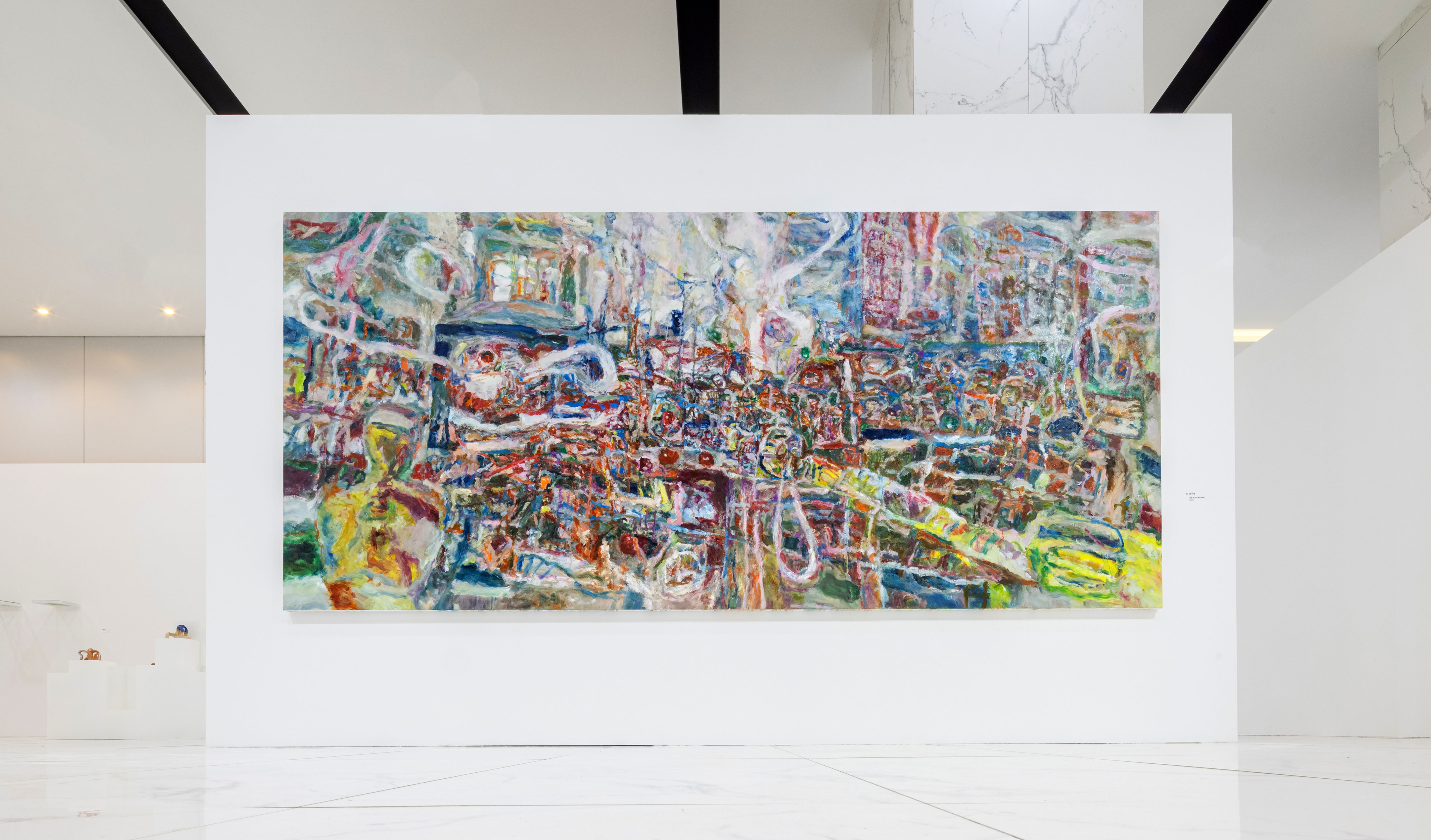
Looking
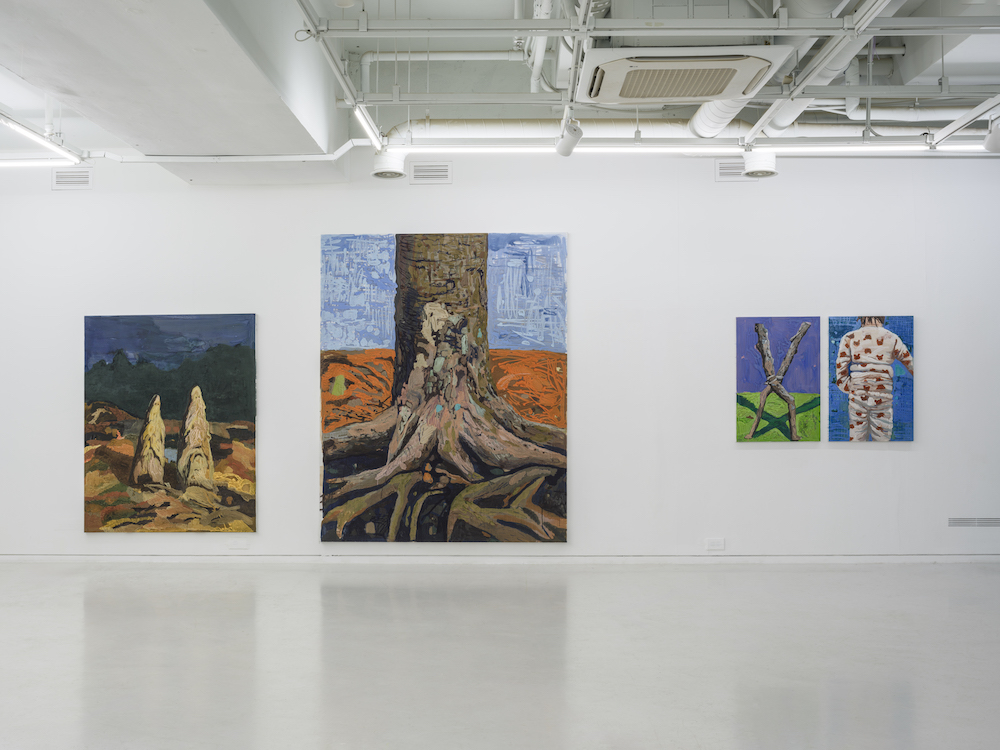
at Nine Bodies, Four Hands (2024), one can once again sense
Jeong Juwon’s attitude toward art and life.
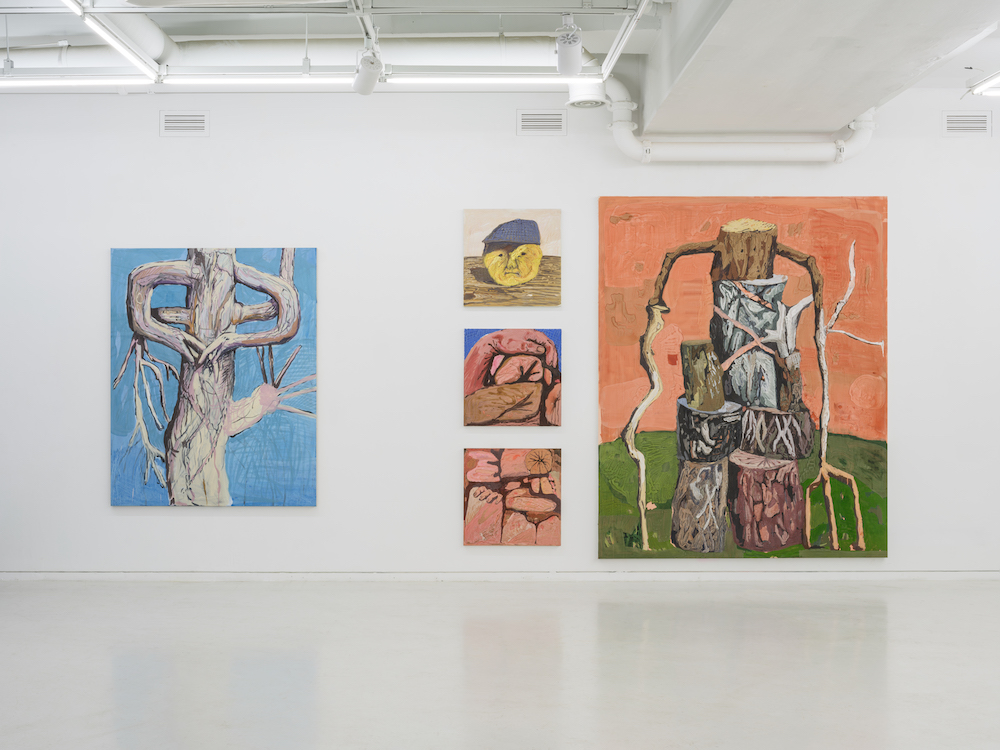
Perhaps it resembles the state of Firm
and Healthy Body (2024): rooted firmly in the ground, stacking
fragments into one large “existence.” It matters little what time each fragment
has endured; what counts is that every fold, callus, and shell bears witness to
experience. Behind the surfaces of Jeong’s paintings lies a profound
tenderness—an infinite time accumulated through hesitation and persistence.
Standing before her completed works, one traces that immeasurable duration he
must have spent, layer by layer.
Notes
[1] The essay’s title quotes the song A Dance Alone by the Korean band Sister’s
Barbershop.
[2] Henri Bergson, Le Rire (1900); Korean translation by Jeong Yeon-bok,
Moonhak-gwa Jiseongsa, 2021, pp. 34–36.
[3] Ibid., p. 28.
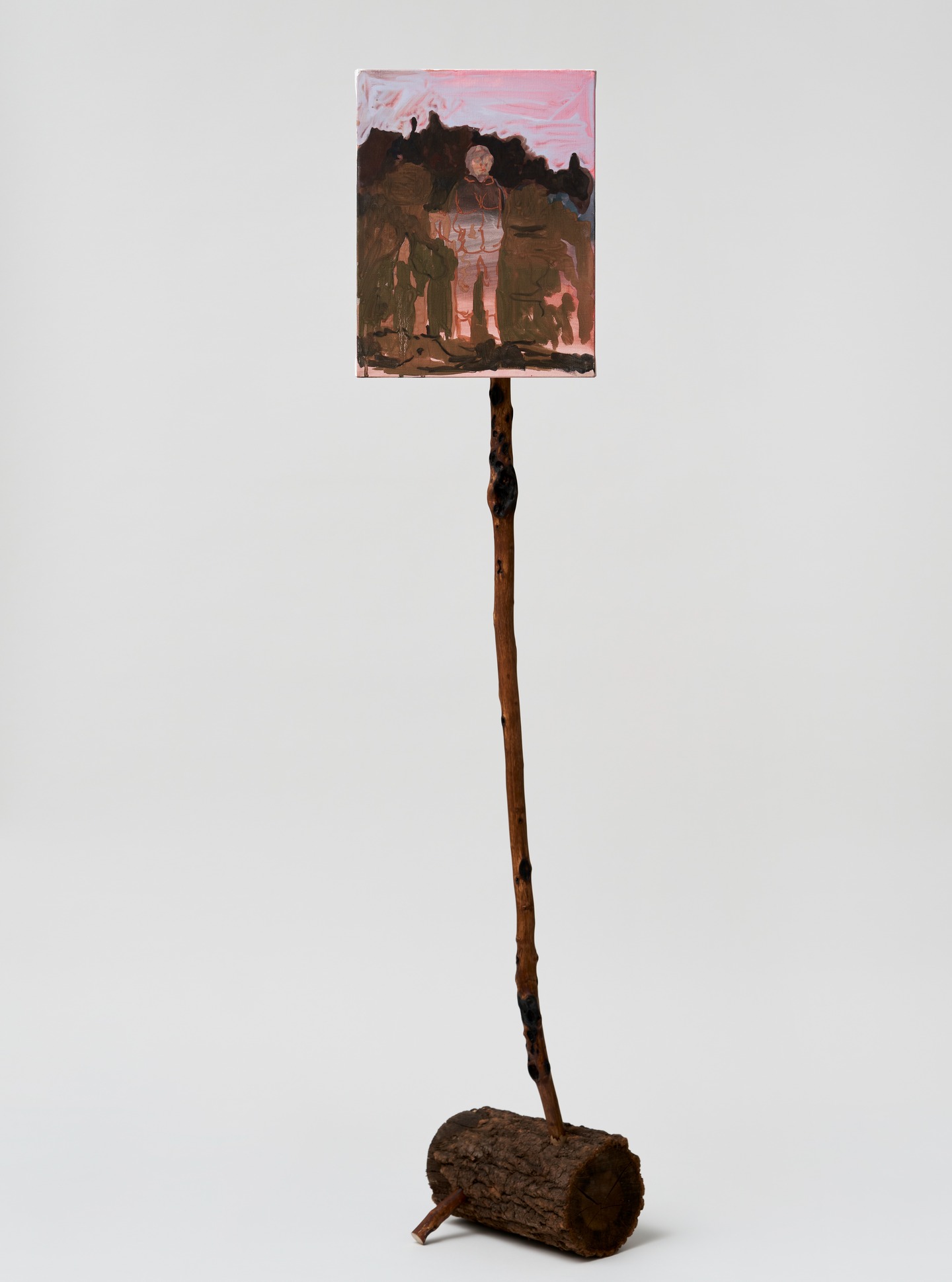
[4] Trees and branches in Jeong’s work often appear as extensions of the
body—like crutches or two-person race straps—sometimes stacking as fragments
into a single solid form, or evoking the jangseung (totem pole) that
traditionally guarded villages and marked paths.
[5] Jack Halberstam, The Queer Art of Failure (2011); Korean translation by Heo
Won, Hyunsil Culture, 2024, p. 62.
[6] Except for her 2020 show, Jeong has consistently worked with traditional
Korean pigments and kaolin mixed with glue as a binder. She has referred to
this medium as “glue-tempera,” a hand-made paint created by mixing pigment with
binder. Due to its variable viscosity and density, her paintings inevitably
develop fine cracks. Her previous solo show 《Immortal Crack》(2022, GOP Factory) focused
intensively on this sense of fragility and powerlessness that cracks evoke.
[7] Ironically, the construction of this wall required an enormous amount of
labor and time. “The Great Wall” is thus both a truth and a joke.