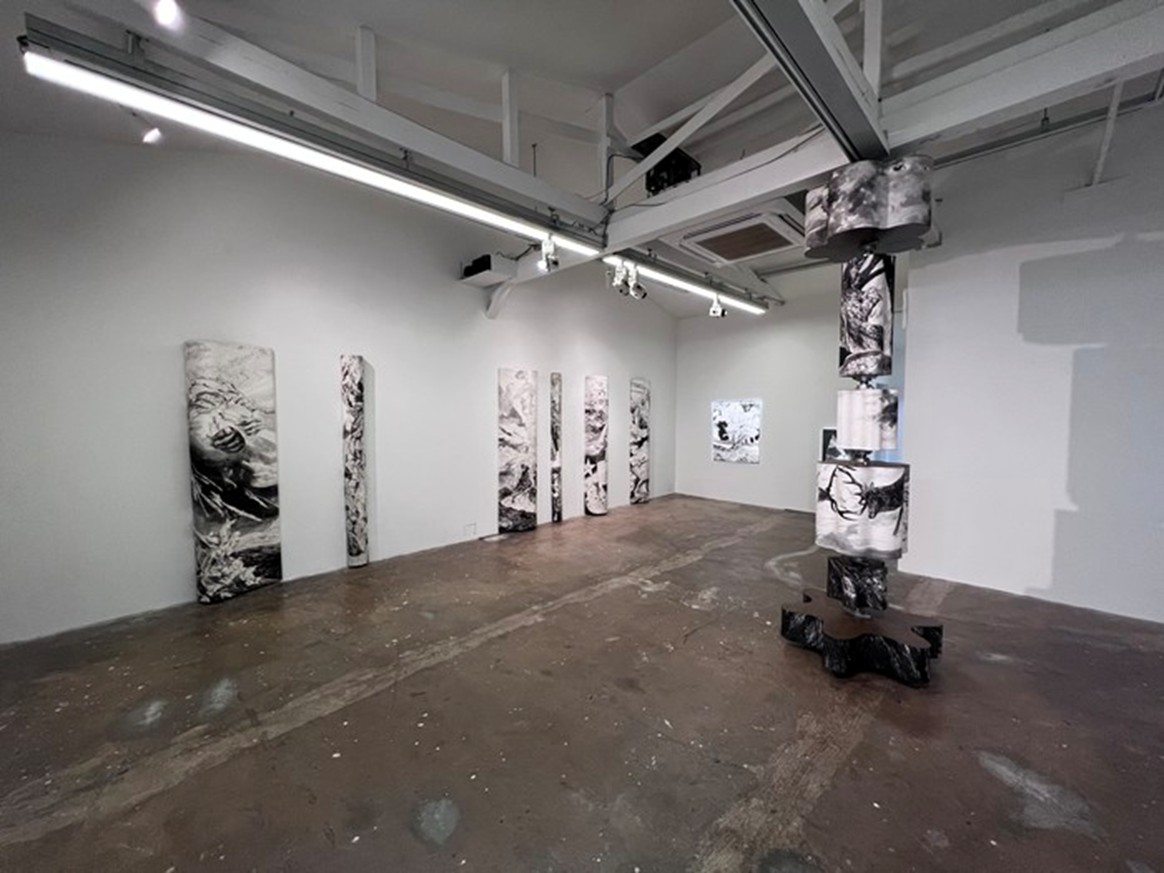
[Artist Note]
This body of work constructs a pictorial refuge—an escapist shelter—created to
flee from the anxiety of reality. Within it, anxiety and its defense mechanisms
coexist in tension. My practice can largely be divided into three elements:
first, the visualization of anxiety experienced in reality; second, the
creation of an escape space; and third, the depiction of defense mechanisms
born from that anxiety.
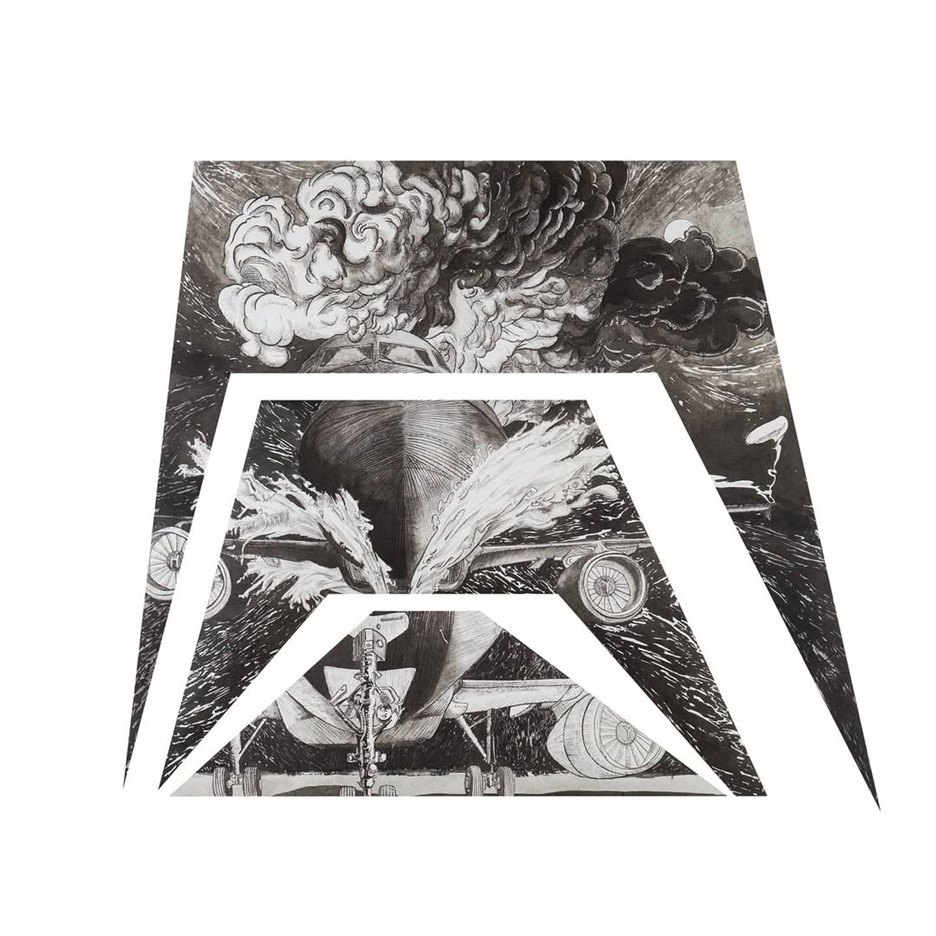
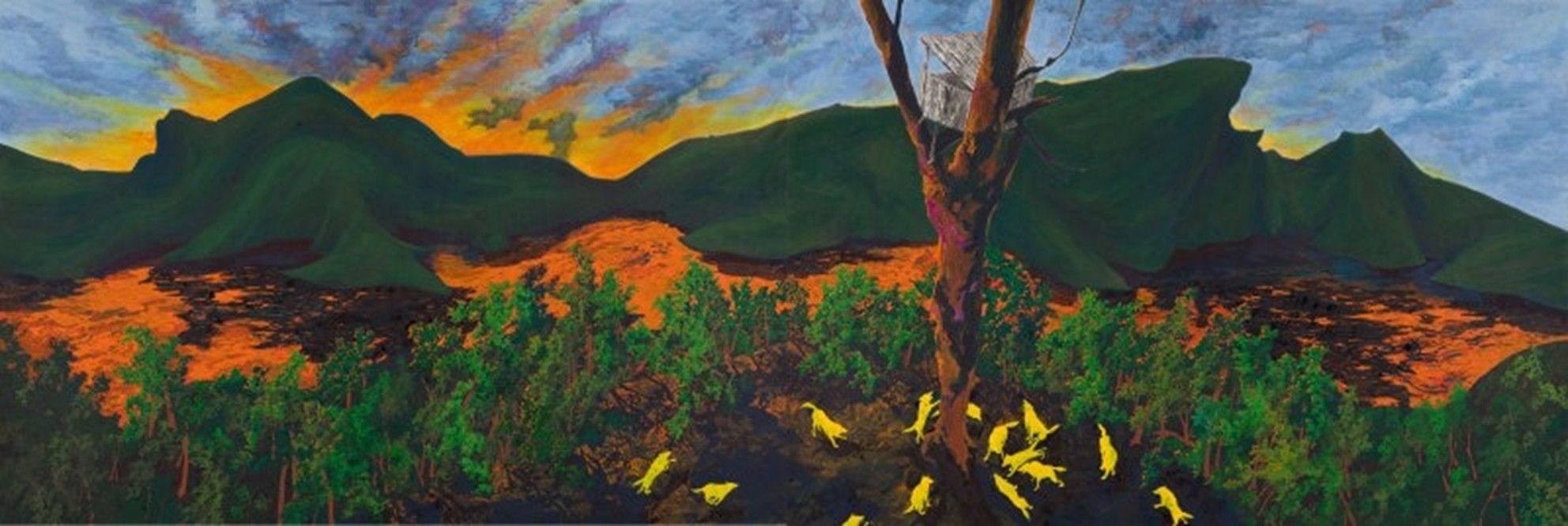
In my early works, anxiety appeared as wolves, while the refuge
took the form of walls or houses symbolizing protection. Over time, I moved
away from literal representations and pursued more metaphorical or material
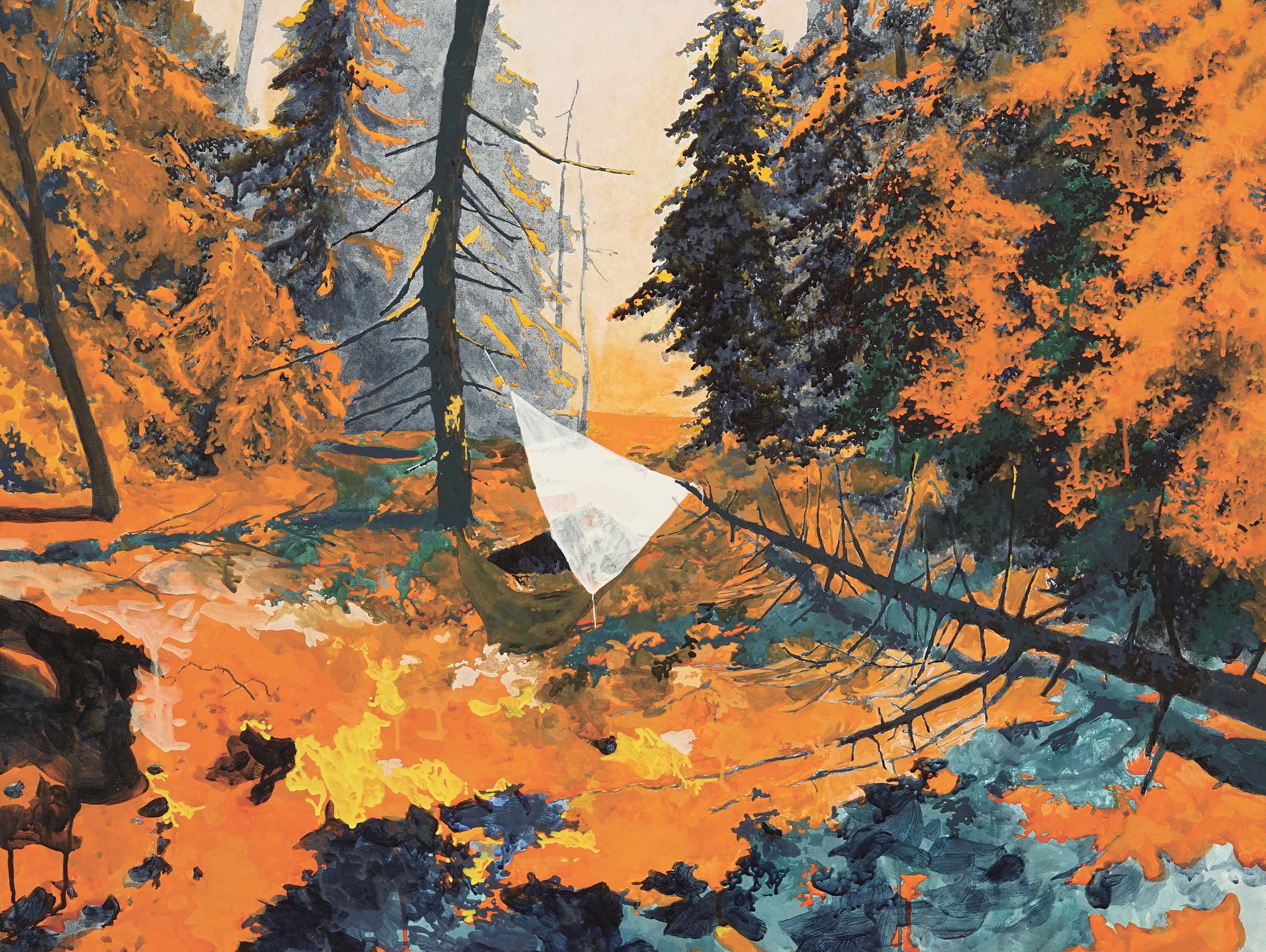
expressions. The wolves transformed into light, while the walls and houses
became temporary shelters like tents or tarpaulins.
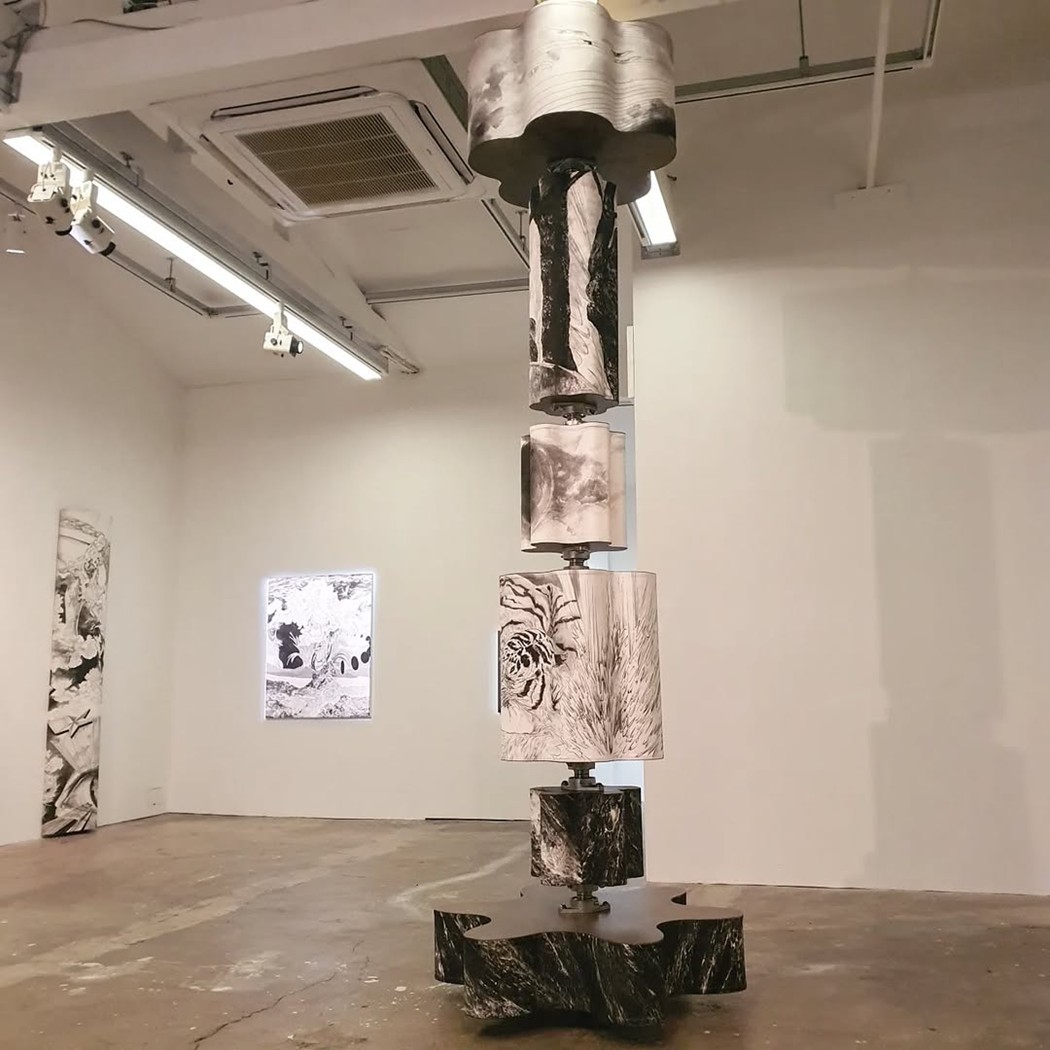
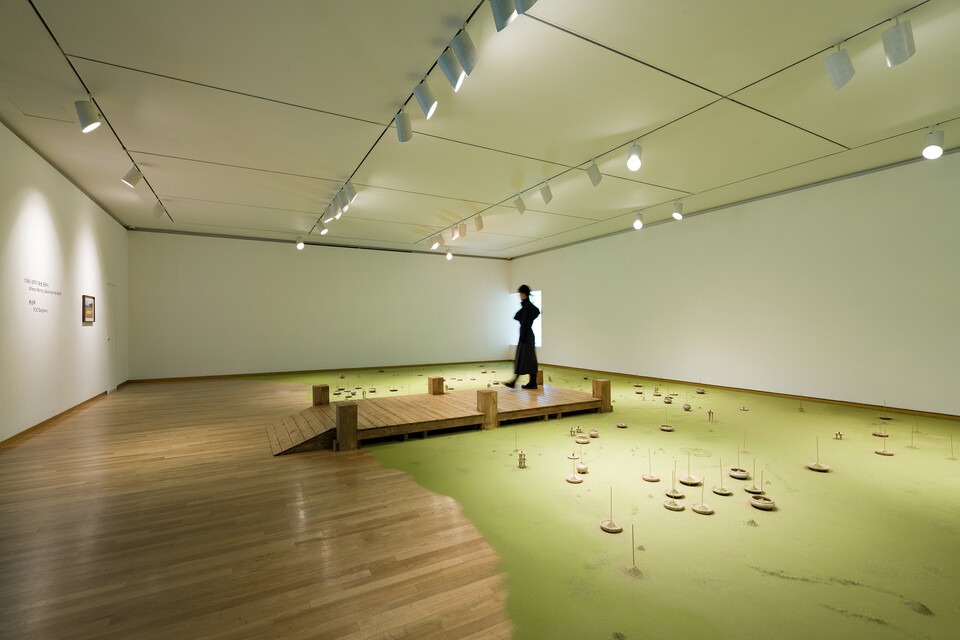
At Shinhan Gallery, I refined these three recurring elements by
selectively omitting subjects within the frame to clarify the intended message.
The shelters, previously depicted within the pictorial space, are now pushed
outside the frame, emphasizing the tension between light (as a symbol of
anxiety) and the defense mechanisms opposing it. This opposition is staged for
dramatic effect and serves as a device for spatial expansion within the plane.
The viewer’s gaze is led beyond the confines of the canvas, toward an unseen
space outside, extending the pictorial experience.
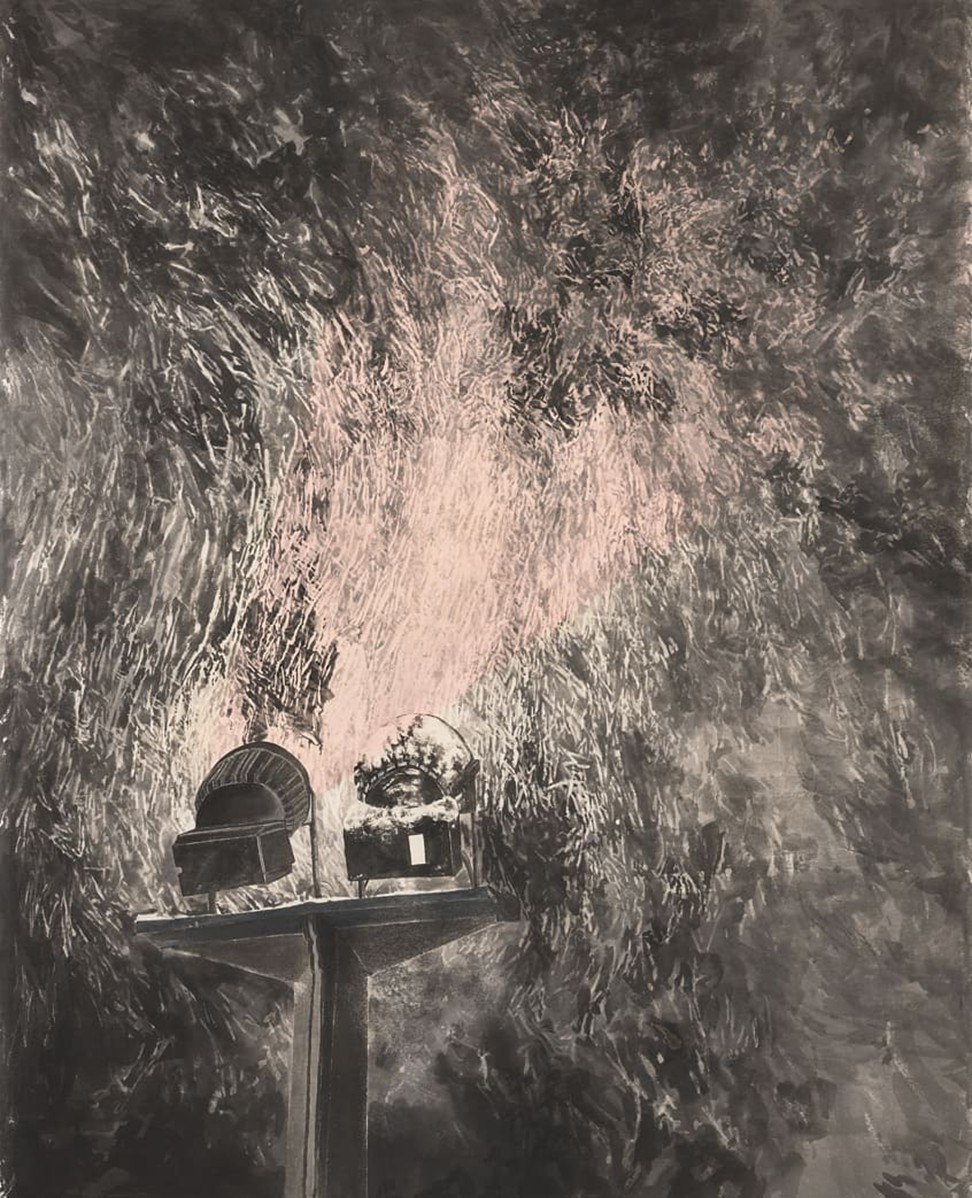
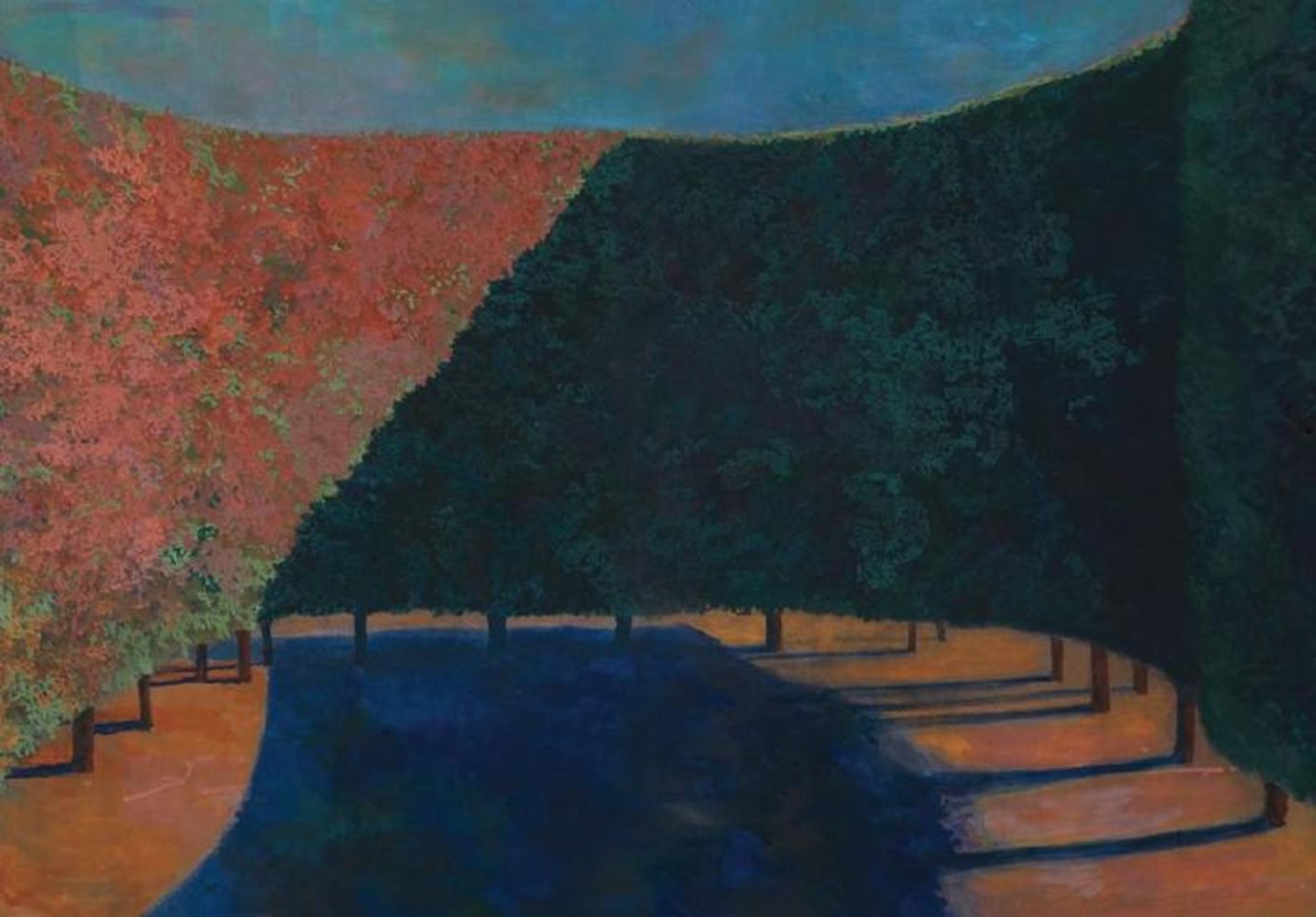
The defense mechanisms—represented through geometric forms of
natural imagery—embody artificiality, underscoring their psychological origin
within the self. These mechanisms are not perpetually active; they emerge only
in response to external stimuli. Following this logic, the geometric forms
react to the light—symbolizing anxiety—appearing in various sizes and
intensities.
The starting point of this work lies in my own early-adulthood
anxiety: the insecurity of failing to find a stable dwelling after separating
from my family. Physically and mentally mature, I faced a cold reality in which
independence felt impossible. The unease about my living situation triggered a
psychological need for defense, which I visualized through nature as an
intermediary image. Nature was thus transformed into a sculptural form of
defense, a refuge in which I could conceal myself.
The opposing light, in turn, visualizes anxiety itself. Light
signifies vitality but simultaneously carries the negative connotation of
darkness. It represents the complex emotion I experienced during a period of
stagnation—two years without stable work, drifting between libraries and
temporary part-time jobs. The scorching midday sunlight made me feel exposed
and ashamed; it burned the skin and stirred memories of unease. Depicting that
light became a way to reencounter those emotions.
Through this visual dialectic, I hope the tension between anxiety
and defense—between illumination and concealment—remains alive in the painting.
I wish for viewers, as they encounter my works, to recognize and empathize with
their own anxieties and, through that confrontation, to experience some measure
of relief or healing.