Objectified or Divided Landscapes
If
the canvas is a thing, painting mystifies it as an empty sign. Conversely, if
painting itself is a thing, the canvas concretizes it as an empty signifier. Haevan
Lee precisely and swiftly anchors his images onto the canvas in various
forms—this precision is one measurable point amid the differences in the
artist’s production, which resists being unified under a single subject or
style.
Thus,
rather than serving as the boundary of a vanishing explosion, the canvas
becomes a sign that distinctly delineates the boundary between itself and
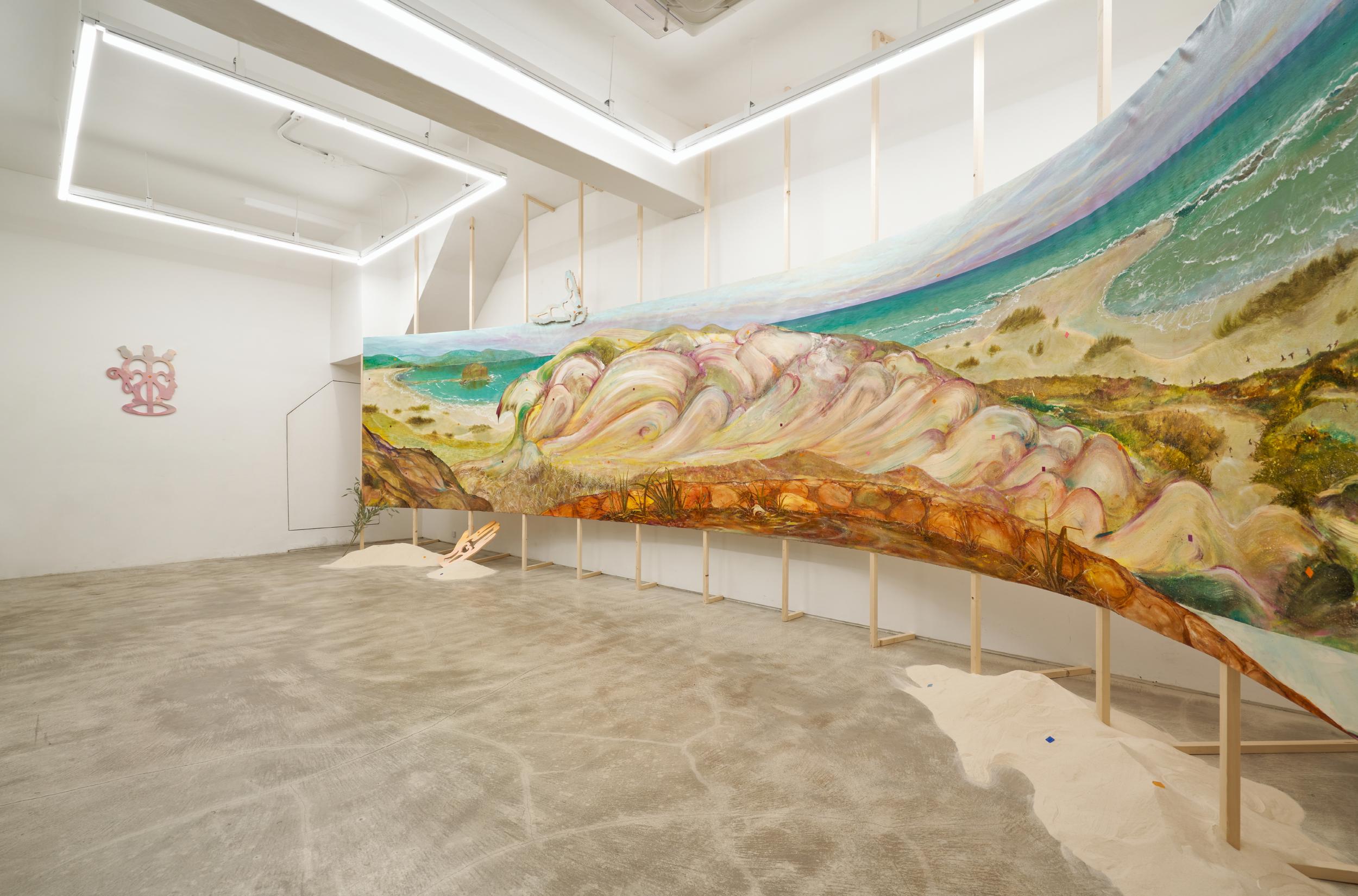
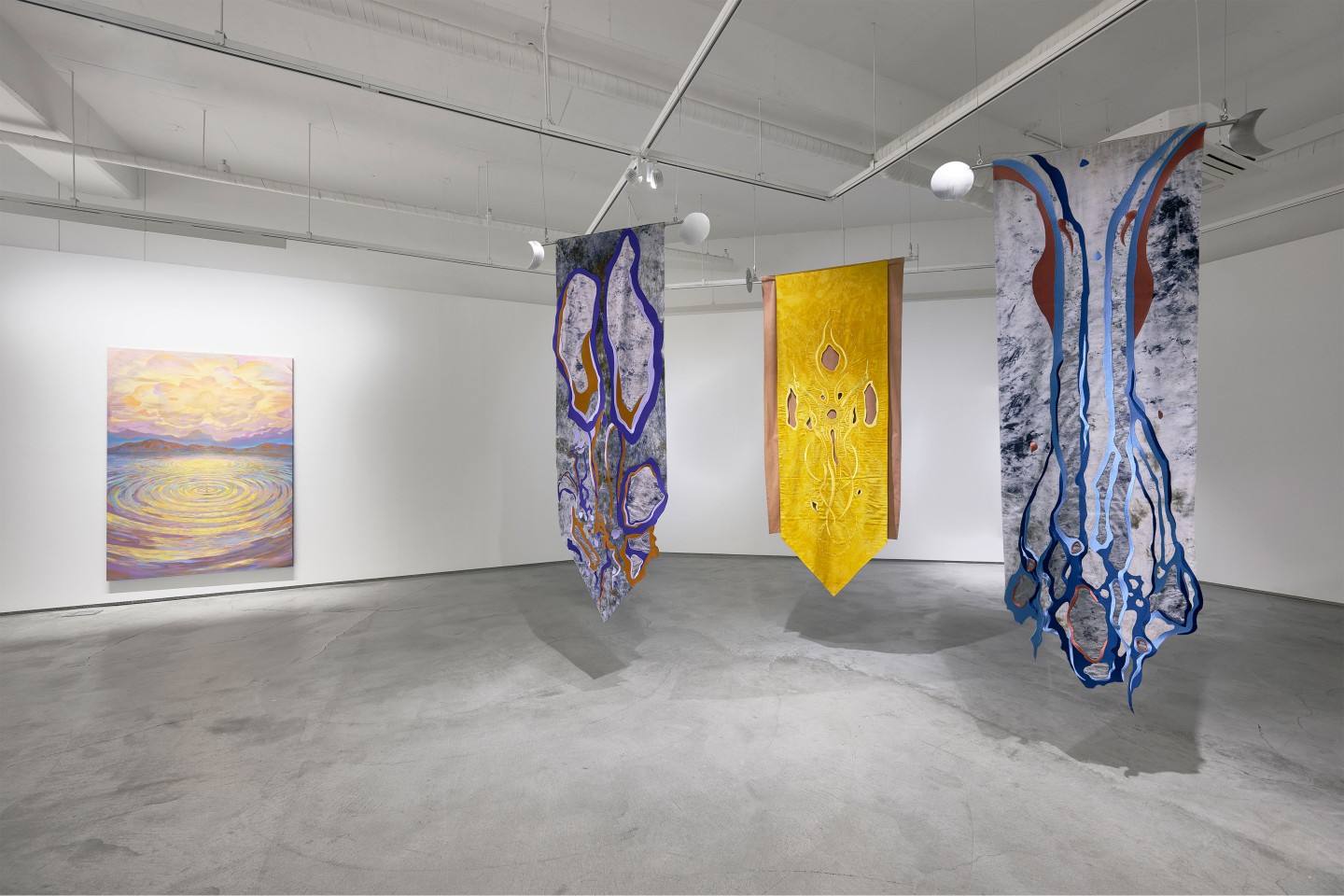
reality. In other words, Lee constructs painting not as an image, but as an
objectified canvas—as the installation of an image.
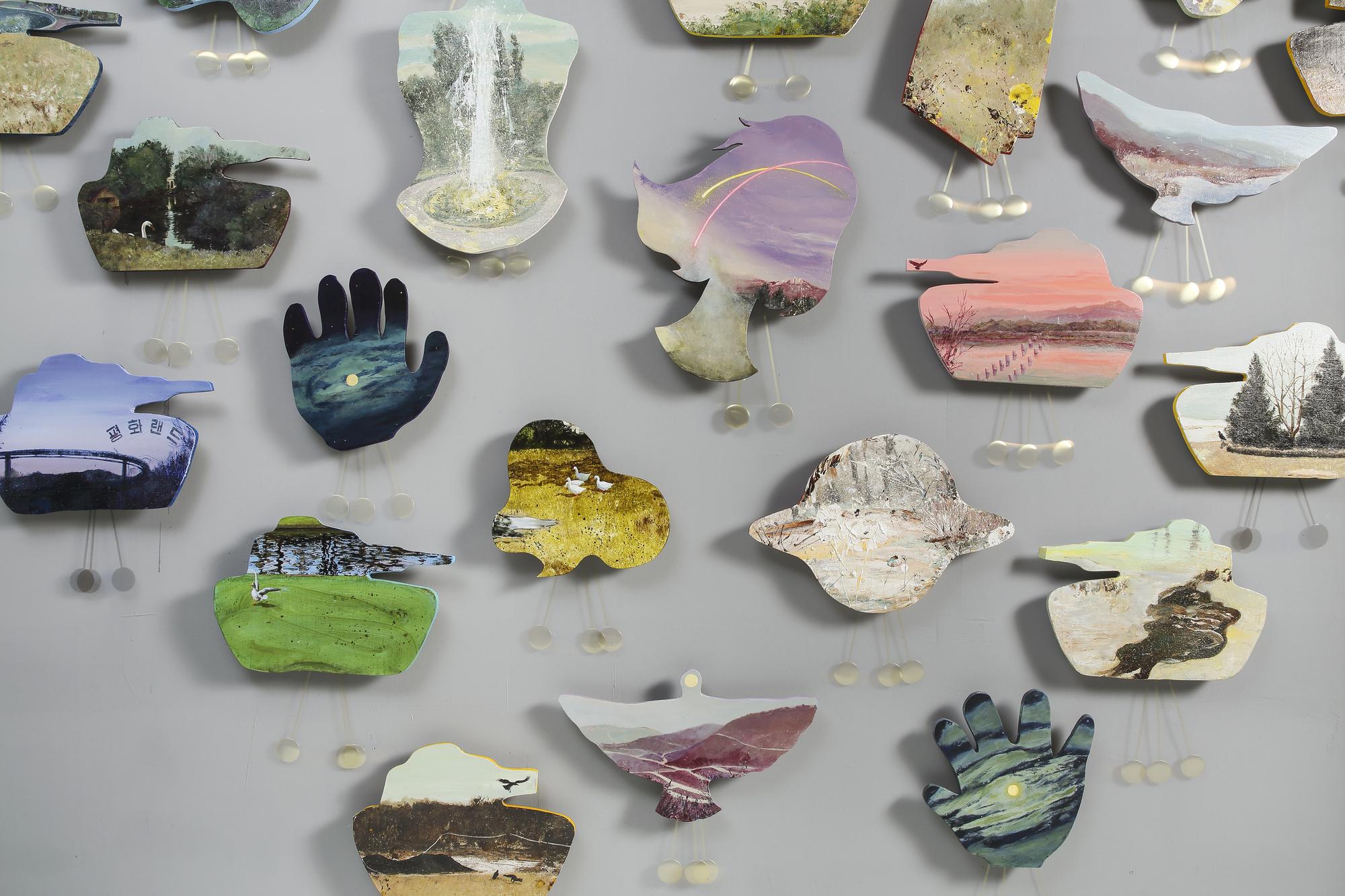
《Goliath, Tank》(2018) consists of paintings
rendered on wooden boards cut to the outlines of objects resembling tanks, each
equipped with pendulums that swing incessantly. The “wooden board as canvas”
momentarily divides the world where painting stagnates. (Here, we may
conceptualize the “canvas” not as the literal fabric used for oil painting, but
as the flat plane that presupposes the possibility of painting and, at the same
time, as the object that enables its installation.)
The
form of the wooden board, as another signifier, refers to the tank in the
title, the site of the exhibition—Peace Culture Bunker—and even the theme of
the exhibition itself. It clarifies the signified of the work, overturning or
subordinating the details of painting into a kind of background. The pendulum
attached to the tank-shaped structure swings rapidly, suggesting that the
stagnant time since the Korean War must be accelerated in order to be measured
in the present.
On
the surface, the form (the canvas) seems to confine the image (the painting),
and the image appears to lose its individuality and inherent power. Yet, could
such an inversion between figure and ground not be seen as the formation of a
single plane? Lee’s painting is not segmented within a large plane, nor merely
divided by the frame; rather, it resides within the boundary. In fact, the
artist does not paint on a square canvas and then cut it apart—he paints
directly on canvases already cut into shape.
Thus,
division does not function as the concealment of what has been removed, nor as
an imagined possibility of visibility, but instead constructs surface and world
through the curved seams of those divisions. The form goes beyond composing the
world—it reorganizes the very perspective through which the world is seen. Such
a method of “division” transforms painting into a signifier of the object
itself, an installation composed of the image-canvas.
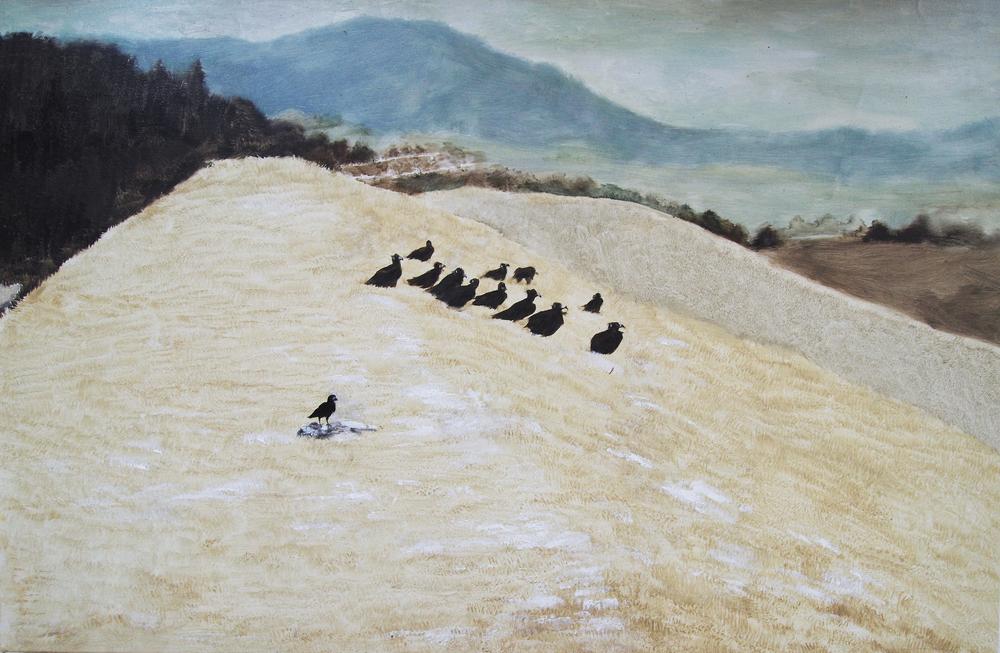
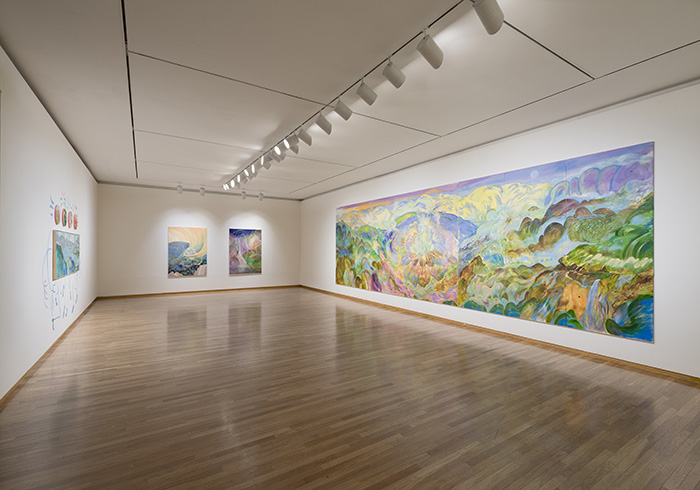
At
Hongcheon Museum of Art, the series of nine works titled On the Road presented
small paintings on square canvases. These were reconfigurations of images
conceived during the DOPA Project’s journey across Siberia, combined with
scenes inspired by the artist’s observations in Hongcheon. The phrase “TRANS
RAINBOW,” repeatedly written across the canvases, appears not from a frontal
view but at a diagonal angle, emerging through a mode of viewing that involves
walking along the works—connecting them, as if linking the bodies of train
cars.