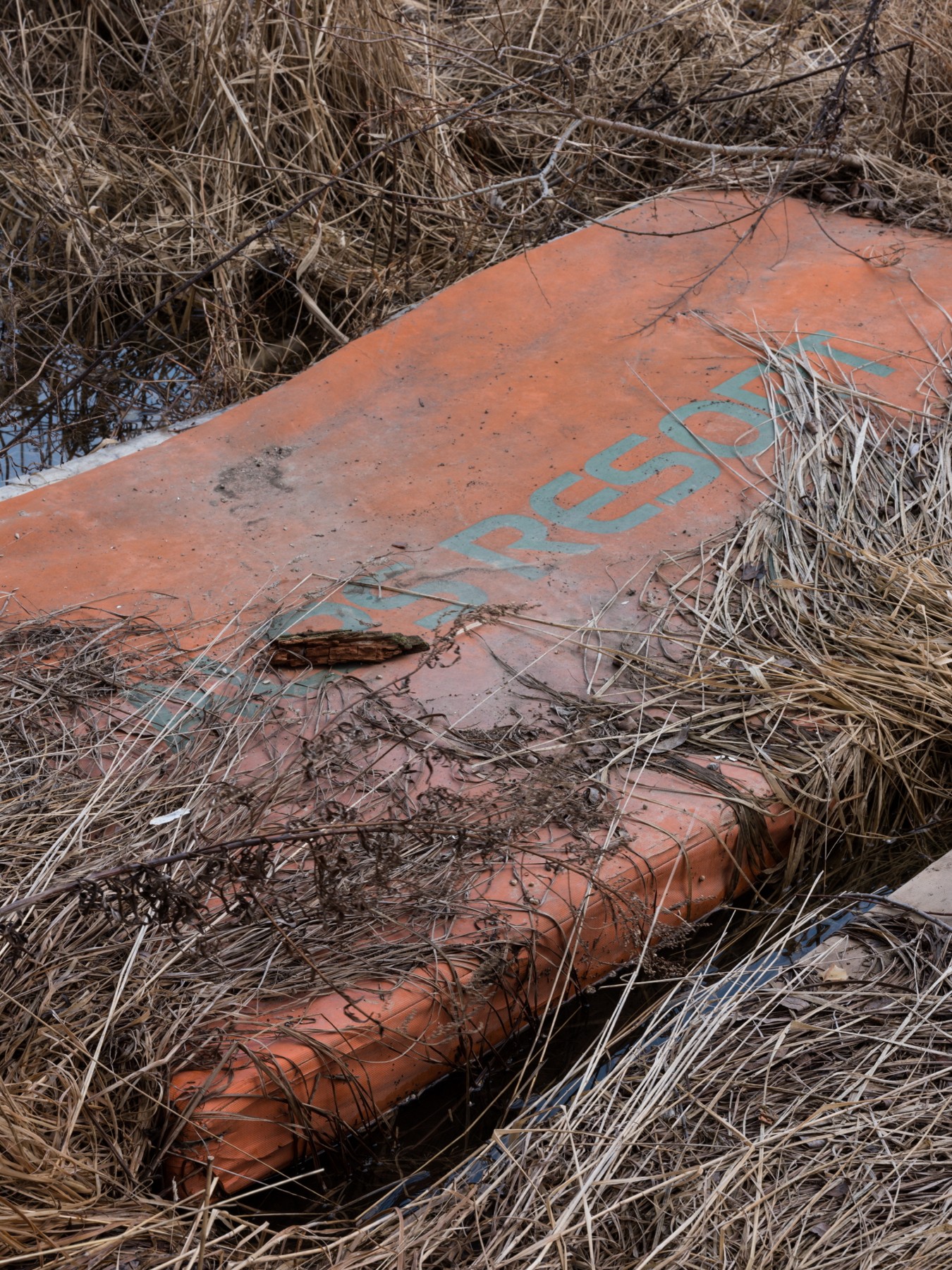
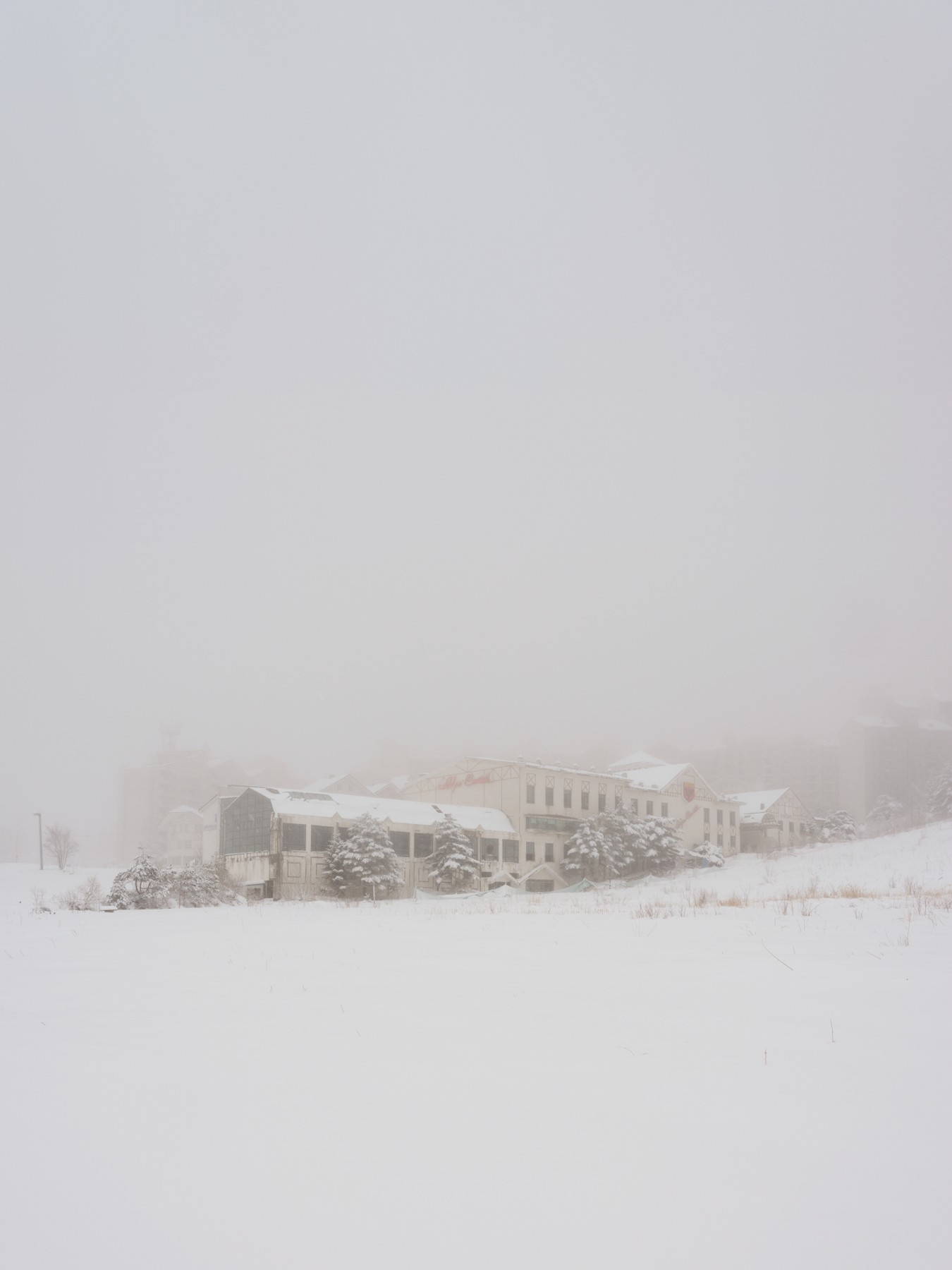
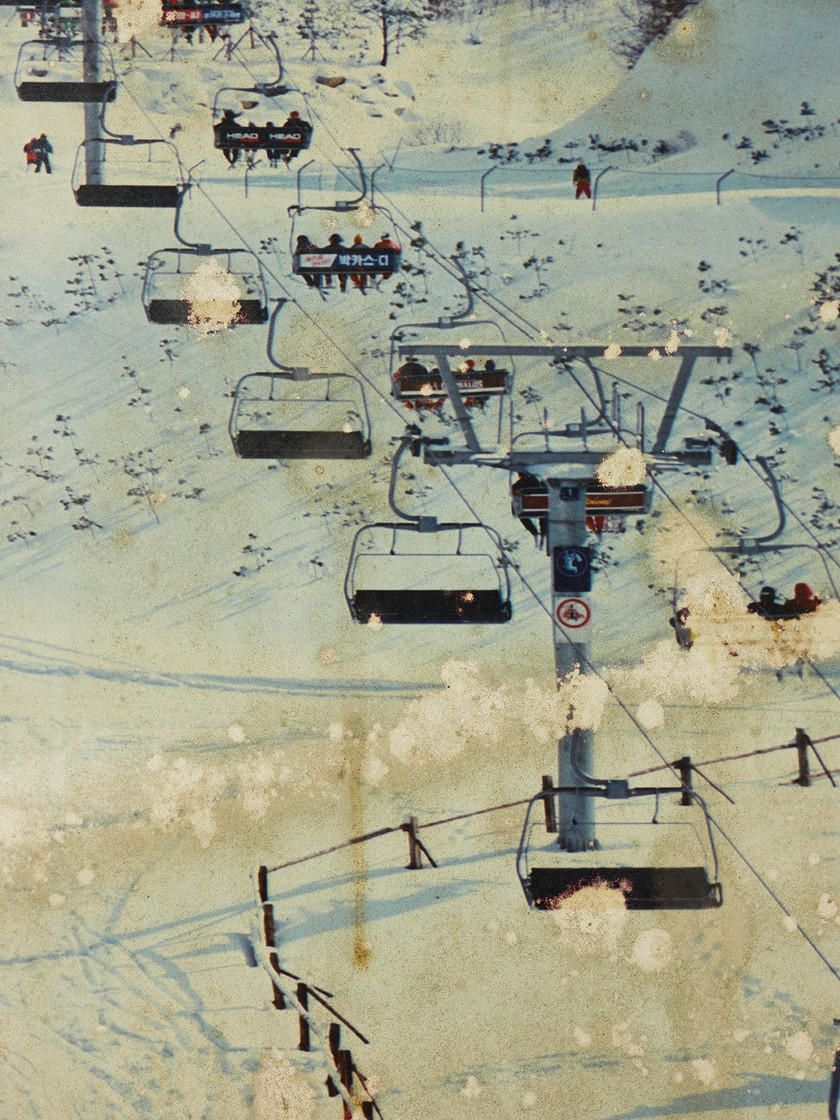
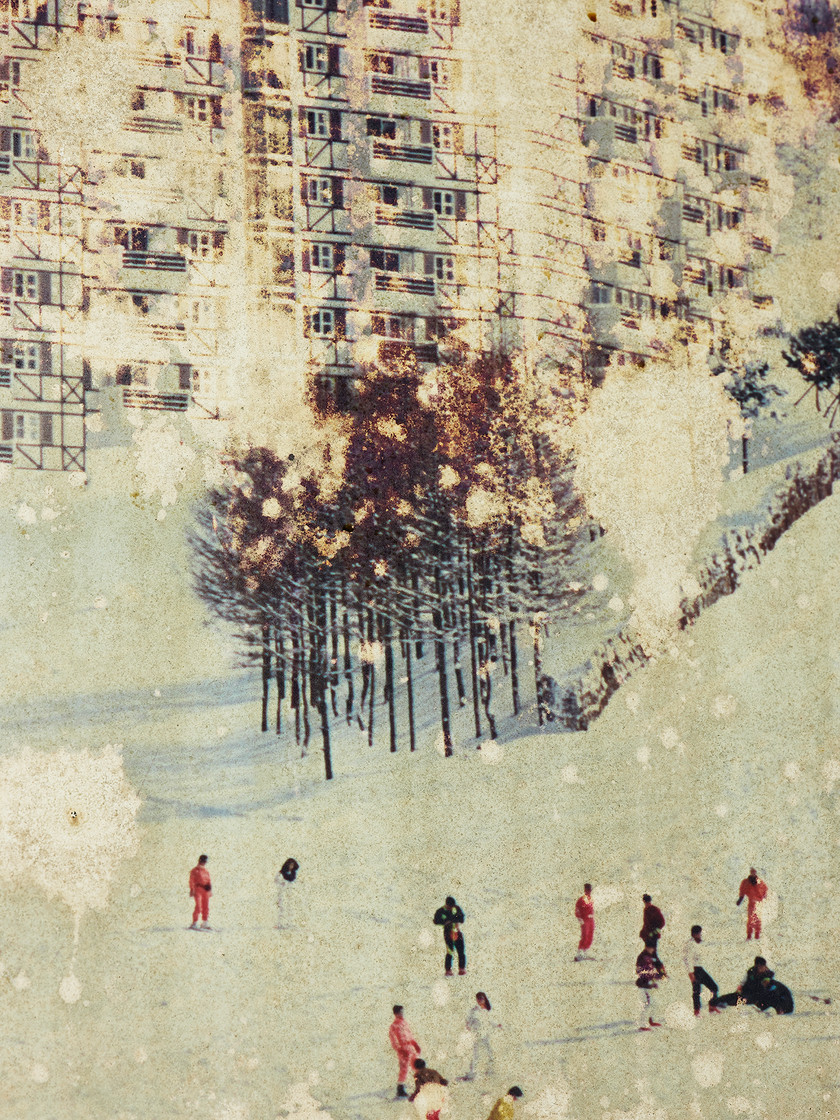
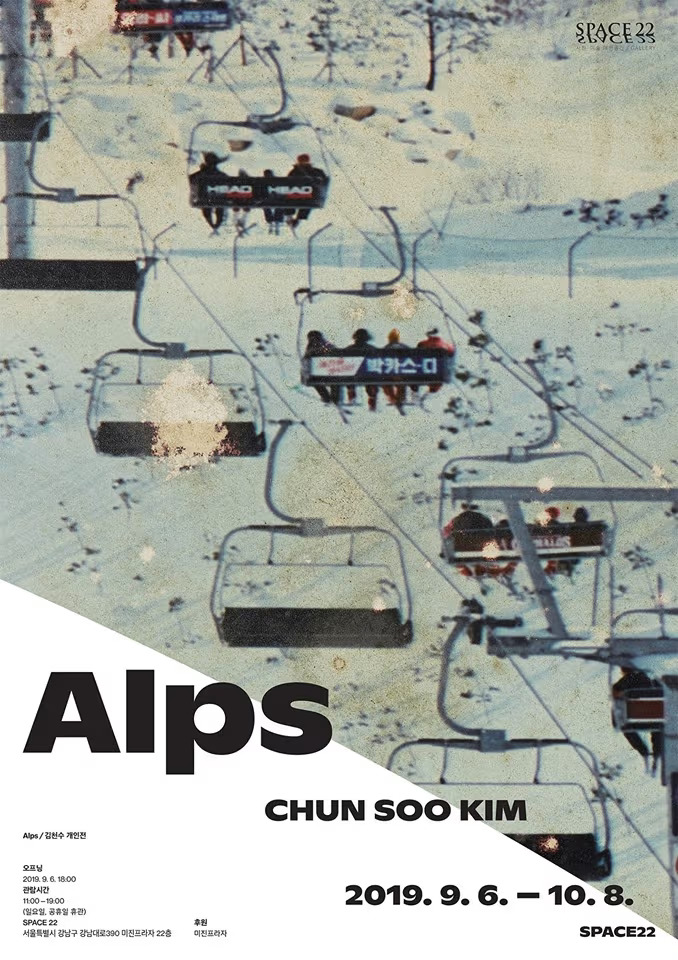
Faint objects emerge between snow-covered mountain ridges. As one moves closer—through distinctly Korean mountains and valleys, soil and wooded forests—empty buildings appear like forgotten ghosts. Once a place that must have brought joy to many, the former Alps Ski Resort is now left only with a ruin-like emptiness, desolation, and stillness.
Time has passed; the space has faded, grown mold, physically deteriorated, and been abandoned. For those who remember its once-glorious days, its current state can be somewhat shocking. While the camera captures this site of decay, it simultaneously holds together memory and the present condition of a forsaken place.
Once vibrant and full of life, the ski resort became a dead space, unable to adapt to changing times. Neither demolished nor revitalized, it now remains abandoned like a ghost town. In an era when overseas travel was not easily accessible and leisure activities like skiing still felt exotic, escaping the routines of daily work to glide across snowy slopes in a stylish and mysterious ski resort was an exciting and novel experience. However, as time passed and international travel became commonplace, and as new facilities emerged, the Alps Ski Resort naturally fell behind, its space and architecture reduced to outdated and inexpensive imitations.
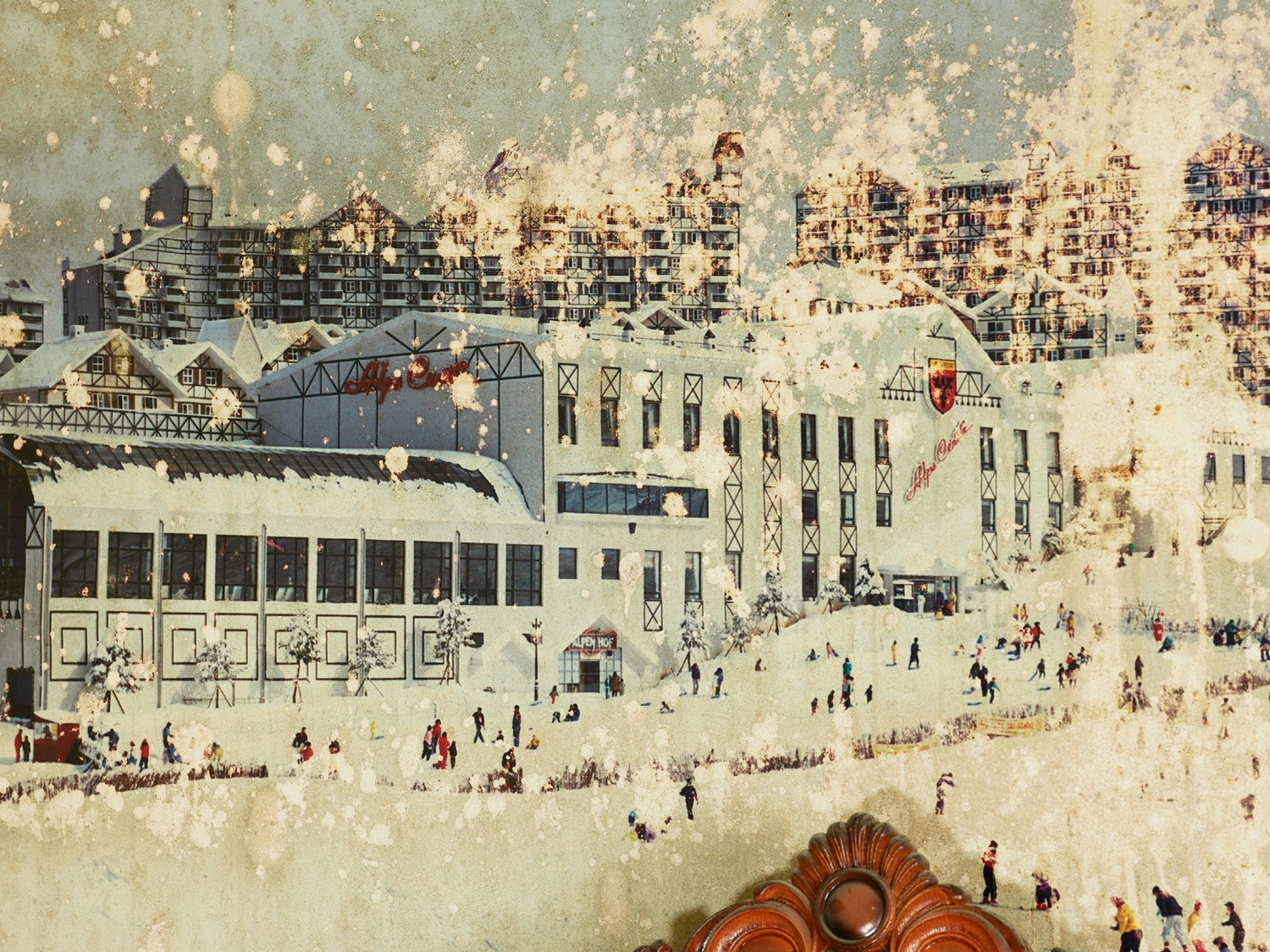
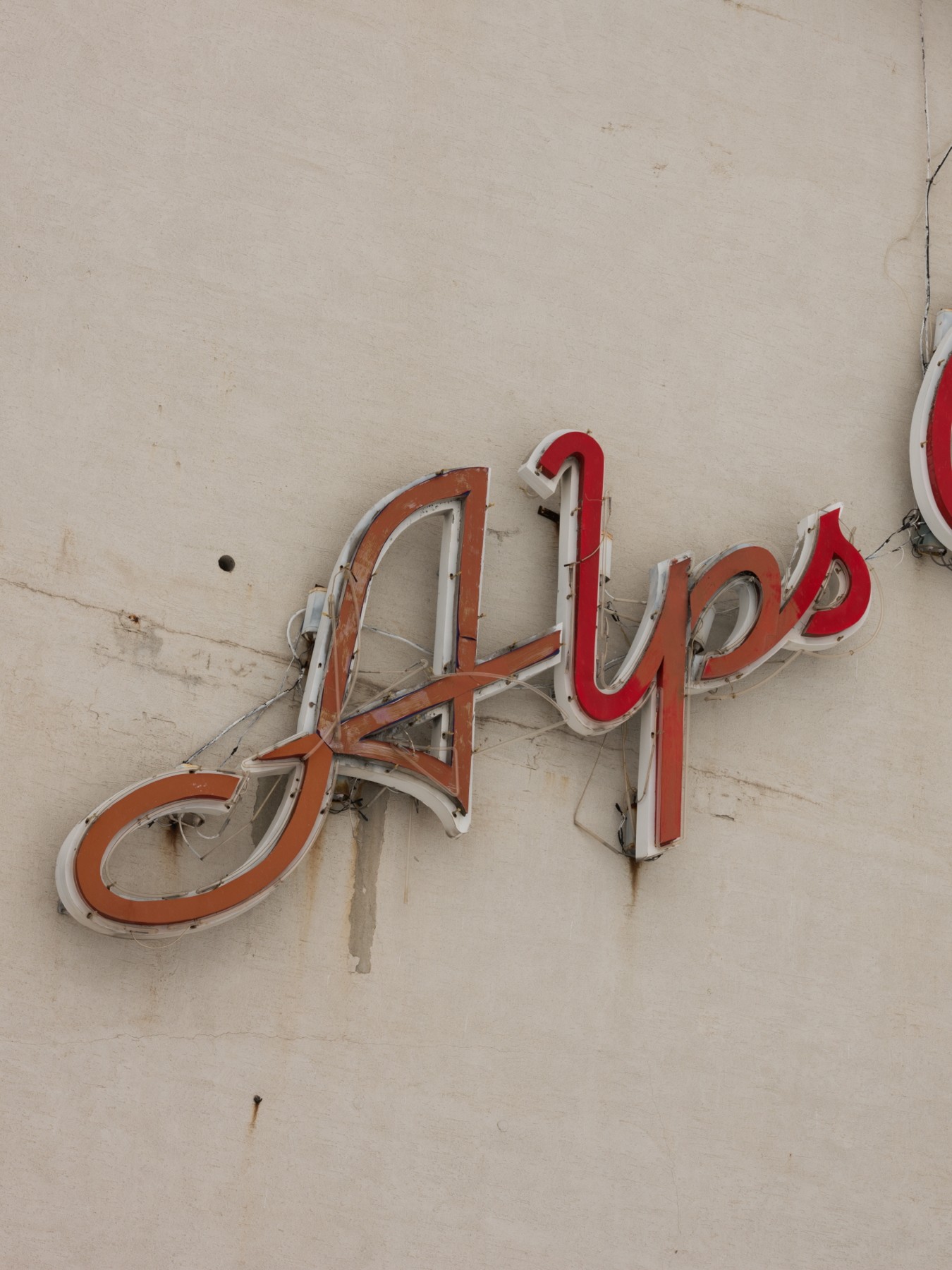
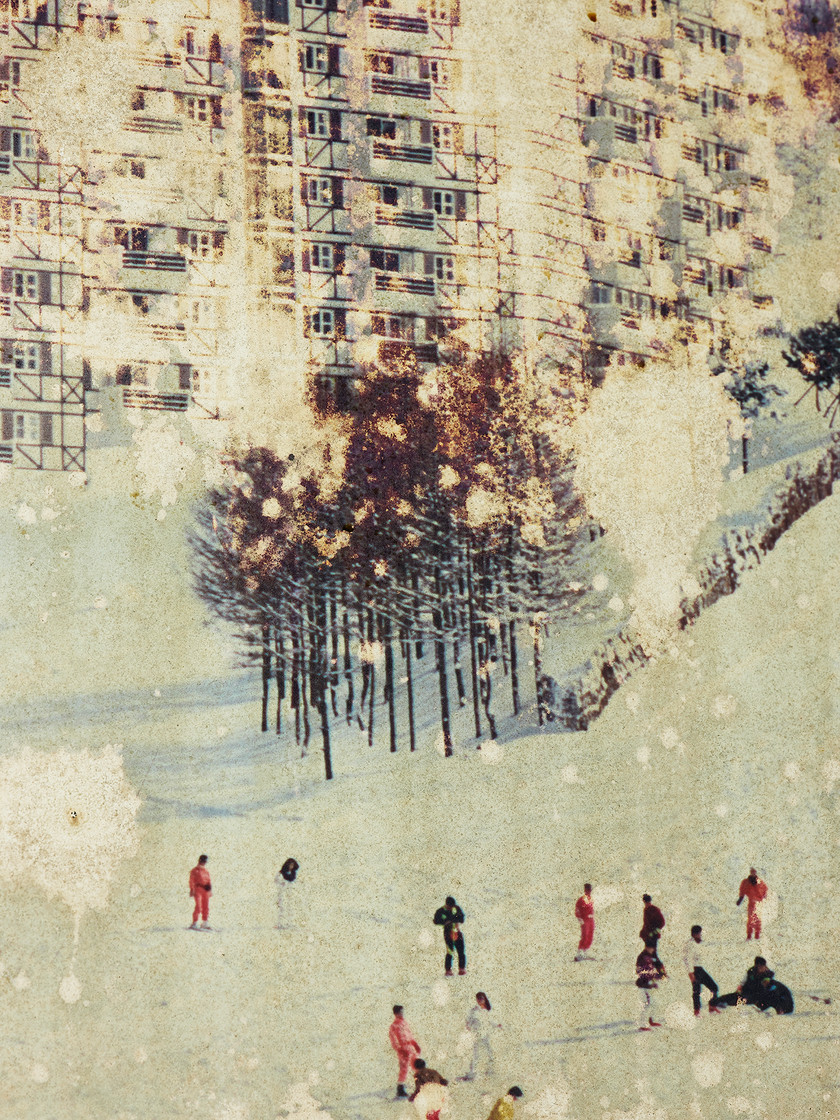
As one slowly follows Kim Chunsoo’s lens, carefully tracing the remnants scattered throughout this abandoned space, memories of the past intersect with a sense of present sorrow. Photographs once filled with people in ski suits enjoying lively moments have now faded, layered with dust, and stained with mold, forming altered textures. Mold, decay, discoloration, and layers of dirt have naturally weathered the site to the point that no filtering is needed. Frozen ski lifts, discarded name tags, purposelessly hanging lights, and scattered objects remain suspended in time, like the remnants of a sunken ship left unrestored.
Unlike people, spaces do not die. As times change, the character of a place shifts, and space may find new meaning in different ways. Perhaps that is why a space that has lost its purpose feels even more unsettling, heavy, and sorrowful. The vivid reds and blues of the ski lifts—once repainted in an attempt to restore vitality—now appear frozen in time alongside the abandoned remnants, like a failed coup resisting an inevitable decline.
One cannot help but wonder: if life were to be breathed back into this place, if someone were to attempt its reopening, with what thoughts and intentions would they undertake such a task? In contrast to Pyeongchang, which has enjoyed its own period of brilliance in recent years, this space seems to have endured a far darker and lonelier passage of time.
And yet, one imagines that perhaps someday it may come alive again. When it regains its former vitality and becomes a place loved once more, one hopes the artist will return to capture yet another chapter of the living Alps through the lens.