Between What We Wish to Believe
and What We Must Believe — Jeon Youngjin
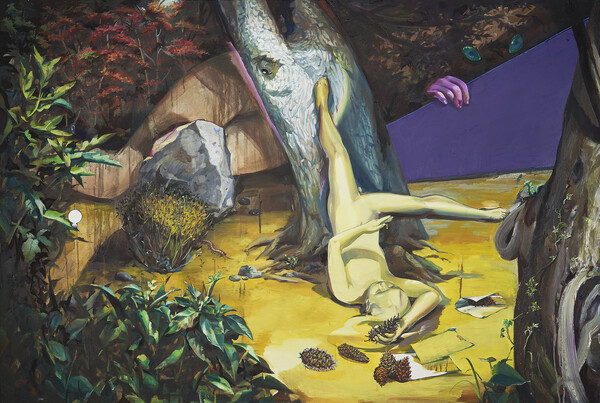
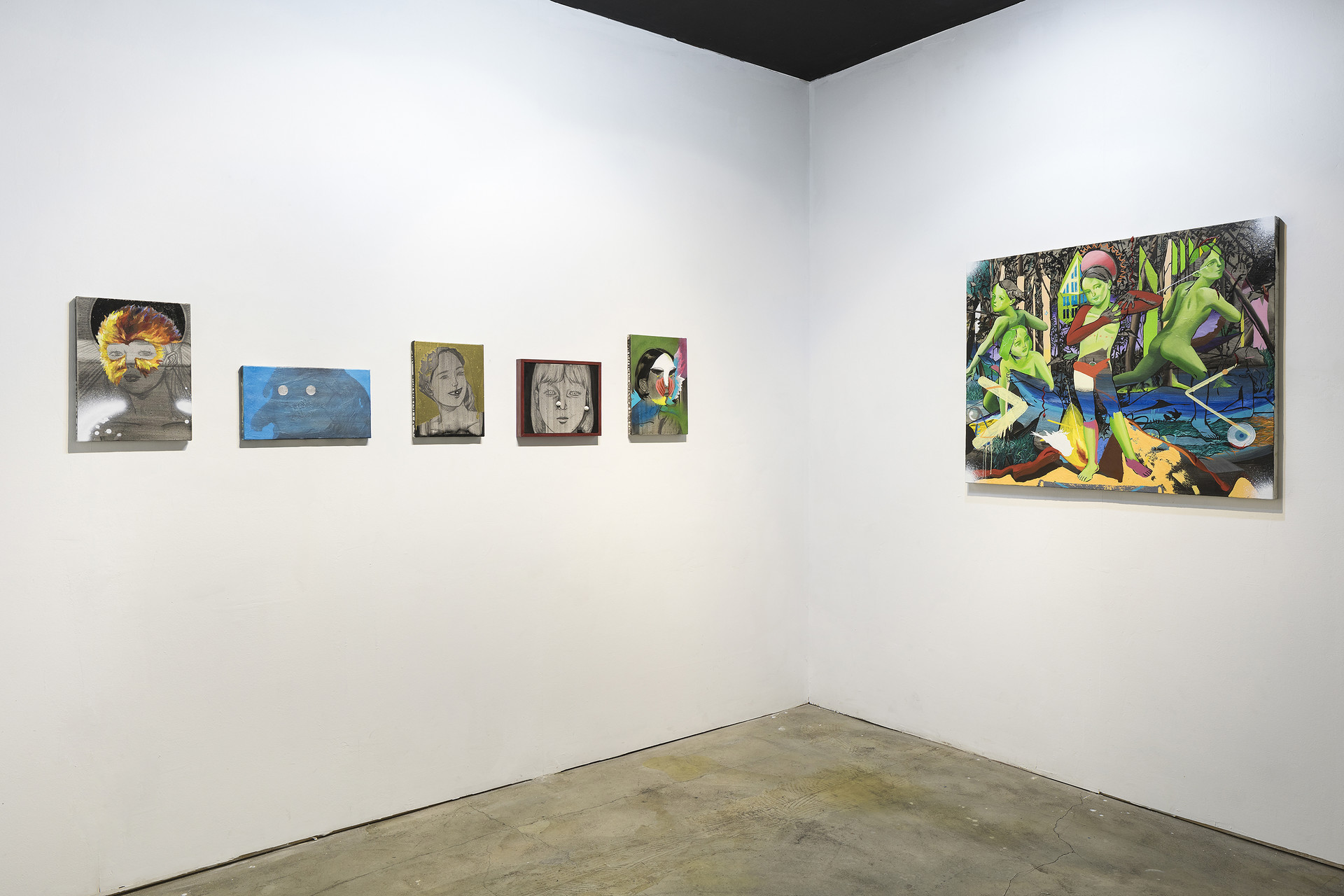
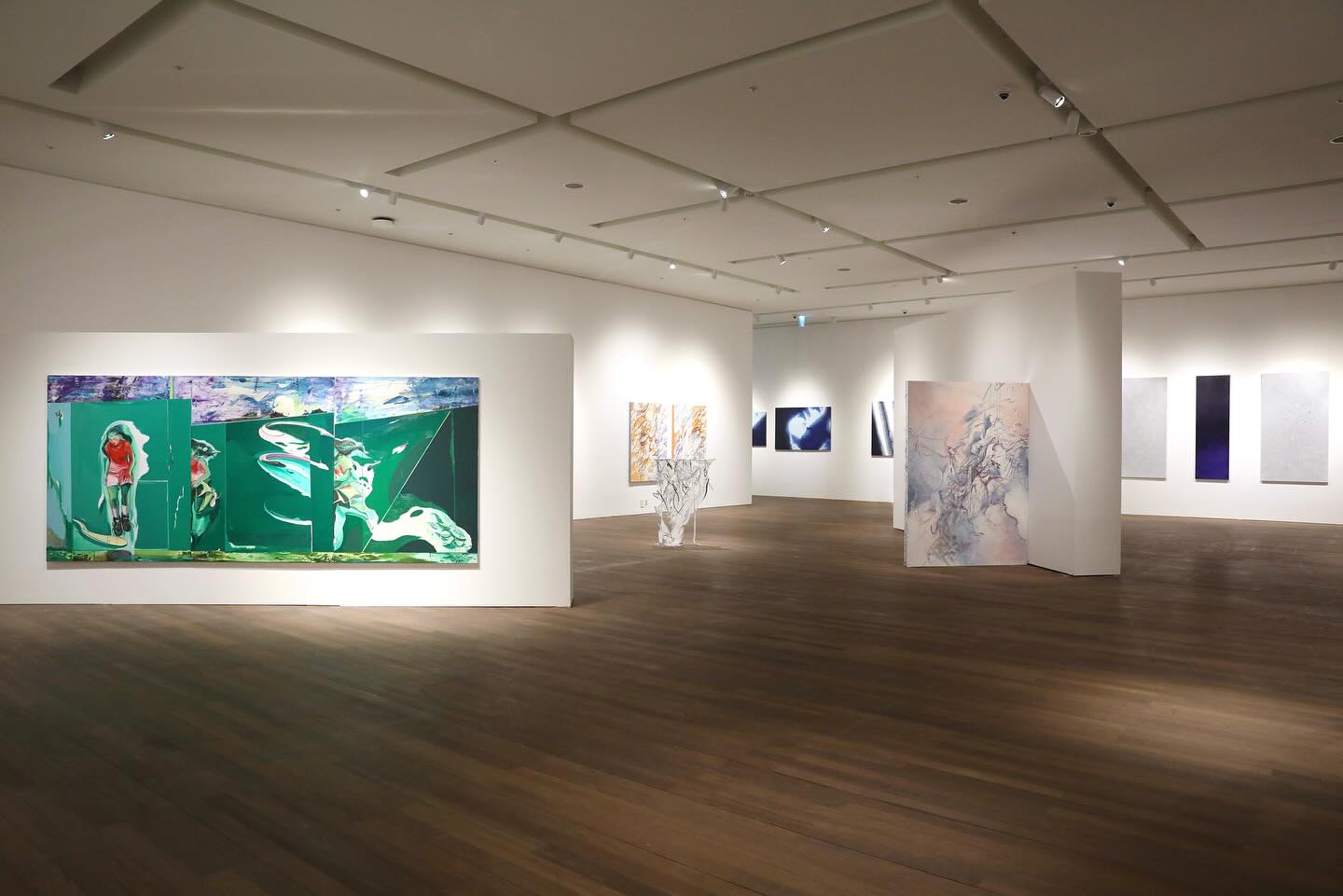
Each canvas in this exhibition is
not an isolated entity but a fragment of a long narrative that begins with the
birth of a world created by the artist. Jung presents these fragments as pages
from a wordless picture book, shuffled and hung on the wall in the form of
paintings.
Viewers instinctively attempt to piece together the sequence of
images, like assembling a puzzle to reconstruct the story. Within these
seemingly ambiguous scenes, the artist leaves subtle hints that allow the
audience to infer a possible order of events.
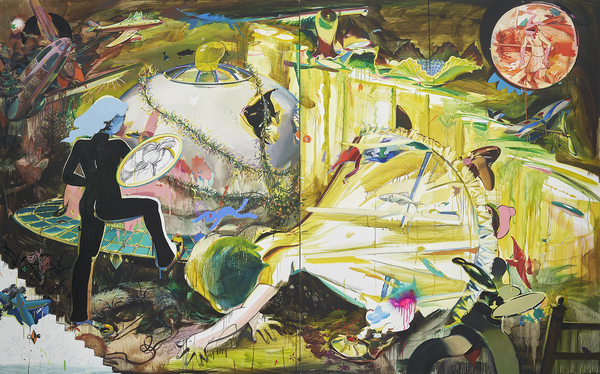
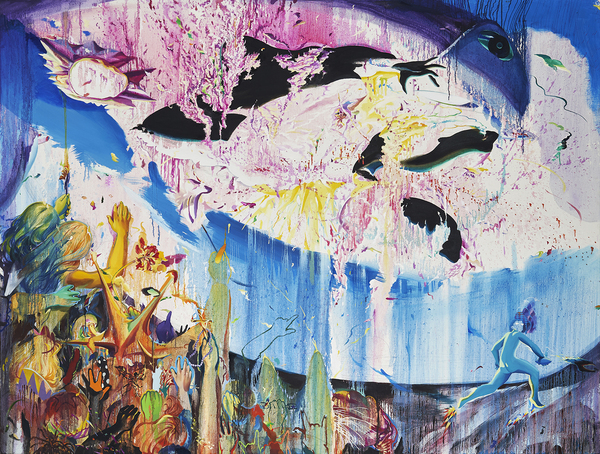
Through repeated visual cues, the
viewer experiences what appears to be the evolution of a universe: from an
image that resembles cells or cosmic matter symbolizing birth, to abstract
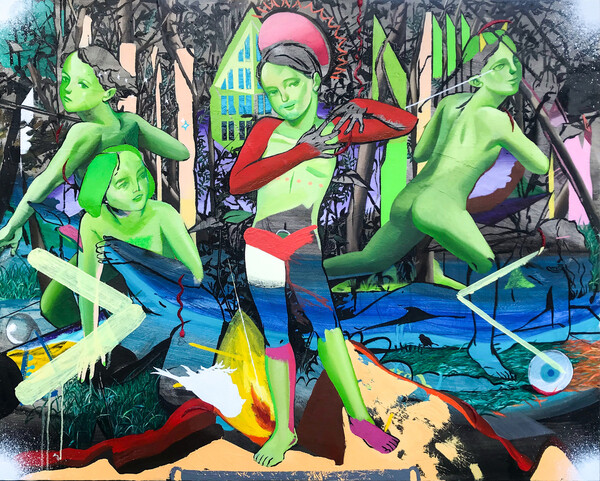
forms struggling to emerge into the world, to anthropomorphic beings carrying
out daily rituals, and finally to the mysterious world they have built
together.
Although no artist provides
definitive answers, viewers encountering Soojung Jung’s paintings arrive at
their own conclusions—perhaps discovering a utopia, a dystopia, or a Neverland.
Yet, within all these imagined worlds lies one commonality: the absence of
dichotomies that govern our reality. There is no division between the real and
the imaginary, good and evil, male and female, youth and age, joy and sorrow. The only thing Jung intentionally asks of her audience is to recognize this
absence of distinction.
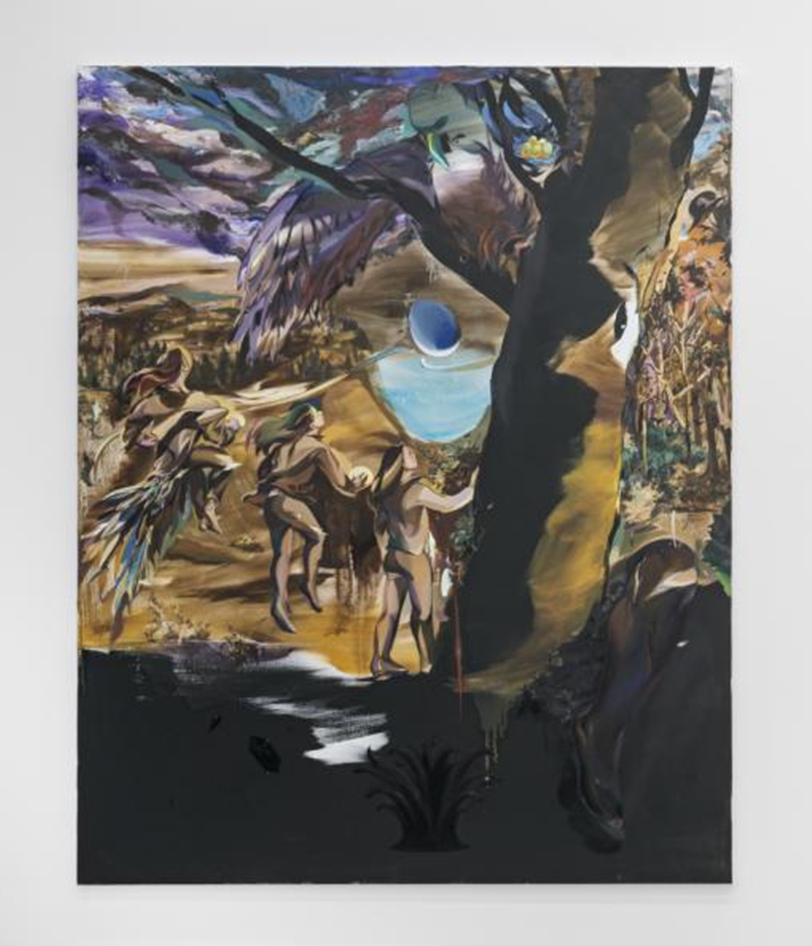
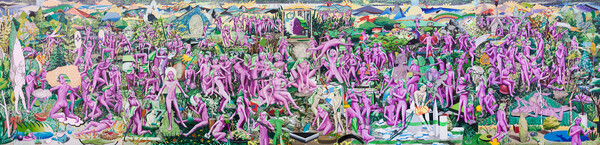
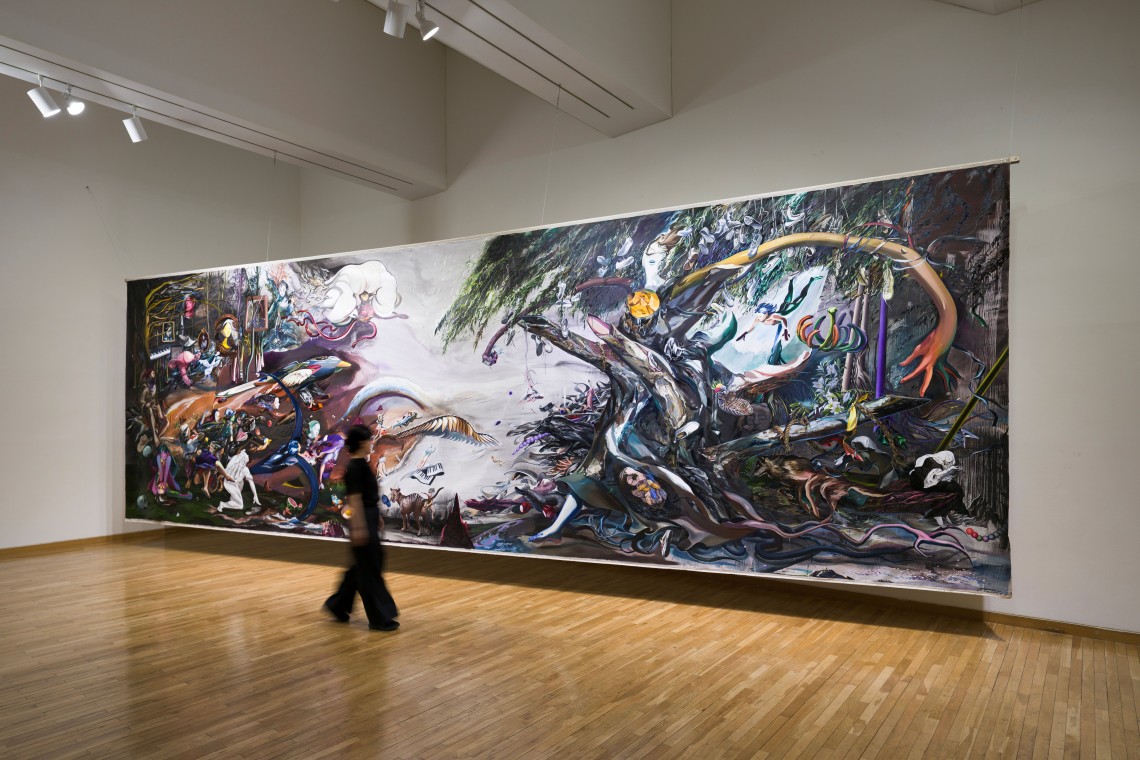
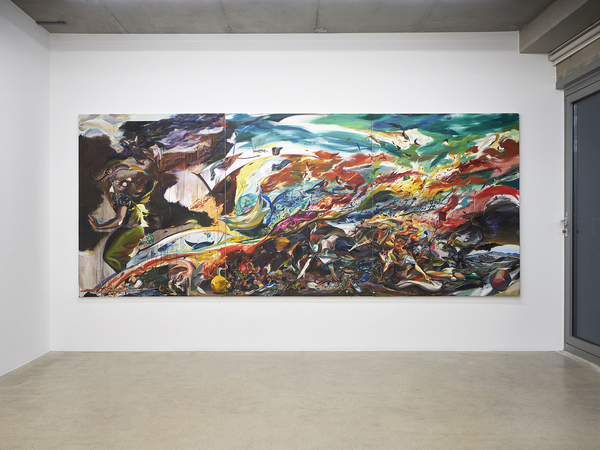
The central piece of the
exhibition, Giving answers to Bosch (2018), was painted as a
response to Hieronymus Bosch’s The Garden of Earthly Delights.
Through this work, viewers can more vividly sense the world Jung has
conceived—a world where the human pursuit of truth through logic and science
coexists with its opposite: the blind creation of intangible deities that
distance us from truth.
By incorporating mythological and religious (or
heretical) motifs into Renaissance-style imagery, Jung prompts us to confront
the illusion that, despite our immense scientific progress, we continue to
chase. Her fictional world, much like Bosch’s painting, mirrors our reality in
a flattened and subdued manner.
In doing so, the artist renders
visible the intangible—our ambivalent emotions, contradictions, and invisible
forces of attraction. Although the artist holds no power to direct the real
world, she wields a unique capacity to summon emotions and thoughts beyond
language. This refined sense of control is transformed into unreal, metamorphic
images within her paintings.
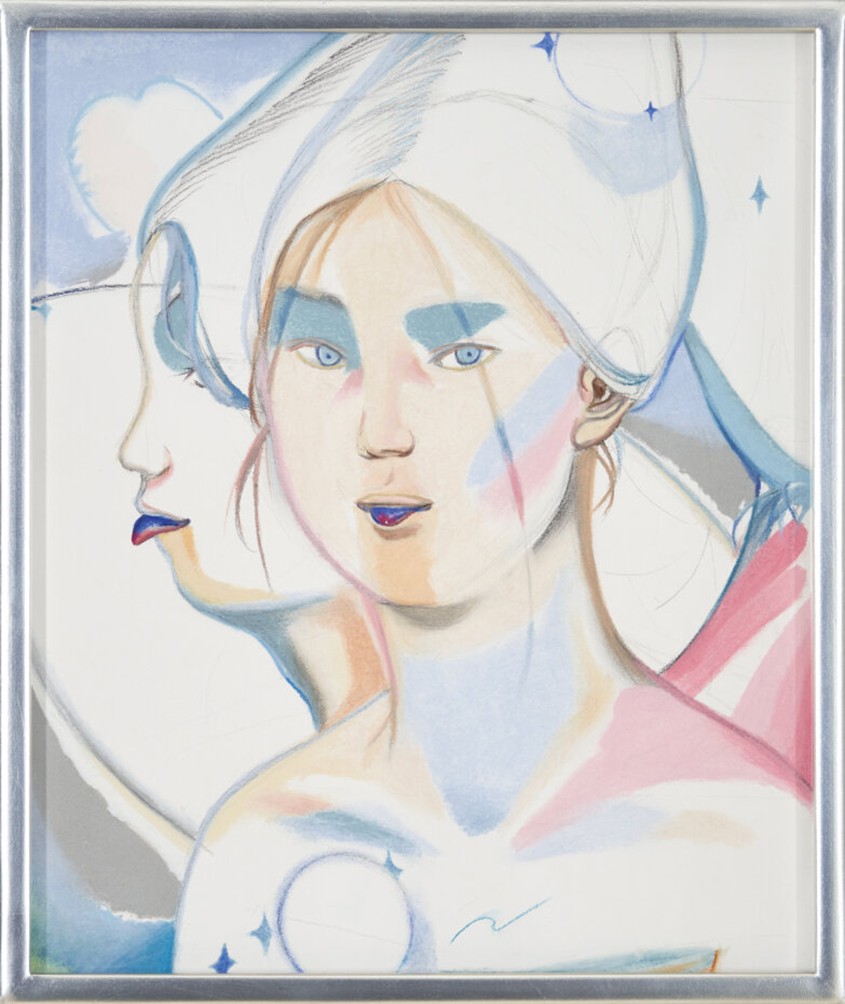
Her living entities (drawings)
feed on paint (color) to grow. The areas left unfinished or remaining as
sketches compel viewers to stay in their position as mere observers, kindly
revealing the limitations of art itself and paradoxically suggesting that everything
we dream of may only be possible within art. Jung thus reminds us that between
what we wish to believe and what we must believe, there exists no space at all.