The
poem “Cliff” by Yi Sang is told from the perspective of someone who digs a
grave where the scent of an unseen flower can be smelled, lies down in the
unseen grave, and once again smells “a flower which can’t even be seen.” It is
a concise work, consisting of a few short, repetitive sentences.
Yet its
references to “unseen flowers” leave a lingering resonance that could be
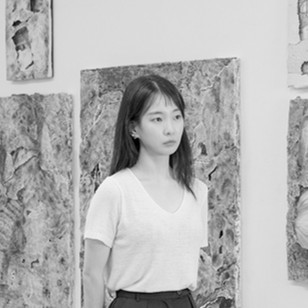
interpreted as alluding to the speaker’s disappearance or death. Artist Sungoo
Im starts from the final line in “Cliff” about “a flower which can’t even be
seen.” Her drawings are acts evoking individual things that allude to what
cannot be seen yet clearly exists alongside us, what remains as a scent that
cannot be touched and will soon disappear. These are what she presents in her solo
exhibition 《A Flower Which Can't Even
Be Seen: Excavating Footprints》 (SeMA Storage, 2022).
For the past few years, Im has referred to her drawings as an act of gathering
things that have scattered on the periphery of life—drawing together emotions,
memories, and experiences that might otherwise sink away in our consciousness.
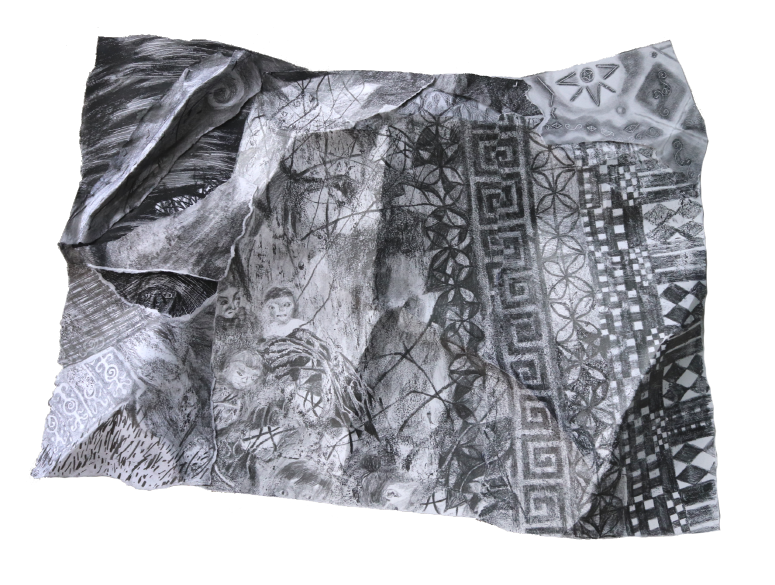
She describes herself as an artist who uses all sorts of materials but focuses
primarily on paper and graphite. By its nature, paper is easily torn and
crumpled, while graphite demands repeated movements and physical force to leave
its marks on the paper surface.
Yet in many ways, there is a correspondence
that exists between Im’s aim of gathering scattered things on the periphery of
life and the process and method of creating images and narratives through the
dry materials of graphite on a paper surface. The language of Sungoo Im’s
drawings lies in the will to capture scattering and fading memories, feelings,
and emotions with fragile, easily crumpled materials.
Im
has consistently projected a psychological and physical perspective on her
work. Likening the fragments and particles that come away from the materials
she uses (pencils, graphite, pastels) to the fragments of memory or the
emotions at the base of our consciousness, she believes that those pieces can
return to their image through her drawing work. In her view, the spiritual act
of displaying memories and emotions is substituted with the physical (in both
senses of the word) act of mixing and layering materials on paper.
Along these
lines, her work is not simply a performance in which the materials exist as a
means; rather, the inherent textures and distinctive visual nuances of her
drawings are obtained through the exploration of materiality. From the outset,
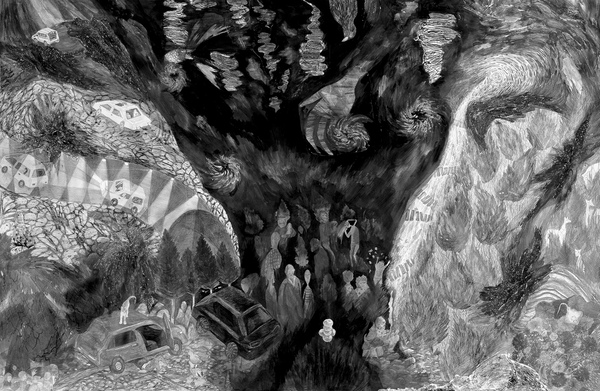
fragmented memories are not something that can be logically connected. Im forms
her images through collages that combine fragments of narrative, and as these
disparate materials meet, clash, and intermingle, they create new possibilities
in terms of textures. Indeed, the textures and collages in her drawing work,
along with the narratives and spaces formed in the process, seem to be
determined within a situation so simultaneous and complex that it is impossible
to judge what is the “cause” and what is the “effect.”
In her early work, Im
used sentences to show fragmented yet direct narratives corresponding to the
shards of memory, and she suggested a strong commitment to achieving a natural
connection in her images among the people, animals, places, and spaces that
appeared in the stories. Since the narrative originated in fragmented memories,
her curious fantasies played the part of filling in the gaps among them. These
had the effect of making the stories more profound and imbuing a sense of
tension, but they also performed an important role in creating a single
integrated spatial composition.
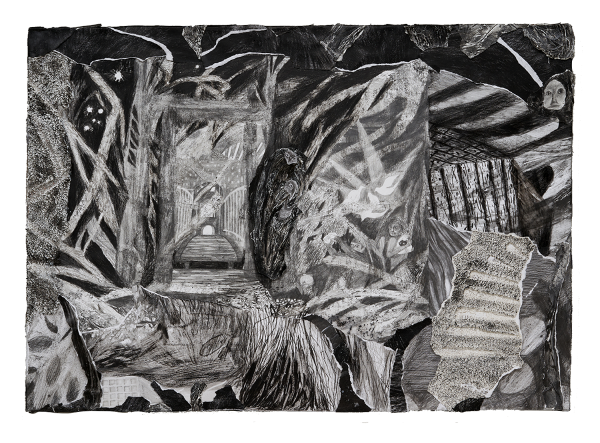
In
her past work, Sungoo Im presented stories in collage form within an integrated
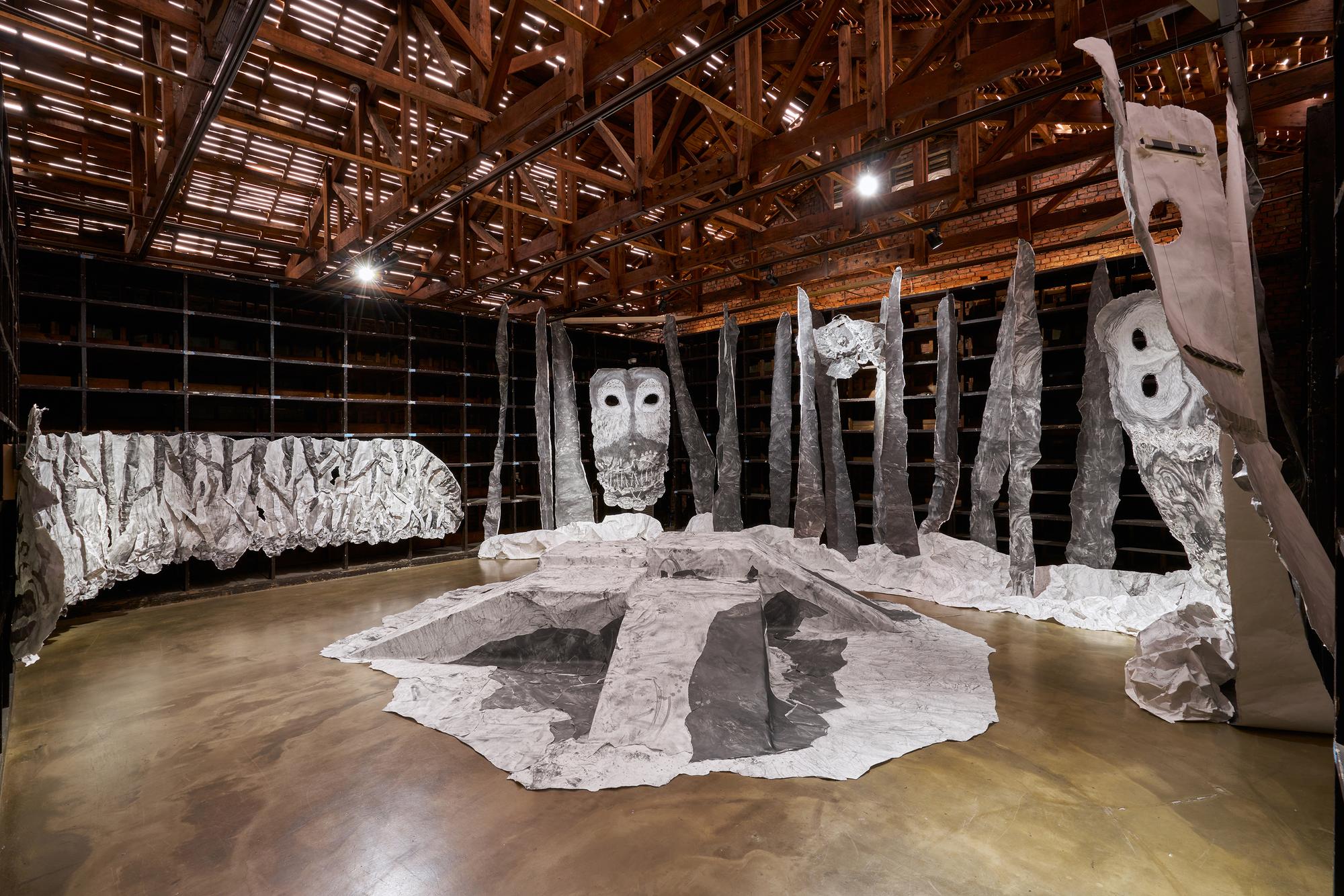
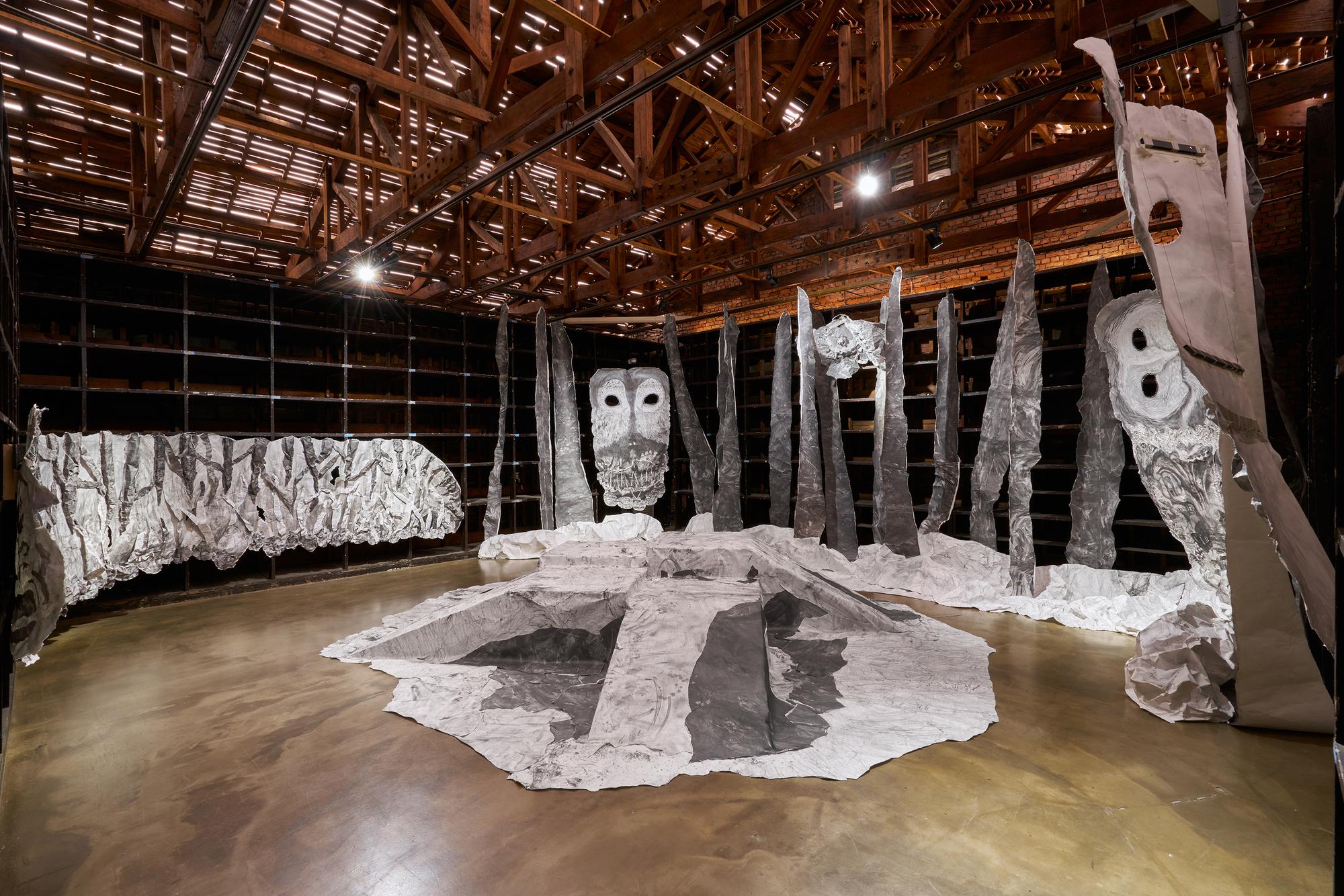
image, into which the viewer was drawn. For the exhibition 《A Flower Which Can’t Even Be Seen》, she
posits the SeMA Storage exhibition setting as a three-dimensional canvas, where
the visual/narrative elements presented in her past work have been produced at
scales either equivalent to or larger than the viewer and arranged
three-dimensionally in actual space.
As a result, the viewer comes to exist in
the same reality as the elements they had viewed in Im’s work, experiencing a
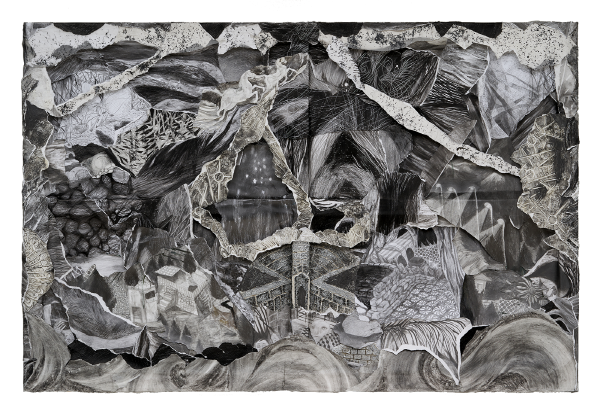
situation where they have “entered” the story she tells. At the entrance of the
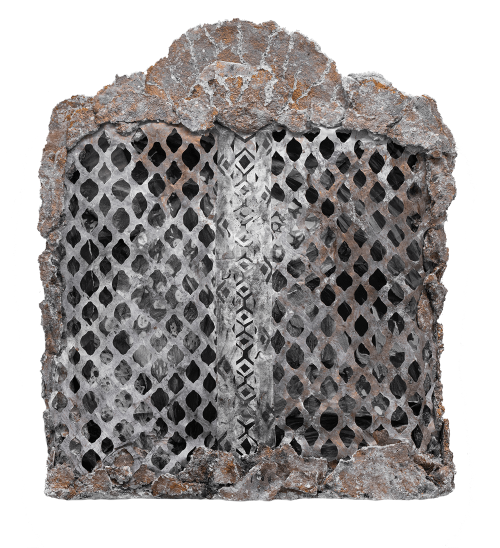
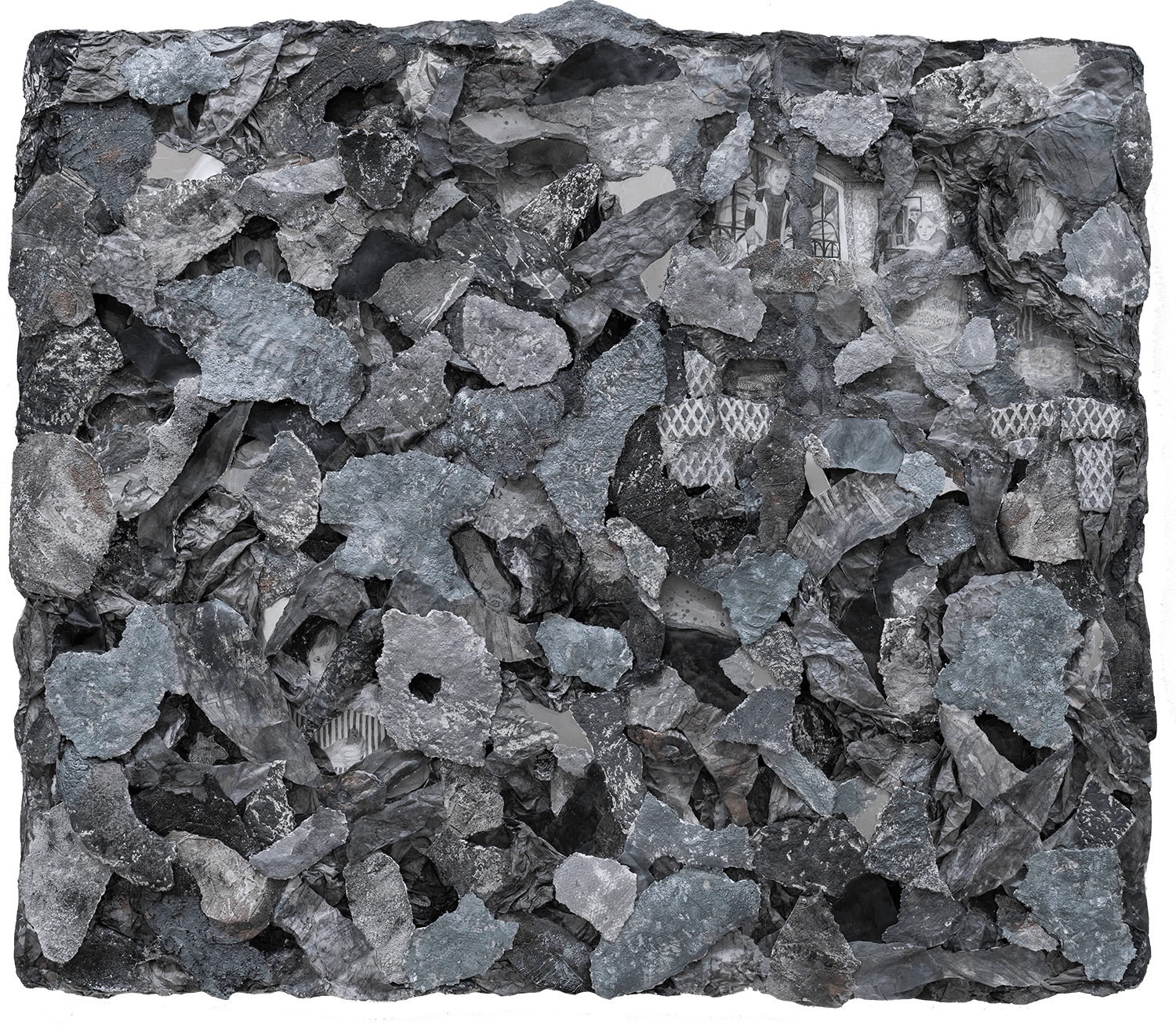
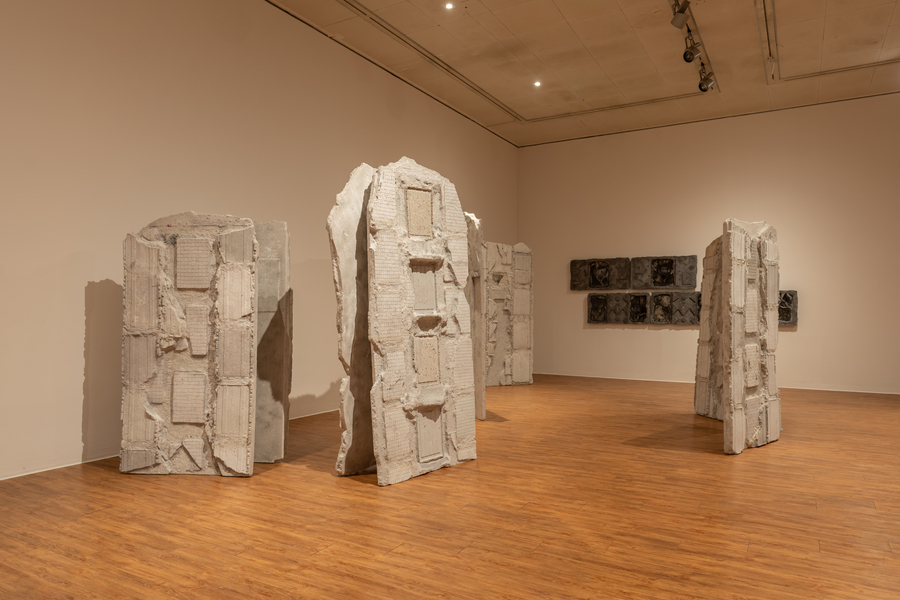
exhibition is a collection of works entitled Receding Wall
(2022). Here, Im has created an arched tunnel with individual works where she
had previously integrated fragmented drawings in a single collage image.
Serving as a gateway through which the viewer must pass to reach the exhibition
proper, they convey the sense of having entered a cavern. At first glance, the
individual collage works may seem to show a person’s face, or a canvas in which
several stories have been mixed together.
Collectively, however, they appear
like an assemblage of innumerable images and textures on the rugged surface of
a cavern wall. The image evokes the idea of drawing (as a human endeavor)
having originated on the walls of caves. Passing through the tunnel into the
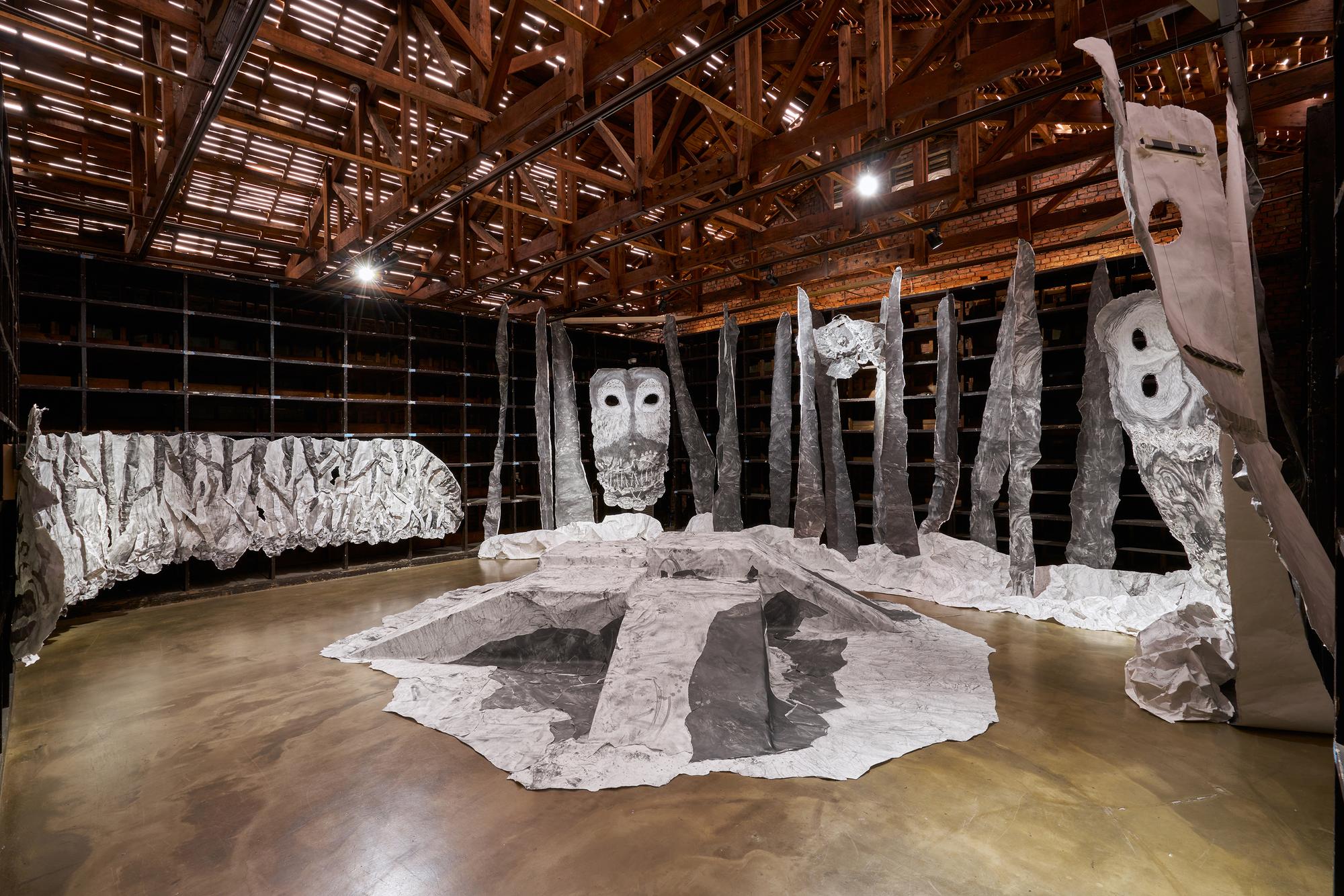
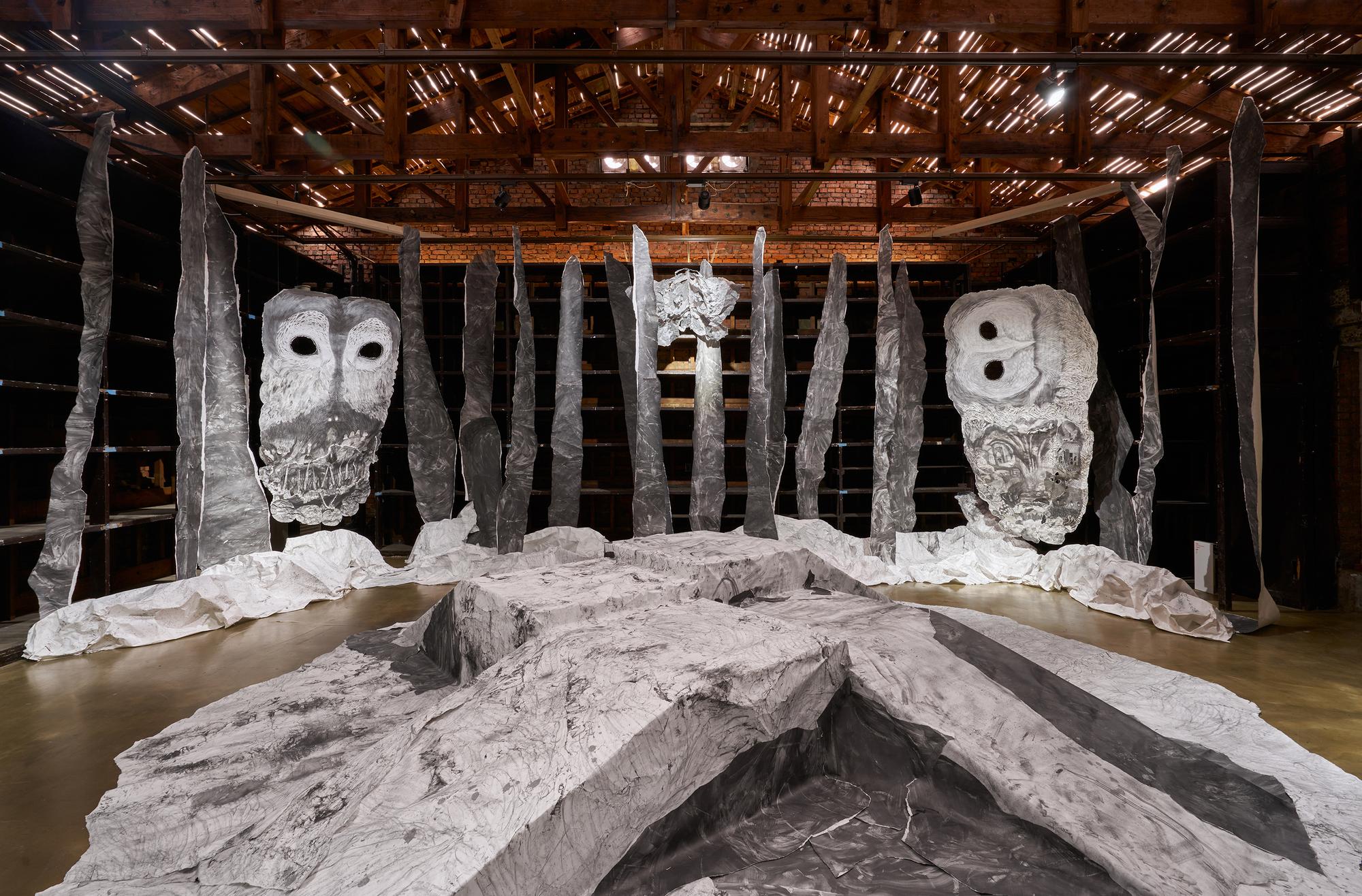
main exhibition setting, the viewer sees that the artist has placed a platform
at the center, where people can climb up from various directions.
The other
artwork has been organized around it, so that viewers who step up on it can
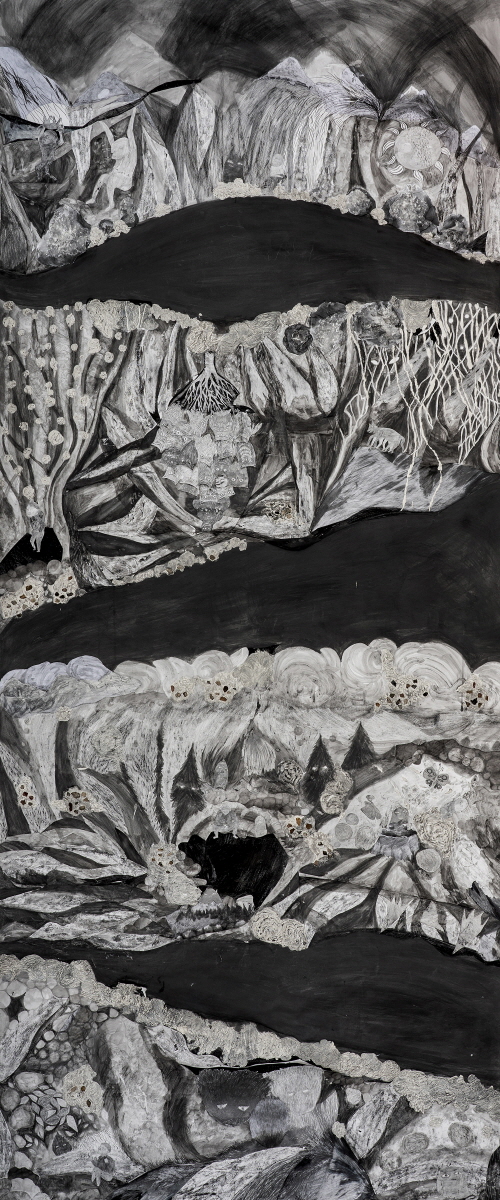
take in the drawings that appear on the ceiling and the shelf structures. Long
drawings hanging from the ceiling resemble a forest of tall trees, creating the
illusory sensation that the viewer has arrived in the middle of the woods. It
may be natural for the viewer to feel as if they have entered the forest, since
it is a setting that regularly appears in Im’s work. Among the trees, two works
that seem like presences from the artist’s fantasies—A Blind Bird
(2022) and An Animal with Many Legs(2022)—stare at the
viewer with wide eyes.
Within their bodies are many more small-scale stories.
Each individual paper fragment in the collage is like a story unit. The beast
forms are presences that define the story of the overall exhibition setting; individually,
they are their own spaces harboring innumerable small stories. But from the
standpoint of the viewer on the central platform, the SeMA Storage setting
where they are gathered resembles a temporary stage, so they also carry the
potential to reemerge as elements of a different story as they move to a
different place.
It is a curious touch that Sungoo Im has included a work
titled Unseeing Bird in an exhibition that originates in a poetic line about a
“flower which can’t even be seen.” As if in answer to the poem, they look upon
the exhibition setting with unseeing eyes. Throughout the gallery that their
eyes cannot see, there are presences that move about, each with its own
individual story. They harbor profound stories that do not require anyone as
their “protagonist,” existing all about in fragmented yet complete form, so
that they do not disappear.
We
often view “drawings” as a level below paintings—as a secondary element, or as
something that emerges at the idea stages of an artist’s work. With their use
of comparatively simple materials, Sungoo Im’s drawings illustrate not only the
possibilities of those materials but also the potential to endlessly expand the
spatial scope of the drawing medium. This is made possible not only by the
aforementioned psychological and physical interpretations that the artist
projects on her materials’ properties, but also by the spatial expansion
brought about by these interpretations by way of their plausibility in terms of
the collage-like narratives and methods that the artist develops.
The
fantastical elements that Im inserts here and there also serve to
three-dimensionalize the spaces and narratives associated with her drawings.
While she describes her drawing work in simple terms as a matter of pulling
together scattered things on the periphery of life and emotions, memories, and
experiences that would otherwise sink below consciousness, the energy carried
in her work is not one of subsiding; it harbors the potential to organically
shape spaces and control the overall atmosphere. By treating the
three-dimensional setting of SeMA Storage as the place where these drawings
dwell, and by positing the viewer as an element operating on equal terms, the
exhibition 《A Flower Which Can’t Even
Be Seen》 shows the potential that lies in Im’s drawing
work—and the possibilities for its expansion