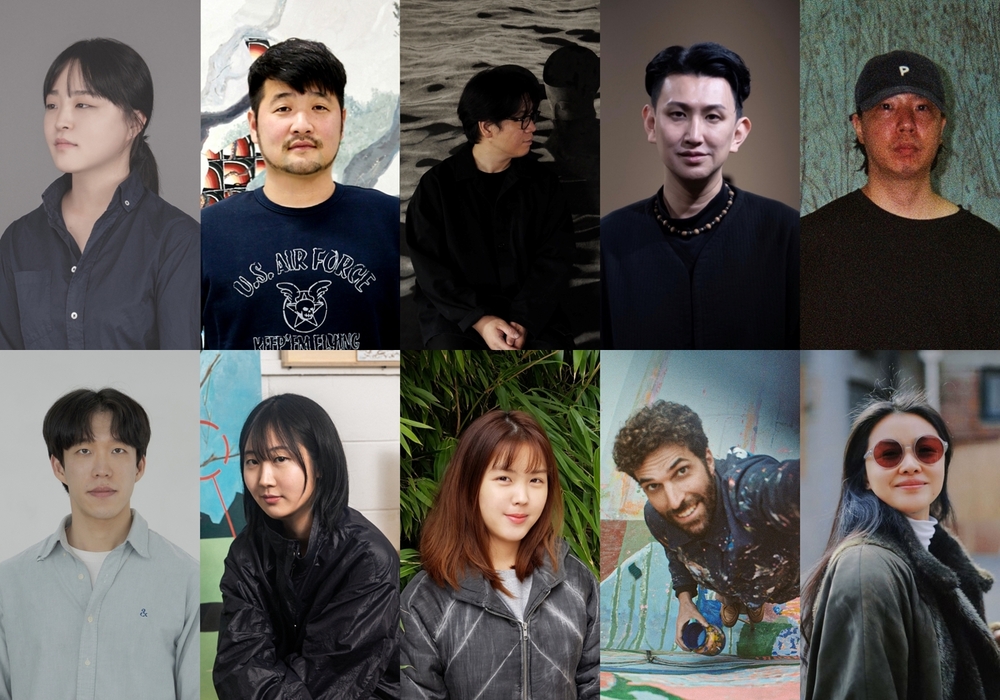
Jo’s
formal experimentation begins with compositional paintings that employ signs,
diagrams, and symbols. Her canvases are intricately constructed like puzzles or
codes, where each icon functions as a symbol containing its own logic. In
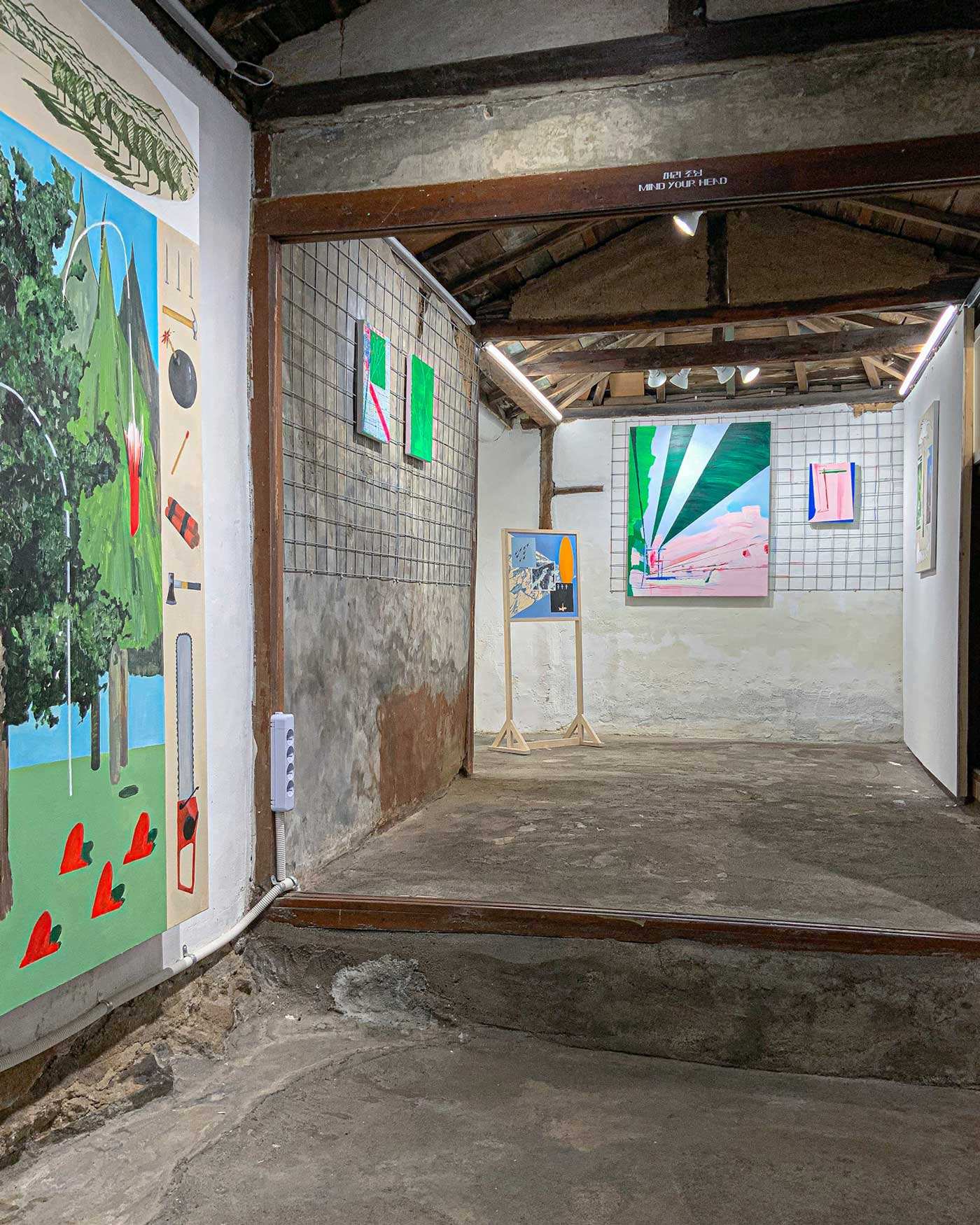
The Providence of Nature(2023), a red curve hints at the
order of events, while in Distressed Day(2023), the depicted
tools symbolically suggest a narrative of violence. These pictorial devices
form the core language of Jo’s painting, generating meaning through logical
structures and associative connections rather than emotional expression.
Over time,
she expands her medium from two-dimensional surfaces to spatial and sculptural
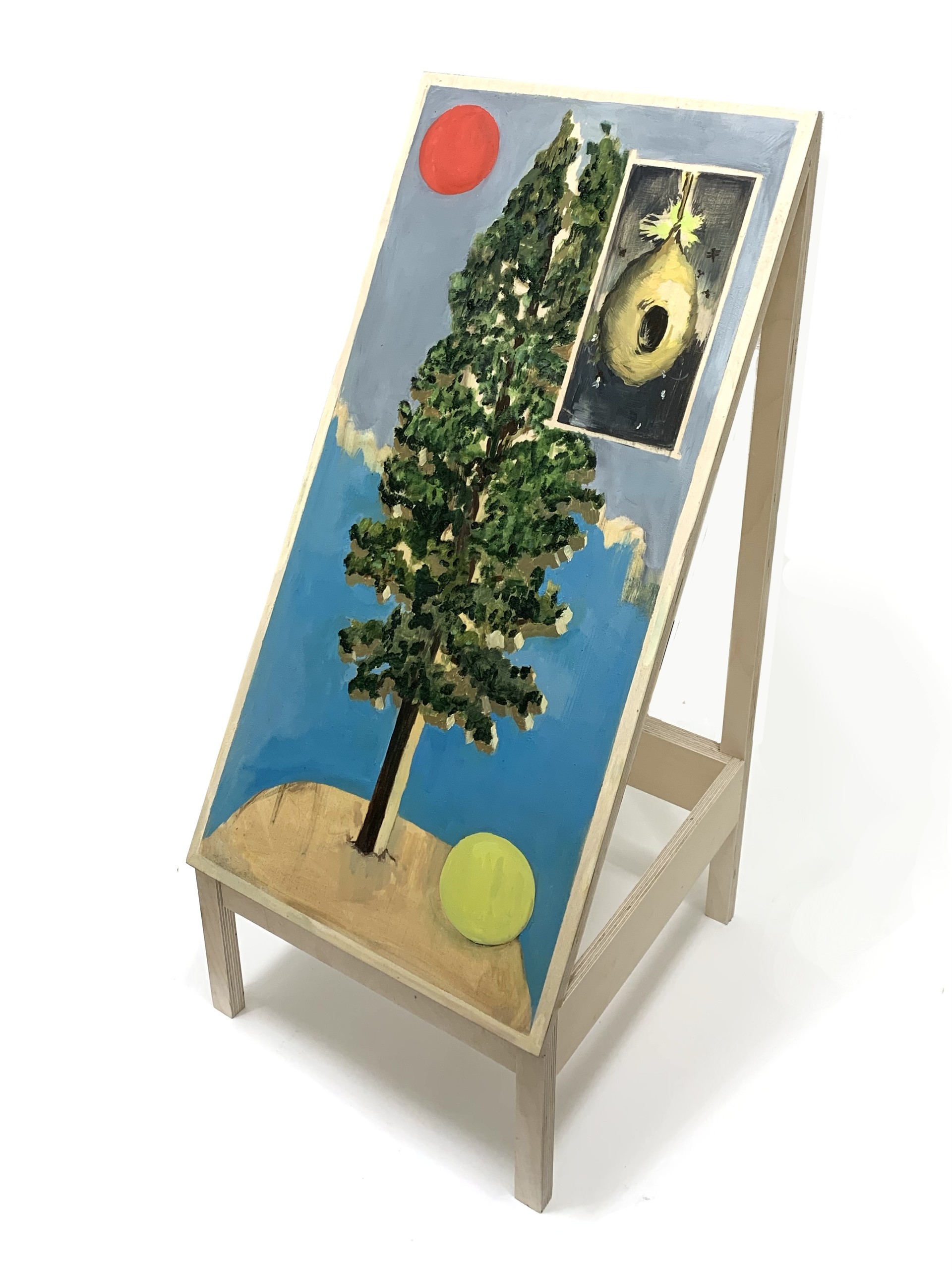
formats. In Fake Tree and Honeycomb(2023), the wooden panel
becomes both the support and the prototype of the depicted tree, while in
A Distant Relative(2023), the panel, red thread, and water
cup are physically connected, integrating image and object. Through such
processes, painting transforms from a medium of representation into an “arena
of events” mediating interaction with reality.
This
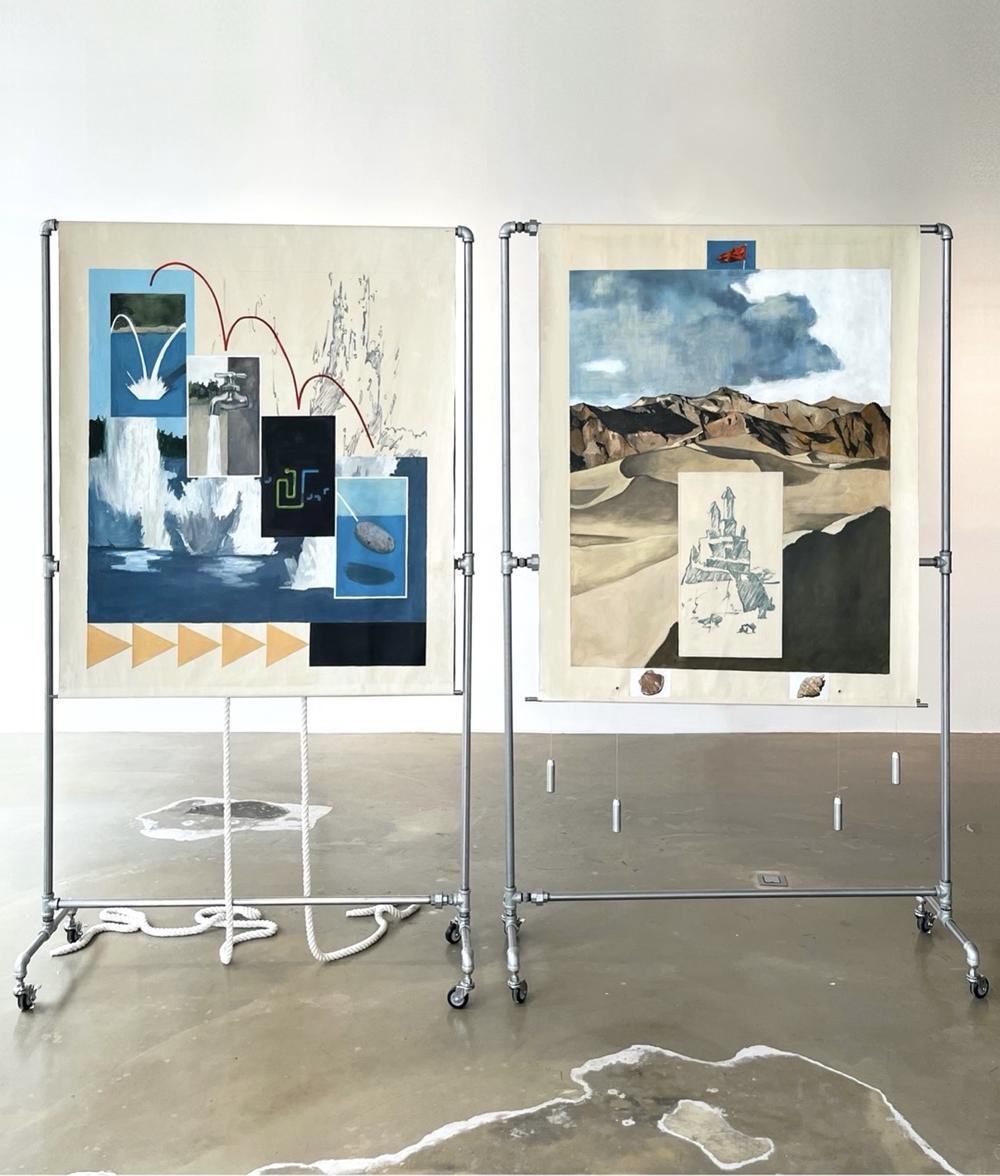
experimental trajectory becomes more systematic in the 2024 series ‘Study of
the Center.’ Using the physical tension between fabric, stainless steel, and
weights, Jo visualizes the notions of balance and imbalance, center and
periphery, exposing the relativity of both linguistic order and material
systems.
Her 2025
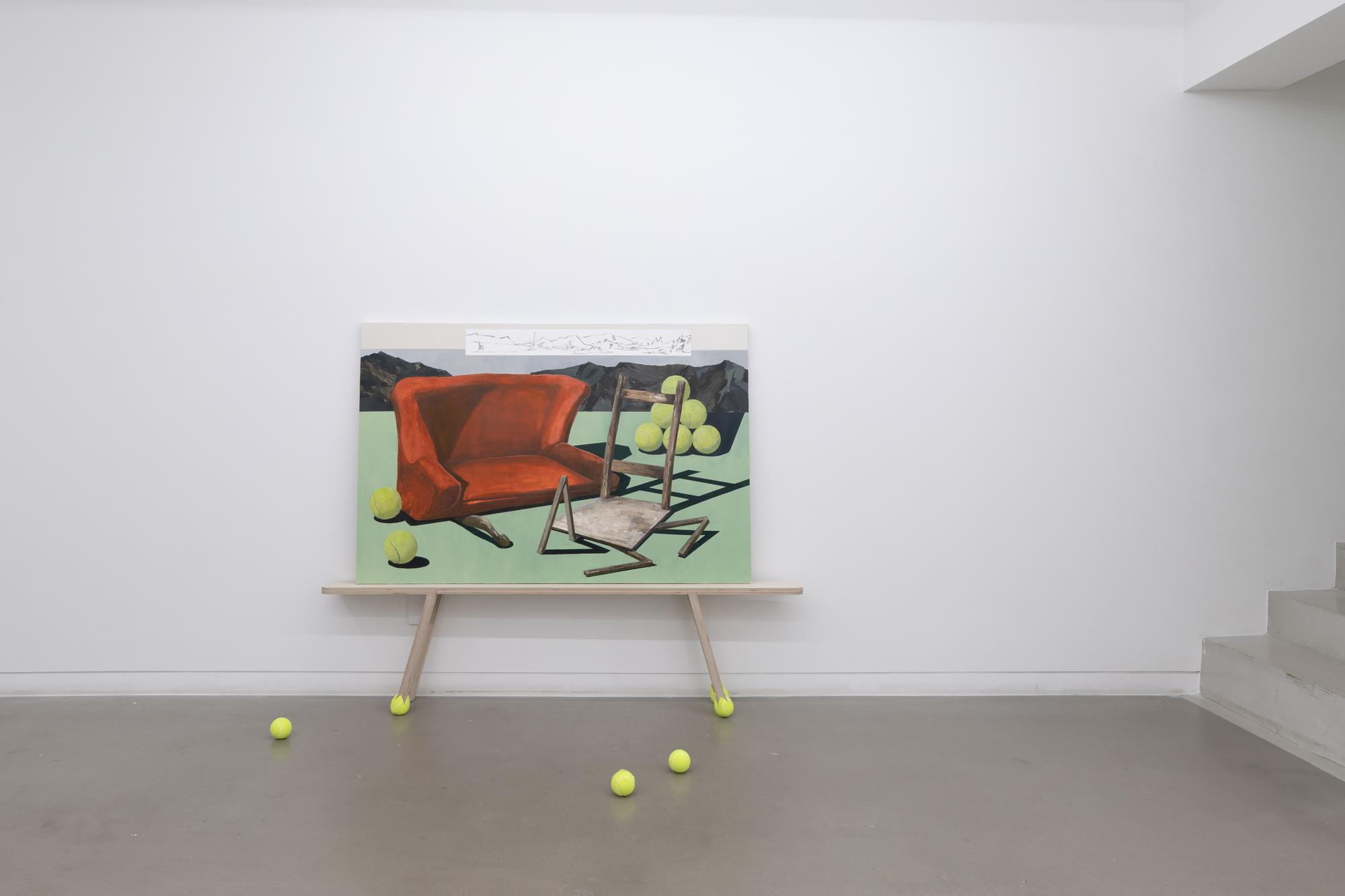
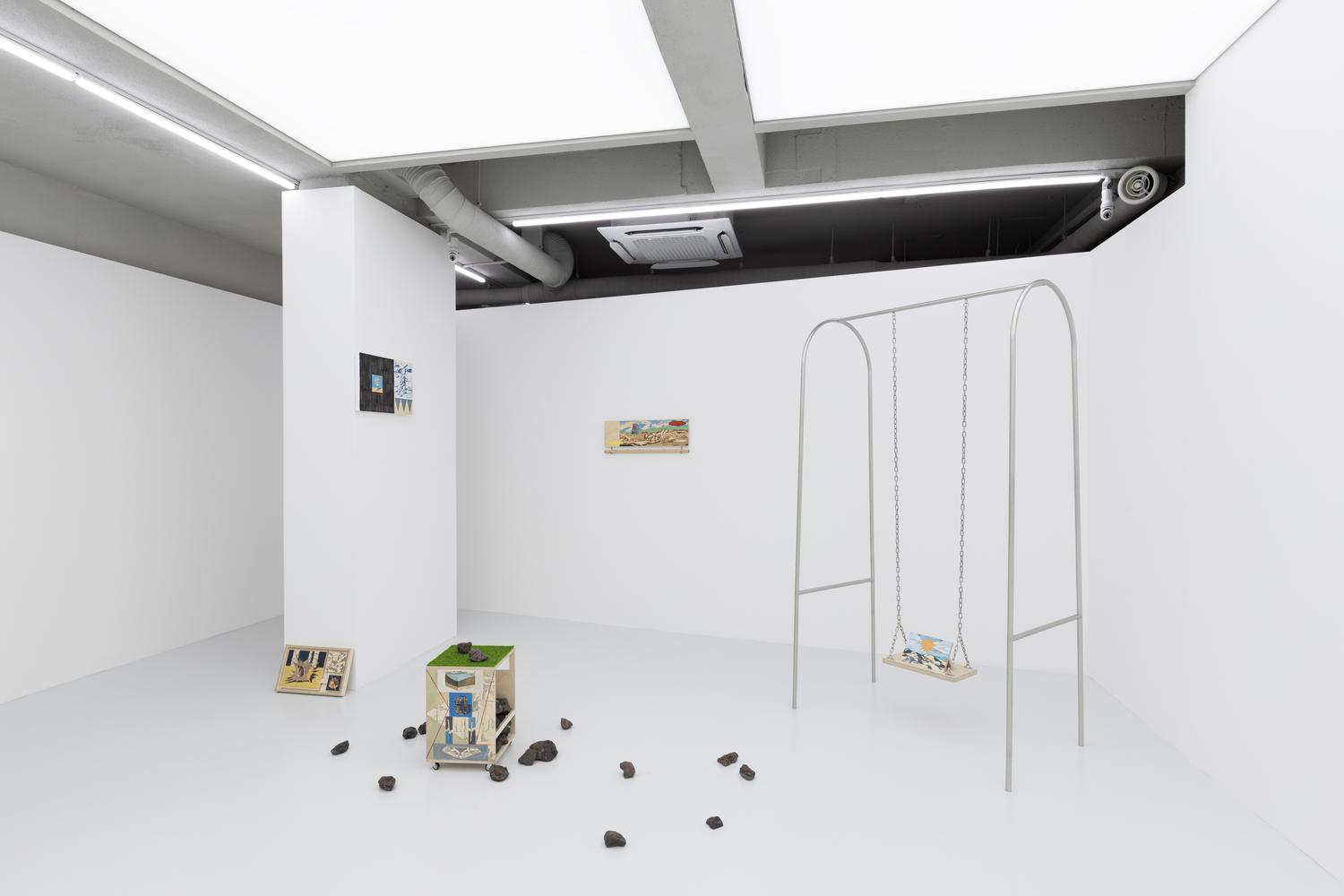
solo exhibition 《TwinFlame》(YK Presents) extends the interplay of signs and symbols across the
entire exhibition space. Elements such as waves, buckets, breakwaters,
whirlpools, and triangles interweave into a network of relationships, and a
linear narrative emerges through the viewer’s gaze.
In another
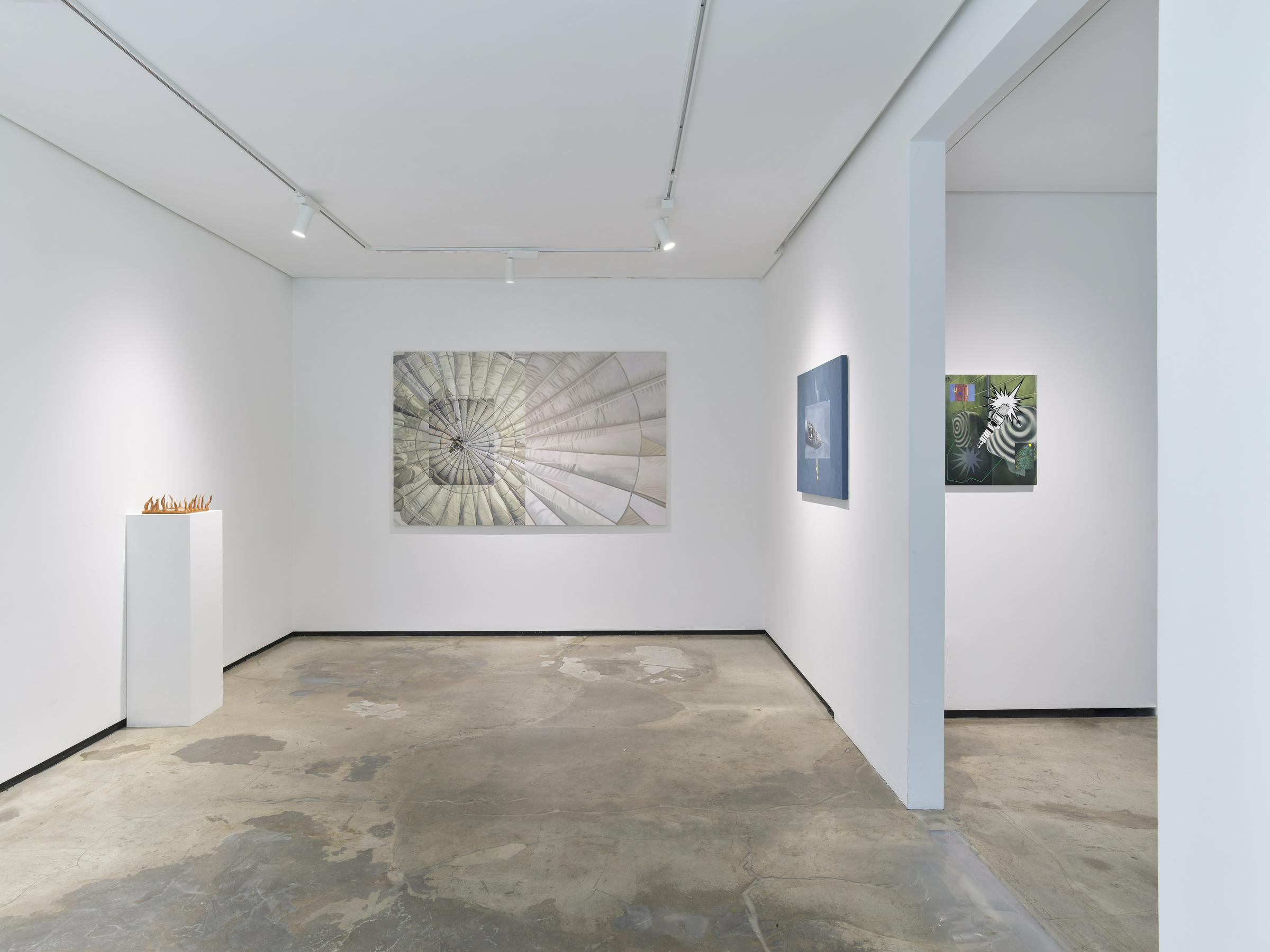
solo exhibition of the same year, 《At the Edge of Atlas’s Shoulder》(GalleryMEME),
she focuses on “affinities between images” and “relationships of
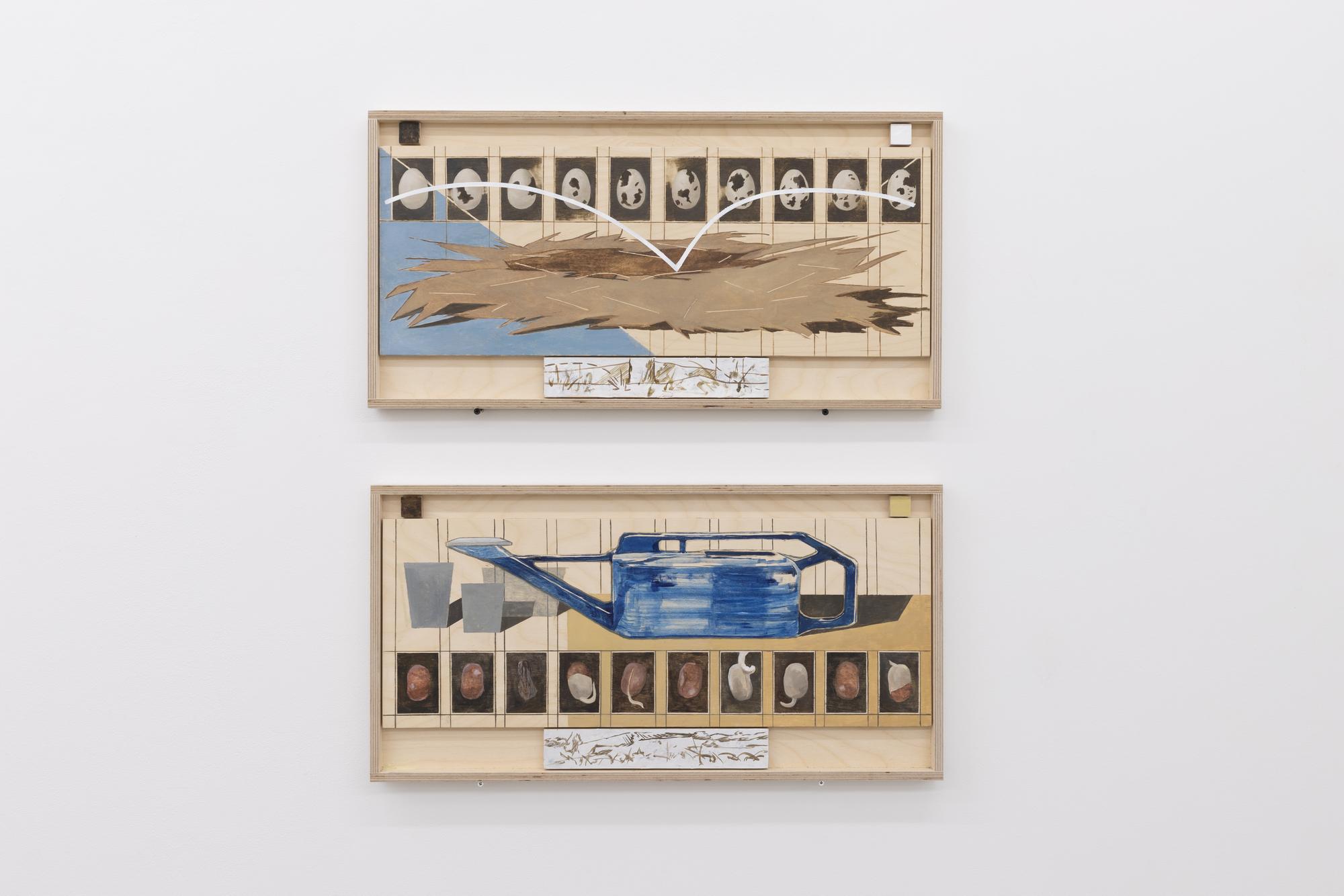
misperception.” Works like Siblings Above and
Siblings Below(2025) reveal multi-layered temporality and
interpretive potential through variations within repeated forms, while
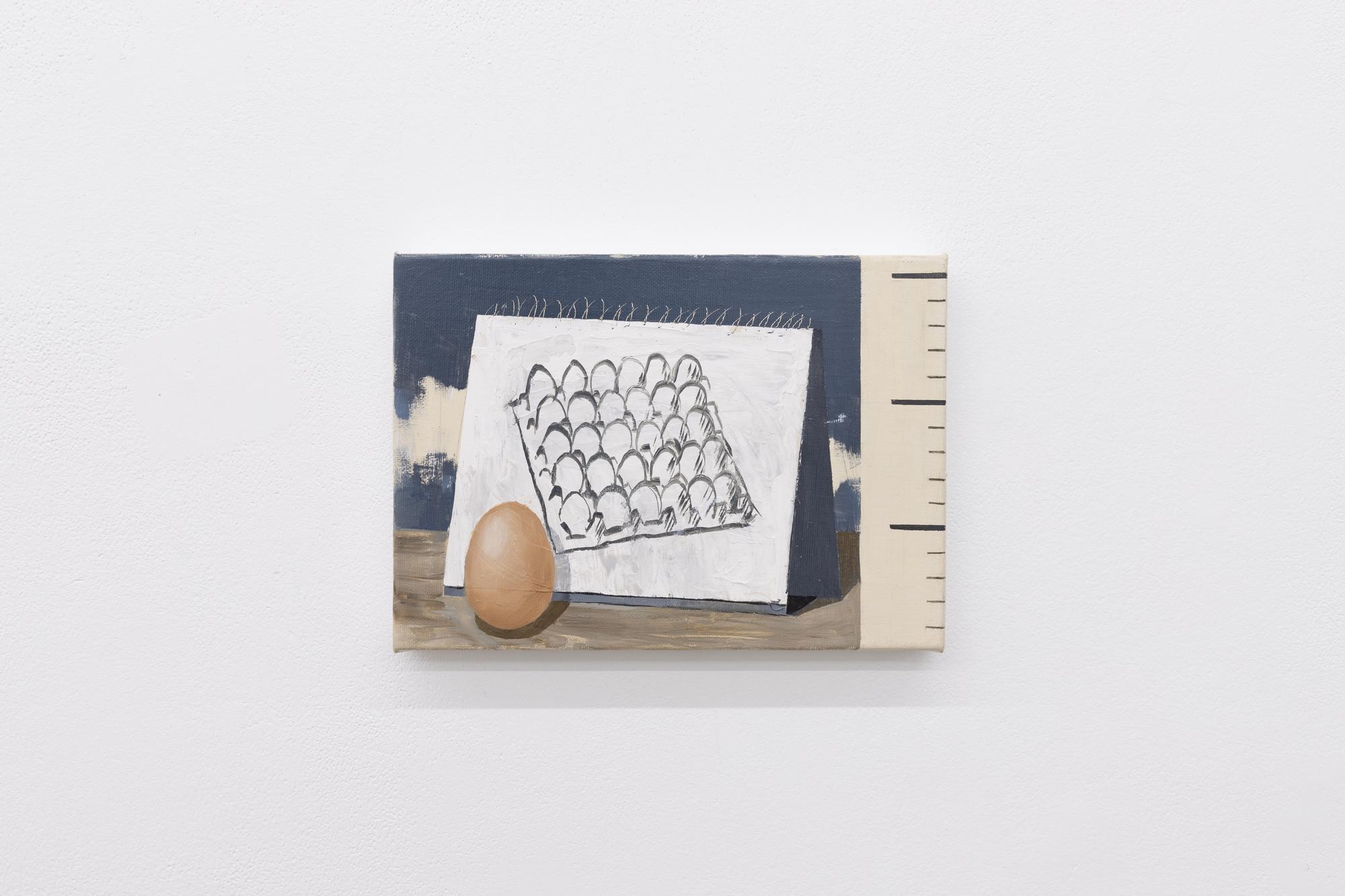
Misunderstanding(2025) humorously exposes the instability of
representation and self-recognition, visualizing the dissonance between image
and reality.