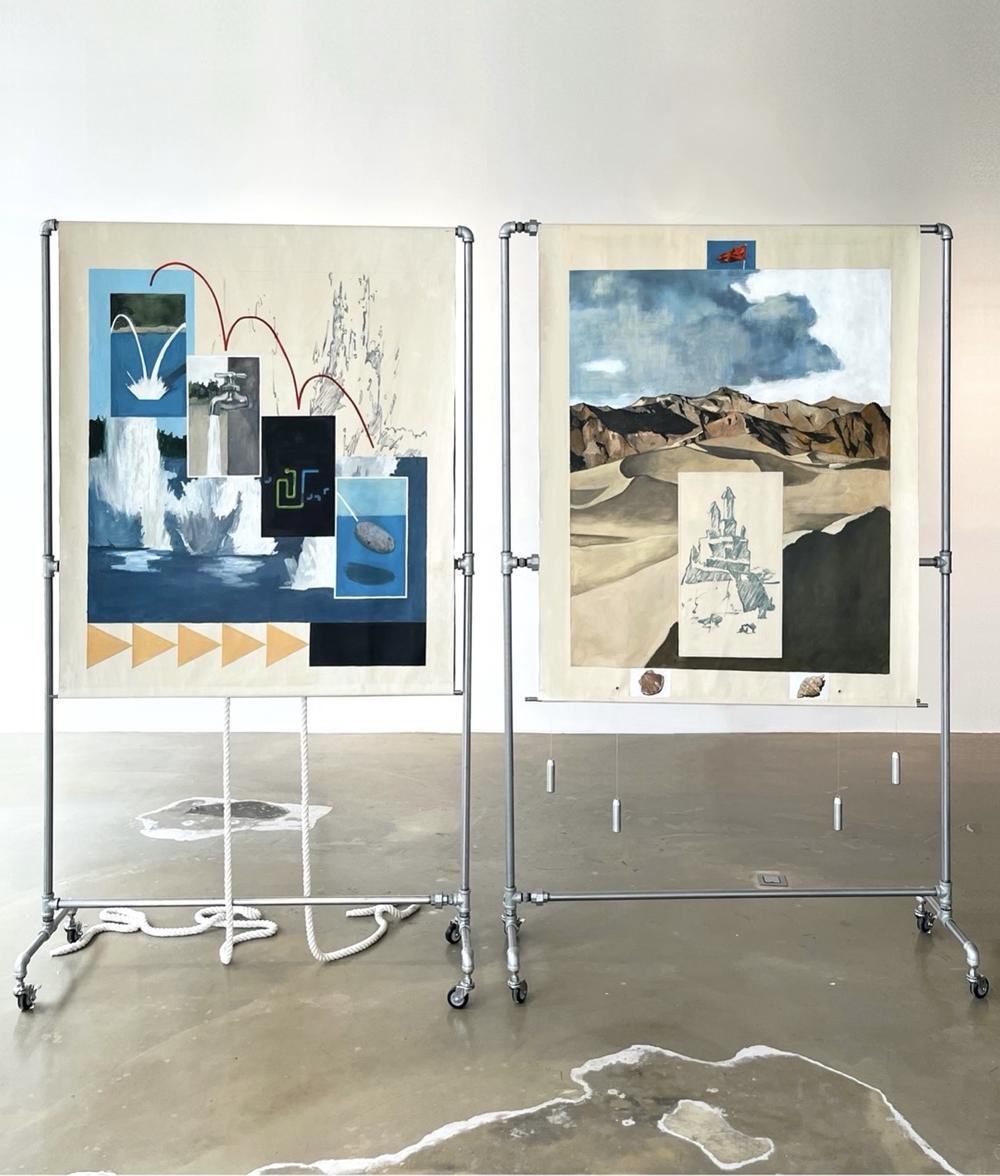
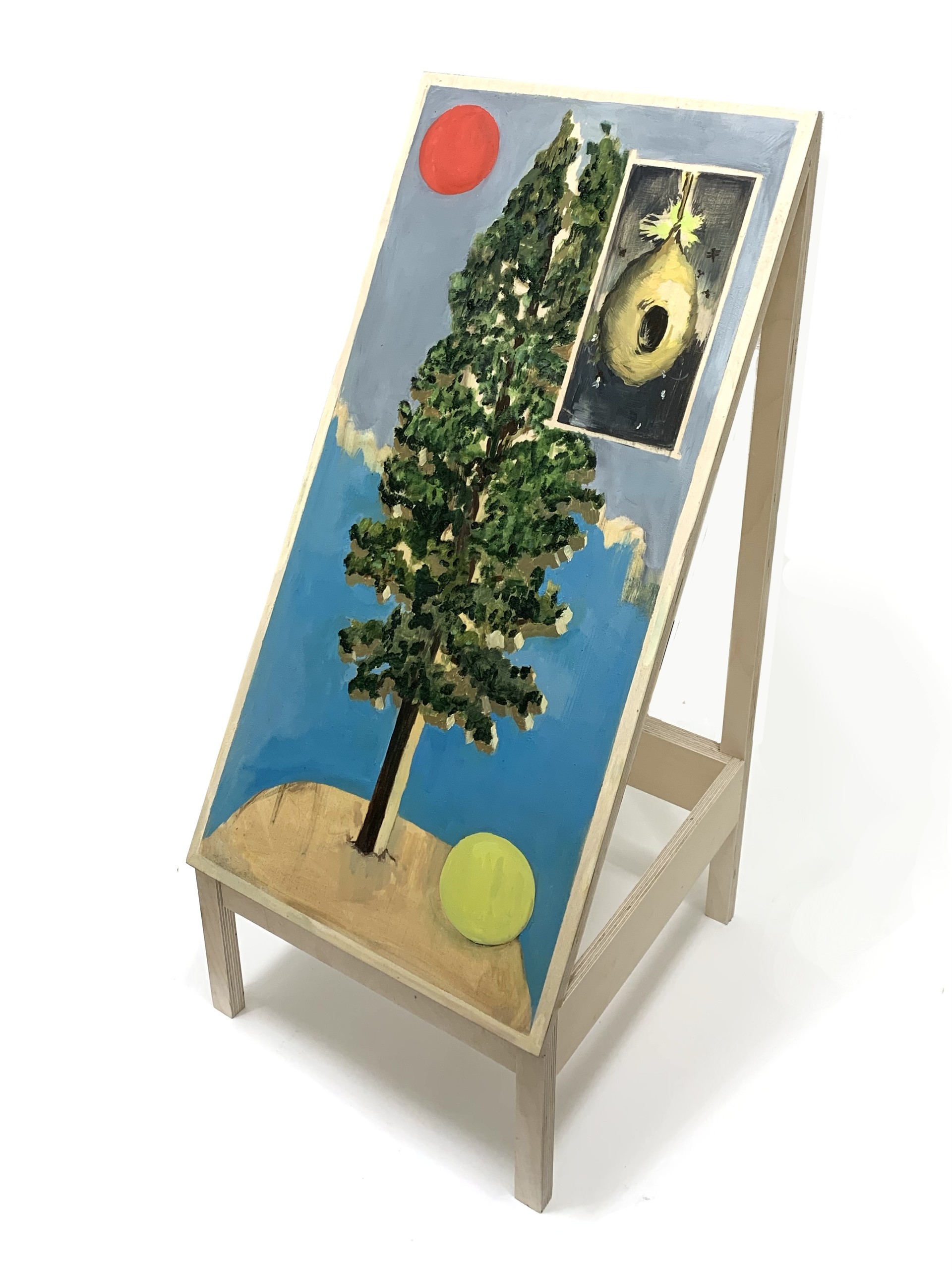
Stones, shards of glass, mud, falling rain, cliffs, weary feet—
When these individual words are joined together with commas and periods, an
immediate scene takes shape in the mind. Each element obstructs movement,
causes injury, and prevents one from advancing. Facing the edge of a cliff, did
the person turn around in search of a new path? Or did they slip on the
rain-soaked ground and fall below? Perhaps, burdened by exhaustion and rain,
they never ventured outside at all.
Eunsi
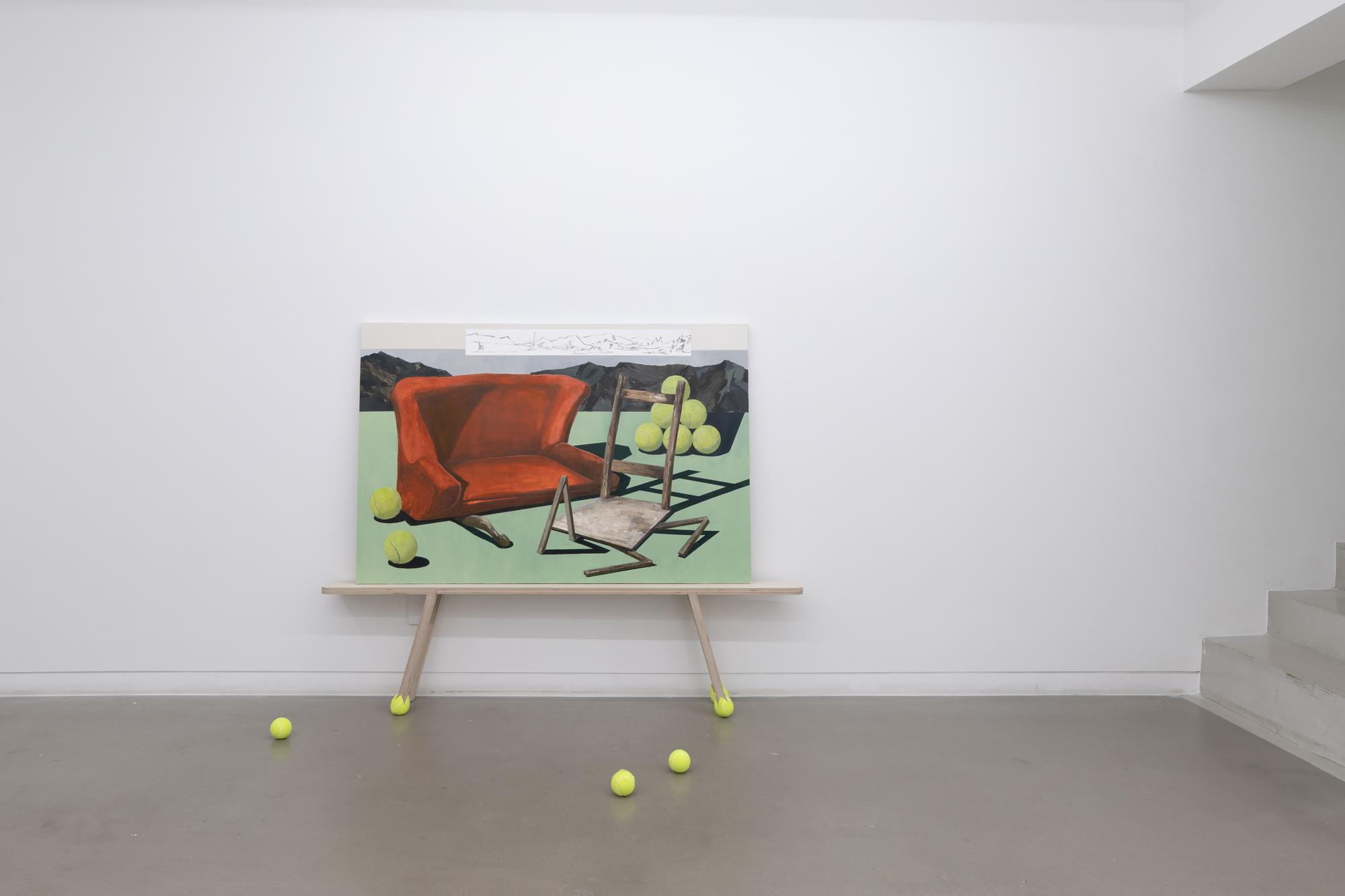
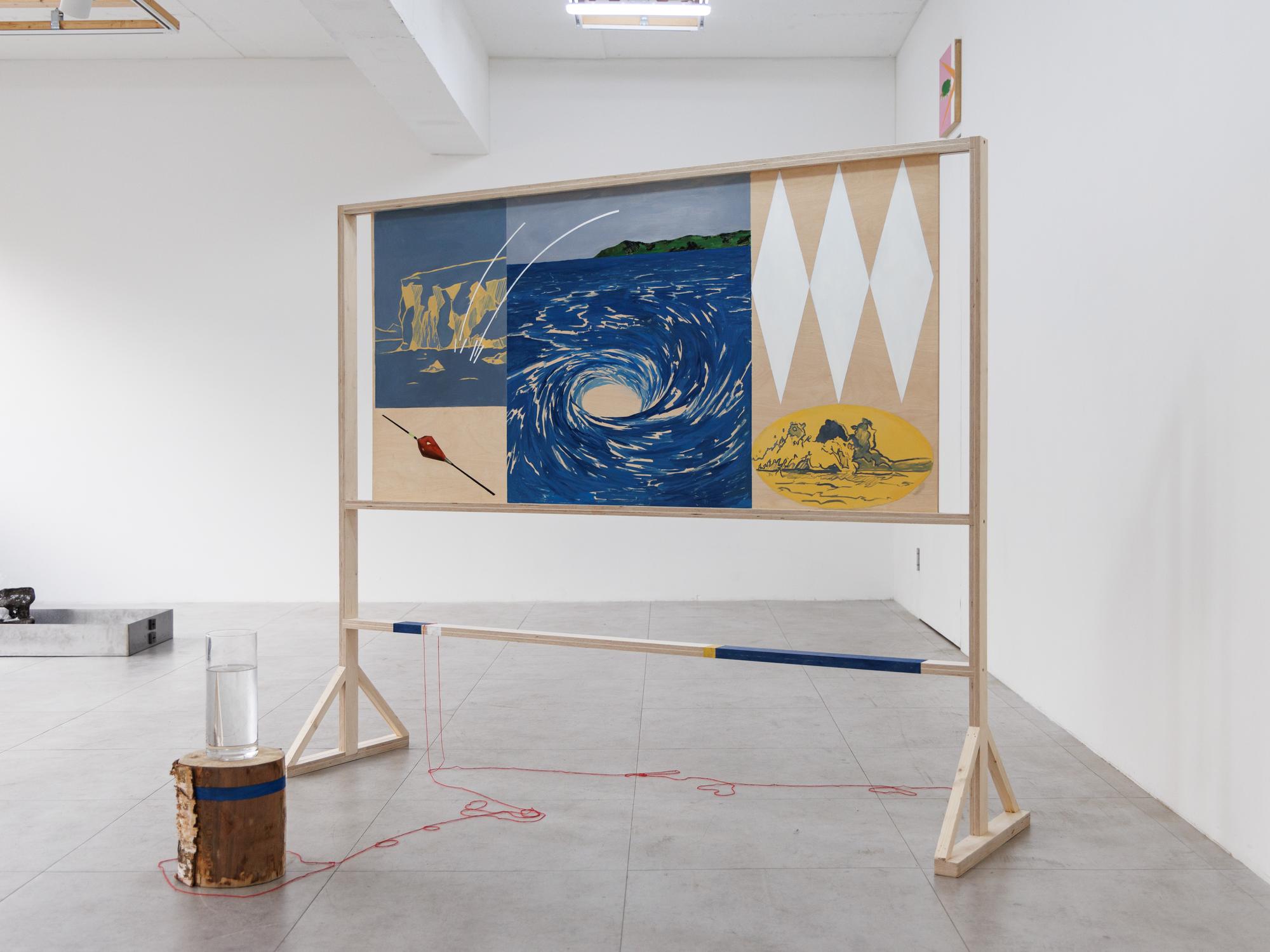
Jo constructs narratives by placing visually and situationally similar elements
within a single frame. She uses the viewer’s cognitive urge to analyze and
interpret these forms to trigger imagined events and unfold their progression.
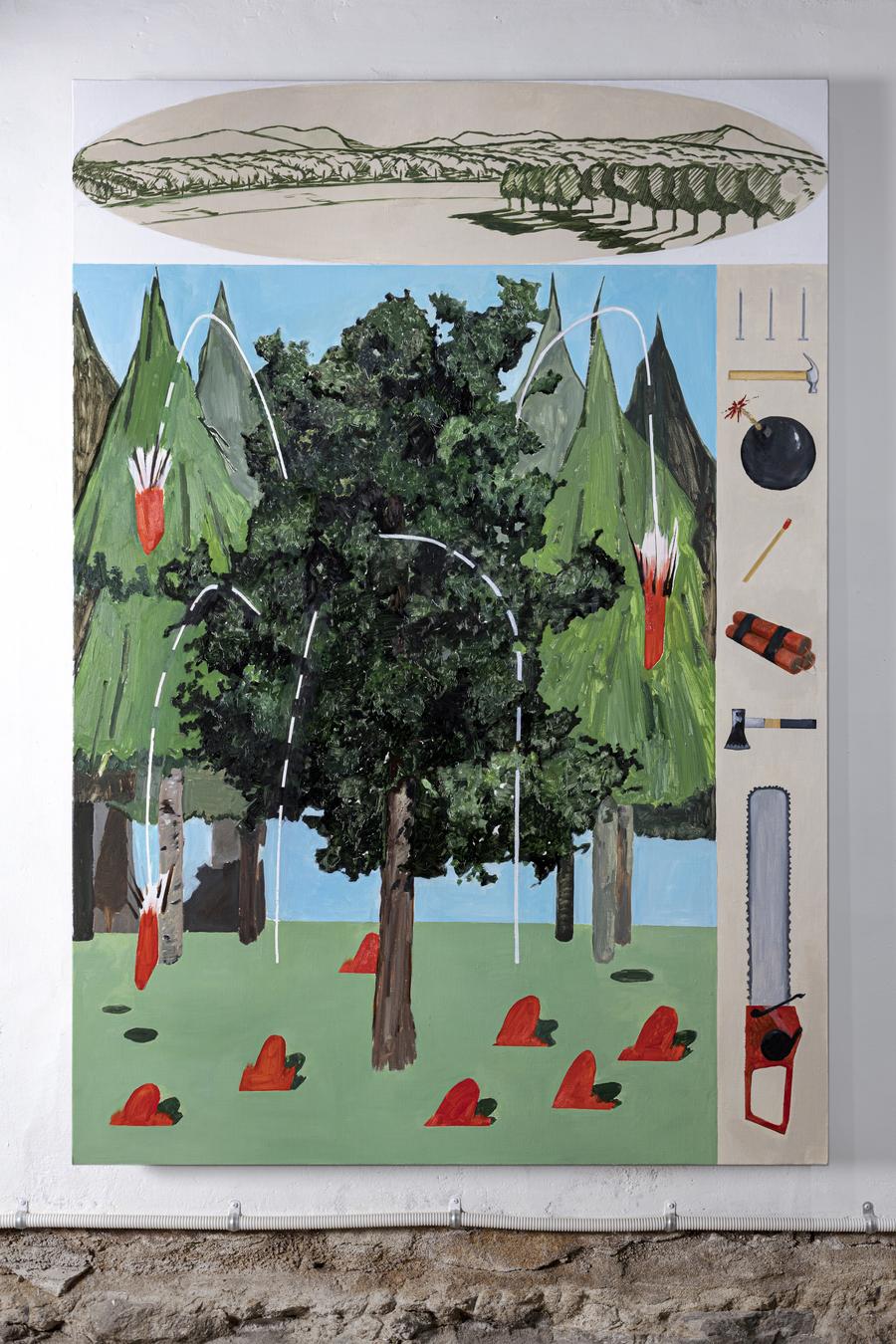
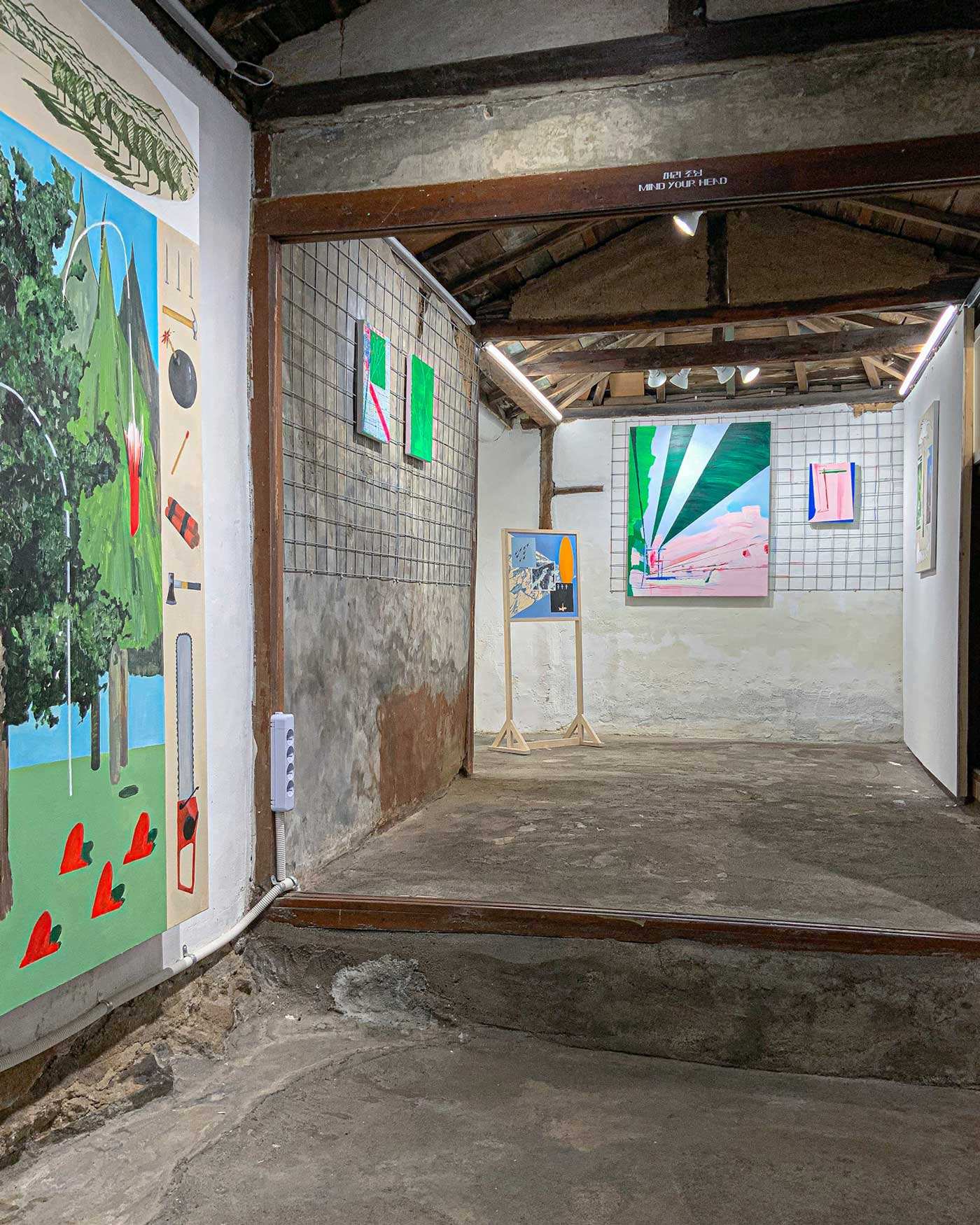
In Distressed Day, for example, we may link the red objects
falling from the tree with the violent tools arranged on the right side of the
canvas, assuming that the work depicts an act of violence against the tree. The
title reinforces such an inference.
Similarly, Have One’s Retreat Cut
Off employs compositional elements that operate as the mechanism of
an incident, connecting a series of rectangular frames into one continuous
narrative. The silhouette of a fighter jet crossing the sky recalls the scene
of a flight-shooting game, inviting the viewer to predict what happens next.
What, then, compels the artist to repeatedly stage these sequences of events?
Forest and trees, fruit and bombs, meteorites and rifles, volcanic
eruptions and sprinklers.
The answer may be found in The Providence of Nature. Once
again, the canvas is divided along the central image of a gun, with a red
curved line that appears to trace the order of unfolding events. Yet the
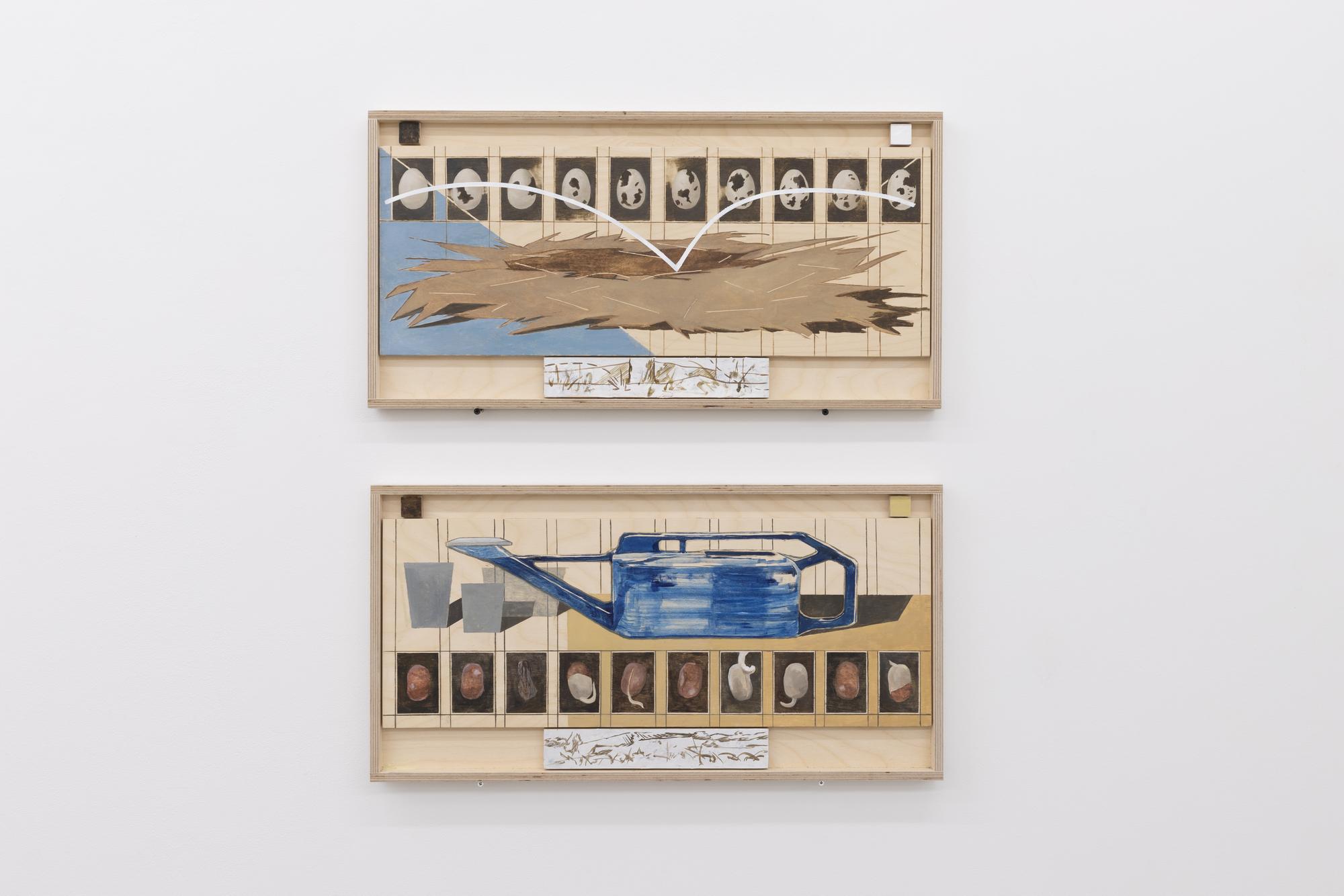
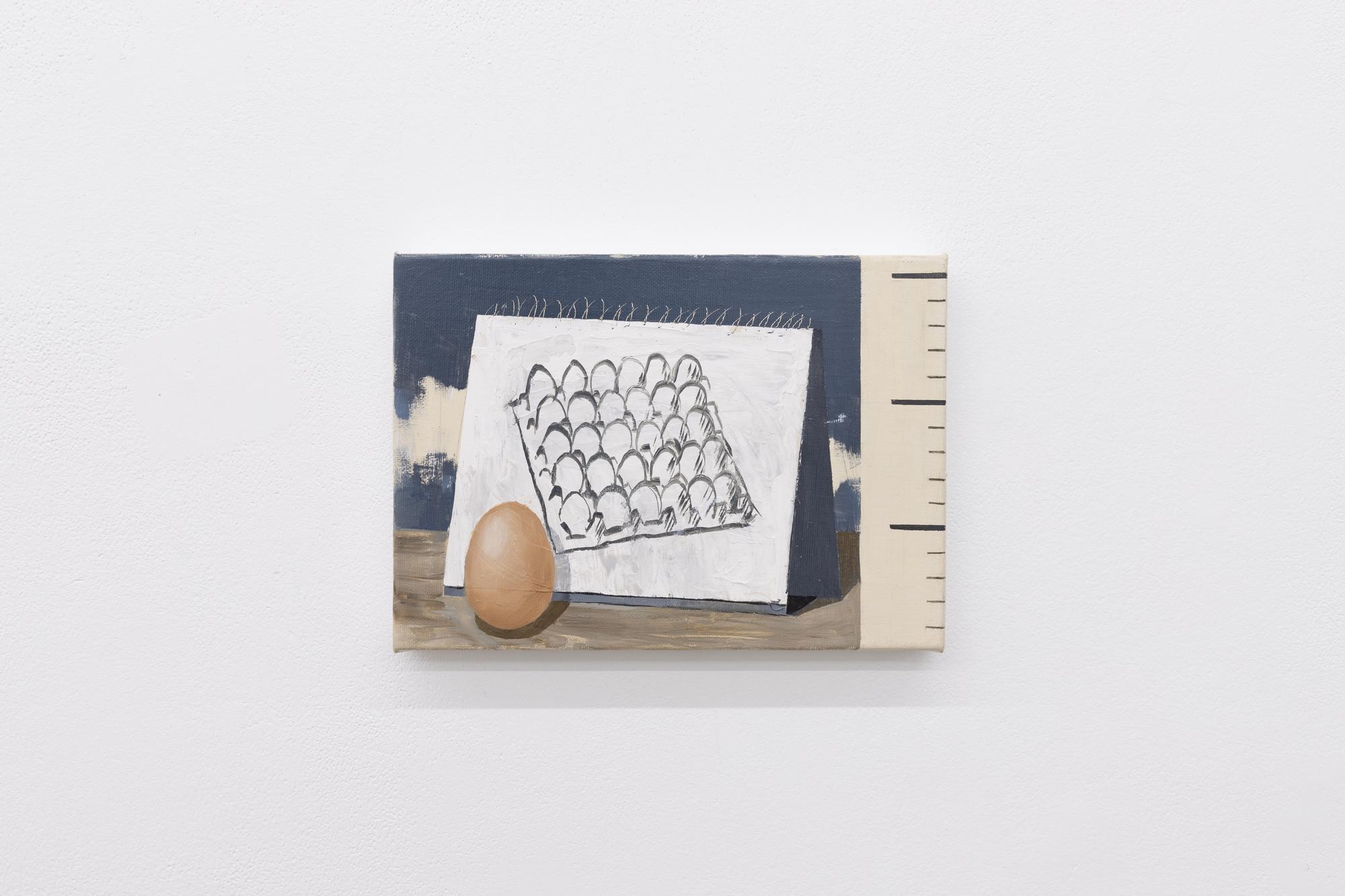
viewer’s gaze moves from the egg at the bottom to the bird above, and back to
the egg, circling endlessly without a fixed beginning or end. On the left, a
rectangular frame depicts a bird preying on insects; on the right, another
shows a hunter aiming at a bird. The same act of hunting repeats, with only the
targets changing. Following the curve, the dead bird hatches again from the egg
to resume its predation.
This
is a world of endless cycles of birth and death. Yet the work does not imply
that civilization and humanity—having invented the slingshot—stand apart as
ultimate predators. Rather, by revealing the cyclical and chain-like structure
of these connected events, which reappear in different forms and cannot be
assigned a singular beginning or end, Jo shows that all share a common root.
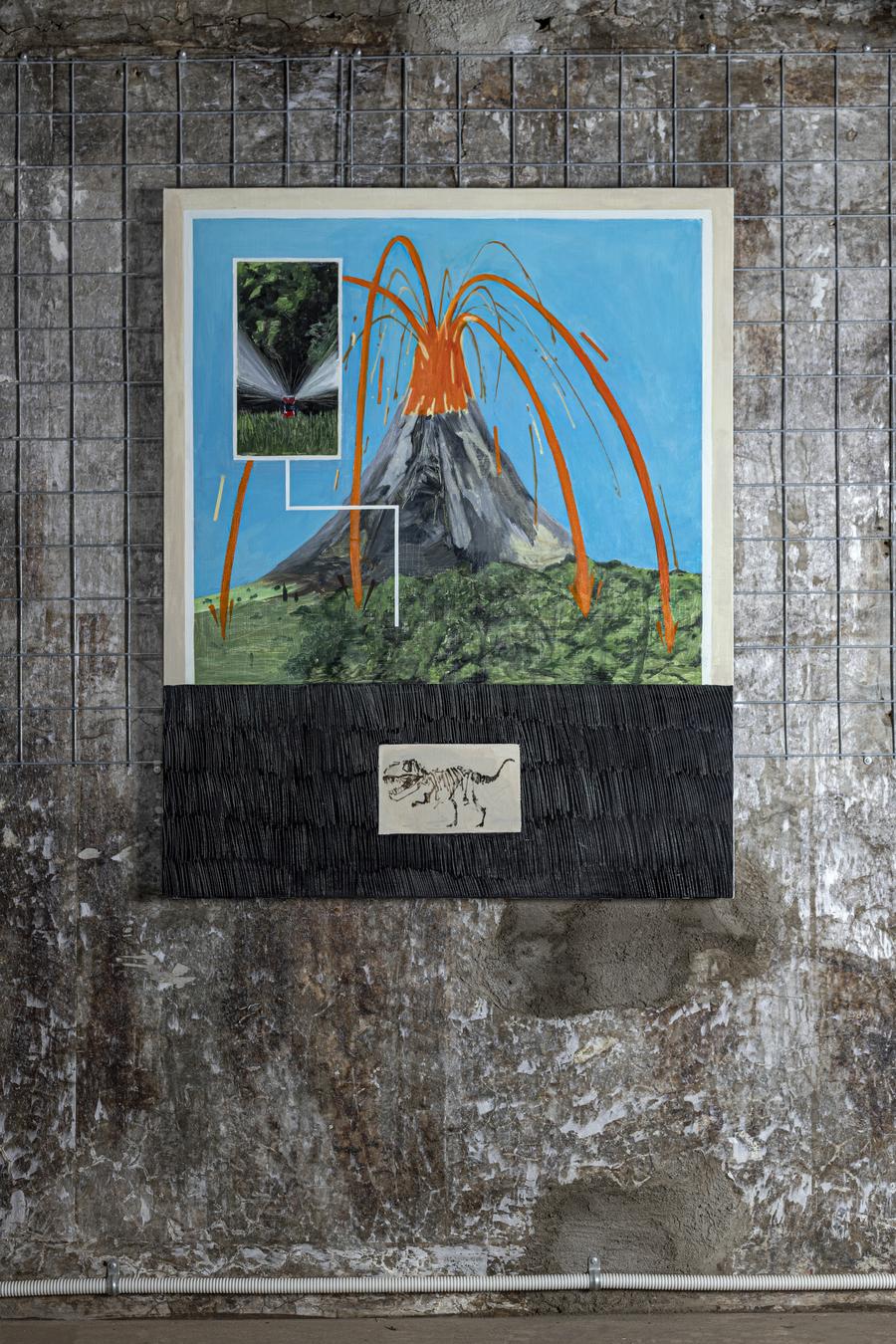
In
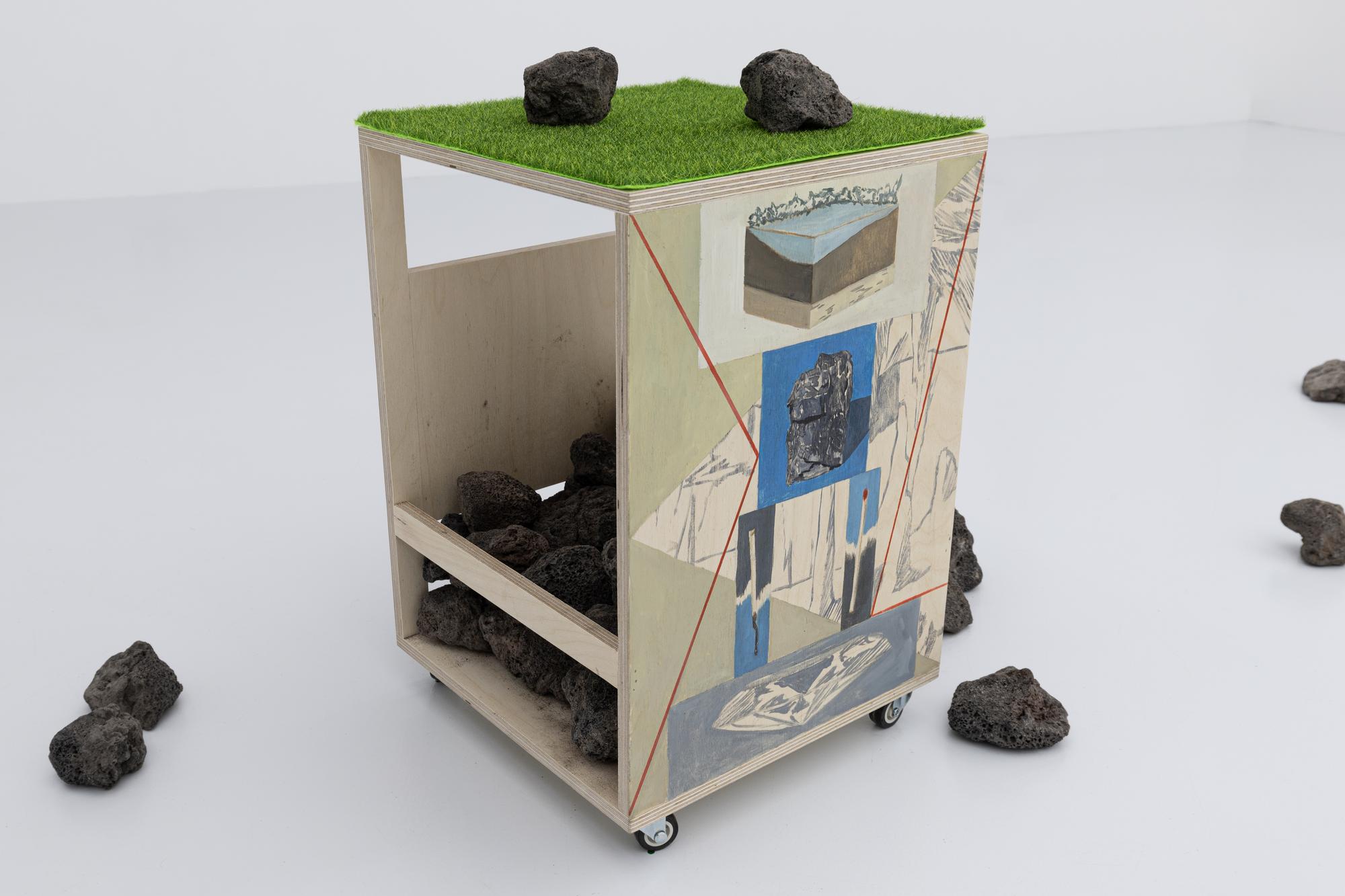
Same Way, the visual resemblance between an erupting volcano
and a spraying sprinkler reinforces this notion. As implied by the dinosaur
bones below, one engulfs life into death, while the other promotes growth and
vitality. Yet both display an outward burst—a strikingly similar motion. This
repetition of resemblance between eruption and emission signifies that
destruction and creation, extinction and regeneration, are not dualistic
opposites but parts of a single continuum.
The
divided frames across her canvases depict confrontations—between nature and
civilization, animal and human—not to emphasize difference, but to reveal that
they belong to one and the same world. Borrowing the artist’s own visual
metaphor, we might say that we are all trees belonging to the forest as a
whole.